



BALAVITA 10,000 IU/ML Oral drops, solution

Запит на рецепт онлайн
Лікар розгляне ваш випадок і визначить, чи є рецепт медично доцільним.

Поговоріть з лікарем про ці ліки
Обговоріть симптоми та можливі подальші кроки під час короткої онлайн-консультації.



Інструкція із застосування BALAVITA
Зміст інструкції
- Balavita 50,000 I.U. ml oral solution in single-dose container
- Balavita 10.000 U.I./ml oral drops, solution
- Balavita 25.000 U.I. oral solution in single-dose container
Balavita 50,000 I.U. ml oral solution in single-dose container
Cholecalciferol (Vitamin D3)
Read this leaflet carefully before taking this medicine as it contains important
information for you.
- Keep this leaflet. You may need to read it again.
- If you have any questions, ask your doctor or pharmacist.
- This medicine has been prescribed for you only. Do not pass it on to others, even if their symptoms are the same as yours, as it could be harmful.
- If you experience any side effects, including those not listed in this leaflet, tell your doctor or pharmacist. See section 4.
Contents of this leaflet:
- 1. What Balavita is and what it is used for
- 2. What you need to know before you take Balavita
- 3. How to take Balavita
- 4. Possible side effects
- 5. How to store Balavita
- 6. Contents of the pack and other information
1. What is Balavita and what is it used for
Balavita contains cholecalciferol, better known as vitamin D3.
Balavita is indicated for the treatment of vitamin D deficiency in adult patients.
2. What you need to know before you take Balavita
Do not take Balavita
- if you are allergic to cholecalciferol (vitamin D3) or to any of the other ingredients of this medicine (listed in section 6).
- if you have high levels of calcium in the blood (hypercalcemia) or in the urine (hypercalcinuria).
- if you suffer from kidney stones (nephrolithiasis) or calcium deposits in the kidneys (nephrocalcinosis).
- if you have high levels of Vitamin D in the blood.
- if you suffer from a severe kidney disease (severe renal insufficiency) (see section “Warnings and precautions”).
Warnings and precautions
Talk to your doctor or pharmacist before taking Balavita.
The doctor may prescribe you periodic tests to check the levels of vitamin D or calcium in the
blood and urine in the following cases:
- if you need to follow the treatment with Balavita for a long period and with high doses,
- if you are elderly and are already being treated with medicines to treat certain heart diseases (cardiac glycosides) or with medicines that reduce blood pressure by increasing urine production (diuretics),
- if you suffer from sarcoidosis, an inflammatory disease that can affect the whole body and leads to the formation of nodules.
If your levels of vitamin D or calcium are high, your doctor will reduce the dose or
stop the treatment with Balavita.
In general, you should not take Balavita if you suffer from poor kidney function (see
section “Do not take Balavita”) and you should undergo periodic tests to check the levels of
calcium and phosphate in the blood. If your levels of calcium and phosphate are high, your doctor
will reduce the dose or stop the treatment with Balavita.
Tell your doctor in the following cases, as an increase in dosages compared to
those indicated in section 3. “How to take Balavita” may be necessary:
- if you are taking medicines used for the treatment of epilepsy (anticonvulsants or barbiturates) (see section “Other medicines and Balavita”);
- if you are taking corticosteroids, medicines to treat inflammation (see section “Other medicines and Balavita”);
- if you are taking medicines to reduce blood fats such as colestipol, colestyramine and (see section “Other medicines and Balavita”);
- if you are taking medicines that reduce fat absorption (Orlistat);
- if you are taking antacids containing aluminum, medicines to treat excessive stomach acid that can also rise into the esophagus (see section “Other medicines and Balavita”);
- if you are obese;
- if you suffer from digestive diseases (intestinal malabsorption, cystic fibrosis or fibrocystic disease);
- if you suffer from a liver disease (hepatic insufficiency).
Children and adolescents
The use of Balavita 25,000 I.U./2.5 ml oral solution and Balavita 50,000 I.U./2.5 ml oral solution is not
recommended in children and adolescents.
Other medicines and Balavita
Tell your doctor or pharmacist if you are taking, have recently taken or might take
any other medicine.
In particular, tell your doctor if you are taking the following drugs, as they may reduce
the effect of Balavita:
- medicines used for the treatment of epilepsy (anticonvulsants or barbiturates);
- medicines to reduce blood fats such as colestipol, colestyramine;
- if you are taking medicines that reduce fat absorption (Orlistat);
- antacids containing aluminum, medicines to treat excessive stomach acid that can also rise into the esophagus;
- corticosteroids, medicines to treat inflammation.
Also, if you are taking the following medicines, tell your doctor, who will monitor you closely and
carefully assess whether further tests are necessary:
- thiazide diuretics, medicines to treat high blood pressure, increasing urine production;
- digitalis medicine to treat some heart disorders;
- magnesium-containing preparations;
- warfarin, medicine to make the blood more fluid;
- actinomycin;
- antifungals;
- ketoconazole.
Balavita with food, beverages and alcohol
Tell your doctor if you are taking other products that already contain vitamin D, foods supplemented with
vitamin D or if you are using vitamin D-enriched milk, so that they can take into account
your total vitamin D intake and avoid an excessive dose.
Consumption of large amounts of alcohol for a long time (chronic alcoholism) decreases the reserves of
vitamin D in the liver.
Pregnancy, breastfeeding and fertility
If you are pregnant, suspect you are pregnant or are planning to become pregnant, or if you are breastfeeding
ask your doctor or pharmacist for advice before taking this medicine.
Pregnancy
During the first 6 months of pregnancy, the doctor will prescribe you vitamin D if deemed strictly
necessary, due to the risk of harmful effects to the fetus (see section 3. “If you take more Balavita than
you should”).
Balavita 50,000 I.U. oral solution is not recommended during pregnancy.
However, vitamin D deficiency is harmful to both mother and fetus, so when necessary the
doctor will prescribe vitamin D during pregnancy at lower doses.
Breastfeeding
Balavita 50,000 I.U. oral solution is not recommended during breastfeeding
When necessary, the doctor will prescribe vitamin D during breastfeeding at lower doses.
This does not replace the administration of vitamin D to the newborn. Vitamin D and its
metabolites are found in breast milk. This aspect must be taken into consideration when
administering additional vitamin D to the baby.
Fertility
There are no data on the effects of vitamin D on fertility. However, no adverse effects on fertility have been reported for blood vitamin D levels within the normal range.
Driving and operating machinery
It is unlikely that Balavita will affect your ability to drive.
3. How to take Balavita
Take this medicine following exactly the instructions of your doctor or pharmacist. If you have any doubts, ask your doctor or pharmacist.
The doses and duration of treatment will be evaluated by the doctor based on your state of health. Do not exceed the doses indicated by the doctor.
The doses must be taken orally. It is recommended to take Balavita during meals.
Adults and Elderly
Treatment1 single-dose container once a week for a maximum of 6 weeks.
The doctor will establish the appropriate dose for you and may subsequently prescribe a lower dose.
If you take more Balavita than you should
In case of ingestion/accidental intake of an excessive dose of Balavita, immediately inform your doctor or go to the nearest hospital.
In case of overdose, increased levels of calcium in the blood and urine may occur, whose symptoms are as follows: nausea, vomiting, thirst, intense thirst (polydipsia), increased amount of urine excreted (polyuria), constipation and dehydration.
Chronic excessive dosages can lead to calcium salt deposits in blood vessels and organs.
The use of an excessive dose of vitamin D during the first 6 months of pregnancy can cause serious damage to the fetus and newborn.
If you forget to take Balavita
Do not take a double dose to make up for a missed dose.
If you stop taking Balavita
If you have any doubts about the use of this medicine, ask your doctor or pharmacist.
4. Possible side effects
Like all medicines, this medicine can cause side effects, although not everybody gets them.
The side effects reported with the use of vitamin D are listed below according to the
following frequency classification: common (≥ 1/100, < 1/10); uncommon (≥ 1/1000, < 1/100);
rare (≥ 1/10,000, < 1/1000); very rare (< 1/10,000), not known (the frequency cannot be defined
based on the available data).
| Classification by systems and organs according to MedDRA | Very common | Common | a Uncommon | Rare | Very rare | Not known |
| Immune system disorders | n | Hypersensitivity | ||||
| Metabolism and nutrition disorders and g | n z i a | I t a l | a i Hypercalcemia [secondary to hypervitaminosis, which may only occur in cases of overdosage or following prolonged and uncontrolled use (see paragraph
| Reduced appetite, thirst | ||
| A Psychiatric disorders | Somnolence, confusional state | |||||
| Nervous system disorders | Headache |
Reporting of side effects
If you get any side effects, talk to your doctor or pharmacist. This includes any possible side effects not listed in this leaflet. You can also report side effects directly through the
national reporting system at www.aifa.gov.it/content/segnalazioni-reazioni-avverse
By reporting side effects you can help provide more information on the safety of
this medicine.
5. How to store Balavita
Keep this medicine out of the sight and reach of children. Do not use this medicine
after the expiry date which is stated on the pack after Exp.
The expiry date refers to the last day of that month.
Do not dispose of any medicine in wastewater or household waste. Ask your pharmacist how to
dispose of medicines you no longer use. This will help protect the environment.
Store at a temperature not exceeding 30°C. Do not freeze.
Store in the original packaging to keep the medicine protected from light.
6. Contents of the pack and other information
What Balavita contains
In a single-dose container:
- The active ingredient is cholecalciferol (vitamin D3) 1.25 mg equivalent to 50,000 I.U.
- The other component is refined olive oil.
Description of the appearance of Balavita and contents of the pack:
Balavita is presented as a solution contained in an amber glass container, closed with
a polypropylene capsule.
It is available in packs of 1, 2 or 4 single-dose containers of 2.5 ml.
Not all pack sizes may be marketed.
Marketing Authorisation Holder and Manufacturer
| Classification for systems and organs according to MedDRA | Very common | Common | Uncommon | Rare | Very rare | or Not known |
| Gastrointestinal disorders | Constipation, flatulence, abdominal pain, nausea, diarrhoea | m a | c Vomiting, metallic taste, dry mouth | |||
| Skin and subcutaneous tissue disorders | Skin rash, pruritus, urticaria | |||||
| Renal and urinary disorders | Hypercalciuria | e l F | Nephrocalcinosis, polyuria, polydipsia, renal insufficiency |
Marketing Authorisation Holder:
Medinitaly Pharma Progress S.r.l.
Via di Villa Massimo, 37
00161 Roma, Italy
Manufacturer:
Special Product’s Line S.p.A.
Via Fratta Rotonda Vado Largo, 1
03012 Anagni (FR) Italy
Balavita 10.000 U.I./ml oral drops, solution
Cholecalciferol (Vitamin D3)
Read this leaflet carefully before taking this medicine as it contains important
information for you.
- Keep this leaflet. You may need to read it again.
- If you have any questions, ask your doctor or pharmacist.
- This medicine has been prescribed for you only. Do not pass it on to others, even if they have the same symptoms as you, as it may be harmful.
- If you get any side effects, even those not listed in this leaflet, tell your doctor or pharmacist. See section 4.
Contents of this leaflet:
- 1. What Balavita is and what it is used for
- 2. What you need to know before you take Balavita
- 3. How to take Balavita
- 4. Possible side effects
- 5. How to store Balavita
- 6. Contents of the pack and other information
1. What is Balavita and what is it used for?
Balavita contains cholecalciferol, better known as vitamin D3.
Balavita is indicated for the prevention and treatment of vitamin D deficiency.
2. What you need to know before you take Balavita
Do not take Balavita
- if you are allergic to cholecalciferol (vitamin D3) or to any of the other ingredients of this medicine (listed in section 6).
- if you have high levels of calcium in the blood (hypercalcemia) or in the urine (hypercalcinuria).
- if you suffer from kidney stones (nephrolithiasis) or calcium deposits in the kidneys (nephrocalcinosis).
- if you have high levels of Vitamin D in the blood.
- if you suffer from a serious kidney disease (severe renal insufficiency) (see section “Warnings and precautions”).
Warnings and precautions
Talk to your doctor or pharmacist before taking Balavita.
The doctor may recommend taking Balavita as a prevention of vitamin D deficiency:
- in newborns (especially premature babies) and infants,
- during the last trimester of pregnancy,
- in breastfeeding women,
- in the elderly,
- in case of insufficient sun exposure,
- in case of a special diet (e.g. low in calcium, vegetarian diet),
- in case of intense skin pigmentation,
- in case of extensive skin diseases, infectious diseases (such as tuberculosis, leprosy), digestive pathologies or liver diseases (hepatic insufficiency),
- in patients undergoing treatment with antiepileptic drugs or long-term therapy with some anti-inflammatory drugs.
The doctor may prescribe you periodic tests to check the levels of vitamin D or calcium in the
blood and urine in the following cases:
- if you need to follow the treatment with Balavita for a long period and with high doses,
- if you are elderly and are already being treated with medicines to treat some heart diseases (cardiac glycosides) or with medicines that reduce blood pressure by increasing urine production (diuretics),
- if you suffer from sarcoidosis, an inflammatory disease that can affect the whole body and leads to the formation of nodules.
If your levels of vitamin D or calcium are high, your doctor will reduce the dose or
stop the treatment with Balavita.
In general, if you suffer from poor kidney function (see section “Do not take Balavita”)
you will need to undergo periodic tests to check calcium and phosphate levels in the blood. If
your calcium and phosphate levels are high, your doctor will reduce the dose or stop the
treatment with Balavita.
Tell your doctor in the following cases, as it may be necessary to increase the dosages compared
to those indicated in section 3. “How to take Balavita”:
- if you are taking medicines used for the treatment of epilepsy (anticonvulsants or barbiturates) (see section “Other medicines and Balavita”);
- if you are taking corticosteroids, medicines for treating inflammation (see section “Other medicines and Balavita”);
- if you are taking medicines to reduce blood fats such as colestipol, colestyramine and (see section “Other medicines and Balavita”);
- if you are taking medicines that reduce fat absorption (Orlistat);
- if you are taking antacids containing aluminum, medicines to treat excessive acid in the stomach that can also rise into the esophagus (see section “Other medicines and Balavita”);
- if you are obese;
- if you suffer from digestive diseases (intestinal malabsorption, cystic fibrosis);
- if you suffer from a liver disease (hepatic insufficiency).
Other medicines and Balavita
Tell your doctor or pharmacist if you are taking, have recently taken or might take
any other medicine.
In particular, tell your doctor if you are taking the following drugs, as they may reduce
the effect of Balavita:
- medicines used for the treatment of epilepsy (anticonvulsants or barbiturates);
- medicines to reduce blood fats such as colestipol, colestyramine;
- if you are taking medicines that reduce fat absorption (Orlistat);
- antacids containing aluminum, medicines to treat excessive acid in the stomach that can also rise into the esophagus;
- corticosteroids, medicines for treating inflammation.
Furthermore, if you are taking the following medicines, tell your doctor, who will monitor you closely and
carefully assess whether further tests are necessary:
- thiazide diuretics, medicines to treat high blood pressure, increasing urine production;
- digitalis, a medicine to treat some heart disorders;
- magnesium-containing preparations;
- warfarin, a medicine to make the blood more fluid;
- actinomycin;
- antifungals;
- ketoconazole.
Balavita with food, drinks and alcohol
Tell your doctor if you are taking other products that already contain vitamin D, foods fortified with
vitamin D or if you are using milk enriched with vitamin D, so that they can take into account
your total vitamin D intake and avoid an excessive dose.
The consumption of high amounts of alcohol for a long time (chronic alcoholism) decreases the reserves of
vitamin D in the liver.
Pregnancy, breastfeeding and fertility
If you are pregnant, suspect you are pregnant or are planning a pregnancy, or if you are breastfeeding
ask your doctor or pharmacist for advice before taking this medicine.
Pregnancy
During the first 6 months of pregnancy, your doctor will prescribe this medicine only if considered
strictly necessary, due to the risk of harmful effects to the fetus. (see section 3. “If you take more
Balavita than you should”).
Breastfeeding
When necessary, your doctor will prescribe this medicine during breastfeeding. This does not
replace the administration of vitamin D to the newborn. Vitamin D and its metabolites are
found in breast milk. This aspect must be taken into consideration when
administering further vitamin D to the baby.
Fertility
There are no data on the effects of vitamin D on fertility. However, no adverse effects on fertility have been reported for normal blood vitamin D levels.
Driving and operating machinery
It is unlikely that Balavita will affect your ability to drive.
3. How to take Balavita
Take this medicine following exactly the instructions of your doctor or pharmacist. If you have any doubts, ask your doctor or pharmacist.
The doses and duration of treatment will be assessed by the doctor based on your state of health.
Do not exceed the doses indicated by the doctor.
The doses must be taken orally. It is recommended to take Balavita during meals.
Adults and the elderly
Prevention: The recommended dose is 3-5 drops (equivalent to 600-1,000 IU of vitamin D3 per day). In the presence of many risk factors for vitamin D deficiency, at the doctor's discretion, the dosage may be increased up to 10 drops per day (equivalent to 2,000 IU of vitamin D3.
Treatment: 5 drops (equivalent to 1,000 IU of vitamin D3 per day). The doctor will establish the appropriate dose and may subsequently prescribe a lower dose. Higher doses must be adjusted according to serum levels of 25-hydroxycholecalciferol (25 (OH) D) that you wish to achieve, the severity of the disease and the patient's response to treatment. The daily dose should not exceed 20 drops per day (equivalent to 4000 IU of vitamin D3).
Use in children and adolescents
Infants (up to 1 year of age)
Prevention:the recommended daily dose is 2 drops per day (equivalent to 400 IU of vitamin D3 per day).
Treatment:the daily dose should not exceed 5 drops per day (equivalent to 1,000 IU of vitamin D3 per day). The doctor will establish the appropriate dose and may subsequently prescribe a lower dose. Higher doses must be adjusted according to serum levels of 25-hydroxycholecalciferol (25 (OH) D) that you wish to achieve, the severity of the disease and the patient's response to treatment
Children (1-11 years)
Prevention:2 drops (equivalent to 400 IU of vitamin D) per day. From the second year of life, in the presence of many risk factors for vitamin D deficiency and at the doctor's discretion, the dosage may be increased up to 4 drops per day (equivalent to 800 IU of vitamin D3).
Treatment:the daily dose should not exceed 10 drops per day (equivalent to 2,000 IU of vitamin D3 per day). The doctor will establish the appropriate dose and may subsequently prescribe a lower dose. Higher doses must be adjusted according to serum levels of 25-hydroxycholecalciferol (25 (OH) D) that you wish to achieve, the severity of the disease and the patient's response to treatment.
Adolescents (12-17 years of age)
Prevention: the recommended daily dose is 3-5 drops per day (equivalent to 600-1,000 IU of vitamin D3 per day).
Treatment:the daily dose should not exceed 20 drops per day (equivalent to 4,000 IU of vitamin D3 per day). The doctor will establish the appropriate dose and may subsequently prescribe a lower dose. Higher doses must be adjusted according to serum levels of 25-hydroxycholecalciferol (25 (OH) D) that you wish to achieve, the severity of the disease and the patient's response to treatment.
Pregnancy
For pregnant women, the recommended daily dose is 3-5 drops per day (equivalent to 600-1,000 IU/day of vitamin D3). However, in women considered deficient in vitamin D, a higher dose may be necessary (up to 2,000 IU per day - 10 drops).
Instructions for using the dropper bottle
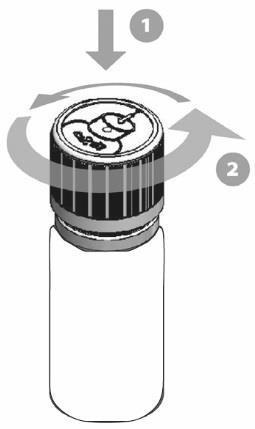
The package contains 1 bottle with a dropper and a child-resistant safety cap. Follow the instructions below for use:
- 1. Shake the bottle before use
- 2. Unscrew the child-resistant safety cap by pressing down and turning counterclockwise simultaneously (see figure).
- 3. Count the drops in a spoon and administer directly into the mouth.
- 4. Close the bottle by screwing on the cap and turning it firmly clockwise and put it back in the
package.
If you take more Balavita than you should
In case of accidental ingestion/intake of an excessive dose of Balavita, immediately inform your doctor or go to the nearest hospital.
In case of overdose, increased levels of calcium in the blood and urine may occur, the symptoms of which are as follows: nausea, vomiting, thirst, intense thirst (polydipsia), increased amount of urine excreted (polyuria), constipation and dehydration.
Chronic excessive dosages can lead to deposits of calcium salts in blood vessels and organs.
The use of an excessive dose of vitamin D during the first 6 months of pregnancy can cause serious damage to the fetus and newborn.
If you forget to take Balavita
Do not take a double dose to make up for a missed dose.
If you stop taking Balavita
If you have any doubts about the use of this medicine, ask your doctor or pharmacist.
4. Possible side effects
Like all medicines, this medicine can cause side effects, although not everybody gets them.
The side effects reported with the use of vitamin D are listed below according to the
following frequency classification: common (≥1/100, <1/10); uncommon (≥1/1000, <1/100);
rare (≥1/10,000, <1/1000); very rare (<1/10,000), not known (the frequency cannot be estimated
from the available data).
| Classification by n system and organ class according to MedDRA | z Common | Uncommon | Rare | Very rare | Not known |
| e Immune system disorders | Hypersensitivity |
| Classification by system and organ class according to MedDRA | Common | Uncommon | Rare | Very rare | o Not known |
| Metabolism and nutrition disorders | Hypercalcemia [secondary to hypervitaminosis, which may only occur in case of overdose or following prolonged and uncontrolled use (see section 4.9)] | Decreased appetite, thirst a | F r m | a c | |
| Psychiatric disorders | l Somnolence, confused state | ||||
| Nervous system disorders | d e | Headache | |||
| Gastrointestinal disorders | n | a Constipation, flatulence, abdominal pain, nausea, diarrhea | Vomiting, metallic taste, dry mouth | ||
| Skin and subcutaneous tissue disorders | l i a | Skin rash, pruritus, urticaria | |||
| Renal and urinary disorders | I | a t Hypercalciuria | Nephrocalcinosis, polyuria, polydipsia, renal failure | ||
| General disorders and conditions related to site of administration | z i a | . | Asthenia |
Reporting of side effects
If you get any side effects, talk to your doctor or pharmacist. This includes any possible side effects not listed in this leaflet. You can also report side effects directly through
the national reporting system at www.aifa.gov.it/content/segnalazioni-reazioni-avverse .
By reporting side effects you can help provide more information on the safety of
this medicine.
5. How to store Balavita
Keep this medicine out of the sight and reach of children.
Do not use this medicine after the expiry date which is stated on the pack after Exp.
The expiry date refers to the last day of that month.
Do not dispose of any medicine in waste water or household waste. Ask your pharmacist how to
dispose of medicines you no longer use. This will help protect the environment.
Store at a temperature not exceeding 30°C. Do not freeze.
Store in the original package to protect the medicine from light.
The shelf life of the medicine after first opening of the bottle is 6 months (record the date of first
opening in the designated space on the carton). After this period, any remaining medicine must be
discarded.
6. Contents of the pack and other information
What Balavita contains
- The active ingredient is cholecalciferol (vitamin D3) 2.5 mg equivalent to 100,000 I.U. 1 drop contains: 200 I.U. of vitamin D3.
- The other component is refined olive oil.
Description of the appearance of Balavita and contents of the pack
Balavita is presented as a solution contained in an amber glass bottle, closed with a
child-resistant polypropylene capsule.
It is available in a pack with 1 bottle with dropper of 10 ml.
Marketing Authorisation Holder and Manufacturer
Marketing Authorisation Holder:
Medinitaly Pharma Progress S.r.l.
Via di Villa Massimo, 37
00161 Roma, Italy
Manufacturer:
Special Product’s Line S.p.A.
Via Fratta Rotonda Vado Largo, 1
03012 Anagni (FR) Italy

Не впевнені, чи підходить вам цей лікарський засіб?
Обговоріть симптоми та можливі варіанти лікування з лікарем онлайн.
Balavita 25.000 U.I. oral solution in single-dose container
Cholecalciferol (Vitamin D3)
Read this leaflet carefully before taking this medicine as it contains important
information for you.
- Keep this leaflet. You may need to read it again.
- If you have any questions, ask your doctor or pharmacist.
- This medicine has been prescribed for you only. Do not pass it on to others, even if their symptoms are the same as yours, as it could be harmful.
- If you experience any side effects, including those not listed in this leaflet, tell your doctor or pharmacist. See section 4.
Contents of this leaflet:
- 1. What Balavita is and what it is used for
- 2. What you need to know before you take Balavita
- 3. How to take Balavita
- 4. Possible side effects
- 5. How to store Balavita
- 6. Contents of the pack and other information
1. What is Balavita and what is it used for?
Balavita contains cholecalciferol, better known as vitamin D3.
Balavita is indicated for:
- the prevention of vitamin D deficiency in adults only in cases where therapeutic adherence cannot be achieved with the daily administration of low doses of cholecalciferol.
- the treatment of vitamin D deficiency in adult patients.
2. What you need to know before you take Balavita
Do not take Balavita
- if you are allergic to cholecalciferol (vitamin D3) or to any of the other ingredients of this medicine (listed in section 6).
- if you have high levels of calcium in the blood (hypercalcemia) or in the urine (hypercalcinuria).
- if you suffer from kidney stones (nephrolithiasis) or calcium deposits in the kidneys (nephrocalcinosis).
- if you have high levels of Vitamin D in the blood.
- if you suffer from a severe kidney disease (severe renal failure) (see section “Warnings and precautions”).
Warnings and precautions
Talk to your doctor or pharmacist before taking Balavita.
- in the elderly,
- in case of insufficient sun exposure,
- in case of a special diet (e.g. low in calcium, vegetarian diet),
- in case of intense skin pigmentation,
- in case of extensive skin diseases, infectious diseases (such as tuberculosis, leprosy), digestive pathologies or liver diseases (hepatic insufficiency),
- in patients undergoing treatment with antiepileptic drugs or long-term therapy with some anti-inflammatory drugs.
The doctor may prescribe you periodic tests to check the levels of vitamin D or calcium in the
blood and urine in the following cases:
- if you need to follow the treatment with Balavita for a long period and with high doses,
- if you are elderly and are already being treated with medicines to treat certain heart diseases (cardiac glycosides) or with medicines that reduce blood pressure by increasing urine production (diuretics),
- if you suffer from sarcoidosis, an inflammatory disease that can affect the whole body and leads to the formation of nodules.
If your levels of vitamin D or calcium are high, your doctor will reduce the dose or
stop the treatment with Balavita.
In general, you should not take Balavita if you suffer from poor kidney function (see
section “Do not take Balavita”) you will need to undergo periodic tests to check the levels of
calcium and phosphate in the blood. If your levels of calcium and phosphate are high, your doctor
will reduce the dose or stop the treatment with Balavita.
Tell your doctor in the following cases, as it may be necessary to increase the dosages compared
to those indicated in section 3. “How to take Balavita”:
- if you are taking medicines used for the treatment of epilepsy (anticonvulsants or barbiturates) (see section “Other medicines and Balavita”);
- if you are taking corticosteroids, medicines to treat inflammation (see section “Other medicines and Balavita”);
- if you are taking medicines to reduce blood fats such as colestipol, colestyramine and (see section “Other medicines and Balavita”);
- if you are taking medicines that reduce fat absorption (Orlistat);
- if you are taking antacids containing aluminum, medicines to treat excessive stomach acid that can also reflux into the esophagus (see section “Other medicines and Balavita”);
- if you are obese;
- if you suffer from digestive diseases (intestinal malabsorption, cystic fibrosis);
- if you suffer from a liver disease (hepatic insufficiency).
Children and adolescents
Balavita 25,000 I.U. oral solution is not recommended in children and adolescents.
Other medicines and Balavita
Tell your doctor or pharmacist if you are taking, have recently taken or might take
any other medicine.
In particular, tell your doctor if you are taking the following drugs, as they may reduce
the effect of Balavita:
- medicines used for the treatment of epilepsy (anticonvulsants or barbiturates);
- medicines to reduce blood fats such as colestipol, colestyramine;
- if you are taking medicines that reduce fat absorption (Orlistat);
- antacids containing aluminum, medicines to treat excessive stomach acid that can reflux into the esophagus;
- corticosteroids, medicines to treat inflammation.
Also, if you are taking the following medicines, tell your doctor, who will monitor you closely and
carefully assess whether further tests are necessary:
- thiazide diuretics, medicines to treat high blood pressure, increasing urine production;
- digitalis medicine to treat some heart disorders;
- magnesium-containing preparations;
- warfarin, medicine to make the blood more fluid;
- actinomycin;
- antifungals;
- ketoconazole.
Balavita with food, drinks and alcohol
Tell your doctor if you are taking other products that already contain vitamin D, foods supplemented with
vitamin D or if you are using milk enriched with vitamin D, so that they can take into account
your total vitamin D intake and avoid an excessive dose.
The consumption of high amounts of alcohol for a long time (chronic alcoholism) decreases the reserves of
vitamin D in the liver.
Pregnancy, breastfeeding and fertility
If you are pregnant, suspect you are pregnant or are planning to become pregnant, or if you are breastfeeding
ask your doctor or pharmacist for advice before taking this medicine.
Pregnancy
During the first 6 months of pregnancy, the doctor will prescribe you vitamin D if deemed strictly
necessary, due to the risk of harmful effects to the fetus (see section 3. “If you take more Balavita than
you should”).
Balavita 25,000 I.U. oral solution is not recommended during pregnancy.
However, vitamin D deficiency is harmful to both mother and fetus, so when necessary the
doctor will prescribe you vitamin D during pregnancy at lower doses.
Breastfeeding
Balavita 25,000 I.U. oral solution is not recommended during breastfeeding.
When necessary, the doctor will prescribe you vitamin D during breastfeeding at lower doses.
This does not replace the administration of vitamin D in the newborn. Vitamin D and its
metabolites are found in breast milk. This aspect must be taken into consideration when
administering additional vitamin D to the baby.
Fertility
There are no data on the effects of vitamin D on fertility. However, no adverse effects on fertility have been reported for blood vitamin D levels within the normal range.
Driving and operating machinery
It is unlikely that Balavita will affect your ability to drive.
3. How to take Balavita
Take this medicine following the instructions of your doctor or pharmacist exactly. If you
have any doubts, consult your doctor or pharmacist.
The doses and duration of treatment will be evaluated by the doctor based on your state of health. Do not
exceed the doses indicated by the doctor.
The doses must be taken orally. It is recommended to take Balavita during meals.
Adults and Elderly
Prevention:1 single-dose container (equivalent to 25,000 I.U. of vitamin D3) once a month.
Treatment:1 single-dose container (equivalent to 25,000 I.U. of vitamin D3) once a week for 8-
12 weeks. The doctor will establish the appropriate dose for you and may subsequently prescribe a
lower dose.
If you take more Balavita than you should
In case of accidental ingestion/intake of an excessive dose of Balavita, immediately
inform your doctor or go to the nearest hospital.
In case of overdose, increased levels of calcium in the blood and urine may occur, the symptoms of which are as follows: nausea, vomiting, thirst, intense thirst (polydipsia), increased amount of urine
excreted (polyuria), constipation and dehydration.
Chronic excessive dosages can lead to calcium salt deposits in blood vessels and organs.
The use of an excessive dose of vitamin D during the first 6 months of pregnancy can cause serious damage to the
fetus and newborn.
If you forget to take Balavita
Do not take a double dose to make up for a missed dose.
If you stop taking Balavita
If you have any doubts about the use of this medicine, consult your doctor or pharmacist.
4. Possible side effects
Like all medicines, this medicine can cause side effects, although not everybody gets them.
The side effects reported with the use of vitamin D are listed below according to the
following frequency classification: common (≥1/100, <1/10); uncommon (≥1/1000, <1/100);
rare (≥1/10,000, <1/1000); very rare (<1/10,000), not known (the frequency cannot be estimated
from the available data).
| Classification by system and organ according to MedDRA | a Very common | Common | Uncommon | Rare | Very rare | Not known |
| Immune system disorders | z i | Hypersensitivity |
| Classification by system and organ according to MedDRA | Very common | Common | Uncommon | Rare | Very rare | o Not known |
| Metabolism and nutrition disorders | Hypercalcemia [secondary to hypervitaminosis, which may only occur in case of overdose or following prolonged and uncontrolled use (see section 4.9)] | Decreased appetite, r thirst a F | m a | c | ||
| Psychiatric disorders | l Somnolence, e confusional state | |||||
| Nervous system disorders | d | Headache | ||||
| Gastrointestinal disorders | a n a | Constipation, flatulence, abdominal pain, nausea, diarrhea | Vomiting, metallic taste, dry mouth | |||
| Skin and subcutaneous tissue disorders | l | i | Skin rash, pruritus, urticaria | |||
| Renal and urinary disorders | a | I t a | Hypercalciuria | Nephrocalcinosis, polyuria, polydipsia, renal failure |
Reporting of side effects
If you get any side effects, talk to your doctor or pharmacist. This includes any possible side effects not listed in this leaflet. You can also report side effects directly through
the national reporting system at www.aifa.gov.it/content/segnalazioni-reazioni-avverse
By reporting side effects you can help provide more information on the safety of
this medicine.
5. How to store Balavita
Keep this medicine out of the sight and reach of children. Do not use this medicine
after the expiry date which is stated on the pack after Exp.
The expiry date refers to the last day of that month.
Do not dispose of any medicine in wastewater or household waste. Ask your pharmacist how to
dispose of medicines you no longer use. This will help protect the environment.
Store at a temperature not exceeding 30°C. Do not freeze.
Store in the original package to keep the medicine protected from light.
6. Contents of the pack and other information
What Balavita contains
In a single-dose container:
- The active ingredient is cholecalciferol (vitamin D3) 0.625 mg equivalent to 25,000 I.U.
- The other component is refined olive oil.
Description of the appearance of Balavita and contents of the pack:
Balavita is presented as a solution contained in an amber glass container, closed with
a polypropylene capsule.
It is available in packs of 1, 2 or 4 single-dose containers of 2.5 ml. Not all pack sizes may be
marketed.
Marketing Authorisation Holder and Manufacturer
Marketing Authorisation Holder
Medinitaly Pharma Progress S.r.l.
Via di Villa Massimo, 37
00161 Rome, Italy
Manufacturer
Special Product’s Line S.p.A.
Via Fratta Rotonda Vado Largo, 1
03012 Anagni (FR) Italy

Виникли питання під час прийому ліків?
Обговоріть свої симптоми та лікування з лікарем онлайн.

- Країна реєстрації
- Лікарська формаOral drops, solution, 10,000 IU/ML
- Код АТХA11CC05
- Діюча речовина
- Потрібен рецептТак
- Виробник
- Ця інформація надана лише для ознайомлення і не є медичною порадою. Рішення щодо лікування завжди приймає лікар.
- Альтернативи до BALAVITAЛікарська форма: Film-coated tablet, 1000 IUДіюча речовина: colecalciferolВиробник: I.B.N. SAVIO S.R.LПотрібен рецептЛікарська форма: Film-coated tablet, 800 IUДіюча речовина: colecalciferolВиробник: I.B.N. SAVIO S.R.LПотрібен рецептЛікарська форма: Soft capsule, 10,000 IUДіюча речовина: colecalciferolВиробник: PHARMACARE S.R.L.Потрібен рецепт
Аналоги BALAVITA в інших країнах
Препарати з тією самою діючою речовиною, доступні в інших країнах.
Аналог BALAVITA у Іспанія
Аналог BALAVITA у Польща
Аналог BALAVITA у Україна
Лікарі онлайн щодо BALAVITA
Застосування, безпека та можливість призначення рецепта — за результатами медичної оцінки.









Отримайте рецепт на BALAVITA онлайн
Заповніть форму за 2 хвилини
Розкажіть про симптоми, історію хвороби та потрібний препарат.
Оберіть лікаря або ми призначимо
Оберіть спеціаліста або ми підберемо найближчого доступного лікаря.
Лікар розглядає ваш випадок
Зазвичай протягом 30 хвилин. Може ставити уточнювальні запитання в чаті.
Отримайте в будь-якій аптеці
Електронний рецепт надсилається на вашу пошту — дійсний по всій Польщі.
Часті запитання
BALAVITA потребує рецепта в Італія. Ви можете обговорити з лікарем онлайн, чи підходить цей лікарський засіб для вашої ситуації.
Діюча речовина у BALAVITA — colecalciferol. Це допомагає визначити препарати з тим самим складом, але під іншими торговими назвами.
BALAVITA виробляється компанією MEDINITALY PHARMA PROGRESS S.R.L.. Назва бренду та упаковка можуть відрізнятися залежно від дистрибʼютора.
Лікарі, зокрема Сімейні лікарі, Психіатри, Дерматологи, Кардіологи, Ендокринологи, Гастроентерологи, Пульмонологи, Нефрологи, Ревматологи, Гематологи, Інфекціоністи, Алергологи, Геріатри, Педіатри, Онкологи, можуть оцінити доцільність застосування BALAVITA з урахуванням вашого стану та місцевих правил. Ви можете записатися на онлайн-консультацію, щоб обговорити симптоми та можливі подальші кроки.
Польща має добре розвинену систему охорони здоров'я у великих містах, таких як Варшава, Краків, Вроцлав і Гданськ. Аптеки широко доступні та працюють відповідно до чинного законодавства, забезпечуючи доступ до рецептурних препаратів.
Ви можете придбати BALAVITA у Варшаві, Кракові, Вроцлаві або Гданську в будь-якій аптеці за наявності дійсного рецепта.
Щоб отримати рецепт, ви можете скористатися Oladoctor:
Інші препарати з тією самою діючою речовиною (colecalciferol) включають ANNEXXO, ANNOVA, ANORSIA. Вони можуть відрізнятися торговою назвою або формою випуску, але містять той самий терапевтичний компонент. Перед зміною або початком прийому нового препарату варто проконсультуватися з лікарем.
