



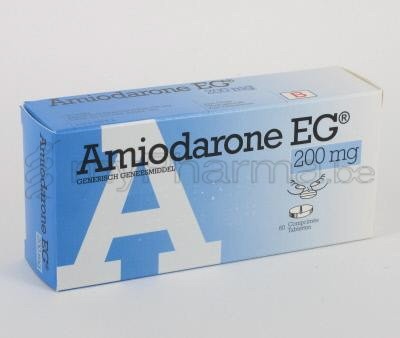
AMIODARONE 200 mg Coated Tablet

Запит на рецепт онлайн
Лікар розгляне ваш випадок і визначить, чи є рецепт медично доцільним.

Поговоріть з лікарем про ці ліки
Обговоріть симптоми та можливі подальші кроки під час короткої онлайн-консультації.



Інструкція із застосування AMIODARONE EG
Зміст інструкції
AMIODARONE EG 200 mg tablets
Generic medicine
Read this leaflet carefully before you start taking this medicine as it contains important
information for you.
- Keep this leaflet. You may need to read it again.
- If you have any questions, ask your doctor or pharmacist.
- This medicine has been prescribed for you only. Do not pass it on to others, even if they have the same symptoms as you, as it may be harmful.
- If you get any side effects, even those not listed in this leaflet, tell your doctor or pharmacist. See section 4.
Contents of this leaflet:
- 1. What Amiodarone EG is and what it is used for
- 2. What you need to know before you take Amiodarone EG
- 3. How to take Amiodarone EG
- 4. Possible side effects
- 5. How to store Amiodarone EG
- 6. Contents of the pack and other information
1. What is Amiodarone EG and what is it used for
Amiodarone EG contains the active substance amiodarone hydrochloride, which belongs to a class of
medicines called “antiarrhythmics, class III”.
It works by controlling an irregular heartbeat (called “arrhythmia”). Taking the tablets can
help restore the heart rhythm to normal.
Amiodarone is indicated for
- Treating irregular heartbeat when other medicines have not worked or cannot be used.
- Treating a condition in which the heart beats unusually fast (Wolff-Parkinson-White syndrome) when other medicines have not worked or cannot be used. Treating other types of fast or irregular heartbeat known as “atrial flutter” or “atrial fibrillation”. Amiodarone EG is used only when other medicines cannot be used.
- Treating a rapid heartbeat that can occur suddenly and may also be irregular. Amiodarone EG is used only when other medicines cannot be used.
2. Cosa deve sapere prima di prendere Amiodarone EG
Non prenda Amiodarone EG
- se è allergico allo iodio, all’amiodarone o ad uno qualsiasi degli altri componenti di questo medicinale (elencati al paragrafo 6). The signs of an allergic reaction include: skin rash, problems swallowing or breathing, swelling of the lips, face, throat or tongue;
- se ha un battito cardiaco più lento del normale (chiamato “bradicardia sinusale”) o una malattia chiamata blocco “senoatriale”, caratterizzata da un ritardo della formazione dei battiti del cuore o un preesistente prolungamento dell’intervallo QT;
- se soffre di disturbi gravi della conduzione dei battiti del cuore (blocchi atrio-ventricolari gravi, blocchi bi- o trifascicolari) e non è portatore di pacemaker;
- se ha bassi livelli di potassio nel sangue (ipopotassiemia);
- se soffre di una malattia, detta malattia del nodo del seno atriale, caratterizzata da una riduzione della frequenza del battito del cuore e non è portatore di pacemaker, in quanto l’assunzione di amiodarone in questo caso aumenta il rischio di arresto cardiaco;
- se soffre o ha sofferto di disturbi della tiroide (distiroidismi). Nei casi dubbi (disturbi precedenti non certi, storia familiare di disturbi della tiroide) il medico le farà fare un esame della funzionalità della tiroide, prima di iniziare il trattamento con questo medicinale;
- se sta assumendo medicinali inibitori delle monoamino-ossidasi (IMAO) o altri medicinali che possono aumentare il rischio di anomalie del battito del cuore (torsione di punta) (vedere “Altri medicinali e Amiodarone EG”);
- se è in gravidanza, salvo casi eccezionali per i quali il medico le prescriverà il medicinale (vedere “Gravidanza e allattamento”);
- se sta allattando al seno o con latte materno (vedere “Gravidanza e allattamento”).
Non prenda questo medicinale se uno qualsiasi dei suddetti casi la riguarda. Se ha dubbi si rivolga al
medico o al farmacista prima di prendere Amiodarone EG.
Avvertenze e precauzioni
Si rivolga al medico o al farmacista prima di prendere AMIODARONE EG
- se ha gravi disturbi al cuore (cardiomiopatie e gravi malattie coronariche) e durante il trattamento manifesta tosse grassa (con catarro), difficoltà a respirare, febbre, perdita di peso;
- se ha problemi al fegato; il medico la sottoporrà ad attenti controlli della funzionalità del fegato, sia all’inizio della terapia che durante il trattamento. In case of severe alterations of liver function, the doctor will suspend the administration of the medicine and subject you to appropriate therapy;
- se ha problemi polmonari o asma;
- se soffre di problemi di vista, in particolare di ridotta irrorazione di sangue e di infiammazione del nervo ottico (neuropatia e neurite ottica). In questo caso il medico le sospenderà la somministrazione del medicinale;
- se ha problemi ai muscoli;
- se ha problemi alla tiroide;
- se deve essere sottoposto ad intervento chirurgico in anestesia generale;
- se è una persona anziana (di età superiore ai 65 anni). Il medico dovrà monitorarla con maggiore attenzione;
- se porta un “pacemaker” o un “defibrillatore cardioversore impiantabile”. In questi casi il medico controllerà che il dispositivo funzioni correttamente prima e durante il trattamento o quando la dose di amiodarone viene modificata;
- se attualmente sta assumendo un medicinale contenente sofosbuvir e/o daclatasvir, sofosbuvir/ledipasvir, con o senza altri farmaci che riducono la frequenza cardiaca per il trattamento dell’epatite C, poiché può causare un rallentamento del battito del cuore pericoloso per la vita. The doctor may consider alternative treatments. If treatment with amiodarone and sofosbuvir and/or daclatasvir, sofosbuvir/ledipasvir, with or without other drugs that reduce heart rate is necessary, you may undergo additional cardiac monitoring;
- se durante la terapia con Amiodarone EG sta assumendo statine, per ridurre la quantità di colesterolo nel sangue, il medico le prescriverà una statina idonea da assumere con amiodarone (vedere anche “Altri medicinali e Amiodarone EG”);
- se sta assumendo altri medicinali (vedere “Altri medicinali e Amiodarone EG”).
Informi immediatamente il medicose:
- sta assumendo un medicinale contenente sofosbuvir, per il trattamento dell’epatite C, e durante il trattamento si manifestano:
- battito cardiaco lento o irregolare, o disturbi del ritmo cardiaco;
- fiato corto o peggioramento di una condizione di fiato corto esistente;
- dolore al petto;
- stordimento;
- palpitazioni;
- semi-svenimento o svenimento.
Con l’uso di amiodarone possono comparire disturbi della pelle (reazioni cutanee) anche molto gravi e
mortali dovuti a malattie denominate Sindrome di Stevens-Johnson e Necrolisi Epidermica Tossica (vedere
“Possibili effetti indesiderati”) che si manifestano con sintomi simil-influenzali seguiti da arrossamenti della
pelle (rash cutaneo) progressivi, spesso accompagnati da vesciche, bolle e che possono interessare anche le
mucose. In questi casi interrompa il trattamento con amiodarone e si rivolga immediatamente al medico.
Amiodarone EG le verrà somministrato solo dopo che il medico avrà valutato con attenzione le sue
condizioni di salute. Il medico la sottoporrà ad attenti controlli durante il trattamento.
Prima di iniziare il trattamento con Amiodarone EG il medico la sottoporrà ad elettrocardiogramma (ECG),
un esame con il quale è possibile analizzare l’attività del cuore, e le controllerà la quantità di potassio nel
sangue.
Durante il trattamento con questo medicinale verrà sottoposto ad elettrocardiogramma e ad alcune analisi del
sangue per valutare il funzionamento del fegato (transaminasi).
Poiché la possibilità che si verifichino effetti indesiderati (vedere “Possibili effetti indesiderati”) è maggiore
con l’aumentare della dose del medicinale (dose-dipendenti), il medico le somministrerà la dose più bassa
efficace per il controllo del battito del cuore. In case of worsening of heart rhythm alterations or the appearance of new alterations, the doctor will determine whether this is due to a loss of efficacy of the medicine or a worsening of the underlying disease.
If you are on the waiting list for a heart transplant, the doctor may modify the treatment, as
taking amiodarone before a heart transplant has shown an increased risk of potentially fatal complications
(primary transplant dysfunction), in which the transplanted heart stops working
correctly within the first 24 hours after surgery.
During therapy with Amiodarone EG, or even long after discontinuation of therapy, you may
experience an increase in thyroid function with disorders such as weight loss, changes in
heartbeat and chest pain. The doctor will subject you to careful checks and, if necessary, will interrupt the
administration of the medicine.
Amiodarone EG can cause serious problems with nerves and muscles (sensory-motor peripheral neuropathy and
myopathy). In this case, the doctor will suspend the administration of the medicine.
If you experience dry cough, fever, difficulty breathing associated with
severe general malaise during therapy with Amiodarone EG, the doctor will subject you to a chest X-ray and other examinations to
verify the functionality of your lungs. This is because lung toxicity may occur during therapy with Amiodarone EG
which, if not diagnosed in time, can be life-threatening. If necessary, the doctor will reduce the dose or discontinue the medicine and set up appropriate
therapy.
Avoid exposure to the sun and use protective measures (use a sunscreen with a high protection factor, wear a
hat and wear clothes that cover arms and legs) during treatment with this medicine
(see “Possible side effects”).
Bambini
The use of Amiodarone EG is not recommended in children.
Altri medicinali e Amiodarone EG
Informi il medico o il farmacista se sta assumendo, ha recentemente assunto o potrebbe assumere qualsiasi
altro medicinale. Questi includono medicinali senza prescrizione medica, inclusi i medicinali a base di erbe.
Infatti ciò può avere effetti sul modo in cui agiscono alcuni altri medicinali. Inoltre, alcuni medicinali
possono avere effetti sul modo in cui agisce amiodarone.
The association between Amiodarone EG and the following medicines is contraindicated:
- medicinali che possono provocare un particolare tipo di disturbo del battito del cuore (torsione di punta), come medicinali indicati per prevenire e controllare le alterazioni del battito del cuore
(antiaritmici di Classe IA, per es.: chinidina, procainamide, disopiramide; antiaritmici di classe II, per
es: sotalolo, bepridil, bretilio), medicinali non antiaritmici come la vincamina, medicinali per il
trattamento di alcune malattie mentali (come sultopride, litio, doxepina, maprotilina o amitriptilina),
cisapride (medicinale utilizzato per il trattamento del reflusso gastrico, ossia della risalita del contenuto
dello stomaco nell’esofago), eritromicina e co-trimoxazolo per uso endovenoso (antibiotici);
pentamidina per uso endovenoso (usato per alcuni tipi di polmonite);
- moxifloxacina (an antibiotic belonging to the fluoroquinolone class);
- medicinali per il trattamento della depressione (IMAO inhibitors);
- medicinali per la schizofrenia (such as chlorpromazine, thioridazine, fluphenazine, pimozide, haloperidol, amisulpride or sertindole);
- medicinali antimalarici (such as quinine, mefloquine, chloroquine or halofantrine);
- medicinali usati per la febbre da fieno, eruzioni cutanee o altre allergie chiamati antistaminici (such as terfenadine, astemizole or mizolastine). It is necessary to carry out checks of heart activity to prevent a decrease in blood potassium levels (hypokalaemia) (see paragraph 2 “Do not take Amiodarone EG”).
The association between Amiodarone EG and the following medicines is not recommended:
- medicinali che rallentano il battito del cuore (betabloccanti e calcioantagonisti) come propranololo, verapamil e diltiazem;
- medicinali che possono causare una riduzione della quantità di potassio nel sangue (ipopotassiemia) come medicinali che aumentano la motilità intestinale e l’evacuazione intestinale (lassativi stimolanti come bisacodil o senna);
- sofosbuvir, medicinale usato in associazione ad altri medicinali per il trattamento dell’epatite C cronica, sofosbuvir e/o daclatasvir, sofosbuvir/ledipasvir;
- alcuni antibiotici appartenenti alla classe dei fluorochinoloni (including ciprofloxacin, ofloxacin or levofloxacin).
The association between Amiodarone EG and the following medicines requires caution:
- medicinali che possono provocare un particolare tipo di alterazione del battito cardiaco noto come prolungamento del QT tra i quali alcuni medicinali per trattare le infezioni (come claritromicina);
- medicinali che favoriscono la produzione di urina (diuretici), da soli o associati;
- medicinali per il controllo delle infiammazioni e delle allergie (glucocorticoidi e mineralcorticoidi sistemici come idrocortisone, betametasone o prednisolone);
- tetracosactide, usato per studiare alcuni problemi ormonali;
- amfotericina B somministrato per via endovenosa, utilizzata per trattare le infezioni causate da funghi.
Gli effetti di Amiodarone EG possono essere influenced or influence the following
- medicinali: anestesia generale e dosi elevate di ossigeno durante gli interventi chirurgici;
- digossina, utilizzato per aumentare la forza di contrazione del cuore;
- fenitoina, medicinale per il trattamento dell’epilessia;
- statine, utilizzate per ridurre la quantità di colesterolo nel sangue, come simvastatina, atorvastatina e lovastatina, la cui associazione aumenta il rischio di disturbi ai muscoli (per esempio: rabdomiolisi). The doctor will prescribe the appropriate statin to be taken with amiodarone;
- ciclosporina, tacrolimus e sirolimus - utilizzati per abbassare le difese dell’organismo e per aiutare a prevenire il rigetto dei trapianti;
- medicinali usati per l’impotenza, come sildenafil, tadalafil o vardenafil;
- fentanil - usato per il sollievo del dolore;
- diidroergotamina ed ergotamina - usati per il trattamento di alcuni tipi di mal di testa (emicrania);
- midazolam e triazolam- usati per trattare l’ansia o per aiutare a rilassarsi prima di un’operazione chirurgica;
- colchicina - usata per il trattamento di un’infiammazione delle articolazioni che causa dolore e gonfiore (gotta);
- flecainide - un altro medicinale usato per il battito cardiaco irregolare. The doctor must monitor the treatment and may halve the dose of flecainide;
- lidocaina - usata come anestetico;
- cumarina - usata per impedire al sangue di coagulare;
- dabigatran e warfarin, anticoagulanti utilizzati per rendere più fluido il sangue.
Se non è sicuro che quanto sopra la riguardi, si rivolga al medico o al farmacista prima di prendere
Amiodarone EG.
Amiodarone EG con cibi e bevande e alcol
Non beva succo di pompelmo mentre prende questo medicinale perché può aumentare la probabilità di avere
effetti indesiderati.
Deve limitare la quantità di alcol durante il trattamento con questo medicinale. Questo perché bere alcol
mentre si prende questo medicinale aumenta la probabilità di avere problemi al fegato. Parli con il medico o
il farmacista per quanto riguarda la quantità di alcol che può bere.
Pregnancy, breastfeeding and fertility
If you are pregnant, suspect you are pregnant, or are planning a pregnancy, or if you are breastfeeding, ask your doctor or pharmacist for advice before taking this medicine.
Pregnancy
Do not take Amiodarone EG during pregnancy unless your doctor considers it necessary, as it may cause harm to the fetus.
Breastfeeding
Do not take Amiodarone EG if you are breastfeeding. Amiodarone EG passes into breast milk and can harm your baby.
Driving and operating machinery
After taking this medicine you may experience blurred vision. If this happens, do not drive or use machinery.
Amiodarone EG contains lactose and sodium
If you have been diagnosed with intolerance to some sugars, contact your doctor before taking this medicine.
This medicine contains less than 1 mmol (23 mg) of sodium per tablet, i.e. essentially ‘sodium-free’.
3. How to take Amiodarone EG
Take this medicine following exactly the instructions of your doctor or pharmacist. If you have
doubts, consult your doctor or pharmacist. This will help you to obtain the best results and to reduce the risk of
undesirable effects.
The doctor will establish the route of administration, the initial dose and the maintenance dose based on the severity
of your illness and your response to treatment.
The recommended doses are:
Initial dose
The initial dose is 600 mg (3 tablets) to be divided into three administrations per day for at least two
weeks.
Maintenance dose
When the desired effect has been obtained, the doctor will reduce the dose to establish a maintenance dose of
100-400 mg per day (from ½ tablet to 2 tablets) or establish a non-continuous therapy
(for example, taking Amiodarone EG for 2 or 3 weeks a month or for 5 days a week).
Amiodarone 200 mg tablets should be taken during or immediately after a meal with water (e.g.
a glass).
Use in children
The use of Amiodarone is not recommended in children.
The tablet can be divided into two equal doses.
If you take more Amiodarone EG than you should
If you take more Amiodarone EG than you should, contact your doctor or go immediately to the nearest
emergency room. Take the package of the medicine with you, so that the doctor knows what you have taken.
No data are available regarding the intake of an excessive dose of Amiodarone EG. The possible undesirable effects
due to taking an excessive dose of this medicine are: slowed heartbeat (sinus bradycardia), cardiac arrest, accelerated
heartbeat (ventricular tachycardia), heart rhythm abnormalities (torsade de pointes), blood circulation disorders
(circulatory failure), liver damage (hepatic damage), dizziness, weakness or fatigue, confusion and
malaise.
If you forget to take Amiodarone EG
If you forget a dose, take it as soon as you remember. However, if it is almost time for the next
dose, skip the forgotten dose. Do not take a double dose to compensate for the forgotten
tablet.
If you stop taking Amiodarone EG
Continue to take Amiodarone EG until your doctor tells you to stop. Do not stop taking
Amiodarone EG just because you feel better. If you stop taking this medicine, the irregularities of
the heartbeat may return. This can be dangerous.
If you have any doubts about the use of this medicine, ask your doctor or pharmacist.
4. Possible side effects
Like all medicines, this medicine can cause side effects, although not everybody gets them.
Amiodarone EG can remain in the blood for up to a month after stopping treatment. During
this period side effects can still occur.
Stop taking Amiodarone EG and contact your doctor or go to the hospital immediately if:
- you have an allergic reaction. Signs may include: a skin rash, difficulty swallowing or breathing, swollen eyelids, face, lips, throat or tongue.
Common side effects(may affect up to 1 in 10 people)
- Yellowing of the skin or eyes (jaundice), feeling tired or unwell, loss of appetite, stomach pain or high temperature. These can be signs of problems or damage to the liver, which can be very serious.
- Difficulty breathing or a feeling of tightness in the chest, persistent cough, shortness of breath, weight loss and fever. These symptoms may be due to inflammation of the lungs, which can be very serious.
- Red and itchy skin rash (eczema).
Uncommon side effects(may affect up to 1 in 100 people)
- Heartbeat becoming increasingly irregular and unstable up to cardiac arrest.
- Dry mouth.
Very rare side effects(may affect up to 1 in 10,000 people)
- Loss of vision in one eye or blurred vision and loss of colour. May have eye pain and feel pain when moving them. This may be a disease called “optic neuropathy” or “neuritis”.
- The heartbeat becomes very slow or stops. If this happens, go to hospital immediately.
- Inflammation of the lungs which can become very serious.
Frequency not known(the frequency cannot be estimated from the available data)
Severe allergic reaction (anaphylactic reaction, anaphylactic shock); sudden inflammation of the pancreas
(acute pancreatitis); reduced appetite; unusual muscle movements, stiffness, tremor and restlessness
(parkinsonism); abnormal sense of smell (parosmia); confusion (delirium); life-threatening skin reactions
characterized by rash, blisters, peeling skin and pain (toxic epidermal necrolysis (TEN), Stevens-Johnson
syndrome (SJS), bullous dermatitis, drug reaction with eosinophilia and systemic symptoms (DRESS), acute
bleeding from the lungs, swelling of the face, hands and feet, lips, tongue or throat (angioedema), lupus-like
syndrome (a disease in which the immune system attacks various parts of the body and leads to pain, stiffness
and swelling of the joints and redness of the skin, sometimes in the shape of a butterfly on the face), potentially
fatal complication after heart transplant (primary graft dysfunction) in which the transplanted heart stops
functioning correctly (see section 2, Warnings and precautions).
Stop taking Amiodarone EG and go to your doctor immediately if you notice any of the following
side effects – you may need urgent medical attention:
Uncommon side effects(may affect up to 1 in 100 people)
- Feeling of numbness or weakness in hands and feet, tingling or burning sensation in any part of the body, reduced ability to feel pain (sensory-motor peripheral neuropathy).
Very rare side effects(may affect up to 1 in 10,000 people)
- Skin rash caused by narrowing or blockage of blood vessels (vasculitis).
- Headache (usually worse in the morning or occurring after coughing or stress), feeling unwell (nausea), seizures, fainting, vision problems or confusion. These may be signs of problems in the brain (benign intracranial hypertension).
- Unsteady gait or stumbling (cerebellar ataxia), slowed and slurred speech.
- Feeling faint, dizzy, unusual fatigue and shortness of breath due to a slow or irregular heartbeat (especially in people over 65 years of age). Some cases of bleeding in the lungs have been reported in patients taking Amiodarone EG. You should inform your doctor immediately if you cough up blood.
Frequency not known (the frequency cannot be estimated from the available data)
- Chest pain, shortness of breath and irregular heartbeat. These may be signs of an arrhythmia called “Torsades de Pointes”.
Tell your doctor as soon as possible if you experience any of the following side effects:
Very common side effects(may affect more than 1 in 10 people)
- Blurred vision or perception of a coloured halo around bright lights.
Common side effects(may affect up to 1 in 10 people)
- Feeling extremely restless or agitated, weight loss, increased sweating and inability to tolerate heat. These may be signs of a disease called “hyper-thyroidism”.
- Feeling extremely tired, weak or debilitated, weight gain, inability to tolerate cold, constipation and muscle pain. These may be signs of a disease called “hypo-thyroidism”.
- Tremor of the arms or legs.
- Blue or grey marks on skin exposed to sunlight, especially on the face.
Uncommon side effects(may affect up to 1 in 100 people)
- Cramps, stiffness or spasms of muscles (myopathy).
Very rare side effects(may affect up to 1 in 10,000 people)
- Swelling of the testicles (epididymo-orchitis).
- Red and scaly patches on the skin (exfoliative dermatitis), hair loss (alopecia) or weakening of nails.
- Feeling tired, fainting, dizzy or pale skin. Signs of anaemia due to breakdown of red blood cells (hemolytic) or reduced production of red blood cells (aplastic).
- Bruising and bleeding due to a reduced number of platelets in the blood.
- Feeling unwell, confused or weak, nausea, loss of appetite, feeling irritable due to a condition called “syndrome of inappropriate antidiuretic hormone secretion” (SIADH).
Frequency not known(the frequency cannot be estimated from the available data)
- Recurrent infections due to a decrease in the number of white blood cells (neutropenia).
- Severe reduction in the number of white blood cells that makes infections more likely (agranulocytosis).
- Muscle weakness.
- Temporary decrease in kidney function.
Tell your doctor or pharmacist if any of the following side effects gets worse or lasts longer than
a few days:
Very common side effects(may affect more than 1 in 10 people)
- Feeling unwell accompanied by nausea and/or vomiting.
- Altered taste (dysgeusia).
- Alteration of liver enzyme levels (transaminases) at the beginning of treatment, detectable with blood tests.
- Increased sensitivity to sunlight with a tendency to burn more easily (see “Protect your skin from the sun” in section 2).
Common side effects(may affect up to 1 in 10 people)
- Slightly slowed heartbeat (bradycardia).
- Sleep disturbances, nightmares.
- Decreased sexual desire.
Very rare side effects(may affect up to 1 in 10,000 people)
- Headache.
- Balance problems, feeling dizzy (vertigo).
- Difficulty getting or maintaining an erection or ejaculating (impotence).
- Redness of the skin during radiotherapy.
- Increased creatinine in the blood, shown by blood tests. This may be a sign of impaired kidney function.
Frequency not known(the frequency cannot be estimated from the available data)
- Urticaria (itchy rash with bumps).
- Granulomas (small nodules) red on the skin or granulomas in the liver and bone marrow inside the body, visible with X-rays or ultrasound.
- Dry mouth.
- Reduced appetite.
- Disturbance of smell (parosmia).
- Confusional state (delirium).
- Bullous dermatitis.
- Hallucinations (seeing, hearing or perceiving things that are not there).
- Abdominal pain.
Reporting of side effects
If you get any side effects, talk to your doctor or pharmacist or nurse. This includes any side effects not
listed in this leaflet. You can also report side effects directly through the national reporting system at
https://www.aifa.gov.it/content/segnalazioni-reazioni-avverse. By reporting side effects you can help provide
more information on the safety of this medicine.
5. How to store Amiodarone EG
Keep this medicine out of the sight and reach of children.
Do not use this medicine after the expiry date which is stated on the carton or blister after SCAD. The
expiry date refers to the last day of that month.
Store at a temperature below 30°C.
Do not dispose of any medicine in wastewater or household waste. Ask your pharmacist how to dispose of
medicines you no longer use. This will help protect the environment.
6. Contents of the pack and other information
What Amiodarone EG contains
- The active substance is amiodarone hydrochloride. Each tablet contains 200 mg of amiodarone hydrochloride.
- The other ingredients are: lactose monohydrate, anhydrous colloidal silica, sodium carboxymethyl starch (type A), povidone (K-30) and magnesium stearate.
Description of the appearance of Amiodarone EG and contents of the pack
Tablets.
White to off-white, round, biconvex, uncoated tablets, marked with ‘8’ and ‘4’ separated by
a score line on one side and ‘A’ on the other side.
Amiodarone EG tablets is available in blister packs of white opaque PVC – aluminium foil.
Packs:
Blisters: 10, 20, 30 and 60 tablets.
Not all pack sizes may be marketed.
Marketing Authorisation Holder
EG S.p.A., Via Pavia 6, 20136 Milan
Manufacturer
APL Swift Services (Malta) Limited HF26, Hal Far Industrial Estate, Hal Far, Birzebbugia, BBG 3000.
Malta

Не впевнені, чи підходить вам цей лікарський засіб?
Обговоріть симптоми та можливі варіанти лікування з лікарем онлайн.

Виникли питання під час прийому ліків?
Обговоріть свої симптоми та лікування з лікарем онлайн.
- Країна реєстрації
- Лікарська формаCoated tablet, 200 MG
- Код АТХC01BD01
- Діюча речовина
- Потрібен рецептТак
- Виробник
- Ця інформація надана лише для ознайомлення і не є медичною порадою. Рішення щодо лікування завжди приймає лікар.
- Альтернативи до AMIODARONE EGЛікарська форма: Injectable solution, 150 MG/3 MLДіюча речовина: amiodaroneВиробник: ALFASIGMA S.P.A.Потрібен рецептЛікарська форма: Tablet, 200 MGДіюча речовина: amiodaroneВиробник: AUROBINDO PHARMA (ITALIA) S.R.L.Потрібен рецептЛікарська форма: Injectable solution, 150 MG/3 MLДіюча речовина: amiodaroneПотрібен рецепт
Аналоги AMIODARONE EG в інших країнах
Препарати з тією самою діючою речовиною, доступні в інших країнах.
Аналог AMIODARONE EG у Польща
Аналог AMIODARONE EG у Україна
Аналог AMIODARONE EG у Іспанія
Лікарі онлайн щодо AMIODARONE EG
Застосування, безпека та можливість призначення рецепта — за результатами медичної оцінки.
Отримайте рецепт на AMIODARONE EG онлайн
Заповніть форму за 2 хвилини
Розкажіть про симптоми, історію хвороби та потрібний препарат.
Оберіть лікаря або ми призначимо
Оберіть спеціаліста або ми підберемо найближчого доступного лікаря.
Лікар розглядає ваш випадок
Зазвичай протягом 30 хвилин. Може ставити уточнювальні запитання в чаті.
Отримайте в будь-якій аптеці
Електронний рецепт надсилається на вашу пошту — дійсний по всій Польщі.
Часті запитання
AMIODARONE EG потребує рецепта в Італія. Ви можете обговорити з лікарем онлайн, чи підходить цей лікарський засіб для вашої ситуації.
Діюча речовина у AMIODARONE EG — amiodarone. Це допомагає визначити препарати з тим самим складом, але під іншими торговими назвами.
AMIODARONE EG виробляється компанією EG S.P.A.. Назва бренду та упаковка можуть відрізнятися залежно від дистрибʼютора.
Лікарі, зокрема Сімейні лікарі, Психіатри, Дерматологи, Кардіологи, Ендокринологи, Гастроентерологи, Пульмонологи, Нефрологи, Ревматологи, Гематологи, Інфекціоністи, Алергологи, Геріатри, Педіатри, Онкологи, можуть оцінити доцільність застосування AMIODARONE EG з урахуванням вашого стану та місцевих правил. Ви можете записатися на онлайн-консультацію, щоб обговорити симптоми та можливі подальші кроки.
Польща має добре розвинену систему охорони здоров'я у великих містах, таких як Варшава, Краків, Вроцлав і Гданськ. Аптеки широко доступні та працюють відповідно до чинного законодавства, забезпечуючи доступ до рецептурних препаратів.
Ви можете придбати AMIODARONE EG у Варшаві, Кракові, Вроцлаві або Гданську в будь-якій аптеці за наявності дійсного рецепта.
Щоб отримати рецепт, ви можете скористатися Oladoctor:
Інші препарати з тією самою діючою речовиною (amiodarone) включають AMIODAR, AMIODARONE AUROBINDO, AMIODARONE KLORIDRATO BIOINDUSTRIA LIM. Вони можуть відрізнятися торговою назвою або формою випуску, але містять той самий терапевтичний компонент. Перед зміною або початком прийому нового препарату варто проконсультуватися з лікарем.
