



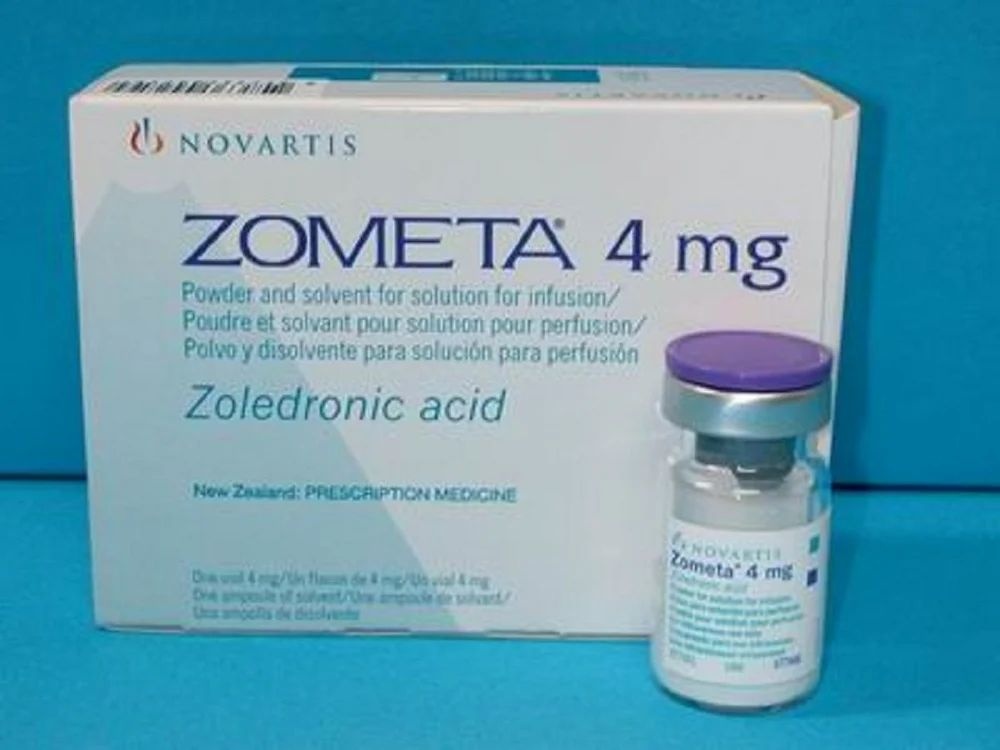
ZOMETA 4 mg Порошок И Раствор Для Инфузионного Раствора

Рассмотрение рецепта онлайн
Врач рассмотрит ваш случай и примет решение о назначении рецепта, если это медицински оправдано.

Поговорите с врачом об этом лекарстве
Обсудите симптомы и возможные дальнейшие шаги на онлайн-консультации.



Инструкция по применению TSOMETA
Содержание инструкции
- Zometa 4 mg powder and solvent for infusion solution
- Zometa 4 mg/5 ml concentrate for solution for infusion
- Zometa 4 mg/100 ml solution for infusion
Zometa 4 mg powder and solvent for infusion solution
zoledronic acid
Read this leaflet carefully before you are given this medicine as it contains important information for you.
- Keep this leaflet. You may need to read it again.
- If you have any questions, ask your doctor, pharmacist or nurse.
- If you get any side effects, even those not listed in this leaflet, tell your doctor, pharmacist or nurse. See section 4.
Contents of this leaflet
- 1. What Zometa is and what it is used for
- 2. What you need to know before you are given Zometa
- 3. How Zometa is used
- 4. Possible side effects
- 5. How to store Zometa
- 6. Contents of the pack and other information
1. What is Zometa and what is it used for
The active ingredient of Zometa is zoledronic acid, belonging to a group of substances called
bisphosphonates. Zoledronic acid works by binding to the bone and slowing down its rate of
metabolism. It is used:
- To prevent bone complications,such as fractures, in adult patients with bone metastases (spread of cancer from the primary tumor site to the bones).
- To reduce the amount of calciumin the blood in adult patients in whom it is too high following the presence of a tumor. Tumors can accelerate normal bone metabolism in such a way that the release of calcium from the bone is increased. This condition is known as neoplastic hypercalcemia (TIH).
2. What you need to know before you are given Zometa
Follow all instructions given to you by your doctor carefully.
Before starting treatment with Zometa, your doctor will perform blood tests and check the
response to treatment at regular intervals.
Zometa must not be given to you:
- if you are breastfeeding.
- if you are allergic to zoledronic acid, another bisphosphonate (the group of substances to which Zometa belongs) or any of the other ingredients of this medicine (listed in section 6).
Warnings and precautions
Talk to your doctor before you are given Zometa:
- if you have or have had kidney problems.
- if you have or have had pain, swelling or numbnessin the jaw/lower jaw or a feeling of heaviness in the jaw/lower jaw or tooth loss. Your doctor may recommend that you have a dental examination before starting treatment with Zometa.
- if you are undergoing dental treatmentsor need to have dental surgery, tell your dentist that you are being treated with Zometa and tell your doctor about your dental treatments.
During treatment with Zometa, you must maintain good oral hygiene (including regular teeth cleaning) and have routine dental check-ups.
Immediately tell your doctor and dentist if you experience any problems with your mouth or teeth
such as tooth loss, pain, swelling or sores that do not heal or discharge, as
these may be signs of a condition called osteonecrosis of the jaw/lower jaw.
Patients undergoing chemotherapy and/or radiotherapy, who are taking steroids, who are
undergoing dental surgery, who are not receiving routine dental care, who have gum disease,
who are smokers, or who have previously been treated with bisphosphonates (used to treat or
prevent bone diseases) have a higher risk of developing osteonecrosis of the
jaw/lower jaw.
Reduced levels of calcium in the blood (hypocalcemia) have been reported in patients treated with Zometa, which
can sometimes cause muscle cramps, dry skin, a burning sensation. Cases of irregular heartbeat (cardiac arrhythmia), convulsions, spasms and muscle contractions (tetany) secondary to severe hypocalcemia have been reported. Hypocalcemia can put your life at risk in some circumstances. If any of these conditions apply to you, tell your doctor immediately. If a
pre-existing condition of hypocalcemia exists, it must be treated before starting the first dose of Zometa.
You will be given adequate calcium and vitamin D supplementation.
Patients aged 65 years and over
Zometa can be given to people aged 65 years and over. There is no evidence that
additional precautions are necessary.
Children and adolescents
Zometa is not recommended for use in adolescents and children under 18 years of age.
Other medicines and Zometa
Tell your doctor if you are taking, have recently taken or might take any other
medicines. It is particularly important that you tell your doctor if you are also taking:
- Aminoglycosides (medicines used to treat serious infections), calcitonin (a type of medicine used to treat postmenopausal osteoporosis and hypercalcemia), loop diuretics (a type of medicine used to treat high blood pressure or edema) or other medicines that lower calcium levels, as the combination of these substances with bisphosphonates may cause a significant decrease in blood calcium concentration.
- Thalidomide (a medicine used to treat some types of blood cancers involving the bones) or any other medicine that may be harmful to the kidneys.
- Aclasta (a medicine that also contains zoledronic acid and is used to treat osteoporosis and other non-cancerous bone diseases), or any other bisphosphonate, as the combined effects of these medicines when taken together with Zometa are not known.
- Anti-angiogenic medicines (used to treat cancer), as the combination of these with Zometa has been associated with an increased risk of osteonecrosis of the jaw.
Pregnancy and breastfeeding
If you are pregnant, you must not be given Zometa. Tell your doctor if you are pregnant or suspect you may be pregnant.
If you are breastfeeding, you must not be given Zometa.
Ask your doctor for advice before taking any medicine during pregnancy or if you are
breastfeeding.
Driving and using machines
Very rarely, drowsiness and lethargy have been reported with the use of Zometa. You should therefore be
very careful when driving, using machines or performing other activities that
require complete attention.
Zometa contains sodium
This medicine contains less than 1 mmol (23 mg) of sodium per dose, i.e. essentially “sodium-free”. If your doctor uses a common salt solution to dilute Zometa, the amount of sodium you receive
would be higher.
3. How Zometa is used
- Zometa must only be administered by healthcare professionals trained in the use of bisphosphonates via the intravenous route, i.e., through a vein.
- Your doctor will recommend that you drink sufficient water before each treatment to help prevent dehydration.
- Carefully follow all other instructions given by your doctor, pharmacist or nurse.
How much Zometa is administered
- The usual single dose is 4 mg.
- If you have kidney problems, your doctor will administer a reduced dose based on the severity of the kidney problem.
How often is Zometa administered
- If you are being treated for the prevention of bone complications caused by bone metastases, you will be given a Zometa infusion every three or four weeks.
- If you are being treated to reduce the amount of calcium in the blood, you will normally be given a single Zometa infusion.
How Zometa is administered
- Zometa is administered intravenously as an infusion lasting at least 15 minutes and must be administered as a single intravenous solution in a separate infusion line.
Patients with not excessively high blood calcium levels will also be prescribed
calcium and vitamin D supplements, to be taken daily.
If you have been given too much Zometa
If you have been given doses higher than those recommended, you must be monitored with
particular attention by your doctor. This is because you may develop abnormalities in serum electrolytes (e.g.
abnormal levels of calcium, phosphorus and magnesium) and/or changes in kidney function, including
severe kidney impairment. If calcium levels drop too low, you may need to be given
calcium supplementation by infusion.
4. Possible side effects
Like all medicines, this medicine can cause side effects, although not everyone will experience them.
The most common are usually mild and are likely to disappear shortly.
Inform your doctor if any of the following serious side effects occur:
Common (may affect up to 1 in 10 people):
- Severe kidney failure (will be ascertained by the doctor through specific blood tests).
- Low levels of calcium in the blood.
Uncommon (may affect up to 1 in 100 people):
- Pain in the mouth, teeth and/or jaw/mandible, swelling or failure of sores inside the mouth or jaw/mandible to heal, discharge, numbness or feeling of heaviness in the jaw/mandible or tooth loss. These may be signs of damage to the jaw/mandible (osteonecrosis). If you experience these symptoms during or after stopping treatment with Zometa, inform your doctor and dentist immediately.
- Irregular heartbeat (atrial fibrillation) has been observed in patients treated with zoledronic acid for postmenopausal osteoporosis. It is currently unknown whether zoledronic acid causes this irregular heartbeat, but you should report it to your doctor if you have these symptoms after being given zoledronic acid.
- Severe allergic reactions: shortness of breath, swelling, especially of the face and throat.
Rare (may affect up to 1 in 1,000 people):
- As a consequence of low calcium levels: irregular heartbeat (cardiac arrhythmia secondary to hypocalcemia).
- A disorder of kidney function called Fanconi syndrome (will normally be established by the doctor with some urine tests).
Very rare (may affect up to 1 in 10,000 people):
- As a consequence of low calcium levels: convulsions, numbness and tetany (secondary to hypocalcemia).
- Contact your doctor if you experience ear pain, ear discharge and/or ear infection. These episodes may be signs of bone damage in the ear.
- Osteonecrosis has very rarely occurred in other bones besides the jaw/mandible, in particular in the hip or thigh. If you experience symptoms such as the onset or worsening of pain, pain or stiffness during or after stopping treatment with Zometa, inform your doctor immediately. Not known: the frequency cannot be calculated based on available data
- Inflammation of the kidney (tubulointerstitial nephritis): signs and symptoms may include decreased urine volume, blood in the urine, nausea, general feeling of unwellness.
Inform your doctor as soon as possible if any of the following side effects should
occur:
Very common (may affect more than 1 in 10 people):
- Low levels of phosphates in the blood.
Common (may affect up to 1 in 10 people):
- Headache and flu-like syndrome with fever, fatigue, weakness, drowsiness, chills and pain in the bones, joints and/or muscles. In most cases, no specific treatment is necessary and the symptoms disappear after a short time (a few hours or days).
- Gastrointestinal reactions, such as nausea and vomiting, as well as loss of appetite.
- Conjunctivitis.
- Low levels of red blood cells in the blood (anemia).
Uncommon (may affect up to 1 in 100 people):
- Hypersensitivity reactions.
- Low blood pressure.
- Chest pain.
- Reactions at the infusion site (redness and swelling), rash, itching.
- High blood pressure, shortness of breath, dizziness, anxiety, sleep disorders, taste disturbances, tremor, tingling or numbness in the hands or feet, diarrhea, constipation, abdominal pain,
dry mouth.
- Low levels of white blood cells and platelets in the blood.
- Low levels of magnesium and potassium in the blood. The doctor will monitor them and take the necessary measures.
- Weight gain.
- Increased sweating.
- Drowsiness.
- Blurred vision, eye injury, sensitivity to light.
- Sudden chills with fainting, weakness or collapse.
- Difficulty breathing with wheezing or coughing.
- Hives.
Rare (may affect up to 1 in 1,000 people):
- Slow heartbeat.
- Confusion.
- Rarely, an unusual fracture of the femur can occur, particularly in patients treated for osteoporosis for a long time. Contact your doctor if you experience pain, weakness or discomfort in the thigh, hip or groin, as this may be an early indication of a possible femur fracture.
- Interstitial lung disease (inflammation of the lung tissue).
- Flu-like symptoms including arthritis and joint swelling.
- Painful redness and/or swelling of the eyes.
Very rare (may affect up to 1 in 10,000 people):
- Fainting due to low blood pressure.
- Severe pain in the bones, joints and/or muscles, occasionally disabling.
Reporting of side effects
If you get any side effects, even those not listed in this leaflet, tell your
doctor, pharmacist or nurse. You can also report side effects directly
through the national reporting system listed in Annex V. By reporting side
effects you can help provide more information on the safety of this medicine.
5. How to store Zometa
The doctor, pharmacist or nurse knows how to store Zometa appropriately (see
paragraph 6).
6. Contents of the pack and other information
What Zometa contains
- The active ingredient of Zometa is zoledronic acid. One vial contains 4 mg of zoledronic acid, corresponding to 4.264 mg of zoledronic acid monohydrate.
- The other ingredients are mannitol, sodium citrate.
Description of the appearance of Zometa and contents of the pack
Zometa is supplied as a powder in a vial. One vial contains 4 mg of acid
zoledronic.
Each pack contains the vial of powder with a 5 ml vial of water for injections
to be used for dissolving the powder.
Zometa is supplied in single packs containing 1 or 40 vials and 1 or 4 vials and as
multiple packs containing 10 (10x 1+1) vials and vials. Not all pack sizes
may be marketed.
Marketing Authorisation Holder
Phoenix Labs Unlimited Company
Suite 12, Bunkilla Plaza
Bracetown Business Park
Clonee, County Meath
Ireland
Manufacturer
Novartis Pharma GmbH
Roonstrasse 25
D-90429 Nuremberg
Germany
For further information on this medicinal product, contact the marketing authorisation
holder directly or, if available, the local representative:
BE, BG, CZ, DK, DE, EE, IE,
HR, IT, CY, LV, LT, LU, HU,
MT, NL, AT, PL, PT, RO, SI,
SK, FI, SE and UK(NI)
Phoenix Labs Unlimited Company
Suite 12, Bunkilla Plaza
Bracetown Business Park
Clonee, County Meath
Ireland
Email: [email protected]
Tel: +353 1 468 8900
EL
Arriani Pharmaceuticals SA
Lavriou Avenue 85
190 02 Paiania Attica
Greece
Tel: +30 210 6683000
FR
Exploitant de l’autorisation de mise sur le marché :
EURODEP PHARMA
10 RUE ANTOINE DE SAINT EXUPERY
ZAC DU PARC DE COMPANS
77290 MITRY MORY
[email protected]
Other sources of information
More detailed information on this medicine is available on the European Medicines
Agency website, http://www.ema.europa.eu .
ES
EUROMED PHARMA SPAIN S.L
C/Eduard Maristany, 430-432
08919 Badalona (Barcelona)
España
Tel: + 34 932 684 208
Fax: + 34 933 150 469
INFORMATION FOR HEALTHCARE PROFESSIONALS
How to prepare and administer Zometa
- To prepare an infusion solution containing 4 mg of zoledronic acid, add, under sterile conditions, 5 ml of water for injections, using the appropriate vial included in the pack, to the vial containing Zometa powder. Gently shake the vial to dissolve the powder.
- Further dilute the reconstituted Zometa solution (5 ml) with 100 ml of calcium-free or other bivalent cation-free infusion solution. If a reduced dose of Zometa is required, initially withdraw the appropriate volume of reconstituted solution (4 mg/5 ml) as indicated below and then further dilute it in 100 ml of infusion solution. To avoid potential incompatibilities, the infusion solution used for dilution must be 0.9% p/v sodium chloride solution or 5% p/v glucose solution.
The reconstituted Zometa solution must not be mixed with solutions containing
calcium or other bivalent cations such as Ringer's lactate solution.
Instructions for preparing Zometa at reduced dosages:
Withdraw the appropriate volume of reconstituted solution (4 mg/5 ml), as follows:
- 4.4 ml for the 3.5 mg dose
- 4.1 ml for the 3.3 mg dose
- 3.8 ml for the 3.0 mg dose
- For single use only. Any unused solution must be discarded. Only clear, particle-free and colourless solution must be used. Aseptic techniques must be followed during the preparation of the infusion.
- From a microbiological point of view, the reconstituted and diluted infusion solution must be used immediately after first opening. If not used immediately, the storage times during use and conditions prior to use are the responsibility of the user and should normally not exceed 24 hours between 2°C - 8°C. The refrigerated solution must be brought to room temperature before administration.
- The solution containing zoledronic acid must be administered as a single infusion over a period of 15 minutes in a separate infusion line. The hydration status of patients must be assessed before and after the administration of Zometa to ensure they are adequately hydrated.
- Studies performed on different infusion lines made of polyvinyl chloride, polyethylene and polypropylene have not shown incompatibility with Zometa.
- Since no data are available on the compatibility of Zometa with other substances administered intravenously, Zometa must not be mixed with other medicines and/or substances and must always be administered through a separate infusion line.
How to store Zometa
- Keep Zometa out of the sight and reach of children.
- Do not use Zometa after the expiry date which is stated on the packaging.
- The closed vial does not require any special storage conditions.
- The diluted infusion solution of Zometa must be used immediately to avoid microbiological contamination.
Zometa 4 mg/5 ml concentrate for solution for infusion
zoledronic acid
Read this leaflet carefully before you are given this medicine because
it contains important information for you.
- Keep this leaflet. You may need to read it again.
- If you have any questions, ask your doctor, pharmacist or nurse.
- If you get any side effects, even those not listed in this leaflet, tell your doctor, pharmacist or nurse. See section 4.
Contents of this leaflet
- 1. What Zometa is and what it is used for
- 2. What you need to know before you are given Zometa
- 3. How Zometa is used
- 4. Possible side effects
- 5. How to store Zometa
- 6. Contents of the pack and other information
1. What is Zometa and what is it used for
The active ingredient of Zometa is zoledronic acid, belonging to a group of substances called
bisphosphonates. Zoledronic acid works by binding to the bone and slowing down its rate of
metabolism. It is used:
- To prevent bone complications,such as fractures, in adult patients with bone metastases (spread of cancer from the primary tumor site to the bones).
- To reduce the amount of calciumin the blood in adult patients in whom it is too high following the presence of a tumor. Tumors can accelerate normal bone metabolism in such a way that the release of calcium from the bone is increased. This condition is known as neoplastic hypercalcemia (TIH).
2. What you need to know before you are given Zometa
Follow all instructions given to you by your doctor carefully.
Before starting treatment with Zometa, your doctor will perform blood tests and check the
response to treatment at regular intervals.
Zometa must not be given to you:
- if you are breastfeeding.
- if you are allergic to zoledronic acid, another bisphosphonate (the group of substances to which Zometa belongs) or any of the other ingredients of this medicine (listed in section 6).
Warnings and precautions
Talk to your doctor before you are given Zometa:
- if you have or have had kidney problems.
- if you have or have had pain, swelling or numbnessof the jaw/lower jaw or a feeling of heaviness in the jaw/lower jaw or tooth loss. Your doctor may recommend that you have a dental examination before starting treatment with Zometa.
- if you are undergoing dental treatmentsor are to undergo dental surgery, inform your dentist that you are being treated with Zometa and inform your doctor about your dental treatments.
During treatment with Zometa, you must maintain good oral hygiene (including regular teeth cleaning) and have routine dental check-ups.
Immediately inform your doctor and dentist if you experience any problems with your mouth or teeth
such as tooth loss, pain, swelling or sores that do not heal or discharge, as
these may be signs of a condition called osteonecrosis of the jaw/lower jaw.
Patients undergoing chemotherapy and/or radiotherapy, who are taking steroids, who are
undergoing dental surgery, who are not receiving routine dental care, who have gum disease,
who are smokers, or who have previously been treated with bisphosphonates (used to treat or
prevent bone diseases) have a higher risk of developing osteonecrosis of the
jaw/lower jaw.
Reduced levels of calcium in the blood (hypocalcaemia) have been reported in patients treated with Zometa, which
can sometimes cause muscle cramps, dry skin, a burning sensation. Cases of irregular heartbeat (cardiac arrhythmia), convulsions, spasms and muscle contractions (tetany) secondary to severe hypocalcaemia have been reported. Hypocalcaemia can be life-threatening in some circumstances. If any of these conditions affect you, inform your doctor immediately. If a
pre-existing condition of hypocalcaemia is present, it must be treated before starting the first dose of Zometa.
You will be given adequate calcium and vitamin D supplementation.
Patients aged 65 years and over
Zometa can be given to people aged 65 years and over. There is no evidence that
additional precautions are necessary.
Children and adolescents
Zometa is not recommended for use in adolescents and children under 18 years of age.
Other medicines and Zometa
Tell your doctor if you are taking, have recently taken or might take any other
medicines. It is particularly important that you inform your doctor if you are also taking:
- Aminoglycosides (medicines used to treat serious infections), calcitonin (a type of medicine used to treat post-menopausal osteoporosis and hypercalcaemia), loop diuretics (a type of medicine used to treat high blood pressure or oedema) or other medicines that lower calcium levels, as the combination of these substances with bisphosphonates may cause a significant decrease in blood calcium concentration.
- Thalidomide (a medicine used to treat some types of blood cancers involving the bones) or any other medicine that may be harmful to the kidneys.
- Aclasta (a medicine that also contains zoledronic acid and is used to treat osteoporosis and other non-cancerous bone diseases), or any other bisphosphonate, as the combined effects of these medicines when taken together with Zometa are not known.
- Anti-angiogenic medicines (used to treat cancer), as the combination of these with Zometa has been associated with an increased risk of osteonecrosis of the jaw.
Pregnancy and breastfeeding
If you are pregnant, you must not be given Zometa. Tell your doctor if you are pregnant or suspect you may be pregnant.
If you are breastfeeding, you must not be given Zometa.
Ask your doctor for advice before taking any medicine during pregnancy or if you are
breastfeeding.
Driving and using machines
Very rarely, drowsiness and lethargy have been reported with the use of Zometa. You should therefore be
very careful when driving, using machines or performing other activities that
require complete attention.
Zometa contains sodium
This medicine contains less than 1 mmol (23 mg) of sodium per dose, i.e. essentially “sodium-free”. If your doctor uses a common salt solution to dilute Zometa, the amount of sodium you receive
would be higher.
3. How Zometa is used
- Zometa must only be administered by healthcare professionals trained in the use of bisphosphonates via the intravenous route, i.e. through a vein.
- Your doctor will recommend that you drink sufficient water before each treatment to help prevent dehydration.
- Carefully follow all other instructions given by your doctor, pharmacist or nurse.
How much Zometa is administered
- The usual single dose is 4 mg.
- If you have kidney problems, your doctor will administer a reduced dose based on the severity of the kidney problem.
How often is Zometa administered
- If you are being treated to prevent bone complications caused by bone metastases, you will be given a Zometa infusion every three or four weeks.
- If you are being treated to reduce the amount of calcium in the blood, you will normally be given a single Zometa infusion.
How Zometa is administered
- Zometa is administered intravenously as an infusion lasting at least 15 minutes and must be administered as a single intravenous solution in a separate infusion line.
Patients with not excessively high blood calcium levels will also be prescribed
calcium and vitamin D supplements to be taken daily.
If you have been given too much Zometa
If you have been given doses higher than those recommended, you must be monitored with
particular attention by your doctor. This is because you may develop electrolyte abnormalities (e.g.
abnormal levels of calcium, phosphorus and magnesium) and/or changes in kidney function, including
severe kidney impairment. If calcium levels drop too low, you may need to be given
calcium supplementation by infusion.
4. Possible side effects
Like all medicines, this medicine can cause side effects, although not everybody gets them.
The most common are usually mild and, probably, will disappear in a short time.
Tell your doctor if any of the following serious side effects occur:
Common (may affect up to 1 in 10 people):
- Severe kidney failure (will be ascertained by the doctor through specific blood tests).
- Low levels of calcium in the blood.
Uncommon (may affect up to 1 in 100 people):
- Pain in the mouth, teeth and/or jaw/mandible, swelling or failure of sores inside the mouth or jaw/mandible to heal, secretion, numbness or feeling of heaviness in the jaw/mandible or loss of a tooth. These may be signs of damage to the jaw/mandible (osteonecrosis). If you experience these symptoms during or after stopping treatment with Zometa, tell your doctor and dentist immediately.
- In patients treated with zoledronic acid for postmenopausal osteoporosis, an irregular heartbeat (atrial fibrillation) has been observed. It is currently unknown whether zoledronic acid causes this irregular heartbeat, but you should report to your doctor if you have these symptoms after being given zoledronic acid.
- Severe allergic reactions: shortness of breath, swelling especially of the face and throat.
Rare (may affect up to 1 in 1,000 people):
- As a consequence of low calcium levels: irregular heartbeat (cardiac arrhythmia secondary to hypocalcemia).
- A disorder of kidney function called Fanconi syndrome (will normally be established by the doctor with some urine tests).
Very rare (may affect up to 1 in 10,000 people):
- As a consequence of low calcium levels: convulsions, numbness and tetany (secondary to hypocalcemia).
- Contact your doctor if you experience ear pain, ear discharge and/or ear infection. These episodes may be signs of bone damage to the ear.
- Osteonecrosis has very rarely occurred in other bones besides the jaw/mandible, particularly in the hip or thigh. If you experience symptoms such as the onset or worsening of pain, pain or stiffness during or after stopping treatment with Zometa, tell your doctor immediately.
Not known: frequency cannot be estimated from available data
- Inflammation of the kidney (tubulointerstitial nephritis): signs and symptoms may include decreased urine volume, blood in the urine, nausea, general feeling of unwellness.
Tell your doctor as soon as possible if any of the following side effects occur:
Very common (may affect more than 1 in 10 people):
- Low levels of phosphates in the blood.
Common (may affect up to 1 in 10 people):
- Headache and a flu-like syndrome with fever, fatigue, weakness, drowsiness, chills and pain in the bones, joints and/or muscles. In most cases, no specific treatment is necessary and the symptoms disappear after a short time (a couple of hours or days).
- Gastrointestinal reactions, such as nausea and vomiting, as well as loss of appetite.
- Conjunctivitis.
- Low levels of red blood cells in the blood (anemia).
Uncommon (may affect up to 1 in 100 people):
- Hypersensitivity reactions.
- Low blood pressure.
- Chest pain.
- Reactions at the infusion site (redness and swelling), rash, itching.
- High blood pressure, shortness of breath, dizziness, anxiety, sleep disorders, taste disturbances, tremor, tingling or numbness in the hands or feet, diarrhea, constipation, abdominal pain,
dry mouth.
- Low levels of white blood cells and platelets in the blood.
- Low levels of magnesium and potassium in the blood. The doctor will monitor them and take the necessary measures.
- Weight gain.
- Increased sweating.
- Drowsiness.
- Blurred vision, eye injury, sensitivity to light.
- Sudden chills with fainting, weakness or collapse.
- Difficulty breathing with wheezing or coughing.
- Urticaria.
Rare (may affect up to 1 in 1,000 people):
- Slow heartbeat.
- Confusion.
- Rarely, an unusual fracture of the femur can occur, particularly in patients treated for a long time for osteoporosis. Contact your doctor if you experience pain, weakness or discomfort in the thigh, hip or groin as it may be an early indication of a possible femur fracture.
- Interstitial lung disease (inflammation of the lung tissue).
- Flu-like symptoms including arthritis and joint swelling.
- Painful redness and/or swelling of the eyes.
Very rare (may affect up to 1 in 10,000 people):
- Fainting due to low blood pressure.
- Severe pain in the bones, joints and/or muscles, occasionally disabling.
- Osteonecrosis has very rarely occurred in other bones besides the jaw/mandible, particularly in the hip or thigh. If you experience symptoms such as the onset or worsening of pain, pain or stiffness during or after stopping treatment with Zometa, tell your doctor immediately.
Reporting of side effects
If you get any side effects, talk to your doctor, pharmacist or nurse. This includes any possible side effects not listed in this leaflet. You can also report side effects directly
through the national reporting system listed in Annex V. By reporting side effects you can help
provide more information on the safety of this medicine.
5. How to store Zometa
The doctor, pharmacist or nurse knows how to store Zometa appropriately (see
paragraph 6).
6. Contents of the pack and other information
What Zometa contains
- The active ingredient of Zometa is zoledronic acid. One vial contains 4 mg of zoledronic acid, corresponding to 4.264 mg of zoledronic acid monohydrate.
- The other ingredients are mannitol, sodium citrate, water for injections.
Description of the appearance of Zometa and contents of the pack
Zometa is supplied as a concentrated liquid in a vial. One vial contains 4 mg of acid
zoledronic.
Each pack contains the vial of concentrate. Zometa is supplied in single
packs containing 1 or 4 vials and in multiple packs containing 10 (10x1)°vials. Not all pack sizes may be
marketed.
Marketing Authorisation Holder
Phoenix Labs Unlimited Company
Suite 12, Bunkilla Plaza
Bracetown Business Park
Clonee, County Meath
Ireland
Manufacturer
Sanochemia Pharmazeutika GmbH
Landegger-Straße 7
2491 Neufeld an der Leitha
Burgenland
Austria
O
LABORATORI FUNDACIÓ DAU
Pol. Ind. Consorci Zona Franca. c/ C, 12-14
08040 Barcelona
Spain
For further information on this medicinal product, contact the marketing authorisation holder directly or, if
available, the local representative:
BE, BG, CZ, DK, DE, EE, IE,
HR, IT, CY, LV, LT, LU, HU,
MT, NL, AT, PL, PT, RO, SI,
SK, FI, SE and UK(NI)
Phoenix Labs Unlimited Company
Suite 12, Bunkilla Plaza
Bracetown Business Park
Clonee, County Meath
Ireland
Email: [email protected]
Tel: +353 1 468 8900
EL
Arriani Pharmaceuticals SA
Lavriou Avenue 85
190 02 Paiania Attica
Greece
Tel: +30 210 6683000
FR
Exploitant de l’autorisation de mise sur le marché :
EURODEP PHARMA
10 RUE ANTOINE DE SAINT EXUPERY
ZAC DU PARC DE COMPANS
77290 MITRY MORY
[email protected]
Other sources of information
More detailed information on this medicine is available on the European Medicines Agency website,
http://www.ema.europa.eu
ES
EUROMED PHARMA SPAIN S.L
C/Eduard Maristany, 430-432
08919 Badalona (Barcelona)
España
Tel: + 34 932 684 208
Fax: + 34 933 150 469
INFORMATION FOR HEALTHCARE PROFESSIONALS
How to prepare and administer Zometa
- To prepare an infusion solution containing 4 mg of zoledronic acid, further dilute Zometa concentrate (5 ml) with 100 ml of infusion solution free of calcium or other divalent cations. If a reduced dose of Zometa is required, initially withdraw the appropriate volume as follows and then further dilute it in 100 ml of infusion solution. To avoid potential incompatibilities, the infusion solution used for dilution must be 0.9% p/v sodium chloride solution or 5% p/v glucose solution.
Zometa concentrate must not be mixed with solutions containing calcium or other
divalent cations such as Ringer's lactate solution.
Instructions for preparing Zometa at reduced dosages:
Withdraw the appropriate volume of concentrate, as follows:
- 4.4 ml for the 3.5 mg dose
- 4.1 ml for the 3.3 mg dose
- 3.8 ml for the 3.0 mg dose
- For single use only. Any unused solution remaining must be discarded. Only clear, particle-free and colourless solution must be used. Aseptic techniques must be followed during the preparation of the infusion.
- From a microbiological point of view, the diluted infusion solution must be used immediately. If not used immediately, the storage times during use and conditions prior to use are the responsibility of the user and should normally not exceed 24 hours between 2°C - 8°C. The refrigerated solution must be brought to room temperature before administration.
- The solution containing zoledronic acid must be administered as a single infusion over a period of 15 minutes via a separate infusion line. The hydration status of patients must be assessed before and after the administration of Zometa to ensure they are adequately hydrated.
- Studies performed on different infusion lines made of polyvinyl chloride, polyethylene and polypropylene have not demonstrated incompatibility with Zometa.
- Since no data are available on the compatibility of Zometa with other substances administered intravenously, Zometa must not be mixed with other medicines and/or substances and must always be administered via a separate infusion line.
How to store Zometa
- Keep Zometa out of the sight and reach of children.
- Do not use Zometa after the expiry date which is stated on the packaging.
- The closed vial does not require any special storage conditions.
- The diluted infusion solution of Zometa must be used immediately to avoid microbiological contamination.

Не уверены, подходит ли вам это лекарство?
Обсудите симптомы и варианты лечения с врачом онлайн.
Zometa 4 mg/100 ml solution for infusion
zoledronic acid
Read this leaflet carefully before you are given this medicine as it contains important information for you.
- Keep this leaflet. You may need to read it again.
- If you have any questions, ask your doctor, pharmacist or nurse.
- If you get any side effects, even those not listed in this leaflet, tell your doctor, pharmacist or nurse. See section 4.
Contents of this leaflet
- 1. What Zometa is and what it is used for
- 2. What you need to know before you are given Zometa
- 3. How Zometa is used
- 4. Possible side effects
- 5. How to store Zometa
- 6. Contents of the pack and other information
1. What is Zometa and what is it used for
The active ingredient of Zometa is zoledronic acid, belonging to a group of substances called
bisphosphonates. Zoledronic acid works by binding to the bone and slowing down its rate of
metabolism. It is used:
- To prevent bone complications,such as fractures, in adult patients with bone metastases (spread of cancer from the primary tumor site to the bones).
- To reduce the amount of calciumin the blood in adult patients in whom it is too high following the presence of a tumor. Tumors can accelerate normal bone metabolism in such a way that the release of calcium from the bone is increased. This condition is known as neoplastic hypercalcemia (TIH).
2. What you need to know before you are given Zometa
Follow all instructions given to you by your doctor carefully.
Before starting treatment with Zometa, your doctor will perform blood tests and check the
response to treatment at regular intervals.
Zometa must not be given to you:
- if you are breastfeeding.
- if you are allergic to zoledronic acid, another bisphosphonate (the group of substances to which Zometa belongs) or any of the other ingredients of this medicine (listed in section 6).
Warnings and precautions
Talk to your doctor before you are given Zometa:
- if you have or have had kidney problems.
- if you have or have had pain, swelling or numbnessin the jaw/lower jaw or a feeling of heaviness in the jaw/lower jaw or tooth loss. Your doctor may recommend that you have a dental examination before starting treatment with Zometa.
- if you are undergoing dental treatmentsor need to have dental surgery, tell your dentist that you are being treated with Zometa and inform your doctor about your dental treatments.
During treatment with Zometa, you must maintain good oral hygiene (including regular teeth cleaning) and have routine dental check-ups.
Immediately tell your doctor and dentist if you experience any mouth or teeth problems
such as tooth loss, pain, swelling or sores that do not heal or discharge, as
these may be signs of a condition called osteonecrosis of the jaw/lower jaw.
Patients undergoing chemotherapy and/or radiotherapy, who are taking steroids, who are
undergoing dental surgery, who are not receiving routine dental care, who have gum disease,
who are smokers, or who have previously been treated with bisphosphonates (used to treat or
prevent bone diseases) have a higher risk of developing osteonecrosis of the
jaw/lower jaw.
Reduced levels of calcium in the blood (hypocalcemia) have been reported in patients treated with Zometa, which
can sometimes cause muscle cramps, dry skin, a burning sensation. Cases of irregular heartbeat (cardiac arrhythmia), convulsions, spasms and
muscle contractions (tetany) secondary to severe hypocalcemia have been reported. In some circumstances, hypocalcemia can be life-threatening. If any of these conditions apply to you, tell your doctor immediately. If there is a
pre-existing condition of hypocalcemia, it must be treated before starting the first dose of Zometa.
You will be given adequate calcium and vitamin D supplementation.
Patients aged 65 years and over
Zometa can be given to people aged 65 years and over. There is no evidence that
additional precautions are necessary.
Children and adolescents
Zometa is not recommended for use in adolescents and children under the age of 18 years.
Other medicines and Zometa
Tell your doctor if you are taking, have recently taken or might take any other
medicines. It is particularly important that you tell your doctor if you are also taking:
- Aminoglycosides (medicines used to treat serious infections), calcitonin (a type of medicine used to treat post-menopausal osteoporosis and hypercalcemia), loop diuretics (a type of medicine used to treat high blood pressure or edema) or other medicines that lower calcium levels, as the combination of these substances with bisphosphonates may cause a significant decrease in blood calcium concentration.
- Thalidomide (a medicine used to treat some types of blood cancers involving the bones) or any other medicine that may be harmful to the kidneys.
- Aclasta (a medicine that also contains zoledronic acid and is used to treat osteoporosis and other non-cancerous bone diseases), or any other bisphosphonate, as the combined effects of these medicines when taken with Zometa are not known.
- Anti-angiogenic medicines (used to treat cancer), as the combination of these with Zometa has been associated with an increased risk of osteonecrosis of the jaw.
Pregnancy and breastfeeding
If you are pregnant, you must not be given Zometa. Tell your doctor if you are pregnant or suspect you may be pregnant.
If you are breastfeeding, you must not be given Zometa.
Ask your doctor for advice before taking any medicine during pregnancy or if you are
breastfeeding.
Driving and using machines
Very rarely, drowsiness and lethargy have been reported with the use of Zometa. You should therefore be
very careful when driving, using machines or performing other activities that
require full attention.
Zometa contains sodium
This medicine contains less than 1 mmol (23 mg) of sodium per dose, i.e. essentially “sodium-free”. If your doctor uses a common salt solution to dilute Zometa, the amount of sodium you receive
would be higher.
3. How Zometa is used
- Zometa must only be administered by healthcare professionals trained in the use of bisphosphonates via the intravenous route, i.e. through a vein.
- Your doctor will recommend that you drink sufficient water before each treatment to help prevent dehydration.
- Carefully follow all other instructions given by your doctor, pharmacist or nurse.
How much Zometa is administered
- The usual single dose is 4 mg.
- If you have kidney problems, your doctor will administer a reduced dose based on the severity of the kidney problem.
How often is Zometa administered
- If you are being treated for the prevention of bone complications caused by bone metastases, you will be given a Zometa infusion every three or four weeks.
- If you are being treated to reduce the amount of calcium in the blood, you will normally be given a single Zometa infusion.
How Zometa is administered
- Zometa is administered intravenously as an infusion lasting at least 15 minutes and must be administered as a single intravenous solution in a separate infusion line.
Patients with not excessively high blood calcium levels will also be prescribed
calcium and vitamin D supplements to be taken daily.
If you have been given too much Zometa
If you have been given doses higher than those recommended, you must be monitored with
particular attention by your doctor. This is because you may develop abnormalities in serum electrolytes (e.g.
abnormal levels of calcium, phosphorus and magnesium) and/or changes in kidney function, including
severe kidney impairment. If calcium levels drop too low, you may need to be given
calcium supplementation by infusion.
4. Possible side effects
Like all medicines, this medicine can cause side effects, although not everyone will experience them.
The most common are usually mild and are likely to disappear shortly.
Inform your doctor if any of the following serious side effects occur:
Common (may affect up to 1 in 10 people):
- Severe renal failure (will be ascertained by the doctor through specific blood tests).
- Low levels of calcium in the blood.
Uncommon (may affect up to 1 in 100 people):
- Pain in the mouth, teeth and/or jaw/mandible, swelling or failure of sores inside the mouth or jaw/mandible to heal, discharge, numbness or feeling of heaviness in the jaw/mandible or tooth loss. These may be signs of damage to the jaw/mandible (osteonecrosis). If you experience these symptoms during or after stopping treatment with Zometa, inform your doctor and dentist immediately.
- In patients treated with zoledronic acid for postmenopausal osteoporosis, an irregular heartbeat (atrial fibrillation) has been observed. It is currently unknown whether zoledronic acid causes this irregular heartbeat, but you should report it to your doctor if you have these symptoms after being given zoledronic acid.
- Severe allergic reactions: shortness of breath, swelling especially of the face and throat.
Rare (may affect up to 1 in 1,000 people):
- As a consequence of low calcium levels: irregular heartbeat (cardiac arrhythmia secondary to hypocalcemia).
- A disorder of kidney function called Fanconi syndrome (will normally be established by the doctor with some urine tests).
Very rare (may affect up to 1 in 10,000 people):
- As a consequence of low calcium levels: convulsions, numbness and tetany (secondary to hypocalcemia).
- Contact your doctor if you experience ear pain, ear discharge and/or ear infection. These episodes may be signs of bone damage to the ear.
Not known: frequency cannot be estimated from available data
- Inflammation of the kidney (tubulointerstitial nephritis): signs and symptoms may include decreased urine volume, blood in the urine, nausea, general feeling of unwellness.
Inform your doctor as soon as possible if any of the following side effects occur:
Very common (may affect more than 1 in 10 people):
- Low levels of phosphates in the blood.
Common (may affect up to 1 in 10 people):
- Headache and flu-like syndrome with fever, fatigue, weakness, drowsiness, chills and pain in the bones, joints and/or muscles. In most cases, no specific treatment is necessary and the symptoms disappear after a short time (a few hours or days).
- Gastrointestinal reactions, such as nausea and vomiting, as well as loss of appetite.
- Conjunctivitis.
- Low levels of red blood cells in the blood (anemia).
Uncommon (may affect up to 1 in 100 people):
- Hypersensitivity reactions.
- Low blood pressure.
- Chest pain.
- Skin reactions (redness and swelling) at the infusion site, rash, itching.
- High blood pressure, shortness of breath, dizziness, anxiety, sleep disturbances, taste disturbances, tremor, tingling or numbness of the hands or feet, diarrhea, constipation, abdominal pain, dry mouth.
- Low levels of white blood cells and platelets in the blood.
- Low levels of magnesium and potassium in the blood. The doctor will monitor them and take the necessary measures.
- Weight gain.
- Increased sweating.
- Drowsiness.
- Blurred vision, eye injury, sensitivity to light.
- Sudden chills with fainting, weakness or collapse.
- Difficulty breathing with wheezing or coughing.
- Urticaria.
Rare (may affect up to 1 in 1,000 people):
- Slow heartbeat.
- Confusion.
- Rarely, an unusual fracture of the femur can occur, particularly in patients treated for a long time for osteoporosis. Contact your doctor if you experience pain, weakness or discomfort in the thigh, hip or groin, as this could be an early indication of a possible femur fracture.
- Interstitial lung disease (inflammation of the lung tissue).
- Flu-like symptoms including arthritis and joint swelling.
- Painful redness and/or swelling of the eyes.
Very rare (may affect up to 1 in 10,000 people):
- Fainting due to low blood pressure.
- Severe pain in the bones, joints and/or muscles, occasionally disabling.
Reporting of side effects
If you get any side effects, even those not listed in this leaflet, tell your
doctor, pharmacist or nurse. You can also report side effects directly
through the national reporting system listed in Annex V. By reporting side
effects you can help provide more information on the safety of this medicine.
5. How to store Zometa
The doctor, pharmacist or nurse knows how to store Zometa appropriately (see
section 6).
After first opening, Zometa solution for infusion should preferably be used
immediately. If the solution is not used immediately, it must be stored in a refrigerator
between 2°C – 8°C.
6. Contents of the pack and other information
What Zometa contains
- The active ingredient of Zometa is zoledronic acid. One vial contains 4 mg of zoledronic acid, corresponding to 4.264 mg of zoledronic acid monohydrate.
- The other ingredients are mannitol, sodium citrate and water for injections.
Description of the appearance of Zometa and contents of the pack
Zometa is supplied as a solution in a transparent, colorless plastic vial. One vial
contains 100 ml of solution.
Zometa is supplied as a single pack containing one vial or as a multiple pack
containing 4 or 5 boxes, each containing 1 vial. Not all pack sizes may be
marketed.
Marketing Authorisation Holder
Phoenix Labs Unlimited Company
Suite 12, Bunkilla Plaza
Bracetown Business Park
Clonee, County Meath
Ireland
Manufacturer
Sanochemia Pharmazeutika GmbH
Landegger-Straße 7
2491 Neufeld an der Leitha
Burgenland
Austria
Or
LABORATORI FUNDACIÓ DAU
Pol. Ind. Consorci Zona Franca. c/ C, 12-14
08040 Barcelona
Spain
For further information on this medicinal product, please contact the Marketing Authorisation
Holder directly or, if available, the local representative:
BE, BG, CZ, DK, DE, EE, IE,
HR, IT, CY, LV, LT, LU, HU,
MT, NL, AT, PL, PT, RO, SI,
SK, FI, SE and UK(NI)
Phoenix Labs Unlimited Company
Suite 12, Bunkilla Plaza
Bracetown Business Park
Clonee, County Meath
Ireland
Email: [email protected]
Tel: +353 1 468 8900
EL
Arriani Pharmaceuticals SA
Lavriou Avenue 85
190 02 Paiania Attica
Greece
Tel: +30 210 6683000
FR
Exploitant de l’autorisation de mise sur le marché :
EURODEP PHARMA
10 RUE ANTOINE DE SAINT EXUPERY
ZAC DU PARC DE COMPANS
77290 MITRY MORY
[email protected]
Other sources of information
More detailed information on this medicinal product is available on the website of the European
Medicines Agency, http://www.ema.europa.eu
ES
EUROMED PHARMA SPAIN S.L
C/Eduard Maristany, 430-432
08919 Badalona (Barcelona)
España
Tel: + 34 932 684 208
Fax: + 34 933 150 469
INFORMATION FOR HEALTHCARE PROFESSIONALS
How to prepare and administer Zometa
- Zometa 4 ml/100 ml solution for infusion contains 4 mg of zoledronic acid in 100 ml of solution for infusion for single use in patients with normal renal function.
- For single use only. Any unused solution must be discarded. Only clear, particle-free and colorless solution must be used. Aseptic techniques must be followed during the preparation of the infusion.
- From a microbiological point of view, the infusion solution must be used immediately after first opening. If not used immediately, the storage times during use and conditions prior to use are the responsibility of the user and should normally not exceed 24 hours between 2°C - 8°C, since the dilution is carried out under controlled and validated aseptic conditions. The refrigerated solution must be brought to room temperature before administration.
- The solution containing zoledronic acid must not be further diluted or mixed with other infusion solutions. It must be administered as a single infusion over 15 minutes via a separate infusion line. The hydration status of patients must be assessed before and after the administration of Zometa to ensure they are adequately hydrated.
- In patients with normal renal function, Zometa 4 mg/100 ml solution for infusion must be administered immediately without any further preparation. In patients with mild or moderate renal impairment, a reduced dose must be prepared following the instructions below.
To prepare reduced doses for patients with baseline CLcr ≤ 60 ml/min, refer to Table 1
below. Remove the volume of Zometa solution indicated from the vial and replace it with
an equal volume of sterile sodium chloride 9 mg/ml (0.9%) solution for injection, or 5%
glucose solution for injection.
Table 1Preparation of reduced doses of Zometa 4 mg/100 ml solution for infusion
*The doses have been calculated assuming a target AUC of 0.66 (mg•hr/l) (CLcr = 75 ml/min). Administration of the reduced dose in patients with renal impairment is expected to achieve
an AUC value equal to that observed in patients with a creatinine clearance of 75 ml/min.
- Studies performed on different infusion lines made of polyvinyl chloride, polyethylene and polypropylene have not shown incompatibility with Zometa.
- Since there are no data available on the compatibility of Zometa with other substances administered intravenously, Zometa must not be mixed with other medicinal products and/or substances and must
| Clearance of creatinine baseline (ml/min) | t I Remove the following amount of Zometa solution for a infusion (ml) i | Replace with the following volume of sterile sodium chloride 9 mg/ml (0.9%) or 5% glucose solution for injection (ml) | Dose adjustment (mg of zoledronic acid in 100 ml) * |
| z 50-60 | 12.0 | 12.0 | 3.5 |
| 40-49 | 18.0 | 18.0 | 3.3 |
| n 30-39 | 25.0 | 25.0 | 3.0 |
always be administered through a separate infusion line.
How to store Zometa
- Keep Zometa out of the sight and reach of children.
- Do not use Zometa after the expiry date which is stated on the pack.
- The closed vial does not require any special storage conditions.
- After opening the vial, the product must be used immediately to avoid microbiological contamination.

Уже начали прием и появились вопросы?
Обсудите свое состояние и дальнейшие шаги с врачом онлайн.
- Страна регистрации
- Форма выпускаPowder and solvent for intravenous infusion solution, 4 MG
- Код АТХM05BA08
- Действующее вещество
- Отпускается по рецептуДа
- Производитель
- Информация на этой странице носит справочный характер и не является медицинской консультацией. Перед началом приема лекарства обязательно проконсультируйтесь с врачом.
- Аналоги TSOMETAФорма выпуска: Concentrate for injectable solution, 4 MG/5 MLДействующее вещество: Золедроновая кислотаПроизводитель: ACCORD HEALTHCARE, S.L.U.Отпускается по рецептуФорма выпуска: Infusion solution, 5 MG/100 MLДействующее вещество: Золедроновая кислотаПроизводитель: ALTAN PHARMACEUTICALS S.A.Отпускается по рецептуФорма выпуска: Concentrate for infusion solution, 4 MG/5 MLДействующее вещество: Золедроновая кислотаПроизводитель: FRESENIUS KABI ITALIA S.R.L.Отпускается по рецепту
Аналоги TSOMETA в других странах
Лекарства с тем же действующим веществом, доступные в других странах.
Аналог TSOMETA в Испания
Аналог TSOMETA в Польша
Аналог TSOMETA в Украина
Врачи онлайн по TSOMETA
Обсудите применение TSOMETA и возможные следующие шаги — по оценке врача.



Получите рецепт на TSOMETA онлайн
Заполните форму за 2 минуты
Расскажите о симптомах, истории болезни и нужном препарате.
Выберите врача или мы назначим
Выберите специалиста или мы подберём ближайшего доступного врача.
Врач рассматривает ваш случай
Обычно в течение 30 минут. Может задать уточняющие вопросы в чате.
Получите в любой аптеке
Электронный рецепт отправляется на вашу почту — действителен по всей Польше.
Часто задаваемые вопросы
TSOMETA требует рецепта в Италия. Вы можете уточнить у врача онлайн, подходит ли это лекарство для вашей ситуации.
Действующее вещество TSOMETA — Золедроновая кислота. Эта информация помогает определить лекарства с тем же составом под другими торговыми названиями.
TSOMETA производится компанией PHOENIX LABS UNLIMITED COMPANY. Упаковка и торговое название могут отличаться в зависимости от дистрибьютора.
Врачи, включая Семейные врачи, Психиатры, Дерматологи, Кардиологи, Эндокринологи, Гастроэнтерологи, Пульмонологи, Нефрологи, Ревматологи, Гематологи, Инфекционисты, Аллергологи, Гериатры, Педиатры, Онкологи, могут оценить целесообразность применения TSOMETA с учетом вашей ситуации и местных правил. Вы можете записаться на онлайн-консультацию, чтобы обсудить возможные варианты.
Польша имеет хорошо развитую систему здравоохранения в крупных городах, таких как Варшава, Краков, Вроцлав и Гданьск. Аптеки широко доступны и работают в соответствии с действующим законодательством, обеспечивая доступ к рецептурным препаратам.
Вы можете купить TSOMETA в Варшаве, Кракове, Вроцлаве или Гданьске в любой аптеке при наличии действующего рецепта.
Чтобы получить рецепт, вы можете воспользоваться Oladoctor:
Другие лекарства с тем же действующим веществом (Золедроновая кислота) включают AKIDO TSOLEDRONIKO AKKORD, AKIDO TSOLEDRONIKO ALTAN, AKIDO TSOLEDRONIKO FRESENIUS KABI. Они могут отличаться торговым названием или формой выпуска, но содержат одинаковый терапевтический компонент. Перед изменением лечения рекомендуется проконсультироваться с врачом.
