



VARILRIX 0,5 ML Инъекционная суспензия

Рассмотрение рецепта онлайн
Врач рассмотрит ваш случай и примет решение о назначении рецепта, если это медицински оправдано.

Поговорите с врачом об этом лекарстве
Обсудите симптомы и возможные дальнейшие шаги на онлайн-консультации.



Инструкция по применению VARILRIX
Содержание инструкции
- What is Varilrix and what is it used for
- What you need to know before your child/you receive Varilrix
- How Varilrix is administered
- Possible side effects
- How to store Varilrix
- Contents of the pack and other information
Varilrix, powder and solvent for injectable solution in pre-filled syringe
Varicella vaccine (live)
Read this leaflet carefully before using this medicine as it contains
important information.
- Keep this leaflet. You may need to read it again.
- If you have any questions, ask your doctor, pharmacist or nurse.
- This vaccine has been prescribed for you only. Do not pass it on to others.
- If you get any side effects, even those not listed in this leaflet, tell your doctor, pharmacist or nurse. See section 4.
Contents of this leaflet:
- 1. What Varilrix is and what it is used for
- 2. What you need to know before your/your child receives Varilrix
- 3. How Varilrix is administered
- 4. Possible side effects
- 5. How to store Varilrix
- 6. Contents of the pack and other information
1. What is Varilrix and what is it used for
Varilrix is a vaccine used from 12 months of age to protect against the disease caused by the varicella virus. In certain circumstances, Varilrix may also be given to children from 9 months of age.
Vaccination within 3 days of exposure to varicella can help prevent the onset of varicella or reduce the severity of the disease.
How Varilrix works
When a person is vaccinated with Varilrix, the immune system (the body's natural defense system) will develop antibodies to protect the person from varicella virus infection.
Varilrix contains weakened viruses that are highly unlikely to cause varicella in healthy individuals.
As with all vaccines, Varilrix may not completely protect all vaccinated people.
2. What you need to know before your child/you receive Varilrix
Varilrix must not be given if:
- you or your child has any serious illness (such as blood diseases, cancer, human immunodeficiency virus (HIV) infection or Acquired Immunodeficiency Syndrome (AIDS) or if you are taking medicines (including high doses of corticosteroids) that can weaken the immune system. The decision to administer the vaccine to you or your child will depend on the level of immune defenses. See also section 2 “Warnings and precautions”
- you or your child is allergic to any of the ingredients of this vaccine (listed in section 6). The signs of an allergic reaction can include a itchy rash, shortness of breath and swelling of the face or tongue
- you or your child has had previous allergic reactions to neomycin (an antibiotic). Known contact dermatitis (skin reaction after direct contact of the skin with allergens such as
neomycin) should not be a reason not to receive the vaccine, but speak to your
doctor first
- you or your child has previously had an allergic reaction to any vaccine against chickenpox
- you are pregnant. Furthermore, pregnancy should be avoided in the first month after vaccination.
Warnings and precautions
Talk to your doctor, pharmacist or nurse before you or your child receive Varilrix
- if you or your child has a serious infection with high fever. It may be necessary to postpone vaccination until recovery. A minor infection, such as a cold, does not require postponement of vaccination, but speak to your doctor first.
- if you or your child has a weakened immune system (for example due to HIV infection and/or treatments). You or your child should be closely monitored as the response to the vaccine may not be sufficient to ensure protection against the disease (see section 2 “Varilrix must not be given if”)
- if you or your child has bleeding problems or bruises easily.
Fainting can occur (especially in adolescents) following, or even before, any
injection with a needle. Therefore, inform the doctor or nurse if you have fainted with a previous
injection.
Like other vaccines, Varilrix may not fully protect against chickenpox infection.
However, people who have been vaccinated and contract chickenpox usually develop the
disease in a much milder form than people who have not been vaccinated.
In rare cases, the weakened virus can be transmitted from a vaccinated person to an unvaccinated
person. This has occurred when the vaccinated person has developed some spots or
blisters. Healthy individuals who contract the disease in this way generally develop a
mild rash that is not harmful.
For up to 6 weeks after vaccination, you or your child should avoid, if possible,
close contact with the following people:
- individuals with a weakened immune system;
- pregnant women who have not had chickenpox or have not been vaccinated against chickenpox;
- infants of mothers who have not had chickenpox or have not been vaccinated against chickenpox.
Other medicines and Varilrix
Tell your doctor or pharmacist if you or your child is taking, has recently taken or
may take any other medicine.
Tell your doctor if you or your child needs to undergo a skin test for possible
tuberculosis. If this test is performed within 6 weeks of administering Varilrix, the
result may not be reliable.
Vaccination with Varilrix should be postponed for at least 3 months if you or your child has
recently received a blood transfusion, or human immunoglobulins.
The use of aspirin or other salicylates (substances present in some medicines used to lower fever or
relieve pain) should be avoided for 6 weeks after vaccination with Varilrix, as it could
cause a serious illness called Reye's syndrome, which can affect all organs of the body.
Varilrix can be given at the same time as other vaccines. A different injection site will be used for each vaccine.
Pregnancy and breastfeeding
Varilrix must not be given to pregnant women.
If you are pregnant, suspect you may be pregnant, or are planning a pregnancy, or if you are breastfeeding with
breast milk, ask your doctor or pharmacist for advice before receiving the vaccine.
In addition, it is important to avoid pregnancy in the first month after vaccination. During
this period you must use an effective method of contraception to avoid pregnancy.
Tell your doctor if you are breastfeeding or intend to breastfeed. The doctor will decide whether
to administer Varilrix to you.
Driving and operating machinery
Varilrix does not alter or negligibly alters the ability to drive vehicles and operate machinery.
However, some of the effects mentioned in section 4 "Possible side effects" may
temporarily affect the ability to drive vehicles or operate machinery.
Varilrix contains sorbitol and phenylalanine
This vaccine contains 6 mg of sorbitol per dose.
This vaccine contains 331 micrograms of phenylalanine per dose. Phenylalanine may be
harmful if you have phenylketonuria (PKU), a rare genetic disease that causes the accumulation of
phenylalanine because the body cannot dispose of it properly.

Не уверены, подходит ли вам это лекарство?
Обсудите симптомы и варианты лечения с врачом онлайн.
3. How Varilrix is administered
Varilrix is administered as a subcutaneous or intramuscular injection into the upper arm or the outer thigh.
Individuals aged 12 months or older will receive 2 doses of Varilrix, with an interval
of at least 6 weeks between doses. The interval between the first and second dose must notbe less than
4 weeks.
In some circumstances, the first dose of Varilrix may be administered to children aged 9 to 11 months.
In these cases, two doses are required, which must be administered at least 3 months apart.
Individuals who are at risk of severe chickenpox, such as those receiving treatment for
cancer, may receive additional doses. The time between doses must not be less than 4 weeks.
The appropriate interval and number of doses will be determined by the doctor based on appropriate
official recommendations.
If you or your child receive more Varilrix than you should
Overdosage is very unlikely because the vaccine is supplied in a single-dose vial and is
administered by a doctor or nurse. Few cases of accidental administration have been reported
and in only some of them, abnormal drowsiness and convulsions have been reported.
If you think that you or your child have missed a dose of Varilrix
Contact your doctor who will decide whether a dose is necessary and when to administer it .
4. Possible side effects
Like all medicines, this medicine can cause side effects, although not everybody gets them.
The following side effects may occur with this vaccine:
- Very common (may affect more than 1 in 10 people)
- pain and redness at the injection site
- Common (may affect up to 1 in 10 people)
- skin rash (spots and/or blisters)
- swelling at the injection site*
- fever of 38°C or higher (measured rectally).
- Uncommon (may affect up to 1 in 100 people)
- upper respiratory tract infection
- sore throat and difficulty swallowing (pharyngitis)
- enlarged lymph nodes
- irritability
- headache
- drowsiness
- cough
- itchy, blocked or runny nose, sneezing (rhinitis)
- nausea
- vomiting
- chickenpox-like rash
- itching
- joint pain
- muscle aches
- fever higher than 39.5°C (measured rectally)
- tiredness (fatigue)
- general feeling of being unwell.
- Rare (may affect up to 1 in 1,000)
- eye inflammation (conjunctivitis)
- stomach pain
- diarrhoea
- itchy, bumpy rash (urticaria).
*Swelling at the injection site and fever have been reported very commonly in adolescents and
adults. Swelling after the second dose has been reported very commonly in children under
13 years of age.
The following side effects have been reported rarely during the routine use of Varilrix:
- shingles (herpes zoster)
- appearing to bruise or bleed more easily than normal due to a decrease in a type of blood cell called platelets
- allergic reactions. Rashes that may be itchy or blistering, swelling of the eyes and face, difficulty breathing or swallowing, sudden drop in blood pressure and loss of consciousness. These reactions can occur before leaving the doctor's office. However, if you or your child experience any of these symptoms, you should contact a doctor urgently
- infection or inflammation of the brain, spinal cord and peripheral nerves, resulting in temporary difficulty walking (instability) and/or temporary loss of body movement control, stroke (brain damage caused by an interruption of blood supply)
- convulsions or seizures
- inflammation, narrowing or blockage of blood vessels. This may include unusual bleeding or bruising under the skin (Schönlein Henoch purpura) or fever lasting more than five days, associated with a rash on the trunk sometimes followed by peeling of the skin on the hands and fingers, red eyes, lips, throat and tongue (Kawasaki disease)
- erythema multiforme (symptoms are red spots, often itchy, similar to a measles rash, starting on the limbs and sometimes on the face and the rest of the body).
Reporting of side effects
If you get any side effects, talk to your doctor, pharmacist or nurse. You can also report side effects directly
to adverse-reactions.
By reporting side effects you can help provide more information on the safety of
this medicine.

Уже начали прием и появились вопросы?
Обсудите свое состояние и дальнейшие шаги с врачом онлайн.
5. How to store Varilrix
Keep this medicine out of the reach and sight of children.
Do not use this vaccine after the expiry date stated on the packaging.
The expiry date refers to the last day of that month.
Store and transport in a refrigerator (2°C – 8°C).
Store in the original packaging to protect from light.
After reconstitution, the vaccine must be administered immediately. If this is not possible, the
reconstituted vaccine may be kept for 90 minutes at room temperature (25°C) and up to 8 hours in the
refrigerator (2°C - 8°C). If it is not used within the specified time and storage conditions, the
reconstituted vaccine must be discarded.
Do not dispose of any medicine in wastewater or household waste. Ask your pharmacist how to
dispose of medicines you no longer use. This will help protect the environment.
6. Contents of the pack and other information
What Varilrix contains
- The active substance is live attenuated varicella virus (OKA strain, produced in human diploid MRC-5 cells). Each 0.5 mL dose of reconstituted vaccine contains not less than 10 PFU (Plaque Forming Units) of varicella virus.
- The other components are: Powder: amino acids (containing phenylalanine), anhydrous lactose, sorbitol (E 420), mannitol (E 421). Solvent: water for injections.
Description of Varilrix and contents of the pack
Varilrix is presented as a powder and a solvent for injectable solution (powder in a vial
for 1 dose and solvent in a pre-filled syringe (0.5 mL) with or without separate needles in the following
packs:
- with 1 separate needle: packs of 1 or 10.
- with 2 separate needles: packs of 1 or 10.
- without needles: packs of 1 or 10.
Varilrix is supplied as a white to yellowish or pinkish powder and a clear and colourless solvent
(water for injections) for reconstitution of the vaccine.
Not all pack sizes may be marketed.
Marketing Authorisation Holder and Manufacturer
Marketing Authorisation Holder:GlaxoSmithKline Biologicals s.a. - Rue
de l’Institut 89 - Rixensart (Belgium)
Local Representative: GlaxoSmithKline S.p.A. – Viale dell’Agricoltura, 7 - 37135 Verona - Italy
Manufacturer:GlaxoSmithKline Biologicals s.a. - Rue de l’Institut 89 - Rixensart (Belgium)
This medicinal product is authorised in the Member States of the European Economic Area with the following
denominations :
| Member State Name | l Medicinal Product Name |
| Austria, Belgium, Cyprus, Czech Republic, Denmark, Estonia, Finland, France, Germany, Greece, Hungary, Iceland, Italy, Luxembourg, Malta, Norway, Poland, Portugal, Romania, Sweden, | e VARILRIX d |
| Latvia | Varilrix pulveris un šķīdinātājs injekciju šķīduma pagatavošanai pilnšļircē |
| Lithuania | a Varilrix milteliai ir tirpiklis injekciniam tirpalui užpildytame švirkšte |
| n Spain | VARILRIX polvo y disolvente para solución inyectable en jeringa precargada |
Other sources of information
More detailed information on this vaccine is available on the website of the Italian Medicines Agency (aifa.gov.it).
---------------------------------------------------------------------------------------------------------------------------
The following information is intended exclusively for doctors or healthcare professionals.
As with all injectable vaccines, in the event of a rare anaphylactic event following vaccine administration,
supervision and appropriate medical treatment must always be immediately available.
Allow alcohol and other disinfecting agents to evaporate from the skin before administering
the vaccine, as these can inactivate the virus.
Do not inject intravenously or intradermally.
In the absence of compatibility studies, this medicinal product should not be mixed with other medicinal products.
The solvent and reconstituted vaccine must be visually inspected before administration.
The colour of the reconstituted vaccine may vary from light peach to fuchsia pink due to small variations
in its pH. The reconstituted vaccine may contain translucent particles related to the product. This is
normal and does not affect the pharmacological characteristics of the vaccine.
Do not administer if the vaccine has other colourations or contains other particles.
The vaccine must be reconstituted by adding the entire contents of the pre-filled syringe of solvent
provided to the vial containing the powder.
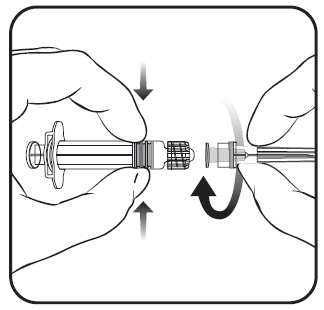
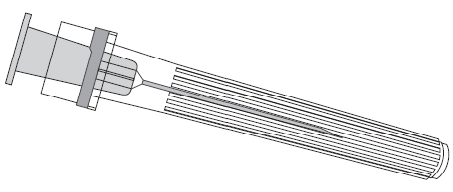
To insert the needle into the syringe, carefully read the instructions in Figures 1 and 2. However,
the syringe supplied with Varilrix may be slightly different (without threading) than the syringe
illustrated.
In this case, the needle should be inserted without screwing.
Needle
Syringe
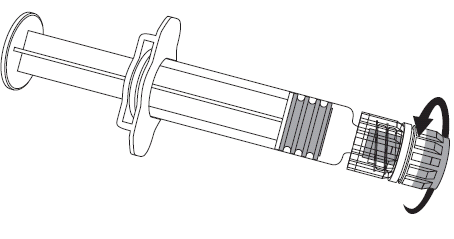
Figure 1Figure 2
Always hold the syringe by the body, not by the plunger or Luer Lock adapter (LLA), and
keep the needle in line with the syringe (as shown in Figure 2). Otherwise, the LLA adapter
may deform and leak.
If the LLA adapter detaches during syringe assembly, a new dose of vaccine (new syringe and new vial) must be used.
- 1. Unscrew the syringe cap by rotating it counterclockwise (as shown in Figure 1).
Whether the LLA is rotating or not, follow these steps:
- 2. Attach the needle to the syringe by gently connecting the needle hub to the LLA adapter and rotate a quarter turn clockwise until it locks (as shown in Figure 2.)
- 3. Remove the needle protection, which may be difficult.
- 4. Add the solvent to the powder. The mixture must be shaken well until the powder is completely dissolved in the solvent.
- 5. Aspirate the entire contents of the vial.
- 6. A new needle must be used to administer the vaccine. Unscrew the needle from the syringe and attach the injection needle, repeating step 2 above.
After reconstitution, it is recommended that the vaccine be injected as soon as possible. However, it has been
shown that the reconstituted vaccine can be kept for 90 minutes at room temperature (25°C) and
up to 8 hours in the refrigerator (2°C - 8°C). If not used within the specified time and storage conditions,
the reconstituted vaccine must be discarded.
Unused medicinal product or waste material derived from such medicinal product should be disposed of in accordance
with local regulations.
- Страна регистрации
- Форма выпускаInjectable suspension, 0,5 ML
- Код АТХJ07BK01
- Действующее вещество
- Отпускается по рецептуНет
- Производитель
- Информация на этой странице носит справочный характер и не является медицинской консультацией. Перед началом приема лекарства обязательно проконсультируйтесь с врачом.
- Аналоги VARILRIXДействующее вещество: varicella, live attenuatedПроизводитель: MSD ITALIA S.R.L.Отпускается без рецептаФорма выпуска: Powder and solvent for injectable suspension, 0.5 MLДействующее вещество: zoster, purified antigenПроизводитель: GLAXOSMITHKLINE BIOLOGICALS S.A.Отпускается без рецептаФорма выпуска: Powder and solvent for injectable solution, 0.5 mlДействующее вещество: respiratory syncytial virus vaccinesПроизводитель: PFIZER EUROPE MA EEIGОтпускается по рецепту
Аналоги VARILRIX в других странах
Лекарства с тем же действующим веществом, доступные в других странах.
Аналог VARILRIX в Польша
Аналог VARILRIX в Украина
Аналог VARILRIX в Испания
Врачи онлайн по VARILRIX
Обсудите применение VARILRIX и возможные следующие шаги — по оценке врача.









Получите рецепт на VARILRIX онлайн
Заполните форму за 2 минуты
Расскажите о симптомах, истории болезни и нужном препарате.
Выберите врача или мы назначим
Выберите специалиста или мы подберём ближайшего доступного врача.
Врач рассматривает ваш случай
Обычно в течение 30 минут. Может задать уточняющие вопросы в чате.
Получите в любой аптеке
Электронный рецепт отправляется на вашу почту — действителен по всей Польше.
Часто задаваемые вопросы
VARILRIX не требует рецепта в Италия. Вы можете уточнить у врача онлайн, подходит ли это лекарство для вашей ситуации.
Действующее вещество VARILRIX — varicella, live attenuated. Эта информация помогает определить лекарства с тем же составом под другими торговыми названиями.
VARILRIX производится компанией GLAXOSMITHKLINE BIOLOGICALS S.A.. Упаковка и торговое название могут отличаться в зависимости от дистрибьютора.
Врачи, включая Семейные врачи, Психиатры, Дерматологи, Кардиологи, Эндокринологи, Гастроэнтерологи, Пульмонологи, Нефрологи, Ревматологи, Гематологи, Инфекционисты, Аллергологи, Гериатры, Педиатры, Онкологи, могут оценить целесообразность применения VARILRIX с учетом вашей ситуации и местных правил. Вы можете записаться на онлайн-консультацию, чтобы обсудить возможные варианты.
Польша имеет хорошо развитую систему здравоохранения в крупных городах, таких как Варшава, Краков, Вроцлав и Гданьск. Аптеки широко доступны и работают в соответствии с действующим законодательством, обеспечивая доступ к рецептурным препаратам.
Вы можете купить VARILRIX в Варшаве, Кракове, Вроцлаве или Гданьске в любой аптеке при наличии действующего рецепта.
Чтобы получить рецепт, вы можете воспользоваться Oladoctor:
Другие лекарства с тем же действующим веществом (varicella, live attenuated) включают VARIVAX, SINGRIX, ABRYSVO. Они могут отличаться торговым названием или формой выпуска, но содержат одинаковый терапевтический компонент. Перед изменением лечения рекомендуется проконсультироваться с врачом.
