



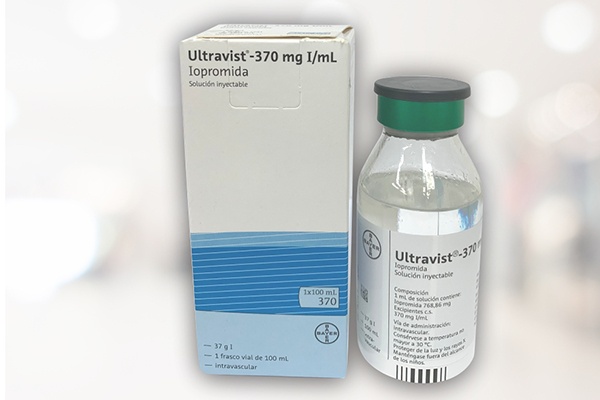
УЛЬТРАВИСТ 240 мг/мл Инъекционный раствор

Рассмотрение рецепта онлайн
Врач рассмотрит ваш случай и примет решение о назначении рецепта, если это медицински оправдано.

Поговорите с врачом об этом лекарстве
Обсудите симптомы и возможные дальнейшие шаги на онлайн-консультации.



Инструкция по применению ULTRAVIST
Содержание инструкции
Ultravist 150 mg/ml injectable solution, 240 mg/ml injectable solution, 300 mg/ml injectable solution, 370 mg/ml injectable solution
iopromide
Read this leaflet carefully before you are given this medicine as it contains important information for you.
- Keep this leaflet. You may need to read it again.
- If you have any questions, ask your doctor, radiographer or nurse.
- If any side effects occur, including any not listed in this leaflet, tell your doctor, pharmacist, radiographer or nurse. See section 4.
Contents of this leaflet:
- 1. What Ultravist is and what it is used for
- 2. What you need to know before you are given Ultravist
- 3. How Ultravist will be given to you
- 4. Possible side effects
- 5. How to store Ultravist
- 6. Contents of the pack and other information
1. What is Ultravist and what is it used for
Ultravist belongs to the category of water-soluble, low-osmolar, nephrotropic radiological contrast agents.
This medicine is for diagnostic use only.
Ultravist is used as a contrast agent for performing the following diagnostic investigations:
angiography, digital subtraction angiography (DSA) by venous and arterial route, contrast enhancement in computed tomography, urography, visualization of body cavities (excluding
myelography, ventriculography, cisternography) and in adult women in mammography with contrast agent to evaluate and identify known or suspected breast lesions, as a complement to mammography
(with or without ultrasound) or as an alternative to magnetic resonance imaging (MRI) when MRI is contraindicated
or unavailable.
2. What you need to know before using Ultravist
You must not receive Ultravist
- if you are allergic to iopromide, water-soluble contrast agents and/or iodine or to any of the other ingredients of this medicine (listed in section 6).
Warnings andprecautions
Consult your doctor, radiology technician or nurse before receiving Ultravist.
The use of organoiodinated products such as Ultravist must be limited to cases where there is a precise
clinical indication for the examination with contrast medium, an indication that the doctor will evaluate in relation to your
clinical condition, with particular reference to any diseases affecting the
cardiovascular, uropoietic and hepatobiliary systems.
In the following cases, your doctor will carefully assess the risk/benefit before administering Ultravist,
as the administration of the medicine may expose you to a high risk of serious adverse effects:
- if you suffer from Waldenström's paraproteinemia (a disease characterized by the presence of abnormal proteins in the blood) and multiple myeloma (a bone marrow tumor),
- if you suffer from liver and/or kidney diseases,
- if you have pheochromocytoma (a tumor of the adrenal gland),
- if you have homozygous sickle cell anemia (sickle cell anemia),
- if you have acute inflammation of the pelvis,
- if you are an elderly person,
- if you suffer from heart disease,
- if you have high blood pressure (hypertension),
- if you suffer from advanced arteriosclerosis (chronic inflammatory disease of the arteries),
- if you have tumors,
- if you have had previous reactions to contrast agents,
- if you suffer from allergies,
- if you suffer from asthma,
- if you have diabetes,
- if you have recently had cerebral embolism or thrombosis (formation of a blood clot in a blood vessel in the brain),
- if you suffer from hyperthyroidism (excess thyroid function),
- if you have hyperuricemia (elevated uric acid levels in the blood),
- if you suffer from cholangitis (inflammation of the bile ducts),
- if you abuse alcohol and/or smoke,
- if you suffer from anxiety,
- if you have ever developed a severe skin rash or skin exfoliation, blistering skin rash and/or oral ulcers after using Ultravist.
Pay particular attention with Ultravist:
Severe skin reactions, including Stevens-Johnson syndrome (SJS), toxic epidermal necrolysis (TEN),
drug reaction with eosinophilia and systemic symptoms (DRESS) and acute generalized exanthematous pustulosis
(PEAG) have been reported in association with the use of Ultravist. Consult a doctor immediately if you notice any of the signs described in section 4.
Hypersensitivity reactions
Ultravist may be associated with anaphylactoid/hypersensitivity reactions (severe allergic or allergy-like reactions) or other intolerance reactions, characterized by cardiovascular, respiratory and
skin manifestations.
Allergy-like reactions of varying intensity from mild to shock are possible (see "Possible
side effects"). Most of these reactions occur within 30 minutes of
administration. However, delayed reactions (after hours or days) are possible.
The risk of allergic reactions is higher if:
- you have had previous reactions to contrast agents;
- you have a history of bronchial asthma or other allergic disorders (e.g. allergy to seafood, hay fever or urticaria).
If you have had a previous hypersensitivity reaction to any other iodinated or
radiographic contrast agent (in the broad sense), your doctor will pay particular attention to assessing the risk/benefit ratio due to an increased risk of allergic reactions and may possibly administer preventive therapy with corticosteroids alone or in combination with antihistamines, such therapy should not
be administered concurrently with contrast agents. However, these reactions are irregular and
unpredictable.
In patients with cardiovascular disease, severe or even fatal outcomes are more likely in the event of an intense allergic reaction.
Due to the possibility of significant allergic reactions after the administration of Ultravist, you will be kept under
observation after the examination.
If you have an increased risk of acute allergy-like reactions or if you have previously experienced a
moderate or severe acute reaction, asthma or allergy requiring treatment, your doctor may
decide to administer corticosteroids.
If hypersensitivity reactions occur, the administration of the contrast agent will be stopped
immediately. Regardless of the amount and type of administration, even mild symptoms of
allergy can be the first signs of severe anaphylactoid reactions.
Tell your doctor if you have a history of thyroid disease, including hypothyroidism (a condition in which the
thyroid gland functions less). Abnormal blood tests for thyroid function have been reported after diagnostic examinations performed with contrast agents that
contain iodine, which may suggest potential hypothyroidism or a transient (temporary) reduction in thyroid function that
may require treatment.
Alterations of thyroid function
The doctor will carefully assess the risk/benefit ratio in patients with confirmed or
suspected hyperthyroidism or goiter, as iodinated contrast agents can induce hyperthyroidism
(excess thyroid function) and thyrotoxic crisis (excess thyroid hormones in circulation) in these patients.
If you suffer from or think you suffer from hyperthyroidism, your doctor may perform tests to assess
thyroid function and/or prescribe preventive antithyroid treatment.
Central nervous system disorders
Patients with central nervous system disorders may be at increased risk of
neurological complications following the administration of Ultravist. Neurological complications are
more frequent in cerebral angiography and related procedures.
Particular attention should be paid in case of: previous epilepsy, presence of blood in the cerebrospinal fluid, concomitant therapy with antipsychotics, analgesics, antihistamines sedatives phenothiazines and
all other drugs that predispose to seizures.
If you are taking anticonvulsants, you should continue the treatment even in view of the radiological investigation.
If seizures occur during the investigation, your doctor will administer diazepam or
sodium phenobarbital intravenously.
Factors that increase the permeability of the blood-brain barrier (the structure that separates the nervous tissue of the brain from the bloodstream) facilitate the passage of the contrast agent into the brain tissue, with resulting possible reactions affecting the central nervous system.
Nervous system disorders
During or immediately after the imaging procedure, you may experience a short-term brain disorder called encephalopathy. Inform your doctor immediately if you notice any of the signs and
symptoms related to this condition described in section 4.
Hydration
Adequate hydration will be ensured before and after the intravascular administration of Ultravist,
especially if you suffer from multiple myeloma (a bone marrow tumor), diabetes (a disease
characterized by high glucose levels in the blood due to reduced insulin production by the
pancreas), polyuria (increased urine output), oliguria (reduced urine output) or hyperuricemia (elevated uric acid levels in the blood), if you are elderly or if the investigation is to be performed on a child
(see "Intravascular use" - "Acute renal damage").
In case of severe renal insufficiency (eGFR <30 mL / min / 1.73 m), you will be given fluids intravenously
before and after the use of the contrast agent. If you have heart disease, your doctor will carefully assess
the most suitable hydration method for you.
Anxiety
Pronounced states of excitement, anxiety and pain may increase the risk of adverse effects or
intensify reactions related to the contrast agent.
Intravascular use
- Acute renal damageAcute renal damage with a transient alteration of renal function may occur after intravascular administration of Ultravist, which will be monitored with a blood test. Risk factors include:
- renal insufficiency (reduced kidney function),
- dehydration,
- diabetes,
- multiple myeloma/paraproteinemia (high levels of certain proteins in the blood),
- repeated and/or high doses of Ultravist.
Patients on dialysis without residual renal function can receive Ultravist for radiological investigations,
as iodinated contrast agents are eliminated through dialysis.
- Cardiovascular diseasesThe incidence of serious adverse effects increases if you suffer from: advanced arteriosclerosis (chronic inflammatory disease of the arteries), hypertension (high blood pressure), heart failure (inability of the heart to pump a sufficient amount of blood), severe systemic disease (affecting the entire body), recent pulmonary embolism or cerebral thrombosis (formation of a blood clot in a lung or brain vessel). In case of severe heart disease, the risk of worsening of pre-existing conditions and the onset of a heart rhythm disorder (arrhythmia) is increased, therefore you will be carefully monitored.
- PheochromocytomaPatients with pheochromocytoma (an adrenal gland tumor) may be at increased risk of developing hypertensive crises.
- Myasthenia gravis
The administration of Ultravist may worsen the symptoms of myasthenia gravis (an autoimmune
disease characterized by muscle weakness).
Contrast-Enhanced Mammography (CEM,Contrast-Enhanced Mammography)
Contrast mammography exposes to higher levels of ionizing radiation than traditional mammography
but is still within the range defined by international guidelines for
mammography. The radiation dose depends on the thickness of the breast and the type of mammographic device
used.
Children, newborns and infants
Newborn babies may have been exposed to Ultravist through their mother during pregnancy.
If your child is less than 3 years old: your doctor may monitor and check thyroid function,
especially in newborns.
Adequate hydration must be ensured before and after the intravascular administration of Ultravist,
in order to minimize the risk of contrast-induced renal toxicity (see also "Intravascular
use" - "Renal impairment"). This is particularly true for newborns, infants and young children.
Other medicines and Ultravist
Tell your doctor, radiology technician or nurse if you are taking, have recently taken or
may take any other medicine.
Biguanides(such as Metforminmedicine for diabetes): in patients with acute renal insufficiency (rapid reduction of renal function) or severe chronic kidney disease, the elimination
of biguanides may be reduced, resulting in accumulation and development of lactic acidosis (accumulation of
lactic acid in the body). As the administration of Ultravist can cause or worsen renal impairment, patients treated with metformin may have a higher risk of
developing lactic acidosis, especially those with pre-existing renal impairment.
Based on the measurement of renal function, the doctor will assess the need to stop the administration of
metformin.
Interleukin-2(a medicine that modulates the immune system): previous treatment (up to
several weeks before) with interleukin-2 is associated with an increased risk of delayed
reactions to Ultravist.
Radioactive iodine: for the diagnosis and therapy of thyroid diseases using radioactive iodine, keep in
mind that, after the use of iodinated contrast agents with renal elimination, the uptake of
iodine by the thyroid tissue is reduced for a prolonged period up to 2 weeks and, in single cases,
even longer.
Pregnancy and breastfeeding
If you are pregnant, suspect you may be pregnant or are planning a pregnancy, or if you are breastfeeding, inform your doctor, radiology technician or nurse before receiving this medicine.
Adequate and well-controlled studies in pregnant women have not been conducted.
Animal studies are insufficient to demonstrate any harmful effects on pregnancy,
embryonic/fetal development, delivery or postnatal development following administration of iopromide for diagnostic use in humans.
The safety of Ultravist in infants has not been studied. Contrast agents pass in small amounts into
human breast milk and it is unlikely to cause harm to the infant (see also "Children,
newborns and infants").
Ultravist contains sodium
This medicine contains less than 1 mmol (23 mg) of sodium per dose (based on the average amount
administered to a person weighing 70kg), i.e. essentially ‘sodium-free’.
3. How Ultravist will be administered to you
General information
At the time of the examination, you must be fasting for at least six to eight hours and sufficiently hydrated.
The medication will be administered to you while lying down, after which you will be kept under observation for at least half an hour
after the end of administration. Most serious reactions occur within this time frame.
In urography and abdominal angiography, the contrast enhancement will be better if there are no
food residues or gas in the intestine. Therefore, for the 24 hours before the examination, avoid foods that produce residue or
flatulence.
The dose of Ultravist that will be administered to you will depend on the following parameters: age, weight, cardiac output,
general condition, diagnostic question, type and technique of examination, extent of the area to be examined.
Mammography with contrast medium (CEM,Contrast-Enhanced Mammography)
Ultravist will be injected intravenously (a significant amount into a vein), if possible using an
automatic injector.
Adults:
Ultravist 300/370: 1.5 ml/kg of body weight.
Use in neonates and young children
Laxatives should not be used in infants and prolonged fasting should not be implemented.
Children under one year of age and especially neonates are particularly sensitive to electrolyte (salt) imbalance
and circulatory disturbances. Attention should be paid to the dose of contrast medium to be administered, the technical execution of the radiological procedure and the patient's conditions.
Use in patients with impaired liver function
No dosage adjustments are necessary in this category of patients.
Use in patients with impaired renal function
Since iopromide is excreted almost exclusively in unchanged form via the kidneys, its
elimination is slower in patients with impaired renal function. In patients with pre-existing
impaired renal function, to reduce the risk of further kidney damage induced by contrast medium, the lowest possible dose should be used (see also “Warnings and precautions”).
If you are given more Ultravist than you should
Intravascular overdose:symptoms may include fluid and electrolyte imbalance (of liquids and
salts), renal insufficiency (reduced kidney function), complications at the cardiovascular and pulmonary level.
In the event of accidental intravascular overdose, the doctor will monitor fluids, electrolytes
and renal function (the latter for at least 3 days). Treatment of overdose should be aimed at
maintaining vital functions.
Ultravist can be eliminated from the body through dialysis.
If you have any doubts about the use of this medicine, ask your doctor, radiographer or
nurse.
4. Possible side effects
Like all medicines, this medicine can cause side effects, although not everybody gets them.
The adverse reactions that are observed most frequently (≥ 4%) in patients receiving Ultravist are:
- headache,
- nausea,
- vasodilation (widening of blood vessels).
The more serious adverse reactions are: anaphylactic shock (a severe allergic reaction that comes on quickly and
can be fatal), respiratory arrest, bronchospasm (constriction of the airways
which obstructs the passage of air), laryngeal edema (swelling of the larynx), pharyngeal edema (swelling of the
pharynx), asthma, coma, cerebral infarction, stroke, cerebral edema (increased water content in the brain
tissue), convulsions, arrhythmia (irregular heartbeat), cardiac arrest, myocardial ischemia
(insufficient blood supply to the heart muscle), myocardial infarction, heart failure (weak heart), bradycardia (slow heartbeat), cyanosis (bluish discoloration of the skin and mucous membranes),
hypotension (low blood pressure), shock (drop in blood pressure), dyspnea (shortness of breath),
pulmonary edema (accumulation of fluid in the lungs), respiratory failure and aspiration.
Adverse reactions observed with Ultravist are listed below.
Common side effects(may affect up to 1 in 10 people)
- dizziness,
- headache,
- altered taste,
- blurred/altered vision,
- chest pain/discomfort,
- hypertension (high blood pressure),
- vasodilation (widening of blood vessels),
- vomiting,
- nausea,
- pain at the injection site,
- reactions at the injection site (e.g. pain, warmth, swelling, inflammation and soft tissue damage in case of extravasation),
- feeling of warmth.
Uncommon side effects(may affect up to 1 in 100 people)
- hypersensitivity/ anaphylactoid reactions (anaphylactoid shock * ,
- respiratory arrest * ,
- bronchospasm* (constriction of the airways that obstructs the passage of air),
- laryngeal* /pharyngeal* /facial edema (swelling of the larynx/pharynx/face), tongue edema (swelling of the tongue),
- laryngeal/pharyngeal spasm (constriction of the larynx/pharynx),
- asthma * ,
- conjunctivitis,
- tearing,
- sneezing,
- cough,
- mucosal edema (swelling),
- rhinitis (inflammation of the nasal mucosa),
- hoarseness,
- throat irritation,
- urticaria (itching and small spots on the skin),
- itching,
- angioedema (rapid swelling of the skin of the face and mucous membranes),
- vasovagal reactions (excessive nervous system reactions leading to a drop in blood pressure, pallor, dizziness, sweating, etc.),
- confusion,
- restlessness,
- paresthesia/hypoesthesia (altered/decreased skin sensitivity),
- drowsiness,
- arrhythmia* (irregular heartbeat),
- hypotension* (low blood pressure),
- dyspnea* (shortness of breath),
- abdominal pain (stomach ache),
- edema (swelling) at the injection site.
Rare side effects(may affect up to 1 in 1,000 people)
- anxiety,
- cardiac arrest* ,
- myocardial ischemia* (insufficient blood supply to the heart muscle),
- palpitations (feeling of a fast heartbeat).
Side effects with unknown frequency(frequency cannot be estimated based on available data)
- thyrotoxic crisis (excess of thyroid hormones in circulation),
- thyroid disease,
- coma* ,
- cerebral ischemia/infarction* (insufficient blood supply to a part of the brain),
- stroke* ,
- cerebral edema * (increased water content in the brain tissue),
- convulsions* ,
- transient cortical blindness (temporary blindness due to a lesion of the cerebral cortex),
- loss of consciousness,
- agitation,
- amnesia (memory loss),
- tremor,
- speech disorders,
- paresis (partial loss of motility of some muscles)/paralysis,
- hearing disorders,
- myocardial infarction* ,
- heart failure* ,
- bradycardia* (slow heartbeat),
- tachycardia (fast heartbeat),
- cyanosis* (bluish discoloration of the skin and mucous membranes),
- shock* (drop in blood pressure),
- thromboembolic events (formation of blood clots in the vessels),
- vasospasm (constriction of blood vessels),
- pulmonary edema* (accumulation of fluid in the lungs),
- respiratory failure* ,
- aspiration* ,
- dysphagia (difficulty swallowing),
- enlargement of the salivary glands,
- diarrhea,
- bullous manifestations (e.g. Stevens-Johnson syndrome or Lyell's syndrome),
- skin rash,
- erythema (skin irritation),
- hyperhidrosis (excessive sweating),
- compartment syndrome (increased pressure in a group of muscles) in case of extravasation,
- impaired renal function,
- renal insufficiency (reduced kidney function),
- acute renal insufficiency (rapid reduction of kidney function),
- malaise,
- chills,
- pallor,
- fluctuation of body temperature,
- temporarily inactive thyroid in newborns.
Seek medical attention immediately if you notice any of the following signs and symptoms (whose
frequency is unknown):
- reddish patches on the trunk that look like a target or are circular in shape, often with blisters in the center, skin exfoliation, ulcers of the mouth, throat, nose, genitals and eyes. These severe skin rashes may be preceded by fever and flu-like symptoms (Stevens-Johnson syndrome, toxic epidermal necrolysis);
- widespread rash, high body temperature and swollen lymph nodes (DRESS syndrome or drug hypersensitivity syndrome);
- a widespread, red and scaly rash, with the formation of pustules under the skin and blisters accompanied by fever after the imaging procedure (acute generalized exanthematous pustulosis);
- short-term brain disorder (encephalopathy) that can cause memory loss, confusion, hallucinations, visual problems, loss of vision, seizures, loss of coordination, loss of movement on one side of the body, speech problems and loss of consciousness.
The following side effects have also been reported:
- grand mal (epileptic seizure),
- aseptic meningitis (non-infectious inflammation of the meninges),
- vasculitis (inflammation of blood vessels),
- cold,
- intestinal necrosis (death of intestinal tissue),
- polyuria (increased urine output),
- hematuria (blood in the urine),
- urinary retention (inability to empty the bladder completely),
- renal infarction (blockage of a renal artery),
- spinal cord injury,
- retroperitoneal hemorrhages (bleeding),
- increased levels of pancreatic enzymes and pancreatitis (when the medicine is used for endoscopic retrograde cholangiopancreatography - ERCP).
* were reported cases life-threatening and/or fatal
for intravascular use only
identified only during post-marketing surveillance (frequency unknown)
Most reactions following use in body cavities occur several hours after
administration.
Reporting of side effects
If you get any side effects, even those not listed in this leaflet, tell your
doctor, pharmacist, radiology technician or nurse. You can also report side effects directly through the national reporting system at
https://www.aifa.gov.it/content/segnalazioni-reazioni-avverse. By reporting side effects you can
help provide more information on the safety of this medicine.
5. How to store Ultravist
Keep this medicine out of the sight and reach of children.
Do not use this medicine after the expiry date which is stated on the package and label after
Expiry. The expiry date refers to the last day of that month. The expiry date refers to the
product in intact packaging, correctly stored.
Once opened, the vial must be used immediately. Any remaining product is no longer
usable.
Do not store at a temperature above 30°C.
Keep the container in the outer packaging to protect the medicine from light.
Protect the medicine from ionizing radiation.
Warning
Any further instructions regarding the equipment provided by the respective manufacturer must be observed.
Contrast media must be visually inspected before use.
Do not use this medicine if you notice a change in colour or the presence of particles (including crystals) or if the
container is defective. Since Ultravist is a highly concentrated solution, crystallization can occur very rarely (milky-turbid appearance and/or sediment at the bottom, or floating crystals).
Do not dispose of any medicine in wastewater or household waste. Ask your pharmacist how to eliminate
medicines that you no longer use. This will help protect the environment.
6. Content of the package and other information
What Ultravist contains
- The active ingredient is iopromide. Each vial contains: Ultravist 150 mg/ml- 311.7 mg/ml of iopromide (equivalent to 150.0 mg/ml of iodine). Ultravist 240 mg/ml- 498.7 mg/ml of iopromide (equivalent to 240.0 mg/ml of iodine). Ultravist 300 mg/ml- 623.4 mg/ml of iopromide (equivalent to 300.0 mg/ml of iodine). Ultravist 370 mg/ml- 768.9 mg/ml of iopromide (equivalent to 370.0 mg/ml of iodine).
- The other ingredients are: trometamol, sodium calcium edetate, hydrochloric acid, sodium hydroxide (for pH adjustment), water for injections.
Description of the appearance of Ultravist and contents of the pack
Ultravist is a clear, particle-free injectable solution.
Packs:
- Ultravist 150 mg/ml: vials of 200 ml
- Ultravist 240 mg/ml: vial of 50 ml
- Ultravist 300 mg/ml: vials of 20-50-75-100-200-500 ml
- Ultravist 370 mg/ml: vials of 50-100-200-500 ml
Marketing Authorisation Holder and Manufacturer
Marketing Authorisation Holder
Bayer AG
Kaiser-Wilhelm-Allee 1
51373 Leverkusen (Germany)
Local Representative:
Bayer S.p.A. – Viale Certosa, 130 – 20156 Milan
Manufacturer
The manufacturer can be identified by the batch number printed on the side of the pack and on each
vial.
- If the first and second characters are KT, the manufacturer is Bayer AG Muellerstrasse 178 13353 Berlin Germany
- If the first and second characters are MA, the manufacturer is Berlimed S.A. Francisco Alonso, 7 Poligono Industrial Santa Rosa 28806 Alcalá de Henares, Madrid Spain
-----------------------------------------------------------------------------------------------------------------------------
The following information is intended for physicians or healthcare professionals only:
General information
The use of contrast media may only take place in Hospitals, Clinics, Nursing Homes and Specialist
Radiology Practices where the immediate availability of equipment and competent personnel to
use it is ensured.
However, for contrast examinations of more common diagnostic practice, it may be sufficient that
in radiology departments, public or private, there are present and immediately available aids and
medications suitable for the treatment of any emergencies (Ambu balloon, oxygen, antihistamines,
corticosteroids, vasoconstrictors, etc.).
For all patients, the prompt availability and activation of appropriate emergency measures are necessary.
Intravenous administrations must be carried out with the patient lying down, keeping them under
observation for at least half an hour after the end of the injection or infusion. Most
serious incidents occur within this time. The vials must only be opened immediately before
use and the unused contrast media solution cannot be stored (see “Instructions for Use”).
Intravascular administration of any contrast media should be postponed in subjects who have
recently taken a contrast media for cholecystography.
Preliminary test
It is not recommended to perform a sensitivity test using a small test dose of the contrast medium,
as this test has no predictive value. Furthermore, the test itself has occasionally caused severe and even fatal hypersensitivity reactions.
Cardiovascular diseases
During angiocardiographic examination, particular attention should be paid to the condition of the right heart and the pulmonary circulation; in case of insufficiency, supplemental volumes of contrast media may cause
circulatory overload with bradycardia and decreased systemic blood pressure. During examination of the aortic arch
pay particular attention to the positioning of the catheter tip. Excessive pressures transmitted
from the injector to the brachiocephalic vessels can cause hypotension, bradycardia and damage to the central
nervous system. Also, in abdominal aortography, excessive pressures transmitted by the automatic pump
can cause renal infarction, spinal cord injury, retroperitoneal hemorrhage, infarction and intestinal necrosis.
Thromboembolic events
A property of non-ionic contrast media is the poor interference with normal physiological functions.
It has been demonstrated in vitro that, at equal concentration, the inhibitory effects of non-ionic contrast media on
hemostasis mechanisms are lower than those of ionic contrast media. Numerous factors, in addition to the contrast medium,
can contribute to the development of thromboembolic events. These include the duration of the investigation, the number of
injections, the material of the catheter and syringe, the underlying morbid state and concomitant pharmacological therapies.
For this reason, it is recommended to perform the correct angiographic procedures: catheters
must be flushed frequently with heparinized saline solutions, prolonged contact between
blood and contrast media in catheters and syringes should be avoided and the duration of the investigation should be reduced to a minimum, to minimize
the risk of thrombosis and embolism.
It is appropriate to reassure the patient with conversation or medication to avoid states of anxiety, which
increase the risk of serious side effects.
Patients to whom organoiodinated contrast media are to be administered intravenously must be
interviewed about the possible presence of an ongoing pregnancy, breastfeeding, allergies, any ongoing therapies
including self-medication and all other situations falling within the contraindications and
precautions for use.
Contrast media that are heated before administration are better tolerated and can be
injected more easily because the viscosity is reduced.
For further information, see “Instructions for Use”.
Advice for the treatment of side effects from contrast medium
Immediate
availability of all the medicines and equipment necessary for emergency therapy and the presence of
competent personnel to use it is crucial for rapid action in case of contrast media side effects (see paragraph “Warnings and precautions”).
Patients treated with beta-blockers (medicines that lower blood pressure) and who
manifest hypersensitivity reactions may be resistant to the effects of treatment with beta-agonists.
Administration regimen
Dosage for intravascular use
The dose is established based on age, weight, cardiac output, general condition of the patient, diagnostic question,
examination technique, extent of the area to be examined.
ANGIOGRAPHY
The following table suggests some dosages:
| n Examination | a Dose (ml) | Ultravist (mg iodine/ml) |
a
| 50-80 30-40 6-15 | 300 300 300 |
t I
| 50-80 | 300 |
a
| 40-60 | 300 |
DIGITALLY SUBTRACTED ANGIOGRAPHY (DSA)
DSA ENDOVENOUS
For the visualization of large vessels and pulmonary arteries, the neck, head, kidneys and limbs, it is
recommended to inject in bolus intravenously 30-60 ml of Ultravist 300 or 370 (8-12 ml/sec in the cubital vein; 10-20 ml/sec through a catheter in the vena cava). A subsequent bolus injection of 20-40
ml of physiological solution reduces the contact time of the contrast medium with the vascular endothelium.
DSA ENDOARTERIAL
In DSA via endoarterial route, volumes of contrast medium solution and
iodine concentrations lower than those used via intravenous route are suggested.
The more selective the angiography, the lower the dose of Ultravist to be administered may be. This
technique is therefore recommended in patients with impaired renal function. In particular, to visualize
the arteries of the head, neck and limbs, several direct or catheter injections of 10-40 ml of
Ultravist 150 or 240 are suggested depending on the diameter of the vessels to be examined. Higher doses of Ultravist 150 (about
200 ml) may be necessary in some cases to visualize the vessels of the lower limbs (for example in
the case of radiographic investigation of both limbs).
FUNCTIONALITY OF DIALYSIS SHUNT
Ultravist 150 is also indicated to check the functionality of the dialysis shunt. For this purpose, administration of approximately 10 ml of contrast medium is generally useful.
COMPUTED TOMOGRAPHY (CT)
CT BRAIN
For the contrast enhancement of neoplasms and other lesions, the following dosages are recommended:
Ultravist 240: 1.5 - 2.5 ml/Kg of body weight
Ultravist 300: 1 - 2 ml/Kg of body weight
| 8-12 50-60 15-30 r 20-30 50-80 a 30-60 | o c a 300 240 m 300 300 240 300 |
| F 40-60 l | 370 |
| e d 5-8 | 370 |
Ultravist 370: 1 - 1.5 ml/Kg of body weight
The following table suggests the average times for starting the scans.
| Type of lesion | c a Time of start of scans after end of administration |
| Arteriovenous malformations, aneurysms or other pathological vascular processes Highly vascularized neoplasms Poorly vascularized lesions | m Immediately or at most up to 5 minutes r a Up to 5 minutes or slightly more F
|
The difference in scan start times is due to the fact that the peak blood concentration of the contrast medium
is obtained immediately after administration, while in pathologically altered individual tissues the
maximum concentration is reached at different times.
With a slow scanner, a dose of 100 ml administered with biphasic technique (50 ml in about 3 minutes and the
rest in about 7 minutes) allows maintaining a relatively constant blood level for some time,
although less high. The scans should be started after the end of the first phase of
administration.
TOTAL BODY CT
The doses of Ultravist and the rate of administration depend on the organs to be examined, the diagnostic question
and, in particular, the type of scanner available.
UROGRAPHY
ADULTS
The modest osmotic diuretic effect of Ultravist allows a high urinary concentration of the contrast medium, so it is possible to obtain an excellent visualization of the pelvis and calyx system. If the
diagnostic question also requires adequate filling of the ureters, the dose should not be
less than 1 ml/Kg of Ultravist 300 (0.8 ml/Kg of Ultravist 370; 1.3 ml/Kg of Ultravist 240). In
particular cases, for example in subjects with unfavorable excretion conditions, the dose may be increased.
CHILDREN
The natural reduced concentrating capacity of the infant kidney due to the still immature nephron requires
relatively high doses of contrast medium. When using Ultravist 300, the following dosages are therefore suggested:
Newborns: 1.2 g iodine/Kg of body weight, corresponding to 4.0 ml/Kg of body weight
Infants: 1.0 g iodine/Kg of body weight, corresponding to about 3.0 ml/Kg of body weight
Small children: 0.5 g iodine/Kg of body weight, corresponding to about 1.5 ml/Kg of body weight
SCANNING TIMES
When these dosages are observed and Ultravist 300-370 is injected in 1-2 minutes (3-5 minutes with
Ultravist 240), in most cases the renal parenchyma is well contrasted 3-5 minutes after
the start of administration (5-10 minutes with Ultravist 240) and the renal pelvis with the urinary tract after 8-15
minutes (12-20 minutes with Ultravist 240). For younger patients, choose the shorter interval, for the older
ones the longer one. In infants and young children, it is recommended to perform the first scan
early, about 2 minutes after administration of the contrast medium. If the visualization is not
sufficient, subsequent shots are necessary.
VISUALIZATION OF BODY CAVITIES
The following doses are suggested:
Arthrography: Ultravist 240-300-370, 2-15 ml.
Hysterosalpingography: Ultravist 240-300, 10-25 ml
MAMMOGRAPHY WITH CONTRAST MEDIUM (CEM,Contrast-Enhanced Mammography)
Ultravist 300/370: for use in adult women in mammography with contrast medium to evaluate and
identify known or suspected lesions of the breast, as a complement to mammography (with or without ultrasound)
or as an alternative to magnetic resonance imaging (MRI) when MRI is contraindicated or unavailable.
Ultravist must be injected intravenously, preferably through an automatic injector
automatic. Image acquisition begins approximately 2 minutes after administration of
the contrast medium.
Adults:
Ultravist 300/370: 1.5 ml/Kg of body weight.
Instructions for Use
Ultravist must be warmed to body temperature before use.
Contrast media must be visually inspected before use and must not be used if there is a change in color, presence of particles (including crystals) or a defective container. Since
Ultravist is a highly concentrated solution, crystallization can occur very rarely (milky-turbid appearance and/or sediment at the bottom, or floating crystals).
Vials must only be opened immediately before use and unused contrast media solution must not be stored.
The contrast medium solution must be drawn up in one go so that only one puncture of the rubber stopper is made. For puncturing the rubber stopper and drawing up the contrast medium solution, it is recommended to use long-bevel needles with a maximum diameter of 18 G (side-opening needles are particularly suitable).
When using 500 ml vials of Ultravist, the following rules should be observed. The contrast medium solution must be administered using an automatic injector. The tube connecting
the injector to the patient (patient tube) must be replaced after each examination because it is contaminated with
blood. Unused contrast medium solution present in the vial, connecting tubes and
any part of the injector must be discarded at the end of the examination day.
Plastic Cartridges
The administration of contrast media must be carried out by qualified personnel with appropriate procedures and
equipment.
A sterile technique must be used in all injections involving contrast media.
Respect the manufacturer's instructions for the device.
Unused contrast solution during the investigation must be discarded in accordance with
current regulations.
The following table shows the contrast medium content, iodine content and
physico-chemical characteristics for the different pack sizes:
| Ultravist 150 mg/ml | Ultravist 240 mg/ml | Ultravist 300 mg/ml | c Ultravist 370 mg/ml | |
| Content of iopromide (mg/ml) g per vial of 20 ml 50 ml 75 ml 100 ml 200 ml 500 ml | 311.70 --- --- --- --- 62.4 --- | 498.72 --- 24.9 --- --- --- --- | 623.40 12.5 31.2 a 46.8 62.3 F 124.7 311.7 | a 768.86 m --- r 38.4 --- 76.9 153.9 384.4 |
| Iodine content (mg/ml) g per vial of 20 ml 50 ml 75 ml 100 ml 200 ml 500 ml | 150 --- --- --- --- 30.0 a --- | e 240 d --- a 12.0 --- n --- --- --- | l 300 6.0 15.0 22.5 30.0 60.0 150.0 | 370 --- 18.5 --- 37.5 74.0 185.0 |
| i Ultravist l 150 mg/ml | Ultravist 240 mg/ml | Ultravist 300 mg/ml | Ultravist 370 mg/ml | |
| Physical properties at 37 °C pH viscosity (mPa • s or cP) osmotic pressure (atm) osmolality (Osm/Kg H2O) a | a 6.5-8.0 t 1.5 I 8.5 0.34 | 6.5-8.0 2.8 12.1 0.48 | 6.5-8.0 4.6 15.7 0.61 | 6.5-8.0 9.5 19.9 0.77 |

Не уверены, подходит ли вам это лекарство?
Обсудите симптомы и варианты лечения с врачом онлайн.

Уже начали прием и появились вопросы?
Обсудите свое состояние и дальнейшие шаги с врачом онлайн.
- Страна регистрации
- Форма выпускаInjectable solution, 240 MG/ML
- Код АТХV08AB05
- Действующее вещество
- Отпускается по рецептуДа
- Производитель
- Информация на этой странице носит справочный характер и не является медицинской консультацией. Перед началом приема лекарства обязательно проконсультируйтесь с врачом.
- Аналоги ULTRAVISTФорма выпуска: Infusion solution, 150 MG/MLДействующее вещество: ИомепролПроизводитель: BRACCO IMAGING S.P.A.Отпускается по рецептуФорма выпуска: Infusion solution, 200 MG/MLДействующее вещество: ИопамидолПроизводитель: BRACCO IMAGING S.P.A.Отпускается по рецептуФорма выпуска: Infusion solution, 408 MG/MLДействующее вещество: ИопамидолПроизводитель: INDUSTRIA FARMACEUTICA GALENICA SENESE S.R.L.Отпускается по рецепту
Аналоги ULTRAVIST в других странах
Лекарства с тем же действующим веществом, доступные в других странах.
Аналог ULTRAVIST в Польша
Аналог ULTRAVIST в Украина
Аналог ULTRAVIST в Испания
Врачи онлайн по ULTRAVIST
Обсудите применение ULTRAVIST и возможные следующие шаги — по оценке врача.









Получите рецепт на ULTRAVIST онлайн
Заполните форму за 2 минуты
Расскажите о симптомах, истории болезни и нужном препарате.
Выберите врача или мы назначим
Выберите специалиста или мы подберём ближайшего доступного врача.
Врач рассматривает ваш случай
Обычно в течение 30 минут. Может задать уточняющие вопросы в чате.
Получите в любой аптеке
Электронный рецепт отправляется на вашу почту — действителен по всей Польше.
Часто задаваемые вопросы
ULTRAVIST требует рецепта в Италия. Вы можете уточнить у врача онлайн, подходит ли это лекарство для вашей ситуации.
Действующее вещество ULTRAVIST — Иопромид. Эта информация помогает определить лекарства с тем же составом под другими торговыми названиями.
ULTRAVIST производится компанией BAYER AG. Упаковка и торговое название могут отличаться в зависимости от дистрибьютора.
Врачи, включая Семейные врачи, Психиатры, Дерматологи, Кардиологи, Эндокринологи, Гастроэнтерологи, Пульмонологи, Нефрологи, Ревматологи, Гематологи, Инфекционисты, Аллергологи, Гериатры, Педиатры, Онкологи, могут оценить целесообразность применения ULTRAVIST с учетом вашей ситуации и местных правил. Вы можете записаться на онлайн-консультацию, чтобы обсудить возможные варианты.
Польша имеет хорошо развитую систему здравоохранения в крупных городах, таких как Варшава, Краков, Вроцлав и Гданьск. Аптеки широко доступны и работают в соответствии с действующим законодательством, обеспечивая доступ к рецептурным препаратам.
Вы можете купить ULTRAVIST в Варшаве, Кракове, Вроцлаве или Гданьске в любой аптеке при наличии действующего рецепта.
Чтобы получить рецепт, вы можете воспользоваться Oladoctor:
Другие лекарства с тем же действующим веществом (Иопромид) включают IOMERON, IOPAMIRO, IOPASEN. Они могут отличаться торговым названием или формой выпуска, но содержат одинаковый терапевтический компонент. Перед изменением лечения рекомендуется проконсультироваться с врачом.
