



TRIATEC 2.5 mg/12.5 mg Таблетки

Рассмотрение рецепта онлайн
Врач рассмотрит ваш случай и примет решение о назначении рецепта, если это медицински оправдано.

Поговорите с врачом об этом лекарстве
Обсудите симптомы и возможные дальнейшие шаги на онлайн-консультации.



Инструкция по применению TRIATEK KT
Содержание инструкции
- What is Triatec HCT and what is it used for
- What you need to know before taking Triatec HCT
- How to take Triatec HCT
- Possible side effects
- How to store Triatec HCT
- Package contents and other information
- Triatec HCT 10 mg + 12,5 mg tablets, 25 mg tablets
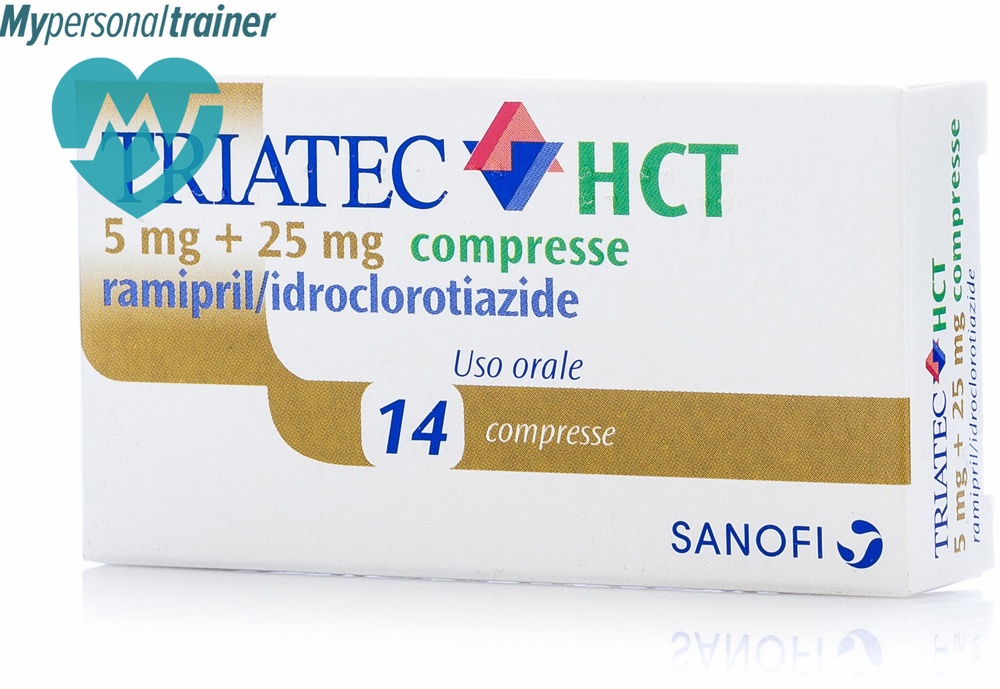
Triatec HCT 2.5 mg + 12.5 mg tablets
Triatec HCT 5 mg + 25 mg tablets
ramipril/hydrochlorothiazide
contains important information for you.
Keep this leaflet. You may need to read it again.
- If you have any questions, ask your doctor or pharmacist.
- This medicine has been prescribed for you only. Do not pass it on to others, even if they have the same symptoms as you, as it could be harmful.
- If any side effects occur, including any not listed in this leaflet, tell your doctor or pharmacist. See section 4.
Contents of this leaflet:
- 1. What Triatec HCT is and what it is used for
- 2. What you need to know before you take Triatec HCT
- 3. How to take Triatec HCT
- 4. Possible side effects
- 5. How to store Triatec HCT
- 6. Contents of the pack and other information
1. What is Triatec HCT and what is it used for
Triatec HCT is a combination of two medicines called ramipril and hydrochlorothiazide.
Ramipril belongs to a group of medicines called “ACE inhibitors” (Angiotensin Converting Enzyme Inhibitors). It works:
- By decreasing the production, by the body, of substances that can cause an increase in blood pressure
- By relaxing and widening its blood vessels
- By making it easier for your heart to pump blood around the body.
Hydrochlorothiazide belongs to a group of medicines called “thiazide diuretics” or oral diuretics. It
works by increasing the amount of water (urine) that is produced. This lowers blood
pressure.
Triatec HCT is used to treat high blood pressure (hypertension). The two active ingredients
work together to lower blood pressure. They are used in combination when treatment with a
single component does not work.
2. What you need to know before taking Triatec HCT
Do not take Triatec HCT:
- If you are allergic to ramipril, hydrochlorothiazide or any of the other ingredients of this medicine (listed in section 6).
- If you are allergic to drugs similar to Triatec HCT (other ACE inhibitors or medicines derived from sulfonamide). Signs of an allergic reaction can include skin rashes, difficulty swallowing or breathing, swelling of the lips, face, throat or tongue.
- If you have ever had a serious allergic reaction called “angioedema”. The signs include itching, skin rash (hives), red patches on the hands, feet and throat, swelling of the throat and tongue, swelling around the eyes and lips, difficulty breathing and swallowing.
- If you are taking or are currently taking sacubitril/valsartan, a medicine used to treat a type of long-term (chronic) heart failure in adults.
- If you are on dialysis or having any other type of blood filtration. Depending on the machinery used, Triatec HCT may not be suitable for you.
- If you have severe liver problems.
- If you have abnormal levels of salts (calcium, potassium, sodium) in your blood.
- If you have kidney problems due to insufficient blood supply to the kidney (renal artery stenosis).
- During the last 6 months of pregnancy(see section below “Pregnancy and breastfeeding”).
- If you are breastfeeding (see section below “Pregnancy and breastfeeding”).
- If you suffer from diabetes or your kidney function is impaired and you are being treated with a medicine that lowers blood pressure, containing aliskiren
Do not take Triatec HCT if any of the above conditions apply to you. If you are not sure, ask your doctor before taking Triatec HCT.
Warnings and precautions
Talk to your doctor or pharmacist before taking Triatec HCT:
- If you have heart, liver or kidney problems
- If you have lost a lot of salts or body fluids (due to an illness such as vomiting, diarrhea, excessive sweating, or following a low-salt diet, or after taking oral diuretics for a long time or after dialysis)
- If you are about to undergo treatment to reduce the allergy to bee or wasp stings (desensitization)
- If you are about to receive an anesthetic that may be given for surgery or dental treatment. It may be necessary to stop treatment with Triatec HCT the day before; ask your doctor for advice
- If you have a high amount of potassium in your blood (shown by a blood test)
- If you are taking medicines or are in conditions that may lower sodium levels in your blood. Your doctor may prescribe blood tests at regular intervals, especially to check sodium levels in your blood, particularly if you are elderly
- If you are taking medicines that may increase the risk of angioedema, a serious allergic reaction, such as mTOR inhibitors (e.g. temsirolimus, everolimus, sirolimus), vildagliptin, neprilysin (NEP) inhibitors (such as racecadotril) or sacubitril/valsartan. For sacubitril/valsartan, see also what is reported under “Do not take Triatec HCT”,
- If you have a connective tissue disease such as scleroderma or systemic lupus erythematosus
- You must tell your doctor if you think you may be pregnant (or might become pregnant). Triatec HCT is not recommended during the first trimester of pregnancy and can cause serious harm to the baby after the first three months of pregnancy (see section “Pregnancy and breastfeeding”).
- If you have blurred vision or eye pain, especially if you are at risk of developing a condition called glaucoma or have an allergy to drugs containing penicillin or sulfonamide
- If you are taking any of the following medicines used to treat high blood pressure:
- an "angiotensin II receptor antagonist" (AIIRA) (also known as sartans - for example valsartan, telmisartan, irbesartan), especially if you suffer from kidney problems related to diabetes
- aliskiren. Your doctor may check your kidney function, blood pressure, and the amount of electrolytes (e.g. potassium) in your blood at regular intervals. See also what is reported under "Do not take Triatec HCT”.
- If you have had skin cancer in the past or if you are developing an unexpected skin lesion during treatment. Treatment with hydrochlorothiazide, especially long-term use with high doses, may increase the risk of some types of skin cancer and lips (non-melanoma skin cancer). Protect your skin from exposure to the sun and UV rays while taking Triatec HCT.
Children and adolescents
Triatec HCT is not recommended for children and adolescents under 18 years of age because this
medicine has never been used in this age group.
If any of the above conditions occur or you are not sure, ask your doctor before taking
Triatec HCT.
Other medicines and Triatec HCT
Tell your doctor or pharmacist if you are taking, have recently taken, or might take
any other medicines. This is because Triatec HCT can affect the mechanism of action of
some other medicines. Also, some medicines can affect the mechanism of action of Triatec
HCT.
Tell your doctor if you are taking any of the following medicines. These medicines may interfere
with Triatec HCT reducing its effectiveness:
- Medicines used to relieve pain and inflammation (e.g. Non-Steroidal Anti-Inflammatory Drugs (NSAIDs) such as ibuprofen, indometacin, aspirin)
- Medicines used to treat low blood pressure, shock, heart failure, asthma or allergies such as ephedrine, norepinephrine or epinephrine. Your doctor will need to check your blood pressure.
Tell your doctor if you are taking any of the following medicines. These medicines, if taken with Triatec
HCT, may increase the likelihood of side effects:
- Sacubitril/valsartan - used to treat a type of long-term (chronic) heart failure in adults (see also what is reported under "Do not take Triatec HCT”)
- Medicines used to relieve pain and inflammation (e.g. Non-Steroidal Anti-Inflammatory Drugs (NSAIDs) such as ibuprofen, indometacin, aspirin)
- Medicines that can lower the amount of potassium in your blood. These include medicines for constipation, diuretics, amphotericin B (used in fungal infections) and adrenocorticotropic hormone (used to check if your adrenal glands are working properly)
- Cancer medicines (chemotherapy)
- Medicines for heart problems, including heartbeat problems
- Medicines to prevent organ rejection after transplantation such as cyclosporine
- Diuretics such as furosemide
- Medicines that can increase the amount of potassium in your blood such as spironolactone, triamterene, amiloride, potassium salts, trimethoprim alone or in combination with sulfamethoxazole (for infections) and heparin (used to make blood more fluid)
- Steroid medicines for the treatment of inflammation such as prednisolone
- Calcium supplements
- Allopurinol (used to lower uric acid levels in the blood)
- Procainamide (for heartbeat problems)
- Cholestyramine (to reduce the amount of fat in the blood)
- Carbamazepine (for the treatment of epilepsy)
- Heparin (to thin the blood)
- Temsirolimus (for cancer)
- Sirolimus, everolimus (to prevent transplant rejection)
- Vildagliptin (for the treatment of type 2 diabetes)
- Racecadotril (used for the treatment of diarrhea)
- Your doctor may need to adjust the dose and/or take other precautions: if you are taking an angiotensin II receptor antagonist (AIIRA) or aliskiren (see also what is reported under "Do not take Triatec HCT" and "Warnings and precautions”).
Tell your doctor if you are taking any of the following medicines. The mechanism of action of these
medicines may be affected by Triatec HCT:
- Diabetes medicines such as oral hypoglycemic agents and insulin. Triatec HCT may lower blood sugar levels. Carefully check your blood sugar levels when taking Triatec HCT
- Lithium (for psychiatric problems). Triatec HCT may increase the amount of lithium in your blood. The level of lithium in your blood must be carefully monitored by your doctor
- Muscle relaxants
- Quinine (for the treatment of malaria)
- Medicines containing iodine, these may be used in hospital before an X-ray or scan
- Penicillin (for the treatment of infections)
- Oral anticoagulants (blood thinners) such as warfarin.
If any of the above conditions occur (or you are not sure), ask your doctor before taking
Triatec HCT.
Tests
Tell your doctor or pharmacist before taking this medicine.
- If you are having a check for parathyroid function. Triatec HCT may alter the results of the check
- If you are an athlete who needs to undergo anti-doping control. Triatec HCT may give a positive result.
Triatec HCT with food and alcohol
- Drinking alcoholic beverages with Triatec HCT may cause dizziness or lightheadedness. If you want to know how much alcohol you can drink when taking Triatec HCT, discuss this with your doctor. In fact, alcohol increases the effects of blood pressure medications.
- Taking Triatec HCT can be done with or without food.
Pregnancy and breastfeeding
Pregnancy
You must tell your doctor if you think you may be pregnant (or might become pregnant).
You must not take Triatec HCT in the first 12 weeks of pregnancy and must not take it at all from the 13th week because it can be harmful to the baby.
If you become pregnant while taking Triatec HCT, tell your doctor immediately. Before
planning a pregnancy, you must switch to another medicine that is more suitable.
Breastfeeding
You must not take Triatec HCT if you are breastfeeding.
Ask your doctor or pharmacist before taking any medicine.
Effects on ability to drive and operate machinery
You may feel dizzy while taking Triatec HCT. This is more likely when you have
just started taking Triatec HCT or have started taking a higher dose. If this happens, do not drive or use tools or machinery.
3. How to take Triatec HCT
Always take this medicine exactly as your doctor has instructed. If you have any doubts, consult your
doctor or pharmacist.
How much to take
Treatment of high blood pressure
Your doctor will adjust the dose you take until your blood pressure is under control.
Elderly population
Your doctor will reduce the initial dose and adjust the treatment more slowly.
Taking this medicine
- Take this medicine by mouth at the same time of day, every day, usually in the morning.
- Swallow the tablets with a liquid.
- Do not crush or chew the tablets.
If you take more Triatec HCT than you should
Inform your doctor or go to the nearest hospital emergency room. Do not drive to get to
the hospital, have someone drive you or call an ambulance. Bring the package of the
medicine with you. This is because the doctor needs to know what you have taken.
If you forget to take Triatec HCT
- If you forget a dose, take your normal dose when it is time.
- Do not take a double dose to make up for a missed tablet.
If you have any further questions on the use of this medicine, ask your doctor or pharmacist.
4. Possible side effects
Like all medicines, Triatec HCT can cause side effects, although not everybody gets them.
manifest.
Stop taking Triatec HCT and tell your doctor immediately if you notice any of the following
serious side effects – you may need urgent medical attention:
- Swelling of the face, lips or throat which makes it difficult to swallow or breathe, as well as itching or rash. This may be a sign of a severe allergic reaction to Triatec HCT.
- Severe skin reactions including rash, mouth sores, worsening of a pre-existing skin condition, redness, blistering and peeling of the skin (such as Stevens-Johnson Syndrome, toxic epidermal necrolysis or erythema multiforme).
Tell your doctor immediately if you experience:
- Fast heartbeat, irregular or strengthened heartbeat (palpitations), chest pain, feeling of tightness in the chest, or more serious problems including heart attack and stroke
- Shortness of breath, cough, fever lasting 2 to 3 days and decreased feeling of hunger. These may be signs of lung problems, including inflammation
- Easy bruising, prolonged bleeding more than usual, any sign of bleeding (e.g. bleeding gums), purple spots on the skin or easy onset of infections, sore throat and fever, feeling tired, weak, dizzy or pale skin. These may be signs of problems with blood circulation or bone marrow
- Severe stomach pain that may extend to the back. This may be a sign of pancreatitis (inflammation of the pancreas)
- Fever, chills, fatigue, loss of appetite, stomach pain, feeling unwell, yellowing of the skin or eyes (jaundice). These may be signs of liver problems such as hepatitis (inflammation of the liver) or liver damage
- Severe eye pain, blurred vision or with halos around lights, headache, widespread tearing or nausea and vomiting which may constitute a condition called glaucoma; reduced vision, difficulty seeing distant objects which may constitute a condition called myopia.
Other side effects include:
Tell your doctor if any of the following conditions becomes severe or lasts for more than a few
days.
Common(may affect up to 1 in 10 people)
- Headache or feeling weak or tired
- Feeling dizzy. This is more likely to happen when you first start taking Triatec HCT or have just increased the dose
- Dry, irritating cough or bronchitis
- Blood tests show a higher than normal level of sugar. If you have diabetes, this could worsen it
- Blood tests show a higher than normal level of uric acid or fats
- Painful, red and swollen joints
Uncommon(may affect up to 1 in 100 people)
- Skin rash with or without swelling
- Hot flushes, weakness, low blood pressure (unusually low blood pressure), especially when standing up or getting up quickly
- Problems with balance (vertigo)
- Itching and unusual skin sensations such as numbness, tingling, prickling, burning or chafing (paresthesia)
- Loss or change of taste
- Sleep problems
- Depressed mood, anxious, more nervous than usual or irritability
- Blocked nose, inflammation of the sinuses (sinusitis), shortness of breath
- Inflammation of the gums (gingivitis), swelling of the mouth
- Red, swollen, watery or itchy eyes
- Ringing in the ears
- Blurred vision
- Hair loss
- Chest pain
- Muscle pain
- Constipation, stomach or intestinal pain
- Indigestion or feeling unwell
- Increased amount of urine during the day
- Increased sweating or feeling thirsty than usual
- Loss or decrease of appetite (anorexia), decreased feeling of hunger
- Fast or irregular heartbeat
- Swollen arms and legs. This may be a sign that your body is retaining more water than usual
- Fever
- Impotence in men
- Decreased number of red blood cells, white blood cells and platelets in the blood or hemoglobin concentration, highlighted by blood tests
- Changes in liver, pancreas or kidney function highlighted by blood tests.
- Blood tests show a lower than normal level of potassium.
Very Rare(may affect up to 1 in 10,000 people)
- Feeling unwell, which causes diarrhea or heartburn
- Swollen and red tongue or dry mouth
- Blood tests show a higher than normal level of potassium.
Other side effects reported:
Tell your doctor if any of the following conditions becomes severe or lasts for more than a few
days.
- Difficulty concentrating, feeling restless or confused
- Fingers of the hands and feet that change color when cooled and tingle and hurt when warmed (Raynaud's phenomenon)
- Increase in breast volume in men
- Blood clots
- Hearing disorders
- Eyes less moist than normal
- Objects appear yellow
- Dehydration
- Swelling, pain and redness of the cheeks (inflammation of a salivary gland)
- Swelling of the intestine called “intestinal angioedema” which presents with symptoms such as abdominal pain, vomiting and diarrhea
- Increased sensitivity to the sun
- Severe peeling or flaking of the skin, itching, rash or other skin reactions such as redness of the face or forehead
- Rash or bruising
- Spots on the skin and cold extremities
- Problems with nails (such as loss or separation of the nail from its bed)
- Musculoskeletal stiffness or inability to move the jaw/jaw (tetany)
- Weakness or muscle cramps
- Decreased sexual desire in men and women
- Presence of blood in the urine. This may be a sign of a kidney problem (interstitial nephritis)
- Greater amount of sugar in the urine than normal
- Increased number of certain white blood cells in the blood (eosinophilia) found during blood tests
- Too low number of blood cells highlighted by blood tests (pancytopenia)
- Change in the level of salts such as sodium, calcium, magnesium and chlorine in the blood highlighted by blood tests
- Concentrated urine (dark in color), feeling unwell or sick, muscle cramps, confusion and convulsions which may be due to inappropriate secretion of ADH (antidiuretic hormone). If you experience these symptoms, contact your doctor as soon as possible
- Slowed or altered reactions
- Change in the perception of smells
- Difficulty breathing or worsening of asthma
- Skin and lip cancer (non-melanoma skin cancer).
Reporting of side effects
If you get any side effects, even those not listed in this leaflet, tell your doctor or pharmacist. You can also
report side effects directly through the national reporting system at:
https://www.aifa.gov.it/content/segnalazioni-reazioni- avverse.
By reporting side effects you can help provide more information on the safety of
this medicine.
5. How to store Triatec HCT
Keep this medicine out of the sight and reach of children.
Do not use this medicine after the expiry date which is stated on the packs and blisters after Exp.
The expiry date refers to the last day of that month.
This medicine does not require any special storage conditions.
Do not dispose of any medicine in wastewater or household waste.
Ask your pharmacist how to dispose of medicines you no longer use. This will help to protect
the environment.
6. Package contents and other information
What Triatec HCT contains
Each tablet contains 2.5 mg of ramipril and 12.5 mg of hydrochlorothiazide
Each tablet contains 5 mg of ramipril and 25 mg of hydrochlorothiazide
Other ingredients arehypromellose, pregelatinized corn starch, microcrystalline cellulose and
sodium stearylfumarate.
Description of the appearance of Triatec HCT and package contents
The 2.5 mg + 12.5 mg tablets are oblong, 8 x 4.4 mm, from white to almost white, with a fracture line, marked on both sides with “HNV and company logo”. The tablet can be
divided into equal doses.
Triatec HCT 2.5 mg + 12.5 mg tablets are available in packs of 10, 14, 18, 20, 28, 30, 45, 50,
56, 60, 98, 99, 100, 300, 320 tablets in PVC/aluminum blisters.
The 5 mg + 25 mg tablets are oblong, 10 x 5.6 mm, from white to almost white, with a fracture line, marked on both sides with “HNW and company logo”. The tablet can be
divided into equal doses.
Triatec HCT 5 mg + 25 mg tablets are available in packs of 10, 14, 18, 20, 28, 30, 45, 50, 56,
98, 99, 100, 300, 320 tablets in PVC/aluminum blisters.
Not all pack sizes may be marketed
Marketing authorization holder and manufacturer
Marketing authorization holder
Sanofi S.p.A.
Viale L. Bodio, 37/B – Milan
Manufacturer
Sanofi S.p.A.
S.S. n. 17, km. 22 – 67019 Scoppito (AQ)
S.C. ZENTIVA S.A.
B-dul Theodor Pallady nr. 50, Sector 3, Bucurest, 032266 (Romania)
Sanofi Aventis Deutschland GmbH
Industriepark Höechst, Brüningstraβe 50, D-65926 Frankfurt am Main (Germany)
This medicinal product is authorized in the Member States of the European Economic Area with
the following denominations:
Austria:
Tritazide 2.5 mg/12.5 mg Tablets, Tritazide 5 mg/25 mg Tablets
Belgium:
Tritazide 5 mg/25 mg tabletten/comprimés/Tabletten
Bulgaria:
Tritace Plus 5 mg/25 mg tablets
Cyprus:
Triatec Plus 5 mg/25 mg tablets
Czech Republic
Tritazide 2.5 mg/12.5 mg tablets, Tritazide 5 mg/25 mg tablets
Estonia:
Cardace Comp 2.5 mg/12.5 mg tablets
Cardace Plus 5 mg/25 mg tablets
Finland:
Cardace Comp 2.5 mg/12.5 mg tablets
Germany:
Delix 2.5 Plus 2.5 mg/12.5 mg Tablets, Delix 5 Plus 5 mg/25 mg Tablets
Ramilich Comp 2.5 mg/12.5 mg Tablets, Ramilich Comp 5 mg/25 mg Tablets
Greece:
Triatec Plus 5 mg/25 mg tablets
Hungary:
Tritace HCT 2.5 mg/12.5 mg tablet, Tritace HCT 5 mg/25 mg tablet
Ramipril HCT – ZENTIVA 5 mg/25 mg
tablet
Italy:
Triatec HCT 2.5 mg/12.5 mg tablets, Triatec HCT 5 mg/25 mg tablets
Ramipril e Idroclorotiazide Zentiva 2.5 mg/12.5 mg tablets
Ramipril e Idroclorotiazide Zentiva 5 mg/25 mg tablets
Luxembourg:
Tritazide 5/25 mg tabletten/comprimés/Tabletten
Poland:
Tritace 2.5 Comb 2.5 mg/12.5 mg tablets, Tritace 5 Comb 5 mg/25 mg tablets
Portugal:
Triatec Composto 2.5 mg/12.5 mg tablets, Triatec Composto Forte 5 mg/25 mg tablets
Romania:
Tritace Plus 5 mg/25 mg tablets
Slovak Republic:
Tritazide 2.5 mg/12.5 mg tablets, Tritazide 5 mg/25 mg tablets
Slovenia:
Tritazide 2.5 mg/12.5 mg tablets, Tritazide 5 mg/25 mg tablets
Triatec HCT 10 mg + 12,5 mg tablets, 25 mg tablets
ramipril/hydrochlorothiazide
contains important information for you.
- Keep this leaflet. You may need to read it again.
- If you have any questions, ask your doctor or pharmacist.
- This medicine has been prescribed for you only. Do not pass it on to others, even if they have the same symptoms as you, as it may be harmful.
- If you get any side effects, even those not listed in this leaflet, tell your doctor or pharmacist. See section 4.
Contents of this leaflet:
- 1. What Triatec HCT is and what it is used for
- 2. What you need to know before you take Triatec HCT
- 3. How to take Triatec HCT
- 4. Possible side effects
- 5. How to store Triatec HCT
- 6. Contents of the pack and other information
1. What is Triatec HCT and what is it used for
Triatec HCT is a combination of two medicines called ramipril and hydrochlorothiazide.
Ramipril belongs to a group of medicines called “ACE inhibitors” (Angiotensin Converting Enzyme Inhibitors). It works by:
- Decreasing the production, by the body, of substances that can cause an increase in blood pressure
- Relaxing and widening its blood vessels
- Making it easier for your heart to pump blood around the body.
Hydrochlorothiazide belongs to a group of medicines called “thiazide diuretics” or oral diuretics. It
works by increasing the amount of water (urine) that is produced. This lowers blood
pressure.
Triatec HCT is used to treat high blood pressure (hypertension). The two active ingredients
work together to lower blood pressure. They are used in combination when treatment with a
single component does not work.
2. Cosa deve sapere prima di prendere Triatec HCT
Non prenda Triatec HCT:
- Se è allergico al ramipril, ad idroclorotiazide o a uno qualsiasi degli altri componenti di questo medicinale (vedere paragrafo 6).
- Se è allergico a farmaci simili a Triatec HCT (altri ACE inibitori o medicinali derivati della sulfonamide). Signs of an allergic reaction may include skin rashes, difficulty swallowing or breathing, swelling of the lips, face, throat or tongue.
- Se ha mai avuto una reazione allergica grave called “angioedema”. These signs include itching, skin rash (urticaria), red patches on the hands, feet and in the throat, swelling of the throat and tongue, swelling around the eyes and lips, difficulty breathing and swallowing.
- Se ha preso or is currently taking sacubitril/valsartan, a medicine used to treat a type of long-term (chronic) heart failure in adults.
- Se è in dialysis or undergoing any other type of blood filtration. Depending on the machinery used, Triatec HCT may not be suitable for you.
- Se ha gravi problemi di fegato.
- Se ha abnormal levels of salts (calcium, potassium, sodium) in the blood.
- Se ha kidney problems due to insufficient blood supply to the kidney (renal artery stenosis).
- During the last 6 months of pregnancy(see the section below “Pregnancy and breastfeeding”).
- Se sta allattando al seno (see section below “Pregnancy and breastfeeding”).
- Se soffre di diabete or your kidney function is impaired and you are being treated with a medicine that lowers blood pressure, containing aliskiren .Do not take Triatec HCT if any of the above conditions apply to you. If you are unsure, ask your doctor before taking Triatec HCT.
Avvertenze e precauzioni
Si rivolga al medico o al farmacista prima di prendere Triatec HCT:
- Se ha problemi di cuore
- Se ha perso molti sali o fluidi corporei (a causa di a state of illness such as vomiting, diarrhea, excessive sweating, or following a low-salt diet, or after taking oral diuretics for a long time or following dialysis)
- Se sta per sottoporsi ad un trattamento per ridurre l’allergia alle punture delle api o delle vespe (desensitization)
- Se sta per ricevere an anesthetic that may be administered for surgery or dental treatment. It may be necessary to stop treatment with Triatec HCT the day before; ask your doctor for advice
- Se ha un elevato quantitativo di potassio nel sangue (evidenziato da un esame del sangue)
- Se sta assumendo farmaci o soffre di condizioni that can lower sodium levels in the blood. Your doctor may perform regular blood tests, especially to check sodium levels in the blood, particularly if you are elderly
- Se sta prendendo medicinali that can increase the risk of angioedema, a serious allergic reaction, such as mTOR inhibitors (e.g. temsirolimus, everolimus, sirolimus), vildagliptin, neprilysin (NEP) inhibitors (such as racecadotril) or sacubitril/valsartan. For sacubitril/valsartan, see section “Do not take Triatec HCT”.
- Se ha una patologia del collagene vascolare come sclerodermia o lupus eritematoso sistemico
- Deve informare il medico se pensa di essere incinta (or could become pregnant). Triatec HCT is not recommended during the first trimester of pregnancy and can cause serious harm to the baby after the first three months of pregnancy (see section “Pregnancy and breastfeeding”)
- Se ha un calo di vista o dolore agli occhi, soprattutto se è a rischio di sviluppare una condizione chiamata glaucoma or have an allergy to drugs containing penicillin or sulfonamide
- Se sta assumendo uno dei seguenti medicinali usati per trattare la pressione alta del sangue:
- an "angiotensin II receptor antagonist" (AIIRA) (also known as sartans - for example valsartan, telmisartan, irbesartan), especially if you have kidney problems related to diabetes
- aliskiren. Your doctor may check your kidney function, blood pressure, and the amount of electrolytes (e.g. potassium) in your blood at regular intervals. See also what is reported under "Do not take Triatec HCT”.
- Se ha avuto in passato il cancro della pelle o se sta sviluppando una lesione della pelle imprevista durante il trattamento. Treatment with hydrochlorothiazide, especially long-term use with high doses, may increase the risk of some types of skin cancer and lip cancer (non-melanoma skin cancer). Protect your skin from exposure to the sun and UV rays while taking Triatec HCT.
Se una di queste condizioni la riguarda (or you are not sure), si rivolga al medico prima di prendere Triatec
HCT.
Bambini e adolescenti
Triatec HCT non è raccomandato per i bambini e i ragazzi al di sotto dei 18 anni perchè questo
medicinale non è mai stato utilizzato in questa fascia di età.
Altri medicinali e Triatec HCT
Informi il medico o il farmacista se sta assumendo, ha recentemente assunto o potrebbe assumere
qualsiasi altro medicinale. Questo perché Triatec HCT può influenzare il meccanismo d’azione di
alcuni altri medicinali. Inoltre alcuni medicinali possono influenzare il meccanismo d’azione di Triatec
HCT.
Informi il medico se sta assumendo uno dei seguenti medicinali. Tali medicinali possono interferire
con Triatec HCT riducendone l’efficacia:
- Medicinali utilizzati per alleviare dolori ed infiammazioni (ad es. Farmaci Antinfiammatori Non Steroidei (FANS) come ibuprofene, indometacina e aspirina)
- Medicinali utilizzati per il trattamento della pressione sanguigna bassa, dello shock, dell’insufficienza cardiaca, dell’asma o delle allergie come efedrina, noradrenalina o adrenalina. Il medico dovrà controllare la sua pressione sanguigna.
Informi il medico se sta assumendo uno dei seguenti medicinali. Tali medicinali, se assunti con Triatec
HCT, possono aumentare la probabilità che si verifichino effetti indesiderati:
- Sacubitril/valsartan - usato per trattare un tipo di insufficienza cardiaca a lungo termine (cronica) negli adulti (vedere anche quanto riportato alla voce "Non prenda Triatec HCT”)
- Medicinali utilizzati per alleviare dolori ed infiammazioni (ad es. Farmaci Antinfiammatori Non Steroidei (FANS) come ibuprofene, indometacina e aspirina)
- Medicinali che possono abbassare la quantità di potassio nel sangue. Questi includono medicinali per la stipsi, diuretici, amfotericina B (usata nelle infezioni da funghi) e ormone ACTH (usato per verificare se le sue ghiandole surrenali funzionano correttamente)
- Medicinali per la cura del cancro (chemioterapia)
- Medicinali per problemi di cuore, inclusi i problemi del battito cardiaco
- Medicinali per evitare il rigetto di organi dopo il trapianto come ad esempio la ciclosporina
- Diuretici come la furosemide
- Medicinali che possono aumentare il quantitativo di potassio nel sangue come lo spironolattone, il triamterene, l’amiloride, i sali di potassio, il trimetoprim da solo o in combinazione con sulfametoxazolo (per le infezioni) e l’eparina (usata per rendere il sangue più fluido)
- Medicinali steroidei per il trattamento delle infiammazioni come il prednisolone
- Integratori di calcio
- Allopurinolo (usato per abbassare il contenuto di acido urico nel sangue)
- Procainamide (per i problemi di ritmo cardiaco)
- Colestiramina (per ridurre la quantità di grassi nel sangue)
- Carbamazepina (per il trattamento dell’epilessia)
- Eparina (per fluidificare il sangue)
- Temsirolimus (per il cancro)
- Sirolimus, everolimus (per prevenire il rigetto di trapianto)
- Vildagliptin (per il trattamento del diabete di tipo 2)
- Racecadotril (usato per il trattamento della diarrea)
- Il medico potrebbe ritenere necessario modificare la dose e/o prendere altre precauzioni se sta assumendo un antagonista del recettore dell'angiotensina II (AIIRA) o aliskiren (vedere anche quanto riportato alla voce "Non prenda TRIATEC HCT" e "Faccia particolare attenzione con Triatec HCT”).
Informi il medico se sta assumendo uno dei seguenti medicinali. Il meccanismo d’azione di questi
medicinali può essere influenzato da Triatec HCT:
- Farmaci per il diabete come gli ipoglicemizzanti orali e l’insulina. Triatec HCT può abbassare il quantitativo di zuccheri nel sangue. Controlli attentamente il livello degli zuccheri nel sangue quando assume Triatec HCT
- Litio (per problemi psichiatrici). Triatec HCT può aumentare il quantitativo di litio nel sangue. Il livello di litio nel suo sangue deve essere controllato attentamente dal medico
- Farmaci per rilassare i muscoli
- Chinina (per il trattamento della malaria)
- Farmaci che contengono iodio, questi possono essere usati in ospedale prima di un esame ai raggi X o a scansione
- Penicillina (per il trattamento delle infezioni)
- Farmaci che rendono fluido il sangue da assumere per via orale (anticoagulanti orali) come warfarin.
Se si verifica una delle condizioni sopra descritte (or you are not sure), chieda al medico prima di assumere
Triatec HCT.
Esami
Informi il medico o farmacista prima di assumere questo medicinale.
- Se sta facendo un controllo per la funzionalità della paratiroide. Triatec HCT potrebbe alterare i risultati del controllo
- Se è uno sportivo che deve effettuare un controllo antidoping. Triatec HCT potrebbe dare un risultato positivo.
Triatec HCT con cibi e bevande
- Bere bevande alcoliche insieme a Triatec HCT può provocare sensazione di capogiro o di stordimento. Se vuole sapere quanto alcool può bere quando sta prendendo Triatec HCT ne discuta con il medico. Infatti l’alcool aumenta gli effetti dei farmaci usati per abbassare la pressione sanguigna.
- L’assunzione di Triatec HCT può avvenire insieme o lontano dai pasti.
Gravidanza e allattamento
Deve informare il medico se pensa di essere incinta (or could become pregnant).
Non deve prendere Triatec HCT nelle prime 12 settimane di gravidanza and must absolutely
not take it from the 13th week onwards because its use can be harmful to the baby.
If you become pregnant while taking Triatec HCT, inform your doctor immediately. Before
planning a pregnancy, you should switch to another more suitable medicine.
You must not take Triatec HCT if you are breastfeeding.
Ask your doctor or pharmacist before taking any medicine.
Effetti sulla capacità di guidare veicoli e sull’uso di macchinari
Alcuni effetti avversi (per es. sintomi di riduzione della pressione del sangue come capogiri) possono
compromettere la sua capacità di concentrazione e di reazione. Ciò costituisce un rischio nelle
situazioni in cui le sue capacità sono di particolare importanza (per es. nell’uso di veicoli o
macchinari). Potrebbe avere sensazione di capogiro, mentre assume Triatec HCT. Questo è più
probabile quando ha appena iniziato ad assumere Triatec HCT o ha iniziato a prendere una dose più
alta. Se ciò dovesse accadere, non guidi o usi strumenti o macchinari.
3. How to take Triatec HCT
Take this medicine following exactly the instructions of your doctor. If you have any doubts, consult
your doctor or pharmacist.
How much to take
Treatment of high blood pressure
The doctor will adjust the dose you take until your blood pressure is under control.
Elderly population
The doctor will reduce the initial dose and adjust the treatment more slowly.
Taking this medicine
- Take the medicine by mouth at the same time of day, every day, usually in the morning.
- Swallow the tablets with a liquid.
- Do not crush or chew the tablets.
If you take more Triatec HCT than you should
Inform your doctor or go to the nearest hospital emergency room. Do not drive to
the hospital, have someone accompany you or call an ambulance. Bring with you the package of the
medicine. This is because the doctor needs to know what you have taken.
If you forget to take Triatec HCT
- If you forget a dose, take your normal dose when it is time.
- Do not take a double dose to make up for the missed tablet.
If you have any further questions on the use of this medicine, ask your doctor or pharmacist.
4. Possible side effects
Like all medicines, this medicine can cause side effects, although not everyone will experience them.
Stop taking Triatec HCT and contact your doctor immediately if you notice the onset of
any serious side effect – you may need urgent medical treatment:
- Swelling of the face, lips or throat making it difficult to swallow or breathe, as well as itching or rash. This could be a sign of a severe allergic reaction to Triatec HCT.
- Severe skin reactions including rash, mouth sores, worsening of a pre-existing skin condition, redness, blistering and peeling of the skin (such as Stevens-Johnson syndrome, toxic epidermal necrolysis or erythema multiforme).
Inform your doctor immediately if you experience:
- Increased heart rate, irregular or strengthened heartbeat (palpitations), chest pain, feeling of tightness in the chest, or more serious problems including heart attack and stroke
- Shortness of breath, cough, fever lasting 2 to 3 days, and decreased feeling of hunger. These may be signs of lung problems, including inflammation
- Easier bruising, prolonged bleeding more than usual, any sign of bleeding (e.g. bleeding gums) purple spots, patches on the skin or easy onset of infections, sore throat and fever, feeling tired, fainting, dizziness or pale skin. These may be signs of circulatory or bone marrow problems.
- Severe abdominal pain that may extend to the back. This may be a sign of pancreatitis (inflammation of the pancreas)
- Fever, chills, fatigue, loss of appetite, stomach pain, feeling unwell, yellowing of the skin or eyes (jaundice). These may be signs of liver problems such as hepatitis (inflammation of the liver) or liver damage
- Severe eye pain, blurred vision or with halos around lights, headache, widespread tearing or nausea and vomiting which may constitute a condition called glaucoma; reduced vision, difficulty seeing distant objects which may constitute a condition called myopia.
Other side effects include:
Inform your doctor if any of the following conditions becomes severe or persists for
longer than a few days.
Common(may affect up to 1 in 10 people)
- Headache or feeling weak or tired
- Feeling dizzy. This is more likely to happen when therapy with Triatec HCT is just started or the dose has just been increased
- Dry, irritating cough or bronchitis
- Blood tests show a higher than normal sugar level. If you have diabetes, this may worsen
- Blood tests show a higher than normal uric acid or fat level
- Painful, red and swollen joints
Uncommon(may affect up to 1 in 100 people)
- Rash with or without swelling
- Flushing, weakness, low blood pressure (unusually low blood pressure), especially when standing up or getting up quickly
- Problems with balance (vertigo)
- Itching and unusual skin sensations such as numbness, tingling, prickling, burning or crawling sensation (paresthesia)
- Loss or alteration of taste
- Sleep problems
- Depressed mood, anxiety, increased nervousness than usual or irritability
- Blocked nose, inflammation of the sinuses (sinusitis), shortness of breath
- Inflammation of the gums (gingivitis), swelling of the mouth
- Red, swollen, watery or itchy eyes
- Ringing in the ears
- Blurred vision
- Hair loss
- Chest pain
- Muscle pain
- Constipation, stomach or intestinal pain
- Indigestion or feeling unwell
- Increased amount of urine during the day
- Increased sweating or feeling thirsty than usual
- Loss or decrease of appetite (anorexia), decreased feeling of hunger
- Fast or irregular heartbeat
- Swollen arms and legs. This may be a sign that your body is retaining more water than usual
- Fever
- Impotence in men
- Decreased number of red blood cells, white blood cells and platelets in the blood or concentration of hemoglobin, highlighted by blood tests
- Changes in liver, pancreas or kidney function highlighted by blood tests.
- Blood tests show a lower than normal level of potassium.
Very Rare(may affect up to 1 in 10,000 people)
- Feeling unwell, which causes diarrhea or heartburn
- Swollen and red tongue or dry mouth
- Blood tests show a higher than normal level of potassium.
Other side effects reported:
Inform your doctor if any of the following conditions becomes severe or persists for a time
longer than a few days.
- Difficulty concentrating, feeling restless or confused
- Fingers of the hands and feet that change color when cooled and tingle and hurt when warmed (Raynaud's phenomenon)
- Increase in breast volume in men
- Blood clots
- Hearing disorders
- Eyes less moist than usual
- Objects appear yellow
- Dehydration
- Swelling, pain and redness of the cheeks (inflammation of a salivary gland)
- Swelling of the intestine called “intestinal angioedema” which presents with symptoms such as abdominal pain, vomiting and diarrhea
- Increased sensitivity to the sun
- Severe peeling or flaking of the skin, itching, rash or other skin reactions such as redness of the face or forehead
- Rash or bruising
- Spots on the skin and cold extremities
- Problems with nails (such as loss or separation of the nail from its bed)
- Musculoskeletal stiffness or inability to move the jaw/jaw (tetany)
- Muscle weakness or cramps
- Decreased sexual desire in men and women
- Presence of blood in the urine. This may be a sign of a kidney problem (interstitial nephritis)
- Greater amount of sugar in the urine than normal
- Increase in the number of some white blood cells in the blood (eosinophilia) found during blood tests
- Too low number of blood cells highlighted by blood tests (pancytopenia)
- Change in the level of salts such as sodium, calcium, magnesium and chlorine in the blood highlighted by blood tests
- Concentrated urine (dark in color), feeling unwell or sick, muscle cramps, confusion and convulsions which may be due to inappropriate secretion of ADH (antidiuretic hormone). If you experience these symptoms, contact your doctor as soon as possible.
- Slowed or altered reactions
- Change in the perception of smells
- Difficulty breathing or worsening of asthma
- Skin and lip cancer (non-melanoma skin cancer).
Reporting of side effects
If you get any side effects, even those not listed in this leaflet, tell your
doctor or pharmacist. You can also report side effects directly through the
national reporting system at:
https://www.aifa.gov.it/content/segnalazioni-reazioni-avverse
By reporting side effects you can help provide more information on the safety of
this medicine.
5. How to store Triatec HCT
Keep this medicine out of the sight and reach of children.
Do not use this medicine after the expiry date (Exp.) which is stated on the packs and blister packs.
The expiry date refers to the last day of that month.
This medicine does not require any special storage conditions.
Do not dispose of any medicine in waste water or household waste.
Ask your pharmacist how to dispose of medicines you no longer use. This will help protect
the environment.
6. Package Contents and Other Information
What Triatec HCT contains
The active ingredients are ramipril and hydrochlorothiazide
Each tablet contains 10 mg of ramipril and 12.5 mg of hydrochlorothiazide
Each tablet contains 10 mg of ramipril and 25 mg of hydrochlorothiazide
10 mg/12.5 mg tablet
The other ingredients are hypromellose 5mPa.s, pregelatinized corn starch, microcrystalline
cellulose, sodium stearylfumarate, red iron oxide and yellow iron oxide or E172.
10 mg/25 mg tablet
The other ingredients are hypromellose 5mPa.s, pregelatinized corn starch, microcrystalline
cellulose, red iron oxide (E172) and sodium stearylfumarate.
Description of the appearance of Triatec HCT and package contents
The 10 mg/12.5 mg tablets are oblong, 8 mm x 4.4 mm, biconvex, orange in color,
marked on one side with “42/AV” and a fracture line on both sides. The fracture line is only for
easier swallowing and not for dividing the tablet into equal doses.
Triatec HCT 10 mg/12.5 mg tablets are available in packs of 10, 14, 28, 30, 56, 60 and 100
tablets in opaque white PVC/aluminum blisters.
The 10 mg/25 mg tablets are oblong, 10 mm x 5.6 mm, biconvex, pink in color,
marked on one side with “39/AV” and a fracture line on both sides. The fracture line is only for
easier swallowing and not for dividing the tablet into equal doses.
Triatec HCT 10 mg/25 mg tablets are available in packs of 10, 14, 28, 30, 56, 60 and 100
tablets in opaque white PVC/aluminum blisters.
Not all pack sizes may be marketed.
Marketing Authorisation Holder and Manufacturer
Marketing Authorisation Holder
Sanofi S.p.A.
Viale L. Bodio, 37/B
- 20158 – Milan
Manufacturer
Sanofi S.p.A.
S.S. n. 17, km. 22 – 67019 Scoppito (AQ)
This medicinal product has been authorised in the Member States of the European Economic Area under
the following denominations:
Bulgaria:
Tritace Plus 10 mg/12.5 mg tablets
Tritace Plus 10 mg/25 mg tablets
Estonia:
Cardace Forte 10 mg/12.5 mg tablets
Cardace Forte 10 mg/25 mg tablets
Germany:
Delix Plus 10 mg/12.5 mg Tablets
Delix Plus 10 mg/25 mg Tablets
Hungary:
Tritace HCT 10 mg/12.5 mg tabletta
Tritace HCT 10 mg/25 mg tabletta
Italy:
Triatec HCT 10 mg/12.5 mg tablets
Triatec HCT 10 mg/25 mg tablets

Не уверены, подходит ли вам это лекарство?
Обсудите симптомы и варианты лечения с врачом онлайн.

Уже начали прием и появились вопросы?
Обсудите свое состояние и дальнейшие шаги с врачом онлайн.
- Страна регистрации
- Форма выпускаTablet, 2.5 MG + 12.5 MG
- Код АТХC09BA05
- Действующее вещество
- Отпускается по рецептуДа
- Производитель
- Информация на этой странице носит справочный характер и не является медицинской консультацией. Перед началом приема лекарства обязательно проконсультируйтесь с врачом.
- Аналоги TRIATEK KTФорма выпуска: Tablet, 2.5 MG + 12.5 MGДействующее вещество: ramipril and diureticsПроизводитель: EPIFARMA S.R.LОтпускается без рецептаФорма выпуска: Tablet, 2.5MG+12.5MGДействующее вещество: ramipril and diureticsПроизводитель: POLIFARMA S.P.A.Отпускается по рецептуФорма выпуска: Tablet, 2.5 MG + 12.5 MGДействующее вещество: ramipril and diureticsОтпускается по рецепту
Аналоги TRIATEK KT в других странах
Лекарства с тем же действующим веществом, доступные в других странах.
Аналог TRIATEK KT в Испания
Аналог TRIATEK KT в Польша
Аналог TRIATEK KT в Украина
Врачи онлайн по TRIATEK KT
Обсудите применение TRIATEK KT и возможные следующие шаги — по оценке врача.
Получите рецепт на TRIATEK KT онлайн
Заполните форму за 2 минуты
Расскажите о симптомах, истории болезни и нужном препарате.
Выберите врача или мы назначим
Выберите специалиста или мы подберём ближайшего доступного врача.
Врач рассматривает ваш случай
Обычно в течение 30 минут. Может задать уточняющие вопросы в чате.
Получите в любой аптеке
Электронный рецепт отправляется на вашу почту — действителен по всей Польше.
Часто задаваемые вопросы
TRIATEK KT требует рецепта в Италия. Вы можете уточнить у врача онлайн, подходит ли это лекарство для вашей ситуации.
Действующее вещество TRIATEK KT — ramipril and diuretics. Эта информация помогает определить лекарства с тем же составом под другими торговыми названиями.
TRIATEK KT производится компанией SANOFI S.R.L.. Упаковка и торговое название могут отличаться в зависимости от дистрибьютора.
Врачи, включая Семейные врачи, Психиатры, Дерматологи, Кардиологи, Эндокринологи, Гастроэнтерологи, Пульмонологи, Нефрологи, Ревматологи, Гематологи, Инфекционисты, Аллергологи, Гериатры, Педиатры, Онкологи, могут оценить целесообразность применения TRIATEK KT с учетом вашей ситуации и местных правил. Вы можете записаться на онлайн-консультацию, чтобы обсудить возможные варианты.
Польша имеет хорошо развитую систему здравоохранения в крупных городах, таких как Варшава, Краков, Вроцлав и Гданьск. Аптеки широко доступны и работают в соответствии с действующим законодательством, обеспечивая доступ к рецептурным препаратам.
Вы можете купить TRIATEK KT в Варшаве, Кракове, Вроцлаве или Гданьске в любой аптеке при наличии действующего рецепта.
Чтобы получить рецепт, вы можете воспользоваться Oladoctor:
Другие лекарства с тем же действующим веществом (ramipril and diuretics) включают ERTSAPLUS, IDROQUARK, KRUPLUS. Они могут отличаться торговым названием или формой выпуска, но содержат одинаковый терапевтический компонент. Перед изменением лечения рекомендуется проконсультироваться с врачом.
