



TRAVELGUM 20 mg Жевательные Таблетки

Рассмотрение рецепта онлайн
Врач рассмотрит ваш случай и примет решение о назначении рецепта, если это медицински оправдано.

Поговорите с врачом об этом лекарстве
Обсудите симптомы и возможные дальнейшие шаги на онлайн-консультации.



Инструкция по применению TRAVELGUM
Содержание инструкции
TRAVELGUM 20 mg
Medicated chewing gum
dimenidrinate
Read this leaflet carefully before taking/giving this medicine to the child because
it contains important information for you.
Always take/give this medicine to the child exactly as described in this leaflet or as your
doctor or pharmacist have told you to do.
- Keep this leaflet. You may need to read it again.
- If you would like more information or advice, ask your pharmacist.
- If any side effects occur, including those not listed in this leaflet, tell your doctor or pharmacist. See section 4.
- Talk to your doctor if you do not feel better or if your symptoms get worse.
Contents of this leaflet:
- 1. What Travelgum is and what it is used for
- 2. What you need to know before taking/giving Travelgum to the child
- 3. How to take/give Travelgum to the child
- 4. Possible side effects
- 5. How to store Travelgum
- 6. Contents of the pack and other information
1. What is Travelgum and what is it used for
Travelgum contains the active ingredient dimenhydrinate, belonging to a group of medicines called
antihistamines (medicines used to treat various disorders including vomiting). Dimenhydrinate has
an antiemetic action, meaning it prevents nausea and vomiting.
Travelgum is used in adults and children over 4 years of age, for the treatment of motion sickness, a
disorder that you/the child may experience with nausea and vomiting when travelling by car, sea, air or
train.
2. What you need to know before taking/giving Travelgum to the child
Do not take/give Travelgum
- if you and/or the child are allergic to dimenhydrinate or any of the other ingredients of this medicine (listed in section 6).
- if you and/or the child are allergic to antihistamines (a group of medicines similar to dimenhydrinate).
- if you and/or the child suffer from phenylketonuria (an inherited disease that involves the accumulation of a substance called phenylalanine in the blood, which causes specific disorders).
- if the child is under 4 years of age.
If you are pregnant or breastfeeding, see section “Pregnancy and breastfeeding”.
Warnings and precautions
Consult your doctor or pharmacist before taking/giving Travelgum to the child.
Tell your doctor:
- if you and/or the child suffer from an eye disease (glaucoma);
- if you suffer from an enlarged prostate (prostatic hypertrophy);
- if you/the child suffer from other diseases that involve a disturbance of the ability to urinate (urinary retention);
- if you and/or the child suffer from bowel obstruction;
- if you and/or the child suffer from breathing problems (bronchial asthma);
- if you and/or the child suffer from convulsions (epilepsy).
Children and adolescents
Travelgum can be used in children over 4 years of age.
This medicine can cause drowsiness. Be careful if you notice that the child exhibits this
undesirable effect and supervise them when performing potentially dangerous activities such as riding a bicycle.
Other medicines and Travelgum
Tell your doctor or pharmacist if you/the child are taking, have recently taken or might
take any other medicines.
Avoidtaking/giving Travelgum to the child if you are taking any of the following medicines:
- hypnotics (medicines that induce sleep)
- sedatives or tranquilizers (medicines that cause physical and mental relaxation) as the use of these medicines with Travelgum increases the sedative effects (physical and mental relaxation).
Tellyour doctor if you/the child are taking:
- ototoxic antibiotics (medicines used to treat bacterial infections, but which cause damage to the ear), as this may worsen the damage to the ear.
Travelgum with alcohol
It is advisable that you do not take Travelgum together with alcoholic beverages to avoid enhancing the
sedative effects.
Pregnancy and breastfeeding
If you are pregnant, suspect you are pregnant, are planning a pregnancy, or are breastfeeding with breast
milk, ask your doctor or pharmacist for advice before taking this medicine.
Take Travelgum only if necessary, under the direct supervision of your doctor, after the doctor has
assessed the expected benefit for you in relation to the possible risk to the fetus.
Driving and operating machinery
This medicine, like other antihistamines, can have sedation as a more frequent side effect
which can manifest as drowsiness. Therefore, if you feel drowsy or notice that the child
exhibits this undesirable effect, you must be careful when performing potentially dangerous
activities such as driving vehicles (including bicycles) or operating machinery.
Travelgum contains sucrose, glucose, lactose, sorbitol and aspartame
This medicine contains sucrose, glucose and lactose: if your doctor has diagnosed you with an intolerance
to certain sugars, contact them before taking this medicine.
This medicine contains 285 mg of sorbitol (E 420) per chewing gum. Sorbitol is a source of
fructose. If your doctor has told you that you (or the child) are intolerant to certain sugars, or if you have a diagnosis
of hereditary fructose intolerance, a rare genetic disease in which patients cannot transform
fructose, talk to your doctor before you (or the child) take this medicine.
This medicine contains 3 mg of aspartame (E 951) per chewing gum. Aspartame is a source of
phenylalanine. It may be harmful to you if you have phenylketonuria, a rare genetic disease that causes
the accumulation of phenylalanine because the body cannot dispose of it correctly.
This medicine contains less than 1 mmol (23 mg) of sodium per chewing gum, i.e. it is
essentially “sodium-free”.
3. How to take/give Travelgum to your child
Take/give this medicine to the child always following what is reported in this leaflet or the instructions
of the doctor or pharmacist. If you have doubts, consult the pharmacist.
The recommended dose is:
Adults
1 medicated chewing gum up to a maximum of 4 medicated chewing gums per day.
Use in children
Children aged between 4 and 18 years: 1 medicated chewing gum up to a maximum of 2 chewing gums per
day.
Travelgum should not be used in children under 4 years of age.
It is advisable to start with the minimum dose provided.
Caution: do not exceed the indicated doses without the advice of the doctor.
Take/give this medicine to the child before starting a car, sea, air or train journey and
in any case as soon as the first signs of nausea and discomfort are felt.
Do not swallowTravelgum as the nausea you feel may increase further.
The effect manifests after about 2-3 minutes; to achieve maximum effectiveness continue chewing for
5-10 minutes. The effect lasts from 1 to 3 hours.
If you take/give your child more Travelgum than you should
In case of accidental ingestion or taking an excessive dose of this medicine, immediately notify
your doctor or go to the nearest hospital.
4. Possible side effects
Like all medicines, this medicine can cause side effects, although not everybody gets them.
The following side effects may occur:
Nervous system disorders
- drowsiness
- headache
- dizziness
- tremors
Skin and subcutaneous tissue disorders
- photosensitivity (skin sensitivity to light which may cause redness or sunburn)
- allergic skin reactions (such as itching, burning, redness and the appearance of blisters)
Gastrointestinal disorders
- dry mouth
- nausea
Eye disorders
- accommodation disorder (difficulty focusing, especially on near objects)
Renal and urinary disorders
- urination disorders
Metabolism and nutrition disorders
- anorexia (loss of appetite)
Cardiac and vascular disorders
- low blood pressure (hypotension)
- increased heart rate (tachycardia)
Psychiatric disorders
- euphoria
- difficulty falling or staying asleep (insomnia, especially in children)
General disorders (which may affect multiple parts of the body)
- asthenia (general weakness)
These side effects are generally transient. However, it is advisable to consult
your doctor or pharmacist when they occur.
Reporting of side effects
If you get any side effects, even those not listed in this leaflet, tell your
doctor or pharmacist. You can also report side effects directly through the national
reporting system at: https://www.aifa.gov.it/content/segnalazioni-reazioni-avverse. By reporting
side effects you can help provide more information on the safety of this medicine.
5. How to store Travelgum
Keep this medicine out of sight and reach of children.
Do not use this medicine after the expiry date which is stated on the pack after EXP. The expiry date refers to the last day of that month.
Do not store at a temperature above 25°C.
Do not dispose of any medicine in wastewater or household waste. Ask your pharmacist how to dispose of medicines you no longer use. This will help protect the environment.
6. Contents of the pack and other information
What Travelgum contains
- The active ingredient is Dimenidrinate, 20 mg
- The other ingredients are: Anhydrous colloidal silica, Dextrin, Sucrose, Sorbitol (E 420), Liquid glucoseAspartame (E 951)(see paragraph 2 “Travelgum contains sucrose, glucose, lactose, sorbitol and aspartame”), Talc, Magnesium stearate, Light magnesium oxide, Macrogol 35000, Titanium dioxide (E 171), Calcium carbonate, Sodium saccharin, Povidone 25, Levomenthol, Natural mint aroma (also containing lactose), Solid semi-synthetic glycerides, White wax, Methacrylic acid - methyl methacrylate copolymer (1:2) (Eudragit S 12.5 and Eudragit S 100), Monobasic potassium phosphate, Montan wax, Chewing gum base, Dimethylaminoethyl - methyl methacrylate methyl - butyl methacrylate copolymer (Eudragit E 12.5).
Description of the appearance of Travelgum and contents of the pack
Travelgum is presented in the form of white, round and biconvex medicated chewing gums, contained in
blisters of 6 gums.
Marketing Authorisation Holder
MANUFACTURER
TRAVELGUM 20 mg
Medicated chewing gum
dimenidrinate
Read this leaflet carefully before taking/giving this medicine to the child because
it contains important information for you.
Always take/give this medicine to the child exactly as described in this leaflet or as your
doctor or pharmacist have told you to do.
- Keep this leaflet. You may need to read it again.
- If you want more information or advice, ask your pharmacist.
- If any side effects occur, including those not listed in this leaflet, tell your doctor or pharmacist. See section 4.
- See a doctor if you do not feel better or if your symptoms worsen.
Contents of this leaflet:
- 1. What Travelgum is and what it is used for
- 2. What you need to know before taking/giving Travelgum to the child
- 3. How to take/give Travelgum to the child
- 4. Possible side effects
- 5. How to store Travelgum
- 6. Contents of the pack and other information
1. What is Travelgum and what is it used for
Travelgum contains the active ingredient dimenhydrinate, belonging to a group of medicines called
antihistamines (medicines used to treat various disorders including vomiting). Dimenhydrinate has
an antiemetic action, meaning it prevents nausea and vomiting.
Travelgum is used in adults and children over 4 years of age, for the treatment of motion sickness, a
disorder that you/the child may experience with nausea and vomiting when travelling by car, sea, air or
train.
2. What you need to know before taking/giving Travelgum to the child
Do not take/give Travelgum to the child
- if you and/or the child are allergic to dimenhydrinate or any of the other ingredients of this medicine (listed in section 6).
- if you and/or the child are allergic to antihistamines (a group of medicines similar to dimenhydrinate).
- if you and/or the child suffer from phenylketonuria (an inherited disease that involves the accumulation of a substance called phenylalanine in the blood, which causes specific disorders).
- if the child is under 4 years of age.
If you are pregnant or breastfeeding, see section “Pregnancy and breastfeeding”.
Warnings and precautions
Consult your doctor or pharmacist before taking/giving Travelgum to the child.
Inform the doctor:
- if you and/or the child suffer from an eye disease (glaucoma);
- if you suffer from an enlarged prostate (prostatic hypertrophy);
- if you/the child suffer from other diseases that involve a disorder of the ability to urinate (urinary retention);
- if you and/or the child suffer from intestinal obstruction;
- if you and/or the child suffer from respiratory disorders (bronchial asthma);
- if you and/or the child suffer from convulsions (epilepsy).
Children and adolescents
Travelgum can be used in children over 4 years of age.
This medicine can cause drowsiness. Be careful if you notice that the child exhibits this
undesirable effect and supervise them when performing potentially dangerous activities such as riding a bicycle.
Other medicines and Travelgum
Inform your doctor or pharmacist if you/the child are taking, have recently taken or might
take any other medicine.
Avoidtaking/giving Travelgum to the child if you are taking any of the following medicines:
- hypnotics (medicines that induce sleep)
- sedatives or tranquilizers (medicines that cause physical and mental relaxation) as the use of these medicines with Travelgum increases the sedative effects (physical and mental relaxation).
Informthe doctor if you/the child are taking:
- ototoxic antibiotics (medicines used to treat bacterial infections, but which cause damage to the ear), as this may worsen the damage to the ear.
Travelgum with alcohol
It is advisable that you do not take Travelgum together with alcoholic beverages to avoid potentiating the
sedative effects.
Pregnancy and breastfeeding
If you are pregnant, suspect you are pregnant, are planning a pregnancy, or are breastfeeding with breast
milk, ask your doctor or pharmacist for advice before taking this medicine.
Take Travelgum only if necessary, under the direct supervision of the doctor, after the doctor has
assessed the expected benefit for you in relation to the possible risk to the fetus.
Driving and operating machinery
This medicine, like other antihistamines, can have sedation as a more frequent side effect
which can manifest as drowsiness. Therefore, if you feel drowsy or notice that the child
exhibits this undesirable effect, you must be careful when performing potentially dangerous
activities such as driving vehicles (including bicycles) or operating machinery.
Travelgum contains sucrose, glucose, lactose, sorbitol and aspartame
This medicine contains sucrose, glucose and lactose: if you have been diagnosed with an intolerance
to certain sugars, contact your doctor before taking this medicine.
This medicine contains 285 mg of sorbitol (E 420) per chewing gum. Sorbitol is a source of
fructose. If your doctor has told you that you (or the child) are intolerant to certain sugars, or if you have a diagnosis
of hereditary fructose intolerance, a rare genetic disease in which patients cannot transform
fructose, talk to your doctor before you (or the child) take this medicine.
This medicine contains 3 mg of aspartame (E 951) per chewing gum. Aspartame is a source of
phenylalanine. It may be harmful to you if you suffer from phenylketonuria, a rare genetic disease that causes
the accumulation of phenylalanine because the body cannot dispose of it correctly.
This medicine contains less than 1 mmol (23 mg) of sodium per chewing gum, i.e. it is
essentially “sodium-free”.
3. How to take/give Travelgum to your children
Take/give this medicine to the child always following what is reported in this leaflet or the instructions
of the doctor or pharmacist. If you have doubts, consult the pharmacist.
The recommended dose is:
Adults
1 medicated chewable tablet up to a maximum of 4 medicated chewable tablets per day.
Use in children
Children aged between 4 and 18 years: 1 medicated chewable tablet up to a maximum of 2 medicated chewable
tablets per day.
Travelgum should not be used in children under 4 years of age.
It is advisable to start with the minimum dose provided.
Caution: do not exceed the indicated doses without the advice of the doctor.
Take/give this medicine to the child before starting a journey by car, sea, plane or train and
in any case as soon as the first signs of nausea and discomfort are felt.
Do not swallowTravelgum as the nausea you feel may increase further.
The effect manifests after about 2-3 minutes; to achieve maximum effectiveness continue chewing for
5-10 minutes. The effect lasts from 1 to 3 hours.
If you take/give your child more Travelgum than you should
In case of accidental ingestion or taking an excessive dose of this medicine, immediately inform
your doctor or go to the nearest hospital.
4. Possible side effects
Like all medicines, this medicine can cause side effects, although not everybody gets them.
The following side effects may occur:
Nervous system disorders
- drowsiness
- headache
- dizziness
- tremors
Skin and subcutaneous tissue disorders
- photosensitivity (skin sensitivity to light which may cause erythema or sunburn)
- allergic skin reactions (such as itching, burning, redness and the appearance of blisters)
Gastrointestinal disordersdry mouth
- nausea
Eye disorders
- accommodation disorder (difficulty focusing, especially on nearby objects)
Renal and urinary disorders
- urinary elimination disorders (difficulty with urination)
Metabolism and nutrition disorders
- anorexia (loss of appetite)
Cardiac and vascular disordersdecrease in blood pressure (hypotension)
- increased heart rate (tachycardia)
Psychiatric disorders
- euphoria
- difficulty initiating or maintaining sleep (insomnia, especially in children)
General disorders (which may affect multiple parts of the body)
- asthenia (general weakness)
These side effects are generally transient. However, when they occur it is advisable to consult
your doctor or pharmacist.
Reporting of side effects
If you get any side effects, even those not listed in this leaflet, please tell your
doctor or pharmacist. You can also report side effects directly through the national
reporting system at: https://www.aifa.gov.it/content/segnalazioni-reazioni-avverse. By reporting side
effects, you can help provide more information on the safety of this medicine.
5. How to store Travelgum
Keep this medicine out of the sight and reach of children.
Do not use this medicine after the expiry date which is stated on the pack after EXP. The expiry date refers to the last day of that month.
Do not store at a temperature above 25°C.
Do not dispose of any medicine in wastewater or household waste. Ask your pharmacist how to dispose of medicines you no longer use. This will help protect the environment.
6. Contents of the pack and other information
What Travelgum contains
The active ingredient is Dimenidrinate, 20 mg
- The other ingredients are: Anhydrous colloidal silica, Dextrin, Sucrose, Sorbitol (E 420), Liquid Glucose, Aspartame (E 951)(see section 2 “Travelgum contains sucrose, glucose, lactose, sorbitol and aspartame”), Talc, Magnesium stearate, Light magnesium oxide, Macrogol 35000, Titanium dioxide (E 171), Calcium carbonate, Sodium saccharin, Povidone 25, Levomenthol, Natural mint aroma (also containing lactose), Solid semi-synthetic glycerides, White wax, Methacrylic acid - methyl methacrylate copolymer (1:2) (Eudragit S 12.5 and Eudragit S 100), Monobasic potassium phosphate, Montan wax, Chewing gum base, Dimethylaminoethyl - methyl methacrylate methyl - butyl methacrylate copolymer (Eudragit E 12.5).
Description of the appearance of Travelgum and contents of the pack
Travelgum is presented in the form of medicated chewing gums, white, round and biconvex, contained in
blisters of 10 gums.
Marketing Authorisation Holder
Viatris Healthcare Limited, Damastown Industrial Park, Mulhuddart, Dublin 15, DUBLIN, Ireland
MANUFACTURER
Meda Pharma GmbH & Co. KG
Benzstrasse 1
61352 Bad Homburg
Germany
Mylan Hungary Kft.
Mylan utca 1., Komárom 2900
Hungary

Не уверены, подходит ли вам это лекарство?
Обсудите симптомы и варианты лечения с врачом онлайн.

Уже начали прием и появились вопросы?
Обсудите свое состояние и дальнейшие шаги с врачом онлайн.
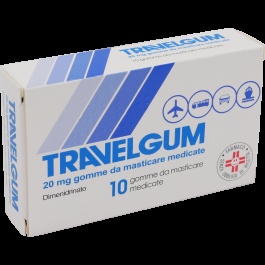
- Страна регистрации
- Форма выпускаChewable tablet, 20 MG
- Код АТХR06AA02
- Действующее вещество
- Отпускается по рецептуНет
- Производитель
- Информация на этой странице носит справочный характер и не является медицинской консультацией. Перед началом приема лекарства обязательно проконсультируйтесь с врачом.
- Аналоги TRAVELGUMФорма выпуска: Tablet, <50 mgДействующее вещество: diphenhydramineПроизводитель: INDUSTRIA FARMACEUTICA NOVA ARGENTIA S.R.L.Отпускается без рецептаФорма выпуска: Soft capsule, 50 MGДействующее вещество: diphenhydramineПроизводитель: DOMPE' FARMACEUTICI S.P.A.Отпускается без рецептаФорма выпуска: Modified-release tablet, 20 mg/20 mgДействующее вещество: doxylamine, combinationsПроизводитель: EXELTIS ITALIA S.R.L.Отпускается по рецепту
Аналоги TRAVELGUM в других странах
Лекарства с тем же действующим веществом, доступные в других странах.
Аналог TRAVELGUM в Польша
Аналог TRAVELGUM в Украина
Аналог TRAVELGUM в Испания
Врачи онлайн по TRAVELGUM
Обсудите применение TRAVELGUM и возможные следующие шаги — по оценке врача.









Получите рецепт на TRAVELGUM онлайн
Заполните форму за 2 минуты
Расскажите о симптомах, истории болезни и нужном препарате.
Выберите врача или мы назначим
Выберите специалиста или мы подберём ближайшего доступного врача.
Врач рассматривает ваш случай
Обычно в течение 30 минут. Может задать уточняющие вопросы в чате.
Получите в любой аптеке
Электронный рецепт отправляется на вашу почту — действителен по всей Польше.
Часто задаваемые вопросы
TRAVELGUM не требует рецепта в Италия. Вы можете уточнить у врача онлайн, подходит ли это лекарство для вашей ситуации.
Действующее вещество TRAVELGUM — diphenhydramine. Эта информация помогает определить лекарства с тем же составом под другими торговыми названиями.
TRAVELGUM производится компанией Viatris Healthcare Limited. Упаковка и торговое название могут отличаться в зависимости от дистрибьютора.
Врачи, включая Семейные врачи, Психиатры, Дерматологи, Кардиологи, Эндокринологи, Гастроэнтерологи, Пульмонологи, Нефрологи, Ревматологи, Гематологи, Инфекционисты, Аллергологи, Гериатры, Педиатры, Онкологи, могут оценить целесообразность применения TRAVELGUM с учетом вашей ситуации и местных правил. Вы можете записаться на онлайн-консультацию, чтобы обсудить возможные варианты.
Польша имеет хорошо развитую систему здравоохранения в крупных городах, таких как Варшава, Краков, Вроцлав и Гданьск. Аптеки широко доступны и работают в соответствии с действующим законодательством, обеспечивая доступ к рецептурным препаратам.
Вы можете купить TRAVELGUM в Варшаве, Кракове, Вроцлаве или Гданьске в любой аптеке при наличии действующего рецепта.
Чтобы получить рецепт, вы можете воспользоваться Oladoctor:
Другие лекарства с тем же действующим веществом (diphenhydramine) включают NOVAGO, XAMAMINA MAL DI VIAGJIO, BONJESTA. Они могут отличаться торговым названием или формой выпуска, но содержат одинаковый терапевтический компонент. Перед изменением лечения рекомендуется проконсультироваться с врачом.
