



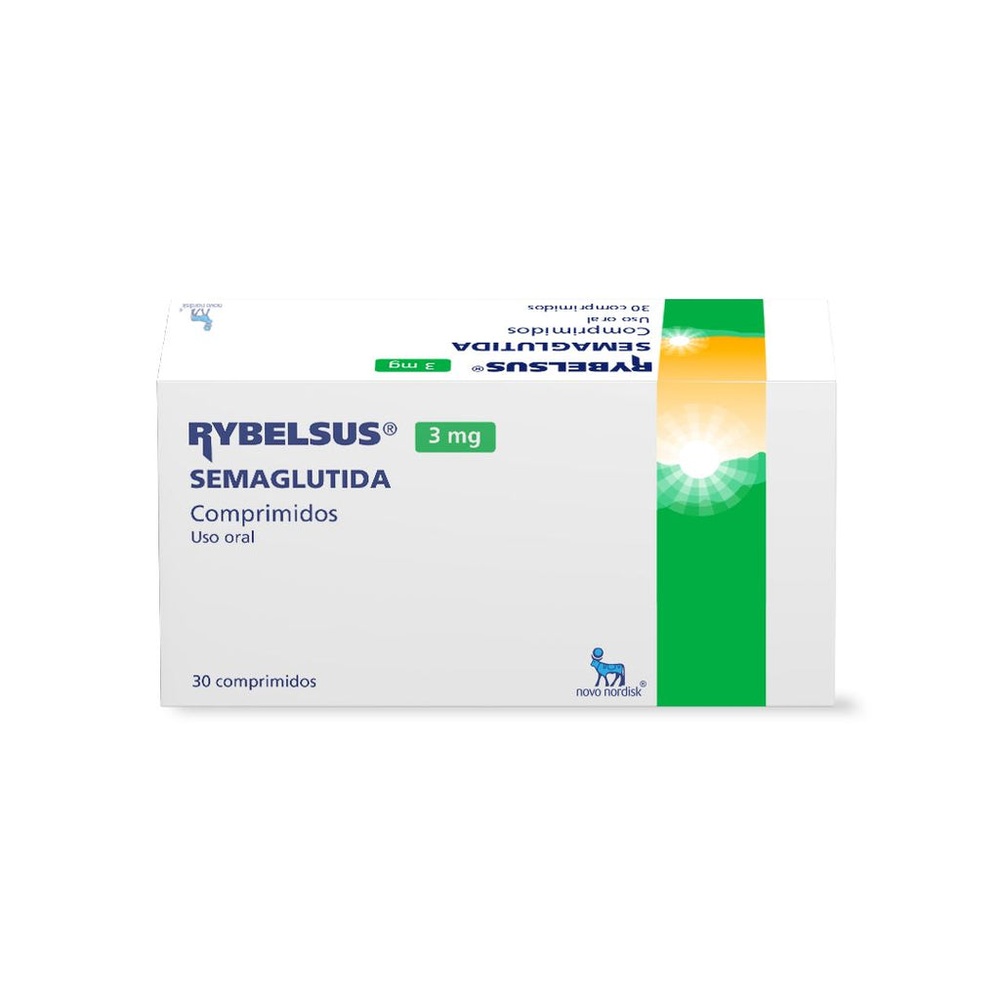
RYBELSUS 3 мг Таблетка

Рассмотрение рецепта онлайн
Врач рассмотрит ваш случай и примет решение о назначении рецепта, если это медицински оправдано.

Поговорите с врачом об этом лекарстве
Обсудите симптомы и возможные дальнейшие шаги на онлайн-консультации.



Инструкция по применению RYBELSUS
Содержание инструкции
- Rybelsus 1.5 mg tablets, 4 mg tablets, 9 mg tablets, 25 mg tablets, 50 mg tablets
- Rybelsus 3 mg tablets, 7 mg tablets, 14 mg tablets, 25 mg tablets, 50 mg tablets
Rybelsus 1.5 mg tablets, 4 mg tablets, 9 mg tablets, 25 mg tablets, 50 mg tablets
semaglutide
Read this leaflet carefully before you start taking this medicine as it contains
important information for you.
- Keep this leaflet. You may need to read it again.
- If you have any questions, ask your doctor, pharmacist or nurse.
- This medicine has been prescribed for you only. Do not pass it on to others, even if they have the same symptoms as you, as it may be harmful.
- If you get any side effects, even those not listed in this leaflet, tell your doctor, pharmacist or nurse. See section 4.
Contents of this leaflet
- 1. What Rybelsus is and what it is used for
- 2. What you need to know before you take Rybelsus
- 3. How to take Rybelsus
- 4. Possible side effects
- 5. How to store Rybelsus
- 6. Contents of the pack and other information
1. What is Rybelsus and what is it used for
Rybelsus contains the active substance semaglutide. It is a medicine used to reduce blood
sugar levels.
Rybelsus is used to treat adults (18 years and older) with type 2 diabetes when diet and exercise
are not sufficient:
- alone, when metformin (another medicine for diabetes) cannot be used, or
- with other medicines for diabetes, when other medicines are not sufficient to control blood sugar level. These medicines can be taken orally or injected, such as insulin.
It is important that you continue the diet and exercise program recommended by your doctor,
pharmacist or nurse.
What is type 2 diabetes?
Type 2 diabetes is a condition in which the body does not produce enough insulin and the insulin that the
body produces does not lower blood sugar levels as it should. In some cases, the body
may produce an excessive amount of sugar in the blood. If blood sugar rises and
remains high for a prolonged period of time, it can cause harmful consequences such as problems
with the heart, kidney disease, eye diseases and reduced circulation in the limbs. For this reason, it
is important to keep blood sugar levels within normal parameters.
2. What you need to know before you take Rybelsus
Do not take Rybelsus
- if you are allergic to semaglutide or any of the other ingredients of this medicine (listed in section 6).
Warnings and precautions
Talk to your doctor, pharmacist or nurse before taking Rybelsus.
Traceability
To improve the traceability of biological medicines, record the name and batch number (stated on the
outer packaging and blister) of the medicine you have taken and provide this information when you report
any adverse effects.
General
This medicine is different from insulin and should not be used if you:
- have type 1 diabetes (the body does not produce insulin)
- develop diabetic ketoacidosis. This is a complication of diabetes that involves a high level of sugar in the blood, difficulty breathing, confusion, excessive thirst, a sweet-smelling breath, or a sweet or metallic taste in your mouth.
If you are going to have surgery with anesthesia, tell your doctor that you are taking Rybelsus.
Problems with the stomach and intestines and dehydration
During treatment with this medicine, you may experience nausea, vomiting or diarrhea. These side
effects can cause dehydration (loss of fluids). It is important that you drink enough fluids to prevent
dehydration. This is particularly important if you have kidney problems.
Contact your doctor if you have any doubts or questions.
Severe and persistent stomach pain which may be due to inflammation of the pancreas
If you have severe and persistent pain in the upper abdomen, seek immediate medical attention as it may
be a sign of inflammation of the pancreas (acute pancreatitis).
Low blood sugar (hypoglycemia)
Taking a medicine containing a sulfonylurea or insulin together with Rybelsus may increase the risk of
having low blood sugar levels (hypoglycemia). See section 4 to check what the warning signs of low blood
sugar are.
Your doctor may ask you to have a test to check your blood sugar levels. This will help to determine
whether the dose of sulfonylurea or insulin needs to be adjusted to reduce the risk of low blood sugar.
Diabetic retinopathy (a complication of diabetes that affects the eyes)
Rapid improvements in blood sugar control can lead to a temporary worsening of diabetic retinopathy. If you
suffer from diabetic retinopathy and experience eye problems while taking this medicine, contact your
doctor.
Response to treatment
If the response to treatment with semaglutide is lower than expected, this may be due to low absorption
caused by variability in absorption and low absolute bioavailability. You must follow the instructions
provided in section 3 to obtain an optimal effect of semaglutide.
Children and adolescents
This medicine is not recommended in children and adolescents under the age of 18 years as efficacy and
safety have not been established in this age group.
Other medicines and Rybelsus
Tell your doctor or pharmacist if you are taking, have recently taken or might take any other medicines.
In particular, tell your doctor, pharmacist or nurse if you are using medicines that contain:
- levothyroxine, used for thyroid disorders. Your doctor may need to check your thyroid function if you take Rybelsus together with levothyroxine.
- warfarin or other similar medicines taken by mouth to reduce blood clotting (anticoagulants). Frequent
blood tests are needed to determine your blood’s ability to clot. - if you are using insulin, your doctor will tell you how to reduce your dose of insulin and recommend that you
monitor your blood sugar levels more frequently to avoid hyperglycemia (high blood sugar levels) and
diabetic ketoacidosis (a complication of diabetes that occurs when the body is unable to convert sugars
because there is not enough insulin).
Pregnancy and breastfeeding
If you are pregnant, suspect you may be pregnant or are planning to become pregnant, ask your doctor for
advice before taking this medicine.
This medicine should not be used during pregnancy because it is not known whether it may harm the baby
before birth. Therefore, you must use a method of contraception during treatment with this medicine. If you
wish to become pregnant, discuss with your doctor how to change your treatment as you must stop taking
this medicine at least two months before. If you become pregnant while using this medicine, contact your
doctor immediately because your treatment will need to be changed.
Do not use this medicine if you are breastfeeding. The medicine passes into breast milk and it is not known
how it affects the baby.
Driving and using machines
It is unlikely that Rybelsus will affect your ability to drive or operate machines.
Some patients may experience dizziness while taking Rybelsus. If you experience dizziness, be particularly
careful while driving or operating machines. Ask your doctor for further information.
If you use this medicine in combination with a sulfonylurea or insulin, low blood sugar levels (hypoglycemia)
may occur which can reduce your ability to concentrate. Do not drive or operate machines if you
experience signs of low blood sugar. See section 2 “Warnings and precautions” for information on the
increased risk of low blood sugar and section 4 for the warning signs of low blood sugar. Consult your
doctor for further information.
Rybelsus contains sodium
Rybelsus tablets 1.5 mg, 4 mg and 9 mg: this medicine contains less than 1 mmol (23 mg) of sodium in each
tablet, i.e. essentially “sodium-free”.
Rybelsus tablets 25 mg and 50 mg: this medicine contains 23 mg of sodium (the main component of
table salt/cooking salt) in each tablet. This is equivalent to 1% of the recommended maximum daily intake
of sodium for an adult.
3. How to take Rybelsus
Take this medicine following exactly the instructions of your doctor. If you have any doubts, consult your
doctor or pharmacist.
How much medicine to take
- The initial dose is one 1.5 mg tablet once a day for one month.
- After one month, your doctor will increase the dose to one 4 mg tablet once a day.
- Your doctor will tell you to maintain the dose for at least one month before moving to a higher dose.
- If necessary, your doctor may gradually increase the dose to one 9 mg, 25 mg or 50 mg tablet once a day.
- Your doctor will prescribe the right dosage for you. Do not change the dose unless your doctor tells you to.
- Rybelsus should always be taken as one tablet a day. You should not take two tablets to achieve the effect of a higher dose.
Taking the medicine
- Take the Rybelsus tablet on an empty stomach after a recommended fasting period of at least 8 hours.
- Swallow the Rybelsus tablet whole with a sip of water (up to 120 mL). Do not split or chew the tablet as it is unknown if this may affect the absorption of semaglutide.
- After taking the Rybelsus tablet, wait at least 30 minutes before eating, drinking or before taking other oral medicines. Waiting less than 30 minutes reduces the absorption of semaglutide.
If you take more Rybelsus than you should
If you take more Rybelsus than you should, inform your doctor immediately. You may experience adverse
effects such as nausea.
If you forget to take Rybelsus
If you forget to take a dose, skip the missed dose and take your normal dose the next day.
If you stop taking Rybelsus
Do not stop taking this medicine without talking to your doctor. If you
stop taking the medicine, blood sugar levels may increase.
If you have any doubts about using this medicine, ask your doctor, pharmacist or
nurse.
4. Possible side effects
Like all medicines, this medicine can cause side effects, although not everybody gets them.
Serious side effects
Common(may affect up to 1 in 10 people)
- complications of retinopathy. You should inform your doctor if you experience eye problems, such as changes in vision, during treatment with this medicine.
Rare(may affect up to 1 in 1,000)
- severe allergic reactions (anaphylactic reactions). Seek immediate medical assistance and inform your doctor immediately if you experience symptoms such as breathing problems, swelling of the face and throat, wheezing, rapid heartbeat, pale and cold skin, dizziness or weakness
- inflammation of the pancreas (acute pancreatitis), which can cause severe stomach and back pain that persists. See a doctor immediately if you experience these symptoms.
Not known (frequency cannot be estimated from the available data)
- intestinal obstruction. A severe form of constipation with additional symptoms such as stomach pain, bloating, vomiting, etc.
Other side effects
Very common(may affect more than 1 in 10 people)
- low blood sugar levels (hypoglycemia) when this medicine is used with other medicines that contain sulfonylurea or insulin. Your doctor may reduce the dose of these medicines before starting to take this medicine.
- nausea - usually disappears over time
- diarrhea - usually disappears over time
The warning signs of low blood sugar levels can occur suddenly. They can
include: cold sweat, cold and pale skin, headache, rapid heartbeat, nausea or
feeling very hungry, changes in vision, drowsiness or feeling weak,
nervousness, anxiety or confusion, difficulty concentrating or trembling.
Your doctor will tell you how to treat low blood sugar levels and what to do if you notice these warning
signs.
Common(may affect up to 1 in 10 people)
- low blood sugar levels (hypoglycemia) when this medicine is used with an oral antidiabetic in addition to sulfonylurea or insulin
- decreased appetite
- feeling dizzy
- vomiting - this usually disappears over time and may occur more often when increasing the dose to 25 mg and 50 mg
- stomach pain
- stomach bloating
- constipation
- stomach discomfort or indigestion
- inflammation of the stomach (gastritis). Signs include stomach pain, nausea and vomiting
- reflux or heartburn - also called “gastroesophageal reflux disease”
- intestinal gas (flatulence)
- fatigue
- increased pancreatic enzymes (such as lipase and amylase) shown in tests.
- change in skin sensation: usually disappears over time and may occur with 25 mg and 50 mg
- Headache
Uncommon(may affect up to 1 in 100)
- allergic reactions such as skin rash, itching or hives
- change in the taste of foods or drinks.
- fast pulse
- belching
- delayed stomach emptying
- gallstones
- weight decrease
Reporting of side effects
If you get any side effect, talk to your doctor, pharmacist or nurse. This includes any side effect not listed
in this leaflet. You can also report side effects directly through the national reporting system listed in
Appendix V. By reporting side effects you can help provide more information on the safety of this medicine.
5. How to store Rybelsus
Keep this medicine out of the sight and reach of children.
Do not use this medicine after the expiry date which is stated on the blister and the package after
“Exp.”. The expiry date refers to the last day of that month.
Store in the original packaging to protect the medicine from light and moisture. This
medicine does not require any particular storage temperature.
Do not dispose of any medicine in the drain or household waste. Ask your pharmacist how to
dispose of medicines you no longer use. This will help protect the environment.
6. Package Contents and Other Information
What Rybelsus contains
- The active ingredient is semaglutide. Each tablet contains 1.5, 4 or 9, 25 or 50 mg of semaglutide.
- The other ingredients are sodium stearyl fumarate, magnesium stearate. See also section 2, “Rybelsus contains sodium”.
Description of the appearance of Rybelsus and package contents
Rybelsus 1.5 mg tablets are white to pale yellow in colour and round in shape
(6.5 mm in diameter). They have “1.5” imprinted on one side and “novo” on the other.
Rybelsus 4 mg tablets are white to pale yellow in colour and round in shape
(6.5 mm in diameter). They have “4” imprinted on one side and “novo” on the other.
Rybelsus 9 mg tablets are white to pale yellow in colour and round in shape
(6.5 mm in diameter). They have “9” imprinted on one side and “novo” on the other.
Rybelsus 25 mg tablets are white to pale yellow in colour and oval in shape (6.8 mm
× 12 mm). They have “25” imprinted on one side and “novo” on the other.
Rybelsus 50 mg tablets are white to pale yellow in colour and oval in shape (6.8 mm
× 12 mm). They have “50” imprinted on one side and “novo” on the other.
The 1.5 mg, 4 mg and 9 mg, 25 mg and 50 mg tablets are available in aluminium/aluminium blisters, in packs of 10, 30, 60, 90 and 100 tablets.
Not all pack sizes may be marketed.
Marketing Authorisation Holder and Manufacturer
Novo Nordisk A/S
Novo Allé
DK-2880 Bagsværd
Denmark
Other sources of information
More detailed information on this medicine is available on the European Medicines Agency website, http://www.ema.europa.eu/
Rybelsus 3 mg tablets, 7 mg tablets, 14 mg tablets, 25 mg tablets, 50 mg tablets
semaglutide
Read this leaflet carefully before you start taking this medicine as it contains important information for you.
- Keep this leaflet. You may need to read it again.
- If you have any questions, ask your doctor, pharmacist or nurse.
- This medicine has been prescribed for you only. Do not pass it on to others, even if their symptoms are the same as yours, as it could be harmful.
- If you get any side effects, even those not listed in this leaflet, tell your doctor, pharmacist or nurse. See section 4.
Contents of this leaflet
- 1. What Rybelsus is and what it is used for
- 2. What you need to know before you take Rybelsus
- 3. How to take Rybelsus
- 4. Possible side effects
- 5. How to store Rybelsus
- 6. Contents of the pack and other information
1. What is Rybelsus and what is it used for
Rybelsus contains the active substance semaglutide. It is a medicine used to reduce blood
sugar levels.
Rybelsus is used to treat adults (18 years and older) with type 2 diabetes when diet and exercise
are not sufficient:
- alone, when metformin (another diabetes medicine) cannot be used, or
- with other medicines for diabetes, when other medicines are not sufficient to control blood sugar levels. These medicines can be taken orally or injected, such as insulin.
It is important that you continue the diet and exercise program recommended by your doctor,
pharmacist or nurse.
What is type 2 diabetes?
Type 2 diabetes is a condition in which the body does not produce enough insulin and the insulin that the
body produces does not lower blood sugar levels as it should. In some cases, the body
may produce an excessive amount of sugar in the blood. If blood sugar rises and
remains high for a prolonged period of time, it can cause harmful consequences such as problems
with the heart, kidney disease, eye diseases and reduced circulation in the limbs. For this reason, it
is important to keep blood sugar levels within normal parameters.
2. What you need to know before you take Rybelsus
Do not take Rybelsus
- if you are allergic to semaglutide or any of the other ingredients of this medicine (listed in section 6).
Warnings and precautions
Talk to your doctor, pharmacist or nurse before taking Rybelsus.
Traceability
To improve the traceability of biological medicines, record the name and batch number (reported
on the outer packaging and blister) of the medicine you have taken and provide this information
when you report any adverse effects.
General
This medicine is different from insulin and should not be used if you:
- have type 1 diabetes (the body does not produce insulin)
- develop diabetic ketoacidosis. This is a complication of diabetes that involves a high blood sugar level, difficulty breathing, confusion, excessive thirst, a sweet-smelling breath, or a sweet or metallic taste in your mouth.
If you are going to have surgery with anesthesia, tell your doctor that you are taking
Rybelsus.
Stomach and intestinal problems and dehydration
During treatment with this medicine, you may experience nausea, vomiting or diarrhea. These side
effects can cause dehydration (loss of fluids). It is essential that you drink enough fluids to prevent
dehydration. This is particularly important if you have kidney problems.
Contact your doctor if you have any doubts or questions.
Severe and persistent stomach pain that may be due to inflammation of the pancreas
If you have severe and persistent pain in the stomach area, seek immediate medical attention
as it may be a sign of inflammation of the pancreas (acute pancreatitis).
Low blood sugar (hypoglycemia)
Taking a medicine containing sulfonylurea or insulin together with Rybelsus may increase the risk
of having low blood sugar levels (hypoglycemia). See section 4 to check what
are the warning signs of low blood sugar levels.
Your doctor may ask you to have a test to determine your blood sugar levels. This
will allow you to determine whether the dose of sulfonylurea or insulin needs to be adjusted to reduce the risk
of low blood sugar levels.
Diabetic retinopathy (a complication of diabetes that affects the eyes)
Rapid improvements in blood sugar control can lead to a temporary
worsening of diabetic retinopathy. If you suffer from diabetic retinopathy and experience eye problems while taking this medicine, see your doctor.
Response to treatment
If the response to treatment with semaglutide is lower than expected, this may be due to low
absorption caused by variability in absorption and low absolute bioavailability. You must
follow the instructions provided in section 3 to obtain an optimal effect of semaglutide.
Children and adolescents
This medicine is not recommended in children and adolescents under the age of 18 years as
efficacy and safety have not been established in this age group.
Other medicines and Rybelsus
Tell your doctor or pharmacist if you are taking, have recently taken or might take
any other medicines.
In particular, tell your doctor, pharmacist or nurse if you are using medicines that contain:
- levothyroxine, used for thyroid disorders. Your doctor may need to check your thyroid function if you take Rybelsus together with levothyroxine.
- warfarin or other similar oral medicines used to reduce blood clotting (anticoagulants). Frequent blood tests are needed to determine the blood's ability to clot.
- if you are using insulin, your doctor will tell you how to reduce the dose of insulin and recommend that you monitor your blood sugar levels more frequently to avoid hyperglycemia (high blood sugar levels) and diabetic ketoacidosis (a complication of diabetes that occurs when the body is unable to convert sugars because there is not enough insulin).
Pregnancy and breastfeeding
If you are pregnant, suspect you may be pregnant, are planning to become pregnant, or are breastfeeding
ask your doctor for advice before taking this medicine.
This medicine should not be used during pregnancy because it is not known whether it may cause
harm to the baby before birth. Therefore, a method of contraception must be used
during the intake of this medicine. If you wish to become pregnant, discuss with your doctor
how to change the treatment as you must stop taking this medicine at least two
months before. If you become pregnant while using this medicine, consult your doctor immediately
as your treatment will need to be changed.
Do not use this medicine if you are breastfeeding. The medicine passes into breast milk and it is not known
how it affects the baby.
Driving and using machines
It is unlikely that Rybelsus will affect your ability to drive or use machines.
Some patients may experience dizziness while taking Rybelsus. If you experience dizziness, take
particular care while driving or using machines. Consult your doctor for further
information.
If you use this medicine in association with a sulfonylurea or insulin, low
blood sugar levels (hypoglycemia) may occur, which can reduce your ability to concentrate. Do not drive
or use machines if you experience signs of low blood sugar levels. See section 2
“Warnings and precautions” for information on the increased risk of low blood sugar levels and section 4 for the warning signs of low blood sugar levels. Consult
your doctor for further information.
Rybelsus contains sodium
This medicine contains 23 mg of sodium (the main component of table salt) in each
tablet. This value is equivalent to 1% of the maximum recommended daily intake of sodium
in the diet of an adult.
3. How to take Rybelsus
Take this medicine following exactly the instructions of your doctor. If you have any doubts, consult your
doctor or pharmacist.
How much medicine to take
- The initial dose is one 3 mg tablet once a day for one month.
- After one month, your doctor will increase the dose to one 7 mg tablet once a day.
- Your doctor will tell you to maintain the dose for at least one month before moving to a higher dose.
- If necessary, your doctor may increase the dose to one 14 mg, 25 mg or 50 mg tablet once a day.
- Your doctor will prescribe the right dosage for you. Do not change the dose unless your doctor tells you to.
- Rybelsus should always be taken as one tablet a day. You should not take two tablets to achieve the effect of a higher dose.
Taking the medicine
- Take the Rybelsus tablet on an empty stomach after a recommended fasting period of at least 8 hours.
- Swallow the Rybelsus tablet whole with a sip of water (up to 120 mL). Do not split or chew the tablet as it is unknown if this may affect the absorption of semaglutide.
- After taking the Rybelsus tablet, wait at least 30 minutes before eating, drinking, or before taking other oral medicines. Waiting less than 30 minutes reduces the absorption of semaglutide.
If you take more Rybelsus than you should
If you take more Rybelsus than you should, inform your doctor immediately. You may experience adverse
effects such as nausea.
If you forget to take Rybelsus
If you forget to take a dose, skip the missed dose and take your normal dose the next day.
If you stop taking Rybelsus
Do not stop treatment with this medicine without talking to your doctor. If you
stop treatment, blood sugar levels may increase.
If you have any doubts about the use of this medicine, ask your doctor, pharmacist or
nurse.
4. Possible side effects
Like all medicines, this medicine can cause side effects, although not everybody gets them.
Serious side effects
Common(may affect up to 1 in 10 people)
- complications of retinopathy. You should inform your doctor if you experience eye problems, such as changes in vision, during treatment with this medicine.
Rare(may affect up to 1 in 1,000)
- serious allergic reactions (anaphylactic reactions). Seek immediate medical assistance and inform your doctor immediately if you experience symptoms such as breathing problems, swelling of the face and throat, wheezing, rapid heartbeat, pale and cold skin, dizziness or weakness
- inflammation of the pancreas (acute pancreatitis), which can cause severe stomach and back pain that persists. See a doctor immediately if you experience these symptoms.
Not known (frequency cannot be estimated from available data)
- intestinal obstruction. A severe form of constipation with additional symptoms such as stomach pain, bloating, vomiting, etc.
Other side effects
Very common(may affect more than 1 in 10 people)
- low blood sugar levels (hypoglycemia) when this medicine is used with other medicines that contain sulfonylurea or insulin. Your doctor may reduce the dose of these medicines before you start taking this medicine.
- nausea - usually disappears over time
- diarrhoea - usually disappears over time
The warning signs of low blood sugar levels can occur suddenly. They can
include: cold sweat, cold and pale skin, headache, rapid heartbeat, nausea or
feeling very hungry, changes in vision, drowsiness or feeling weak,
nervousness, anxiety or confusion, difficulty concentrating or trembling.
Your doctor will tell you how to treat low blood sugar levels and what to do if you notice these warning
signs.
Common(may affect up to 1 in 10 people)
- low blood sugar levels (hypoglycemia) when this medicine is used with an oral antidiabetic in addition to sulfonylurea or insulin
- decreased appetite
- feeling dizzy
- vomiting - this usually disappears over time and may occur more often when increasing the dose to 25 mg and 50 mg
- stomach pain
- stomach bloating
- constipation
- stomach discomfort or indigestion
- inflammation of the stomach (gastritis). Signs include stomach pain, nausea and vomiting
- reflux or heartburn - also called “gastroesophageal reflux disease”
- intestinal gas (flatulence)
- fatigue
- increased pancreatic enzymes (such as lipase and amylase) detected in tests.
- change in skin sensation: usually disappears over time and may occur with 25 mg and 50 mg
- Headache
Uncommon(may affect up to 1 in 100)
- allergic reactions such as skin rash, itching or hives
- altered taste of foods or beverages.
- rapid pulse
- belching
- delayed stomach emptying
- gallstones
- weight decrease
Reporting of side effects
If you get any side effects, talk to your doctor, pharmacist or nurse. You can also report side effects directly
through the national reporting system listed in Annex V. By reporting side
effects you can help provide more information on the safety of this medicine.
5. How to store Rybelsus
Keep this medicine out of the sight and reach of children.
Do not use this medicine after the expiry date which is stated on the blister and the pack after
“Exp.”. The expiry date refers to the last day of that month.
Store in the original package to protect the medicine from light and moisture. This
medicine does not require any particular storage temperature.
Do not dispose of any medicine in waste water or household waste. Ask your pharmacist how to
dispose of medicines you no longer use. This will help protect the environment.
6. Package Contents and Other Information
What Rybelsus contains
- The active ingredient is semaglutide. Each tablet contains 3, 7 or 14, 25 or 50 mg of semaglutide.
- The other ingredients in the 3mg, 7 mg and 14 mg tablets are sodium salcaprozate, povidone K90, microcrystalline cellulose, magnesium stearate. See also paragraph 2, “Rybelsus contains sodium”.
- The other ingredients in the 25 mg and 50 mg tablets are sodium salcaprozate and magnesium stearate. See also paragraph 2, "Rybelsus contains sodium".
Description of the appearance of Rybelsus and package contents
Rybelsus 3 mg tablets are white to pale yellow in colour and oval shaped (7.5 mm x
13.5 mm). They have “3” imprinted on one side and “novo” on the other.
Rybelsus 7 mg tablets are white to pale yellow in colour and oval shaped (7.5 mm x
13.5 mm). They have “7” imprinted on one side and “novo” on the other.
Rybelsus 14 mg tablets are white to pale yellow in colour and oval shaped (7.5 mm
x 13.5 mm). They have “14” imprinted on one side and “novo” on the other.
Rybelsus 25 mg tablets are white to pale yellow in colour and oval shaped (6.8 mm
x 12 mm). They have “25” imprinted on one side and “novo” on the other.
Rybelsus 50 mg tablets are white to pale yellow in colour and oval shaped (6.8 mm
x 12 mm). They have “50” imprinted on one side and “novo” on the other.
The 3 mg, 7 mg, 14 mg, 25 mg and 50 mg tablets are available in aluminium/aluminium blisters,
in packs of 10, 30, 60, 90 and 100 tablets.
Not all pack sizes may be marketed.
Marketing Authorisation Holder and Manufacturer
Novo Nordisk A/S
Novo Allé
DK-2880 Bagsværd
Denmark
Other sources of information
More detailed information on this medicinal product is available on the website of the European
Medicines Agency, https://www.ema.europa.eu/

Не уверены, подходит ли вам это лекарство?
Обсудите симптомы и варианты лечения с врачом онлайн.

Уже начали прием и появились вопросы?
Обсудите свое состояние и дальнейшие шаги с врачом онлайн.
- Страна регистрации
- Форма выпускаTablet, 3 MG
- Код АТХA10BJ06
- Действующее вещество
- Отпускается по рецептуДа
- Производитель
- Информация на этой странице носит справочный характер и не является медицинской консультацией. Перед началом приема лекарства обязательно проконсультируйтесь с врачом.
- Аналоги RYBELSUSФорма выпуска: Injectable solution, 1.34 MG/MLДействующее вещество: СемаглутидПроизводитель: NOVO NORDISK A/SОтпускается по рецептуФорма выпуска: Injectable solution, 0.25 mgДействующее вещество: СемаглутидПроизводитель: NOVO NORDISK A/SОтпускается по рецептуФорма выпуска: Powder and solvent for injectable suspension, 2 MGДействующее вещество: exenatideПроизводитель: ASTRAZENECA ABОтпускается без рецепта
Аналоги RYBELSUS в других странах
Лекарства с тем же действующим веществом, доступные в других странах.
Аналог RYBELSUS в Испания
Аналог RYBELSUS в Украина
Врачи онлайн по RYBELSUS
Обсудите применение RYBELSUS и возможные следующие шаги — по оценке врача.


Получите рецепт на RYBELSUS онлайн
Заполните форму за 2 минуты
Расскажите о симптомах, истории болезни и нужном препарате.
Выберите врача или мы назначим
Выберите специалиста или мы подберём ближайшего доступного врача.
Врач рассматривает ваш случай
Обычно в течение 30 минут. Может задать уточняющие вопросы в чате.
Получите в любой аптеке
Электронный рецепт отправляется на вашу почту — действителен по всей Польше.
Часто задаваемые вопросы
RYBELSUS требует рецепта в Италия. Вы можете уточнить у врача онлайн, подходит ли это лекарство для вашей ситуации.
Действующее вещество RYBELSUS — Семаглутид. Эта информация помогает определить лекарства с тем же составом под другими торговыми названиями.
RYBELSUS производится компанией NOVO NORDISK A/S. Упаковка и торговое название могут отличаться в зависимости от дистрибьютора.
Врачи, включая Семейные врачи, Психиатры, Дерматологи, Кардиологи, Эндокринологи, Гастроэнтерологи, Пульмонологи, Нефрологи, Ревматологи, Гематологи, Инфекционисты, Аллергологи, Гериатры, Педиатры, Онкологи, могут оценить целесообразность применения RYBELSUS с учетом вашей ситуации и местных правил. Вы можете записаться на онлайн-консультацию, чтобы обсудить возможные варианты.
Польша имеет хорошо развитую систему здравоохранения в крупных городах, таких как Варшава, Краков, Вроцлав и Гданьск. Аптеки широко доступны и работают в соответствии с действующим законодательством, обеспечивая доступ к рецептурным препаратам.
Вы можете купить RYBELSUS в Варшаве, Кракове, Вроцлаве или Гданьске в любой аптеке при наличии действующего рецепта.
Чтобы получить рецепт, вы можете воспользоваться Oladoctor:
Другие лекарства с тем же действующим веществом (Семаглутид) включают OTSEMPIK, WEGOVY, BYDUREON. Они могут отличаться торговым названием или формой выпуска, но содержат одинаковый терапевтический компонент. Перед изменением лечения рекомендуется проконсультироваться с врачом.
