



RINGER 50 ML Инфузионный раствор

Рассмотрение рецепта онлайн
Врач рассмотрит ваш случай и примет решение о назначении рецепта, если это медицински оправдано.

Поговорите с врачом об этом лекарстве
Обсудите симптомы и возможные дальнейшие шаги на онлайн-консультации.



Инструкция по применению RINJER AKETATO BAXTER
Содержание инструкции
RINGER ACETATO BAXTER
6 mg/ml + 0.3 mg/ml + 0.2 mg/ml + 4 mg/ml
Infusion solution
Sodium Chloride + Potassium Chloride + Calcium Chloride dihydrate + Sodium Acetate
Equivalent medicinal product
Read this leaflet carefully before using this medicine as it contains
important information for you.
- Keep this leaflet. You may need to read it again.
- If you have any questions, ask your doctor or nurse.
- If any side effects occur, including those not listed in this leaflet, ask your doctor or nurse. See section 4.
Contents of this leaflet:
- 1. What RINGER ACETATO BAXTER is and what it is used for
- 2. What you need to know before using RINGER ACETATO BAXTER
- 3. How to use RINGER ACETATO BAXTER
- 4. Possible side effects
- 5. How to store RINGER ACETATO BAXTER
- 6. Contents of the pack and other information
1. WHAT RINGER ACETATE BAXTER IS AND WHAT IT IS USED FOR
RINGER ACETATE BAXTER belongs to the class of electrolytes (substances essential
for all cells to maintain a condition that allows them to perform their
functions optimally).
This medicine is used in the replacement therapy of extracellular fluid and
electrolyte losses, when it is necessary to correct mild or
moderate (but not severe) states of acidosis (increased blood acidity).
2. WHAT YOU NEED TO KNOW BEFORE USING RINGER ACETATE BAXTER
Do not use RINGER ACETATE BAXTER
- If you are allergic to sodium chloride, potassium chloride, calcium chloride dihydrate, sodium acetate or any of the other ingredients of this medicine (listed in section 6).
- If you have severe kidney failure (decreased kidney function).
- If you have hypercalcemia (increased calcium levels in the blood), hypercalciuria (abnormal presence of calcium in the urine) or severe kidney disease.
- In case of hypernatremia (increased sodium concentrations in the blood).
- In case of hydrosaline plethora (accumulation of fluids and salts).
- In case of hyperkalemia (increased potassium concentrations in the blood) or in cases of potassium retention (decreased ability to eliminate potassium).
- In case of ventricular fibrillation (alteration of the heart rhythm). Calcium chloride may increase the risk of arrhythmias (irregular heartbeat).
- In case of severe liver failure (reduced liver function).
- If you have kidney stones (the situation may worsen with the administration of calcium).
- If you suffer from sarcoidosis (an inflammatory disease that can affect all organs). Hypercalcemia typical of this condition may be potentiated.
- In case of hypercoagulability (abnormal blood clotting).
- If you are taking concomitant therapy with cardiac glycosides, medicines for heart disease (see “Other medicines and RINGER ACETATE BAXTER”).
- If you have Addison's disease (a condition caused by decreased adrenal cortex function) and are not undergoing any treatment for it.
- In case of heat cramps (muscle cramps due to exercise caused by excessive fluid intake without sodium replacement).
Concomitant treatment with ceftriaxone (an antibiotic), even when using separate infusion lines, is contraindicated in neonates less than 28 days of age (see “Other medicines and RINGER ACETATE BAXTER”, paragraph 3 “How to use RINGER ACETATE BAXTER” and paragraph 4 “Possible side effects”).
In conjunction with blood transfusions, the solution should not be administered through the same infusion catheter as whole blood due to the possible risk of coagulation.
Warnings and precautions
Consult your doctor or nurse before using RINGER ACETATE BAXTER
This medicine must be administered to you via a very slow infusion, as
potassium intoxication may occur, which can lead to death due to heart failure (cardiac depression), problems with irregular heartbeat (arrhythmias)
up to cardiac arrest.
RINGER ACETATE BAXTER solution is irritating and, therefore, should not be
administered intramuscularly (into the muscle) or subcutaneously (under the skin) or into the peri-
vascular tissue (around blood vessels) as tissue necrosis (death) may occur.
The medicine should not be used but only strictly necessary in the following cases:
- if you suffer from a disease of the adrenal glands characterized by excessive production of the hormone aldosterone (primary and secondary hyperaldosteronism) or if you have a disease called pre-eclampsia characterized by high blood pressure, swelling due to fluid accumulation and the presence of protein in the urine as it can cause sodium retention, fluid overload or fluid accumulation (edema);
- if you have an excess or are predisposed to having an excess of potassium in the blood (hyperkalemia) due to the following cases: severe kidney damage or a disease of the adrenal glands (adrenocortical insufficiency), severe dehydration or extensive damage or burns to the tissues and if you have heart problems (heart failure).
The medicine should be administered with caution in patients:
- With kidney failure (decreased kidney function); the administration of solutions containing potassium ions in patients with decreased kidney function may cause potassium retention.
- With heart failure (decreased heart function), especially if undergoing treatment with digitalis drugs (drugs that increase heart function).
- With adrenal insufficiency (decreased adrenal function).
- With liver failure (decreased liver function).
- With familial periodic paralysis (neuromuscular disease with functional disorders).
- With congenital myotonia (a pathological condition present from birth characterized by prolonged muscle contraction).
- In the early postoperative period.
- With kidney disease, pulmonary heart (enlargement of the right ventricle of the heart, caused by some lung disease), respiratory failure or respiratory acidosis (a condition characterized by an increase in breathing acts that are wider and deeper, irritability,
headache, loss of appetite, drowsiness and which can reach a coma in untreated forms,
caused by an accumulation of carbon dioxide in the blood caused by diseases leading to
respiratory failure). In these situations, the acidification caused by calcium chloride can
worsen the clinical picture.
- Who are in conditions of hypercalcemia or in whom there may be an increased risk of hypercalcemia (increased calcium levels in the blood), such as chronic kidney failure, dehydration (excessive fluid loss), electrolyte imbalance or with kidney stones even in the past.
- With heart disease, as calcium salts can increase the risk of arrhythmias.
- Who are in one of the following conditions that can cause high levels of vasopressin, a hormone that regulates body fluids: or have an acute illness or have pain or have undergone surgery or have infections, burns or have brain, liver, heart and kidney diseases or are taking certain medications (see also Other medicines and RINGER ACETATE BAXTER)
This may increase the risk of low sodium levels in the blood (hyponatremia) and may lead to headache,
nausea, seizures, lethargy, vomiting and cerebral edema. Cerebral edema increases the
risk of dangerous brain damage.
People at higher risk of cerebral edema are:
- children
- women (especially if of childbearing age)
- people with altered fluid levels in the brain (e.g. due to meningitis, bleeding in the skull or brain contusion).
Due to the presence of sodium, administer the medicine with caution:
- In patients with congestive heart failure (a pathological condition caused by the heart's inability to pump blood in sufficient quantity to meet the body's needs).
- In case of severe kidney failure (decreased kidney function).
- In clinical conditions associated with edema (swelling) with hydrosaline retention (water and salts).
- In patients undergoing treatment with drugs with inotropic cardiac action (which stimulate heart function) or with corticosteroids (anti-inflammatory) or corticotropins (drugs used to assess adrenal gland function or for the treatment of diseases where corticosteroid treatment is indicated).
- In patients with hypertension (high blood pressure).
- In patients with aldosteronism
- In case of congestive heart failure.
- In patients with liver disease.
- In patients with peripheral or pulmonary edema.
- In patients with reduced kidney function.
- In case of pre-eclampsia (a specific condition of pregnancy characterized by edema, protein in the urine and high blood pressure), fluid overload or other conditions associated with sodium retention (see “Other medicines and RINGER ACETATE BAXTER”).
Due to the presence of calcium, the medicine must be used with great caution in patients:
- With kidney disease.
- With heart disease.
- Who have received a blood transfusion as calcium ion concentrations may be different from those expected.
Due to the presence of acetate, the medicine must be used with caution:
- In patients with metabolic and respiratory alkalosis (a pathological condition characterized by a decrease in blood acidity).
- In those conditions in which there is an increase in the level or insufficient utilization of this ion, such as in the case of mild or moderate liver failure (decreased liver function).
The administration of the medicine may cause vasodilation (dilation of blood vessels)
resulting in a decrease in blood pressure.
During administration, depending on the volume and rate of infusion, an
accumulation of fluids (fluid overload, congestive state including pulmonary congestion and
edema), a disorder of mineral salts in the blood (electrolytes) and blood pH (acid-base
balance) may occur.
During treatment with this medicine, your doctor will periodically check the
function of your heart by electrocardiograms and the concentration of mineral salts in the
blood (plasma osmolarity), fluids, and blood pH ('acid-base balance).
Frequent monitoring of calcium concentrations in the blood and urine is necessary to avoid
hypercalciuria (loss of high levels of calcium in the urine) as hypercalciuria can turn into
hypercalcemia (excessive calcium levels in the blood).
The infusion must be stopped immediately if signs or symptoms of a suspected
hypersensitivity develop.
Children
Plasma electrolyte concentrations should be carefully monitored in the
pediatric population given that this population may have a reduced ability to regulate fluids
and electrolytes.
Geriatric use
When choosing the type of infusion solution and the volume/rate of infusion for a
geriatric patient, consider that geriatric patients are generally more likely to have
heart, kidney, liver disease and take other medications.
The infusion of hypotonic fluids together with the non-osmotic secretion of ADH can cause
hyponatremia, which manifests with headache, nausea, vomiting, seizures, lethargy (state
of complete deep sleep accompanied by muscle relaxation and total loss of
sensitivity), muscle cramps, restlessness, disorientation, delayed reflexes, coma, cerebral
edema and death. Therefore, symptomatic acute hyponatremic encephalopathy (a disease affecting the
brain) is considered a medical emergency.
Concomitant treatment of RINGER ACETATE BAXTER with ceftriaxone is contraindicated in
neonates less than 28 days of age, even when using separate infusion lines because
there is a risk of precipitation of ceftriaxone-calcium salt in the neonate's bloodstream which
can be fatal (see paragraph 4 “Possible side effects”).
In patients over 28 days of age (including adults), ceftriaxone should not be
administered concurrently with intravenous solutions containing calcium, including RINGER
ACETATE BAXTER, through the same infusion line (e.g. through a Y-connector)
(see “Other medicines and RINGER ACETATE BAXTER”)
Other medications and RINGER ACETATO BAXTER
Tell your doctor if you are taking, have recently taken, or might take any other medication.
This medication should not be administered in association with:
cardiac glycosides (digitalis), digoxin and digitoxin, used for heart problems, as concomitant use may increase the risk of irregular heartbeat (arrhythmias) considering
that the inotropic effect (increasing heart function) and toxic effects are synergistic
(exert a potentiated action).
RINGER ACETATO BAXTER should be administered with caution in association with:
- Diuretic drugs (which increase urine production) that conserve potassium; such association may increase the risk of hyperkalemia (excessive concentration of potassium in the blood), particularly in the presence of renal dysfunction. In such cases, blood potassium levels should be closely monitored.
- Drugs such as ACE inhibitors (drugs used to lower blood pressure), which cause a decrease in aldosterone levels and may lead to potassium retention; blood potassium levels should be closely monitored.
- Angiotensin II receptor antagonists
- Immunosuppressants, such as tacrolimus and cyclosporine
- Corticosteroid drugs (anti-inflammatory drugs), which can cause sodium and water retention, resulting in edema (fluid accumulation) and hypertension (high blood pressure) (see “Warnings and precautions”).
- Thiazide diuretics (used to treat high blood pressure) and vitamin D because hypercalcemia (increased calcium levels in the blood) may occur due to decreased renal calcium excretion.
- - Verapamil (and other calcium channel blockers), as concomitant use may decrease the antihypertensive effect of verapamil.
- Medicines containing magnesium, as it may increase the risk of hypercalcemia or hypermagnesemia (increased concentration of magnesium in the blood), especially in patients with kidney disorders.
- Neuromuscular blocking agents (drugs used to achieve muscle relaxation during surgery); calcium salts may reverse the action of non-depolarizing blockers. In some cases, an increase and prolongation of the action of tubocurarine, suxamethonium or vecuronium have also been observed.
- - acidic drugs, such as salicylates, barbiturates and lithium, as the elimination of these drugs may be increased
- alkaline drugs, such as sympathomimetics (e.g. ephedrine, pseudoephedrine), quinidine and dextroamphetamine (desamphetamine) sulfate, as the elimination of these drugs may be decreased.
- medicines that act on the vasopressin hormone e.g.: chlorpropamide, clofibrate, carbamazepine, vincristine, selective serotonin reuptake inhibitors, 3,4-methylenedioxymethamphetamine, ifosfamide, antipsychotics, narcotics, chlorpropamide, NSAIDs, cyclophosphamide, desmopressin, oxytocin, vasopressin, terlipressin,
- diuretics in general and oxcarbazepine as they may increase the risk of hyponatremia.
The concomitant treatment of RINGER ACETATO BAXTER with ceftriaxone is contraindicated in
neonates less than 28 days of age, even in case of use of separate infusion lines as
there is a risk of precipitation of ceftriaxone-calcium salt in the neonate's bloodstream which
can be fatal (see section 4 “Possible side effects”).
In patients over 28 days of age (including adults) ceftriaxone should not be
administered concurrently with intravenous solutions containing calcium, including RINGER
ACETATO BAXTER, through the same infusion line (e.g. through a Y-connector).
If the same line is used for sequential administrations, the line must be flushed with
a compatible liquid between infusions.
Pregnancy, breastfeeding and fertility
If you are pregnant, suspect you are pregnant, are planning a pregnancy or are breastfeeding with
breast milk, ask your doctor for advice before this medicine is administered to you.
The medicine should not be used during pregnancy and breastfeeding unless in case of
absolute necessity and only after assessing the risk/benefit ratio.
If you are pregnant, RINGER ACETATO BAXTERshould be administered with particular
caution during labor due to the risk of hyponatremia, especially if administered in
association with a drug that induces labor (oxytocin).
Driving and operating machinery
The medicine does not impair the ability to drive vehicles and operate machinery.
RINGER ACETATO BAXTER contains sodium.This medicine contains 260 mmol (or 5,980
mg) of sodium per daily dose (these values refer to a subject of 70 kg). To be taken into
consideration in people with reduced kidney function or who are following a low-sodium diet.
RINGER ACETATO BAXTER contains potassium.This medicine contains 8 mmol (or 312.8
mg) of potassium per dose (these values refer to a subject of 70 kg). To be taken into
consideration in people with reduced kidney function or who are following a low-potassium diet.
3. HOW TO USE RINGER ACETATE BAXTER
Your treatment with RINGER ACETATE BAXTER will be supervised by a doctor. The doctor
will decide the amount of RINGER ACETATE BAXTER to administer to you, and will prepare the medicine.
The solution is isotonic (has the same concentration) with the blood and must be administered
directly into a vein (intravenous infusion) by specialized medical personnel.
It must not be injected through other routes of administration (intramuscularly, or
subcutaneously or into perivascular tissues).
The medicine must be administered only if your kidney function is intact and at a
rate not exceeding 10 milliequivalents of potassium/hour.
After administration of the medicine, remain lying down for a short period.
The dose will be adjusted by the doctor based on age, weight and your health conditions (only if
your kidney function is intact) and your clinical response and laboratory tests.
The recommended dose in adults is approximately 20-30 ml of solution/Kg of body weight, which may
be increased up to a maximum of 40 ml of solution/Kg of body weight.
Infusions that are too rapid can cause local pain and the infusion rate must be
adjusted in relation to tolerance.
Administration must be stopped if you experience pain or redness at the injection site, in
as much as this could be caused by leakage of the medicine from the vein (extravasation of the
drug).
The solution must be used immediately after opening the container. The container is for
single and uninterrupted administration and any residue cannot be used.
Shake well during preparation and before administration. Do not use the medicine if the
solution is not clear, colorless or if it contains particles.
Make sure to take all precautions to maintain sterility before and during
intravenous infusion.
Do not use plastic containers connected in series as they can cause gas embolism
(obstruction of an artery or vein, caused by a foreign body to the normal blood flow,
which is called an embolus and which can be a blood clot, an air bubble or other gases),
due to the residual air from the primary container before the administration of the
fluid from the secondary container is completed.
Pressurizing intravenous solutions contained in flexible plastic containers to increase
flow rates can cause gas embolism if the residual air in the container is not
completely eliminated before administration.
The use of an intravenous administration set with the vent in the open position can cause
gas embolism. Intravenous administration sets with the vent (device for
expelling air) in the open position must not be used with flexible plastic containers.
Incompatibilities with RINGER ACETATE BAXTER
The medicine is incompatible with:
- Magnesium sulfate: formation of a precipitate (formation of an insoluble solid).
- Medicines containing phosphate: formation of a calcium phosphate precipitate.
- Medicines containing carbonate: formation of a calcium carbonate precipitate.
- Medicines containing tartrate: formation of a calcium tartrate precipitate.
- Aminophylline: formation of a precipitate.
- Amphotericin B: development of numbness.
- Cefamandole.
- Ceftriaxone sodium: precipitate formation; the administration of RINGER ACETATE BAXTER should not occur within 48 hours of the administration of ceftriaxone.
- Cefalotin.
- Cefradine.
- Chlorphenamine: physical incompatibility.
- Dobutamine: development of numbness.
- Fat emulsion: flocculation (the solid phase tends to separate forming flakes in suspension).
- Heparin sodium.
- Indometacin: formation of precipitate.
- Nitrofurantoin sodium.
- Promethazine: formation of precipitate.
- Propofol: formation of precipitate.
- Streptomycin: calcium may inhibit the activity of streptomycin.
- Tetracyclines: calcium salts can complex tetracyclines.
Calcium salts can form complexes with many drugs, such as cortisone, erythromycin
lactobionate, etamivan, ethyl alcohol, sodium thiopental, disodium edetate, and this can determine the
formation of precipitates. Physical incompatibility has been reported with ceftriaxone (see paragraphs
“Do not use RINGER ACETATE BAXTER”, “Other medicines and RINGER ACETATE BAXTER” and
paragraph 4 “Possible side effects”).
.
If you use more RINGER ACETATE BAXTER than you should
Following the administration of an excessive dose of this medicine, the following may occur:
- fluid overload with risk of edema.
- increased levels of potassium in the blood (hyperkalemia), which can lead to death due to heart damage (cardiac depression, arrhythmias or arrest);
- increased levels of sodium (hypernatremia) and the volume of blood in circulation (hypervolemia). If sodium levels in the blood increase too much, a loss of fluids from internal organs (dehydration) may occur, particularly in the brain and the accumulation of fluids that can affect the cerebral, pulmonary and peripheral circulation, leading to an accumulation of fluid around the lung (pulmonary edema) or swelling in the legs and ankles (peripheral edema);
- increased levels of chlorine which determines the reduction of the pH of the blood (acidosis) due to the reduction of the concentration of bicarbonate ions;
- increased levels of calcium in the blood (hypercalcemia), especially in patients with kidney disease, resulting in thirst, nausea, vomiting, constipation, increased urine production (polyuria), abdominal pain, muscle weakness, mental disorders and in severe cases even heart problems (cardiac arrhythmia) and coma.
In case of administration of an excessive dose of RINGER ACETATE BAXTER, immediately stop
the infusion and institute corrective therapy to reduce the levels in the blood of the ions
that are in excess and restore, if necessary, the acid-base balance (see “Warnings and
precautions”).
The patient should be kept under observation to assess the appearance of any signs and
symptoms related to the administered drug, to ensure the relative symptomatic and supportive measures
as needed.
In case of high natremia, loop diuretics may be used.
In case of hyperkalemia, glucose (with or without insulin) or sodium bicarbonate may be administered by intravenous infusion.
In case of modest overdose of calcium chloride, treatment involves immediate
suspension of the infusion and any other drug containing calcium. In case of severe overdose (plasma concentrations greater than 2.9 mmol/L), the following measures should be taken:
- Rehydration by administering a 0.9% sodium chloride solution.
- Use of non-thiazide diuretics to promote calcium elimination.
- Monitoring of potassium and calcium levels in the blood with immediate restoration of levels to normal values.
- Monitoring of cardiac function, use of beta-blockers to reduce the risk of cardiac arrhythmia.
- Possible recourse to hemodialysis (physical replacement of kidney function). High levels of electrolytes in the blood may require dialysis. When evaluating an overdose, also consider the additions to the solution.
If you have any doubts about the use of this medicine, consult your doctor or nurse.
4. POSSIBLE SIDE EFFECTS
Like all medicines, this medicine can cause side effects, although not everybody gets them.
The following side effects may occur, the frequency of which cannot be established based on the
available data:
- Gastrointestinal disorders and irritation, thirst, reduced salivation, nausea, vomiting, diarrhea, abdominal pain, constipation, metallic taste, chalky taste.
- Neuromuscular disorders, muscle rigidity, paresthesia (altered sensation of the limbs or other parts of the body), flaccid paralysis (loss of voluntary movement which is
accompanied by a decrease in muscle tone), weakness, mental confusion, headache, dizziness, restlessness, irritability, convulsions, coma, death, convulsions that
may be accelerated by alkalosis induced by acetate, acute hyponatremic encephalopathy*.
- Drowsiness, confusion, mental disorders.
- Arrhythmias, tachycardia (increased heart rate), bradycardia (decreased heart rate), conduction disturbances, disappearance of the P wave, widening of the QRS complex on the electrocardiogram, syncope (transient loss of consciousness), ventricular fibrillation (very serious heart failure), cardiac arrest.
- Hypotension, hypertension, peripheral edema, vasodilation, flushing.
- Hypernatremia, hyponatremia, hypervolemia, hyperchloremia.
- Dyspnea (difficulty breathing), respiratory arrest, pulmonary edema, pneumothorax (a condition with sudden onset consisting of the accumulation of air within the space separating the lung from the chest wall), chest tightness, chest pain.
- Reduced lacrimation.
- Renal insufficiency, polyuria (excessive urine production).
- Hypercalcemia, Burnett's syndrome (a condition caused by excessive milk consumption), hyperhydration, electrolyte imbalances, fluid overload, hyponatremia*.
- Muscle weakness.
- Febrile responses, infection at the infusion site, local pain or reaction, redness, rash, venous irritation, thrombosis (a pathological process consisting of the formation of thrombi within blood vessels, which obstruct or prevent normal blood flow) or venous phlebitis (inflammation of veins) extending from the infusion site, extravasation, tissue necrosis, abscess formation (collection of pus within a tissue), skin calcification (deposition of calcium salts in tissues).
- Hypersensitivity (allergic) reactions to the infusion, including anaphylactic/anaphylactoid reactions (severe, rapidly occurring allergic reactions), urticaria.
- Urticaria (itchy skin rash) localized or generalized, such as skin rash, erythema (skin redness) and tingling/itching. * Hospital-acquired hyponatremia can cause irreversible brain damage and death due to the development of acute hyponatremic encephalopathy
If you experience any of the following potentially serious side effects:
- If you are in hospital: tell your doctor or nurse immediately.
- After you have left the hospital: go immediately to the Emergency Roomof the nearest hospital.
Additional side effects in children and adolescents
Rarely, serious, and in some cases fatal, side effects have been reported in premature infants
and full-term infants (under 28 days of age) who had been treated with ceftriaxone and calcium intravenously.
Cases of renal precipitation have been reported, mainly in children over 3
years of age treated with high daily doses (e.g. greater than or equal to 80 mg/kg/day) or with total doses greater than 10 grams and who had other risk factors (e.g. fluid restriction,
bedridden patients). The risk of precipitate formation increases in immobilized or dehydrated patients.
This event may be symptomatic or asymptomatic, may cause renal failure
and anuria and is reversible with discontinuation of administration.
Calcium-ceftriaxone salt precipitation has been observed in the gallbladder, mainly in
patients treated with doses higher than the standard recommended dose. The incidence appears to be
lower when infusions are administered slowly (20-30 minutes). This effect is generally
asymptomatic, but in rare cases precipitations have been accompanied by clinical symptoms such as
pain, nausea and vomiting. In these cases, symptomatic treatment is recommended. The precipitation
is generally reversible with discontinuation of administration.
Reporting of side effects
If you get any side effects, talk to your doctor or pharmacist. You can also report side effects directly
through the national reporting system at:
http://www.agenziafarmaco.gov.it/content/come-segnalare-una-sospetta-reazione-avversa.
By reporting side effects you can help provide more information on the
safety of this medicine.
5. HOW TO STORE RINGER ACETATE BAXTER
Keep this medicine out of the sight and reach of children.
Do not use this medicine after the expiry date which is stated on the packaging. The expiry date refers to the last day of that month and the product in intact packaging,
correctly stored.
The solution must be clear, colourless and free from visible particles.
The medicine is for single and uninterrupted administration and any remaining solution cannot
be used.
Use immediately after opening the container.
Store in the original packaging and in a tightly closed container.
Do not refrigerate or freeze.
Do not dispose of any medicine in wastewater or household waste. Ask your pharmacist how to
dispose of medicines you no longer use. This will help protect the environment.
6. PACKAGE CONTENTS AND OTHER INFORMATION
What RINGER ACETATO BAXTER contains
1000 ml of solution contains:
Active ingredients:
Sodium Chloride 6 g
Potassium Chloride 0.3 g
Calcium Chloride dihydrate 0.2 g
Sodium Acetate 4 g
Other ingredients:
Water for injections q.s.
Hydrochloric acid q.s. to reach pH 6.0 – 7.0
mEq/liter: Na 132
K 4
Ca 3
Cl 110
Acetate as HCO
29
Theoretical osmolarity: (mOsm/liter) 277
pH: 6.0 -7.0
Description of the appearance of RINGER ACETATO BAXTER and package contents
Solution for infusion, sterile and free from bacterial endotoxins.
Clear, colorless solution free from visible particles.
Various pack sizes are available:
Glass vials: 50, 100, 250 and 500 ml Single pack
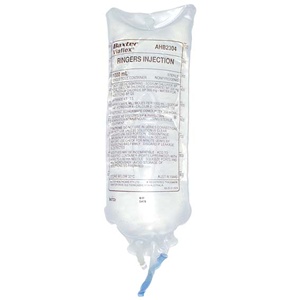
ClearFlex flexible bags: 100, 250, 500 and 1000 ml. Single pack
Glass vials 500 ml Pack of 20 units
ClearFlex and Viaflo flexible bags: 500 ml Pack of 20 units
Viaflo flexible bags: 500 ml Pack of 24 units
Viaflo flexible bags: 1000 ml Pack of 10 units
Viaflo flexible bags: 1000 ml Pack of 12 units
Marketing Authorisation Holder
BAXTER S.p.A.- Piazzale dell’Industria 20 – 00144 Rome.
Manufacturer
BIEFFE MEDITAL S.p.A.- Via Nuova Provinciale - 23034 Grosotto (So).
BIEFFE MEDITAL S.A.Ctra de Biescas - 22666 Sabiñánigo (Spain).

Не уверены, подходит ли вам это лекарство?
Обсудите симптомы и варианты лечения с врачом онлайн.

Уже начали прием и появились вопросы?
Обсудите свое состояние и дальнейшие шаги с врачом онлайн.
- Страна регистрации
- Форма выпускаInfusion solution, 50 ML
- Код АТХB05BB01
- Действующее вещество
- Отпускается по рецептуДа
- Производитель
- Информация на этой странице носит справочный характер и не является медицинской консультацией. Перед началом приема лекарства обязательно проконсультируйтесь с врачом.
- Аналоги RINJER AKETATO BAXTERФорма выпуска: Infusion solution, 500 MLДействующее вещество: electrolytesПроизводитель: BAXTER S.P.A.Отпускается по рецептуФорма выпуска: Infusion solution, 100 MLДействующее вещество: electrolytesПроизводитель: INDUSTRIA FARMACEUTICA GALENICA SENESE S.R.L.Отпускается по рецептуФорма выпуска: Infusion solution, 100 MLДействующее вещество: electrolytesПроизводитель: BAXTER S.P.A.Отпускается по рецепту
Аналоги RINJER AKETATO BAXTER в других странах
Лекарства с тем же действующим веществом, доступные в других странах.
Аналог RINJER AKETATO BAXTER в Польша
Аналог RINJER AKETATO BAXTER в Украина
Аналог RINJER AKETATO BAXTER в Испания
Врачи онлайн по RINJER AKETATO BAXTER
Обсудите применение RINJER AKETATO BAXTER и возможные следующие шаги — по оценке врача.









Получите рецепт на RINJER AKETATO BAXTER онлайн
Заполните форму за 2 минуты
Расскажите о симптомах, истории болезни и нужном препарате.
Выберите врача или мы назначим
Выберите специалиста или мы подберём ближайшего доступного врача.
Врач рассматривает ваш случай
Обычно в течение 30 минут. Может задать уточняющие вопросы в чате.
Получите в любой аптеке
Электронный рецепт отправляется на вашу почту — действителен по всей Польше.
Часто задаваемые вопросы
RINJER AKETATO BAXTER требует рецепта в Италия. Вы можете уточнить у врача онлайн, подходит ли это лекарство для вашей ситуации.
Действующее вещество RINJER AKETATO BAXTER — electrolytes. Эта информация помогает определить лекарства с тем же составом под другими торговыми названиями.
RINJER AKETATO BAXTER производится компанией BAXTER S.P.A.. Упаковка и торговое название могут отличаться в зависимости от дистрибьютора.
Врачи, включая Семейные врачи, Психиатры, Дерматологи, Кардиологи, Эндокринологи, Гастроэнтерологи, Пульмонологи, Нефрологи, Ревматологи, Гематологи, Инфекционисты, Аллергологи, Гериатры, Педиатры, Онкологи, могут оценить целесообразность применения RINJER AKETATO BAXTER с учетом вашей ситуации и местных правил. Вы можете записаться на онлайн-консультацию, чтобы обсудить возможные варианты.
Польша имеет хорошо развитую систему здравоохранения в крупных городах, таких как Варшава, Краков, Вроцлав и Гданьск. Аптеки широко доступны и работают в соответствии с действующим законодательством, обеспечивая доступ к рецептурным препаратам.
Вы можете купить RINJER AKETATO BAXTER в Варшаве, Кракове, Вроцлаве или Гданьске в любой аптеке при наличии действующего рецепта.
Чтобы получить рецепт, вы можете воспользоваться Oladoctor:
Другие лекарства с тем же действующим веществом (electrolytes) включают KRYSTALSOL, ELETTROLITIKA BILANKIATA DI MANTENIMENTO KON LUKOSIO GALENIKA SENESE, ELETTROLITIKA DI REINTEGRATSIONE KON SODIO LUKONATO BAXTER. Они могут отличаться торговым названием или формой выпуска, но содержат одинаковый терапевтический компонент. Перед изменением лечения рекомендуется проконсультироваться с врачом.
