



RETROVIR 100 mg /10 Ml Сироп

Рассмотрение рецепта онлайн
Врач рассмотрит ваш случай и примет решение о назначении рецепта, если это медицински оправдано.

Поговорите с врачом об этом лекарстве
Обсудите симптомы и возможные дальнейшие шаги на онлайн-консультации.



Инструкция по применению RETROVIR
Содержание инструкции
Retrovir
100 mg capsule
zidovudina
Read this leaflet carefully before taking this medicine as it contains important
information for you.
Keep this leaflet. You may need to read it again.
If you have any questions, ask your doctor or pharmacist.
This medicine has been prescribed only for you. Do not give it to other people, even if their symptoms
are the same as yours, as it could be harmful.
If any side effects occur, including those not listed in this leaflet, tell your doctor or
pharmacist. See Section 4.
Contents of this leaflet:
1. What Retrovir is and what it is used for
2. What you need to know before you take Retrovir
3. How to take Retrovir
4. Possible side effects
5. How to store Retrovir
6. Contents of the pack and other information
1. What Retrovir is and what it is used for
Retrovir is used in the treatment of HIV (human immunodeficiency virus) infection.
The active ingredient in Retrovir is zidovudine. Retrovir is a type of medicine known as an anti-
retroviral. It belongs to a group of medicines called nucleoside reverse transcriptase inhibitors (NRTIs).
Retrovir does not cure HIV infection; it reduces the amount of the virus in the body and keeps
it at a low level. Retrovir also increases the number of CD4 cells in the blood. CD4 cells are a type
of white blood cell that are important in helping the body fight infections.
Retrovir is used in combination with other medicines (combination therapy) in the treatment
of HIV in adults and children. To control HIV infection and to prevent the disease from getting
worse, you must take all your medicines.
If you are pregnant, your doctor may want you to take Retrovir to help prevent
passing the HIV virus to your unborn baby. After birth, your baby may be given Retrovir to help
prevent HIV infection.
HIV infection spreads through sexual contact with a person who has the infection, or by contact
with infected blood (for example, through sharing needles for injection).
2. What you need to know before taking Retrovir
Do not take Retrovir:
- if you are allergic( hypersensitive) to zidovudine or any of the excipients of Retrovir (listed in Section 6)
- if you have a very low count of white blood cells( neutropenia) or a very low count ofred blood cells( anemia).
Retrovir for newborns
Retrovir should not be given to any newborn with liver problems that include:
- some cases of hyperbilirubinemia(increased amounts in the blood of a substance called bilirubinwhich can cause the skin to appear yellow)
- other problems that cause high levels of liver enzymes in the blood.
Take particular care with Retrovir
Some people taking Retrovir or combination therapies against HIV are at higher risk of
serious side effects. You should be aware of these additional risks:
- if you have had a liver disease(including hepatitis B or C)
- if you are severely overweight(especially if you are a woman) Tell your doctor if any of these situations apply to you.You may need further checks, including blood tests, while you are taking the medicine. SeeSection 4 for more information.
Pay attention to important symptoms
Some patients taking medicines for HIV infection develop other conditions, some of which
can be serious. You need to be informed about important signs and symptoms so
that you can pay attention during therapy with Retrovir.
Read the information in Section 4 of this leaflet.If you have any doubts about this
information or the advice given:
talk to your doctor.
Other medicines and Retrovir
Tell your doctor or pharmacist if you are taking or have recently taken any other
medicines, including herbal medicines or even those available without a prescription. Remember to
tell your doctor or pharmacist if you are taking a new medicine while you are being treated with
Retrovir.
Do not take these medicines with Retrovir:
- stavudine,used in the treatment of HIV infection
- ribavirinor ganciclovir injectionsto treat viral infections
- rifampicinwhich is an antibiotic.
Some medicines may make it more likely that you will have side effects or make
side effects worse.
These include:
- sodium valproate,used in the treatment of epilepsy
- aciclovir, ganciclovir or interferon,used in the treatment of viral infections
- pyrimethamine,used in the treatment of malariaand for other parasitic infections
- dapsone,used in the prevention of pneumoniaand in the treatment of skin infections
- fluconazoleor flucytosine,used in the treatment of fungal infections such as candidiasis
- pentamidineor atovaquone,used in the treatment of parasitic infections such as PCP
- amphotericinor co-trimoxazole,used in the treatment of fungal and bacterial infections
- probenecid,used in the treatment of goutand similar conditions and given with other antibiotics to make the latter more effective
- methadone,used as a heroin substitute
- vincristine, vinblastine or doxorubicin,used in the treatment of cancer.Talk to your doctorif you are taking any of these medicines.
Some medicines interact with Retrovir
These include:
- clarithromycinwhich is an antibiotic
- phenytoin,used in the treatment of epilepsy.Talk to your doctorif you are taking clarithromycin or phenytoin. Your doctor may need to monitor you while you are taking Retrovir.
Pregnancy
If you are pregnant, if you become pregnant during treatment, or if you are planning a pregnancy:
talk to your doctorabout the risks and benefits of taking Retrovir.
If pregnant women who are HIV positive take Retrovir, they are less likely to
transmit HIV infection to their unborn babies.
Retrovir and similar medicines can cause side effects in unborn babies. If you have
taken Retrovir during pregnancy, your doctor may require regular blood tests and
other diagnostic tests to monitor the development of the baby. In children whose mothers have
taken NRTIs during pregnancy, the benefit of protection against HIV has outweighed the risk
of side effects.
Breastfeeding
Breastfeeding is not recommendedfor HIV-positive women because HIV infection can
be transmitted to the baby with breast milk.
A small amount of the components of Retrovir can also pass into breast milk.
If you are breastfeeding or are thinking about breastfeeding you should talk to your doctor as
soon as possible.
Driving and using machines
Retrovir can cause dizzinessand have other side effects that cause a decrease in
attention.
Do not drive or operate machineryunless you feel well.
Retrovir contains sodium
This medicine contains less than 1 mmol (23 mg) of sodiumper dose, i.e.
it is essentially ‘sodium-free’.
You will need regular blood tests
Throughout the time you take Retrovir, your doctor will arrange for regular blood tests to
check for side effects. More detailed information about these side effects is provided
in Section 4 of this leaflet.
Stay in constant contact with your doctor
Retrovir helps to control your condition, but does not cure HIV infection. You need to
take it every day to prevent the disease from getting worse. You can still develop other infections and
diseases related to HIV infection.
Stay in contact with your doctor,and do not stop taking Retrovirwithout your doctor’s
advice.
3. How to take Retrovir
Always take this medicine exactly as your doctor has told you. If you have any doubts
ask your doctor or pharmacist.
Swallow the capsules whole with water.
Retrovir is also available in liquid form.
How much Retrovir will you need to take?
Adults and adolescents with a body weight of at least 30 kg
The usual dose of Retrovir is 300 mg twice a day. Take each dose 12
hours apart.
Children with a body weight greater than 21 kg and less than 30 kg
The usual dose of Retrovir is two 100 mg capsules twice a day.
Children with a body weight of at least 14 kg and less than or equal to 21 kg
The usual dose of Retrovir is one 100 mg capsule to be taken in the morning and two capsules of
100 mg to be taken in the evening.
Children with a body weight of at least 8 kg and less than 14 kg
The usual dose of Retrovir is one 100 mg capsule twice a day.
The capsules are not suitable for children weighing less than 8 kg. Your doctor may decide to
administer Retrovir to your child in liquid formulation or administer Retrovir via
injection.
Pregnancy, childbirth and newborn babies
You should not normally take Retrovir during the first 14 weeks of pregnancy. After the
14th week the recommended dose is 500 mg per day administered as one 100 mg capsule 5 times a day until the onset of labour. During labour and delivery, your doctor may
administer Retrovir by injection until the umbilical cord is cut. Your
newborn baby may also be given Retrovir to help prevent them from
developing HIV infection.
People with kidney or liver problems
If you have severe kidney or liver problems you may need a lower dose of Retrovir
based on your kidney or liver function. Follow your doctor's advice.
If you take more Retrovir than you should
If you take too much Retrovir, contact your doctor or pharmacist for advice. If possible, show
them the Retrovir packaging.
If you forget to take Retrovir
If you forget to take a dose, do not worry. You can take the next dose as soon as
you remember but not within two hours of the next dose. If you remember after two
hours of the next dose, skip the forgotten dose and take the next dose as usual and then continue treatment as before.
Do not take a double dose to make up for a missed dose.
Do not stop treatment with Retrovir without your doctor's advice
Take Retrovir for the entire duration prescribed by your doctor. You should not stop treatment
unless your doctor has advised you to.
4. Possible side effects
During HIV therapy, an increase in weight and levels of lipids and glucose in the blood may occur. This is partly related to the restoration of health and lifestyle, and in the case of blood lipids, sometimes to the HIV medications themselves. Your doctor will check for these changes.
Treatment with zidovudine (Retrovir) often causes a loss of fat from the legs, arms, and face (lipoatrophy). This loss of body fat has been shown to be not completely reversible after stopping zidovudine. Your doctor will need to check for signs of lipoatrophy. Tell your doctor if you notice any fat loss from your legs, arms, and face.
If these signs are found, Retrovir should be stopped and HIV treatment changed.
Like all medicines, this medicine can cause side effects, although not everyone gets them. Some side effects may be revealed with blood tests and may not appear until 4 - 6 weeks after starting treatment with Retrovir. If you experience these effects and they are serious, your doctor may advise you to stop taking Retrovir.
Like the effects listed below, other conditions may develop during HIV therapy.
It is important to read the information in ‘Other possible side effects of combination therapy for HIV’.
Very common side effects
These may affect more than 1 in 10patients treated with Retrovir:
- headache
- nausea
Common side effects
These may affect up to 1 in 10patients treated with Retrovir:
- vomiting
- diarrhea
- stomach pain
- dizziness
- muscle pain
- general feeling of unwellness
Common side effects that may be revealed in blood tests are:
- low number of red blood cells (anemia) or low number of white blood cells (neutropeniaor leukopenia)
- increased level of liver enzymes
- increased amount of bilirubinin the blood (a substance produced by the liver) which can make the skin yellow.
Uncommon side effects
These may affect up to 1 in 100patients treated with Retrovir:
- skin rash (reddened, raised, or itchy skin)
- shortness of breath
- fever (high temperature)
- general soreness
- flatulence
- weakness Uncommon side effects that may be revealed in blood tests are:
- decreased number of cells involved in blood clotting (thrombocytopenia) or of all types of blood cells (pancytopenia).
Rare side effects
These may affect up to 1 in 1000patients treated with Retrovir:
- lactic acidosis (excess lactic acid in the blood; see the next section ‘Other possible side effects of combination therapy for HIV’)
- liver disorders such as jaundice, enlarged liver, or fatty liver
- inflammation of the pancreas
- chest pain, heart muscle disease
- convulsions
- feeling of anxiety and depression, inability to sleep (insomnia), lack of concentration, drowsiness
- indigestion, loss of appetite, taste disorders
- change in the color of nails and skin, or the mucous membrane inside the mouth
- feeling like having the flu - chills, sweating, and coughing
- feeling of tingling in the skin (pins and needles)
- more frequent urination
- increased volume of breast glands in male patients. A rare side effect that may be revealed in blood tests is:
- a decrease in the number of progenitor cells of red blood cells (pure red cell aplasia).
Very rare side effects
A very rare side effect that may affect up to 1 in 10,000patients treated with
Retrovir and that may be revealed in blood tests is:
- inability of the bone marrow to produce new blood cells (aplastic anemia).
If you get any side effects
Talk to your doctor or pharmacist.This includes any possible side effects not listed in this leaflet.
Other possible side effects of combination therapy for HIV
Some other conditions may develop during HIV treatment.
Old infections can reactivate
People with advanced HIV infection (AIDS) have a weakened immune system and are more likely to develop serious infections (opportunistic infections). When these people start treatment, it may happen that old infections, hidden, can reactivate causing signs and symptoms of inflammation. These symptoms are likely due to a strengthening of the immune system, such that the body begins to fight these infections.
In addition to opportunistic infections, autoimmune disorders (a condition that happens when the immune system attacks healthy tissue in the body) can also occur after you have started taking medicines to treat HIV infection. Autoimmune disorders can occur many months after starting treatment. If you notice any symptoms of infection or other symptoms such as muscle weakness, initial weakness in hands and feet that moves towards the body, palpitations, tremors, or hyperactivity, tell your doctor immediately to request the necessary treatment.
If you experience any symptoms of infection while taking Retrovir:
tell your doctor immediately.Do not take other medicines for the infection without your doctor’s advice.
Lactic acidosis is a rare but serious side effect
Some people taking Retrovir develop a condition called lactic acidosis, along with an enlargement of the liver. Lactic acidosis is caused by an increase in lactic acid in the body. It is rare and when it occurs, generally develops after a few months of treatment. It can be life-threatening causing damage to internal organs.
Lactic acidosis is more likely to develop in people who have liver disease or in people who are obese (very overweight), especially women.
The signs of lactic acidosis include:
- deep and rapid breathing
- sleepiness
- weaknessor numbnessof the limbs
- loss of appetite, weight loss
- nausea, vomiting
- stomach painDuring treatment, your doctor will check for signs of lactic acidosis. If you have any of the symptoms listed above or any other symptom that worries you: contact your doctor as soon as possible.
You may have problems with your bones
Some patients in combination therapy for HIV develop a condition called
osteonecrosis. As a result of this condition, part of the bone tissue dies due to reduced blood flow to the bone.
People may be more likely to develop this condition:
- if they have been taking combination therapy for a long period
- if they are also taking anti-inflammatory drugs called corticosteroids
- if they drink alcohol
- if their immune system is very weak
- if they are overweight. Signs of osteonecrosis include:
- joint stiffness
- pain(especially in the hip, knee, or shoulder)
- difficulty movingIf you notice any of these symptoms: tell your doctor.
Other effects may result from tests
Combination therapy for HIV can also cause:
- increased levelsof lactic acidin the blood, which in rare cases can lead to lactic acidosis. This effect may appear in the blood tests that you will perform during treatment with Retrovir.
Reporting of side effects
If you get any side effect, talk to your doctor or pharmacist. This includes any possible side effects not listed in this leaflet. You can also report side effects directly through the national reporting system at the address: https://www.aifa.gov.it/content/segnalazioni-reazioni-avverse .
By reporting side effects you can help provide more information on the safety of this medicine.
5. How to store Retrovir
Keep this medicine out of the sight and reach of children.
Do not use this medicine after the expiry date which is stated on the pack after Exp. The expiry
date refers to the last day of that month.
Do not store at a temperature above 30°C (86°F).
Store in the original packaging.
Do not dispose of any medicine in waste water or household waste. Ask your pharmacist how to
dispose of medicines you no longer use. This will help protect the environment.
6. Contents of the pack and other information
What Retrovir contains
The active ingredient is zidovudine. Each capsule contains 100 mg of zidovudine.
The other ingredients are: corn starch, microcrystalline cellulose, sodium starch glycolate, magnesium
stearate, titanium dioxide E171, gelatin, opacode black ink 10A1 or 10A2 [lacquer, black iron oxide E172, propylene glycol, 28% ammonium hydroxide (only in opacode black ink
10A1), strong ammonium solution (only in opacode black ink 10A2), potassium hydroxide
(only in opacode black ink 10A2)].
Description of the appearance of Retrovir and contents of the pack
Retrovir 100 mg capsules are hard capsules, white in colour with the code ‘ GSYJU’ imprinted on them. The
capsules are supplied in packs containing blister packs of 100 capsules.
Marketing Authorisation Holder and Manufacturer
Marketing Authorisation Holder
ViiV Healthcare BV
Van Asch van Wijckstraat 55H
3811 LP Amersfoort
Netherlands
Local representative: ViiV Healthcare S.r.l. - Viale dell’Agricoltura, 7 - 37135 Verona - Italy
Manufacturer
Delpharm Poznań Spółka Akcyjna - ul. Grunwaldzka 189 - 60-322 Poznań - Poland
Retrovir
250 mg capsules
zidovudine
Read this leaflet carefully before you start taking this medicine as it contains important
information for you.
Keep this leaflet. You may need to read it again.
If you have any questions, ask your doctor or pharmacist.
This medicine has been prescribed for you only. Do not pass it on to others, even if their symptoms are the
same as yours, as it could be harmful.
If you get any side effects, even those not listed in this leaflet, tell your doctor or pharmacist. See section 4.
Contents of this leaflet:
1. What Retrovir is and what it is used for
2. What you need to know before you take Retrovir
3. How to take Retrovir
4. Possible side effects
5. How to store Retrovir
6. Contents of the pack and other information
1. What Retrovir is and what it is used for
Retrovir is used in the treatment of HIV infection (human immunodeficiency virus).
The active ingredient in Retrovir is zidovudine. Retrovir is a type of medicine known as an anti-
retroviral. It belongs to a group of medicines called nucleoside reverse transcriptase inhibitors (NRTIs).
Retrovir does not cure HIV infection; it reduces the amount of the virus in the body and keeps it
at a low level. Retrovir also increases the number of CD4 cells in the blood. CD4 cells are a type of white
blood cell that are important in helping the body fight infections.
Retrovir is used in combination with other medicines (combination therapy) in the treatment
of HIV in adults and children. To control HIV infection and to prevent the disease from getting worse, you
must take all your medicines.
If you are pregnant, your doctor may want you to take Retrovir to help prevent passing the
HIV virus to your unborn baby. After birth, your baby may be given Retrovir to help prevent HIV
infection.
HIV infection spreads through sexual contact with someone who has the infection, or by contact with
infected blood (for example through sharing needles for injecting drugs).
2. What you need to know before taking Retrovir
Do not take Retrovir:
- if you are allergic( hypersensitive) to zidovudine or any of the excipients of Retrovir (listed in Section 6)
- if you have a very low count of white blood cells( neutropenia) or a very low count ofred blood cells( anemia).
Retrovir for newborns
Retrovir should not be given to any newborn with liver problems that include:
- some cases of hyperbilirubinemia(increased amounts in the blood of a substance called bilirubin which can cause the skin to appear yellow)
- other problems that cause high levels of liver enzymes in the blood.
Pay particular attention with Retrovir
Some people taking Retrovir or combination therapies against HIV are at higher risk of
serious side effects. You should be aware of these additional risks:
- if you have had a liver disease(including hepatitis B or C)
- if you are severely overweight(especially if you are a woman) Tell your doctor if any of these situations apply to you.You may need further checks, including blood tests, while taking the medicine. SeeSection 4 for further information.
Pay attention to important symptoms
Some patients taking medicines for HIV infection develop other conditions, some of which
can be serious. You need to be informed about important signs and symptoms
so that you can pay attention during therapy with Retrovir.
Read the information in Section 4 of this leaflet.If you have any doubts about this
information or the advice given:
talk to your doctor.
Other medicines and Retrovir
Tell your doctor or pharmacist if you are taking or have recently taken any other
medicine, including herbal medicines or even those available without a prescription. Remember to
tell your doctor or pharmacist if you are taking a new medicine while being treated
with Retrovir.
Do not take these medicines with Retrovir:
- stavudine,used in the treatment of HIV infection
- ribavirinor ganciclovir injectionsto treat viral infections
- rifampicinwhich is an antibiotic.
Some medicines may make it more likely that you will have side effects or make
side effects worse.
These include:
- sodium valproate,used in the treatment of epilepsy
- aciclovir, ganciclovir or interferon,used in the treatment of viral infections
- pyrimethamine,used in the treatment of malariaand for other parasitic infections
- dapsone,used in the prevention of pneumoniaand in the treatment of skin infections
- fluconazoleor flucytosine,used in the treatment of fungal infections such as candidiasis
- pentamidineor atovaquone,used in the treatment of parasitic infections such as PCP
- amphotericinor co-trimoxazole,used in the treatment of fungal and bacterial infections
- probenecid,used in the treatment of goutand similar conditions and given with other antibiotics to make the latter more effective
- methadone,used as a heroin substitute
- vincristine, vinblastine or doxorubicin,used in the treatment of cancer.Talk to your doctorif you are taking any of these medicines.
Some medicines interact with Retrovir
These include:
- clarithromycinwhich is an antibiotic
- phenytoin,used in the treatment of epilepsy.Talk to your doctorif you are taking clarithromycin or phenytoin. Your doctor may need to monitor you while you are taking Retrovir.
Pregnancy
If you are pregnant, if you become pregnant during treatment, or if you are planning a pregnancy:
talk to your doctorabout the risks and benefits of taking Retrovir.
If pregnant women who are HIV positive take Retrovir, they are less likely to
transmit HIV infection to their unborn babies.
Retrovir and similar medicines can cause side effects in unborn babies. If you have
taken Retrovir during pregnancy, your doctor may require regular blood tests and
other diagnostic tests to monitor the development of the baby. In children whose mothers have
taken NRTIs during pregnancy, the benefit of protection against HIV has outweighed the risk
of side effects.
Breastfeeding
Breastfeeding is not recommendedfor HIV-positive women because HIV infection can
be transmitted to the baby with breast milk.
A small amount of the components of Retrovir may also pass into breast milk.
If you are breastfeeding or are thinking about breastfeeding you should talk to your doctor as soon as possible.
Driving and using machines
Retrovir can cause dizzinessand have other side effects that cause a decrease in
attention.
Do not drive or operate machineryunless you are feeling well.
Retrovir contains sodium
This medicine contains less than 1 mmol (23 mg) of sodiumper dose, that is
essentially ‘sodium-free’.
You will need regular blood tests
For as long as you take Retrovir, your doctor will arrange for regular blood tests to
check for side effects. More detailed information about these side effects can be found
in Section 4 of this leaflet.
Stay in constant contact with your doctor
Retrovir helps to control your condition, but does not cure HIV infection. You need to
take it every day to prevent the disease from getting worse. You can still develop other infections and
diseases related to HIV infection.
Stay in contact with your doctor,and do not stop taking Retrovirwithout your
doctor's advice.
3. How to take Retrovir
Take this medicine exactly as your doctor has told you. If you have any doubts
consult your doctor or pharmacist.
Swallow the capsules whole with water.
How much Retrovir will you need to take?
Adults and adolescents weighing at least 30 kg
The usual dose of Retrovir is 250 mg twice a day. Take each dose 12
hours apart.
Children:
Your child can take Retrovir in liquid form or as 100 mg capsules.
Pregnancy, childbirth and newborn babies
You should not normally take Retrovir during the first 14 weeks of pregnancy. After the
14th week, the recommended dose is 500 mg per day, administered as 100 mg 5 times a
day until the start of labour. During labour and delivery, your doctor may administer
Retrovir by injection until the umbilical cord is cut. Your newborn baby may also be given
Retrovir to help prevent them from becoming infected with HIV.
People with kidney or liver problems
If you have severe kidney or liver problems, you may need a lower dose of Retrovir
based on your kidney or liver function. Follow your doctor's advice.
If you take more Retrovir than you should
If you take too much Retrovir, contact your doctor or pharmacist for advice. If possible, show
them the Retrovir packaging.
If you forget to take Retrovir
If you forget to take a dose, do not worry. You can take the next dose as soon as
you remember, but not within two hours of the next dose. If you remember after two
hours of the next dose, skip the missed dose and take the next dose as usual, then continue
treatment as before.
Do not take a double dose to make up for a missed dose.
Do not stop treatment with Retrovir without your doctor's advice
Take Retrovir for the entire duration prescribed by your doctor. Do not stop treatment
unless your doctor has advised you to do so.
4. Possible side effects
During HIV therapy, an increase in weight and levels of lipids and glucose in the blood may occur. This is partly related to the restoration of health and lifestyle, and in the case of blood lipids, sometimes to the HIV medications themselves. The doctor will check for these changes.
Treatment with zidovudine (Retrovir) often causes a loss of fat from the legs, arms, and face (lipoatrophy). This loss of body fat has been shown to be not completely reversible after stopping zidovudine. The doctor should monitor for signs of lipoatrophy. Inform your doctor if you notice any fat loss from your legs, arms, and face.
If these signs are found, Retrovir should be stopped and the HIV treatment changed.
Like all medicines, this medicine can cause side effects, although not everyone gets them. Some side effects may be revealed by blood tests and may not appear until 4-6 weeks after starting treatment with Retrovir. If you experience these effects and they are serious, your doctor may advise you to stop taking Retrovir.
Like the effects listed below, other conditions may develop during HIV therapy.
It is important to read the information in ‘Other possible side effects of combination therapy for HIV’.
Very common side effects
These may affect more than 1 in 10patients treated with Retrovir:
- headache
- nausea
Common side effects
These may affect up to 1 in 10patients treated with Retrovir:
- vomiting
- diarrhea
- stomach pain
- dizziness
- muscle pain
- general feeling of unwellness Common side effects that may be revealed in blood tests are:
- low number of red blood cells (anemia) or low number of white blood cells (neutropeniaor leukopenia)
- increased level of liver enzymes
- increased amount of bilirubin in the blood (a substance produced by the liver) which may cause the skin to appear yellow.
Uncommon side effects
These may affect up to 1 in 100patients treated with Retrovir:
- skin rash (red, raised, or itchy skin)
- shortness of breath
- fever (high temperature)
- general tenderness
- flatulence
- weakness Uncommon side effects that may be revealed in blood tests are:
- decreased number of cells involved in clotting (thrombocytopenia) or of all types of blood cells (pancytopenia).
Rare side effects
These may affect up to 1 in 1,000patients treated with Retrovir:
- lactic acidosis (excess lactic acid in the blood; see the next section ‘Other possible side effects of combination therapy for HIV’)
- liver disorders such as jaundice, enlarged liver, or fatty liver
- inflammation of the pancreas
- chest pain, heart muscle disease
- convulsions
- feeling of anxiety and depression, inability to sleep (insomnia), lack of concentration, drowsiness
- indigestion, loss of appetite, taste disturbances
- change in the color of nails and skin, or of the mucous membrane inside the mouth
- feeling like the flu - chills, sweating, and coughing
- feeling of pins and needles in the skin
- more frequent urination
- increased volume of breast glands in male patients. A rare side effect that may be revealed in blood tests is:
- a decrease in the number of progenitor cells of red blood cells (pure red cell aplasia).
Very rare side effects
A very rare side effect that may affect up to 1 in 10,000patients treated with Retrovir and that may be revealed in blood tests is:
- inability of the bone marrow to produce new blood cells (aplastic anemia).
If you get any side effects
Talk to your doctor or pharmacist.This includes any possible side effects not listed in this leaflet.
Other possible side effects of combination therapy for HIV
Some other conditions may develop during HIV treatment.
Old infections can flare up
People with advanced HIV infection (AIDS) have a weakened immune system and are more likely to develop serious infections (opportunistic infections). When these people start treatment, it may happen that old infections, hidden, can flare up causing signs and symptoms of inflammation. These symptoms are likely due to a strengthening of the immune system, so that the body begins to fight these infections.
In addition to opportunistic infections, autoimmune disorders (a condition that occurs when the immune system attacks healthy tissue in the body) may also occur after you have started taking medicines to treat HIV infection. Autoimmune disorders can occur many months after starting treatment. If you notice any symptoms of infection or other symptoms such as muscle weakness, initial weakness in hands and feet that moves towards the trunk of the body, palpitations, tremor, or hyperactivity, tell your doctor immediately to request the necessary treatment.
If you experience any symptoms of infection while taking Retrovir:
tell your doctor immediately.Do not take other medicines for the infection without your doctor’s advice.
Lactic acidosis is a rare but serious side effect
Some people taking Retrovir develop a condition called lactic acidosis, along with an enlargement of the liver. Lactic acidosis is caused by an increase in lactic acid in the body. It is rare and, when it occurs, usually develops after a few months of treatment. It can be life-threatening, causing failure of internal organs.
Lactic acidosis is more likely to develop in people who have liver disease or who are obese (very overweight), especially women.
The signs of lactic acidosis include:
- deep and rapid breathing
- drowsiness
- weaknessor numbnessof the limbs
- loss of appetite, weight loss
- nausea, vomiting
- stomach painDuring treatment, your doctor will check for signs of lactic acidosis. If you experience any of the symptoms listed above or any other symptom that worries you: contact your doctor as soon as possible.
You may have problems with your bones
Some patients in combination therapy for HIV develop a condition called
osteonecrosis. As a result of this condition, part of the bone tissue dies due to reduced blood flow to the bone.
People may be more likely to develop this condition:
- if they have been taking combination therapy for a long time
- if they also take anti-inflammatory drugs called corticosteroids
- if they drink alcohol
- if their immune system is very weak
- if they are overweight. Signs of osteonecrosis include:
- joint stiffness
- pain(especially in the hip, knee, or shoulder)
- difficulty moving
If you notice any of these symptoms:
tell your doctor.
Other effects may result from tests
Combination therapy for HIV can also cause:
- increased levelsof lactic acidin the blood, which in rare cases can lead to lactic acidosis This effect may appear in blood tests that you will perform during treatment with Retrovir.
Reporting of side effects
If you get any side effects, even if not listed in this leaflet, tell your doctor or pharmacist. You can also report side effects directly through the national reporting system at: https://www.aifa.gov.it/content/segnalazioni-reazioni-avverse .
By reporting side effects you can help provide more information on the safety of this medicine.
5How to store Retrovir
Keep this medicine out of the sight and reach of children.
Do not use this medicine after the expiry date which is stated on the pack after Scad. The expiry date refers to the last day of that month.
Do not store above 30°C (86°F).
Store in the original package.
Do not dispose of any medicine in waste water or household waste. Ask your pharmacist how to dispose of medicines you no longer use. This will help to protect the environment.
6. Contents of the pack and other information
What Retrovir contains
The active ingredient is zidovudine. Each capsule contains 250 mg of zidovudine.
The other ingredients are: corn starch, microcrystalline cellulose, sodium starch glycolate, magnesium
stearate, titanium dioxide E171, gelatin, indigo carmine E132, opacode black ink 10A1 or
10A2 [lacquer, black iron oxide E172, propylene glycol, 28% ammonium hydroxide (only
in opacode black ink 10A1), strong ammonium solution (only in opacode black ink
10A2), potassium hydroxide (only in opacode black ink 10A2)].
Description of the appearance of Retrovir and contents of the pack
Retrovir 250 mg capsules are hard capsules, white and blue in colour with the code ‘ GSJV2’ imprinted on them. The
capsules are supplied in packs containing blister packs of 40 capsules.
Marketing Authorisation Holder and Manufacturer
Marketing Authorisation Holder
ViiV Healthcare BV
Van Asch van Wijckstraat 55H
3811 LP Amersfoort
Netherlands
Local representative: ViiV Healthcare S.r.l - Viale dell’Agricoltura, 7 - 37135 Verona - Italy
Manufacturer
Delpharm Poznań Spółka Akcyjna - ul. Grunwaldzka 189 - 60-322 Poznań - Poland

Не уверены, подходит ли вам это лекарство?
Обсудите симптомы и варианты лечения с врачом онлайн.
Retrovir
100 mg/10 ml oral solution
zidovudine
Read this leaflet carefully before taking this medicine because it contains important
information for you.
Keep this leaflet. You may need to read it again.
If you have any questions, ask your doctor or pharmacist.
This medicine has been prescribed only for you. Do not give it to other people, even if their symptoms
are the same as yours, as it could be dangerous.
If any undesirable effects occur, including those not listed in this leaflet, tell your doctor or
pharmacist. See Section 4.
Contents of this leaflet:
1. What is Retrovir and what it is used for
2. What you need to know before you take Retrovir
3. How to take Retrovir
4. Possible side effects
5. How to store Retrovir
6. Contents of the pack and other information
1. What is Retrovir and what it is used for
Retrovir is used in the treatment of HIV (human immunodeficiency virus) infection.
The active ingredient in Retrovir is zidovudine. Retrovir is a type of medicine known as an anti-
retroviral. It belongs to a group of medicines called nucleoside reverse transcriptase inhibitors (NRTIs).
Retrovir does not cure HIV infection; it reduces the amount of the virus in the body and keeps it
at a low level. Retrovir also increases the number of CD4 cells in the blood. CD4 cells are a type of
white blood cell that are important in helping the body fight infections.
Retrovir is used in combination with other medicines (combination therapy) in the treatment of HIV in
adults and children. To control HIV infection and to prevent the disease from getting worse, you must
take all your medicines.
If you are pregnant, your doctor may want you to take Retrovir to help prevent passing the HIV virus
to your baby. After birth, your baby may be given Retrovir to help prevent HIV infection.
HIV infection spreads through sexual contact with a person who has the infection, or by contact with
infected blood (for example through sharing needles for injection).
2. What you need to know before taking Retrovir
Do not take Retrovir:
- if you are allergic( hypersensitive) to zidovudine or any of the excipients of Retrovir (listed in Section 6)
- if you have a very low count of white blood cells( neutropenia) or a very low count ofred blood cells( anemia).
Retrovir for newborns
Retrovir should not be given to any newborn with liver problems that include:
- some cases of hyperbilirubinemia(increased amounts in the blood of a substance called bilirubin which can cause the skin to appear yellow)
- other problems that cause high levels of liver enzymes in the blood.
Take particular care with Retrovir
Some people taking Retrovir or combination therapies against HIV are at greater risk of
serious side effects. You should be aware of these additional risks:
- if you have had a liver disease(including hepatitis B or C)
- if you are severely overweight(especially if you are a woman)
Tell your doctor if any of these situations apply to you.You may need to
have further checks, including blood tests, while you are taking the medicine. See
Section 4 for further information.
Pay attention to important symptoms
Some patients taking medicines for HIV infection develop other conditions, some of
which can be serious. You need to be informed about important signs and symptoms in
order to pay attention during therapy with Retrovir.
Read the information in Section 4 of this leaflet.If you have any doubts about this
information or the advice given:
talk to your doctor.
Other medicines and Retrovir
Tell your doctor or pharmacist if you are taking or have recently taken any other
medicines, including herbal medicines or even those available without a prescription.
Remember to tell your doctor or pharmacist if you are taking a new medicine while you are
being treated with Retrovir.
Do not take these medicines with Retrovir:
- stavudine,used in the treatment of HIV infection
- ribavirinor ganciclovir injections,to treat viral infections
- rifampicinwhich is an antibiotic.
Some medicines may make it more likely that you will have side effects or make
side effects worse.
These include:
- sodium valproate,used in the treatment of epilepsy
- aciclovir, ganciclovir or interferon,used in the treatment of viral infections
- pyrimethamine,used in the treatment of malariaand for other parasitic infections
- dapsone,used in the prevention of pneumoniaand in the treatment of skin infections
- fluconazoleor flucytosine,used in the treatment of fungal infectionssuch as candidiasis
- pentamidineor atovaquone,used in the treatment of parasitic infections such as PCP
- amphotericinor co-trimoxazole,used in the treatment of fungal and bacterial infections
- probenecid,used in the treatment of goutand similar conditions and administered with other antibiotics to make the latter more effective
- methadone,used as a heroin substitute
- vincristine, vinblastine or doxorubicin,used in the treatment of cancer.Talk to your doctorif you are taking any of these medicines.
Some medicines interact with Retrovir
These include:
- clarithromycinwhich is an antibiotic
- phenytoin,used in the treatment of epilepsy.Talk to your doctorif you are taking clarithromycin or phenytoin. Your doctor may need to monitor you while you are taking Retrovir.
Pregnancy
If you are pregnant, if you become pregnant during treatment, or if you are planning a pregnancy:
talk to your doctorabout the risks and benefits of taking Retrovir.
If pregnant women who are HIV positive take Retrovir, they are less likely to
transmit HIV infection to their unborn babies.
Retrovir and similar medicines can cause side effects in unborn babies. If you have
taken Retrovir during pregnancy, your doctor may require regular blood tests and
other diagnostic tests to monitor the development of the baby. In children whose mothers have
taken NRTIs during pregnancy, the benefit of protection against HIV has outweighed the risk
of side effects.
Breastfeeding
Breastfeeding is not recommendedfor HIV-positive women because HIV infection can be
transmitted to the baby with breast milk.
A small amount of the components of Retrovir can also pass into breast milk.
If you are breastfeeding or are considering breastfeeding you should talk to your doctor as soon as possible.
Driving and using machines
Retrovir can cause dizzinessand have other side effects that cause a decrease in
attention.
Do not drive or operate machineryunless you are feeling well.
Important information about some excipients of Retrovir
Retrovir oral solution contains maltitol, a sugar. If your doctor has told you that you have
an intolerance to certain sugars, contact your doctor before taking this medicine. The
maltitol may have a mild laxative effect. The caloric content of maltitol is
2.3 kilocalories/g.
This medicine contains 2 mg of sodium benzoateper ml. Sodium benzoate can
increase jaundice (yellowing of the skin and eyes) in newborns (up to 4 weeks of age).
This medicine contains 9.6 mg of propylene glycolper ml. If the baby is less than
4 weeks old, talk to your doctor or pharmacist before giving this medicine, in
particular if the baby is taking other medicines containing propylene glycol or alcohol.
This medicine contains less than 1 mmol (23 mg) of sodiumper dosage unit, i.e. it is
essentially ‘sodium-free’.
You will need regular blood tests
For as long as you take Retrovir, your doctor will arrange for regular blood tests to
check for side effects. More detailed information about these side effects is provided
in Section 4 of this leaflet.
Stay in constant contact with your doctor
Retrovir helps to control your condition, but does not cure HIV infection. You need to
take it every day to prevent the disease from getting worse. You can still develop other infections and
diseases related to HIV infection.
Stay in contact with your doctor,and do not stop taking Retrovirwithout your doctor’s
advice.
3. How to take Retrovir
Always take this medicine exactly as your doctor has told you. If you have any doubts ask your
doctor or pharmacist.
How much Retrovir will you need to take?
Adults and adolescents weighing at least 30 kg
The usual dose of Retrovir is 25 ml (250 mg) or 30 ml (300 mg) twice a day. Take
each dose 12 hours apart.
Children weighing at least 9 kg and less than 30 kg
The doctor will decide on the correct dosage of Retrovir for your child based on the child's weight.
Your child may also take Retrovir 100 mg capsules.
The usual dose is 0.9 ml (9 mg) per each kg of body weight twice a day and should not
exceed 30 ml (300 mg) twice a day.
Children weighing at least 4 kg and less than 9 kg
The doctor will decide on the correct dosage of Retrovir for your child based on the child's weight.
The recommended dose is 1.2 ml (12 mg) per each kg of body weight twice a day.
If your child is unable to take medicine by mouth, the doctor may decide to
administer Retrovir to your child by injection.
Pregnancy, childbirth and newly born babies
You should not normally take Retrovir during the first 14 weeks of pregnancy. After the
14th week the recommended dose is 50 ml (500 mg) per day administered as 10 ml
(100 mg) five times a day until the start of labour.
During labour and delivery, the doctor may administer Retrovir by injection until the
umbilical cord is cut.
Your newborn baby may also be given Retrovir to help prevent them from
developing HIV infection.
The doctor will decide the correct dose of Retrovir for your baby, based on the baby's weight.
The recommended dose of Retrovir oral solution is 0.2 ml/kg (2 mg/kg) from birth and
continuing every 6 hours until 6 weeks of age (for example a baby weighing 3 kg needs a
dose of 0.6 ml of oral solution every 6 hours).
The amount of liquid medicine to be given orally to your baby is very small and
an appropriately sized dosing syringe should be used for smaller volumes (such as
a 1 ml syringe).
People with kidney or liver problems
If you have serious kidney or liver problems you may need a lower dose of Retrovir
based on your kidney or liver function. Follow your doctor's advice.
Step-by-step instructions
Use the oral administration syringe provided with the package to correctly measure the
dose.
- 1. Remove the plastic wrapper from the syringe/adapter.
- 2. Remove the adapter from the syringe.
- 3. Remove the bottle capand keep it in a safe place.
- 4. Push the plastic adapter into the top of the bottle, holding the bottle firmly.
- 5. Insertthe syringefirmly into the adapter.
- 6. Turn the bottleupside down.
- 7. Pull the syringe plungerto obtain the first part of your full dose.
- 8. Return the bottle to the upright positionand remove the syringe from the adapter.
- 9. Insert the syringe into the mouth, positioning the top of the syringe towards the inside of the cheek. Press the plunger slowly, allowing time for swallowing. Do not press too hard and do not inject the liquid into the back of the throat otherwise this may cause choking.
- 10. Repeatsteps from 5to 9in the same way until the entiredose has been taken.
- 11. Do not leave the syringe in the bottle. Remove the syringe and adapter and wash them thoroughly with clean water. Allow them to dry completely before using them again.
- 12. Closethe bottlecarefully with the cap.
If you take more Retrovir than you should
If you take too much Retrovir contact your doctor or pharmacist for advice. If possible, show them
the Retrovir packaging.
If you forget to take Retrovir
If you forget to take a dose, do not worry. You can take the next dose as soon as
you remember but not within two hours of the next dose. If you remember it two
hours after the next dose, skip the missed dose and take the next dose as usual and then continue treatment as before.
Do not take a double dose to make up for a missed dose.
Do not stop taking Retrovir without your doctor's advice
Take Retrovir for the entire duration prescribed by your doctor. You should not stop treatment
unless your doctor has advised you to.
4. Possible side effects
During HIV therapy, an increase in weight and levels of lipids and glucose in the blood may occur. This is partly related to the restoration of health and lifestyle, and in the case of blood lipids, sometimes to the HIV medications themselves. The doctor will check for these changes.
Treatment with zidovudine (Retrovir) often causes a loss of fat from the legs, arms, and face (lipoatrophy). This loss of body fat has been shown to be not completely reversible after stopping zidovudine. The doctor will need to check for signs of lipoatrophy. Tell your doctor if you notice any fat loss from your legs, arms, and face.
If these signs are found, Retrovir should be stopped and HIV treatment changed.
Like all medicines, this medicine can cause side effects, although not everyone gets them. Some side effects may be revealed by blood tests and may not appear until 4 - 6 weeks after starting treatment with Retrovir. If you experience these effects and they are serious, your doctor may advise you to stop taking Retrovir.
Like the effects listed belowother conditions may develop during HIV therapy.
It is important to read the information in ‘Other possible side effects of combination HIV therapy’.
Very common side effects
These may affect more than 1 in 10patients treated with Retrovir:
- headache
- nausea
Common side effects
These may affect up to 1 in 10patients treated with Retrovir:
- vomiting
- diarrhea
- stomach pain
- dizziness
- muscle pain
- general feeling of unwellness Common side effects that may be revealed in blood tests are:
- low number of red blood cells (anemia) or low number of white blood cells (neutropeniaor leucopenia)
- increased level of liver enzymes
- increased amount of bilirubin in the blood (a substance produced by the liver) which can make the skin appear yellow.
Uncommon side effects
These may affect up to 1 in 100patients treated with Retrovir:
- skin rash (red, raised or itchy skin)
- shortness of breath
- fever (high temperature)
- general tenderness
- flatulence
- weakness Uncommon side effects that may be revealed in blood tests are:
- decreased number of cells involved in blood clotting (thrombocytopenia) or of all types of blood cells (pancytopenia).
Rare side effects
These may affect up to 1 in 1000patients treated with Retrovir:
- lactic acidosis (excess lactic acid in the blood; see the next section ‘Other possible side effects of combination HIV therapy’)
- liver disorders such as jaundice, enlarged liver or fatty liver
- inflammation of the pancreas
- chest pain, heart muscle disease
- convulsions
- feeling of anxiety and depression, inability to sleep (insomnia), lack of concentration, drowsiness
- indigestion, loss of appetite, taste disorders
- change in the color of the nails and skin, or of the mucous membrane inside the mouth
- feeling like the flu - chills, sweating and coughing
- feeling of pins and needles in the skin
- more frequent urination
- increased volume of breast glands in male patients A rare side effect that may be revealed in blood tests is:
- a decrease in the number of progenitor cells of red blood cells (pure red cell aplasia).
Very rare side effects
A very rare side effect that may affect up to 1 in 10,000patients treated with
Retrovir and that may be revealed in blood tests is:
- inability of the bone marrow to produce new blood cells (aplastic anemia).
If you get any side effects
Talk to your doctor or pharmacist.This includes any possible side effects not listed in this leaflet.
Other possible side effects of combination HIV therapy
Some other conditions may develop during HIV treatment.
Old infections can become reactivated
People with advanced HIV infection (AIDS) have a weakened immune system and are more likely to develop serious infections (opportunistic infections). When these people start treatment, it may happen that old infections, hidden, can become reactivated causing signs and symptoms of inflammation. Such symptoms are likely due to a strengthening of the immune system, so that the body begins to fight these infections.
In addition to opportunistic infections, autoimmune disorders (a condition that occurs when the immune system attacks healthy tissue of the body) may also occur after you have started taking medicines to treat HIV infection. Autoimmune disorders can occur many months after starting treatment. If you notice any symptoms of infection or other symptoms such as muscle weakness, initial weakness in hands and feet that moves towards the body trunk, palpitations, tremor or hyperactivity, tell your doctor immediately to request the necessary treatment.
If you experience any symptoms of infection while taking Retrovir:
tell your doctor immediately.Do not take other medicines for the infection without your doctor’s advice.
Lactic acidosis is a rare but serious side effect
Some people taking Retrovir develop a condition called lactic acidosis, along with an enlargement of the liver. Lactic acidosis is caused by an increase in lactic acid in the body. It is rare and when it occurs, it generally develops after a few months of treatment. It can be life-threatening causing impairment of internal organs.
Lactic acidosis is more likely to develop in people who have liver disease or who are obese (very overweight), especially women.
The signs of lactic acidosis include:
- deep and rapid breathing
- drowsiness
- weaknessor numbnessof the limbs
- loss of appetite, weight loss
- nausea, vomiting
- stomach painDuring treatment, your doctor will check for signs of lactic acidosis. If you have any of the symptoms listed above or any other symptom that worries you: contact your doctor as soon as possible.
You may have problems with your bones
Some patients in combination HIV therapy develop a condition called
osteonecrosis. As a result of this condition, part of the bone tissue dies due to reduced blood flow to the bone.
People may be more likely to develop this condition:
- if they have been taking combination therapy for a long period
- if they are also taking anti-inflammatory drugs called corticosteroids
- if they drink alcohol
- if their immune system is very weak
- if they are overweight. Signs of osteonecrosis include:
- joint stiffness
- pain(especially in the hip, knee or shoulder)
- difficulty moving.
If you notice any of these symptoms:
tell your doctor.
Other effects may result from tests
Combination HIV therapy can also cause:
- increased levelsof lactic acidin the blood which in rare cases can lead to lactic acidosis This effect may appear in the blood tests that you will undergo during treatment with Retrovir.
Reporting of side effects
If you get any side effects, even if not listed in this leaflet, tell your doctor or pharmacist. You can also report side effects directly through the national reporting system at: https://www.aifa.gov.it/content/segnalazioni-reazioni-avverse .
By reporting side effects you can help provide more information on the safety of this medicine.
5. How to store Retrovir
Keep this medicine out of the sight and reach of children.
Do not store at a temperature above 30°C (86°F). Store in the original package.
Do not use this medicine after the expiry date which is stated on the pack after Exp. The expiry
date refers to the last day of that month.
Dispose of the bottle one month after first opening.
Do not dispose of any medicine in wastewater or household waste. Ask your pharmacist how to
dispose of medicines you no longer use. This will help protect the environment.
6. Contents of the pack and other information
What Retrovir contains
The active ingredient is zidovudine. Each ml of oral solution contains 10 mg of zidovudine.
The other ingredients are: maltitol solution (E965), glycerol, citric acid, sodium benzoate (E211),
sodium saccharin, strawberry flavour [contains propylene glycol (E1520)], white sugar flavour
[contains propylene glycol (E1520)] and purified water.
Description of the appearance of Retrovir and contents of the pack
Retrovir oral solution is a clear, pale yellow oral solution with a strawberry flavour, sugar-free.
Retrovir oral solution is supplied in amber glass bottles of 200 ml. The pack includes an
oral dosing syringe of 1 ml or 10 ml with an adapter to be inserted into the bottle before
use.
Marketing authorisation holder and manufacturer
Marketing authorisation holder
ViiV Healthcare BV
Van Asch van Wijckstraat 55H
3811 LP Amersfoort
Netherlands
Local representative: ViiV Healthcare S.r.l. - Viale dell’Agricoltura, 7 - 37135 Verona - Italy
Manufacturer
ViiV Healthcare Trading Services UK Limited – 12 Riverwalk – Citywest Business Campus – Dublin 24 –
Ireland
Retrovir
10 mg/ml concentrate for infusion solution
intravenous use
zidovudine
Read this leaflet carefully before taking this medicine as it contains important
information for you.
Keep this leaflet. You may need to read it again.
If you have any questions, ask your doctor or pharmacist.
If any side effects occur, including those not listed in this leaflet, tell your
doctor or pharmacist. See Section 4.
Contents of this leaflet
1. What is Retrovir and what it is used for
2. What you need to know before you are given Retrovir
3. How Retrovir is given
4. Possible side effects
5. How to store Retrovir
6. Contents of the pack and other information
1. What is Retrovir and what it is used for
Retrovir is used in the treatment of HIV (human immunodeficiency virus) infection.
The active ingredient in Retrovir is zidovudine. Retrovir is a type of medicine known as an anti-
retroviral. It belongs to a group of medicines called nucleoside reverse transcriptase inhibitors (NRTIs).
Retrovir does not cure HIV infection; it reduces the amount of the virus in the body and keeps
it at a low level. Retrovir also increases the number of CD4 cells in the blood. CD4 cells are a type
of white blood cell that are important in helping the body fight infections.
Retrovir is used in combination with other medicines (combination therapy) in the treatment
of HIV in adults and children. To control HIV infection and to prevent the disease from
getting worse, you must take all your medicines.
If you are pregnant, your doctor may want you to take Retrovir to help prevent
passing the HIV virus to your unborn baby. After birth, your baby may be given Retrovir to help
prevent HIV infection.
HIV infection spreads through sexual contact with a person who has the
infection, or by contact with infected blood (for example, through sharing injection needles).
2. What you need to know before you are given Retrovir
Do not take Retrovir:
- if you are allergic( hypersensitive) to zidovudine or any of the excipients of Retrovir (listed in Section 6)
- if you have a very low count of white blood cells( neutropenia) or a very low count ofred blood cells( anemia).
Retrovir for newborns
Retrovir should not be given to any newborn with liver problems that include:
- some cases of hyperbilirubinemia(increased amounts in the blood of a substance called bilirubin which can make the skin appear yellow)
- other problems that cause high levels of liver enzymes in the blood.
Take special care with Retrovir
Some people taking Retrovir or combination therapies against HIV are at greater risk of
serious side effects. You should be aware of these additional risks:
- if you have had a liver disease(including hepatitis B or C)
- if you are severely overweight(especially if you are a woman) Tell your doctor if any of these situations apply to you.You may need further checks, including blood tests, while taking the medicine. SeeSection 4 for more information.
Pay attention to important symptoms
Some patients taking medicines for HIV infection develop other conditions, some of
which can be serious. You need to be informed about important signs and symptoms in
order to pay attention during therapy with Retrovir.
Read the information in Section 4 of this leaflet.If you have any doubts about this
information or the advice given:
talk to your doctor.
Other medicines and Retrovir
Tell your doctor or pharmacist if you are taking or have recently taken any other
medicines, including herbal medicines or even those available without a prescription.
Do not take these medicines with Retrovir:
- stavudine,used in the treatment of HIV infection
- ribavirinor ganciclovir injections, for treating viral infections
- rifampicinwhich is an antibiotic.
Some medicines may make it more likely that you will have side effects or make
side effects worse.
These include:
- sodium valproate,used in the treatment of epilepsy
- aciclovir, ganciclovir or interferon,used in the treatment of viral infections
- pyrimethamine,used in the treatment of malariaand for other parasitic infections
- dapsone,used in the prevention of pneumoniaand in the treatment of skin infections
- fluconazoleor flucytosine,used in the treatment of fungal infectionssuch as candidiasis
- pentamidineor atovaquone,used in the treatment of parasitic infections such as PCP
- amphotericinor co-trimoxazole,used in the treatment of fungal and bacterial infections
- probenecid,used in the treatment of goutand similar conditions and given with other antibiotics to make the latter more effective
- methadone,used as a heroin substitute
- vincristine, vinblastine or doxorubicin,used in the treatment of cancer.Talk to your doctorif you are taking any of these medicines.
A medicine that interacts with Retrovir
- phenytoin,used in the treatment of epilepsy.Talk to your doctorif you are taking phenytoin. Your doctor may need to monitor you while you are taking Retrovir.
Pregnancy
If you are pregnant, if you become pregnant during treatment, or if you are planning a pregnancy:
talk to your doctorabout the risks and benefits of taking Retrovir.
If pregnant women who are HIV positive take Retrovir, they are less likely to
transmit HIV infection to their unborn babies.
Retrovir and similar medicines can cause side effects in unborn babies. If you have
taken Retrovir during pregnancy, your doctor may require regular blood tests and
other diagnostic tests to monitor the development of the baby. In children whose mothers have
taken NRTIs during pregnancy, the benefit of protection against HIV has outweighed the risk
of side effects.
Breastfeeding
Breastfeeding is not recommendedfor HIV-positive women as HIV infection can be
transmitted to the baby with breast milk.
A small amount of the components of Retrovir may also pass into breast milk.
If you are breastfeeding or are thinking about breastfeeding you should talk to your doctor as soon as possible.
Driving and using machines
Retrovir can cause dizzinessand have other side effects that cause a decrease in
attention.
Do not drive or operate machineryunless you feel well.
You will need regular blood tests
For as long as you take Retrovir, your doctor will arrange for regular blood tests to
check for side effects. More detailed information about these side effects can be found
in Section 4 of this leaflet.
Stay in constant contact with your doctor
Retrovir helps to control your condition, but does not cure HIV infection. You need to
take it every day to prevent the disease from getting worse. You can still develop other infections and
diseases related to HIV infection.
Stay in contact with your doctor,and do not stop taking Retrovirwithout your
doctor's advice.
Retrovir contains sodium
This medicine contains less than 1 mmol (23 mg) of sodiumper dose unit, i.e. it is
essentially ‘sodium-free’.
3. How Retrovir is administered
The doctor will administer this medicine to you by intravenous infusion (intravenous drip). It must be diluted
before use and administered slowly over a period of one hour. It should generally be
administered only for short periods of time (up to two weeks) while you or your
child are unable to take Retrovir by mouth.
How much Retrovir will be administered to you?
Adults and adolescents over 12 years of age
The dose of Retrovir you receive will depend on your body weight. The usual dose is 1 mg or 2 mg
per kilogram of body weight every 4 hours.
Children
The doctor will decide on the correct dosage of Retrovir for your child based on the child's size.
Pregnancy, childbirth and newborn babies
You should not normally take Retrovir during the first 14 weeks of pregnancy. After the
14th week, the recommended dose is 500 mg administered as 100 mg five times a day
orally every day until the start of labour. During labour and delivery, your doctor may
administer Retrovir by injection until the umbilical cord is clamped. Your
newborn baby may also be given Retrovir to help prevent them from
contracting HIV infection.
People with kidney or liver problems
If you have severe kidney or liver problems, you may need a lower dose of Retrovir
based on the function of your kidneys or liver.
Follow the advice of your doctor or pharmacist.
4. Possible side effects
During HIV therapy, an increase in weight and levels of lipids and glucose in the blood may occur. This is partly related to the restoration of health and lifestyle, and in the case of blood lipids, sometimes to the HIV medications themselves. The doctor will check for these changes.
Treatment with zidovudine (Retrovir) often causes a loss of fat from the legs, arms and face (lipoatrophy). This loss of body fat has been shown to be not completely reversible after stopping zidovudine. The doctor will need to monitor for signs of lipoatrophy. Tell your doctor if you notice any loss of fat from your legs, arms and face.
If these signs are found, Retrovir should be stopped and HIV treatment changed.
Like all medicines, this medicine can cause side effects, although not everyone gets them. Some side effects may be revealed by blood tests and may not appear until 4 - 6 weeks after starting treatment with Retrovir. If you experience these effects and they are serious, your doctor may advise you to stop taking Retrovir.
As with the effects listed belowother conditions may develop during HIV therapy.
It is important to read the information in ‘Other possible side effects of combination HIV therapy’.
Very common side effects
These may affect more than 1 in 10patients treated with Retrovir:
- headache
- nausea
Common side effects
These may affect up to 1 in 10patients treated with Retrovir:
- vomiting
- diarrhea
- stomach pain
- dizziness
- muscle pain
- general feeling of unwellness Common side effects that may be revealed in blood tests are:
- low number of red blood cells (anemia) or low number of white blood cells (neutropeniaor leucopenia)
- increased level of liver enzymes
- increased amount of bilirubinin the blood (a substance produced by the liver) which can make the skin appear yellow.
Uncommon side effects
These may affect up to 1 in 100patients treated with Retrovir:
- skin rash (red, raised or itchy skin)
- shortness of breath
- fever (high temperature)
- general soreness
- flatulence
- weakness Uncommon side effects that may be revealed in blood tests are:
- decreased number of cells involved in blood clotting (thrombocytopenia) or of all types of blood cells (pancytopenia).
Rare side effects
These may affect up to 1 in 1000patients treated with Retrovir:
- lactic acidosis (excess of lactic acid in the blood; see the next section ‘Other possible side effects of combination HIV therapy’)
- liver disorders such as jaundice, enlarged liver or fatty liver
- inflammation of the pancreas
- chest pain, heart muscle disease
- convulsions
- feeling of anxiety and depression, inability to sleep (insomnia), lack of concentration, drowsiness
- indigestion, loss of appetite, taste disturbances
- change in the color of nails and skin, or of the mucous membrane inside the mouth
- flu-like feeling - chills, sweating and cough
- feeling of pins and needles in the skin
- more frequent urination
- increase in the volume of breast glands in male patients. A rare side effect that may be revealed in blood tests is:
- a decrease in the number of progenitor cells of red blood cells (pure red cell aplasia).
Very rare side effects
A very rare side effect that may affect up to 1 in 10,000patients treated with Retrovir and that may be revealed in blood tests is:
- inability of the bone marrow to produce new blood cells (aplastic anemia).
If you get any side effects
Talk to your doctor or pharmacist.This includes any possible side effects not listed in this leaflet.
Other possible side effects of combination HIV therapy
Some other conditions may develop during HIV treatment.
Old infections can become reactivated
People with advanced HIV infection (AIDS) have a weakened immune system and are more likely to develop serious infections (opportunistic infections). When these people start treatment, it may happen that old infections, hidden, can become reactivated causing signs and symptoms of inflammation. These symptoms are likely due to a strengthening of the immune system, so that the body begins to fight these infections.
In addition to opportunistic infections, autoimmune disorders (a condition that happens when the immune system attacks healthy tissue in the body) can also occur after you have started taking medicines to treat HIV infection. Autoimmune disorders can occur many months after starting treatment. If you notice any symptoms of infection or other symptoms such as muscle weakness, initial weakness in hands and feet and that moves towards the trunk of the body, palpitations, tremor or hyperactivity, tell your doctor immediately to request the necessary treatment.
If you experience any symptoms of infection while taking Retrovir:
tell your doctor immediately.Do not take other medicines for the infection without your doctor’s advice.
Lactic acidosis is a rare but serious side effect
Some people taking Retrovir develop a condition called lactic acidosis, along with enlargement of the liver. Lactic acidosis is caused by an increase of lactic acid in the body. It is rare and when it occurs, generally develops after several months of treatment. It can be life-threatening causing impairment of internal organs.
Lactic acidosis is more likely to develop in people who have a liver disease or in people who are obese (very overweight), especially women.
The signs of lactic acidosis include:
- difficult, deep and rapid breathing
- sleepiness
- weaknessor numbnessof the limbs
- loss of appetite, weight loss
- nausea, vomiting
- stomach painDuring treatment, your doctor will check for signs of lactic acidosis. If you have any of the symptoms listed above or any other symptom that worries you: contact your doctor as soon as possible.
You may have problems with your bones
Some patients in combination HIV therapy develop a condition called
osteonecrosis. As a result of this condition, part of the bone tissue dies due to reduced blood flow to the bone.
People may be more likely to develop this condition:
- if they have been taking combination therapy for a long period
- if they are also taking anti-inflammatory drugs called corticosteroids
- if they drink alcohol
- if their immune system is very weak
- if they are overweight.
Signs of osteonecrosis include:
- joint stiffness
- pain(especially in the hip, knee or shoulder)
- difficulty movingIf you notice any of these symptoms: tell your doctor.
Other effects may result from tests
Combination HIV therapy can also cause:
- increased levelsof lactic acidin the blood which in rare cases can lead to lactic acidosis This effect may appear in the blood tests that you will perform during treatment with Retrovir.
Reporting of side effects
If you get any side effects, even if not listed in this leaflet, tell your doctor or pharmacist. You can also report side effects directly through the national reporting system at: https://www.aifa.gov.it/content/segnalazioni-reazioni-avverse .
By reporting side effects you can help provide more information on the safety of this medicine.
5. How to store Retrovir
Keep this medicine out of the sight and reach of children.
Store the vials in the original package.
Do not use this medicine after the expiry date which is reported on the package after Scad. The
expiry date refers to the last day of that month.
Do not store at a temperature above 30°C (86°F).
6. Contents of the pack and other information
What Retrovir contains
The active ingredient is zidovudine. Each ml of concentrate for solution for infusion contains 10 mg
of zidovudine.
The other ingredients are: water for injections, sodium hydroxide and/or hydrochloric acid.
Description of the appearance of Retrovir and contents of the pack
Retrovir 10 mg/ml concentrate for solution for infusion is a sterile, clear, almost colourless aqueous
solution.
Retrovir 10 mg/ml concentrate for solution for infusion is supplied in an amber glass vial
of 20 ml. Each pack contains 5 vials.
Marketing Authorisation Holder and Manufacturer
Marketing Authorisation Holder
ViiV Healthcare BV
Van Asch van Wijckstraat 55H
3811 LP Amersfoort
Netherlands
Local representative: ViiV Healthcare S.r.l - Viale dell’Agricoltura, 7 - 37135 Verona - Italy
Manufacturer
GlaxoSmithKline Manufacturing S.p.A. - Strada Provinciale Asolana, 90 - San Polo di Torrile - Parma -
Italy.
______________________________________________________________________________________
The following information is intended for the physician or healthcare professionals:
RETROVIR 10 MG/ML CONCENTRATE FOR SOLUTION FOR INFUSION
Zidovudine
INFORMATION EXCLUSIVELY ON DOSAGE AND ADMINISTRATION
For further information please refer to the Summary of Product Characteristics
Pharmaceutical form
Concentrate for solution for infusion.
Retrovir solution for infusion is a sterile, clear, almost colourless aqueous solution with a pH of approximately
- 5.5.
Dosage and administration
The required dose of Retrovir solution for infusion, must be administered by slow intravenous
infusion of the diluted product over a period of one hour.
Retrovir solution for infusion MUST NOTbe administered intramuscularly.
Dilution:Retrovir solution for infusion mustbe diluted before administration (see
Instructions for use and handling).
Dosage in adults
Retrovir solution for infusion at a dosage of 1 or 2 mg of zidovudine/kg of body weight every 4 hours,
determines the same exposure (AUC) as obtained with an oral dose of 1.5 or 3 mg of zidovudine/kg
every 4 hours (respectively 600 or 1200 mg per day for a 70 kg patient).
The currently recommended oral dose of Retrovir is 250 or 300 mg twice a day. This dosage is
currently employed as part of a multi-drug treatment regimen.
Patients should receive Retrovir solution for infusion only until oral therapy can be established.
Dosage in children
Limited data are available on the use of Retrovir solution for infusion in children. A dosage range of
80 to 160 mg/m every 6 hours (320-640 mg/m/day) has been used. Exposure following a dose of
120 mg/m every 6 hours corresponds approximately to that achieved after an oral dose of
180 mg/m every 6 hours. An oral dose of Retrovir between 360-480 mg/m per day corresponds
approximately to an intravenous dose between 240-320 mg/m per day.
Dosage in the prevention of mother-to-child transmission
Although an optimal dosage regimen has not been identified, the following dosage regimen has
shown to be effective. Pregnant women (beyond 14 weeks of gestation) should receive
500 mg/day by oral administration (100 mg 5 times a day) until the onset of labour.
During labour and delivery Retrovir must be administered intravenously at a dose of 2 mg/kg
of body weight for more than 1 hour, followed by a continuous intravenous infusion at a dose of 1 mg/kg/hour
until clamping of the umbilical cord.
Newborns should be administered 2 mg/kg of body weight orally every 6 hours, starting within
12 hours of birth and continuing until 6 weeks of age (e.g. a 3 kg newborn should
require 0.6 ml of oral solution every 6 hours). Newborns unable to receive treatment orally should be administered Retrovir
intravenously at a dosage of 1.5 mg/kg of body weight,
for an infusion of more than 30 minutes every 6 hours.
If a caesarean section is anticipated, the infusion should be started 4 hours before the procedure.
In the event of false labour, the Retrovir infusion should be interrupted and the
administration of the drug by oral route should be resumed.
Dosage adjustments in patients with haematological adverse reactions
Consideration should be given to replacing zidovudine in patients in whom haemoglobin levels or neutrophil
counts fall to clinically significant levels. Other potential causes of anaemia or neutropenia should be excluded.
Dose reduction or discontinuation of therapy with Retrovir should be considered in the absence of alternative treatments.
Dosage in the elderly
The pharmacokinetics of zidovudine have not been studied in patients over 65 years of age and no
specific data are available regarding this. However, as particular caution is recommended in this
age group due to age-related changes such as decreased renal function and alterations in haematological
parameters, adequate monitoring of patients is recommended before and during
the administration of Retrovir.
Dosage in subjects with renal impairment
In patients with severe renal impairment the recommended intravenous dose is 1 mg/kg 3-4 times a day.
This is equivalent to the currently recommended daily oral dose of 300-400 mg for this
patient group allowing a bioavailability of 60-70%. Haematological parameters and clinical response may require further dosage adjustments. For patients with end-stage renal disease undergoing haemodialysis or peritoneal dialysis, the recommended dose is 100 mg every
6-8 hours (300 mg – 400 mg per day).
Dosage in subjects with hepatic impairment
Data in patients with cirrhosis, suggest that accumulation of zidovudine may occur in patients with
impaired hepatic function due to reduced glucuronidation. Dosage reductions may
become necessary but, due to the wide variability in zidovudine exposures in patients with
moderate to severe liver disease, precise recommendations cannot be provided. If it is
not possible to monitor plasma levels of zidovudine, physicians will need to assess for signs of intolerance such as the appearance of haematological adverse reactions (anaemia, leucopenia,
neutropenia) and reduce the dose and/or increase the interval between administrations appropriately.
Overdosage
Symptoms and signs:specific symptoms and signs following acute overdose of
zidovudine by oral route have not been identified, other than those indicated as adverse effects.
Treatment:patients should be carefully observed for the appearance of toxicity
and receive necessary supportive therapy.
Haemodialysis and peritoneal dialysis have a limited effect on the elimination of zidovudine but
increase the elimination of the glucuronide metabolite.
Shelf life and special precautions for storage
3 years if stored at a temperature below 30 C.
Instructions for use and handling
Dilution:Retrovir solution for infusion mustbe diluted before administration. Since
no antimicrobial preservatives are included, dilution should be carried out under completely aseptic
conditions, preferably immediately before administration, and any unused portion of the vial
should be discarded.
The required dose should be added and mixed with 5% glucose solution for intravenous infusion,
this provides a final concentration of zidovudine of 2 mg/ml or 4 mg/ml. These dilutions are
chemically and physically stable for up to 48 hours at both 5°C and 25°C.
If any visible turbidity of the product appears, either before or during
dilution or during the infusion, the preparation should not be used.

Уже начали прием и появились вопросы?
Обсудите свое состояние и дальнейшие шаги с врачом онлайн.
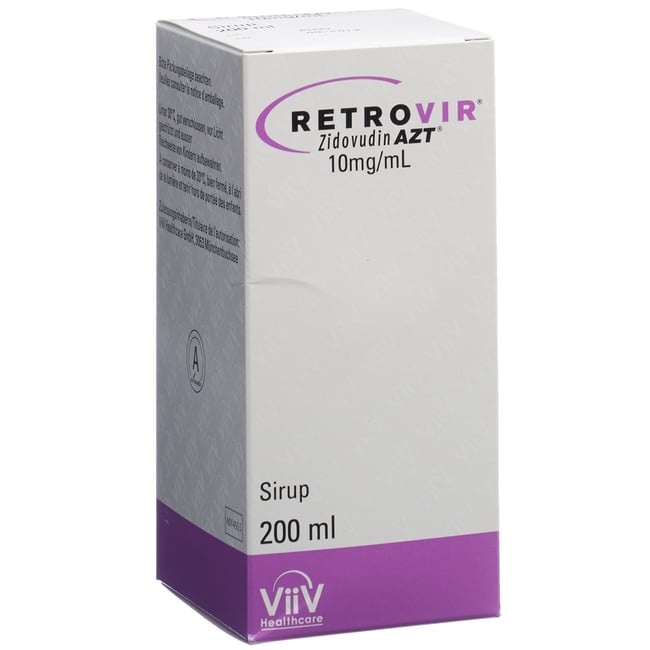
- Страна регистрации
- Форма выпускаSyrup, 100 MG/10ML
- Код АТХJ05AF01
- Действующее вещество
- Отпускается по рецептуДа
- Производитель
- Информация на этой странице носит справочный характер и не является медицинской консультацией. Перед началом приема лекарства обязательно проконсультируйтесь с врачом.
- Аналоги RETROVIRФорма выпуска: Film-coated tablet, 300 MGДействующее вещество: АбакавирПроизводитель: MYLAN S.P.A.Отпускается по рецептуФорма выпуска: Film-coated tablet, 0.5 MGДействующее вещество: ЭнтекавирПроизводитель: BRISTOL-MYERS SQUIBB PHARMA EEIGОтпускается по рецептуФорма выпуска: Oral solution, 170 MLДействующее вещество: ЭмтрицитабинПроизводитель: GILEAD SCIENCES IRELAND UCОтпускается по рецепту
Аналоги RETROVIR в других странах
Лекарства с тем же действующим веществом, доступные в других странах.
Аналог RETROVIR в Польша
Аналог RETROVIR в Украина
Аналог RETROVIR в Испания
Врачи онлайн по RETROVIR
Обсудите применение RETROVIR и возможные следующие шаги — по оценке врача.









Получите рецепт на RETROVIR онлайн
Заполните форму за 2 минуты
Расскажите о симптомах, истории болезни и нужном препарате.
Выберите врача или мы назначим
Выберите специалиста или мы подберём ближайшего доступного врача.
Врач рассматривает ваш случай
Обычно в течение 30 минут. Может задать уточняющие вопросы в чате.
Получите в любой аптеке
Электронный рецепт отправляется на вашу почту — действителен по всей Польше.
Часто задаваемые вопросы
RETROVIR требует рецепта в Италия. Вы можете уточнить у врача онлайн, подходит ли это лекарство для вашей ситуации.
Действующее вещество RETROVIR — Зидовудин. Эта информация помогает определить лекарства с тем же составом под другими торговыми названиями.
RETROVIR производится компанией VIIV HEALTHCARE BV. Упаковка и торговое название могут отличаться в зависимости от дистрибьютора.
Врачи, включая Семейные врачи, Психиатры, Дерматологи, Кардиологи, Эндокринологи, Гастроэнтерологи, Пульмонологи, Нефрологи, Ревматологи, Гематологи, Инфекционисты, Аллергологи, Гериатры, Педиатры, Онкологи, могут оценить целесообразность применения RETROVIR с учетом вашей ситуации и местных правил. Вы можете записаться на онлайн-консультацию, чтобы обсудить возможные варианты.
Польша имеет хорошо развитую систему здравоохранения в крупных городах, таких как Варшава, Краков, Вроцлав и Гданьск. Аптеки широко доступны и работают в соответствии с действующим законодательством, обеспечивая доступ к рецептурным препаратам.
Вы можете купить RETROVIR в Варшаве, Кракове, Вроцлаве или Гданьске в любой аптеке при наличии действующего рецепта.
Чтобы получить рецепт, вы можете воспользоваться Oladoctor:
Другие лекарства с тем же действующим веществом (Зидовудин) включают ABAKAVIR MYLAN, BARAKLUDE, EMTRIVA. Они могут отличаться торговым названием или формой выпуска, но содержат одинаковый терапевтический компонент. Перед изменением лечения рекомендуется проконсультироваться с врачом.
