



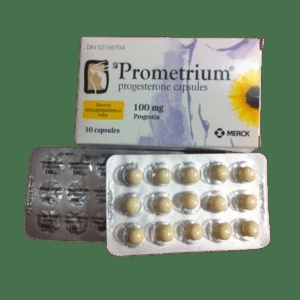
PROMETRIUM 100 mg Софт Вагинальная Капсула

Рассмотрение рецепта онлайн
Врач рассмотрит ваш случай и примет решение о назначении рецепта, если это медицински оправдано.

Поговорите с врачом об этом лекарстве
Обсудите симптомы и возможные дальнейшие шаги на онлайн-консультации.



Инструкция по применению PROMETRIUM
Содержание инструкции
Prometrium 100 mg soft capsules for oral and vaginal use, 200 mg soft capsules for oral and vaginal use
Progesterone
Read this leaflet carefully before taking this medicine because
it contains important information for you.
- Keep this leaflet. You may need to read it again.
- If you have any questions, ask your doctor or pharmacist.
- This medicine has been prescribed for you only. Do not pass it on to others, even if their symptoms are the same as yours, as it could be harmful.
- If you get any side effects, even those not listed in this leaflet, tell your doctor or pharmacist. See section 4.
Contents of this leaflet:
- 1. What Prometrium is and what it is used for
- 2. What you need to know before you take Prometrium
- 3. How to take Prometrium
- 4. Possible side effects
- 5. How to store Prometrium
- 6. Contents of the pack and other information
1. What Prometrium is and what it is used for
Prometrium belongs to the pharmaceutical category of sex hormones and regulators of the genital system (progestogens).
Oral use
Prometrium is used for disorders due to insufficient production of the hormone progesterone (progesterone deficiency), in particular in cases of:
- symptoms preceding menstruation (premenstrual syndrome),
- menstrual cycle alterations,
- breast nodules (benign mastopathies),
- menstrual irregularities in the period preceding the definitive cessation of the menstrual cycle (perimenopause),
- hormone replacement therapy for menopause (in association with therapy with estrogen hormones).
Vaginal use(represents an alternative to oral use)
Prometrium is used as:
- a progesterone hormone supplement in the last phase of the menstrual cycle, after ovulation (luteal phase) during spontaneous or induced cycles, in cases of reduced reproductive capacity (infertility) or insufficient response of the ovaries to normal stimulation (primary or secondary ovarian insufficiency).
- in case of threatened abortion or in the prevention of recurrent abortions due to ascertained insufficient production of progesterone by the ovary in the last phase of the menstrual cycle (luteal insufficiency), up to the 12th week of missed menstruation (amenorrhea).
2. What you need to know before you take Prometrium
Do not take Prometrium
- if you are allergic to progesterone, or to substances closely related chemically, or to any of the other ingredients of this medicine (listed in section 6);
- if you suffer from severe impairment of liver function (severe hepatic insufficiency);
- if you have unexplained vaginal bleeding;
- in case of incomplete or threatened miscarriage;
- if you suffer from or have suffered in the past from blockage of blood vessels caused by blood clots (thromboembolism);
- if you have or suspect you have a breast tumor (breast cancer) or of the genital organs;
- if you suffer from inflammation of the superficial veins associated with the formation of blood clots (thrombophlebitis);
- if you have experienced a ruptured blood vessel in the brain area (cerebral hemorrhage).
Warnings and precautions
Talk to your doctor or pharmacist before taking this medicine.
Treatment, at the recommended doses for use, is not a contraceptive (it does not prevent
possible pregnancy).
Before starting treatment, it is advisable to undergo a thorough general and gynecological examination
(pelvic and breast examination), including a Pap test.
Because progesterone can cause some fluid retention, your doctor will need to
closely monitor you if you suffer from the following conditions as they may be
affected by this factor:
- a neurological condition characterized by hyperactivity of some nerve cells causing loss of consciousness and convulsions (epilepsy),
- headache usually on one side (migraine),
- inflammatory disease characterized by narrowing, generally reversible, of the lower airways (asthma),
- inability of the heart to pump an adequate amount of blood (heart failure),
- reduced kidney function (renal insufficiency).
Talk to your doctor especially if:
- you have vaginal bleeding, as in cases of bleeding from the uterus outside of menstrual periods (metrorrhagia) of an unknown nature, your doctor will identify the causes before treatment;
- you have a history of depression; in this case your doctor should carefully monitor your condition during treatment;
- you suffer from diabetes, as progestins can cause or worsen fluid retention and reduce glucose tolerance; during treatment, symptoms of partial or total loss of vision or double vision appear;
- you need to undergo an examination of some tissue taken through biopsy (histological examination); your doctor needs to know that you are taking Prometrium. If you are premenopausal, keep in mind that progestin treatment may mask the onset of menopause. Changes in tests on glandular organs or liver function may occur following treatment with progesterone.
Stop treatment at the first signs of disorders caused by the formation of blood clots
(thrombi) in the peripheral, cerebral or pulmonary vessels.
Your doctor will prescribe Prometrium only in case of insufficient production of progesterone by
the ovary in the latter phase of the menstrual cycle (luteal insufficiency), as this
medicine does not represent a treatment for cases of spontaneous abortion. The only effect of
administering progesterone in cases of spontaneous abortions, generally due to genetic complications
or infectious diseases and mechanical disorders, would in fact be to delay
the evacuation of a lifeless ovum or the interruption of a pregnancy that will not be
able to be carried to term.
Specifically regarding the use of Prometrium in menopausal disorders in association with
hormone replacement therapy (HRT) please consider the following
Before starting or resuming hormone replacement therapy (HRT), the doctor will ask
you for information about your personal and family medical history (anamnesis) and will subject you to a
thorough general and gynecological examination (including pelvic and breast examination), based
on the anamnesis, contraindications and warnings for use.
During treatment with HRT, you will need to undergo periodic medical check-ups, the nature and
frequency of which will be adapted to your individual needs in order to accurately assess the
risks and benefits in relation to continuing therapy. You should undergo clinical investigations, including mammography, in accordance with current screening programs
and you should inform your doctor of any changes.
If you are menopausal, HRT increases the probability of being
diagnosed with breast cancer, from slight to moderate. This may be due to both early diagnosis and a real
effect of HRT, or a combination of both.
The probability of breast cancer diagnosis increases with the duration of treatment and seems to
return to the initial value after five years from the suspension of HRT. Breast cancer
diagnosed in patients who use or have recently used HRT appears to be less invasive in nature than that found in women not treated.
In women between the ages of fifty and seventy, who do not use HRT, breast cancer is diagnosed in about 45 subjects per 1000, with an increase related to age. It has been
estimated that in women who use HRT for at least five years, the number of additional cases of breast cancer diagnosis will be between 2 and 12 subjects per 1000, depending on the age
at which patients start treatment and its duration.
Your doctor will discuss with you the increased probability of breast cancer diagnosis in long-term therapy, evaluating it in relation to the benefits of HRT.
You will undergo strict checks if you have a family history of tumors or if you suffer from or have suffered from:
- a recurring blockage of bile excretion (cholestasis) or persistent itching during pregnancy;
- alterations of liver function;
- renal or cardiac insufficiency;
- nodules in the breast or widespread nodularity in both breasts (fibrocystic mastopathy);
- epilepsy;
- asthma;
- an ear disease that manifests with hearing loss (otosclerosis);
- diabetes mellitus;
- an autoimmune disease affecting the central nervous system (multiple sclerosis);
- a disease of the immune system (systemic lupus erythematosus).
Other medicines and Prometrium
Tell your doctor or pharmacist if you are taking, have recently taken or might
take any other medicines.
Progesterone can affect the effects of a substance used to correct hormonal imbalances
(bromocriptine).
Pregnancy and breastfeeding
If you are pregnant, suspect you are pregnant, or are planning to become pregnant, or if you are breastfeeding
with breast milk, ask your doctor or pharmacist for advice before taking this
medicine.
You can use Prometrium only during the 1st trimester of pregnancy and only vaginally.
Prometrium is not a treatment for inducing premature labor.
If you take micronized progesterone during the second and third trimester of pregnancy, you may
experience a yellowish discoloration of the skin, whites of the eyes and mucous membranes caused by
blockage of bile excretion (cholestatic jaundice) or liver cell diseases.
Driving and using machines
Be careful when driving vehicles and using machines as this medicine can cause
drowsiness and dizziness.
3. How to take Prometrium
Take this medicine following exactly the instructions of your doctor or pharmacist. If you have any doubts, consult your doctor or pharmacist. The recommended doses must be strictly respected. The dose should not exceed 200 mg per each administration, regardless of the indication and the route of administration (oral or vaginal).
Oral use
On average, for insufficient production of the hormone progesterone (progestational deficiencies), the daily dose is 200-300 mg of progesterone. It is recommended to take the medicine away from meals. In case of insufficient production of progesterone by the ovary in the late phase of the menstrual cycle (luteal insufficiency ), particularly in premenstrual syndrome, diffuse nodularity of the breasts (benign breast diseases), menstrual cycle alterations, premenopause, the daily dose is 200-300 mg of progesterone, for a therapeutic cycle of 10 days, usually from the 17th to the 26th day inclusive of the cycle.
In hormone replacement therapy (HRT) in menopause,monotherapy with estrogens is not recommended due to the risk of thickening of the uterine lining (endometrial hyperplasia). Progesterone should be administered at a dose of 200 mg per day for 12-14 days per month, or during the last two weeks of each therapeutic cycle. HRT should be interrupted for about a week during which vaginal bleeding may occur. For these indications, in case of liver diseases (hepatopathies) and side effects due to progesterone (drowsiness after oral administration), vaginal use should be used as an alternative to oral use at the same doses.
Vaginal use
Insert each capsule deeply into the vagina.
As a supplement in the late phase of the menstrual cycle, post-ovulatory (luteal phase) during spontaneous or induced cycles,in case of reduced reproductive capacity or primary or secondary infertility, particularly in case of alteration of ovulation, the recommended daily dose is 200-300 mg per day, starting from the 17th day of the cycle for 10 consecutive days. The treatment should be repeated, as soon as possible, in case of absence of menstruation (amenorrhea) and confirmed pregnancy.
In case of threatened spontaneous abortion or prevention of recurrent abortions due to insufficient production of progesterone in the luteal phase,the recommended daily dose is 200-400 mg per day.
If you take more Prometrium than you should
If you accidentally ingest/take an excessive dose of Prometrium, immediately inform your doctor or go to the nearest hospital.
If you forget to take Prometrium
Do not take a double dose to make up for a missed dose. If you have any doubts about the use of this medicine, consult your doctor or pharmacist.
4. Possible side effects
Like all medicines, this medicine can cause side effects, although not everybody gets them.
Occasional side effects may occur:
- drowsiness and dizziness up to three hours after oral administration of Prometrium. In this case the dose should be reduced or readjusted (for example: 1 capsule of 200 mg or 2 capsules of 100 mg before bedtime, for 12-14 days each cycle). Vaginal administration may also be used.
The following effects have also been reported:
- reduction of the menstrual cycle or bleeding from the uterus outside of menstrual periods (metrorrhagia). In these cases, it is advisable to postpone treatment by a few days (for example, start treatment on the 19th day of the cycle instead of the 17th day).
The following side effects have been reported following administration of progestogens in
general:
- intermenstrual bleeding,
- changes in menstrual flow,
- absence of menstruation (amenorrhea),
- alteration of cervical mucus,
- breast pain (mastodynia),
- change in body weight (increase or decrease),
- yellowish discoloration of the skin, whites of the eyes and mucous membranes caused by blockage of bile excretion (cholestatic jaundice),
- severe allergic reaction (anaphylaxis or anaphylactoid reactions),
- skin reactions (skin rash with or without itching), appearance of yellow-brown spots on the face during pregnancy (chloasma),
- fever
- insomnia
- nervousness
- depression
- headache (cephalalgia).
Undesirable effects.
Reporting of side effects
If you get any side effects, even those not listed in this leaflet, tell your doctor or pharmacist. You can also report side effects directly
through the national reporting system at
www.agenziafarmaco.gov.it/it/responsabili. By reporting side effects you can help provide
more information on the safety of this medicine.
5. How to store Prometrium
Keep this medicine out of sight and reach of children.
There are no special storage instructions.
Do not use this medicine after the expiry date stated on the packaging after “Expires on”. The
expiry date refers to the last day of that month. The expiry date refers to the
product in intact packaging, correctly stored.
Do not dispose of any medicine in wastewater or household waste. Ask your pharmacist how to
dispose of medicines you no longer use. This will help protect the environment.
6. Contents of the pack and other information
What Prometrium contains
Soft capsule 100 mg:
- The active ingredient is micronized progesterone. Each capsule contains 100 mg of micronized progesterone.
- The other ingredients are :sunflower seed oil, soybean lecithin.
- The capsule components are :gelatin, glycerol, titanium dioxide, purified water.
Soft capsule 200 mg:
- The active ingredient is micronized progesterone. Each capsule contains 200 mg of micronized progesterone.
- The other ingredients are :sunflower seed oil, soybean lecithin.
- The capsule components are :gelatin, glycerol, titanium dioxide, purified water.
Description of Prometrium and pack contents
Soft capsules for oral or vaginal use.
Prometrium 100 mg: pack of 30 capsules.
Prometrium 200 mg: pack of 15 or 30 capsules.
Marketing Authorisation Holder
BESINS HEALTHCARE IRELAND LIMITED
16 Pembroke Street Upper
Dublin 2
D02HE63
Ireland
Manufacturer
CYNDEA PHARMA S.L. – Poligono Industrial Emiliano Revilla Sanz – Avenida de Agreda, 31,
Olvega 42110 (Soria) Spain
BESINS MANUFACTURING BELGIUM – Groot-Bijgaardenstraat, 128 – 1620 Drogenbos
(Belgium)

Не уверены, подходит ли вам это лекарство?
Обсудите симптомы и варианты лечения с врачом онлайн.

Уже начали прием и появились вопросы?
Обсудите свое состояние и дальнейшие шаги с врачом онлайн.
- Страна регистрации
- Форма выпускаSoft vaginal capsule, 100 MG
- Код АТХG03DA04
- Действующее вещество
- Отпускается по рецептуДа
- Производитель
- Информация на этой странице носит справочный характер и не является медицинской консультацией. Перед началом приема лекарства обязательно проконсультируйтесь с врачом.
- Аналоги PROMETRIUMФорма выпуска: Pessary, 400 MGДействующее вещество: ПрогестеронПроизводитель: GEDEON RICHTER PLCОтпускается по рецептуФорма выпуска: Gel, 80 MG/GДействующее вещество: ПрогестеронПроизводитель: MERCK SERONO S.P.A.Отпускается по рецептуФорма выпуска: Pessary, 200 MGДействующее вещество: ПрогестеронОтпускается по рецепту
Аналоги PROMETRIUM в других странах
Лекарства с тем же действующим веществом, доступные в других странах.
Аналог PROMETRIUM в Испания
Аналог PROMETRIUM в Польша
Аналог PROMETRIUM в Украина
Врачи онлайн по PROMETRIUM
Обсудите применение PROMETRIUM и возможные следующие шаги — по оценке врача.


Получите рецепт на PROMETRIUM онлайн
Заполните форму за 2 минуты
Расскажите о симптомах, истории болезни и нужном препарате.
Выберите врача или мы назначим
Выберите специалиста или мы подберём ближайшего доступного врача.
Врач рассматривает ваш случай
Обычно в течение 30 минут. Может задать уточняющие вопросы в чате.
Получите в любой аптеке
Электронный рецепт отправляется на вашу почту — действителен по всей Польше.
Часто задаваемые вопросы
PROMETRIUM требует рецепта в Италия. Вы можете уточнить у врача онлайн, подходит ли это лекарство для вашей ситуации.
Действующее вещество PROMETRIUM — Прогестерон. Эта информация помогает определить лекарства с тем же составом под другими торговыми названиями.
PROMETRIUM производится компанией BESINS HEALTHCARE IRELAND. Упаковка и торговое название могут отличаться в зависимости от дистрибьютора.
Врачи, включая Семейные врачи, Психиатры, Дерматологи, Кардиологи, Эндокринологи, Гастроэнтерологи, Пульмонологи, Нефрологи, Ревматологи, Гематологи, Инфекционисты, Аллергологи, Гериатры, Педиатры, Онкологи, могут оценить целесообразность применения PROMETRIUM с учетом вашей ситуации и местных правил. Вы можете записаться на онлайн-консультацию, чтобы обсудить возможные варианты.
Польша имеет хорошо развитую систему здравоохранения в крупных городах, таких как Варшава, Краков, Вроцлав и Гданьск. Аптеки широко доступны и работают в соответствии с действующим законодательством, обеспечивая доступ к рецептурным препаратам.
Вы можете купить PROMETRIUM в Варшаве, Кракове, Вроцлаве или Гданьске в любой аптеке при наличии действующего рецепта.
Чтобы получить рецепт, вы можете воспользоваться Oladoctor:
Другие лекарства с тем же действующим веществом (Прогестерон) включают AMELJEN, KRINONE, ESOLUT. Они могут отличаться торговым названием или формой выпуска, но содержат одинаковый терапевтический компонент. Перед изменением лечения рекомендуется проконсультироваться с врачом.
