



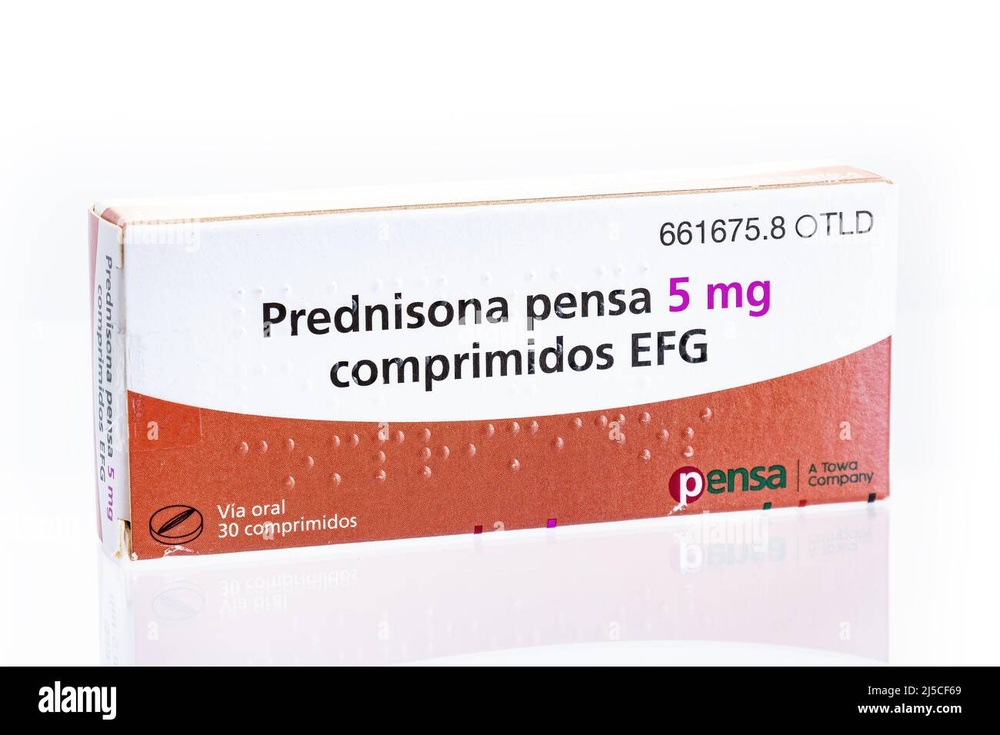
PREDNISONE 5 mg Коированная Таблетка

Рассмотрение рецепта онлайн
Врач рассмотрит ваш случай и примет решение о назначении рецепта, если это медицински оправдано.

Поговорите с врачом об этом лекарстве
Обсудите симптомы и возможные дальнейшие шаги на онлайн-консультации.



Инструкция по применению PREDNISONE PENSA
Содержание инструкции
Prednisone Pensa 5 mg tablets, 20 mg tablets, 25 mg tablets
Prednisone
Generic medicine
Read this leaflet carefully before taking this medicine as it contains important
information for you.
- Keep this leaflet. You may need to read it again.
- If you have any questions, ask your doctor or pharmacist.
- This medicine has been prescribed for you only. Do not pass it on to others, even if their symptoms are the same as yours, as it could be harmful.
- If you get any side effects, even those not listed in this leaflet, tell your doctor or pharmacist. See section 4.
Contents of this leaflet:
- 1. What Prednisone Pensa is and what it is used for
- 2. What you need to know before you take Prednisone Pensa
- 3. How to take Prednisone Pensa
- 4. Possible side effects
- 5. How to store Prednisone Pensa
- 6. Contents of the pack and other information
1. What is Prednisone Pensa and what is it used for?
Prednisone Pensa is a glucocorticoid (hormone produced by the adrenal glands) with an effect on
metabolism, electrolyte balance (of salts) and tissue function.
Prednisone Pensa is used in cases of diseases that require systemic treatment with
glucocorticoids including the following depending on the type and severity (dosage table SD from a to d), see
paragraph 3 “How to take Prednisone Pensa”).
Hormone replacement therapy in case of
- decreased or absent adrenal function (adrenal insufficiency) of any nature (e.g. Addison's disease, adrenogenital syndrome, surgical removal of the adrenal glands, reduced pituitary activity) after the period of growth (drugs of first choice are hydrocortisone and cortisone).
- stress conditions after prolonged treatment with corticosteroids.
Rheumatic diseases:
- active phases of vascular inflammation:
- nodular inflammation of the vessel walls (polyarteritis nodosa) (SD: a, b, treatment duration limited to two weeks in case of hepatitis B infection)
- giant cell arteritis, muscle pain and muscle stiffness (polymyalgia rheumatica) (SD: c)
- inflammation of the temporal artery (SD: a); in case of acute vision loss, a shock treatment with glucocorticoids intravenously and continuous therapy with erythrocyte sedimentation rate (ESR) monitoring is recommended
- Wegener's granulomatosis: induction treatment (SD: a-b) in combination with methotrexate (mild forms without kidney involvement) or according to the Fausi scheme (severe forms with kidney and/or lung involvement), remission maintenance: (SD: d, gradual dose reduction) in combination with immunosuppressants
- Churg-Strauss syndrome: initial therapy (SD: a-b), with organ involvement and severe courses in combination with immunosuppressants, remission maintenance: (SD: d)
- active phases of rheumatic diseases that can affect internal organs (SD: a, b):
- lupus erythematosus (chronic disease due to an alteration of the immune system that causes inflammation and tissue damage), muscle weakness and muscle pain (polymyositis)
- inflammation of the cartilage (chronic atrophic polychondritis)
- connective tissue diseases (mixed collagen disease)
- active rheumatoid arthritis (SD: from a to d) with a severely progressive course, e.g. forms that progress rapidly in a destructive manner (SD: a) or forms that do not affect the joint (SD: b)
- other inflammatory rheumatic arthritis, if the severity of the clinical picture requires it and non-steroidal anti-inflammatory drugs (NSAIDs) cannot be used:
- spondyloarthropathies (ankylosing spondylitis involving peripheral joints (SD: b, c), psoriatic arthritis (SD: c, d), enteropathic arthropathy with high inflammatory activity (SD: a)
- reactive arthritis (SD: c)
- arthritis in sarcoidosis (SD: b initially)
- carditis in rheumatic fever, in severe cases within 2-3 months (SD: a)
- juvenile idiopathic arthritis with severe systemic form (Still's disease) or with iridocyclitis when local treatment is ineffective (SD: a)
Bronchial and pulmonary diseases:
- Bronchial asthma (SD: from c to a), at the same time the administration of bronchodilators is recommended
- Acute exacerbation of chronic obstructive pulmonary disease COPD (SD: b), recommended duration of therapy up to 10 days
- Interstitial lung diseases such as acute alveolitis (SD: b), pulmonary fibrosis (SD: b), obliterating bronchiolitis organizing pneumonia (BOOP) (SD: b decreasing the dose gradually until suspension), possibly in combination with immunosuppressants, chronic eosinophilic pneumonia (SD: b decreasing the dose gradually until suspension), for long-term treatment of chronic forms of sarcoidosis in stages II and III (in case of shortness of breath, cough and deterioration of pulmonary function values) (SD: b)
- Prophylaxis of respiratory distress syndrome in premature infants (SD: b, twice)
Diseases of the upper respiratory tract:
- Severe forms of pollinosis and allergic rhinitis after failure of intranasal administration of glucocorticoids (SD: c)
- Acute stenosis of the larynx and trachea: Quincke's edema, subglottic obstructive laryngitis (pseudo-croup) (SD: from b to a)
Skin diseases:
Skin and mucous membrane diseases that cannot be treated or cannot be adequately
treated with topical glucocorticoids due to their severity and/or extent or systemic involvement.
These include:
- Allergic, pseudo-allergic and allergic-infectious diseases: e.g. acute urticaria, anaphylactoid reactions, drug eruption, multiforme exudative erythema, toxic epidermal necrolysis (Lyell's syndrome), acute generalized pustulosis, nodular erythema, acute febrile neutrophilic dermatosis (Sweet's syndrome), allergic contact dermatitis (SD: from b to a)
- Eczema diseases: e.g. atopic eczema, contact eczema, microbial eczema (nummular) (SD: from b to a)
- Granulomatous diseases: e.g. sarcoidosis, granulomatous cheilitis (monosymptomatic Melkersson-Rosenthal syndrome) (SD: from b to a)
- Bullous dermatoses: e.g. pemphigus vulgaris, bullous pemphigoid, benign mucous membrane pemphigoid, linear IgA dermatosis (SD: from b to a)
- Vasculitis: e.g. allergic vasculitis, nodular polyarteritis (SD: from b to a)
- Autoimmune diseases: e.g. dermatomyositis, systemic scleroderma (induration phase), chronic cutaneous lupus erythematosus (SD: from b to a)
- Pregnancy dermatoses (see also paragraph 4.6): for example herpes gestationis, impetigo herpetiformis (SD: from d to a)
- Erythematous-squamous dermatoses: e.g. pustular psoriasis, pityriasis rubra pilaris, parapsoriasis group (SD: from c to a)
- Erythrodermia, also in Sézary syndrome (SD: from c to a)
- Other pathologies: e.g. Jarisch-Herxheimer reaction with penicillin treatment of Lues, rapidly growing and increasing cavernous hemangioma, Behçet's disease, pyoderma gangrenosum, eosinophilic fasciitis, lichen ruber planus, hereditary bullous epidermolysis (SD: from c to a)
Blood diseases/tumour diseases:
- Autoimmune hemolytic anemia (SD: from c to a), idiopathic thrombocytopenic purpura (Werlhof's disease) (SD: a), acute intermittent thrombocytopenia (SD: a)
- Acute lymphoblastic leukemia, Hodgkin's disease, non-Hodgkin's lymphoma, chronic lymphocytic leukemia, Waldenström's macroglobulinemia, multiple myeloma (SD: e)
- Hypercalcemia in underlying malignant neoplasms (SD: from c to a)
- Prophylaxis and therapy of cytostatic-induced vomiting (SD: from b to a), use in antiemetic regimens
- Palliative therapy of malignant diseases
- Note: prednisone can be used to relieve symptoms, for example inappetence, anorexia and general weakness in advanced malignancies, after specific therapeutic options have been exhausted. For more details, consult current medical literature.
Diseases of the nervous system:
- Myasthenia gravis (drug of first choice is azathioprine)
- Chronic Guillain-Barré syndrome.
- Tolosa-Hunt syndrome
- Polineuropathy in monoclonal gammopathy
- Multiple sclerosis (decreasing the dose gradually until suspension after administering high-dose glucocorticoids parenterally in the acute phase)
- West syndrome (infantile spasms)
Particular courses of infectious diseases:
- Toxic conditions associated with severe infectious diseases (in association with antibiotics/chemotherapy), e.g. tuberculous meningitis (SD: b), severe pulmonary tuberculosis (SD: b)
Eye diseases (SD: from b to a):
- In systemic diseases involving the eye and immunological processes in the orbit and eye: optic neuropathy (e.g. giant cell arteritis, anterior ischemic optic neuropathy (AION), traumatic optic neuropathy), Behçet's disease, sarcoidosis, endocrine orbitopathy, pseudotumor of the orbit, transplant rejection and in some uveitis such as Harada's disease and sympathetic ophthalmia
- Systemic administration is indicated only after unsuccessful local treatment in the following diseases: scleritis, episcleritis, keratitis, chronic cyclitis, uveitis, allergic conjunctivitis, burns from alkalis, in association with antimicrobial therapy in autoimmune or syphilitic interstitial keratitis, in herpes simplex stromal keratitis only if the corneal epithelium is intact and regular eye checks
Gastrointestinal/liver diseases:
- Ulcerative colitis (SD: from b to c)
- Crohn's disease (SD: b)
- Autoimmune hepatitis (SD: b)
- Esophageal burn (SD: a)
Kidney diseases:
- Minimal change glomerulonephritis (SD: a)
- Proliferative-extracapillary glomerulonephritis (rapidly progressive glomerulonephritis) (SD: intermittent [ pulse therapy] high-dose, usually in association with cytotoxic agents), reduction and discontinuation of treatment in Goodpasture's syndrome, in all other forms long-term continuation of therapy (SD: d)
- Idiopathic retroperitoneal fibrosis (SD: b)
2. What you need to know before taking Prednisone Pensa
Do not take Prednisone Pensa
If you are allergic to the active ingredient (prednisone) or to any of the other ingredients of this medicine
(listed in section 6).
There are no other contraindications for short-term use of Prednisone Pensa.
Warnings and precautions
Talk to your doctor or pharmacist before taking Prednisone Pensa.
You must inform your doctor if:
Ø you suffer from scleroderma (also known as systemic sclerosis, an autoimmune disease), as
daily doses of 15 mg or even higher doses may increase the risk of sclerodermal renal crisis with increased blood pressure and reduced urine production. Your
doctor may advise you to have regular checks of your blood pressure and urine.
Particular care is needed when taking Prednisone Pensa if Prednisone
Pensa is used at high doses in hormone replacement therapy. You should only take Prednisone Pensa if your doctor
considers it absolutely necessary.
Due to the suppression of your own defenses, treatment with Prednisone Pensa may lead to an
increased risk of bacterial, viral, parasitic, opportunistic and fungal infections. The signs and
symptoms of an existing or developing infection may be masked and therefore difficult to
recognize. Subclinical infections, such as tuberculosis or hepatitis B, may be reactivated.
Consult your doctor immediately if you experience any of the following conditions:
- acute viral infections (hepatitis B, chickenpox, herpes zoster, herpes simplex infections, corneal inflammation caused by herpes viruses)
- infectious inflammation of the liver (active chronic hepatitis HBsAg-positive)
- from about 8 weeks before to 2 weeks after vaccinations with live vaccines
- fungal diseases affecting internal organs
- certain diseases caused by parasites (amebae, worms)
- in patients with suspected or confirmed infections by dwarf nematodes (strongylids) Prednisone Pensa may lead to activation and mass multiplication of the parasites.
- poliomyelitis
- lymph node disease after vaccination against tuberculosis (in case of tuberculosis in the medical history, use only with simultaneous administration of anti-tuberculosis drugs)
- acute and chronic bacterial infections
In case of concomitant treatment with Prednisone Pensa, the following diseases must be monitored
specifically and treated accordingly under close control of your doctor:
- gastrointestinal ulcer
- osteoporosis
- high blood pressure that is difficult to regulate
- diabetes that is difficult to regulate (diabetes mellitus)
- mental illnesses (including in the medical history) including suicidal tendencies: neurological or psychiatric monitoring is recommended
- increased pressure in the eye (narrow-angle glaucoma and open-angle glaucoma); ophthalmological monitoring and concomitant therapy are recommended
- wounds and ulcers of the cornea of the eye; ophthalmological monitoring and concomitant therapy are recommended
Treatment with this medicine may lead to a so-called pheochromocytoma crisis, which may be
fatal. Pheochromocytoma is a rare hormone-dependent tumor of the adrenal gland. Possible symptoms
of a crisis include headache, sweating, palpitations and high blood pressure (hypertension). Contact
your doctor immediately if you notice any of these signs.
Talk to your doctor before taking Prednisone Pensa if you suspect or know you have a pheochromocytoma
(adrenal gland tumor).
Contact your doctor if you experience blurred vision or other visual disturbances.
Due to the risk of intestinal perforation, Prednisone Pensa may only be taken if your doctor considers it
necessary and under his close supervision in case of:
- severe inflammation of the large intestine (ulcerative colitis) with threat of perforation, with abscesses or purulent inflammation possibly also without irritation of the peritoneum
- diverticulitis
- immediately after certain operations on the intestine (enteroanastomoses)
The signs of irritation of the peritoneum after perforation of a gastrointestinal ulcer may not be
present in patients who are given high doses of glucocorticoids.
The risk of tendon disorders, tendon inflammation and tendon rupture is increased in case of
concomitant administration of fluoroquinolones (certain antibiotics) and Prednisone Pensa.
In case of diabetes, metabolism must be checked regularly; your doctor will assess whether an
increase in the need for medication to treat diabetes (insulin or oral antidiabetics, etc.) is necessary.
In case of severe hypertension and severe heart failure, consult your doctor for accurate checks
because a worsening may occur.
In the treatment of a particular form of muscle paralysis (myasthenia gravis), a worsening of symptoms may occur at the beginning, so the administration of Prednisone Pensa must take place in hospital.
In particular, if the disorders affecting the face and pharynx are particularly severe and breathing is
compromised, treatment with Prednisone Pensa must be started gradually.
Long-term use, even of low doses of prednisone, leads to an increased risk of infections, even from
microorganisms that otherwise rarely cause infections (so-called opportunistic infections).
Vaccinations with vaccines from killed pathogens (inactivated vaccines) are fundamentally possible. However, it must
be noted that the success of the vaccination may be impaired by high doses of Prednisone Pensa
High doses of Prednisone Pensa can cause a slowing of the heartbeat (bradycardia).
The onset of bradycardia is not necessarily related to the duration of treatment.
Regular medical check-ups (including ophthalmological check-ups at intervals of three months) are necessary in case of long-term therapy with Prednisone Pensa.
In case of prolonged treatment with high doses of Prednisone Pensa, pay particular attention to a
sufficient intake of potassium (e.g. vegetables, bananas) and a limited intake of salt. Your doctor may
prescribe tests to check your blood potassium levels.
If you experience particular stressful conditions (illnesses with
fever, accidents, operations, childbirth, etc.) during treatment with Prednisone Pensa, you must inform your doctor immediately because a
temporary increase in the daily dose of Prednisone Pensa may be necessary. For this reason, if
undergoing long-term treatment, your doctor must provide you with appropriate documentation that you should
always carry with you.
Severe anaphylactic reactions (exaggerated immune system reaction) may occur.
Depending on the duration and dose of treatment, a negative influence on
calcium metabolism must be taken into account, and therefore prevention against osteoporosis is recommended. This is especially true in
case of concomitant risk factors, such as family predisposition, advanced age, insufficient intake of
proteins and calcium, excessive smoking, excessive alcohol consumption, after menopause and in case of poor
physical activity. Prevention consists of sufficient intake of calcium and vitamin D and physical activity. In
case of existing osteoporosis, medication therapy should also be considered.
At the end or after discontinuation of long-term therapy with Prednisone Pensa, the following risks may occur: recurrence or worsening of the underlying disease, reduced activity of the
adrenal glands (especially in stressful situations, e.g. during an infection, after
accidents, in case of increased physical exertion), cortisone withdrawal syndrome.
Particular viral diseases (chickenpox, measles) may have a particularly severe course in patients
treated with glucocorticoids. If you are immunocompromised and have not had chickenpox or measles and have come into
contact with people suffering from these diseases while being treated with Prednisone Pensa, preventive treatment may be necessary.
Children and adolescents
Prednisone Pensa should only be used in children if absolutely necessary and under the control of
the doctor due to the risk of growth inhibition, which must be checked regularly. Therapy
with Prednisone Pensa should be limited in time or administered with alternation (e.g. one day yes and
one day no, but with double dosage (alternate therapy)).
Elderly patients
Since elderly patients have a higher risk of osteoporosis, the benefit-risk ratio of a
therapy with Prednisone Pensa must be carefully evaluated.
For athletes:the use of the drug without therapeutic need constitutes doping and may
still result in positive doping tests.
Other medicines and Prednisone Pensa
Tell your doctor if you are taking or have recently taken or may take any other
medicines, including those available without a prescription.
Some medicines may increase or decrease the effects of Prednisone Pensa:
- Some medicines may increase the effects of Prednisone Pensa and your doctor may want to keep you under close observation if you are taking these medicines (including some medicines for the treatment of HIV: ritonavir, cobicistat)
- Medicines that slow down liver degradation, such as some antifungal medicines (ketoconazole, itraconazole), may potentiate the effects of Prednisone Pensa.
- Some female sex hormones, e.g. contraceptives (the “pill”). The effect of Prednisone Pensa may be increased.
- Medicines such as hypnotics (barbiturates), medicines against convulsions (phenytoin, carbamazepine, primidone) and certain medicines against tuberculosis (rifampicin) may decrease the effect of Prednisone Pensa.
- Efedrine (may be contained e.g. in medicines for treating hypotension, chronic bronchitis, asthma attacks and for decongesting the mucous membranes in colds) can decrease the effectiveness of Prednisone Pensa.
- Medicines against excessive acid production by the stomach (antacids): in case of concomitant administration of magnesium hydroxide or aluminum hydroxide, a decrease in the absorption of prednisone is possible. Taking the two medicines should therefore be spaced apart in time (2 hours).
Other effects of Prednisone Pensa
- Due to potassium deficiency, Prednisone Pensa may increase the effect of medicines to strengthen the heart (cardiac glycosides).
- Prednisone Pensa may increase the elimination of potassium if used in association with diuretics (saluretics) and laxatives.
- Prednisone Pensa may decrease the hypoglycemic effect of oral antidiabetics and insulin.
- Prednisone Pensa may decrease or increase the effect of medicines to inhibit coagulation (oral anticoagulants, coumarin derivatives). Your doctor will decide whether an adjustment of the dose of anticoagulants is necessary.
- In case of concomitant use of medicines against inflammation and rheumatism (salicylates, indometacin and other NSAIDs), Prednisone Pensa may increase the risk of gastric ulcers and gastrointestinal bleeding.
- Prednisone Pensa may prolong the muscle relaxant effect of certain medicines (non-depolarizing muscle relaxants).
- Prednisone Pensa may potentiate the eye pressure-increasing effect of certain medicines (atropine and other anticholinergics).
- Prednisone Pensa may decrease the effect of medicines against helminthiasis (praziquantel).
- In case of concomitant use of medicines against malaria or rheumatic diseases (chloroquine, hydroxychloroquine, mefloquine), Prednisone Pensa may increase the risk of muscle diseases or heart muscle diseases (myopathies, cardiomyopathies).
- Growth hormones (somatotropin): their effect is diminished particularly by high doses of Prednisone Pensa.
- Prednisone Pensa may decrease the increase in thyroid-stimulating hormone (TSH) following concomitant administration with protirelin (a diencephalic hormone).
- Prednisone Pensa and the concomitant use of medicines to reduce the body's defenses (immunosuppressants) may increase the predisposition to infections and worsen already present but perhaps not yet manifest infections.
- In addition to cyclosporine (medicine to suppress the body's defenses): Prednisone Pensa may increase the level of cyclosporine in the blood and thus the risk of convulsions.
- Some drugs for lowering blood pressure (ACE inhibitors): increased risk of changes in hematological status.
- Fluoroquinolones, a group of antibiotics, may increase the risk of tendon rupture.
Influence on diagnostic tests
Skin reactions to allergy tests may be suppressed.
Pregnancy and breastfeeding
If you are pregnant, suspect you are pregnant, or are planning a pregnancy, or if you are breastfeeding, ask your doctor or pharmacist for advice before using this medicine.
Pregnancy
During pregnancy, use should only take place on the advice of a doctor. Inform your doctor if you are pregnant.
In the case of long-term treatment with Prednisone Pensa during pregnancy, fetal growth disturbances cannot be excluded.
If Prednisone Pensa is taken at the end of pregnancy, adrenal cortex atrophy may occur in the newborn, which may require gradual replacement therapy. In animal tests, prednisone has shown fetal damage (e.g., cleft palate). An increased risk of such damage in humans through the administration of prednisone during the first trimester of pregnancy is under discussion.
Breastfeeding
Prednisone passes into breast milk. No harm to the infant is known so far. Nevertheless, the need to administer Prednisone Pensa during breastfeeding should be carefully considered. If higher doses are necessary due to the illness, you should stop breastfeeding. Contact your doctor immediately.
Driving and using machines
So far, there is no indication that Prednisone Pensa affects the ability to drive or operate machinery.
Prednisone Pensa contains lactose.
If your doctor has diagnosed you with intolerance to certain sugars, contact them before taking this medicine.
3. How to take Prednisone Pensa
Take this medicine following exactly the instructions of your doctor or pharmacist. If you have
doubts, consult your doctor or pharmacist.
The dose will be established individually for you by the doctor.
Respect the dosage instructions, otherwise Prednisone Pensa may not have the correct effect. If
you have doubts, consult your doctor or pharmacist.
Method of administration
Take the tablets without chewing them with a sufficient amount of liquid during or immediately after
a meal.
If not prescribed differently by the doctor, the usual dose for hormone replacement therapy is (in addition
to the age of growth):
from 5 to 7.5 mg of prednisone per day, divided into two administrations (in the morning and at noon, in case
of adrenogenital syndrome in the morning and in the evening). If necessary, you will be prescribed an additional dose of a
mineralcorticoid (fludrocortisone). In case of particular stressful conditions such as illnesses with fever,
accidents, surgeries or childbirth, the doctor may decide to temporarily increase the dose.
In case of stressful situations following long-term treatment with glucocorticoids: the
administration will be promptly up to 50 mg of prednisone per day; the decrease in dose
must occur over several days.
Treatment of certain diseases (pharmacotherapy):
The following tables give an overview of the general guidelines for dosage:
Adults
| Dosage | and Dose in mg/day | Dose in mg/kg of body weight/day |
| a) high |
| 1.0 - 3.0 |
| g b) medium |
| 0.5 - 1.0 |
| c) low |
| 0.25 - 0.5 |
| A d) very low | 1.5 - 7.5 (10) | ./. |
| e) chemotherapy in combination, see dosage scheme “e” (SD: e) | ||
In general, the entire daily dose is taken early in the morning between 6 and 8 am. High daily
doses can be divided, depending on the disease, also into 2-4 single administrations, medium doses in 2-3 single administrations.
Children
In children, dosages should be as low as possible. In particular cases (e.g. West syndrome) it may be
possible to deviate from this recommendation.
Dose reduction
Once the desired clinical effect is achieved and depending on the underlying disease, the dose reduction is started.
In case of distribution of the daily dose into multiple single doses, the evening dose is reduced first, then
the possible midday dose. The dose is first reduced with larger decreases, starting from
about 30 mg/day and subsequently with smaller decreases (see table below). Based on the
clinical situation, a decision is made regarding the gradual reduction of the dose until the interruption of
treatment or the need for a maintenance dose, based on the disease. The following indicative decreases can be used for dose reduction:
High and very high doses, which are administered for a few days, can be interrupted, depending on
the underlying disease and the clinical response, without gradual decrease.
Dosage scheme “e” (SD: e)
Generally Prednisone Pensa is used as a single dose without gradual decrease until the end
of treatment. In chemotherapy, the following dosage schemes are recognized, for example:
In case of thyroid insufficiency or liver cirrhosis, lower dosages may also be sufficient or a
reduction of the dose may be necessary.
Talk to your doctor or pharmacist if you feel that the effect of Prednisone Pensa is too strong or
too weak.
- Non-Hodgkin lymphomas: CHOP scheme, prednisone 100 mg/m², days 1-5; COP scheme, prednisone 100 mg/m², days 1-5.
- Chronic lymphocytic leukemia: Knospe scheme, prednisone 75/50/25 mg, days 1-3.
- Hodgkin's disease: COPP-ABVD scheme, prednisone 40 mg/m², days 1-14.
- Multiple myeloma: Alexanian scheme, prednisone 2 mg/kg of body weight, days 1-4.
If you take more Prednisone Pensa than you should
In general, Prednisone Pensa is well tolerated even in case of taking large quantities in a short
time. Therefore, no particular measures are necessary. If you should notice an increase
of side effects, contact your doctor.
| Dosage | Dose in mg/kg of body weight/day |
| High |
|
| Medium | m
|
| Maintenance dose | 0.25 |
| over 30 mg per day | Reduction of | a 10 mg | every 2 - 5 days |
| from 30 to 15 mg per day | Reduction of | 5 mg | every week |
| from 15 to 10 mg per day | Reduction of | n 2.5 mg | every 1 - 2 weeks |
| from 10 to 6 mg per day | Reduction of | 1 mg | every 2 - 4 weeks |
| less than 6 mg per day | a Reduction of | 0.5 mg | every 4 - 8 weeks |
If you forget to take Prednisone Pensa
Do not take a double dose to make up for the missed dose. Contact your doctor to know
how to behave.
If you stop taking Prednisone Pensa
Always follow the dosage scheme prescribed by the doctor. Do not suddenly stop taking
Prednisone Pensa. If you stop treatment with Prednisone Pensa, particularly in cases of a
long-term treatment, a suppression of the production of glucocorticoids by your body may occur.
Particular stressful conditions may be life-threatening (Addisonian crisis).
If you have any doubts about the use of this medicine, consult your doctor or pharmacist.
4. Possible side effects
Like all medicines, this medicine can cause side effects, although not everybody gets them.
The frequency and severity of the side effects listed below depends on the dosage and duration of
treatment.
Hormone replacement therapy:
Low risk of side effects if the recommended dosages are respected.
Treatment of specific diseases with higher dosages than hormone replacement therapy:
The following side effects may occur, which depend on the dose and duration of treatment and whose frequency is unknown:
Infections and infestations
Masking of infections, appearance, recurrence and worsening of viral, fungal and
bacterial infections, parasitic or opportunistic infections, activation of a nematode infection (strongyloidiasis).
Blood and lymphatic system disorders
Changes in the blood picture (increase in white blood cells or all blood cells, decrease
of some white blood cells).
Immune system disorders
Hypersensitivity reactions (e.g. drug rashes), severe anaphylactic reactions such as disturbances
of the heart rhythm, bronchospasm (cramps of the smooth muscles of the bronchi), blood pressure too
high or too low, circulatory collapse, cardiac arrest, weakening of the immune defenses.
Endocrine disorders
Onset of a so-called Cushing's syndrome (typical signs are "moon face", weight gain
in the upper body and facial redness), inactivity or atrophy of the adrenal cortex.
Metabolism and nutrition disorders
Weight gain, high blood sugar, diabetes mellitus, increased fats in the blood (cholesterol and triglycerides)
and sodium retention with formation of edema, potassium deficiency due to increased elimination of
potassium, increased appetite.
Psychiatric disorders
Depression, irritability, euphoria, increased desire, psychosis, mania, hallucinations, emotional lability, anxiety,
sleep disorders, suicidal tendency
Nervous system disorders
Increased intracranial pressure, onset of epilepsy that was not previously recognized and increased
predisposition to seizures in cases of existing epilepsy.
Eye disorders
Opacity of the lens (cataract), increased pressure inside the eye (glaucoma), worsening of
corneal lesions, promoting eye inflammation caused by viruses, bacteria or fungi, blurred vision.
Cardiac disorders
Slowing of the heartbeat with an unknown frequency.
Vascular disorders
Increased blood pressure, increased risk of arteriosclerosis and thrombosis, inflammation of the
vessels (also as a withdrawal syndrome following long-term therapy), increased fragility of the vessels.
Gastrointestinal disorders
Gastrointestinal ulcers, gastrointestinal bleeding, inflammation of the pancreas.
Skin and subcutaneous tissue disorders
Stretch marks (Striae rubrae), skin atrophy, dilation of skin vessels (telangiectasias),
tendency to bruise, pinpoint or flat skin hemorrhages, increased body hair, acne,
inflammatory changes of the skin of the face, particularly around the mouth, nose and eyes, changes
in skin pigmentation.
Musculoskeletal and connective tissue disorders
Muscle diseases, muscle weakness, muscle atrophy and osteoporosis occur depending on the dose
and are also possible even with short-term use, other forms of bone degradation (bone necrosis),
tendon disorders, tendon inflammation, tendon rupture and fat deposits in the spine
(epidural lipomatosis), inhibition of growth in children.
If the dose is reduced too rapidly following long-term treatment, disturbances such as muscle and joint pain may occur.
Renal and urinary disorders
Renal crisis caused by scleroderma in patients already suffering from scleroderma (an autoimmune disease).
The signs of a renal crisis caused by scleroderma include increased blood pressure and reduced
urine production.
Reproductive system and breast disorders
Disorders of the secretion of sex hormones that can cause absence of menstruation (amenorrhea),
distribution of hair in areas typically male in women (hirsutism), impotence.
Systemic disorders and conditions related to the site of administration
Delayed wound healing
Immediately inform your doctor if you experience gastrointestinal disturbances, back, shoulder or
hip joint pain, mental changes, blood sugar fluctuations in diabetics or other disturbances.
Reporting of side effects
If you get any side effects, even those not listed in this leaflet, tell your
doctor or pharmacist. You can also report side effects directly through the national reporting system at https://www.aifa.gov.it/content/segnalazioni-reazioni-avverse.
By reporting side effects you can help provide more information on the safety of
this medicine.
5. How to store Prednisone Pensa
Keep this medicine out of the sight and reach of children.
Do not use this medicine after the expiry date which is stated on the pack. The expiry date refers to the last day of that month.
Store at a temperature below 30°C.
Do not dispose of any medicine in waste water or household waste. Ask your pharmacist how to dispose of medicines you no longer use. This will help protect the environment.
6. Contents of the pack and other information
What Prednisone Pensa contains
The active ingredient is prednisone.
One Prednisone Pensa 5 mg tablet contains 5 mg of prednisone.
One Prednisone Pensa 20 mg tablet contains 20 mg of prednisone.
One Prednisone Pensa 25 mg tablet contains 25 mg of prednisone.
The other ingredients are: lactose monohydrate, sodium starch glycolate (type A), talc, hydrated colloidal silica,
magnesium stearate .
Description of the appearance of Prednisone Pensa and contents of the pack
Prednisone Pensa is available in the form of 5, 20 and 25 mg tablets in PVC/PVDC-Al blisters.
Pack of 10, 20 or 30 tablets of 5 mg.
Pack of 20 or 30 tablets of 20 mg.
Pack of 10, 20 or 30 tablets of 25 mg.
Marketing Authorisation Holder
Genetic S.p.A., Via Della Monica n. 26, 84083 Castel San Giorgio (SA)
Manufacturer
Towa Pharmaceutical S.p.A., Via Enrico Tazzoli, 6 – 20154 Milano
This leaflet was last revised on:

Не уверены, подходит ли вам это лекарство?
Обсудите симптомы и варианты лечения с врачом онлайн.

Уже начали прием и появились вопросы?
Обсудите свое состояние и дальнейшие шаги с врачом онлайн.
- Страна регистрации
- Форма выпускаCoated tablet, 5 MG
- Код АТХH02AB07
- Действующее вещество
- Отпускается по рецептуДа
- Производитель
- Информация на этой странице носит справочный характер и не является медицинской консультацией. Перед началом приема лекарства обязательно проконсультируйтесь с врачом.
- Аналоги PREDNISONE PENSAФорма выпуска: Coated tablet, 5 MGДействующее вещество: ПреднизонПроизводитель: GENETIC S.P.A.Отпускается по рецептуФорма выпуска: Coated tablet, 5 MGДействующее вещество: ПреднизонПроизводитель: FARTO S.R.L. - FARMACO BIOCHIMICO TOSCANOОтпускается по рецептуФорма выпуска: Tablet, 5 MGДействующее вещество: ПреднизонПроизводитель: BRUNO FARMACEUTICI S.P.A.Отпускается по рецепту
Аналоги PREDNISONE PENSA в других странах
Лекарства с тем же действующим веществом, доступные в других странах.
Аналог PREDNISONE PENSA в Польша
Аналог PREDNISONE PENSA в Украина
Аналог PREDNISONE PENSA в Испания
Врачи онлайн по PREDNISONE PENSA
Обсудите применение PREDNISONE PENSA и возможные следующие шаги — по оценке врача.


Получите рецепт на PREDNISONE PENSA онлайн
Заполните форму за 2 минуты
Расскажите о симптомах, истории болезни и нужном препарате.
Выберите врача или мы назначим
Выберите специалиста или мы подберём ближайшего доступного врача.
Врач рассматривает ваш случай
Обычно в течение 30 минут. Может задать уточняющие вопросы в чате.
Получите в любой аптеке
Электронный рецепт отправляется на вашу почту — действителен по всей Польше.
Часто задаваемые вопросы
PREDNISONE PENSA требует рецепта в Италия. Вы можете уточнить у врача онлайн, подходит ли это лекарство для вашей ситуации.
Действующее вещество PREDNISONE PENSA — Преднизон. Эта информация помогает определить лекарства с тем же составом под другими торговыми названиями.
PREDNISONE PENSA производится компанией TOWA PHARMACEUTICAL S.P.A.. Упаковка и торговое название могут отличаться в зависимости от дистрибьютора.
Врачи, включая Семейные врачи, Психиатры, Дерматологи, Кардиологи, Эндокринологи, Гастроэнтерологи, Пульмонологи, Нефрологи, Ревматологи, Гематологи, Инфекционисты, Аллергологи, Гериатры, Педиатры, Онкологи, могут оценить целесообразность применения PREDNISONE PENSA с учетом вашей ситуации и местных правил. Вы можете записаться на онлайн-консультацию, чтобы обсудить возможные варианты.
Польша имеет хорошо развитую систему здравоохранения в крупных городах, таких как Варшава, Краков, Вроцлав и Гданьск. Аптеки широко доступны и работают в соответствии с действующим законодательством, обеспечивая доступ к рецептурным препаратам.
Вы можете купить PREDNISONE PENSA в Варшаве, Кракове, Вроцлаве или Гданьске в любой аптеке при наличии действующего рецепта.
Чтобы получить рецепт, вы можете воспользоваться Oladoctor:
Другие лекарства с тем же действующим веществом (Преднизон) включают KISON, KORTIREX, DELTAKORTENE. Они могут отличаться торговым названием или формой выпуска, но содержат одинаковый терапевтический компонент. Перед изменением лечения рекомендуется проконсультироваться с врачом.
