



PECFENT 100 MCG Назальный спрей, раствор

Рассмотрение рецепта онлайн
Врач рассмотрит ваш случай и примет решение о назначении рецепта, если это медицински оправдано.

Поговорите с врачом об этом лекарстве
Обсудите симптомы и возможные дальнейшие шаги на онлайн-консультации.



Инструкция по применению PEKFENT
Содержание инструкции
- PecFent 100 micrograms/spray nasal solution, 400 micrograms/spray nasal solution
- PecFent 100 micrograms/spray nasal spray, solution, 2-spray bottle
PecFent 100 micrograms/spray nasal solution, 400 micrograms/spray nasal solution
fentanil
Read this leaflet carefully before you start to use this medicine as it contains important information for you.
- Keep this leaflet. You may need to read it again.
- If you have any questions, ask your doctor or pharmacist.
- This medicine has been prescribed for you only. Do not pass it on to others, even if their symptoms are the same as yours, as it could be harmful.
- If you get any side effects, even those not listed in this leaflet, tell your doctor or pharmacist. See section 4.
Contents of this leaflet
- 1. What PecFent is and what it is used for
- 2. What you need to know before you use PecFent
- 3. How to use PecFent
- 4. Possible side effects
- 5. How to store PecFent
- 6. Contents of the pack and other information
1. What is PecFent and what is it used for
What is PecFent
PecFent contains fentanyl, a strong medicine for pain relief, known as an opioid analgesic.
What is PecFent used for
PecFent is used in adults with cancer to treat a type of pain called
“intense episodic pain (IEP – Breakthrough Pain)”.
- Intense episodic pain comes on suddenly.
- The pain occurs even if you have taken your usual opioid analgesic (such as morphine, fentanyl, oxycodone or hydromorphone) to control your persistent background pain. PecFent must only be used in adults who are already taking other opioid medicines daily for persistent pain caused by cancer.
How PecFent works
PecFent is a nasal spray in solution.
- When you spray PecFent into your nose, the very small droplets nebulized form a thin gel.
- Fentanyl is rapidly absorbed through the nasal mucosa and enters the bloodstream.
- This means that the medicine enters the circulation quickly to provide relief from intense episodic pain.
2. What you need to know before using PecFent
Do not use PecFent if:
- you are allergic to fentanyl or any of the other ingredients of this medicine (listed in section 6)
- you do not regularly and daily use, for at least one week, an opioid medicine prescribed by a doctor (e.g. codeine, fentanyl, hydromorphone, morphine, oxycodone, pethidine), to control persistent pain. If you are not using these medicines do notuse PecFent, because this could increase the risk that your breathing becomes dangerously slow and/or shallow, or even stops
- you suffer from short-term pain other than episodic intense pain
- you have serious breathing or lung problems
- you are being treated with medicines containing sodium oxybate.
Do not use PecFent if you fall into any of the above cases. If you have any doubts, consult your doctor or pharmacist before using PecFent.
Warnings and precautions
Keep this medicine in a safe and secure place, out of reach of other people (see section 5 “How to store PecFent” for more information).
How to keep PecFent safe from children
- When you are not using it, you must store PecFent in the child-resistant container, even if you have used all 8 doses. This is because PecFent, if accidentally taken by a child, could have life-threatening consequences for the child.
Consult your doctor or pharmacist before using PecFent if:
- for some time you have not been taking the same dose of your daily opioid medicine for constant pain
- you have breathing problems, such as asthma, wheezing or shortness of breath
- you have suffered a serious head injury
- you have heart problems, in particular a slow heartbeat
- you have low blood pressure or a low amount of fluids in your bloodstream
- you have liver or kidney problems. This could affect how the body processes the medicine
- you are taking antidepressants or antipsychotics, refer to the section “Other medicines andPecFent”.
If you fall into any of the above cases (or if you are unsure), consult your doctor or pharmacist before using PecFent.
- If you are an athlete, the use of PecFent may give a positive result to doping tests.
Consult your doctor during the use of PecFent if:
- you repeatedly experience nosebleeds, your doctor may advise alternative treatment
- you feel that PecFent becomes less effective in treating episodes of severe pain
- you experience pain or increased sensitivity to pain (hyperalgesia), which does not respond to an increase in the dose of the medicine prescribed by your doctor
- you think you have become dependent on PecFent
- you experience a combination of the following symptoms: nausea, vomiting, loss of appetite, fatigue, weakness, dizziness and low blood pressure. Collectively, these symptoms may be a sign of a potentially life-threatening condition, called adrenal insufficiency, in which the adrenal glands do not produce enough hormones
- you have previously developed adrenal insufficiency or a lack of sex hormones (androgen deficiency) with the use of opioids
Long-term use and tolerance
This medicine contains fentanyl, an opioid medicine. Repeated use of opioid painkillers can make the medicine less effective (you get used to it, a phenomenon known as drug tolerance). You may also become more sensitive to pain while using PecFent. This is known as hyperalgesia. Increasing the dose of PecFent may help to reduce pain further for a while, but it can also be harmful. If you notice that the medicine becomes less effective, consult your doctor. The doctor will decide whether to increase the dose or gradually reduce the use of PecFent.
Dependence and drug addiction
Repeated use of PecFent can also lead to dependence, abuse and drug addiction, which can cause a potentially fatal overdose. The risk of these side effects may increase with a higher dose and prolonged use. Dependence or drug addiction can make you feel like you no longer have control over the amount of medicine you need or how often you need to use it. You may feel the need to continue using the medicine, even if it does not help to relieve the pain.
The risk of developing dependence or drug addiction varies from person to person. You may be at greater risk of becoming dependent or addicted to PecFent if:
you or a family member have suffered in the past from alcohol, prescription drug or illegal substance abuse (“drug addiction”);
you are a smoker;
you have had mood problems in the past (depression, anxiety or a personality disorder) or have been treated by a psychiatrist for other mental illnesses).
The appearance of any of the following signs during the use of PecFent may be a sign of dependence or drug addiction.
You need to use the medicine for a longer period than indicated by the doctor
You need to use a higher dose than recommended
You use the medicine for reasons other than those prescribed, for example “to stay calm” or “to promote sleep”
You have repeatedly tried to stop or control the use of this medicine, without success
When you stop treatment with the medicine you feel unwell (e.g. nausea, vomiting, diarrhea, anxiety, chills, tremors and sweating) and when you resume using it you feel better (“withdrawal symptoms”)
If you notice any of these signs, consult your doctor to discuss the best treatment plan for you, including cases where it is appropriate to stop treatment and how to stop it safely.
Sleep-related breathing disorders
PecFent can cause sleep-related breathing disorders, such as sleep apnea (pauses in breathing during sleep) and sleep-related hypoxemia (low levels of oxygen in the blood). Symptoms may include pauses in breathing during sleep, nighttime awakenings due to shortness of breath, difficulty staying asleep, or excessive daytime sleepiness. If you or another person observe these symptoms, contact your doctor. The doctor may consider a dose reduction.
Children and adolescents
PecFent is not approved for use in children under 18 years of age.
Other medicines and PecFent
Tell your doctor or pharmacist if you are taking, have recently taken or might take any other medicines.
In particular, tell your doctor or pharmacist before using PecFent if you are taking any of the following medicines:
- medicines that may cause drowsiness, such as sleeping pills, tranquillizers, muscle relaxants, medicines for anxiety such as benzodiazepines (e.g. diazepam) or medicines for allergies (antihistamines). Using PecFent in combination with medicines that cause drowsiness increases the risk of drowsiness, breathing difficulties (respiratory depression), coma and can be fatal. Contact your doctor if any of these symptoms occur.For this reason, the use of PecFent together with sedatives should only be considered when other treatment options are not possible. However, if PecFent is prescribed with sedatives, the dose and duration of treatment must be limited by the doctor. Tell your doctor all the sedatives you are taking andcarefully follow their instructions regarding the dose.It may be helpful to inform friends or family to pay attention to the signs and symptoms above.
- medicines for depression called “monoamine oxidase inhibitors” (MAOIs). Tell your doctor or pharmacist if you have taken an MAOI medicine in the last 2 weeks, before using PecFent. The risk of side effects increases if you are taking medicines such as certain antidepressants or antipsychotics. PecFent may interact with these medicines and changes in mental status (e.g. agitation, hallucinations, coma) and other effects, such as a temperature above 38 °C, increased heart rate, unstable blood pressure and excessive reflexes, muscle stiffness, lack of coordination and/or gastrointestinal symptoms (e.g. nausea, vomiting, diarrhea) may occur. The doctor will tell you if PecFent is suitable for you
- nasal sprays for the treatment of nasal congestion (containing a decongestant, such as oxymetazoline)
- medicines that may affect how the body processes PecFent. These include: o medicines for HIV infection (such as ritonavir, nelfinavir, amprenavir or fosamprenavir) o medicines for fungal infections (such as ketoconazole, itraconazole or fluconazole) o medicines for bacterial infections (such as troleandomycin, clarithromycin or erythromycin) o “aprepitant”, used to stop nausea o “diltiazem” and “verapamil”, used for high blood pressure or heart problems. o other painkillers called partial agonists/antagonists, such as buprenorphine, nalbuphine, pentazocine. Withdrawal symptoms (nausea, vomiting, diarrhea, anxiety, chills, tremors and sweating) may occur during the use of these medicines. o some nerve pain relievers (gabapentin and pregabalin).
If you fall into any of the above cases (or if you are unsure), consult your doctor or pharmacist before using PecFent.
Do not use other types of nasal spray for at least 15 minutes after using PecFent.
PecFent with food, drinks and alcohol
- Do not drink alcohol while using PecFent, as it may increase the risk of serious side effects.
- Do not drink grapefruit juice while using PecFent. This could affect how the body processes PecFent.
Pregnancy, breastfeeding and fertility
If you are pregnant, suspect or are planning a pregnancy, or if you are breastfeeding, ask your doctor or pharmacist for advice before taking this medicine.
- Do not use PecFent if you are pregnant or may become pregnant, unless directed by your doctor.
- Do not use PecFent during labour, as it may cause breathing problems in the baby.
- Do not use PecFent if you are breastfeeding. This is because the medicine can pass into breast milk and cause side effects in the infant.
- Do not start breastfeeding within 5 days of the last dose of PecFent.
Driving and using machines
- Ask your doctor if it is safe for you to drive vehicles or use tools or machinery after using PecFent.
- You may feel drowsy, dizzy or have vision problems after using PecFent. If this happens, do not drive vehicles and do not use tools or machinery.
- Do not drive vehicles or use tools or machinery until you have determined the effects of this medicine.
PecFent contains propylparaben (E216)
It may cause allergic reactions (likely delayed) and, in exceptional cases, bronchospasm (if you do not use the nasal spray correctly).
3. How to use PecFent
Before starting treatment and regularly during treatment, your doctor will discuss with you also
what you might expect from using PecFent, when and for how long it is necessary to use it, when
to contact your doctor and when you should stop treatment (see also section 2, Withdrawal symptoms when stopping PecFent).
Use this medicine following exactly the instructions of your doctor or pharmacist. If you have
any doubts ask your doctor or pharmacist.
PecFent is available in two different dosages:a bottle delivering 100 micrograms per spray and a
bottle delivering 400 micrograms per spray. Make sure you use the dosage prescribed by your doctor.
Amount to use
- A dose for the treatment of intense episodic pain could be 1 spray or 2 sprays (one in each nostril). Your doctor will tell you how many sprays (1 or 2) you should use to treat intense episodic pain.
- Do not use a dose higher than that prescribed by your doctor for each individual episode ofintense pain.
- Do not use PecFent for more than 4 times a day.
- Wait at least 4 hours before taking the next dose of PecFent.
Initial dose
- The initial dose is 100 micrograms.
- This is equivalent to a single spray in one nostril from the bottle delivering 100 micrograms per spray.
- See “How to use the PecFent bottle” for instructions on how to use a dose.
How to find the right dose
- Your doctor will help you find the right dose for relief of intense episodic pain. It is very important to follow your doctor’s instructions.
- Tell your doctor about the pain and the effectiveness of PecFent. Your doctor will decide if it is necessary to change the dose of PecFent.
- Do not change the dose without consulting your doctor.
Once the right dose is found
- Tell your doctor if the dose of PecFent does not give relief from intense episodic pain. Your doctor will decide if the dose needs to be changed. Do not change the dose of PecFent or otherpainkillers without consulting your doctor.
- Tell your doctor immediately if you have more than 4 episodes of intense pain a day. Your doctor may change the medicine for constant pain. Once constant pain is controlled, your doctor may adjust the dose of PecFent.
If you have any doubts about the right dose or the amount of PecFent to use, ask your doctor.
How to use the PecFent bottle
Instructions for opening and closing the child-resistant container
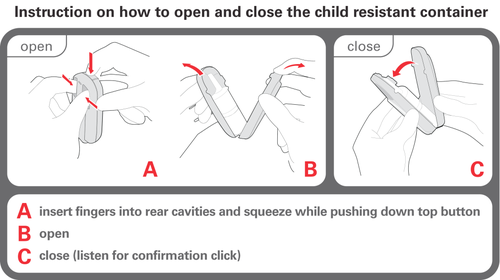
Preparing the PecFent bottle for use
Before using a new PecFent bottle, you need to prepare it for use. This procedure is
called “priming”.
To prime the bottle, follow the instructions below:
- 1. A new PecFent bottle shows two red lines in the dose window on the top white plastic part of the bottle (Figure 1 and Figure 3a).
- 2. Remove the clear plastic protective cap from the applicator (Figure 1).
- 3. Point the nasal spray away from you (and other people).
- 4. Hold the PecFent nasal spray upright, with your thumb on the bottom of the bottle and your index and middle fingers on the grip on both sides of the applicator (Figure 2).
- 5. Press down firmly on the grip until you feel a “click”, then release the grip (Figure 2). You will hear a second “click” and now a single large red bar should be visible in the dose window (Figure 3b).
- 6. Repeat step 5 three times. As you repeat step 5, the red bar will become smaller and smaller until a green bar appears in the dose window (Figure 3b-e). The green bar means that PecFent nasal spray is ready for use.
- 7. Wipe the applicator with a paper towel and throw the towel in the toilet.
- 8. If you do not intend to use the medicine immediately, replace the protective cap. Then insert the PecFent bottle into the child-resistant container. If PecFent has not been used for 5 days, prime the bottle by spraying once.
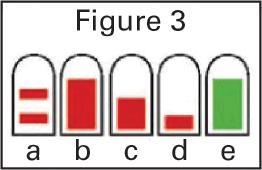
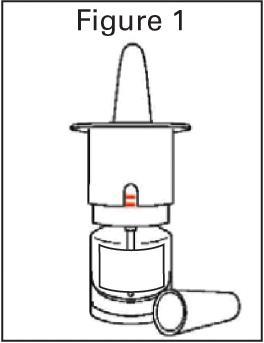
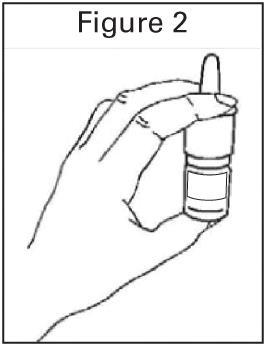
Figure 1
Figure 2
Figure 3
How to use PecFent
PecFent must only be used by spraying into the nostril.
- 1. Check that there is a green bar or a number is visible in the dose window (Figure 4): this confirms that the PecFent bottle has been primed (see “Preparing the PecFent bottle for use”).
- 2. Blow your nose if necessary.
- 3. Sit with your head upright.
- 4. Remove the protective cap from the applicator.
- 5. Hold the PecFent bottle with your thumb on the bottom of the bottle and your index and middle fingers on the grip (Figure 4).
- 6. Insert the applicator a short distance (about 1 cm) into the nostril. Direct it towards the wall of the nose. This will cause the bottle to tilt slightly (Figure 5).
- 7. Close the other nostril with a finger from the other hand (Figure 5).
- 8. Press down firmly on the grip so that PecFent releases a spray into the nostril. When you hear a click, release the grip. Note: you may not feel anything in your nose, this does not mean that the spray did not work: rely on the click and the dose counter.
- 9. Gently inhale through your nose and exhale through your mouth.
- 10. The dose counter will move forward after each use and indicate how many sprays have been used.
- 11. If your doctor has prescribed a second spray, repeat steps 5 to 9 using the other nostril.
Do not use a dose higher than that prescribed by your doctor to treat a single episode of
pain.
- 12. Put the PecFent bottle back into the child-resistant container after each use. Keep it out of the sight and reach of children (Figure 6).
- 13. Sit for at least 1 minute after using the nasal spray.
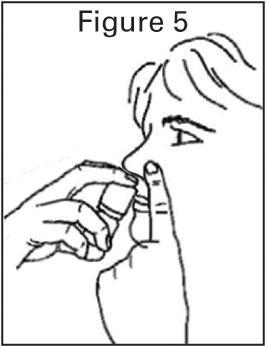
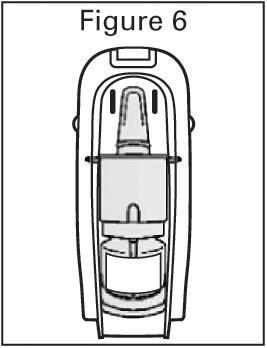
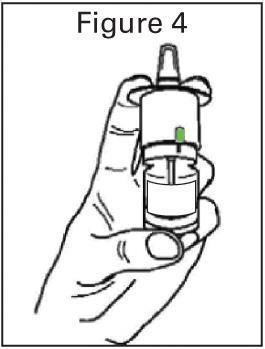
Figure 4
Figure 5Figure 6
Number of sprayscontained in a PecFent bottle
Each bottle contains 8 complete sprays.
- After the first spray, the number 1 appears in the dose window. This number increases each time the spray is used.
- When you see a red 8 in the dose window the bottle is empty and it is no longer possible to deliver a complete spray.
Disposing of unused PecFent
If you can see a number other than “8” in the dose window, this means that NOTall 8 sprays contained in the bottle have been used. There are still doses of PecFent in the bottle.
You must empty the remaining doses of PecFent from the bottleby pointing the nasal spray away from yourself (and
other people) and pressing and releasing the grip until a red “8” appears
in the dose window.
When you see the number “8” in the dose window, there is still medicine in the bottle that
must be expelled.
- Press and release the grip another 4 times, pointing the nasal spray away from yourself (and other people).
- You will feel more resistance when pressing and the grip will move only slightly.
- You will nothear a click when you press the grip.
- The dose counter will remain fixed on the number “8”.
- Replace the protective cap on the spray bottle.
- Put the bottle back into the child-resistant container.
- Contact your local pharmacy for instructions on how to dispose of empty bottles (see “ Howto store PecFent”)
If the PecFent nasal spray becomes blocked or does not spray correctly
- If the spray is blocked, point the spray away from you (and other people) and press down firmly on the pump. This should clear any blockages.
- If the nasal spray still does not work correctly, discard the defective bottle and start a new one. Tell your doctor what happened. Never try to repair the nasal sprayyourself or take it apart.This is because it could then deliver the wrong dose.
Throw away the PecFent bottle and start a new one if:
- it has been 60 days or more since you primed or first used the bottle.
If you use more PecFent than you should
- You may feel drowsy, nauseous, dizzy or have slow or deep breathing. In severe cases, using too much PecFent can also cause coma. If you experience
severe dizziness, strong drowsiness or have slow and deep breathing, call an ambulance or
ask someone to call for you immediately.
- An overdose can also cause a brain disorder known as toxic leukoencephalopathy.
If you stop treatment with PecFent
If you no longer have intense episodic pain, talk to your doctor before stopping treatment with
PecFent and follow their advice. However, you will need to continue taking the other opioid-based medicine for the treatment of constant pain. Your doctor may need to check the
dose.
When you stop treatment with PecFent you may experience withdrawal symptoms, similar to
the possible side effects of PecFent. If withdrawal symptoms occur, contact your doctor. The
doctor will assess whether it is necessary to prescribe you a medicine to reduce or eliminate these symptoms.
If you have any questions about using this medicine, ask your doctor or pharmacist.
4. Possible side effects
Like all medicines, this medicine can cause side effects, although not everybody gets them.
Call an ambulance or have someone call an ambulance immediately if:
- you feel severely dizzy or faint
- you feel very sleepy
- your breathing is slow or shallow
- you have cold sweats, a pale appearance, a weak pulse, or other signs of shock.
If you or the person caring for you notices any of the above-listed side effects, call an ambulance immediately.
Common side effects (may affect up to 1 in 10 people):
- not knowing where you are (disorientation)
- changes in taste
- dizziness
- nausea or vomiting
- sleepiness, headache
- nosebleed, nasal discomfort (e.g. burning in the nose), runny nose
- constipation
- itching
Uncommon side effects (may affect up to 1 in 100 people):
- chest infection
- pain, irritation or inflammation of the throat or nose
- coughing, sneezing, mucus or cold, change in fluids produced by the nose
- allergic reaction, rash
- loss or increase of appetite, weight gain
- dehydration, thirst
- improper use of the medicine
- seeing or hearing things that are not there (hallucinations/delirium), feeling confused
- feeling depressed, anxious, slow reflexes or nervousness
- lack of concentration or increased activity
- memory loss
- feeling of euphoria
- decreased awareness or responsiveness, loss of consciousness
- convulsion (seizures)
- convulsions or muscle tremors
- loss of taste, loss or alteration of smell
- difficulty speaking
- bluish discoloration of the skin
- vertigo, falls, malaise
- problems with temperature and circulation, hot flashes or fever, chills, excessive sweating
- swelling of soft tissues
- low blood pressure
- blockage in the trachea
- shortness of breath
- vaginal bleeding
- tear in the intestine or inflammation of the stomach lining
- numbness or tingling of the mouth, tongue or nose, or other problems with the tongue, mouth ulcers, dry mouth
- diarrhea
- retching, stomach pains, indigestion
- irritation or pain in the joints
- difficulty or inability to urinate
- chest pain
- feeling tired or weak, problems with movement
- changes in blood cells (detected by laboratory tests)
- increased blood sugar (blood glucose levels)
- presence of protein in the urine
Other side effects (frequency not known, the frequency cannot be estimated based on the
available data):
- severe breathing problems
- redness
- insomnia
- withdrawal syndrome (may manifest with the appearance of the following side effects: nausea, vomiting, diarrhea, anxiety, chills, tremor and sweating)
- tolerance to the drug, drug dependence (addiction), drug abuse (see section 2)
Prolonged treatment with fentanyl during pregnancy can cause withdrawal symptoms in the
newborn, which can have fatal consequences (see section 2).
Reporting of side effects
If you get any side effects, talk to your doctor or pharmacist. You can also report side effects directly through the national reporting system listed in Annex V *. By reporting side effects you can help provide more information on the safety of this medicine.
5. How to store PecFent
Keep this medicine out of sight and reach of children. If taken accidentally by a child, PecFent could have fatal consequences.
Keep this medicine in a safe and secure place, inaccessible to other people. Accidental or intentional taking of this medicine by other people to whom it has not been prescribed may cause serious harm and be fatal.
- Do not use this medicine after the expiry date stated on the pack and on the vial after Exp. The expiry date refers to the last day of that month.
- Do not store PecFent at a temperature above 25 ºC.
- Do not freeze.
- Keep the vial in the child-resistant container to protect the medicine from light.
- Always keep the vial of PecFent in the child-resistant container, even when it is empty.
- Do not use it for more than 60 days after first use (loading or use for the treatment of an episode of severe pain).
- Even if PecFent has passed the expiry date or is no longer needed, it may still contain an amount of medicine that could harm others, especially children. PecFent should not be disposed of via wastewater or household waste. Any PecFent no longer required should be disposed of as soon as possible, following the instructions given in the section Disposal of unused PecFent.Empty vials should be kept in the child-resistant container and disposed of by returning them to the pharmacy or in accordance with local regulations.
6. Package Contents and Other Information
What PecFent contains
The active ingredient is fentanyl.
- PecFent 100 micrograms/spraynasal spray, solutionEach mL of solution contains 1,000 micrograms of fentanyl (as citrate). 1 spray (100 microliters) contains 100 micrograms of fentanyl (as citrate).
- PecFent 400 micrograms/spraynasal spray, solutionEach mL of solution contains 4,000 micrograms of fentanyl (as citrate). 1 spray (100 microliters) contains 400 micrograms of fentanyl (as citrate).
The other ingredients are pectin (E440), mannitol (E421), phenylethyl alcohol, propyl parahydroxybenzoate (E216), sucrose, purified water and hydrochloric acid or sodium hydroxide for pH correction.
Description of PecFent and package contents
The medicine is a nasal spray, solution, colorless, from clear to almost clear. It is contained in a transparent glass bottle, equipped with a dosing pump. The pump has a spray counter that emits a click, so as to verify that the spray has been delivered, and a protective cap. After the PecFent bottle has been loaded (prepared for use), it releases 8 complete sprays. Each PecFent bottle is supplied in a child-resistant container.
The PecFent bottles in their respective child-resistant containers are supplied in cardboard packs containing 1, 4 or 12 bottles.
Not all pack sizes may be marketed.
Marketing Authorisation Holder
Grünenthal GmbH
Zieglerstraße 6
52078 Aachen
Germany
Manufacturer
- L. Molteni & C. dei F.lli Alitti Società di Esercizio S.p.A Strada Statale 67 Tosco Romagnola, Fraz. Granatieri – 50018 Scandicci (FI) Italy
Other sources of information
More detailed information on this medicine is available on the European Medicines Agency website, http://www.ema.europa.eu.
PecFent 100 micrograms/spray nasal spray, solution, 2-spray bottle
fentanil
Read this leaflet carefully before you start using this medicine as it contains important
information for you.
- Keep this leaflet. You may need to read it again.
- If you have any questions, ask your doctor or pharmacist.
- This medicine has been prescribed for you only. Do not pass it on to others, even if their symptoms are the same as yours, as it may be harmful.
- If you get any side effects, even those not listed in this leaflet, tell your doctor or pharmacist. See section 4.
Contents of this leaflet
- 1. What PecFent is and what it is used for
- 2. What you need to know before you use PecFent
- 3. How to use PecFent
- 4. Possible side effects
- 5. How to store PecFent
- 6. Contents of the pack and other information
1. What is PecFent and what is it used for
What is PecFent
PecFent contains fentanyl, a strong medicine for pain relief, known as an opioid analgesic.
What is PecFent used for
PecFent is used in adults with cancer for the treatment of a type of pain called
“intense episodic pain (IEP – Breakthrough Pain)”.
- Intense episodic pain comes on suddenly.
- The pain occurs even if you have taken your usual opioid analgesic (such as morphine, fentanyl, oxycodone or hydromorphone) to control your persistent background pain.
PecFent must only be used in adults who are already taking other opioid medicines daily for persistent pain caused by cancer.
How PecFent works
PecFent is a nasal spray in solution.
- When you spray PecFent into your nose, the very small nebulized droplets form a thin gel.
- Fentanil is rapidly absorbed through the nasal mucosa and enters the bloodstream.
- This means that the medicine enters the circulation quickly to provide relief from intense episodic pain.
2. What you need to know before using PecFent
Do not use PecFent if
- you are allergic to fentanyl or any of the other ingredients of this medicine (listed in section 6)
- you do not regularly and daily use, for at least one week, an opioid medicine prescribed by a doctor (e.g. codeine, fentanyl, hydromorphone, morphine, oxycodone, pethidine), to control persistent pain. If you are not using these medicines do notuse PecFent, because this could increase the risk that your breathing becomes dangerously slow and/or shallow, or even stops
- you suffer from short-term pain other than severe episodic pain
- you have serious breathing or lung problems
- you are being treated with medicines containing sodium oxybate.
Do not use PecFent if you fall into any of the above cases. If you have any doubts, consult your doctor or pharmacist before using PecFent.
Warnings and precautions
Keep this medicine in a safe and secure place, out of reach of other people (see section 5 “How to store PecFent” for more information).
How to keep PecFent safe from children
- When you are not using it, you must store PecFent in the child-resistant container, even if you have used both doses. This is because PecFent could have life-threatening consequences if accidentally taken by a child.
Consult your doctor or pharmacist before using PecFent if:
- you have not been taking the same dose of your daily opioid medicine for constant pain for some time
- you have breathing problems, such as asthma, wheezing or shortness of breath
- you have suffered a serious head injury
- you have heart problems, especially a slow heartbeat
- you have low blood pressure or a low amount of fluid in your bloodstream
- you have liver or kidney problems. This is because it may affect how the body processes the medicine
- you are taking antidepressants or antipsychotics, refer to the section “Other medicines andPecFent”.
If you fall into any of the above cases (or if you are not sure), consult your doctor or pharmacist before using PecFent.
- If you are an athlete, the use of PecFent may result in a positive doping test.
Consult your doctor during the use of PecFent if:
- you repeatedly experience nosebleeds, your doctor may advise alternative treatment
- you feel that PecFent is becoming less effective in treating episodes of severe pain
- you experience pain or increased sensitivity to pain (hyperalgesia), which does not respond to an increase in the dose of the medicine prescribed by your doctor
- you think you have become dependent on PecFent
- you experience a combination of the following symptoms: nausea, vomiting, loss of appetite, fatigue, weakness, dizziness and low blood pressure. Collectively, these symptoms may be a sign of a potentially life-threatening condition called adrenal insufficiency, in which the adrenal glands do not produce enough hormones
- you have previously developed adrenal insufficiency or a lack of sex hormones (androgen deficiency) with the use of opioids
- certain pain relievers for nerve pain (gabapentin and pregabalin).
Long-term use and tolerance
This medicine contains fentanyl, an opioid medicine. Repeated use of opioid pain relievers can make the medicine less effective (you get used to it, a phenomenon known as drug tolerance). You may also become more sensitive to pain while using PecFent. This is known as hyperalgesia. Increasing the dose of PecFent may help to reduce pain further for a while, but it can also be harmful. If you notice that the medicine is becoming less effective, consult your doctor. The doctor will decide whether to increase the dose or gradually reduce the use of PecFent.
Dependence and drug addiction
Repeated use of PecFent can also lead to dependence, abuse and drug addiction, which can cause a potentially fatal overdose. The risk of these side effects may increase with a higher dose and prolonged use. Dependence or drug addiction can make you feel like you no longer have control over the amount of medicine needed or how often you need to use it. You may feel the need to continue using the medicine, even if it does not help to relieve the pain.
The risk of developing dependence or drug addiction varies from person to person. You may be at greater risk of becoming dependent or addicted to PecFent if:
you or a family member have previously suffered from alcohol, prescription drug or illegal substance abuse or dependence (“drug addiction”);
you are a smoker;
you have had previous mood problems (depression, anxiety or a personality disorder) or have been treated by a psychiatrist for other mental illnesses).
The appearance of any of the following signs during the use of PecFent may be a sign of dependence or drug addiction.
You need to use the medicine for a longer period than indicated by the doctor
You need to use a higher dose than recommended
You use the medicine for reasons other than those prescribed, for example “to stay calm” or “to promote sleep”
You have repeatedly tried to stop or control the use of this medicine, without success
When you stop treatment with the medicine you feel unwell (e.g. nausea, vomiting, diarrhea, anxiety, chills, tremors and sweating) and when you resume using it you feel better (“withdrawal symptoms”)
If you notice any of these signs, consult your doctor to discuss the best treatment plan for you, including cases where it is appropriate to stop treatment and how to stop it safely.
Sleep-related breathing disorders
PecFent can cause sleep-related breathing disorders, such as sleep apnea (pauses in breathing during sleep) and sleep-related hypoxemia (low levels of oxygen in the blood). Symptoms may include pauses in breathing during sleep, night-time awakenings due to shortness of breath, difficulty staying asleep, or excessive daytime sleepiness. If you or another person observe these symptoms, contact your doctor. The doctor may consider reducing the dose.
Children and adolescents
PecFent is not approved for use in children under 18 years of age.
Other medicines and PecFent
Tell your doctor or pharmacist if you are taking, have recently taken or might take any other medicines.
In particular, tell your doctor or pharmacist before using PecFent if you are taking any of the following medicines:
- medicines that may cause drowsiness, such as sleeping pills, tranquillizers, muscle relaxants, medicines for anxiety such as benzodiazepines (e.g. diazepam) or medicines for allergies (antihistamines). The use of PecFent in combination with medicines that cause drowsiness increases the risk of drowsiness, breathing difficulties (respiratory depression), coma and can be fatal. Contact your doctor if any of these symptoms occur.For this reason, the use of PecFent together with sedatives should only be considered when other treatment options are not possible. However, if PecFent is prescribed with sedatives, the dose and duration of treatment must be limited by the doctor. Tell your doctor all the sedatives you are taking and carefully follow their instructions regarding the dose.It may be helpful to inform friends or family to pay attention to the signs and symptoms above.
- medicines for depression called “monoamine oxidase inhibitors” (MAOIs). Tell your doctor or pharmacist if you have taken an MAOI medicine in the last 2 weeks before using PecFent. The risk of side effects increases if you are taking medicines such as certain antidepressants or antipsychotics. PecFent may interact with these medicines and changes in mental status (e.g. agitation, hallucinations, coma) and other effects, such as a temperature above 38 °C, increased heart rate, unstable blood pressure and exaggerated reflexes, muscle stiffness, lack of coordination and/or gastrointestinal symptoms (e.g. nausea, vomiting, diarrhea) may occur. The doctor will tell you if PecFent is suitable for you
- nasal sprays for treating a stuffy nose (containing a decongestant, such as oxymetazoline)
- medicines that may affect how the body processes PecFent. These include: o medicines for HIV infection (such as ritonavir, nelfinavir, amprenavir or fosamprenavir) o medicines for fungal infections (such as ketoconazole, itraconazole or fluconazole) o medicines for bacterial infections (such as troleandomycin, clarithromycin or erythromycin) o “aprepitant”, used to stop nausea o “diltiazem” and “verapamil”, used for high blood pressure or heart problems. o other pain relievers called partial agonists/antagonists, such as buprenorphine, nalbuphine, pentazocine. During the use of these medicines, symptoms of withdrawal syndrome (nausea, vomiting, diarrhea, anxiety, chills, tremors and sweating) may occur.
If you fall into any of the above cases (or if you are not sure), consult your doctor or pharmacist before using PecFent.
Do not use other types of nasal sprays for at least 15 minutes after using PecFent.
PecFent with food, drinks and alcohol
- Do not drink alcohol while using PecFent, as it may increase the risk of serious side effects.
- Do not drink grapefruit juice while using PecFent. This may affect how the body processes PecFent.
Pregnancy, breastfeeding and fertility
If you are pregnant, suspect you may be pregnant, are planning to become pregnant or are breastfeeding, ask your doctor or pharmacist for advice before taking this medicine.
- Do not use PecFent if you are pregnant or may become pregnant, unless directed by your doctor.
- Do not use PecFent during labour, as it may cause breathing problems in the baby.
- Do not use PecFent if you are breastfeeding. This is because the medicine can pass into breast milk and cause side effects in the infant.
- Do not start breastfeeding within 5 days of the last dose of PecFent.
Driving and using machines
- Ask your doctor if it is safe for you to drive vehicles or use tools or machines after using PecFent.
- You may feel drowsy, dizzy or have vision problems after using PecFent. If this happens, do not drive vehicles and do not use tools or machines.
- Do not drive or use tools or machines until you have determined how this medicine affects you.
PecFent contains propylparahydroxybenzoate (E216)
It may cause allergic reactions (likely delayed) and, in rare cases, bronchospasm (if you do not use the nasal spray correctly).
3. How to use PecFent
Before starting treatment and regularly during treatment, your doctor will discuss with you also
what you might expect from using PecFent, when and for how long it is necessary to use it, when
to contact your doctor and when you should stop treatment (see also section 2, Withdrawal symptoms when stopping PecFent).
Use this medicine following exactly the instructions of your doctor or pharmacist. If you have
any doubts, ask your doctor or pharmacist.
PecFent is available in two different dosages:a bottle delivering 100 micrograms per spray and a
bottle delivering 400 micrograms per spray. Make sure you use the dosage prescribed by your doctor.
Amount to use
- A dose for the treatment of severe episodic pain could be 1 spray or 2 sprays (one in each nostril). Your doctor will tell you how many sprays (1 or 2) you should use to treat severe episodic pain.
- Do not use a dose higher than that prescribed by your doctor for each individual episode ofsevere pain.
- Do not use PecFent for more than 4 times a day.
- Wait at least 4 hours before taking the next dose of PecFent.
Initial dose
- The initial dose is 100 micrograms.
- This is equivalent to a single spray in one nostril from the bottle delivering 100 micrograms per spray.
- See “How to use the PecFent bottle” for instructions on how to use a dose.
How to find the right dose
- Your doctor will help you find the right dose for relief of severe episodic pain. It is very important to follow your doctor’s instructions.
- Tell your doctor about the pain and the effectiveness of PecFent. Your doctor will decide if it is necessary to change the dose of PecFent.
- Do not change the dose without consulting your doctor.
Once the right dose is found
- Tell your doctor if the dose of PecFent does not relieve severe episodic pain. Your doctor will decide if the dose needs to be changed. Do not change the dose of PecFent or otherpainkillers without consulting your doctor.
- Tell your doctor immediately if you have more than 4 episodes of severe pain a day. Your doctor may change the medicine for constant pain. Once constant pain is controlled, your doctor may adjust the dose of PecFent.
If you have any doubts about the right dose or the amount of PecFent to use, ask your doctor.
How to use the PecFent bottle
Instructions for opening and closing the child-resistant container
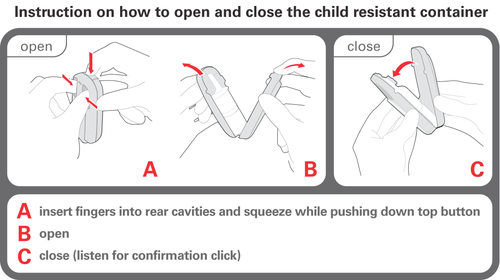
Preparing the PecFent bottle for use
Before using a new PecFent bottle, you need to prepare it for use. This procedure is
called “priming”. It is recommended to prime the bottle immediately before use rather than
in advance (Note: this 2-spray bottle cannot be refilled. If, once primed, the spray is not used within 5 days, the bottle must be disposed of.)
To prime the bottle, follow the instructions below:
- 1. A new PecFent bottle shows two red lines in the counting window on the white plastic top of the bottle (Figure 1 and Figure 3a).
- 2. Remove the white plastic protective cap from the applicator (Figure 1).
- 3. Point the nasal spray away from you (and other people).
- 4. Hold the PecFent nasal spray upright, with your thumb on the bottom of the bottle and your index and middle fingers on the grip on both sides of the applicator (Figure 2).
- 5. Press down firmly on the grip until you hear a “click”, then release the grip (Figure 2). You will hear a second “click” and now a single large red bar should be visible in the counting window (Figure 3b).
- 6. Repeat step 5 three times. As you repeat step 5, the red bar will become smaller and smaller until a green bar appears in the counting window (Figure 3b-e). The green bar means that PecFent nasal spray is ready for use.
- 7. Wipe the applicator with a paper towel and throw the towel in the toilet.
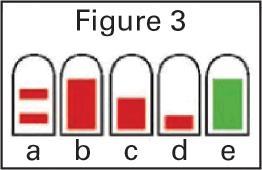
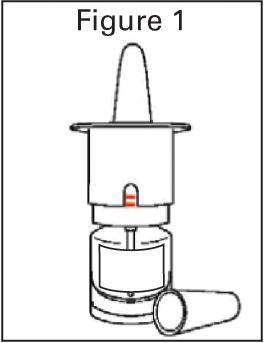
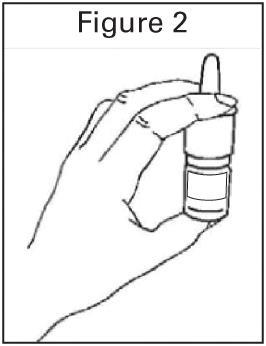
Figure 1
Figure 2
Figure 3
How to use PecFent
PecFent must be used only by spraying into the nostril.
- 1. Check that there is a green bar or a number is visible in the counting window (Figure 4): this confirms that the PecFent bottle has been primed (see “Preparing the PecFent bottle for use”).
- 2. Blow your nose if you need to.
- 3. Sit with your head upright.
- 4. Remove the protective cap from the applicator.
- 5. Hold the PecFent bottle with your thumb on the bottom of the bottle and your index and middle fingers on the grip (Figure 4).
- 6. Insert the applicator a short distance (about 1 cm) into the nostril. Direct it towards the wall of the nose. This will cause the bottle to tilt slightly (Figure 5).
- 7. Close the other nostril with a finger of your other hand (Figure 5).
- 8. Press down firmly on the grip so that PecFent releases a spray into the nostril. When you hear a click, release the grip. Note: you may not feel anything in your nose, this does not mean that the spray did not work: rely on the click and the counting window.
- 9. Gently inhale through your nose and exhale through your mouth.
- 10. The counting window will move forward after each use and indicate how many sprays have been used.
- 11. If your doctor has prescribed a second spray, repeat steps 5 to 9 using the other nostril.
Do not use a dose higher than that prescribed by your doctor to treat a single episode of
pain.
- 12. Put the PecFent bottle back in the child-resistant container after each use. Keep it out of the sight and reach of children (Figure 6).
- 13. Sit for at least 1 minute after using the nasal spray.
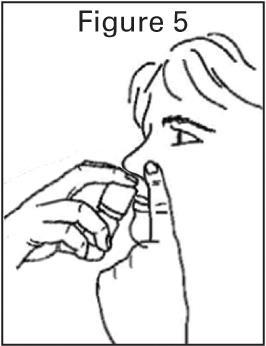
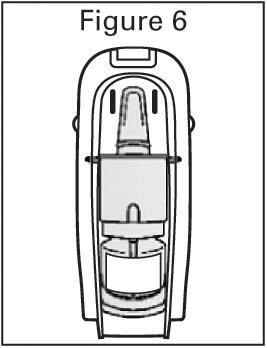
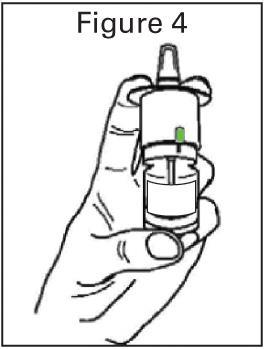
Figure 4
Figure 5Figure 6
Number of sprayscontained in this PecFent bottle
Each bottle contains 2 complete sprays.
- After the first spray, the number 1 appears in the counting window. This number increases each time the spray is used. The next time, the number rises to 2.
- When you see a red 2 in the counting window, the bottle is empty and no complete spray is possible anymore.
Disposing of unused PecFent
- If you can see a number other than “2” in the counting window, it means that NOTall 8 sprays contained in the bottle have been used. There are still doses of PecFent in the bottle.
- You must empty the remaining doses of PecFent from the bottleby pointing the nasal spray away from yourself (and other people) and pressing and releasing the grip until a red “2” appears in the counting window.
When you see the number “2” in the counting window, there is still medicine in the bottle that
must be expelled.
- Press and release the grip another 4 times, directing the nasal spray away from yourself (and other people).
- You will feel more resistance when pressing and the grip will move only slightly.
- You will nothear a click when you press the grip.
- The counting window will remain fixed on the number “2”.
- Put the protective cap back on the spray bottle.
- Put the bottle back in the child-resistant container.
- Contact your local pharmacy for instructions on how to dispose of empty bottles (see “ Howto store PecFent”)
If the PecFent nasal spray gets blocked or does not spray correctly
- If the spray is blocked, point the spray away from you (and other people) and press down firmly on the pump. This should clear any blockages.
- If the nasal spray still does not work correctly, discard the defective bottle and start a new one. Tell your doctor what happened. Never try to repair the nasal sprayyourself or take it apart.This is because it could then deliver the wrong dose.
Throw away the PecFent bottle and start a new one if:
- more than 5 days have passed since you primed the bottle for the first time.
If you use more PecFent than you should
- You may feel drowsy, nauseous, dizzy or have slow or deep breathing. In severe cases, an overdose of PecFent can also cause coma. If you experience
severe dizziness, strong drowsiness or have slow and deep breathing, call an ambulance or
ask someone to call one for you immediately.
- An overdose can also cause a brain disorder known as toxic leukoencephalopathy.
If you stop treatment with PecFent
If you no longer have severe episodic pain, talk to your doctor before stopping treatment with
PecFent and follow their advice. However, you will need to continue taking the other opioid medicine for the treatment of constant pain. Your doctor may need to adjust the
dose.
When you stop treatment with PecFent you may experience withdrawal symptoms, similar to
the possible side effects of PecFent. If withdrawal symptoms occur, contact your doctor. The
doctor will assess whether it is necessary to prescribe you a medicine to reduce or eliminate these symptoms.
If you have any doubts about using this medicine, ask your doctor or pharmacist.
4. Possible side effects
Like all medicines, this medicine can cause side effects, although not everybody gets them.
Call an ambulance or ask someone to call an ambulance immediately if:
- you feel dizzy or faint
- you feel very sleepy
- your breathing is slow or shallow
- you have cold sweats, a pale appearance, a weak pulse or other signs of shock.
If you or the person caring for you notices any of the above-mentioned side effects,
call an ambulance immediately.
Common side effects (may affect up to 1 in 10 people):
- not knowing where you are (disorientation)
- changes in taste
- dizziness
- nausea or vomiting
- sleepiness, headache
- nosebleeds, nasal discomfort (e.g. burning in the nose), runny nose
- constipation
- itching
Uncommon side effects (may affect up to 1 in 100 people):
- chest infection
- pain, irritation or inflammation of the throat or nose
- coughing, sneezing, phlegm or a cold, changes in fluids produced by the nose
- allergic reaction, rash
- loss or increase of appetite, weight gain
- dehydration, thirst
- improper use of the medicine
- seeing or hearing things that are not there (hallucinations/delirium), feeling confused
- feeling depressed, anxious, slow reflexes or nervousness
- difficulty concentrating or increased activity
- memory loss
- feeling of euphoria
- decreased awareness or responsiveness, loss of consciousness
- seizure (convulsions)
- convulsions or muscle tremors
- loss of taste, loss or alteration of smell
- difficulty speaking
- bluish discoloration of the skin
- vertigo, falls, feeling unwell
- problems with temperature and circulation, hot flushes or fever, chills, excessive sweating
- swelling of soft tissues
- low blood pressure
- blockage in the trachea
- shortness of breath
- vaginal bleeding
- tear in the intestine or inflammation of the stomach lining
- numbness or tingling of the mouth, tongue or nose, or other problems with the tongue, mouth ulcers, dry mouth
- diarrhea
- nausea, stomach pain, indigestion
- irritation or pain in the joints
- difficulty or inability to urinate
- chest pain
- feeling tired or weak, problems with movement
- changes in blood cells (detected by laboratory tests)
- increased blood sugar (blood glucose levels)
- presence of protein in the urine
Other side effects (frequency not known, the frequency cannot be estimated from the
available data):
- severe breathing problems
- redness
- insomnia
- withdrawal syndrome (may manifest with the appearance of the following side effects: nausea, vomiting, diarrhea, anxiety, chills, tremor and sweating).
- tolerance to the drug, drug dependence (addiction), drug abuse (see section 2)
Prolonged treatment with fentanyl during pregnancy can cause withdrawal symptoms in the
newborn, which can have fatal consequences (see section 2).
Reporting of side effects
If you get any side effects, talk to your doctor or pharmacist. This includes any side effects not listed
in this leaflet. You can also report side effects directly through the national reporting system listed in
Appendix V *. By reporting side effects you can help provide more information on the safety of this medicine.
5. How to store PecFent
Keep this medicine out of the sight and reach of children. If taken accidentally by a child, PecFent could have fatal consequences.
Keep this medicine in a safe and secure place, inaccessible to other people. Accidental or intentional intake of this medicine by other people to whom it has not been prescribed can cause serious harm and be fatal.
- Do not use this medicine after the expiry date stated on the package and the vial after Exp. The expiry date refers to the last day of that month.
- Do not store PecFent at a temperature above 25 ºC.
- Do not freeze.
- Keep the vial in the child-resistant container to protect the medicine from light.
- Always keep the vial of PecFent in the child-resistant container, even when it is finished.
- Do not use it for more than 5 days after first use (loading or use for the treatment of an episode of severe pain).
- Even if PecFent has exceeded the expiry date or is no longer needed, it may still contain an amount of medicine that could harm others, especially children. PecFent should not be discarded in the drain or in household waste. Any PecFent no longer needed should be disposed of as soon as possible, following the instructions given in the section Disposal of unused PecFent.Empty vials should be placed in the child-resistant container and disposed of by returning them to the pharmacy or in accordance with local regulations.
6. Package Contents and Other Information
What PecFent contains
The active ingredient is fentanyl.
- PecFent 100 micrograms/spraynasal spray, solutionEach mL of solution contains 1,000 micrograms of fentanyl (as citrate). 1 spray (100 microliters) contains 100 micrograms of fentanyl (as citrate).
The other ingredients are pectin (E440), mannitol (E421), phenylethyl alcohol, propyl parahydroxybenzoate (E216), sucrose, purified water and hydrochloric acid or sodium hydroxide for pH adjustment.
Description of PecFent and package contents
The medicine is a nasal spray, solution, colorless, from clear to almost clear. It is contained in a transparent glass bottle, equipped with a dosing pump. The pump has a spray counter that emits a click, so as to verify that the spray has occurred, and a protective cap. After the PecFent bottle has been loaded (prepared for use), it releases 2 complete sprays. Each PecFent bottle is supplied in a child-resistant container.
The 2-spray bottles of PecFent in their respective child-resistant containers are supplied in a cardboard package containing 1 bottle,
Marketing Authorisation Holder
Grünenthal GmbH
Zieglerstraße 6
52078 Aachen
Germany
Manufacturer
- L. Molteni & C. dei F.lli Alitti Società di Esercizio S.p.A
Strada Statale 67 Tosco Romagnola,
Fraz. Granatieri – 50018 Scandicci (FI)
Italy
Other sources of information
More detailed information on this medicine is available on the website of the European Medicines Agency, http://www.ema.europa.eu.

Не уверены, подходит ли вам это лекарство?
Обсудите симптомы и варианты лечения с врачом онлайн.

Уже начали прием и появились вопросы?
Обсудите свое состояние и дальнейшие шаги с врачом онлайн.

- Страна регистрации
- Форма выпускаNasal spray, solution, 100MCG
- Код АТХN02AB03
- Действующее вещество
- Отпускается по рецептуДа
- Производитель
- Информация на этой странице носит справочный характер и не является медицинской консультацией. Перед началом приема лекарства обязательно проконсультируйтесь с врачом.
- Аналоги PEKFENTФорма выпуска: Sublingual tablet, 100 MCGДействующее вещество: фентанилПроизводитель: GRUNENTHAL ITALIA S.R.L.Отпускается по рецептуФорма выпуска: Orally disintegrating tablet, 200 MICROGRAMSДействующее вещество: фентанилПроизводитель: TEVA ITALIA S.R.L.Отпускается по рецептуФорма выпуска: Transdermal patch, 25MCG/ORAДействующее вещество: фентанилОтпускается по рецепту
Аналоги PEKFENT в других странах
Лекарства с тем же действующим веществом, доступные в других странах.
Аналог PEKFENT в Испания
Аналог PEKFENT в Польша
Аналог PEKFENT в Украина
Врачи онлайн по PEKFENT
Обсудите применение PEKFENT и возможные следующие шаги — по оценке врача.









Получите рецепт на PEKFENT онлайн
Заполните форму за 2 минуты
Расскажите о симптомах, истории болезни и нужном препарате.
Выберите врача или мы назначим
Выберите специалиста или мы подберём ближайшего доступного врача.
Врач рассматривает ваш случай
Обычно в течение 30 минут. Может задать уточняющие вопросы в чате.
Получите в любой аптеке
Электронный рецепт отправляется на вашу почту — действителен по всей Польше.
Часто задаваемые вопросы
PEKFENT требует рецепта в Италия. Вы можете уточнить у врача онлайн, подходит ли это лекарство для вашей ситуации.
Действующее вещество PEKFENT — фентанил. Эта информация помогает определить лекарства с тем же составом под другими торговыми названиями.
PEKFENT производится компанией GRUNENTHAL GMBH. Упаковка и торговое название могут отличаться в зависимости от дистрибьютора.
Врачи, включая Семейные врачи, Психиатры, Дерматологи, Кардиологи, Эндокринологи, Гастроэнтерологи, Пульмонологи, Нефрологи, Ревматологи, Гематологи, Инфекционисты, Аллергологи, Гериатры, Педиатры, Онкологи, могут оценить целесообразность применения PEKFENT с учетом вашей ситуации и местных правил. Вы можете записаться на онлайн-консультацию, чтобы обсудить возможные варианты.
Польша имеет хорошо развитую систему здравоохранения в крупных городах, таких как Варшава, Краков, Вроцлав и Гданьск. Аптеки широко доступны и работают в соответствии с действующим законодательством, обеспечивая доступ к рецептурным препаратам.
Вы можете купить PEKFENT в Варшаве, Кракове, Вроцлаве или Гданьске в любой аптеке при наличии действующего рецепта.
Чтобы получить рецепт, вы можете воспользоваться Oladoctor:
Другие лекарства с тем же действующим веществом (фентанил) включают ABSTRAL, AKTIQ, ALJEDON. Они могут отличаться торговым названием или формой выпуска, но содержат одинаковый терапевтический компонент. Перед изменением лечения рекомендуется проконсультироваться с врачом.
