



OFEV 100 mg Софт Капсула

Рассмотрение рецепта онлайн
Врач рассмотрит ваш случай и примет решение о назначении рецепта, если это медицински оправдано.

Поговорите с врачом об этом лекарстве
Обсудите симптомы и возможные дальнейшие шаги на онлайн-консультации.



Инструкция по применению OFEV
Содержание инструкции
Ofev 25 mg soft capsules
nintedanib
Read this leaflet carefully before you start to take this medicine as it contains
important information for you.
- Keep this leaflet. You may need to read it again.
- If you have any questions, ask your doctor or pharmacist.
- This medicine has been prescribed for you only. Do not pass it on to others, even if they have the same symptoms as you, as it may be harmful.
- If you get any side effects, even those not listed in this leaflet, tell your doctor or pharmacist. See section 4.
Contents of this leaflet
- 1. What Ofev is and what it is used for
- 2. What you need to know before you take Ofev
- 3. How to take Ofev
- 4. Possible side effects
- 5. How to store Ofev
- 6. Contents of the pack and other information
1. What is Ofev and what it is used for
Ofev contains the active substance nintedanib, a medicine belonging to the class of tyrosine kinase
inhibitors, and is used for the treatment of the following diseases:
Idiopathic pulmonary fibrosis (IPF) in adults
IPF is a condition in which the tissue of the lungs becomes thickened, stiff and scarred over time. As a
result, the scars reduce the ability to transfer oxygen from the lungs to the bloodstream, making deep
breathing difficult. Ofev helps to reduce the further appearance of scarring and stiffening of the lungs.
Other chronic fibrosing interstitial lung diseases (ILD) with a progressive phenotype in adults
In addition to IPF, there are other conditions in which the tissue of the lungs becomes thickened, stiff
and scarred (pulmonary fibrosis) over time and continues to worsen (progressive phenotype). Examples of
these conditions are hypersensitivity pneumonitis, autoimmune ILD (e.g. ILD associated with rheumatoid
arthritis), nonspecific idiopathic interstitial pneumonia, unclassifiable idiopathic interstitial pneumonia
and other ILDs. Ofev helps to reduce the further appearance of scarring and stiffening of the lungs.
Interstitial lung diseases (ILD) fibrosing progressive clinically significant in children and adolescents
aged 6 to 17 years
In children with pediatric interstitial lung disease (chILD), pulmonary fibrosis may occur. When this
happens, the lung tissue of children and adolescents becomes thickened, stiff and scarred over time. Ofev
helps to reduce the further appearance of scarring and stiffening of the lungs.
Interstitial lung disease associated with systemic sclerosis (SSc-ILD) in adults, children and adolescents
aged 6 to 17 years
Systemic sclerosis (SSc), or scleroderma (and juvenile systemic sclerosis in children and adolescents), is a
rare chronic autoimmune disease that affects the connective tissue of various parts of the body. SSc causes
fibrosis (scarring and stiffening) of the skin and other internal organs such as the lungs. When the lungs
are affected by fibrosis, it is referred to as interstitial lung disease (ILD) and the pathology is called SSc-
ILD. Fibrosis in the lungs reduces their ability to transfer oxygen to the blood and breathing capacity. Ofev
helps to reduce the further appearance of scarring and stiffening of the lungs.
2. What you need to know before you take Ofev
Do not take Ofev
- if you are pregnant,
- if you are allergic to nintedanib, to peanuts or to soya, or to any of the other ingredients of this medicine (listed in section 6).
Warnings and precautions
Talk to your doctor or pharmacist before taking Ofev,
- if you have or have had problems with your liver,
- if you have or have had problems with your kidneys or if an increased amount of protein has been detected in your urine,
- if you have or have had problems with bleeding,
- if you are taking medicines that thin the blood (such as warfarin, phenprocoumon or heparin) to prevent blood clots,
- if you are taking pirfenidone, which may lead to an increased risk of developing diarrhoea, nausea, vomiting and liver problems,
- if you have or have had heart problems (such as a heart attack),
- if you have recently had surgery. Nintedanib can affect wound healing. Therefore, treatment with Ofev will usually be stopped for a certain period in case of surgery. Your doctor will decide when you can start treatment with this medicine again,
- if you have high blood pressure,
- if the pressure in the blood vessels in your lungs is excessively high (pulmonary hypertension),
- if you have or have had an aneurysm (bulging and weakening of the wall of a blood vessel) or a tear in the wall of a blood vessel.
Based on this information, your doctor may perform blood tests, for example to
check your liver function. Your doctor will discuss the results of the tests with you and decide if you
can receive Ofev.
Tell your doctor immediately while taking this medicine
- if you have diarrhoea. It is important to treat diarrhoea early (see section 4, “Possible side effects”);
- if you vomit or feel unwell (nausea);
- if you experience unexplained symptoms such as yellowing of the skin or the white part of your eyes (jaundice), dark or brown coloured urine (tea coloured), pain in the upper right area of your stomach (abdomen), bleeding or bruising more easily than usual or feeling tired. These may be symptoms of serious liver problems;
- if you have severe stomach pain, fever, chills, feeling unwell, vomiting or stiffness or swelling of the abdomen, as these may be symptoms of an opening in the wall of the intestine (“gastrointestinal perforation”). Tell your doctor even if you have suffered from peptic ulcers or diverticular disease in the past or if you are being treated at the same time with anti-inflammatory drugs (NSAIDs) (used to relieve pain and treat swelling) or steroids (used for inflammation and allergies), as this may increase this risk;
- if you experience a combination of severe stomach pain or cramps, blood in your stool or diarrhoea, as these may be symptoms of inflammation of the intestine due to inadequate blood supply;
- if you have pain, swelling, redness or warmth in a limb, as these may be symptoms of a blood clot in a vein (a type of blood vessel);
- if you feel pressure or pain in your chest, particularly on the left side of your body, neck pain,
jaw pain, shoulder or arm pain, rapid heartbeat, shortness of breath, nausea,
vomiting, as these may be symptoms of a heart attack;
- if you have significant bleeding;
- if bruises, bleeding, fever, fatigue and confusion appear. These may be signs of damage to the blood vessels known as thrombotic microangiopathy (TMA);
- if you experience symptoms such as headache, changes in vision, confusion, seizures or other neurological disorders such as weakness in an arm or leg, with or without high blood pressure. These may be symptoms of a condition of the brain called reversible posterior encephalopathy syndrome (PRES).
Children and adolescents
Ofev should not be taken by children under the age of 6 years.
Your doctor may subject you to regular dental check-ups at least every 6 months, until
complete development of the teeth, and monitor your growth annually (bone imaging examinations)
while you are taking this medicine.
Other medicines and Ofev
Tell your doctor or pharmacist if you are taking, have recently taken or might take
any other medicines, including herbal medicines and medicines you bought without a prescription.
Ofev can interact with some medicines. The following medicines are some examples of
medicines that can increase the levels of nintedanib in the blood, potentially increasing the
risk of side effects (see section 4, “Possible side effects”):
- a medicine used to treat fungal infections (ketoconazole)
- a medicine used to treat bacterial infections (erythromycin)
- a medicine that affects the immune system (cyclosporine)
The following medicines are some examples of medicines that can decrease the levels of
nintedanib in the blood, potentially reducing the effectiveness of Ofev:
- an antibiotic used to treat tuberculosis (rifampicin)
- medicines used to treat epilepsy (carbamazepine, phenytoin)
- a herbal medicine used to treat depression (St John’s Wort)
Pregnancy and breastfeeding
If you are pregnant, if you suspect you are pregnant or are planning to become pregnant, or if you are
breastfeeding, ask your doctor or pharmacist for advice before taking this medicine.
Pregnancy
Do not take this medicine during pregnancy, as it may harm the baby and cause
birth defects.
Before starting treatment with Ofev, you must have a pregnancy test to make sure you are not
pregnant. Talk to your doctor.
Contraception
- Women of childbearing potential must use a highly effective method of contraception to avoid pregnancy when starting to take Ofev, during treatment with Ofev and for at least 3 months after stopping treatment.
- Talk to your doctor to evaluate the most suitable contraceptive methods for you.
- Vomiting and/or diarrhoea or other gastrointestinal problems can affect the absorption of oral hormonal contraceptives, such as the pill, and can reduce their effectiveness. Therefore, if you experience these disorders, talk to your doctor to evaluate a more appropriate alternative contraceptive method.
- Tell your doctor or pharmacist immediately if you become pregnant or suspect you are pregnant during treatment with Ofev.
Breastfeeding
Do not breastfeed while taking Ofev, as there is a potential risk to the
breastfed babies.
Driving and using machines
Ofev slightly impairs the ability to drive and operate machines. If you feel unwell, do not
drive or operate machines.
Ofev contains soya lecithin
If you are allergic to soya or peanuts, do not take this medicine (see section 2, under “Do not
take Ofev”).
3. How to take Ofev
Take this medicine following exactly the instructions of your doctor or pharmacist. If you
have any doubts, ask your doctor or pharmacist.
Take the capsules twice a day, approximately 12 hours apart and at about the same time each day,
for example one capsule in the morning and one capsule in the evening. This ensures that a
constant amount of nintedanib is maintained in the bloodstream. Swallow the capsules whole with water and do not
chew them. It is recommended to take the capsules with food, i.e. during a meal or
immediately before or after. Do not open or crush the capsule (see section 5, below “How
to store Ofev”).
To make swallowing easier, you can take the capsules with a small amount (one teaspoon) of soft food,
such as applesauce or chocolate pudding, cold or at room temperature. Swallow the
capsules immediately and do not chew them, to ensure they remain intact.
Adults
The recommended dose is one 150 mg capsule twice a day (for a total of 300 mg per
day).
Do not take a dose higher than the recommended dose, which is two Ofev 150 mg capsules per day.
If you do not tolerate the recommended dose of two Ofev 150 mg capsules per day (for possible side
effects, see section 4), your doctor may reduce the daily dose of Ofev. Do not reduce the dose
or stop treatment without first consulting your doctor.
Your doctor may reduce the recommended dose to 100 mg twice a day (for a total of 200 mg per
day). In this case, your doctor will prescribe treatment with Ofev 100 mg capsules. Do not take
a dose higher than the recommended dose, which is two Ofev 100 mg capsules per day if your dose
has been reduced to 200 mg per day.
Use in children and adolescents
The recommended dose depends on the patient's weight.
Tell your doctor if the patient's weight falls below 13.5 kg at any time during the
treatment.
Tell your doctor if you have liver problems.
Your doctor will determine the correct dose. Your doctor may adjust the dose as treatment
progresses.
If you do not tolerate the recommended dose of Ofev capsules per day (for possible side
effects, see section 4), your doctor may reduce the daily dose of Ofev.
Do not reduce the dose or stop treatment without first consulting your doctor.
Dosage of Ofev capsules based on weight in children and adolescents:
If you take more Ofev than you should
Contact your doctor or pharmacist immediately.
If you forget to take Ofev
Do not take two capsules at the same time if you have forgotten to take the previous dose.
Take the next dose of Ofev at the next scheduled time, as scheduled and recommended
by your doctor or pharmacist.
If you stop taking Ofev
Do not stop treatment with Ofev without first consulting your doctor. It is important to take
this medicine every day for the entire period indicated by your doctor.
If you have any doubts about the use of this medicine, ask your doctor or pharmacist.
4. Possible side effects
Like all medicines, this medicine can cause side effects, although not everybody gets them.
You should be particularly careful if you experience the following side effects during treatment with
Ofev:
Diarrhoea(very common, may affect more than 1 in 10 people):
Diarrhoea can cause dehydration: loss of fluids and important salts (electrolytes, such as sodium or
potassium) from the body. At the first signs of diarrhoea, drink plenty of fluids and immediately contact your
doctor. Start appropriate treatment for diarrhoea as soon as possible, for example with loperamide.
During treatment with this medicine, the following side effects have also been observed.
Contact your doctor if you experience any side effect.
Idiopathic Pulmonary Fibrosis (IPF)
Very common side effects (may affect more than 1 in 10 people)
- Feeling unwell (nausea)
- Pain in the lower part of the body (abdomen)
- Abnormal liver tests
| Weight range in kilograms (kg) | Ofev dose in milligrams (mg) |
| 13.5 - 22.9 kg | 50 mg (two 25 mg capsules) twice a day |
| 23.0 - 33.4 kg | 75 mg (three 25 mg capsules) twice a day |
| 33.5 - 57.4 kg | 100 mg (one 100 mg capsule or four 25 mg capsules) twice a day |
| ≥ 57.5 kg | 150 mg (one 150 mg capsule or six 25 mg capsules) twice a day |
Common side effects (may affect up to 1 in 10 people)
- Vomiting
- Loss of appetite
- Weight loss
- Bleeding
- Skin rash
- Headache
Uncommon side effects (may affect up to 1 in 100 people)
- Pancreatitis
- Inflammation of the large intestine
- Serious liver problems
- Low platelet count (thrombocytopenia)
- High blood pressure (hypertension)
- Jaundice, i.e. a yellowing of the skin and the whites of the eyes due to high levels of bilirubin
- Itching
- Heart attack
- Hair loss (alopecia)
- Increased amount of protein in the urine (proteinuria)
Not known (frequency cannot be estimated from the available data)
- Kidney failure
- Dilation and weakening of the wall of a blood vessel or a tear in the wall of a blood vessel (aneurysms and aortic dissections)
- Brain condition with symptoms such as headache, changes in vision, confusion, convulsions or other neurological disorders such as weakness in an arm or leg, with or without high blood pressure (reversible posterior encephalopathy syndrome)
Other interstitial lung diseases (ILD) chronic fibrosing with progressive phenotype
Very common side effects (may affect more than 1 in 10 people)
- Feeling unwell (nausea)
- Vomiting
- Loss of appetite
- Pain in the lower part of the body (abdomen)
- Abnormal liver tests
Common side effects (may affect up to 1 in 10 people)
- Weight loss
- High blood pressure (hypertension)
- Bleeding
- Serious liver problems
- Skin rash
- Headache
Uncommon side effects (may affect up to 1 in 100 people)
- Pancreatitis
- Inflammation of the large intestine
- Low platelet count (thrombocytopenia)
- Jaundice, i.e. a yellowing of the skin and the whites of the eyes due to high levels of bilirubin
- Itching
- Heart attack
- Hair loss (alopecia)
- Increased amount of protein in the urine (proteinuria)
Not known (frequency cannot be estimated from the available data)
- Kidney failure
- Dilation and weakening of the wall of a blood vessel or a tear in the wall of a blood vessel (aneurysms and aortic dissections)
- Brain condition with symptoms such as headache, changes in vision, confusion, convulsions or other neurological disorders such as weakness in an arm or leg, with or without high blood pressure (reversible posterior encephalopathy syndrome)
Interstitial lung disease associated with systemic sclerosis (SSc-ILD)
Very common side effects (may affect more than 1 in 10 people)
- Feeling unwell (nausea)
- Vomiting
- Pain in the lower part of the body (abdomen)
- Abnormal liver tests
Common side effects (may affect up to 1 in 10 people)
- Bleeding
- High blood pressure (hypertension)
- Loss of appetite
- Weight loss
- Headache
Uncommon side effects (may affect up to 1 in 100 people)
- Inflammation of the large intestine
- Serious liver problems
- Kidney failure
- Low platelet count (thrombocytopenia)
- Skin rash
- Itching
Not known (frequency cannot be estimated from the available data)
- Heart attack
- Pancreatitis
- Jaundice, i.e. a yellowing of the skin and the whites of the eyes due to high levels of bilirubin
- Dilation and weakening of the wall of a blood vessel or a tear in the wall of a blood vessel (aneurysms and aortic dissections)
- Hair loss (alopecia)
- Increased amount of protein in the urine (proteinuria)
- Brain condition with symptoms such as headache, changes in vision, confusion, convulsions or other neurological disorders such as weakness in an arm or leg, with or without high blood pressure (reversible posterior encephalopathy syndrome)
Interstitial lung diseases (ILD) fibrosing in children and adolescents
Side effects in children and adolescents are similar to side effects in adult patients.
Contact your doctor if you experience any side effect.
Reporting of side effects
If you get any side effects, talk to your doctor or pharmacist. This includes any possible side effects not listed in this leaflet. You can also report side effects directly through the national reporting system listed in Annex V. By reporting side effects you can help provide more information on the safety of this medicine.
5. How to store Ofev
Keep this medicine out of the sight and reach of children.
Do not use this medicine after the expiry date which is stated on the package, blister or
bottle. The expiry date refers to the last day of that month.
Do not store Ofev at a temperature above 25 °C.
Blister: Store in the original package to protect the medicine from moisture.
Bottle: Keep the bottle tightly closed to protect the medicine from moisture.
Do not use this medicine if you notice that the blister containing the capsules is open or if a capsule is broken.
If you come into contact with the capsule contents, wash your hands immediately with plenty of
water (see section 3, “How to take Ofev”).
Do not dispose of any medicine in wastewater or household waste. Ask your pharmacist how to
dispose of medicines you no longer use. This will help protect the environment.
6. Package contents and other information
What Ofev contains
- The active ingredient is nintedanib. Each capsule contains 25 mg of nintedanib (as esilate).
- The other ingredients are: Capsule content: Medium-chain saturated triglycerides, solid semi-synthetic glycerides, soy lecithin (E322) (see paragraph 2, below “Do not take Ofev”) Capsule shell: Gelatin, glycerol (85%), titanium dioxide (E171), iron oxide red (E172), iron oxide yellow (E172) Ink: Gum lac, black iron oxide (E172), propylene glycol (E1520)
Description of Ofev and package contents
Ofev 25 mg soft capsules are opaque, oval, orange gelatin soft capsules (approximately
8 × 5 mm), with “25” printed on one side in black.
Four packs of Ofev 25 mg soft capsules are available:
- 60 × 1 soft capsules in divisible aluminium/aluminium blister packs for single doses
- 60 soft capsules in a plastic bottle with a screw cap
- 120 soft capsules in a plastic bottle with a screw cap
- 180 soft capsules in a plastic bottle with a screw cap
Not all pack sizes may be marketed.
Marketing Authorisation Holder
Boehringer Ingelheim International GmbH
Binger Strasse 173
55216 Ingelheim am Rhein
Germany
Manufacturer
Boehringer Ingelheim Pharma GmbH & Co. KG
Binger Strasse 173
55216 Ingelheim am Rhein
Germany
Boehringer Ingelheim France
100-104 Avenue de France
75013 Paris
France
For further information on this medicinal product, contact the local representative of the Marketing
Authorisation Holder:
België/Belgique/Belgien
Boehringer Ingelheim SComm
Tél/Tel: +32 2 773 33 11
Lietuva
Boehringer Ingelheim RCV GmbH & Co KG
Lietuvos filialas
Tel: +370 5 2595942
България
Бьорингер Ингелхайм РЦВ ГмбХ и Ко. КГ –
клон България
Тел: +359 2 958 79 98
Luxembourg/Luxemburg
Boehringer Ingelheim SComm
Tél/Tel: +32 2 773 33 11
Česká republika
Boehringer Ingelheim spol. s r.o.
Tel: +420 234 655 111
Magyarország
Boehringer Ingelheim RCV GmbH & Co KG
Magyarországi Fióktelepe
Tel: +36 1 299 89 00
Danmark
Boehringer Ingelheim Danmark A/S
Tlf: +45 39 15 88 88
Malta
Boehringer Ingelheim Ireland Ltd.
Tel: +353 1 295 9620
Deutschland
Boehringer Ingelheim Pharma GmbH & Co. KG
Tel: +49 (0) 800 77 90 900
Nederland
Boehringer Ingelheim B.V.
Tel: +31 (0) 800 22 55 889
Eesti
Boehringer Ingelheim RCV GmbH & Co KG
Eesti Filiaal
Tel: +372 612 8000
Norge
Boehringer Ingelheim Danmark
Norwegian branch
Tlf: +47 66 76 13 00
Ελλάδα
Boehringer Ingelheim Ελλάς Μονοπρόσωπη A.E.
Τηλ: +30 2 10 89 06 300
Österreich
Boehringer Ingelheim RCV GmbH & Co KG
Tel: +43 1 80 105-7870
España
Boehringer Ingelheim España, S.A.
Tel: +34 93 404 51 00
Polska
Boehringer Ingelheim Sp. z o.o.
Tel: +48 22 699 0 699
France
Boehringer Ingelheim France S.A.S.
Tél: +33 3 26 50 45 33
Portugal
Boehringer Ingelheim Portugal, Lda.
Tel: +351 21 313 53 00
Hrvatska
Boehringer Ingelheim Zagreb d.o.o.
Tel: +385 1 2444 600
România
Boehringer Ingelheim RCV GmbH & Co KG
Viena – Sucursala Bucureşti
Tel: +40 21 302 2800
Ireland
Boehringer Ingelheim Ireland Ltd.
Tel: +353 1 295 9620
Slovenija
Boehringer Ingelheim RCV GmbH & Co KG
Podružnica Ljubljana
Tel: +386 1 586 40 00
Ísland
Vistor ehf.
Sími: +354 535 7000
Slovenská republika
Boehringer Ingelheim RCV GmbH & Co KG
organizačná zložka
Tel: +421 2 5810 1211
Italia
Boehringer Ingelheim Italia S.p.A.
Tel: +39 02 5355 1
Suomi/Finland
Boehringer Ingelheim Finland Ky
Puh/Tel: +358 10 3102 800
Κύπρος
Boehringer Ingelheim Ελλάς Μονοπρόσωπη A.E.
Τηλ: +30 2 10 89 06 300
Sverige
Boehringer Ingelheim AB
Tel: +46 8 721 21 00
Latvija
Boehringer Ingelheim RCV GmbH & Co KG
Latvijas filiāle
Tel: +371 67 240 011
United Kingdom (Northern Ireland)
Boehringer Ingelheim Ireland Ltd.
Tel: +353 1 295 9620
More detailed information on this medicinal product is available on the website of the European
Medicines Agency, https://www.ema.europa.eu .
Ofev 100 mg soft capsules
nintedanib
Read this leaflet carefully before taking this medicine as it contains
important information for you.
- Keep this leaflet. You may need to read it again.
- If you have any questions, ask your doctor or pharmacist.
- This medicine has been prescribed for you only. Do not pass it on to others, even if they have the same symptoms as you, as it could be harmful.
- If you get any side effects, even those not listed in this leaflet, tell your doctor or pharmacist. See section 4.
Contents of this leaflet
- 1. What Ofev is and what it is used for
- 2. What you need to know before you take Ofev
- 3. How to take Ofev
- 4. Possible side effects
- 5. How to store Ofev
- 6. Contents of the pack and other information
1. What is Ofev and what it is used for
Ofev contains the active ingredient nintedanib, a medicine belonging to the class of tyrosine kinase inhibitors, and is used for the treatment of the following diseases:
Idiopathic pulmonary fibrosis (IPF) in adults
IPF is a condition in which the tissue of the lungs becomes thick, stiff and scarred over time. As a result, the scars reduce the ability to transfer oxygen from the lungs to the bloodstream, making deep breathing difficult. Ofev helps to reduce the further appearance of scarring and stiffening of the lungs.
Other chronic fibrosing interstitial lung diseases (ILD) with a progressive phenotype in adults
In addition to IPF, there are other conditions in which the tissue of the lungs becomes thick, stiff and scarred (pulmonary fibrosis) over time and continues to worsen (progressive phenotype).
Examples of these conditions are hypersensitivity pneumonitis, autoimmune ILD (e.g. ILD associated with rheumatoid arthritis), nonspecific idiopathic interstitial pneumonia, unclassifiable idiopathic interstitial pneumonia and other ILDs. Ofev helps to reduce the further appearance of scarring and stiffening of the lungs.
Clinically significant progressive fibrosing interstitial lung diseases (ILD) in children and adolescents aged 6 to 17 years
In children with pediatric interstitial lung disease (chILD), pulmonary fibrosis can occur. When this happens, the lung tissue of children and adolescents becomes thick, stiff and scarred over time. Ofev helps to reduce the further appearance of scarring and stiffening of the lungs.
Interstitial lung disease associated with systemic sclerosis (SSc-ILD) in adults, children and adolescents aged 6 to 17 years
Systemic sclerosis (SSc), or scleroderma (and juvenile systemic sclerosis in children and adolescents), is a rare chronic autoimmune disease that affects the connective tissue of various parts of the body. SSc causes fibrosis (scarring and stiffening) of the skin and other internal organs such as the lungs. When the lungs are affected by fibrosis, it is referred to as interstitial lung disease (ILD) and the pathology is called SSc-ILD. Fibrosis in the lungs reduces their ability to transfer oxygen to the blood and respiratory capacity. Ofev helps to reduce the further appearance of scarring and stiffening of the lungs.
2. What you need to know before taking Ofev
Do not take Ofev
- if you are pregnant,
- if you are allergic to nintedanib, to peanuts or soy, or to any of the other ingredients of this medicine (listed in section 6).
Warnings and precautions
Talk to your doctor or pharmacist before taking Ofev,
- if you have or have had problems with your liver,
- if you have or have had problems with your kidneys or if an increase in the amount of protein has been detected in your urine,
- if you have or have had bleeding problems,
- if you are taking medicines that thin the blood (such as warfarin, phenprocoumon or heparin) to prevent blood clots,
- if you are taking pirfenidone, which can lead to an increased risk of developing diarrhoea, nausea, vomiting and liver problems,
- if you have or have had heart problems (such as a heart attack),
- if you have recently had surgery. Nintedanib can affect wound healing. Therefore, treatment with Ofev will usually be stopped for a certain period of time in the event of surgery. Your doctor will decide when you can start treatment with this medicine again,
- if you have high blood pressure,
- if the pressure in the blood vessels in your lungs is excessively high (pulmonary hypertension),
- if you have or have had an aneurysm (bulging and weakening of the wall of a blood vessel) or a tear in the wall of a blood vessel.
Based on this information, your doctor may perform blood tests, for example to
check liver function. Your doctor will discuss the results of the tests with you and decide if you
can receive Ofev.
Tell your doctor immediately while taking this medicine
- if you have diarrhoea. It is important to treat diarrhoea early (see section 4, “Possible side effects”);
- if you vomit or feel unwell (nausea);
- if you experience unexplained symptoms such as yellowing of the skin or the whites of the eyes (jaundice), dark or brown urine (tea-coloured), pain in the upper right area of the abdomen, bleeding or bruising more easily than usual, or feeling tired. These could be symptoms of serious liver problems;
- if you have severe stomach pain, fever, chills, feeling unwell, vomiting or abdominal stiffness or swelling, as these could be symptoms of an opening in the wall of the intestine (“gastrointestinal perforation”). Tell your doctor also if you have suffered from peptic ulcers or diverticular disease in the past or if you are being treated at the same time with anti-inflammatory drugs (NSAIDs) (used to relieve pain and treat swelling) or steroids (used for inflammation and allergies), as this may increase this risk;
- if you experience a combination of severe stomach pain or cramps, blood in your stool, or diarrhoea, as these could be symptoms of intestinal inflammation due to inadequate blood supply;
- if you have pain, swelling, redness or warmth in a limb, as these could be symptoms of a blood clot in a vein (a type of blood vessel);
- if you feel pressure or pain in your chest, especially on the left side of your body, neck pain,
jaw pain, shoulder or arm pain, rapid heartbeat, shortness of breath, nausea,
vomiting, as these could be symptoms of a heart attack;
- if you have significant bleeding;
- if bruises, bleeding, fever, fatigue and confusion appear. These could be signs of damage to blood vessels known as thrombotic microangiopathy (TMA);
- if you experience symptoms such as headache, changes in vision, confusion, seizures or other neurological disorders such as weakness in an arm or leg, with or without high blood pressure. These may be symptoms of a brain condition called reversible posterior encephalopathy syndrome (PRES).
Children and adolescents
Ofev should not be taken by children under the age of 6 years.
Your doctor may subject you to regular dental check-ups at least every 6 months, until
complete development of the teeth, and monitor your growth annually (bone imaging examinations)
while you are taking this medicine.
Other medicines and Ofev
Tell your doctor or pharmacist if you are taking, have recently taken or might take
any other medicines, including herbal medicines and medicines you bought without a prescription.
Ofev can interact with some medicines. The following medicines are some examples of
medicines that can increase the levels of nintedanib in the blood, potentially increasing the
risk of side effects (see section 4, “Possible side effects”):
- a medicine used to treat fungal infections (ketoconazole)
- a medicine used to treat bacterial infections (erythromycin)
- a medicine that affects the immune system (cyclosporine)
The following medicines are some examples of medicines that can decrease the levels of
nintedanib in the blood, potentially reducing the effectiveness of Ofev:
- an antibiotic used to treat tuberculosis (rifampicin)
- medicines used to treat epilepsy (carbamazepine, phenytoin)
- an herbal medicine used to treat depression (St. John's Wort)
Pregnancy and breastfeeding
If you are pregnant, suspect you are pregnant or are planning to become pregnant, or if you are breastfeeding,
ask your doctor or pharmacist for advice before taking this medicine.
Pregnancy
Do not take this medicine during pregnancy, as it can harm the baby and cause
birth defects.
Before starting treatment with Ofev, you must have a pregnancy test to make sure you are not
pregnant. Talk to your doctor.
Contraception
- Women of childbearing potential must use a highly effective method of contraception to avoid pregnancy when starting to take Ofev, during treatment with Ofev and for at least 3 months after stopping treatment.
- Talk to your doctor to evaluate the most suitable contraceptive methods for you.
- Vomiting and/or diarrhoea or other gastrointestinal problems can affect the absorption of oral hormonal contraceptives, such as the pill, and can reduce their effectiveness. Therefore, if you experience these disorders, talk to your doctor to evaluate a more appropriate alternative method of contraception.
- Tell your doctor or pharmacist immediately if you become pregnant or suspect you are pregnant while taking Ofev.
Breastfeeding
Do not breastfeed while taking Ofev, as there is a potential risk of harm to
breastfed babies.
Driving and using machines
Ofev slightly impairs the ability to drive and use machines. If you do not feel well, do not
drive or use machines.
Ofev contains soy lecithin
If you are allergic to soy or peanuts, do not take this medicine (see section 2, under “Do not
take Ofev”).
3. How to take Ofev
Take this medicine following exactly the instructions of your doctor or pharmacist. If you
have any doubts, ask your doctor or pharmacist.
Take the capsules twice a day, approximately 12 hours apart and at about the same time each day,
for example one capsule in the morning and one capsule in the evening. This ensures that a
constant amount of nintedanib is maintained in the bloodstream. Swallow the capsules whole with water and do not
chew them. It is recommended to take the capsules with food, i.e. during a meal or
immediately before or after. Do not open or crush the capsule (see paragraph 5, below “How
to store Ofev”).
To make swallowing easier, you can take the capsules with a small amount (one teaspoon) of soft food,
such as applesauce or chocolate pudding, cold or at room temperature. Swallow the
capsules immediately and do not chew them, to ensure they remain intact.
Adults
The recommended dose is one 100 mg capsule twice a day (for a total of 200 mg per
day).
Do not take a dose higher than the recommended one, which is two Ofev 100 mg capsules per day.
If you do not tolerate the recommended dose of two Ofev 100 mg capsules per day (for possible side
effects, see paragraph 4), your doctor may suggest you stop treatment with this
medicine. Do not reduce the dose or stop treatment without first consulting your doctor.
Use in children and adolescents
The recommended dose depends on the patient's weight.
Tell your doctor if the patient's weight falls below 13.5 kg at any time during the
treatment.
Tell your doctor if you have liver problems.
The doctor will determine the correct dose. The doctor may adjust the dose as treatment
progresses.
If you do not tolerate the recommended dose of Ofev capsules per day (for possible side
effects, see paragraph 4), your doctor may reduce the daily dose of Ofev.
Do not reduce the dose or stop treatment without first consulting your doctor.
Dosage of Ofev capsules based on weight in children and adolescents:
| g Weight range in kilograms (kg) | Ofev dose in milligrams (mg) |
| A 13.5 – 22.9 kg | 50 mg (two 25 mg capsules) twice a day |
| 23.0 – 33.4 kg | 75 mg (three 25 mg capsules) twice a day |
If you take more Ofev than you should
Contact your doctor or pharmacist immediately.
If you forget to take Ofev
Do not take two capsules at the same time if you have forgotten to take the previous dose.
Take the next dose of Ofev at the next scheduled time, as scheduled and recommended
by your doctor or pharmacist.
If you stop taking Ofev
Do not stop treatment with Ofev without first consulting your doctor. It is important to take
this medicine every day for the entire period indicated by your doctor.
If you have any questions about the use of this medicine, ask your doctor or pharmacist.
4. Possible side effects
Like all medicines, this medicine can cause side effects, although not everybody gets them.
You should be particularly careful if you experience the following side effects during treatment with
Ofev:
Diarrhoea(very common, may affect more than 1 in 10 people):
Diarrhoea can cause dehydration: loss of fluids and important salts (electrolytes, such as sodium or
potassium) from the body. At the first signs of diarrhoea, drink plenty of fluids and immediately contact
your doctor. Start appropriate treatment for diarrhoea as soon as possible, for example with loperamide.
During treatment with this medicine, the following side effects have also been observed.
Contact your doctor if you experience any side effect.
Idiopathic pulmonary fibrosis (IPF)
Very common side effects (may affect more than 1 in 10 people)
- Feeling unwell (nausea)
- Pain in the lower part of the body (abdomen)
- Abnormal liver tests
Common side effects (may affect up to 1 in 10 people)
- Vomiting
- Loss of appetite
- Weight loss
- Bleeding
- Skin rash
- Headache
Uncommon side effects (may affect up to 1 in 100 people)
- Pancreatitis
| 33.5 – 57.4 kg | 100 mg (one 100 mg capsule or four 25 mg capsules) twice a day |
| ≥ 57.5 kg | 150 mg (one 150 mg capsule or six 25 mg capsules) twice a day |
- Inflammation of the large intestine
- Serious liver problems
- Low platelet count (thrombocytopenia)
- High blood pressure (hypertension)
- Jaundice, i.e. a yellowing of the skin and the whites of the eyes due to high levels of bilirubin
- Itching
- Heart attack
- Hair loss (alopecia)
- Increased amount of protein in the urine (proteinuria)
Not known (frequency cannot be estimated from the available data)
- Kidney failure
- Dilation and weakening of the wall of a blood vessel or a tear in the wall of a blood vessel (aneurysms and arterial dissections)
- A brain condition with symptoms such as headache, changes in vision, confusion, seizures or other neurological disorders such as weakness in an arm or leg, with or without high blood pressure (reversible posterior encephalopathy syndrome)
Other chronic progressive fibrosing interstitial lung diseases (ILD)
Very common side effects (may affect more than 1 in 10 people)
- Feeling unwell (nausea)
- Vomiting
- Loss of appetite
- Pain in the lower part of the body (abdomen)
- Abnormal liver tests
Common side effects (may affect up to 1 in 10 people)
- Weight loss
- High blood pressure (hypertension)
- Bleeding
- Serious liver problems
- Skin rash
- Headache
Uncommon side effects (may affect up to 1 in 100 people)
- Pancreatitis
- Inflammation of the large intestine
- Low platelet count (thrombocytopenia)
- Jaundice, i.e. a yellowing of the skin and the whites of the eyes due to high levels of bilirubin
- Itching
- Heart attack
- Hair loss (alopecia)
- Increased amount of protein in the urine (proteinuria)
Not known (frequency cannot be estimated from the available data)
- Kidney failure
- Dilation and weakening of the wall of a blood vessel or a tear in the wall of a blood vessel (aneurysms and arterial dissections)
- A brain condition with symptoms such as headache, changes in vision, confusion, seizures or other neurological disorders such as weakness in an arm or leg, with or without high blood pressure (reversible posterior encephalopathy syndrome)
Interstitial lung disease associated with systemic sclerosis (SSc-ILD)
Very common side effects (may affect more than 1 in 10 people)
- Feeling unwell (nausea)
- Vomiting
- Pain in the lower part of the body (abdomen)
- Abnormal liver tests
Common side effects (may affect up to 1 in 10 people)
- Bleeding
- High blood pressure (hypertension)
- Loss of appetite
- Weight loss
- Headache
Uncommon side effects (may affect up to 1 in 100 people)
- Inflammation of the large intestine
- Serious liver problems
- Kidney failure
- Low platelet count (thrombocytopenia)
- Skin rash
- Itching
Not known (frequency cannot be estimated from the available data)
- Heart attack
- Pancreatitis
- Jaundice, i.e. a yellowing of the skin and the whites of the eyes due to high levels of bilirubin
- Dilation and weakening of the wall of a blood vessel or a tear in the wall of a blood vessel (aneurysms and arterial dissections)
- Hair loss (alopecia)
- Increased amount of protein in the urine (proteinuria)
- A brain condition with symptoms such as headache, changes in vision, confusion, seizures or other neurological disorders such as weakness in an arm or leg, with or without high blood pressure (reversible posterior encephalopathy syndrome)
Fibrosing interstitial lung diseases (ILD) in children and adolescents
Side effects in children and adolescents are similar to side effects in adult patients.
Contact your doctor if you experience any side effect.
Reporting of side effects
If you get any side effects, even those not listed in this leaflet, tell your doctor or pharmacist. You can also
report side effects directly through the national reporting system listed in Annex V. By reporting side effects
you can help provide more information on the safety of this medicine.
5. How to store Ofev
Keep this medicine out of the sight and reach of children.
Do not use this medicine after the expiry date which is stated on the box and blister. The expiry date refers to the last day of that month.
Do not store Ofev at a temperature above 25 °C.
Store in the original package to protect the medicine from moisture.
Do not use this medicine if you notice that the blister containing the capsules is open or if a capsule is broken.
If you come into contact with the capsule contents, wash your hands immediately with plenty of water (see section 3, “How to take Ofev”).
Do not dispose of any medicine in wastewater or household waste. Ask your pharmacist how to dispose of medicines you no longer use. This will help protect the environment.
6. Package contents and other information
What Ofev contains
- The active ingredient is nintedanib. Each capsule contains 100 mg of nintedanib (as esilate).
- The other ingredients are: Capsule content: Medium-chain saturated triglycerides, solid semi-synthetic glycerides, soy lecithin (E322) (see section 2, below “Do not take Ofev”) Capsule shell: Gelatin, glycerol (85%), titanium dioxide (E171), red iron oxide (E172), yellow iron oxide (E172)
Description of Ofev and package contents
Ofev 100 mg soft capsules are peach-colored, opaque, oblong, soft gelatin capsules (approximately
16 × 6 mm), with the Boehringer Ingelheim company logo and “100” imprinted on one side.
Two packs of Ofev 100 mg soft capsules are available:
- 30 × 1 soft capsules in aluminum/aluminum blister packs divisible for single doses
- 60 × 1 soft capsules in aluminum/aluminum blister packs divisible for single doses
Not all pack sizes may be marketed.
Marketing authorization holder
Boehringer Ingelheim International GmbH
Binger Strasse 173
55216 Ingelheim am Rhein
Germany
Manufacturer
Boehringer Ingelheim Pharma GmbH & Co. KG
Binger Strasse 173
55216 Ingelheim am Rhein
Germany
Boehringer Ingelheim France
100-104 Avenue de France
75013 Paris
France
For further information on this medicinal product, contact the local representative of the marketing
authorization holder:
België/Belgique/Belgien
Boehringer Ingelheim SComm
Tél/Tel: +32 2 773 33 11
Lietuva
Boehringer Ingelheim RCV GmbH & Co KG
Lietuvos filialas
Tel: +370 5 2595942
България
Бьорингер Ингелхайм РЦВ ГмбХ и Ко. КГ –
клон България
Тел: +359 2 958 79 98
Luxembourg/Luxemburg
Boehringer Ingelheim SComm
Tél/Tel: +32 2 773 33 11
Česká republika
Boehringer Ingelheim spol. s r.o.
Tel: +420 234 655 111
Magyarország
Boehringer Ingelheim RCV GmbH & Co KG
Magyarországi Fióktelepe
Tel: +36 1 299 89 00
Danmark
Boehringer Ingelheim Danmark A/S
Tlf: +45 39 15 88 88
Malta
Boehringer Ingelheim Ireland Ltd.
Tel: +353 1 295 9620
Deutschland
Boehringer Ingelheim Pharma GmbH & Co. KG
Tel: +49 (0) 800 77 90 900
Nederland
Boehringer Ingelheim B.V.
Tel: +31 (0) 800 22 55 889
Eesti
Boehringer Ingelheim RCV GmbH & Co KG
Eesti Filiaal
Tel: +372 612 8000
Norge
Boehringer Ingelheim Danmark
Norwegian branch
Tlf: +47 66 76 13 00
Ελλάδα
Boehringer Ingelheim Ελλάς Μονοπρόσωπη A.E.
Τηλ: +30 2 10 89 06 300
Österreich
Boehringer Ingelheim RCV GmbH & Co KG
Tel: +43 1 80 105-7870
España
Boehringer Ingelheim España, S.A.
Tel: +34 93 404 51 00
Polska
Boehringer Ingelheim Sp. z o.o.
Tel: +48 22 699 0 699
France
Boehringer Ingelheim France S.A.S.
Tél: +33 3 26 50 45 33
Portugal
Boehringer Ingelheim Portugal, Lda.
Tel: +351 21 313 53 00
Hrvatska
Boehringer Ingelheim Zagreb d.o.o.
Tel: +385 1 2444 600
România
Boehringer Ingelheim RCV GmbH & Co KG
Viena – Sucursala Bucureşti
Tel: +40 21 302 2800
Ireland
Boehringer Ingelheim Ireland Ltd.
Tel: +353 1 295 9620
Slovenija
Boehringer Ingelheim RCV GmbH & Co KG
Podružnica Ljubljana
Tel: +386 1 586 40 00
Ísland
Vistor ehf.
Sími: +354 535 7000
Slovenská republika
Boehringer Ingelheim RCV GmbH & Co KG
organizačná zložka
Tel: +421 2 5810 1211
Italia
Boehringer Ingelheim Italia S.p.A.
Tel: +39 02 5355 1
Suomi/Finland
Boehringer Ingelheim Finland Ky
Puh/Tel: +358 10 3102 800
Κύπρος
Boehringer Ingelheim Ελλάς Μονοπρόσωπη A.E.
Τηλ: +30 2 10 89 06 300
Sverige
Boehringer Ingelheim AB
Tel: +46 8 721 21 00
Latvija
Boehringer Ingelheim RCV GmbH & Co KG
Latvijas filiāle
Tel: +371 67 240 011
United Kingdom (Northern Ireland)
Boehringer Ingelheim Ireland Ltd.
Tel: +353 1 295 9620
More detailed information on this medicinal product is available on the website of the European
Medicines Agency, https://www.ema.europa.eu .

Не уверены, подходит ли вам это лекарство?
Обсудите симптомы и варианты лечения с врачом онлайн.
Ofev 150 mg soft capsules
nintedanib
Read this leaflet carefully before you start to take this medicine as it contains important information for you.
- Keep this leaflet. You may need to read it again.
- If you have any questions, ask your doctor or pharmacist.
- This medicine has been prescribed for you only. Do not pass it on to others, even if their symptoms are the same as yours, as it could be harmful.
- If you get any side effects, even those not listed in this leaflet, tell your doctor or pharmacist. See section 4.
Contents of this leaflet
- 1. What Ofev is and what it is used for
- 2. What you need to know before you take Ofev
- 3. How to take Ofev
- 4. Possible side effects
- 5. How to store Ofev
- 6. Contents of the pack and other information
1. What is Ofev and what it is used for
Ofev contains the active ingredient nintedanib, a medicine belonging to the class of tyrosine kinase inhibitors, and is used for the treatment of the following diseases:
Idiopathic pulmonary fibrosis (IPF) in adults
IPF is a condition in which the tissue of the lungs becomes thickened, stiff and scarred over time. As a result, the scars reduce the ability to transfer oxygen from the lungs to the bloodstream, making deep breathing difficult. Ofev helps to reduce the further appearance of scarring and stiffening of the lungs.
Other chronic fibrosing interstitial lung diseases (ILD) with a progressive phenotype in adults
In addition to IPF, there are other conditions in which the tissue of the lungs becomes thickened, stiff and scarred (pulmonary fibrosis) over time and continues to worsen (progressive phenotype).
Examples of these conditions are hypersensitivity pneumonitis, autoimmune ILD (e.g. ILD associated with rheumatoid arthritis), nonspecific idiopathic interstitial pneumonia, unclassifiable idiopathic interstitial pneumonia and other ILD. Ofev helps to reduce the further appearance of scarring and stiffening of the lungs.
Clinically significant progressive fibrosing interstitial lung diseases (ILD) in children and adolescents aged 6 to 17 years
In children with pediatric interstitial lung disease (chILD), pulmonary fibrosis can occur. When this happens, the lung tissue of children and adolescents becomes thickened, stiff and scarred over time. Ofev helps to reduce the further appearance of scarring and stiffening of the lungs.
Interstitial lung disease associated with systemic sclerosis (SSc-ILD) in adults, children and adolescents aged 6 to 17 years
Systemic sclerosis (SSc), or scleroderma (and juvenile systemic sclerosis in children and adolescents), is a rare chronic autoimmune disease that affects the connective tissue of various parts of the body. SSc causes fibrosis (scarring and stiffening) of the skin and other internal organs such as the lungs. When the lungs are affected by fibrosis, it is referred to as interstitial lung disease (ILD) and the pathology is called SSc-ILD. Fibrosis in the lungs reduces their ability to transfer oxygen to the blood and their breathing capacity. Ofev helps to reduce the further appearance of scarring and stiffening of the lungs.
2. What you need to know before you take Ofev
Do not take Ofev
- if you are pregnant,
- if you are allergic to nintedanib, to peanuts or to soya, or to any of the other ingredients of this medicine (listed in section 6).
Warnings and precautions
Talk to your doctor or pharmacist before taking Ofev,
- if you have or have had problems with your liver,
- if you have or have had problems with your kidneys or if an increase in the amount of protein has been detected in your urine,
- if you have or have had problems with bleeding,
- if you are taking medicines that thin the blood (such as warfarin, phenprocoumon or heparin) to prevent blood clots,
- if you are taking pirfenidone, which may lead to an increased risk of developing diarrhoea, nausea, vomiting and liver problems,
- if you have or have had heart problems (such as a heart attack),
- if you have recently had surgery. Nintedanib may affect wound healing. Therefore, treatment with Ofev will usually be stopped for a certain period in case of surgery. Your doctor will decide when you can start treatment with this medicine again,
- if you have high blood pressure,
- if the pressure in the blood vessels in your lungs is excessively high (pulmonary hypertension),
- if you have or have had an aneurysm (bulging and weakening of the wall of a blood vessel) or a tear in the wall of a blood vessel.
Based on this information, your doctor may perform blood tests, for example to
check your liver function. Your doctor will discuss the results of the tests with you and decide if you
can receive Ofev.
Tell your doctor immediately while taking this medicine
- if you have diarrhoea. It is important to treat diarrhoea early (see section 4, “Possible side effects”);
- if you vomit or feel unwell (nausea);
- if you experience unexplained symptoms such as yellowing of the skin or the white of your eyes (jaundice), dark or brown urine (tea-coloured), pain in the upper right area of your stomach (abdomen), bleeding or bruising more easily than usual, or feeling tired. These may be symptoms of serious liver problems;
- if you have severe stomach pain, fever, chills, feeling unwell, vomiting or stiffness or swelling of the abdomen, as these may be symptoms of a hole in the wall of the intestine (“gastrointestinal perforation”). Tell your doctor even if you have suffered from peptic ulcers or diverticular disease in the past or if you are being treated at the same time with anti-inflammatory drugs (NSAIDs) (used to relieve pain and treat swelling) or steroids (used for inflammation and allergies), as this may increase this risk;
- if you experience a combination of severe stomach pain or cramps, red blood in your stool or diarrhoea, as these may be symptoms of inflammation of the intestine due to inadequate blood supply;
- if you have pain, swelling, redness or warmth in a limb, as these may be symptoms of a blood clot in a vein (a type of blood vessel);
- if you feel pressure or pain in your chest, especially on the left side of your body, pain in your neck,
jaw, shoulder or arm, fast heartbeat, shortness of breath, nausea,
vomiting, as these may be symptoms of a heart attack;
- if you have significant bleeding;
- if bruises, bleeding, fever, fatigue and confusion appear. These may be signs of damage to blood vessels known as thrombotic microangiopathy (TMA);
- if you experience symptoms such as headache, changes in vision, confusion, seizures or other neurological disorders such as weakness in an arm or leg, with or without high blood pressure. These may be symptoms of a condition of the brain called reversible posterior encephalopathy syndrome (PRES).
Children and adolescents
Ofev should not be taken by children under the age of 6 years.
Your doctor may subject you to regular dental check-ups at least every 6 months, until
complete development of the teeth, and monitor your growth annually (bone imaging examinations)
while you are taking this medicine.
Other medicines and Ofev
Tell your doctor or pharmacist if you are taking, have recently taken or might take
any other medicines, including herbal medicines and medicines you bought without a prescription.
Ofev can interact with some medicines. The following medicines are some examples of
medicines that can increase the levels of nintedanib in the blood, potentially increasing the
risk of side effects (see section 4, “Possible side effects”):
- a medicine used to treat fungal infections (ketoconazole)
- a medicine used to treat bacterial infections (erythromycin)
- a medicine that affects the immune system (cyclosporine)
The following medicines are some examples of medicines that can decrease the levels of
nintedanib in the blood, potentially reducing the effectiveness of Ofev:
- an antibiotic used to treat tuberculosis (rifampicin)
- medicines used to treat epilepsy (carbamazepine, phenytoin)
- an herbal medicine to treat depression (St John’s Wort)
Pregnancy and breastfeeding
If you are pregnant, if you suspect you are pregnant or are planning to become pregnant, or if you are
breastfeeding, ask your doctor or pharmacist for advice before taking this medicine.
Pregnancy
Do not take this medicine during pregnancy, as it may harm the baby and cause
birth defects.
Before starting treatment with Ofev, you must perform a pregnancy test to make sure you are not
pregnant. Talk to your doctor.
Contraception
- Women of childbearing potential must use a highly effective contraceptive method to avoid pregnancy when starting to take Ofev, during treatment with Ofev and for at least 3 months after stopping treatment.
- Talk to your doctor to evaluate the most suitable contraceptive methods for you.
- Vomiting and/or diarrhoea or other gastrointestinal problems can affect the absorption of oral hormonal contraceptives, such as the pill, and can reduce their effectiveness. Therefore, if you experience these disorders, talk to your doctor to evaluate a more appropriate alternative contraceptive method.
- Tell your doctor or pharmacist immediately if you become pregnant or suspect you are pregnant while taking Ofev.
Breastfeeding
Do not breastfeed while taking Ofev, as there is a potential risk to the
breastfed infants.
Driving and using machines
Ofev slightly impairs the ability to drive and use machines. If you do not feel well, do
not drive and do not use machines.
Ofev contains soya lecithin
If you are allergic to soya or peanuts, do not take this medicine (see section 2, under “Do not
take Ofev”).
3. How to take Ofev
Take this medicine following exactly the instructions of your doctor or pharmacist. If you
have any doubts, ask your doctor or pharmacist.
Take the capsules twice a day, approximately 12 hours apart and at about the same time each day,
for example one capsule in the morning and one capsule in the evening. This ensures that a
constant amount of nintedanib is maintained in the bloodstream. Swallow the capsules whole with water and do not
chew them. It is recommended to take the capsules with food, i.e. during a meal or
immediately before or after. Do not open or crush the capsule (see section 5, below “How to
store Ofev”).
To make swallowing easier, you can take the capsules with a small amount (one teaspoon) of soft food,
such as applesauce or chocolate pudding, cold or at room temperature. Swallow the
capsules immediately and do not chew them, to ensure they remain intact.
Adults
The recommended dose is one 150 mg capsule twice a day (for a total of 300 mg per
day).
Do not take a dose higher than the recommended one, which is two Ofev 150 mg capsules per day.
If you do not tolerate the recommended dose of two Ofev 150 mg capsules per day (for possible side
effects, see section 4) your doctor may reduce the daily dose of Ofev. Do not reduce the dose
or stop treatment without first consulting your doctor.
The doctor may reduce the recommended dose to 100 mg twice a day (for a total of 200 mg per
day). In this case, your doctor will prescribe treatment with Ofev 100 mg capsules. Do not take
a dose higher than the recommended one, which is two Ofev 100 mg capsules per day if your dose
has been reduced to 200 mg per day.
Use in children and adolescents
The recommended dose depends on the patient's weight.
Tell your doctor if the patient's weight falls below 13.5 kg at any time during the
treatment.
Tell your doctor if you have liver problems.
The doctor will determine the correct dose. The doctor may adjust the dose as treatment
progresses.
If you do not tolerate the recommended dose of Ofev capsules per day (for possible side effects,
see section 4), the doctor may reduce the daily dose of Ofev.
Do not reduce the dose or stop treatment without first consulting your doctor.
Dosage of Ofev capsules based on weight in children and adolescents:
If you take more Ofev than you should
Contact your doctor or pharmacist immediately.
If you forget to take Ofev
Do not take two capsules at the same time if you have forgotten to take the previous dose.
Take the next dose of Ofev at the next scheduled time, as scheduled and recommended
by your doctor or pharmacist.
If you stop taking Ofev
Do not stop treatment with Ofev without first consulting your doctor. It is important to take
this medicine every day for the entire period indicated by your doctor.
If you have any questions about the use of this medicine, ask your doctor or pharmacist.
4. Possible side effects
Like all medicines, this medicine can cause side effects, although not everybody gets them.
You should be particularly careful if you experience the following side effects during treatment with
Ofev:
Diarrhoea(very common, may affect more than 1 in 10 people):
Diarrhoea can cause dehydration: loss of fluids and important salts (electrolytes, such as sodium or
potassium) from the body. At the first signs of diarrhoea, drink plenty of fluids and immediately contact your
doctor. Start appropriate treatment for diarrhoea as soon as possible, for example with loperamide.
During treatment with this medicine, the following side effects have also been observed.
Contact your doctor if you experience any side effect.
Idiopathic pulmonary fibrosis (IPF)
Very common side effects (may affect more than 1 in 10 people)
- Feeling unwell (nausea)
- Pain in the lower part of the body (abdomen)
- Abnormal liver tests
| Weight range in kilograms (kg) | Ofev dose in milligrams (mg) |
| 13.5 – 22.9 kg | 50 mg (two 25 mg capsules) twice a day |
| 23.0 – 33.4 kg | 75 mg (three 25 mg capsules) twice a day |
| 33.5 – 57.4 kg | 100 mg (one 100 mg capsule or four 25 mg capsules) twice a day |
| ≥ 57.5 kg | 150 mg (one 150 mg capsule or six 25 mg capsules) twice a day |
Common side effects (may affect up to 1 in 10 people)
- Vomiting
- Loss of appetite
- Weight loss
- Bleeding
- Skin rash
- Headache
Uncommon side effects (may affect up to 1 in 100 people)
- Pancreatitis
- Inflammation of the large intestine
- Serious liver problems
- Low platelet count (thrombocytopenia)
- High blood pressure (hypertension)
- Jaundice, i.e. a yellowing of the skin and the whites of the eyes due to high levels of bilirubin
- Itching
- Heart attack
- Hair loss (alopecia)
- Increased amount of protein in the urine (proteinuria)
Not known (frequency cannot be estimated from the available data)
- Kidney failure
- Widening and weakening of the wall of a blood vessel or a tear in the wall of a blood vessel (aneurysms and arterial dissections)
- Brain condition with symptoms such as headache, changes in vision, confusion, convulsions or other neurological disorders such as weakness in an arm or leg, with or without high blood pressure (reversible posterior encephalopathy syndrome)
Other chronic fibrosing interstitial lung diseases (ILD) with a progressive phenotype
Very common side effects (may affect more than 1 in 10 people)
- Feeling unwell (nausea)
- Vomiting
- Loss of appetite
- Pain in the lower part of the body (abdomen)
- Abnormal liver tests
Common side effects (may affect up to 1 in 10 people)
- Weight loss
- High blood pressure (hypertension)
- Bleeding
- Serious liver problems
- Skin rash
- Headache
Uncommon side effects (may affect up to 1 in 100 people)
- Pancreatitis
- Inflammation of the large intestine
- Low platelet count (thrombocytopenia)
- Jaundice, i.e. a yellowing of the skin and the whites of the eyes due to high levels of bilirubin
- Itching
- Heart attack
- Hair loss (alopecia)
- Increased amount of protein in the urine (proteinuria)
Not known (frequency cannot be estimated from the available data)
- Kidney failure
- Widening and weakening of the wall of a blood vessel or a tear in the wall of a blood vessel (aneurysms and arterial dissections)
- Brain condition with symptoms such as headache, changes in vision, confusion, convulsions or other neurological disorders such as weakness in an arm or leg, with or without high blood pressure (reversible posterior encephalopathy syndrome)
Interstitial lung disease associated with systemic sclerosis (SSc-ILD)
Very common side effects (may affect more than 1 in 10 people)
- Feeling unwell (nausea)
- Vomiting
- Pain in the lower part of the body (abdomen)
- Abnormal liver tests
Common side effects (may affect up to 1 in 10 people)
- Bleeding
- High blood pressure (hypertension)
- Loss of appetite
- Weight loss
- Headache
Uncommon side effects (may affect up to 1 in 100 people)
- Inflammation of the large intestine
- Serious liver problems
- Kidney failure
- Low platelet count (thrombocytopenia)
- Skin rash
- Itching
Not known (frequency cannot be estimated from the available data)
- Heart attack
- Pancreatitis
- Jaundice, i.e. a yellowing of the skin and the whites of the eyes due to high levels of bilirubin
- Widening and weakening of the wall of a blood vessel or a tear in the wall of a blood vessel (aneurysms and arterial dissections)
- Hair loss (alopecia)
- Increased amount of protein in the urine (proteinuria)
- Brain condition with symptoms such as headache, changes in vision, confusion, convulsions or other neurological disorders such as weakness in an arm or leg, with or without high blood pressure (reversible posterior encephalopathy syndrome)
Interstitial lung diseases (ILD) fibrosing in children and adolescents
Side effects in children and adolescents are similar to side effects in adult patients.
Contact your doctor if you experience any side effect.
Reporting of side effects
If you get any side effects, talk to your doctor or pharmacist. This includes any possible side effects not listed in this leaflet. You can also report side effects directly through the national reporting system listed in Annex V. By reporting side effects you can help provide more information on the safety of this medicine.
5. How to store Ofev
Keep this medicine out of the sight and reach of children.
Do not use this medicine after the expiry date which is stated on the box and blister. The expiry date
refers to the last day of that month.
Do not store Ofev at a temperature above 25 °C.
Store in the original packaging to protect the medicine from moisture.
Do not use this medicine if you notice that the blister containing the capsules is open or if a capsule is broken.
If you come into contact with the contents of the capsule, wash your hands immediately with plenty of
water (see paragraph 3, “How to take Ofev”).
Do not dispose of any medicine in waste water or household waste. Ask your pharmacist how to
dispose of medicines you no longer use. This will help protect the environment.
6. Package contents and other information
What Ofev contains
- The active ingredient is nintedanib. Each capsule contains 150 mg of nintedanib (as hexilate).
- The other ingredients are: Capsule content: Medium-chain saturated triglycerides, solid semi-synthetic glycerides, soybean lecithin (E322) (see section 2, below “Do not take Ofev”) Capsule shell: Gelatin, glycerol (85%), titanium dioxide (E171), red iron oxide (E172), yellow iron oxide (E172)
Description of the appearance of Ofev and package contents
Ofev 150 mg soft capsules are opaque, oblong, brown soft gelatin capsules (approximately
18 × 7 mm), with the Boehringer Ingelheim company logo and “150” imprinted on one side.
Two packs of Ofev 150 mg soft capsules are available:
- 30 × 1 soft capsules in aluminum/aluminum blister packs divisible for single doses
- 60 × 1 soft capsules in aluminum/aluminum blister packs divisible for single doses
Not all pack sizes may be marketed.
Marketing authorisation holder
Boehringer Ingelheim International GmbH
Binger Strasse 173
55216 Ingelheim am Rhein
Germany
Manufacturer
Boehringer Ingelheim Pharma GmbH & Co. KG
Binger Strasse 173
55216 Ingelheim am Rhein
Germany
Boehringer Ingelheim France
100-104 Avenue de France
75013 Paris
France
For further information on this medicine, contact the local representative of the marketing
authorisation holder:
België/Belgique/Belgien
Boehringer Ingelheim SComm
Tél/Tel: +32 2 773 33 11
Lietuva
Boehringer Ingelheim RCV GmbH & Co KG
Lietuvos filialas
Tel: +370 5 2595942
България
Бьорингер Ингелхайм РЦВ ГмбХ и Ко. КГ –
клон България
Тел: +359 2 958 79 98
Luxembourg/Luxemburg
Boehringer Ingelheim SComm
Tél/Tel: +32 2 773 33 11
Česká republika
Boehringer Ingelheim spol. s r.o.
Tel: +420 234 655 111
Magyarország
Boehringer Ingelheim RCV GmbH & Co KG
Magyarországi Fióktelepe
Tel: +36 1 299 89 00
Danmark
Boehringer Ingelheim Danmark A/S
Tlf: +45 39 15 88 88
Malta
Boehringer Ingelheim Ireland Ltd.
Tel: +353 1 295 9620
Deutschland
Boehringer Ingelheim Pharma GmbH & Co. KG
Tel: +49 (0) 800 77 90 900
Nederland
Boehringer Ingelheim B.V.
Tel: +31 (0) 800 22 55 889
Eesti
Boehringer Ingelheim RCV GmbH & Co KG
Eesti Filiaal
Tel: +372 612 8000
Norge
Boehringer Ingelheim Danmark
Norwegian branch
Tlf: +47 66 76 13 00
Ελλάδα
Boehringer Ingelheim Ελλάς Μονοπρόσωπη A.E.
Tηλ: +30 2 10 89 06 300
Österreich
Boehringer Ingelheim RCV GmbH & Co KG
Tel: +43 1 80 105-7870
España
Boehringer Ingelheim España, S.A.
Tel: +34 93 404 51 00
Polska
Boehringer Ingelheim Sp. z o.o.
Tel: +48 22 699 0 699
France
Boehringer Ingelheim France S.A.S.
Tél: +33 3 26 50 45 33
Portugal
Boehringer Ingelheim Portugal, Lda.
Tel: +351 21 313 53 00
Hrvatska
Boehringer Ingelheim Zagreb d.o.o.
Tel: +385 1 2444 600
România
Boehringer Ingelheim RCV GmbH & Co KG
Viena – Sucursala Bucureşti
Tel: +40 21 302 2800
Ireland
Boehringer Ingelheim Ireland Ltd.
Tel: +353 1 295 9620
Slovenija
Boehringer Ingelheim RCV GmbH & Co KG
Podružnica Ljubljana
Tel: +386 1 586 40 00
Ísland
Vistor ehf.
Sími: +354 535 7000
Slovenská republika
Boehringer Ingelheim RCV GmbH & Co KG
organizačná zložka
Tel: +421 2 5810 1211
Italia
Boehringer Ingelheim Italia S.p.A.
Tel: +39 02 5355 1
Suomi/Finland
Boehringer Ingelheim Finland Ky
Puh/Tel: +358 10 3102 800
Κύπρος
Boehringer Ingelheim Ελλάς Μονοπρόσωπη A.E.
Tηλ: +30 2 10 89 06 300
Sverige
Boehringer Ingelheim AB
Tel: +46 8 721 21 00
Latvija
Boehringer Ingelheim RCV GmbH & Co KG
Latvijas filiāle
Tel: +371 67 240 011
United Kingdom (Northern Ireland)
Boehringer Ingelheim Ireland Ltd.
Tel: +353 1 295 9620
More detailed information on this medicine is available on the website of the European Medicines
Agency, https://www.ema.europa.eu .

Уже начали прием и появились вопросы?
Обсудите свое состояние и дальнейшие шаги с врачом онлайн.
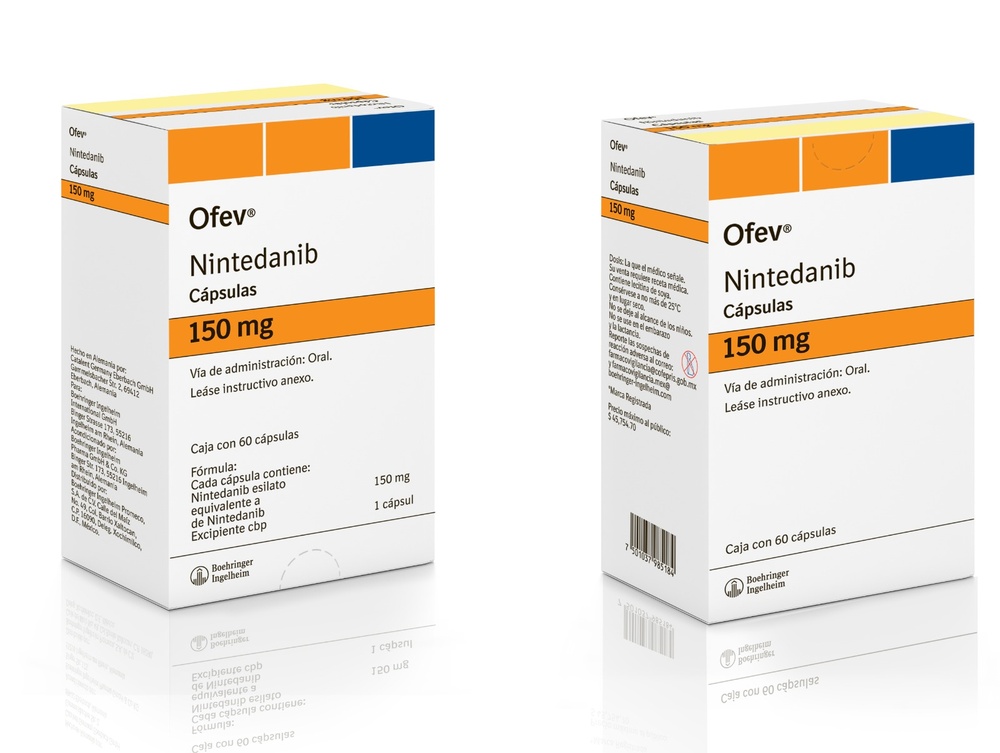
- Страна регистрации
- Форма выпускаSoft capsule, 100 MG
- Код АТХL01EX09
- Действующее вещество
- Отпускается по рецептуДа
- Производитель
- Информация на этой странице носит справочный характер и не является медицинской консультацией. Перед началом приема лекарства обязательно проконсультируйтесь с врачом.
- Аналоги OFEVФорма выпуска: Soft capsule, 100 mgДействующее вещество: НинтеданибПроизводитель: ACCORD HEALTHCARE, S.L.U.Отпускается по рецептуФорма выпуска: Soft capsule, 100 MGДействующее вещество: НинтеданибПроизводитель: ACCORD HEALTHCARE, S.L.U.Отпускается по рецептуФорма выпуска: Soft capsule, 100 MGДействующее вещество: НинтеданибПроизводитель: Eugia Pharma (Malta) LimitedОтпускается по рецепту
Аналоги OFEV в других странах
Лекарства с тем же действующим веществом, доступные в других странах.
Аналог OFEV в Испания
Аналог OFEV в Польша
Аналог OFEV в Украина
Получите рецепт на OFEV онлайн
Заполните форму за 2 минуты
Расскажите о симптомах, истории болезни и нужном препарате.
Выберите врача или мы назначим
Выберите специалиста или мы подберём ближайшего доступного врача.
Врач рассматривает ваш случай
Обычно в течение 30 минут. Может задать уточняющие вопросы в чате.
Получите в любой аптеке
Электронный рецепт отправляется на вашу почту — действителен по всей Польше.
Часто задаваемые вопросы
OFEV требует рецепта в Италия. Вы можете уточнить у врача онлайн, подходит ли это лекарство для вашей ситуации.
Действующее вещество OFEV — Нинтеданиб. Эта информация помогает определить лекарства с тем же составом под другими торговыми названиями.
OFEV производится компанией BOEHRINGER INGELHEIM INTERNATIONAL GMBH. Упаковка и торговое название могут отличаться в зависимости от дистрибьютора.
Врачи, включая Семейные врачи, Психиатры, Дерматологи, Кардиологи, Эндокринологи, Гастроэнтерологи, Пульмонологи, Нефрологи, Ревматологи, Гематологи, Инфекционисты, Аллергологи, Гериатры, Педиатры, Онкологи, могут оценить целесообразность применения OFEV с учетом вашей ситуации и местных правил. Вы можете записаться на онлайн-консультацию, чтобы обсудить возможные варианты.
Польша имеет хорошо развитую систему здравоохранения в крупных городах, таких как Варшава, Краков, Вроцлав и Гданьск. Аптеки широко доступны и работают в соответствии с действующим законодательством, обеспечивая доступ к рецептурным препаратам.
Вы можете купить OFEV в Варшаве, Кракове, Вроцлаве или Гданьске в любой аптеке при наличии действующего рецепта.
Чтобы получить рецепт, вы можете воспользоваться Oladoctor:
Другие лекарства с тем же действующим веществом (Нинтеданиб) включают NINTEDANIB AKKORD, NINTEDANIB AKKORDPARMA, NINTEDANIB AUROBINDO. Они могут отличаться торговым названием или формой выпуска, но содержат одинаковый терапевтический компонент. Перед изменением лечения рекомендуется проконсультироваться с врачом.
