



MEPICAIN 1% Инъекционный раствор

Рассмотрение рецепта онлайн
Врач рассмотрит ваш случай и примет решение о назначении рецепта, если это медицински оправдано.

Поговорите с врачом об этом лекарстве
Обсудите симптомы и возможные дальнейшие шаги на онлайн-консультации.



Инструкция по применению MEPIKAIN
Содержание инструкции
MEPICAIN 1% - 2% - 3%
INJECTABLE SOLUTION
ATC: N01BB03
mepivacaine hydrochloride
MEPICAIN 2% with ADRENALINE 1:200,000
INJECTABLE SOLUTION
ATC: N01BB53
mepivacaine hydrochloride
adrenaline bitartrate
COMPOSITION
MEPICAIN1%2%3%2%
with adrenaline
1:200,000
Active ingredients:
mepivacaine hydrochloride mg 10 20 30 20
adrenaline bitartrate mg / / / 0.009
(equivalent to adrenaline) mg / / / 0.005
Excipients:
sodium chloride mg 5 5 3 5
sodium metabisulfite mg / / / 0.5
water p.p.i. q.s. to ml 1 1 1 1
PHARMACEUTICAL FORM AND CONTENT:Injectable solution.
MEPICAIN 1%: vial of ml 10.
MEPICAIN 2%: vial of ml 2 and ml 10 .
MEPICAIN 3%: vial of ml 2.
MEPICAIN 2% with adrenaline 1:200,000: vial of ml 2 and ml 10 .
PHARMACOTHERAPEUTIC CATEGORY:Local anesthetics: amides.
MARKETING AUTHORISATION HOLDER, MANUFACTURER AND
FINAL CONTROL:MONICO S.p.A. – Via Ponte di Pietra 7 – VENEZIA/MESTRE.
THERAPEUTIC INDICATIONS:Local anesthetic in all interventions concerning:
- general surgery (minor surgery)
- obstetrics and gynecology
- ophthalmology (retrobulbar block, etc.)
- dermatology (removal of warts, cysts, dermoids, etc.)
- sports medicine (muscle tears, meniscopathies, etc.)
- otorhinolaryngology (tonsillectomy, rhinoplasty, interventions on the middle ear, etc.)
- orthopedics (reduction of fractures and dislocations, etc.)
- general medicine (causalgia, neuralgia, etc.)
MEPICAIN with adrenaline 1:200,000 is indicated when it is desired to prolong the duration
of regional anesthesia or when it is necessary to operate in an absolutely
ischemic area.
CONTRAINDICATIONS
Hypersensitivity to any of the components. The product containing the vasoconstrictor is
generally contraindicated in patients with heart disease, those with severe arteriopathy, those with
hypertension, those with manifestations of ischemia of any kind or with essential migraine,
those with kidney disease, hyperthyroidism, diabetes, those suffering from prostatic hypertrophy or
acute angle-closure glaucoma. The product is contraindicated in cases of ascertained or suspected pregnancy.
PRECAUTIONS FOR USE
Mepicain must be used with absolute caution in subjects undergoing treatment with MAO inhibitor or tricyclic antidepressant drugs. Before use, the doctor must ascertain the state of the
circulatory conditions of the subjects to be treated. Any overdose of
anesthetic should be avoided and never administer two maximum doses of the latter without a
minimum interval of 24 hours having elapsed. The maximum daily dose is 1000 mg. It is nevertheless necessary to
use the lowest doses and concentrations that can allow to obtain the desired effect.
The anesthetic solution must be injected with caution in small doses after about 10 seconds from
a preventive aspiration. Especially when infiltrating highly vascularized areas it is
advisable to allow about two minutes to pass before proceeding with the actual regional block. The patient must be kept under careful monitoring, immediately suspending
administration at the first sign of alarm (for example, alteration of
sensorium). The equipment, drugs and
emergency personnel must be immediately available, as rare cases have been reported following the use of local anesthetics,
serious reactions sometimes with fatal outcome, even in the absence of individual hypersensitivity in the medical history.
INTERACTIONS
The administration of local anesthetics containing adrenaline to patients undergoing treatment
with MAO inhibitors or tricyclic antidepressants can cause severe and prolonged hypertension. The use
concomitant with these drugs should be avoided, and in situations where it is necessary
to administer them, accurate patient monitoring must be implemented.
SPECIAL WARNINGS
The product with vasoconstrictor contains sodium metabisulfite. This substance can cause
in sensitive subjects and, particularly in asthmatics, allergic reactions and severe asthma attacks
serious.
DOSAGE, METHOD AND TIME OF ADMINISTRATION
The maximum dose in a healthy adult (not pre-treated with sedatives) in a single administration or
in multiple administrations repeated within less than 90 minutes is 7 mg/kg, never exceeding
550 mg. The total dose in 24 hours should never exceed 1000; in pediatrics, never exceed
5-6 mg/kg.
RECOMMENDED DOSES
Surgery:
- peridural and caudal block: up to 400 mg achievable with 15-30 ml of a 1% solution or with 10-20 ml of a 2% solution
- paravertebral block: up to 400 mg with 1% solution for stellate ganglion block and for vegetative blocks, 1-2% for paravertebral block of somatic nerves
- central peripheral nerve block, bronchial, intercostal, paracervical, pudendal and nerve endings: up to 400 mg achievable with 5-20 ml of solution at 1%, 2%, depending on the area and extent of the block
- infiltration: up to 400 mg depending on the area of the intervention, obtainable with variable volumes up to 40 ml of a 0.5-1% solution Obstetrics:
- paracervical block: up to 200 mg within a period of 90 minutes achievable with 10 ml of 1% solution per side
OVERDOSAGE
At the first sign of alarm, administration must be stopped, the patient placed in
horizontal position and ensure the patency of the airways, administering oxygen in
case of severe dyspnea or performing artificial ventilation. The use of bulbous stimulants must
be avoided to avoid worsening the situation, increasing oxygen consumption. Any
convulsions can be controlled with the use of diazepam at a dose of 10-20 mg intravenously: the use of barbiturates is not recommended as they can accentuate bulbar depression. The circulation can be supported by the administration of corticosteroids in appropriate doses
intravenously; dilute solutions of alpha-beta stimulants with vasoconstrictor action (mefentermine, metaraminol and others) or atropine sulfate can be added. Sodium bicarbonate in appropriate concentrations can be used as an antiacid.
intravenously.
ADVERSE EFFECTS
The adverse effects that can occur with the administration of mepivacaine are
similar to those observed with other local anesthetics of the amide type. These are dose-dependent effects
which may result from high plasma levels following overdose, rapid absorption, accidental intravascular injection, or may be determined by
hypersensitivity, idiosyncrasy, decreased tolerance by the patient. Toxic and allergic reactions to both the anesthetic and the vasoconstrictor may occur. Among the toxic effects from
overdose, phenomena of central nervous system stimulation with excitation, tremors are reported,
disorientation, dizziness, mydriasis, increased metabolism and body temperature and,
for very high doses, trismus and convulsions; if the medulla oblongata is involved, there is
participation of the cardiovascular, respiratory and emetic centers with sweating, arrhythmias,
hypertension, tachypnea, bronchodilation, nausea and vomiting. Peripheral effects may
affect the cardiovascular system with bradycardia and vasodilation. Allergic reactions occur
mostly in sensitive subjects, but many cases are reported with no history of
individual hypersensitivity. Local manifestations include skin rashes of various types, urticaria, itching; those of a general nature bronchospasm, laryngeal edema
up to cardiorespiratory collapse from anaphylactic shock. The vasoconstrictor, due to its action on the
circulation, can determine undesirable effects of various types especially in subjects not normal
under the cardiocirculatory profile: anxiety, sweating, respiratory embarrassment, cardiac arrhythmias,
hypertension (particularly severe in subjects already hypertensive and in hyperthyroid patients), acute headache,
photophobia, retrosternal and pharyngeal pain, vomiting. The patient is invited to inform his/her
EXPIRY AND STORAGE
Check the expiry date indicated on the packaging.
The expiry date refers to the product in intact packaging, stored correctly.
Caution:do not use the medicine beyond that date.
Keep the medicine out of the reach and sight of children.
November 10, 2007
MEPICAIN 3%
INJECTABLE SOLUTION
ATC: N01BB03
mepivacaine hydrochloride
MEPICAIN 2% with ADRENALINE 1:100,000
INJECTABLE SOLUTION
ATC: N01BB53
mepivacaine hydrochloride
adrenaline bitartrate
COMPOSITION
MEPICAIN3% 2%
1 ml contains: with adrenaline
Active ingredients:1:100,000
mepivacaine hydrochloride mg 30 20
adrenaline bitartrate mg / 0.0182
equivalent to adrenaline mg / 0.01
Excipients:
sodium chloride mg 3 5
sodium metabisulfite mg / 0.5
water p.p.i. q.s. to ml 1 1
________________________________________________________________________________
PHARMACEUTICAL FORM AND CONTENT
Injectable solution
MEPICAIN 3%: vial-ampoule of 1.8 ml
MEPICAIN 2% with adrenaline 1:100,000: vial-ampoule of 1.8 ml
PHARMACOTHERAPEUTIC CATEGORY
Local anesthetics: amides (ATC: N01BB)
MARKETING AUTHORISATION HOLDER, MANUFACTURER AND
FINAL CONTROLLER
MONICO S.p.A – Via Ponte di Pietra 7 – VENICE/MESTRE
THERAPEUTIC INDICATIONS:Local anesthetic for dental use.
CONTRAINDICATIONS
Accerted hypersensitivity to any of the components. The product containing the vasoconstrictor is
generally contraindicated in patients with heart disease, those with severe arteriopathy, those with
hypertension, those with manifestations of ischemia of any kind or with essential migraine,
those with kidney disease, hyperthyroidism, diabetes, those suffering from prostatic hypertrophy or
acute angle-closure glaucoma. The product is contraindicated in cases of ascertained or suspected pregnancy.
PRECAUTIONS FOR USE
Mepicain must be used with absolute caution in subjects undergoing treatment with MAO inhibitor or tricyclic antidepressant drugs. Before use, the doctor must ascertain the state of the
circulatory conditions of the subjects to be treated. The anesthetic solution must be injected with
caution in small doses after about 10 seconds from a preventive aspiration. Especially when
infiltrating highly vascularized areas it is advisable to allow about two minutes to pass
before proceeding with the actual regional block. The patient must be kept under
careful monitoring, immediately suspending administration at the first sign of alarm (
for example, alteration of sensorium). The immediate availability of
equipment, drugs and suitable personnel for emergency treatment is necessary, as rare cases have been reported following the use of local anesthetics,
serious reactions sometimes with fatal outcome, even in the absence of individual hypersensitivity in the medical history.
INTERACTIONS
The administration of local anesthetics containing adrenaline to patients undergoing treatment
with MAO inhibitors or tricyclic antidepressants can cause severe and prolonged hypertension. The use
concomitant with these drugs should be avoided, and in situations where it is necessary
to administer them, accurate patient monitoring must be implemented.
SPECIAL WARNINGS
The product with vasoconstrictor contains sodium metabisulfite. This substance can cause
in sensitive subjects and, particularly in asthmatics, allergic reactions and severe asthma attacks
serious.
DOSAGE, METHOD AND TIME OF ADMINISTRATION
1-2 ml or more depending on the needs of the intervention, for infiltration or for the peripheral block.
OVERDOSAGE
At the first sign of alarm, administration must be stopped, the patient placed in
horizontal position and ensure the patency of the airways, administering oxygen in
case of severe dyspnea or performing artificial ventilation. The use of bulbous stimulants must
be avoided to avoid worsening the situation, increasing oxygen consumption. Any
convulsions can be controlled with the use of diazepam at a dose of 10-20 mg intravenously; the use of barbiturates is not recommended as they can accentuate bulbar depression. The circulation can be supported by the administration of corticosteroids in appropriate doses
intravenously; dilute solutions of alpha-beta stimulants with vasoconstrictor action (mefentermine, metaraminol and others) or atropine sulfate can be added. Sodium bicarbonate in appropriate concentrations can be used as an antiacid.
intravenously.
ADVERSE EFFECTS
The adverse effects that can occur with the administration of mepivacaine are
similar to those observed with other local anesthetics of the amide type. These are dose-dependent effects
which may result from high plasma levels following overdose, rapid absorption, accidental intravascular injection, or may be determined by
hypersensitivity, idiosyncrasy, decreased tolerance by the patient. Toxic and allergic reactions to both the anesthetic and the vasoconstrictor may occur. Among the toxic effects from
overdose, phenomena of central nervous system stimulation with excitation, tremors are reported,
disorientation, dizziness, mydriasis, increased metabolism and body temperature and,
for very high doses, trismus and convulsions; if the medulla oblongata is involved, there is
participation of the cardiovascular, respiratory and emetic centers with sweating, arrhythmias,
hypertension, tachypnea, bronchodilation, nausea and vomiting. Peripheral effects may
affect the cardiovascular system with bradycardia and vasodilation. Allergic reactions occur
mostly in sensitive subjects, but many cases are reported with no history of
individual hypersensitivity. Local manifestations include skin rashes of various types, urticaria, itching; those of a general nature bronchospasm, laryngeal edema
up to cardiorespiratory collapse from anaphylactic shock. The vasoconstrictor, due to its action on the
circulation, can determine undesirable effects of various types especially in subjects not normal
under the cardiocirculatory profile: anxiety, sweating, respiratory embarrassment, cardiac arrhythmias,
hypertension (particularly severe in subjects already hypertensive and in hyperthyroid patients), acute headache,
photophobia, retrosternal and pharyngeal pain, vomiting.
The patient is invited to inform his/her doctor or pharmacist of any adverse effects
EXPIRY DATE AND STORAGE
Check the expiry date indicated on the packaging. The expiry date refers to the product
in intact packaging, correctly stored.
Warning:do not use the medicine beyond that date.
Keep the medicine out of the reach and sight of children.
9 AUGUST 2007

Не уверены, подходит ли вам это лекарство?
Обсудите симптомы и варианты лечения с врачом онлайн.

Уже начали прием и появились вопросы?
Обсудите свое состояние и дальнейшие шаги с врачом онлайн.
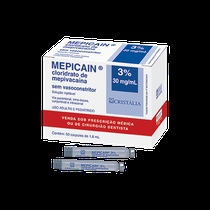
- Страна регистрации
- Форма выпускаInjectable solution, 1%
- Код АТХN01BB03
- Действующее вещество
- Отпускается по рецептуДа
- Производитель
- Информация на этой странице носит справочный характер и не является медицинской консультацией. Перед началом приема лекарства обязательно проконсультируйтесь с врачом.
- Аналоги MEPIKAINФорма выпуска: Injectable solution, 2%Действующее вещество: mepivacaineПроизводитель: INDUSTRIA FARMACEUTICA GALENICA SENESE S.R.L.Отпускается по рецептуФорма выпуска: Injectable solution, 10 MG/MLДействующее вещество: mepivacaineПроизводитель: S.A.L.F. SPA LABORATORIO FARMACOLOGICOОтпускается по рецептуФорма выпуска: Infusion solution, 20 MG/MLДействующее вещество: mepivacaineПроизводитель: GUARDANT SRLОтпускается по рецепту
Аналоги MEPIKAIN в других странах
Лекарства с тем же действующим веществом, доступные в других странах.
Аналог MEPIKAIN в Испания
Аналог MEPIKAIN в Польша
Аналог MEPIKAIN в Украина
Врачи онлайн по MEPIKAIN
Обсудите применение MEPIKAIN и возможные следующие шаги — по оценке врача.









Получите рецепт на MEPIKAIN онлайн
Заполните форму за 2 минуты
Расскажите о симптомах, истории болезни и нужном препарате.
Выберите врача или мы назначим
Выберите специалиста или мы подберём ближайшего доступного врача.
Врач рассматривает ваш случай
Обычно в течение 30 минут. Может задать уточняющие вопросы в чате.
Получите в любой аптеке
Электронный рецепт отправляется на вашу почту — действителен по всей Польше.
Часто задаваемые вопросы
MEPIKAIN требует рецепта в Италия. Вы можете уточнить у врача онлайн, подходит ли это лекарство для вашей ситуации.
Действующее вещество MEPIKAIN — mepivacaine. Эта информация помогает определить лекарства с тем же составом под другими торговыми названиями.
MEPIKAIN производится компанией MONICO S.P.A.. Упаковка и торговое название могут отличаться в зависимости от дистрибьютора.
Врачи, включая Семейные врачи, Психиатры, Дерматологи, Кардиологи, Эндокринологи, Гастроэнтерологи, Пульмонологи, Нефрологи, Ревматологи, Гематологи, Инфекционисты, Аллергологи, Гериатры, Педиатры, Онкологи, могут оценить целесообразность применения MEPIKAIN с учетом вашей ситуации и местных правил. Вы можете записаться на онлайн-консультацию, чтобы обсудить возможные варианты.
Польша имеет хорошо развитую систему здравоохранения в крупных городах, таких как Варшава, Краков, Вроцлав и Гданьск. Аптеки широко доступны и работают в соответствии с действующим законодательством, обеспечивая доступ к рецептурным препаратам.
Вы можете купить MEPIKAIN в Варшаве, Кракове, Вроцлаве или Гданьске в любой аптеке при наличии действующего рецепта.
Чтобы получить рецепт, вы можете воспользоваться Oladoctor:
Другие лекарства с тем же действующим веществом (mepivacaine) включают KARBOSEN, MEPIVAKAINA KLORIDRATO S.A.L.F., MEPIVAKAINA GUARDANT. Они могут отличаться торговым названием или формой выпуска, но содержат одинаковый терапевтический компонент. Перед изменением лечения рекомендуется проконсультироваться с врачом.
