



LOCOIDON 0.1% Крем

Рассмотрение рецепта онлайн
Врач рассмотрит ваш случай и примет решение о назначении рецепта, если это медицински оправдано.

Поговорите с врачом об этом лекарстве
Обсудите симптомы и возможные дальнейшие шаги на онлайн-консультации.



Инструкция по применению LOKOIDON
Содержание инструкции
- Locoidon 0,1% ointment
- Locoidon 0.1% cutaneous solution
- Locoidon 0.1% cutaneous emulsion
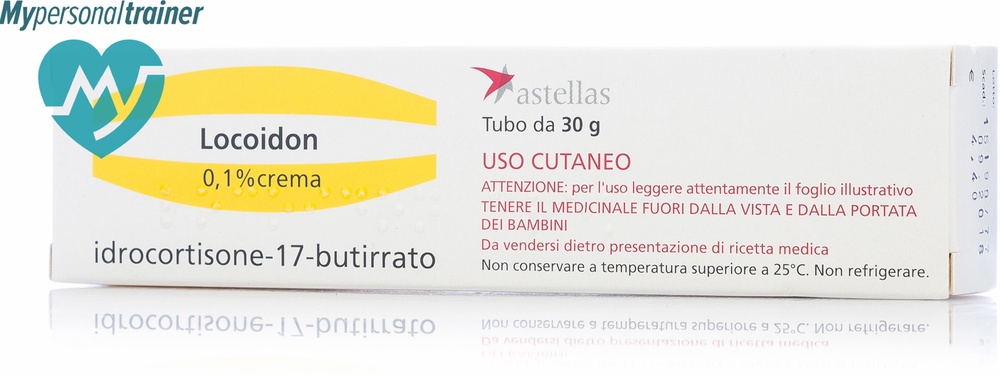
- Locoidon 0,1% cream
- Locoidon 0.1% hydrophilic cream
Locoidon 0,1% ointment
Hydrocortisone 17-butyrate
Read this leaflet carefully before you start using this medicine as it contains important
information for you.
- Keep this leaflet. You may need to read it again.
- If you have any questions, ask your doctor or pharmacist.
- This medicine has been prescribed for you only. Do not pass it on to others, even if they have the same symptoms as you, as it may be harmful.
- If you get any side effects, even those not listed in this leaflet, tell your doctor or pharmacist. See section 4.
Contents of this leaflet:
- 1. What Locoidon is and what it is used for
- 2. What you need to know before you use Locoidon
- 3. How to use Locoidon
- 4. Possible side effects
- 5. How to store Locoidon
- 6. Contents of the pack and other information
1. What Locoidon is and what it is used for
Locoidon is a topical ointment containing the active ingredient hydrocortisone 17-butyrate.
Hydrocortisone 17-butyrate belongs to the group of medicines called moderately potent corticosteroids,
used to reduce the symptoms of inflammation such as itching, redness, scaling which
may occur in case of skin disorders.
Locoidon is indicated in adults and children over two years of age.
for the local treatment of:
- skin diseases not due to infections, but to inflammation or allergy. These diseases can occur acutely, subacutely (if the symptoms appear more slowly) or chronically
- eczema (skin inflammations associated with itching) in various forms (atopic eczema, chronic eczema, contact eczema, infantile eczema, seborrheic eczema, etc.)
- psoriasis (chronic skin inflammation not always associated with itching)
- lichen planus (disease that manifests with lesions of the skin and mucous membranes)
- neurodermatitis (skin disease characterized by chronic itching or scaling)
- dermatitis herpetiformis (non-infectious disease characterized by the appearance of blisters/bubbles on the skin)
- intertrigo (form of skin irritation due to continuous rubbing of two parts of the body)
- sunburn
- radiation dermatitis
- ano-genital itching not due to infections.
The formulation of Locoidon ointment is particularly indicated in chronic forms where the skin
appears very dry and tends to scale.
See your doctor if you do not feel better or if you feel worse.
2. What you need to know before using Locoidon
Do not use Locoidon
- if you are allergic to hydrocortisone 17-butyrate or any of the other ingredients of this medicine (listed in section 6)
- if you have skin infections caused by bacteria, fungi, yeasts or parasites
- if you have ulcerative skin lesions
- if you have acne vulgaris
- if you have rosacea (redness and inflammation of the facial skin)
- if you have perioral dermatitis (inflammation of the skin around the mouth)
- if the area of skin to be treated is affected by tuberculosis (an infectious disease)
- if you have viral infections (for example herpes, smallpox, chickenpox, etc.)
- if your child is less than two years of age and suffers from diaper rash
Warnings and precautions
Consult your doctor or pharmacist before and during the use of Locoidon if:
- you experience blurred vision or other visual disturbances.
Do not use this medicine for the eyes.
Do not use this medicine on the eyelids.
Use Locoidon with caution on the skin of the face and genitals.
Wash your hands after each application unless you are using this medicine to treat your hands.
An increased risk of undesirable effects, both local and systemic, occurs in case of treatment
of intertriginous areas (irritation that occurs when two surfaces of the skin rub against each other),
treatment of extensive areas or with occlusive dressings as well as in case of frequent or
prolonged treatment.
Abrupt discontinuation of treatment may lead to a relapse, even a very intense one, of the
underlying condition.
Occlusive dressing
The application of an occlusive dressing during treatment with Locoidon is not recommended.
In particular, keep in mind that:
- you should not apply an occlusive dressing if you suffer from atopic dermatitis (a form of skin inflammation)
- if you apply an occlusive dressing, you may have secondary infections (infections that develop on existing skin lesions) bacterial or fungal. In this case, your doctor will prescribe the appropriate treatment and suspension of the occlusive dressing
- the application of an occlusive dressing is not recommended especially when Locoidon is used for the treatment of large body surfaces. In particular, in the case of prolonged treatments of large body surfaces under occlusive dressing, you may experience:
- systemic undesirable effects (see section 4 “Possible undesirable effects”)
- hormonal alterations that can cause disturbances in body temperature (such as heatstroke) (see section 4 “Possible undesirable effects”)
- plastic films can be flammable and can cause allergic reactions.
In case of prolonged treatment
In case of prolonged treatment, you may experience hypersensitivity reactions (see section 4
“Possible undesirable effects”).
Children and adolescents
- Children may be more sensitive than adults to the undesirable effects of topical corticosteroids, especially hormonal alterations, as they are predisposed to greater absorption of the medicine. Children may develop Cushing's syndrome (a disease that manifests with a full moon face, weight gain, fluid retention, reduced sugar tolerance and increased risk of diabetes, swelling of the legs, headache, etc.), growth retardation (height and weight) and increased intracranial pressure (increased blood pressure around the brain).
Particular caution is required in infantile dermatitis, including diaper rash.
Other medicines and Locoidon
Tell your doctor or pharmacist if you are taking, have recently taken or might take any other
medicines.
In particular, inform your doctor if you are taking the following medicines as they are incompatible with
Locoidon:
- medicines based on zinc oxide, mineral tar and calamine (used to treat skin disorders)
- salicylic acid (non-steroidal anti-inflammatory drug)
- cleansers based on carbonate or bicarbonate.
Pregnancy, breastfeeding and fertility
If you are pregnant, suspect you are pregnant or are planning a pregnancy, or if you are breastfeeding,
ask your doctor or pharmacist for advice before using this medicine.
Use the product only if absolutely necessary and under the direct control of the doctor.
This medicine can be used during breastfeeding under the direct control of the doctor, avoiding
application directly to the breast.
Driving and operating machinery
Locoidon does not impair or negligibly impairs the ability to drive and operate machinery.
3. How to use Locoidon
Use this medicine following exactly the instructions of your doctor or pharmacist. If you have any doubts
consult your doctor or pharmacist.
Adults
Apply the ointment 1-2 times a day.
Use in elderly patients does not require the adoption of specific precautions or dosage adjustments.
Use in children
The recommended dose in children and the frequency of application will be established by the doctor.
In children, avoid applying large amounts, use under occlusive dressings and prolonged use: treatment cycles should not exceed 7 days.
Locoidon should not be used in children under 2 years of age with diaper rash.
Instructions for use
Use this medicine on limited areas of the body.
Apply a thin layer of Locoidon to the affected skin area, massaging lightly.
Sometimes, at the doctor's discretion, the use of an occlusive dressing may be necessary using a
transparent waterproof plastic sheet to be maintained in the affected skin area for a maximum of 3
days depending on the nature, severity of the lesion and its conditions.
If you use more Locoidon than you should
Symptoms
If you use an excessive dose of topical corticosteroids for prolonged periods, you may experience
hormonal changes that can cause symptoms or clinical situations such as:
- Cushing's syndrome (a disease that manifests with a full moon face, weight gain, fluid retention, reduced sugar tolerance and increased risk of diabetes, leg swelling, headache, etc.)
- asthenia (fatigue)
- arterial hypertension (increased blood pressure)
- heart rhythm disturbances
- hypokalemia (potassium deficiency in the blood)
- metabolic alkalosis (accumulation of substances such as bicarbonate in the blood). If you use an excessive dose of Locoidon, consult a doctor immediately or go to the nearest hospital. A reduction in the functionality of a gland called the adrenal gland may occur.
If you forget to use Locoidon
Do not use a double dose to make up for a missed dose.
If you stop using Locoidon
If you have any doubts about the use of this medicine, consult your doctor or pharmacist.
4. Possible side effects
Like all medicines, this medicine can cause side effects, although not everybody gets them.
If you experience the following side effects during treatment, contact your doctor immediately,
who will STOPtreatment with Locoidon:
- hormonal changes
- allergic reactions.
In case of use of occlusive dressings and/or of treatments of large body surfaces and/or of prolonged treatments, generalised side effects(such as increased blood pressure, reduced potassium levels in the blood, increased blood sugar, swelling of the
legs, etc.) may occur.
Furthermore, the following side effects may occur:
Locally, the following may occur:
- burning sensation
- irritation
- skin dryness
- folliculitis (superficial infections of the folliclehair, the structure that surrounds the hair root)
- hypertrichosis (increased hairiness)
- hypopigmentation (presence of lighter areas of the skin).
In addition, the following side effects may occur according to the following frequency:
Rare (may affect up to 1 in 1,000 people):
- skin atrophy, often irreversible, with thinning of the epidermis (thinning of the skin)
- dermatitis (skin inflammation) and eczema including contact dermatitis telangiectasia (permanent dilation of capillaries)
- purpura (presence of red spots on the skin)
- epidermal striae (red streaks on the skin)
- acne
- perioral dermatitis (skin inflammation around the mouth)
- skin depigmentation (skin discoloration)
- rebound effect (recurrence of symptoms when stopping the drug)
Very rare (may affect up to 1 in 10,000 people):
- inhibition of the adrenal gland (reduced production of certain types of hormones)
Frequency not known (cannot be estimated from available data):
- skin infections
- hypersensitivity
- itching
- erythema
- rash
- pain at the application site
- blurred vision
Reporting of side effects
If you get any side effects, talk to your doctor or pharmacist. This includes any possible side effects not listed in this leaflet. You can also report side effects directly through the national reporting system at https://www.aifa.gov.it/content/segnalazioni-reazioni-avverse. By reporting side effects you can help provide more information on the safety of this
medicine.
5. How to store Locoidon
Keep this medicine out of the sight and reach of children.
Store at a temperature below 25°C.
Do not use this medicine after the expiry date which is stated on the pack after EXP. The expiry
date refers to the last day of that month.
Do not dispose of any medicine in waste water or household waste. Ask your pharmacist how to
dispose of medicines you no longer use. This will help protect the environment.
6. Contents of the pack and other information
What Locoidon ointment contains
- The active ingredient is: hydrocortisone 17-butyrate (100 g of ointment contains 0.1 g of hydrocortisone 17-butyrate).
- The other ingredients are: liquid paraffin gel with 5% polyethylene.
Description of the appearance of Locoidon and contents of the pack
Locoidon is presented as 0.1% ointment, packaged in a 30 g tube.
Marketing Authorisation Holder
CHEPLAPHARM Arzneimittel GmbH
Ziegelhof 24
17489 Greifswald
Germany
Manufacturer
Temmler Italia S.r.l. - Via delle Industrie 2 - 20061 Carugate (Milan)
Locoidon 0.1% cutaneous solution
Hydrocortisone 17-butyrate
Read this leaflet carefully before using this medicine as it contains important
information for you.
- Keep this leaflet. You may need to read it again.
- If you have any questions, ask your doctor or pharmacist.
- This medicine has been prescribed only for you. Do not give it to other people, even if their symptoms are the same as yours, as it could be dangerous.
- If any side effects occur, including those not listed in this leaflet, tell your doctor or pharmacist. See section 4.
Contents of this leaflet:
- 1. What Locoidon is and what it is used for
- 2. What you need to know before using Locoidon
- 3. How to use Locoidon
- 4. Possible side effects
- 5. How to store Locoidon
- 6. Contents of the pack and other information
1. What Locoidon is and what it is used for
Locoidon is a topical skin solution for local use containing the active ingredient hydrocortisone 17-butyrate.
Hydrocortisone 17-butyrate belongs to the group of medicines called moderately potent corticosteroids,
used to reduce the symptoms of inflammation such as itching, redness, scaling that
may occur in case of skin disorders.
Locoidon is indicated in adults and children over two years of age for the local treatment of:
- skin diseases not due to infections, but to inflammation or allergy. These diseases can occur acutely, subacutely (if the symptoms appear more slowly) or chronically
- eczema (skin inflammations associated with itching) in various forms (atopic eczema, chronic eczema, allergic eczema, contact eczema, infantile eczema, seborrheic eczema, etc.)
- psoriasis (chronic skin inflammation not always associated with itching, non-infectious and non-contagious)
- lichen planus (disease that manifests with lesions of the skin and mucous membranes)
- neurodermatitis (skin disease characterized by chronic itching or scaling)
- dermatitis herpetiformis (non-infectious disease characterized by the appearance of blisters/bubbles on the skin)
- intertrigo (form of skin irritation due to continuous rubbing of two parts of the body)
- solar erythema
- radiation dermatitis
- ano-genital pruritus not due to infections.
The formulation of Locoidon, skin solution is particularly indicated for application on hair and
on areas of skin covered with hair.
See your doctor if you do not feel better or if you feel worse.
2. What you need to know before using Locoidon
Do not use Locoidon
- if you are allergic to hydrocortisone 17-butyrate or any of the other ingredients of this medicine (listed in section 6)
- if you have skin infections caused by bacteria, fungi, yeasts or parasites
- if you have ulcerative skin lesions
- if you have acne vulgaris
- if you have rosacea (redness and inflammation of the skin of the face)
- if you have perioral dermatitis (inflammation of the skin around the mouth).
- if the area of skin to be treated is affected by tuberculosis (an infectious disease)
- if you have viral infections (for example herpes, smallpox, chickenpox, etc.)
- if your child is less than two years of age and suffers from diaper rash
Warnings and precautions
Consult your doctor or pharmacist before and during the use of Locoidon if
- you experience blurred vision or other visual disturbances.
Do not use this medicine in the eyes.
Do not use this medicine on the eyelids.
Use Locoidon with caution on the skin of the face and genitals.
Wash your hands after each application unless you are using this medicine to treat your hands.
An increased risk of undesirable effects, both local and systemic, occurs in case of treatment
of intertriginous areas (irritation that occurs when two surfaces of the skin rub against each other),
treatment of extensive areas or with occlusive dressings as well as in case of frequent or
prolonged treatment.
Abrupt discontinuation of treatment may lead to a relapse, even a very severe one, of the
underlying condition.
Occlusive dressing
Applying an occlusive dressing during treatment with Locoidon is not recommended.
In particular, keep in mind that:
- you should not apply an occlusive dressing if you suffer from atopic dermatitis (a form of skin inflammation)
- if you apply an occlusive dressing, you may develop secondary infections (infections that develop on existing skin lesions) bacterial or fungal. In this case, your doctor will prescribe the appropriate treatment and suspension of the occlusive dressing
- applying an occlusive dressing is not recommended, especially when Locoidon is used to treat large areas of the body. In particular, in the case of prolonged treatments of large areas of the body under occlusive dressing, you may experience:
- undesirable effects (see section 4 “Possible side effects”)
- hormonal changes that can cause disturbances in body temperature (such as heat stroke) (see section 4 “Possible side effects”)
- plastic films can be flammable and can cause allergic reactions.
In case of prolonged treatment
In case of prolonged treatment, you may experience hypersensitivity reactions (see section 4
“Possible side effects”).
Children and adolescents
- Children may be more sensitive than adults to the side effects of topical corticosteroids, especially hormonal changes, as they are predisposed to greater absorption of the medicine. Children may develop Cushing's syndrome (a disease that manifests with a full moon face, weight gain, fluid retention, reduced sugar tolerance and increased risk of diabetes, swelling of the legs, headache, etc.), growth retardation (height and weight) and increased intracranial pressure (increased blood pressure around the brain).
Particular caution is required in infantile dermatitis, including rash in the diaper area.
Other medicines and Locoidon
Tell your doctor or pharmacist if you are taking, have recently taken or might take any other
medicines.
In particular, tell your doctor if you are taking the following medicines as they are incompatible with
Locoidon:
- medicines based on zinc oxide, mineral tar and calamine (used to treat skin disorders)
- salicylic acid (non-steroidal anti-inflammatory drug)
- cleansers based on carbonate or bicarbonate.
Pregnancy, breastfeeding and fertility
If you are pregnant, suspect you are pregnant or are planning a pregnancy, or if you are breastfeeding,
ask your doctor or pharmacist for advice before using this medicine.
Use the product only if absolutely necessary and under the direct control of your doctor.
This medicine can be used during breastfeeding under the direct control of your doctor, avoiding
application directly to the breast.
Driving and operating machinery
Locoidon does not impair or negligibly impairs the ability to drive and operate machinery.
3. How to use Locoidon
Use this medicine following exactly the instructions of your doctor or pharmacist. If you have any doubts
consult your doctor or pharmacist.
Adults
Apply the cutaneous solution 1-2 times a day.
Use in elderly patients does not require the adoption of specific precautions or dosage adjustments.
Use in children
The recommended dose in children and the frequency of application will be established by the doctor.
In children, avoid applying large quantities, use under occlusive dressings and prolonged use: treatment cycles should not exceed 7 days.
Locoidon should not be used in children under two years of age with diaper rash.
Instructions for use
Use this medicine on limited areas of the body. Apply a thin layer of Locoidon to the affected skin area, massaging gently.
Sometimes, at the doctor's discretion, it may be necessary to use an occlusive dressing using a
transparent waterproof plastic sheet to be maintained in the affected skin area for a maximum of 3
days depending on the nature, severity of the lesion and its conditions.
If you use more Locoidon than you should
Symptoms
If you use an excessive dose of topical corticosteroids for prolonged periods, you may experience
hormonal changes that can cause symptoms or clinical situations such as:
- Cushing's syndrome (a disease that manifests with a full moon face, body weight gain, fluid retention, reduced sugar tolerance and increased risk of diabetes, leg swelling, headache, etc.)
- asthenia (fatigue)
- arterial hypertension (increased blood pressure)
- heart rhythm disturbances
- hypokalemia (potassium deficiency in the blood)
- metabolic alkalosis (accumulation in the blood of substances such as bicarbonate). If you use an excessive dose of Locoidon, consult a doctor immediately or go to the nearest hospital. You may experience a reduction in the functionality of a gland called the adrenal gland.
If you forget to use Locoidon
Do not use a double dose to make up for a missed dose.
If you stop using Locoidon
If you have any doubts about the use of this medicine, consult your doctor or pharmacist.
4. Possible side effects
Like all medicines, this medicine can cause side effects, although not everybody gets them.
If you experience the following side effects during treatment, contact your doctor immediately, who will STOPtreatment with Locoidon:
- hormonal changes
- allergic reactions.
In case of use of occlusive bandages and/or treatments of large body areas and/or prolonged treatments, generalized side effectsmay occur (such as increased blood pressure, reduced potassium levels in the blood, increased blood sugar, swelling of the legs, etc.)
In addition, the following side effects may occur:
Locally, the following may occur:
- burning sensation
- irritation
- dry skin
- folliculitis (superficial infections of the follicle, the structure that surrounds the hair root)
- hypertrichosis (increased hairiness)
- hypopigmentation (presence of lighter areas of the skin).
In addition, the following side effects may occur with the following frequency:
Rare (may affect up to 1 in 1000 people):
- skin atrophy, often irreversible, with thinning of the skin
- dermatitis (skin inflammation) and eczema including contact dermatitis
- telangiectasia (permanent dilation of capillaries)
- purpura (presence of red spots on the skin)
- epidermal striae (red streaks on the skin)
- acne
- perioral dermatitis (skin inflammation around the mouth)
- skin depigmentation (skin discoloration)
- rebound effect (recurrence of symptoms when stopping the drug)
Very rare (may affect up to 1 in 10,000 people):
- adrenal gland inhibition (reduction in the production of certain types of hormones)
Frequency not known (cannot be estimated from available data):
- skin infections
- hypersensitivity
- pruritus (itching)
- erythema (redness of the skin)
- rash
- pain at the application site
- blurred vision
Reporting of side effects
If you get any side effects, talk to your doctor or pharmacist. This includes any possible side effects not listed in this leaflet. You can also report side effects directly through the national reporting system at . By reporting side effects you can help provide more information on the safety of this medicine.
5. How to store Locoidon
Keep this medicine out of the sight and reach of children.
Store at a temperature below 25°C.
Do not use this medicine after the expiry date which is stated on the pack after EXP. The expiry
date refers to the last day of that month.
Do not dispose of any medicine in waste water or household waste. Ask your pharmacist how to
dispose of medicines you no longer use. This will help protect the environment.
6. Contents of the pack and other information
What Locoidon cutaneous solution contains
- The active ingredient is: hydrocortisone 17-butyrate (100 g of solution contains 0.1 g of hydrocortisone 17-butyrate)
- The other ingredients are: glycerol; povidone; citric acid anhydrous, sodium citrate anhydrous, isopropyl alcohol; purified water.
Description of the appearance of Locoidon and contents of the pack
Locoidon is presented as a 0.1% solution, packaged in a 30 ml bottle.
Marketing Authorisation Holder
CHEPLAPHARM Arzneimittel GmbH
Ziegelhof 24
17489 Greifswald
Germany
Manufacturer
Temmler Italia S.r.l. - Via delle Industrie 2 - 20061 Carugate (Milan)

Не уверены, подходит ли вам это лекарство?
Обсудите симптомы и варианты лечения с врачом онлайн.
Locoidon 0.1% cutaneous emulsion
Hydrocortisone 17-butyrate
Read this leaflet carefully before using this medicine as it contains important
information for you.
- Keep this leaflet. You may need to read it again.
- If you have any questions, ask your doctor or pharmacist.
- This medicine has been prescribed for you only. Do not pass it on to others, even if they have the same symptoms as you, as it may be harmful.
- If you experience any side effects, including those not listed in this leaflet, tell your doctor or pharmacist. See section 4.
Contents of this leaflet:
- 1. What Locoidon is and what it is used for
- 2. What you need to know before using Locoidon
- 3. How to use Locoidon
- 4. Possible side effects
- 5. How to store Locoidon
- 6. Contents of the pack and other information
1. What Locoidon is and what it is used for
Locoidon is a cutaneous emulsion for topical use containing the active ingredient hydrocortisone 17-butyrate.
Hydrocortisone 17-butyrate belongs to the group of medicines called moderately potent corticosteroids,
used to reduce the symptoms of inflammation such as itching, redness, scaling that
may occur in case of skin disorders.
Locoidon is indicated in adults and children over two years of age
for the local treatment of:
- skin diseases not due to infections, but to inflammation or allergy. These diseases may occur acutely, subacutely (if symptoms develop more slowly) or chronically
- eczema (skin inflammations associated with itching) in various forms (atopic eczema, chronic eczema, allergic eczema, contact eczema, infantile eczema, seborrheic eczema, etc.)
- psoriasis (chronic skin inflammation not always associated with itching)
- lichen planus (disease that manifests with lesions of the skin and mucous membranes)
- neurodermatitis (skin disease characterized by chronic itching or scaling)
- dermatitis herpetiformis (non-infectious disease characterized by the appearance of blisters/vesicles on the skin)
- intertrigo (form of skin irritation due to continuous rubbing of two parts of the body)
- sunburn
- radiation dermatitis
- ano-genital itching not due to infections.
The formulation of Locoidon cutaneous emulsion, due to its characteristics of adherence to the skin is
particularly indicated for application to areas of skin covered with hair. Furthermore, not leaving greasy residues
on the skin and thanks to its particular spreadability, it is suitable for the treatment of exposed areas
such as the face, hands and large areas.
Finally, due to its soothing effect, it is particularly suitable for the treatment of acute moist forms.
See your doctor if you do not feel better or if you feel worse.
2. What you need to know before using Locoidon
Do not use Locoidon
- if you are allergic to hydrocortisone 17-butyrate or any of the other ingredients of this medicine (listed in section 6)
- if you have skin infections caused by bacteria, fungi, yeasts or parasites
- if you have ulcerative skin lesions
- if you have acne vulgaris
- if you have rosacea (redness and inflammation of the skin of the face)
- if you have perioral dermatitis (inflammation of the skin around the mouth).
- if the area of skin to be treated is affected by tuberculosis (an infectious disease)
- if you have viral infections (for example herpes, smallpox, chickenpox, etc.)
- if your child is less than two years of age and suffers from diaper rash
Warnings and precautions
Consult your doctor or pharmacist before and during use of Locoidon if
- you experience blurred vision or other visual disturbances.
Do not use this medicine in the eyes.
Do not use this medicine on the eyelids.
Use Locoidon with caution on the skin of the face and genitals.
Wash your hands after each application unless you are using this medicine to treat your hands.
An increased risk of undesirable effects, both local and systemic, occurs in case of treatment
of intertriginous areas (irritation that occurs when two skin surfaces rub against each other),
treatment of extensive areas or with occlusive dressings as well as in case of frequent or
prolonged treatment.
Abrupt discontinuation of treatment may lead to a relapse, even very severe, of the
underlying condition.
Occlusive dressing
The application of an occlusive dressing during treatment with Locoidon is not recommended.
In particular, keep in mind that:
- you should not apply an occlusive dressing if you suffer from atopic dermatitis (a form of skin inflammation)
- if you apply an occlusive dressing, you may have secondary infections (infections that develop on existing skin lesions) bacterial or fungal. In this case, your doctor will prescribe the appropriate treatment and suspension of the occlusive dressing
- the application of an occlusive dressing is not recommended especially when Locoidon is used for the treatment of large body surfaces. In particular, in the case of prolonged treatments of large body surfaces under occlusive dressing, you may experience:
- undesirable effects (see section 4 “Possible side effects”)
- hormonal changes that can cause disturbances in body temperature (such as heat stroke) (see section 4 “Possible side effects”)
- plastic films can be flammable and can cause allergic reactions.
In case of prolonged treatment
In case of prolonged treatment, you may experience hypersensitivity reactions (see section 4
“Possible side effects”).
Children and adolescents
Children may be more sensitive than adults to the side effects of topical corticosteroids, especially hormonal changes, as they are predisposed to greater
absorption of the medicine. Children may experience Cushing's syndrome (a disease that
manifests with a full moon face, weight gain, fluid retention, reduced sugar tolerance and increased risk of diabetes, leg swelling, headache, etc.), growth retardation
(height and weight) and intracranial hypertension (increased blood pressure around the brain).
Particular caution is required in infantile dermatitis, including rash in the diaper area.
Other medicines and Locoidon
Tell your doctor or pharmacist if you are taking, have recently taken or might take any
other medicines.
In particular, tell your doctor if you are taking the following medicines as they are incompatible with
Locoidon:
- medicines based on zinc oxide, mineral tar and calamine (used to treat skin disorders)
- salicylic acid (non-steroidal anti-inflammatory drug)
- cleansers based on carbonate or bicarbonate.
Pregnancy, breastfeeding and fertility
If you are pregnant, suspect you are pregnant or are planning to become pregnant, or if you are breastfeeding with breast
milk, ask your doctor or pharmacist for advice before using this medicine.
Use the product only if absolutely necessary and under the direct control of the doctor.
This medicine can be used during breastfeeding under the direct control of the doctor, avoiding
application directly to the breast.
Driving and using machines
Locoidon does not alter or negligibly alters the ability to drive vehicles and operate machinery.
Locoidon cutaneous emulsion contains cetyl stearyl alcohol.It may cause localized skin reactions
(e.g. contact dermatitis).
Locoidon cutaneous emulsion contains parabens.They can cause allergic reactions (even
delayed).
Locoidon cutaneous emulsion contains butylated hydroxytoluene (E321).It may cause localized skin reactions
(e.g. contact dermatitis) or irritation to the eyes and mucous membranes.
3. How to use Locoidon
Use this medicine following exactly the instructions of your doctor or pharmacist. If you have doubts
consult your doctor or pharmacist.
Adults
Apply the skin emulsion 1-2 times a day.
Use in elderly patients does not require the adoption of specific precautions or dosage adjustments.
Use in children
The recommended dose in children and the frequency of application will be established by the doctor.
.
In children, it is advisable to avoid applying large quantities, using under occlusive dressings and prolonged use: treatment cycles should not exceed 7 days.
Locoidon should not be used in children under two years of age with diaper rash.
Instructions for use
Use this medicine on limited areas of the body. Apply a thin layer of Locoidon to the affected skin area, massaging lightly.
Sometimes, at the doctor's discretion, it may be necessary to use an occlusive dressing using a
transparent plastic waterproof sheet to be maintained in the affected skin area for a maximum of 3
days depending on the nature, severity of the lesion and its conditions.
If you use more Locoidon than you should
Symptoms
If you use an excessive dose of topical corticosteroids and for prolonged periods, you may experience
hormonal changes that can cause symptoms or clinical situations such as:
- Cushing's syndrome (a disease that manifests with a full moon face, weight gain, fluid retention, reduced sugar tolerance and increased risk of diabetes, leg swelling, headache, etc.)
- asthenia (fatigue)
- arterial hypertension (increased blood pressure)
- heart rhythm disturbances
- hypokalemia (potassium deficiency in the blood)
- metabolic alkalosis (accumulation in the blood of substances such as bicarbonate). If you use an excessive dose of Locoidon, consult a doctor immediately or go to the nearest hospital. A reduction in the functionality of a gland called the adrenal gland may occur.
If you forget to use Locoidon
Do not use a double dose to make up for forgetting the previous dose.
If you stop using Locoidon
If you have any doubts about the use of this medicine, consult your doctor or pharmacist.
4. Possible side effects
Like all medicines, this medicine can cause side effects, although not everybody gets them.
If you experience the following side effects during treatment, contact your doctor immediately, who will STOPtreatment with Locoidon:
- hormonal changes
- allergic reactions.
In case of use of occlusive bandages and/or treatments of large body areas and/or prolonged treatments, generalized side effects(such as increased blood pressure, reduced potassium levels in the blood, increased blood sugar, leg swelling, etc.) may occur.
In addition, the following side effects may occur:
Locally, the following may manifest:
- burning sensation
- irritation
- skin dryness
- folliculitis (superficial infections of the folliclehair, the structure that surrounds the hair root)
- hypertrichosis (increased hairiness)
- hypopigmentation (presence of lighter areas of the skin).
In addition, the following side effects may occur with the following frequency:
Rare (may affect up to 1 in 1,000 people):
- skin atrophy, often irreversible, with thinning of the skin
- dermatitis (skin inflammation) and eczema including contact dermatitis
- telangiectasia (permanent dilation of capillaries)
- purpura (presence of red spots on the skin)
- epidermal striae (red streaks on the skin)
- acne
- perioral dermatitis (skin inflammation around the mouth)
- skin depigmentation (skin discoloration)
- rebound effect (recurrence of symptoms upon discontinuation of the drug)
Very rare (may affect up to 1 in 10,000 people):
- adrenal gland inhibition (reduction in the production of certain types of hormones)
Frequency not known (cannot be estimated from available data):
- skin infections
- hypersensitivity
- itching
- erythema
- rash
- pain at the application site
- blurred vision
Reporting of side effects
If you get any side effects, talk to your doctor or pharmacist. This includes any possible side effects not listed in this leaflet. You can also report side effects directly through the national reporting system at https://www.aifa.gov.it/content/segnalazioni-reazioni-avverse.
By reporting side effects you can help provide more information on the safety of this medicine.
5. How to store Locoidon
Keep this medicine out of the sight and reach of children.
Store at a temperature below 25°C.
Do not use this medicine after the expiry date which is stated on the pack after EXP. The expiry date refers to the last day of that month.
Do not dispose of any medicine in waste water or household waste. Ask your pharmacist how to dispose of medicines you no longer use. This will help protect the environment.
6. Contents of the pack and other information
What Locoidon cutaneous emulsion contains
- The active ingredient is: hydrocortisone 17-butyrate (100 g of emulsion contains 0.1 g of hydrocortisone 17-butyrate)
- The other ingredients are: cetylstearyl alcohol; propylparahydroxybenzoate, butyl-parahydroxybenzoate; macrogol 25 cetostearyl ether; white soft paraffin; white petrolatum; borage oil; butylhydroxytoluene (E321); propylene glycol; sodium citrate; anhydrous citric acid, purified water.
Description of the appearance of Locoidon and contents of the pack
Locoidon is presented in a 0.1% cutaneous emulsion, packaged in a 30 ml bottle.
Marketing Authorisation Holder
CHEPLAPHARM Arzneimittel GmbH
Ziegelhof 24
17489 Greifswald
Germany
Manufacturer
Temmler Italia S.r.l. - Via delle Industrie 2 - 20061 Carugate (Milan)
Locoidon 0,1% cream
Hydrocortisone 17-butyrate
Read this leaflet carefully before using this medicine as it contains important information for you.
- Keep this leaflet. You may need to read it again.
- If you have any questions, ask your doctor or pharmacist.
- This medicine has been prescribed for you only. Do not pass it on to others, even if they have the same symptoms as you, as it may be harmful.
- If you get any side effects, even those not listed in this leaflet, tell your doctor or pharmacist. See section 4.
Contents of this leaflet:
- 1. What Locoidon is and what it is used for
- 2. What you need to know before you use Locoidon
- 3. How to use Locoidon
- 4. Possible side effects
- 5. How to store Locoidon
- 6. Contents of the pack and other information
1. What Locoidon is and what it is used for
Locoidon is a cream for local use containing the active ingredient hydrocortisone 17-butyrate.
Hydrocortisone 17-butyrate belongs to the group of medicines called moderately active corticosteroids,
used to reduce the symptoms of inflammation such as itching, redness, scaling that
may occur in case of skin disorders.
Locoidon is indicated in adults and children over two years of age.
for the local treatment of:
- skin diseases not due to infections, but to inflammation or allergy. These diseases can occur acutely, subacutely (if symptoms appear more slowly) or chronically
- eczema (skin inflammations associated with itching) in various forms (atopic eczema, chronic eczema, contact eczema, infantile eczema, seborrheic eczema, etc.)
- psoriasis (chronic skin inflammation not always associated with itching)
- lichen planus (disease that manifests with lesions of the skin and mucous membranes)
- neurodermatitis (skin disease characterized by chronic itching or scaling)
- dermatitis herpetiformis (non-infectious disease characterized by the appearance of blisters/bubbles on the skin)
- intertrigo (form of skin irritation due to continuous rubbing of two parts of the body)
- sunburn
- radiation dermatitis
- ano-genital itching not due to infections. The formulation of Locoidon cream, thanks to its components with a balanced ratio between the fatty phase and the aqueous phase, is particularly indicated as an emollient and refreshing agent and therefore finds use in all
acute, subacute and chronic skin diseases (dermopathies) in which treatment with
local corticosteroids is indicated.
See your doctor if you do not feel better or if you feel worse.
2. What you need to know before using Locoidon
Do not use Locoidon
- if you are allergic to hydrocortisone 17-butyrate or any of the other ingredients of this medicine (listed in section 6)
- if you have skin infections caused by bacteria, fungi, yeasts or parasites
- if you have ulcerative skin lesions
- if you have acne vulgaris
- if you have rosacea (redness and inflammation of the facial skin)
- if you have perioral dermatitis (inflammation of the skin around the mouth).
- if the area of skin to be treated is affected by tuberculosis (an infectious disease)
- if you have viral infections (for example herpes, smallpox, chickenpox, etc.)
- if your child is less than two years of age and suffers from diaper rash
Warnings and precautions
Consult your doctor or pharmacist before and during the use of Locoidon if
- you experience blurred vision or other visual disturbances.
Do not use this medicine for the eyes.
Do not use this medicine on the eyelids.
Use Locoidon with caution on the skin of the face and genitals.
Wash your hands after each application unless you are using this medicine to treat your hands.
An increased risk of undesirable effects, both local and systemic, occurs in case of treatment
of intertriginous areas (irritation that occurs when two skin surfaces rub against each other),
treatment of extensive areas or with occlusive dressings as well as in case of frequent or
prolonged treatment.
Abrupt discontinuation of treatment may lead to a relapse, even a very severe one, of the
underlying condition.
Occlusive dressing
The application of an occlusive dressing during treatment with Locoidon is not recommended.
In particular, keep in mind that:
- you should not apply an occlusive dressing if you suffer from atopic dermatitis (a form of skin inflammation)
- if you apply an occlusive dressing, you may have secondary infections (infections that develop on existing skin lesions) bacterial or fungal. In this case, your doctor will prescribe the appropriate treatment and suspension of the occlusive dressing
- the application of an occlusive dressing is not recommended especially when Locoidon is used for the treatment of large body surfaces. In particular, in the case of prolonged treatments of large body surfaces under occlusive dressing, you may experience:
- undesirable effects (see section 4 “Possible side effects”)
- hormonal changes that can cause disturbances in body temperature (such as heat stroke) (see section 4 “Possible side effects”)
- plastic films can be flammable and can cause allergic reactions.
In case of prolonged treatment
In case of prolonged treatment, you may experience hypersensitivity reactions (see section 4
“Possible side effects”).
Children and adolescents
Children may be more sensitive than adults to the side effects of topical corticosteroids, especially to hormonal changes, as they are predisposed to greater
absorption of the medicine. Children may develop Cushing's syndrome (a disease that
manifests with a moon face, weight gain, fluid retention, reduced sugar tolerance and increased risk of diabetes, swelling of the legs, headache, etc.), growth retardation
(height and weight) and intracranial hypertension (increased blood pressure around the brain).
.
Particular caution is required in infantile dermatitis, including rash in the diaper area.
Other medicines and Locoidon
Tell your doctor or pharmacist if you are taking, have recently taken or might take any
other medicine.
In particular, tell your doctor if you are taking the following medicines as they are incompatible with
Locoidon:
- medicines based on zinc oxide, mineral tar and calamine (used to treat skin disorders)
- salicylic acid (non-steroidal anti-inflammatory)
- detergents based on carbonate or bicarbonate.
Pregnancy, breastfeeding and fertility
If you are pregnant, suspect you are pregnant or are planning to become pregnant, or if you are breastfeeding with breast
milk, ask your doctor or pharmacist for advice before using this medicine.
Use the product only if absolutely necessary and under the direct supervision of your doctor.
This medicine can be used during breastfeeding under the direct supervision of your doctor, avoiding
application directly to the breast.
Driving and operating machinery
Locoidon does not alter or negligibly alters the ability to drive vehicles and operate machinery.
Locoidon cream contains cetyl stearyl alcohol.It may cause localized skin reactions (e.g.
contact dermatitis).
Locoidon cream contains parabens.They can cause allergic reactions (even delayed ones).
3. How to use Locoidon
Use this medicine following exactly the instructions of your doctor or pharmacist. If you have any doubts
consult your doctor or pharmacist.
Adults
Apply the cream 1-2 times a day.
Use in elderly patients does not require the adoption of specific precautions or dosage adjustments.
Use in children
The recommended dose in children and the frequency of application will be established by the doctor.
In children, it is advisable to avoid applying large quantities, use under occlusive dressings and prolonged
use: treatment cycles should not exceed 7 days.
Locoidon should not be used in children under two years of age with diaper rash.
Instructions for use
Use this medicine on limited areas of the body.
Apply a thin layer of Locoidon to the affected skin area, massaging lightly.
Sometimes, at the doctor's discretion, the use of an occlusive dressing may be necessary using a
waterproof transparent plastic sheet to be maintained in the affected skin area for a maximum of 3
days depending on the nature, severity of the lesion and its conditions.
If you use more Locoidon than you should
Symptoms
If you use an excessive dose of local corticosteroids for prolonged periods, you may experience
hormonal changes that can cause symptoms or clinical situations such as:
- Cushing's syndrome (a disease that manifests with a full moon face, weight gain, fluid retention, reduced sugar tolerance and increased risk of diabetes, leg swelling, headache, etc.)
- asthenia (fatigue)
- arterial hypertension (increased blood pressure)
- heart rhythm disturbances
- hypokalemia (potassium deficiency in the blood)
- metabolic alkalosis (accumulation in the blood of substances such as bicarbonate). If you use an excessive dose of Locoidon, consult a doctor immediately or go to the nearest hospital. A reduction in the functionality of a gland called the adrenal gland may occur.
If you forget to use Locoidon
Do not use a double dose to make up for a missed dose.
If you stop using Locoidon
If you have any doubts about the use of this medicine, consult your doctor or pharmacist.
4. Possible side effects
Like all medicines, this medicine can cause side effects, although not everybody gets them.
If you experience the following side effects during treatment, contact your doctor immediately, who will STOPtreatment with Locoidon:
- hormonal changes
- allergic reactions.
In case of use of occlusive bandages and/or treatments of large body areas and/or prolonged treatments, generalised side effects(such as increased blood pressure, reduced potassium levels in the blood, increased blood sugar, swelling of the legs, etc.) may occur.
In addition, the following side effects may occur:
Locally, the following may occur:
- burning sensation
- irritation
- dryness of the skin
- folliculitis (superficial infections of the folliclehair, the structure that surrounds the hair root)
- hypertrichosis (increased hairiness)
- hypopigmentation (presence of lighter areas of the skin).
In addition, the following side effects may occur according to the following frequency:
Rare (may affect up to 1 in 1000 people):
- skin atrophy, often irreversible, with thinning of the epidermis (thinning of the skin)
- dermatitis (skin inflammation) and eczema including contact dermatitis telangiectasia (permanent dilation of capillaries)
- purpura (presence of red spots on the skin)
- epidermal striae (red streaks on the skin)
- acne
- perioral dermatitis (skin inflammation around the mouth)
- skin depigmentation (skin discoloration)
- rebound effect (recurrence of symptoms when stopping the drug)
Very rare (may affect up to 1 in 10,000 people):
- adrenal gland inhibition (reduced production of certain types of hormones)
Frequency not known (cannot be estimated from available data):
- skin infections
- hypersensitivity
- itching
- erythema
- rash
- pain at the application site
- blurred vision
Reporting of side effects
If you get any side effects, talk to your doctor or pharmacist, including any side effects not listed in this leaflet. You can also report side effects directly through the national reporting system at https://www.aifa.gov.it/content/segnalazioni-reazioni-avverse. By reporting side effects you can help provide more information on the safety of this medicine.
5. How to store Locoidon
Keep this medicine out of the sight and reach of children.
Store at a temperature below 25°C. Do not refrigerate.
Do not use this medicine after the expiry date which is stated on the pack after EXP. The expiry
date refers to the last day of that month.
Do not dispose of any medicine in waste water or household waste. Ask your pharmacist how to
dispose of medicines you no longer use. This will help protect the environment.
6. Contents of the pack and other information
What Locoidon cream contains
- The active ingredient is: hydrocortisone 17-butyrate (100 g of cream contains 0.1 g of hydrocortisone 17-butyrate).
- The other ingredients are: cetyl stearyl alcohol; propyl parahydroxybenzoate; macrogol 25 cetostearyl ether; light liquid paraffin; white soft paraffin; benzyl alcohol, anhydrous citric acid, anhydrous sodium citrate, purified water.
Description of the appearance of Locoidon and contents of the pack
Locoidon is presented as a 0.1% cream, packaged in a 30 g tube.
Marketing Authorisation Holder
CHEPLAPHARM Arzneimittel GmbH
Ziegelhof 24
17489 Greifswald
Germany
Manufacturer
Temmler Italia S.r.l. - Via delle Industrie 2 - 20061 Carugate (Milano)

Уже начали прием и появились вопросы?
Обсудите свое состояние и дальнейшие шаги с врачом онлайн.
Locoidon 0.1% hydrophilic cream
Hydrocortisone 17-butyrate
Read this leaflet carefully before you start using this medicine as it contains important
information for you.
- Keep this leaflet. You may need to read it again.
- If you have any questions, ask your doctor or pharmacist.
- This medicine has been prescribed for you only. Do not pass it on to others, even if they have the same symptoms as you, as it may be harmful.
- If you get any side effects, even those not listed in this leaflet, tell your doctor or pharmacist. See section 4.
Contents of this leaflet:
- 1. What Locoidon is and what it is used for
- 2. What you need to know before you use Locoidon
- 3. How to use Locoidon
- 4. Possible side effects
- 5. How to store Locoidon
- 6. Contents of the pack and other information
1. What Locoidon is and what it is used for
Locoidon is a cream for local use containing the active ingredient hydrocortisone 17-butyrate.
Hydrocortisone 17-butyrate belongs to the group of medicines called moderately potent corticosteroids,
used to reduce the symptoms of inflammation such as itching, redness, scaling which
may occur in case of skin disorders.
Locoidon is indicated in adults and children over two years of age
for the local treatment of:
- skin diseases not due to infections, but to inflammation or allergy. These diseases can occur acutely, subacutely (if the symptoms appear more slowly) or chronically
- eczema (skin inflammations associated with itching) in various forms (atopic eczema, chronic eczema, allergic eczema, contact eczema, infantile eczema, seborrheic eczema, etc.)
- psoriasis (chronic skin inflammation not always associated with itching)
- lichen planus (disease that manifests with lesions of the skin and mucous membranes)
- neurodermatitis (skin disease characterized by chronic itching or scaling)
- dermatitis herpetiformis (non-infectious disease characterized by the appearance of blisters/bubbles on the skin)
- intertrigo (form of skin irritation due to continuous rubbing of two parts of the body)
- sunburn
- radiation dermatitis
- ano-genital itching not due to infections.
The formulation of Locoidon hydrophilic cream, due to its high water content, is particularly
suitable for acute or subacute forms, with an extremely exudative imprint (i.e. characterized by
fluid formation).
See your doctor if you do not feel better or if you feel worse.
2. What you need to know before using Locoidon
Do not use Locoidon
- if you are allergic to hydrocortisone 17-butyrate or any of the other ingredients of this medicine (listed in section 6)
- if you have skin infections caused by bacteria, fungi, yeasts or parasites
- if you have ulcerative skin lesions
- if you have acne vulgaris
- if you have rosacea (redness and inflammation of the skin of the face)
- if you have perioral dermatitis (inflammation of the skin around the mouth).
- if the area of skin to be treated is affected by tuberculosis (an infectious disease)
- if you have viral infections (for example herpes, smallpox, chickenpox, etc.)
- if your child is less than two years of age and suffers from diaper rash
Warnings and precautions
Consult your doctor or pharmacist before and during the use of Locoidon if
- you experience blurred vision or other visual disturbances.
Do not use this medicine for the eyes.
Do not use this medicine on the eyelids.
Use Locoidon with caution on the skin of the face and genitals.
Wash your hands after each application unless you are using this medicine for the treatment of the hands.
An increased risk of undesirable effects, both local and systemic, occurs in case of treatment
of intertriginous areas (irritation that occurs when two surfaces of the skin rub against each other),
treatment of extensive areas or with occlusive dressings as well as in case of frequent administration or
prolonged treatment.
Abrupt discontinuation of treatment may lead to a relapse, even very severe, of the
underlying condition.
Occlusive dressing
The application of an occlusive dressing during treatment with Locoidon is not recommended.
In particular, keep in mind that:
- you should not apply an occlusive dressing if you suffer from atopic dermatitis (a form of skin inflammation)
- if you apply an occlusive dressing, you may develop secondary infections (infections that develop on existing skin lesions) bacterial or fungal. In this case, your doctor will prescribe the appropriate treatment and suspension of the occlusive dressing
- the application of an occlusive dressing is not recommended, especially when Locoidon is used for the treatment of large body surfaces. In particular, in the case of prolonged treatments of large body surfaces under occlusive dressing, you may experience:
- undesirable effects (see section 4 “Possible side effects”)
- hormonal changes that can cause disturbances in body temperature (such as heat stroke) (see section 4 “Possible side effects”)
- plastic films can be flammable and can cause allergic reactions.
In case of prolonged treatment
In case of prolonged treatment, you may experience hypersensitivity reactions (see section 4
“Possible side effects”).
Children and adolescents
Children may be more sensitive than adults to the undesirable effects of topical corticosteroids, especially to hormonal changes, as they are predisposed to greater
absorption of the medicine. Children may develop Cushing's syndrome (a disease that
manifests with a moon-shaped face, weight gain, fluid retention, reduced sugar tolerance and increased risk of diabetes, swelling of the legs, headache, etc.), growth retardation
(height and weight) and intracranial hypertension (increased blood pressure around the brain).
Particular caution is required in childhood dermatities, including the rash in the diaper area.
Other medicines and Locoidon
Tell your doctor or pharmacist if you are taking, have recently taken or might take any
other medicine.
In particular, inform your doctor if you are taking the following medicines as they are incompatible with
Locoidon:
- medicines based on zinc oxide, mineral tar and calamine (used to treat skin disorders)
- salicylic acid (non-steroidal anti-inflammatory)
- detergents based on carbonate or bicarbonate.
Pregnancy, breastfeeding and fertility
If you are pregnant, suspect you are pregnant or are planning a pregnancy, or if you are breastfeeding, ask your doctor or pharmacist for advice before using this medicine.
Use the product only if absolutely necessary and under the direct supervision of your doctor.
This medicine can be used during breastfeeding under the direct supervision of your doctor, avoiding
application directly to the breast.
Driving and using machines
Locoidon does not impair or negligibly impairs the ability to drive and operate machines.
Locoidon hydrophilic cream contains cetyl stearyl alcohol.It may cause localized skin reactions (e.g.
contact dermatitis).
Locoidon hydrophilic cream contains parabens.They can cause allergic reactions (even
delayed).
3. How to use Locoidon
Use this medicine following exactly the instructions of your doctor or pharmacist. If you have any doubts
consult your doctor or pharmacist.
Adults
Apply the cream 1-2 times a day.
Use in elderly patients does not require the adoption of specific precautions or dosage adjustments
Use in children
The recommended dose in children and the frequency of application will be established by the doctor.
In children, it is necessary to avoid applying large quantities, use under occlusive dressings and prolonged
use: treatment cycles should not exceed 7 days.
Locoidon should not be used in children under two years of age with diaper rash.
Instructions for use
Use this medicine on limited areas of the body. Apply a thin layer of Locoidon to the affected skin area
massaging lightly.
Sometimes, at the doctor's discretion, the use of an occlusive dressing may be necessary using a
transparent waterproof plastic sheet to be maintained in the affected skin area for a maximum of 3
days depending on the nature, severity of the lesion and its conditions.
If you use more Locoidon than you should
Symptoms
If you use an excessive dose of topical corticosteroids and for prolonged periods, you may experience
hormonal changes that can cause symptoms or clinical situations such as:
- Cushing's syndrome (a disease that manifests with a full moon face, body weight gain, fluid retention, reduced sugar tolerance and increased risk of diabetes, leg swelling, headache, etc.)
- asthenia (fatigue)
- arterial hypertension (increased blood pressure)
- heart rhythm disturbances
- hypokalemia (potassium deficiency in the blood)
- metabolic alkalosis (accumulation in the blood of substances such as bicarbonate). If you use an excessive dose of Locoidon, consult a doctor immediately or go to the nearest hospital. You may experience a reduction in the functionality of a gland called the adrenal gland.
If you forget to use Locoidon
Do not use a double dose to make up for a missed dose.
If you stop using Locoidon
If you have any doubts about the use of this medicine, consult your doctor or pharmacist.
4. Possible side effects
Like all medicines, this medicine can cause side effects, although not everybody gets them.
If you experience the following side effects during treatment, contact your doctor immediately,
who will STOPtreatment with Locoidon:
- hormonal changes
- allergic reactions.
In case of use of occlusive bandages and/or treatments of large body surfaces and/or prolonged treatments, generalized side effects(such as increased blood pressure, reduced potassium levels in the blood, increased blood sugar, swelling of the
legs, etc.) may occur.
Furthermore, the following side effects may occur:
Locally they may manifest:
- burning sensation
- irritation
- skin dryness
- folliculitis (superficial infections of the folliclehair, the structure that surrounds the hair root)
- hypertrichosis (increased hairiness)
- hypopigmentation (presence of lighter areas of the skin).
In addition, the following side effects may occur according to the following frequency:
Rare (may affect up to 1 in 1000 people):
- skin atrophy, often irreversible, with thinning of the skin
- dermatitis (skin inflammation) and eczema including contact dermatitis
- telangiectasia (permanent dilation of capillaries)
- purpura (presence of red spots on the skin)
- epidermal striae (red streaks on the skin)
- acne
- perioral dermatitis (skin inflammation around the mouth)
- skin depigmentation (skin discoloration)
- rebound effect (recurrence of symptoms upon abrupt discontinuation of the drug)
Very rare (may affect up to 1 in 10,000 people):
- adrenal gland inhibition (reduction in the production of certain types of hormones)
Frequency not known (cannot be estimated from available data):
- skin infections
- hypersensitivity
- pruritus
- erythema
- rash
- pain at the application site
- blurred vision
Reporting of side effects
If you get any side effects, even those not listed in this leaflet, tell your
doctor. You can also report side effects directly through the national reporting system at https://www.aifa.gov.it/content/segnalazioni-reazioni-avverse.
By reporting side effects you can help provide more information on the safety of
this medicine.
5. How to store Locoidon
Keep this medicine out of the sight and reach of children.
Store at a temperature below 25°C. Do not refrigerate.
Do not use this medicine after the expiry date which is stated on the pack after SCAD. The expiry date
refers to the last day of that month.
Do not dispose of any medicine in waste water or household waste. Ask your pharmacist how to
dispose of medicines you no longer use. This will help protect the environment.
6. Contents of the pack and other information
What Locoidon hydrophilic cream contains
- The active ingredient is: hydrocortisone 17-butyrate (100 g of cream contains 0.1 g of hydrocortisone 17-butyrate)
- The other ingredients are: cetylstearyl alcohol; propyl-parahydroxybenzoate, butyl-parahydroxybenzoate; macrogol 25 cetostearyl ether; light liquid paraffin; liquid paraffin, anhydrous citric acid, anhydrous sodium citrate, purified water.
Description of the appearance of Locoidon and contents of the pack
Locoidon is presented as a 0.1% hydrophilic cream, packaged in a 30 g tube.
Marketing Authorisation Holder
CHEPLAPHARM Arzneimittel GmbH
Ziegelhof 24
17489 Greifswald
Germany
Manufacturer
Temmler Italia S.r.l. - Via delle Industrie 2 - 20061 Carugate (Milan)
- Страна регистрации
- Форма выпускаCream, 0.1%
- Код АТХD07AB02
- Действующее вещество
- Отпускается по рецептуНет
- Производитель
- Информация на этой странице носит справочный характер и не является медицинской консультацией. Перед началом приема лекарства обязательно проконсультируйтесь с врачом.
- Аналоги LOKOIDONФорма выпуска: Cream, 0.1%Действующее вещество: метилпреднизолона ацепонатПроизводитель: LEO PHARMA A/SОтпускается по рецептуФорма выпуска: Cream, 0.025%Действующее вещество: бетаметазонПроизводитель: TEOFARMA S.R.L.Отпускается по рецептуФорма выпуска: Cream, 0.05 MG/GДействующее вещество: бетаметазонПроизводитель: IDI FARMACEUTICI S.R.L.Отпускается по рецепту
Аналоги LOKOIDON в других странах
Лекарства с тем же действующим веществом, доступные в других странах.
Аналог LOKOIDON в Польша
Аналог LOKOIDON в Украина
Аналог LOKOIDON в Испания
Врачи онлайн по LOKOIDON
Обсудите применение LOKOIDON и возможные следующие шаги — по оценке врача.



Получите рецепт на LOKOIDON онлайн
Заполните форму за 2 минуты
Расскажите о симптомах, истории болезни и нужном препарате.
Выберите врача или мы назначим
Выберите специалиста или мы подберём ближайшего доступного врача.
Врач рассматривает ваш случай
Обычно в течение 30 минут. Может задать уточняющие вопросы в чате.
Получите в любой аптеке
Электронный рецепт отправляется на вашу почту — действителен по всей Польше.
Часто задаваемые вопросы
LOKOIDON не требует рецепта в Италия. Вы можете уточнить у врача онлайн, подходит ли это лекарство для вашей ситуации.
Действующее вещество LOKOIDON — Гидрокортизона бутират. Эта информация помогает определить лекарства с тем же составом под другими торговыми названиями.
LOKOIDON производится компанией CHEPLAPHARM ARZNEIMITTEL GMBH. Упаковка и торговое название могут отличаться в зависимости от дистрибьютора.
Врачи, включая Семейные врачи, Психиатры, Дерматологи, Кардиологи, Эндокринологи, Гастроэнтерологи, Пульмонологи, Нефрологи, Ревматологи, Гематологи, Инфекционисты, Аллергологи, Гериатры, Педиатры, Онкологи, могут оценить целесообразность применения LOKOIDON с учетом вашей ситуации и местных правил. Вы можете записаться на онлайн-консультацию, чтобы обсудить возможные варианты.
Польша имеет хорошо развитую систему здравоохранения в крупных городах, таких как Варшава, Краков, Вроцлав и Гданьск. Аптеки широко доступны и работают в соответствии с действующим законодательством, обеспечивая доступ к рецептурным препаратам.
Вы можете купить LOKOIDON в Варшаве, Кракове, Вроцлаве или Гданьске в любой аптеке при наличии действующего рецепта.
Чтобы получить рецепт, вы можете воспользоваться Oladoctor:
Другие лекарства с тем же действующим веществом (Гидрокортизона бутират) включают ADVANTAN, BEBEN, BETA 21. Они могут отличаться торговым названием или формой выпуска, но содержат одинаковый терапевтический компонент. Перед изменением лечения рекомендуется проконсультироваться с врачом.
