



HULIO 40 mg Инъекционный Раствор

Рассмотрение рецепта онлайн
Врач рассмотрит ваш случай и примет решение о назначении рецепта, если это медицински оправдано.

Поговорите с врачом об этом лекарстве
Обсудите симптомы и возможные дальнейшие шаги на онлайн-консультации.



Инструкция по применению ULIO
Содержание инструкции
- Hulio 20 mg injectable solution in pre-filled syringe
- Hulio 40 mg/0.8 mL injectable solution
- Hulio 40 mg injectable solution in pre-filled syringe
- Hulio 40 mg injectable solution in pre-filled pen
Hulio 20 mg injectable solution in pre-filled syringe
adalimumab
Read this leaflet carefully before using this medicine as it contains important
information for you
- Keep this leaflet. You may need to read it again.
- Your doctor will also give you a patient reminder card, which contains important safety information that you need to know before your child is given Hulio and during treatment with Hulio. Keep this patient reminder card with you or with the child at all times and for 4 months after the last Hulio injection to your child.
- If you have any questions, ask your doctor or pharmacist.
- This medicine has been prescribed only for your child. Do not give it to other people, even if their symptoms are the same as those of your child, as it could be dangerous.
- If your child experiences any side effects, including those not listed in this leaflet, tell your pediatrician or pharmacist. See section 4.
Contents of this leaflet:
- 1. What Hulio is and what it is used for
- 2. What you need to know before your child uses Hulio
- 3. How to use Hulio
- 4. Possible side effects
- 5. How to store Hulio
- 6. Contents of the pack and other information
- 7. Instructions for use
1. What is Hulio and what is it used for?
Hulio contains the active ingredient adalimumab, a medicine that acts on the body's immune system (defense).
Hulio is indicated for the treatment of the following inflammatory diseases:
- Juvenile idiopathic polyarticular arthritis
- Enthesitis-associated arthritis
- Pediatric plaque psoriasis
- Crohn's disease in pediatric patients
- Pediatric uveitis
The active ingredient contained in Hulio, adalimumab, is a monoclonal antibody. Monoclonal antibodies are proteins that bind to a specific target in the body.
The target of adalimumab is another protein called tumor necrosis factor (TNFα), which is
involved in the immune system (defense) and is present at higher concentrations in the
inflammatory diseases listed above. By binding to TNFα, Hulio decreases the inflammatory process of these diseases.
Juvenile idiopathic polyarticular arthritis
Juvenile idiopathic polyarticular arthritis is an inflammatory disease of the joints that usually
begins to manifest during childhood.
Hulio is used to treat juvenile idiopathic polyarticular arthritis in patients aged 2 years or older. Initially, other disease-modifying drugs may be administered to the child,
such as methotrexate. If these medicines do not work well enough, Hulio will be
administered to the child to treat juvenile idiopathic polyarticular arthritis.
The doctor will decide whether Hulio should be taken with methotrexate or alone.
Enthesitis-associated arthritis
Enthesitis-associated arthritis is an inflammatory disease of the joints and areas where the
tendons attach to the bones.
Hulio is used to treat enthesitis-associated arthritis in patients aged 6 years or older.
Initially, other disease-modifying drugs, such as
methotrexate, may be administered to the child. If these medicines do not work well enough, Hulio will be administered
to the child to treat enthesitis-associated arthritis.
Pediatric plaque psoriasis
Plaque psoriasis is a skin condition that causes red, scaly, and hardened patches of
skin covered with silvery scales. Plaque psoriasis can also affect the nails, causing them to
crumble, thicken, and lift from the nail bed, which can be painful. It is believed
that psoriasis is due to a problem with the immune system that causes increased production
of skin cells.
Hulio is used to treat severe chronic plaque psoriasis in children and adolescents aged
between 4 and 17 years for whom topical therapy and phototherapies have not worked optimally or
are not indicated.
Crohn's disease in pediatric patients
Crohn's disease is an inflammation of the intestine.
Hulio is used to treat Crohn's disease in children aged 6 to 17 years.
The child may initially be given other medicines. If these medicines do not
work well enough, Hulio will be administered to the child to reduce the signs and symptoms of the
disease.
Pediatric uveitis
Non-infectious uveitis is an inflammatory disease that affects certain parts of the eye.
Hulio is used for the treatment of children with chronic non-infectious uveitis aged 2 years or older with inflammation that affects the front of the eye.
This inflammation can lead to a decrease in vision and/or the presence of mobile bodies
in the eye (black spots or thin lines that move across the visual field). Hulio works by reducing
this inflammation.
The child may initially be given other medicines. If these medicines do not
work well enough, Hulio will be administered to the child to reduce the signs and symptoms of the
disease.
Hulio is used for the treatment:
- of children and adolescents aged 2 to 17 years with chronic non-infectious uveitis with inflammation that affects the front of the eye.
2. What you need to know before your child uses Hulio
Do not administer Hulio
- If the child is allergic to adalimumab or to any of the other ingredients of this medicine (listed in section 6).
- If there is a severe infection, including active tuberculosis (see “Warnings and precautions”). It is important to tell the doctor if the child has symptoms of infection, such as e.g. fever, wounds, feeling tired, dental problems.
- If there is moderate or severe heart failure. It is important to tell the doctor if there has been or is a serious heart condition (see “Warnings and precautions”).
Warnings and precautions
Consult your doctor or pharmacist before using Hulio.
Allergic reactions
- If there are allergic reactions with symptoms such as a feeling of tightness in the chest, wheezing, dizziness, swelling or skin rash, do not administer Hulio again and contact the pediatrician immediately as, in rare cases, these reactions can be life-threatening.
Infections
- If an infection occurs, including long-term infections or infections in one part of the body (for example, leg ulcers), consult the pediatrician before starting treatment with Hulio. If you have doubts, contact the pediatrician.
- The child may be more likely to contract infections during treatment with Hulio. This risk may increase if the child has lung problems. These infections can be serious and include tuberculosis, infections caused by viruses, fungi, parasites or bacteria or by other unusual infectious organisms and sepsis (blood poisoning).
- In rare cases, these infections can be life-threatening. It is important to tell the pediatrician about the presence of symptoms such as fever, wounds, feeling tired or dental problems. The pediatrician may tell you to stop Hulio for a period of time.
- Tell the pediatrician if the child lives in or travels to regions where fungal infections, such as histoplasmosis, coccidioidomycosis or blastomycosis, are common.
- Tell the pediatrician if the child has had recurrent infections or if they have conditions that increase the risk of infection.
- The child and the pediatrician should pay particular attention to signs of infection while the child is being treated with Hulio. It is important to inform the pediatrician if symptoms of infections such as fever, wounds, feeling tired or dental problems appear.
Tuberculosis (TB)
- Because cases of tuberculosis have occurred in patients treated with adalimumab, the pediatrician will need to check if the child has signs or symptoms typical of tuberculosis before starting therapy with Hulio. This will involve collecting a thorough medical assessment of the child's history and clinical examinations (e.g. a chest X-ray and a tuberculosis test). The performance and results of these tests must be recorded in the patient reminder card.
- It is very important to tell the pediatrician if the child has ever had tuberculosis, or if the child has been in contact with someone who has had tuberculosis. If the child has active tuberculosis, they should not take Hulio.
- Tuberculosis can manifest during therapy even if the child has received treatment to prevent tuberculosis.
- Contact the pediatrician immediately if symptoms of tuberculosis (persistent cough, weight loss, fatigue, moderate fever) or other infections appear during or after therapy.
Hepatitis B virus
- Tell the pediatrician if the child is a carrier of the hepatitis B virus (HBV), if they have an active infection with the hepatitis B virus or if they think they may be at risk of contracting the hepatitis B virus. The pediatrician must test the child for hepatitis B virus infection. Taking adalimumab can cause reactivation of the hepatitis B virus in subjects who are carriers of this virus. In some rare cases, especially if the patient is undergoing therapy with other drugs that suppress the immune system, reactivation of hepatitis B virus infection can endanger the patient's life.
Surgery or dental procedures
- If the child is about to undergo surgery or dental procedures, tell the pediatrician that the child is taking Hulio. The pediatrician may temporarily interrupt the administration of Hulio.
Demyelinating diseases
- If the child suffers from or develops demyelinating diseases (diseases that affect the insulating layer around the nerves), such as multiple sclerosis, the pediatrician will decide whether it is appropriate for them to start or continue treatment with Hulio. Tell the doctor immediately if the child develops symptoms such as changes in vision, weakness of arms or legs or numbness or tingling that affects any part of the body.
Vaccinations
- Certain vaccines contain live but attenuated bacterial or viral agents that cause diseases and should not be administered during treatment with Hulio in case they can cause infections.
- Check with the pediatrician before the child receives any vaccine.
- It is recommended that, if possible, children receive all vaccinations scheduled for their age before starting treatment with Hulio.
- If your daughter took Hulio during pregnancy, her baby may have a higher risk of contracting an infection up to about 5 months after the last dose she took during pregnancy. It is important that you tell the pediatrician and other healthcare provider about the use of Hulio during pregnancy, so that they can decide when your daughter's baby should receive any type of vaccination.
Heart failure
- It is important to inform the pediatrician about any serious heart problems the child has, both past and present. In case of mild heart failure and concomitant treatment with Hulio, the doctor must carefully assess and monitor the child's heart condition. If new symptoms of heart failure or worsening of existing symptoms (e.g. shortness of breath or swelling of the feet) appear, contact the pediatrician immediately.
Fever, bruising, bleeding or pallor
- In some patients, the body may not be able to produce a sufficient amount of blood cells to help fight infections or stop bleeding. If the child has persistent fever, bruising or easy bleeding or pallor, consult the pediatrician immediately. The latter may decide to interrupt the therapy.
Cancer
- Very rarely, some types of tumors have occurred in patients, both children and adults, undergoing treatment with adalimumab or other anti-TNF drugs. Patients with severe, long-standing rheumatoid arthritis may have a higher than average risk of developing lymphoma (a tumor that affects the lymphatic system) and leukemia (tumors that affect the blood and bone marrow). If the child takes Hulio, the risk of contracting lymphomas, leukemia or other tumors may increase. In rare circumstances, a specific and serious type of lymphoma has been noted in patients undergoing therapy with adalimumab. Some of these patients were also taking azathioprine or mercaptopurine. Tell the pediatrician if the child is taking azathioprine or mercaptopurine with Hulio.
- In addition, cases of non-melanoma skin cancer have been observed in patients taking adalimumab. If new skin lesions appear during or after therapy or if the appearance of existing lesions changes, report it to the pediatrician.
- There have been cases of neoplasms, in addition to lymphoma, in patients with a specific type of lung disease called chronic obstructive pulmonary disease (COPD) treated with another anti-TNF. If your child suffers from COPD, or smokes heavily, they should discuss with the pediatrician whether treatment with an anti-TNF is appropriate.
Autoimmune disease
- Rarely, treatment with Hulio can lead to the manifestation of a syndrome such as lupus. Tell the pediatrician if symptoms such as a persistent unexplained rash, fever, joint pain or fatigue develop.
Other medicines and Hulio
Tell your doctor or pharmacist if the child is taking, has recently taken or might
take any other medicine.
The child must not take Hulio at the same time as medicines containing anakinra or
abatacept as the active ingredient. The association of Hulio and anakinra or abatacept is not
recommended based on a possible increased risk of infections, including serious infections and other
potential drug interactions. If you have doubts, consult the pediatrician.
Hulio can be taken with methotrexate and other disease-modifying antirheumatic drugs
(sulfasalazine, hydroxychloroquine, leflunomide and parenteral gold salts), steroids or
analgesics, including non-steroidal anti-inflammatory drugs (NSAIDs).
Pregnancy and breastfeeding
- The girl should consider using adequate contraceptive measures to prevent pregnancy and continue using them for at least 5 months after the last therapy with Hulio.
- If the girl is pregnant, suspects she is pregnant or is planning a pregnancy, ask the doctor for advice on taking this medicine.
- Hulio should only be used during pregnancy if necessary.
- According to a pregnancy study, no increased risk of birth defects was found when the mother had received adalimumab during pregnancy, compared to mothers who had the same condition but had not received adalimumab.
- Hulio can be used during breastfeeding.
- If the girl takes Hulio during pregnancy, the baby may have a higher risk of contracting an infection.
- It is important that you tell the pediatrician or other healthcare provider about the use of Hulio during pregnancy, before the baby receives any type of vaccine. For more information on vaccinations, see “Warnings and precautions”.
Driving and using machines
Hulio may affect, albeit only to a modest extent, the girl's ability to drive, ride a
bicycle or use machines. After taking Hulio, vision disturbances and a sensation that the
environment around you is rotating may occur.
Hulio contains sodium and sorbitol
Each pre-filled syringe of Hulio contains 19.1 mg of sorbitol. Sorbitol is a source of
fructose. If the pediatrician has told you that the child has an intolerance to some sugars or if
the child has been diagnosed with hereditary fructose intolerance (HFI), a rare genetic
disorder in which a person is unable to metabolize fructose, tell the pediatrician before giving this
medicine to the child.
In addition, this medicine contains less than 1 mmol of sodium (23 mg) per pre-filled syringe, i.e.
it is essentially ‘sodium-free'.
3. How to use Hulio
Use this medicine following the pediatrician’s or pharmacist’s instructions exactly. If you have
any doubts or require clarification, consult your pediatrician or pharmacist. The doctor may prescribe a different
concentration of Hulio if the child needs a different dose.
Children with juvenile idiopathic arthritis
Children and adolescents aged between 2 and 17 years and weighing between 10 kg and less than 30 kg
The recommended dose of Hulio is 20 mg every other week.
Children and adolescents aged between 2 and 17 years and weighing 30 kg or more
The recommended dose of Hulio is 40 mg every other week.
Children and adolescents with enthesitis-associated arthritis
Children and adolescents aged between 6 and 17 years and weighing between 15 kg and less than 30 kg
The recommended dose of Hulio is 20 mg every other week.
Children and adolescents aged between 6 and 17 years and weighing 30 kg or more
The recommended dose of Hulio is 40 mg every other week.
Children and adolescents with plaque psoriasis
Children and adolescents aged between 4 and 17 years and weighing between 15 kg and less than 30 kg
The recommended initial dose of Hulio is 20 mg, followed by 20 mg after one week.
Subsequently, the usual dose is 20 mg every other week.
Children and adolescents aged between 4 and 17 years and weighing 30 kg or more
The recommended initial dose of Hulio is 40 mg, followed by 40 mg after one week. Then the
usual dose is 40 mg every other week.
Children and adolescents with Crohn’s disease
Children and adolescents aged between 6 and 17 years and weighing less than 40 kg
The usual dose is initially 40 mg (via two 20 mg injections in one day), followed by
20 mg after two weeks. If a faster response is needed, the pediatrician may prescribe
an initial dose of 80 mg (via four 20 mg injections in one day) followed by 40 mg two
weeks later.
Subsequently, the usual dose is 20 mg every other week. If the dose does not work well
enough, the pediatrician may increase the dose frequency to 20 mg every week.
Children and adolescents aged between 6 and 17 years and weighing 40 kg or more
The usual dose is initially 80 mg (via four 20 mg injections in one day) followed by
40 mg after two weeks. If a faster response is needed, the pediatrician may prescribe
an initial dose of 160 mg (via eight 20 mg injections in one day or four 20 mg
injections per day for two consecutive days) followed by 80 mg (via four 20 mg injections in one
day) two weeks later.
Subsequently, the usual dose is 40 mg every other week. If the dose does not work well
enough, the pediatrician may increase the dose frequency to 40 mg every week or 80 mg every
other week.
Children and adolescents with pediatric uveitis
Children and adolescents aged between 2 and 17 years and weighing less than 30 kg
The usual dose of Hulio is 20 mg administered every other week with methotrexate.
The pediatrician may also prescribe an initial dose of 40 mg (two 20 mg injections per day) which
may be administered one week before starting the usual recommended dose. The use of
Hulio is recommended in association with methotrexate.
Children and adolescents aged between 2 and 17 years and weighing 30 kg or more
The usual dose of Hulio is 40 mg administered every other week with methotrexate.
The pediatrician may also prescribe an initial dose of 80 mg which may be administered one
week before starting the usual recommended dose. The use of Hulio is recommended in
association with methotrexate.
How and route of administration
Hulio is administered by injection under the skin (for subcutaneous use).
Detailed instructions on how to inject Hulio are provided in the Instructions for Use.
If you use more Hulio than you should
If you accidentally inject more Hulio than you should, contact
the pediatrician informing them that the child has taken more medicine than prescribed. Always keep the box
of the medicine or the medicine itself, even if empty.
If you forget to use Hulio
If you forget to give the child an injection, you should inject the next dose of Hulio as soon as
you remember. Then administer the next dose to the child regularly according to the prescribed dosage schedule.
If the child stops treatment with Hulio
The decision to stop using Hulio should be discussed with the pediatrician. The child’s symptoms
may return after stopping treatment.
If you have any further questions on the use of this medicine, ask your pediatrician or pharmacist.
4. Possible side effects
Like all medicines, this medicine can cause side effects, although not everyone will experience them.
Most side effects are mild to moderate. However, some may be serious and require urgent treatment.
Side effects can occur up to 4 months or more after the last injection of Hulio.
Contact a doctor urgentlyif the child develops any of the following signs of an allergic reaction or heart failure:
- severe rash, hives;
- swelling of the face, hands or feet;
- difficulty breathing, difficulty swallowing;
- shortness of breath with exertion or when lying down, or swollen feet.
Inform the doctor as soon as possibleif you notice any of the following reactions:
- signs and symptoms of infection such as fever, feeling unwell, sores, dental problems, burning when urinating, feeling weak or tired, or cough;
- symptoms of nerve problems, such as tingling, numbness, double vision or weakness in the legs;
- signs of skin cancer, such as swelling or an open sore that does not heal;
- signs and symptoms suggesting the onset of blood disorders, such as persistent fever, bruising, bleeding, paleness.
The signs and symptoms described above may be signs of the following side effects, which have been observed with adalimumab:
Very common(may affect up to 1 in 10 people)
- reactions at the injection site (including pain, swelling, redness or itching);
- respiratory tract infections (including cold, runny nose, sinusitis, sore throat and pneumonia);
- headache;
- abdominal pain;
- nausea and vomiting;
- rash;
- bone and muscle pain.
Common(may affect up to 1 in 10 people)
- serious infections (including sepsis and influenza);
- intestinal infections (including gastroenteritis);
- skin infections (including cellulitis and herpes zoster infection);
- ear infections;
- oral infections (including tooth infections and herpes simplex);
- reproductive system infections;
- urinary tract infections;
- fungal infections;
- infections affecting the joints;
- benign tumors;
- skin cancer;
- mild allergic reactions (including seasonal allergies);
- dehydration;
- mood changes (including depression);
- anxiety;
- sleep disorders;
- sensory disturbances such as tingling, stabbing sensations or numbness;
- migraine;
- nerve root compression (including lower back pain and leg pain);
- visual disturbances;
- inflammation or swelling of eyes/eyelids;
- dizziness (feeling of spinning);
- feeling of a fast heartbeat;
- high blood pressure;
- flushed skin;
- bruise (blood accumulation outside of blood vessels);
- cough;
- asthma;
- shortness of breath;
- gastrointestinal bleeding;
- indigestion, bloating, heartburn;
- acidity/acid reflux;
- dry eye syndrome (including dry eyes and dry mouth);
- contusion;
- itchy rash;
- pruritus, skin inflammation (including eczema);
- nail breakage of the fingers and toes;
- increased sweating;
- hair loss;
- new onset or worsening of psoriasis (red, scaly skin);
- muscle spasms;
- blood in urine;
- kidney problems;
- chest pain;
- edema (swelling);
- fever;
- decreased platelets in the blood, which increases the risk of bleeding or bruising;
- slow wound healing.
Uncommon(may affect up to 1 in 100 people):
- opportunistic infections (which include tuberculosis and other infections that occur when immune defenses are reduced);
- neurological infections (including viral meningitis);
- eye infections;
- bacterial infections;
- diverticulitis (inflammation and infection of the large intestine);
- tumor;
- lymphoma (cancer of the lymphatic system);
- melanoma;
- immune system disorders that can affect lungs, skin and lymph nodes (which most commonly present as sarcoidosis);
- vasculitis (inflammation of blood vessels);
- tremor (shaking);
- neuropathy (nerve damage);
- stroke;
- hearing loss, ringing in the ears;
- irregular heartbeat;
- heart problems that can cause shortness of breath or swelling in the ankles;
- heart attack;
- formation of a sac in the wall of a major artery, inflammation and blood clot in a vein, blockage of a blood vessel;
- lung disease that causes shortness of breath (including inflammation);
- pulmonary embolism (blockage of a pulmonary artery);
- excess fluid around the lungs;
- inflammation of the pancreas;
- difficulty swallowing;
- facial swelling (facial edema);
- inflammation of the gallbladder, gallstones;
- fatty liver (accumulation of fat in liver cells);
- night sweats;
- scarring;
- abnormal muscle catabolism;
- systemic lupus erythematosus (including inflammation of the skin, heart, lungs, joints and other organs);
- interrupted sleep;
- impotence;
- inflammations.
Rare(may affect up to 1 in 1,000 people):
- leukemia (a cancer that affects the blood and bone marrow);
- severe allergic reaction with shock;
- multiple sclerosis;
- neurological disorders (such as optic nerve inflammation in the eye and Guillain-Barré syndrome, a condition that can cause muscle weakness, abnormal sensations, tingling in the arms and upper body);
- cardiac arrest;
- pulmonary fibrosis (scarring of the lung);
- intestinal perforation (perforation/laceration of the intestine);
- hepatitis (inflammation of the liver);
- hepatitis B reactivation;
- autoimmune hepatitis (inflammation of the liver caused by your own immune system);
- cutaneous vasculitis (inflammation of the blood vessels in the skin);
- Stevens-Johnson syndrome (early symptoms include feeling unwell, fever, headache and rash);
- facial edema (swelling of the face) associated with allergic reactions;
- inflammatory skin rash;
- lupus-like syndrome;
- angioedema (localized swelling of the skin);
- lichenoid skin reaction (itchy reddish-purple rash).
Not known(frequency cannot be estimated on the basis of available data):
- T-cell hepatosplenic lymphoma (a rare cancer of the blood);
- Merkel cell carcinoma (a type of skin cancer);
- Kaposi's sarcoma, a rare cancer associated with human herpesvirus 8 infection. Kaposi's sarcoma most commonly manifests with purple lesions on the skin;
- liver failure;
- worsening of rash with muscle weakness;
- weight gain (weight gain has been low for most patients).
Reporting of side effects
If the child experiences any side effect, including those not listed in this leaflet, please inform your pediatrician or pharmacist. You can also report side effects directly through the national reporting system reported in Annex V. By reporting side effects you can contribute to providing more information on the safety of this medicine.
5. How to store Hulio
Keep this medicine out of the sight and reach of children.
Do not use this medicine after the expiry date which is stated on the label/on the pack after
“Exp.”. The expiry date refers to the last day of that month.
Store in a refrigerator (2°C – 8°C). Do not freeze.
Keep the vial in the outer packaging to protect the medicine from light.
Alternative storage conditions:
When necessary (for example when travelling) a single pre-filled syringe can be stored
at room temperature (up to 25°C) for a maximum period of 8 weeks – ensure the medicine is protected
from light. Once removed from the refrigerator for storage at room
temperature, the syringe must be used within 8 weeks or discarded, even if it is placed back
in the refrigerator.
You must record the date when the syringe is removed from the refrigerator for the first time and the date after which
the syringe must be discarded.
Do not dispose of any medicine in wastewater or household waste. Ask your pharmacist how to
dispose of medicines you no longer use. This will help protect the environment.
6. Contenuto della confezione e altre informazioni
Cosa contiene Hulio
- Il principio attivo è adalimumab.
- Gli altri componenti sono glutammato monosodico, sorbitolo, metionina, polisorbato 80, acido cloridrico e acqua per preparazioni iniettabili (vedere paragrafo 2 - "Hulio contiene sodio e sorbitolo”).
Descrizione dell'aspetto di Hulio e contenuto della confezione
Hulio 20 mg soluzione iniettabile in siringa pre-riempita è fornito come soluzione sterile di 20 mg di
adalimumab disciolti in 0,4 mL di soluzione trasparente o leggermente opalescente, da incolore a
marroncino pallido-gialla.
La siringa pre-riempita di Hulio è composta da una siringa di plastica con un tappo dello stantuffo e un
ago con un cappuccio dell'ago. Ogni confezione contiene 1 o 2 siringhe pre-riempite. È possibile che
non tutte le confezioni siano commercializzate.
Hulio può essere disponibile anche in flaconcino per uso pediatrico o in penna pre-riempita.
Titolare dell'autorizzazione all'immissione in commercio
Biosimilar Collaborations Ireland Limited
Unit 35/36
Grange Parade,
Baldoyle Industrial Estate,
Dublin 13
DUBLIN
Irlanda
D13 R20R
Produttore
Biosimilar Collaborations Ireland Limited
Block B, The Crescent Building, Santry Demesne
Dublin
D09 C6X8
Irlanda
Per ulteriori informazioni su questo medicinale, contatti il rappresentante locale del titolare
dell'autorizzazione all'immissione in commercio:
België/Belgique/Belgien
Tél/Tel:
Lietuva
Tel:
България
Тел:
Luxembourg/Luxemburg
Tél/Tel:
Česká republika
Tel:
Magyarország
Tel.:
Danmark
Tlf:
Malta
Tel.:
Deutschland
Tel:
Nederland
Tel:
Eesti
Tel:
Norge
Tlf:
Ελλάδα
Τηλ.:
Österreich
Tel:
España
Tel:
Polska
Tel: 0
France
Biocon Biologics France S.A.S
Tel:
Portugal
Tel:
Hrvatska
Tel:
România
Tel:
Ireland
Tel:
Slovenija
Tel:
Ísland
Sími: +345 800 4316
Slovenskárepublika
Tel:
Italia
.
Tel:
Suomi/Finland
Puh/Tel:
Κύπρος
Τηλ:
Sverige
Tel:
Latvija
Tel:
Altre fonti d'informazioni
Informazioni più dettagliate su questo medicinale sono disponibili sul sito web dell'Agenzia europea
dei medicinali: http://www.ema.europa.eu .
Istruzioni per l'uso
Legga attentamente le istruzioni e le segua passo dopo passo. Riceverà istruzioni dal pediatra,
dall'infermiere o dall'operatore sanitario su come eseguire un'iniezione con una siringa pre-riempita di
Hulio. Chieda al pediatra o all'infermiere se qualcosa non le è chiaro.
Non lasci che il bambino proceda all'auto-iniezione finché non è sicuro che abbia capito come
preparare ed eseguire l'iniezione. Dopo adeguate istruzioni l'iniezione può essere eseguita dal bambino
o da un'altra persona, come ad esempio un familiare o un infermiere.
Ciascuna siringa pre-riempita è esclusivamente monouso e contiene una dose da 20 mg di
adalimumab.
Non mischi altri medicinali con la soluzione di Hulio.
Per aiutarsi a ricordare in quali giorni si deve eseguire l'iniezione di Hulio, può essere utile annotarli
sul calendario o su un diario.
Prima di iniziare
Trovi un'area tranquilla con una superficie di lavoro piatta, pulita e ben illuminata, raccolga tutti i
materiali di cui ha bisogno per eseguire l'iniezione.
I materiali di cui ha bisogno sono:
- 1 siringa pre-riempita
- 1 tampone imbevuto di alcool (non incluso nella confezione di Hulio)
- 1 contenitore per oggetti appuntiti (non incluso nella confezione di Hulio)
- 1 tampone di garza o un batuffolo di cotone (non incluso nella confezione di Hulio)
Se non possiede i materiali necessari, chieda all'infermiere o al farmacista.
Preparazione della siringa pre-riempita
Le siringhe pre-riempite devono essere conservate in frigorifero (tra 2°C e 8°C).
- Prelevare una sola siringa pre-riempita dal frigorifero almeno 30 minuti prima dell'utilizzo per consentire al contenuto di raggiungere la temperatura ambiente. o NON usare altre fonti di calore, quali forno a microonde o acqua calda per scaldare la siringa. o NON mettere la siringa in frigorifero dopo che ha raggiunto la temperatura ambiente.
- Controllare la data di scadenza stampata sulla siringa. o NON usare la siringa dopo la data di scadenza.
- Controllare la siringa per verificare che il medicinale sia a livello o vicino alla tacca di riempimento (può essere necessario agitare il liquido delicatamente) e che il liquido sia limpido, incolore e non presenti particelle. o NON usare la siringa se il liquido non è vicino alla tacca di riempimento. o NON utilizzare la siringa se il liquido è opaco, di colore alterato o presenta particelle all'interno.
Cappuccio dell'ago Tacca di riempimento Stantuffo
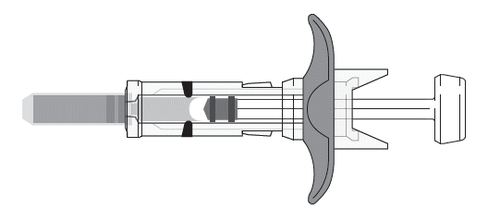
Medicinale Dispositivo di sicurezza dell'ago
Passaggi per l'iniezione
Seguire i seguenti passaggi con attenzione per ogni iniezione di Hulio con la siringa pre-riempita:
Passaggio 1 – Scegliere e preparare il sito di iniezione
La siringa pre-riempita di Hulio è per uso sottocutaneo. Hulio
deve essere iniettato nella coscia o nell'addome.
Ruotare e cambiare i siti di iniezione, stando a circa 3 cm di
distanza dal sito usato in precedenza.
Se si esegue l'iniezione nell'addome stare almeno a 5 cm di
distanza dall'ombelico.
- NON eseguire l'iniezione nella pelle arrossata, indurita, con ematomi o dolorante.
- NON eseguire l'iniezione a livello di cicatrici o smagliature.
- Se il bambino soffre di psoriasi, NON eseguire l'iniezione in chiazze rialzate, spesse, arrossate o squamate.
- NON eseguire l'iniezione attraverso gli indumenti. Allontanare qualsiasi indumento che può interferire con l'iniezione.
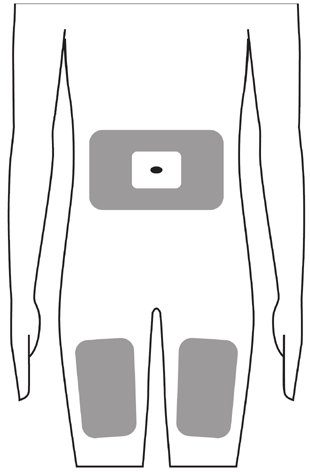
Addome o cosce
Passaggio 2 – Lavare le mani
Lavare accuratamente le mani con acqua e sapone.
Passaggio 3 – Preparare il sito di iniezione
Strofinare la pelle a livello del sito di iniezione scelto con un tampone imbevuto di alcool.
- Attendere che la pelle si asciughi, non soffiare per asciugarla.
- NON toccare nuovamente questa zona prima dell'iniezione. Passaggio 4 - Rimuovere il cappuccio dall'agoEstrarre il copri-ago dalla siringa. Alcune piccole gocce di liquido possono fuoriuscire dall'ago, ma ciò è normale. Inoltre, è normale vedere bolle d'aria.
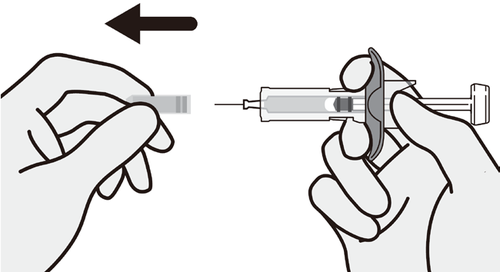
- NON rimuovere il corpi-ago fino a quando non si è pronti per l'iniezione.
- NON ruotare o piegare il copri-ago mentre lo si rimuove per non danneggiare l'ago.
- NON toccare o estrarre mai lo stantuffo.
- NON rimettere il cappuccio sull'ago o toccare l'ago con le dita o lasciare che l'ago tocchi altri oggetti.
- NON far fuoriuscire le bolle d'aria.
- NON usare la siringa pre-riempita se è caduta dopo aver tolto il cappuccio dell'ago.
Passaggio 5 – Pizzicare e tenere pizzicato il sito di iniezione
Pizzicare delicatamente il sito di iniezione per sollevare
un'area e tenerla sollevata fermamente.

Passaggio 6 – Inserire l'ago nel sito
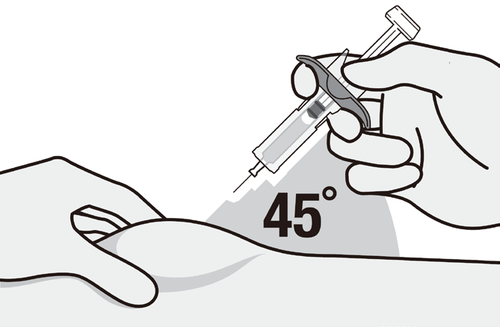
Con un movimento rapido e deciso, come con una freccetta,
infilare l'ago nel sito con un'angolazione di 45°.
Porre attenzione all'inserimento dell'ago in modo di non iniettarsi
il contenuto nelle dita mentre si tiene il sito di iniezione.
Passaggio 7 – Iniezione di Hulio
Una volta inserito completamente l'ago, rilasciare l'area
pizzicata.
Spingere delicatamente lo stantuffo fino in fondo fino a quando
tutto il medicinale sia iniettatoe la siringa sia vuota.
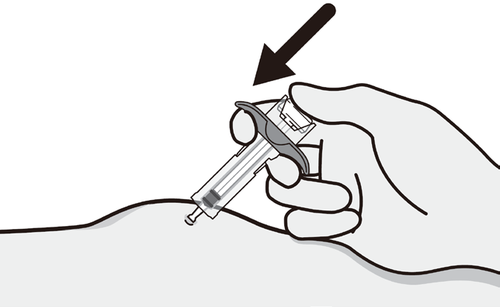
- Se lo stantuffo non è premuto completamente, il dispositivo di sicurezza non si attiva per coprire l'ago.
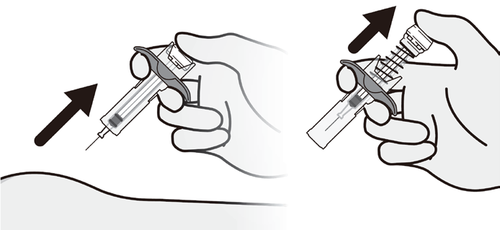
- NON spostare, agitare o ruotare la siringa durante l'iniezione. Passaggio 8 - Fine dell'iniezione, rimuovere la siringaEstrarre la siringa dal sito di iniezione con la stessa angolazione dell'inserimento e rilasciare il pollice dallo stantuffo.
Ciascuna siringa pre-riempita ha un dispositivo di sicurezza che
si ritrae e coprirà l'ago dopo aver rilasciato lo stantuffo. Se l'ago
non è stato retratto, posizionare con cura la siringa usata in un
contenitore per oggetti appuntiti per evitare lesioni.
Dopo l'iniezione, se si verifica un lieve sanguinamento dal sito
di iniezione, premere lievemente una garza o un batuffolo di
cotone sul sito per qualche secondo – NON massaggiare il sito
di iniezione. Se necessario coprire il sito di iniezione con un
cerotto.
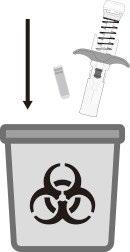
Passaggio 9 – Smaltimento della siringa e del cappuccio
Smaltire la siringa utilizzata e il cappuccio in un contenitore per lo smaltimento degli oggetti appuntiti.
Verificare con l'operatore sanitario le istruzioni per il corretto smaltimento del contenitore degli oggetti
appuntiti pieno.
- NON riutilizzare la siringa.
- NON rimettere il cappuccio all'ago.
- NON gettare il contenitore per gli oggetti appuntiti nei rifiuti domestici.
- NON riciclare il contenitore usato per lo smaltimento degli oggetti appuntiti.
- Tenere sempre il contenitore per gli oggetti appuntiti fuori dalla vista e dalla portata dei bambini.
Hulio 40 mg/0.8 mL injectable solution
adalimumab
Read this leaflet carefully before using this medicine as it contains important information for you
- Keep this leaflet. You may need to read it again.
- Your doctor will also give you a patient reminder card, which contains important safety information that you need to know before your child is given Hulio and during treatment with Hulio. Keep this patient reminder card with you or with your child at all times and for 4 months after the last Hulio injection to your child.
- If you have any questions, ask your doctor or pharmacist.
- This medicine has been prescribed only for your child. Do not give it to other people, even if they have the same symptoms as your child, as it could be dangerous.
- If your child gets any side effects, even those not listed in this leaflet, tell your pediatrician or pharmacist. See section 4.
Contents of this leaflet:
- 1. What Hulio is and what it is used for
- 2. What you need to know before your child uses Hulio
- 3. How to use Hulio
- 4. Possible side effects
- 5. How to store Hulio
- 6. Contents of the pack and other information
- 7. Instructions for use
1. What is Hulio and what is it used for
Hulio contains the active ingredient adalimumab, a medicine that acts on the body's immune system (defense).
Hulio is indicated for the treatment of the following inflammatory diseases:
- polyarticular juvenile idiopathic arthritis in children aged between 2 and 17 years;
- arthritis associated with enthesitis in children aged between 6 and 17 years;
- Crohn's disease in children aged between 6 and 17 years;
- plaque psoriasis in children aged between 4 and 17 years;
- hidradenitis suppurativa in adolescents aged between 12 and 17 years;
- ulcerative colitis in children aged between 6 and 17 years;
- chronic non-infectious uveitis in children aged between 2 and 17 years that affects the front of the eye.
The active ingredient contained in Hulio, adalimumab, is a monoclonal antibody. Monoclonal antibodies are proteins that bind to a specific target in the body.
The target of adalimumab is another protein called tumor necrosis factor (TNFα), which is
involved in the immune system (defense) and is present in higher concentrations in the inflammatory diseases
listed above. By binding to TNFα, Hulio decreases the inflammatory process of these diseases.
Polyarticular juvenile idiopathic arthritis and arthritis associated with enthesitis
Polyarticular juvenile idiopathic arthritis and arthritis associated with enthesitis are inflammatory diseases
of the joints that usually begin to manifest during childhood.
Hulio is used to treat polyarticular juvenile idiopathic arthritis in children and adolescents aged
from 2 to 17 years and arthritis associated with enthesitis in children and adolescents aged 6 – 17 years.
Initially, other disease-modifying medications may be given to the child, such as
methotrexate. If these medications do not work well enough, Hulio will be given to the child to treat
polyarticular juvenile idiopathic arthritis or arthritis associated with enthesitis.
Crohn's disease in pediatric patients
Crohn's disease is an inflammation of the intestine.
Hulio is used to treat Crohn's disease in children aged from 6 to 17 years. Other medications may
initially be given to the child. If these medications do not work well
enough, Hulio will be given to the child to reduce the signs and symptoms of the disease.
Pediatric plaque psoriasis
Plaque psoriasis is an inflammatory skin condition that causes red, scaly
and hardened patches of skin covered with silvery scales. Plaque psoriasis can also affect the nails,
causing them to crumble, thicken and lift from the nail bed, which can be painful.
Psoriasis is believed to be due to a problem with the body's immune system that causes
increased production of skin cells.
Hulio is used to treat severe plaque psoriasis in children and adolescents aged 4 to 17 years for whom
topical medications and light UV treatment have not worked optimally or are not indicated.
Hidradenitis suppurativa in adolescents
Hidradenitis suppurativa (sometimes called inverse acne) is a chronic, long-term inflammatory disease of the skin and is often painful. Symptoms may include painful nodules and abscesses
(cysts) that may drain pus. It most frequently affects specific areas of the skin, such as the
underbreast area, armpits, inner thighs, groin, and buttocks. Scars can also form in the affected areas.
Hulio is used to treat hidradenitis suppurativa in adolescents aged 12 years and older. Hulio can
reduce the number of nodules and abscesses you have and the pain that is often associated with this disease.
Initially, you may receive other medications. If you do not respond well enough to these medications,
you will receive Hulio.
Ulcerative colitis in pediatric patients
Ulcerative colitis is an inflammatory disease of the large intestine. Hulio is used to treat moderate to severe ulcerative colitis in children aged between 6 and 17 years. Other medications may be
initially given to the child. If these medications do not work well enough, the
child will be given Hulio to reduce the signs and symptoms of the disease.
Chronic non-infectious uveitis affecting the front of the eye
Non-infectious uveitis is an inflammatory disease that affects certain parts of the eye. This
inflammation can lead to a decrease in vision and/or the presence of floaters
in the eye (black dots or thin lines that move across the field of vision). Hulio works
by reducing this inflammation.
Hulio is used for the treatment of children and adolescents aged 2 to 17 years with chronic non-infectious uveitis with inflammation that affects the front of the eye.
2. What you need to know before your child uses Hulio
Do not administer Hulio
- If the child is allergic to adalimumab or to any of the other ingredients of this medicine (listed in section 6).
- If there is a severe infection, including active tuberculosis (see “Warnings and precautions”). It is important to tell the doctor if the child has symptoms of infection, such as e.g. fever, wounds, feeling tired, dental problems. If there is moderate or severe heart failure. It is important to tell the doctor if there has been or is a serious heart condition (see “Warnings and precautions”).
Warnings and precautions
Consult your doctor or pharmacist before using Hulio
Allergic reactions
If allergic reactions occur with symptoms such as a feeling of tightness in the chest, wheezing,
dizziness, swelling or skin rash, do not administer Hulio again and contact your pediatrician
immediately as, in rare cases, these reactions can be life-threatening.
Infections
- If an infection occurs, including long-term infections or infections in a part of the body (for example, leg ulcers), consult your pediatrician before starting treatment with Hulio. If you have doubts, contact your pediatrician.
- The child may be more likely to contract infections during treatment with Hulio. This risk may increase if the child has lung problems. These infections can be serious and include tuberculosis, infections caused by viruses, fungi, parasites or bacteria or by other unusual infectious organisms and sepsis (blood poisoning). In rare cases, these infections can be life-threatening. It is important to tell the pediatrician about the presence of symptoms such as fever, wounds, feeling tired or dental problems. The pediatrician may tell you to stop Hulio for a period of time.
Tuberculosis (TB)
- Since cases of tuberculosis have occurred in patients treated with adalimumab, the pediatrician will need to check if the child presents signs or symptoms typical of tuberculosis before starting therapy with Hulio. This will involve collecting a thorough medical assessment of the child's history and clinical examinations (e.g. a chest X-ray and a tuberculin test). The performance and results of these tests must be recorded in the patient reminder card. It is very important to tell the pediatrician if the child has ever had tuberculosis, or if the child has been in contact with someone who has had tuberculosis. Tuberculosis may develop during therapy despite the child having received treatment for the prevention of tuberculosis. Contact your pediatrician immediately if symptoms of tuberculosis (persistent cough, weight loss, fatigue, moderate fever) or other infections appear during or after therapy.
Travel/recurring infection
- Tell the pediatrician if the child resides or travels to regions where fungal infections, such as histoplasmosis, coccidioidomycosis or blastomycosis, are common.
- Tell the pediatrician if you have had recurrent infections or if you have conditions that increase the risk of infection.
Hepatitis B virus
- Tell the pediatrician if the child is a carrier of the hepatitis B virus (HBV), if they have an active infection with the hepatitis B virus or if you think they may be at risk of contracting the hepatitis B virus. The pediatrician must test the child for hepatitis B virus infection. Taking adalimumab can cause reactivation of the hepatitis B virus in subjects who are carriers of this virus. In some rare cases, especially if the patient is undergoing therapy with other drugs that suppress the immune system, reactivation of hepatitis B virus infection can endanger the patient's life.
Surgery or dental procedures
- If the child is about to undergo surgery or dental procedures, tell the pediatrician that the child is taking Hulio. The pediatrician may temporarily interrupt the administration of Hulio.
Demyelinating diseases
If the child suffers from or develops demyelinating diseases (diseases that affect the insulating
layer around the nerves), such as multiple sclerosis, the pediatrician will decide whether it is appropriate
to start or continue treatment with Hulio. Tell the doctor immediately if the child
develops symptoms such as changes in vision, weakness of arms or legs or numbness or
tingling that affects any part of the body.
Vaccinations
- Certain vaccines contain live but attenuated bacterial or viral agents that cause diseases and must not be administered during treatment with Hulio as they may cause infections.
- Check with the pediatrician before the child receives any vaccine.
- It is recommended that, if possible, children receive all vaccinations scheduled for their age before starting treatment with Hulio.
- If you have taken Hulio during pregnancy, the child may have a higher risk of contracting an infection up to about five months after the last dose you took during pregnancy. It is important that you tell the pediatrician and other healthcare provider about the use of Hulio during pregnancy, so that they can decide when the child should receive any type of vaccination.
Heart failure
- It is important to inform the pediatrician about any serious heart problems, both past and present, of the child. If mild heart failure and concomitant treatment with Hulio are present, the doctor must carefully assess and monitor the child's heart condition. If new symptoms of heart failure or worsening of existing symptoms (e.g. shortness of breath or swelling of the feet) appear, contact your pediatrician immediately.
Fever, bruising, bleeding or pallor
- In some patients, the body may not be able to produce a sufficient quantity of blood cells to help fight infections or stop bleeding. If the child has persistent fever, bruising or easy bleeding or pallor, consult your pediatrician immediately. The latter may decide to interrupt therapy.
Cancer
- Very rarely, some types of tumors have occurred in patients, both children and adults, undergoing treatment with adalimumab or other anti-TNF drugs. Patients with severe, long-standing rheumatoid arthritis may have a higher than average risk of developing lymphoma (a tumor that affects the lymphatic system) and leukemia (tumors that
affect the blood and bone marrow). If the child takes Hulio, the risk of contracting
lymphomas, leukemia or other tumors may increase. In rare circumstances, a specific and serious type of lymphoma has been noted in patients undergoing
therapy with adalimumab. Some of these patients were also undergoing therapy with azathioprine or mercaptopurine. Tell the pediatrician if the child
is taking azathioprine or mercaptopurine with Hulio.
- In addition, cases of non-melanoma skin cancer have been observed in patients taking adalimumab. If new skin lesions appear during or after therapy or if the appearance of existing lesions changes, report it to the pediatrician.
- There have been cases of neoplasms, in addition to lymphoma, in patients with a specific type of lung disease called chronic obstructive pulmonary disease (COPD) treated with another anti-TNF. If your child suffers from COPD, or smokes heavily, you should discuss with the pediatrician whether treatment with an anti-TNF is appropriate.
Autoimmune disease
Rarely, treatment with Hulio may lead to the manifestation of a syndrome such as
lupus. Tell the pediatrician if symptoms such as persistent unexplained skin rash, fever, joint pain or fatigue occur.
Other medicines and Hulio
Tell your doctor or pharmacist if the child is taking, has recently taken or may
take any other medicine.
Hulio should not be taken in conjunction with medicines containing anakinra
or abatacept as the active ingredient. The association of Hulio and anakinra or abatacept is not recommended based on a
possible increased risk of infections, including serious infections and other potential drug interactions. If you have doubts, consult your pediatrician.
Hulio can be taken both with methotrexate and with other disease-modifying antirheumatic drugs (sulfasalazine, hydroxychloroquine, leflunomide and parenteral gold salts), steroids or
analgesics, including non-steroidal anti-inflammatory drugs (NSAIDs).
Pregnancy and breastfeeding
- The girl should consider using adequate contraceptive measures to prevent pregnancy and continue using them for at least 5 months after the last therapy with Hulio.
- If the girl is pregnant, suspects or is planning a pregnancy, ask the doctor for advice on taking this medicine.
- Hulio should be used during pregnancy only if necessary.
- According to a pregnancy study, no increased risk of birth defects was found when the mother had received adalimumab during pregnancy, compared to mothers who had the same condition but had not received adalimumab.
- Hulio can be used during breastfeeding.
- If the girl takes Hulio during pregnancy, the child may have a higher risk of contracting an infection.
- It is important that you tell the pediatrician or other healthcare provider about the use of Hulio during pregnancy, before the child receives any type of vaccination. For more information on vaccinations, see “Warnings and precautions”.
Driving and using machines
Hulio may affect, albeit only modestly, the child's ability to drive, ride a bicycle or use machinery. After taking Hulio, visual disturbances and the feeling that the environment in which you are located is rotating may occur.
Hulio contains sodium and sorbitol
Each vial of Hulio contains 38.2 mg of sorbitol. Sorbitol is a source of fructose. If the
pediatrician has told you that the child has an intolerance to certain sugars or if the child has
been diagnosed with hereditary fructose intolerance (HFI), a rare genetic disorder in which a
person is unable to metabolize fructose, tell the pediatrician before giving this medicine
to the child.
In addition, this medicine contains less than 1 mmol of sodium (23 mg) per vial, i.e. it is
essentially ‘sodium-free'.
3. How to use Hulio
Use this medicine following the pediatrician’s or pharmacist’s instructions exactly. If you have
any doubts or require clarification, consult your pediatrician or pharmacist. The doctor may prescribe a different
concentration of Hulio if the child needs a different dose.
Children and adolescents with polyarticular juvenile idiopathic arthritis
Children and adolescents aged between 2 and 17 years and weighing between 10 kg and less than 30 kg
The recommended dose of Hulio is 20 mg every other week.
Children and adolescents aged between 2 and 17 years and weighing 30 kg or more
The recommended dose of Hulio is 40 mg every other week.
Children and adolescents with enthesitis-related arthritis
Children and adolescents aged between 6 and 17 years and weighing between 15 kg and less than 30 kg
The recommended dose of Hulio is 20 mg every other week.
Children and adolescents aged between 6 and 17 years and weighing 30 kg or more
The recommended dose of Hulio is 40 mg every other week.
Children and adolescents with Crohn’s disease
Children and adolescents aged between 6 and 17 years and weighing less than 40 kg
The usual dose is initially 40 mg followed by 20 mg after two weeks. If a
faster response is needed, the pediatrician may prescribe an initial dose of 80 mg (via two 40 mg injections
in one day) followed by 40 mg two weeks later.
Subsequently, the usual dose is 20 mg every other week. If the dose does not work well
enough, the pediatrician may increase the dose frequency to 20 mg every week.
Children and adolescents aged between 6 and 17 years and weighing 40 kg or more
The usual dose is initially 80 mg (via two 40 mg injections in one day) followed by
40 mg after two weeks. If a faster response is needed, the pediatrician may prescribe
an initial dose of 160 mg (via four 40 mg injections in one day or two 40 mg injections
per day for two consecutive days) followed by 80 mg (via two 40 mg injections in one day)
two weeks later.
Subsequently, the usual dose is 40 mg every other week. If the dose does not work well
enough, the pediatrician may increase the dose frequency to 40 mg every week or to 80 mg every
other week.
Children or adolescents with plaque psoriasis
Children and adolescents aged between 4 and 17 years and weighing between 15 kg and less than 30 kg
The recommended initial dose of Hulio is 20 mg, followed by 20 mg after one week.
Subsequently the usual dose is 20 mg every other week.
Children and adolescents aged between 4 and 17 years and weighing 30 kg or more
The recommended initial dose of Hulio is 40 mg, followed by 40 mg after one week. Then the
usual dose is 40 mg every other week.
Adolescents with hidradenitis suppurativa (aged between 12 and 17 years, weighing 30 kg or more)
The recommended dose of Hulio is an initial dose of 80 mg (via two 40 mg injections in one
day), followed by 40 mg administered every other week starting one week after the initial
dose. If the dose does not work well enough, the pediatrician may increase the dose frequency to
40 mg every week or to 80 mg every other week.
It is recommended that the child uses a daily antiseptic cleansing solution on the affected
areas during treatment with Hulio.
Children and adolescents with ulcerative colitis
Children and adolescents aged 6 years and over and weighing less than 40 kg
The usual dose of Hulio is 80 mg (via two 40 mg injections in one day) followed by 40 mg
(via a single 40 mg injection) after two weeks. Subsequently, the usual dose is
40 mg every other week.
Patients who turn 18 years old while taking 40 mg every other week should continue the
prescribed dose.
Children and adolescents aged 6 years and over and weighing 40 kg or more
The usual dose of Hulio is 160 mg (via four 40 mg injections in one day or two 40 mg injections
per day for two consecutive days) followed by 80 mg (via two 40 mg injections in one
day) after two weeks. Subsequently the usual dose is 80 mg every other week.
Patients who turn 18 years old while taking 80 mg every other week should continue the
prescribed dose.
Children and adolescents with non-infectious chronic uveitis
Children and adolescents aged between 2 and 17 years and weighing less than 30 kg
The usual dose of Hulio is 20 mg administered every other week with methotrexate.
The pediatrician may also prescribe an initial dose of 40 mg which can be administered one
week before starting the usual recommended dose.
Children and adolescents aged between 2 and 17 years and weighing 30 kg or more
The usual dose of Hulio is 40 mg administered every other week with methotrexate.
The pediatrician may also prescribe an initial dose of 80 mg which can be administered one
week before starting the usual dose.
For patients who are prescribed a full dose of 40 mg of Hulio, a pre-filled 40 mg pen and a pre-filled 40 mg syringe are
available at the pharmacy.
How and route of administration
Hulio is administered by injection under the skin (for subcutaneous use).
Detailed instructions on how to inject Hulio are provided in the Instructions for Use.
If you use more Hulio than you should
If you accidentally inject Hulio to the child more frequently than you should, contact
the pediatrician informing them that the child has taken more medicine than prescribed. Always keep the box
of the medicine or the medicine itself, even if empty.
If you forget to use Hulio
If you forget to give an injection to the child, you should inject the next dose of Hulio as soon as
you remember. Then administer the next dose to the child regularly according to the established
dosage schedule.
If the child stops treatment with Hulio
The decision to stop using Hulio should be discussed with the pediatrician. The child’s symptoms
may return after stopping treatment.
If you have any doubts about the use of this medicine, ask your pediatrician or pharmacist.
4. Possible side effects
Like all medicines, this medicine can cause side effects, although not everyone will experience them.
Most side effects are mild to moderate in form. However, some
may be serious and require urgent treatment.
Side effects may occur up to 4 months or more after the last injection of Hulio.
Contact a doctor urgentlyif the child develops any of the following signs of an allergic reaction
or heart failure:
- severe rash, hives;
- swelling of the face, hands or feet;
- difficulty breathing, difficulty swallowing;
- shortness of breath on exertion or when lying down, or swollen feet;
- paleness, dizziness, persistent fever, easy bruising or bleeding.
Inform the doctor as soon as possibleif you notice any of the following reactions:
- signs and symptoms of infection such as fever, feeling unwell, sores, dental problems, burning when urinating, feeling weak or tired, or cough;
- symptoms of nerve problems, such as tingling, numbness, double vision or weakness in the legs;
- signs of skin cancer, such as swelling or an open sore that does not heal;
- signs and symptoms suggesting the onset of disorders affecting the hematopoietic system, such as persistent fever, bruising, bleeding, paleness.
The signs and symptoms described above may be signs of the following side effects, which have been
observed with adalimumab
Very common(may affect up to 1 in 10 people)
- reactions at the injection site (including pain, swelling, redness or itching);
- respiratory tract infections (including colds, runny nose, sinusitis, sore throat and pneumonia);
- abnormal blood test results;
- headache;
- abdominal pain (stomach ache);
- nausea and vomiting;
- rash;
- bone and muscle pain.
Common(may affect up to 1 in 10 people)
- serious infections (including sepsis and influenza);
- intestinal infections (including gastroenteritis);
- skin infections (including cellulitis and herpes zoster infection);
- ear infections;
- oral infections (including dental infections and herpes simplex);
- reproductive system infections;
- urinary tract infections;
- fungal infections;
- infections affecting the joints;
- benign tumors;
- skin cancer;
- mild allergic reactions (including seasonal allergies);
- dehydration;
- mood changes (including depression);
- anxiety;
- sleep disorders;
- sensory disturbances such as tingling, stabbing sensations or numbness;
- migraine;
- nerve root compression (including lower back pain and leg pain);
- visual disturbances;
- inflammation or swelling of eyes/eyelids;
- dizziness (feeling of spinning);
- feeling of a fast heartbeat;
- high blood pressure;
- flushed skin;
- bruise (blood accumulation outside of blood vessels);
- cough;
- asthma;
- shortness of breath
- gastrointestinal bleeding;
- indigestion, bloating, heartburn;
- acidity/acid reflux;
- dry eye syndrome (including dry eyes and dry mouth);
- contusion;
- itchy rash;
- pruritus, skin inflammation (including eczema);
- nail breakage of the hands and feet;
- increased sweating;
- hair loss;
- new onset or worsening of psoriasis (red, scaly skin);
- muscle spasms;
- blood in urine;
- kidney problems;
- chest pain;
- edema (swelling);
- fever;
- decreased platelets in the blood, which increases the risk of bleeding or bruising;
- slow wound healing.
Uncommon(may affect up to 1 in 100 people):
- opportunistic infections (which include tuberculosis and other infections that occur when immune defenses are reduced);
- neurological infections (including viral meningitis);
- eye infections;
- bacterial infections;
- diverticulitis (inflammation and infection of the large intestine);
- tumor;
- lymphoma (cancer of the lymphatic system);
- immune system disorders that can affect the lungs, skin and lymph nodes (most commonly presenting as sarcoidosis);
- vasculitis (inflammation of blood vessels);
- tremor (shaking);
- neuropathy (nerve damage);
- stroke;
- hearing loss, tinnitus;
- irregular heartbeat;
- lung disease causing shortness of breath (including inflammation);
- pulmonary embolism (blockage of a pulmonary artery);
- excess fluid around the lungs;
- pancreatitis (inflammation of the pancreas);
- difficulty swallowing;
- inflammation of the gallbladder, gallstones;
- fatty liver (accumulation of fat in liver cells);
- night sweats;
- scarring;
- abnormal muscle catabolism;
- systemic lupus erythematosus (including inflammation of the skin, heart, lungs, joints and other organs);
- interrupted sleep;
- impotence;
- inflammations.
Rare(may affect up to 1 in 1,000):
- leukemia (a cancer that affects the blood and bone marrow);
- severe allergic reaction with shock;
- multiple sclerosis;
- neurological disorders (such as optic nerve inflammation in the eye and Guillain-Barré syndrome, a condition that can cause muscle weakness, abnormal sensations, tingling in the arms and upper body);
- acute myocardial infarction (heart attack);
- pulmonary fibrosis (scarring of the lung);
- intestinal perforation (perforation/laceration of the intestine);
- hepatitis (inflammation of the liver);
- hepatitis B reactivation
- autoimmune hepatitis (inflammation of the liver caused by your own immune system);
- cutaneous vasculitis (inflammation of the blood vessels in the skin);
- Stevens Johnson syndrome;
- facial edema (swelling of the face) associated with allergic reactions;
- inflammatory skin rash;
- lupus-like syndrome;
- angioedema (localized swelling of the skin);
- lichenoid skin reaction (itchy red-purple rash).
Not known(frequency cannot be estimated based on available data):
- T-cell hepatosplenic lymphoma (a rare blood cancer);
- Merkel cell carcinoma (a type of skin cancer);
- Kaposi's sarcoma, a rare cancer associated with human herpes virus 8 infection. Kaposi's sarcoma most commonly manifests with purple lesions on the skin;
- liver failure;
- worsening of the rash with muscle weakness;
- weight gain (weight gain has been small for the majority of patients).
Reporting of side effects
If the child experiences any side effects, including those not listed in this leaflet,
consult your pediatrician or pharmacist.
You can also report side effects directly through the national reporting system
reported in Annex V. By reporting side effects, you can help provide more
information on the safety of this medicine.
5. How to store Hulio
Keep this medicine out of the sight and reach of children.
Do not use this medicine after the expiry date which is stated on the label/on the pack after
“Exp.”. The expiry date refers to the last day of that month.
Store in a refrigerator (2°C – 8°C). Do not freeze.
Keep the vial in the outer packaging to protect the medicine from light.
Do not dispose of any medicine in wastewater or household waste. Ask your pharmacist how to
dispose of medicines you no longer use. This will help protect the environment.
6. Content of the pack and other information
What Hulio contains
- The active substance is adalimumab.
- The other ingredients are monosodium glutamate, sorbitol, methionine, polysorbate 80, hydrochloric acid and water for injections (see section 2 - "Hulio contains sodium and sorbitol”).
Description of the appearance of Hulio and content of the pack
Hulio 40 mg solution for injection in vials is supplied as a sterile solution of 40 mg of
adalimumab dissolved in 0.8 mL of a clear or slightly opalescent solution, from colorless to
pale brownish-yellow.
The vial of Hulio is a glass vial with a rubber stopper. Hulio is supplied in packs of 1 or 2 boxes. Each single pack contains 1 vial, 1 sterile injection syringe, 1 sterile needle, 1 sterile vial adapter and 2 alcohol-soaked pads.
Hulio may also be available as a pre-filled syringe or a pre-filled pen.
Marketing Authorisation Holder
Biosimilar Collaborations Ireland Limited
Unit 35/36
Grange Parade,
Baldoyle Industrial Estate,
Dublin 13
DUBLIN
Ireland
D13 R20R
Manufacturer
Biosimilar Collaborations Ireland Limited
Block B, The Crescent Building, Santry Demesne
Dublin
D09 C6X8
Ireland
For further information on this medicinal product, contact the local representative of the marketing
authorisation holder:
België/Belgique/Belgien
Tél/Tel:
Lietuva
Tel:
България
Тел:
Luxembourg/Luxemburg
Tél/Tel:
Česká republika
Tel:
Magyarország
Tel.:
Danmark
Tlf:
Malta
Tel.:
Deutschland
Tel:
Nederland
Tel:
Eesti
Tel:
Norge
Tlf:
Ελλάδα
Τηλ.:
Österreich
Tel:
España
Tel:
Polska
Tel: 0
France
Biocon Biologics France S.A.S
Tel:
Portugal
Tel:
Hrvatska
Tel:
România
Tel:
Ireland
Tel:
Slovenija
Tel:
Ísland
Sími: +345 800 4316
Slovenskárepublika
Tel:
Italia
.
Tel:
Suomi/Finland
Puh/Tel:
Κύπρος
Τηλ:
Sverige
Tel:
Latvija
Tel:
Other sources of information
More detailed information on this medicinal product is available on the website of the European
Medicines Agency: http://www.ema.europa.eu .
Instructions for use
Read the instructions carefully and follow them step by step. The pediatrician, nurse or healthcare
professional will show you how to prepare the injection and administer it to the child. They will also tell you the
prescribed amount (volume).
Do not administer the injection to the child until you are sure you understand how to prepare and administer
the injection. After adequate instructions, the injection can be administered by you or another person, such as
a family member or a nurse.
Each vial contains a dose of 40 mg of adalimumab.
Do not mix other medicines in the same syringe or vial with the Hulio solution.
To help you remember on which days you need to administer the Hulio injection, it may be helpful to write them
down on a calendar or diary.
Before you start
Make sure you know the prescribed amount. If you do not know it, DO NOT PROCEED and
ask the pediatrician.
Find a quiet area with a flat, clean and well-lit work surface, and gather all the
materials you need to administer the injection.
The materials you need are:
- 1 box of Hulio pediatric vial
- 1 sharps container (not included in the Hulio pack)
- 1 gauze pad or cotton ball (not included in the Hulio pack)
If you do not have the necessary materials, ask the nurse or pharmacist.
Preparing the Hulio injection
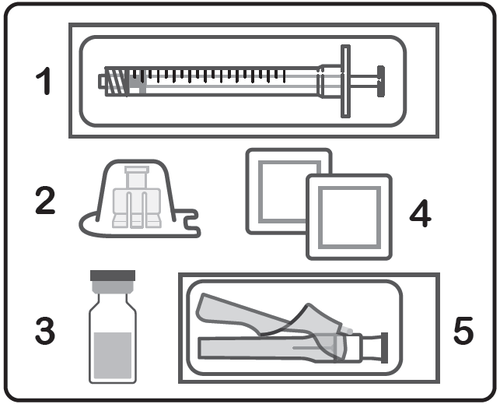
Each single vial of Hulio contains:
- 1 syringe (1)
- 1 vial adapter (2)
- 1 vial of Hulio solution (3)
- 2 alcohol-soaked pads (4)
- 1 needle (5)
Hulio packs must be stored in the refrigerator (between 2°C and 8°C) until use.
- Remove one box of vial from the refrigerator at least 30 minutes before use to allow the contents to reach room temperature. If there is a second box in the Hulio pack to be used for the next administration, immediately return it to the refrigerator. Do not use other sources of heat, such as a microwave or hot water, to warm the vial. Do not put the vial back in the refrigerator after it has reached room temperature.
- Check the expiry date printed on the vial. Do not use the vial after the expiry date.
- Check that the solution is clear, colorless and does not contain particles. Do not use the vial if the solution is cloudy, discolored or contains particles.
Injection steps
Follow these steps carefully for each Hulio injection:
Step 1 – Choose and prepare the injection site
Hulio is administered by subcutaneous injection. It must be
injected into the thigh or abdomen.
Rotate and change the injection sites, keeping about 3 cm of
distance from the previously used site.
If you are injecting into the abdomen, stay at least 5 cm from
the navel.
- Do not inject into skin that is red, hardened, bruised or painful.
- Do not inject into scars or stretch marks.
- If the child suffers from psoriasis, do not inject into raised, thick, red or scaly patches.
- Do not inject through clothing. Remove any clothing that may interfere with the injection.
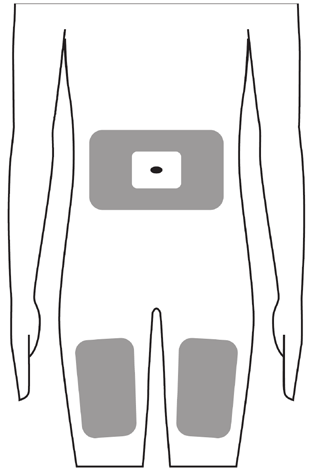
Abdomen or thighs
Step 2 – Wash your hands
Wash your hands thoroughly with soap and water.
Preparing the Hulio dose for injection
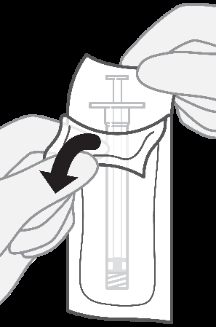
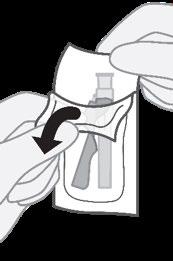
Step 3 – Partially open the syringe and needle pack
Partially open the syringe pack at the end closest to the white
plunger. Remove the transparent plastic just enough to expose the
white plunger WITHOUT removing the syringe from the pack.
Partially open the needle pack at the end closest to the yellow
connector of the syringe. Remove the transparent plastic just enough
to expose the yellow connector WITHOUT removing the needle from the
pack.
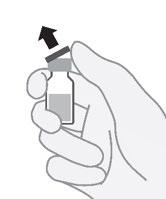
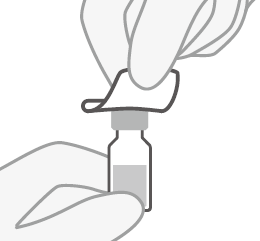
Step 4 – Remove the cap from the vial and clean the vial stopper
Remove the white plastic cap from the vial to
expose the vial stopper.
Use one of the alcohol-soaked pads to clean the stopper and
then place the vial on a flat surface.
- Do not touch the vial stopper after cleaning it with the pad.
Step 5 – Attach the vial adapter to the vial
Remove the cover of the vial adapter packaging WITHOUT removing
it from the packaging.
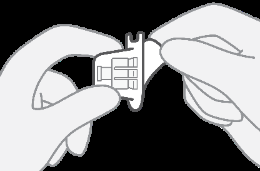
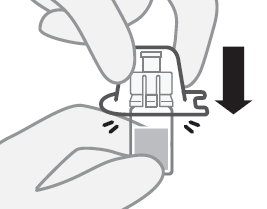
With the vial adapter still in the transparent
packaging, attach it to the vial stopper by pushing it until
the adapter clicks into place.
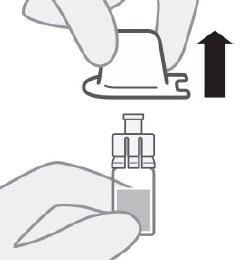
When you are sure that the adapter is attached to the vial, pull
off the packaging.
Gently place the vial with the attached adapter on a
flat work surface, being careful not to drop it.
Step 6 – Position the plunger to + 0.1 mL dose
Hold the syringe packaging, SLOWLY push the white
plunger 0.1 mL above the prescribed dose (for
example, if the prescribed dose is 0.5 mL, pull the plunger to
0.6 mL).
Do not push the white plunger completely out of the
syringe.
- If the white plunger is pushed out of the syringe, discard the syringe and contact the Hulio supplier for a replacement. Do not try to reinsert the white plunger.
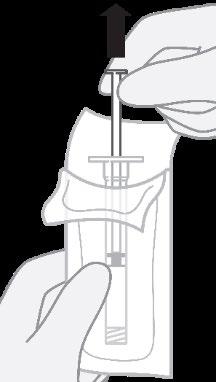
Step 7 – Attach the syringe to the vial adapter and push the plunger
Hold the syringe by the graduated part and remove it from its
packaging.
- Do not hold the syringe by the white plunger.
Insert the tip of the syringe into the vial adapter and
screw it clockwise until the syringe is firmly locked.
- Do not overtighten.
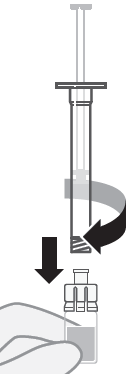
Push the plunger all the way down. This step is important to
draw up the correct dose.
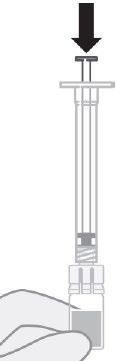
Step 8 – Position the plunger to draw up the dose + 0.1 mL
Hold the syringe upright and invert the vial and
syringe.
Slowly pull the plunger to draw the Hulio solution into the syringe. Pull the plunger 0.1 mL above the
prescribed dose (for example, if the prescribed dose is 0.5 mL, pull
the plunger to 0.6 mL).
The volume will be adjusted to the prescribed dose in a subsequent
step.

If there are air bubbles in the syringe, push the plunger all the way
down to push the solution back into the vial.
Repeat this step to draw the solution back into the syringe,
slowly pulling the plunger.
If you still see air bubbles in the solution, you can repeat
this step up to 3 times.
- Do not hold the syringe by the plunger.
- Do not shake the syringe.
- If the white plunger is pushed out of the syringe, discard the syringe and contact the Hulio supplier for a replacement. Do not try to reinsert the white plunger.

Step 9 – Detach the syringe from the vial adapter and attach the needle
Remove the vial adapter by unscrewing it from the syringe.
- Do not touch the top of the syringe.
- Do not hold the syringe by the white plunger.
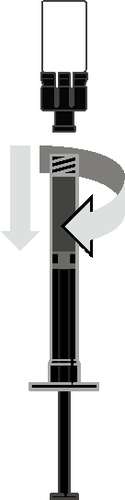
Attach the needle to the syringe by inserting the tip of the syringe into
the yellow connector of the syringe on the needle. Rotate the syringe until
the needle is firmly attached.
- At this point, remove the transparent needle packaging.
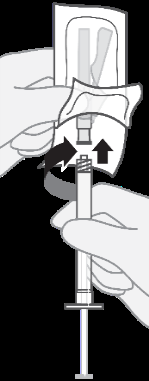
Preparing the dose
Step 10 – Turn the pink needle cover upside down and remove the needle cap
Hold the syringe with the needle pointing upwards.
Turn the pink needle cover upside down and remove the
needle cap by pulling it off. Do not rotate the needle cap.
- Do not touch the needle.
- Do not put the cap back on the needle after removing it.
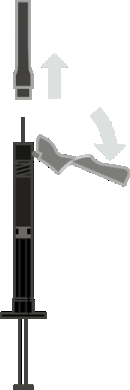
Step 11 – Check and set the prescribed dose
Hold the syringe at eye level with the needle pointing upwards to clearly see
the amount of solution.
Double-check the correct dose prescribed by the doctor.
Gently push the plunger into the syringe until the syringe contains the
prescribed amount of medication. Excess solution may leak from the needle while
the plunger is pressed. Be careful not to splash the solution into your eyes.
Place the syringe gently on a flat, clean work surface.
- DO NOT remove the needle or the syringe.
Injection of Hulio
Step 12 – Prepare the injection site
Rub the skin at the chosen injection site with a new swab soaked in alcohol.
- Wait for the skin to dry, do not blow on it to dry it.
- DO NOT touch this area again before the injection. Step 13 - Pinch the injection siteGently pinch the area already rubbed with alcohol and keep it firm.

With a quick and decisive movement, insert the entire needle into the skin
at an angle of 45°.
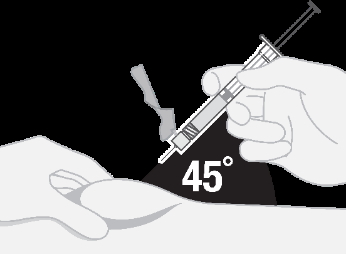
Step 14 – Push the plunger to inject the solution
Release the pinched skin.
Push the white plunger to inject the Hulio solution
until the syringe is empty.
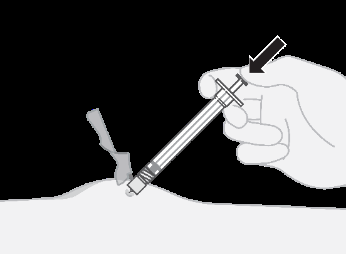
Step 15 – End of the injection, remove the syringe, attach the needle cover
When the syringe is empty, remove the syringe with the needle from the
skin.
After the injection, if slight bleeding occurs from the injection site,
gently press a gauze pad or cotton ball
on the site for a few seconds.
- DO NOT massage the injection site.
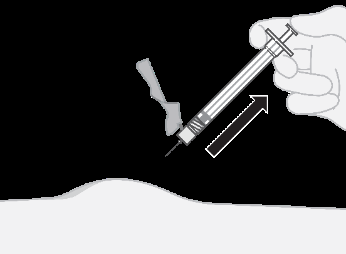
Turn the pink needle cover upwards onto the needle and snap it
into place. Place the syringe with the covered needle on the work surface.
- DO NOT put the transparent cap back on the needle.

Disposal of materials
Step 16 – Disposal of the syringe and needle
Each vial, syringe, vial adapter, and needle are for single use only. They MUST NEVER
be reused.
After use, place the syringe, needle, vial, and vial adapter in a sharps container.
for disposal.
- DO NOT throw the sharps container in household waste.
- DO NOT recycle the used sharps container.
- Always keep the sharps container out of sight and reach of children.
- Dispose of all other materials used and the empty packaging in the household waste container.


Не уверены, подходит ли вам это лекарство?
Обсудите симптомы и варианты лечения с врачом онлайн.
Hulio 40 mg injectable solution in pre-filled syringe
adalimumab
Read this leaflet carefully before using this medicine as it contains important
information for you.
- Keep this leaflet. You may need to read it again.
- Your doctor will give you a patient reminder card, which contains important safety information that you need to know before administering Hulio and during treatment with Hulio. Keep this patient reminder card with you at all times and for 4 months after the last injection of Hulio.
- If you have any questions, ask your doctor or pharmacist.
- This medicine has been prescribed only for you. Do not give it to other people, even if their symptoms of the illness are the same as yours, as it could be dangerous.
- If you experience any side effects, including those not listed in this leaflet, tell your doctor or pharmacist. See section 4.
Contents of this leaflet:
- 1. What Hulio is and what it is used for
- 2. What you need to know before you use Hulio
- 3. How to use Hulio
- 4. Possible side effects
- 5. How to store Hulio
- 6. Contents of the pack and other information
- 7. Instructions for use
1. What is Hulio and what is it used for
Hulio contains the active ingredient adalimumab, a medicine that works on the body's immune system (defense).
Hulio is indicated for the treatment of the following inflammatory diseases:
- rheumatoid arthritis,
- polyarticular juvenile idiopathic arthritis,
- enthesitis-related arthritis,
- ankylosing spondylitis,
- axial spondyloarthritis without radiographic evidence of ankylosing spondylitis,
- psoriatic arthritis,
- psoriasis,
- hidradenitis suppurativa,
- Crohn's disease,
- ulcerative colitis,
- chronic non-infectious uveitis in adults and children.
The active ingredient contained in Hulio, adalimumab, is a monoclonal antibody. Monoclonal antibodies are proteins that bind to a specific target in the body.
The target of adalimumab is another protein called tumor necrosis factor (TNFα), which is
involved in the immune system (defense) and is present in higher concentrations in the
inflammatory diseases listed above. By binding to TNFα, Hulio decreases the inflammatory process of these diseases.
Rheumatoid Arthritis
Rheumatoid arthritis is an inflammatory condition of the joints.
Hulio is used to treat rheumatoid arthritis in adults. If you have moderate to severe rheumatoid arthritis, other disease-modifying drugs, such as
methotrexate, may be initially administered. If you do not respond well enough to these medicines, you will be given Hulio to
treat rheumatoid arthritis.
Hulio can also be used to treat severe, active, and progressive rheumatoid arthritis
without prior treatment with methotrexate.
Hulio may slow the progression of cartilage and bone damage in the joints, caused
by the disease, and improve physical function.
Generally Hulio is used with methotrexate. If your doctor decides that treatment with
methotrexate is not appropriate, Hulio may be administered alone.
Polyarticular Juvenile Idiopathic Arthritis and Enthesitis-Related Arthritis
Polyarticular juvenile idiopathic arthritis and enthesitis-related arthritis are inflammatory diseases
of the joints that usually begin to manifest during childhood.
Hulio is used to treat polyarticular juvenile idiopathic arthritis in children and adolescents aged
2 to 17 years and enthesitis-related arthritis in children and adolescents aged 6 – 17 years.
Initially, other disease-modifying medicines, such as
methotrexate, may be administered. If these medicines do not work well enough, you will be given Hulio to
treat polyarticular juvenile idiopathic arthritis or enthesitis-related arthritis.
Ankylosing Spondylitis and Axial Spondyloarthritis without Radiographic Evidence of Ankylosing Spondylitis
Ankylosing spondylitis and axial spondyloarthritis without radiographic evidence of spondylitis
are inflammations of the spine.
Hulio is used to treat ankylosing spondylitis and axial spondyloarthritis without radiographic evidence
of ankylosing spondylitis in adults. If you suffer from ankylosing spondylitis or axial spondyloarthritis without radiographic evidence of ankylosing spondylitis, you will first take other
medicines. If these medicines do not work well enough, patients will be given Hulio
to reduce the signs and symptoms of their disease.
Psoriatic Arthritis
Psoriatic arthritis is an inflammatory disease of the joints associated with psoriasis.
Hulio is used to treat psoriatic arthritis in adults. Hulio may slow the progression of cartilage and bone damage in the joints, caused by the disease, and improve physical function.
Plaque Psoriasis in Adults and Children
Plaque psoriasis is an inflammatory skin condition that causes red, scaly
and hardened skin covered with silvery scales. Plaque psoriasis can also affect the nails,
causing them to break, thicken and lift from the nail bed, which can be painful.
Psoriasis is believed to be caused by a problem with the body's immune system that leads to
increased production of skin cells.
Hulio is used to treat moderate to severe plaque psoriasis in adults. Hulio is
also used to treat severe plaque psoriasis in children and adolescents aged 4 to 17 years who
have not responded optimally or are not indicated for topical medicines and UV light treatment.
Hidradenitis Suppurativa in Adults and Adolescents
Hidradenitis suppurativa (sometimes called inverse acne) is a chronic inflammatory skin disease that is often painful. Symptoms may include painful nodules and abscesses (cysts)
that may drain pus. It most frequently affects specific areas of the skin, such as the
submammary region, armpits, inner thighs, groin, and buttocks. Scars may also form in the affected areas.
Hulio is used to treat hidradenitis suppurativa in adults and adolescents aged 12 years and older. Hulio may reduce the number of nodules and abscesses you have and the pain that is often associated with
this disease. Initially, you may receive other medicines. If you do not respond well enough to
these medicines, you will be given Hulio.
Crohn's Disease in Adults and Children
Crohn's disease is an inflammation of the intestine.
Hulio is used to treat Crohn's disease in adults and children aged 6 to 17 years. If
you suffer from Crohn's disease, you will first be given other medicines. If you do not
respond adequately to these medicines, you will be given Hulio to
reduce the typical symptoms of Crohn's disease.
Ulcerative Colitis in Adults and Children
Ulcerative colitis is an inflammation of the intestine.
Hulio is used to treat ulcerative colitis in adults and children aged 6 to 17 years. If you are
affected by ulcerative colitis, you will first take other medicines. If these medicines do not work well
enough, patients will be given Hulio to reduce the signs and symptoms of their disease.
Non-Infectious Uveitis in Adults and Children
Non-infectious uveitis is an inflammatory disease that affects certain parts of the eye. This
inflammation can lead to decreased vision and/or the presence of floaters
in the eye (black dots or thin lines that move across the field of vision). Hulio works
by reducing this inflammation.
Hulio is used for the treatment of:
- Adults with non-infectious uveitis with inflammation affecting the back of the eye.
- Children and adolescents aged 2 to 17 years with chronic non-infectious uveitis with inflammation affecting the front of the eye.
2. What you need to know before using Hulio
Do not use Hulio
- If you are allergic to adalimumab or to any of the other ingredients of this medicine (listed in section 6).
- In the presence of a serious infection, including tuberculosis (see “Warnings and precautions”). It is important to tell your doctor if you have signs or symptoms of infection, such as e.g. fever, wounds, feeling tired, dental problems.
- In the presence of moderate or severe heart failure. It is important to tell your doctor if you have had or have a serious heart condition (see “Warnings and precautions”).
Warnings and precautions
Talk to your doctor or pharmacist before using Hulio
Allergic reactions
If you experience allergic reactions with symptoms such as a feeling of tightness in the chest, wheezing,
dizziness, swelling or skin rash, do not administer Hulio again and contact your doctor
immediately as, in rare cases, these reactions can be life-threatening.
Infections
- If you have an infection, including long-term infections or infections in a part of the body (for example, leg ulcers), consult your doctor before starting treatment with Hulio. If you have doubts, contact your doctor.
- You may be more likely to get infections during treatment with Hulio. This risk may increase if your lung function is impaired. These infections can be serious and include tuberculosis, infections caused by viruses, fungi, parasites or bacteria or by other unusual infectious organisms and sepsis (blood poisoning). In rare cases, these infections can be life-threatening. It is important to tell your doctor about the presence of symptoms such as fever, wounds, feeling tired or dental problems. Your doctor may advise temporarily stopping Hulio.
Tuberculosis (TB)
- Because cases of tuberculosis have occurred in patients treated with adalimumab, your doctor will need to check if you have signs or symptoms typical of tuberculosis before starting therapy with Hulio. This will involve a thorough medical assessment of the child's medical history and clinical examinations (e.g. a chest X-ray and a tuberculin test). The performance and results of these tests must be recorded on the patient reminder card. It is very important to tell your doctor if you have ever had tuberculosis, or if you have had close contact with people with tuberculosis. Tuberculosis may develop during therapy even if you have received preventive treatment for tuberculosis. Contact your doctor immediately if symptoms of tuberculosis (persistent cough, weight loss, fatigue, moderate fever) or other infections appear during or after therapy.
Travel/recurring infection
- Tell your doctor if you live in or travel to regions where fungal infections, such as histoplasmosis, coccidioidomycosis or blastomycosis, are common.
- Tell your doctor if you have had recurrent infections or if you have conditions that increase your risk of infection.
Hepatitis B virus
- Tell your doctor if you are a carrier of the hepatitis B virus (HBV), if you have an active infection with the hepatitis B virus or if you think you may be at risk of contracting the hepatitis B virus. Your doctor will test you for hepatitis B virus infection. Taking adalimumab may cause reactivation of the hepatitis B virus in subjects who are carriers of this virus. In some rare cases, especially if the patient is undergoing therapy with other drugs that suppress the immune system, reactivation of hepatitis B virus infection can be life-threatening.
Age over 65 years
- If you are over 65 years of age you may be more susceptible to infections while taking Hulio. You and your doctor should pay particular attention to signs of infection while you are being treated with Hulio. It is important to tell your doctor if symptoms of infections such as fever, wounds, feeling tired or dental problems appear.
Surgery or dental procedures
- Before surgery or dental procedures, tell your doctor that you are taking Hulio. Your doctor may advise temporarily stopping Hulio.
Demyelinating diseases
- If you suffer from or develop demyelinating diseases (diseases that affect the insulating layer around the nerves), such as multiple sclerosis, your doctor will decide whether it is appropriate for you to start or continue treatment with Hulio. Tell your doctor immediately if you experience symptoms such as changes in vision, weakness of arms or legs or numbness or tingling that affects any part of the body.
Vaccinations
- Certain vaccines contain live but attenuated bacterial or viral agents that cause diseases and should not be administered during treatment with Hulio in case they can cause infections.
- Check with your pediatrician before the child receives any vaccine.
- It is recommended that, if possible, children receive all vaccinations scheduled for their age before starting treatment with Hulio.
- If you have taken Hulio during pregnancy, the child may have a higher risk of contracting an infection up to about five months after the last dose you took during pregnancy. It is important that you tell your pediatrician and other healthcare provider about your use of Hulio during pregnancy, so that they can decide when the child should receive any type of vaccination.
Heart failure
- It is important to inform your doctor about any heart problems, both past and present. If you have mild heart failure and are receiving concomitant treatment with Hulio, your doctor will need to carefully assess and monitor your heart condition. If new symptoms of heart failure appear or if existing symptoms worsen (e.g. shortness of breath or swelling of the feet), contact your doctor immediately.
Fever, bruising, bleeding or paleness
- In some patients, the body may not be able to produce a sufficient quantity of blood cells to help fight infections or stop bleeding. If you have persistent fever, bruising or easy bleeding or paleness, see your doctor immediately. The latter may decide to interrupt the therapy.
Cancer
- Very rarely, some types of tumors have occurred in patients, both children and adults, treated with adalimumab or other anti-TNF drugs. Patients with severe, long-standing rheumatoid arthritis may have a higher-than-average risk of developing lymphoma (a cancer that affects the lymphatic system) and leukemia (cancers that affect the blood and bone marrow). If you take Hulio, your risk of developing lymphomas, leukemia or other cancers may increase. In rare circumstances, a specific and serious type of lymphoma has been noted in patients treated with
adalimumab. Some of these patients were also being treated with azathioprine or mercaptopurine. Tell your doctor if you are taking azathioprine
or mercaptopurine with Hulio.
- In addition, cases of non-melanoma skin cancer have been observed in patients taking adalimumab. If new areas of skin damage appear during or after therapy or if the appearance of existing lesions or areas changes, report it to your doctor.
- There have been cases of neoplasms, in addition to lymphoma, in patients with a specific type of lung disease called chronic obstructive pulmonary disease (COPD) treated with another anti-TNF. If you suffer from COPD, or smoke heavily, you should discuss with your doctor whether treatment with an anti-TNF is appropriate.
Autoimmune disease
- Rarely, treatment with Hulio may lead to the manifestation of a syndrome such as lupus. Tell your pediatrician if symptoms such as persistent unexplained rash, fever, joint pain or fatigue occur.
Children and adolescents
- Do not give Hulio to children with juvenile idiopathic polyarticular arthritis and non-infectious chronic uveitis under the age of 2 years.
- Do not give Hulio to children with arthritis associated with enthesitis and Crohn's disease under the age of 6 years.
- Do not give Hulio to children with plaque psoriasis under the age of 4 years.
- Do not give Hulio to children with hidradenitis suppurativa under the age of 12 years.
- Do not use the pre-filled syringe of 40 mg if doses other than 40 mg are recommended.
Other medicines and Hulio
Tell your doctor or pharmacist if you are taking, have recently taken or might take
any other medicine.
Hulio must not be taken in conjunction with medicines containing anakinra
or abatacept as the active ingredient. The combination of Hulio and anakinra or abatacept is not recommended based on a
possible increased risk of infections, including serious infections and other potential drug interactions. If you have doubts, consult your doctor.
Hulio can be taken with methotrexate and other disease-modifying antirheumatic drugs (sulfasalazine, hydroxychloroquine, leflunomide and parenteral gold salts), steroids or
analgesics, including non-steroidal anti-inflammatory drugs (NSAIDs).
Pregnancy and breastfeeding
- You should consider using adequate contraceptive measures to prevent pregnancy and continue using them for at least 5 months after the last therapy with Hulio.
- If you are pregnant, suspect you are pregnant or are planning to become pregnant, ask your doctor for advice on taking this medicine.
- Hulio should only be used during pregnancy if necessary.
- According to a pregnancy study, no increased risk of birth defects was found when the mother received adalimumab during pregnancy, compared to mothers who had the same condition but had not received adalimumab.
- Hulio can be used during breastfeeding.
- If you take Hulio during pregnancy, the child may have a higher risk of contracting an infection.
- It is important that you inform your pediatrician or other healthcare provider about your use of Hulio during pregnancy, before the child receives any type of vaccination (for more information on vaccinations, see “Warnings and precautions”).
Driving and using machines
Hulio may affect, albeit only to a modest extent, the ability to drive, ride a bicycle or
use machinery. After taking Hulio, you may experience visual disturbances and a
sensation that the environment around you is rotating.
Hulio contains sodium and sorbitol
Each pre-filled syringe of Hulio contains 38.2 mg of sorbitol. Sorbitol is a source of
fructose. If your doctor has told you that you have an intolerance to certain sugars or if you have been
diagnosed with hereditary fructose intolerance (HFI), a rare genetic disorder in which a person
is unable to metabolize fructose, tell your doctor before taking or receiving this
medicine (or that it is given to the child).
In addition, this medicine contains less than 1 mmol of sodium (23 mg) per pre-filled syringe, i.e., it is
substantially ‘sodium-free'.
3. How to use Hulio
Use this medicine following the instructions of your doctor or pharmacist exactly. If you have
doubts, consult your doctor or pharmacist. Your doctor may prescribe a different concentration of Hulio if
you need a different dose.
Adults with rheumatoid arthritis, psoriatic arthritis, ankylosing spondylitis or axial spondyloarthritis without
evidence of radiographic ankylosing spondylitis
The usual dose for adults with these conditions is 40 mg of adalimumab administered
every other week as a single dose.
In rheumatoid arthritis, methotrexate is continued during treatment with Hulio. If the doctor
decides that treatment with methotrexate is not appropriate, Hulio may be administered alone.
If you have rheumatoid arthritis and are not receiving methotrexate in combination with treatment with Hulio, the
doctor may decide to prescribe 40 mg of adalimumab every week or 80 mg every other week.
Children and adolescents with polyarticular juvenile idiopathic arthritis
Children and adolescents aged between 2 and 17 years and weighing between 10 kg and less than 30 kg
The recommended dose of Hulio is 20 mg every other week.
Children and adolescents aged between 2 and 17 years and weighing 30 kg or more
The recommended dose of Hulio is 40 mg every other week.
Children and adolescents with enthesitis-associated arthritis
Children and adolescents aged between 6 and 17 years and weighing between 15 kg and less than 30 kg
The recommended dose of Hulio is 20 mg every other week.
Children and adolescents aged between 6 and 17 years and weighing 30 kg or more
The recommended dose of Hulio is 40 mg every other week.
Adults with psoriasis
The usual dose of Hulio for adults with psoriasis is an initial dose of 80 mg (via two 40 mg injections
on one day), followed by a dose of 40 mg, administered every other week, starting
the week following the initial dose. You must continue to inject the treatment
with Hulio for as long as indicated by your doctor. If the dose does not work well enough, the doctor
may increase the dose frequency to 40 mg every week or 80 mg every other week.
Children or adolescents with plaque psoriasis
Children and adolescents aged between 4 and 17 years and weighing between 15 kg and less than 30 kg
The recommended initial dose of Hulio is 20 mg, followed by 20 mg after one week. Then the
usual dose is 20 mg every other week.
Children and adolescents aged between 4 and 17 years and weighing 30 kg or more
The recommended initial dose of Hulio is 40 mg, followed by 40 mg after one week. Then the
usual dose is 40 mg every other week.
Adults with hidradenitis suppurativa
The usual dose in case of hidradenitis suppurativa is an initial dose of 160 mg (via four
40 mg injections on one day or two 40 mg injections per day for two consecutive days), followed
by a dose of 80 mg (via two 40 mg injections on the same day) two weeks later. After
another two weeks, continue with a dose of 40 mg per week or 80 mg every other week, as
prescribed by your doctor.
It is recommended to use an antiseptic cleansing solution daily on the affected areas.
Adolescents with hidradenitis suppurativa (aged between 12 and 17 years, weighing 30 kg or
more)
The recommended dose of Hulio is an initial dose of 80 mg (two 40 mg injections on one day),
followed by 40 mg administered every other week starting one week after the initial dose. If
the dose does not work well enough, the pediatrician may increase the dose frequency to 40 mg every
week or 80 mg every other week.
It is recommended to use an antiseptic cleansing solution daily on the affected areas.
Adults with Crohn's disease
The usual dose in case of Crohn's disease is initially 80 mg (via two 40 mg injections
on one day) followed by 40 mg every other week, starting after two weeks. If
a faster effect is needed, the doctor may prescribe an initial dose of 160 mg (via four
40 mg injections on one day or two 40 mg injections per day for two consecutive days) followed
by 80 mg (via two 40 mg injections on one day) after two weeks, and subsequently 40 mg
every other week. If the dose does not work well enough, the doctor may increase the dose frequency
to 40 mg every week or 80 mg every other week.
Children or adolescents with Crohn's disease
Children or adolescents aged between 6 and 17 years and weighing less than 40 kg
The usual dose is initially 40 mg followed by 20 mg after two weeks. If it is necessary to induce
a faster response, the doctor may prescribe an initial dose of 80 mg (via two 40 mg injections
on one day) followed by 40 mg after two weeks.
Subsequently, the usual dose is 20 mg every other week. If the dose does not work well
enough, the doctor may increase the dose frequency to 20 mg every week.
Children or adolescents aged between 6 and 17 years and weighing 40 kg or more
The usual dose is initially 80 mg (via two 40 mg injections on one day) followed by
40 mg after two weeks. If it is necessary to induce a faster response, the doctor may prescribe
an initial dose of 160 mg (via four 40 mg injections on one day or two 40 mg injections
per day for two consecutive days) followed by 80 mg (via two 40 mg injections on one day)
after two weeks.
Subsequently, the usual dose is 40 mg every other week. If the dose does not work well
enough, the doctor may increase the dose frequency to 40 mg every week or 80 mg every
other week.
Patients requiring a dose less than 40 mg should use the 20 mg injectable solution in
pre-filled syringe or the Hulio formulation in 40 mg vials.
Adults with ulcerative colitis
The usual dose of Hulio for adults with ulcerative colitis is initially 160 mg (via four
40 mg injections on one day or two 40 mg injections per day for two consecutive days) followed
by 80 mg (via two 40 mg injections on one day) 2 weeks later and subsequently 40 mg every
other week. If the dose does not work well enough, the doctor may increase the dose frequency
to 40 mg every week or 80 mg every other week.
Children or adolescents with ulcerative colitis
Children and adolescents aged 6 years and over and weighing less than 40 kg
The usual dose of Hulio is 80 mg (via two 40 mg injections on one day), followed by 40 mg
(via a single 40 mg injection) two weeks later. Subsequently, the usual dose is
40 mg every other week.
Patients who turn 18 years old while taking 40 mg every other week should continue the
prescribed dose.
Children and adolescents aged 6 years and over and weighing 40 kg or more
The usual dose of Hulio is 160 mg (via four 40 mg injections on one day or two 40 mg injections
per day for two consecutive days) followed by 80 mg (via two 40 mg injections on one
day) after two weeks. Subsequently the usual dose is 80 mg every other week.
Patients who turn 18 years old while taking 80 mg every other week should continue the
prescribed dose.
Adults with non-infectious uveitis affecting the back of the eye
The usual dose for adults with non-infectious uveitis is an initial dose of 80 mg (via two
injections on one day), followed by 40 mg administered every other week starting one week
after the initial dose. You must continue to inject the treatment with Hulio for as long as indicated
by your doctor.
In non-infectious uveitis, corticosteroids or other drugs that affect the immune system
may be continued during treatment with Hulio. Hulio may be administered in
monotherapy.
Children and adolescents with chronic non-infectious uveitis
Children and adolescents aged between 2 and 17 years and weighing less than 30 kg
The usual dose of Hulio is 20 mg administered every other week with methotrexate.
The pediatrician may also prescribe an initial dose of 40 mg that may be administered one
week before the start of the usual recommended dose.
Children and adolescents aged between 2 and 17 years and weighing 30 kg or more
The usual dose of Hulio is 40 mg administered every other week with methotrexate.
The pediatrician may also prescribe an initial dose of 80 mg that may be administered one
week before the start of the recommended usual dose.
For patients receiving a dose less than 40 mg, the 20 mg Hulio solution for injectable use in a pre-filled syringe or the 40 mg/0.8 mL injectable solution in a vial
(available from the pharmacist) must be used.
How and route of administration
Hulio is administered by injection under the skin (for subcutaneous use).
Detailed instructions on how to inject Hulio are provided in section 7 – Instructions for Use.
If you use more Hulio than you should
If you accidentally inject Hulio more frequently than you should, contact your doctor
informing them that you have taken more medicine than you should. Always keep the medicine box, even
if empty.
If you forget to use Hulio
If you forget to give yourself an injection, you should inject the next dose of Hulio as soon as you remember.
Then resume the dose regularly according to the established dosage schedule.
If you stop taking Hulio
The decision to stop using Hulio should be discussed with your doctor. Your symptoms may
return after discontinuation.
If you have any doubts about the use of this medicine, ask your doctor or pharmacist.
4. Possible side effects
Like all medicines, this medicine can cause side effects, although not everyone will experience them.
Most side effects are mild to moderate. However, some may be serious and require urgent medical attention.
Side effects may occur up to 4 months or more after the last injection of Hulio.
Contact a doctor urgentlyif you develop any of the following signs of an allergic reaction or
heart failure:
- severe skin rash, hives;
- swelling of the face, hands or feet;
- difficulty breathing, difficulty swallowing;
- shortness of breath on exertion or when lying down, or swollen feet;
- paleness, dizziness, persistent fever, easy bruising or bleeding.
Inform your doctor as soon as possibleif you notice any of the following reactions:
- signs and symptoms of infection such as fever, feeling unwell, wounds, dental problems, burning when urinating, feeling weak or tired, or cough;
- symptoms of nerve problems, such as tingling, numbness, double vision or weakness in the legs;
- signs of skin cancer, such as a swelling or open sore that does not heal;
- signs and symptoms suggesting the onset of blood system disorders, such as persistent fever, bruising, bleeding, paleness.
The signs and symptoms described above may be signs of the following side effects, which have been
observed with adalimumab:
Very common(may affect up to 1 in 10 people)
- reactions at the injection site (including pain, swelling, redness or itching);
- respiratory tract infections (including cold, runny nose, sinusitis, sore throat and pneumonia);
- abnormal blood test results;
- headache;
- abdominal pain (stomach pain);
- nausea and vomiting;
- skin rash;
- bone and muscle pain.
Common(may affect up to 1 in 10 people)
- serious infections (including sepsis and influenza);
- intestinal infections (including gastroenteritis);
- skin infections (including cellulitis and herpes zoster infection);
- ear infections;
- oral infections (including tooth infections and herpes simplex);
- reproductive system infections;
- urinary tract infections;
- fungal infections;
- infections affecting the joints;
- benign tumors;
- skin cancer;
- mild allergic reactions (including seasonal allergies);
- dehydration;
- mood changes (including depression);
- anxiety;
- sleep disorders;
- sensory disturbances such as tingling, pricking sensations or numbness;
- migraine;
- nerve root compression (including lower back pain and leg pain);
- visual disturbances;
- inflammation or swelling of eyes/eyelids;
- dizziness (feeling of spinning);
- feeling of a fast heartbeat;
- high blood pressure;
- flushed skin;
- bruise (blood accumulation outside of blood vessels);
- cough;
- asthma;
- shortness of breath;
- gastrointestinal bleeding;
- indigestion, bloating, heartburn;
- acidity/acid reflux;
- dry eye syndrome (including dry eyes and dry mouth);
- contusion;
- itchy skin rash;
- pruritus, skin inflammation (including eczema);
- nail breakage of hands and feet;
- increased sweating;
- hair loss;
- new onset or worsening of psoriasis (red, scaly skin);
- muscle spasms;
- blood in urine;
- kidney problems;
- chest pain;
- edema (swelling);
- fever;
- reduced platelets in the blood, which increases the risk of bleeding or bruising;
- slow wound healing.
Uncommon(may affect up to 1 in 100 people):
- opportunistic infections (which include tuberculosis and other infections that occur when immune defenses are reduced);
- neurological infections (including viral meningitis);
- eye infections;
- bacterial infections;
- diverticulitis (inflammation and infection of the large intestine);
- cancer;
- lymphoma (cancer of the lymphatic system);
- immune system disorders that can affect the lungs, skin and lymph nodes (which most commonly present as sarcoidosis);
- vasculitis (inflammation of blood vessels);
- tremor (shaking);
- neuropathy (nerve damage);
- stroke;
- hearing loss, tinnitus;
- irregular heartbeat;
- lung disease causing shortness of breath (including inflammation);
- pulmonary embolism (blockage of a pulmonary artery);
- excess fluid around the lungs;
- inflammation of the pancreas;
- difficulty swallowing;
- inflammation of the gallbladder, gallstones;
- fatty liver (accumulation of fat in liver cells);
- night sweats;
- scarring;
- abnormal muscle breakdown;
- systemic lupus erythematosus (including inflammation of the skin, heart, lungs, joints and other organs);
- interrupted sleep;
- impotence;
- inflammations.
Rare(may affect up to 1 in 1,000):
- leukemia (a cancer that affects the blood and bone marrow);
- severe allergic reaction with shock;
- multiple sclerosis;
- neurological disorders (such as inflammation of the optic nerve in the eye and Guillain-Barré syndrome, a condition that can cause muscle weakness, abnormal sensations, tingling in the arms and upper body);
- acute myocardial infarction (heart attack);
- pulmonary fibrosis (scarring of the lungs);
- intestinal perforation (perforation/laceration of the intestine);
- hepatitis (inflammation of the liver);
- hepatitis B reactivation
- autoimmune hepatitis (inflammation of the liver caused by your own immune system);
- cutaneous vasculitis (inflammation of the blood vessels in the skin);
- Stevens Johnson syndrome;
- facial edema (swelling of the face) associated with allergic reactions;
- inflammatory skin rash;
- lupus-like syndrome
- angioedema (localized swelling of the skin);
- lichenoid skin reaction (itchy red-purple rash).
Not known(frequency cannot be estimated based on available data):
- T-cell hepatosplenic lymphoma (a rare blood cancer);
- Merkel cell carcinoma (a type of skin cancer);
- Kaposi's sarcoma, a rare cancer associated with human herpes virus 8 infection. Kaposi's sarcoma most commonly manifests with purple lesions on the skin;
- liver failure;
- worsening of skin rash with muscle weakness;
- weight gain (weight gain has been low for most patients).
Reporting of side effects
If you get any side effects, even those not listed in this leaflet, tell your
doctor or pharmacist.
You can also report side effects directly through the national reporting system
described in Annex V. By reporting side effects you can help provide more
information on the safety of this medicine.
5. How to store Hulio
Keep this medicine out of the sight and reach of children.
Do not use this medicine after the expiry date which is stated on the label/blister/box
after “Exp.”. The expiry date refers to the last day of that month.
Store in a refrigerator (2°C – 8°C). Do not freeze.
Keep the pre-filled syringe in the outer packaging to protect the medicine from light.
Alternative storage conditions:
When necessary (for example when travelling), the single pre-filled syringe can be stored
at room temperature (up to 25°C) for a maximum period of 8 weeks – ensure to
protect the medicine from light.
Once it has been removed from the refrigerator to be stored at room temperature, the syringe
must be used within 8 weeks or discarded,even if it is placed back in the refrigerator.
You must record the date on which the syringe is removed from the refrigerator for the first time and the date after which
the syringe must be discarded.
Do not dispose of any medicine in wastewater or household waste. Ask your pharmacist how to
dispose of medicines you no longer use. This will help protect the environment.
6. Contents of the pack and other information
What Hulio contains
- The active substance is adalimumab.
- The other ingredients are monosodium glutamate, sorbitol, methionine, polysorbate 80, hydrochloric acid and water for injections (see section 2 - "Hulio contains sodium and sorbitol”).
Description of the appearance of Hulio and contents of the pack
Hulio 40 mg solution for injection in pre-filled syringe is presented as a sterile solution of 40 mg of
adalimumab dissolved in 0.8 mL of a clear or slightly opalescent, colourless to pale yellow-brown
solution.
The pre-filled syringe of Hulio consists of a plastic syringe with a plunger stopper and a
needle with a needle cap.
Each pack contains 1, 2, 4 or 6 pre-filled syringes with respectively 2, 2, 4 or 6 alcohol
wipes.
Each pack contains 1, 2, 4 or 6 pre-filled syringes.
Not all pack sizes may be marketed.
Hulio may also be available as a vial for paediatric use or as a pre-filled pen.
Marketing Authorisation Holder
Biosimilar Collaborations Ireland Limited
Unit 35/36
Grange Parade,
Baldoyle Industrial Estate,
Dublin 13
DUBLIN
Ireland
D13 R20R
Manufacturer
Biosimilar Collaborations Ireland Limited
Block B, The Crescent Building, Santry Demesne
Dublin
D09 C6X8
Ireland
For further information on this medicinal product, contact the local representative of the Marketing
Authorisation Holder:
België/Belgique/Belgien
Tél/Tel:
Lietuva
Tel:
България
Тел:
Luxembourg/Luxemburg
Tél/Tel:
Česká republika
Tel:
Magyarország
Tel.:
Danmark
Tlf:
Malta
Tel.:
Deutschland
Tel:
Nederland
Tel:
Eesti
Tel:
Norge
Tlf:
Ελλάδα
Τηλ.:
Österreich
Tel:
España
Tel:
Polska
Tel: 0
France
Biocon Biologics France S.A.S
Tel:
Portugal
Tel:
Hrvatska
Tel:
România
Tel:
Ireland
Tel:
Slovenija
Tel:
Ísland
Sími: +345 800 4316
Slovenskárepublika
Tel:
Italia
.
Tel:
Suomi/Finland
Puh/Tel:
Κύπρος
Τηλ:
Sverige
Tel:
Latvija
Tel:
Altre fonti d'informazioni
More detailed information on this medicinal product is available on the European Medicines
Agency website: http://www.ema.europa.eu .
Instructions for use
Read the instructions carefully and follow them step by step. You will receive instructions from your
doctor, nurse or healthcare professional on how to perform an injection with a pre-filled syringe of
Hulio. If anything is unclear, ask your doctor or nurse.
Do not proceed with self-injection until you are sure you understand how to prepare and administer the
injection. After adequate instructions, the injection can be performed by you or another person,
such as a family member or nurse.
Each pre-filled syringe is for single use only and contains a dose of 40 mg of
adalimumab.
Do not mix Hulio solution with other medicines.
To help you remember on which days of the week you need to perform the Hulio injection, it may be
useful to write them down in a calendar or diary.
Before you start
Find a quiet area with a flat, clean and well-lit work surface, and gather all the
materials you need to perform the injection.
- 1 pre-filled syringe
- 1 alcohol wipe (not included in the Hulio pack)
- 1 sharps container (not included in the Hulio pack)
- 1 gauze pad or cotton ball (not included in the Hulio pack)
If you do not have the necessary materials, ask your nurse or pharmacist.
Preparing the pre-filled syringe
The pre-filled syringe must be stored in a refrigerator (between 2°C and 8°C).
- Remove one pre-filled syringe from the refrigerator at least 30 minutes before use to allow the contents to reach room temperature. Do NOT use other heat sources, such as a microwave or hot water, to warm the syringe. Do NOT put the syringe back in the refrigerator after it has reached room temperature.
- Check the expiry date printed on the syringe. Do NOT use the syringe after the expiry date.
- Check the syringe to make sure the medicine is at or near the fill line (you may need to gently shake the liquid) and that the liquid is clear, colourless and free from particles. Do NOT use the syringe if the liquid is not near the fill line. Do NOT use the syringe if the liquid is cloudy, discoloured or contains particles.
Needle cap Fill line Plunger
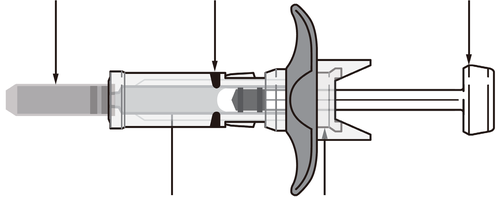
Medicinal product Needle safety device
Injection steps
Follow these steps carefully for each Hulio injection with the pre-filled syringe:
Step 1 – Choose and prepare the injection site
The pre-filled syringe of Hulio is for subcutaneous use. Hulio
must be injected into the thigh or abdomen.
Rotate and change injection sites, keeping about 3 cm
apart from the previously used site.
If you are injecting into the abdomen, stay at least 5 cm
away from the navel.
- Do NOT inject into skin that is red, hardened, bruised or painful.
- Do NOT inject into scars or stretch marks.
- If you suffer from psoriasis, do NOT inject into raised, thick, red or scaly patches.
- Do NOT inject through clothing. Remove any clothing that may interfere with the injection.
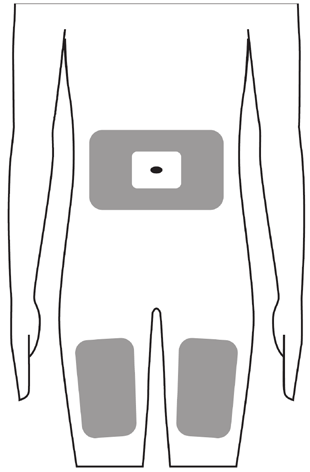
Abdomen or thighs
Step 2 – Wash your hands
Wash your hands thoroughly with soap and water.
Step 3 – Prepare the injection site
Rub the skin at the chosen injection site with an alcohol wipe.
- Wait for the skin to dry, do not blow on it to dry it.
- Do NOT touch this area again before the injection. Step 4 - Remove the needle capRemove the needle cap from the syringe. A few small drops of liquid may come out of the needle, but this is normal. It is also normal to see air bubbles.
- Do NOT remove the needle cap until you are ready for the injection.
- Do not rotate or bend the needle cap while removing it to avoid damaging the needle.
- Do NOT touch or pull the plunger.
- Do NOT put the cap back on the needle or touch the needle with your fingers or let the needle touch other objects.
- Do NOT expel the air bubbles.
- Do NOT use the pre-filled syringe if it has fallen after removing the needle cap.
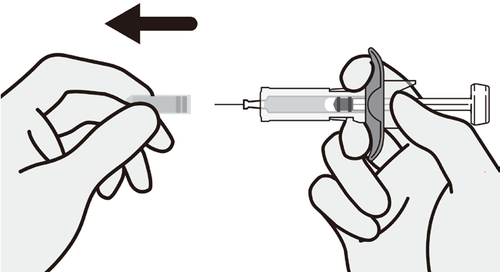
Step 5 – Pinch and hold the injection site
Gently pinch the injection site to lift
an area and hold it firmly.

Step 6 – Insert the needle into the site
With a quick, firm motion, like a dart,
insert the needle into the site at a 45° angle.
Be careful when inserting the needle so as not to inject
the contents into your fingers while holding the injection site.
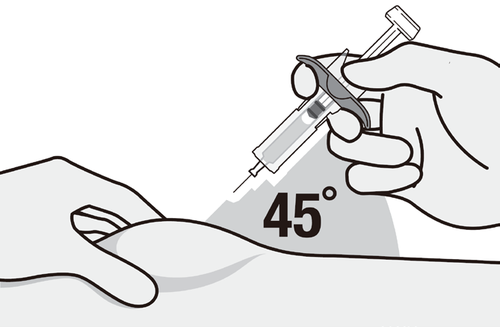
Step 7 – Inject Hulio
Once the needle is fully inserted, release the
pinched area.
Gently push the plunger all the way down until
all the medicine is injectedand the syringe is empty.
- If the plunger is not fully pressed down, the safety device will not activate to cover the needle.
- Do NOT move, shake or rotate the syringe during the injection.
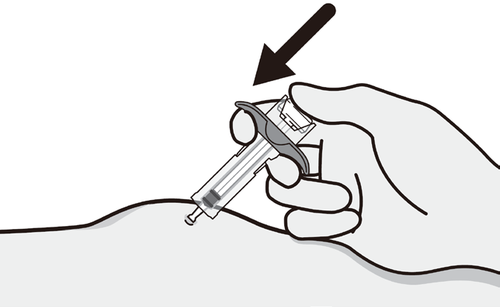
Step 8 – End of injection, remove the syringe
Remove the syringe from the injection site at the same
angle as insertion and release your thumb from the plunger.
Each pre-filled syringe has a safety device that
will retract and cover the needle after you release the plunger. If the needle
has not retracted, carefully place the used syringe in a
sharps container to avoid injury.
After the injection, if there is slight bleeding from the injection
site, gently press a gauze pad or cotton ball on the site for a few seconds – do NOT massage the injection
site. If necessary, cover the injection site with a
bandage.
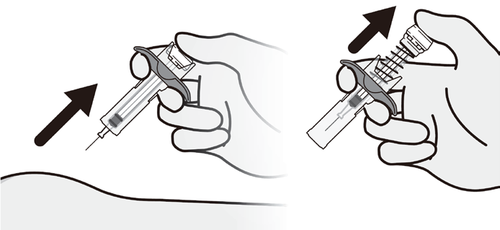
Step 9 – Dispose of the syringe and cap
Dispose of the used syringe and cap in a sharps container.
Check with your healthcare professional for instructions on the proper disposal of a full sharps container.
- Do NOT reuse the syringe.
- Do NOT put the cap back on the needle.
- Do NOT throw the sharps container in household waste.
- Do NOT recycle the used sharps container.
- Always keep the sharps container out of sight and reach of children.
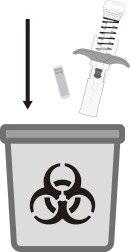
Hulio 40 mg injectable solution in pre-filled pen
adalimumab
Read this leaflet carefully before using this medicine as it contains important
information for you.
- Keep this leaflet. You may need to read it again.
- Your doctor will give you a patient reminder card containing important safety information that you need to know before administering Hulio and during treatment with Hulio. Keep this patient reminder card with you at all times and for 4 months after your last Hulio injection.
- If you have any questions, ask your doctor or pharmacist.
- This medicine has been prescribed only for you. Do not give it to other people, even if they have the same symptoms as you, as it could be dangerous.
- If you get any side effects, even those not listed in this leaflet, tell your doctor or pharmacist. See section 4.
Contents of this leaflet:
- 1. What Hulio is and what it is used for
- 2. What you need to know before you use Hulio
- 3. How to use Hulio
- 4. Possible side effects
- 5. How to store Hulio
- 6. Contents of the pack and other information
- 7. Instructions for use
1. What is Hulio and what is it used for
Hulio contains the active ingredient adalimumab, a medicine that works on the body's immune system (defense).
Hulio is indicated for the treatment of the following inflammatory diseases:
- rheumatoid arthritis,
- polyarticular juvenile idiopathic arthritis,
- arthritis associated with enthesitis,
- ankylosing spondylitis,
- axial spondyloarthritis without radiographic evidence of ankylosing spondylitis,
- psoriatic arthritis,
- psoriasis,
- hidradenitis suppurativa,
- Crohn's disease,
- ulcerative colitis,
- chronic non-infectious uveitis in adults and children.
The active ingredient contained in Hulio, adalimumab, is a monoclonal antibody. Monoclonal antibodies are proteins that bind to a specific target in the body.
The target of adalimumab is another protein called tumor necrosis factor (TNFα), which is
involved in the immune system (defense) and is present in higher concentrations in the
inflammatory diseases listed above. By binding to TNFα, Hulio decreases the inflammatory process of these diseases.
Rheumatoid Arthritis
Rheumatoid arthritis is an inflammatory disease of the joints.
Hulio is used to treat rheumatoid arthritis in adults. If you have moderate to severe rheumatoid arthritis, other disease-modifying drugs, such as
methotrexate, may be initially administered. If you do not respond well enough to these medicines, you will be given Hulio to
treat rheumatoid arthritis.
Hulio can also be used to treat severe, active, and progressive rheumatoid arthritis
without prior treatment with methotrexate.
Hulio may slow the progression of damage to the cartilage and bones of the joints, caused
by the disease, and improve physical function.
Generally Hulio is used with methotrexate. If your doctor decides that treatment with
methotrexate is not appropriate, Hulio may be administered alone.
Polyarticular Juvenile Idiopathic Arthritis and Arthritis Associated with Enthesitis
Polyarticular juvenile idiopathic arthritis and arthritis associated with enthesitis are inflammatory diseases
of the joints that usually begin to manifest during childhood.
Hulio is used to treat polyarticular juvenile idiopathic arthritis in children and adolescents of
ages 2 to 17 years and arthritis associated with enthesitis in children and adolescents of 6 – 17 years of age.
Initially, other disease-modifying medicines, such as
methotrexate, may be administered. If these medicines do not work well enough, you will be given Hulio to
treat juvenile idiopathic polyarticular arthritis or arthritis associated with enthesitis.
Ankylosing Spondylitis and Axial Spondyloarthritis without Radiographic Evidence of Ankylosing Spondylitis
Ankylosing spondylitis and axial spondyloarthritis without radiographic evidence of spondylitis
ankylosing are inflammations of the spine.
Hulio is used to treat ankylosing spondylitis and axial spondyloarthritis without radiographic evidence
of ankylosing spondylitis in adults. If you suffer from ankylosing spondylitis or axial spondyloarthritis without radiographic evidence of ankylosing spondylitis, you will first take other
medicines. If these medicines do not work well enough, patients will be given Hulio
to reduce the signs and symptoms of their disease.
Psoriatic Arthritis
Psoriatic arthritis is an inflammatory disease of the joints associated with psoriasis.
Hulio is used to treat psoriatic arthritis in adults. Hulio may slow the progression of damage
to the cartilage and bones of the joints, caused by the disease, and improve physical function.
Plaque Psoriasis in Adults and Children
Plaque psoriasis is an inflammatory skin condition that causes red, scaly, and hardened patches of skin covered with silvery scales. Plaque psoriasis can also affect the nails,
causing them to break, thicken, and lift from the nail bed, which can be painful.
Psoriasis is believed to be caused by a problem with the body's immune system that leads to
increased production of skin cells.
Hulio is used to treat moderate to severe plaque psoriasis in adults. Hulio is
also used to treat severe plaque psoriasis in children and adolescents aged 4 to 17 years in
whom topical medicines and light UV treatment have not worked optimally or are not indicated.
Hidradenitis Suppurativa in Adults and Adolescents
Hidradenitis suppurativa (sometimes called inverse acne) is a chronic inflammatory skin disease that is often painful. Symptoms may include painful nodules and abscesses (cysts)
that may drain pus. It most frequently affects specific areas of the skin, such as the
submammary region, armpits, inner thighs, groin, and buttocks. Scars can also form in the affected areas.
Hulio is used to treat hidradenitis suppurativa in adults and adolescents aged 12 years and older. Hulio may reduce the number of nodules and abscesses you have and the pain that is often associated with
this disease. Initially, you may receive other medicines. If you do not respond well enough to
these medicines, you will be given Hulio.
Crohn's Disease in Adults and Children
Crohn's disease is an inflammation of the intestine.
Hulio is used to treat Crohn's disease in adults and children aged 6 to 17 years. If
you suffer from Crohn's disease, you will first be given other medicines. In the event that you do not
respond adequately to these medicines, you will be given Hulio to
reduce the typical symptoms of Crohn's disease.
Ulcerative Colitis in Adults and Children
Ulcerative colitis is an inflammation of the intestine.
Hulio is used to treat ulcerative colitis in adults and children aged 6 to 17 years. If you are
affected by ulcerative colitis, you will first take other medicines. If these medicines do not work well
enough, patients will be given Hulio to reduce the signs and symptoms of their disease.
Non-Infectious Uveitis in Adults and Children
Non-infectious uveitis is an inflammatory disease that affects certain parts of the eye. This
inflammation can lead to a decrease in vision and/or the presence of mobile bodies
in the eye (black spots or thin lines that move across the field of vision). Hulio works
by reducing this inflammation.
Hulio is used for the treatment of:
- Adults with non-infectious uveitis with inflammation affecting the back of the eye
- Children and adolescents aged 2 to 17 years with chronic non-infectious uveitis with inflammation affecting the front of the eye.
2. What you need to know before you use Hulio
Do not use Hulio
- If you are allergic to adalimumab or to any of the other ingredients of this medicine (listed in section 6).
- If you have a severe infection, including tuberculosis (see “Warnings and precautions”). It is important to tell your doctor if you have signs or symptoms of infection, such as e.g. fever, wounds, feeling tired, dental problems.
- If you have moderate or severe heart failure. It is important to tell your doctor if you have had or currently have a serious heart condition (see “Warnings and precautions”).
Warnings and precautions
Talk to your doctor or pharmacist before using Hulio.
Allergic reactions
In case of allergic reactions with symptoms such as a feeling of tightness in the chest, wheezing,
dizziness, swelling or skin rash, do not administer Hulio again and contact your doctor
immediately as, in rare cases, these reactions can be life-threatening.
Infections
- If you have an infection, including long-term infections or infections in a part of the body (for example, leg ulcers), consult your doctor before starting treatment with Hulio. If you have any doubts, contact your doctor.
- You may be more likely to get infections during treatment with Hulio. This risk may increase if your lung function is impaired. These infections can be serious and include tuberculosis, infections caused by viruses, fungi, parasites or bacteria or by other unusual infectious organisms and sepsis (blood poisoning). In rare cases these infections can be life-threatening. It is important to tell your doctor about the presence of symptoms such as fever, wounds, feeling tired or dental problems. Your doctor may advise temporarily stopping Hulio.
Tuberculosis (TB)
- Because cases of tuberculosis have occurred in patients treated with adalimumab, your doctor will need to check if you have signs or symptoms typical of tuberculosis before starting therapy with Hulio. This will involve a thorough medical assessment of the child's medical history and clinical examinations (e.g. a chest X-ray and a tuberculin test). The performance and results of these tests must be recorded in the patient reminder card. It is very important to tell your doctor if you have ever had tuberculosis, or if you have had close contact with people with tuberculosis. Tuberculosis can develop during therapy even if you have received preventive treatment for tuberculosis. Contact your doctor immediately if symptoms of tuberculosis (persistent cough, weight loss, fatigue, moderate fever) or other infections appear during or after therapy.
Travel/recurring infection
- Tell your doctor if you live in or travel to regions where fungal infections, such as histoplasmosis, coccidioidomycosis or blastomycosis, are common.
- Tell your doctor if you have had recurrent infections or if you have conditions that increase the risk of infection.
Hepatitis B virus
- Tell your doctor if you are a carrier of the hepatitis B virus (HBV), if you have an active infection with the hepatitis B virus or if you think you may be at risk of contracting the hepatitis B virus. Your doctor will test you for hepatitis B virus infection. Taking adalimumab can cause reactivation of the hepatitis B virus in subjects who are carriers of this virus. In some rare cases, especially if the patient is undergoing therapy with other drugs that suppress the immune system, reactivation of hepatitis B virus infection can be life-threatening.
Age over 65 years
- If you are over 65 years of age, you may be more susceptible to infections while taking Hulio. You and your doctor should pay particular attention to signs of infection while you are being treated with Hulio. It is important to inform your doctor if symptoms of infections such as fever, wounds, feeling tired or dental problems appear.
Surgery or dental procedures
- Before surgery or dental procedures, tell your doctor that you are taking Hulio. Your doctor may advise temporarily stopping Hulio.
Demyelinating diseases
- If you have or develop demyelinating diseases (a disease that affects the insulating layer around the nerves, such as multiple sclerosis), your doctor will decide whether to start or continue treatment with Hulio. Tell your doctor immediately if you experience symptoms such as changes in vision, weakness of arms or legs or numbness or tingling that affects any part of the body.
Vaccinations
- Certain vaccines contain live but attenuated bacterial or viral agents that cause diseases and should not be administered during treatment with Hulio in case they can cause infections.
- Check with your pediatrician before the child receives any vaccine.
- It is recommended that, if possible, children receive all vaccinations scheduled for their age before starting treatment with Hulio.
- If you have taken Hulio during pregnancy, the baby may have a higher risk of contracting an infection up to about five months after the last dose you took during pregnancy. It is important that you inform your pediatrician and other healthcare provider of your use of Hulio during pregnancy, so that they can decide when the baby should receive any type of vaccination.
Heart failure
- It is important to inform your doctor about any heart problems, both past and present. If you have mild heart failure and are receiving concomitant treatment with Hulio, your doctor will need to carefully assess and monitor your heart condition. If new symptoms of heart failure appear or existing symptoms worsen (e.g. shortness of breath or swelling of the feet), contact your doctor immediately.
Fever, bruising, bleeding or paleness
- In some patients, the body may not be able to produce a sufficient quantity of blood cells to help fight infections or stop bleeding. If you have persistent fever, bruising or easy bleeding or paleness, see your doctor immediately. The latter may decide to interrupt the therapy.
Cancer
- Very rarely, some types of tumors have occurred in patients, both children and adults, treated with adalimumab or other anti-TNF drugs. Patients with long-standing severe rheumatoid arthritis may have a higher than average risk of developing lymphoma (a cancer that affects the lymphatic system) and leukemia (cancers that affect the blood and bone marrow). If you are taking Hulio, the risk of developing lymphomas,
leukemia or other cancers may increase. In rare circumstances, a specific and serious type of lymphoma has been noted in patients treated with adalimumab. Some of these patients were also being treated with azathioprine or mercaptopurine. Tell your doctor if you are taking azathioprine or mercaptopurine with Hulio.
- In addition, cases of non-melanoma skin cancer have been observed in patients taking adalimumab. If new areas of skin damage appear during or after therapy or if the appearance of existing lesions or areas changes, report it to your doctor.
- There have been cases of neoplasms, in addition to lymphoma, in patients with a specific type of lung disease called chronic obstructive pulmonary disease (COPD) treated with another anti-TNF. If you suffer from COPD, or smoke heavily, you should discuss with your doctor whether treatment with an anti-TNF is appropriate.
Autoimmune disease
- Rarely, treatment with Hulio may lead to the manifestation of a syndrome such as lupus. Tell your pediatrician if symptoms such as persistent unexplained skin rash, fever, joint pain or fatigue appear.
Children and adolescents
- Do not give Hulio to children with polyarticular juvenile idiopathic arthritis and non-infectious chronic uveitis under the age of 2 years.
- Do not give Hulio to children with arthritis associated with enthesitis and Crohn's disease under the age of 6 years.
- Do not give Hulio to children with plaque psoriasis under the age of 4 years.
- Do not give Hulio to children with hidradenitis suppurativa under the age of 12 years.
- Do not use the pre-filled pen of 40 mg if doses other than 40 mg are recommended.
Other medicines and Hulio
Tell your doctor or pharmacist if you are taking, have recently taken or might take
any other medicines.
Hulio must not be taken at the same time as medicines containing anakinra
as active ingredient or abatacept. The combination of Hulio and anakinra or abatacept is not recommended based on a
possible increased risk of infections, including serious infections and other potential drug interactions. If you have any doubts, consult your doctor.
Hulio can be taken with methotrexate and other disease-modifying antirheumatic drugs (sulfasalazine, hydroxychloroquine, leflunomide and parenteral gold salts), steroids or
analgesics, including non-steroidal anti-inflammatory drugs (NSAIDs).
Pregnancy and breastfeeding
- You should consider using appropriate contraceptive measures to prevent pregnancy and continue using them for at least 5 months after the last therapy with Hulio.
- If you are pregnant, suspect you are pregnant or are planning to become pregnant, ask your doctor for advice on taking this medicine.
- Hulio should only be used during pregnancy if necessary.
- According to a pregnancy study, no increased risk of birth defects was found when the mother had received adalimumab during pregnancy, compared to mothers who had the same condition but had not received adalimumab.
- Hulio can be used during breastfeeding.
- If you take Hulio during pregnancy, the baby may have a higher risk of contracting an infection.
- It is important that you inform your pediatrician or other healthcare provider of your use of Hulio during pregnancy, before the baby receives any type of vaccination. For more information on vaccinations, see “Warnings and precautions”.
Driving and using machines
Hulio may affect, albeit only to a modest extent, the ability to drive, ride a bicycle or
use machinery. After taking Hulio, you may experience visual disturbances and the
sensation that the environment around you is rotating.
Hulio contains sodium and sorbitol
Each pre-filled pen of Hulio contains 38.2 mg of sorbitol. Sorbitol is a source of
fructose. If your doctor has told you that you have an intolerance to certain sugars or if you have been
diagnosed with hereditary fructose intolerance (HFI), a rare genetic disorder in which a person
is unable to metabolize fructose, tell your doctor before taking or receiving this
medicine (or that it is given to the child).
In addition, this medicine contains less than 1 mmol of sodium (23 mg) per pre-filled pen, i.e.
it is essentially ‘sodium-free’.
3. How to use Hulio
Use this medicine following the instructions of your doctor or pharmacist exactly. If you have
doubts, consult your doctor or pharmacist. Your doctor may prescribe a different concentration of Hulio if
you need a different dose.
Adults with rheumatoid arthritis, psoriatic arthritis, ankylosing spondylitis or axial spondylarthritis without
evidence of radiographic ankylosing spondylitis
The usual dose for adults with these conditions is 40 mg of adalimumab administered
every other week as a single dose.
In rheumatoid arthritis, methotrexate is continued during treatment with Hulio. If the doctor
decides that methotrexate treatment is not appropriate, Hulio can be administered alone.
If you have rheumatoid arthritis and are not receiving methotrexate in combination with Hulio treatment, your
doctor may decide to prescribe 40 mg of adalimumab every week or 80 mg every other week.
Children and adolescents with polyarticular juvenile idiopathic arthritis
Children and adolescents aged between 2 and 17 years and weighing between 10 kg and less than 30 kg
The recommended dose of Hulio is 20 mg every other week.
Children and adolescents aged between 2 and 17 years and weighing 30 kg or more
The recommended dose of Hulio is 40 mg every other week.
Children and adolescents with enthesitis-related arthritis
Children and adolescents aged between 6 and 17 years and weighing between 15 kg and less than 30 kg
The recommended dose of Hulio is 20 mg every other week.
Children and adolescents aged between 6 and 17 years and weighing 30 kg or more
The recommended dose of Hulio is 40 mg every other week.
Adults with psoriasis
The usual dose of Hulio for adults with psoriasis is an initial dose of 80 mg (via two 40 mg injections
on one day), followed by a dose of 40 mg, administered every other week, starting
the week after the initial dose. You must continue to inject the treatment
with Hulio for as long as indicated by your doctor. If the dose does not work well enough, your doctor
may increase the dose frequency to 40 mg every week or 80 mg every other week.
Children or adolescents with plaque psoriasis
Children and adolescents aged between 4 and 17 years and weighing between 15 kg and less than 30 kg
The recommended initial dose of Hulio is 20 mg, followed by 20 mg after one week. Then the
usual dose is 20 mg every other week.
Children and adolescents aged between 4 and 17 years and weighing 30 kg or more
The recommended initial dose of Hulio is 40 mg, followed by 40 mg after one week. Then the
usual dose is 40 mg every other week.
Adults with hidradenitis suppurativa
The usual dose in the case of hidradenitis suppurativa is an initial dose of 160 mg (via four
40 mg injections on one day or two 40 mg injections per day for two consecutive days), followed
by a dose of 80 mg (via two 40 mg injections on the same day) two weeks later. After
another two weeks, continue with a dose of 40 mg per week or 80 mg every other week, as
prescribed by your doctor.
It is recommended to use an antiseptic cleansing solution daily on the affected areas.
Adolescents with hidradenitis suppurativa aged 12 years or older, weighing 30 kg or more
The recommended dose of Hulio is an initial dose of 80 mg (two 40 mg injections on one day),
followed by 40 mg administered every other week starting one week after the initial dose. If
the dose does not work well enough, the pediatrician may increase the dose frequency to 40 mg every
week or 80 mg every other week.
It is recommended to use an antiseptic cleansing solution daily on the affected areas.
Adults with Crohn’s disease
The usual dose in the case of Crohn’s disease is initially 80 mg (via two 40 mg injections
on one day) followed by 40 mg every other week, starting after two weeks. If
a faster effect is needed, the doctor may prescribe an initial dose of 160 mg (via four
40 mg injections on one day or two 40 mg injections per day for two consecutive days) followed
by 80 mg (via two 40 mg injections on one day) after two weeks, and subsequently 40 mg
every other week. If the dose does not work well enough, the doctor may increase the dose frequency
to 40 mg every week or 80 mg every other week.
Children or adolescents with Crohn’s disease
Children or adolescents aged between 6 and 17 years and weighing less than 40 kg
The usual dose is initially 40 mg followed by 20 mg after two weeks. If a faster response is needed, the doctor may prescribe an initial dose of 80 mg (via two injections of
40 mg on one day) followed by 40 mg after two weeks.
Subsequently, the usual dose is 20 mg every other week. If the dose does not work well
enough, the doctor may increase the dose frequency to 20 mg every week.
Children or adolescents aged between 6 and 17 years and weighing 40 kg or more
The usual dose is initially 80 mg (via two 40 mg injections on one day) followed by
40 mg after two weeks. If a faster response is needed, the doctor may prescribe
an initial dose of 160 mg (via four 40 mg injections on one day or two 40 mg injections
per day for 2 consecutive days) followed by 80 mg (via two 40 mg injections on one day) after
two weeks.
Subsequently, the usual dose is 40 mg every other week. If the dose does not work well
enough, the doctor may increase the dose frequency to 40 mg every week or 80 mg every
other week.
Patients requiring a dose less than 40 mg should use the 20 mg injectable solution in
pre-filled syringe or the Hulio formulation in 40 mg vials.
Adults with ulcerative colitis
The usual dose of Hulio for adults with ulcerative colitis is initially 160 mg (via four
40 mg injections on one day or two 40 mg injections per day for two consecutive days) followed
by 80 mg (via two 40 mg injections on one day) two weeks later and subsequently 40 mg every
other week. If the dose does not work well enough, the doctor may increase the dose frequency
to 40 mg every week or 80 mg every other week.
Children or adolescents with ulcerative colitis
Children and adolescents aged 6 years and older and weighing less than 40 kg
The usual dose of Hulio is 80 mg (via two 40 mg injections on one day), followed by 40 mg
(via a single 40 mg injection) two weeks later. Subsequently, the usual dose is
40 mg every other week.
Patients who turn 18 years old while taking 40 mg every other week should continue the
prescribed dose.
Children and adolescents aged 6 years and older and weighing 40 kg or more
The usual dose of Hulio is 160 mg (via four 40 mg injections on one day or two injections
of 40 mg per day for two consecutive days) followed by 80 mg (via two 40 mg injections on one
day) after two weeks. Subsequently the usual dose is 80 mg every other week.
Patients who turn 18 years old while taking 80 mg every other week should continue the
prescribed dose.
Adults with non-infectious uveitis affecting the back of the eye
The usual dose for adults with non-infectious uveitis is an initial dose of 80 mg (via two
injections on one day), followed by 40 mg administered every other week starting one week
after the initial dose. You must continue to inject the treatment with Hulio for as long as indicated
by your doctor.
In non-infectious uveitis, corticosteroids or other drugs that affect the immune system
may be continued during treatment with Hulio. Hulio can be administered
as monotherapy.
Children and adolescents with chronic non-infectious uveitis
Children and adolescents aged between 2 and 17 years and weighing less than 30 kg
The usual dose of Hulio is 20 mg administered every other week with methotrexate.
The pediatrician may also prescribe an initial dose of 40 mg that can be administered one
week before starting the usual recommended dose.
Children and adolescents aged between 2 and 17 years and weighing 30 kg or more
The usual dose of Hulio is 40 mg administered every other week with methotrexate.
The pediatrician may also prescribe an initial dose of 80 mg) that can be administered one
week before starting the usual recommended dose.
For patients receiving a dose less than 40 mg, the 20 mg Hulio solution for injectable use in a pre-filled syringe or the 40 mg/0.8 mL injectable solution in a vial
(available from the pharmacist) must be used.
How and route of administration
Hulio is administered by injection under the skin (for subcutaneous use).
Detailed instructions on how to inject Hulio are provided in the Instructions for Use.
If you use more Hulio than you should
If you accidentally inject Hulio more frequently than you should, contact your doctor
informing them that you have taken more medicine than you should. Always keep the medicine box, even
if empty.
If you forget to use Hulio
If you forget to have an injection, you should inject the next dose of Hulio as soon as you remember.
Then resume the dose regularly according to the established dosage schedule.
If you stop using Hulio
The decision to stop using Hulio should be discussed with your doctor. Your symptoms may
return after discontinuation.
If you have any doubts about the use of this medicine, ask your doctor or pharmacist.
4. Possible side effects
Like all medicines, this medicine can cause side effects, although not everyone will experience them.
Most side effects are mild to moderate in form. However, some
may be serious and require urgent treatment.
Side effects may occur up to 4 months or more after the last injection of Hulio.
Contact a doctor urgentlyif you develop any of the following signs of an allergic reaction or
heart failure:
- severe skin rash, hives;
- swelling of the face, hands or feet;
- difficulty breathing, difficulty swallowing;
- shortness of breath on exertion or when lying down, or swollen feet;
- paleness, dizziness, persistent fever, easy bruising or bleeding.
Inform your doctor as soon as possibleif you notice any of the following reactions:
- signs and symptoms of infection such as fever, feeling unwell, sores, dental problems, burning when urinating, feeling weak or tired, or cough;
- symptoms of nerve problems, such as tingling, numbness, double vision or weakness in the legs;
- signs of skin cancer, such as swelling or an open sore that does not heal;
- signs and symptoms suggesting the onset of blood system disorders, such as persistent fever, bruising, bleeding, paleness.
The signs and symptoms described above may be signs of the following side effects, which have been
observed with adalimumab:
Very common(may affect up to 1 in 10 people)
- reactions at the injection site (including pain, swelling, redness or itching);
- respiratory tract infections (including cold, runny nose, sinusitis, sore throat and pneumonia);
- abnormal blood test results;
- headache;
- abdominal pain (stomach ache);
- nausea and vomiting;
- skin rash;
- bone and muscle pain.
Common(may affect up to 1 in 10 people)
- serious infections (including sepsis and influenza);
- intestinal infections (including gastroenteritis);
- skin infections (including cellulitis and herpes zoster infection);
- ear infections;
- oral infections (including dental infections and herpes simplex);
- reproductive system infections;
- urinary tract infections;
- fungal infections;
- infections affecting the joints;
- benign tumors;
- skin cancer;
- mild allergic reactions (including seasonal allergies);
- dehydration;
- mood changes (including depression);
- anxiety;
- sleep disorders;
- sensory disturbances such as tingling, pricking sensations or numbness;
- migraine;
- nerve root compression (including lower back pain and leg pain);
- visual disturbances;
- inflammation or swelling of eyes/eyelids;
- dizziness (feeling of spinning);
- feeling of a racing heartbeat;
- high blood pressure;
- flushed skin;
- bruise (blood accumulation outside of blood vessels);
- cough;
- asthma;
- shortness of breath;
- gastrointestinal bleeding;
- indigestion, bloating, heartburn;
- acidity/acid reflux;
- dry eye syndrome (including dry eyes and dry mouth);
- contusion;
- itchy skin rash;
- pruritus, skin inflammation (including eczema);
- nail breakage of fingers and toes;
- increased sweating;
- hair loss;
- new onset or worsening of psoriasis (red, scaly skin);
- muscle spasms;
- blood in urine;
- kidney problems;
- chest pain;
- edema (swelling);
- fever;
- reduced platelets in the blood, which increases the risk of bleeding or bruising;
- slow wound healing.
Uncommon(may affect up to 1 in 100 people):
- opportunistic infections (which include tuberculosis and other infections that occur when immune defenses are reduced);
- neurological infections (including viral meningitis);
- eye infections;
- bacterial infections;
- diverticulitis (inflammation and infection of the large intestine);
- cancer;
- lymphoma (cancer of the lymphatic system);
- immune system disorders that can affect lungs, skin and lymph nodes (which most commonly present as sarcoidosis);
- vasculitis (inflammation of blood vessels);
- tremor (shaking);
- neuropathy (nerve damage);
- stroke;
- hearing loss, tinnitus;
- irregular heartbeat;
- lung disease causing shortness of breath (including inflammation);
- pulmonary embolism (blockage of a pulmonary artery);
- excess fluid around the lungs;
- inflammation of the pancreas;
- difficulty swallowing;
- inflammation of the gallbladder, gallstones;
- fatty liver (accumulation of fat in liver cells);
- night sweats;
- scarring;
- abnormal muscle catabolism;
- systemic lupus erythematosus (including inflammation of the skin, heart, lungs, joints and other organs);
- interrupted sleep;
- impotence;
- inflammations.
Rare(may affect up to 1 in 1,000 people):
- leukemia (a cancer affecting the blood and bone marrow);
- severe allergic reaction with shock;
- multiple sclerosis;
- neurological disorders (such as optic nerve inflammation at the level of the eye and Guillain-Barré syndrome, a condition that can cause muscle weakness, abnormal sensations, tingling in the arms and upper body);
- acute myocardial infarction (cardiac arrest);
- pulmonary fibrosis (scarring of the lung);
- intestinal perforation (perforation/laceration of the intestine);
- hepatitis (inflammation of the liver);
- hepatitis B reactivation;
- autoimmune hepatitis (inflammation of the liver caused by your own immune system);
- cutaneous vasculitis (inflammation of the blood vessels of the skin);
- Stevens-Johnson syndrome;
- facial edema (swelling of the face) associated with allergic reactions;
- inflammatory skin rash;
- lupus-like syndrome;
- angioedema (localized swelling of the skin);
- lichenoid skin reaction (itchy, reddish-purple rash).
Not known(frequency cannot be estimated based on available data):
- T-cell hepatosplenic lymphoma (a rare blood cancer);
- Merkel cell carcinoma (a type of skin cancer);
- Kaposi's sarcoma, a rare cancer related to human herpes virus 8 infection. Kaposi's sarcoma most commonly manifests with purple lesions on the skin;
- liver failure;
- worsening of skin rash with muscle weakness;
- weight gain (weight gain has been small for most patients).
Reporting of side effects
If you get any side effects, even those not listed in this leaflet, tell your
doctor or pharmacist.
You can also report side effects directly through the national reporting system
reported in Annex V. By reporting side effects you can help provide more
information on the safety of this medicine.
5. How to store Hulio
Keep this medicine out of the sight and reach of children.
Do not use this medicine after the expiry date which is stated on the label/blister/box
after “Exp.”. The expiry date refers to the last day of that month.
Store in a refrigerator (2°C – 8°C). Do not freeze.
Store the pre-filled pen in the outer carton to protect the medicine from light.
Alternative storage conditions:
When necessary (for example when travelling) a single pre-filled pen of Hulio can be
stored at room temperature (up to 25°C) for a maximum period of 8 weeks – ensure
to protect the medicine from light.
Once it has been removed from the refrigerator to be stored at room temperature, the pen
must be used within 8 weeks or discarded,even if it is placed back in the refrigerator.
You must record the date on which the pen is removed from the refrigerator for the first time and the date after which
the pen must be discarded.
Do not dispose of any medicine in wastewater or household waste. Ask your pharmacist how to
dispose of medicines you no longer use. This will help protect the environment.
6. Content of the pack and other information
- The active substance is adalimumab.
- The other ingredients are monosodium glutamate, sorbitol, methionine, polysorbate 80, hydrochloric acid and water for injections (see section 2 - "Hulio contains sodium and sorbitol”).
Description of the appearance of Hulio and content of the pack
Hulio 40 mg solution for injection in pre-filled pen is supplied as a sterile solution of 40 mg of
adalimumab dissolved in 0.8 mL of a clear or slightly opalescent solution, from colourless to
pale brownish-yellow.
The Hulio pre-filled pen is made of plastic with a cap and a needle with a needle cap.
Each pack contains 1, 2, 4 or 6 pre-filled pens with respectively 2, 2, 4 or 6
alcohol swabs.
Each pack contains 1, 2, 4 or 6 pre-filled pens
It is possible that not all packs are marketed.
Hulio may also be available in a vial for paediatric use or in a pre-filled syringe.
Marketing Authorisation Holder
Biosimilar Collaborations Ireland Limited
Unit 35/36
Grange Parade,
Baldoyle Industrial Estate,
Dublin 13
DUBLIN
Ireland
D13 R20R
Manufacturer
Biosimilar Collaborations Ireland Limited
Block B, The Crescent Building, Santry Demesne
Dublin
D09 C6X8
Ireland
For further information on this medicinal product, contact the local representative of the marketing
authorisation holder:
België/Belgique/Belgien
Tél/Tel:
Lietuva
Tel:
България
Тел:
Luxembourg/Luxemburg
Tél/Tel:
Česká republika
Tel:
Magyarország
Tel.:
Danmark
Tlf:
Malta
Tel.:
Deutschland
Tel:
Nederland
Tel:
Eesti
Tel:
Norge
Tlf:
Ελλάδα
Τηλ.:
Österreich
Tel:
España
Tel:
Polska
Tel: 0
France
Biocon Biologics France S.A.S
Tel:
Portugal
Tel:
Hrvatska
Tel:
România
Tel:
Ireland
Tel:
Slovenija
Tel:
Ísland
Sími: +345 800 4316
Slovenskárepublika
Tel:
Italia
.
Tel:
Suomi/Finland
Puh/Tel:
Κύπρος
Τηλ:
Sverige
Tel:
Latvija
Tel:
Other sources of information
More detailed information on this medicinal product is available on the website of the European
Medicines Agency: http://www.ema.europa.eu .
Instructions for use
Read the instructions carefully and follow them step by step. You will receive instructions from your doctor,
nurse or healthcare professional on how to perform an injection with a Hulio pre-filled pen. If anything is
unclear, ask your doctor or nurse.
Do not proceed with self-injection until you are sure you understand how to prepare and administer the
injection. After adequate instructions, the injection can be performed by you or another person,
such as a family member or a nurse.
Each pre-filled pen is for single use only and contains a dose of 40 mg of adalimumab.
Do not mix Hulio solution with other medicines.
To help you remember on which days of the week you should perform the Hulio injection, it may be
useful to write them down on a calendar or diary.
Before you start
Find a quiet area with a flat, clean and well-lit work surface, and gather all the
materials you need to perform the injection.
The materials you need are:
- 1 pre-filled pen
- 1 alcohol swab (not included in the Hulio pack)
- 1 sharps container (not included in the Hulio pack)
- 1 gauze pad or cotton ball (not included in the Hulio pack)
If you do not have the necessary materials, ask your nurse or pharmacist.
Preparing the pre-filled pen
The pre-filled pens must be stored in a refrigerator (between 2°C and 8°C).
- Remove one pen from the refrigerator at least 30 minutes before use to allow the contents to reach room temperature. Do NOT use other heat sources, such as a microwave or hot water, to warm the pen. Do NOT put the pen back in the refrigerator after it has reached room temperature.
- Check the expiry date printed on the pen. Do NOT use the pen after the expiry date.
- Check the pen to make sure the medicine is at or near the fill line (you may need to shake it to see it) and that the liquid is clear, colourless and does not contain particles. Do NOT use the pen if the liquid is not near the fill line. Do NOT use the pen if the liquid is cloudy, discoloured or contains particles.
Orange activator Indicator
(needle inside) Orange medicinal liquid

Cap Viewing
window
Needle fill
line
Injection steps
Follow these steps carefully for each Hulio injection with the pre-filled pen:
Step 1 – Choose and prepare the injection site
The Hulio pre-filled pen is for subcutaneous use. It must
be injected into the thigh or abdomen.
You must rotate and change the injection sites, keeping about 3 cm of
distance from the previously used site.
If you are injecting into the abdomen, stay at least 5 cm of
distance from the navel.
- Do NOT inject into reddened, hardened, bruised or painful skin.
- Do NOT inject into scars or stretch marks.
- If you suffer from psoriasis, do NOT inject into raised, thick, reddened or scaly patches.
- Do NOT inject through clothing. Remove any clothing that may interfere with the injection.
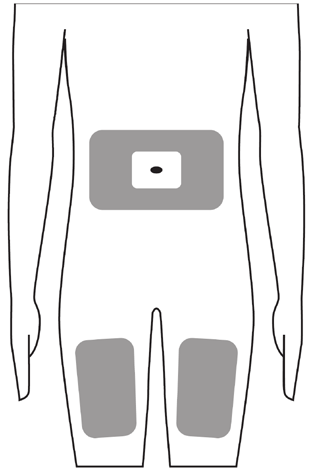
Abdomen or thighs
Step 2 – Wash your hands
Wash your hands thoroughly with soap and water.
Step 3 – Prepare the injection site
Rub the skin at the chosen injection site with an alcohol swab.
- Wait for the skin to dry, do not blow to dry it.
- Do NOT touch this area again before the injection. Step 4 - Remove the cap from the penPull the needle cap off the pen. Some small drops of liquid may come out of the needle, but this is normal. It is also normal to see air bubbles.
- Do NOT remove the needle cap until you are ready for the injection.
- Pull the needle cap off the pen, WITHOUT twisting it.
- Do NOT put the cap back on the needle or touch the needle with your fingers or let the needle touch other objects.
- Do NOT touch the orange activator with your fingers (the needle comes out from that point).
- Do NOT use the pen if it has fallen onto a hard surface, as the components inside the pen may have broken.
- Do NOT use the pen if the needle cap has been lost and
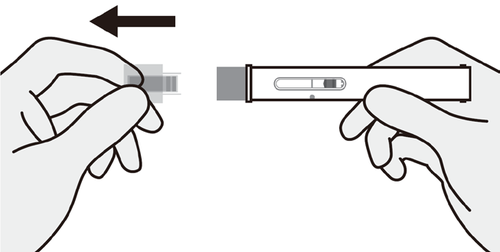
is not firmly attached.
Step 5 – Pinch and hold the injection site
Gently pinch the injection site to lift
an area and hold it firmly.
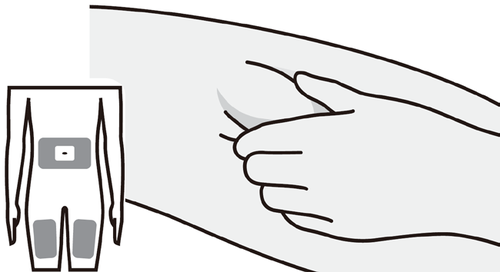
Step 6 – Position the pen
Position the end of the orange activator of the pen on a
injection site.
Hold the pen at a 90° angle to the injection site and with the
viewing window visible to the user.
Be careful to position the pen so as not to inject
the contents into your fingers while holding the injection site.
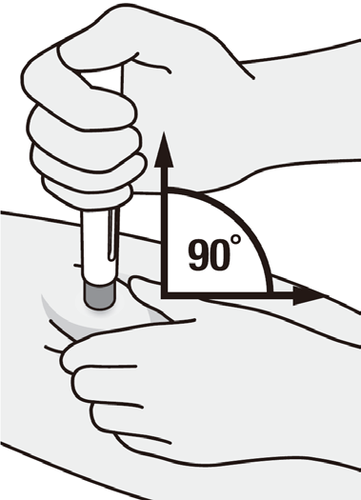
Step 7 – Start the injection
Step 8 – Hold until the 2nd “CLICK” and 10 seconds
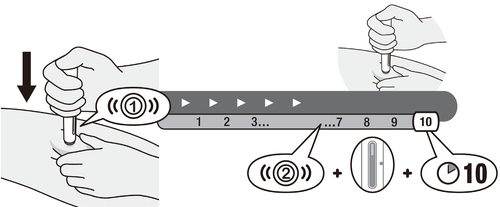
Step 7.
Firmly push the body of the pen
against the injection site to activate the
orange activator and start the injection.
Continue to hold the pen pressed against the injection
site after the 1st CLICK. The 1st “CLICK” signals
the start of the injection.
In the viewing window, the orange
indicator advances indicating the progress
of the injection.
Step 8.
Continue to hold the body of the pen pressed
against the injection site until one of the
following events occurs:
- you hear a 2nd “CLICK”,
- 10 seconds have passed,
- the orange indicator stops and appears completely blocked in the viewing window.
- Do NOT move, shake or rotate the pen during the injection. Step 9 - End of injection, remove the penImmediately remove the pen from the injection site.
After the injection, if there is slight bleeding from the
injection site, gently press a gauze pad or cotton ball on the site for a few seconds – do NOT massage the
injection site. If necessary, cover the injection site with a
bandage.
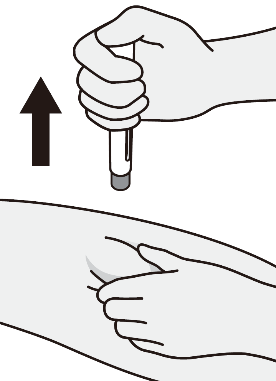
Step 10 – Dispose of the pen and cap
Dispose of the used pen and cap in a sharps container.
Check with your healthcare professional for instructions on proper disposal of the full sharps container.
- Do NOT reuse the pen.
- Do NOT put the cap back on the needle.
- Do NOT throw the sharps container in household waste.
- Do NOT recycle the used sharps container.
- Always keep the sharps container out of sight and reach
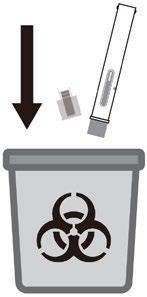
of children.

Уже начали прием и появились вопросы?
Обсудите свое состояние и дальнейшие шаги с врачом онлайн.
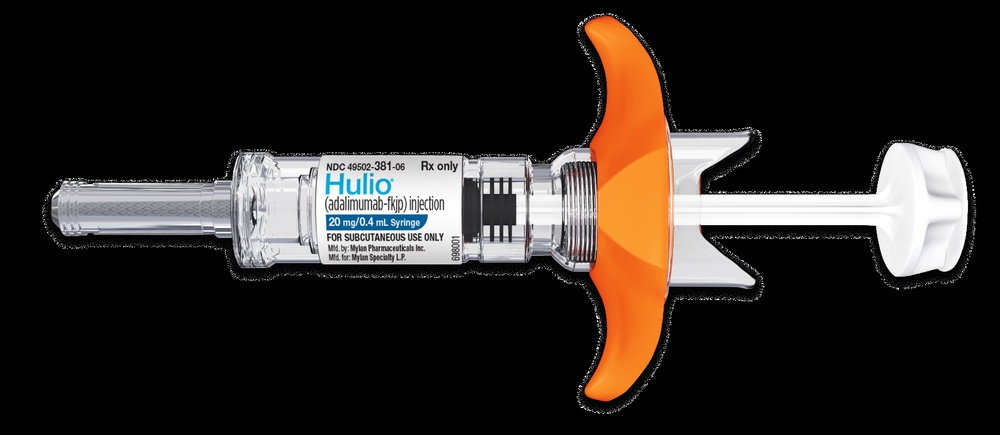
- Страна регистрации
- Форма выпускаInjectable solution, 40 MG
- Код АТХL04AB04
- Действующее вещество
- Отпускается по рецептуДа
- Производитель
- Информация на этой странице носит справочный характер и не является медицинской консультацией. Перед началом приема лекарства обязательно проконсультируйтесь с врачом.
- Аналоги ULIOФорма выпуска: Injectable solution, 20 MGДействующее вещество: АдалимумабПроизводитель: AMGEN EUROPE B.V.Отпускается по рецептуФорма выпуска: Injectable solution, 40 MGДействующее вещество: АдалимумабПроизводитель: SANDOZ GMBHОтпускается по рецептуФорма выпуска: Injectable solution, 40 mgДействующее вещество: АдалимумабПроизводитель: STADA ARZNEIMITTEL AGОтпускается по рецепту
Аналоги ULIO в других странах
Лекарства с тем же действующим веществом, доступные в других странах.
Аналог ULIO в Испания
Аналог ULIO в Украина
Получите рецепт на ULIO онлайн
Заполните форму за 2 минуты
Расскажите о симптомах, истории болезни и нужном препарате.
Выберите врача или мы назначим
Выберите специалиста или мы подберём ближайшего доступного врача.
Врач рассматривает ваш случай
Обычно в течение 30 минут. Может задать уточняющие вопросы в чате.
Получите в любой аптеке
Электронный рецепт отправляется на вашу почту — действителен по всей Польше.
Часто задаваемые вопросы
ULIO требует рецепта в Италия. Вы можете уточнить у врача онлайн, подходит ли это лекарство для вашей ситуации.
Действующее вещество ULIO — Адалимумаб. Эта информация помогает определить лекарства с тем же составом под другими торговыми названиями.
ULIO производится компанией BIOSIMILAR COLLABORATIONS IRELAND LIMITED. Упаковка и торговое название могут отличаться в зависимости от дистрибьютора.
Врачи, включая Семейные врачи, Психиатры, Дерматологи, Кардиологи, Эндокринологи, Гастроэнтерологи, Пульмонологи, Нефрологи, Ревматологи, Гематологи, Инфекционисты, Аллергологи, Гериатры, Педиатры, Онкологи, могут оценить целесообразность применения ULIO с учетом вашей ситуации и местных правил. Вы можете записаться на онлайн-консультацию, чтобы обсудить возможные варианты.
Польша имеет хорошо развитую систему здравоохранения в крупных городах, таких как Варшава, Краков, Вроцлав и Гданьск. Аптеки широко доступны и работают в соответствии с действующим законодательством, обеспечивая доступ к рецептурным препаратам.
Вы можете купить ULIO в Варшаве, Кракове, Вроцлаве или Гданьске в любой аптеке при наличии действующего рецепта.
Чтобы получить рецепт, вы можете воспользоваться Oladoctor:
Другие лекарства с тем же действующим веществом (Адалимумаб) включают AMJEVITA, EFIYA, UKYNDRA. Они могут отличаться торговым названием или формой выпуска, но содержат одинаковый терапевтический компонент. Перед изменением лечения рекомендуется проконсультироваться с врачом.
