



AMGEVITA 20 mg Инъекционный Раствор

Рассмотрение рецепта онлайн
Врач рассмотрит ваш случай и примет решение о назначении рецепта, если это медицински оправдано.

Поговорите с врачом об этом лекарстве
Обсудите симптомы и возможные дальнейшие шаги на онлайн-консультации.



Инструкция по применению AMJEVITA
Содержание инструкции
- AMGEVITA 20 mg injectable solution in pre-filled syringe, 40 mg injectable solution in pre-filled syringe
- AMGEVITA 40 mg solution for injection in pre-filled pen
- AMGEVITA 20 mg injectable solution in pre-filled syringe, 40 mg injectable solution in pre-filled syringe, 80 mg injectable solution in pre-filled syringe
- AMGEVITA 40 mg solution for injection in pre-filled pen
- AMGEVITA 80 mg injectable solution in pre-filled pen
AMGEVITA 20 mg injectable solution in pre-filled syringe, 40 mg injectable solution in pre-filled syringe
adalimumab
Read this leaflet carefully before using this medicine as it contains important
information for you.
- Keep this leaflet. You may need to read it again.
- Your doctor will give you a Patient Reminder Card, which contains important safety information that you need to know before administering AMGEVITA and during treatment with AMGEVITA. Keep this Patient Reminder Card.
- If you have any questions, ask your doctor or pharmacist.
- This medicine has been prescribed only for you. Do not give it to other people, even if their symptoms are the same as yours, as it could be dangerous.
- If any side effects occur, including those not listed in this leaflet, tell your doctor or pharmacist. See section 4.
Contents of this leaflet
- 1. What AMGEVITA is and what it is used for
- 2. What you need to know before you use AMGEVITA
- 3. How to use AMGEVITA
- 4. Possible side effects
- 5. How to store AMGEVITA
- 6. Contents of the pack and other information
1. What is AMGEVITA and what is it used for
AMGEVITA contains the active ingredient adalimumab, a medicine that acts on the body's immune system (defense).
AMGEVITA is indicated for the treatment of inflammatory diseases listed below:
- Rheumatoid arthritis
- Polyarticular juvenile idiopathic arthritis
- Enthesitis-related arthritis
- Ankylosing spondylitis
- Axial spondyloarthritis without radiographic evidence of ankylosing spondylitis
- Psoriatic arthritis
- Plaque psoriasis
- Hidradenitis suppurativa
- Crohn’s disease
- Ulcerative colitis
- Non-infectious uveitis
The active ingredient contained in AMGEVITA, adalimumab, is a human monoclonal antibody. Monoclonal antibodies are proteins that bind to a specific target.
The target of adalimumab is a protein called tumor necrosis factor (TNFα), which is involved in the immune system (defense) and is present at higher concentrations in the inflammatory diseases listed above. By binding to TNFα, AMGEVITA decreases the inflammatory process of these diseases.
Rheumatoid arthritis
Rheumatoid arthritis is an inflammatory disease of the joints.
AMGEVITA is used to treat rheumatoid arthritis in adults. If you suffer from moderate to severe rheumatoid arthritis, other disease-modifying drugs, such as methotrexate, may initially be taken. If the response to these drugs is not satisfactory, you will be given AMGEVITA to treat rheumatoid arthritis.
AMGEVITA can also be used for the treatment of severe, active and progressive rheumatoid arthritis without prior treatment with methotrexate.
AMGEVITA slows the progression of cartilage and bone damage in the joints caused by the disease and improves physical function.
Generally AMGEVITA is used with methotrexate. If your doctor decides that treatment with methotrexate is not appropriate, AMGEVITA can be administered alone.
Polyarticular juvenile idiopathic arthritis and enthesitis-related arthritis
Polyarticular juvenile idiopathic arthritis and enthesitis-related arthritis are inflammatory diseases of the joints that usually first appear during childhood.
AMGEVITA is used to treat polyarticular juvenile idiopathic arthritis in patients from 2 years of age and enthesitis-related arthritis in patients from 6 years of age. Other disease-modifying drugs, such as methotrexate, may be administered at diagnosis. If the response to these drugs is not adequate, you will be given AMGEVITA for the treatment of polyarticular juvenile idiopathic arthritis or enthesitis-related arthritis.
Ankylosing spondylitis and axial spondyloarthritis without radiographic evidence of ankylosing spondylitis
Ankylosing spondylitis and axial spondyloarthritis without radiographic evidence of ankylosing spondylitis are inflammations of the spine.
AMGEVITA is used to treat ankylosing spondylitis and axial spondyloarthritis without radiographic evidence of ankylosing spondylitis in adults. If you have ankylosing spondylitis or axial spondyloarthritis without radiographic evidence of ankylosing spondylitis, you will first take other medications. If you are unable to obtain an adequate response with these medications, you will take AMGEVITA to reduce the signs and symptoms of the disease.
Psoriatic arthritis
Psoriatic arthritis is an inflammation of the joints associated with psoriasis.
AMGEVITA is used to treat psoriatic arthritis in adults. AMGEVITA slows the damage to the cartilage and bones of the joints caused by the disease and improves physical function.
Plaque psoriasis in adults and children
Plaque psoriasis is a skin condition that causes red, scaly, and hardened patches of skin covered with silvery scales. Plaque psoriasis can also affect the nails, causing them to break, thicken, and lift from the nail bed, which can be painful. Psoriasis is believed to be caused by a problem with the body's immune system that leads to increased production of skin cells.
AMGEVITA is used to treat moderate to severe plaque psoriasis in adults.
AMGEVITA is also used to treat severe plaque psoriasis in children and adolescents from 4 to 17 years of age for whom topical therapy and phototherapy have not worked optimally or are not indicated.
Hidradenitis suppurativa in adults and adolescents
Hidradenitis suppurativa (sometimes called inverse acne) is a chronic inflammatory disease of the skin and is often painful. Symptoms may include painful nodules and abscesses (boils) that can drain pus. It most frequently affects specific areas of the skin, such as the submammary region, armpits, inner thighs, groin, and buttocks. Scars can also form in the affected areas.
AMGEVITA is used to treat hidradenitis suppurativa in adults and adolescents from 12 years of age. AMGEVITA may reduce the number of nodules and abscesses you have and the pain that is often associated with this disease. Initially, you may receive other medications. If you do not respond well enough to these medications, you will receive AMGEVITA.
Crohn’s disease in adults and children
Crohn’s disease is an inflammation of the digestive tract.
AMGEVITA is used to treat Crohn’s disease in adults and children from 6 to 17 years of age. If you suffer from Crohn’s disease, you will first be given other medications. If you do not respond adequately to these medications, you will be given AMGEVITA to reduce the signs and symptoms of Crohn’s disease.
Ulcerative colitis in adults and children
Ulcerative colitis is an inflammation of the large intestine.
AMGEVITA is used to treat moderate to severe ulcerative colitis in adults and children from 6 to 17 years of age. If you have ulcerative colitis, you may initially take other medications. If you are unable to obtain an adequate response with these medications, you will take AMGEVITA to reduce the signs and symptoms of the disease.
Non-infectious uveitis in adults and children
Non-infectious uveitis is an inflammatory disease that affects certain parts of the eye.
AMGEVITA is used for the treatment of
- Adults with non-infectious uveitis with inflammation affecting the back of the eye.
- Children from 2 years of age with chronic non-infectious uveitis with inflammation affecting the front of the eye.
This inflammation can lead to a decrease in vision and/or the presence of mobile bodies in the eye (black spots or thin lines that move across the visual field). AMGEVITA works by reducing this inflammation.
2. What you need to know before using AMGEVITA
Do not use AMGEVITA:
- if you are allergic to adalimumab or to any of the other ingredients of this medicine (listed in section 6).
- if you have a severe infection, including active tuberculosis, sepsis (blood infection) or other opportunistic infections (unusual infections associated with a weakened immune system) (see “Warnings and precautions”). It is important to tell your doctor if you have signs or symptoms of infection, such as fever, wounds, feeling tired, dental problems.
- if you have moderate or severe heart failure. It is important to tell your doctor if you have had or have a serious heart condition (see “Warnings and precautions”).
Warnings and precautions
Talk to your doctor or pharmacist before using AMGEVITA:
Allergic reactions
- If you experience allergic reactions with symptoms such as a feeling of tightness in the chest, wheezing, dizziness, swelling or skin rash, do not administer AMGEVITA again and contact your doctor immediately as, in rare cases, these reactions can be life-threatening.
Infections
- If you have an infection, including long-term or localized infections (for example, leg ulcers), consult your doctor before starting treatment with AMGEVITA. If you have doubts, contact your doctor.
- You may be more likely to get infections during treatment with AMGEVITA. This risk may increase if your lung function is impaired. These infections can be serious and include tuberculosis, infections caused by viruses, fungi, parasites or bacteria, or other opportunistic infections and sepsis which, in rare cases, can be life-threatening. It is important to tell your doctor about the presence of symptoms such as fever, wounds, feeling tired or dental problems. Your doctor may recommend temporarily stopping AMGEVITA.
Tuberculosis
- Because cases of tuberculosis have occurred in patients treated with adalimumab, before starting therapy with AMGEVITA your doctor must check if you have signs or symptoms of tuberculosis. This will involve collecting a detailed medical assessment including your medical history and appropriate clinical tests (e.g. a chest X-ray and a tuberculin test). The performance and results of these tests must be recorded on the Patient Reminder Card. It is very important to tell your doctor if you have ever had tuberculosis, or if you have had close contact with people with tuberculosis.
- Tuberculosis can develop during therapy even if you have received preventive treatment for tuberculosis.
- Contact your doctor immediately if symptoms of tuberculosis (persistent cough, weight loss, fatigue, mild fever) or other infections appear during or after therapy.
Travel/recurring infection
- Tell your doctor if you live in or travel to regions where fungal infections, such as histoplasmosis, coccidioidomycosis or blastomycosis, are endemic.
- Tell your doctor if you have had recurring infections or if you have conditions that increase the risk of infection.
Hepatitis B virus
- Tell your doctor if you are a carrier of the hepatitis B virus (HBV), if you have an active infection with the hepatitis B virus or if you think you may be at risk of contracting the hepatitis B virus. Your doctor should test you for hepatitis B virus infection. Taking AMGEVITA may cause reactivation of the hepatitis B virus in subjects who are carriers of this virus. In some rare cases, especially if the patient is undergoing therapy with other drugs that suppress the immune system, reactivation of the hepatitis B virus can put the patient's life at risk.
Age over 65 years
- If you are over 65 years of age, you may be more susceptible to infections while taking AMGEVITA. You and your doctor should pay particular attention to signs of infection while you are being treated with AMGEVITA. It is important to tell your doctor if symptoms of infections such as fever, wounds, feeling tired or dental problems appear.
Surgery or dental procedures
- Before surgery or dental procedures, tell your doctor that you are taking AMGEVITA. Your doctor may advise temporarily stopping AMGEVITA.
Demyelinating disease
- If you have or develop a demyelinating disease such as multiple sclerosis, your doctor will decide whether to start or continue treatment with AMGEVITA. Tell your doctor immediately if you experience symptoms such as changes in vision, weakness of arms or legs, or numbness or tingling that affects any part of the body.
Vaccinations
- Certain vaccines contain live but weakened forms of bacteria or viruses that cause diseases that can cause infections and should not be administered during treatment with AMGEVITA. Consult your doctor before getting vaccinated. In children, it is recommended, if possible, to implement the vaccination schedule provided for, in accordance with current vaccination guidelines, before starting therapy with AMGEVITA.
- If you have taken AMGEVITA during pregnancy, the baby may have a higher risk of contracting such an infection up to about 5 months after the last dose you took during pregnancy. It is important that you inform your pediatrician or other healthcare provider of your use of AMGEVITA during pregnancy, so that they can decide when the baby should receive any type of vaccination.
Heart failure
- If you have mild heart failure and are receiving concomitant treatment with AMGEVITA, your doctor should carefully assess and monitor your heart condition. It is important to tell your doctor if you have or have had heart problems. If new symptoms of heart failure or if existing symptoms worsen (for example, shortness of breath or swelling of the feet), contact your doctor immediately. Your doctor will decide if you can take AMGEVITA.
Fever, bruising, bleeding or paleness
- In some patients, the body may not be able to produce enough blood cells to help fight infections or stop bleeding. If you have persistent fever, bruising or easy bleeding or paleness, contact your doctor immediately. Your doctor may decide to stop therapy.
Cancer
- In patients, both children and adults, undergoing treatment with adalimumab or other anti-TNF drugs, some types of cancer have very rarely occurred. Patients with severe, long-standing rheumatoid arthritis may have a higher than average risk of developing lymphoma (a cancer that affects the lymphatic system) and leukemia (a cancer that affects the blood and bone marrow).
- If you are taking AMGEVITA, the risk of developing lymphoma, leukemia or other cancers may increase. In rare circumstances, a specific and serious type of lymphoma has been observed in patients treated with adalimumab. Some of these patients were also taking azathioprine or 6-mercaptopurine. Tell your doctor if you are taking azathioprine or 6-mercaptopurine with AMGEVITA.
- In addition, cases of non-melanoma skin cancer have been observed in patients taking adalimumab. If new skin lesions appear during therapy, or subsequently, or if the appearance of existing lesions changes, report it to your doctor.
- There have been cases of cancers, other than lymphoma, in patients with a specific type of lung disease called Chronic Obstructive Pulmonary Disease (COPD) treated with another anti-TNF. If you suffer from COPD, or smoke heavily, you should discuss with your doctor whether treatment with an anti-TNF is appropriate.
Autoimmune diseases
- Rarely, treatment with AMGEVITA may lead to the manifestation of a lupus-like syndrome. Tell your doctor if you experience symptoms such as a persistent unexplained skin rash, fever, joint pain or fatigue.
In order to improve the traceability of this medicine, the doctor or pharmacist must record the
name of the medicine and the batch number of the product that has been administered to you on your patient card. You can note these details in case you are asked for them in the future.
Children and adolescents
- Vaccinations: if possible, children should have had all vaccinations before using AMGEVITA.
- Do not give AMGEVITA to children with polyarticular juvenile idiopathic arthritis under the age of 2 years.
- Do not give AMGEVITA to children with plaque psoriasis under the age of 4 years.
- Do not give AMGEVITA to children with Crohn’s disease or ulcerative colitis under the age of 6 years.
Other medicines and AMGEVITA
Tell your doctor or pharmacist if you are taking, have recently taken or might take
any other medicines.
AMGEVITA can be taken with methotrexate and other disease-modifying antirheumatic drugs (sulfasalazine, hydroxychloroquine, leflunomide and parenteral gold salts), steroids or analgesics, including non-steroidal anti-inflammatory drugs (NSAIDs).
AMGEVITA must not be taken at the same time as medicines containing anakinra or abatacept as the active ingredient due to the increased risk of contracting serious infections. If you have doubts, consult your doctor.
Pregnancy and breastfeeding
- You should consider using adequate contraceptive measures to prevent pregnancy and continue using them for at least 5 months after the last therapy with AMGEVITA.
- If you are pregnant, suspect you are pregnant or are planning to become pregnant, ask your doctor for advice about taking this medicine.
- AMGEVITA should only be used during pregnancy if necessary.
- According to a pregnancy study, no increased risk of birth defects was found when the mother received AMGEVITA during pregnancy, compared to mothers with the same condition who had not received AMGEVITA.
- AMGEVITA can be used during breastfeeding.
- If you take AMGEVITA during pregnancy, the baby may have a higher risk of contracting an infection.
- It is important that you inform your pediatrician or other healthcare provider of your use of AMGEVITA during pregnancy, before the baby receives any type of vaccination. For more information on vaccinations, see “Warnings and precautions”.
Driving and using machines
AMGEVITA may affect, albeit only to a modest extent, your ability to drive, ride a bicycle or use machines. After taking AMGEVITA, you may experience visual disturbances and a sensation that the environment around you is rotating (dizziness).
AMGEVITA contains sodium
This medicine contains less than 1 mmol of sodium (23 mg) per 0.8 mL dose, i.e., it is
essentially “sodium-free”.
3. How to use AMGEVITA
Use this medicine following exactly the instructions of your doctor or pharmacist. If you have
doubts, consult your doctor or pharmacist.
Adults with rheumatoid arthritis, psoriatic arthritis, ankylosing spondylitis or axial spondyloarthritis without
evidence of radiographic ankylosing spondylitis.
AMGEVITA is injected under the skin (subcutaneous use). In adult patients with rheumatoid arthritis,
ankylosing spondylitis, axial spondyloarthritis without radiographic evidence of ankylosing spondylitis
and psoriatic arthritis, the usual dosage is 40 mg every other week, administered in a single
dose.
In rheumatoid arthritis, methotrexate is continued during treatment with AMGEVITA.
If your doctor decides that methotrexate is not appropriate, AMGEVITA can be administered alone.
If you have rheumatoid arthritis and are not receiving methotrexate in combination with treatment with
AMGEVITA, your doctor may decide to prescribe 40 mg every week or 80 mg every other week.
Children, adolescents and adults with polyarticular juvenile idiopathic arthritis
Children and adolescents starting from 2 years of age and weighing between 10 kg and less than 30 kg
The recommended dose of AMGEVITA is 20 mg every other week.
Children, adolescents and adults starting from 2 years of age and weighing 30 kg or more
The recommended dose of AMGEVITA is 40 mg every other week.
Children, adolescents and adults with enthesitis-related arthritis
Children and adolescents starting from 6 years of age and weighing between 15 kg and less than 30 kg
The recommended dose of AMGEVITA is 20 mg every other week.
Children, adolescents and adults starting from 6 years of age and weighing 30 kg or more
The recommended dose of AMGEVITA is 40 mg every other week.
Adults with plaque psoriasis
The usual dose for adults with plaque psoriasis is a starting dose of
80 mg (via two 40 mg injections on one day), followed by a dose of 40 mg, administered
every other week, starting the week after the initial dose. You should
continue treatment with AMGEVITA for the time indicated by your doctor. Based on clinical response,
your doctor may increase the dose to 40 mg every week or 80 mg every other week.
Children and adolescents with plaque psoriasis
Children and adolescents between 4 and 17 years of age and weighing between 15 kg and less than 30 kg
The recommended dose of AMGEVITA is a starting dose of 20 mg, followed by a dose of 20 mg the
week after. Subsequently, the usual dose is 20 mg every other week.
Children and adolescents between 4 and 17 years of age and weighing 30 kg or more
The recommended dose of AMGEVITA is a starting dose of 40 mg, followed by a dose of 40 mg the
week after. Subsequently, the usual dose is 40 mg every other week.
Adults with hidradenitis suppurativa
The usual dose for hidradenitis suppurativa is a starting dose of 160 mg (via four 40 mg injections
on one day or two 40 mg injections per day for two consecutive days), followed by a
dose of 80 mg (via two 40 mg injections on one day) two weeks later. After another two
weeks, continue with a dose of 40 mg per week or 80 mg every other week, as prescribed
by your doctor. It is recommended to use an antiseptic cleansing solution daily on the affected areas.
Adolescents with hidradenitis suppurativa aged between 12 and 17 years, weighing 30 kg or more
The recommended dose of AMGEVITA is a starting dose of 80 mg (via two 40 mg injections in
one day), followed by 40 mg administered every other week starting one week after the initial dose. If there is an inadequate response to 40 mg of AMGEVITA every other week, your doctor may
increase the dose to 40 mg every week or 80 mg every other week.
It is recommended to use an antiseptic cleansing solution daily on the affected areas.
Adults with Crohn’s disease
In the case of Crohn’s disease, the usual dose is initially 80 mg (via two 40 mg injections on one
day) followed by 40 mg every other week, after two weeks. If a faster response is needed, your doctor may prescribe an initial dose of 160 mg (via four injections of
40 mg on one day or two 40 mg injections per day for two consecutive days) followed by
80 mg (via two 40 mg injections on one day) two weeks later, and subsequently
40 mg every other week. Depending on the clinical response, your doctor may increase the dose to
40 mg every week or 80 mg every other week.
Children and adolescents with Crohn’s disease
Children and adolescents between 6 and 17 years of age and weighing less than 40 kg
Initially, the usual dose regimen is 40 mg, followed by 20 mg two weeks later. If a faster response is needed, your doctor may prescribe an initial dose of 80 mg (as two injections of
40 mg on one day) followed by 40 mg two weeks later.
Subsequently, the usual dose is 20 mg every other week. Depending on the child’s response, the doctor may increase the frequency of the dose to 20 mg every week.
Children and adolescents between 6 and 17 years of age and weighing 40 kg or more
Initially, the usual dose regimen is 80 mg (via two 40 mg injections on one day), followed
by 40 mg two weeks later. If a faster response is needed, your doctor may prescribe a
initial dose of 160 mg (as four 40 mg injections on one day or as two 40 mg injections
per day for two consecutive days) followed by 80 mg (via two 40 mg injections on one day) two
weeks later.
Subsequently, the usual dose is 40 mg every other week. Depending on the child’s response, the doctor may increase the dose to 40 mg every week or 80 mg every other week.
Adults with ulcerative colitis
For adults with ulcerative colitis, the usual initial dose of AMGEVITA is 160 mg (via
four 40 mg injections on one day or two 40 mg injections per day for two consecutive days)
followed by 80 mg (via two 40 mg injections on one day) two weeks later, then 40 mg every
other week. Depending on the clinical response, your doctor may increase the dose to 40 mg every
week or 80 mg every other week.
Children and adolescents with ulcerative colitis
Children and adolescents starting from 6 years of age and weighing less than 40 kg
The usual dose of AMGEVITA is 80 mg (via two 40 mg injections on one day) followed by
40 mg (via a single 40 mg injection) after two weeks. Subsequently, the usual dose is
40 mg every other week.
Patients who turn 18 years old while taking 40 mg every other week should continue the prescribed dose.
Children and adolescents starting from 6 years of age and weighing 40 kg or more
The usual dose of AMGEVITA is 160 mg (via four 40 mg injections on one day or two
40 mg injections per day for two consecutive days) followed by 80 mg (via two 40 mg injections in
one day) after two weeks. Subsequently the usual dose is 80 mg every other week.
Patients who turn 18 years old while taking 80 mg every other week should continue the prescribed dose.
Adults with non-infectious uveitis
For adults with non-infectious uveitis, the usual dose is an initial dose of 80 mg, (via two
40 mg injections on one day), followed by 40 mg administered every other week starting one
week after the initial dose. You should continue to inject AMGEVITA for as long as indicated
by your doctor.
In non-infectious uveitis, corticosteroids or other drugs that affect the immune system
may be continued during treatment with AMGEVITA. AMGEVITA can also be
administered as monotherapy.
Children and adolescents with chronic non-infectious uveitis starting from 2 years of age
Children and adolescents starting from 2 years of age and weighing less than 30 kg
The usual dose of AMGEVITA is 20 mg administered every other week with methotrexate.
Your doctor may also prescribe an initial dose of 40 mg that can be administered one
week before starting the usual dose.
Children and adolescents starting from 2 years of age and weighing 30 kg or more
The usual dose of AMGEVITA is 40 mg administered every other week with methotrexate.
Your doctor may also prescribe an initial dose of 80 mg that can be administered one
week before starting the usual dose.
How and route of administration
AMGEVITA is administered by injection under the skin (subcutaneous injection).
Detailed instructions on how to inject AMGEVITA are provided in the section “Instructions for use”.
If you use more AMGEVITA than you should
If you accidentally inject AMGEVITA more frequently than prescribed by your doctor or
pharmacist, contact your doctor or pharmacist informing them that you have taken more medicine. Always keep
the box of this medicine, even if empty.
If you forget to use AMGEVITA
If you forget to give an injection, you should inject the next dose of AMGEVITA as soon as you
remember. Then resume the dose regularly according to the established dosage schedule.
If you stop taking AMGEVITA
The decision to stop using AMGEVITA must be discussed with your doctor. Symptoms
may return after discontinuation.
If you have any doubts about the use of this medicine, ask your doctor or pharmacist.
4. Possible side effects
Like all medicines, this medicine can cause side effects, although not everybody gets them.
Most side effects are mild to moderate. However, some can be serious and require treatment. Side effects can
occur up to 4 months after the last injection of AMGEVITA.
Tell your doctor immediately if you notice any of the following signs of an allergic reaction or of
heart failure:
- severe rash, hives or other signs of an allergic reaction;
- swelling of the face, hands and feet;
- difficulty breathing, difficulty swallowing;
- shortness of breath with exertion or when lying down, or swelling of the feet.
Tell your doctor as soon as possible if you notice any of the following reactions:
- signs of infection such as fever, feeling unwell, sores, dental problems, burning when urinating;
- fatigue or weakness;
- cough;
- tingling;
- numbness;
- double vision;
- weakness of the arms or legs;
- signs of skin cancer such as a bump or sore that does not heal;
- signs and symptoms suggesting the development of blood disorders (blood), such as persistent fever, bruising, bleeding, paleness.
The symptoms described above may be signs of the following side effects, which have been observed
with adalimumab.
Very common (may affect more than 1 in 10 people)
- reactions at the injection site (including pain, swelling, redness or itching);
- respiratory tract infections (including cold, runny nose, sinus infection and lung infection);
- headache;
- abdominal pain;
- nausea and vomiting;
- rash;
- musculoskeletal pain.
Common (may affect up to 1 in 10 people)
- serious infections (including sepsis and influenza);
- intestinal infections (including gastroenteritis);
- skin infections (including cellulitis and herpes zoster infection);
- ear infections;
- oral infections (including dental infections and cold sores);
- reproductive system infections;
- urinary tract infection;
- fungal infections;
- joint infections;
- benign tumors;
- skin cancer;
- allergic reactions (including seasonal allergies);
- dehydration;
- mood swings (including depression);
- anxiety;
- difficulty sleeping;
- sensory disturbances such as tingling, pricking or numbness;
- migraine;
- nerve root compression (including back pain and leg pain);
- vision disturbances;
- eye inflammation;
- eyelid inflammation and eye swelling;
- dizziness (feeling faint or room spinning);
- fast heartbeat;
- high blood pressure;
- flushing;
- bruising;
- cough;
- asthma;
- shortness of breath;
- gastrointestinal bleeding;
- dyspepsia (indigestion, bloated stomach, heartburn);
- acid reflux;
- dry eye syndrome (including dry eyes and dry mouth);
- itching;
- itchy rash;
- bruising;
- skin inflammation (such as eczema);
- nail breakage of the fingers and toes;
- increased sweating;
- hair loss;
- onset or worsening of psoriasis;
- muscle spasms;
- blood in the urine;
- kidney problems;
- chest pain;
- edema;
- fever;
- decreased platelets in the blood, which increases the risk of bleeding or bruising;
- difficulty healing.
Uncommon (may affect up to 1 in 100 people)
- opportunistic infections (which include tuberculosis and other infections that occur when the immune defenses are lowered);
- neurological infections (including viral meningitis);
- eye infections;
- bacterial infections;
- diverticulitis (inflammation and infection of the large intestine);
- cancer, including cancer affecting the lymphatic system (lymphoma) and melanoma (skin cancer);
- immune system disorders that may affect lungs, skin and lymph nodes (most commonly presenting as sarcoidosis);
- vasculitis (inflammation of blood vessels);
- tremor;
- neuropathy;
- stroke;
- hearing loss, ringing in the ears;
- irregular heartbeat such as skipped beats;
- heart problems that can cause shortness of breath or swelling of the ankles;
- heart attack;
- formation of a sac in the wall of a major artery, inflammation and blood clot in a vein, blockage of a blood vessel;
- lung diseases that cause shortness of breath (including inflammation);
- pulmonary embolism (blockage of a lung artery);
- pleural effusion (abnormal collection of fluid in the pleural space);
- inflammation of the pancreas causing severe abdominal and back pain;
- difficulty swallowing;
- facial edema;
- inflammation of the gallbladder, gallstones;
- fatty liver;
- night sweats;
- scarring;
- abnormal muscle breakdown;
- systemic lupus erythematosus (including inflammation of skin, heart, lungs, joints and other organs);
- interrupted sleep;
- impotence;
- inflammations.
Rare (may affect up to 1 in 1,000 people)
- leukemia (cancer of the blood in the bone marrow);
- severe allergic reaction with shock;
- multiple sclerosis;
- neurological conditions (such as optic nerve inflammation and Guillain-Barré syndrome, which can cause muscle weakness, abnormal sensations, tingling in the arms and upper body);
- cardiac arrest;
- pulmonary fibrosis (scarring of the lungs);
- intestinal perforation (hole in the wall of the intestine);
- hepatitis (inflammation of the liver);
- hepatitis B reactivation;
- autoimmune hepatitis (inflammation of the liver caused by your own immune system);
- cutaneous vasculitis (inflammation of the blood vessels in the skin);
- Stevens-Johnson syndrome (life-threatening reaction with flu-like symptoms and rash with blisters);
- facial edema associated with allergic reactions;
- erythema multiforme (inflammatory skin rash);
- lupoid-like syndrome;
- angioedema (localized swelling of the skin);
- lichenoid skin reaction (itchy red-purple rash).
Not known (frequency cannot be estimated from the available data)
- T-cell hepatic-splenic lymphoma (a rare blood cancer that is often fatal);
- Merkel cell carcinoma (a type of skin cancer);
- Kaposi's sarcoma, a rare form of cancer related to human herpes virus 8 infection. Kaposi's sarcoma most commonly manifests with purple lesions on the skin;
- liver failure;
- worsening of a condition called dermatomyositis (which manifests as skin rash accompanied by muscle weakness);
- weight gain (weight gain has been low for most patients).
Some of the side effects observed with adalimumab may be asymptomatic and can
only be detected through blood tests. These include:
Very common (may affect more than 1 in 10 people)
- low white blood cell count;
- low red blood cell count;
- increased blood lipids;
- increased liver enzymes.
Common (may affect up to 1 in 10 people)
- increased white blood cell count;
- decreased platelet count;
- increased uric acid in the blood;
- abnormal sodium in the blood;
- decreased calcium in the blood;
- decreased phosphate in the blood;
- increased blood sugar;
- increased lactate dehydrogenase in the blood;
- autoantibodies present in the blood;
- decreased potassium in the blood.
Uncommon (may affect up to 1 in 100 people)
- bilirubin in the blood elevated (liver blood test).
Rare (may affect up to 1 in 1,000 people)
- low white blood cell, red blood cell and platelet count.
Reporting of side effects
If you get any side effects, even those not listed in this leaflet, tell your
doctor or pharmacist. You can also report side effects directly through the national
reporting system listed in Annex V. By reporting side effects you can help to
provide more information on the safety of this medicine.
5. How to store AMGEVITA
Keep this medicine out of the sight and reach of children.
Do not use this medicine after the expiry date which is stated on the label/blister and the packaging
after Exp. The expiry date refers to the last day of that month.
Store in a refrigerator (2°C – 8°C). Do not freeze.
Store in the original package to protect the medicine from light.
A single pre-filled syringe of AMGEVITA can be stored at temperatures up to a
maximum of 25°C for a maximum period of 14 days. The pre-filled syringe must be protected from
light and must be discarded if not used within the 14-day period.
Do not dispose of any medicine in wastewater or household waste. Ask your pharmacist how to
dispose of medicines you no longer use. This will help protect the environment.
6. Contents of the pack and other information
What AMGEVITA contains
- The active substance is adalimumab. Each pre-filled syringe contains 20 mg of adalimumab in 0.4 mL of solution or 40 mg of adalimumab in 0.8 mL of solution.
- The other excipients are glacial acetic acid, sucrose, polysorbate 80, sodium hydroxide and water for injections.
Description of the appearance of AMGEVITA and contents of the pack
AMGEVITA is a clear solution from colourless to slightly yellow.
Each pack contains 1 pre-filled, single-use syringe of 20 mg (with a yellow plunger).
Each pack contains 1, 2, 4 or 6 pre-filled, single-use syringes of 40 mg (with a blue plunger).
Marketing Authorisation Holder and Manufacturer
Amgen Europe B.V.
Minervum 7061
4817 ZK Breda
The Netherlands
Marketing Authorisation Holder
Amgen Europe B.V.
Minervum 7061
4817 ZK Breda
The Netherlands
Manufacturer
Amgen Technology Ireland UC
Pottery Road
Dun Laoghaire
Co Dublin
Ireland
Manufacturer
Amgen NV
Telecomlaan 5-7
1831 Diegem
Belgium
For further information on this medicinal product, contact the local representative of the Marketing Authorisation Holder:
België/Belgique/Belgien
s.a. Amgen n.v.
Tél/Tel: +32 (0)2 7752711
Amgen Switzerland AG Vilniaus filialas
Tel: +370 5 219 7474
България
Амджен България ЕООД
Тел.: +359 (0)2 424 7440
Luxembourg/Luxemburg
s.a. Amgen
Belgique/Belgien
Tél/Tel: +32 (0)2 7752711
Česká republika
Amgen s.r.o.
Tel: +420 221 773 500
Magyarország
Amgen Kft.
Tel.: +36 1 35 44 700
Danmark
Amgen, filial af Amgen AB, Sverige
Tlf: +45 39617500
Malta
Amgen S.r.l.
Italy
Tel: +39 02 6241121
Deutschland
Amgen GmbH
Tel: +49 89 1490960
Nederland
Amgen B.V.
Tel: +31 (0)76 5732500
Eesti
Amgen Switzerland AG Vilniaus filialas
Tel: +372 586 09553
Norge
Amgen AB
Tlf: +47 23308000
Ελλάδα
Amgen Ελλάς Φαρμακευτικά Ε.Π.Ε.
Τηλ: +30 210 3447000
Österreich
Amgen GmbH
Tel: +43 (0)1 50 217
España
Amgen S.A.
Tel: +34 93 600 18 60
Polska
Amgen Biotechnologia Sp. z o.o.
Tel.: +48 22 581 3000
France
Amgen S.A.S.
Tél: +33 (0)9 69 363 363
Portugal
Amgen Biofarmacêutica, Lda.
Tel: +351 21 4220606
Hrvatska
Amgen d.o.o.
Tel: +385 (0)1 562 57 20
România
Amgen România SRL
Tel: +4021 527 3000
Ireland
Amgen Ireland Limited
Tel: +353 1 8527400
Slovenija
AMGEN zdravila d.o.o.
Tel: +386 (0)1 585 1767
Ísland
Vistor hf.
Sími: +354 535 7000
Slovenská republika
Amgen Slovakia s.r.o.
Tel: +421 2 321 114 49
Italia
Amgen S.r.l.
Tel: +39 02 6241121
Suomi/Finland
Amgen AB, sivuliike Suomessa/Amgen AB, filial
i Finland
Puh/Tel: +358 (0)9 54900500
Kύπρος
C.A. Papaellinas Ltd
Τηλ: +357 22741 741
Sverige
Amgen AB
Tel: +46 (0)8 6951100
Latvija
Amgen Switzerland AG Rīgas filiāle
Tel: +371 257 25888
Altre fonti d’informazioni
More detailed information on this medicinal product is available on the website of the European Medicines Agency, http://www.ema.europa.eu .
-----------------------------------------------------------------------------------------------------------------------------
Instructions for use:
AMGEVITA, single-use pre-filled syringe
For subcutaneous use
| c Guide to the parts | |
Before use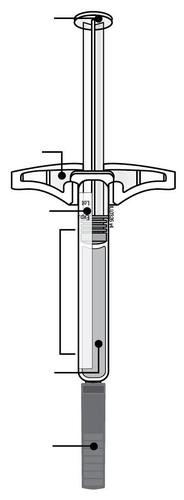 | a After use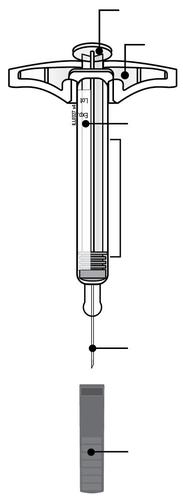 |
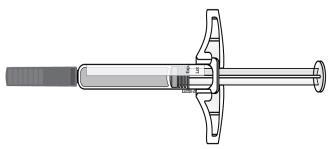
| Plunger Flange Label and expiry date Syringe body Medicinal liquid n Needle cap inserted | Used plunger Flange r a Label and expiry date F Used syringe body l Used needle e Needle cap disinserted |
| n Important: The needle is inside | |
Important
Before using a pre-filled syringe of AMGEVITA, read this information:
Using the pre-filled syringes of AMGEVITA
- It is important not to try to administer the injection yourself without you or the person assisting you having been trained beforehand.
- Do not usea pre-filled syringe of AMGEVITA if it has fallen onto a hard surface. Some parts of the AMGEVITA pre-filled syringe may have been broken even if the damage is not visible. Use a new AMGEVITA pre-filled syringe.
Step 1: Preparation
A.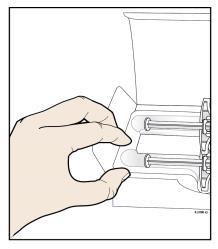 | F Remove the number of AMGEVITA pre-filled syringes you need from the pack.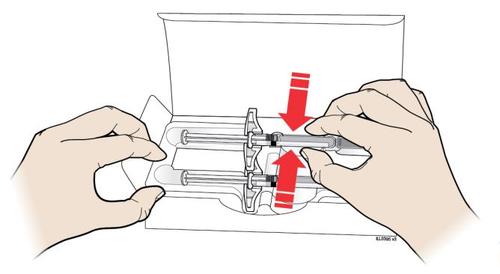 |
To remove the l syringe from the tray and grip it by the body. d a While removing the syringe, hold Firmly grip Here the edge of the tray with i your index finger or thumb. l Put the box with unused syringes back in the refrigerator. a For safety reasons: t
| |
B.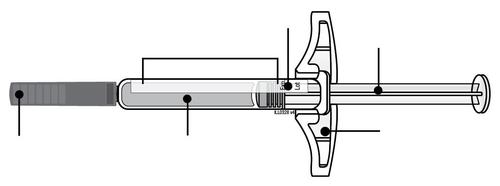 | Inspect the AMGEVITA pre-filled syringe. |
Syringe body Expiry date or on the label Plunger c a m r Needle cap Medicinal liquid Flange inserted Always grip the syringe by the body of the syringe. Ensure that the medicinal liquid in the syringe is clear and colourless to slightly yellow. a
| |
| C. | Gather everything you need to administer the injection(s). |
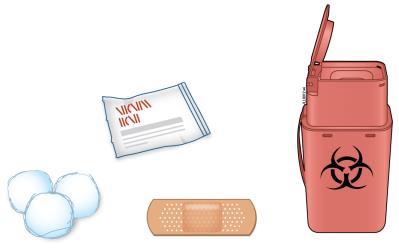
n a Wash your hands thoroughly with soap and water. On a clean, well-lit surface, place a new AMGEVITA pre-filled syringe. i Other items needed, but not included in the pack: l
  | |
D.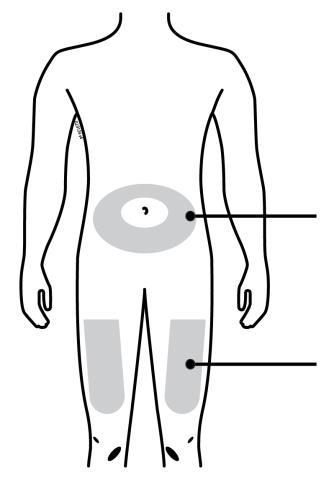 | Prepare and clean the injection site(s). |
o c a Abdomen m Thigh r a F You can use:
| |
Step 2: Preparing for the injection
E.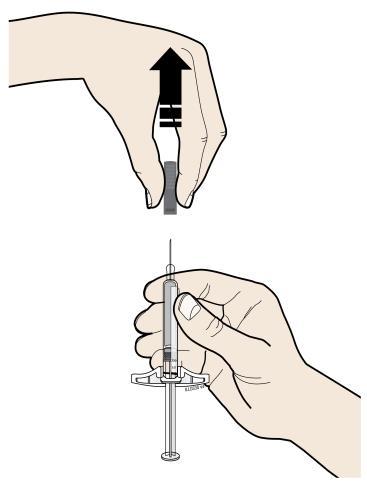 | o When you are ready to administer the injection, firmly pull off the needle cap away from your body. |
c a m r a F It is normal to notice a drop of liquid on the end of the needle. l e
| |
F.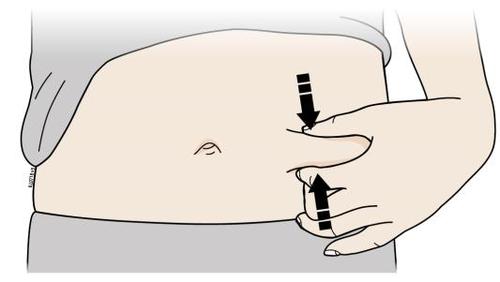 | n Pinch the skin to create a safe injection surface. |
| a i Firmly grasp a section of skin with your thumb and fingers, forming a fold approximately 5 centimetres wide. l Important: Hold the skin fold firmly during the injection. a | |
Step 3: Injection
| G. | o Hold the skin fold. With the needle cap removed, insert the syringe into the skin at an angle of 45 to 90 degrees. |
c a m r Do not hold your finger on the plunger while inserting the needle.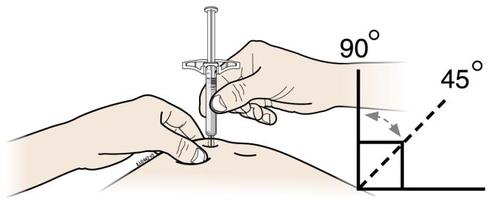 | |
| H. | F Press the plunger all the way down, applying slow and steady pressure until it no longer moves. |
a d e l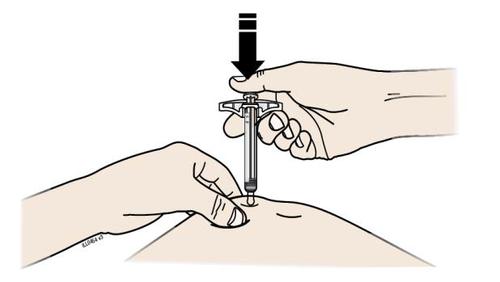 | |
| I. | n Once finished, release your thumb from the plunger and gently withdraw the syringe from the skin. |
I t a l i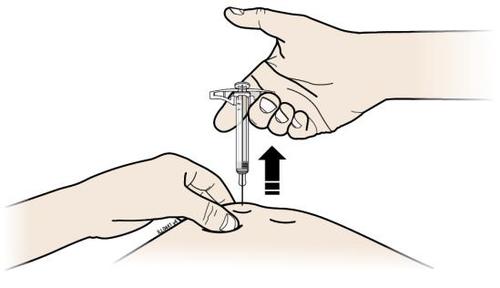 | |
Step 4: Final procedures
J.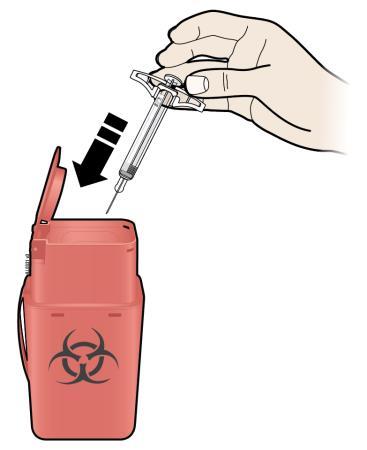 | Dispose of the used syringe and needle cap. |
o c a m r a F
| |
| K. | Examine the injection site. |
| a i If you notice any blood, press a cotton ball or gauze over it. Do not rub the injection site. If necessary, apply a plaster. | |
AMGEVITA 40 mg solution for injection in pre-filled pen
adalimumab
Read this leaflet carefully before using this medicine as it contains important
information for you.
- Keep this leaflet. You may need to read it again.
- Your doctor will give you a Patient Reminder Card, which contains important safety information that you need to know before administering AMGEVITA and during treatment with AMGEVITA. Keep this Patient Reminder Cardfor the Patient.
- If you have any questions, ask your doctor or pharmacist.
- This medicine has been prescribed for you only. Do not give it to other people, even if their symptoms are the same as yours, as it could be harmful.
- If any side effects occur, including those not listed in this leaflet, tell your doctor or pharmacist. See section 4.
Contents of this leaflet
- 1. What AMGEVITA is and what it is used for
- 2. What you need to know before you use AMGEVITA
- 3. How to use AMGEVITA
- 4. Possible side effects
- 5. How to store AMGEVITA
- 6. Contents of the pack and other information
1. What is AMGEVITA and what is it used for
AMGEVITA contains the active ingredient adalimumab, a medication that acts on the body's immune system (defense).
AMGEVITA is indicated for the treatment of the inflammatory diseases listed below:
- Rheumatoid arthritis
- Polyarticular juvenile idiopathic arthritis
- Enthesitis-related arthritis
- Ankylosing spondylitis
- Axial spondyloarthritis without radiographic evidence of ankylosing spondylitis
- Psoriatic arthritis
- Plaque psoriasis
- Hidradenitis suppurativa
- Crohn’s disease
- Ulcerative colitis
- Non-infectious uveitis
The active ingredient contained in AMGEVITA, adalimumab, is a human monoclonal antibody. Monoclonal antibodies are proteins that bind to a specific target.
The target of adalimumab is a protein called tumor necrosis factor (TNFα), which is involved in the immune system (defense) and is present at higher concentrations in the inflammatory diseases listed above. By binding to TNFα, AMGEVITA decreases the inflammatory process of these diseases.
Rheumatoid arthritis
Rheumatoid arthritis is an inflammatory disease of the joints.
AMGEVITA is used to treat rheumatoid arthritis in adults. If you suffer from moderate to severe rheumatoid arthritis, other disease-modifying drugs, such as methotrexate, may initially be taken. If the response to these drugs is not satisfactory, you will be given AMGEVITA to treat rheumatoid arthritis.
AMGEVITA can also be used for the treatment of severe, active and progressive rheumatoid arthritis without prior treatment with methotrexate.
AMGEVITA slows the progression of damage to the cartilage and bones of the joints caused by the disease and improves physical function.
Generally AMGEVITA is used with methotrexate. If the doctor decides that treatment with methotrexate is not appropriate, AMGEVITA can be administered alone.
Polyarticular juvenile idiopathic arthritis and enthesitis-related arthritis
Polyarticular juvenile idiopathic arthritis and enthesitis-related arthritis are inflammatory diseases of the joints that usually first appear during childhood.
AMGEVITA is used to treat polyarticular juvenile idiopathic arthritis in patients from 2 years of age and enthesitis-related arthritis in patients from 6 years of age. Other disease-modifying drugs, such as methotrexate, may be administered at diagnosis. If the response to these drugs is not adequate, you will be given AMGEVITA for the treatment of polyarticular juvenile idiopathic arthritis or enthesitis-related arthritis.
Ankylosing spondylitis and axial spondyloarthritis without radiographic evidence of ankylosing spondylitis
Ankylosing spondylitis and axial spondyloarthritis without radiographic evidence of ankylosing spondylitis are inflammations of the spine.
AMGEVITA is used to treat ankylosing spondylitis and axial spondyloarthritis without radiographic evidence of ankylosing spondylitis in adults. If you have ankylosing spondylitis or axial spondyloarthritis without radiographic evidence of ankylosing spondylitis, you will first take other medications. If you are unable to obtain an adequate response with these medications, you will take AMGEVITA to reduce the signs and symptoms of the disease.
Psoriatic arthritis
Psoriatic arthritis is an inflammation of the joints associated with psoriasis.
AMGEVITA is used to treat psoriatic arthritis in adults. AMGEVITA slows the damage to the cartilage and bones of the joints caused by the disease and improves physical function.
Plaque psoriasis in adults and children
Plaque psoriasis is a skin condition that causes red, scaly, and hardened patches of skin covered with silvery scales. Plaque psoriasis can also affect the nails, causing them to break, thicken, and lift from the nail bed, which can be painful. Psoriasis is believed to be caused by a problem with the body's immune system that leads to an increase in skin cell production.
AMGEVITA is used to treat moderate to severe plaque psoriasis in adults. AMGEVITA is also used to treat severe plaque psoriasis in children and adolescents from 4 to 17 years of age for whom topical therapy and phototherapies have not worked optimally or are not indicated.
Hidradenitis suppurativa in adults and adolescents
Hidradenitis suppurativa (sometimes called inverse acne) is a chronic inflammatory disease of the skin and is often painful. Symptoms may include painful nodules and abscesses (boils) that may drain pus. It most frequently affects specific areas of the skin, such as the submammary region, armpits, inner thighs, groin, and buttocks. Scars may also form in the affected areas.
AMGEVITA is used to treat hidradenitis suppurativa in adults and adolescents from 12 years of age. AMGEVITA may reduce the number of nodules and abscesses you have and the pain that is often associated with this disease. Initially, you may receive other medications. If you do not respond sufficiently well to these medications, you will receive AMGEVITA.
Crohn’s disease in adults and children
Crohn’s disease is an inflammation of the digestive tract.
AMGEVITA is used to treat Crohn’s disease in adults and children from 6 to 17 years of age. If you suffer from Crohn’s disease, you will first be given other medications. If you do not respond adequately enough to these medications, you will be given AMGEVITA to reduce signs and symptoms of Crohn’s disease.
Ulcerative colitis in adults and children
Ulcerative colitis is an inflammation of the large intestine.
AMGEVITA is used to treat moderate to severe ulcerative colitis in adults and children from 6 to 17 years of age. If you have ulcerative colitis, you may initially take other medications. If you are unable to obtain an adequate response with these medications, you will take AMGEVITA to reduce the signs and symptoms of the disease.
Non-infectious uveitis in adults and children
Non-infectious uveitis is an inflammatory disease that affects certain parts of the eye.
AMGEVITA is used for the treatment of
- Adults with non-infectious uveitis with inflammation affecting the back of the eye.
- Children from 2 years of age with chronic non-infectious uveitis with inflammation affecting the front of the eye.
This inflammation can lead to a decrease in vision and/or the presence of mobile bodies in the eye (black spots or thin lines that move across the visual field). AMGEVITA works by reducing this inflammation.
2. What you need to know before using AMGEVITA
Do not use AMGEVITA:
- if you are allergic to adalimumab or to any of the other ingredients of this medicine (listed in section 6).
- if you have a severe infection, including active tuberculosis, sepsis (blood infection) or other opportunistic infections (unusual infections associated with a weakened immune system) (see “Warnings and precautions”). It is important to tell your doctor if you have signs or symptoms of infection, such as fever, wounds, feeling tired, dental problems.
- if you have moderate or severe heart failure. It is important to tell your doctor if you have had or have a serious heart condition (see “Warnings and precautions”).
Warnings and precautions
Talk to your doctor or pharmacist before using AMGEVITA:
Allergic reactions
- If you experience allergic reactions with symptoms such as a feeling of tightness in the chest, wheezing, dizziness, swelling or skin rash, do not administer AMGEVITA again and contact your doctor immediately as, in rare cases, these reactions can be life-threatening.
Infections
- If you have an infection, including long-term or localized infections (for example, leg ulcers), consult your doctor before starting treatment with AMGEVITA. If you have doubts, contact your doctor.
- You may be more likely to get infections during treatment with AMGEVITA. This risk may increase if your lung function is impaired. These infections can be serious and include tuberculosis, infections caused by viruses, fungi, parasites or bacteria, or other opportunistic infections and sepsis which, in rare cases, can be life-threatening. It is important to tell your doctor about the presence of symptoms such as fever, wounds, feeling tired or dental problems. Your doctor may recommend temporarily stopping AMGEVITA.
Tuberculosis
- Since cases of tuberculosis have occurred in patients treated with adalimumab, before starting therapy with AMGEVITA, your doctor will need to check if you have signs or symptoms of tuberculosis. This will involve collecting a detailed medical assessment including your medical history and appropriate clinical examinations (e.g. a chest X-ray and a tuberculin test). The performance and results of these tests must be recorded on the Patient Reminder Card. It is very important to tell your doctor if you have ever had tuberculosis, or if you have had close contact with people with tuberculosis.
- Tuberculosis can develop during therapy even if you have received preventive treatment for tuberculosis.
- Contact your doctor immediately if symptoms of tuberculosis (persistent cough, weight loss, fatigue, mild fever) or other infections appear during or after therapy.
Travel/recurring infection
- Tell your doctor if you live or travel to regions where fungal infections, such as histoplasmosis, coccidioidomycosis or blastomycosis, are endemic.
- Tell your doctor if you have had recurring infections or if you have conditions that increase the risk of infection.
Hepatitis B virus
- Tell your doctor if you are a carrier of the hepatitis B virus (HBV), if you have an active infection with the hepatitis B virus or if you think you may be at risk of contracting the hepatitis B virus. Your doctor should test you for hepatitis B virus infection. Taking AMGEVITA may cause reactivation of the hepatitis B virus in carriers of this virus. In some rare cases, especially if the patient is undergoing therapy with other drugs that suppress the immune system, reactivation of the hepatitis B virus can be life-threatening.
Age over 65 years
- If you are over 65 years of age, you may be more susceptible to infections while taking AMGEVITA. You and your doctor should pay particular attention to signs of infection while you are being treated with AMGEVITA. It is important to tell your doctor if symptoms of infections such as fever, wounds, feeling tired or dental problems appear.
Surgery or dental procedures
- Before surgery or dental procedures, tell your doctor that you are taking AMGEVITA. Your doctor may advise temporarily stopping AMGEVITA.
Demyelinating disease
- If you have or develop a demyelinating disease such as multiple sclerosis, your doctor will decide whether to start or continue treatment with AMGEVITA. Tell your doctor immediately if you experience symptoms such as changes in vision, weakness of arms or legs or numbness or tingling that affects any part of the body.
Vaccinations
- Certain vaccines contain live but weakened forms of bacteria or viruses that cause diseases that can cause infections and should not be administered during treatment with AMGEVITA. Consult your doctor before getting vaccinated. In children, before starting therapy with AMGEVITA, it is recommended, if possible, to implement the vaccination schedule provided for in the current vaccination guidelines.
- If you have taken AMGEVITA during pregnancy, the child may have a greater risk of contracting such an infection up to approximately 5 months after the last dose you took during pregnancy. It is important that you tell your pediatrician or other healthcare provider about your use of AMGEVITA during pregnancy, so that they can decide when the child should receive any type of vaccination.
Heart failure
- If you have mild heart failure and are receiving concomitant treatment with AMGEVITA, your doctor should carefully assess and monitor the condition of your heart. It is important to tell your doctor if you have or have had heart problems. If new symptoms of heart failure or worsening of existing symptoms (e.g. shortness of breath or swelling of the feet) occur, contact your doctor immediately. Your doctor will decide if you can take AMGEVITA.
Fever, bruising, bleeding or paleness
- In some patients, the body may not be able to produce enough blood cells to help fight infections or stop bleeding. If you have persistent fever, bruising or easy bleeding or paleness, see your doctor immediately. The latter may decide to interrupt the therapy.
Cancer
- In patients, both children and adults, undergoing treatment with adalimumab or other anti-TNF drugs, some types of cancer have occurred very rarely. Patients with severe, long-standing rheumatoid arthritis may have a higher than average risk of developing lymphoma (a cancer that affects the lymphatic system) and leukemia (a cancer that affects the blood and bone marrow).
- If you are taking AMGEVITA, the risk of developing lymphoma, leukemia or other cancers may increase. In rare circumstances, a specific and serious type of lymphoma has been observed in patients undergoing therapy with adalimumab. Some of these patients were also taking azathioprine or 6-mercaptopurine. Tell your doctor if you are taking azathioprine or 6-mercaptopurine with AMGEVITA.
- In addition, cases of non-melanoma skin cancer have been observed in patients taking adalimumab. If new skin lesions appear during or after therapy, or if the appearance of existing lesions changes, report it to your doctor.
- There have been cases of cancers, other than lymphoma, in patients with a specific type of lung disease called Chronic Obstructive Pulmonary Disease (COPD) treated with another anti-TNF. If you suffer from COPD, or smoke heavily, you should discuss with your doctor whether treatment with an anti-TNF is appropriate.
Autoimmune diseases
- Rarely, treatment with AMGEVITA may lead to the manifestation of a lupus-like syndrome. Tell your doctor if you experience symptoms such as a persistent unexplained skin rash, fever, joint pain or fatigue.
In order to improve the traceability of this medicine, the doctor or pharmacist must record the
name of the medicine and the batch number of the product that has been administered to you on your patient card. You can note these details in case they are requested from you in the future.
Children and adolescents
- Vaccinations: if possible, children should have already had all vaccinations before using AMGEVITA.
- Do not give AMGEVITA to children with polyarticular juvenile idiopathic arthritis under the age of 2 years.
- Do not give AMGEVITA to children with plaque psoriasis under the age of 4 years.
- Do not give AMGEVITA to children with Crohn's disease or ulcerative colitis under the age of 6 years.
Other medicines and AMGEVITA
Tell your doctor or pharmacist if you are taking, have recently taken or might take
any other medicines.
AMGEVITA can be taken with methotrexate and other disease-modifying antirheumatic drugs (sulfasalazine, hydroxychloroquine, leflunomide and parenteral gold salts), steroids or analgesics, including non-steroidal anti-inflammatory drugs (NSAIDs).
AMGEVITA should not be taken at the same time as medicines containing anakinra or abatacept as the active ingredient due to the increased risk of contracting serious infections. If you have doubts, consult your doctor.
Pregnancy and breastfeeding
- You should consider using appropriate contraceptive measures to prevent pregnancy and continue using them for at least 5 months after the last therapy with AMGEVITA.
- If you are pregnant, suspect you are pregnant or are planning to become pregnant, ask your doctor for advice on taking this medicine.
- AMGEVITA should only be used during pregnancy if necessary.
- According to a pregnancy study, no increased risk of birth defects was found when the mother had received AMGEVITA during pregnancy, compared to mothers who had the same condition but had not received AMGEVITA.
- AMGEVITA can be used during breastfeeding.
- If you take AMGEVITA during pregnancy, the child may have a greater risk of contracting an infection.
- It is important that you tell your pediatrician or other healthcare provider about the use of AMGEVITA during pregnancy, before the child receives any type of vaccination. For more information on vaccinations, see “Warnings and precautions”.
Driving and using machines
AMGEVITA may affect, albeit only to a modest extent, your ability to drive, ride a bicycle or operate machinery. After taking AMGEVITA, you may experience visual disturbances and a sensation that the environment around you is rotating (dizziness).
AMGEVITA contains sodium
This medicine contains less than 1 mmol of sodium (23 mg) per 0.8 mL dose, i.e., it is
essentially “sodium-free”.
3. How to use AMGEVITA
Use this medicine following exactly the instructions of your doctor or pharmacist. If you have
doubts, consult your doctor or pharmacist.
Adults with rheumatoid arthritis, psoriatic arthritis, ankylosing spondylitis or axial spondyloarthritis without
evidence of radiographic ankylosing spondylitis
AMGEVITA is injected under the skin (subcutaneous use). In adult patients with rheumatoid arthritis,
ankylosing spondylitis, axial spondyloarthritis without radiographic evidence of ankylosing spondylitis
and psoriatic arthritis, the usual dosage is 40 mg every other week, administered in a single
dose.
In rheumatoid arthritis, methotrexate is continued during treatment with AMGEVITA.
If the doctor decides that methotrexate is not appropriate, AMGEVITA can be administered alone.
If you have rheumatoid arthritis and are not receiving methotrexate in combination with treatment with
AMGEVITA, your doctor may decide to prescribe 40 mg every week or 80 mg every other week.
Children, adolescents and adults with polyarticular juvenile idiopathic arthritis
Children, adolescents and adults starting from 2 years of age and weighing 30 kg or more
The recommended dose of AMGEVITA is 40 mg every other week.
Children, adolescents and adults with enthesitis-related arthritis
Children, adolescents and adults starting from 6 years of age and weighing 30 kg or more
The recommended dose of AMGEVITA is 40 mg every other week.
Adults with plaque psoriasis
The usual dose for adults with plaque psoriasis is an initial dose of
80 mg (via two 40 mg injections on one day), followed by a dose of 40 mg,
administered every other week, starting the week after the initial dose. You must continue treatment with AMGEVITA for the time indicated by your doctor. Based
on clinical response, your doctor may increase the dose to 40 mg every week or 80 mg every other
week.
Children and adolescents with plaque psoriasis
Children and adolescents between the ages of 4 and 17 years and weighing 30 kg or more
The recommended dose of AMGEVITA is an initial dose of 40 mg, followed by a dose of 40 mg the
following week. Afterwards, the usual dose is 40 mg every other week.
Adults with hidradenitis suppurativa
The usual dose for hidradenitis suppurativa is an initial dose of 160 mg (four 40 mg injections
on one day or two 40 mg injections per day for two consecutive days), followed by a dose of
80 mg (two 40 mg injections on one day) two weeks later. After another two weeks, continue
with a dose of 40 mg per week or 80 mg every other week, as prescribed by your doctor. It is
recommended to use an antiseptic cleansing solution daily on the affected areas.
Adolescents with hidradenitis suppurativa between the ages of 12 and 17 years, weighing 30 kg or more
The recommended dose of AMGEVITA is an initial dose of 80 mg (via two 40 mg injections on
one day), followed by 40 mg administered every other week starting one week after the initial dose. If there is an inadequate response to 40 mg of AMGEVITA every other week, the doctor may
increase the dose to 40 mg every week or 80 mg every other week.
It is recommended to use an antiseptic cleansing solution daily on the affected areas.
Adults with Crohn’s disease
In the case of Crohn’s disease, the usual dose is initially 80 mg (via two 40 mg injections
on one day) followed by 40 mg every other week, two weeks later. If a faster response is needed, the doctor may prescribe an initial dose of 160 mg (administered in
four 40 mg injections on one day or in two 40 mg injections per day for two consecutive days) followed by 80 mg (via two 40 mg injections on one day) two weeks later, and
subsequently 40 mg every other week. Depending on the clinical response, the doctor may
increase the dose to 40 mg every week or 80 mg every other week.
Children and adolescents with Crohn’s disease
Children and adolescents between the ages of 6 and 17 years and weighing less than 40 kg
Initially, the usual dose regimen is 40 mg followed by 20 mg two weeks later. If a faster response is needed, the doctor may prescribe an initial dose of 80 mg (as two injections of
40 mg on one day) followed by 40 mg two weeks later.
Subsequently, the usual dose is 20 mg every other week. Depending on the child’s response, the doctor may increase the frequency of the dose to 20 mg every week.
The 40 mg pre-filled pen cannot be used to dispense the 20 mg dose. A syringe
pre-filled with 20 mg of AMGEVITA is however available for the 20 mg dose.
Children and adolescents between the ages of 6 and 17 years and weighing 40 kg or more
Initially, the usual dose regimen is 80 mg (via two 40 mg injections on one day), followed
by 40 mg two weeks later. If a faster response is needed, the doctor may prescribe a
initial dose of 160 mg (as four 40 mg injections on one day or as two 40 mg injections
per day for two consecutive days) followed by 80 mg (via two 40 mg injections on one day) two
weeks later.
Subsequently, the usual dose is 40 mg every other week. Depending on the child’s response, the doctor may increase the dose to 40 mg every week or 80 mg every other week.
Adults with ulcerative colitis
For adults with ulcerative colitis, the usual initial dose of AMGEVITA is 160 mg
(administered in four 40 mg injections on one day or in two 40 mg injections per day
for two consecutive days) followed by 80 mg (via two 40 mg injections on one day) two
weeks later, 40 mg every other week. Depending on the clinical response, the doctor may
increase the dose to 40 mg every week or 80 mg every other week.
Children and adolescents with ulcerative colitis
Children and adolescents starting from 6 years of age and weighing less than 40 kg
The usual dose of AMGEVITA is 80 mg (via two 40 mg injections on one day) followed by
40 mg (via a single 40 mg injection) after two weeks. Subsequently, the usual dose is 40 mg every other week.
Patients who turn 18 years old while taking 40 mg every other week should continue the prescribed dose.
Children and adolescents starting from 6 years of age and weighing 40 kg or more
The usual dose of AMGEVITA is 160 mg (via four 40 mg injections on one day or two
injections of 40 mg per day for two consecutive days) followed by 80 mg (via two injections of
40 mg on one day) after two weeks. Subsequently the usual dose is 80 mg every other week.
Patients who turn 18 years old while taking 80 mg every other week should continue the prescribed dose.
Adults with non-infectious uveitis
For adults with non-infectious uveitis, the usual dose is an initial dose of 80 mg (via two
40 mg injections on one day), followed by 40 mg administered every other week starting one
week after the initial dose. You must continue to inject AMGEVITA for as long as indicated
by your doctor.
In non-infectious uveitis, corticosteroids or other drugs that affect the immune system
may be continued during treatment with AMGEVITA. AMGEVITA can also be
administered as monotherapy.
Children and adolescents with chronic non-infectious uveitis starting from 2 years of age
Children and adolescents starting from 2 years of age and weighing less than 30 kg
The usual dose of AMGEVITA is 20 mg administered every other week with methotrexate.
The doctor may also prescribe an initial dose of 40 mg that can be administered one
week before starting the usual dose.
The 40 mg pre-filled pen cannot be used for the 20 mg dose. A syringepre-filled
with 20 mg of AMGEVITA is however available for the 20 mg dose.
Children and adolescents starting from 2 years of age and weighing 30 kg or more
The usual dose of AMGEVITA is 40 mg administered every other week with methotrexate.
The doctor may also prescribe an initial dose of 80 mg that can be administered one
week before starting the usual dose.
How and route of administration
AMGEVITA is administered by injection under the skin (subcutaneous injection).
Detailed instructions on how to inject AMGEVITA are provided in the section “Instructions for Use”.
If you use more AMGEVITA than you should
If you accidentally inject AMGEVITA more frequently than prescribed by your doctor or
pharmacist, contact your doctor or pharmacist informing them that you have taken more medicine. Always keep
the box of this medicine, even if empty.
If you forget to use AMGEVITA
If you forget to give an injection, you should inject the next dose of AMGEVITA as soon as you
remember. Afterwards, resume the dose regularly according to the established dosage schedule.
If you stop using AMGEVITA
The decision to stop using AMGEVITA should be discussed with your doctor. Symptoms
may return after discontinuation.
If you have any doubts about the use of this medicine, consult your doctor or pharmacist.
4. Possible side effects
Like all medicines, this medicine can cause side effects, although not everyone gets them.
Most side effects are mild to moderate in form. However, some can be serious and require treatment. Side effects may
occur up to 4 months after the last injection of AMGEVITA.
Tell your doctor immediately if you notice any of the following signs of an allergic reaction or heart failure:
- severe rash, hives or other signs of an allergic reaction;
- swelling of the face, hands and feet;
- difficulty breathing, difficulty swallowing;
- shortness of breath during exertion or when lying down, or swelling of the feet.
Tell your doctor as soon as possible if you notice any of the following reactions:
- signs of infection such as fever, feeling unwell, wounds, dental problems, burning when urinating;
- fatigue or weakness;
- cough;
- tingling;
- numbness;
- double vision;
- weakness of arms or legs;
- signs of skin cancer such as a lump or sore that does not heal;
- signs and symptoms suggesting the onset of blood disorders (blood), such as persistent fever, bruising, bleeding, paleness.
The symptoms described above may be signs of the following side effects, which have been observed
with adalimumab.
Very common (may affect more than 1 in 10 people)
- reactions at the injection site (including pain, swelling, redness or itching);
- respiratory tract infections (including cold, runny nose, sinus infection and pneumonia);
- headache;
- abdominal pain;
- nausea and vomiting;
- rash;
- musculoskeletal pain.
Common (may affect up to 1 in 10 people)
- serious infections (including sepsis and influenza);
- intestinal infections (including gastroenteritis);
- skin infections (including cellulitis and herpes zoster infection);
- ear infections;
- oral infections (including dental infections and cold sores);
- reproductive system infections;
- urinary tract infection;
- fungal infection;
- joint infections;
- benign tumors;
- skin cancer;
- allergic reactions (including seasonal allergies);
- dehydration;
- mood swings (including depression);
- anxiety;
- difficulty sleeping;
- sensory disturbances such as tingling, pricking or numbness;
- migraine;
- nerve root compression (including lower back pain and leg pain);
- vision disorders;
- eye inflammation;
- eyelid inflammation and eye swelling;
- dizziness (feeling dizzy or room spinning);
- fast heartbeat;
- high blood pressure;
- flushing;
- bruising;
- cough;
- asthma;
- shortness of breath;
- gastrointestinal bleeding;
- dyspepsia (indigestion, bloated stomach, heartburn);
- acid reflux;
- dry eye syndrome (including dry eyes and dry mouth);
- itching;
- itchy rash;
- bruises;
- skin inflammation (such as eczema);
- nail breakage of fingers and toes;
- increased sweating;
- hair loss;
- onset or worsening of psoriasis;
- muscle spasms;
- blood in urine;
- kidney problems;
- chest pain;
- edema;
- fever;
- decreased platelets in the blood, which increases the risk of bleeding or bruising;
- difficulty healing.
Uncommon (may affect up to 1 in 100 people)
- opportunistic infections (including tuberculosis and other infections that occur when the immune defenses are lowered);
- neurological infections (including viral meningitis);
- eye infections;
- bacterial infections;
- diverticulitis (inflammation and infection of the large intestine);
- cancer, including cancer affecting the lymphatic system (lymphoma) and melanoma (skin cancer);
- immune system disorders that may affect the lungs, skin and lymph nodes (most commonly presenting as sarcoidosis);
- vasculitis (inflammation of blood vessels);
- tremor;
- neuropathy;
- stroke;
- hearing loss, tinnitus;
- irregular heartbeat such as skipped beats;
- heart problems that can cause shortness of breath or swelling of the ankles;
- heart attack;
- formation of a sac in the wall of a major artery, inflammation and blood clot in a vein, blockage of a blood vessel;
- lung diseases that cause shortness of breath (including inflammation);
- pulmonary embolism (blockage of a pulmonary artery);
- pleural effusion (abnormal accumulation of fluid in the pleural space);
- inflammation of the pancreas causing severe abdominal and back pain;
- difficulty swallowing;
- facial edema;
- inflammation of the gallbladder, gallstones;
- fatty liver;
- night sweats;
- scarring;
- abnormal muscle catabolism;
- systemic lupus erythematosus (including inflammation of skin, heart, lungs, joints and other organs);
- interrupted sleep;
- impotence;
- inflammations.
Rare (may affect up to 1 in 1,000 people)
- leukemia (blood cancer of the bone marrow);
- severe allergic reaction with shock;
- multiple sclerosis;
- neurological diseases (such as optic nerve inflammation and Guillain-Barré syndrome, which can cause muscle weakness, abnormal sensations, tingling in the arms and upper body);
- cardiac arrest;
- pulmonary fibrosis (scarring of the lungs);
- intestinal perforation (hole in the intestinal wall);
- hepatitis (inflammation of the liver);
- hepatitis B reactivation;
- autoimmune hepatitis (liver inflammation caused by your own immune system);
- cutaneous vasculitis (inflammation of the blood vessels in the skin);
- Stevens-Johnson syndrome (life-threatening reaction with flu-like symptoms and rash with blisters);
- facial edema associated with allergic reactions;
- erythema multiforme (inflammatory skin rash);
- lupoid-like syndrome;
- angioedema (localized swelling of the skin);
- lichenoid skin reaction (itchy, reddish-purple rash).
Not known (frequency cannot be estimated based on available data)
- T-cell hepato-splenic lymphoma (a rare blood cancer that is often fatal);
- Merkel cell carcinoma (a type of skin cancer);
- Kaposi's sarcoma, a rare form of cancer associated with human herpes virus 8 infection. Kaposi's sarcoma most commonly manifests with purple lesions on the skin;
- liver failure;
- worsening of a condition called dermatomyositis (which manifests as a rash accompanied by muscle weakness);
- weight gain (weight gain has been small for most patients).
Some of the side effects observed with adalimumab may be asymptomatic and can
only be detected through blood tests. These include:
Very common (may affect more than 1 in 10 people)
- low white blood cell count;
- low red blood cell count;
- increased blood lipids;
- increased liver enzymes.
Common (may affect up to 1 in 10 people)
- increased white blood cell count;
- decreased platelet count;
- increased uric acid in the blood;
- abnormal sodium in the blood;
- decreased calcium in the blood;
- decreased phosphate in the blood;
- increased blood sugar;
- increased lactate dehydrogenase in the blood;
- autoantibodies present in the blood;
- decreased potassium in the blood.
Uncommon (may affect up to 1 in 100 people)
- bilirubin in the blood elevated (liver blood test).
Rare (may affect up to 1 in 1,000 people)
- low white blood cell, red blood cell and platelet count.
Reporting of side effects
If you get any side effects, even those not listed in this leaflet, tell your
doctor or pharmacist. You can also report side effects directly through the national reporting system detailed in
Appendix V. By reporting side effects you can help provide more information on the safety of this medicine.
5. How to store AMGEVITA
Keep this medicine out of the sight and reach of children.
Do not use this medicine after the expiry date which is stated on the label and the packaging after
Exp. The expiry date refers to the last day of that month.
Store in a refrigerator (2°C – 8°C). Do not freeze.
Store in the original packaging to protect the medicine from light.
A single AMGEVITA pen can be stored at temperatures up to a maximum of 25°C
for a maximum period of 14 days. The pre-filled pen must be protected from light and must be
discarded if not used within the 14-day period.
Do not dispose of any medicine in wastewater or household waste. Ask your pharmacist how to
dispose of medicines you no longer use. This will help protect the environment.
6. Content of the pack and other information
What AMGEVITA contains
- The active substance is adalimumab. Each pre-filled pen contains 40 mg of adalimumab in 0.8 mL of solution.
- The other excipients are glacial acetic acid, sucrose, polysorbate 80, sodium hydroxide and water for injections.
Description of the appearance of AMGEVITA and content of the pack
AMGEVITA is a clear solution from colourless to slightly yellow.
Each pack contains 1, 2, 4 or 6 SureClick single-use pre-filled pens.
Marketing Authorisation Holder and Manufacturer
Amgen Europe B.V.
Minervum 7061
4817 ZK Breda
Netherlands
Marketing Authorisation Holder
Amgen Europe B.V.
Minervum 7061
4817 ZK Breda
Netherlands
Manufacturer
Amgen Technology Ireland UC
Pottery Road
Dun Laoghaire
Co Dublin
Ireland
Manufacturer
Amgen NV
Telecomlaan 5-7
1831 Diegem
Belgium
For further information on this medicinal product, contact the local representative of the Marketing Authorisation Holder:
België/Belgique/Belgien
s.a. Amgen n.v.
Tél/Tel: +32 (0)2 7752711
Lietuva
Amgen Switzerland AG Vilniaus filialas
Tel: +370 5 219 7474
България
Амджен България ЕООД
Тел.: +359 (0)2 424 7440
Luxembourg/Luxemburg
s.a. Amgen
Belgique/Belgien
Tél/Tel: +32 (0)2 7752711
Česká republika
Amgen s.r.o.
Tel: +420 221 773 500
Magyarország
Amgen Kft.
Tel.: +36 1 35 44 700
Danmark
Amgen, filial af Amgen AB, Sverige
Tlf: +45 39617500
Malta
Amgen S.r.l.
Italy
Tel: +39 02 6241121
Deutschland
Amgen GmbH
Tel: +49 89 1490960
Nederland
Amgen B.V.
Tel: +31 (0)76 5732500
Eesti
Amgen Switzerland AG Vilniaus filialas
Tel: +372 586 09553
Norge
Amgen AB
Tlf: +47 23308000
Ελλάδα
Amgen Ελλάς Φαρμακευτικά Ε.Π.Ε.
Τηλ: +30 210 3447000
Österreich
Amgen GmbH
Tel: +43 (0)1 50 217
España
Amgen S.A.
Tel: +34 93 600 18 60
Polska
Amgen Biotechnologia Sp. z o.o.
Tel.: +48 22 581 3000
France
Amgen S.A.S.
Tél: +33 (0)9 69 363 363
Portugal
Amgen Biofarmacêutica, Lda.
Tel: +351 21 4220606
Hrvatska
Amgen d.o.o.
Tel: +385 (0)1 562 57 20
România
Amgen România SRL
Tel: +4021 527 3000
Ireland
Amgen Ireland Limited
Tel: +353 1 8527400
Slovenija
AMGEN zdravila d.o.o.
Tel: +386 (0)1 585 1767
Ísland
Vistor hf.
Sími: +354 535 7000
Slovenská republika
Amgen Slovakia s.r.o.
Tel: +421 2 321 114 49
Italia
Amgen S.r.l.
Tel: +39 02 6241121
Suomi/Finland
Amgen AB, sivuliike Suomessa/Amgen AB, filial
i Finland
Puh/Tel: +358 (0)9 54900500
Kύπρος
C.A. Papaellinas Ltd
Τηλ: +357 22741 741
Sverige
Amgen AB
Tel: +46 (0)8 6951100
Latvija
Amgen Switzerland AG Rīgas filiāle
Tel: +371 257 25888
Other sources of information
More detailed information on this medicinal product is available on the website of the European Medicines Agency, http://www.ema.europa.eu .
-----------------------------------------------------------------------------------------------------------------------------
Instructions for use:
AMGEVITA, single-use SureClick pre-filled pen
For subcutaneous use
| c Guide to the parts | |
Before use | a After use |
| Blue start button Expiry date Window n a Medicinal product i l Yellow cap a inserted t I a i z | m r a Expiry date F l e d a Yellow window (injection complete) Yellow safety device Yellow cap removed |
| n Important: The needle is inside | |
Important
Before using an AMGEVITA pre-filled pen, read this information:
Using the AMGEVITA pre-filled pen
- It is important not to attempt to administer the injection yourself without first being trained by yourself or the person assisting you.
- Donot use a pre-filled pen of AMGEVITA if it has fallen onto a hard surface. Some parts of the AMGEVITA pre-filled pen may be broken even if the damage is not visible. Use a new pre-filled pen of AMGEVITA.
Step 1: Preparation
| A. | Remove an AMGEVITA pre-filled pen from the pack. |
F Remove the pre-filled pen from the box in an upright position and with caution. l If the box contains other unused pre-filled pens, store it in the refrigerator. e For a more comfortable injection, allow the pre-filled pen to reach room temperature for 15-30 d minutes before administering the injection.
| |
B.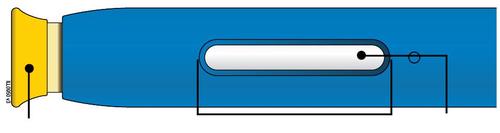 | Inspect the AMGEVITA pre-filled pen. |
i l a t I Yellow cap Medicinal product a inserted Looking through the appropriate window, make sure the medicine is clear, from colourless to lightly yellow. z n
| |
| C. | Gather everything you need to administer the injection. |
Wash your hands thoroughly with soap and water. o On a clean, well-lit surface, place a new pre-filled pen. c Other items needed, but not included in the pack:
 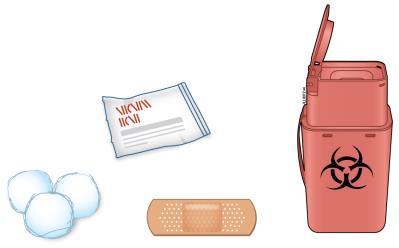 | |
D.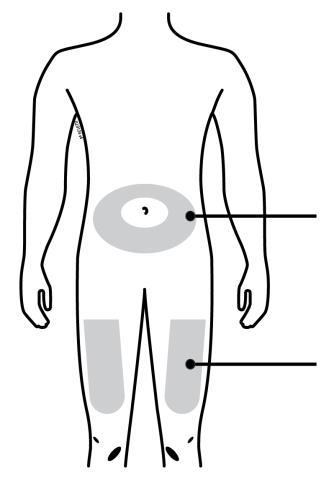 | Prepare and clean the injection site. |
e d a Abdomen n a Thigh You can use: l
| |
Step 2: Preparing for the injection
E.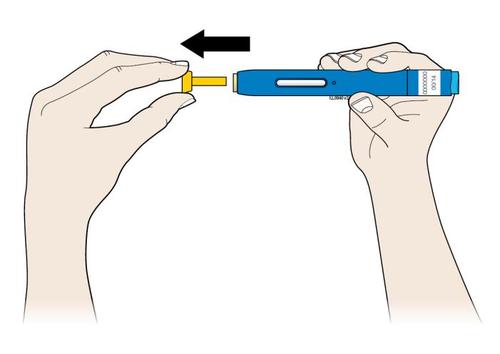 | Just when you are ready to administer the injection, remove the yellow cap by pulling it firmly. |
o c a m r a F l It is normal to notice a drop of liquid on the end of the needle or on the yellow safety device.
| |
F.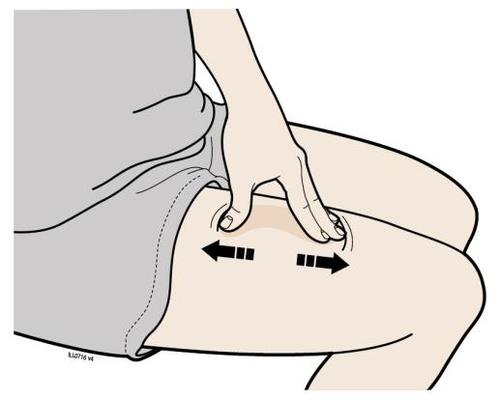 | Stretch the skin or form a pinch to create a safe injection surface. |
| Stretching method or c a m r a F Stretch the skin well by moving your thumb and other fingers in opposite directions, creating an area approximately 5 centimetres wide. OR Pinch method l e d a n Firmly grasp a portion of skin with your thumb and other fingers forming a pinch approximately 5 centimetres wide. | |
a Important: Keep the skin stretched or firmly grasp the pinch during the injection.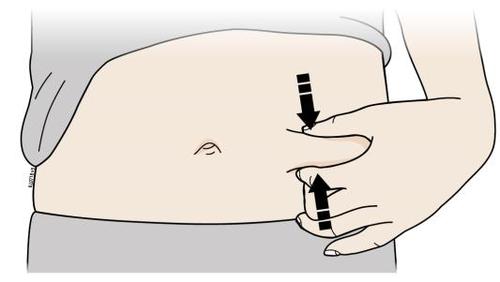 | |
Step 3: Administering the injection
| G. | Hold the skin stretched or the pinch. After removing the yellow cap, position the pre-filled pen on the skin at a 90-degree angle. |
i a i z n Important: Do not press the blue start button until you are ready to administer the injection.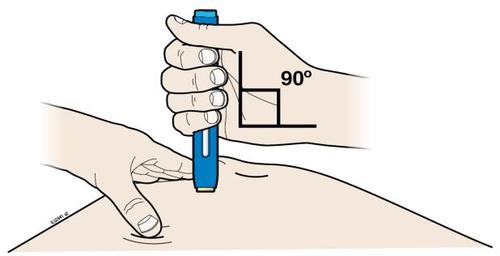 | |
H.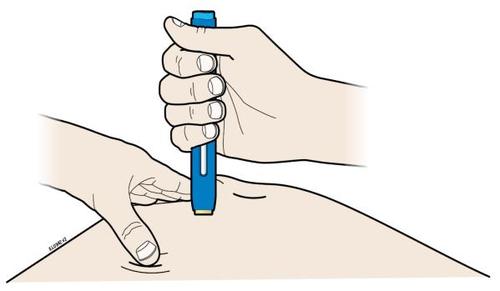 | Press the pre-filled pen firmly against the skin until it stops moving. 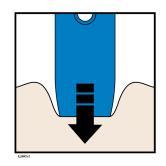 |
| o Press down c a m r Important: Press down as much as possible, but do not touch the blue start button until you are ready to administer the injection. | |
| I. | As soon as you are ready to administer the injection, press the blue start button. You will hear a click. |
F “Click” l e d a n a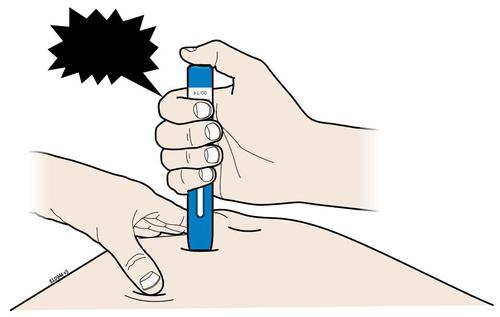 | |
J.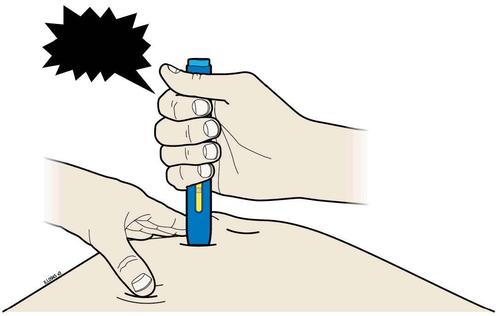 | Continue to press down on the skin. The injection may take about 10 seconds. 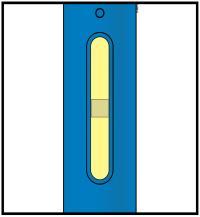 |
o About 10 seconds c “Click” a m The window will turn yellow once the injection is complete. r You may hear a second a click. F Note: After removing the pre-filled pen from the skin, the needle will be automatically covered. e d Important: When removing the pre-filled pen, if the window has not turned yellow, or if you feel that the medicine is still being injected, it means you have not received a full dose. Contact your doctor immediately.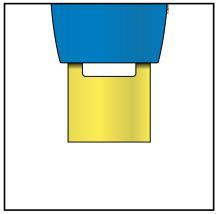 | |
Step 4: Final procedures
K.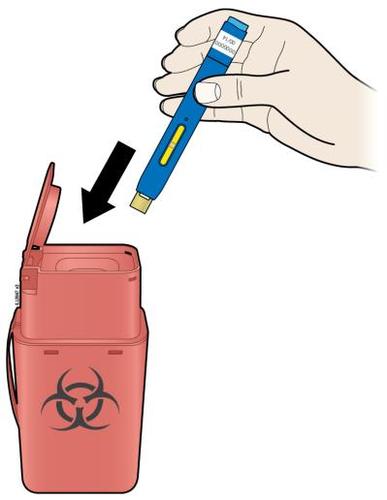 | Dispose of the pre-filled pen and the yellow cap. |
o c a m r a F l
| |
| L. | Examine the injection site. |
| If you notice blood, press a cotton ball or gauze over it. Do not rub the injection site. If necessary, apply a plaster. | |

Не уверены, подходит ли вам это лекарство?
Обсудите симптомы и варианты лечения с врачом онлайн.
AMGEVITA 20 mg injectable solution in pre-filled syringe, 40 mg injectable solution in pre-filled syringe, 80 mg injectable solution in pre-filled syringe
adalimumab
Read this leaflet carefully before using this medicine as it contains important information for you.
- Keep this leaflet. You may need to read it again.
- Your doctor will give you a Patient Reminder Card, which contains important safety information that you need to know before administering AMGEVITA and during treatment with AMGEVITA. Keep this Patient Reminder Card.
- If you have any questions, ask your doctor or pharmacist.
- This medicine has been prescribed for you only. Do not give it to other people, even if their symptoms are the same as yours, as it could be harmful.
- If any side effects occur, including those not listed in this leaflet, tell your doctor or pharmacist. See section 4.
Contents of this leaflet
- 1. What AMGEVITA is and what it is used for
- 2. What you need to know before you use AMGEVITA
- 3. How to use AMGEVITA
- 4. Possible side effects
- 5. How to store AMGEVITA
- 6. Contents of the pack and other information
1. What is AMGEVITA and what is it used for
AMGEVITA contains the active ingredient adalimumab, a medicine that works on the body’s immune system
(defense).
AMGEVITA is indicated for the treatment of inflammatory diseases listed below:
- Rheumatoid arthritis
- Polyarticular juvenile idiopathic arthritis
- Enthesitis-related arthritis
- Ankylosing spondylitis
- Axial spondyloarthritis without radiographic evidence of ankylosing spondylitis
- Psoriatic arthritis
- Plaque psoriasis
- Hidradenitis suppurativa
- Crohn’s disease
- Ulcerative colitis
- Non-infectious uveitis
The active ingredient contained in AMGEVITA, adalimumab, is a human monoclonal antibody. Monoclonal
antibodies are proteins that bind to a specific target.
The target of adalimumab is a protein called tumor necrosis factor (TNFα), which is
involved in the immune system (defense) and is present at higher concentrations in the inflammatory
diseases listed above. By binding to TNFα, AMGEVITA decreases the inflammatory process of these
diseases.
Rheumatoid arthritis
Rheumatoid arthritis is an inflammatory condition of the joints.
AMGEVITA is used to treat rheumatoid arthritis in adults. If you suffer from moderate to severe
rheumatoid arthritis, other disease-modifying drugs, such as methotrexate, may initially be taken. If the
response to these drugs is not satisfactory, you will be given AMGEVITA to treat rheumatoid arthritis.
AMGEVITA can also be used for the treatment of severe, active and progressive rheumatoid arthritis
without previous treatment with methotrexate.
AMGEVITA slows the progression of damage to the cartilage and bones of the joints caused
by the disease and improves physical function.
Generally AMGEVITA is used with methotrexate. If your doctor decides that treatment with
methotrexate is not appropriate, AMGEVITA can be administered alone.
Polyarticular juvenile idiopathic arthritis and enthesitis-related arthritis
Polyarticular juvenile idiopathic arthritis and enthesitis-related arthritis are inflammatory
diseases of the joints that usually appear for the first time during childhood.
AMGEVITA is used to treat polyarticular juvenile idiopathic arthritis in patients from 2 years of age
and enthesitis-related arthritis in patients from 6 years of age. Other disease-modifying drugs, such as
methotrexate, may be given at diagnosis. If the response to these drugs is not adequate, you will be
given AMGEVITA to treat polyarticular juvenile idiopathic arthritis or enthesitis-related arthritis.
Ankylosing spondylitis and axial spondyloarthritis without radiographic evidence of ankylosing
spondylitis
Ankylosing spondylitis and axial spondyloarthritis without radiographic evidence of ankylosing
spondylitis are inflammations of the spine.
AMGEVITA is used to treat ankylosing spondylitis and axial spondyloarthritis without radiographic
evidence of ankylosing spondylitis in adults. If you suffer from ankylosing spondylitis or axial
spondyloarthritis without radiographic evidence of ankylosing spondylitis, you will first take other
medications. If you are unable to achieve an adequate response with these medications, you will take
AMGEVITA to reduce the signs and symptoms of the disease.
Psoriatic arthritis
Psoriatic arthritis is an inflammation of the joints associated with psoriasis.
AMGEVITA is used to treat psoriatic arthritis in adults. AMGEVITA slows the damage to the
cartilage and bones of the joints caused by the disease and improves physical function.
Plaque psoriasis in adults and children
Plaque psoriasis is a skin condition that causes red, scaly, and hardened patches of
skin covered with silvery scales. Plaque psoriasis can also affect the nails, causing them to break, thicken
and lift from the nail bed, which can be painful. Psoriasis is believed to be caused by a problem with the
body's immune system that leads to increased production of skin cells.
AMGEVITA is used to treat moderate to severe plaque psoriasis in adults.
AMGEVITA is also used to treat severe plaque psoriasis in children and adolescents from 4 to
17 years of age for whom topical therapy and phototherapy have not worked optimally or
are not indicated.
Hidradenitis suppurativa in adults and adolescents
Hidradenitis suppurativa (sometimes called inverse acne) is a chronic inflammatory disease of the
skin and is often painful. Symptoms may include painful nodules and abscesses (boils) that may
drain pus. It most frequently affects specific areas of the skin, such as the submammary region, the
armpits, the inner thighs, the groin, and the buttocks. Scars can also form in the affected areas.
AMGEVITA is used to treat hidradenitis suppurativa in adults and adolescents from
12 years of age. AMGEVITA may reduce the number of nodules and abscesses you have and the pain that is often
associated with this disease. Initially, you may receive other medications. If you do not respond
well enough to these medications, you will receive AMGEVITA.
Crohn’s disease in adults and children
Crohn’s disease is an inflammation of the digestive tract.
AMGEVITA is used to treat Crohn’s disease in adults and children aged 6 to 17 years.
If you suffer from Crohn’s disease, you will first be given other medications. If you do not
respond adequately to these medications, you will be given AMGEVITA
to reduce signs and symptoms of Crohn’s disease.
Ulcerative colitis in adults and children
Ulcerative colitis is an inflammation of the large intestine.
AMGEVITA is used to treat moderate to severe ulcerative colitis in adults and children aged
6 to 17 years. If you suffer from ulcerative colitis, you may initially take other medications. If you are
unable to achieve an adequate response with these medications, you will take AMGEVITA to
reduce the signs and symptoms of the disease.
Non-infectious uveitis in adults and children
Non-infectious uveitis is an inflammatory disease that affects certain parts of the eye.
AMGEVITA is used for the treatment of
- Adults with non-infectious uveitis with inflammation affecting the back of the eye.
- Children from 2 years of age with chronic non-infectious uveitis with inflammation affecting the front of the eye.
This inflammation can lead to a decrease in vision and/or the presence of mobile bodies
in the eye (black spots or thin lines that move across the field of vision). AMGEVITA works
by reducing this inflammation.
2. What you need to know before using AMGEVITA
Do not use AMGEVITA:
- if you are allergic to adalimumab or to any of the other ingredients of this medicine (listed in section 6).
- if you have a severe infection, including active tuberculosis, sepsis (blood infection) or other opportunistic infections (unusual infections associated with a weakened immune system) (see “Warnings and precautions”). It is important to tell your doctor if you have signs or symptoms of infection, such as fever, wounds, feeling tired, dental problems.
- if you have moderate or severe heart failure. It is important to tell your doctor if you have had or have a serious heart condition (see “Warnings and precautions”).
Warnings and precautions
Talk to your doctor or pharmacist before using AMGEVITA:
Allergic reactions
- If you experience allergic reactions with symptoms such as a feeling of tightness in the chest, wheezing, dizziness, swelling or skin rash, do not administer AMGEVITA again and contact your doctor immediately as, in rare cases, these reactions can be life-threatening.
Infections
- If you have an infection, including long-term or localized infections (for example, leg ulcers), consult your doctor before starting treatment with AMGEVITA. If you have doubts, contact your doctor.
- You may be more likely to get infections during treatment with AMGEVITA. This risk may increase if your lung function is impaired. These infections can be serious and include tuberculosis, infections caused by viruses, fungi, parasites or bacteria, or other opportunistic infections and sepsis which, in rare cases, can be life-threatening. It is important to tell your doctor about the presence of symptoms such as fever, wounds, feeling tired or dental problems. Your doctor may recommend temporarily stopping AMGEVITA.
Tuberculosis
- Since cases of tuberculosis have occurred in patients treated with adalimumab, before starting therapy with AMGEVITA, your doctor will need to check if you have signs or symptoms of tuberculosis. This will involve collecting a detailed medical assessment including your medical history and appropriate clinical tests (e.g. a chest X-ray and a tuberculin test). The performance and results of these tests must be recorded on the Patient Reminder Card. It is very important to tell your doctor if you have ever had tuberculosis, or if you have had close contact with people with tuberculosis.
- Tuberculosis can develop during therapy even if you have received preventive treatment for tuberculosis.
- Contact your doctor immediately if symptoms of tuberculosis (persistent cough, weight loss, fatigue, mild fever) or other infections appear during or after therapy.
Travel/recurring infection
- Tell your doctor if you live in or travel to regions where fungal infections, such as histoplasmosis, coccidioidomycosis or blastomycosis, are endemic.
- Tell your doctor if you have had recurrent infections or if you have conditions that increase the risk of infection.
Hepatitis B virus
- Tell your doctor if you are a carrier of the hepatitis B virus (HBV), if you have an active infection with the hepatitis B virus or if you think you may be at risk of contracting the hepatitis B virus. Your doctor should test you for hepatitis B virus infection. Taking AMGEVITA may cause reactivation of the hepatitis B virus in subjects who are carriers of this virus. In some rare cases, especially if the patient is undergoing therapy with other drugs that suppress the immune system, reactivation of the hepatitis B virus can be life-threatening.
Age over 65 years
- If you are over 65 years of age, you may be more susceptible to infections while taking AMGEVITA. You and your doctor should pay particular attention to signs of infection while you are being treated with AMGEVITA. It is important to tell your doctor if symptoms of infections such as fever, wounds, feeling tired or dental problems appear.
Surgery or dental procedures
- Before surgery or dental procedures, tell your doctor that you are taking AMGEVITA. Your doctor may advise temporarily stopping AMGEVITA.
Demyelinating disease
- If you have or develop a demyelinating disease such as multiple sclerosis, your doctor will decide whether to start or continue treatment with AMGEVITA. Tell your doctor immediately if you experience symptoms such as changes in vision, weakness of arms or legs or numbness or tingling that affects any part of the body.
Vaccinations
- Certain vaccines contain live but attenuated forms of bacteria or viruses that cause diseases that can cause infections and should not be administered during treatment with AMGEVITA. Consult your doctor before getting vaccinated. In children, it is recommended, if possible, to implement the vaccination schedule provided for, in accordance with current vaccination guidelines, before starting therapy with AMGEVITA.
- If you have taken AMGEVITA during pregnancy, the child may have a higher risk of contracting such an infection up to about 5 months after the last dose you took during pregnancy. It is important that you tell the pediatrician or other healthcare provider about your use of AMGEVITA during pregnancy, so that they can decide when the child should receive any type of vaccination.
Heart failure
- If you have mild heart failure and are receiving concomitant treatment with AMGEVITA, your doctor must carefully assess and monitor the condition of your heart. It is important to tell your doctor if you have or have had heart problems. If new symptoms of heart failure or if existing symptoms worsen (e.g., shortness of breath or swelling of the feet), contact your doctor immediately. Your doctor will decide if you can take AMGEVITA.
Fever, bruising, bleeding or paleness
- In some patients, the body may not be able to produce enough blood cells to help fight infections or stop bleeding. If you have persistent fever, bruising or easy bleeding or paleness, see your doctor immediately. Your doctor may decide to stop therapy.
Cancer
- In patients, both children and adults, undergoing treatment with adalimumab or other anti-TNF drugs, very rarely, some types of cancer have manifested. Patients with severe, long-standing rheumatoid arthritis may have a higher than average risk of developing lymphoma (a cancer that affects the lymphatic system) and leukemia (a cancer that affects the blood and bone marrow).
- If you are taking AMGEVITA, the risk of developing lymphoma, leukemia or other cancers may increase. In rare circumstances, a specific and serious type of lymphoma has been observed in patients undergoing therapy with adalimumab. Some of these patients were also being treated with azathioprine or 6-mercaptopurine. Tell your doctor if you are taking azathioprine or 6-mercaptopurine with AMGEVITA.
- In addition, cases of non-melanoma skin cancer have been observed in patients taking adalimumab. If new skin lesions appear during therapy, or if the appearance of existing lesions changes, report it to your doctor.
- There have been cases of cancers, other than lymphoma, in patients with a specific type of lung disease called Chronic Obstructive Pulmonary Disease (COPD) treated with another anti-TNF. If you suffer from COPD, or smoke heavily, you should discuss with your doctor whether treatment with an anti-TNF is appropriate.
Autoimmune diseases
- Rarely, treatment with AMGEVITA may lead to the manifestation of a lupus-like syndrome. Tell your doctor if you experience symptoms such as a persistent unexplained skin rash, fever, joint pain or fatigue.
In order to improve the traceability of this medicine, the doctor or pharmacist must record the
name of the medicine and the batch number of the product that has been administered to you on your patient card. You can make a note of these details should they be requested in the future.
Children and adolescents
- Vaccinations: if possible, children should have had all vaccinations before using AMGEVITA.
- Do not give AMGEVITA to children with polyarticular juvenile idiopathic arthritis under the age of 2 years.
- Do not give AMGEVITA to children with plaque psoriasis under the age of 4 years.
- Do not give AMGEVITA to children with Crohn's disease or ulcerative colitis under the age of 6 years.
Other medicines and AMGEVITA
Tell your doctor or pharmacist if you are taking, have recently taken or might take
any other medicines.
AMGEVITA can be taken both with methotrexate and with other disease-modifying antirheumatic drugs (sulfasalazine, hydroxychloroquine, leflunomide and parenteral gold salts), steroids or
analgesics, including non-steroidal anti-inflammatory drugs (NSAIDs).
AMGEVITA must not be taken at the same time as medicines containing anakinra or abatacept as the active ingredient due to the increased risk of contracting serious infections. If you have doubts, consult your
doctor.
Pregnancy and breastfeeding
- You should consider using adequate contraceptive measures to prevent pregnancy and continue using them for at least 5 months after the last therapy with AMGEVITA.
- If you are pregnant, suspect you are pregnant or are planning to become pregnant, ask your doctor for advice on taking this medicine.
- AMGEVITA should only be used during pregnancy if necessary.
- According to a pregnancy study, no increased risk of birth defects was found when the mother received AMGEVITA during pregnancy, compared to mothers with the same condition who did not receive AMGEVITA.
- AMGEVITA can be used during breastfeeding.
- If you take AMGEVITA during pregnancy, the child may have a higher risk of contracting an infection.
- It is important that you tell the pediatrician or other healthcare provider about the use of AMGEVITA during pregnancy, before the child receives any type of vaccination. For more information on vaccinations, see “Warnings and precautions”.
Driving and using machines
AMGEVITA may affect, albeit only to a modest extent, your ability to drive, ride a bicycle or use machines. After taking AMGEVITA, you may experience visual disturbances and a sensation that the environment around you is rotating (dizziness).
AMGEVITA contains sodium
This medicine contains less than 1 mmol of sodium (23 mg) per 0.8 mL dose, i.e., it is
essentially “sodium-free”.
3. How to use AMGEVITA
Use this medicine following exactly the instructions of your doctor or pharmacist. If you have
doubts, consult your doctor or pharmacist.
Adults with rheumatoid arthritis, psoriatic arthritis, ankylosing spondylitis or axial spondyloarthritis without
evidence of radiographic ankylosing spondylitis.
AMGEVITA is injected under the skin (subcutaneous use). In adult patients with rheumatoid arthritis,
ankylosing spondylitis, axial spondyloarthritis without radiographic evidence of ankylosing spondylitis and
psoriatic arthritis, the usual dosage is 40 mg every other week, administered in a single dose.
In rheumatoid arthritis, methotrexate is continued during treatment with AMGEVITA. If the
doctor decides that methotrexate is not appropriate, AMGEVITA can be administered alone.
If you have rheumatoid arthritis and are not receiving methotrexate in association with treatment with
AMGEVITA, your doctor may decide to prescribe 40 mg every week or 80 mg every other week.
Children, adolescents and adults with polyarticular juvenile idiopathic arthritis
Children and adolescents starting from 2 years of age and weighing between 10 kg and less than 30 kg
The recommended dose of AMGEVITA is 20 mg every other week.
Children, adolescents and adults starting from 2 years of age and weighing 30 kg or more
The recommended dose of AMGEVITA is 40 mg every other week.
Children, adolescents and adults with enthesitis-related arthritis
Children and adolescents starting from 6 years of age and weighing between 15 kg and less than 30 kg
The recommended dose of AMGEVITA is 20 mg every other week.
Children, adolescents and adults starting from 6 years of age and weighing 30 kg or more
The recommended dose of AMGEVITA is 40 mg every other week.
Adults with plaque psoriasis
The usual dose for adults with plaque psoriasis is an initial dose of
80 mg, followed by a dose of 40 mg, administered every other week, starting the week
following the initial dose. You must continue treatment with AMGEVITA for the
time indicated by your doctor. Based on clinical response, your doctor may increase the dose to 40 mg every
week or 80 mg every other week.
Children and adolescents with plaque psoriasis
Children and adolescents between 4 and 17 years of age and weighing between 15 kg and less than 30 kg
The recommended dose of AMGEVITA is an initial dose of 20 mg, followed by a dose of 20 mg the
following week. Subsequently, the usual dose is 20 mg every other week.
Children and adolescents between 4 and 17 years of age and weighing 30 kg or more
The recommended dose of AMGEVITA is an initial dose of 40 mg, followed by a dose of 40 mg the
following week. Subsequently, the usual dose is 40 mg every other week.
Adults with hidradenitis suppurativa
The usual dose for hidradenitis suppurativa is an initial dose of 160 mg (two 80 mg injections in
one day or one 80 mg injection per day for two consecutive days), followed by a dose of 80 mg
two weeks later. After another two weeks, continue with a dose of 40 mg per week or 80 mg every
other week, as prescribed by your doctor. It is recommended to use an antiseptic cleansing solution daily on the affected areas.
Adolescents with hidradenitis suppurativa between 12 and 17 years of age, weighing 30 kg or more
The recommended dose of AMGEVITA is an initial dose of 80 mg, followed by 40 mg administered
every other week starting one week after the initial dose. In case of inadequate response to 40 mg
of AMGEVITA every other week, your doctor may increase the dose to 40 mg every week or 80 mg every
other week.
It is recommended to use an antiseptic cleansing solution daily on the affected areas.
Adults with Crohn’s disease
In the case of Crohn’s disease, the usual dose is initially 80 mg followed by 40 mg every other week, after two weeks. If a faster response is needed, your doctor may
prescribe an initial dose of 160 mg (two 80 mg injections in one day or one 80 mg injection
per day for two consecutive days) followed by 80 mg two weeks later, and subsequently 40 mg
every other week. Depending on the clinical response, your doctor may increase the dose to 40 mg
every week or 80 mg every other week.
Children and adolescents with Crohn’s disease
Children and adolescents between 6 and 17 years of age and weighing less than 40 kg
Initially, the usual dose regimen is 40 mg, followed by 20 mg two weeks later. If a faster response is required, your doctor may prescribe an initial dose of 80 mg followed by 40 mg two
weeks later.
Subsequently, the usual dose is 20 mg every other week. Depending on the child’s response, the doctor may increase the frequency of the dose to 20 mg every week.
Children and adolescents between 6 and 17 years of age and weighing 40 kg or more
Initially, the usual dose regimen is 80 mg, followed by 40 mg two weeks later. If a faster response is required, your doctor may prescribe an initial dose of 160 mg (two 80 mg
injections in one day or one 80 mg injection per day for two consecutive days) followed by 80 mg two
weeks later.
Subsequently, the usual dose is 40 mg every other week. Depending on the child’s response, the doctor may increase the dose to 40 mg every week or 80 mg every other week.
Adults with ulcerative colitis
For adults with ulcerative colitis, the usual dose of AMGEVITA is 160 mg (two 80 mg injections
in one day or one 80 mg injection per day for two consecutive days) followed by 80 mg
two weeks later, then 40 mg every other week. Depending on the clinical response, your doctor
may increase the dose to 40 mg every week or 80 mg every other week.
Children and adolescents with ulcerative colitis
Children and adolescents starting from 6 years of age and weighing less than 40 kg
The usual dose of AMGEVITA is 80 mg followed by 40 mg (via a single 40 mg injection)
after two weeks. Subsequently, the usual dose is 40 mg every other week.
Patients who turn 18 years old while taking 40 mg every other week should continue the prescribed dose.
Children and adolescents starting from 6 years of age and weighing 40 kg or more
The usual dose of AMGEVITA is 160 mg (two 80 mg injections in one day or one 80 mg injection
per day for two consecutive days) followed by 80 mg after two weeks. Subsequently the
usual dose is 80 mg every other week.
Patients who turn 18 years old while taking 80 mg every other week should continue the prescribed dose.
Adults with non-infectious uveitis
For adults with non-infectious uveitis, the usual dose is an initial dose of 80 mg, followed by 40 mg
administered every other week starting one week after the initial dose. You must continue to
inject AMGEVITA for as long as indicated by your doctor.
In non-infectious uveitis, corticosteroids or other drugs that affect the immune system
may be continued during treatment with AMGEVITA. AMGEVITA can also be
administered as monotherapy.
Children and adolescents with chronic non-infectious uveitis starting from 2 years of age
Children and adolescents starting from 2 years of age and weighing less than 30 kg
The usual dose of AMGEVITA is 20 mg administered every other week with methotrexate.
The doctor may also prescribe an initial dose of 40 mg that can be administered one
week before starting the usual dose.
Children and adolescents starting from 2 years of age and weighing 30 kg or more
The usual dose of AMGEVITA is 40 mg administered every other week with methotrexate.
The doctor may also prescribe an initial dose of 80 mg that can be administered one
week before starting the usual dose.
How and route of administration
AMGEVITA is administered by injection under the skin (subcutaneous injection).
Detailed instructions on how to inject AMGEVITA are provided in the section “Instructions for Use”.
If you use more AMGEVITA than you should
If you accidentally inject AMGEVITA more frequently than prescribed by your doctor or
pharmacist, contact your doctor or pharmacist informing them that you have taken more medicine. Keep
always the box of this medicine, even if empty.
If you forget to use AMGEVITA
If you forget to give an injection, you should inject the next dose of AMGEVITA as soon as you
remember. Then resume the dose regularly according to the established dosage schedule.
If you stop using AMGEVITA
The decision to stop using AMGEVITA must be discussed with your doctor. Symptoms
may return after discontinuation.
If you have any doubts about the use of this medicine, ask your doctor or pharmacist.
4. Possible side effects
Like all medicines, this medicine can cause side effects, although not everybody gets them.
Most side effects are mild to moderate. However, some can be serious and require treatment. Side effects may
occur up to 4 months after the last injection of AMGEVITA.
Tell your doctor immediately if you notice any of the following signs of an allergic reaction or of
heart failure:
- severe skin rash, hives or other signs of an allergic reaction;
- swelling of the face, hands and feet;
- difficulty breathing, difficulty swallowing;
- shortness of breath with exertion or when lying down, or swelling of the feet.
Tell your doctor as soon as possible if you notice any of the following reactions:
- signs of infection such as fever, feeling unwell, sores, dental problems, burning when urinating;
- fatigue or weakness;
- cough;
- tingling;
- numbness;
- double vision;
- weakness of arms or legs;
- signs of skin cancer such as a lump or sore that does not heal;
- signs and symptoms suggesting the development of blood disorders (blood), such as persistent fever, bruising, bleeding, paleness.
The symptoms described above may be signs of the following side effects, which have been observed
with adalimumab.
Very common (may affect more than 1 in 10 people)
- reactions at the injection site (including pain, swelling, redness or itching);
- respiratory tract infections (including common cold, runny nose, sinus infection and pneumonia);
- headache;
- abdominal pain;
- nausea and vomiting;
- skin rash;
- musculoskeletal pain.
Common (may affect up to 1 in 10 people)
- serious infections (including sepsis and influenza);
- intestinal infections (including gastroenteritis);
- skin infections (including cellulitis and herpes zoster infection);
- ear infections;
- oral infections (including dental infections and cold sores);
- reproductive system infections;
- urinary tract infection;
- fungal infection;
- joint infections;
- benign tumors;
- skin cancer;
- allergic reactions (including seasonal allergy);
- dehydration;
- mood swings (including depression);
- anxiety;
- difficulty sleeping;
- sensory disturbances such as tingling, pricking or numbness;
- migraine;
- nerve root compression (including lower back pain and leg pain);
- vision disturbances;
- eye inflammation;
- eyelid inflammation and eye swelling;
- dizziness (feeling faint or spinning);
- fast heartbeat;
- high blood pressure;
- flushing;
- bruising;
- cough;
- asthma;
- shortness of breath;
- gastrointestinal bleeding;
- dyspepsia (indigestion, bloated stomach, heartburn);
- acid reflux;
- dry eye syndrome (including dry eyes and dry mouth);
- itching;
- itchy skin rash;
- bruises;
- skin inflammation (such as eczema);
- nail breakage of the fingers and toes;
- increased sweating;
- hair loss;
- onset or worsening of psoriasis;
- muscle spasms;
- blood in the urine;
- kidney problems;
- chest pain;
- edema;
- fever;
- low platelet count in the blood, which increases the risk of bleeding or bruising;
- difficulty healing.
Uncommon (may affect up to 1 in 100 people)
- opportunistic infections (which include tuberculosis and other infections that occur when the immune defenses are lowered);
- neurological infections (including viral meningitis);
- eye infections;
- bacterial infections;
- diverticulitis (inflammation and infection of the large intestine);
- cancer, including cancer affecting the lymphatic system (lymphoma) and melanoma (skin cancer);
- immune system disorders that may affect the lungs, skin and lymph nodes (which most commonly present as sarcoidosis);
- vasculitis (inflammation of blood vessels);
- tremor;
- neuropathy;
- stroke;
- hearing loss, ringing;
- irregular heartbeat such as skipped beats;
- heart problems that can cause shortness of breath or swelling of the ankles;
- heart attack;
- formation of a sac in the wall of a major artery, inflammation and blood clot in a vein, blockage of a blood vessel;
- lung diseases that cause shortness of breath (including inflammation);
- pulmonary embolism (blockage of a pulmonary artery);
- pleural effusion (abnormal collection of fluid in the pleural space);
- pancreatitis causing severe abdominal and back pain;
- difficulty swallowing;
- facial edema;
- inflammation of the gallbladder, gallstones;
- fatty liver;
- night sweats;
- scarring;
- abnormal muscle breakdown;
- systemic lupus erythematosus (including inflammation of skin, heart, lungs, joints and other organs);
- interrupted sleep;
- impotence;
- inflammations.
Rare (may affect up to 1 in 1,000 people)
- leukemia (blood cancer of the bone marrow);
- severe allergic reaction with shock;
- multiple sclerosis;
- neurological conditions (such as optic nerve inflammation and Guillain-Barré syndrome, which can cause muscle weakness, abnormal sensations, tingling in the arms and upper body);
- cardiac arrest;
- pulmonary fibrosis (scarring of the lungs);
- intestinal perforation (hole in the wall of the intestine);
- hepatitis (inflammation of the liver);
- reactivation of hepatitis B;
- autoimmune hepatitis (liver inflammation caused by your own immune system);
- cutaneous vasculitis (inflammation of the blood vessels in the skin);
- Stevens-Johnson syndrome (life-threatening reaction with flu-like symptoms and skin rash with blisters);
- facial edema associated with allergic reactions;
- erythema multiforme (inflammatory skin rash);
- lupoid-like syndrome;
- angioedema (localized swelling of the skin);
- lichenoid skin reaction (itchy, reddish-purple skin rash).
Not known (frequency cannot be estimated from available data)
- T-cell hepato-splenic lymphoma (a rare blood cancer that is often fatal);
- Merkel cell carcinoma (a type of skin cancer);
- Kaposi's sarcoma, a rare form of cancer related to human herpes virus 8 infection. Kaposi's sarcoma most commonly manifests with purple lesions on the skin;
- liver failure;
- worsening of a condition called dermatomyositis (which manifests as a skin rash accompanied by muscle weakness);
- weight gain (weight gain has been small for most patients).
Some of the side effects observed with adalimumab may be asymptomatic and can only be
detected through blood tests. These include:
Very common (may affect more than 1 in 10 people)
- low white blood cell count;
- low red blood cell count;
- increased blood lipids;
- increased liver enzymes.
Common (may affect up to 1 in 10 people)
- increased white blood cell count;
- decreased platelet count;
- increased uric acid in the blood;
- abnormal sodium in the blood;
- decreased calcium in the blood;
- decreased phosphate in the blood;
- increased blood sugar;
- increased lactate dehydrogenase in the blood;
- autoantibodies present in the blood;
- decreased potassium in the blood.
Uncommon (may affect up to 1 in 100 people)
- bilirubin in the blood elevated (liver blood test).
Rare (may affect up to 1 in 1,000 people)
- low white blood cell, red blood cell and platelet count.
Reporting of side effects
If you get any side effects, even those not listed in this leaflet, tell your
doctor or pharmacist. You can also report side effects directly through the national reporting system listed in
Appendix V. By reporting side effects you can help provide more information on the safety of this medicine.
5. How to store AMGEVITA
Keep this medicine out of the sight and reach of children.
Do not use this medicine after the expiry date which is stated on the label/blister and the packaging
after Exp. The expiry date refers to the last day of that month.
Store in a refrigerator (2°C – 8°C). Do not freeze.
Store in the original package to protect the medicine from light.
A single pre-filled syringe of AMGEVITA can be stored at temperatures up to a
maximum of 25°C for a maximum period of 14 days. The pre-filled syringe must be protected from
light and must be discarded if not used within the 14-day period.
Do not dispose of any medicine in wastewater or household waste. Ask your pharmacist how to
dispose of medicines you no longer use. This will help protect the environment.
6. Content of the pack and other information
What AMGEVITA contains
- The active substance is adalimumab. Each pre-filled syringe contains 20 mg of adalimumab in 0.2 mL of solution, 40 mg of adalimumab in 0.4 mL of solution or 80 mg of adalimumab in 0.8 mL of solution.
- The other excipients are L-lactic acid, sucrose, polysorbate 80, sodium hydroxide and water for injections.
Description of the appearance of AMGEVITA and content of the pack
AMGEVITA is a clear solution, from colourless to slightly yellow.
Each pack contains 1 single-use pre-filled syringe of 20 mg (with a yellow plunger).
Each pack contains 1, 2 or 6 single-use pre-filled syringes of 40 mg (with a blue plunger).
Each pack contains 1, 2 or 3 single-use pre-filled syringes of 80 mg (with an
orange plunger).
Marketing Authorisation Holder and Manufacturer
Amgen Europe B.V.
Minervum 7061
4817 ZK Breda
The Netherlands
Marketing Authorisation Holder
Amgen Europe B.V.
Minervum 7061
4817 ZK Breda
The Netherlands
Manufacturer
Amgen Technology Ireland UC
Pottery Road
Dun Laoghaire
Co Dublin
Ireland
Manufacturer
Amgen NV
Telecomlaan 5-7
1831 Diegem
Belgium
For further information on this medicinal product, contact the local representative of the Marketing
Authorisation Holder:
België/Belgique/Belgien
s.a. Amgen n.v.
Tél/Tel: +32 (0)2 7752711
Amgen Switzerland AG Vilniaus filialas
Tel: +370 5 219 7474
България
Амджен България ЕООД
Тел.: +359 (0)2 424 7440
Luxembourg/Luxemburg
s.a. Amgen
Belgique/Belgien
Tél/Tel: +32 (0)2 7752711
Česká republika
Amgen s.r.o.
Tel: +420 221 773 500
Magyarország
Amgen Kft.
Tel.: +36 1 35 44 700
Danmark
Amgen, filial af Amgen AB, Sverige
Tlf: +45 39617500
Malta
Amgen S.r.l.
Italy
Tel: +39 02 6241121
Deutschland
Amgen GmbH
Tel: +49 89 1490960
Nederland
Amgen B.V.
Tel: +31 (0)76 5732500
Eesti
Amgen Switzerland AG Vilniaus filialas
Tel: +372 586 09553
Norge
Amgen AB
Tlf: +47 23308000
Ελλάδα
Amgen Ελλάς Φαρμακευτικά Ε.Π.Ε.
Τηλ: +30 210 3447000
Österreich
Amgen GmbH
Tel: +43 (0)1 50 217
España
Amgen S.A.
Tel: +34 93 600 18 60
Polska
Amgen Biotechnologia Sp. z o.o.
Tel.: +48 22 581 3000
France
Amgen S.A.S.
Tél: +33 (0)9 69 363 363
Portugal
Amgen Biofarmacêutica, Lda.
Tel: +351 21 4220606
Hrvatska
Amgen d.o.o.
Tel: +385 (0)1 562 57 20
România
Amgen România SRL
Tel: +4021 527 3000
Ireland
Amgen Ireland Limited
Tel: +353 1 8527400
Slovenija
AMGEN zdravila d.o.o.
Tel: +386 (0)1 585 1767
Ísland
Vistor hf.
Sími: +354 535 7000
Slovenská republika
Amgen Slovakia s.r.o.
Tel: +421 2 321 114 49
Italia
Amgen S.r.l.
Tel: +39 02 6241121
Suomi/Finland
Amgen AB, sivuliike Suomessa/Amgen AB, filial
i Finland
Puh/Tel: +358 (0)9 54900500
Kύπρος
C.A. Papaellinas Ltd
Τηλ: +357 22741 741
Sverige
Amgen AB
Tel: +46 (0)8 6951100
Latvija
Amgen Switzerland AG Rīgas filiāle
Tel: +371 257 25888
Other sources of information
More detailed information on this medicinal product is available on the website of the European
Medicines Agency, http://www.ema.europa.eu .
INSTRUCTIONS FOR USE
Guide to the parts of the pre-filled syringe
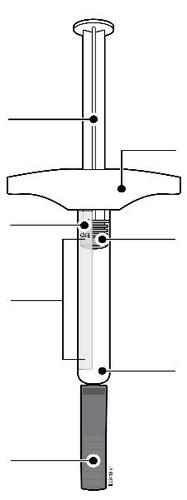
Plunger
Flange
Expiry date
Plunger end
(position may
vary)
Syringe
body
Medicinal
product
Needle
cap
(needle inside)
1Important information to know before injecting AMGEVITA
Dosage:
- AMGEVITA is available in three different strengths: 20 mg/0.2 mL, 40 mg/0.4 mL, 80 mg/0.8 mL. Check the prescription to make sure you have the correct strength.
- The colour and appearance of the pre-filled syringe vary depending on the strength. The amount of medicinal product contained in the pre-filled syringe also varies depending on the strength.
- For example, the 20 mg/0.2 mL strength is correct to contain a small amount of medicinal product and the 80 mg/0.8 mL strength is correct to contain a large amount of medicinal product. Refer to the illustrations below to see what the prescribed strength looks like in the pre-filled syringe.
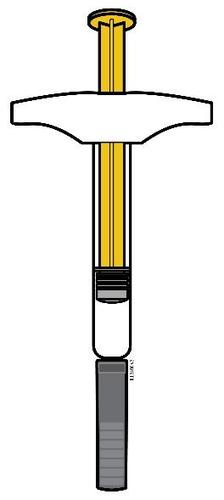
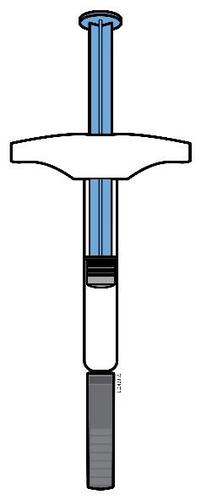
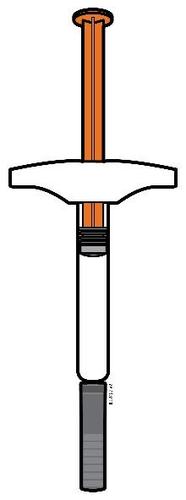
20 mg/0.2 mL 40 mg/0.4 mL 80 mg/0.8 mL
Using the AMGEVITA pre-filled syringe:
- It is important not to inject yourself without first reading and fully understanding these instructions for use and without receiving specific training from your doctor or healthcare professional.
- Donot use the pre-filled syringe if the pack is damaged or the seal is broken.
- Donot use the pre-filled syringe after the expiry date stated on the label.
- Donot shake the pre-filled syringe.
- Donot remove the needle cap from the pre-filled syringe until you are ready to inject.
- Donot use the pre-filled syringe if it has been frozen.
- Donot use the pre-filled syringe if it has fallen onto a hard surface. Some parts of the pre-filled syringe may have broken, even if the damage is not visible. Use a new pre-filled syringe and contact your doctor or healthcare professional.
- The pre-filled syringe does not contain natural rubber latex.
Important:Keep the pre-filled syringe and the sharps disposal container out of the sight and reach of children.
| 2 | Preparing for the AMGEVITA injection |
2a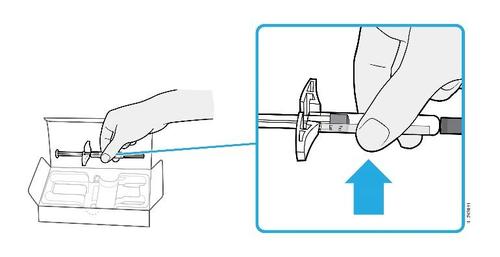 | Grasp the body of the syringe and remove the pre-filled syringe from the pack. |
| r m a c o | |
a
| |
| 2b | l Wait 30 minutes for the pre-filled syringe to reach room temperature. |
| e d WAIT 30 a minutes | |
n
| |
2c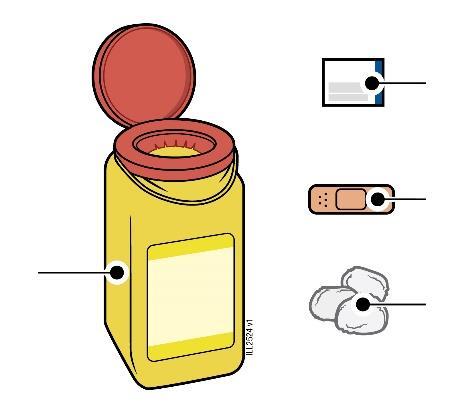 | Gather and place the injection materials on a clean, well-lit surface. a i Alcohol swab z n Plaster Sharps disposal e container Batuffolo di cotone o tampone di garza |
A
| |
3Preparing for the injection
3aInspect the medicinal product.
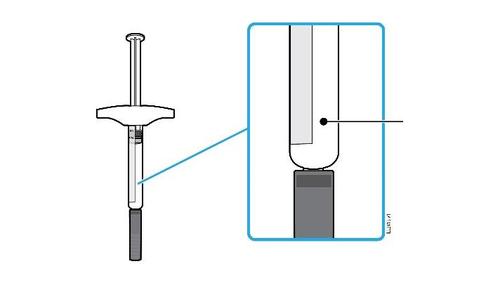
Medicinal product
- It should be clear, from colourless to slightly yellow.
- It is correct to observe air bubbles in the pre-filled syringe.
- Donot use if the medicinal product is cloudy, discoloured or contains fragments or particles.
Important: if the medicinal product is cloudy, discoloured or contains fragments or particles,
contact your doctor or healthcare professional.
| 3b | a Check the expiry date (EXP) and inspect the pre-filled syringe for any damage. |
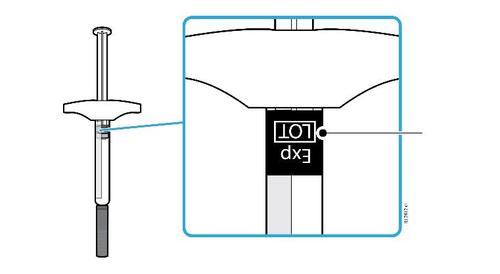
Expiry date
- Donot use if the expiry date has passed.
- Donot use the pre-filled syringe if:
- The needle cap is missing or not firmly attached.
- Any part is cracked or broken.
- The syringe has fallen onto a hard surface. Important:if the pre-filled syringe is damaged or the medicinal product is expired, contact your doctor or healthcare professional.
3cInject in one of these sites.
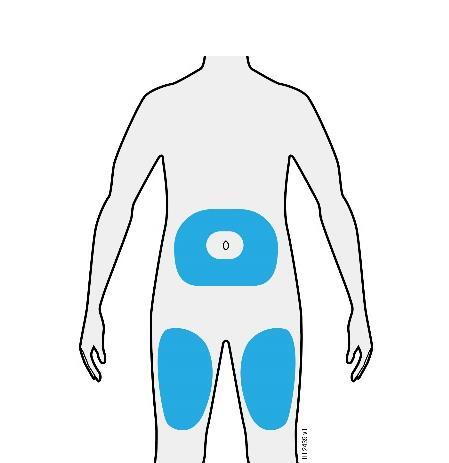
- Inject into the thigh or abdomen (except for the area 5 cm around the navel).
- Choose a different site for each injection.
- Wash your hands thoroughly with soap and water.
- Clean the injection site with an alcohol swab.
- Let the skin dry.
- Donot touch the disinfected area again before the injection.
Important:Avoid areas with scars, stretch marks or areas where the skin is tender,
bruised, red or hardened.
4Performing the AMGEVITA injection
Important:Remove the needle cap only when you are able to perform the injection immediately
(within 5 minutes), as the medicinal product may dry out.
4aHolding the body of the pre-filled syringe firmly, pull the needle cap off decisively.
REMOVE
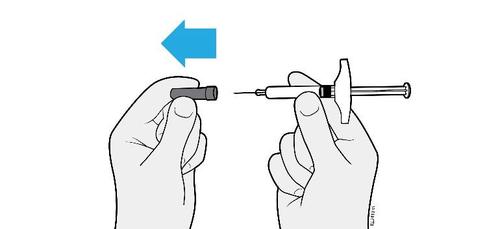
- Donot twist or bend the needle cap.
- Donot put the needle cap back on the syringe. It could damage the needle.
- Donot let the needle come into contact with anything once the needle cap has been removed.
- Donot lay the pre-filled syringe on any surface once the needle cap has been removed.
- Donot try to push air bubbles out of the pre-filled syringe. It is correct to observe air bubbles.
- It is normal to notice a drop of medicinal product.
| 4b | Grasp the skin around the injection site before injecting. |
GRASP THE SKIN | |
| a c o | |
m
| |
| 4c | Insert the needle into the skin fold. |
a INSERT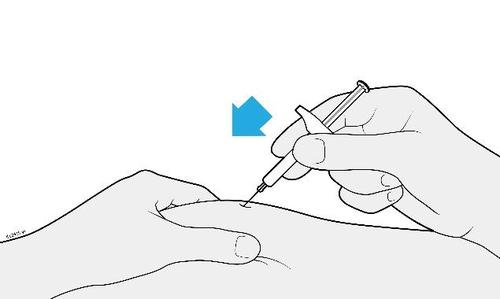 | |
| d e l F | |
a
| |
4dSlowly press the plunger all the way down to inject the medicinal product.
INJECT
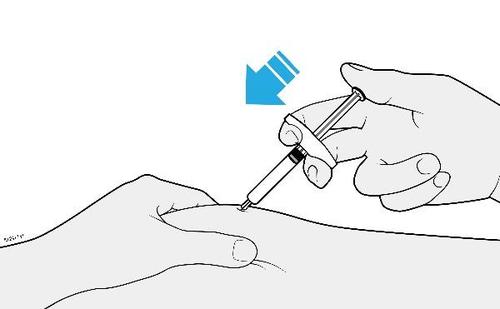
- Donot retract the plunger.
- Donot remove the needle until all the medicinal product has been released. Important:Continue to hold the skin fold until the injection is complete.
5Final procedures and disposal of AMGEVITA
Important:Never put the needle cap back on the syringe.
5aDispose of the used pre-filled syringe and needle cap in a sharps disposal container.
DISPOSE
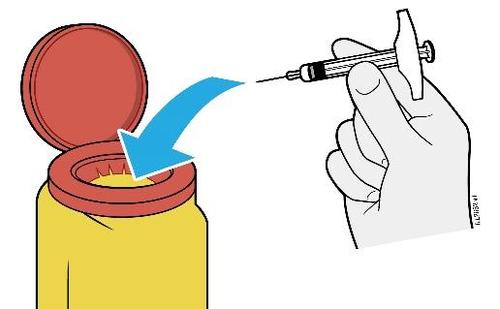
Donot recycle the prefilled syringe or dispose of it in household waste.
- Donot reuse the prefilled syringe.
- Donot use any remaining medicine present in the prefilled syringe.
- Place the used AMGEVITA syringe in a sharps disposal container immediately after use. Donot discard (dispose of) the syringe in household waste.
- Discuss appropriate disposal methods with your doctor or pharmacist. There may be specific local guidelines.
- Donot recycle the syringe or the sharps disposal container, or dispose of them in household waste. Important: always keep the sharps disposal container out of sight and reach of children.
| 5b | a Examine the injection site. |
i
| |
AMGEVITA 40 mg solution for injection in pre-filled pen
adalimumab
Read this leaflet carefully before using this medicine as it contains important
information for you.
- Keep this leaflet. You may need to read it again.
- Your doctor will give you a Patient Reminder Card, which contains important safety information that you need to know before administering AMGEVITA and during treatment with AMGEVITA. Keep this Patient Reminder Cardfor the Patient.
- If you have any questions, ask your doctor or pharmacist.
- This medicine has been prescribed for you only. Do not give it to other people, even if their symptoms are the same as yours, as it could be harmful.
- If any side effects occur, including those not listed in this leaflet, tell your doctor or pharmacist. See section 4.
Contents of this leaflet
- 1. What AMGEVITA is and what it is used for
- 2. What you need to know before using AMGEVITA
- 3. How to use AMGEVITA
- 4. Possible side effects
- 5. How to store AMGEVITA
- 6. Contents of the pack and other information
1. What is AMGEVITA and what is it used for
AMGEVITA contains the active ingredient adalimumab, a medicine that acts on the body's immune system (defense).
AMGEVITA is indicated for the treatment of inflammatory diseases listed below:
- Rheumatoid arthritis
- Juvenile idiopathic polyarticular arthritis
- Enthesitis-related arthritis
- Ankylosing spondylitis
- Axial spondyloarthritis without radiographic evidence of ankylosing spondylitis
- Psoriatic arthritis
- Plaque psoriasis
- Hidradenitis suppurativa
- Crohn’s disease
- Ulcerative colitis
- Non-infectious uveitis
The active ingredient contained in AMGEVITA, adalimumab, is a human monoclonal antibody. Monoclonal antibodies are proteins that bind to a specific target.
The target of adalimumab is a protein called tumor necrosis factor (TNFα), which is involved in the immune system (defense) and is present at higher concentrations in the inflammatory diseases listed above. By binding to TNFα, AMGEVITA decreases the inflammatory process of these diseases.
Rheumatoid arthritis
Rheumatoid arthritis is an inflammatory condition of the joints.
AMGEVITA is used to treat rheumatoid arthritis in adults. If you suffer from moderate to severe rheumatoid arthritis, other disease-modifying drugs, such as methotrexate, may initially be taken. If the response to these drugs is not satisfactory, you will be given AMGEVITA to treat rheumatoid arthritis.
AMGEVITA can also be used for the treatment of severe, active and progressive rheumatoid arthritis without prior treatment with methotrexate.
AMGEVITA slows the progression of damage to the cartilage and bones of the joints caused by the disease and improves physical function.
Generally AMGEVITA is used with methotrexate. If your doctor decides that treatment with methotrexate is not appropriate, AMGEVITA can be administered alone.
Juvenile idiopathic polyarticular arthritis and enthesitis-related arthritis
Juvenile idiopathic polyarticular arthritis and enthesitis-related arthritis are inflammatory diseases of the joints that usually manifest for the first time during childhood.
AMGEVITA is used to treat juvenile idiopathic polyarticular arthritis in patients from 2 years of age and enthesitis-related arthritis in patients from 6 years of age. Other disease-modifying drugs, such as methotrexate, may be given at diagnosis. If the response to these drugs is not adequate, you will be given AMGEVITA for the treatment of juvenile idiopathic polyarticular arthritis or enthesitis-related arthritis.
Ankylosing spondylitis and axial spondyloarthritis without radiographic evidence of ankylosing spondylitis
Ankylosing spondylitis and axial spondyloarthritis without radiographic evidence of ankylosing spondylitis are inflammations of the spine.
AMGEVITA is used to treat ankylosing spondylitis and axial spondyloarthritis without radiographic evidence of ankylosing spondylitis in adults. If you have ankylosing spondylitis or axial spondyloarthritis without radiographic evidence of ankylosing spondylitis, you will first take other medications. If you are unable to achieve an adequate response with these medications, you will take AMGEVITA to reduce the signs and symptoms of the disease.
Psoriatic arthritis
Psoriatic arthritis is an inflammation of the joints associated with psoriasis.
AMGEVITA is used to treat psoriatic arthritis in adults. AMGEVITA slows the damage to the cartilage and bones of the joints caused by the disease and improves physical function.
Plaque psoriasis in adults and children
Plaque psoriasis is a skin condition that causes red, scaly, and hardened patches of skin covered with silvery scales. Plaque psoriasis can also affect the nails, causing them to break, thicken, and lift from the nail bed, which can be painful. Psoriasis is believed to be caused by a problem with the body's immune system that leads to increased skin cell production.
AMGEVITA is used to treat moderate to severe plaque psoriasis in adults.
AMGEVITA is also used to treat severe plaque psoriasis in children and adolescents from 4 to 17 years of age for whom topical therapy and phototherapies have not worked optimally or are not indicated.
Hidradenitis suppurativa in adults and adolescents
Hidradenitis suppurativa (sometimes called inverse acne) is a chronic inflammatory disease of the skin and is often painful. Symptoms may include painful nodules and abscesses (boils) that may drain pus. It most frequently affects specific areas of the skin, such as the submammary region, armpits, inner thighs, groin, and buttocks. Scars may also form in the affected areas.
AMGEVITA is used to treat hidradenitis suppurativa in adults and adolescents from 12 years of age. AMGEVITA may reduce the number of nodules and abscesses you have and the pain that is often associated with this disease. Initially, you may receive other medications. If you do not respond well enough to these medications, you will receive AMGEVITA.
Crohn’s disease in adults and children
Crohn’s disease is an inflammation of the digestive tract.
AMGEVITA is used to treat Crohn’s disease in adults and children aged 6 to 17 years.
If you suffer from Crohn’s disease, you will first be given other medications. If you do not respond adequately to these medications, you will be given AMGEVITA to reduce signs and symptoms of Crohn’s disease.
Ulcerative colitis in adults and children
Ulcerative colitis is an inflammation of the large intestine.
AMGEVITA is used to treat moderate to severe ulcerative colitis in adults and children aged 6 to 17 years. If you have ulcerative colitis, you may initially take other medications. If you are unable to achieve an adequate response with these medications, you will take AMGEVITA to reduce the signs and symptoms of the disease.
Non-infectious uveitis in adults and children
Non-infectious uveitis is an inflammatory disease that affects certain parts of the eye.
AMGEVITA is used for the treatment of
- Adults with non-infectious uveitis with inflammation affecting the back of the eye.
- Children from 2 years of age with chronic non-infectious uveitis with inflammation affecting the front of the eye.
This inflammation can lead to a decrease in vision and/or the presence of mobile bodies in the eye (black spots or thin lines that move across the visual field). AMGEVITA works by reducing this inflammation.
2. What you need to know before you use AMGEVITA
Do not use AMGEVITA:
- if you are allergic to adalimumab or to any of the other ingredients of this medicine (listed in section 6).
- if you have a severe infection, including active tuberculosis, sepsis (blood infection) or other opportunistic infections (unusual infections associated with a weakened immune system) (see “Warnings and precautions”). It is important to tell your doctor if you have signs or symptoms of infection, such as fever, wounds, feeling tired, dental problems.
- if you have moderate or severe heart failure. It is important to tell your doctor if you have had or have a serious heart condition (see “Warnings and precautions”).
Warnings and precautions
Talk to your doctor or pharmacist before using AMGEVITA:
Allergic reactions
- If you experience allergic reactions with symptoms such as a feeling of tightness in the chest, wheezing, dizziness, swelling or skin rash, do not administer AMGEVITA again and contact your doctor immediately as, in rare cases, these reactions can be life-threatening.
Infections
- If you have an infection, including long-term or localized infections (for example, leg ulcers), consult your doctor before starting treatment with AMGEVITA. If you have doubts, contact your doctor.
- You may be more likely to get infections during treatment with AMGEVITA. This risk may increase if your lung function is impaired. These infections can be serious and include tuberculosis, infections caused by viruses, fungi, parasites or bacteria, or other opportunistic infections and sepsis which, in rare cases, can be life-threatening. It is important to tell your doctor about the presence of symptoms such as fever, wounds, feeling tired or dental problems. Your doctor may recommend temporarily stopping AMGEVITA.
Tuberculosis
- Because cases of tuberculosis have occurred in patients treated with adalimumab, before starting therapy with AMGEVITA your doctor must check if you have signs or symptoms of tuberculosis. This will involve collecting a detailed medical assessment including your medical history and appropriate clinical tests (e.g. a chest X-ray and a tuberculin test). The performance and results of these tests must be recorded on the Patient Reminder Card. It is very important to tell your doctor if you have ever had tuberculosis, or if you have had close contact with people with tuberculosis.
- Tuberculosis can develop during therapy even if you have received preventive treatment for tuberculosis.
- Contact your doctor immediately if symptoms of tuberculosis (persistent cough, weight loss, fatigue, mild fever) or other infections appear during or after therapy.
Travel/recurring infection
- Tell your doctor if you live in or travel to regions where fungal infections, such as histoplasmosis, coccidioidomycosis or blastomycosis, are endemic.
- Tell your doctor if you have had recurrent infections or if you have conditions that increase the risk of infection.
Hepatitis B virus
- Tell your doctor if you are a carrier of the hepatitis B virus (HBV), if you have an active infection with the hepatitis B virus or if you think you may be at risk of contracting the hepatitis B virus. Your doctor must test you for hepatitis B virus infection. Taking AMGEVITA may cause reactivation of the hepatitis B virus in subjects who are carriers of this virus. In some rare cases, especially if the patient is undergoing therapy with other drugs that suppress the immune system, reactivation of the hepatitis B virus can be life-threatening.
Age over 65 years
- If you are over 65 years of age, you may be more susceptible to infections while taking AMGEVITA. You and your doctor should pay particular attention to signs of infection while you are being treated with AMGEVITA. It is important to tell your doctor if symptoms of infections such as fever, wounds, feeling tired or dental problems appear.
Surgery or dental procedures
- Before surgery or dental procedures, tell your doctor that you are taking AMGEVITA. Your doctor may advise you to temporarily stop AMGEVITA.
Demyelinating disease
- If you have or develop a demyelinating disease such as multiple sclerosis, your doctor will decide whether to start or continue treatment with AMGEVITA. Tell your doctor immediately if you experience symptoms such as changes in vision, weakness of arms or legs, or numbness or tingling that affects any part of the body.
Vaccinations
- Certain vaccines contain live but attenuated forms of bacteria or viruses that cause diseases that can cause infections and should not be administered during treatment with AMGEVITA. Consult your doctor before getting vaccinated. In children, it is recommended, if possible, to implement the vaccination schedule provided for, in accordance with the current vaccination guidelines, before starting therapy based on AMGEVITA.
- If you have taken AMGEVITA during pregnancy, the baby may have a higher risk of contracting such an infection up to about 5 months after the last dose you took during pregnancy. It is important that you tell your pediatrician or other healthcare provider about your use of AMGEVITA during pregnancy so that they can decide when the baby should receive any type of vaccination.
Heart failure
- If you have mild heart failure and are receiving concomitant treatment with AMGEVITA, your doctor must carefully assess and monitor your heart condition. It is important to tell your doctor if you have or have had heart problems. If new symptoms of heart failure or worsening of existing symptoms (e.g. shortness of breath or swelling of the feet) occur, contact your doctor immediately. Your doctor will decide if you can take AMGEVITA.
Fever, bruising, bleeding or paleness
- In some patients, the body may not be able to produce enough blood cells to help fight infections or stop bleeding. If you have persistent fever, bruising or easy bleeding or paleness, contact your doctor immediately. The latter may decide to interrupt the therapy.
Cancer
- In patients, both children and adults, treated with adalimumab or other anti-TNF drugs, very rarely, some types of cancer have manifested. Patients with severe, long-standing rheumatoid arthritis may have a higher than average risk of developing lymphoma (a cancer that affects the lymphatic system) and leukemia (a cancer that affects the blood and bone marrow).
- If you are taking AMGEVITA, the risk of developing lymphomas, leukemia or other cancers may increase. In rare circumstances, a specific and serious type of lymphoma has been observed in patients treated with adalimumab. Some of these patients were also being treated with azathioprine or 6-mercaptopurine. Tell your doctor if you are taking azathioprine or 6-mercaptopurine with AMGEVITA.
- In addition, cases of non-melanoma skin cancer have been observed in patients taking adalimumab. If new skin lesions appear during therapy, or if the appearance of existing lesions changes, report it to your doctor.
- There have been cases of cancers, other than lymphoma, in patients with a specific type of lung disease called Chronic Obstructive Pulmonary Disease (COPD) treated with another anti-TNF. If you suffer from COPD, or smoke heavily, you should discuss with your doctor whether treatment with an anti-TNF is appropriate.
Autoimmune diseases
- Rarely, treatment with AMGEVITA may lead to the development of a lupus-like syndrome. Tell your doctor if you experience symptoms such as persistent unexplained skin rash, fever, joint pain or fatigue.
In order to improve the traceability of this medicine, the doctor or pharmacist must record the
name of the medicine and the batch number of the product that has been administered to you on your patient card. You can note these details in case you are asked for them in the future.
Children and adolescents
- Vaccinations: if possible, children should have already had all vaccinations before using AMGEVITA.
- Do not give AMGEVITA to children with polyarticular juvenile idiopathic arthritis under the age of 2 years.
- Do not give AMGEVITA to children with plaque psoriasis under the age of 4 years.
- Do not give AMGEVITA to children with Crohn’s disease or ulcerative colitis under the age of 6 years.
Other medicines and AMGEVITA
Tell your doctor or pharmacist if you are taking, have recently taken or might take
any other medicines.
AMGEVITA can be taken with methotrexate and other disease-modifying antirheumatic drugs (sulfasalazine, hydroxychloroquine, leflunomide and parenteral gold salts), steroids or
analgesics, including non-steroidal anti-inflammatory drugs (NSAIDs).
AMGEVITA must not be taken at the same time as medicines containing anakinra or abatacept as the active ingredient due to the increased risk of contracting serious infections. If you have doubts, consult your doctor.
Pregnancy and breastfeeding
- You should consider using adequate contraception to prevent pregnancy and continue using it for at least 5 months after the last therapy with AMGEVITA.
- If you are pregnant, suspect you are pregnant or are planning to become pregnant, ask your doctor for advice on taking this medicine.
- AMGEVITA should only be used during pregnancy if necessary.
- According to a pregnancy study, no increased risk of birth defects was found when the mother had received AMGEVITA during pregnancy, compared to mothers who had the same condition but had not received AMGEVITA.
- AMGEVITA can be used during breastfeeding.
- If you take AMGEVITA during pregnancy, the baby may have a higher risk of contracting an infection.
- It is important that you tell your pediatrician or other healthcare provider about the use of AMGEVITA during pregnancy before the baby receives any type of vaccination. For more information on vaccinations, see “Warnings and precautions”.
Driving and using machines
AMGEVITA may affect, albeit only to a modest extent, your ability to drive, ride a bicycle or use machinery. After taking AMGEVITA, you may experience visual disturbances and a feeling that the environment around you is rotating (dizziness).
AMGEVITA contains sodium
This medicine contains less than 1 mmol of sodium (23 mg) per 0.8 mL dose, i.e. it is
essentially “sodium-free”.
3. How to use AMGEVITA
Use this medicine following exactly the instructions of your doctor or pharmacist. If you have
doubts, consult your doctor or pharmacist.
Adults with rheumatoid arthritis, psoriatic arthritis, ankylosing spondylitis or axial spondyloarthritis without
evidence of radiographic ankylosing spondylitis
AMGEVITA is injected under the skin (subcutaneous use). In adult patients with rheumatoid arthritis,
ankylosing spondylitis, axial spondyloarthritis without radiographic evidence of ankylosing spondylitis and
psoriatic arthritis, the usual dosage is 40 mg every other week, administered in a single dose.
In rheumatoid arthritis, methotrexate is continued during treatment with AMGEVITA. If the
doctor decides that methotrexate is not appropriate, AMGEVITA can be administered alone.
If you have rheumatoid arthritis and are not receiving methotrexate in combination with treatment with
AMGEVITA, your doctor may decide to prescribe 40 mg every week or 80 mg every other week.
Children, adolescents and adults with polyarticular juvenile idiopathic arthritis
Children, adolescents and adults starting from 2 years of age and weighing 30 kg or more
The recommended dose of AMGEVITA is 40 mg every other week.
Children, adolescents and adults with enthesitis-related arthritis
Children, adolescents and adults starting from 6 years of age and weighing 30 kg or more
The recommended dose of AMGEVITA is 40 mg every other week.
Adults with plaque psoriasis
The usual dose for adults with plaque psoriasis is a starting dose of
80 mg (via two 40 mg injections on one day), followed by a dose of 40 mg, administered
every other week, starting the week after the initial dose. You must
continue treatment with AMGEVITA for the time indicated by your doctor. Based on clinical response,
your doctor may increase the dose to 40 mg every week or 80 mg every other week.
Children and adolescents with plaque psoriasis
Children and adolescents aged between 4 and 17 years and weighing 30 kg or more
The recommended dose of AMGEVITA is a starting dose of 40 mg, followed by a dose of 40 mg the
week after. Subsequently, the usual dose is 40 mg every other week.
Adults with hidradenitis suppurativa
The usual dose for hidradenitis suppurativa is a starting dose of 160 mg (four 40 mg injections
on one day or two 40 mg injections per day for two consecutive days), followed by a dose
of 80 mg (two 40 mg injections on one day) two weeks later. After another two weeks,
continue with a dose of 40 mg per week or 80 mg every other week, as prescribed by your doctor.
It is recommended to use an antiseptic cleansing solution on the affected areas every day.
Adolescents with hidradenitis suppurativa aged between 12 and 17 years, weighing 30 kg or more
The recommended dose of AMGEVITA is a starting dose of 80 mg (via two 40 mg injections on
one day), followed by 40 mg administered every other week starting one week after the initial dose.
In case of inadequate response to 40 mg of AMGEVITA every other week, your doctor may
increase the dose to 40 mg every week or 80 mg every other week.
It is recommended to use an antiseptic cleansing solution on the affected areas every day.
Adults with Crohn’s disease
In the case of Crohn’s disease, the usual dose is initially 80 mg (via two 40 mg injections on
one day) followed by 40 mg every other week, two weeks later. If a
faster response is needed, your doctor may prescribe a starting dose of 160 mg (administered in four
40 mg injections on one day or in two 40 mg injections per day for two consecutive days) followed
by 80 mg (via two 40 mg injections on one day) two weeks later, and subsequently
40 mg every other week. Depending on the clinical response, your doctor may increase the dose to
40 mg every week or 80 mg every other week.
Children and adolescents with Crohn’s disease
Children and adolescents aged between 6 and 17 years and weighing less than 40 kg
Initially, the usual dose regimen is 40 mg, followed by 20 mg two weeks later. If a
faster response is required, your doctor may prescribe a starting dose of 80 mg (as two injections of
40 mg on one day) followed by 40 mg two weeks later.
Subsequently, the usual dose is 20 mg every other week. Depending on the child’s response,
your doctor may increase the frequency of the dose to 20 mg every week.
The 40 mg pre-filled pen cannot be used to dispense the 20 mg dose. A pre-filled syringe of 20 mg of AMGEVITA is however available for the 20 mg dose.
Children and adolescents aged between 6 and 17 years and weighing 40 kg or more
Initially, the usual dose regimen is 80 mg (via two 40 mg injections on one day), followed
by 40 mg two weeks later. If a faster response is required, your doctor may prescribe a
starting dose of 160 mg (as four 40 mg injections on one day or as two 40 mg injections per
day for two consecutive days) followed by 80 mg (via two 40 mg injections on one day) two
weeks later.
Subsequently, the usual dose is 40 mg every other week. Depending on the child’s response,
your doctor may increase the dose to 40 mg every week or 80 mg every other week.
Adults with ulcerative colitis
For adults with ulcerative colitis, the usual initial dose of AMGEVITA is 160 mg
(administered in four 40 mg injections on one day or in two 40 mg injections per day for two
consecutive days) followed by 80 mg (via two 40 mg injections on one day) two weeks later, 40 mg every other week. Depending on the clinical response, your doctor may increase the dose
to 40 mg every week or 80 mg every other week.
Children and adolescents with ulcerative colitis
Children and adolescents starting from 6 years of age and weighing less than 40 kg
The usual dose of AMGEVITA is 80 mg (via two 40 mg injections on one day) followed by
40 mg (via a single 40 mg injection) after two weeks. Subsequently, the usual dose is
40 mg every other week.
Patients who turn 18 years old while taking 40 mg every other week should continue the prescribed dose.
Children and adolescents starting from 6 years of age and weighing 40 kg or more
The usual dose of AMGEVITA is 160 mg (via four 40 mg injections on one day or two
40 mg injections per day for two consecutive days) followed by 80 mg (via two 40 mg injections on
one day) after two weeks. Subsequently the usual dose is 80 mg every other week.
Patients who turn 18 years old while taking 80 mg every other week should continue the prescribed dose.
Adults with non-infectious uveitis
For adults with non-infectious uveitis, the usual dose is a starting dose of 80 mg (via
two 40 mg injections on one day), followed by 40 mg administered every other week starting from
one week after the initial dose. You must continue to inject AMGEVITA for the time
indicated by your doctor.
In non-infectious uveitis, corticosteroids or other drugs that affect the immune system
may be continued during treatment with AMGEVITA. AMGEVITA can also be
administered as monotherapy.
Children and adolescents with chronic non-infectious uveitis starting from 2 years of age
Children and adolescents starting from 2 years of age and weighing less than 30 kg
The usual dose of AMGEVITA is 20 mg administered every other week with methotrexate.
Your doctor may also prescribe a starting dose of 40 mg that can be administered one
week before the start of the usual dose.
The 40 mg pre-filled pen cannot be used for the 20 mg dose. A pre-filled syringe
of AMGEVITA 20 mg is however available for the 20 mg dose.
Children and adolescents starting from 2 years of age and weighing 30 kg or more
The usual dose of AMGEVITA is 40 mg administered every other week with methotrexate.
Your doctor may also prescribe a starting dose of 80 mg that can be administered one
week before the start of the usual dose.
How and route of administration
AMGEVITA is administered by injection under the skin (subcutaneous injection).
Detailed instructions on how to inject AMGEVITA are provided in the section “Instructions for use”.
If you use more AMGEVITA than you should
If you accidentally inject AMGEVITA more frequently than prescribed by your doctor or
pharmacist, contact your doctor or pharmacist informing them that you have taken more medicine. Keep
always the box of this medicine, even if empty.
If you forget to use AMGEVITA
If you forget to give an injection, you should inject the next dose of AMGEVITA as soon as you
remember. Then resume the dose regularly according to the established dosage schedule.
If you stop using AMGEVITA
The decision to stop using AMGEVITA must be discussed with your doctor. Symptoms
may return after discontinuation.
If you have any doubts about the use of this medicine, consult your doctor or pharmacist.
4. Possible side effects
Like all medicines, this medicine can cause side effects, although not everyone will experience them.
Most side effects are mild to moderate in form. However, some may be serious and require treatment. Side effects may
occur up to 4 months after the last injection of AMGEVITA.
Immediately inform your doctor if you notice any of the following signs of an allergic reaction or of
heart failure:
- severe rash, hives or other signs of an allergic reaction;
- swelling of the face, hands and feet;
- difficulty breathing, difficulty swallowing;
- shortness of breath on exertion or when lying down or swelling of the feet.
Inform your doctor as soon as possible if you notice any of the following reactions:
- signs of infection such as fever, feeling unwell, wounds, dental problems, burning when urinating;
- fatigue or weakness;
- cough;
- tingling;
- numbness;
- double vision;
- weakness of arms or legs;
- signs of skin cancer such as a lump or sore that does not heal;
- signs and symptoms suggesting the onset of disorders affecting the blood (blood) system, such as persistent fever, bruising, bleeding, pallor.
The symptoms described above may be signs of the following side effects, which have been observed
with adalimumab.
Very common (may affect more than 1 in 10 people)
- injection site reactions (including pain, swelling, redness or itching);
- respiratory tract infections (including cold, runny nose, sinus infection and lung infection);
- headache;
- abdominal pain;
- nausea and vomiting;
- rash;
- musculoskeletal pain.
Common (may affect up to 1 in 10 people)
- serious infections (including sepsis and influenza);
- intestinal infections (including gastroenteritis);
- skin infections (including cellulitis and herpes zoster infection);
- ear infections;
- oral infections (including dental infections and cold sores);
- reproductive system infections;
- urinary tract infection;
- fungal infection;
- joint infections;
- benign tumors;
- skin cancer;
- allergic reactions (including seasonal allergies);
- dehydration;
- mood swings (including depression);
- anxiety;
- difficulty sleeping;
- sensory disturbances such as tingling, pricking or numbness;
- migraine;
- nerve root compression (including lower back pain and leg pain);
- vision disorders;
- eye inflammation;
- eyelid inflammation and eye swelling;
- dizziness (feeling dizzy or room spinning);
- feeling of a fast heartbeat;
- high blood pressure;
- flushing;
- bruising;
- cough;
- asthma;
- shortness of breath;
- gastrointestinal bleeding;
- dyspepsia (indigestion, bloated stomach, heartburn);
- acid reflux;
- dry eye syndrome (including dry eyes and dry mouth);
- itching;
- itchy rash;
- bruising;
- skin inflammation (such as eczema);
- nail breakage of fingers and toes;
- increased sweating;
- hair loss;
- onset or worsening of psoriasis;
- muscle spasms;
- blood in the urine;
- kidney problems;
- chest pain;
- edema;
- fever;
- decreased platelets in the blood, which increases the risk of bleeding or bruising;
- difficulty healing.
Uncommon (may affect up to 1 in 100 people)
- opportunistic infections (including tuberculosis and other infections that occur when immune defenses are lowered);
- neurological infections (including viral meningitis);
- eye infections;
- bacterial infections;
- diverticulitis (inflammation and infection of the large intestine);
- cancer, including cancer affecting the lymphatic system (lymphoma) and melanoma (skin cancer);
- immune system disorders that may affect the lungs, skin and lymph nodes (most commonly presenting as sarcoidosis);
- vasculitis (inflammation of blood vessels);
- tremor;
- neuropathy;
- stroke;
- hearing loss, ringing in the ears;
- feeling of irregular heartbeat such as skipped beats;
- heart problems that can cause shortness of breath or swelling of the ankles;
- heart attack;
- formation of a sac in the wall of a major artery, inflammation and blood clot in a vein, blockage of a blood vessel;
- lung diseases that cause shortness of breath (including inflammation);
- pulmonary embolism (blockage of a lung artery);
- pleural effusion (abnormal collection of fluid in the pleural space);
- inflammation of the pancreas causing severe abdominal and back pain;
- difficulty swallowing;
- facial edema;
- inflammation of the gallbladder, gallstones;
- fatty liver;
- night sweats;
- scarring;
- abnormal muscle catabolism;
- systemic lupus erythematosus (including inflammation of skin, heart, lungs, joints and other organs);
- interrupted sleep;
- impotence;
- inflammations.
Rare (may affect up to 1 in 1,000 people)
- leukemia (blood cancer of the bone marrow);
- severe allergic reaction with shock;
- multiple sclerosis;
- neurological diseases (such as optic nerve inflammation and Guillain-Barré syndrome, which can cause muscle weakness, abnormal sensations, tingling in the arms and upper body);
- cardiac arrest;
- pulmonary fibrosis (scarring of the lung);
- intestinal perforation (hole in the wall of the intestine);
- hepatitis (inflammation of the liver);
- hepatitis B reactivation;
- autoimmune hepatitis (inflammation of the liver caused by your own immune system);
- cutaneous vasculitis (inflammation of the blood vessels in the skin);
- Stevens-Johnson syndrome (life-threatening reaction with flu-like symptoms and rash with blisters);
- facial edema associated with allergic reactions;
- erythema multiforme (inflammatory skin rash);
- lupoid-like syndrome;
- angioedema (localized swelling of the skin);
- lichenoid skin reaction (itchy reddish-purple rash).
Not known (frequency cannot be estimated based on available data)
- T-cell hepatosplenic lymphoma (a rare blood cancer that is often fatal);
- Merkel cell carcinoma (a type of skin cancer);
- Kaposi's sarcoma, a rare form of cancer related to human herpes virus 8 infection. Kaposi's sarcoma most commonly manifests with purple lesions on the skin;
- liver failure;
- worsening of a condition called dermatomyositis (which manifests as a skin rash accompanied by muscle weakness);
- weight gain (weight gain has been low for most patients).
Some of the side effects observed with adalimumab may be asymptomatic and can only be
detected through blood tests. These include:
Very common (may affect more than 1 in 10 people)
- low white blood cell count;
- low red blood cell count;
- increased lipids in the blood;
- increased liver enzymes.
Common (may affect up to 1 in 10 people)
- increased white blood cell count;
- decreased platelet count;
- increased uric acid in the blood;
- abnormal sodium in the blood;
- decreased calcium in the blood;
- decreased phosphate in the blood;
- increased blood sugar;
- increased lactate dehydrogenase in the blood;
- autoantibodies present in the blood;
- decreased potassium in the blood.
Uncommon (may affect up to 1 in 100 people)
- bilirubin in the blood elevated (liver blood test).
Rare (may affect up to 1 in 1,000 people)
- low white blood cell, red blood cell and platelet count.
Reporting of side effects
If you get any side effects, talk to your doctor or pharmacist. This includes any side effects not listed in this leaflet. You can also report side effects directly through the national reporting system detailed in Annex V. By reporting side effects you can help provide more information on the safety of this medicine.
5. How to store AMGEVITA
Keep this medicine out of the sight and reach of children.
Do not use this medicine after the expiry date which is stated on the label and the packaging after
Exp. The expiry date refers to the last day of that month.
Store in a refrigerator (2°C – 8°C). Do not freeze.
Store in the original packaging to protect the medicine from light.
A single AMGEVITA pen can be stored at temperatures up to a maximum of 25°C for
a maximum period of 14 days. The pre-filled pen must be protected from light and must be
discarded if not used within the 14-day period.
Do not dispose of any medicine in wastewater or household waste. Ask your pharmacist how to
dispose of medicines you no longer use. This will help protect the environment.
6. Content of the pack and other information
What AMGEVITA contains
- The active ingredient is adalimumab. Each pre-filled pen contains 40 mg of adalimumab in 0.4 mL of solution.
- The other excipients are L-lactic acid, sucrose, polysorbate 80, sodium hydroxide and water for injections.
Description of the appearance of AMGEVITA and content of the pack
AMGEVITA is a clear solution, from colourless to slightly yellow.
Each pack contains 1, 2 or 6 single-use SureClick pre-filled pens of 40 mg.
Marketing Authorisation Holder and Manufacturer
Amgen Europe B.V.
Minervum 7061
4817 ZK Breda
The Netherlands
Marketing Authorisation Holder
Amgen Europe B.V.
Minervum 7061
4817 ZK Breda
The Netherlands
Manufacturer
Amgen Technology Ireland UC
Pottery Road
Dun Laoghaire
Co Dublin
Ireland
Manufacturer
Amgen NV
Telecomlaan 5-7
1831 Diegem
Belgium
For further information on this medicinal product, contact the local representative of the Marketing Authorisation Holder:
België/Belgique/Belgien
s.a. Amgen n.v.
Tél/Tel: +32 (0)2 7752711
Amgen Switzerland AG Vilniaus filialas
Tel: +370 5 219 7474
България
Амджен България ЕООД
Тел.: +359 (0)2 424 7440
Luxembourg/Luxemburg
s.a. Amgen
Belgique/Belgien
Tél/Tel: +32 (0)2 7752711
Česká republika
Amgen s.r.o.
Tel: +420 221 773 500
Magyarország
Amgen Kft.
Tel.: +36 1 35 44 700
Danmark
Amgen, filial af Amgen AB, Sverige
Tlf: +45 39617500
Malta
Amgen S.r.l.
Italy
Tel: +39 02 6241121
Deutschland
Amgen GmbH
Tel: +49 89 1490960
Nederland
Amgen B.V.
Tel: +31 (0)76 5732500
Eesti
Amgen Switzerland AG Vilniaus filialas
Tel: +372 586 09553
Norge
Amgen AB
Tlf: +47 23308000
Ελλάδα
Amgen Ελλάς Φαρμακευτικά Ε.Π.Ε.
Τηλ: +30 210 3447000
Österreich
Amgen GmbH
Tel: +43 (0)1 50 217
España
Amgen S.A.
Tel: +34 93 600 18 60
Polska
Amgen Biotechnologia Sp. z o.o.
Tel.: +48 22 581 3000
France
Amgen S.A.S.
Tél: +33 (0)9 69 363 363
Portugal
Amgen Biofarmacêutica, Lda.
Tel: +351 21 4220606
Hrvatska
Amgen d.o.o.
Tel: +385 (0)1 562 57 20
România
Amgen România SRL
Tel: +4021 527 3000
Ireland
Amgen Ireland Limited
Tel: +353 1 8527400
Slovenija
AMGEN zdravila d.o.o.
Tel: +386 (0)1 585 1767
Ísland
Vistor hf.
Sími: +354 535 7000
Slovenská republika
Amgen Slovakia s.r.o.
Tel: +421 2 321 114 49
Italia
Amgen S.r.l.
Tel: +39 02 6241121
Suomi/Finland
Amgen AB, sivuliike Suomessa/Amgen AB, filial
i Finland
Puh/Tel: +358 (0)9 54900500
Κύπρος
C.A. Papaellinas Ltd
Τηλ: +357 22741 741
Sverige
Amgen AB
Tel: +46 (0)8 6951100
Latvija
Amgen Switzerland AG Rīgas filiāle
Tel: +371 257 25888
Other sources of information
More detailed information on this medicinal product is available on the website of the European Medicines Agency, http://www.ema.europa.eu .
-----------------------------------------------------------------------------------------------------------------------------
INSTRUCTIONS FOR USE 40 mg/0.4 mL
Guide to the parts of the SureClick pre-filled pen
Blue start button
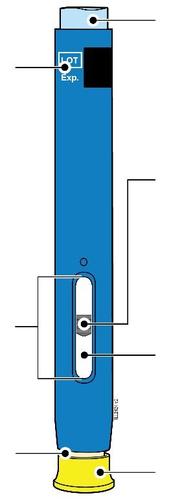
Expiry date
Plunger end
(may be visible
in the window; the
position may
vary)
Window
Medicinal
product Safety
device cream-coloured Yellow cap
(needle inside)
40 mg/0.4 mL
1Important information to know before injecting AMGEVITA
Using the SureClick pre-filled pen of AMGEVITA:
- It is important not to proceed with the injection before having read and fully understood these instructions for use and without having received specific training from the doctor or healthcare professional.
- Donot use the pre-filled pen if the packaging is damaged or the seal is not intact.
- Donot use the pre-filled pen after the expiry date indicated on the label.
- Donot shake the pre-filled pen.
- Donot remove the yellow cap from the pre-filled pen until you are ready for the injection.
- Donot use the pre-filled pen if it has been frozen.
- Donot use the pre-filled pen if it has fallen onto a hard surface. Some parts of the pre-filled pen may be broken, even if the damage is not visible. Use a new pre-filled pen and consult your doctor or healthcare professional.
Important:Keep the pre-filled pen and the sharps disposal container
out of the sight and reach of children.
| 2 | Preparation for the injection of AMGEVITA |
| 2a | Wait 30 minutes for the pre-filled pen to reach room temperature. |
| o c WAIT for 30 m minutes | |
r
| |
2b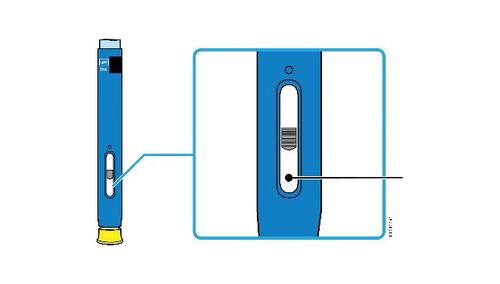 | d Inspect the medicinal product. It must be clear, from colourless to slightly yellow. |
a n a Medicinal i l a
| |
2cCheck the expiry date (EXP) and inspect the pre-filled pen for
any damage.
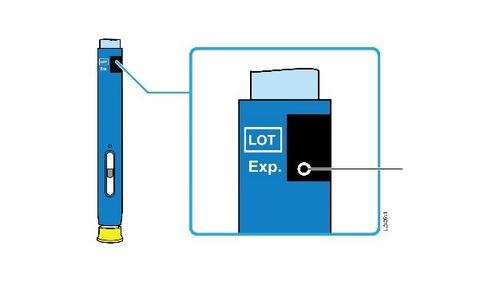
Expiry date
- Donot use if the expiry date has passed.
- Donot use the pre-filled pen if: o The yellow cap is missing or not securely attached. o Any part is cracked or broken o The pen has fallen onto a hard surface.
- Make sure you have the correct medicinal product and dosage.
Important: if the medicinal product is cloudy, discoloured or contains particles, contact
your doctor or healthcare professional.
| 3 | a Preparing for the injection |
3a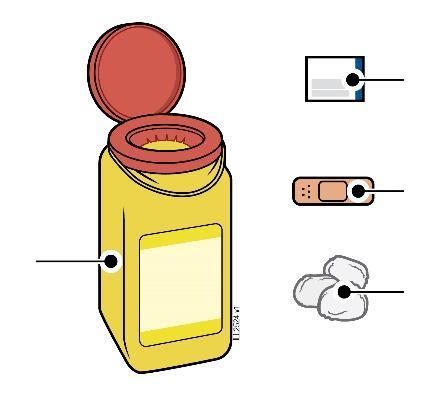 | Gather and place the injection material on a clean, well-lit surface. |
| n a Alcohol swab i l Plaster a Sharps disposal container Cotton wool or gauze I | |
a
| |
3bInject in one of these areas.
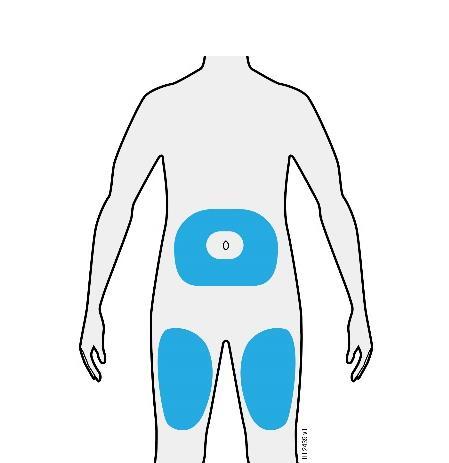
- Inject into the thigh or abdomen (excluding the area 5 cm around the navel).
- Choose a different site for each injection.
- Wash your hands thoroughly with soap and water.
- Clean the injection site with an alcohol swab.
- Allow the skin to dry.
- Donot touch the disinfected area again before the injection. Important:avoid areas with scars, stretch marks or areas where the skin is tender, bruised, red or hardened.
4Performing the AMGEVITA injection
Important:remove the yellow cap only when you are able to perform the injection immediately
(within 5 minutes), as the medicinal product may dry out.
4aHold the pre-filled pen so that the window is visible. Firmly pull
off the yellow cap.
You may need to use some force.
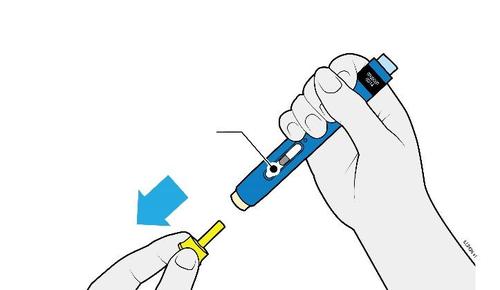
The window must be
visible
- Donot twist, bend or move the yellow cap back and forth while removing it.
- Donot reattach the needle cap to the pen. It may damage the needle.
- Donot insert your fingers into the cream-coloured safety device.
- It is normal to see a drop of medicinal product at the end of the needle or the cream-coloured safety device.
| 4b | Grasp the skin to create a skin fold with a tense surface at the injection site. Apply the cream-coloured safety device directly against the skin. |
| o GRASP THE SKIN | |
F a r m a c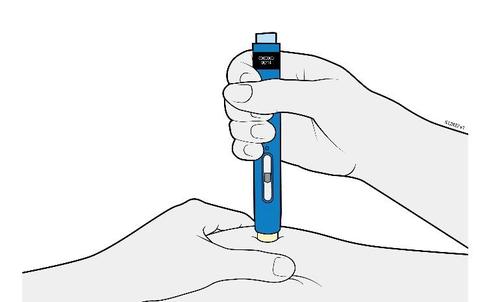 | |
| |
l e
| |
| PRESS o and hold against the skin c a m r a | |
4c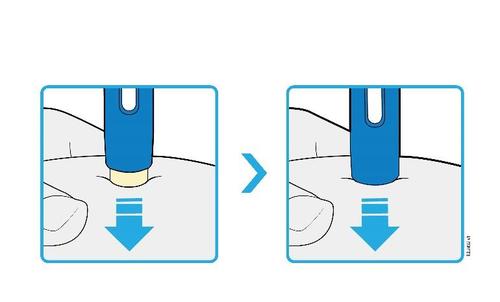 | F Press firmly until the cream-coloured safety device stops moving. Keep pressing; do not lift. |
| The cream-coloured safety device pushes and unlocks the blue start button. | |
| and PRESS e the blue start button d a n a i l a t I | |
4d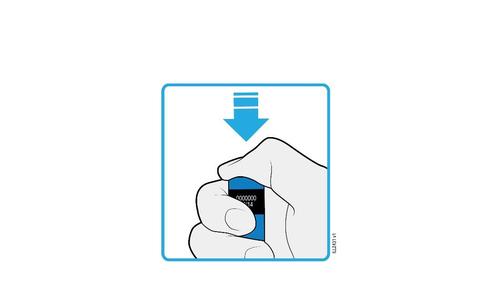 | a Continuing to press firmly downwards, press the blue start button to start the injection. |
i z
| |
OBSERVE TO CHECK
that the window turns completely yellow
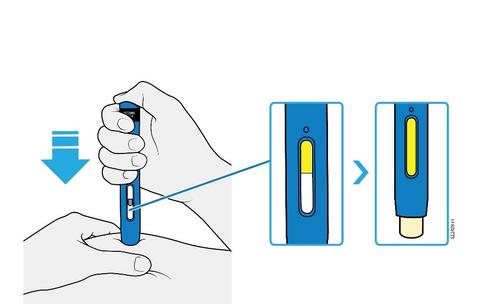
4eContinue to press downwards. When the window is completely yellow,
the injection is complete.
- Completing the injection may take up to 10seconds.
- You may hear or feel a click.
- Lift the pre-filled pen and pull it away from the skin.
- The cream-coloured safety device locks around the needle. Important:if the window has not turned yellow or if you feel that the medicine is still being delivered, this indicates that you have not received a full dose. Contact your doctor or healthcare professional immediately.
5Final procedures and disposal of AMGEVITA
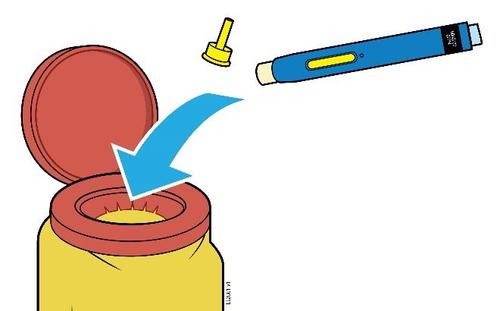
Important:do not throw the pre-filled pen in household waste.
5aPlace the used pre-filled pen and the yellow cap in the sharps disposal container
- Donot reuse the pre-filled pen
- Donot touch the cream-coloured safety device 5bExamine the injection site.
- Donot rub the injection site.
- If you notice blood, hold a cotton wool ball or gauze pad on the injection site. Apply a plaster if necessary.

Уже начали прием и появились вопросы?
Обсудите свое состояние и дальнейшие шаги с врачом онлайн.
AMGEVITA 80 mg injectable solution in pre-filled pen
adalimumab
Read this leaflet carefully before using this medicine as it contains important information for you.
- Keep this leaflet. You may need to read it again.
- Your doctor will give you a Patient Reminder Card, which contains important safety information that you need to know before administering AMGEVITA and during treatment with AMGEVITA. Keep this Patient Reminder Card.
- If you have any questions, ask your doctor or pharmacist.
- This medicine has been prescribed for you only. Do not pass it on to others, even if their symptoms are the same as yours, as it could be harmful.
- If any side effects occur, including those not listed in this leaflet, tell your doctor or pharmacist. See section 4.
Contents of this leaflet
- 1. What AMGEVITA is and what it is used for
- 2. What you need to know before you use AMGEVITA
- 3. How to use AMGEVITA
- 4. Possible side effects
- 5. How to store AMGEVITA
- 6. Contents of the pack and other information
1. What is AMGEVITA and what is it used for?
AMGEVITA contains the active ingredient adalimumab, a medicine that acts on the body's immune system
(defense).
AMGEVITA is indicated for the treatment of the inflammatory diseases listed below:
- Rheumatoid arthritis
- Polyarticular juvenile idiopathic arthritis
- Enthesitis-related arthritis
- Ankylosing spondylitis
- Axial spondyloarthritis without radiographic evidence of ankylosing spondylitis
- Psoriatic arthritis
- Plaque psoriasis
- Hidradenitis suppurativa
- Crohn’s disease
- Ulcerative colitis
- Non-infectious uveitis
The active ingredient contained in AMGEVITA, adalimumab, is a human monoclonal antibody. Monoclonal
antibodies are proteins that bind to a specific target.
The target of adalimumab is a protein called tumor necrosis factor (TNFα), which is
involved in the immune system (defense) and is present at higher concentrations in the
inflammatory diseases listed above. By binding to TNFα, AMGEVITA decreases the inflammatory
process of these diseases.
Rheumatoid arthritis
Rheumatoid arthritis is an inflammatory condition of the joints.
AMGEVITA is used to treat rheumatoid arthritis in adults. If you have moderate to severe rheumatoid
arthritis, other disease-modifying drugs, such as methotrexate, may initially be taken. If the response
to these drugs is not satisfactory, you will be given AMGEVITA to treat rheumatoid arthritis.
AMGEVITA can also be used for the treatment of severe, active and progressive rheumatoid arthritis
without prior treatment with methotrexate.
AMGEVITA slows the progression of damage to the cartilage and bones of the joints caused
by the disease and improves physical function.
Generally AMGEVITA is used with methotrexate. If your doctor decides that treatment with
methotrexate is not appropriate, AMGEVITA can be administered alone.
Polyarticular juvenile idiopathic arthritis and enthesitis-related arthritis
Polyarticular juvenile idiopathic arthritis and enthesitis-related arthritis are inflammatory
diseases of the joints that usually first appear during childhood.
AMGEVITA is used to treat polyarticular juvenile idiopathic arthritis in patients from 2 years of age and
enthesitis-related arthritis in patients from 6 years of age. Other disease-modifying drugs, such as
methotrexate, may be given at diagnosis. If the response to these drugs is not adequate, you will be
given AMGEVITA for the treatment of polyarticular juvenile idiopathic arthritis
or enthesitis-related arthritis.
Ankylosing spondylitis and axial spondyloarthritis without radiographic evidence of ankylosing
spondylitis
Ankylosing spondylitis and axial spondyloarthritis without radiographic evidence of ankylosing
spondylitis are inflammations of the spine.
AMGEVITA is used to treat ankylosing spondylitis and axial spondyloarthritis without radiographic
evidence of ankylosing spondylitis in adults. If you have ankylosing spondylitis or axial
spondyloarthritis without radiographic evidence of ankylosing spondylitis, you will first take other
medications. If you are unable to achieve an adequate response with these medications, you will take
AMGEVITA to reduce the signs and symptoms of the disease.
Psoriatic arthritis
Psoriatic arthritis is an inflammation of the joints associated with psoriasis.
AMGEVITA is used to treat psoriatic arthritis in adults. AMGEVITA slows damage to the
cartilage and bones of the joints caused by the disease and improves physical function.
Plaque psoriasis in adults and children
Plaque psoriasis is a skin condition that causes red, scaly, and hardened patches of
skin covered with silvery scales. Plaque psoriasis can also affect the nails, causing them to break, thicken
and lift from the nail bed, which can be painful. Psoriasis is believed to be caused by a problem with the
body's immune system that leads to increased production of skin cells.
AMGEVITA is used to treat moderate to severe plaque psoriasis in adults.
AMGEVITA is also used to treat severe plaque psoriasis in children and adolescents from 4 to
17 years of age for whom topical therapy and phototherapy have not worked optimally or
are not indicated.
Hidradenitis suppurativa in adults and adolescents
Hidradenitis suppurativa (sometimes called inverse acne) is a chronic inflammatory disease of
the skin and is often painful. Symptoms may include painful nodules and abscesses (boils) that may
drain pus. It most frequently affects specific areas of the skin, such as the submammary region, the
armpits, the inner thighs, the groin, and the buttocks. Scars can also form in the affected areas.
AMGEVITA is used to treat hidradenitis suppurativa in adults and adolescents from
12 years of age. AMGEVITA can reduce the number of nodules and abscesses you have and the pain that is
often associated with this disease. Initially, you may receive other medications. If you do not respond
well enough to these medications, you will receive AMGEVITA.
Crohn’s disease in adults and children
Crohn’s disease is an inflammation of the digestive tract.
AMGEVITA is used to treat Crohn’s disease in adults and children aged 6 to 17 years.
If you have Crohn’s disease, you will first be given other medications. If you do not
respond adequately to these medications, you will be given AMGEVITA
to reduce signs and symptoms of Crohn’s disease.
Ulcerative colitis in adults and children
Ulcerative colitis is an inflammation of the large intestine.
AMGEVITA is used to treat moderate to severe ulcerative colitis in adults and children aged
6 to 17 years. If you have ulcerative colitis you may initially take other medications. If you are
unable to achieve an adequate response with these medications, you will take AMGEVITA for
reduce the signs and symptoms of the disease.
Non-infectious uveitis in adults and children
Non-infectious uveitis is an inflammatory disease that affects certain parts of the eye.
AMGEVITA is used for the treatment of
- Adults with non-infectious uveitis with inflammation affecting the back of the eye.
- Children from 2 years of age with chronic non-infectious uveitis with inflammation affecting the front of the eye.
This inflammation can lead to a decrease in vision and/or the presence of mobile bodies
in the eye (black spots or thin lines that move across the visual field). AMGEVITA works
by reducing this inflammation.
2. What you need to know before using AMGEVITA
Do not use AMGEVITA:
- if you are allergic to adalimumab or to any of the other ingredients of this medicine (listed in section 6).
- if you have a severe infection, including active tuberculosis, sepsis (blood infection) or other opportunistic infections (unusual infections associated with a weakened immune system) (see “Warnings and precautions”). It is important to tell your doctor if you have signs or symptoms of infection, such as for example fever, wounds, feeling tired, dental problems.
- if you have moderate or severe heart failure. It is important to tell your doctor if you have had or currently have a serious heart condition (see “Warnings and precautions”).
Warnings and precautions
Talk to your doctor or pharmacist before using AMGEVITA:
Allergic reactions
- If you experience allergic reactions with symptoms such as a feeling of tightness in the chest, wheezing, dizziness, swelling or skin rash, do not administer AMGEVITA again and contact your doctor immediately as, in rare cases, these reactions can be life-threatening.
Infections
- If you have an infection, including long-term or localized infections (for example, leg ulcers), consult your doctor before starting treatment with AMGEVITA. If you have doubts, contact your doctor.
- You may be more likely to get infections during treatment with AMGEVITA. This risk may increase if your lung function is impaired. These infections can be serious and include tuberculosis, infections caused by viruses, fungi, parasites or bacteria, or other opportunistic infections and sepsis which, in rare cases, can be life-threatening. It is important to tell your doctor about the presence of symptoms such as fever, wounds, feeling tired or dental problems. Your doctor may recommend temporarily stopping AMGEVITA.
Tuberculosis
- Since cases of tuberculosis have occurred in patients treated with adalimumab, before starting therapy with AMGEVITA, your doctor will need to check if you have signs or symptoms of tuberculosis. This will involve collecting a detailed medical assessment including your medical history and appropriate clinical tests (e.g., a chest X-ray and a tuberculin test). The performance and results of these tests must be recorded on the Patient Reminder Card. It is very important to tell your doctor if you have ever had tuberculosis, or if you have had close contact with people with tuberculosis.
- Tuberculosis may develop during therapy even if you have received preventive treatment for tuberculosis.
- Contact your doctor immediately if symptoms of tuberculosis (persistent cough, weight loss, fatigue, moderate fever) or other infections appear during or after therapy.
Travel/recurring infection
- Tell your doctor if you live or travel to regions where fungal infections, such as histoplasmosis, coccidioidomycosis or blastomycosis, are endemic.
- Tell your doctor if you have had recurrent infections or if you have conditions that increase your risk of infection.
Hepatitis B virus
- Tell your doctor if you are a carrier of the hepatitis B virus (HBV), if you have an active infection with the hepatitis B virus, or if you think you may be at risk of contracting the hepatitis virus.
- Your doctor should test you for hepatitis B virus infection. Taking AMGEVITA may cause reactivation of the hepatitis B virus in subjects who are carriers of this virus. In some rare cases, especially if the patient is undergoing therapy with other drugs that suppress the immune system, reactivation of the hepatitis B virus can endanger the patient's life.
Age over 65 years
- If you are over 65 years of age, you may be more susceptible to infections while taking AMGEVITA. You and your doctor should pay particular attention to signs of infection while you are being treated with AMGEVITA. It is important to inform your doctor if symptoms of infections such as fever, wounds, feeling tired or dental problems appear.
Surgery or dental procedures
- Before surgery or dental procedures, tell your doctor that you are taking AMGEVITA. Your doctor may advise temporarily stopping AMGEVITA.
Demyelinating disease
- If you have or develop a demyelinating disease such as multiple sclerosis, your doctor will decide whether to start or continue treatment with AMGEVITA. Tell your doctor immediately if you experience symptoms such as changes in vision, weakness of arms or legs, or numbness or tingling that affects any part of the body.
Vaccinations
- Certain vaccines contain live but weakened forms of bacteria or viruses that cause diseases that can cause infections and should not be administered during treatment with AMGEVITA. Consult your doctor before getting vaccinated. In children, before starting therapy with AMGEVITA, it is recommended, if possible, to implement the vaccination schedule provided for, in compliance with current vaccination guidelines.
- If you have taken AMGEVITA during pregnancy, the baby may have a higher risk of contracting such an infection up to about 5 months after the last dose you took during pregnancy. It is important that you tell your pediatrician or other healthcare provider about your use of AMGEVITA during pregnancy, so that they can decide when the baby should receive any type of vaccination.
Heart failure
- If you have mild heart failure and are undergoing concomitant treatment with AMGEVITA, your doctor should carefully assess and monitor the condition of your heart. It is important to tell your doctor if you have or have had heart problems. If new symptoms of heart failure or worsening of existing symptoms (e.g., shortness of breath or swelling of the feet) occur, contact your doctor immediately. The doctor will decide if you can take AMGEVITA.
Fever, bruising, bleeding or paleness
- In some patients, the body may not be able to produce enough blood cells to help fight infections or stop bleeding. If you have persistent fever, bruising or easy bleeding, or paleness, see your doctor immediately. The latter may decide to interrupt the therapy.
Cancer
- In patients, both children and adults, undergoing treatment with adalimumab or other anti-TNF drugs, very rarely, some types of cancer have occurred. Patients with severe, long-standing rheumatoid arthritis may have a higher than average risk of developing lymphoma (a cancer that affects the lymphatic system) and leukemia (a cancer that affects the blood and bone marrow).
- If you are taking AMGEVITA, the risk of developing lymphomas, leukemia or other cancers may increase. In rare circumstances, a specific and serious type of lymphoma has been observed in patients treated with adalimumab. Some of these patients were also being treated with azathioprine or 6-mercaptopurine. Tell your doctor if you are taking azathioprine or 6-mercaptopurine with AMGEVITA.
- In addition, cases of non-melanoma skin cancer have been observed in patients taking adalimumab. If new skin lesions appear during therapy, or if the appearance of existing lesions changes, report it to your doctor.
- There have been cases of cancers, other than lymphoma, in patients with a specific type of lung disease called Chronic Obstructive Pulmonary Disease (COPD) treated with another anti-TNF. If you suffer from COPD, or smoke heavily, you should discuss with your doctor whether treatment with an anti-TNF is appropriate.
Autoimmune diseases
- Rarely, treatment with AMGEVITA may lead to the manifestation of a lupus-like syndrome. Tell your doctor if you experience symptoms such as a persistent unexplained skin rash, fever, joint pain or fatigue.
In order to improve the traceability of this medicine, the doctor or pharmacist must record the
name of the medicine and the batch number of the product that has been administered to you on your patient card. You can note these details should they be requested in the future.
Children and adolescents
- Vaccinations: if possible, children should have already had all vaccinations before using AMGEVITA.
- Do not give AMGEVITA to children with polyarticular juvenile idiopathic arthritis under the age of 2 years.
- Do not give AMGEVITA to children with plaque psoriasis under the age of 4 years.
- Do not give AMGEVITA to children with Crohn's disease or ulcerative colitis under the age of 6 years.
Other medicines and AMGEVITA
Tell your doctor or pharmacist if you are taking, have recently taken or may take
any other medicines.
AMGEVITA can be taken with methotrexate and other disease-modifying antirheumatic drugs (sulfasalazine, hydroxychloroquine, leflunomide and parenteral gold salts), steroids or
analgesics, including non-steroidal anti-inflammatory drugs (NSAIDs).
AMGEVITA should not be taken at the same time as medicines containing anakinra or abatacept as the active ingredient due to the increased risk of contracting serious infections. If you have doubts, consult your
doctor.
Pregnancy and breastfeeding
- You should consider using adequate contraceptive measures to prevent pregnancy and continue using them for at least 5 months after the last therapy with AMGEVITA.
- If you are pregnant, suspect you are pregnant or are planning a pregnancy, ask your doctor for advice on taking this medicine.
- AMGEVITA should only be used during pregnancy if necessary.
- According to a pregnancy study, no increased risk of birth defects was found when the mother received AMGEVITA during pregnancy, compared to mothers who had the same condition but had not received AMGEVITA.
- AMGEVITA can be used during breastfeeding.
- If you take AMGEVITA during pregnancy, the baby may have a higher risk of contracting an infection.
- It is important that you tell your pediatrician or other healthcare provider about the use of AMGEVITA during pregnancy, before the baby receives any type of vaccination. For more information on vaccinations, see “Warnings and precautions”.
Driving and using machines
AMGEVITA may affect, albeit only to a modest extent, your ability to drive, ride a bicycle or use machinery. After taking AMGEVITA, you may experience
visual disturbances and a sensation that the environment around you is rotating (dizziness).
AMGEVITA contains sodium
This medicine contains less than 1 mmol of sodium (23 mg) per 0.8 mL dose, i.e., it is
essentially “sodium-free”.
3. How to use AMGEVITA
Use this medicine following exactly the instructions of your doctor or pharmacist. If you have
any doubts, consult your doctor or pharmacist.
Adults with rheumatoid arthritis, psoriatic arthritis, ankylosing spondylitis or axial spondyloarthritis without
radiographic evidence of ankylosing spondylitis
AMGEVITA is injected under the skin (subcutaneous use). In adult patients with rheumatoid arthritis,
ankylosing spondylitis, axial spondyloarthritis without radiographic evidence of ankylosing spondylitis and
psoriatic arthritis, the usual dosage is 40 mg every other week, administered as a single dose.
In rheumatoid arthritis, methotrexate is continued during treatment with AMGEVITA. If the
doctor decides that methotrexate is not appropriate, AMGEVITA may be administered alone.
If you have rheumatoid arthritis and are not receiving methotrexate in combination with treatment with
AMGEVITA, your doctor may decide to prescribe you 40 mg every week or 80 mg every other week.
Adults with plaque psoriasis
The usual dose for adults with plaque psoriasis is an initial dose of
80 mg, followed by a dose of 40 mg, administered every other week, starting the week
following the initial dose. You must continue treatment with AMGEVITA for the
time indicated by your doctor. Based on the clinical response, your doctor may increase the dose to 40 mg every
week or 80 mg every other week.
Adults with hidradenitis suppurativa
The usual dose for hidradenitis suppurativa is an initial dose of 160 mg (two 80 mg injections in
one day or one 80 mg injection per day for two consecutive days), followed by a dose of 80 mg
(one 80 mg injection) two weeks later. After another two weeks, continue with a dose of
40 mg per week or 80 mg every other week, as prescribed by your doctor. It is recommended to use
an antiseptic cleansing solution daily on the affected areas.
Adolescents with hidradenitis suppurativa aged between 12 and 17 years, weighing 30 kg or more
The recommended dose of AMGEVITA is an initial dose of 80 mg, followed by 40 mg administered
every other week starting one week after the initial dose. If there is an inadequate response to 40 mg
of AMGEVITA every other week, your doctor may increase the dose to 40 mg every week or 80 mg a
every other week.
It is recommended to use an antiseptic cleansing solution daily on the affected areas.
Adults with Crohn’s disease
In the case of Crohn’s disease, the usual dose is initially 80 mg followed by 40 mg every other
week, two weeks later. If a faster response is needed, your doctor may
prescribe an initial dose of 160 mg (administered in two 80 mg injections in one day or in one
80 mg injection per day for two consecutive days) followed by 80 mg two weeks later, and
then 40 mg every other week. Depending on the clinical response, your doctor may
increase the dose to 40 mg every week or 80 mg every other week.
Children and adolescents with Crohn’s disease
Children and adolescents aged between 6 and 17 years and weighing less than 40 kg
Initially, the usual dose regimen is 40 mg, followed by 20 mg two weeks later. If a faster response is required,
the doctor may prescribe an initial dose of 80 mg followed by 40 mg two
weeks later.
Subsequently, the usual dose is 20 mg every other week. Depending on the child’s response,
the doctor may increase the frequency of the dose to 20 mg every week.
The 40 mg pre-filled pen cannot be used to dispense the 20 mg dose. A 20 mg pre-filled syringe of AMGEVITA is however available for the 20 mg dose.
Children and adolescents aged between 6 and 17 years and weighing 40 kg or more
Initially, the usual dose regimen is 80 mg, followed by 40 mg two weeks later. If a faster response is required,
the doctor may prescribe an initial dose of 160 mg (two 80 mg injections
in one day or one 80 mg injection per day for two consecutive days) followed by 80 mg two
weeks later.
Subsequently, the usual dose is 40 mg every other week. Depending on the child’s response,
the doctor may increase the dose to 40 mg every week or 80 mg every other week.
Adults with non-infectious uveitis
For adults with non-infectious uveitis, the usual dose is an initial dose of 80 mg, followed by
40 mg administered every other week starting one week after the initial dose. You must
continue to inject AMGEVITA for as long as indicated by your doctor.
In non-infectious uveitis, corticosteroids or other drugs that affect the immune system
may be continued during treatment with AMGEVITA. AMGEVITA may also be
administered as monotherapy.
Children and adolescents with chronic non-infectious uveitis from 2 years of age
Children and adolescents from 2 years of age and weighing less than 30 kg
The usual dose of AMGEVITA is 20 mg administered every other week with methotrexate.
The doctor may also prescribe an initial dose of 40 mg which may be administered one
week before the start of the usual dose.
The 40 mg pre-filled pen cannot be used for the 20 mg dose. A syringepre-filled
with 20 mg of AMGEVITA is however available for the 20 mg dose.
Children and adolescents from 2 years of age and weighing 30 kg or more
The usual dose of AMGEVITA is 40 mg administered every other week with methotrexate.
The doctor may also prescribe an initial dose of 80 mg which may be administered one
week before the start of the usual dose.
How and route of administration
AMGEVITA is administered by injection under the skin (subcutaneous injection).
Detailed instructions on how to inject AMGEVITA are provided in the section “Instructions for Use”.
If you use more AMGEVITA than you should
If you accidentally inject AMGEVITA more frequently than prescribed by your doctor or
pharmacist, contact your doctor or pharmacist informing them that you have taken more medicine. Keep
the box of this medicine always, even if empty.
If you forget to use AMGEVITA
If you forget to give an injection, you should inject the next dose of AMGEVITA as soon as you
remember. Then resume the dose regularly according to the established dosage schedule.
If you stop taking AMGEVITA
The decision to stop using AMGEVITA should be discussed with your doctor. Symptoms
may return after discontinuation.
If you have any doubts about the use of this medicine, consult your doctor or pharmacist.
4. Possible side effects
Like all medicines, this medicine can cause side effects, although not everyone will experience them.
Most side effects are mild to moderate in form. However, some may be serious and require treatment. Side effects may
occur up to 4 months after the last injection of AMGEVITA.
Tell your doctor immediately if you notice any of the following signs of an allergic reaction or cardiac insufficiency:
- severe skin rash, hives or other signs of an allergic reaction;
- swelling of the face, hands and feet;
- difficulty breathing, difficulty swallowing;
- shortness of breath on exertion or when lying down, or swelling of the feet.
Tell your doctor as soon as possible if you notice any of the following reactions:
- signs of infection such as fever, feeling unwell, wounds, dental problems, burning when urinating;
- fatigue or weakness;
- cough;
- tingling;
- numbness;
- double vision;
- weakness of the arms or legs;
- signs of skin cancer such as a lump or sore that does not heal;
- signs and symptoms suggesting the onset of blood disorders (blood), such as persistent fever, bruising, bleeding, pallor.
The symptoms described above may be signs of the following side effects, which have been observed
with adalimumab.
Very common (may affect more than 1 in 10 people)
- injection site reactions (including pain, swelling, redness or itching);
- respiratory tract infections (including cold, runny nose, sinus infection and lung infection);
- headache;
- abdominal pain;
- nausea and vomiting;
- skin rash;
- musculoskeletal pain.
Common (may affect up to 1 in 10 people)
- serious infections (including sepsis and influenza);
- intestinal infections (including gastroenteritis);
- skin infections (including cellulitis and herpes zoster infection);
- ear infections;
- oral infections (including dental infections and cold sores);
- reproductive system infections;
- urinary tract infection;
- fungal infection;
- joint infections;
- benign tumors;
- skin cancer;
- allergic reactions (including seasonal allergies);
- dehydration;
- mood swings (including depression);
- anxiety;
- difficulty sleeping;
- sensory disturbances such as tingling, pricking or numbness;
- migraine;
- nerve root compression (including lower back pain and leg pain);
- visual disturbances;
- eye inflammation;
- eyelid inflammation and eye swelling;
- dizziness (feeling dizzy or room spinning);
- fast heartbeat;
- high blood pressure;
- flushing;
- bruising;
- cough;
- asthma;
- shortness of breath;
- gastrointestinal bleeding;
- dyspepsia (indigestion, bloated stomach, heartburn);
- acid reflux;
- dry eye syndrome (including dry eyes and dry mouth);
- itching;
- itchy skin rash;
- bruising;
- skin inflammation (such as eczema);
- nail breakage of the fingers and toes;
- increased sweating;
- hair loss;
- onset or worsening of psoriasis;
- muscle spasms;
- blood in the urine;
- kidney problems;
- chest pain;
- edema;
- fever;
- reduced platelets in the blood, which increases the risk of bleeding or bruising;
- difficulty healing.
Uncommon (may affect up to 1 in 100 people)
- opportunistic infections (which include tuberculosis and other infections that occur when the immune defenses are lowered);
- neurological infections (including viral meningitis);
- eye infections;
- bacterial infections;
- diverticulitis (inflammation and infection of the large intestine);
- cancer, including cancer affecting the lymphatic system (lymphoma) and melanoma (skin cancer);
- immune system disorders that may affect lungs, skin and lymph nodes (which most commonly present as sarcoidosis);
- vasculitis (inflammation of blood vessels);
- tremor;
- neuropathy;
- stroke;
- hearing loss, tinnitus;
- irregular heartbeat such as skipped beats;
- heart problems that can cause shortness of breath or swelling of the ankles;
- heart attack;
- formation of a sac in the wall of a major artery, inflammation and blood clot in a vein, blockage of a blood vessel;
- lung diseases that cause shortness of breath (including inflammation);
- pulmonary embolism (blockage of a lung artery);
- pleural effusion (abnormal collection of fluid in the pleural space);
- inflammation of the pancreas that causes severe pain in the abdomen and back;
- difficulty swallowing;
- facial edema;
- inflammation of the gallbladder, gallstones;
- fatty liver;
- night sweats;
- scarring;
- abnormal muscle catabolism;
- systemic lupus erythematosus (including inflammation of skin, heart, lungs, joints and other organs);
- interrupted sleep;
- impotence;
- inflammations.
Rare (may affect up to 1 in 1,000 people)
- leukemia (blood cancer of the bone marrow);
- severe allergic reaction with shock;
- multiple sclerosis;
- neurological conditions (such as optic nerve inflammation and Guillain-Barré syndrome, which can cause muscle weakness, abnormal sensations, tingling in the arms and upper body);
- cardiac arrest;
- pulmonary fibrosis (scarring of the lungs);
- intestinal perforation (hole in the wall of the intestine);
- hepatitis (inflammation of the liver);
- hepatitis B reactivation;
- autoimmune hepatitis (inflammation of the liver caused by your own immune system);
- cutaneous vasculitis (inflammation of the blood vessels in the skin);
- Stevens-Johnson syndrome (life-threatening reaction with flu-like symptoms and skin rash with blisters);
- facial edema associated with allergic reactions;
- erythema multiforme (inflammatory skin rash);
- lupoid-like syndrome;
- angioedema (localized swelling of the skin);
- lichenoid skin reaction (itchy, reddish-purple skin rash).
Not known (frequency cannot be estimated from available data)
- T-cell hepatosplenic lymphoma (a rare blood cancer that is often fatal);
- Merkel cell carcinoma (a type of skin cancer);
- Kaposi's sarcoma, a rare form of cancer related to human herpes virus 8 infection. Kaposi's sarcoma most commonly manifests with purple lesions on the skin;
- liver failure;
- worsening of a condition called dermatomyositis (which manifests as a skin rash accompanied by muscle weakness);
- weight gain (in most patients, weight gain has been low).
Some of the side effects observed with adalimumab may be asymptomatic and can only be
detected through blood tests. These include:
Very common (may affect more than 1 in 10 people)
- low white blood cell count;
- low red blood cell count;
- increased blood lipids;
- increased liver enzymes.
Common (may affect up to 1 in 10 people)
- increased white blood cell count;
- reduced platelet count;
- increased uric acid in the blood;
- abnormal sodium in the blood;
- decreased calcium in the blood;
- decreased phosphate in the blood;
- increased blood sugars;
- increased lactate dehydrogenase in the blood;
- autoantibodies present in the blood;
- decreased potassium in the blood.
Uncommon (may affect up to 1 in 100 people)
- bilirubin in the blood elevated (liver blood test).
Rare (may affect up to 1 in 1,000 people)
- low white blood cell, red blood cell and platelet count.
Reporting of side effects
If you get any side effects, even those not listed in this leaflet, tell your
doctor or pharmacist. You can also report side effects directly through the national reporting system detailed in
Appendix V. By reporting side effects you can help provide more information on the safety of this medicine.
5. How to store AMGEVITA
Keep this medicine out of the sight and reach of children.
Do not use this medicine after the expiry date which is stated on the label and the packaging after
Exp. The expiry date refers to the last day of that month.
Store in a refrigerator (2°C – 8°C). Do not freeze.
Store in the original packaging to protect the medicine from light.
A single AMGEVITA pen can be stored at temperatures up to a maximum of 25°C for
a maximum period of 14 days. The pre-filled pen must be protected from light and must be
discarded if not used within the 14-day period.
Do not dispose of any medicine in wastewater or household waste. Ask your pharmacist how to
dispose of medicines you no longer use. This will help protect the environment.
6. Content of the pack and other information
What AMGEVITA contains
- The active substance is adalimumab. Each pre-filled pen contains 80 mg of adalimumab in 0.8 mL of solution.
- The other excipients are L-lactic acid, sucrose, polysorbate 80, sodium hydroxide and water for injections.
Description of the appearance of AMGEVITA and contents of the pack
AMGEVITA is a clear solution from colourless to slightly yellow.
Each pack contains 1, 2 or 3 single-use SureClick pre-filled pens of 80 mg.
Marketing Authorisation Holder and Manufacturer
Amgen Europe B.V.
Minervum 7061
4817 ZK Breda
Netherlands
Marketing Authorisation Holder
Amgen Europe B.V.
Minervum 7061
4817 ZK Breda
Netherlands
Manufacturer
Amgen Technology Ireland UC
Pottery Road
Dun Laoghaire
Co Dublin
Ireland
Manufacturer
Amgen NV
Telecomlaan 5-7
1831 Diegem
Belgium
For further information on this medicinal product, contact the local representative of the Marketing Authorisation Holder:
België/Belgique/Belgien
s.a. Amgen n.v.
Tél/Tel: +32 (0)2 7752711
Lietuva
Amgen Switzerland AG Vilniaus filialas
Tel: +370 5 219 7474
България
Амджен България ЕООД
Тел.: +359 (0)2 424 7440
Luxembourg/Luxemburg
s.a. Amgen
Belgique/Belgien
Tél/Tel: +32 (0)2 7752711
Česká republika
Amgen s.r.o.
Tel: +420 221 773 500
Magyarország
Amgen Kft.
Tel.: +36 1 35 44 700
Danmark
Amgen, filial af Amgen AB, Sverige
Tlf: +45 39617500
Malta
Amgen S.r.l.
Italy
Tel: +39 02 6241121
Deutschland
Amgen GmbH
Tel: +49 89 1490960
Nederland
Amgen B.V.
Tel: +31 (0)76 5732500
Eesti
Amgen Switzerland AG Vilniaus filialas
Tel: +372 586 09553
Norge
Amgen AB
Tlf: +47 23308000
Ελλάδα
Amgen Ελλάς Φαρμακευτικά Ε.Π.Ε.
Τηλ: +30 210 3447000
Österreich
Amgen GmbH
Tel: +43 (0)1 50 217
España
Amgen S.A.
Tel: +34 93 600 18 60
Polska
Amgen Biotechnologia Sp. z o.o.
Tel.: +48 22 581 3000
France
Amgen S.A.S.
Tél: +33 (0)9 69 363 363
Portugal
Amgen Biofarmacêutica, Lda.
Tel: +351 21 4220606
Hrvatska
Amgen d.o.o.
Tel: +385 (0)1 562 57 20
România
Amgen România SRL
Tel: +4021 527 3000
Ireland
Amgen Ireland Limited
Tel: +353 1 8527400
Slovenija
AMGEN zdravila d.o.o.
Tel: +386 (0)1 585 1767
Ísland
Vistor hf.
Sími: +354 535 7000
Slovenská republika
Amgen Slovakia s.r.o.
Tel: +421 2 321 114 49
Italia
Amgen S.r.l.
Tel: +39 02 6241121
Suomi/Finland
Amgen AB, sivuliike Suomessa/Amgen AB, filial
i Finland
Puh/Tel: +358 (0)9 54900500
Kύπρος
C.A. Papaellinas Ltd
Τηλ: +357 22741 741
Sverige
Amgen AB
Tel: +46 (0)8 6951100
Latvija
Amgen Switzerland AG Rīgas filiāle
Tel: +371 257 25888
Other sources of information
More detailed information on this medicinal product is available on the website of the European Medicines Agency, http://www.ema.europa.eu .
-----------------------------------------------------------------------------------------------------------------------------
INSTRUCTIONS FOR USE 80 mg/0.8 mL
Guide to the parts of the SureClick pre-filled pen
80 mg/0.8 mL
Blue start button
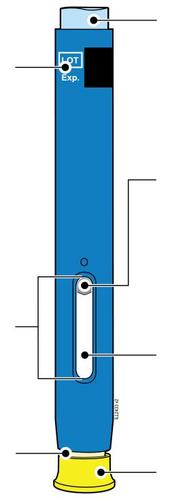
Expiry date
Plunger tip
(may be visible
in the window; the
position may
vary)
Window
Medicinal
product
Cream-coloured
safety device
(needle inside)
Yellow cap
1Important information to know before injecting AMGEVITA
Using the SureClick pre-filled pen of AMGEVITA:
- It is important not to inject yourself without first reading and fully understanding these instructions for use and without receiving specific training from your doctor or healthcare professional.
- Do notuse the pre-filled pen if the packaging is damaged or the tamper-evident seal is broken.
- Do notuse the pre-filled pen after the expiry date stated on the label.
- Do notshake the pre-filled pen.
- Do notremove the yellow cap from the pre-filled pen until you are ready to inject.
- Do notuse the pre-filled pen if it has been frozen.
- Do notuse the pre-filled pen if it has been dropped onto a hard surface. Some parts of the pre-filled pen may be broken, even if the damage is not visible. Use a new pre-filled pen and consult your doctor or healthcare professional.
Important:Keep the pre-filled pen and the sharps disposal container
out of the sight and reach of children.
| 2 | Preparation for injecting AMGEVITA |
| 2a | Wait 30 minutes for the pre-filled pen to reach room temperature. |
| o c WAIT a 30 m minutes | |
r
| |
2b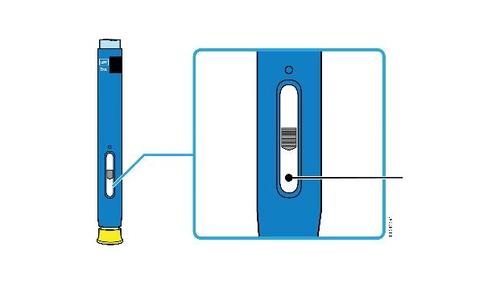 | d Inspect the medicinal product. It must be clear, from colourless to slightly yellow. |
a n a Medicinal i l a
| |
2cCheck the expiry date (EXP) and inspect the pre-filled pen for
any damage.
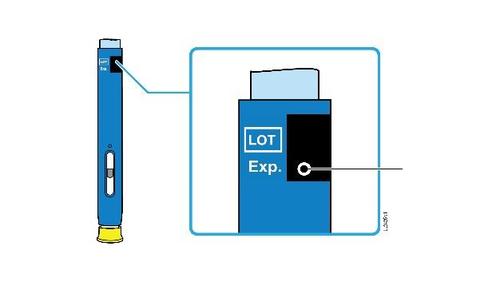
Expiry date
- Do notuse if the expiry date has passed.
- Do notuse the pre-filled pen if: o The yellow cap is missing or not securely attached. o Any part is cracked or broken o The pen has been dropped onto a hard surface.
- Make sure you have the correct medicinal product and dosage.
Important: if the medicinal product is cloudy, discoloured or contains particles, contact
your doctor or healthcare professional.
| 3 | Preparation for the injection |
3a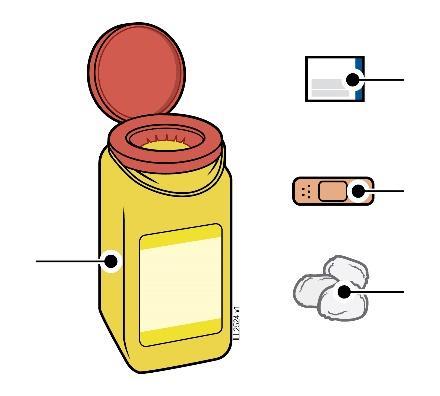 | a Collect and place the injection material on a clean, well-lit surface. |
| n a Alcohol swab i Plaster l Sharps disposal a container t I | |
a
| |
3bInject in one of these areas.
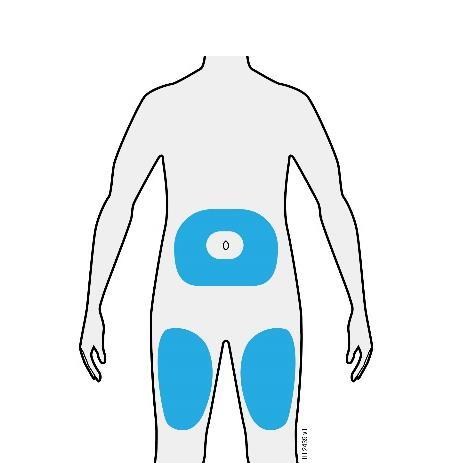
- Inject into the thigh or abdomen (except for the area 5 cm around the navel).
- Choose a different site for each injection.
- Wash your hands thoroughly with soap and water.
- Clean the injection site with an alcohol swab.
- Allow the skin to dry.
- Do nottouch the disinfected area again before the injection. Important:avoid areas with scars, stretch marks or areas where the skin is tender, bruised, red or hardened.
4Performing the AMGEVITA injection
Important:remove the yellow cap only when you are able to perform the
injection immediately (within 5 minutes), as the medicinal product may dry out.
4aHold the pre-filled pen so that the window is visible. Firmly pull
off the yellow cap.
You may need to use some force.
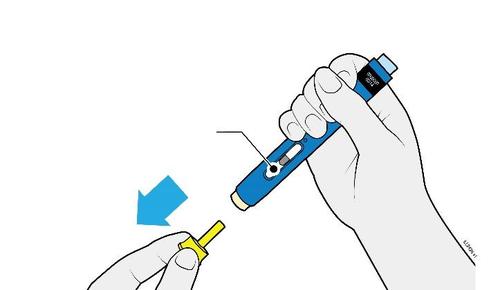
The window must be
visible
- Do nottwist, bend or move the yellow cap back and forth when removing it.
- Do notput the needle cap back on the pen. It may damage the needle.
- Do notinsert your fingers into the cream-coloured safety device.
- It is normal to see a drop of medicinal product at the end of the needle or the cream-coloured safety device.
| 4b | Grasp the skin to create a skin fold with a tight surface at the injection site. Apply the cream-coloured safety device directly against the skin. |
| o GRASP THE SKIN | |
F a r m a c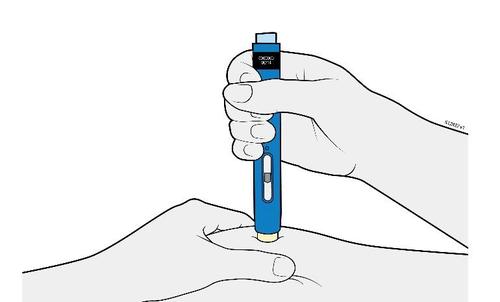 | |
| |
l e
| |
| PRESS o and hold against the skin c a m r a | |
4c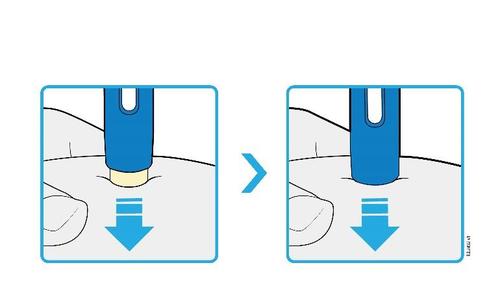 | F Press firmly until the cream-coloured safety device stops moving. Keep pressing; do not lift. |
| The cream-coloured safety device pushes and unlocks the blue start button. | |
| PRESS e the blue start button d a n a i l a t I | |
4d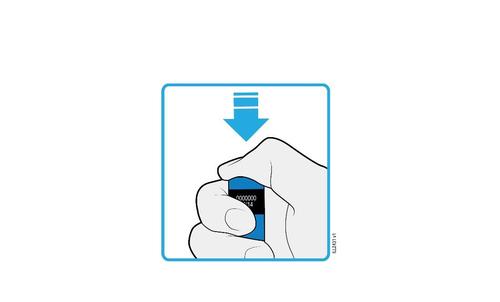 | a Continue to press down firmly, press the blue start button to start the injection. |
i z
| |
OBSERVE TO VERIFY
that the window turns completely yellow
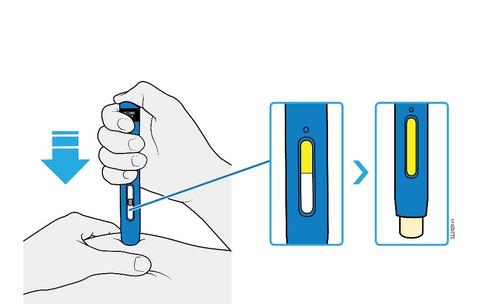
4eContinue to press down. When the window is completely yellow,
the injection is complete.
- Completion of the injection may take up to 15seconds.
- You may hear or feel a click.
- Lift the pre-filled pen and remove it from the skin.
- The cream-coloured safety device locks around the needle. Important:if the window has not turned yellow or if you feel that the medicinal product is still being delivered, this indicates that you have not received a full dose. Contact your doctor or healthcare professional immediately.
5Final procedures and disposal of AMGEVITA
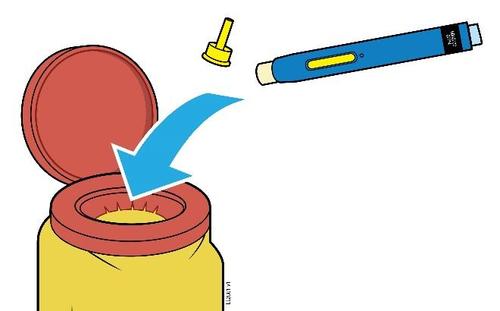
Important:do not throw the pre-filled pen in the household waste.
5aPlace the used pre-filled pen and the yellow cap in the sharps disposal
container
- Do notreuse the pre-filled pen
- Do nottouch the cream-coloured safety device 5bExamine the injection site.
- Do notrub the injection site.
- If you notice blood, hold a cotton wool or gauze pad on the injection site. If necessary, apply a plaster.
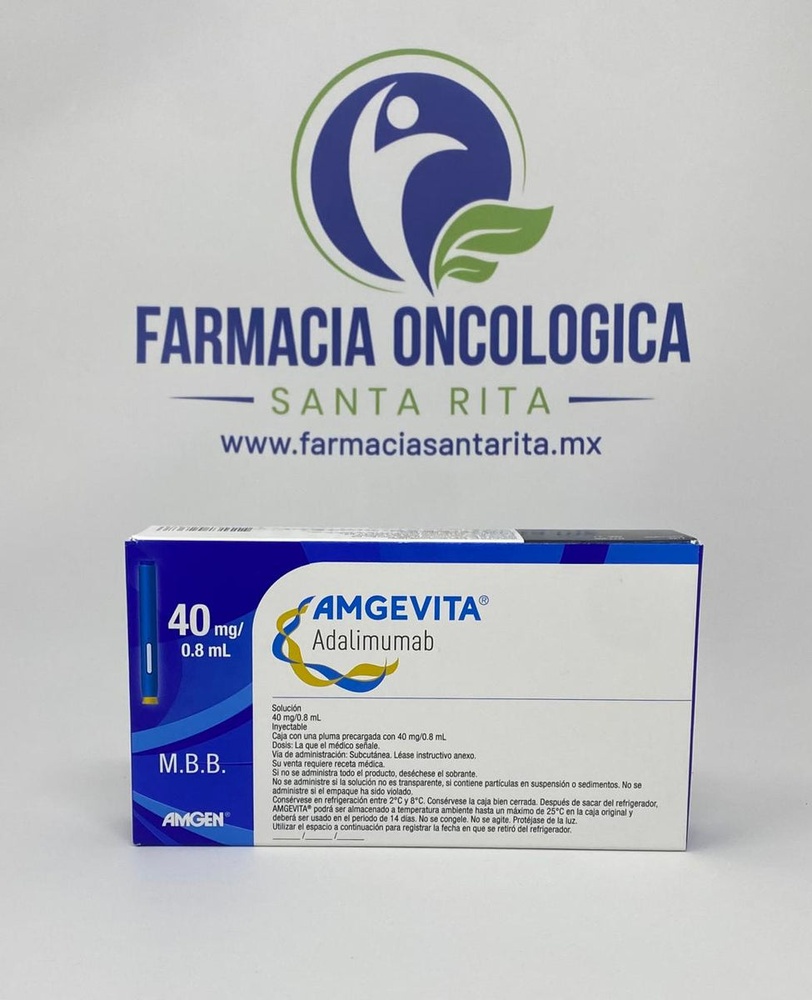
- Страна регистрации
- Форма выпускаInjectable solution, 20 MG
- Код АТХL04AB04
- Действующее вещество
- Отпускается по рецептуДа
- Производитель
- Информация на этой странице носит справочный характер и не является медицинской консультацией. Перед началом приема лекарства обязательно проконсультируйтесь с врачом.
- Аналоги AMJEVITAФорма выпуска: Injectable solution, 40 MGДействующее вещество: АдалимумабПроизводитель: SANDOZ GMBHОтпускается по рецептуФорма выпуска: Injectable solution, 40 mgДействующее вещество: АдалимумабПроизводитель: STADA ARZNEIMITTEL AGОтпускается по рецептуФорма выпуска: Injectable solution, 40 MGДействующее вещество: АдалимумабПроизводитель: BIOSIMILAR COLLABORATIONS IRELAND LIMITEDОтпускается по рецепту
Аналоги AMJEVITA в других странах
Лекарства с тем же действующим веществом, доступные в других странах.
Аналог AMJEVITA в Испания
Аналог AMJEVITA в Украина
Получите рецепт на AMJEVITA онлайн
Заполните форму за 2 минуты
Расскажите о симптомах, истории болезни и нужном препарате.
Выберите врача или мы назначим
Выберите специалиста или мы подберём ближайшего доступного врача.
Врач рассматривает ваш случай
Обычно в течение 30 минут. Может задать уточняющие вопросы в чате.
Получите в любой аптеке
Электронный рецепт отправляется на вашу почту — действителен по всей Польше.
Часто задаваемые вопросы
AMJEVITA требует рецепта в Италия. Вы можете уточнить у врача онлайн, подходит ли это лекарство для вашей ситуации.
Действующее вещество AMJEVITA — Адалимумаб. Эта информация помогает определить лекарства с тем же составом под другими торговыми названиями.
AMJEVITA производится компанией AMGEN EUROPE B.V.. Упаковка и торговое название могут отличаться в зависимости от дистрибьютора.
Врачи, включая Семейные врачи, Психиатры, Дерматологи, Кардиологи, Эндокринологи, Гастроэнтерологи, Пульмонологи, Нефрологи, Ревматологи, Гематологи, Инфекционисты, Аллергологи, Гериатры, Педиатры, Онкологи, могут оценить целесообразность применения AMJEVITA с учетом вашей ситуации и местных правил. Вы можете записаться на онлайн-консультацию, чтобы обсудить возможные варианты.
Польша имеет хорошо развитую систему здравоохранения в крупных городах, таких как Варшава, Краков, Вроцлав и Гданьск. Аптеки широко доступны и работают в соответствии с действующим законодательством, обеспечивая доступ к рецептурным препаратам.
Вы можете купить AMJEVITA в Варшаве, Кракове, Вроцлаве или Гданьске в любой аптеке при наличии действующего рецепта.
Чтобы получить рецепт, вы можете воспользоваться Oladoctor:
Другие лекарства с тем же действующим веществом (Адалимумаб) включают EFIYA, UKYNDRA, ULIO. Они могут отличаться торговым названием или формой выпуска, но содержат одинаковый терапевтический компонент. Перед изменением лечения рекомендуется проконсультироваться с врачом.
