



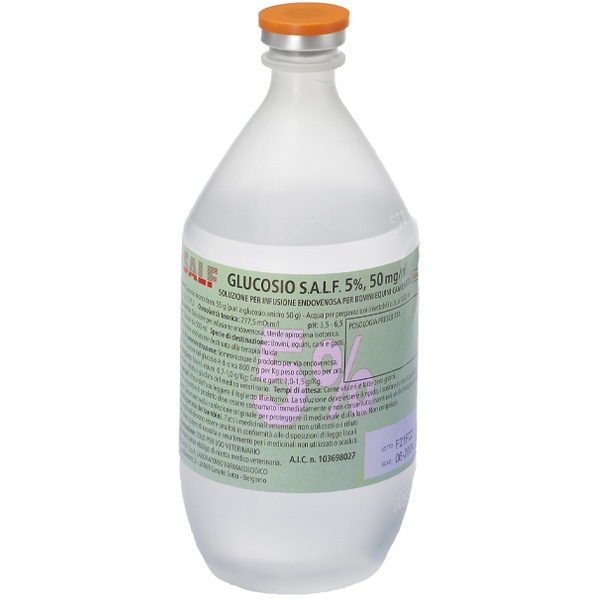
GLUCOSIO 5% Инфузионный раствор

Рассмотрение рецепта онлайн
Врач рассмотрит ваш случай и примет решение о назначении рецепта, если это медицински оправдано.

Поговорите с врачом об этом лекарстве
Обсудите симптомы и возможные дальнейшие шаги на онлайн-консультации.



Инструкция по применению LUKOSIO S.A.L.F.
Содержание инструкции
GLUCOSIO S.A.L.F. 5%, 10%, 20%, 33%, 50% solution for infusion
Glucose monohydrate
Generic medicine
Read this leaflet carefully before using this medicine as it contains important information for you.
- Keep this leaflet. You may need to read it again.
- If you have any questions, ask your doctor, pharmacist or nurse.
- This medicine has been prescribed for you only. Do not pass it on to others, even if their symptoms are the same as yours, as it could be harmful.
- If you get any side effects, even those not listed in this leaflet, tell your doctor, pharmacist or nurse. See section 4.
Contents of this leaflet:
- 1. What GLUCOSIO S.A.L.F. is and what it is used for
- 2. What you need to know before you use GLUCOSIO S.A.L.F.
- 3. How to use GLUCOSIO S.A.L.F.
- 4. Possible side effects
- 5. How to store GLUCOSIO S.A.L.F.
- 6. Contents of the pack and other information
1. What is GLUCOSIO S.A.L.F. and what is it used for
GLUCOSIO S.A.L.F. is a solution to be administered directly into a vein (intravenous infusion) that
contains the active ingredient glucose belonging to the class of parenteral nutritional solutions.
This medicine is indicated to provide the body with water and sugars suitable for providing a caloric intake,
especially in patients who do not need salts or in cases where these should be avoided and for the
treatment of decreased blood sugar (hypoglycemia).
2. What you need to know before using GLUCOSIO S.A.L.F.
Do not use GLUCOSIO S.A.L.F.
- if you are allergic to glucose or any of the other ingredients of this medicine (listed in section 6);
- if you have problems with urination (anuria);
- if you experience bleeding (haemorrhages) occurring at the spinal level or inside the skull with effusions into brain tissue (intracranial haemorrhage);
- if you suffer from hallucinations, tremor and sweating (delirium tremens) caused by excessive water loss from the body (dehydration);
- if you have low fluid levels in the body (severe dehydration);
- if you suffer from liver problems leading to loss of consciousness (hepatic coma). Glucose solutions must not be administered through the same infusion catheter with whole blood due to the possible risk of red blood cell aggregation (pseudoagglutination) or red blood cell rupture (haemolysis).
Warnings and precautions
Consult your doctor, pharmacist or nurse before using GLUCOSIO S.A.L.F.
Use this medicine with cautionand inform your doctor in the following cases:
- if you suffer from diabetes or are intolerant to glucose. During infusion, blood sugar levels (glycaemia) and urine sugar levels (glycosuria) should be carefully monitored to minimise the risk of them reaching high values; if necessary, you will be given insulin;
- if you suffer from severe heart problems (heart failure);
- if you suffer from severe kidney problems (severe renal insufficiency);
- if you experience swelling caused by fluid accumulation and retention of mineral salts (oedema with hydrosaline retention);
- if you are taking anti-inflammatory corticosteroid medicines;
- if you are taking certain hormonal medicines (corticotropin);
- if you are elderly.
- if you are in one of the following conditions that can cause high levels of vasopressin, a hormone that regulates the fluids in your body:
- you have a severe acute illness
- you are in pain
- you have undergone surgery
- you have infections, burns
- you have brain diseases
- you have liver, heart and kidney diseases
- you are taking certain medicines (see also Other medicines and Glucosio S.A.L.F.).
This can increase the risk of low sodium levels in the blood (hyponatraemia) and can lead to headache,
nausea, seizures, lethargy, vomiting, cerebral oedema. Cerebral oedema increases the risk of dangerous
brain damage. People with a higher risk of cerebral oedema are:
- children
- women (especially if of childbearing potential)
- people with altered fluid levels in the brain (e.g. due to meningitis, bleeding in the skull or brain contusion).
During prolonged treatment with this medicine, an excess of water in the body
(fluid overload and congestive state) and an excessive loss of mineral salts such as potassium and phosphate
(electrolyte deficiency) may occur; the doctor will need to periodically check the concentration of mineral
salts (electrolytes), including sodium (as a sodium deficiency called hyponatraemia may develop), particularly
in patients with increased non-osmotic vasopressin release and in patients undergoing concomitant
therapy with vasopressin agonists, correcting any excessive losses if necessary with the
administration of mineral salts and vitamins.
Concentrated glucose solutions must not be administeredby subcutaneous injection (subcutaneous route) or by intramuscular injection (intramuscular route).
Children
In children, especially in newborns and children with low body weight, the administration of
glucose may increase the risk of a rise in blood glucose levels (hyperglycaemia). Furthermore, in
children with low body weight, rapid or excessive infusion may cause an increase in blood osmolarity
and bleeding into brain tissue due to rupture of a blood vessel (intracerebral haemorrhage).
Other medicines and GLUCOSIO S.A.L.F.
Tell your doctor or pharmacist if you are taking, have recently taken or might take any other
medicines.
GLUCOSIO S.A.L.F. should be administered with cautionif you are taking medicines:
- anti-inflammatory steroids (corticosteroids) or hormonal medicines (corticotropin), because they may cause you to have an increase in blood sugar that could lead to latent diabetes mellitus
- medicines that increase the effect of vasopressin e.g: chlorpropamide, clofibrate, carbamazepine, oxcarbazepine, vincristine, selective serotonin reuptake inhibitors, 3,4-methylenedioxymethamphetamine, ifosfamide, antipsychotics, narcotics, NSAIDs, cyclophosphamide, desmopressin, oxytocin, vasopressin, terlipressin, diuretics in general as they may increase the risk of a decrease in plasma sodium concentration (hyponatraemia) If you have to take these medicines, medical monitoring is necessary during treatment. Glucose solutions may be incompatible with other infusion solutions.
Pregnancy and breastfeeding
If you are pregnant, suspect you are pregnant or are planning a pregnancy, or if you are breastfeeding,
ask your doctor or pharmacist for advice before this medicine is administered to you.
Do not use this medicine during pregnancy unless absolutely necessary and always under strict
medical supervision.
No data are available to establish the effect of this medicine during breastfeeding, therefore take
particular care if you are breastfeeding.
If you are pregnant, this medicine must be administered with particular caution during
labour due to the risk of hyponatraemia, especially if administered in association with a
medicine that induces labour (oxytocin).
Driving and operating machinery
No data are available regarding the effects of the medicine on driving and operating
machinery.
3. How to use GLUCOSIO S.A.L.F.
This medicine will be administered to you by a doctor or other qualified medical personnel. If you have any doubts
consult your doctor, pharmacist or nurse.
This medicine will be administered to you with caution directly into a vein (intravenous infusion) at a
very controlled infusion rate. Concentrated glucose solutions must not be
administeredby injection under the skin (subcutaneously) or into the muscle (intramuscularly), but
exclusively intravenously.
The infusion rate is generally 0.4 - 0.8 g/hour per kg of body weight.
The doctor will choose the concentration of the glucose solution to be used based on age, weight and
your state of health and the levels of mineral salts and pH in the blood.
Below are general guidelines on choosing the different glucose concentrations.
- 5% - 10% solutions are used for the replenishment of fluids and calories;
- 20% - 33% solutions are used for caloric replenishment and limited fluid replenishment;
- 50% solutions are used for the treatment of low blood glucose levels (hypoglycemia) due to excessive insulin production (hyperinsulinism) or other causes.
Use in children and adolescents
In children with a low body weight, this medicine must be administered with caution and at a
controlled rate (See section “Children”). Dosage and administration rate must
be chosen based on the patient's age, weight and clinical condition. Generally, solutions with a concentration greater than 10% are not
used.
It is recommended to take all usual precautions to maintain sterility before and during
intravenous infusion. Do not use if the packaging is damaged. Do not use the glucose solution if it is not clear, colorless or slightly straw-yellow or if it contains particles.
If you use more GLUCOSIO S.A.L.F. than you should
This medicine will be administered to you by a doctor or specialized personnel, it is unlikely that you will be injected with an excessive dose. However, if you think you have been given an excessive dose of
GLUCOSIO S.A.L.F., inform your doctor immediately or go to the nearest hospital.
In case of accidental administration of excessive doses of GLUCOSIO S.A.L.F., an
increase in the concentration of water and solutes in the body (hyperhydration and solute overload) may occur. In
this case, the doctor or nurse must immediately stop administering the medicine
and start corrective therapy.
If you stop using GLUCOSIO S.A.L.F.
If the concentrated glucose infusion needs to be stopped suddenly, it is recommended to gradually reduce
the dose by administering 5% or 10% glucose, in order to avoid a rapid drop
in blood sugar (rebound hypoglycemia).
If you have any questions about the use of this medicine, ask your doctor, pharmacist or nurse.
4. Possible side effects
Like all medicines, this medicine can cause side effects, although not everybody gets them.
The following side effects may occur:
Not known(the frequency of which cannot be estimated on the basis of available data):
- leakage of the medicine into the tissues around the injection site (extravasation);
- infection at the infusion site and local pain;
- circulation problems due to the formation of blood clots and inflammation of the veins in the infusion area (thrombosis and thrombophlebitis);
- increased body temperature (fever);
- increased water in the body (hyperhydration);
- decrease of sodium (hyponatremia)**, potassium (hypokalaemia), magnesium (hypomagnesaemia) and phosphate (hypophosphataemia);
- increased metabolic rate;
- increased blood sugar (hyperglycaemia);
- increased osmotic pressure of the blood (hyperosmolarity);
- increased amount of blood circulating in the body (hypervolaemia);
- decreased blood sugar (hypoglycaemia);
- increased insulin level;
- increased adrenaline level;
- fluid retention with swelling in the legs and ankles (peripheral oedema);
- fluid accumulation in the lungs (pulmonary oedema);
- bleeding in the head (cerebral haemorrhage);
- damage to the head caused by poor blood circulation to the brain (cerebral ischaemia) or fluid accumulation (cerebral oedema).
- **(hospital-acquired hyponatraemia which can cause irreversible brain damage and death, due to the development of acute hyponatraemic encephalopathy);
Reporting of side effects.
If you get any side effects, even those not listed in this leaflet, tell your
doctor, pharmacist or nurse. You can also report side effects directly through the
national reporting system at http://www.agenziafarmaco.gov.it/content/come-segnalare-
una-sospetta-reazione-avversa . By reporting side effects you can help provide more
information on the safety of this medicine.
5. How to store GLUCOSIO S.A.L.F.
Keep this medicine out of the sight and reach of children.
Do not use this medicine after the expiry date which is stated on the packaging after “Expiry”.
The expiry date refers to the last day of that month.
Store in the original packaging. Do not refrigerate.
After the first opening of the packaging, the medicine must be used immediately for a single and
uninterrupted administration, any remaining residue must be discarded.
Do not administer if the solution is not clear, colourless or slightly straw-yellow, or if it contains
particles.
Do not dispose of any medicine in wastewater or household waste. Ask your pharmacist how to dispose of
medicines you no longer use. This will help protect the environment.
6. Package contents and other information
What GLUCOSIO S.A.L.F. contains
GLUCOSIO S.A.L.F. 5% solution for infusion
- The active ingredient is glucose monohydrate. Each litre of solution contains 55 g of glucose monohydrate (50 g of anhydrous glucose) (278 mOsmol/L, pH 3.5 - 6.5).
- The other component is water for injections.
GLUCOSIO S.A.L.F. 10% solution for infusion
- The active ingredient is glucose monohydrate. Each litre of solution contains 110 g of glucose monohydrate (100 g anhydrous glucose) (555 mOsmol/L, pH 3.5 - 6.5).
- The other component is water for injections.
GLUCOSIO S.A.L.F. 20% solution for infusion
- The active ingredient is glucose monohydrate. Each litre of solution contains 220 g of glucose monohydrate (200 g anhydrous glucose) (1110 mOsmol/L, pH 3.5 - 6.5).
- The other component is water for injections.
GLUCOSIO S.A.L.F. 33% solution for infusion
- The active ingredient is glucose. Each litre of solution contains 363 g of glucose monohydrate (330 g anhydrous glucose) (1832 mOsmol/L, pH 3.5 - 6.5).
- The other component is water for injections.
GLUCOSIO S.A.L.F. 50% solution for infusion
- The active ingredient is glucose. Each litre of solution contains 550 g of glucose monohydrate (500 g anhydrous glucose) (2775 mOsmol/L, pH 3.5 - 6.5).
- The other component is water for injections.
Description of the appearance of GLUCOSIO S.A.L.F. and contents of the pack
GLUCOSIO S.A.L.F. 5%
Glass vials of 50, 100, 250 and 500 ml
PP vials of 100, 250 and 500 ml
PVC bags of 100, 250, 500, 1000, 2000 ml
PVC-free bags: 20 bags of 100 ml, 20 bags of 250 ml, 15 bags of 500 ml, 10 bags of 1000 ml, 5
bags of 2000 ml
GLUCOSIO S.A.L.F. 10%
Glass vials of 50, 100, 250 and 500 ml
GLUCOSIO S.A.L.F. 20%
Glass vials of 500 ml
GLUCOSIO S.A.L.F. 33%
Glass vials of 100, 250 and 500 ml
PVC bags of 3000, 5000 ml
GLUCOSIO S.A.L.F. 50%
Glass vials of 100, 250 and 500 ml
PVC bags of 5000 ml
Marketing Authorisation Holder
S.A.L.F. S.p.A. Laboratorio Farmacologico – via Marconi, 2 – 24069 Cenate Sotto (BG) – Italy.
Manufacturers
S.A.L.F. S.p.A. Laboratorio Farmacologico – via Marconi, 2 – 24069 Cenate Sotto (BG) – Italy.
Società BIEFFE MEDITAL S.p.A. – via Nuova Provinciale – 23034 Grosotto (SO) – Italy.
----------------------------------------------------------------------------------------------------------------------------------
The following information is intended exclusively for physicians or healthcare professionals
CLINICAL INFORMATION
Glucose solutions are administered intravenously.
The 5% solution is isotonic with blood.
The 10%, 20%, 33%, 50% solutions are hypertonic with blood and must be infused with caution and at a
controlled infusion rate.
The 20%, 33%, 50% solutions must be administered exclusively through a central venous catheter.
If it is necessary to administer the solutions peripherally, for example in the emergency treatment of hypoglycemic crises, the solutions must be injected very slowly into a large-caliber vein in the arm.
One gram of glucose provides a caloric contribution equal to 3.74 Kcal (approximately 15.6 Kjoules).
It may be necessary to monitor electrolyte balance, serum glucose, serum sodium and other
electrolytes before and during administration, particularly in patients with increased non-osmotic
vasopressin release (syndrome of inappropriate antidiuretic hormone secretion, SIADH) and in
patients undergoing concomitant therapy with vasopressin agonists, due to the risk of hyponatremia. Monitoring of serum sodium is particularly important for physiologically hypotonic solutions.
Depending on the tonicity of the solution, the volume and frequency of infusion and the underlying
clinical conditions of the patient, as well as the capacity for glucose metabolism, intravenous administration of glucose may cause electrolyte disturbances and especially hypo- or
hyperosmotic hyponatremia.
Hyponatremia:
Patients with non-osmotic vasopressin release (e.g. in the acute phase of the disease, pain, post-operative stress, infections, burns and diseases of the central nervous system), patients with heart disease, liver disease and
kidney disease and patients treated with vasopressin agonists are particularly at risk of acute hyponatremia
following infusion of hypotonic solutions.
Acute hyponatremia can cause acute hyponatremic encephalopathy (cerebral edema) characterized by
headache, nausea, seizures, lethargy and vomiting. Patients with cerebral edema are particularly at
risk of severe, irreversible and life-threatening brain injury.
Children, women of childbearing potential and patients with reduced cerebral compliance (e.g. meningitis, intracranial hemorrhage and cerebral contusion) are particularly at risk of severe and life-threatening cerebral edema
caused by acute hyponatremia.
Pregnancy:
If administering drugs that induce labor (oxytocin), this medicine should be administered with particular caution due to the risk of hyponatremia,
Incompatibilities
Glucose solutions for intravenous use are incompatible with:
- cyanocobalamin;
- kanamycin sulfate;
- novobiocin sodium;
- warfarin sodium;
In addition, there are conflicting opinions regarding the compatibility of glucose with the following solutions:
- calcium chloride;
- magnesium chloride;
- potassium chloride;
- sodium chloride;
- sodium lactate;
- hetastarch
Glucose solutions that do not contain electrolytes should not be administered through the same
infusion catheter with whole blood due to the possible formation of aggregates and the risk of hemolysis.
Ampicillin and amoxicillin are stable in glucose solutions only for a short period.
For further information see the Summary of Product Characteristics.

Не уверены, подходит ли вам это лекарство?
Обсудите симптомы и варианты лечения с врачом онлайн.

Уже начали прием и появились вопросы?
Обсудите свое состояние и дальнейшие шаги с врачом онлайн.
- Страна регистрации
- Форма выпускаInfusion solution, 5%
- Код АТХB05BA03
- Действующее вещество
- Отпускается по рецептуДа
- Производитель
- Информация на этой странице носит справочный характер и не является медицинской консультацией. Перед началом приема лекарства обязательно проконсультируйтесь с врачом.
- Аналоги LUKOSIO S.A.L.F.Форма выпуска: Infusion solution, 50 MLДействующее вещество: carbohydratesПроизводитель: BAXTER S.P.A.Отпускается по рецептуФорма выпуска: Infusion solution, 5%Действующее вещество: carbohydratesПроизводитель: B. BRAUN MELSUNGEN AGОтпускается по рецептуФорма выпуска: Infusion solution, 5%Действующее вещество: carbohydratesПроизводитель: BAXTER S.P.A.Отпускается по рецепту
Аналоги LUKOSIO S.A.L.F. в других странах
Лекарства с тем же действующим веществом, доступные в других странах.
Аналог LUKOSIO S.A.L.F. в Испания
Аналог LUKOSIO S.A.L.F. в Польша
Врачи онлайн по LUKOSIO S.A.L.F.
Обсудите применение LUKOSIO S.A.L.F. и возможные следующие шаги — по оценке врача.









Получите рецепт на LUKOSIO S.A.L.F. онлайн
Заполните форму за 2 минуты
Расскажите о симптомах, истории болезни и нужном препарате.
Выберите врача или мы назначим
Выберите специалиста или мы подберём ближайшего доступного врача.
Врач рассматривает ваш случай
Обычно в течение 30 минут. Может задать уточняющие вопросы в чате.
Получите в любой аптеке
Электронный рецепт отправляется на вашу почту — действителен по всей Польше.
Часто задаваемые вопросы
LUKOSIO S.A.L.F. требует рецепта в Италия. Вы можете уточнить у врача онлайн, подходит ли это лекарство для вашей ситуации.
Действующее вещество LUKOSIO S.A.L.F. — carbohydrates. Эта информация помогает определить лекарства с тем же составом под другими торговыми названиями.
LUKOSIO S.A.L.F. производится компанией S.A.L.F. SPA LABORATORIO FARMACOLOGICO. Упаковка и торговое название могут отличаться в зависимости от дистрибьютора.
Врачи, включая Семейные врачи, Психиатры, Дерматологи, Кардиологи, Эндокринологи, Гастроэнтерологи, Пульмонологи, Нефрологи, Ревматологи, Гематологи, Инфекционисты, Аллергологи, Гериатры, Педиатры, Онкологи, могут оценить целесообразность применения LUKOSIO S.A.L.F. с учетом вашей ситуации и местных правил. Вы можете записаться на онлайн-консультацию, чтобы обсудить возможные варианты.
Польша имеет хорошо развитую систему здравоохранения в крупных городах, таких как Варшава, Краков, Вроцлав и Гданьск. Аптеки широко доступны и работают в соответствии с действующим законодательством, обеспечивая доступ к рецептурным препаратам.
Вы можете купить LUKOSIO S.A.L.F. в Варшаве, Кракове, Вроцлаве или Гданьске в любой аптеке при наличии действующего рецепта.
Чтобы получить рецепт, вы можете воспользоваться Oladoctor:
Другие лекарства с тем же действующим веществом (carbohydrates) включают LUKOSIO 5% BAXTER, LUKOSIO B. BRAUN, LUKOSIO BAXTER S.P.A.. Они могут отличаться торговым названием или формой выпуска, но содержат одинаковый терапевтический компонент. Перед изменением лечения рекомендуется проконсультироваться с врачом.
