



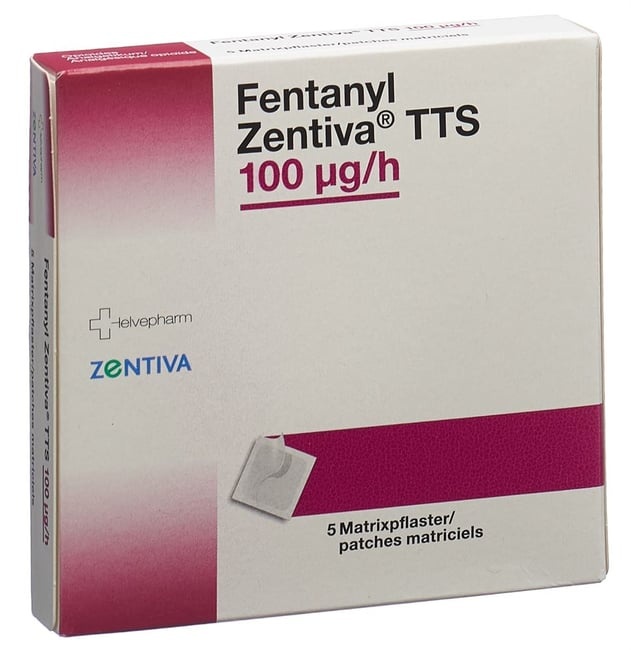
FENTANIL TSENTIVA 25 MCG/H Трансдермальный пластырь

Рассмотрение рецепта онлайн
Врач рассмотрит ваш случай и примет решение о назначении рецепта, если это медицински оправдано.

Поговорите с врачом об этом лекарстве
Обсудите симптомы и возможные дальнейшие шаги на онлайн-консультации.



Инструкция по применению FENTANIL TSENTIVA
Содержание инструкции
- Fentanil Zentiva 25 micrograms/h transdermal patch, 50 micrograms/h transdermal patch, 75 micrograms/h transdermal patch, 100 micrograms/h transdermal patch
- Fentanil Zentiva transdermal patch contains a medicine called fentanyl. Fentanil
Fentanil Zentiva 25 micrograms/h transdermal patch, 50 micrograms/h transdermal patch, 75 micrograms/h transdermal patch, 100 micrograms/h transdermal patch
Generic medicine
Important information you should know about Fentanil Zentiva transdermal patch
- This patch contains a potent pain reliever
- Make sure the old patch has been removed before applying a new one
- The patches must not be cut
- Do not expose the patches to heat sources (such as hot water bottles)
- If you develop a fever, contact your doctor immediately
- Follow the instructions on dosage carefully and replace the patch only every 3 days(72 hours)
- If your breathing becomes shallow and weak, remove the patch and consult a doctor.
Read this leaflet carefully before using this medicine as it contains
important information for you.
- Keep this leaflet. You may need to read it again.
- If you have any questions, ask your doctor, nurse or pharmacist.
- This medicine has been prescribed for you. Do not give it to other people, even if they have the same symptoms as you, because it could be dangerous.
- If any side effects occur, including those not listed in this leaflet, tell your doctor or pharmacist or nurse. See section 4.
Contents of this leaflet :
- 1. What Fentanil Zentiva is and what it is used for
- 2. What you need to know before you use Fentanil Zentiva
- 3. How to use Fentanil Zentiva
- 4. Possible side effects
- 5. How to store Fentanil Zentiva
- 6. Contents of the pack and other information
1. What is Fentanil Zentiva transdermal patch and what is it used for
The name of the medicine is Fentanil Zentiva transdermal patch. In this leaflet it will be called
Fentanil Zentiva or just patch.
The patch helps to relieve severe and persistent pain.
Fentanil Zentiva transdermal patch contains a medicine called fentanyl. Fentanil
belongs to a group of potent painkillers called opioids
The medicine passes slowly from the patch into the body through the skin.
2. What you need to know before using Fentanil Zentiva transdermal patch
Fentanil Zentiva transdermal patch can be used in children from 2 years of age who have previously used opioid pain relievers. If the patch has been prescribed to your child, the term indicated below as “you” should be understood as “your child”.
Do not useFentanil Zentiva transdermal patch if
- you are allergic to fentanil or any of the excipients of this medicine listed in section 6;
- the pain you are suffering from is of short duration;
- If your central nervous system (brain and spinal cord) is severely compromised, for example due to a brain injury;
- If you suffer from breathing difficulties (slower and weaker breathing) and feel unusually drowsy.
Do not use this medicine if any of the above conditions apply to you or your child. If you are not sure, ask your doctor or pharmacist before using Fentanil Zentiva.
Warnings and precautions
Consult your doctor or pharmacist before using Fentanil Zentiva.
Fentanil Zentiva is a medicine dangerous to the life of children. This also occurs for unused transdermal patches. Keep in mind that the form of this medicine may be appealing to a child and this can lead to a fatal outcome in some cases.
Fentanil Zentiva may have undesirable effects in people who do not routinely use prescribed opioid medicines.
Transferring the patch to another person
The patch must only be used on the skin of people to whom it has been prescribed by a doctor. Cases of accidental adhesion of a patch to a family member of a user have been reported due to close contact or sharing the same bed. Adhesion of the patch to another person (especially a child) can cause an overdose. If the patch sticks to another person's skin, remove the patch immediately and consult a doctor.
- As with other potent pain relievers, Fentanil Zentiva can cause drowsiness, and slower or weaker breathing. Very rarely, these breathing difficultiescan be life-threatening or fatal in people who have never used strong morphine-related pain relievers (such as Fentanil Zentiva) or morphine itself. If you or your
partner or your caregiver notices that you or your child is breathing much slower or weakly then:
- Remove the patch
- Contact your doctor or go directly to the nearest hospital
- Move and talk as much as possible
- If fever occursduring the application of Fentanil Zentiva, talk to your doctor as this may affect the passage of the medicine through the skin.
- Do not exposethe patch to directheat such as hot water bottles, hot water bags, electric blankets, heated waterbeds, heating lamps or tanning beds, intense sunlight, prolonged hot baths, sauna, or swimming pool with hot water. These can affect the absorption of the medicine through the skin.
- Check with your doctor or pharmacist before using this medicine if you have or have ever had:
- Lung or breathing problems
- Heart problems, blood pressure or blood volume, liver or kidney problems;
- Brain tumors
- Persistent headaches or brain injuries. The doctor may need to check you more carefully,
- If you are very ill, very thin or elderly, you may be more sensitive to the effects of the patch
- If you suffer from a condition in which muscles are weak or fatigue easily, known as myasthenia gravis, talk to your doctor or pharmacist before taking Fentanil Zentiva
- As with many other potent pain relievers, repeated use of the patches can lead to tolerance to the medicine or the development of dependence on the medicine.
- Talk to your doctor if you have abused or been addicted to alcohol, prescription medicines or illegal drugs
- Fentanil Zentiva can cause constipation, talk to your doctor or pharmacist who will tell you how to prevent constipation.
If you are not sure whether any of the above conditions apply to you, talk to your doctor or pharmacist before using Fentanil Zentiva.
Children and adolescents
Fentanil Zentiva should not be used in children under 2 years of age.
Fentanil Zentiva should not be used in children who have not been previously treated with strong pain relievers such as morphine.
Other types of patches
Other types of fentanyl transdermal patches are available, but they are not exactly the same.
If the patch looks different from the one you have used previously, talk to your doctor or pharmacist before using it.
Other medicines andFentanil Zentiva transdermal patch
Tell your doctor or pharmacist if you are taking, have recently taken or may take any other medicines.
In particular, tell your doctor or pharmacist if you are taking:
- Other medicines for pain such as other opioid pain relievers (buprenorphine, nalbuphine or pentazocine)
- Medicines to help you sleep
- Medicines to help you stay calm (tranquilizers) and medicines for mental disorders
- Medicines to relax muscles
- Some medicines used to treat depression (such as citalopram, duloxetine, escitalopram, fluoxetine, fluvoxamine, paroxetine, sertraline, venlafaxine)
- Some medicines used to treat depression (called MAOIs). You should not use Fentanil Zentiva for 14 days after stopping these medicines
- Nefazodone, a medicine used to treat depression
- Some antihistamines (especially those that can cause drowsiness)
- Some antibiotics used to treat infections, such as erythromycin, clarithromycin or troleandomycin
- Medicines used to treat fungal infections, such as itraconazole, ketoconazole, fluconazole or voriconazole
- Medicines used to treat HIV infections, such as ritonavir or nelfinavir
- Medicines used to treat irregular heartbeats, such as amiodarone, diltiazem or verapamil
- Rifampicin (for treating tuberculosis)
- Some medicines used to treat epilepsy (such as carbamazepine, phenobarbital or phenytoin).
Tell your doctor if you are taking any medicines for the treatment of depression, known as Serotonin Reuptake Inhibitors (SSRIs), serotonin and norepinephrine reuptake inhibitors (SNRIs) or MAO inhibitors. The doctor needs to know about the use of these medicines as the concomitant use of Fentanil Zentiva may increase the risk of developing serotonin syndrome, a potentially life-threatening condition.
The doctor knows which medicines are safe during the use of Fentanil Zentiva. It may be necessary for you to be closely monitored if you are taking some of these types of medicines listed above or if you have stopped taking some types of medicines listed above, as this may affect the dose of Fentanil Zentiva you need.
If you are not sure whether any of the above conditions apply to you, talk to your doctor or pharmacist before using Fentanil Zentiva.
Surgery or medical examinations
If you are scheduled to receive anesthesia, tell your doctor or dentist that you are using Fentanil Zentiva.
Fentanil Zentiva transdermal patchwith food, drinks and alcohol
Do not drink alcohol unless you have spoken to your doctor first. Fentanil Zentiva can make you drowsy or make you breathe much slower. Drinking alcohol can worsen these effects.
Pregnancy and breastfeeding
If you are pregnant, suspect you may be pregnant, or are planning a pregnancy, or if you are breastfeeding with breast milk, ask your doctor or pharmacist for advice before using this medicine.
.
Cases of children born with withdrawal effects have been reported after the mother used Fentanil Zentiva for a long period of time during pregnancy.
Fentanil Zentiva should not be used during childbirth as the medicine can have effects on the baby's breathing.
Do not breastfeed while taking Fentanil Zentiva. You should not breastfeed for 3 days after removing the Fentanil Zentiva patch. This is because small amounts of the medicine can pass into breast milk.
Ask your doctor or pharmacist for advice before taking any medicine during pregnancy or breastfeeding.
Driving and operating machinery
Fentanil Zentiva can cause drowsiness. If this happens, do not drive or use any tools or machinery.
3. How to use Fentanil Zentiva transdermal patch
Always use this medicine exactly as your doctor or pharmacist has told you. If you have any doubts, ask your doctor or pharmacist.
Use and replacement of the patches
- There is enough medicine in each patch for at least 3 days (72 hours)
- You must change the patch every third day, unless your doctor tells you to do otherwise
- Removealways the old patchbefore applying a new one
- Always change the patch at the same timeof day every 3 days (72 hours)
- If you are using more than one patch, change all the patches at the same time
- Note the day, date and timewhen you apply the patch, to remember when you need to change it
- The following table shows you which day of the week to change the patch:
Apply the patch onChange the patch at the same
time on
Monday→Thursday
Tuesday→Friday
Wednesday→Saturday
Thursday→Sunday
Friday→Monday
Saturday→Tuesday
Sunday→Wednesday
Where to apply the patch
Adults
- Apply the patch to the flat surface of the upper body or arm Children
- Always apply the patch to the upper back so that it is difficult for your child to touch or remove it.
- Check very often that the patch remains attached to the skin
- It is important that your child does not remove the patch and put it in their mouth as this could be life-threatening or even fatal
- It may take some time before the patch is fully effective. Therefore, your child may need additional pain relief until the patch is effective. The doctor will inform you if this is necessary.
- Children must be closely monitored for up to 48 hours after: o Application of the first patch o Application of a high-dose patch
For you or your child, do not apply the patch on:
- The same area twice in a row
- Sensitive areas of the skin that are moving, cut skin, spots or other skin imperfections
- Skin with a lot of hair. If there is hair, do not shave it (shaving can irritate the skin), instead cut the hair as close to the skin as possible
Several days must pass before applying the patch to the same area of skin.
Apply the patch on
Step 1: skin preparation
- Make sure the skin is completely dry, clean and cool before applying the patch
- If you need to clean the skin, use only cold water
- Do not use soap or other detergents, creams, foams, oils or talcum powder before applying the patch
- Do not attach the patch directly to the skin after a hot bath or shower
Step 2: opening the sachet
- Each patch is sealed in its sachet
- Tear or cut to open the sachet
- Gently cut or tear the edge of the sachet completely (if using scissors, cut as close as possible to the edge of the sachet to avoid damaging the patch)
- Grasp both sides to open the sachet and pull
- Take the patch and use it immediately
- Keep the empty sachet to dispose of the used patch later
- Use each patch only once
- Do not remove the patch from its sachet until you are ready to use it
- Check the patch for any damage
- Do not use the patch if it is split, cut or appears damaged
- Never cut or split the patch
Step 3: peel and press
- make sure the patch will be covered by loose-fitting clothing and not blocked under a tight or elastic band
- carefully peel off one half of the plastic backing away from the center of the patch. Try not to touch the adhesive side of the patch
- press the adhesive side of the patch onto the skin
- Remove the other part of the backing and press the entire patch onto the skin with the palm of your hand
- Hold for at least 30 seconds. Make sure it is stuck well, especially the edges.
Step 4: disposal of the patch
- Immediately after removing the patch, fold it over on itself halfway so that the adhesive side is closed on itself
- Insert the patch into its original sachet and throw it away with household waste
- Because used patches contain some medicine that may be dangerous for children, keep used patches out of the reach and sight of children.
Step 5: washing
- Wash your hands with clean water afterwards
Further information on Fentanil Zentiva patches
How quickly does the patch work
- It may take up to 1 day before the first patch works fully
- The doctor may give you a second pain reliever for the first day or more
- After that, the patch should help relieve your pain continuously so that you can stop taking other pain relievers. However, the doctor may still prescribe you another pain reliever from time to time.
If you forget to change the patch
- If you forget, change the patch as soon as you remember and note the day and time. Change the patch again after 3 days (72 hours)as usual
- If you are very late in changing the patch, you should talk to your doctor because you may need additional pain relief, but do notapply an extra patch.
If you use more patches or if you miss a dose of the patch
If you have applied more patches or have missed a dose of the patch, remove the patch and
contact your doctor or go to the nearest hospital.
Signs of an overdose include difficulty breathing or shallow breathing,
tiredness, excessive drowsiness, inability to think clearly, walk or talk
normally and feeling faint, dizzy or confused.
If a patch comes off
- If a patch comes off before it is time to change it, attach a new one immediately and note the day and time. Use a new area of skin on: o The upper part of your body o Your arms o The upper back of your child
- Leave it for another 3 days (72 hours) before changing it with another patch as usual
- If your patches continue to fall off, talk to your doctor, nurse or pharmacist
If the patch sticks to another person
- Use the patch only on the skin of the person it was prescribed for
- Make sure the patch does not come off and stick to another person or child, especially when sharing a bed or being in close contact
- If a patch accidentally sticks to another person, remove it immediately and call your doctor.
How long should you use the patch?
Fentanil Zentiva patches are for long-lasting pain. Your doctor will tell you how long
you should use it.
If the pain gets worse
- If the pain gets worse while you are using these patches, your doctor may prescribe a patch with a higher dose, or give you additional pain relief (or both).
- If an increase in the patch dose does not work, your doctor may decide to stop the therapy.
If you want to stop using the patches
- Talk to your doctor before stopping the use of these patches
- If you have been using them for a long time, your body may have become used to them. Stopping suddenly can make you feel unwell
- If you stop using the patches, do not start using them again without first asking your doctor. You may need a patch with a different dose when you start again.
Daily activities while using the patches
- The patches are water-resistant
- You can shower or bathe while wearing the patch, but do not rub the patch
- If the doctor agrees, you can exercise or play sports while wearing the patch
- You can swim while wearing the patch but: o Do not use swimming pools with hot water o Do not put a tight or elastic band over the patch
- Do not expose the patch to direct heat sources such as hot water bottles, hot water bags, electric blankets, heated waterbeds, heating lamps or sunbeds, intense sunlight, prolonged hot baths, or saunas,. These can affect the absorption of the medicine through the skin.
If you have any further questions about the use of this medicine, ask your doctor or pharmacist.
4. Possible side effects
Like all medicines, this medicine can cause side effects, although not everyone gets them.
Remove the patch and contact your doctor or go immediately to the nearest hospital if you notice or suspect any of the following effects. You may need urgent medical attention.
- If you feel unusually sleepy, breathe more slowly or weakly than usual. Very rarely, these breathing difficulties can be life-threatening or even fatal, especially in patients who have never used strong opioid painkillers before (such as Fentanil Zentiva or morphine). If you, your partner or your caregiver notice that you or your child are breathing more slowly or weakly, follow the instructions above and keep moving and talk as much as possible .
- Sudden swelling of the face or throat, severe irritation, redness or blistering of the skin. These may be signs of a serious allergic reaction. This occurs in only a small number of people.
- Convulsions, seizures. These effects can affect up to 1 in 100 people.
- Decreased level of consciousness or loss of consciousness, these effects can affect up to 1 in 100 people.
The following side effects have been reported
Very common (may affect more than 1 in 10 people)
- Feeling sick (nausea), or being sick (vomiting), constipation
- Dizziness, drowsiness, or difficulty sleeping
- Headache
Common (may affect up to 1 in 10 people)
- Allergic reactions
- Noticing an unusual heartbeat (also called palpitations), fast heartbeat
- High blood pressure
- Loss of appetite or dry mouth
- Sedation, feeling nervous, worried or depressed.
- Confusion, hallucinations (seeing or hearing things that are not there).
- Feeling of tingling, tremor, feeling faint
- Muscle spasms
- Stomach pain, indigestion, difficulty urinating
- Diarrhea
- Feeling cold, excessive sweating
- General feeling of being unwell, fatigue, weakness
- Swelling of the hands, ankles or feet
- Itchy skin, rash or red skin
Uncommon (may affect up to 1 in 100 people)
- Flu-like symptoms
- Slow heart rate
- Low blood pressure
- Decreased sensitivity, especially of the skin
- Blurred vision
- Bluish discoloration of the skin
- Feeling agitated, disoriented, excited or unusually carefree
- Memory loss, difficulty speaking
- Eczema and/or other skin disorders including dermatitis in the area where the patch is applied
- Sexual dysfunction
- Complete blockage of the intestine
- Muscle contractions
- Fever, change in body temperature
- Withdrawal symptoms from the medicine (such as feeling sick, unwell, diarrhea, anxiety or chills)
Rare side effects (may affect up to 1 in 1000 people)
- Blurred vision due to constriction of the pupils
- Hiccups
- Partial blockage of the small or large intestine
- Irregular heartbeats
- Dilatation of blood vessels
Very rare side effects (may affect up to 1 in 10,000 people)
- Painful swelling
- Loss of coordination and balance
- Lazy eye
- Pain in the bladder, reduced urine output compared to normal during the day
The following side effects have been reported during clinical studies in children (up to 18
years of age):
Very common side effects (may affect more than 1 in 10 people)
- Headache
- Feeling or being sick
- Constipation, diarrhea
- Itching
Common side effects (may affect up to 1 in 10 people)
- Allergic reactions
- Loss of appetite, stomach pain
- Difficulty sleeping, drowsiness, fatigue, feeling weak
- Feeling worried or depressed, hallucinations (seeing or hearing things that are not there) dizziness
- Tremor, decreased sensitivity especially of the skin
- Dry mouth
- Rash, excessive sweating, red skin
- Muscle spasms
- Difficulty passing urine
- Swelling of the hands, ankles or feet
- Skin reactions in the area where the patch is applied
Uncommon side effects (may affect up to 1 in 100 people)
- Confusion
- Feeling of tingling
- Decreased size of the pupils
- Feeling dizzy
- Bluish discoloration of the skin, eczema and/or other skin disorders including dermatitis in the area where the patch is applied
- Withdrawal symptoms from the medicine (such as feeling sick, unwell, diarrhea, anxiety or chills) flu-like symptoms
If you get any of these side effects, speak to your doctor, nurse or pharmacist.
Rash, itching or sweating (may affect up to 1 in 10 people). You may notice mild rashes, redness or itching of the skin where the patch is applied. This is usually mild and resolves after removing the patch. If this does not happen, or if the patch irritates your skin badly, tell your doctor.
Cases of withdrawal effects have been reported in newborn babies following use of Fentanil Zentiva by the mother for a long period during pregnancy.
Like many other different powerful painkillers, repeated use of the patches can lead to tolerance to the medicine or cause dependence.
If you experience any of these side effects, tell your doctor, nurse or pharmacist.
If you switch from a different painkiller to Fentanil Zentiva patches, you may experience effects such as feeling sick, being sick, diarrhea, anxiety or chills. Tell your doctor if you notice any of these effects.
Reporting of side effects
If you get any side effect, even if not listed in this leaflet, tell your doctor or pharmacist. You can also report side effects directly through the national reporting system at
www.agenziafarmaco.gov.it/it/responsabili . By reporting side effects you can help provide more information on the safety of this medicine.
5. How to store Fentanil Zentiva transdermal patch
Keep this medicine out of sight and reach of children, even after use.
High amounts of active substance remain in the transdermal patches even after their use.
Do not use this medicine after the expiry date which is stated on the pack. The expiry date refers to the last day of that month.
Do not store at a temperature above 30°C.
Patch handling
Used patches must be folded so that the adhesive part of the patch adheres to itself and then must be disposed of safely. Accidental exposure to used and unused patches can be fatal, especially in children. Unused patches
must be returned to the pharmacy (hospital).
6. Contents of the pack and other information
What the medicine containsFentanil Zentiva
- The active ingredient is fentanyl
Fentanil Zentiva 25 micrograms/h transdermal patch
Eachpatch releases 25 micrograms of fentanyl per hour. Each 7.5 cm patch contains 4.125
mg of fentanyl.
Fentanil Zentiva 50 micrograms/h transdermal patch
Eachpatch releases 50 micrograms of fentanyl per hour. Each 15 cm patch contains 8.25
mg of fentanyl.
Fentanil Zentiva 75 micrograms/h transdermal patch
Eachpatch releases 75 micrograms of fentanyl per hour. Each 22.5 cm patch contains
12.375 mg of fentanyl.
Fentanil Zentiva 100 micrograms/h transdermal patch
Eachpatch releases 100 micrograms of fentanyl per hour. Each 30 cm patch contains 16.5
mg of fentanyl.
- The excipients are: Adhesive layer: Polyacrylate adhesive layer. Reinforcement film: Blue-printed polypropylene sheet. Release membrane: Siliconized polyethylene terephthalate sheet.
Description of the appearance ofFentanil Zentivatransdermal patchand contents of the
pack
Fentanil Zentivatransdermal patchis a transparent transdermal patch equipped with an
adhesive surface through which it can adhere to the skin. The transdermal patches are provided with
a blue print indicating the dosage.
Fentanil Zentivatransdermal patchis available in packs of 3, 5, 10 or 20 transdermal
patches.
Not all pack sizes may be marketed.
NOTE
Not all required dosages can be achieved with Fentanil Zentiva transdermal patch.
Other fentanyl patches are available that allow to achieve these different
dosages
Marketing Authorisation Holder and Manufacturer
Marketing Authorisation Holder
Zentiva Italia S.r.l. - Viale Bodio 37/b, 20158 Milan
Manufacturer
Acino AG – Am Windfeld 35, 83714 Miesbach (Germany)
This medicinal product has been authorised in the Member States of the European Economic Area with
the following denominations:
Germany: Fentanyl Winthrop 25/50/75/100 Mikrogramm/h transdermales Pflaster
Italy: Fentanil Zentiva 25 micrograms/h transdermal patch
Fentanil Zentiva 50 micrograms/h transdermal patch
Fentanil Zentiva 75 micrograms/h transdermal patch
Fentanil Zentiva 100 micrograms/h transdermal patch
Hungary: Fentanyl-Zentiva 25/50/75/100 mikrogramm/óra transzdermális tapasz

Не уверены, подходит ли вам это лекарство?
Обсудите симптомы и варианты лечения с врачом онлайн.

Уже начали прием и появились вопросы?
Обсудите свое состояние и дальнейшие шаги с врачом онлайн.
- Страна регистрации
- Форма выпускаTransdermal patch, 25 MCG/H
- Код АТХN02AB03
- Действующее вещество
- Отпускается по рецептуДа
- Производитель
- Информация на этой странице носит справочный характер и не является медицинской консультацией. Перед началом приема лекарства обязательно проконсультируйтесь с врачом.
- Аналоги FENTANIL TSENTIVAФорма выпуска: Sublingual tablet, 100 MCGДействующее вещество: фентанилПроизводитель: GRUNENTHAL ITALIA S.R.L.Отпускается по рецептуФорма выпуска: Orally disintegrating tablet, 200 MICROGRAMSДействующее вещество: фентанилПроизводитель: TEVA ITALIA S.R.L.Отпускается по рецептуФорма выпуска: Transdermal patch, 25MCG/ORAДействующее вещество: фентанилОтпускается по рецепту
Аналоги FENTANIL TSENTIVA в других странах
Лекарства с тем же действующим веществом, доступные в других странах.
Аналог FENTANIL TSENTIVA в Испания
Аналог FENTANIL TSENTIVA в Польша
Аналог FENTANIL TSENTIVA в Украина
Врачи онлайн по FENTANIL TSENTIVA
Обсудите применение FENTANIL TSENTIVA и возможные следующие шаги — по оценке врача.









Получите рецепт на FENTANIL TSENTIVA онлайн
Заполните форму за 2 минуты
Расскажите о симптомах, истории болезни и нужном препарате.
Выберите врача или мы назначим
Выберите специалиста или мы подберём ближайшего доступного врача.
Врач рассматривает ваш случай
Обычно в течение 30 минут. Может задать уточняющие вопросы в чате.
Получите в любой аптеке
Электронный рецепт отправляется на вашу почту — действителен по всей Польше.
Часто задаваемые вопросы
FENTANIL TSENTIVA требует рецепта в Италия. Вы можете уточнить у врача онлайн, подходит ли это лекарство для вашей ситуации.
Действующее вещество FENTANIL TSENTIVA — фентанил. Эта информация помогает определить лекарства с тем же составом под другими торговыми названиями.
FENTANIL TSENTIVA производится компанией ZENTIVA ITALIA S.R.L.. Упаковка и торговое название могут отличаться в зависимости от дистрибьютора.
Врачи, включая Семейные врачи, Психиатры, Дерматологи, Кардиологи, Эндокринологи, Гастроэнтерологи, Пульмонологи, Нефрологи, Ревматологи, Гематологи, Инфекционисты, Аллергологи, Гериатры, Педиатры, Онкологи, могут оценить целесообразность применения FENTANIL TSENTIVA с учетом вашей ситуации и местных правил. Вы можете записаться на онлайн-консультацию, чтобы обсудить возможные варианты.
Польша имеет хорошо развитую систему здравоохранения в крупных городах, таких как Варшава, Краков, Вроцлав и Гданьск. Аптеки широко доступны и работают в соответствии с действующим законодательством, обеспечивая доступ к рецептурным препаратам.
Вы можете купить FENTANIL TSENTIVA в Варшаве, Кракове, Вроцлаве или Гданьске в любой аптеке при наличии действующего рецепта.
Чтобы получить рецепт, вы можете воспользоваться Oladoctor:
Другие лекарства с тем же действующим веществом (фентанил) включают ABSTRAL, AKTIQ, ALJEDON. Они могут отличаться торговым названием или формой выпуска, но содержат одинаковый терапевтический компонент. Перед изменением лечения рекомендуется проконсультироваться с врачом.
