



EMLA 25 мг/г Крем

Рассмотрение рецепта онлайн
Врач рассмотрит ваш случай и примет решение о назначении рецепта, если это медицински оправдано.

Поговорите с врачом об этом лекарстве
Обсудите симптомы и возможные дальнейшие шаги на онлайн-консультации.



Инструкция по применению EMLA
Содержание инструкции
EMLA 25 mg/g + 25 mg/g cream
lidocaine/prilocaine
Read this leaflet carefully before you use this medicine because it contains important
information for you.
- Keep this leaflet. You may need to read it again.
- If you have any questions, ask your doctor or pharmacist.
- This medicine has been prescribed for you only. Do not pass it on to others, even if they have the same symptoms as you, as it could be harmful.
- If you get any side effects, even those not listed in this leaflet, tell your doctor or pharmacist. See section 4.
Contents of this leaflet
- 1. What EMLA is and what it is used for
- 2. What you need to know before you use EMLA
- 3. How to use EMLA
- 4. Possible side effects
- 5. How to store EMLA
- 6. Contents of the pack and other information
1. What is EMLA and what is it used for
EMLA contains two active ingredients called lidocaine and prilocaine. These belong to a group
of medicines called local anesthetics.
EMLA works by numbing the skin surface for a short period. It is applied to the skin
before certain medical procedures. This helps to block pain in the skin; however, you may
still feel sensations of pressure and touch.
Adults, adolescents and children
It can be used to numb the skin before:
- needle insertions (e.g. injections or blood draws).
- minor skin surgical procedures.
Adults and adolescents
It can also be used:
- to numb the genital organs before: either an injection or medical procedures such as the removal of warts. A doctor or nurse must supervise the use of EMLA on the genital organs.
Adults
It can also be used to numb the skin before:
- cleaning or removing damaged skin from leg ulcers.
2. What you need to know before using EMLA
Do not use EMLA
- if you are allergic to lidocaine or prilocaine, to other similar local anesthetics or to any of the other ingredients of this medicine (listed in section 6).
Warnings and precautions
Talk to your doctor or pharmacist before using EMLA
- if you or your child has a rare inherited blood disorder called ‘glucose-6-phosphate dehydrogenase deficiency’;
- if you or your child has a problem with pigment levels in the blood called ‘methemoglobinemia’;
- Do not use EMLA on areas affected by rash, cuts, scrapes or other open wounds, except for a leg ulcer. If you have any of these problems, talk to your doctor or pharmacist before using the cream;
- if you or your child has a skin condition that causes itching called ‘atopic dermatitis’, a shorter application time may be sufficient. Longer application times than 30 minutes may cause an increased incidence of local skin reaction (see also section 4 “Possible side effects”);
- if you are taking specific medicines for heart rhythm disorders (Class III antiarrhythmics, such as amiodarone). In this case, your doctor will monitor your heart function.
Due to the potential increase in absorption on freshly shaved skin, it is important to follow the
recommended dosage, area and application time.
Avoid applying EMLA to the eyes, as it may cause irritation. If EMLA accidentally gets into your eyes, you should immediately rinse thoroughly with lukewarm water or saline
solution (sodium chloride). Be careful to avoid getting anything in your eye until normal vision conditions are restored.
EMLA should not be applied to a damaged eardrum.
When using EMLA before being vaccinated with live vaccines (e.g. vaccines against tuberculosis),
you should return to your doctor or nurse after the indicated period of time to check
the vaccination result.
Children and adolescents
In infants/newborns under 3 months of age, a transient and
clinically insignificant increase in “methemoglobinemia” levels is commonly observed up to 12 hours after application of
EMLA.
The effectiveness of EMLA in blood heel prick sampling in newborns or in providing adequate analgesia for
circumcision has not been confirmed in clinical studies.
EMLA should not be applied to the genital mucosa (e.g. in the vagina) in children (under
12 years of age), as data on the absorption of the active ingredients are insufficient.
EMLA should not be used in children under 12 months of age, treated simultaneously with
other medicines that affect pigment levels in the blood, “methemoglobinemia” (e.g. sulfonamides ,see also section 2 “Other medicines and EMLA”).
EMLA should not be used in premature infants.
Other medicines and EMLA
Tell your doctor or pharmacist if you are taking, have recently taken or may
take any other medicines. This includes medicines you can buy without
a prescription and herbal products. This is because EMLA can affect the mechanism
of action of some medicines and some medicines can affect the mechanism of action of EMLA.
In particular, tell your doctor or pharmacist if you or your child has recently used or has been
given any of the following medicines:
- medicines used to treat infections, called ‘sulfonamides’ and nitrofurantoin;
- medicines used to treat epilepsy, called phenytoin and phenobarbital.
- other local anesthetics;
- medicines used to treat irregular heartbeat, including amiodarone;
- cimetidine or beta-blockers, which can cause an increase in lidocaine levels in the blood. This interaction is not clinically relevant in short-term treatment with EMLA at the recommended doses.
Pregnancy, breastfeeding and fertility
If you are pregnant, suspect you may be pregnant or are planning to become pregnant, or if you are
breastfeeding, ask your doctor or pharmacist for advice before using this medicine.
It is unlikely that the occasional use of EMLA during pregnancy could cause adverse effects on
the fetus.
The active ingredients in EMLA (lidocaine and prilocaine) are excreted in breast milk. However,
the amounts are very small and generally do not pose a risk to the baby.
Animal studies have shown no impairment of male or female fertility.
Driving and using machines
EMLA has no or negligible influence on the ability to drive and operate machines
when used at the recommended doses.
EMLA contains macrogolglycerol hydroxystearate
Macrogolglycerol hydroxystearate may cause local skin reactions.
3. How to use EMLA
Use EMLA following the instructions of your doctor, pharmacist or nurse exactly. If you have any doubts, consult your doctor, pharmacist or nurse.
How to use EMLA
- The area where to apply the cream, the amount to use and the application time will depend on the reason why it needs to be used.
- Your doctor, pharmacist or nurse will apply the cream or show you how to do it yourself.
- When EMLA is used on the genitals, a doctor or nurse must supervise its use.
Do not use EMLA on the following areas:
- cuts, abrasions or wounds, excluding leg ulcers.
- in the presence of rash or eczema.
- inside or near the eyes.
- inside the nose, ear or mouth.
- in the anus.
- on the genitals of children.
People who frequently apply or remove the cream should ensure they avoid contact to prevent the development of hypersensitivity. The protective membrane of the tube is pierced by applying the closure cap.
Use on the skin before minor procedures (such as needle insertion or minor skin surgery):
- A thick layer of cream is applied to the skin. Your doctor, pharmacist or nurse will tell you where to apply it.
- The cream is then covered with an occlusive dressing (transparent film), which is removed immediately before the start of the procedure. If you apply the cream yourself, make sure your doctor, pharmacist or nurse has given you the occlusive patches.
- The standard dose for adults and adolescents over 12 years of age is 2 g (grams).
- For adults and adolescents over 12 years of age, apply the cream at least 60 minutes before the procedure (unless the cream is used on the genitals). However, do not apply it more than 5 hours before.
- For children, the amount of EMLA used and the application time depend on their age. Your doctor, nurse or pharmacist will tell you how much cream to use and when it should be applied.
When applying the cream, it is very important to carefully follow these instructions:
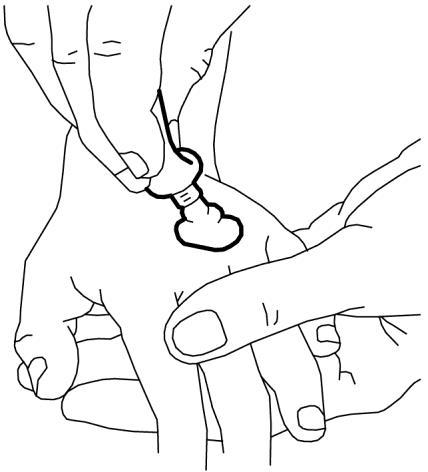
- 1. Squeeze a generous amount of cream onto the area of skin where it needs to be applied (e.g. the point where the needle will be inserted). A strip of cream about 3.5 cm long from the 30 g tube corresponds to 1 g of cream. Half a 5 g tube corresponds to approximately 2 g of EMLA. Do not spread the cream.
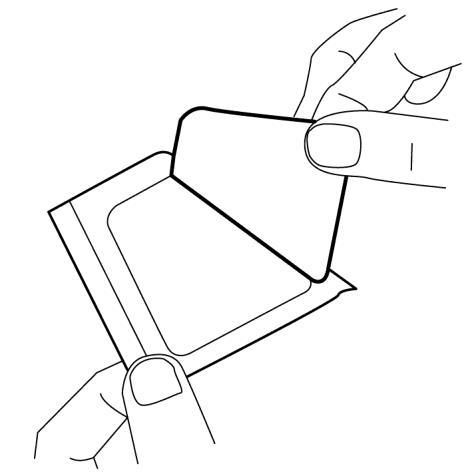
- 2. Remove the paper layer from the ‘middle part’ of the non-adhesive side of the adhesive patch (leaving the paper frame).
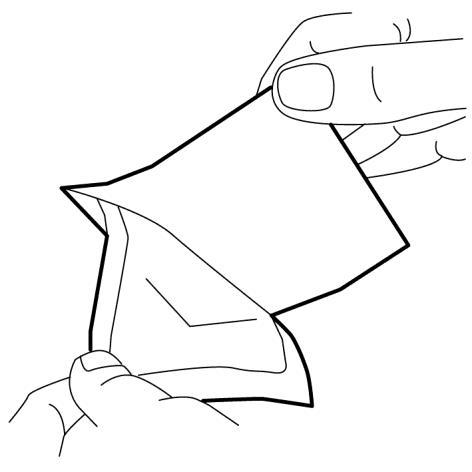
- 3. Remove the protectors from the adhesive layer of the adhesive patch.
- 4. Carefully position the patch on the thick layer of cream. Do not spread the cream under the patch.
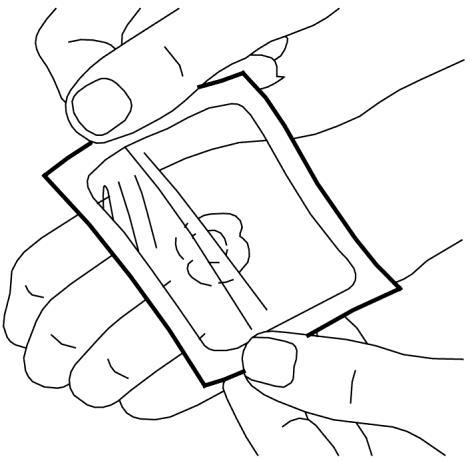
- 5. Remove the paper layer. Smooth the edges of the occlusive patch carefully. Then hold the patch for at least 60 minutes.
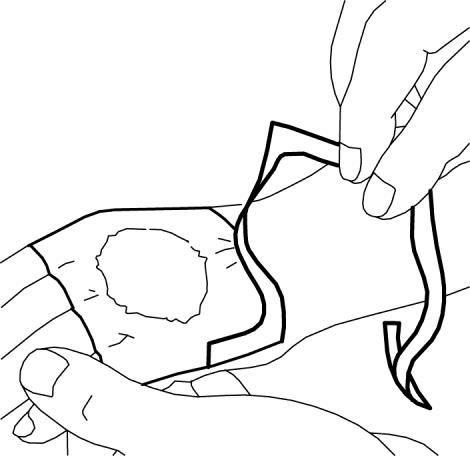
- 6. The doctor or nurse will remove the occlusive patch and remove the cream immediately before performing the procedure (e.g. immediately before inserting the needle).
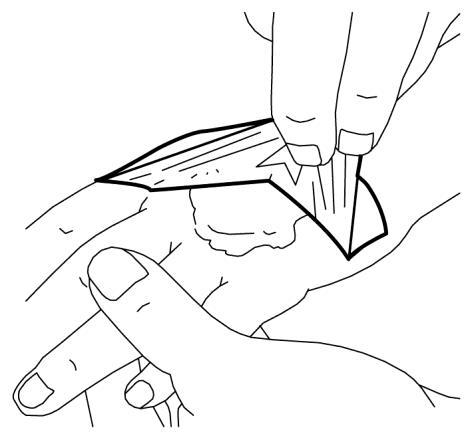
Use on larger areas of skin freshly shaved before outpatient procedures (e.g.
hair removal techniques):
The usual dose is 1 g of cream for each 10 cm² (10 square centimeters) of skin, applied for
1-5 hours under occlusive dressing. EMLA should not be used on a freshly shaved skin area larger than
600 cm² (600 square centimeters; e.g. 30 cm by 20 cm). The maximum dose is 60 g.
Use on the skin before hospital procedures (e.g. split-thickness skin grafts),
which require deeper skin anesthesia:
- EMLA can be used for this purpose in adults and adolescents over 12 years of age.
- The usual dose is 1.5-2 g of cream for each 10 cm² (10 square centimeters) of skin.
- The cream is applied under occlusive dressing for 2-5 hours.
Use on the skin before removal of wart-like lesions called “mollusca”
- EMLA can be used in children and adolescents with a skin condition called “atopic dermatitis”.
- The usual dose depends on the child’s age and is used for 30-60 minutes (30 minutes if the patient has atopic dermatitis). Your doctor, nurse or pharmacist will tell you how much cream to use and when it should be applied.
Use on the skin of the genitals before injecting local anesthetics
- EMLA can be used for this purpose only in adults and adolescents over 12 years of age.
- The usual dose is 1 g of cream (1-2 g for female genital skin) for each 10 cm² (10 square centimeters) of skin.
- The cream is applied under occlusive dressing for 15 minutes on male genital skin and for 60 minutes on female genital skin.
Use on the genitals before minor skin surgery (e.g.
removal of warts)
- EMLA can be used for this purpose only in adults and adolescents over 12 years of age.
- The usual dose is 5-10 g of cream for 10 minutes. No occlusive dressing is used. Then the medical procedure should be started immediately.
Use on leg ulcers before cleansing or removal of damaged skin
- The usual dose is 1-2 g of cream for each 10 cm² of skin up to a total of 10 g.
- The cream is applied under an occlusive dressing such as transparent film. This is done for 30-60 minutes before cleansing the ulcer. Remove the cream with cotton gauze and start cleansing immediately.
- EMLA can be used before cleansing leg ulcers up to 15 times over a period of 1-2 months.
- The EMLA tube is for single use when used for leg ulcers: the tube with the remaining contents must be discarded once the patient has been treated.
If you use more EMLA than you should
If you use more EMLA than indicated by your doctor, pharmacist or
nurse, seek immediate help from one of them, even if you do not experience any symptoms.
The symptoms associated with using too much EMLA are listed below. These symptoms are unlikely to
occur if EMLA is used as recommended.
- Feeling lightheaded or dizzy.
- Tingling around the mouth and numbness of the tongue.
- Altered taste.
- Blurred vision.
- Ringing in the ears.
- There is also a risk of ‘acute methemoglobinemia’ (a problem associated with pigment levels in the blood). This condition is more likely to occur if you are taking certain medications at the same time. If this occurs, the skin becomes bluish-gray due to lack of oxygen. In severe cases of overdose, symptoms may include convulsions, low blood pressure, slowed breathing, respiratory arrest, and changes in heart rate. These effects can be potentially fatal.
If you have any doubts about using this medicine, consult your doctor, pharmacist or
nurse.
4. Possible side effects
Like all medicines, this medicine can cause side effects, although not everybody gets them.
Contact your doctor or pharmacist if any of these side effects become troublesome or do not disappear. Tell your doctor about anything else that is making you feel unwell
during the use of EMLA.
A mild reaction (paleness or redness of the skin, slight swelling, burning or initial itching) may
occur in the area where EMLA is used. These are normal reactions to the cream and local anesthetics and
will disappear within a short time without any action being necessary.
If you experience any bothersome or unusual effect during the use of EMLA, stop using it and consult
your doctor or pharmacist as soon as possible.
Common(may affect up to 1 in 10 people)
- Temporary local reactions on the skin (paleness, redness, swelling) in the treated area during treatment of the skin, genital mucosa or leg ulcers.
- Mild initial burning, itching or warmth sensation in the treated area during treatment of the genital mucosa or leg ulcers.
Uncommon(may affect up to 1 in 100 people)
- Mild initial burning, itching or warmth sensation in the treated area during treatment of the skin.
- Numbness (tingling) in the treated area during treatment of the genital mucosa.
- Irritation of the treated skin during treatment of leg ulcers.
Rare(may affect up to 1 in 1,000 people)
- Allergic reactions which, in rare cases, may develop into anaphylactic shock (skin rash, swelling, fever, difficulty breathing and fainting) during treatment of the skin, genital mucosa or leg ulcers.
- Methemoglobinemia (blood disease) during treatment of the skin.
- Appearance of pinpoint bleeding spots in the treated area during treatment of the skin (especially in children with eczema following longer application times).
- Eye irritation in case of accidental contact with EMLA during treatment of the skin.
Additional side effects in children
Methemoglobinemia, a blood disease that is observed more frequently, often in
association with overdose, in newborns and infants between 0 and 12 months of age.
Reporting of side effects
If you get any side effects, even those not listed in this leaflet, tell your
doctor or pharmacist. You can also report side effects directly through the
national reporting system at the web address: www.agenziafarmaco.gov.it/content/come-
segnalare-una-sospetta-reazione-avversa
By reporting side effects you can help provide more information on the safety
of this medicine.
5. How to store EMLA
Keep this medicine out of sight and reach of children.
Do not use this medicine after the expiry date which is stated on the packaging and the tube after
Expiry/EXP. The expiry date refers to the last day of that month.
Do not freeze. Keep the tube tightly closed.
Do not dispose of any medicine in wastewater or household waste. Ask your pharmacist how to
dispose of medicines you no longer use. This will help protect the environment.
6. Package Contents and Other Information
What EMLA contains
- The active ingredients are: lidocaine and prilocaine
- 1 g of cream contains: 25 mg of lidocaine and 25 mg prilocaine
- The other ingredients are carbomers, macrogolglycerol hydroxystearate, sodium hydroxide for pH adjustment, purified water.
Description of EMLA and package contents
White and homogeneous cream.
EMLA is packaged in an aluminum tube with a polypropylene cap equipped with a
piercing device.
EMLA is available in the following pack sizes:
1 tube containing 5 g of cream
1 tube containing 5 g of cream + 2 occlusive patches
1 tube containing 5 g of cream + 3 occlusive patches
3 tubes containing 5 g of cream + 8 occlusive patches
5 tubes containing 5 g of cream
5 tubes containing 5 g of cream + 10 occlusive patches
5 tubes containing 5 g of cream + 12 occlusive patches
10 tubes containing 5 g of cream + 25 occlusive patches
25 tubes containing 5 g of cream
25 tubes containing 5 g of cream + 50 occlusive patches
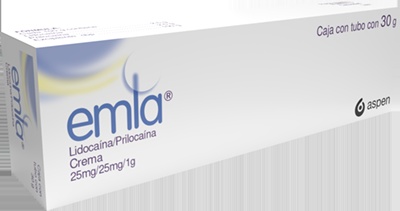
1 tube containing 30 g of cream
Not all pack sizes may be marketed.
Marketing Authorisation Holder
Aspen Pharma Trading Limited
3016 Lake Drive, Citywest Business Campus
Dublin 24
Ireland
Manufacturers
AstraZeneca AB Astraallén, Gärtunaporten SE-151 85 – Sodertalje (Sweden)
or
Recipharm Karlskoga AB Björkbornsvägen 5, SE-691 33 – Karlskoga (Sweden)
or
AstraZeneca UK Limited, Silk Road Business Park, SK10 2NA Macclesfield Cheshire (United Kingdom)
or
AstraZeneca GmbH, DE-22880Tinsdaler Weg 183 (Germany)
This medicinal product is authorised in the Member States of the European Economic Area under the
following designations:
Austria Emla 5% - Cream
Belgium Emla 25mg/25mg cream
Cyprus Emla Cream 5%
Czech Republic Emla krém 5%
Denmark Emla
Finland EMLA
France EMLA 5 POUR CENT, cream
Germany EMLA
Greece EMLA
Iceland Emla
Ireland EMLA 5% w/w Cream
Italy EMLA
Latvia Emla 5 % krēms
Luxembourg Emla 25mg/25mg crème
Malta EMLA 5% w/w Cream
Norway Emla
Poland EMLA
Portugal Emla
Spain EMLA 25 mg/g + 25 mg/g cream
Sweden EMLA
Netherlands Emla
United Kingdom Emla Cream 5%

Не уверены, подходит ли вам это лекарство?
Обсудите симптомы и варианты лечения с врачом онлайн.

Уже начали прием и появились вопросы?
Обсудите свое состояние и дальнейшие шаги с врачом онлайн.
- Страна регистрации
- Форма выпускаCream, 25 MG/G + 25 MG/G
- Код АТХN01BB20
- Действующее вещество
- Отпускается по рецептуДа
- Производитель
- Информация на этой странице носит справочный характер и не является медицинской консультацией. Перед началом приема лекарства обязательно проконсультируйтесь с врачом.
- Аналоги EMLAФорма выпуска: Spray, 150 MG/ML / 50 MG/MLДействующее вещество: combinationsПроизводитель: RECORDATI IRELAND LTDОтпускается по рецептуФорма выпуска: Gel, 25 MG/G + 25 MG/GДействующее вещество: combinationsПроизводитель: DENTSPLY SIRONA ITALIA S.R.L.Отпускается по рецептуФорма выпуска: Injectable solution, 40 MG/ML + 10 MICROGRAMMI/MLДействующее вещество: articaine, combinationsПроизводитель: PIERREL S.P.A.Отпускается без рецепта
Аналоги EMLA в других странах
Лекарства с тем же действующим веществом, доступные в других странах.
Аналог EMLA в Испания
Аналог EMLA в Польша
Аналог EMLA в Украина
Врачи онлайн по EMLA
Обсудите применение EMLA и возможные следующие шаги — по оценке врача.









Получите рецепт на EMLA онлайн
Заполните форму за 2 минуты
Расскажите о симптомах, истории болезни и нужном препарате.
Выберите врача или мы назначим
Выберите специалиста или мы подберём ближайшего доступного врача.
Врач рассматривает ваш случай
Обычно в течение 30 минут. Может задать уточняющие вопросы в чате.
Получите в любой аптеке
Электронный рецепт отправляется на вашу почту — действителен по всей Польше.
Часто задаваемые вопросы
EMLA требует рецепта в Италия. Вы можете уточнить у врача онлайн, подходит ли это лекарство для вашей ситуации.
Действующее вещество EMLA — combinations. Эта информация помогает определить лекарства с тем же составом под другими торговыми названиями.
EMLA производится компанией ASPEN PHARMA TRADING LIMITED. Упаковка и торговое название могут отличаться в зависимости от дистрибьютора.
Врачи, включая Семейные врачи, Психиатры, Дерматологи, Кардиологи, Эндокринологи, Гастроэнтерологи, Пульмонологи, Нефрологи, Ревматологи, Гематологи, Инфекционисты, Аллергологи, Гериатры, Педиатры, Онкологи, могут оценить целесообразность применения EMLA с учетом вашей ситуации и местных правил. Вы можете записаться на онлайн-консультацию, чтобы обсудить возможные варианты.
Польша имеет хорошо развитую систему здравоохранения в крупных городах, таких как Варшава, Краков, Вроцлав и Гданьск. Аптеки широко доступны и работают в соответствии с действующим законодательством, обеспечивая доступ к рецептурным препаратам.
Вы можете купить EMLA в Варшаве, Кракове, Вроцлаве или Гданьске в любой аптеке при наличии действующего рецепта.
Чтобы получить рецепт, вы можете воспользоваться Oladoctor:
Другие лекарства с тем же действующим веществом (combinations) включают FORTAKIN, ORAQIX, ARTIKAINA KON ADRENALINA PIERREL. Они могут отличаться торговым названием или формой выпуска, но содержат одинаковый терапевтический компонент. Перед изменением лечения рекомендуется проконсультироваться с врачом.
