



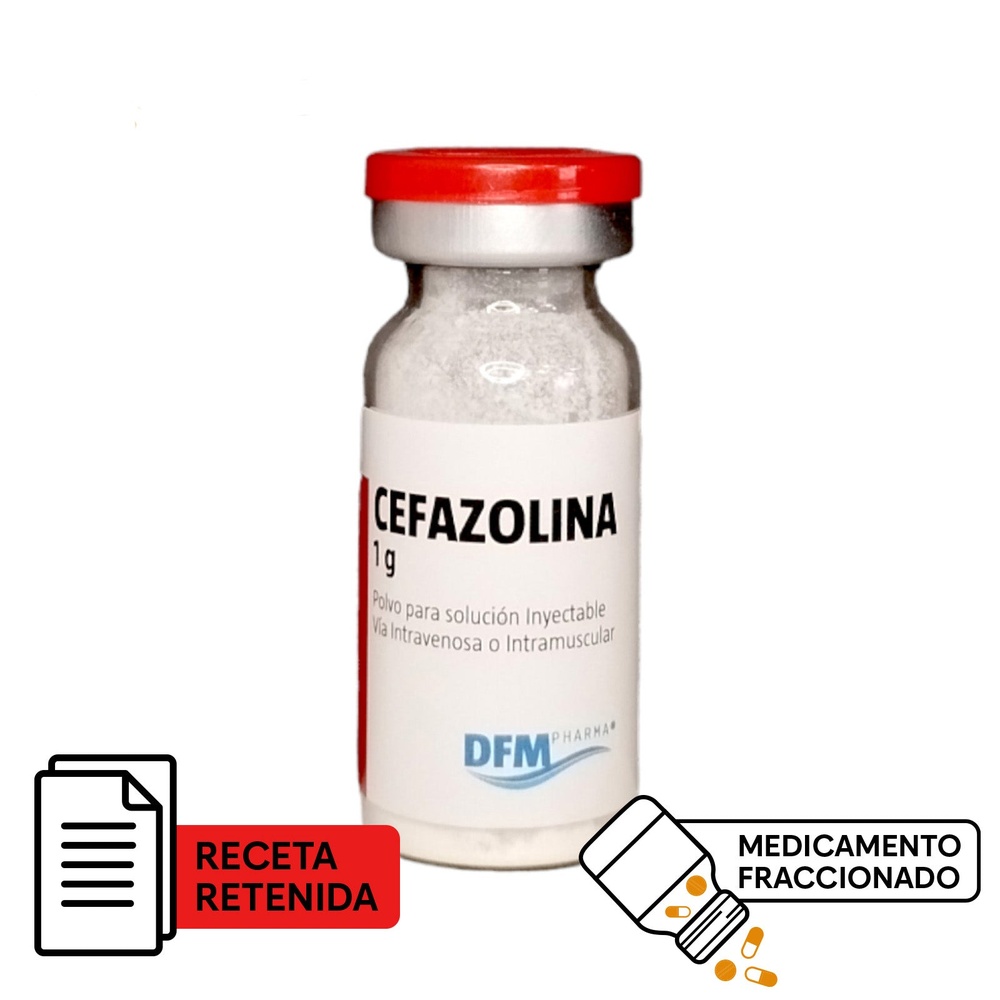
CEFAZOLINA 1 Г/4 МЛ Порошок и раствор для инъекционного раствора

Рассмотрение рецепта онлайн
Врач рассмотрит ваш случай и примет решение о назначении рецепта, если это медицински оправдано.

Поговорите с врачом об этом лекарстве
Обсудите симптомы и возможные дальнейшие шаги на онлайн-консультации.



Инструкция по применению KEFATSOLINA JIT
Содержание инструкции
Cefazolina GIT 1 g/4ml powder and solvent for injectable solution for intramuscular use
cefazolina sodica
Read this leaflet carefully before you are given this medicine as it contains
important information for you.
- Keep this leaflet. You may need to read it again.
- If you have any questions, ask your doctor, pharmacist or nurse.
- This medicine has been prescribed for you only. Do not pass it on to others, even if their symptoms are the same as yours, as it could be harmful.
- If you get any side effects, even those not listed in this leaflet, tell your doctor, pharmacist or nurse. See section 4.
Contents of this leaflet
- 1. What is Cefazolina GIT and what it is used for
- 2. What you need to know before you are given Cefazolina GIT
- 3. How Cefazolina GIT is given
- 4. Possible side effects
- 5. How to store Cefazolina GIT
- 6. Contents of the pack and other information
- 1. What is Cefazolina GIT and what it is used for
Cefazolina GIT contains cefazolina sodica, a substance that belongs to a group of medicines called
cephalosporins, which works against bacterial infections that can affect different parts of the body.
Cefazolina GIT is used for the treatment of the following infections:
- respiratory tract infections
- urinary tract infections
- genital organ infections
- skin and soft tissue infections
- bile duct infections
- bone and joint infections
- blood infections (septicemia)
- infections of the inner surface of the heart (endocarditis)
Cefazolina GIT can be used before, during and after surgery to prevent
infections.
2. What you need to know before you are given Cefazolina GIT
You must not be given Cefazolina GIT
- if you are allergic to cefazolina sodium, or to any of the other ingredients of this medicine (listed in section 6);
- if you are allergic to lidocaine or other local anesthetics of the amide type;
- if you are allergic to other antibiotics, particularly penicillins, cephalosporins and other beta-lactam antibiotics;
- in premature babies and newborns under 1 month old.
Warnings and precautions
Talk to your doctor, pharmacist or nurse before you are given Cefazolina GIT.
Pay particular attention and tell your doctor:
- If you have had an allergic reaction to medicines in the past, particularly to cefazolina, cephalosporins, penicillins, other beta-lactam antibiotics, lidocaine or other local anesthetics of the amide type, because in
this case you may also be allergic to Cefazolina GIT (risk of severe anaphylactic-type reactions).
If you experience any allergic reaction after receiving Cefazolina GIT, stop treatment immediately and see your doctor; severe allergic reactions, and in particular anaphylaxis, may require emergency medical intervention.
- If you have a history of stomach and/or intestinal diseases, particularly inflammation of the colon (colitis).
- If you develop diarrhea during treatment. See your doctor immediately, as it can lead to a serious condition called pseudomembranous colitis.
- If you are being treated with medicines that thin the blood (anticoagulants), due to the risk of coagulation disorders. Your doctor may need to adjust the dose of anticoagulants.
- If you have or are suspected of having kidney problems, as your doctor may reduce the dose of Cefazolina GIT according to your condition. This medicine can cause kidney damage and these effects are more likely if you are over 50 years of age, if you already have kidney problems or if you are taking other medicines that can cause kidney damage (see “Other medicines and Cefazolina GIT”).
- If you have high blood pressure (hypertension) or heart problems (heart failure), as the medicine contains sodium (See “Cefazolina GIT contains sodium”).
Laboratory tests
Tell your doctor if you are being treated with Cefazolina GIT as this medicine can alter the result of
some laboratory tests (false positive Coombs test, false positive urinary glucose test with
Benedict, Fehling and “Clinitest” methods).
The simultaneous use of medicines that promote the accumulation of feces must be absolutely avoided.
Children
Cefazolina GIT should not be given to premature babies and newborns under one month of age
(see section “You must not be given Cefazolina GIT”).
In early infancy, the drug will only be given if absolutely necessary and under the direct
control of the doctor.
Other medicines and Cefazolina GIT
Tell your doctor or pharmacist if you are taking, have recently taken or might take any
other medicines.
In particular, tell your doctor if you are taking:
- probenecid(used in the treatment of gout to reduce uric acid levels), as it increases the concentration of Cefazolina GIT in the blood;
- antibiotic medicines that can cause kidney damage, for example aminoglycosides, colistin,polymyxin Bor vancomycin.Concomitant use with Cefazolina GIT should be avoided if possible;
- other antibiotics such as penicillinsor chloramphenicol;
- medicines that thin the blood (oral anticoagulants or heparin), due to the risk of coagulation disorders. In these cases, the doctor must carefully monitor you and possibly adjust the dose of anticoagulant medicines;
- oral contraceptivesas Cefazolina GIT may affect their effectiveness. For this reason, alternative contraceptive methods are recommended in addition to hormonal contraceptives during treatment with cefazoline.
Pregnancy and breastfeeding
If you are pregnant, suspect you may be pregnant or are planning to become pregnant, or if you are breastfeeding
ask your doctor or pharmacist for advice before taking this medicine.
Pregnancy
During pregnancy, Ceftazolina GIT should only be given if absolutely necessary and under
direct medical supervision.
Breastfeeding
This medicine is present in very low concentrations in breast milk; however, take caution
during the breastfeeding period.
Driving and using machines
Cefazolina GIT does not affect the ability to drive vehicles or operate machinery.
Cefazolina GIT contains sodium
This medicine contains 50.5 mg of sodium (the main component of table salt) per vial.
This is equivalent to 2.5% of the recommended maximum daily intake with the diet of an adult.
3. How Cefazolina GIT is administered
Use this medicine following exactly the instructions of your doctor or pharmacist. If you have
any doubts, consult your doctor or pharmacist.
Adults
The recommended dosage of cefazolina for intramuscular administration is 1-3 g per day, to be
divided into 2-3 equal administrations depending on the type and severity of the infection.
Use in children
The daily dose for intramuscular administration in children varies from 25 to 50 mg per Kg of body
weight, to be divided into 3-4 equal administrations. Depending on the severity of the infection, the doctor
may increase the dose up to 100 mg per Kg of body weight.
Cefazolina GIT should not be administered to premature babies and newborns under 1 month of age (see
section “Cefazolina GIT should not be administered to you”).
In early infancy, Cefazolina GIT will be administered only in cases of actual need and under the
direct control of the doctor.
The solvent vial included in the package containing lidocaine, a local anesthetic, must be
used only for intramuscular use.
Use in perioperative prophylaxis
If you are to undergo surgery, you may be administered intramuscularly or directly intravenously
a dose of 1 g, 30-60 minutes before the start of the operation.
For prolonged operations, a supplementary dose of 500 mg to 1 g can be administered during
the operation. Treatment with Cefazolina GIT can be continued every 6-8 hours for 24 hours after
the operation to avert the risk of infections.
The solvent vial included in the package containing lidocaine, a local anesthetic, must be
used only for intramuscular use.
Use in patients with kidney problems
If you suffer from renal insufficiency, you must receive a lower dose of Cefazolina GIT than
generally recommended. Your doctor will adjust the dose of the medicine according to your condition.
If you take more Cefazolina GIT than you should
If you are accidentally administered more Cefazolina GIT than the prescribed dose, contact
your doctor or the nearest hospital immediately.
If you forget to take Cefazolina GIT
If an injection has been forgotten, inform your doctor immediately.
If you stop the treatment with Cefazolina GIT
Do not stop taking Cefazolina GIT unless your doctor tells you to do so.
If you have any doubts about the use of this medicine, ask your doctor or pharmacist.
4. Possible side effects
Like all medicines, this medicine can cause side effects, although not everybody gets them.
- severe allergic reaction (anaphylactic) with breathing problems, circulatory problems (cardiovascular collapse) or shock, itching and hives with or without swelling of the skin and mucous membranes and nausea, vomiting, abdominal pain with cramps and diarrhea;
- increased number of platelets (thrombocytemia), reduced number of white blood cells (neutropenia, leukopenia, agranulocytosis) or platelets (thrombocytopenia), reduced number of red blood cells (anemia, hemolytic anemia), reduced number of all cells present in the blood (aplastic anemia, pancytopenia) and bleeding;
- kidney problems (acute renal failure associated with interstitial nephritis);
- severe infection of the colon associated with the use of antibiotics (pseudomembranous colitis), which can be fatal. The colitis may occur even after stopping treatment;
- hives, itching, skin rashes of various types (maculopapular, erythematous or morbilliform);
- fever and chills;
- reactions similar to serum sickness (fever, hives, joint pain, swelling and enlargement of the lymph nodes);
- increased number of white blood cells (eosinophilia);
- joint pain;
- swelling;
- redness of the skin;
- anal and genital itching;
- swelling of the skin and mucous membranes (angioedema);
- severe allergic skin reactions, potentially fatal (Stevens-Johnson syndrome, erythema multiforme, toxic epidermal necrolysis);
- skin peeling (exfoliative dermatitis). Hypersensitivity reactions can occur especially in patients who have already experienced allergic reactions in the past, particularly to penicillin.
- increased levels of certain enzymes that indicate liver dysfunction, for example transaminases (AST/SGOT, ALT/SGPT), alkaline phosphatase, lactate dehydrogenase (LDH), gamma-glutamyl-transpeptidase (GGTP) or increased bilirubin, or liver dysfunction, including blockage of bile excretion (cholestasis). These effects are generally mild and disappear with discontinuation of therapy;
- transient increase in azotemia and creatinine levels;
- nausea, vomiting, diarrhea;
- thrush (oral candidiasis);
- abdominal pain;
- continuous need to defecate;
- indigestion;
- inflammation of the tongue;
- heartburn;
- reactions at the injection site, for example pain, hardening of the tissues, swelling;
- inflammation of the vein (phlebitis) following administration of the medicine into a vein;
- feeling of tightness in the chest;
- dizziness, headache;
- discomfort, fatigue;
- positive Coombs test (laboratory test used to detect the presence of autoimmune diseases);
- fungal infection and inflammation of the vagina, with itching in the genital and anal area.
These side effects require the adoption of the necessary therapeutic measures and careful
consideration by the doctor who, if necessary, will decide whether to discontinue treatment.
Reporting of side effects
If you experience any side effects, including those not listed in this leaflet, please inform your
doctor or pharmacist or nurse. You can also report side effects directly through the
national reporting system at www.aifa.gov.it/content/segnalazioni-reazioni-avverse.
By reporting side effects you can help provide more information on the safety of this
medicine.
5. How to store Cefazolina GIT
Keep this medicine out of sight and reach of children.
Do not use this medicine after the expiry date that is stated on the packaging after “Scad”. The expiry date refers to the last day of that month.
The expiry date refers to the product in intact packaging, correctly stored.
The solution must be used immediately after reconstitution.
Do not dispose of any medicine in wastewater or household waste. Ask your pharmacist how to dispose of
medicines you no longer use. This will help protect the environment.
6. Contents of the pack and other information
What Cefazolina GIT contains
Powder vial:
- the active ingredient is sodium cefazolin. Each vial contains 1.048 g of sodium cefazolin (equivalent to cefazolin 1 g) Solvent vial:
- the solvent vial for intramuscular use contains: lidocaine hydrochloride monohydrate water for injections
Description of the appearance of Cefazolina GIT and contents of the pack
Cefazolina GIT is presented as a powder and solvent for injectable solution for intramuscular use.
Pack of 1 vial of 1 g powder + 1 solvent vial of 4 ml.
Marketing Authorisation Holder and Manufacturer
Marketing Authorisation Holder
SF GROUP S.r.l. – Via Tiburtina 1143, 00156 Rome
Manufacturer
Esseti Farmaceutici S.r.l. - Via Campobello, 15 – 00040 Pomezia (Rome)
La.Fa.Re. S.r.l. - Via Sac. Benedetto Cozzolino, 77 – 80056 Ercolano (NA)
------------------------------------------------------------------------------------------------------------------
The following information is intended exclusively for healthcare professionals:
Read carefully also the information contained in sections 1-6.
Warnings and precautions
The onset of any type of allergic reaction requires discontinuation of treatment. Severe hypersensitivity reactions, and in particular anaphylaxis, may require the administration of adrenaline and
other emergency therapeutic interventions.
It is important to consider the possibility of pseudomembranous colitis in the differential diagnosis of patients
who present with diarrhoea after use of an antibiotic. Mild cases of pseudomembranous colitis may regress
with discontinuation of treatment. In moderate and severe forms, the treatment of choice is
oral vancomycin combined with the administration of fluids, electrolytes and proteins.
In patients with suspected renal pathology, in particular, a careful evaluation of renal function, clinical
and laboratory, must be conducted before and during therapy with cephalosporins. Nephrotoxic
effects are more likely in patients over 50 years of age, in those with pre-existing renal disease and in the case
of concomitant administration of other nephrotoxic drugs. In case of infections, the responsible
microorganism should always be isolated and antibacterial therapy should be based on sensitivity tests performed on samples collected before the start of therapy.
Sensitivity to cefazolin must be confirmed by standardized methods (discs for antibiogram
containing 30 mg of active ingredient – Kirby Bauer test).
Therapy with cefazolin can still be started while awaiting the results of these analyses. Before
using Cefazolina GIT in combination with other antibiotics, the relative interactions, contraindications, warnings, precautions and adverse effects should be carefully evaluated.
Pregnancy
The administration of cefazolin before cesarean section determines umbilical cord blood levels varying from ¼ to ⅓ of the blood concentrations present in the mother. Cefazolin does not
seem to be able to cause adverse effects on the fetus. In any case, cefazolin can only be administered
after clamping the umbilical cord.
Cefazolina GIT contains sodium
This medicine contains 50.5 mg of sodium (as sodium cefazolin) per vial equivalent to 2.5%
of the recommended daily intake by the WHO, which corresponds to 2 g of sodium for an adult.
How to administer Cefazolina GIT
Use in adults
The usual dosage of cefazolin is 1-3 g/day, to be divided into 2-3 equal administrations depending on the
type and severity of the infection, as reported in the following table:
DOSAGE IN ADULTS
Type of infectionDoseFrequency
Pneumococcal pneumonia 500 mg every 12 hours
Mild infections caused by sensitive strains
of gram-positive cocci 500 mg every 8 hours
Acute and uncomplicated urinary tract infections 1 g every 12 hours
Moderate to severe infections 0.5-1 g every 6-8 hours
Very severe infections, with life-threatening risk (e.g. endocarditis and septicemia)* 1-1.5 g every 6 hours
* in exceptional cases, doses of cefazolin up to 12 g/day have been used
Use in children
The total daily dosage is 25-50 mg/kg of body weight, to be divided into 3-4 equal administrations;
this is effective in the treatment of most mild or moderately severe infections. The total daily dosage may be increased up to 100 mg/kg of body weight in severe infections.
The medicine is contraindicated in premature infants and newborns under one month of age.
In early infancy, the product should be administered only when absolutely necessary, under the direct supervision
of the doctor.
Use in perioperative prophylaxis
To prevent post-surgical infections in surgeries at risk of potential bacterial contamination, the
recommended dosage is:
- 1 g IV or IM administered 30 to 60 minutes before surgery.
- For long surgeries (e.g. 2 hours or more), 0.5-1 g IV or IM during surgery (to be modified according to the duration of the operation).
- 0.5-1 g IV or IM every 6-8 hours for 24 hours after surgery. It is important that:
- 1. the initial dose is administered half an hour to an hour before the start of the operation to ensure adequate blood and tissue levels of the antibiotic at the time of incision;
- 2. if exposure to pathogens is very likely, cefazolin is administered at regular intervals during surgery, to ensure constant blood levels;
- 3. the use of cefazolin for prophylactic purposes ends within 24 hours of the end of the operation;
- 4. in surgical operations where the occurrence of infection can be particularly devastating (e.g. open-heart surgery, joint replacement implants), prophylaxis with cefazolin may continue for 3-5 days after surgery.
Use in patients with renal insufficiency
In patients with renal insufficiency, the doses should be appropriately reduced according to the degree of
renal impairment, as reported in the following table:
DOSAGE IN RENAL INSUFFICIENCY
Renal Insuff. Creatinine Clearance Creatininemia Dosage Interval
(mg%) (ml/min) of adm.
ADULTS Mild > 55 < 1.5 Full doses 6-8 h
Moderate 35-54 1.6-3.0 Full doses > 8 h
Marked 11-34 3.1-4.5 50% dose 12 h
Severe < 10 > 4.6 50% dose 18-24 h
CHILDREN Mild-moderate 40-70 60% dose 12 h
Moderate 20-39 25% dose 12 h
Severe 5-19 10% dose 24 h
N.B. In particularly severe infections, an appropriate loading dose is recommended before proceeding to
reduce the dosages as reported above.
Route of administration
Once reconstituted, cefazolin can be administered by intramuscular and
intravenous route.
The total daily dosages are the same for both routes of administration.
Intramuscular administration
Cefazolin should be reconstituted by dissolving the contents of the vial with the attached solvent vial (4 ml)
or with 0.9% sodium chloride for injections, water for injections, as
illustrated in the table below; shake well until completely dissolved. The solution must be used
immediately after reconstitution.
DILUTION SCHEME
Vial Diluent Approximate volume Concentration
to add of the solution average
1 g * 2.5 ml 3 ml 350 mg/ml
*If the 4 ml solvent vial attached to the pack is not used, the 1 g vial must be reconstituted
only with water for injections.
Attention: the 4 ml solvent vial, containing 0.5% lidocaine hydrochloride as an anesthetic, and attached
to the pack, must be used exclusively for intramuscular administrations.
Intravenous administration
Cefazolin solutions , reconstituted without using the attached solvent vial
can be administered by continuous or intermittent intravenous infusion.
- Continuous intravenous infusion The already reconstituted solutions must be further diluted in at least 10 ml of water for injections and infused slowly over a period of 3-5 minutes directly into a vein or via cannula. Never use less than 3 minutes to complete the infusion.
- Intermittent intravenous infusion Cefazolin can be administered together with other fluids used for hemodynamic support program, or using a separate vial. The already reconstituted cefazolin solutions of 500 mg or 1 g must be further diluted in 50-100 ml of one of the following solutions:
- 0.9% Sodium Chloride for Injections;
- 5% or 10% Dextrose for Injections;
- 5% Dextrose in Ringer Lactate for Injections
- 5% Dextrose and 0.9% Sodium Chloride for Injections (5% Dextrose and 0.45% or 0.2% Sodium Chloride for Injections can also be used).
- Ringer Lactate for Injections;
- Invert Sugar 5% or 10% in Sterile Water for Injections;
- Ringer's Solution for Injections;
- Normosol-M in D5-W;
- Ionosol B with 5% Dextrose;
- Plasma-Lyte with 5% Dextrose; Solutions for intravenous use prepared extemporaneously can be stored protected from light and at low temperature; under these conditions they can be used no later than 48 hours after preparation. For intravenous or slow infusion, the product should be administered every 6 hours.

Не уверены, подходит ли вам это лекарство?
Обсудите симптомы и варианты лечения с врачом онлайн.

Уже начали прием и появились вопросы?
Обсудите свое состояние и дальнейшие шаги с врачом онлайн.
- Страна регистрации
- Форма выпускаPowder and solvent for injectable solution, 1 G/4 ML
- Код АТХJ01DB04
- Действующее вещество
- Отпускается по рецептуДа
- Производитель
- Информация на этой странице носит справочный характер и не является медицинской консультацией. Перед началом приема лекарства обязательно проконсультируйтесь с врачом.
- Аналоги KEFATSOLINA JITФорма выпуска: Powder for injectable/infusion solution, 1 GДействующее вещество: ЦефазолинПроизводитель: PHAGECON SERVICOS E CONSULTORIA FARMACEUTICA LDAОтпускается по рецептуФорма выпуска: Powder and solvent for injectable solution, 1000 MG/4 MLДействующее вещество: ЦефазолинПроизводитель: PHARMACARE S.R.L.Отпускается по рецептуФорма выпуска: Powder for injectable/infusion solution, 1 GДействующее вещество: ЦефазолинПроизводитель: QILU PHARMA SPAIN S.L.Отпускается по рецепту
Аналоги KEFATSOLINA JIT в других странах
Лекарства с тем же действующим веществом, доступные в других странах.
Аналог KEFATSOLINA JIT в Польша
Аналог KEFATSOLINA JIT в Украина
Аналог KEFATSOLINA JIT в Испания
Врачи онлайн по KEFATSOLINA JIT
Обсудите применение KEFATSOLINA JIT и возможные следующие шаги — по оценке врача.









Получите рецепт на KEFATSOLINA JIT онлайн
Заполните форму за 2 минуты
Расскажите о симптомах, истории болезни и нужном препарате.
Выберите врача или мы назначим
Выберите специалиста или мы подберём ближайшего доступного врача.
Врач рассматривает ваш случай
Обычно в течение 30 минут. Может задать уточняющие вопросы в чате.
Получите в любой аптеке
Электронный рецепт отправляется на вашу почту — действителен по всей Польше.
Часто задаваемые вопросы
KEFATSOLINA JIT требует рецепта в Италия. Вы можете уточнить у врача онлайн, подходит ли это лекарство для вашей ситуации.
Действующее вещество KEFATSOLINA JIT — Цефазолин. Эта информация помогает определить лекарства с тем же составом под другими торговыми названиями.
KEFATSOLINA JIT производится компанией S.F. GROUP S.R.L.. Упаковка и торговое название могут отличаться в зависимости от дистрибьютора.
Врачи, включая Семейные врачи, Психиатры, Дерматологи, Кардиологи, Эндокринологи, Гастроэнтерологи, Пульмонологи, Нефрологи, Ревматологи, Гематологи, Инфекционисты, Аллергологи, Гериатры, Педиатры, Онкологи, могут оценить целесообразность применения KEFATSOLINA JIT с учетом вашей ситуации и местных правил. Вы можете записаться на онлайн-консультацию, чтобы обсудить возможные варианты.
Польша имеет хорошо развитую систему здравоохранения в крупных городах, таких как Варшава, Краков, Вроцлав и Гданьск. Аптеки широко доступны и работают в соответствии с действующим законодательством, обеспечивая доступ к рецептурным препаратам.
Вы можете купить KEFATSOLINA JIT в Варшаве, Кракове, Вроцлаве или Гданьске в любой аптеке при наличии действующего рецепта.
Чтобы получить рецепт, вы можете воспользоваться Oladoctor:
Другие лекарства с тем же действующим веществом (Цефазолин) включают KEFATSOLINA PAJEKON, KEFATSOLINA PARMAKARE, KEFATSOLINA QILU. Они могут отличаться торговым названием или формой выпуска, но содержат одинаковый терапевтический компонент. Перед изменением лечения рекомендуется проконсультироваться с врачом.
