



CAPECITABINA 150 mg Фильм-Coated Таблетки

Рассмотрение рецепта онлайн
Врач рассмотрит ваш случай и примет решение о назначении рецепта, если это медицински оправдано.

Поговорите с врачом об этом лекарстве
Обсудите симптомы и возможные дальнейшие шаги на онлайн-консультации.



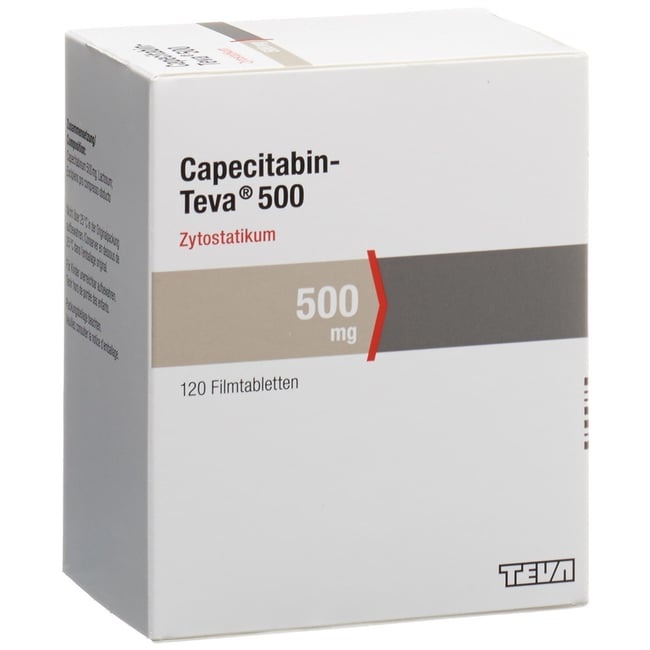
Инструкция по применению KAPEKITABINA TEVA
Содержание инструкции
Capecitabina Teva 150 mg film-coated tablets, 500 mg film-coated tablets
capecitabine
Read this leaflet carefully before you start taking this medicine because it contains important information for you.
- Keep this leaflet. You may need to read it again.
- If you have any questions, ask your doctor or pharmacist.
- This medicine has been prescribed for you only. Do not pass it on to others, even if their symptoms are the same as yours, as it could be harmful.
- If you get any side effects, even those not listed in this leaflet, tell your doctor or pharmacist. See section 4.
Contents of this leaflet
- 1. What Capecitabina Teva is and what it is used for
- 2. What you need to know before you take Capecitabina Teva
- 3. How to take Capecitabina Teva
- 4. Possible side effects
- 5. How to store Capecitabina Teva
- 6. Contents of the pack and other information
1. What is Capecitabina Teva and what is it used for
Capecitabina Teva belongs to a category of medicines called “cytostatic medicines”, which
block the growth of cancer cells. Capecitabina Teva contains capecitabine, which in itself is not a
cytostatic medicine. Only once absorbed by the body is it transformed into an
active anti-cancer medicine (to a greater extent in tumor tissues compared to normal tissues).
Capecitabina Teva is used in the treatment of colon, rectum, stomach or
breast tumors.
Capecitabina Teva is used to prevent the reappearance of colon tumors after complete surgical removal
of the tumor.
Capecitabina Teva can be used alone or in combination with other medicines.
2. What you need to know before taking Capecitabina Teva
Do not take Capecitabina Teva
- if you are allergic to capecitabine or any of the other ingredients of this medicine (listed in section 6). You must inform your doctor if you are aware of being allergic to or developing excessive reactions to this medicine,
- if you have previously experienced severe reactions to therapy with fluoropyrimidines (a group of anticancer drugs, such as fluorouracil),
- if you are pregnant or breastfeeding,
- if you have significantly low levels of white blood cells or platelets in your blood (leukopenia, neutropenia, thrombocytopenia),
- if you suffer from serious liver disorders or kidney problems,
- if you have no activity of the dihydropyrimidine dehydrogenase (DPD) enzyme (total absence of DPD activity),
- if you are currently being treated or have been treated in the last 4 weeks with brivudine as part of the therapy for herpes zoster (shingles).
Warnings and precautions
Talk to your doctor or pharmacist before taking Capecitabina Teva
- if you have a partial deficiency of dihydropyrimidine dehydrogenase (DPD) enzyme activity
- if you have a family member with partial deficiency or total absence of dihydropyrimidine dehydrogenase (DPD) enzyme activity
- if you suffer from liver or kidney disorders
- if you have or have had heart problems (for example, irregular heartbeat or chest, jaw and back pain caused during physical exertion and due to problems with blood flow to the heart)
- if you suffer from brain diseases (for example, cancer that has spread to the brain, or nerve damage (neuropathy))
- if you suffer from calcium imbalances (visible from blood tests)
- if you suffer from diabetes
- if you are unable to retain food or water in your body due to severe nausea and vomiting
- if you suffer from diarrhea
- if you are dehydrated or become dehydrated
- if you suffer from imbalances of ions in the blood (electrolyte imbalances, visible from blood tests)
- if you have suffered from eye problems because you may need additional eye monitoring
- if you develop a severe skin reaction.
Dihydropyrimidine dehydrogenase (DPD) deficiency:DPD deficiency is a genetic condition that is not
generally associated with health problems, unless you take certain medications. If you have a
DPD deficiency and take Capecitabina Teva, you are at greater risk of developing severe adverse effects (listed in section 4 Possible side effects). It is recommended to perform DPD deficiency tests before starting treatment. Do not take Capecitabina Teva if you have no
enzyme activity. If you have reduced enzyme activity (partial deficiency) your doctor may prescribe a
lower dose. If the results of the DPD deficiency tests are negative, serious or potentially life-threatening
side effects may still occur.
Immediately inform your doctor if any of the side effects worry you, or if you notice the
appearance of any other side effect not listed in this leaflet (see section 4
Possible side effects).
Children and adolescents
Capecitabina Teva is not indicated for the treatment of children and adolescents. Do not administer
Capecitabina Teva to children and adolescents.
Other medicines and Capecitabina Teva
Before starting treatment, tell your doctor or pharmacist if you are taking, have recently
taken or might take any other medicines. This is extremely important, as
taking multiple medicines at the same time can strengthen or reduce their effect.
You must not take brivudine (an antiviral medicine for the treatment of shingles
or chickenpox) at the same time as treatment with capecitabine (even
during periods of pause when no capecitabine tablet is taken).
If you have taken brivudine, you must wait at least 4 weeks after stopping its use
before starting therapy with capecitabine. See also section “Do not take Capecitabina
Teva”.
In addition, special care must be taken if you are taking any of the
following medicines at the same time:
- medicines for gout (allopurinol),
- medicines that thin the blood (coumarin, warfarin),
- medicines for the treatment of seizures or tremors (phenytoin),
- some medicines used to treat various types of cancer or viral infections (interferon alfa),
- radiotherapy and some medicines used to treat cancer (folinic acid, oxaliplatin, bevacizumab, cisplatin, irinotecan),
- medicines used to treat folic acid deficiency.
Capecitabina Teva with food and drink
You must take Capecitabina Teva no more than 30 minutes after meals.
Pregnancy and breastfeeding
If you are pregnant, suspect you may be pregnant, are planning a pregnancy or are breastfeeding,
ask your doctor or pharmacist for advice before taking this medicine.
You must not take Capecitabina Teva if you are certainly or suspected to be pregnant.
You must not breastfeed during therapy with Capecitabina Teva and for 2 weeks after
the last dose.
If you are a woman of childbearing potential, during treatment with Capecitabina Teva and for 6 months after the last
dose, you must use effective contraceptive methods.
If you are a male patient and your partner is a woman of childbearing potential, during treatment with
Capecitabina Teva and for 3 months after the last dose, you must use effective contraceptive methods.
Driving and operating machinery
Capecitabina Teva can cause dizziness, nausea or fatigue. Therefore, Capecitabina
Teva may affect your ability to drive vehicles or operate machinery.
Capecitabina Teva contains lactose
If your doctor has diagnosed you with intolerance to certain sugars, contact him before taking this
medicine.
Capecitabina Teva contains sodium
This medicine contains less than 1 mmol (23 mg) of sodium per film-coated tablet,
i.e. essentially ‘sodium-free’.
3. How to take Capecitabina Teva
Take this medicine following exactly the instructions of your doctor or pharmacist. If you have
doubts, consult your doctor or pharmacist.
Capecitabina must only be prescribed by a doctor experienced in the use of anticancer medicines.
The doctor will prescribe the dosage and treatment regimen suitable for you. The dose of Capecitabina
Teva is based on your body surface area. This is calculated from your height and weight.
The usual dose for adults is 1,250 mg/m of body surface area twice a day (morning and evening).
Here are two examples: a person weighing 64 kg and height 1.64 m has a body surface area of 1.7 m and
must take 4 tablets of 500 mg and 1 tablet of 150 mg twice a day. A person weighing 80 kg and height
1.80 m has a body surface area of 2.00 m and must take 5 tablets of 500 mg twice a day.
Your doctor will tell you which dose you need to take, when to take it, and for how long.
The doctor may prescribe a combination of 150 mgand 500 mgtablets for each dosage.
- Take the tablets in the morning and evening, as prescribed by your doctor.
- Take the tablets within 30 minutes of finishing a meal(breakfast and dinner) and swallow them whole with water. Do not crush or cut the tablets. If you are unable to swallow the Capecitabina Teva tablets whole, inform your healthcare provider.
- It is important to take all medicines as prescribed by your doctor.
Capecitabina Teva tablets are usually taken for 14 days, followed by a 7-day rest period (during which
the tablets are not taken). These 21 days correspond to one treatment cycle.
In combination with other medicines, the usual dose for adults may be less than 1250 mg/m
of body surface area and you may need to take the tablets for a different period of time
(e.g. every day, without any rest period).
If you take more Capecitabina Teva than you should
If you take more Capecitabina Teva than you should, contact your doctor as soon as possible before taking the
next dose.
If you take much more capecitabina than you should, you may experience the following
side effects: nausea or vomiting, diarrhea, inflammation or ulceration of the intestine or mouth, pain or
bleeding from the intestine or stomach, or bone marrow suppression (reduction of certain types of blood
cells). Inform your doctor immediately if you experience any of these symptoms.
If you forget to take Capecitabina Teva
Do not take the missed dose. Do not take a double dose to make up for a forgotten dose. Instead, continue
taking the normal dosage as prescribed and contact your doctor.
If you stop taking Capecitabina Teva
Stopping treatment with capecitabina does not cause side effects. If you are taking coumarin anticoagulants
(containing, for example, phenprocoumon), stopping treatment with capecitabina may require your doctor to
adjust the dose of the anticoagulant.
If you have any questions about the use of this medicine, ask your doctor or pharmacist.
4. Possible side effects
Like all medicines, this medicine can cause side effects, although not everyone will experience them.
STOPtaking Capecitabina Teva immediately and contact your doctor if you experience any of the following symptoms:
- Diarrhea: if you experience an increase of 4 or more bowel movements per day compared to your normal bowel habits, or nocturnal diarrhea.
- Vomiting:if you vomit more than once within a 24-hour period.
- Nausea:if you lose your appetite and the amount of food you eat in a day is much less than usual.
- Stomatitis:if you experience pain, redness, swelling, or ulcers in the mouth and/or throat.
- Hand-foot skin reaction:if you experience pain, swelling, redness, or tingling in your hands and/or feet.
- Fever:if you have a body temperature equal to or greater than 38°C.
- Infection: if you experience signs of infection caused by bacteria or viruses, or other organisms.
- Chest pain:if you experience pain localized in the center of the chest, especially if it occurs during exercise.
- Stevens-Johnson Syndrome: if you experience a painful red or purplish rash that spreads and forms blisters and/or other lesions that begin to appear on the mucous membranes (e.g., the mouth and lips), especially if you have previously experienced sensitivity to light, respiratory infections (e.g., bronchitis) and/or fever.
- DPD deficiency:if you have a known DPD deficiency, you are at a higher risk of acute and early toxicity and serious, life-threatening or life-jeopardizing adverse reactions caused by
Capecitabina Teva (e.g., stomatitis, mucosal inflammation, diarrhea, neutropenia and
neurotoxicity).
- Angioedema:if you notice any of the following symptoms, seek immediate medical attention as urgent medical treatment may be necessary: swelling, mainly in the face, lips, tongue or throat, causing difficulty swallowing or breathing, a sensation of itching and skin rashes. This could be a sign of angioedema.
If detected early, these side effects generally improve within 2-3 days of
stopping the administration of the medicine. However, if the side effects should
persist, contact your doctor immediately. The latter may advise you to resume
taking the medicine at a lower dosage.
If severe stomatitis (ulcers in the mouth and/or throat), mucosal inflammation,
diarrhea, neutropenia (increased risk of infections), or neurotoxicity occur during the first cycle of
treatment, this may be caused by DPD deficiency (see section 2: Warnings and precautions).
The hand-foot syndrome can lead to loss of fingerprints, which may affect your
identification using a fingerprint reader.
In addition to those listed above, when capecitabine is used alone, very common side effects that can affect more than 1 in 10 people are:
- abdominal pain
- skin rash, dry skin or itchy skin
- fatigue
- loss of appetite (anorexia)
These side effects can become serious; therefore, it is important that you contact your doctor immediatelyif you experience a side effect. The doctor may tell you to
reduce the dosage and/or temporarily suspend treatment with Capecitabina Teva.
This will help reduce the likelihood of the side effect persisting or transforming
into a serious side effect.
Other side effects include:
Common side effects (which can affect up to 1 in 10 people) include:
- decreased white or red blood cell count (observed in tests)
- dehydration, weight loss
- insomnia, depression
- headache, drowsiness, dizziness, abnormal skin sensation (numbness or tingling), altered taste
- eye irritation, increased tearing, eye redness (conjunctivitis)
- inflammation of the veins (thrombophlebitis)
- shortness of breath, nosebleeds, cough, cold
- cold sores or other herpes infections
- lung or respiratory infections (e.g., pneumonia or bronchitis)
- intestinal bleeding, constipation, pain in the upper abdomen, indigestion, flatulence, dry mouth
- skin rashes, hair loss (alopecia), red skin, dry skin, itching, changes in skin color, skin peeling, skin inflammation, changes in nails
- joint or limb pain (extremities), chest pain or back pain
- fever, swelling of the limbs, feeling unwell
- liver function problems (observed in blood tests) and increased bilirubin in the blood (excreted by the liver)
Uncommon side effects (which can affect up to 1 in 100 people) include:
- blood infection, urinary tract infection, skin infections, nasal and throat infections, fungal infections (including those of the mouth), influenza, gastroenteritis, dental abscess
- nodules under the skin (lipoma)
- decreased blood cells, including platelets, increased blood fluidity (observed in laboratory tests)
- allergies
- diabetes, decreased potassium in the blood, malnutrition, increased triglycerides in the blood
- confusion, panic attacks, depressed mood, decreased libido
- difficulty speaking, memory impairment, lack of coordination of movements, balance disorders, fainting, nerve damage (neuropathy) and sensory perception problems
- blurred or double vision
- vertigo, ear pain
- irregular heartbeat and palpitations (arrhythmias), chest pain and heart attack (infarction)
- blood clots in the deep veins, high or low blood pressure, hot flashes, cold extremities (limbs), purple spots on the skin
- blood clots in the pulmonary veins (pulmonary embolism), lung collapse, coughing up blood, asthma, shortness of breath with exertion
- intestinal obstruction, fluid collection in the abdomen, inflammation of the small or large intestine, stomach or esophagus, pain in the lower abdomen, abdominal discomfort, heartburn (reflux of food from the stomach), blood in the stool
- jaundice (yellowing of the skin and eyes)
- skin ulcers and blisters, skin reactions to sunlight, redness of the palms of the hands, swelling or pain in the face
- swelling or stiffness of the joints, bone pain, muscle weakness or stiffness
- fluid collection in the kidneys, increased frequency of urination at night, incontinence, blood in the urine, increased creatinine in the blood (a sign of kidney dysfunction)
- unusual vaginal bleeding
- swelling (edema), chills and rigidity
Rare side effects (can affect up to 1 in 1,000 people) include:
- angioedema (swelling mainly in the face, lips, tongue or throat, sensation of itching and skin rashes)
Some of these side effects are more common when capecitabine is used together with other
medicines for the treatment of cancer. Other side effects reported include:
Common side effects (which can affect up to 1 in 10 people) include:
- decreased sodium, magnesium or calcium in the blood, increased sugar in the blood
- nerve pain
- ringing or buzzing in the ears (tinnitus), hearing loss
- inflammation of the veins
- hiccups, change in voice
- pain or altered/abnormal sensation in the mouth, jaw pain
- sweating, night sweats
- muscle spasm
- difficulty urinating, blood or protein in the urine
- bruising or reaction at the injection site (caused by medicines administered by injection at the same time)
Rare side effects (which can affect up to 1 in 1,000 people) include:
- narrowing or obstruction of the tear duct (stenosis of the lacrimal duct)
- liver failure
- inflammation involving a dysfunction or obstruction of bile secretion (cholestatic
hepatitis) - specific changes in the electrocardiogram (prolongation of the QT interval)
- some types of arrhythmias (including ventricular fibrillation, torsade de pointes, and bradycardia)
- eye inflammation causing eye pain and potential vision problems
- skin inflammation leading to the formation of red patches and scaling due to a pathology of the immune system
Very rare side effects (which can affect up to 1 in 10,000 people) include:
- severe skin reactions, such as rash, ulceration and blistering, which may involve ulcers in the mouth, nose, genitals, hands, feet and eyes (redness and swelling of the eyes).
Reporting of side effects
If you experience any side effects, including those not listed in this leaflet, please inform your
doctor, pharmacist or nurse. You can also report side effects directly through
the national reporting system detailed in Annex V. By reporting side effects you can
help provide more information on the safety of this medicine.
5. How to store Capecitabina Teva
Keep this medicine out of the sight and reach of children.
Do not use this medicine after the expiry date which is stated on the package and on the blister after
"Exp". The expiry date refers to the last day of that month.
Do not store at a temperature above 30 °C.
Store in the original package to protect the medicine from moisture.
Do not dispose of any medicine in wastewater or household waste. Ask your pharmacist how to
dispose of medicines you no longer use. This will help protect the environment.
6. Contents of the pack and other information
What Capecitabina Teva contains
- The active ingredient is capecitabine. Capecitabina Teva 150 mg film-coated tablets Each film-coated tablet contains 150 mg of capecitabine. Capecitabina Teva 500 mg film-coated tablets Each film-coated tablet contains 500 mg of capecitabine.
- The other ingredients are: Tablet core: lactose, microcrystalline cellulose, hypromellose, sodium croscarmellose, magnesium stearate. Tablet coating: macrogol 400, hypromellose, titanium dioxide (E171), yellow iron oxide (E172), red iron oxide (E172).
Description of the appearance of Capecitabina Teva and contents of the pack
Capecitabina Teva 150 mg film-coated tablets
Film-coated tablets of light peach color and oval, biconvex shape, with the inscription “C” on
one side and “150” on the other side.
The tablets are available in blisters containing 10 film-coated tablets. Each pack
contains 60 tablets.
Capecitabina Teva 500 mg film-coated tablets
Film-coated tablets of light peach color and oval, biconvex shape, with the inscription “C” on
one side and “500” on the other side.
The tablets are available in blisters containing 10 film-coated tablets. Each pack
contains 120 tablets.
Marketing Authorisation Holder
Teva B.V.
Swensweg 5
2031 GA Haarlem
Netherlands
Manufacturer
Teva Czech Industries s.r.o.
Ostravska 29, c.p. 305, 74770
Opava-Komarov
Czech Republic
For further information on this medicinal product, contact the local representative of the marketing
authorisation holder:
België/Belgique/Belgien
Teva Pharma Belgium N.V./S.A./AG
Tél/Tel: +32 38207373
Lietuva
UAB Teva Baltics
Tel: +370 52660203
България
Тева Фарма ЕАД
Тел: +359 24899585
Luxembourg/Luxemburg
Teva Pharma Belgium N.V./S.A./AG
Belgique/Belgien
Tél/Tel: +32 38207373
Česká republika
Teva Pharmaceuticals CR, s.r.o.
Tel: +420 251007111
Magyarország
Teva Gyógyszergyár Zrt.
Tel: +36 12886400
Danmark
Teva Denmark A/S
Tlf: +45 44985511
Malta
Teva Pharmaceuticals Ireland
L-Irlanda
Τel: +44 2075407117
Deutschland
TEVA GmbH
Tel: +49 73140208
Nederland
Teva Nederland B.V.
Tel: +31 8000228400
Eesti
UAB Teva Baltics Eesti filiaal
Tel: +372 6610801
Norge
Teva Norway AS
Tlf: +47 66775590
Ελλάδα
TEVA HELLAS A.E.
Τηλ: +30 2118805000
Österreich
ratiopharm Arzneimittel Vertriebs-GmbH
Tel: +43 1970070
España
Teva Pharma, S.L.U.
Tel: +34 913873280
Polska
Teva Pharmaceuticals Polska Sp. z o.o.
Tel: +48 223459300
France
Teva Santé
Tél: +33 155917800
Portugal
Teva Pharma - Produtos Farmacêuticos, Lda.
Tel: +351 214767550
Hrvatska
Pliva Hrvatska d.o.o.
Tel: +385 13720000
România
Teva Pharmaceuticals S.R.L.
Tel: +40 212306524
Ireland
Teva Pharmaceuticals Ireland
Tel: +44 2075407117
Slovenija
Pliva Ljubljana d.o.o.
Tel: +386 15890390
Ísland
Teva Pharma Iceland ehf.
Sími: +354 5503300
Slovenská republika
TEVA Pharmaceuticals Slovakia s.r.o.
Tel: +421 257267911
Italia
Teva Italia S.r.l.
Tel: +39 028917981
Suomi/Finland
Teva Finland Oy
Puh/Tel: +358 201805900
Κύπρος
TEVA HELLAS A.E.
Ελλάδα
Τηλ: +30 2118805000
Sverige
Teva Sweden AB
Tel: +46 42121100
United Kingdom (Northern Ireland)
Teva Pharmaceuticals Ireland
Ireland
Tel: +44 2075407117
More detailed information on this medicinal product is available on the website of the European
Medicines Agency, http://www.ema.europa.eu.
Latvija
UAB Teva Baltics filiāle Latvijā
Tel: +371 67323666

Не уверены, подходит ли вам это лекарство?
Обсудите симптомы и варианты лечения с врачом онлайн.

Уже начали прием и появились вопросы?
Обсудите свое состояние и дальнейшие шаги с врачом онлайн.
- Страна регистрации
- Форма выпускаFilm-coated tablet, 150 MG
- Код АТХL01BC06
- Действующее вещество
- Отпускается по рецептуДа
- Производитель
- Информация на этой странице носит справочный характер и не является медицинской консультацией. Перед началом приема лекарства обязательно проконсультируйтесь с врачом.
- Аналоги KAPEKITABINA TEVAФорма выпуска: Film-coated tablet, 150 MGДействующее вещество: КапецитабинПроизводитель: ACCORD HEALTHCARE, S.L.U.Отпускается по рецептуФорма выпуска: Film-coated tablet, 150 MGДействующее вещество: КапецитабинПроизводитель: MEDAC GESELLSCHAFT FUR KLINISCHE SPEZIALPRAPARATE MBHОтпускается по рецептуФорма выпуска: Film-coated tablet, 150 MGДействующее вещество: КапецитабинПроизводитель: MYLAN S.P.A.Отпускается по рецепту
Аналоги KAPEKITABINA TEVA в других странах
Лекарства с тем же действующим веществом, доступные в других странах.
Аналог KAPEKITABINA TEVA в Испания
Аналог KAPEKITABINA TEVA в Польша
Аналог KAPEKITABINA TEVA в Украина
Получите рецепт на KAPEKITABINA TEVA онлайн
Заполните форму за 2 минуты
Расскажите о симптомах, истории болезни и нужном препарате.
Выберите врача или мы назначим
Выберите специалиста или мы подберём ближайшего доступного врача.
Врач рассматривает ваш случай
Обычно в течение 30 минут. Может задать уточняющие вопросы в чате.
Получите в любой аптеке
Электронный рецепт отправляется на вашу почту — действителен по всей Польше.
Часто задаваемые вопросы
KAPEKITABINA TEVA требует рецепта в Италия. Вы можете уточнить у врача онлайн, подходит ли это лекарство для вашей ситуации.
Действующее вещество KAPEKITABINA TEVA — Капецитабин. Эта информация помогает определить лекарства с тем же составом под другими торговыми названиями.
KAPEKITABINA TEVA производится компанией TEVA B.V.. Упаковка и торговое название могут отличаться в зависимости от дистрибьютора.
Врачи, включая Семейные врачи, Психиатры, Дерматологи, Кардиологи, Эндокринологи, Гастроэнтерологи, Пульмонологи, Нефрологи, Ревматологи, Гематологи, Инфекционисты, Аллергологи, Гериатры, Педиатры, Онкологи, могут оценить целесообразность применения KAPEKITABINA TEVA с учетом вашей ситуации и местных правил. Вы можете записаться на онлайн-консультацию, чтобы обсудить возможные варианты.
Польша имеет хорошо развитую систему здравоохранения в крупных городах, таких как Варшава, Краков, Вроцлав и Гданьск. Аптеки широко доступны и работают в соответствии с действующим законодательством, обеспечивая доступ к рецептурным препаратам.
Вы можете купить KAPEKITABINA TEVA в Варшаве, Кракове, Вроцлаве или Гданьске в любой аптеке при наличии действующего рецепта.
Чтобы получить рецепт, вы можете воспользоваться Oladoctor:
Другие лекарства с тем же действующим веществом (Капецитабин) включают KAPEKITABINA AKKORD, KAPEKITABINA MEDAK, KAPEKITABINA MYLAN. Они могут отличаться торговым названием или формой выпуска, но содержат одинаковый терапевтический компонент. Перед изменением лечения рекомендуется проконсультироваться с врачом.
