



BINOCRIT 1,000 IU/0.5 ML Инъекционный раствор

Рассмотрение рецепта онлайн
Врач рассмотрит ваш случай и примет решение о назначении рецепта, если это медицински оправдано.

Поговорите с врачом об этом лекарстве
Обсудите симптомы и возможные дальнейшие шаги на онлайн-консультации.



Инструкция по применению BINOKRIT
Содержание инструкции
Binocrit 1 000 IU/0.5 mL injectable solution in pre-filled syringe, 2 000 IU/1 mL injectable solution in pre-filled syringe, 3 000 IU/0.3 mL injectable solution in pre-filled syringe, 4 000 IU/0.4 mL injectable solution in pre-filled syringe
Binocrit 5 000 IU/0.5 mL injectable solution in pre-filled syringe
Binocrit 6 000 IU/0.6 mL injectable solution in pre-filled syringe
Binocrit 7 000 IU/0.7 mL injectable solution in pre-filled syringe
Binocrit 8 000 IU/0.8 mL injectable solution in pre-filled syringe
Binocrit 9 000 IU/0.9 mL injectable solution in pre-filled syringe
Binocrit 10 000 IU/1 mL injectable solution in pre-filled syringe
Binocrit 20 000 IU/0.5 mL injectable solution in pre-filled syringe
Binocrit 30 000 IU/0.75 mL injectable solution in pre-filled syringe
Binocrit 40 000 IU/1 mL injectable solution in pre-filled syringe
epoetin alfa
Read this leaflet carefully before you use this medicine as it contains important
information for you.
- Keep this leaflet. You may need to read it again.
- If you have any questions, ask your doctor, pharmacist or nurse.
- This medicine has been prescribed for you only. Do not pass it on to others, even if their symptoms are the same as yours, as it may be harmful.
- If you get any side effects, even those not listed in this leaflet, tell your doctor, pharmacist or nurse. See section 4.
Contents of this leaflet
- 1. What Binocrit is and what it is used for
- 2. What you need to know before you use Binocrit
- 3. How to use Binocrit
- 4. Possible side effects
- 5. How to store Binocrit
- 6. Contents of the pack and other information
1. What Binocrit is and what it is used for
Binocrit contains the active substance epoetin alfa, a protein that stimulates the bone marrow to produce
more red blood cells that carry hemoglobin (a substance that transports oxygen).
Epoetin alfa is a copy of the human protein erythropoietin and acts in the same way.
Binocrit is used for the treatment of symptomatic anemia caused by kidney disease:
- in children undergoing hemodialysis
- in adults undergoing hemodialysis or peritoneal dialysis,
- in severely anemic adults not yet on dialysis
In the case of kidney disease, there may be a deficiency of red blood cells if the kidney does not produce enough
erythropoietin (necessary for the production of red blood cells). Binocrit is prescribed to stimulate the
bone marrow to produce more red blood cells.
Binocrit is used for the treatment of anemia in adults undergoing chemotherapyfor solid
tumors, malignant lymphoma or multiple myeloma (bone marrow tumor) who may require a
blood transfusion. Binocrit can reduce the need for blood transfusions in these patients.
Binocrit is used in moderately anemic adults who donate part of their own blood before
surgery, so that the collected blood can be administered to them during or
after surgery. Because Binocrit stimulates the production of red blood cells, doctors can
take more blood from these people.
Binocrit is used in moderately anemic adults who are about to undergo major
orthopedic surgery(e.g. hip or
knee replacement surgery) to reduce the potential need for blood transfusions.
Binocrit is used for the treatment of anemia in adults with a bone marrow disease that
causes a severe disruption in the creation of blood cells (myelodysplastic syndromes).Binocrit can reduce the need for blood transfusions.
2. What you need to know before using Binocrit
Do not use Binocrit
- if you are allergicto epoetin alfa or any of the other ingredients of this medicine (listed in section 6).
- if you have been diagnosed with pure red cell aplasia(the bone marrow fails to produce enough red blood cells) following treatment with any medicine that stimulates the production of red blood cells (including Binocrit). See section 4.
- if you have high blood pressurethat is not adequately controlled with medicines.
- to stimulate the production of red blood cells (so that doctors can take more of your blood) if you cannot receive transfusions with your own bloodduring or after surgery.
- if you are about to undergo elective major orthopedic surgery(such as hip or knee surgery) and:
- you have severe heart disease
- you have serious disorders of the veins or arteries
- you have recently had a heart attack or stroke
- you cannot take medicines to make the blood more fluid. Binocrit may not be suitable for you. Discuss this with your doctor. During treatment with Binocrit, some people need medicines to reduce the risk of blood clots. Ifyou cannot take medicines that prevent the formation of blood clots, you should not takeBinocrit.
Warnings and precautions
Talk to your doctor, pharmacist or nurse before using Binocrit.
Binocrit and other products that stimulate the production of red blood cells can increase the risk of blood clots in all
patients. This risk may be higher if you have
other risk factorsfor the development of blood clots ( for example if you have had a
blood clot in the past or if you are overweight, have diabetes, have heart disease or if you have to lie
down for a long period due to surgery or illness).Tell your
doctor about any such situations. The doctor will help you decide if Binocrit is suitable for you.
It is important to tell your doctorif any of the following situations applies to you.
You may still be able to use Binocrit, but you must discuss this with your doctor first.
If you know that you sufferor have suffered in the past from:
- high blood pressure;
- convulsions or epileptic seizures;
- liver disease;
- anemia from other causes;
- porphyria (a rare blood disorder).
If you are a patient with chronic kidney failure, and especially if you do not respond adequately
to Binocrit, the doctor will monitor the dose of Binocrit you receive, because repeatedly increasing the dose
of Binocrit if you do not respond to treatment may increase the risk of heart or blood vessel problems and the risk of myocardial infarction, stroke and death.
If you are a cancer patient, be aware that medicines that stimulate the production of
red blood cells (such as Binocrit) can act as growth factors and therefore theoretically could
affect the progression of the tumor.
Depending on your personal situation, a blood transfusion may be preferable. Discuss this with your doctor.
If you are a cancer patient, be aware that Binocrit may be associated with shorter survival and a higher mortality rate in patients with head and neck cancer and metastatic breast cancer undergoing chemotherapy.
Serious skin reactions, including Stevens-Johnson syndrome (SJS) and toxic epidermal necrolysis (TEN), have been reported in association with epoetin treatment.
SJS and TEN can initially appear as red, target-like lesions or circular patches, often with central blisters on the trunk. Mouth, throat, nose, genitals and eye ulcers (red and swollen eyes) may also occur. These severe skin rashes are often preceded by fever and/or flu-like symptoms. The skin rashes can progress to widespread skin exfoliation and life-threatening complications.
If you develop a severe rash or any other of these skin symptoms, stop taking Binocrit
and contact your doctor immediately.
Pay particular attention with other products that stimulate the production of red blood cells:
Binocrit belongs to a group of products that, like human erythropoietin protein, stimulate the
production of red blood cells. The healthcare professional will always note the specific product you are
using. If you are given a medicine from this group, different from
Binocrit, during treatment, talk to your doctor or pharmacist before using it.
Other medicines and Binocrit
Tell your doctor if you are taking, have recently taken or might take any other
medicines.
If you are a patient with hepatitis C and are receiving interferon and ribavirin
You should discuss this with your doctor, because a combination of epoetin alfa with interferon and ribavirin
has led to a loss of effect and the development of a condition called pure red cell aplasia (PRCA), a severe form of anemia, in rare cases. Binocrit is not approved in the management
of anemia associated with hepatitis C.
If you are taking a medicine called cyclosporine(used, for example, after kidney transplants),
the doctor may have blood tests performed to measure cyclosporine levels while you are taking
Binocrit.
Iron supplements and other blood stimulantsmay increase the effectiveness of Binocrit. Your
doctor will decide if it is right for you to take them.
If you go to hospital, clinic or see your general practitioner, inform them that you are being treated with
Binocrit. This may affect other treatments or test results.
Pregnancy, breastfeeding and fertility
It is important to inform your doctorif any of the following situations applies to you.
You may still be able to use Binocrit, but you must discuss this with your doctor first:
- If you are pregnant, suspect you may be pregnant, are planning a pregnancy or if you are breastfeedingwith breast milk, ask your doctor or pharmacist for advice before taking this medicine.
There are no data on the effects of Binocrit on fertility.
Binocrit contains sodium
This medicine contains less than 1 mmol (23 mg) of sodium per dose, that is to say essentially “sodium-free”.
3. How to use Binocrit
Use this medicine following the instructions of your doctor exactly.If you have any doubts, consult your doctor.
Your doctor has performed blood testsand decided that you need Binocrit. Binocrit can be administered by injection:
- into avein or into a tube that goes into a vein (intravenously)
- orunder the skin (subcutaneously).
The doctor will decide how Binocrit will be injected. Usually, the injections are performed by a doctor, a nurse or another healthcare professional. Some people, depending on the reason why they need treatment with Binocrit, may subsequently learn to self-inject it under the skin. Binocrit must not be used:
- after the expiry date stated on the label and the outer packaging
- if you know or suspect that it has been accidentally frozen or
- if the refrigerator has malfunctioned.
The dose of Binocrit that will be administered to you depends on your body weight in kilograms. Also, the cause of the anemia is important for the doctor to choose the correct dose.
The doctor will regularly check your blood pressureduring therapy with Binocrit.
People with kidney disease
- The doctor will maintain the hemoglobin level between 10 and 12 g/dL, as a high level of hemoglobin may increase the risk of blood clots and death. In children, the hemoglobin level must be maintained between 9.5 and 11 g/dL.
- The usual initial doseof Binocrit in adults and children is 50 International Units (IU) per kilogram (/kg) of body weight, to be administered three times a week. In patients undergoing peritoneal dialysis, Binocrit can be administered twice a week.
- In adults and children, Binocrit is administered as an injection into a vein (intravenously) or into a tube that goes into a vein. When this access (through a vein or a tube) is not readily available, the doctor may decide to inject Binocrit under the skin (subcutaneously). This concerns patients on dialysis and patients not yet on dialysis.
- The doctor will regularly prescribe blood tests to see how the anemia responds to therapy and may modify the dose, usually at most every four weeks. An increase in hemoglobin greater than 2 g/dL over four weeks should be avoided.
- Once the anemia has been corrected, the doctor will continue to check the blood regularly. The dosage and frequency of administration of Binocrit may be further modified to maintain the response to treatment. The doctor will use the lowest effective dose to control the symptoms of anemia.
- If you do not respond adequately to Binocrit, the doctor will check the dose you receive and inform you if the doses of Binocrit need to be modified.
- If you are using a longer interval (more than once a week) between doses of Binocrit, you may not be able to maintain adequate hemoglobin levels and may need an increase in the dose or frequency of administration of Binocrit.
- Before and during treatment with Binocrit, you may also receive iron supplementation to increase the effectiveness of treatment.
- If you are undergoing dialysis when you start treatment with Binocrit, it may be necessary to modify the dialysis schedule. The doctor will decide on this.
Adults undergoing chemotherapy
- The doctor may start therapy with Binocrit if hemoglobin is equal to or less than 10 g/dL.
- The doctor will maintain the hemoglobin level between 10 and 12 g/dL, as a high level of hemoglobin can increase the risk of blood clots and death.
- The usual initial dose is 150 IU per kilogram of body weight three times a week or450 IU per kilogram of body weight once a week.
- Binocrit is administered by injection under the skin.
- The doctor will prescribe blood tests for you and may modify the dose depending on how the anemia responds to treatment.
- Before and during treatment with Binocrit, you may also receive iron supplementation to increase the effectiveness of treatment.
- Usually, treatment with Binocrit will continue for one month after the end of chemotherapy.
Adults who donate their own blood
- The usual doseis 600 IU per kilogram of body weight, twice a week.
- Binocrit is administered by injection into a vein, immediately after donating blood, for 3 weeks before surgery.
- Before and during treatment with Binocrit, you may also receive iron supplementation to increase the effectiveness of treatment.
Adults awaiting major orthopedic surgery
- The recommended doseis 600 IU per kilogram of body weight once a week.
- Binocrit is administered by injection under the skin every week for three weeks before surgery and on the day of surgery.
- If it is necessary to shorten the time before surgery, a daily dose of 300 IU/kg is administered for a maximum of ten days before surgery, on the day of surgery and for the four days following.
- If blood tests show hemoglobin values that are too high before surgery, treatment will be discontinued.
- Before and during treatment with Binocrit, you may receive iron supplementation to increase the effectiveness of treatment.
Adults with myelodysplastic syndromes
- The doctor may start therapy with Binocrit if hemoglobin is equal to or less than 10 g/dL. The treatment aims to maintain the hemoglobin level between 10 and 12 g/dL as a higher level of hemoglobin can increase the risk of blood clots and death.
- Binocrit is administered by injection under the skin.
- The initial dose is 450 IU per kilogram of body weight once a week.
- The doctor will prescribe blood tests for you and may modify the dose depending on how the anemia responds to treatment with Binocrit.
Instructions for self-injection of Binocrit
At the beginning of treatment, Binocrit is generally injected by medical or paramedical personnel. Subsequently, the doctor may suggest that you, or a person assisting you, learn to inject Binocrit under the skin (subcutaneously) independently.
- Do not attempt to self-inject the medicine unless the doctor or nurse has shown you how to do it.
- Always use Binocrit exactly as illustrated by the doctor or nurse.
- Make sure to inject only the amount of liquid indicated by the doctor or nurse.
- Use Binocrit only if it has been stored correctly - see section 5,How to store Binocrit.
- Before use, allow the Binocrit syringe to rest until it reaches room temperature. Usually 15-30 minutes are required. Use the syringe within 3 days of being removed from the refrigerator.
Take only one dose of Binocrit from each syringe. If Binocrit is injected under the skin (subcutaneously), the volume injected generally does not exceed one milliliter (1 mL) per single injection. Binocrit is administered alone and not mixed with other injectable liquids.
Do not shake the Binocrit syringes. Prolonged vigorous shaking can damage the product. If the product has been shaken vigorously, do not use it.
If you use more Binocrit than you should
Immediately inform your doctor or nurse if you believe that an excessive amount of Binocrit has been injected. It is unlikely that adverse effects will occur in case of an overdose with Binocrit.
If you forget to use Binocrit
Administer the next injection as soon as you remember. If less than one day remains until the next injection, skip the missed injection and continue with the normal schedule. Do not use a double dose to make up for the missed dose. If you have any doubts about using this medicine, consult your doctor, nurse or pharmacist.
4. Possible side effects
Like all medicines, this medicine can cause side effects, although not everybody gets them.
Tell your doctor or nurse immediatelyif you notice any of the side effects listed below.
In association with treatment with epoetin, serious skin reactions have been reported, including Stevens-Johnson syndrome and toxic epidermal necrolysis. These may appear as red, target-like macules or circular patches often with central blisters on the trunk, skin exfoliation, ulcers of the mouth, throat, nose, genitals and eyes and may be preceded by fever and flu-like symptoms. Stop using Binocrit if you develop any of these symptoms and contact your doctor immediately. See also section 2.
Very common side effects
May affect more than 1 in 10 people.
- Diarrhea
- Nausea
- Vomiting
- Fever
- Nasal congestion,such as a stuffy nose and sore throat, has been reported in patients with kidney disease who are not yet on dialysis.
Common side effects
May affect up to 1 in 10 people.
- Increased blood pressure. The following signs may indicate a sudden increase in blood pressure: headache, especially if sudden and stabbing in nature, similar to migraine, confusion or seizures. These signs require urgent treatment. Increased blood pressure may require treatment with medicines (or an adjustment of the dosage of medicines you are already taking for high blood pressure).
- Blood clots(including deep vein thrombosis and embolism) which may require urgent intervention. Symptoms may include chest pain, shortness of breathand swelling with pain and redness, usually in the legs.
- Cough.
- Skin rashes, which may be due to an allergic reaction.
- Bone or muscle pain.
- Flu-like symptomssuch as headache, aches and pains, feeling weak, chills, fatigue and dizziness. These symptoms may be more common at the beginning of treatment. If you experience these symptoms during the injection into the vein, a slower injection may help to avoid them in the future.
- Redness, burning and pain at the injection site.
- Swelling of the ankles, feet or fingers.
- Pain in the arm or leg.
Uncommon side effects
May affect up to 1 in 100 people.
- High levels of potassium in the blood,which can cause abnormal heart rhythms (this is a very common side effect in patients on dialysis).
- Seizures.
- Nasal or airway congestion.
- Allergic reaction.
- Hives.
Rare side effects
May affect up to 1 in 1,000 people.
- Symptoms of pure red cell aplasia (PRCA)
Pure red cell aplasia (PRCA) means that the bone marrow does not produce enough red blood cells. PRCA causes sudden and severe anemia. Symptoms are:
- unusual fatigue,
- feeling dizzy,
- shortness of breath.
PRCA has been reported very rarely, especially in patients with kidney disease, after months or years of treatment with epoetin alfa and other medicines that stimulate the production of red blood cells.
- An increase in the number of some small blood cells (called platelets), which are normally involved in blood clotting, may occur, particularly at the beginning of treatment. Your doctor will perform the relevant checks.
- Severe allergic reaction that may include:
- swelling of the face, lips, mouth, tongue or throat,
- difficulty swallowing or breathing,
- itchy skin rash (urticaria).
- Blood problem that can cause pain, dark urine or increased sensitivity of the skin to sunlight (porphyria).
If you are on hemodialysis:
- Clots(thrombosis) may form in the dialysis fistula. This is more likely to happen if you have low blood pressure or if there are complications with the fistula.
- Clotsmay also form in the hemodialysis system. Your doctor may decide to increase the dose of heparin during dialysis.
Tell your doctor or nurse immediatelyif you notice any of these effects or if you notice any other effects during treatment with Binocrit.
If any of the side effects gets serious, or if you notice any side effects not listed in this leaflet, please tell your doctor or pharmacist.
Reporting of side effects
If you get any side effects, talk to your doctor, pharmacist or nurse. This includes any possible side effects not listed in this leaflet. You can also report side effects directly through the national reporting system listed in Annex V. By reporting side effects you can help provide more information on the safety of this medicine.
5. How to store Binocrit
- Keep this medicine out of the sight and reach of children.
- Do not use this medicine after the expiry date which is stated on the label after “EXP” and on the pack after “Scad.”. The expiry date refers to the last day of that month.
- Store and transport in a refrigerator (2 C - 8 C).
- You can remove Binocrit from the refrigerator and store it at room temperature (up to 25 °C) for a maximum of 3 days. Once the syringe has been removed from the refrigerator and has reached room temperature (up to 25 °C) it must be used within 3 days or discarded.
- Do not freeze or shake.
- Store in the original package to protect the medicine from light.
Do not use this medicine if you notice
- that it has been accidentally frozen or
- that there has been a refrigerator malfunction
- that the liquid is discolored or if you see particles floating in it
- that the seal is broken.
Do not dispose of any medicine in wastewater.Ask your pharmacist how to dispose of medicines
that you no longer use. This will help protect the environment.
6. Contents of the pack and other information
What Binocrit contains
- The active substance isepoetin alfa (see the following table for the amount).
- The other ingredients are sodium phosphate monobasic dihydrate, sodium phosphate dibasicdihydrate, sodium chloride, glycine, polysorbate 80, hydrochloric acid (for pH adjustment), sodiumhydroxide (for pH adjustment), water for injections.
Description of Binocrit and contents of the pack
Binocrit is presented as a clear and colourless injection solution in a pre-filled syringe. The syringes
are sealed in blisters.
| Formulation | Formulations corresponding in amount/volume for each dosage | Amount of epoetin alfa |
| Prefilled syringes* | 2 000 IU/mL: 1 000 IU/0.5 mL 2 000 IU/1 mL 10 000 IU/mL: 3 000 IU/0.3 mL 4 000 IU/0.4 mL 5 000 IU/0.5 mL 6 000 IU/0.6 mL 7 000 IU/0.7 mL 8 000 IU/0.8 mL 9 000 IU/0.9 mL 10 000 IU/1 mL 40 000 IU/mL: 20 000 IU/0.5 mL l 30 000 IU/0.75 mL 40 000 IU/1 mL | o c 8.4 micrograms 16.8 micrograms a m 25.2 micrograms 33.6 micrograms 42.0 micrograms 50.4 micrograms r 58.8 micrograms a 67.2 micrograms 75.6 micrograms F 84.0 micrograms 168.0 micrograms 252.0 micrograms 336.0 micrograms |
Packs of 1, 4 or 6 pre-filled syringes with or without a needle safety device.
Not all pack sizes may be marketed.
Marketing Authorisation Holder
Sandoz GmbH
Biochemiestr. 10
6250 Kundl
Austria
Manufacturer
Sandoz GmbH
Biochemiestr. 10
6336 Langkampfen
Austria
For further information on this medicinal product, contact the local representative of the marketing
authorisation holder:
België/Belgique/Belgien
Sandoz nv/sa
Tél/Tel: +32 2 722 97 97
Lietuva
Sandoz Pharmaceuticals d.d filialas
Tel: +370 5 2636 037
България
Сандоз България КЧТ
Тел.: +359 2 970 47 47
Luxembourg/Luxemburg
Sandoz nv/sa
Tél/Tel.: +32 2 722 97 97
Česká republika
Sandoz s.r.o.
Tel: +420 225 775 111
Magyarország
Sandoz Hungária Kft.
Tel.: +36 1 430 2890
Danmark/Norge/Ísland/Sverige
Sandoz A/S
Tlf: +45 63 95 10 00
Malta
Sandoz Pharmaceuticals d.d.
Tel: +35699644126
Deutschland
Hexal AG
Tel: +49 8024 908 0
Nederland
Sandoz B.V.
Tel: +31 36 52 41 600
Eesti
Sandoz d.d. Eesti filiaal
Tel: +372 665 2400
Österreich
Sandoz GmbH
Tel: +43 5338 2000
Ελλάδα
SANDOZ HELLAS ΜΟΝΟΠΡΟΣΩΠΗ Α.Ε.
Τηλ: +30 216 600 5000
Polska
Sandoz Polska Sp. z o.o.
Tel.: +48 22 209 70 00
España
Sandoz Farmacéutica, S.A.
Tel: +34 900 456 856
Portugal
Sandoz Farmacêutica Lda.
Tel: +351 21 000 86 00
France
Sandoz SAS
Tél: +33 1 49 64 48 00
România
Sandoz Pharmaceuticals SRL
Tel: +40 21 407 51 60
Hrvatska
Sandoz d.o.o.
Tel: +385 1 23 53 111
Slovenija
Sandoz farmacevtska družba d.d.
Tel: +386 1 580 29 02
Ireland
Rowex Ltd.
Tel: + 353 27 50077
Slovenská republika
Sandoz d.d. - organizačná zložka
Tel: +421 2 50 70 6111
Italia
Sandoz S.p.A.
Tel: +39 02 96541
Suomi/Finland
Sandoz A/S
Puh/Tel: +358 10 6133 400
Κύπρος
Sandoz Pharmaceuticals d.d.
Τηλ: +357 22 69 0690
United Kingdom (Northern Ireland)
Sandoz GmbH
Tel: +43 5338 2000
Latvija
Sandoz d.d. Latvia filiāle
Tel: +371 67 892 006
More detailed information on this medicinal product is available on the website of the European
Medicines Agency: http://www.ema.europa.eu.
---------------------------------------------------------------------------------------------------------------------------
Instructions for self-injection (only for patients with symptomatic anaemia caused by kidney
disease, for adult patients undergoing chemotherapy, adult patients awaiting orthopaedic
surgery, or adult patients with myelodysplastic syndromes)
This paragraph contains information on how to self-inject Binocrit. It is important that you
do not attempt to inject the medicine yourself before being specifically trained by your doctor
or nurse.Binocrit is supplied with or without a needle safety device: your doctor or
nurse will show you how to use it. If you have any doubts or questions about self-injection, consult your
doctor or nurse.
WARNING: Do not use if the syringe has fallen onto a hard surface or has fallen after
removing the needle cap. Do not use the pre-filled syringe of Binocrit if it is broken. Return the
pre-filled syringe and the packaging in which it was delivered to the pharmacy
- 1. Wash your hands.
- 2. Remove a syringe from the pack and remove the protective cap from the needle. The syringes are marked with raised graduations; this allows for partial use, if necessary. Each graduation corresponds to a volume of 0.1 mL. If partial use of the syringe is required, discard the unnecessary solution before administering the injection.
- 3. Disinfect the skin at the injection site with an alcohol-soaked swab.
- 4. Take a skin fold by pinching the skin between your thumb and index finger.
- 5. With a quick, firm movement, insert the needle into the skin fold. Inject the Binocrit solution as shown by your doctor. If you have any doubts, consult your doctor or pharmacist.
Prefilled syringe without needle safety device
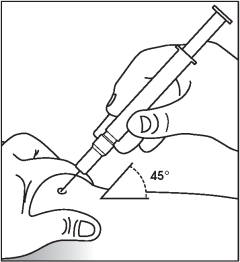
- 6. Keeping the skin fold between your fingers, slowly and evenly press the plunger.
- 7. After injecting the liquid, withdraw the needle and release the skin. Press the injection site with a dry, sterile gauze pad.
- 8. Dispose of unused medicine and any waste materials from it. Use each syringe for only one injection.
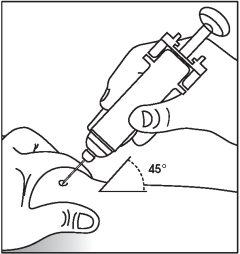
Prefilled syringe with needle safety device
- 6. Keeping the skin fold between your fingers, slowly and evenly press the plunger until the entire dose is released and until the plunger can no longer be pressed. Do not release pressure on the plunger!
- 7. After injecting the liquid, withdraw the needle while maintaining pressure on the plunger and then release the skin. Press the injection site with a dry, sterile gauze pad.
- 8. Release the plunger. The safety device will quickly cover the needle.
- 9. Dispose of unused medicine and any waste materials from it. Use each syringe for only one injection.

Не уверены, подходит ли вам это лекарство?
Обсудите симптомы и варианты лечения с врачом онлайн.

Уже начали прием и появились вопросы?
Обсудите свое состояние и дальнейшие шаги с врачом онлайн.

- Страна регистрации
- Форма выпускаInjectable solution, 1,000 IU/0.5 ML
- Код АТХB03XA01
- Действующее вещество
- Отпускается по рецептуДа
- Производитель
- Информация на этой странице носит справочный характер и не является медицинской консультацией. Перед началом приема лекарства обязательно проконсультируйтесь с врачом.
- Аналоги BINOKRITФорма выпуска: Injectable solution, 1000 IU/0.5 MLДействующее вещество: erythropoietinПроизводитель: MEDICE ARZNEIMITTEL PUETTER GMBH & CO.KGОтпускается по рецептуФорма выпуска: Injectable solution, 1.000 IU /0.5 MLДействующее вещество: erythropoietinПроизводитель: RATIOPHARM GMBHОтпускается по рецептуФорма выпуска: Injectable solution, 1000 IU/0.5MLДействующее вещество: erythropoietinПроизводитель: JANSSEN CILAG S.P.A.Отпускается по рецепту
Аналоги BINOKRIT в других странах
Лекарства с тем же действующим веществом, доступные в других странах.
Аналог BINOKRIT в Испания
Аналог BINOKRIT в Украина
Врачи онлайн по BINOKRIT
Обсудите применение BINOKRIT и возможные следующие шаги — по оценке врача.









Получите рецепт на BINOKRIT онлайн
Заполните форму за 2 минуты
Расскажите о симптомах, истории болезни и нужном препарате.
Выберите врача или мы назначим
Выберите специалиста или мы подберём ближайшего доступного врача.
Врач рассматривает ваш случай
Обычно в течение 30 минут. Может задать уточняющие вопросы в чате.
Получите в любой аптеке
Электронный рецепт отправляется на вашу почту — действителен по всей Польше.
Часто задаваемые вопросы
BINOKRIT требует рецепта в Италия. Вы можете уточнить у врача онлайн, подходит ли это лекарство для вашей ситуации.
Действующее вещество BINOKRIT — erythropoietin. Эта информация помогает определить лекарства с тем же составом под другими торговыми названиями.
BINOKRIT производится компанией SANDOZ GMBH. Упаковка и торговое название могут отличаться в зависимости от дистрибьютора.
Врачи, включая Семейные врачи, Психиатры, Дерматологи, Кардиологи, Эндокринологи, Гастроэнтерологи, Пульмонологи, Нефрологи, Ревматологи, Гематологи, Инфекционисты, Аллергологи, Гериатры, Педиатры, Онкологи, могут оценить целесообразность применения BINOKRIT с учетом вашей ситуации и местных правил. Вы можете записаться на онлайн-консультацию, чтобы обсудить возможные варианты.
Польша имеет хорошо развитую систему здравоохранения в крупных городах, таких как Варшава, Краков, Вроцлав и Гданьск. Аптеки широко доступны и работают в соответствии с действующим законодательством, обеспечивая доступ к рецептурным препаратам.
Вы можете купить BINOKRIT в Варшаве, Кракове, Вроцлаве или Гданьске в любой аптеке при наличии действующего рецепта.
Чтобы получить рецепт, вы можете воспользоваться Oladoctor:
Другие лекарства с тем же действующим веществом (erythropoietin) включают ABSEAMED, EPORATIO, EPREX. Они могут отличаться торговым названием или формой выпуска, но содержат одинаковый терапевтический компонент. Перед изменением лечения рекомендуется проконсультироваться с врачом.
