



VALCYTE 450 мг Фильм-coated таблетки

Рассмотрение рецепта онлайн
Врач рассмотрит ваш случай и примет решение о назначении рецепта, если это медицински оправдано.

Поговорите с врачом об этом лекарстве
Обсудите симптомы и возможные дальнейшие шаги на онлайн-консультации.



Инструкция по применению VALKYTE
Содержание инструкции
Valcyte 50 mg/mL powder for oral solution
valganciclovir
Read this leaflet carefully before you start to take this medicine because it contains important information for you.
- Keep this leaflet. You may need to read it again.
- If you have any questions, ask your doctor or pharmacist.
- This medicine has been prescribed for you only. Do not pass it on to others even if their symptoms are the same as yours because it could be harmful.
- If you get any side effects, even those not listed in this leaflet, tell your doctor or pharmacist. See section 4.
Contents of this leaflet:
- 1. What Valcyte is and what it is used for
- 2. What you need to know before you take Valcyte
- 3. How to take Valcyte
- 4. Possible side effects
- 5. How to store Valcyte
- 6. Contents of the pack and other information
1. What is Valcyte and what is it used for
Valcyte belongs to a group of medicines that works directly by preventing the growth of viruses.
Inside the body, the active ingredient of the powder, valganciclovir, is converted to ganciclovir.
Ganciclovir prevents a virus called cytomegalovirus (CMV) from multiplying and invading
healthy cells. In patients who have a weakened immune system, CMV can cause
an infection of the body's organs that can be life-threatening.
Valcyte is used:
- for the treatment of CMV infections of the retina of the eye in adult patients with acquired immunodeficiency syndrome (AIDS). CMV infection of the retina of the eye can cause visual problems and even blindness.
- to prevent CMV infections in adults and children not infected with CMV who have received an organ transplant from a person infected with CMV.
2. What you need to know before taking Valcyte
Do not take Valcyte
- if you are allergic to valganciclovir, ganciclovir or any of the other ingredients of this medicine (listed in section 6).
- if you are breastfeeding.
Warnings and precautions
Talk to your doctor or pharmacist before taking Valcyte:
- if you are allergic to acyclovir, penciclovir, valaciclovir or famciclovir. These are other medicines used to treat viral infections.
Be careful with Valcyte especially
- if you have a low number of white blood cells, red blood cells or platelets (small cells involved in blood clotting) in your blood. Your doctor will have blood tests done before you start treatment with Valcyte and other tests during the time you take the medicine.
- if you are having radiotherapy treatment.
- if you have a kidney problem. Your doctor may prescribe a reduced dose and decide to subject you to frequent blood tests during treatment.
Other medicines and Valcyte
Tell your doctor or pharmacist if you are taking, have recently taken or might take
any other medicines, including those available without a prescription.
If you take other medicines at the same time as Valcyte, the combination may change the
amount of drug that enters the bloodstream or may cause harmful effects. Tell your
doctor if you are already taking medicines that contain any of the following:
- imipenem-cilastatin (an antibiotic). Taking it at the same time as Valcyte can cause convulsions (seizures)
- zidovudine, didanosine, lamivudine, stavudine, tenofovir, abacavir, emtricitabine or similar drugs used to treat AIDS.
- adefovir or any other medicine used to treat hepatitis B
- probenecid (a medicine for gout). Taking probenecid and Valcyte at the same time can increase the amount of ganciclovir in the blood
- mycophenolate mofetil, cyclosporine or tacrolimus (used after transplants)
- vincristine, vinblastine, doxorubicin, hydroxyurea or similar drugs for treating cancer
- trimethoprim, trimethoprim/sulfamethoxazole combinations and dapsone (an antibiotic)
- pentamidine (a drug for treating parasitic or lung infections)
- flucytosine or amphotericin B (anti-fungal agents).
Valcyte with food and drink
Valcyte must be taken with food. If for some reason you cannot eat, you should still take
your usual dose of Valcyte.
Pregnancy, breastfeeding and fertility
Do not use this medicine if you are pregnant unless your doctor recommends it. If you are
pregnant or planning a pregnancy, tell your doctor. Taking Valcyte
during pregnancy could be harmful to the unborn child.
Do not take Valcyte if you are breastfeeding. If your doctor decides to administer Valcyte, stop
breastfeeding before taking the medicine.
During treatment with Valcyte and for at least 30 days after its conclusion, women of childbearing
potential must use an effective method of contraception.
Men with partners who could become pregnant must use a condom
during treatment with Valcyte and for 90 days after the end of treatment.
Driving and using machines
If you experience dizziness, fatigue, tremor or confusion while taking this
medicine, do not drive vehicles or use machines.
Ask your doctor or pharmacist for advice before taking any medicine.
Valcyte contains sodium benzoate and sodium (salt)
This medicine contains 100 mg of sodium benzoate in each 12 g vial, equivalent to 1 mg/mL
after reconstitution. Benzoate salt can increase jaundice (yellowing of the skin and eyes)
in newborns (up to 4 weeks of age).
For patients following a low-sodium diet: this medicine contains a
quantity of sodium equal to 0.188 mg/mL, i.e. essentially ‘sodium-free’.
3. How to take Valcyte
Always take this medicine exactly as your doctor has told you. If you have any doubts, ask your doctor or pharmacist.
Be careful when handling Valcyte solution. You must avoid contact of the solution with your skin or eyes. If the solution accidentally comes into contact with your skin, wash the area thoroughly with water and soap. If the solution accidentally comes into contact with your eyes, rinse your eyes thoroughly with water.
To avoid an overdose, you must adhere to the daily dose of oral solution that your doctor has
indicated to you.
Valcyte oral solution should, if possible, be taken with food - see section 2.
It is important that you use the dispenser provided in the package to measure the dose of
Valcyte. Do not use these dispensers for another product.There are two dispensers in the package, in case one of them is lost or damaged. Each dispenser is designed to measure a quantity of solution up to 10 mL (500 mg) with additions of solution equal to 0.5 mL (25 mg). 1 mL of Valcyte oral solution corresponds to 50 mg of valganciclovir.
After taking the dose, always wash the dispenser thoroughly and let it dry.
If both dispensers are lost or damaged, contact your doctor or pharmacist, who will advise you on how to continue taking the medicine.
Adults
Prevention of CMV disease in transplant patients
You should start taking this medicine within 10 days of transplantation. The usual dose is 900 mg
of Valcyte solution, to be taken ONCE a day. Use the provided dispenser and take two
doses of 9 mL (450 mg) (i.e. 2 dispensers filled to 9 mL [450 mg]) of solution. You should
continue with this dose for 100 days. If you have received a kidney transplant, your doctor may
advise you to take the dose for 200 days.
Treatment of active CMV retinitis in patients with AIDS (so-called induction treatment)
The usual dose is 900 mg of Valcyte solution, to be taken TWICE a day for 21 days
(three weeks). Use the provided dispenser and take two doses of 9 mL (450 mg) (i.e. 2 dispensers
filled to 9 mL [450 mg]) of solution in the morning and two doses of 9 mL (450 mg) (i.e. 2
dispensers filled to 9 mL [450 mg]) in the evening.
Do not take this dose for more than 21 days unless your doctor tells you to, as it may increase the risk of possible side effects.
Long-term treatment to prevent relapse of active infection in patients with AIDS and
CMV retinitis (so-called maintenance treatment)
The usual dose is 900 mg of Valcyte solution, to be taken ONCE a day. Use the
dispenser provided and take two doses of 9 mL (450 mg) of solution (i.e. 2 dispensers filled
to 9 mL [450 mg]). Try to take the solution every day at the same time. Your doctor will tell you
how long you will need to continue taking Valcyte. If the retinitis worsens at this dose, your doctor
may advise you to repeat the induction treatment (as described above) or decide to
prescribe another medicine to treat the CMV infection.
Elderly patients
There are no studies with Valcyte in elderly patients.
Patients with kidney problems
If your kidneys are not working properly, your doctor may tell you to take a lower dose of Valcyte solution per day. It is very importantthat you follow the dose prescribed by your doctor.
Patients with liver problems
There are no studies with Valcyte in patients with liver problems.
Use in children and adolescents
Prevention of CMV disease in transplant patients
Children should start taking this medicine within 10 days of transplantation. The dose
administered will depend on how big the child is and must be taken ONCE a day. The doctor will decide the most appropriate dose based on height, weight and kidney function
of your child. Administration of this dose should continue for a period of up to 100 days. If
your child has had a kidney transplant, the doctor may indicate taking the dose for
200 days.
Use the dispensers provided in the package to measure the dose of Valcyte solution.
How to administer the medicine
It is recommended that the Valcyte solution is prepared by the pharmacist before it is delivered to you.
Once the solution has been prepared, follow the instructions below to withdraw and take the
medicine.
DISPENSER
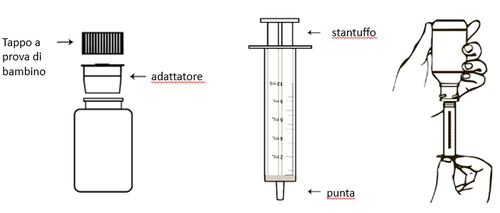
- 1. Shake the closed bottle thoroughly for about 5 seconds before each withdrawal.
- 2. Remove the child-resistant cap.
- 3. Before inserting the tip of the dispenser into the bottle adapter, push the plunger completely down towards the tip of the dispenser. Insert the tip well into the opening of the bottle adapter.
- 4. Turn the whole thing over (bottle and dispenser).
- 5. Slowly withdraw the plunger to draw the desired amount of solution into the dispenser (see illustration).
- 6. Turn the whole thing upright and slowly remove the dispenser from the bottle.
- 7. Administer the suspension directly into the mouth and swallow. Do not mix with other liquids before dispensing.
- 8. Close the bottle with the child-resistant cap after each use.
- 9. Immediately after administration: disassemble the dispenser, rinse it with running water and let it air dry before using it again.
Carefully avoid contact between the skin and the suspension. If such contact occurs, wash thoroughly with water and soap.
Do not use the solution after the expiry date, which corresponds to 49 days from the date of
preparation.
If you take more Valcyte than you should
If you have taken or think you have taken more Valcyte solution than you should, contact your
doctor or hospital immediately. Taking a dose higher than the recommended one can
cause serious side effects, especially affecting the blood or kidneys. You may need
hospital treatment.
If you forget to take Valcyte
If you forget to take the dose of Valcyte, take the forgotten dose as soon as possible and the next dose at the usual time. Do not take a double dose to make up for the missed dose.
If you stop taking Valcyte
Do not stop taking this medicine unless your doctor tells you to. If you have any doubts about using this medicine, ask your doctor or pharmacist.
4. Possible side effects
Like all medicines, this medicine can cause side effects, although not everyone will experience them.
Allergic reactions
Up to 1 in 1,000 patients may experience a sudden and severe allergic reaction to valganciclovir
(anaphylactic shock). STOPtreatment with Valcyte and go to the nearest hospital emergency room
if you experience any of the following reactions:
- intense, itchy rash (hives)
- sudden swelling of the throat, face, lips and mouth causing difficulty swallowing or breathing
- sudden swelling of the hands, feet or ankles.
Serious side effects
Tell your doctor immediately if you notice any of the following serious side effects. Your doctor may
advise you to stop taking Valcyte and you may need urgent medical treatment.
Very common:may affect more than 1 in 10 people
- reduction in the number of white blood cells - accompanied by signs of infection, such as sore throat, mouth ulcers or fever;
- reduction in the number of red blood cells - signs include shortness of breath or fatigue, palpitations or paleness of the skin. Common:may affect up to 1 in 10 people
- blood infection (sepsis) - signs include fever, chills, palpitations, confusion and difficulty speaking;
- reduction in the number of platelets - signs include increased ease of bleeding and bruising than normal, blood in the urine or stools, or bleeding gums which may be severe;
- severe reduction in the number of blood cells;
- pancreatitis - signs are severe abdominal pain that spreads to the back;
- convulsions. Uncommon:may affect up to 1 in 100 people
- insufficient production of blood cells in the bone marrow;
- hallucinations - hearing or seeing things that are not real;
- unusual thoughts or feelings, loss of contact with reality;
- kidney function impairment.
Side effects that have occurred during treatment with valganciclovir or ganciclovir
are listed below.
Other side effects
Tell your doctor, pharmacist or nurse if you notice any of the following
side effects:
Very common:may affect more than 1 in 10 people
- oral thrush and oral candidiasis
- upper respiratory tract infection (e.g. sinusitis, tonsillitis)
- loss of appetite
- headache
- cough
- shortness of breath
- diarrhoea
- feeling and state of unwellness
- abdominal pain
- eczema
- fatigue
- fever.
Common:may affect up to 1 in 10 people
- influenza
- urinary tract infection - signs include fever, more frequent urination, pain during urination
- skin and subcutaneous tissue infection
- mild allergic reaction - signs may include redness and itching of the skin
- weight loss
- depression, anxiety or confusion
- difficulty sleeping
- weakness or numbness in the hands or feet, which may affect balance
- changes in the sense of touch, tingling, prickling or burning sensation
- altered sense of taste
- chills
- eye inflammation (conjunctivitis), eye pain or vision problems
- ear pain
- low blood pressure, which may cause dizziness or fainting
- difficulty swallowing
- constipation, flatulence, indigestion, stomach pain, abdominal bloating
- mouth ulcers
- abnormalities in laboratory tests of liver and kidney function
- night sweats
- itching, rash
- hair loss
- back pain, muscle or joint pain, muscle spasms
- dizziness, weakness or general feeling of being unwell.
Uncommon:may affect up to 1 in 100 people
- agitation
- tremor, shivering
- hearing loss
- irregular heartbeat
- hives, dry skin
- blood in the urine
- infertility in men - see section “Pregnancy, breastfeeding and fertility”
- chest pain.
Separation of the inner layer of the eye (so-called "retinal detachment") has
occurred only in patients with AIDS treated with Valcyte for CMV infection.
Other side effects in children and adolescents
Side effects reported in children and adolescents are similar to those reported in
adults.
Reporting of side effects
If you get any side effects, even those not listed in this leaflet, tell your
doctor or pharmacist. You can also report side effects directly through
the national reporting system https://www.aifa.gov.it/content/segnalazioni-reazioni-avverse.
By reporting side effects you can help provide more information on the safety
of this medicine.
5. How to store Valcyte
Keep this medicine out of the sight and reach of children.
Do not use the powder after the expiry date which is stated on the carton and on the label of the vial
(Exp.). The expiry date refers to the last day of the month.
Powder: does not require any particular storage conditions.
Reconstituted solution: store in a refrigerator (2°C – 8°C).
The validity of the oral solution is 49 days. Do not use the solution beyond 49 days from the date of
preparation or after the expiry date that the pharmacist will write on the vial.
Do not dispose of any medicine in wastewater or household waste. Ask your pharmacist how to
dispose of medicines you no longer use. This will help protect the environment.
6. Package Contents and Other Information
What Valcyte contains
The active ingredient is valganciclovir hydrochloride. After the powder has dissolved, 1 mL of solution
contains 55 mg of valganciclovir hydrochloride, corresponding to 50 mg of valganciclovir (as
hydrochloride).
The excipients are povidone, fumaric acid, sodium benzoate (E211), sodium saccharin and mannitol,
all-fruit flavour [maltodextrin (corn), propylene glycol, gum arabic E414 and natural-identical
flavouring substances, particularly banana, pineapple and peach flavour].
Description of Valcyte and package contents
Valcyte powder is a granulate ranging in colour from white to almost yellow. An amount equivalent to 12 g of
powder is supplied in a glass bottle. After reconstitution, the volume of the solution is 100 mL and the
minimum usable volume is 88 mL. The solution is clear, from colourless to brown.
The package also contains a bottle adapter and 2 graduated dispensers up to 10 mL
(500 mg), with intervals of 0.5 mL (25 mg).
Package: one bottle containing 12 g of powder.
Marketing Authorisation Holder and Manufacturer
Marketing Authorisation Holder
CHEPLAPHARM Arzneimittel GmbH
Ziegelhof 24
17489 Greifswald
Germany
Manufacturer responsible for batch release
Roche Pharma AG
Emil-Barell-Strasse 1
Grenzach-Wyhlen
Germany
Prestige Promotion Verkaufsfoerderung & Werbeservice GmbH
Lindigstrasse 6
63801 Kleinostheim
Germany
Prestige Promotion Verkaufsfoerderung & Werbeservice GmbH
Borsigstrasse 2
63755 Alzenau
Germany
This medicinal product is authorised in the Member States of the European Economic Area and in the
United Kingdom (Northern Ireland) under the following denominations:
Valcyte: Austria, Belgium, Croatia, Cyprus, Czech Republic, Denmark, Finland, Germany, Greece,
Hungary, Iceland, Ireland, Italy, Liechtenstein, Lithuania, Luxembourg, Netherlands, Norway,
Poland, Slovenia, Spain, Sweden, United Kingdom (Northern Ireland)
RoValcyte: France, Portugal
This leaflet was last approved on .
________________________________________________________________________
The following information is intended for healthcare professionals only:
It is recommended that Valcyte solution is prepared by the pharmacist as follows:
- 1. Measure 91 mL of water in a graduated cylinder.
- 2. Remove the child-resistant cap, add the water to the bottle, close the bottle with the child-resistant cap and shake thoroughly until the powder has dissolved.
- 3. Remove the child-resistant cap and push the adapter into the neck of the bottle.
- 4. Close the bottle tightly with the child-resistant cap in order to ensure the proper fit of the adapter in the bottle and the child-resistant function of the cap.
- 5. Write the expiry date of the solution on the bottle label. During the reconstitution procedure and during the cleaning operations of the external surface of the bottle/cap and the table after the reconstitution procedure, it is recommended to wear disposable gloves.
Avoid inhalation or direct contact of the skin or mucous membranes with the powder and direct contact
with the solution. If this occurs, wash thoroughly with water and soap, rinse eyes with
running water.
Valcyte 450 mg film-coated tablets
valganciclovir
Read this leaflet carefully before you start taking this medicine, as it contains important information for you.
- Keep this leaflet. You may need to read it again.
- If you have any questions, ask your doctor or pharmacist.
- This medicine has been prescribed for you only. Do not pass it on to others, even if their symptoms are the same as yours, as it may be harmful.
- If you get any side effects, even those not listed in this leaflet, tell your doctor or pharmacist. See section 4.
Contents of this leaflet:
- 1. What Valcyte is and what it is used for
- 2. What you need to know before you take Valcyte
- 3. How to take Valcyte
- 4. Possible side effects
- 5. How to store Valcyte
- 6. Contents of the pack and other information
1. What is Valcyte and what it is used for
Valcyte belongs to a group of medicines that works directly by preventing the growth of viruses.
Inside the body, the active ingredient of the tablets, valganciclovir, is converted to
ganciclovir. Ganciclovir prevents a virus called cytomegalovirus (CMV) from multiplying and
invading healthy cells. In patients with a weakened immune system, CMV can cause
an infection of the body's organs that can be life-threatening.
Valcyte is used:
- for the treatment of CMV infections of the retina of the eye in adult patients with acquired immunodeficiency syndrome (AIDS). CMV infection of the retina of the eye can cause visual problems and even blindness.
- to prevent CMV infections in adults and children not infected with CMV who have received an organ transplant from a person infected with CMV.
2. What you need to know before you take Valcyte
Do not take Valcyte
- if you are allergic to valganciclovir, ganciclovir or any of the other ingredients of this medicine (listed in section 6).
- if you are breastfeeding.
Warnings and precautions:
Talk to your doctor or pharmacist before taking Valcyte
- if you are allergic to acyclovir, penciclovir, valaciclovir or famciclovir, other medicines used to treat viral infections.
Be especially careful with Valcyte
- if you have a low number of white blood cells, red blood cells or platelets (small cells involved in blood clotting) in your blood. Your doctor will have blood tests done
before you start treatment with Valcyte tablets and other tests during the time you
take the tablets.
- if you are having radiotherapy or haemodialysis.
- if you have a kidney problem. Your doctor may prescribe a reduced dose and may check your blood frequently during treatment.
- if you are taking ganciclovir capsules and your doctor wants to change your therapy to Valcyte tablets. It is important that you do not take a number of tablets higher than that prescribed by your doctor or you could risk an overdose.
Other medicines and Valcyte
Tell your doctor or pharmacist if you are taking, have recently taken or might take,
any other medicines, including those available without a prescription.
If you take other medicines at the same time as Valcyte, the combination may change the
amount of drug that enters the bloodstream or may cause harmful effects. Tell your doctor
if you are already taking medicines that contain any of the following:
- imipenem-cilastatin (an antibiotic). Taking it at the same time as Valcyte may cause convulsions (seizures)
- zidovudine, didanosine, lamivudine, stavudine, tenofovir, abacavir, emtricitabine or similar drugs used to treat AIDS
- adefovir or any other medicine used to treat hepatitis B
- probenecid (a medicine for gout). Taking probenecid and Valcyte at the same time may increase the amount of ganciclovir in the blood
- mycophenolate mofetil, cyclosporine or tacrolimus (used after transplants)
- vincristine, vinblastine, doxorubicin, hydroxyurea or similar drugs to treat cancer
- trimethoprim, trimethoprim/sulfamethoxazole combinations and dapsone (antibiotics)
- pentamidine (a medicine to treat parasitic or lung infections)
- flucytosine or amphotericin B (anti-fungal agents)
Valcyte with food and drink
Valcyte must be taken with food. If you cannot eat for any reason, you should still
take your dose of Valcyte as usual.
Pregnancy, breastfeeding and fertility
Do not take Valcyte if you are pregnant unless recommended by your doctor. If you are pregnant or
if you are planning to become pregnant, tell your doctor. Taking Valcyte during
pregnancy may be harmful to the unborn child.
You must not take Valcyte if you are breastfeeding. If your doctor decides to start you on treatment with
Valcyte, stop breastfeeding before taking the tablets.
During treatment with Valcyte and for at least 30 days after it has finished, women of childbearing potential must use effective contraception.
Men whose partner could become pregnant must use a condom during
treatment with Valcyte and for 90 days after the end of treatment.
Driving and using machines
Do not drive vehicles or use tools or machines if you feel dizzy, tired, shaky or
confused while taking this medicine.
Ask your doctor or pharmacist for advice before taking any medicine.
3. How to take Valcyte
Always take this medicine exactly as your doctor or pharmacist has told you. If you
have any doubts, ask your doctor or pharmacist.
Be careful when handling the tablets. Do not break or crush the tablets. The tablets
must be swallowed whole and, if possible, with food. If you accidentally touch any
damaged tablets, wash your hands thoroughly with soap and water. If the powder from the
tablets comes into contact with your eyes, rinse your eyes with sterile water or, if this is not available,
with clean water.
To avoid an overdose, you must follow the number of tablets indicated by your doctor.
Valcyte tablets should be taken with food, when possible (see section 2).
Adults:
Prevention of CMV disease in transplant patients
You should start taking this medicine within 10 days of the transplant. The usual dose is two
tablets taken ONCE a day. You should continue with this dose for up to 100 days
after the transplant. If you have received a kidney transplant, your doctor may advise you to take the
tablets for 200 days.
Treatment of active CMV retinitis in patients with AIDS (called induction treatment)
The usual dose of Valcyte is two tablets TWICE a day for 21 days (three weeks).
Do not take this dose for more than 21 days unless your doctor tells you to, as this
may increase the risk of side effects.
Long-term treatment to prevent relapse of active inflammation in patients with
AIDS with CMV retinitis (called maintenance treatment)
The usual dose is two tablets ONCE a day. You should try to take the tablets
at the same time each day. Your doctor will advise you how long you should continue to take
Valcyte. If your retinitis worsens while you are taking this dose, your doctor may tell you to
repeat the induction treatment (as above) or decide to give you another medicine to treat
CMV infection.
Elderly patients
There are no studies with Valcyte in elderly patients.
Patients with kidney problems
If your kidneys are not working properly, your doctor may order a lower number of
tablets per day or have you take the tablets only on certain days of the week. It is very
importantthat you only take the number of tablets prescribed by your doctor.
Patients with liver problems
There are no studies with Valcyte in patients with liver problems.
Use in children and adolescents
Prevention of CMV disease in transplant patients
Children should start taking this medicine within 10 days of the transplant. The dose
given will depend on how big the child is and should be taken ONCE a
day. Your doctor will decide the most appropriate dose based on height, weight and kidney function
of your child. Administration of this dose should continue for a period of up to 100 days. If
your child has had a kidney transplant, your doctor may indicate that the dose be taken for
200 days.
For children who are unable to swallow Valcyte film-coated tablets, Valcyte powder for oral solution can be used.
If you take more Valcyte than you should
If you have taken or think you have taken more tablets than you should, contact your doctor or
hospital immediately. Taking an excessive number of tablets can cause serious side effects,
especially affecting the blood or kidneys. You may need hospital treatment.
If you forget to take Valcyte
If you forget to take the tablets, take the missed dose as soon as you remember and take the next
dose at the usual time. Do not take a double dose to make up for a missed dose.
If you stop taking Valcyte
You should not stop taking this medicine unless your doctor tells you to. If you have any
doubts about using this medicine, ask your doctor or pharmacist.
4. Possible side effects
Like all medicines, this medicine can cause side effects, although not everybody gets them.
Allergic reactions
Up to 1 in 1,000 patients may have a sudden and severe allergic reaction to valganciclovir
(anaphylactic shock). STOP treatment with Valcyte and go to the nearest hospital emergency room
if you experience any of the following reactions:
- intense, itchy skin rash (urticaria)
- sudden swelling of the throat, face, lips and mouth causing difficulty swallowing or breathing
- sudden swelling of the hands, feet or ankles.
Serious side effects
Tell your doctor immediately if you notice any of the following serious side effects.
Your doctor may advise you to stop taking Valcyte and you may need urgent medical treatment.
Very common:may affect more than 1 in 10 people
- reduction in the number of white blood cells - accompanied by signs of infection, such as sore throat, mouth ulcers or fever;
- reduction in the number of red blood cells - signs include shortness of breath or fatigue, palpitations or paleness of the skin. Common:may affect up to 1 in 10 people
- blood infection (sepsis) - signs include fever, chills, palpitations, confusion and difficulty articulating words;
- reduction in the number of platelets - signs include increased ease of bleeding and bruising than normal, blood in the urine or stools or bleeding gums which may be severe;
- severe reduction in the number of blood cells;
- pancreatitis - signs are severe abdominal pain that spreads to the back;
- convulsions. Uncommon:may affect up to 1 in 100 people
- insufficient production of blood cells in the bone marrow;
- hallucinations - hearing or seeing things that are not real;
- unusual thoughts or feelings, loss of contact with reality;
- kidney failure.
The side effects that have occurred during treatment with valganciclovir or ganciclovir
are reported below.
Other side effects
Tell your doctor, pharmacist or nurse if you notice any of the following
side effects:
Very common:may affect more than 1 in 10 people
- oral thrush and oral candidiasis
- upper respiratory tract infection (e.g. sinusitis, tonsillitis)
- loss of appetite
- headache
- cough
- shortness of breath
- diarrhoea
- feeling and state of unwellness
- abdominal pain
- eczema
- fatigue
- fever.
Common:may affect up to 1 in 10 people
- influenza
- urinary tract infection - signs include fever, more frequent urination, pain when urinating
- skin and subcutaneous tissue infection
- mild allergic reaction - signs may include redness and itching of the skin
- weight loss
- depression, anxiety or confusion
- difficulty sleeping
- weakness or numbness in the hands or feet, which may affect balance
- changes in the sense of touch, tingling, prickling or burning sensation
- altered taste
- chills
- eye inflammation (conjunctivitis), eye pain or vision problems
- ear pain
- low blood pressure, which may cause dizziness or fainting
- problems swallowing
- constipation, flatulence, indigestion, stomach pain, abdominal bloating
- mouth ulcers
- abnormalities in laboratory tests relating to liver and kidney function
- night sweats
- itching, rash
- hair loss
- back pain, muscle or joint pain, muscle spasms
- dizziness, weakness or feeling generally unwell.
Uncommon:may affect up to 1 in 100 people
- agitation
- tremor, shivering
- deafness
- irregular heartbeat
- urticaria, dry skin
- blood in the urine
- infertility in men - see section “Pregnancy, breastfeeding and fertility”
- chest pain.
Separation of the inner lining of the eye (so-called "retinal detachment") has
occurred only in patients with AIDS treated with Valcyte for a CMV infection.
Other side effects in children and adolescents
The side effects reported in children and adolescents are similar to those reported in
adults.
Reporting of side effects
If you get any side effects, even those not listed in this leaflet, tell your
doctor or pharmacist. You can also report side effects directly through
the national reporting system at https://www.aifa.gov.it/content/segnalazioni-reazioni-
avverse . By reporting side effects you can help provide more information on
the safety of this medicine.
5. How to store Valcyte
Keep this medicine out of the sight and reach of children.
Do not use this medicine after the expiry date which is stated on the label and the carton after
“Exp”. The expiry date refers to the last day of the month.
This medicine does not require any particular storage conditions.
Medicines should not be disposed of via wastewater or household waste. Ask your
pharmacist how to dispose of medicines you no longer use. This will help protect the environment.
6. Package contents and other information
What Valcyte contains
The active ingredient is valganciclovir 450 mg, present as 496.3 mg of valganciclovir hydrochloride.
The excipients of the tablet are povidone K30, crospovidone, microcrystalline cellulose and stearic
acid. The excipients of the coating are hypromellose, titanium dioxide (E171), macrogol 400,
red iron oxide (E172) and polysorbate 80.
Description of the appearance of Valcyte and package contents
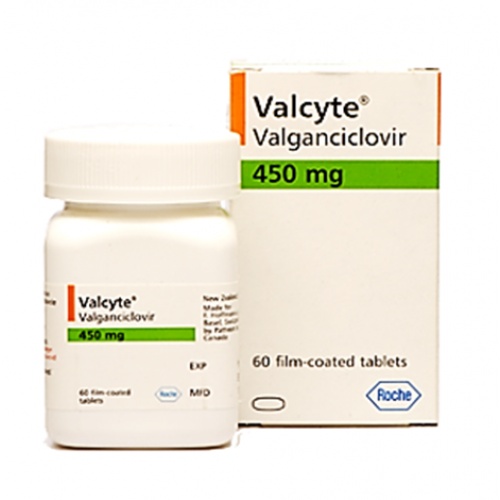
Valcyte tablets are film-coated tablets of oval shape, pink in color with “VGC” imprinted
on one side and “450” on the other.
They are packaged in bottles containing 60 film-coated tablets.
Marketing authorisation holder and manufacturer
Marketing authorisation holder
CHEPLAPHARM Arzneimittel GmbH
Ziegelhof 24
17489 Greifswald
Germany
Manufacturer responsible for batch release
Roche Pharma AG
Emil-Barell-Strasse 1
Grenzach-Wyhlen Germany
Prestige Promotion Verkaufsfoerderung & Werbeservice GmbH
Lindigstrasse 6
63801 Kleinostheim
Germany
Prestige Promotion Verkaufsfoerderung & Werbeservice GmbH
Borsigstrasse 2
63755 Alzenau
Germany
This medicinal product is authorised in the Member States of the European Economic Area andin the
United Kingdom (Northern Ireland)with the following denominations:
Valcyte: Austria, Belgium, Bulgaria, Croatia, Cyprus, Czech Republic, Denmark, , , Germany, Greece,
Hungary, , Ireland, Italy, Latvia, Liechtenstein, Lithuania, Luxembourg, Netherlands, Norway,
Slovenia, Spain, United Kingdom (Northern Ireland)
RoValcyte: France, Portugal
This leaflet was last updated on .

Не уверены, подходит ли вам это лекарство?
Обсудите симптомы и варианты лечения с врачом онлайн.

Уже начали прием и появились вопросы?
Обсудите свое состояние и дальнейшие шаги с врачом онлайн.
- Страна регистрации
- Форма выпускаFilm-coated tablet, 450 MG
- Код АТХJ05AB14
- Действующее вещество
- Отпускается по рецептуДа
- Производитель
- Информация на этой странице носит справочный характер и не является медицинской консультацией. Перед началом приема лекарства обязательно проконсультируйтесь с врачом.
- Аналоги VALKYTEФорма выпуска: Film-coated tablet, 450 MGДействующее вещество: ВалганцикловирПроизводитель: ACCORD HEALTHCARE, S.L.U.Отпускается по рецептуФорма выпуска: Film-coated tablet, 450 MGДействующее вещество: ВалганцикловирПроизводитель: AUROBINDO PHARMA (ITALIA) S.R.L.Отпускается по рецептуФорма выпуска: Film-coated tablet, 450 MGДействующее вещество: ВалганцикловирПроизводитель: MYLAN S.P.A.Отпускается по рецепту
Аналоги VALKYTE в других странах
Лекарства с тем же действующим веществом, доступные в других странах.
Аналог VALKYTE в Испания
Аналог VALKYTE в Польша
Аналог VALKYTE в Украина
Врачи онлайн по VALKYTE
Обсудите применение VALKYTE и возможные следующие шаги — по оценке врача.









Получите рецепт на VALKYTE онлайн
Заполните форму за 2 минуты
Расскажите о симптомах, истории болезни и нужном препарате.
Выберите врача или мы назначим
Выберите специалиста или мы подберём ближайшего доступного врача.
Врач рассматривает ваш случай
Обычно в течение 30 минут. Может задать уточняющие вопросы в чате.
Получите в любой аптеке
Электронный рецепт отправляется на вашу почту — действителен по всей Польше.
Часто задаваемые вопросы
VALKYTE требует рецепта в Италия. Вы можете уточнить у врача онлайн, подходит ли это лекарство для вашей ситуации.
Действующее вещество VALKYTE — Валганцикловир. Эта информация помогает определить лекарства с тем же составом под другими торговыми названиями.
VALKYTE производится компанией CHEPLAPHARM ARZNEIMITTEL GMBH. Упаковка и торговое название могут отличаться в зависимости от дистрибьютора.
Врачи, включая Семейные врачи, Психиатры, Дерматологи, Кардиологи, Эндокринологи, Гастроэнтерологи, Пульмонологи, Нефрологи, Ревматологи, Гематологи, Инфекционисты, Аллергологи, Гериатры, Педиатры, Онкологи, могут оценить целесообразность применения VALKYTE с учетом вашей ситуации и местных правил. Вы можете записаться на онлайн-консультацию, чтобы обсудить возможные варианты.
Польша имеет хорошо развитую систему здравоохранения в крупных городах, таких как Варшава, Краков, Вроцлав и Гданьск. Аптеки широко доступны и работают в соответствии с действующим законодательством, обеспечивая доступ к рецептурным препаратам.
Вы можете купить VALKYTE в Варшаве, Кракове, Вроцлаве или Гданьске в любой аптеке при наличии действующего рецепта.
Чтобы получить рецепт, вы можете воспользоваться Oladoctor:
Другие лекарства с тем же действующим веществом (Валганцикловир) включают VALGANKIKLOVIR AKKORD, VALGANKIKLOVIR AUROBINDO, VALGANKIKLOVIR MYLAN. Они могут отличаться торговым названием или формой выпуска, но содержат одинаковый терапевтический компонент. Перед изменением лечения рекомендуется проконсультироваться с врачом.
