



TRYDONIS 87 MCG/5 MCG/9 MCG Roztwór ciśnieniowy do inhalacji

Ocena recepty online
Lekarz przeanalizuje Twój przypadek i zdecyduje, czy wystawienie recepty jest medycznie uzasadnione.

Porozmawiaj z lekarzem o tym leku
Omów swoje objawy i opcje leczenia podczas szybkiej konsultacji online.



Jak stosować TRYDONIS
Treść ulotki
- Trydonis 87 micrograms/5 micrograms/9 micrograms pressurised solution for
- Trydonis 88 micrograms/5 micrograms/9 micrograms powder for inhalation
- What is Trydonis and what is it used for
- What you need to know before using Trydonis
- How to use Trydonis
- Open the sachet and take out the inhaler.
- Inspect the inhaler.
- Open the cap completely.
- Before inhaling, exhale as deeply as possible without straining.
- Lift the inhaler, bring it to your mouth and place your lips around the mouthpiece.
- Take a strong and deep breath through your mouth.
- If another dose is needed, repeat steps C.1 to C.3.
- Possible side effects
- How to store Trydonis
- Contents of the pack and other information
Trydonis 87 micrograms/5 micrograms/9 micrograms pressurised solution for
inhalation
beclometasone dipropionate/formoterol fumarate dihydrate/glycopyrronium
Read this leaflet carefully before you start to use this medicine as it contains important
information for you.
- Keep this leaflet. You may need to read it again.
- If you have any questions, ask your doctor or pharmacist.
- This medicine has been prescribed for you only. Do not pass it on to others, even if their symptoms are the same as yours, as it could be harmful.
- If you get any side effects, even those not listed in this leaflet, tell your doctor or pharmacist. See section 4.
Contents of this leaflet
- 1. What Trydonis is and what it is used for
- 2. What you need to know before you use Trydonis
- 3. How to use Trydonis
- 4. Possible side effects
- 5. How to store Trydonis
- 6. Contents of the pack and other information
1. What is Trydonis and what is it used for
Trydonis is a medicine that helps you breathe and contains three active ingredients:
- beclometasone dipropionate,
- formoterol fumarate dihydrate and
- glycopyrronium.
Beclometasone dipropionate belongs to a group of medicines called corticosteroids, which
have an anti-inflammatory action by reducing swelling and irritation in the lungs.
Formoterol and glycopyrronium are medicines called long-acting bronchodilators. They
relax the muscles of the airways through different mechanisms, which dilate the airways and
facilitate breathing.
Regular treatment with these three active ingredients helps to relieve and prevent symptoms such as
shortness of breath, wheezing and cough in adult patients with chronic obstructive pulmonary disease
(COPD). Trydonis is able to reduce exacerbations (sudden worsening) of COPD symptoms. COPD is a serious chronic disease characterized by obstruction of the airways and damage
to the lung alveoli, resulting in difficulty breathing.
2. What you need to know before using Trydonis
Do not use Trydonis
If you are allergic to beclometasone dipropionate, formoterol fumarate dihydrate and/or glycopyrronium or to
any of the other ingredients of this medicine (listed in section 6).
Warnings and precautions
Trydonis is used as maintenance therapy for chronic obstructive pulmonary disease. Do not use this
medicine to treat an acute worsening of shortness of breath or wheezing.
If your breathing gets worse
If you experience a worsening of shortness of breath or wheezing (a whistling sound when breathing) shortly after inhaling the medicine, stop using the Trydonis inhaler and use your “rescue” (emergency) fast-acting inhaler immediately. See your doctor immediately, who
will assess your symptoms and, if necessary, prescribe a different treatment.
See also section 4, “Possible side effects”.
If your lung disease gets worse
If your symptoms worsen or are difficult to control (e.g. if you need to use your “rescue” inhaler more
and more often), or if your “rescue” inhaler does not improve your symptoms, contact your doctor immediately. Your lung disease may be getting worse and
your doctor may prescribe a different treatment.
Talk to your doctor or pharmacist before using Trydonis:
- if you have heart problems, such as angina (heart pain, chest pain), a recent heart attack (myocardial infarction), heart failure, narrowing of the arteries around the heart (coronary artery disease), a heart valve disease or any other heart abnormality, or if you suffer from a condition called obstructive hypertrophic cardiomyopathy (or HCM, a disease characterized by an abnormality of the heart muscle).
- if you have irregular heartbeats such as fast heartbeat, palpitations or an abnormal electrocardiogram (ECG).
- if you have narrowing of the arteries (known as arteriosclerosis), if you have high blood pressure or if you have an aneurysm (an abnormal bulge in the wall of a blood vessel).
- if you have an overactive thyroid.
- if you have low levels of potassium in your blood (hypokalaemia). The combination of Trydonis with other medicines for COPD or diuretics (medicines to remove water from the body, for the treatment of heart disease or high blood pressure) can lead to a significant reduction in potassium levels in the blood. Therefore, your doctor may measure your blood potassium levels periodically.
- if you have any liver or kidney disease.
- if you have diabetes. High doses of formoterol can increase blood glucose levels; when you start using this medicine and periodically during treatment you may therefore need to have further blood tests to measure your blood sugar.
- if you have a tumor of the adrenal glands (called a pheochromocytoma).
- if you are going to have an anaesthetic. Depending on the type of anaesthetic, it may be necessary to stop treatment with Trydonis at least 12 hours before the anaesthetic.
- if you have or have been treated for tuberculosis (TB) or if you have a chest infection.
- if you have an eye problem called closed-angle glaucoma.
- if you have difficulty urinating.
- if you have an infection of the mouth or throat.
If any of these conditions apply to you, tell your doctor before using Trydonis.
If you have or have had any medical problem or allergy, or if you are not sure if you can
use Trydonis, ask your doctor or pharmacist before using the inhaler.
If you are already using Trydonis
If you are using Trydonis or high doses of other inhaled corticosteroids for prolonged periods and you find yourself in a stressful situation (e.g. hospitalisation after an injury, in case of serious injuries or before surgery), you may need a larger amount of this
medicine. In this situation, your doctor may need to increase the dose of corticosteroids
to combat the stress and may prescribe them in tablet or injection form.
Contact your doctor if you experience blurred vision or other visual disturbances.
Children and adolescents
Do not give this medicine to children and adolescents under 18 years of age.
Other medicines and Trydonis
Tell your doctor or pharmacist if you are taking, have recently taken or might take
any other medicines. This includes medicines similar to Trydonis used for your lung disease.
Some medicines can increase the effects of Trydonis and your doctor may want to monitor you closely if you are taking these medicines (including some medicines for the human immunodeficiency virus (HIV): ritonavir, cobicistat).
Do not use this medicine with a beta-blocker(used to treat certain
heart problems, such as angina, or to lower blood pressure), unless your doctor has chosen a beta-blocker that does not affect your breathing. Beta-blockers (including eye drops containing beta-blockers) can reduce or completely cancel out the effects of formoterol. On the other hand,
using other beta2-agonists (which have a similar action to formoterol) can
increase the effects of formoterol.
The use of Trydonis together with:
- medicines for the treatment
- of irregular heartbeats (quinidine, disopyramide, procainamide),
- of allergic reactions (antihistamines),
- of symptoms of depression or mental disorders such as monoamine oxidase inhibitors (e.g. phenelzine and isocarboxazide), tricyclic antidepressants (e.g. amitriptyline and imipramine), phenothiazines can cause changes in the electrocardiogram (ECG). They can also increase the risk of irregular heartbeats (ventricular arrhythmias).
- medicines for the treatment of Parkinson's disease (levodopa), for the treatment of an insufficient function of the thyroid gland (levothyroxine), medicines containing oxytocin (which cause the uterus to contract) and alcohol, can increase the likelihood of cardiac side effects due to formoterol.
- monoamine oxidase inhibitors (MAOIs), including medicines with similar properties such as furazolidone and procarbazine, used to treat mental disorders, can increase blood pressure.
- medicines for the treatment of heart disease (digoxin), can lower potassium levels in the blood. This can increase the likelihood of irregular heartbeats.
- other medicines used for the treatment of COPD (theophylline, aminophylline or corticosteroids) and diuretics, can lower potassium levels in the blood.
- certain anaesthetics, can increase the risk of irregular heartbeats.
- disulfiram, a medicine used to treat people suffering from alcoholism (alcohol dependence problems) or metronidazole, an antibiotic for the treatment of an infection, can cause undesirable effects (e.g. nausea, vomiting, stomach pain) due to the small amount of alcohol present in Trydonis.
Pregnancy and breastfeeding
If you are pregnant, suspect you may be pregnant or are planning to become pregnant, ask your doctor or pharmacist for advice before using this medicine.
Use Trydonis during pregnancy only if your doctor has advised you to. It is preferable to avoid
using Trydonis during labour, due to the inhibitory effect of formoterol on uterine contractions.
Do not use Trydonis while breastfeeding. You and your doctor must decide whether to stop
breastfeeding or stop/avoid treatment with Trydonis, taking into account
the benefit of breastfeeding for the baby and the benefit of treatment for you.
Driving and using machines
It is unlikely that Trydonis will affect your ability to drive and use machines.
Trydonis contains ethanol
Trydonis contains 8.856 mg of alcohol (ethanol) in each actuation, which is equivalent to 17.712 mg per
two-actuation dose. The amount in two actuations of this medicine is equivalent to that
contained in less than 1 mL of wine or beer. The small amount of alcohol in this medicine will not
produce significant effects.
3. How to use Trydonis
Use this medicine following exactly the instructions of your doctor or pharmacist. If you have
any doubts, ask your doctor or pharmacist.
The recommended dose is two inhalations in the morning and two inhalations in the evening.
If you feel that the medicine is not very effective, consult your doctor.
If you have previously used a different inhaler containing beclometasone dipropionate, ask your
doctor for advice, because the effective dose of beclometasone dipropionate contained in Trydonis for the treatment
of COPD may be lower than that of other inhalers.
Route of administration
Trydonis is for inhalation use.
You must inhale the medicine through your mouth: in this way, the medicine reaches directly your
lungs.
This medicine is contained in a pressurised container inside a plastic inhaler
with a mouthpiece.
Trydonis is available in three different containers:
- a container with 60 actuations
- a container with 120 actuations
- a container with 180 actuations.
If you have been prescribed a container with 60 or 120 actuations
On the back of the inhaler there is a dose counter that indicates the number of doses remaining. Each time you
press on the pressurised container, a dose of the medicine is delivered, decreasing the
dose counter by one unit. Be careful not to drop the inhaler, as this may cause a
decrease of one unit in the dose counter numbering.
If you have been prescribed a container with 180 actuations
On the back of the inhaler there is an indicator that indicates the number of doses remaining. Each time you
press on the pressurised container, a dose of the medicine is delivered, and the dose
indicator rotates slightly. The number of actuations remaining is reported in intervals of 20. Be careful not
to drop the inhaler, as this may cause a decrease in the numbering of the dose indicator.
Checking the inhaler’s operation
Before using it for the first time, you must test the inhaler as described below to verify that
it works correctly.
- 1. Depending on the type of container that has been prescribed to you, check that the dose counter indicates the figure 61 or 121 and that the dose indicator indicates the figure 180
- 2. Remove the protective cap from the mouthpiece
- 3. Hold the inhaler in a vertical position, with the mouthpiece facing downwards
- 4. Point the mouthpiece away from yourself and press firmly on the pressurised container to deliver a dose.
- 5. Check the dose counter or the dose indicator. If you are using the inhaler for the first time, the counter must indicate:
60
- if you use the 120container
- if you use the 180container
- if you use the 60 actuations 120 actuations 180 actuations container
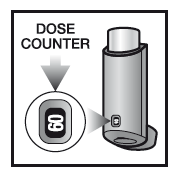
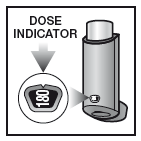
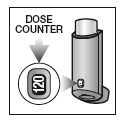
How to use the inhaler
During inhalation, stand or sit with your torso upright.
IMPORTANT: do not perform steps 2 to 5 too quickly.
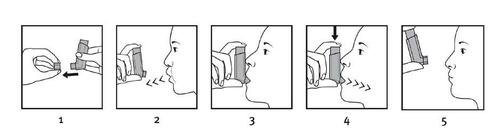
- 1. Remove the protective cap from the mouthpiece and check that the mouthpiece is clean and free of dust and dirt.
- 2. Exhale as slowly and deeply as possible, so as to empty your lungs.
- 3. Hold the inhaler in a vertical position, with the mouthpiece facing downwards, and hold the mouthpiece between your teeth without biting it. Then close your lips around the mouthpiece with your tongue lowered underneath it.
- 4. Take a slow and deep breath through your mouth to fill your lungs with air (this inhalation should last about 4-5 seconds). Immediately after starting to inhale, press firmly on the top of the pressurised container to deliver a dose.
- 5. Hold your breath as long as possible, then remove the inhaler from your mouth and exhale slowly. Do not exhale into the inhaler.
- 6. Check that the dose counter (60/120 actuations) has decreased by one unit or that the dose indicator (180 actuations) has rotated slightly.
For the second dose, hold the inhaler in a vertical position for about half a minute and then repeat the
steps from 2 to 5.
If you see a sort of “mist” coming out of the top of the inhaler or from the sides of your mouth,
it means that Trydonis will not reach your lungs as it should. Take another dose following the
instructions starting from step 2.
After use, close with the protective cap.
To prevent a fungal infection in your mouth and throat, rinse your mouth or gargle with
water without swallowing it or brush your teeth each time you have used the inhaler.
When to get a new inhaler
Replace the inhaler when the dose counter or dose indicator indicates the number 20. Do not use the inhaler anymore when the dose counter or dose indicator indicates 0, because the medicine remaining
in the inhaler may be insufficient to deliver a full dose.
If you have a weak grip, it may be easier to hold the inhaler with both hands: hold the
top of the inhaler with both index fingers and the bottom with both thumbs.
If you have difficulty using the inhaler while starting to inhale, you can use the spacer
AeroChamber Plus. Ask your doctor or pharmacist for information about this device.
carefully read the instructions for use and cleaning of the AeroChamber Plus spacer.
Cleaning the Trydonis inhaler
Clean the inhaler once a week.
- 1. Do not remove the pressurised container from the inhaler and do not use water or other liquids to clean the inhaler.
- 2. Remove the protective cap from the mouthpiece by pulling it away from the inhaler.
- 3. Clean the inside and outside of the mouthpiece and the inhaler with a clean, dry wipe or cloth.
- 4. Reclose the mouthpiece with the protective cap.
If you use more Trydonis than you should
It is important that you take the dose as prescribed by your doctor. Do not take a dose higher than that
prescribed without consulting your doctor.
If you use more Trydonis than you should, side effects may occur, as described in
paragraph 4.
Inform your doctor if you have used more Trydonis than you should and if you experience any of these
symptoms. The doctor may decide to perform some blood tests.
If you forget to use Trydonis
Use it as soon as you remember. If it is almost time for the next dose, do not take the forgotten dose,
but take the next dose at the scheduled time. Do not double the dose.
If you stop treatment with Trydonis
It is important to use Trydonis every day. Do not stop treatment with Trydonis or reduce the
dose, even if you feel better or have no symptoms. If you want to do so, consult your doctor.
If you have any doubts about using this medicine, ask your doctor or pharmacist.
4. Possible side effects
Like all medicines, this medicine can cause side effects, although not everybody gets them.
Immediately after using Trydonis there is a risk that shortness of breath and wheezing
may get worse, and this effect is known as paradoxical bronchospasm (can affect up to 1 in
- 1,000). If this happens, stop treatment with Trydonis and immediately use your fast-acting ‘reliever’ inhaler to treat the shortness of breath and wheezing. See your doctor immediately.
Tell your doctor immediately
- if you get any allergic reaction such as skin allergies, urticaria, itchy skin, rash (can affect up to 1 in 100 people), skin redness, swelling of the skin or mucous membranes and particularly of the eyes, face, lips and throat (can affect up to 1 in 1,000).
- if you experience eye pain or discomfort, transient blurred vision, seeing halos or coloured images associated with red eyes. These can be signs of an acute attack of closed-angle glaucoma (can affect up to 1 in 10,000).
Tell your doctor if any of the following symptoms occur during use of Trydonis, because
they may be symptoms of a lung infection (can affect up to 1 in 10):
- fever or chills
- increased mucus production, change in mucus colour
- increased cough or difficulty breathing.
The possible side effects are listed below in order of frequency.
Common(may affect up to 1 in 10 people)
- sore throat
- runny or blocked nose and sneezing
- fungal infections of the mouth. Rinsing your mouth or gargling with water or brushing your teeth immediately after inhalation may help prevent these side effects
- hoarseness
- headache
- urinary tract infection.
Uncommon(may affect up to 1 in 100 people)
- flu
- sinus inflammation
- itchy nose, runny or blocked nose
- fungal infections of the throat or esophagus
- fungal infections of the vagina
- restlessness
- tremor
- dizziness
- abnormality or reduction of the sense of taste
- numbness
- throat irritation
- nosebleeds
- redness of the pharynx
- dry mouth
- diarrhea
- difficulty swallowing
- feeling unwell
- stomach discomfort
- stomach pain after meals
- burning sensation on the lips
- tooth decay
- rash, urticaria, itchy skin
- inflammation of the mucous membranes of the mouth, with or without ulcers
- increased sweating
- muscle cramps and muscle pain
- pain in the arms or legs
- pain in the muscles, bones or joints of the chest
- fatigue
- increased blood pressure
- reduced levels of some blood components: a type of white blood cells called granulocytes, potassium or cortisol
- increased levels of some blood components: glucose, C-reactive protein, platelet count, insulin, free fatty acids or ketones.
Rare(may affect up to 1 in 1,000 people)
- fungal infections of the chest
- loss of appetite
- sleep disorder (sleeps too little or too much)
- stabbing chest pain
- feeling of a missed heartbeat or extra beats, heartbeat too slow
- worsening of asthma
- ear inflammation
- irregular heartbeat
- changes in electrocardiogram (ECG)
- heartbeat too fast and heart rhythm disturbances
- palpitations (feeling of abnormal heartbeat)
- redness of the face
- increased blood flow in some tissues of the body
- asthma attack
- cough and productive cough
- bleeding from a vessel into the surrounding tissues
- decreased blood pressure
- weakness
- pain at the back of the mouth and throat
- inflammation of the pharynx
- dry throat
- painful and frequent urination
- difficulty and pain when urinating
- kidney inflammation.
Very rare(may affect up to 1 in 10,000 people)
- low number of certain blood cells called platelets
- shortness of breath or difficulty breathing
- swelling of the hands and feet
- delayed growth in children and adolescents.
Not known(frequency cannot be estimated from the available data)
- blurred vision
The use of inhaled corticosteroids for prolonged periods may, in very rare cases, cause effects on
the whole body:
- problems with the function of the adrenal glands (adrenal suppression)
- reduction in bone mineral density (thinning of the bones)
- opacity of the lens of the eye (cataract).
Trydonis does not contain high doses of inhaled corticosteroid, but your doctor may want to measure
cortisol levels in your blood periodically.
With high-dose inhaled corticosteroids used for prolonged periods, the following side effects may also occur, but the frequency is not known (frequency cannot be defined on the
basis of available data):
- depression
- feeling of worry, nervousness, overexcitement or irritability. These events are more likely in children.
Reporting of side effects
If you get any side effects, even those not listed in this leaflet, tell your
doctor or pharmacist. You can also report side effects directly through the national reporting system detailed in
Appendix V. By reporting side effects you can help provide more information on the safety of this medicine.
5. How to store Trydonis
Keep this medicine out of the sight and reach of children.
Do not use this medicine after the expiry date which is stated on the label and the packaging after
Exp. The expiry date refers to the last day of that month.
Do not freeze.
Do not expose to temperatures above 50°C.
Do not puncture the pressurised container.
Before delivery to the patient:
Store in a refrigerator (2°C-8°C).
After dispensing (having received the medicine from the pharmacist):
Pressurised container with 60 doses: store the inhaler at a temperature
below 25°C for a maximum of 2 months.
Pressurised container with 120 (from a
single or multi-pack) and 180 doses: store the inhaler at a temperature
below 25°C for a maximum of 4 months.
Do not dispose of any medicine in wastewater or household waste. Ask your pharmacist how to
dispose of medicines you no longer use. This will help protect the environment.
6. Contents of the pack and other information
What Trydonis contains
The active ingredients are beclometasone dipropionate, formoterol fumarate dihydrate and glycopyrronium.
Each delivered dose (the dose that comes out of the mouthpiece) contains 87 micrograms of beclometasone
dipropionate, 5 micrograms of formoterol fumarate dihydrate and 9 micrograms of glycopyrronium
(as 11 micrograms of glycopyrronium bromide).
Each metered dose (the dose delivered by the metering valve) contains 100 micrograms of
beclometasone dipropionate, 6 micrograms of formoterol fumarate dihydrate and 10 micrograms of
glycopyrronium (as 12.5 micrograms of glycopyrronium bromide).
The other ingredients are anhydrous ethanol (see section 2), hydrochloric acid, propellant:
norflurane.
Description of Trydonis and contents of the pack
Trydonis is a pressurized solution for inhalation.
Trydonis is supplied in a pressurized container (coated in aluminium) with a metering valve. The
pressurized container is inserted inside a plastic inhaler. This includes a
mouthpiece equipped with a protective plastic cap and a dose counter (60 or
120 actuations) or a dose indicator (180 actuations).
Each pack contains a pressurized container delivering 60 doses, 120 doses or
180 doses. Multipacks containing 240 doses (2 pressurized containers of 120 doses each) or 360 doses (3 pressurized containers of 120 doses each) are also available.
Not all pack sizes may be marketed.
Marketing Authorisation Holder
Chiesi Farmaceutici S.p.A.
Via Palermo 26/A
43122 Parma
Italy
Manufacturer
Chiesi Farmaceutici S.p.A.
Via San Leonardo 96
43122 Parma
Italy
Chiesi SAS
2 rue des Docteurs Alberto et Paolo Chiesi
41260 La Chaussée Saint Victor
France
Chiesi Pharmaceuticals GmbH
Gonzagagasse 16/16
1010 Wien
Austria
For further information on this medicine, contact the local representative of the marketing
authorisation holder:
België/Belgique/Belgien
Chiesi sa/nv
Tél/Tel: + 32 (0)2 788 42 00
Lietuva
Chiesi Pharmaceuticals GmbH
Tel: + 43 1 4073919
България
Chiesi Bulgaria EOOD
Тел.: + 359 29201205
Luxembourg/Luxemburg
Chiesi sa/nv
Tél/Tel: + 32 (0)2 788 42 00
Česká republika
Chiesi CZ s.r.o.
Tel: + 420 261221745
Magyarország
Chiesi Hungary Kft.
Tel.: + 36-1-429 1060
Danmark
Chiesi Pharma AB
Tlf: + 46 8 753 35 20
Malta
Chiesi Farmaceutici S.p.A.
Tel: + 39 0521 2791
Deutschland
Chiesi GmbH
Tel: + 49 40 89724-0
Nederland
Chiesi Pharmaceuticals B.V.
Tel: + 31 88 501 64 00
Eesti
Chiesi Pharmaceuticals GmbH
Tel: + 43 1 4073919
Norge
Chiesi Pharma AB
Tlf: + 46 8 753 35 20
Österreich
Chiesi Pharmaceuticals GmbH
Tel: + 43 1 4073919
España
Laboratorios BIAL, S.A.
Tel: + 34 91 562 41 96
Ελλάδα
Chiesi Hellas AEBE
Τηλ: + 30 210 6179763
Polska
Chiesi Poland Sp. z.o.o.
Tel.: + 48 22 620 1421
France
Chiesi S.A.S.
Tél: + 33 1 47688899
Portugal
Chiesi Farmaceutici S.p.A.
Tel: + 39 0521 2791
Hrvatska
Chiesi Pharmaceuticals GmbH
Tel: + 43 1 4073919
România
Chiesi Romania S.R.L.
Tel: + 40 212023642
Ireland
Chiesi Farmaceutici S.p.A.
Tel: + 39 0521 2791
Slovenija
CHIESI SLOVENIJA, d.o.o.
Tel: + 386-1-43 00 901
Ísland
Chiesi Pharma AB
Sími: +46 8 753 35 20
Slovenská republika
Chiesi Slovakia s.r.o.
Tel: + 421 259300060
Italia
Chiesi Italia S.p.A.
Tel: + 39 0521 2791
Suomi/Finland
Chiesi Pharma AB
Puh/Tel: +46 8 753 35 20
Κύπρος
Chiesi Farmaceutici S.p.A.
Τηλ: + 39 0521 2791
Sverige
Chiesi Pharma AB
Tel: +46 8 753 35 20
Latvija
Chiesi Pharmaceuticals GmbH
Tel: + 43 1 4073919
United Kingdom (Northern Ireland)
Chiesi Farmaceutici S.p.A.
Tel: + 39 0521 2791
Other sources of information
More detailed information on this medicine is available on the website of the European Medicines
Agency, http://www.ema.europa.eu .
Trydonis 88 micrograms/5 micrograms/9 micrograms powder for inhalation
beclometasone dipropionate/formoterol fumarate dihydrate/glycopyrronium
Read this leaflet carefully before you start using this medicine as it contains important
information for you.
- Keep this leaflet. You may need to read it again.
- If you have any questions, ask your doctor or pharmacist.
- This medicine has been prescribed for you only. Do not pass it on to others, even if they have the same symptoms as you, as it may be harmful.
- If you get any side effects, even those not listed in this leaflet, tell your doctor or pharmacist. See section 4.
Contents of this leaflet
- 1. What Trydonis is and what it is used for
- 2. What you need to know before you use Trydonis
- 3. How to use Trydonis
- 4. Possible side effects
- 5. How to store Trydonis
- 6. Contents of the pack and other information
1. What is Trydonis and what is it used for
Trydonis is a medicine that helps you breathe and contains three active ingredients:
- beclometasone dipropionate,
- formoterol fumarate dihydrate,
- glycopyrronium.
Beclometasone dipropionate belongs to a group of medicines called corticosteroids, which
have an anti-inflammatory action by reducing swelling and irritation in the lungs.
Formoterol and glycopyrronium are medicines called long-acting bronchodilators. They
relax the muscles of the airways through different mechanisms, which dilate the airways and
facilitate breathing.
Regular treatment with these three active ingredients helps to relieve and prevent symptoms such as
shortness of breath, wheezing and cough in adult patients with chronic obstructive pulmonary disease
(COPD). Trydonis is able to reduce exacerbations (sudden worsening) of COPD symptoms. COPD is a serious chronic disease characterized by obstruction of the airways and damage
to the lung alveoli, resulting in difficulty breathing.
2. What you need to know before using Trydonis
Do not use Trydonis
If you are allergic to beclometasone dipropionate, formoterol fumarate dihydrate and/or glycopyrronium or to
any of the other ingredients of this medicine (listed in section 6).
Warnings and precautions
Trydonis is used as maintenance therapy for chronic obstructive pulmonary disease. Do not use this
medicine to treat an acute worsening of breathlessness or wheezing.
If your breathing gets worse
If you experience a worsening of shortness of breath or wheezing (a whistling sound during
breathing) immediately after inhaling the medicine, stop using the Trydonis inhaler and use your
“rescue” (emergency) fast-acting inhaler immediately. Contact your doctor immediately, who will
assess your symptoms and, if necessary, prescribe different treatment.
See also section 4, “Possible side effects”.
If your lung disease gets worse
If your symptoms worsen or are difficult to control (e.g. if you need to use your “rescue” inhaler more
often), or if your “rescue” inhaler does not improve your symptoms, contact your doctor immediately. Your lung disease may be getting worse and
your doctor may prescribe different treatment.
Talk to your doctor or pharmacist before using Trydonis:
- if you have heart problems, such as angina (heart pain, chest pain), a recent heart attack (myocardial infarction), heart failure, narrowing of the arteries around the heart (coronary artery disease), heart valve disease or any other heart abnormality, or if you suffer from a condition called obstructive hypertrophic cardiomyopathy (or HCM, a disease characterized by an abnormality of the heart muscle).
- if you have irregular heartbeats such as fast heartbeat, palpitations or if your electrocardiogram (ECG) is abnormal.
- if you have narrowing of the arteries (known as arteriosclerosis), if you have high blood pressure or if you have an aneurysm (an abnormal bulge in the wall of a blood vessel).
- if you have an overactive thyroid.
- if you have low levels of potassium in your blood (hypokalaemia). The combination of Trydonis with other medicines for your lungs or diuretics (medicines to remove water from the body, for the treatment of heart disease or high blood pressure) can lead to a significant reduction in potassium levels in your blood. Therefore, your doctor may measure your potassium levels periodically.
- if you have any liver or kidney disease.
- if you have diabetes. High doses of formoterol can raise blood glucose levels; when you start using this medicine and periodically during treatment you may therefore need to undergo further blood tests to measure your blood sugar.
- if you have a tumor of the adrenal glands (called a pheochromocytoma).
- if you are going to have an anaesthetic. Depending on the type of anaesthetic, it may be necessary to stop treatment with Trydonis at least 12 hours before the anaesthetic.
- if you have or have been treated for tuberculosis (TB) or if you have a chest infection.
- if you have an eye problem called closed-angle glaucoma.
- if you have difficulty urinating.
- if you have an infection of the mouth or throat.
If any of these conditions apply to you, tell your doctor before using Trydonis.
If you have or have had any medical problem or allergy, or if you are not sure if you can
use Trydonis, ask your doctor or pharmacist before using the inhaler.
If you are already using Trydonis
If you are using Trydonis or high doses of other inhaled corticosteroids for prolonged periods and you find
yourself in a stressful situation (e.g. hospitalisation after an injury, in case of serious injuries or before
surgery), you may need a larger amount of this medicine. In this situation, your doctor may need to increase the dose of corticosteroids
to combat the stress and may prescribe them in tablet or injection form.
Contact your doctor if you experience blurred vision or other visual disturbances.
Children and adolescents
Do not give this medicine to children and adolescents under 18 years of age.
Other medicines and Trydonis
Tell your doctor or pharmacist if you are taking, have recently taken or might take
any other medicines. This includes medicines similar to Trydonis used for your lung disease.
Some medicines can increase the effects of Trydonis and your doctor may want to monitor you closely if you are taking these medicines (including some medicines for the human immunodeficiency virus (HIV): ritonavir, cobicistat).
Do not use this medicine with a beta-blocker(used to treat certain
heart problems, such as angina, or to lower blood pressure), unless your doctor has chosen a beta-blocker that does not affect your breathing. Beta-blockers (including eye drops containing beta-blockers) can reduce or completely block the effects of formoterol. On the other hand,
using other beta2-agonists (which have a similar action to formoterol) can
increase the effects of formoterol.
The use of Trydonis together with:
- medicines for the treatment
- of heart rhythm abnormalities (quinidine, disopyramide, procainamide),
- of allergic reactions (antihistamines),
- of symptoms of depression or mental disorders such as monoamine oxidase inhibitors (e.g. phenelzine and isocarboxazide), tricyclic antidepressants (e.g. amitriptyline and imipramine), phenothiazines can cause changes in the electrocardiogram (ECG). They can also increase the risk of heart rhythm disturbances (ventricular arrhythmias).
- medicines for the treatment of Parkinson's disease (levodopa), for the treatment of insufficient thyroid function (levothyroxine), medicines containing oxytocin (which cause the uterus to contract) and alcohol, can increase the likelihood of cardiac side effects due to formoterol.
- monoamine oxidase inhibitors (MAOIs), including medicines with similar properties such as furazolidone and procarbazine, used to treat mental disorders, can raise blood pressure.
- medicines for the treatment of heart disease (digoxin), can lower potassium levels in the blood. This can increase the likelihood of heart rhythm abnormalities.
- other medicines used for the treatment of chronic obstructive pulmonary disease (theophylline, aminophylline or corticosteroids) and diuretics, can lower potassium levels in the blood.
- some anaesthetics, can increase the risk of heart rhythm abnormalities.
Pregnancy and breastfeeding
If you are pregnant, suspect you may be pregnant or are planning to become pregnant, ask your doctor or pharmacist for advice before using this medicine.
Use Trydonis during pregnancy only if your doctor has recommended it. It is preferable to avoid
using Trydonis during labour, due to the inhibitory effect of formoterol on uterine contractions.
Do not use Trydonis while breastfeeding. You and your doctor must decide whether to stop
breastfeeding or stop/avoid treatment with Trydonis, taking into account
the benefit of breastfeeding for the baby and the benefit of treatment for you.
Driving and using machines
It is unlikely that Trydonis will affect your ability to drive and use machines.
Trydonis contains lactose
Lactose contains small amounts of milk proteins which can cause allergic reactions.
3. How to use Trydonis
Use this medicine following the instructions of your doctor or pharmacist exactly. If you have any
doubts, consult your doctor or pharmacist.
The recommended dose is two inhalations in the morning and two inhalations in the evening.
If you feel that the medicine is not very effective, consult your doctor.
If you have previously used a different inhaler containing beclometasone dipropionate, ask your
doctor for advice, because the effective dose of beclometasone dipropionate contained in Trydonis for the treatment
of your obstructive pulmonary disease may be lower than that of other inhalers.
Route of administration
Trydonis is for inhalation use.
You must inhale the medicine through your mouth: in this way, the medicine reaches directly your
lungs.
Instructions for use
For information on the contents of the pack, see paragraph 6.
If the contents of the pack are not the same as described in paragraph 6, return the
inhaler to the person who provided it to you and obtain a new one.
- Do notremove the inhaler from the sachet unless you intend to use it immediately.
- Use the inhaler only according to the instructions.
- Keep the cap closed until you need to take a dose from the inhaler.
- When not using the inhaler, keep it in a clean and dry place.
- Do notattempt to disassemble the inhaler for any reason.
- A.Main features of the inhaler
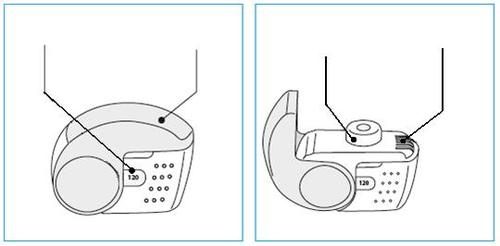
Window
Cap Mouthpiece Air vent
of the
counter
Taking a dose from the inhaler requires three steps: Opening, Inhalation, Closing.
- B.Before using a new inhaler
1. Open the sachet and take out the inhaler.
o Donot use the inhaler if the sachet is not sealed or is damaged; return it to the
pharmacist who provided it and obtain a new one.
o Use the label on the box to note the date on which the sachet was opened.
2. Inspect the inhaler.
o If the inhaler appears broken or damaged, return it to the pharmacist who provided it
and obtain a new one.
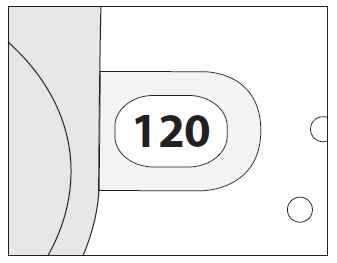
- 3.Check the dose counter window. If the inhaler is new, the dose counter windowwill show “120”.o Donot use a new inhaler if the number shown is less than “120”; return it to the pharmacist who provided it and obtain a new one.
- C.How to use the inhaler
C.1. Opening
1. Hold the inhaler firmly in an upright position.
2. Check the number of doses remaining: any number between “1” and “120” indicates
how many doses remain.
o If the dose counter window shows “0”, there are no doses left; dispose of the inhaler and
obtain a new one.
3. Open the cap completely.
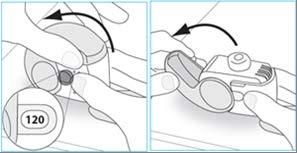
4. Before inhaling, exhale as deeply as possible without straining.
o Do notexhale through the inhaler.
C.2. Inhalation
If possible, stand or sit in an upright position during inhalation.
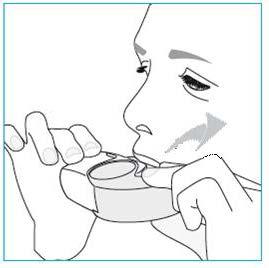
1. Lift the inhaler, bring it to your mouth and place your lips around the mouthpiece.
o Do notcover the air vent when holding the inhaler.
o Do notinhale through the air vent.
2. Take a strong and deep breath through your mouth.
o You may notice a particular taste when taking the dose.
o You may hear or feel a click when taking the dose.
o Do notinhale through your nose.
o Do notremove the inhaler from your lips during inhalation.
3. Remove the inhaler from your mouth.
4. Hold your breath for 5-10 seconds or as long as possible without straining.
5. Exhale slowly.
o Do notexhale through the inhaler.
- If you are not sure you are taking the dose correctly, consult your pharmacist or doctor.
C.3. Closing
1. Return the inhaler to the vertical position and close the cap completely.
2. Verify that the dose counter indicates one unit less.
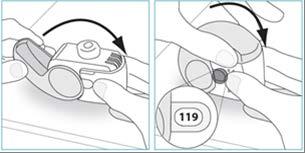
- If you are not sure that the dose counter indicates one unit less after inhalation, wait until the next scheduled dose and take it normally. Do not take an extra dose.
3. If another dose is needed, repeat steps C.1 to C.3.
- D.Cleaning
- Generally, it is not necessary to clean the inhaler.
- If necessary, the inhaler can be cleaned after use with a dry cloth or tissue. Do Notclean the inhaler with water or other liquids. Keep it dry.
If you use more Trydonis than you should
It is important that you take the dose as prescribed by your doctor. Do not take a higher dose than
prescribed without consulting your doctor.
If you use more Trydonis than you should, undesirable effects may occur, as described in
paragraph 4.
Inform your doctor if you have used more Trydonis than you should and if you experience any of these
symptoms. The doctor may decide to perform some blood tests.
If you forget to use Trydonis
Use it as soon as you remember. If it is almost time for the next dose, do not take the forgotten dose,
but take the next dose at the scheduled time. Do not double the dose.
If you stop using Trydonis
It is important to use Trydonis every day. Do not stop treatment with Trydonis and do not reduce the
dose, even if you feel better or have no symptoms. If you want to do so, consult your doctor.
If you have any doubts about the use of this medicine, ask your doctor or pharmacist.
4. Possible side effects
Like all medicines, this medicine can cause side effects, although not everybody gets them.
Immediately after using Trydonis there is a risk that shortness of breath and wheezing
may worsen, and this effect is known as paradoxical bronchospasm (can affect up to 1 in
- 1,000). If this happens, stop treatment with Trydonis and immediately use your fast-acting ‘reliever’ inhaler to treat the shortness of breath and wheezing. See your doctor immediately.
Tell your doctor immediately
- if you experience any allergic reaction such as skin allergies, hives, itchy skin, rash (can affect up to 1 in 100), redness of the skin, swelling of the skin or mucous membranes and particularly of the eyes, face, lips and throat (can affect up to 1 in 1,000).
- if you experience eye pain or discomfort, transient blurred vision, seeing halos or coloured images in association with red eyes. These may be signs of an acute attack of closed-angle glaucoma (can affect up to 1 in 10,000).
Tell your doctor if any of the following symptoms occur during the use of Trydonis, because
they may be symptoms of a lung infection (can affect up to 1 in 10):
- fever or chills
- increased mucus production, change in mucus colour
- increased cough or difficulty breathing.
Possible side effectsare listed below in order of frequency.
Common(may affect up to 1 in 10 people)
- sore throat
- runny or blocked nose and sneezing
- fungal infections of the mouth. Rinsing your mouth or gargling with water or brushing your teeth immediately after inhalation may prevent these side effects
- hoarseness
- headache
- urinary tract infection.
Uncommon(may affect up to 1 in 100 people)
- flu
- sinus inflammation
- itchy nose, runny or blocked nose
- fungal infections of the throat or esophagus
- fungal infections of the vagina
- restlessness
- tremor
- dizziness
- abnormality or reduction in sense of taste
- numbness
- ear inflammation
- irregular heartbeat
- changes in electrocardiogram (ECG)
- heart beating too fast and heart rhythm disturbances
- palpitations (feeling of abnormal heartbeat)
- redness of the face
- increased blood flow to some tissues of the body
- asthma attack
- cough and productive cough
- throat irritation
- nosebleeds
- redness of the pharynx
- dry mouth
- diarrhea
- difficulty swallowing
- feeling unwell
- stomach discomfort
- stomach pain after meals
- burning sensation on the lips
- tooth decay
- rash, hives, itchy skin
- inflammation of the mucous membranes of the mouth, with or without ulcers
- increased sweating
- muscle cramps and muscle pain
- arm or leg pain
- pain in the muscles, bones or joints of the chest
- fatigue
- increased blood pressure
- reduced levels of some blood components: a type of white blood cells called granulocytes, potassium or cortisol
- increased levels of some blood components: glucose, C-reactive protein,
platelets, insulin, free fatty acids or ketones.
Rare(may affect up to 1 in 1,000 people)
- fungal infections of the chest
- loss of appetite
- sleep disorder (sleeps too little or too much)
- stabbing chest pain
- feeling of a missed heartbeat or extra beats, heartbeat too slow
- worsening of asthma
- bleeding from a blood vessel into the surrounding tissues
- decreased blood pressure
- weakness
- pain in the back of the mouth and throat
- pharyngitis
- dry throat
- painful and frequent urination
- difficulty and pain when urinating
- kidney inflammation.
Very rare(may affect up to 1 in 10,000 people)
- low number of certain blood cells called platelets
- shortness of breath or difficulty breathing
- swelling of the hands and feet
- delayed growth in children and adolescents.
Not known(frequency cannot be estimated from available data):
- blurred vision
The use of inhaled corticosteroids for prolonged periods can cause, in very rare cases, effects on
the whole body:
- problems with the function of the adrenal glands (adrenal suppression)
- reduction in bone mineral density (thinning of the bones)
- opacity of the lens of the eye (cataract).
Trydonis does not contain high doses of inhaled corticosteroid, but your doctor may want to measure
cortisol levels in your blood periodically.
With high-dose inhaled corticosteroids used for prolonged periods, the following side effects may also occur, but the frequency is not known (frequency cannot be estimated on the
basis of available data):
- depression
- feeling of worry, nervousness, overexcitement or irritability. These events are more likely in children.
Reporting of side effects
If you get any side effects, even those not listed in this leaflet, tell your
doctor or pharmacist. You can also report side effects directly through the national reporting system detailed in
Appendix V. By reporting side effects you can help provide more information on the safety of this medicine.
5. How to store Trydonis
Keep this medicine out of the sight and reach of children.
Do not use this medicine after the expiry date which is stated on the label and the packaging after
Exp. The expiry date refers to the last day of that month.
Do not store at a temperature above 25 °C.
Store the inhaler in the original packaging to protect the medicine from humidity and remove it
from the sachet only immediately before first use.
After the first opening of the sachet, the medicine must be used within 6 weeks and stored in
a dry place. Use the adhesive label on the outer packaging to note the date on which you open the sachet
and attach this label to the bottom of the inhaler.
Do not dispose of any medicine in wastewater or household waste. Ask your pharmacist how to
dispose of medicines you no longer use. This will help protect the environment.
6. Contents of the pack and other information
What Trydonis contains
The active ingredients are beclometasone dipropionate, formoterol fumarate dihydrate and glycopyrronium.
Each delivered dose (the dose that leaves the mouthpiece) contains 88 micrograms of beclometasone
dipropionate, 5 micrograms of formoterol fumarate dihydrate and 9 micrograms of glycopyrronium
(as 11 micrograms of glycopyrronium bromide).
Each pre-set dose contains 100 micrograms of beclometasone dipropionate, 6 micrograms of
formoterol fumarate dihydrate and 10 micrograms of glycopyrronium (as 12.5 micrograms of
glycopyrronium bromide).
The other ingredients are lactose monohydrate (see section 2) and magnesium stearate.
Description of Trydonis and contents of the pack
Trydonis is an inhalation powder ranging in colour from white to almost white.
It is supplied in a white plastic inhaler called NEXThaler equipped with a grey cap and a
dose counter.
Each inhaler is packaged in a sealed protective sachet.
Trydonis is available in packs containing one inhaler and in multiple packs comprising two or three
inhalers, providing 120 inhalations each (120, 240 or 360 inhalations).
Not all pack sizes may be marketed.
Marketing Authorisation Holder
Chiesi Farmaceutici S.p.A.
Via Palermo 26/A
43122 Parma
Italy
Manufacturer
Chiesi Farmaceutici S.p.A.
Via San Leonardo 96
43122 Parma
Italy
For further information on this medicinal product, contact the local representative of the marketing
authorisation holder:
België/Belgique/Belgien
Chiesi sa/nv
Tél/Tel: + 32 (0)2 788 42 00
Lietuva
Chiesi Pharmaceuticals GmbH
Tel: + 43 1 4073919
България
Chiesi Bulgaria EOOD
Teл.: + 359 29201205
Luxembourg/Luxemburg
Chiesi sa/nv
Tél/Tel: + 32 (0)2 788 42 00
Česká republika
Chiesi CZ s.r.o.
Tel: + 420 261221745
Magyarország
Chiesi Hungary Kft.
Tel.: + 36-1-429 1060
Danmark
Chiesi Pharma AB
Tlf: + 46 8 753 35 20
Malta
Chiesi Farmaceutici S.p.A.
Tel: + 39 0521 2791
Deutschland
Chiesi GmbH
Tel: + 49 40 89724-0
Nederland
Chiesi Pharmaceuticals B.V.
Tel: + 31 88 501 64 00
Eesti
Chiesi Pharmaceuticals GmbH
Tel: + 43 1 4073919
Norge
Chiesi Pharma AB
Tlf: + 46 8 753 35 20
Ελλάδα
Chiesi Hellas AEBE
Τηλ: + 30 210 6179763
Österreich
Chiesi Pharmaceuticals GmbH
Tel: + 43 1 4073919
España
Laboratorios BIAL, S.A.
Tel: + 34 91 562 41 96
Polska
Chiesi Poland Sp. z.o.o.
Tel.: + 48 22 620 1421
France
Chiesi S.A.S.
Tél: + 33 1 47688899
Portugal
Chiesi Farmaceutici S.p.A.
Tel: + 39 0521 2791
Hrvatska
Chiesi Pharmaceuticals GmbH
Tel: + 43 1 4073919
România
Chiesi Romania S.R.L.
Tel: + 40 212023642
Ireland
Chiesi Farmaceutici S.p.A.
Tel: + 39 0521 2791
Slovenija
CHIESI SLOVENIJA, d.o.o.
Tel: + 386-1-43 00 901
Ísland
Chiesi Pharma AB
Sími: +46 8 753 35 20
Slovenská republika
Chiesi Slovakia s.r.o.
Tel: + 421 259300060
Italia
Chiesi Italia S.p.A.
Tel: + 39 0521 2791
Suomi/Finland
Chiesi Pharma AB
Puh/Tel: +46 8 753 35 20
Κύπρος
Chiesi Farmaceutici S.p.A.
Τηλ: + 39 0521 2791
Sverige
Chiesi Pharma AB
Tel: +46 8 753 35 20
Latvija
Chiesi Pharmaceuticals GmbH
Tel: + 43 1 4073919
United Kingdom (Northern Ireland)
Chiesi Farmaceutici S.p.A.
Tel: + 39 0521 2791
Other sources of information
More detailed information on this medicinal product is available on the website of the European Medicines
Agency, http://www.ema.europa.eu .

Nie jesteś pewien, czy ten lek jest odpowiedni dla ciebie?
Omów swoje objawy i leczenie z lekarzem online.

Zacząłeś przyjmować lek i masz pytania?
Omów swoje objawy i leczenie z lekarzem online.
- Kraj rejestracji
- Postać farmaceutycznaPressurized solution for inhalation, 87 MCG / 5 MCG / 9 MCG
- Kod ATCR03AL09
- Substancja czynna
- Wymaga receptyNie
- Producent
- Te treści mają charakter wyłącznie informacyjny i nie zastępują konsultacji lekarskiej.
- Zamienniki TRYDONISPostać farmaceutyczna: Pressurized solution for inhalation, 87 MCG / 5 MCG / 9 MCGSubstancja czynna: formoterol, glycopyrronium bromide and beclometasoneProducent: CHIESI FARMACEUTICI S.P.A.Bez receptyPostać farmaceutyczna: Solution for nebulization, 0.375% + 0.075%Substancja czynna: salbutamol and ipratropium bromideProducent: I.B.N. SAVIO S.R.LWymaga receptyPostać farmaceutyczna: Inhalation powder, 55 MICROGRAMS/22 MICROGRAMSSubstancja czynna: vilanterol and umeclidinium bromideProducent: GLAXOSMITHKLINE TRADING SERVICES LIMITEDWymaga recepty
Odpowiedniki TRYDONIS w innych krajach
Leki z tą samą substancją czynną dostępne w innych krajach.
Odpowiednik TRYDONIS w Hiszpania
Lekarze online w sprawie TRYDONIS
Omów stosowanie TRYDONIS, bezpieczeństwo i ocenę zasadności recepty zgodnie z obowiązującymi przepisami.









Uzyskaj receptę na TRYDONIS online
Wypełnij 2-minutowy formularz
Opisz swoje objawy, historię choroby i lek, o który prosisz.
Wybierz lekarza lub pozwól nam przydzielić
Wybierz specjalistę lub dopasujemy Cię do najbliższego dostępnego lekarza.
Lekarz analizuje Twój przypadek
Zazwyczaj w ciągu 30 minut. Może zadawać dodatkowe pytania przez czat.
Odbierz w dowolnej aptece
Recepta elektroniczna wysłana na Twój e-mail — ważna w całej Polsce.
Często zadawane pytania
TRYDONIS nie wymaga recepty w Włochy. Możesz skonsultować się z lekarzem online, aby sprawdzić, czy ten lek może być odpowiedni w Twojej sytuacji.
Substancją czynną w TRYDONIS jest formoterol, glycopyrronium bromide and beclometasone. Informacja ta pomaga rozpoznać leki o tym samym składzie, ale pod różnymi nazwami handlowymi.
TRYDONIS jest produkowany przez CHIESI FARMACEUTICI S.P.A.. Nazwy handlowe i opakowania mogą się różnić w zależności od dystrybutora.
Lekarze, tacy jak Lekarze rodzinni, Psychiatrzy, Dermatolodzy, Kardiolodzy, Endokrynolodzy, Gastroenterolodzy, Pulmonolodzy, Nefrolodzy, Reumatolodzy, Hematolodzy, Zakaźnicy, Alergolodzy, Geriatrzy, Pediatrzy, Onkolodzy, mogą ocenić, czy stosowanie TRYDONIS jest odpowiednie w Twoim przypadku, w zależności od sytuacji klinicznej i lokalnych przepisów. Możesz umówić konsultację online, aby omówić objawy i możliwe dalsze kroki.
Polska posiada dobrze rozwiniętą infrastrukturę ochrony zdrowia w dużych miastach, takich jak Warszawa, Kraków, Wrocław i Gdańsk. Apteki są łatwo dostępne i działają zgodnie z obowiązującymi przepisami, zapewniając dostęp do leków na receptę.
Możesz kupić TRYDONIS w Warszawie, Krakowie, Wrocławiu lub Gdańsku w każdej aptece, posiadając ważną receptę.
Aby uzyskać receptę, możesz skorzystać z Oladoctor:
Inne leki zawierające tę samą substancję czynną (formoterol, glycopyrronium bromide and beclometasone) to m.in. TRIMBOW, ALMEIDA, ANORO ELLIPTA. Mogą one różnić się nazwą handlową lub postacią, ale zawierają ten sam składnik terapeutyczny. Przed zmianą lub rozpoczęciem nowego leku skonsultuj się z lekarzem.
