



TRINITRINA 5 mg /1,5 Ml Koncentrat Do Sporządzania Roztworu Do Infuzji

Ocena recepty online
Lekarz przeanalizuje Twój przypadek i zdecyduje, czy wystawienie recepty jest medycznie uzasadnione.

Porozmawiaj z lekarzem o tym leku
Omów swoje objawy i opcje leczenia podczas szybkiej konsultacji online.



Jak stosować TRINITRINA
Treść ulotki
- TRINITRINA 0,3 mg coated tablets
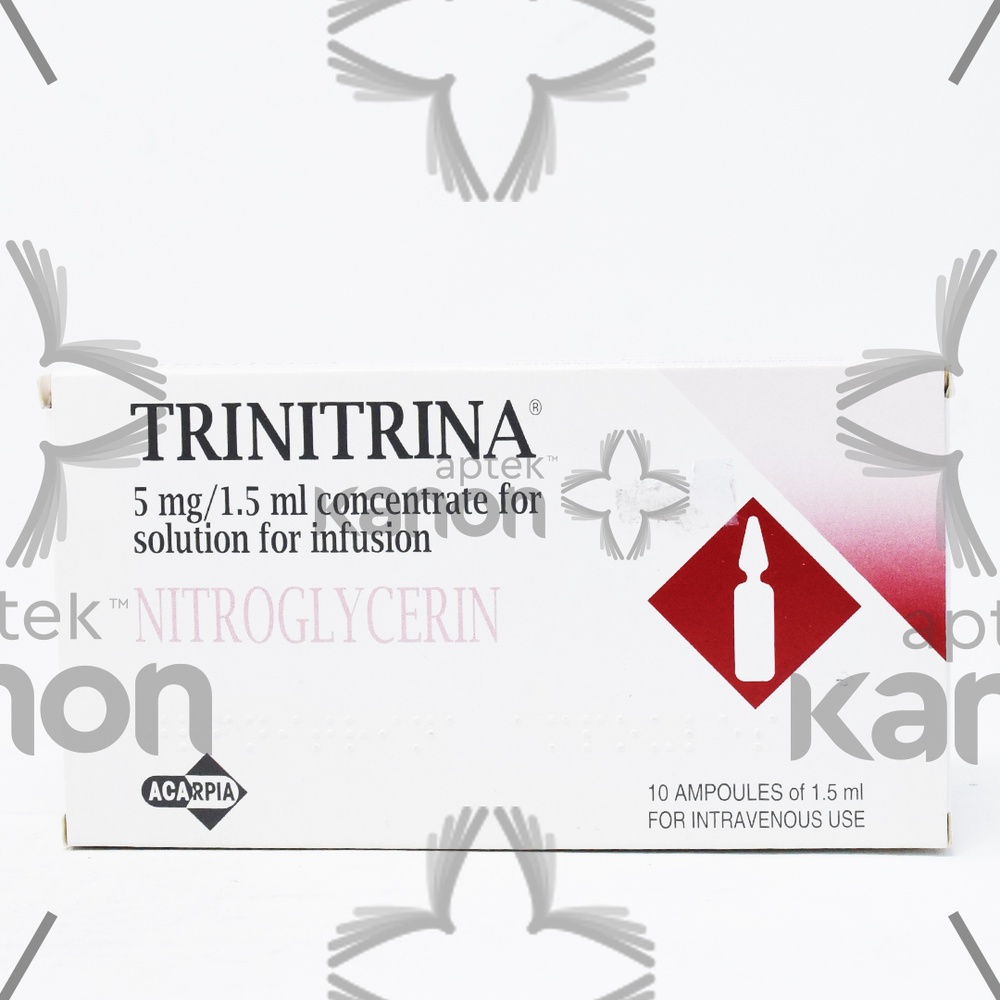
- TRINITRINA 5mg/1,5 ml concentrate for solution for infusion
- TRINITRINA 5mg/1.5 ml concentrate for solution for infusion
- TRINITRINA 50mg/50ml concentrate for solution for infusion
- TRINITRINA 50mg/50ml concentrate for solution for infusion
TRINITRINA 0,3 mg coated tablets
nitroglycerin
Read this leaflet carefully before taking this medicine as it contains
important information for you.
- Keep this leaflet. You may need to read it again.
- If you have any questions, ask your doctor or pharmacist.
- This medicine has been prescribed for you only. Do not pass it on to others, even if their symptoms are the same as yours, as it may be harmful.
- If you get any side effects, even those not listed in this leaflet, tell your doctor or pharmacist. See section 4.
Contents of this leaflet:
- 1. What TRINITRINA is and what it is used for
- 2. What you need to know before you use TRINITRINA
- 3. How to use TRINITRINA
- 4. Possible side effects
- 5. How to store TRINITRINA
- 6. Contents of the pack and other information
1. What is TRINITRINA and what is it used for
TRINITRINA contains the active ingredient nitroglycerin, which belongs to the group of vasodilating medicines, used in the treatment of some heart diseases. This medicine works by dilating blood vessels and improving blood circulation.
TRINITRINA is indicated for the treatment of severe and sudden chest pain, caused by a reduced supply of oxygen to the heart (angina pectoris).
2. What you need to know before you use TRINITRINA
Do not use TRINITRINA
- if you are allergic to nitroglycerin, to similar medicines (organic nitrates) or to any of the other ingredients of this medicine (listed in section 6);
- if you suffer from severe circulatory disorders, due to reduced heart function (shock, cardiogenic shock);
- if you have an acute heart attack, characterized by low blood pressure;
- if you have very low blood pressure (severe hypotension, <90 mmHg systolic blood pressure);
- if you have a decrease in blood volume (severe hypovolemia);
- if you experience an increase in pressure inside the brain, if you have head injuries such as traumatic brain injury or cerebral hemorrhage;
- if you suffer from severe heart problems (myocardial insufficiency due to obstruction, obstructive hypertrophic cardiomyopathy);
- if you suffer from a severe illness characterized by fluid accumulation in the lungs (toxic pulmonary edema);
- if you have a severe reduction in the number of red blood cells in the blood (severe anemia);
- if you suffer from an eye disease that can cause serious damage to the optic nerve (closed-angle glaucoma);
- if you are pregnant or breastfeeding (See section “Pregnancy and breastfeeding”);
- if the person who has to take this medicine is a child or adolescent;
- if you are taking a medicine called sildenafil to treat erectile dysfunction in men (See section “Other medicines and TRINITRINA”).
Warnings and precautions
Talk to your doctor or pharmacist before taking TRINITRINA.
TRINITRINA tablets should not be swallowed but should be placed in the area under the tongue (sublingual route), only in this way is the medicine effective.
Take only the minimum necessary dose of the medicine and for short periods of time, as headaches (severe headache) and allergic reactions may occur.
Take this medicine with extreme caution:
- if your heart is working less than normal (heart failure). In this case, the doctor must perform periodic examinations and blood tests, as a decrease in blood pressure (hypotension) and an increase in heart rate (tachycardia) may occur;
- if you experience a decrease in blood volume (hypovolemia) or suffer from low blood pressure (hypotension). In such cases, a worsening of symptoms (severe hypotension), a feeling of dizziness when getting up, due to a drop in pressure (orthostatic hypotension) may occur. Sometimes, a decrease in heart rate (paradoxical bradycardia) and an increase in chest pain (anginal pain) may occur;
- dizziness when getting up, due to a drop in pressure (orthostatic hypotension). Sometimes, a decrease in heart rate (paradoxical bradycardia) and an increase in chest pain (anginal pain) may occur;
- if you suffer from a disease characterized by thickening of the heart walls (hypertrophic cardiomyopathy), as a worsening of chest pain (angina) may occur;
- if you experience a decrease in oxygen levels in the blood (hypoxemia) caused by a severe reduction in the number of red blood cells in the blood (severe anemia).
Stop taking this medicine and consult your doctor if you experience vision disturbances (blurred vision) or feel a sensation of dryness in the mouth (dry mouth).
Other medicines and TRINITRINA
Tell your doctor or pharmacist if you are taking, have recently taken or might take any other medicines.
Use particular caution and tell your doctor if you are taking the following medicines:
- alpha-adrenergic blockers, calcium channel blockers (antihypertensives), used to lower blood pressure;
- aspirin and indometacin, used to relieve pain and inflammation;
- phenothiazines, used for the treatment of severe mental illnesses (antipsychotics);
- amitriptyline, desipramine, doxepin used for the treatment of depression;
- anticholinergics, used to treat some disorders of the nervous system;
- long-acting nitrates similar to TRINITRINA, used for the treatment of some heart problems;
Do not use TRINITRINA with:
- sildenafil used to treat erectile dysfunction in men, as it may cause an excessive drop in blood pressure;
- ergotamine-based medicines, for the treatment of headache, as a disease called ergotism may develop, characterized by circulatory and brain problems (seizures, hallucinations). If the doctor deems it necessary to take both medicines, they must be closely monitored.
Tell your doctor if you need to undergo tests to check your cholesterol levels in your blood (Zlatkis/Zak colorimetric assay), as nitroglycerin can alter the results.
TRINITRINA with alcohol
Taking ethanol can cause an excessive drop in blood pressure (hypotension), therefore avoid drinking alcoholic beverages during treatment with TRINITRINA.
Pregnancy, breastfeeding and fertility
If you are pregnant, suspect you are pregnant or are planning to become pregnant, or if you are breastfeeding, ask your doctor or pharmacist for advice before taking this medicine.
If you are in the first 3 months of pregnancy or are breastfeeding, take TRINITRINA only in cases of absolute necessity and under the direct supervision of your doctor.
Driving and operating machinery
This medicine can cause a feeling of dizziness when getting up due to a drop in blood pressure (orthostatic hypotension), nausea, dizziness. Therefore, if you experience these symptoms, avoid driving vehicles and using machinery.
TRINITRINA contains glucose, lactose, sucrose and para-hydroxybenzoates
This medicine contains glucose, sucrose and lactose, three types of sugars. If your doctor has diagnosed you with intolerance to certain sugars, contact them before taking this medicine.
This medicine contains para-hydroxybenzoates which may cause allergic reactions (even delayed).
3. How to use TRINITRINA
Use this medicine following the instructions of your doctor or pharmacist exactly. If you have any
doubts, consult your doctor or pharmacist.
Crush the tablets with your teeth, allowing them to dissolve under the tongue.
Do not swallow the tablets, as the medicine loses its effectiveness.
The recommended dose is 1 tablet to be taken when you experience chest pain. If necessary, your doctor may advise you to take a second tablet after a few
minutes.
If you use more TRINITRINA than you should
If you think you have taken an excessive dose of nitroglycerin, inform your doctor or pharmacist because
excessively low blood pressure (hypotension) with
acceleration of the heartbeat (reflex tachycardia) may occur. These symptoms can be resolved
by reducing or stopping the administration of this medicine or by taking medicines
to increase blood pressure (alpha-adrenergic agents) such as methoxamine or phenylephrine.
Other symptoms of overdose may include: cooling of the skin and paleness, headache,
dizziness, confusion, vision disturbances, nausea and vomiting with abdominal pain, diarrhea, increased
perception of heartbeats (palpitations), loss of consciousness (syncope), serious heart and
circulatory problems (cardiovascular collapse). Rarely, an abnormality in the structure
of hemoglobin in the blood (metahemoglobinemia) may occur, which can be resolved by reducing the rate of
nitroglycerin injection and administering a medicine called methylene blue (See the
paragraph “Possible side effects”).
In case of accidental ingestion/intake of an excessive dose of TRINITRINA, immediately inform
your doctor or go to the nearest hospital.
If you forget to use TRINITRINA
Do not use a double dose to make up for the forgotten tablet.
If you stop using TRINITRINA
If you have any doubts about using this medicine, consult your doctor or pharmacist.
4. Possible side effects
Like all medicines, this medicine can cause side effects, although not everyone will experience them.
Below are the effects of nitroglycerin.
Frequency not known(whose frequency cannot be estimated from available data)
- abnormality of the hemoglobin structure in the blood (metahemoglobinemia), which resolves with the administration of methylene blue;
- dizziness, headache (even immediately after administration);
- increased activity of the vagus nerve with consequent slowing of the heartbeat (vagal hyperactivity), confusion, agitation;
- blurred vision;
- acceleration or slowing of the heartbeat (tachycardia or bradycardia), increased awareness of one's heartbeat (palpitations) and temporary loss of consciousness (syncope);
- decrease in blood pressure during changes in posture (postural hypotension);
- nausea, vomiting, digestive disorders, pallor, sweating;
- painful muscle contractions (cramps), pain in the abdomen and sternum;
- skin damage such as skin rash, erythema and exfoliative dermatitis (especially if you are taking other medicines containing nitrates);
- burning, erythema;
- blue-violet discoloration of the body (cyanosis).
Reporting of side effects
If you experience any side effects, including those not listed in this leaflet, please contact
your doctor or pharmacist. You can also report side effects directly through the national reporting system at: www.aifa.gov.it/content/segnalazioni-reazioni-avverse
By reporting side effects, you can help provide more information on the safety of
this medicine.
5. How to store TRINITRINA
Keep this medicine out of the sight and reach of children.
Do not use this medicine after the expiry date which is stated on the packaging after “Scad.”. The
expiry date refers to the last day of that month.
The expiry date refers to the medicine in intact packaging, correctly stored.
Store the medicine at a temperature not exceeding 25°C.
Do not dispose of any medicine in wastewater or household waste. Ask your pharmacist how to
dispose of medicines you no longer use. This will help protect the environment.
6. Contents of the pack and other information
What containsTRINITRINA
TRINITRINA 0.3 mg coated tablets
- The active ingredient is nitroglycerin. Each tablet contains 0.3 mg of nitroglycerin.
- The other components are: sucrose, corn starch, lactose monohydrate, mannitol, talc, microcrystalline cellulose, silica, titanium dioxide, anhydrous glucose, gum arabic, potato starch, magnesium carbonate, magnesium stearate, calcium stearate, gelatin, polyvinyl alcohol, vanillin, methyl p-hydroxybenzoate.
Description of the appearance of TRINITRINA and contents of the pack
TRINITRINA 0.3 mg coated tablets
Box containing 35 coated tablets in PVC/PVDC/aluminum blisters.
Marketing Authorisation Holder
ACARPIA FARMACEUTICI S.r.l.
Viale L. Majno,18 – 20129 Milano (Italy)
Manufacturers
KLEVA S.A. - Parnithos Avenue 189, Acharnai Attiki, 13675 – Greece
Complete production, control and release
CIT S.r.l.
Via Primo Villa, 17
20875 Burago Molgora (MB)
Secondary packaging and release
TRINITRINA 5mg/1,5 ml concentrate for solution for infusion
nitroglycerin
Read this leaflet carefully before using this medicine as it contains important
information for you.
- Keep this leaflet. You may need to read it again.
- If you have any questions, ask your doctor or nurse.
- If any side effects occur, including those not listed in this leaflet, tell your doctor or nurse. See section 4.
Contents of this leaflet:
- 1. What TRINITRINA is and what it is used for
- 2. What you need to know before using TRINITRINA
- 3. How to use TRINITRINA
- 4. Possible side effects
- 5. How to store TRINITRINA
- 6. Contents of the pack and other information
1. What is TRINITRINA and what is it used for
TRINITRINA contains the active ingredient nitroglycerin which belongs to the group of
vasodilator medicines, used in the treatment of some heart diseases. This medicine works by dilating the
blood vessels and improving blood circulation.
TRINITRINA is indicated for the treatment of:
- chest pain caused by heart problems, such as unstable angina, variant angina and Prinzmetal's angina;
- problems of reduced heart function, such as acute left ventricular failure due to various causes and characterized by high blood pressure;
- swelling due to fluid accumulation around the lungs (pulmonary edema and pre-pulmonary edema);
- rapid increase in blood pressure (hypertensive crisis).
2. What you need to know before using TRINITRINA
Do not use TRINITRINA
- if you are allergic to nitroglycerin, to similar medicines (organic nitrates) or to any of the other ingredients of this medicine (listed in section 6);
- if you suffer from severe disturbances of the blood circulation, due to reduced heart function (shock, cardiogenic shock);
- if you have an acute heart attack, characterized by low blood pressure;
- if you have very low blood pressure (severe hypotension, <90 mmHg systolic blood pressure);
- if you have a decrease in the volume of blood circulating (severe hypovolemia);
- if you experience an increase in pressure inside the brain, if you have head injuries such as traumatic brain injury or cerebral hemorrhage;
- if you suffer from severe heart problems (myocardial insufficiency due to obstruction, constrictive pericarditis, obstructive hypertrophic cardiomyopathy);
- if you suffer from a severe disease characterized by an accumulation of fluid in the lungs (toxic pulmonary edema);
- if you have a severe reduction in the number of red blood cells in the blood (severe anemia);
- if you suffer from a disease that affects the eye and can cause serious damage to the optic nerve (closed-angle glaucoma);
- if you are pregnant or breastfeeding (See section “Pregnancy and breastfeeding”);
- if the person who needs to use this medicine is a child or adolescent;
- if you are taking a medicine called sildenafil for the treatment of erectile dysfunction in men (See section “Other medicines and TRINITRINA”).
Warnings and precautions
Consult your doctor or nurse before you are administered TRINITRINA.
This medicine will only be administered to you in a hospital setting and by specialized medical personnel,
who will monitor your blood pressure, heart rate (heart rate) and your general health condition during the period of therapy.
TRINITRINA will be administered to you with extreme caution if you suffer from head problems such as
traumatic brain injury and cerebral hemorrhage.
For those who engage in sports, the use of medicines containing ethyl alcohol may result in positive
doping tests in relation to the blood alcohol concentration limits indicated by some sports federations.
Other medicines and TRINITRINA
Tell your doctor or nurse if you are taking, have recently taken or might take any other
medicines.
This medicine will be administered to you with particular caution if you are taking the following medicines
because they can increase the effectiveness of nitroglycerin:
- medicines used to dilate blood vessels (vasodilators);
- medicines used to lower blood pressure (antihypertensives);
- medicines used to increase urine output (diuretics).
Tell your doctor if you are using:
- indometacin, a medicine used to relieve inflammation, because it can decrease the effectiveness of nitroglycerin;
- alteplase or heparin, medicines used for blood coagulation problems.
Do not use TRINITRINA together with medicines used to treat erectile dysfunction in men, such as
sildenafil, as this may cause an excessive drop in blood pressure.
Tell your doctor if you need to undergo tests to check your cholesterol levels (Zlatkis/Zak colorimetric assay), as nitroglycerin can alter the results.
TRINITRINA with alcohol
Taking ethanol can increase the effectiveness of this medicine, therefore avoid drinking alcoholic
beverages during treatment with TRINITRINA.
Pregnancy, breastfeeding and fertility
If you are pregnant, suspect you are pregnant or are planning to become pregnant, or if you are breastfeeding with
breast milk, ask your doctor, pharmacist or nurse for advice before using this
medicine.
If you are in the first 3 months of pregnancy or are breastfeeding, use TRINITRINA with caution, only in
cases of absolute necessity and under the direct control of your doctor.
Driving and operating machinery
This medicine can cause a feeling of dizziness when getting up due to a drop in
blood pressure (orthostatic hypotension), nausea and dizziness. If you experience these symptoms,
avoid driving vehicles and operating machinery.
TRINITRINA contains alcohol
This medicine contains 43.13% vol. ethanol (alcohol), e.g. up to 647 mg per dose (1.5 ml),
equivalent to 16.4 ml of beer, 6.8 ml of wine per dose.
May be harmful to alcoholics.
To be taken into consideration in pregnant or breastfeeding women, children and groups at
high risk such as people affected by liver or epilepsy diseases.
3. How to use TRINITRINA VIALS
This medicine will be administered to you by a doctor or nurse. If you have any doubts, consult your
doctor or nurse.
The recommended dose ranges from 0.5 to 6 mg/hour, depending on the patient's condition and needs and
must be administered by continuous drip infusion or using an automatic device.
The doctor will determine the dose and method of administration.
If you use more TRINITRINA VIALS than you should
If you think you have been given an excessive dose of nitroglycerin, inform your doctor or
nurse, as excessive lowering of blood pressure
(hypotension) with an acceleration of the heartbeat (reflex tachycardia) may occur. These symptoms can be
resolved by reducing or stopping the administration of this medicine or by administering
medicines to increase blood pressure (alpha-adrenergic agents) such as methoxamine or phenylephrine.
Other symptoms of overdose may include: cooling of the skin and paleness, headache,
dizziness, confusion, visual disturbances, nausea and vomiting with abdominal pain, diarrhea, increased
awareness of heartbeats (palpitations), loss of consciousness (syncope), serious heart and
circulatory problems (cardiovascular collapse). Rarely, an abnormality in the structure
of hemoglobin in the blood (metahemoglobinemia) may occur, which can be resolved by reducing the rate of
nitroglycerin injection and administering a medicine called methylene blue (See the
paragraph “Possible side effects”).
In case of accidental ingestion/intake of an excessive dose of TRINITRINA, immediately notify
your doctor or go to the nearest hospital.
4. Possible side effects
Like all medicines, this medicine can cause side effects, although not everybody gets them.
Below are listed the effects of nitroglycerin.
Frequency not known(the frequency of which cannot be estimated from available data)
- abnormality of the hemoglobin structure in the blood (methemoglobinemia), which resolves with the administration of methylene blue;
- dizziness, headache (even immediately after administration);
- increased activity of the vagus nerve with consequent slowing of the heartbeat (vagal excess), confusion, agitation;
- blurred vision;
- acceleration or slowing of the heartbeat (tachycardia or bradycardia), increased awareness of one's heartbeat (palpitations) and temporary loss of consciousness (syncope);
- decrease in blood pressure during changes in posture (postural hypotension);
- nausea, vomiting, digestive disorders, pallor, sweating;
- painful muscle contractions (cramps), pain in the abdomen and sternum;
- skin damage such as skin rash, erythema and exfoliative dermatitis (especially if you are taking other medicines containing nitrates);
- burning in the injection area, erythema;
- blue-purple discoloration of the body (cyanosis).
Reporting of side effects
If you experience any side effects, including those not listed in this leaflet, please inform
your doctor or pharmacist. You can also report side effects directly through the national reporting system
at: www.aifa.gov.it/content/segnalazioni-reazioni-avverse
By reporting side effects you can help provide more information on the safety of
this medicine.
5. How to store TRINITRINA
Keep this medicine out of the sight and reach of children.
Do not use this medicine after the expiry date which is stated on the packaging after “Scad.”. The
expiry date refers to the last day of that month.
The expiry date refers to the medicine in intact packaging, correctly stored.
No particular storage conditions regarding temperature are required.
Do not dispose of any medicine in waste water or household waste. Ask your pharmacist how to
dispose of medicines you no longer use. This will help protect the environment.
6. Contents of the pack and other information
What containsTRINITRINA
TRINITRINA 5mg/1.5ml concentrate for infusion solution
- The active ingredient is nitroglycerin. Each vial contains 5 mg of nitroglycerin.
- The other ingredients are: alcohol, water for injections.
Description of the appearance of TRINITRINA and contents of the pack
TRINITRINA 5mg/1.5 ml concentrate for infusion solution
Box containing 10 vials of 5 mg/ 1.5 ml in glass.
Marketing Authorisation Holder
ACARPIA FARMACEUTICI S.r.l.- Viale L. Majno,18 – 20129 Milano (Italy)
Manufacturer
FISIOPHARMA S.r.l. - Industrial Area - 84020 Palomonte (SA) - Italy
---------------------------------------------------------------------------------------------------------------------------
--------

Nie jesteś pewien, czy ten lek jest odpowiedni dla ciebie?
Omów swoje objawy i leczenie z lekarzem online.
TRINITRINA 5mg/1.5 ml concentrate for solution for infusion
nitroglycerin
Therapeutic indications
Unstable angina, variant angina, Prinzmetal's angina. Acute left ventricular failure
with or without previous acute myocardial infarction, particularly with high filling pressure and
reduced cardiac output. Acute pulmonary edema and pre-pulmonary edema. Hypertensive crisis.
Posology and method of administration
The dosage should be established according to the individual needs of the patient and according to the response of the
parameters to be monitored. According to reported experience, the dosage is between 0.5-6 mg/hour of
nitroglycerin for continuous intravenous infusion.
These dosages rarely require exceeding, reaching up to 6 mg/hour. The solution for
intravenous infusion is prepared by appropriately diluting the nitroglycerin according to the table
below and infused with an automatic device or drop by drop according to the indications
of the infusion table (1 ml corresponds to approximately 20 drops of a normal infusion).
Dilution table
| Number of vials (active ingredient quantity) | e 1 d (5 mg) | 2 (10 mg) |
| a Solution vials |
| 3 ml |
| Diluent solution (ml) | 250 | 500 |
| n a Final volume of the ready solution (ml) |
| 503 |
| i l Final concentration of a nitroglycerin (mg/ml) t [Concentration at 20 drops of a normal infusion] |
| |
Infusion table
| i Desired amount of NTG per hour |
|
| 6-7 |
| 10 |
| 13-14 |
| 17 |
| 20-21 |
| 26-27 |
| 34 |
| 41 |
| 47-48 |
| m 53 |
| r 59-60 |
| a 68 |
| F 74-75 |
| 82 |
Incompatibilities
Nitroglycerin is compatible with infusion solutions used in clinical practice, such as,
for example, isotonic saline solution, 4-30% glucose solution, Ringer's solution, solution containing
proteins. No incompatibilities with other infusion solutions are known to date. Dilution must be carried out only in glass infusion containers.
Nitroglycerin tends to migrate rapidly into many plastic materials. The dilution of injectable nitroglycerin to obtain the intravenous infusion solution must be carried out exclusively in glass infusion containers.
The nitroglycerin contained in the final infusion solution can be absorbed by the PVC
constituting normal diffusers, in an amount equal to 40-80% of the total, with an absorption rate
inversely proportional to the infusion rate. For this reason, it is recommended to use
polyethylene tubing in which very little loss of nitroglycerin occurs.
Instructions for use and handling
The product must always be diluted before intravenous infusion. The dilutions used must be
carried out in glass infusion containers using polyethylene diffusers.
TRINITRINA 50mg/50ml concentrate for solution for infusion
nitroglycerin
Read this leaflet carefully before using this medicine as it contains important
information for you.
- Keep this leaflet. You may need to read it again.
- If you have any questions, ask your doctor or nurse.
- If any side effects occur, including those not listed in this leaflet, tell your doctor or nurse. See section 4.
Contents of this leaflet:
- 1. What TRINITRINA is and what it is used for
- 2. What you need to know before you use TRINITRINA
- 3. How to use TRINITRINA
- 4. Possible side effects
- 5. How to store TRINITRINA
- 6. Contents of the pack and other information
1. What is TRINITRINA and what is it used for?
TRINITRINA contains the active ingredient nitroglycerin, which belongs to the group of medicines
vasodilators, used in the treatment of some heart diseases. This medicine works by dilating the
blood vessels and improving blood circulation.
TRINITRINA is indicated for the treatment of:
- chest pain caused by heart problems, such as unstable angina, variant angina and Prinzmetal's angina;
- problems of reduced heart function, such as acute left ventricular failure due to various causes and characterized by high blood pressure;
- swelling due to fluid accumulation around the lungs (pulmonary edema and pre-pulmonary edema);
- rapid increase in blood pressure (hypertensive crisis).
2. What you need to know before using TRINITRINA
Do not use TRINITRINA
- if you are allergic to nitroglycerin, to similar medicines (organic nitrates) or to any of the other ingredients of this medicine (listed in section 6);
- if you suffer from severe disturbances to blood circulation, due to reduced heart function (shock, cardiogenic shock);
- if you have an acute heart attack, characterized by low blood pressure;
- if you have very low blood pressure (severe hypotension, <90 mmHg systolic blood pressure);
- if you have a decrease in the volume of blood circulating (severe hypovolemia);
- if you experience an increase in pressure inside the brain, if you have head injuries such as traumatic brain injury or cerebral hemorrhage;
- if you suffer from severe heart problems (myocardial insufficiency due to obstruction, constrictive pericarditis, obstructive hypertrophic cardiomyopathy);
- if you suffer from a severe illness characterized by an accumulation of fluid in the lungs (toxic pulmonary edema);
- if you have a severe reduction in the number of red blood cells in the blood (severe anemia);
- if you suffer from an eye disease that can cause serious damage to the optic nerve (closed-angle glaucoma);
- if you are pregnant or breastfeeding (See section “Pregnancy and breastfeeding”);
- if the person who needs to take this medicine is a child or adolescent;
- if you are taking a medicine called sildenafil for the treatment of impotence in men (See section “Other medicines and TRINITRINA”).
Warnings and precautions
Consult your doctor or nurse before you are given TRINITRINA.
This medicine will only be administered to you in a hospital setting and by specialized medical personnel
who will monitor your blood pressure, heart rate (heart frequency) and your general health condition during the period of therapy.
TRINITRINA will be administered to you with extreme caution if you suffer from head problems such as traumatic
brain injury and cerebral hemorrhage.
Other medicines and TRINITRINA
Tell your doctor or nurse if you are taking, have recently taken or might take any other
medicine.
This medicine will be administered to you with particular caution if you are taking the following medicines
because they can increase the effectiveness of nitroglycerin:
- medicines used to dilate blood vessels (vasodilators);
- medicines used to lower blood pressure (antihypertensives);
- medicines used to increase urine output (diuretics).
Tell your doctor if you are using:
- indometacin, a medicine used to relieve inflammation, because it can decrease the effectiveness of nitroglycerin;
- alteplase or heparin, medicines used for blood coagulation problems.
Do not use TRINITRINA together with medicines used to treat impotence in men, such as
sildenafil, as these increase the effect of reducing blood pressure.
Tell your doctor if you need to undergo tests to check your cholesterol levels in the blood (Zlatkis/Zak colorimetric assay), as nitroglycerin can alter the results.
TRINITRINA with alcohol
Taking ethanol can increase the effectiveness of this medicine, therefore avoid drinking
alcoholic beverages during treatment with TRINITRINA.
Pregnancy, breastfeeding and fertility
If you are pregnant, suspect you are pregnant or are planning a pregnancy, or if you are breastfeeding with
breast milk, ask your doctor or nurse for advice before using this medicine.
If you are in the first 3 months of pregnancy or if you are breastfeeding, use TRINITRINA with caution, only in
cases of absolute necessity and under the direct control of the doctor.
Driving and operating machinery
This medicine can cause a feeling of dizziness when getting up due to lowering
blood pressure (orthostatic hypotension), nausea and dizziness. If you experience these symptoms,
avoid driving vehicles and using machinery.
TRINITRINA contains propylene glycol
This medicine contains 50 mg of propylene glycol per vial which can lead to lactic acidosis,
therefore it is recommended not to use the medicine for more than three consecutive days; furthermore it
can cause symptoms similar to those caused by alcohol.
3. How to use TRINITRINA
This medicine will be administered to you by a doctor or nurse. If you have any doubts, consult your doctor
or nurse.
The recommended dose ranges from 0.5 to 6 mg/hour, depending on the patient's condition and needs and
must be administered by continuous drip infusion or using an automatic device.
The doctor will determine the dose and method of administration.
If you use more TRINITRINA than you should
If you think you have been given an excessive dose of nitroglycerin, inform your doctor or
nurse, as excessive lowering of blood pressure
(hypotension) with an acceleration of the heartbeat (reflex tachycardia) may occur. These symptoms can be
resolved by reducing or stopping the administration of this medicine or by administering
medicines to increase blood pressure (alpha-adrenergic agents) such as methoxamine or phenylephrine.
Other symptoms of overdose may include: cooling of the skin and paleness, headache,
dizziness, confusion, visual disturbances, nausea and vomiting with abdominal pain, diarrhea, increased
awareness of heartbeats (palpitations), loss of consciousness (syncope), serious heart and
circulatory problems (cardiovascular collapse). Rarely, an abnormality in the structure of
hemoglobin in the blood (metahemoglobinemia) may occur, which can be resolved by reducing the rate of
nitroglycerin injection and administering a medicine called methylene blue (See the
paragraph “Possible side effects”).
In case of accidental ingestion/intake of an excessive dose of TRINITRINA, immediately notify
your doctor or go to the nearest hospital.
4. Possible side effects
Like all medicines, this medicine can cause side effects, although not everyone will experience them.
Below are the effects of nitroglycerin.
Frequency not known(the frequency of which cannot be estimated from available data)
- abnormality of hemoglobin structure in the blood (methemoglobinemia), which resolves with the administration of methylene blue;
- dizziness, headache (even immediately after administration);
- increased vagal nerve activity with consequent slowing of the heartbeat (vagal excess), confusion, agitation;
- blurred vision;
- acceleration or slowing of the heartbeat (tachycardia or bradycardia), increased awareness of one's heartbeat (palpitations) and temporary loss of consciousness (syncope);
- decrease in blood pressure during changes in posture (postural hypotension);
- nausea, vomiting, indigestion, pallor, sweating, painful muscle contractions (cramps), pain in the abdomen and sternum;
- skin damage such as rash, erythema and exfoliative dermatitis (especially if you are taking other medicines containing nitrates);
- burning in the injection area, erythema;
- bluish-purple discoloration of the body (cyanosis).
Reporting of side effects
If you experience any side effects, including those not listed in this leaflet, please contact
your doctor or pharmacist. You can also report side effects directly through the national reporting system at: www.aifa.gov.it/content/segnalazioni-reazioni-avverse
By reporting side effects, you can help provide more information on the safety of
this medicine.
5. How to store TRINITRINA
Keep this medicine out of the sight and reach of children.
Do not use this medicine after the expiry date which is stated on the packaging after “Scad.”. The
expiry date refers to the last day of that month.
The expiry date refers to the medicine in intact packaging, correctly stored.
No particular storage conditions relating to temperature are required.
Do not dispose of any medicine in wastewater or household waste. Ask your pharmacist how to
dispose of medicines you no longer use. This will help protect the environment.
6. Contents of the pack and other information
What containsTRINITRINA
TRINITRINA 50mg/50ml concentrate for infusion solution
- The active ingredient is nitroglycerin. Each vial contains 50 mg of nitroglycerin.
- The other components are: propylene glycol, anhydrous dextrose, water for injections, pH correctors (hydrochloric acid or sodium hydroxide).
Description of the appearance of TRINITRINA and contents of the pack
TRINITRINA 50mg/50ml concentrate for infusion solution
Box containing 5 vials of 50 mg/ 50 ml in glass.
Marketing Authorisation Holder
ACARPIA FARMACEUTICI S.r.l.- Viale L. Majno,18 – 20129 Milano (Italy)
Manufacturers
A) KLEVA S.A. Parnithos Avenue 189, Acharnai Attiki, 13675 – Greece
B) FISIOPHARMA S.r.l. - Nucleo Industriale - 84020 Palomonte (SA) - Italy
The medicinal product is manufactured and controlled in A or B, respectively, if on the packaging, before the
batch number, A or B appears.
---------------------------------------------------------------------------------------------------------------------------
--------

Zacząłeś przyjmować lek i masz pytania?
Omów swoje objawy i leczenie z lekarzem online.
TRINITRINA 50mg/50ml concentrate for solution for infusion
nitroglycerin
Therapeutic indications
Unstable angina, variant angina, Prinzmetal's angina. Acute left ventricular failure
following or not following acute myocardial infarction, particularly with high filling pressure and
with reduced minute volume. Acute pulmonary edema and pre-pulmonary edema. Hypertensive crisis.
Dosage and administration
The dosage must be established according to the individual needs of the patient and according to the response of the
parameters to be monitored. According to reported experience, the dosage is between 0.5-6 mg/hour of
nitroglycerin for continuous intravenous infusion.
These dosages rarely require exceeding, reaching up to 6 mg/hour. The solution for
intravenous infusion is prepared by appropriately diluting the nitroglycerin according to the table
below and infused with an automatic device or drop by drop according to the indications
of the infusion table (1 ml corresponds to approximately 20 drops of a normal infusion).
Dilution table
Number of vials 1 2
(active ingredient quantity) (50 mg) (100 mg) (150 mg)
Solution vials 50 ml 100 ml 150 ml
Diluent solution required (ml) Dilution 1:10 500 1000 1500
Dilution 1:20 1000 2000 3000
Dilution 1:40 2000 4000 6000
Final volume of the ready solution
(ml)
Dilution 1:10 550 1100 1650
Dilution 1:20 1050 2100 3150
Dilution 1:40 2050 4100 6150
Final concentration of Nitroglycerin
(mg/ml)
Dilution 1:10 0.09
Dilution 1:20 0.05
Dilution 1:40 0.02
Infusion table
Desired quantity
of NTG per hour
1:10
Dilution
1:40
1:20
Infusion rate
ml/h gtt/min ml/h gtt/min ml/h gtt/min
- 0.50 mg 5.50 2 10.50 3-4 20.50 6-7
- 0.75 mg 8.25 3 15.75 5 30.75 10
- 1.00 mg 11.00 3-4 21.00 7 41.00 13-14
- 1.25 mg 13.75 4-5 26.25 8-9 51.25 17
- 1.50 mg 16.50 5-6 31.50 10-11 61.50 20-21
- 2.00 mg 22.00 6-7 42.00 14 82.00 26-27
- 2.50 mg 27.50 9 52.50 17 10.50 34
- 3.00 mg 33.00 11 63.00 21 123.00 41
- 3.50 mg 38.50 13 73.50 24-25 143.50 47-48
- 4.00 mg 44.00 12-13 84.00 28 164.00 53
- 4.50 mg 49.50 14-15 94.50 31-32 184.50 59-60
- 5.00 mg 55.00 18 105.00 35 205.00 68
- 5.50 mg 60.50 20 115.50 38-39 225.50 74-75
- 6.00 mg 66.00 22 126.00 42 246.00 82
Overdosage
Signs and symptoms are mainly due to marked vasodilation and methemoglobinemia. The
manifestations are as follows: hypotension and reflex tachycardia, cold and pale skin, headache,
dizziness, mental confusion, visual disturbances, nausea and vomiting with colicky abdominal pain
possibly associated with watery diarrhea. Palpitations, syncope and cardio-circulatory collapse. The
treatment of symptoms due to marked and widespread hypotension requires an immediate
decrease in the infusion rate and positioning the intoxicated patient in the Trendelenburg position (lying down and performing passive movements of the limb) with administration of fluids
by intravenous route. If necessary, administer alpha-adrenergic agonists (i.e. methoxamine or
phenylephrine). Adrenaline and similar substances are ineffective on marked hypotension due to
overdosage.
Treatment of cyanosis due to methemoglobinemia: starting from a level of 0.8 g/100 ml of
methemoglobin, the treatment will consist of an intravenous administration of 1% methylene blue (1-2 mg/kg). In less severe cases, a dose of 50 mg/kg should be administered orally. Treatment in a specialized center is recommended.
Incompatibilities
Nitroglycerin is compatible with the infusion solutions used in clinical practice, such as,
for example, isotonic saline solution, 4-30% glucose solution, Ringer's solution, solution containing
proteins. No incompatibilities with other infusion solutions are known to date. Dilution must be carried out only in glass fleboclisis containers.
Nitroglycerin tends to migrate rapidly into many plastic materials. The dilution of injectable nitroglycerin to obtain the intravenous infusion solution must be carried out exclusively in glass fleboclisis containers.
Nitroglycerin contained in the final infusion solution can be absorbed by the PVC
constituting normal diffusers, in an amount equal to 40-80% of the total, with an absorption rate
inversely proportional to the infusion rate. For this reason, it is recommended to use
polyethylene tubing in which very low losses of nitroglycerin occur.
Instructions for use and handling
The product must always be diluted before intravenous infusion. The dilutions used must be carried out
in glass fleboclisis containers using polyethylene droppers.
- Kraj rejestracji
- Postać farmaceutycznaConcentrate for infusion solution, 5 MG/1.5 ML
- Kod ATCC01DA02
- Substancja czynna
- Wymaga receptyTak
- Producent
- Te treści mają charakter wyłącznie informacyjny i nie zastępują konsultacji lekarskiej.
- Zamienniki TRINITRINAPostać farmaceutyczna: Transdermal patch, 5 MG/24 HSubstancja czynna: glyceryl trinitrateProducent: Merus Labs Luxco II S.a.r.l.Wymaga receptyPostać farmaceutyczna: Transdermal patch, 5 MG/24 HSubstancja czynna: glyceryl trinitrateProducent: Merus Labs Luxco II S.a.r.l.Wymaga receptyPostać farmaceutyczna: Transdermal patch, 5 MG/24 HSubstancja czynna: glyceryl trinitrateProducent: Viatris Healthcare LimitedWymaga recepty
Odpowiedniki TRINITRINA w innych krajach
Leki z tą samą substancją czynną dostępne w innych krajach.
Odpowiednik TRINITRINA w Hiszpania
Odpowiednik TRINITRINA w Polska
Odpowiednik TRINITRINA w Ukraina
Lekarze online w sprawie TRINITRINA
Omów stosowanie TRINITRINA, bezpieczeństwo i ocenę zasadności recepty zgodnie z obowiązującymi przepisami.
Uzyskaj receptę na TRINITRINA online
Wypełnij 2-minutowy formularz
Opisz swoje objawy, historię choroby i lek, o który prosisz.
Wybierz lekarza lub pozwól nam przydzielić
Wybierz specjalistę lub dopasujemy Cię do najbliższego dostępnego lekarza.
Lekarz analizuje Twój przypadek
Zazwyczaj w ciągu 30 minut. Może zadawać dodatkowe pytania przez czat.
Odbierz w dowolnej aptece
Recepta elektroniczna wysłana na Twój e-mail — ważna w całej Polsce.
Często zadawane pytania
TRINITRINA wymaga recepty w Włochy. Możesz skonsultować się z lekarzem online, aby sprawdzić, czy ten lek może być odpowiedni w Twojej sytuacji.
Substancją czynną w TRINITRINA jest glyceryl trinitrate. Informacja ta pomaga rozpoznać leki o tym samym składzie, ale pod różnymi nazwami handlowymi.
TRINITRINA jest produkowany przez ACARPIA FARMACEUTICI S.R.L.. Nazwy handlowe i opakowania mogą się różnić w zależności od dystrybutora.
Lekarze, tacy jak Lekarze rodzinni, Psychiatrzy, Dermatolodzy, Kardiolodzy, Endokrynolodzy, Gastroenterolodzy, Pulmonolodzy, Nefrolodzy, Reumatolodzy, Hematolodzy, Zakaźnicy, Alergolodzy, Geriatrzy, Pediatrzy, Onkolodzy, mogą ocenić, czy stosowanie TRINITRINA jest odpowiednie w Twoim przypadku, w zależności od sytuacji klinicznej i lokalnych przepisów. Możesz umówić konsultację online, aby omówić objawy i możliwe dalsze kroki.
Polska posiada dobrze rozwiniętą infrastrukturę ochrony zdrowia w dużych miastach, takich jak Warszawa, Kraków, Wrocław i Gdańsk. Apteki są łatwo dostępne i działają zgodnie z obowiązującymi przepisami, zapewniając dostęp do leków na receptę.
Możesz kupić TRINITRINA w Warszawie, Krakowie, Wrocławiu lub Gdańsku w każdej aptece, posiadając ważną receptę.
Aby uzyskać receptę, możesz skorzystać z Oladoctor:
Inne leki zawierające tę samą substancję czynną (glyceryl trinitrate) to m.in. ADESITRIN, DEPONIT, DERMATRANS. Mogą one różnić się nazwą handlową lub postacią, ale zawierają ten sam składnik terapeutyczny. Przed zmianą lub rozpoczęciem nowego leku skonsultuj się z lekarzem.
