



TICAGRELOR 60 mg Tabletki Powlekane

Ocena recepty online
Lekarz przeanalizuje Twój przypadek i zdecyduje, czy wystawienie recepty jest medycznie uzasadnione.

Porozmawiaj z lekarzem o tym leku
Omów swoje objawy i opcje leczenia podczas szybkiej konsultacji online.



Jak stosować TIKAGRELOR OLPA
Treść ulotki
Ticagrelor Olpha 90 mg film-coated tablets
Ticagrelor
Generic medicine
Read this leaflet carefully before you start taking this medicine because it contains
important information for you.
- Keep this leaflet. You may need to read it again.
- If you have any questions, ask your doctor or pharmacist.
- This medicine has been prescribed for you only. Do not pass it on to others, even if their symptoms are the same as yours, as it could be harmful.
- If you get any side effects, even those not listed in this leaflet, tell your doctor or pharmacist. See section 4.
Contents of this leaflet:
- 1. What Ticagrelor Olpha is and what it is used for
- 2. What you need to know before you take Ticagrelor Olpha
- 3. How to take Ticagrelor Olpha
- 4. Possible side effects
- 5. How to store Ticagrelor Olpha
- 6. Contents of the pack and other information
1. What is Ticagrelor Olpha and what is it used for
What is Ticagrelor Olpha
Ticagrelor Olpha contains an active ingredient called ticagrelor, which belongs to a group of
medicines called antiplatelet agents.
What is Ticagrelor Olpha used for
Ticagrelor Olpha in association with acetylsalicylic acid (another antiplatelet agent)
must be used only in adult patients. This medicine has been prescribed to you because you have had:
- a heart attack, or
- unstable angina (angina or chest pain that is not well controlled). This medicine reduces the chances that you will have another heart attack or stroke or that you may die from heart or blood vessel disease.
How does Ticagrelor Olpha work
Ticagrelor Olpha acts on cells called ‘platelets’ (also called thrombocytes). These are very small cells in the blood that help to stop bleeding by clumping together to
close small holes in cut or damaged blood vessels.
However, platelets can also form clots inside diseased blood vessels in the heart
and brain. This can be very dangerous, because:
- the clot can completely interrupt the blood supply; this can cause a heart attack (myocardial infarction) or stroke, or
- the clot can partially block the blood vessels that supply the heart; this reduces the blood flow to the heart and can cause chest pain that comes and goes (called ‘unstable angina’).
Ticagrelor Olpha helps to block the clumping together of platelets. This reduces the possibility of
a blood clot forming that can reduce blood flow.
2. What you need to know before taking Ticagrelor Olpha
Do not take Ticagrelor Olpha if:
- You are allergic to ticagrelor or to any of the other ingredients of this medicine (listed
in section 6).
- You have active bleeding.
- You have had a stroke caused by bleeding in the brain.
- You suffer from severe liver problems.
- You are taking any of the following medicines:
- ketoconazole (used for the treatment of fungal infections)
- clarithromycin (used for the treatment of bacterial infections)
- nefazodone (an antidepressant)
- ritonavir and atazanavir (used to treat HIV infection and AIDS) Do not take Ticagrelor Olpha if any of the above situations apply to you. If you are not sure, ask your doctor or pharmacist before taking this medicine.
Warnings and precautions
Talk to your doctor or pharmacist before taking Ticagrelor Olpha if:
- You have an increased risk of bleeding due to:
- a recent serious injury
- a recent surgical procedure (including dental surgery, ask your dentist)
- a disease affecting blood clotting
- recent bleeding from the stomach or intestine (e.g., due to a stomach ulcer or “polyps” in the colon)
- You are planning to have a surgical procedure (including dental surgery) at any time during your treatment with Ticagrelor Olpha. This is because there is an increased risk of bleeding. Your doctor may advise you to stop taking this medicine 5 days before the surgery.
- Your heart rate is unusually low (usually less than 60 beats per minute) and you do not already have a device implanted that regulates your heart rhythm (pacemaker).
- You suffer from asthma or another lung problem or have difficulty breathing.
- You develop irregular breathing patterns such as speeding up, slowing down, or brief pauses in breathing. Your doctor will decide if further evaluation is needed.
- You have already had problems with your liver or have previously had any condition that affected your liver.
- You have already had blood tests showing a higher than normal amount of uric acid. If any of the above situations apply to you (or if you are not sure), talk to your doctor or pharmacist before taking this medicine.
If you are taking both Ticagrelor Olpha and heparin:
- Your doctor may request a blood sample for diagnostic tests if they suspect a rare platelet disease caused by heparin. It is important to tell your doctor that you are taking both Ticagrelor Olpha and heparin, as Ticagrelor Olpha may affect the diagnostic test.
Children and adolescents
Ticagrelor Olpha is not recommended in children and adolescents under 18 years of age.
Other medicines and Ticagrelor Olpha
Tell your doctor or pharmacist if you are taking, have recently taken or might take
any other medicines. This is because Ticagrelor Olpha can affect the way that some
medicines work, and some medicines can have an effect on Ticagrelor Olpha.
Tell your doctor or pharmacist if you are taking any of the following medicines:
- rosuvastatin (a medicine for treating high cholesterol)
- more than 40 mg per day of simvastatin or lovastatin (medicines used to treat high cholesterol)
- rifampicin (an antibiotic)
- phenytoin, carbamazepine and phenobarbital (used to control seizures)
- digoxin (used to treat heart failure)
- cyclosporine (used to lower the body’s defenses)
- quinidine and diltiazem (used in the treatment of abnormal heart rhythm)
- beta blockers and verapamil (used to treat high blood pressure)
- morphine and other opioids (used to treat severe pain)
In particular, tell your doctor or pharmacist if you are taking any of the following medicines
that increase the risk of bleeding:
- ‘oral anticoagulants’ often referred to as ‘blood thinners’, including warfarin.
- Non-Steroidal Anti-Inflammatory Drugs (abbreviated as NSAIDs), often used as painkillers, such as ibuprofen and naproxen.
- Selective Serotonin Reuptake Inhibitors (abbreviated as SSRIs) taken as antidepressants, such as paroxetine, sertraline and citalopram.
- other medicines such as ketoconazole (used to treat fungal infections), clarithromycin (used to treat bacterial infections), nefazodone (an antidepressant), ritonavir and atazanavir (used to treat HIV infection and AIDS), cisapride (used to treat heartburn) or ergot alkaloids (used for the treatment of migraine and headache).
Also, tell your doctor that, because you are taking Ticagrelor Olpha, you may have an increased risk
of bleeding if your doctor prescribes fibrinolytic agents, often called ‘thrombolytics’, such as
streptokinase or alteplase.
Pregnancy and breastfeeding
The use of Ticagrelor Olpha is not recommended if you are pregnant or suspect you may be pregnant.
Women must use appropriate contraceptive methods to avoid pregnancy during treatment
with this medicine.
Talk to your doctor before taking this medicine if you are breastfeeding. Your doctor
will discuss with you the benefits and risks of treatment with Ticagrelor Olpha during this period.
If you are pregnant, suspect you are pregnant, or are planning to become pregnant, or if you are breastfeeding
ask your doctor or pharmacist for advice before taking this medicine.
Driving and using machines
It is unlikely that Ticagrelor Olpha will affect your ability to drive or operate
machinery. If you experience dizziness or confusion while taking Ticagrelor Olpha, be
careful while driving or operating machinery.
Sodium content
This medicine contains less than 1 mmol (23 mg) of sodium per tablet, i.e. essentially
“sodium-free”.
3. How to take Ticagrelor Olpha
Take this medicine following exactly the instructions of your doctor or pharmacist. If you
have any doubts, ask your doctor or pharmacist.
How much Ticagrelor Olpha to take
- The initial dose is two tablets taken simultaneously (loading dose of 180 mg). This dose is usually administered in hospital.
- After this initial dose, the usual dose is one 90 mg tablet twice a day for a maximum of 12 months, unless your doctor prescribes otherwise.
- Take this medicine at about the same time each day (for example, one tablet in the morning and one in the evening).
If you are taking Ticagrelor Olpha with other medicines for blood coagulation
Your doctor will generally tell you to also take acetylsalicylic acid. This is a substance
present in many medicines used to prevent blood clotting. Your doctor will tell you
how much to take (usually between 75 and 150 mg per day).
How to take Ticagrelor Olpha
You can take the tablet during or away from meals.
If you have difficulty swallowing the tablet
If you have difficulty swallowing the tablet, you can crush it and mix it with water as follows:
- Crush the tablet into a fine powder
- Pour the powder into half a glass of water
- Mix and drink immediately
- To make sure you have not left any medicine, rinse the empty glass with half a glass of water and drink. If you are in hospital, the tablet may be given to you mixed with a little water and administered with a tube through your nose (nasogastric tube).
If you take more Ticagrelor Olpha than you should
If you have taken more Ticagrelor Olpha than you should, contact your doctor or go to the hospital
immediately. Bring the medicine packaging with you. You may be at increased risk of
bleeding.
If you forget to take Ticagrelor Olpha
- If you forget to take a dose, take the next dose as usual.
- Do not take a double dose (two doses at the same time) to make up for a missed dose.
If you stop taking Ticagrelor Olpha
Do not stop taking Ticagrelor Olpha without first talking to your doctor. Take this
medicine regularly and until your doctor prescribes it. If you stop taking
Ticagrelor Olpha, this may increase the chances of you having another heart attack or stroke, or
that you may die from a disease related to heart or blood vessel problems.
If you have any questions about the use of this medicine, ask your doctor or pharmacist.
4. Possible side effects
Like all medicines, this medicine can cause side effects, although not everyone gets them.
The following side effects may occur with this medicine:
Ticagrelor Olpha affects blood coagulation, therefore many side effects are related to
bleeding. Bleeding can occur in any part of the body. Some bleeding is common (such as bruises and nosebleeds). Severe bleeding is uncommon, but can be life-threatening.
Seek immediate medical attention if you notice any of the following symptoms – you may
need urgent medical care:
- Bleeding in the brain or inside the skull is an uncommon side effectand can cause signs of a stroke, such as:
- sudden numbness or weakness of arms, legs or face, especially if only on one side of the body
- sudden confusion, difficulty speaking or understanding others
- sudden difficulty walking or loss of balance or coordination
- sudden dizziness or sudden and severe headache with no known cause
- Signs of bleeding such as:
- severe or uncontrolled bleeding
- unexpected bleeding or bleeding that lasts a long time
- pink, red, or brown urine
- vomit that is red blood or looks like coffee grounds
- stools that are red or black (look like tar)
- coughing up or vomiting blood clots
- Fainting (syncope)
- a temporary loss of consciousness due to a sudden drop in blood flow to the brain (common)
- Signs of a blood clotting problem called Thrombotic Thrombocytopenic Purpura (TTP) such as:
- fever and purplish spots (called purpura) on the skin or in the mouth, with or without yellowing of the skin or eyes (jaundice), unexplained extreme fatigue or confusion
Contact your doctor if you notice any of the following symptoms:
- Feeling short of breath - this event is very common.It may be due to your heart condition or another cause, or it could be a side effect of Ticagrelor Olpha. Dyspnea (shortness of breath) due to Ticagrelor Olpha is generally mild and characterized by a sudden, unexpected need for air that usually occurs at rest and may appear in the first weeks of therapy and may disappear for many. If your feeling of shortness of breath worsens or persists over time, tell your doctor. The doctor will decide whether treatment is necessary or proceed with further investigations.
Other possible side effects
Very common (may affect more than 1 in 10 people)
- High uric acid concentration in the blood (as shown by tests)
- Bleeding caused by blood diseases
Common (may affect up to 1 in 10 people)
- Bruising
- Headache
- Dizziness or feeling like the room is spinning
- Diarrhea or indigestion
- Feeling unwell (nausea)
- Constipation
- Skin rash
- Itching
- Severe pain and swelling of the joints - these are signs of gout
- Feeling dizzy or confused, or blurred vision - these are signs of low blood pressure
- Nosebleeds
- Bleeding after surgery or cuts (for example during shaving) and wounds, more than normal
- Bleeding of the stomach lining (ulcer)
- Bleeding gums
Uncommon (may affect up to 1 in 100 people
- Allergic reaction - skin rash, itching, or swelling of the face or lips/tongue can be signs of an allergic reaction
- Confusion
- Vision problems caused by blood in the eyes
- Heavier vaginal bleeding or that occurs at times other than normal menstrual bleeding
- Bleeding in the joints and muscles that can cause painful swelling
- Blood in the ears
- Internal bleeding, this can cause dizziness or confusion
Not known (frequency cannot be estimated based on available data)
- Abnormally slow heart rate (usually less than 60 beats per minute)
Reporting of side effects
If you get any side effects, even those not listed in this leaflet, tell your
doctor or pharmacist. You can also report side effects directly through the national
reporting system at:
https://www.aifa.gov.it/content/segnalazioni-reazioni-avverse.
By reporting side effects you can help provide more information on the safety of
this medicine.
5. How to store Ticagrelor Olpha
Keep this medicine out of sight and reach of children.
Do not use this medicine after the expiry date that is stated on the blister and the packaging after
the abbreviation EXP/Scad. The expiry date refers to the last day of that month.
This medicine does not require special storage conditions. Store in the original
packaging to protect the medicine from light. Do not dispose of any medicine in wastewater or
household waste. Ask your pharmacist how to dispose of medicines you no longer use. This will help
to protect the environment.
6. Contents of the pack and other information
What Ticagrelor Olpha contains
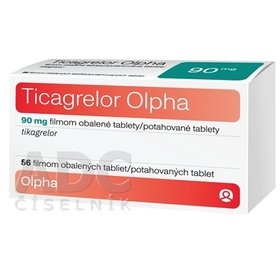
- The active ingredient is ticagrelor. Each film-coated tablet contains 90 mg of ticagrelor.
- The other ingredients are: Tablet core: hypromellose 2910, mannitol, microcrystalline cellulose, sodium starch glycolate, magnesium stearate. Tablet coating: hypromellose 2910, titanium dioxide (E171), macrogol 400, talc, yellow iron oxide (E172).
Description of the appearance of Ticagrelor Olpha and contents of the pack
Film-coated tablet (tablet): the tablets are round, biconvex, yellow in color,
film-coated, with ‘90’ imprinted on one side and smooth on the other side.
Ticagrelor Olpha is available in:
Blisters of 10, 14 or 15 film-coated tablets. Carton box of 56 tablets (4 blisters),
60 tablets (4 blisters), 100 tablets (10 blisters), 100 x 1 tablet (10 perforated blisters), 168
tablets (12 blisters) and 196 tablets (14 blisters).
Not all pack sizes may be marketed.
Marketing Authorisation Holder and Manufacturer
Marketing Authorisation Holder:
Olpha AS,
Rupnicu iela 5,
Olaine, Olaines novads, LV-2114,
Latvia
Manufacturer:
Olpha AS,
Rupnicu iela 5,
Olaine, Olaines novads, LV-2114,
Latvia
Genepharm S.A,
18 km Marathonos Avenue,
15351 Pallini Attiki,
Greece
Ticagrelor Olpha 60 mg film-coated tablets
Ticagrelor
Generic medicine
Read this leaflet carefully before you start taking this medicine as it contains
important information for you.
- Keep this leaflet. You may need to read it again.
- If you have any questions, ask your doctor or pharmacist.
- This medicine has been prescribed for you only. Do not pass it on to others, even if their symptoms are the same as yours, as it could be harmful.
- If you get any side effects, even those not listed in this leaflet, tell your doctor or pharmacist. See section 4.
Contents of this leaflet:
- 1. What Ticagrelor Olpha is and what it is used for
- 2. What you need to know before you take Ticagrelor Olpha
- 3. How to take Ticagrelor Olpha
- 4. Possible side effects
- 5. How to store Ticagrelor Olpha
- 6. Contents of the pack and other information
1. What is Ticagrelor Olpha and what is it used for
What is Ticagrelor Olpha
Ticagrelor Olpha contains an active ingredient called ticagrelor, which belongs to a group of
drugs called antiplatelet agents.
What is Ticagrelor Olpha used for
Ticagrelor Olpha in association with acetylsalicylic acid (another antiplatelet agent)
must be used only in adult patients. This medicine has been prescribed to you because you have had:
- a heart attack more than a year ago. This medicine reduces the chances that you will have another heart attack or stroke or that you may die from heart or blood vessel disease.
How Ticagrelor Olpha works
Ticagrelor Olpha acts on cells called ‘platelets’ (also called thrombocytes). These are very small cells in the blood that help to stop bleeding by clumping together to
close small holes in cut or damaged blood vessels.
However, platelets can also form clots inside diseased blood vessels in the heart
and brain. This can be very dangerous, because:
- the clot can completely stop the blood supply; this can cause a heart attack (myocardial infarction) or stroke, or
- the clot can partially block the blood vessels that supply the heart; this reduces blood flow to the heart and can cause chest pain that comes and goes (called ‘unstable angina’).
Ticagrelor Olpha helps to block the clumping together of platelets. This reduces the chance of
a blood clot forming that can reduce blood flow.
2. What you need to know before taking Ticagrelor Olpha
Do not take Ticagrelor Olpha if:
- You are allergic to ticagrelor or to any of the other ingredients of this medicine (listed
in section 6).
- You have active bleeding.
- You have had a stroke caused by bleeding in the brain.
- You suffer from severe liver problems.
- You are taking any of the following medicines:
- ketoconazole (used for the treatment of fungal infections)
- clarithromycin (used for the treatment of bacterial infections)
- nefazodone (an antidepressant)
- ritonavir and atazanavir (used to treat HIV infection and AIDS) Do not take Ticagrelor Olpha if any of the above situations apply to you. If you are not sure, ask your doctor or pharmacist before taking this medicine.
Warnings and precautions
Talk to your doctor or pharmacist before taking Ticagrelor Olpha if:
- You have an increased risk of bleeding due to:
- a recent serious injury
- a recent surgical procedure (including dental surgery, ask your dentist)
- a disease that affects blood clotting
- recent bleeding from the stomach or intestine (e.g., due to gastric ulcer or “polyps” of the colon)
- You are planning to have a surgical procedure (including dental surgery) at any time during your treatment with Ticagrelor Olpha. This is because there is an increased risk of bleeding. Your doctor may advise you to stop taking this medicine 5 days before the surgery.
- Your heart rate is unusually low (usually less than 60 beats per minute) and you do not already have a device implanted that regulates your heart rhythm (pacemaker).
- You suffer from asthma or another lung problem or have difficulty breathing.
- You develop irregular breathing patterns such as acceleration, slowing down or brief pauses in breathing. The doctor will decide if further evaluation is necessary.
- You have already had problems with your liver or have previously had any condition that affected your liver.
- You have already had blood tests showing a higher than normal amount of uric acid. If any of the above situations apply to you (or if you are not sure), talk to your doctor or pharmacist before taking this medicine.
If you are taking both Ticagrelor Olpha and heparin:
- Your doctor may request a blood sample for diagnostic tests if they suspect a rare platelet disease caused by heparin. It is important to inform your doctor that you are taking both Ticagrelor Olpha and heparin, as Ticagrelor Olpha may affect the diagnostic test.
Children and adolescents
Ticagrelor Olpha is not recommended in children and adolescents under 18 years of age.
Other medicines and Ticagrelor Olpha
Tell your doctor or pharmacist if you are taking, have recently taken or might take
any other medicines. This is because Ticagrelor Olpha can affect the way some
medicines work, and some medicines can have an effect on Ticagrelor Olpha.
Tell your doctor or pharmacist if you are taking any of the following medicines:
- rosuvastatin (a medicine for the treatment of high cholesterol)
- more than 40 mg per day of simvastatin or lovastatin (medicines used to treat high cholesterol)
- rifampicin (an antibiotic)
- phenytoin, carbamazepine and phenobarbital (used to control seizures)
- digoxin (used to treat heart failure)
- cyclosporine (used to lower the body’s defenses)
- quinidine and diltiazem (used in the treatment of abnormal heart rhythm)
- beta blockers and verapamil (used to treat high blood pressure)
- morphine and other opioids (used to treat severe pain)
In particular, tell your doctor or pharmacist if you are taking any of the following medicines
that increase the risk of bleeding:
- ‘oral anticoagulants’ often referred to as ‘blood thinners’, including warfarin.
- Non-Steroidal Anti-Inflammatory Drugs (abbreviated as NSAIDs), often used as painkillers, such as ibuprofen and naproxen.
- Selective Serotonin Reuptake Inhibitors (abbreviated as SSRIs) taken as antidepressants, such as paroxetine, sertraline and citalopram.
- other medicines such as ketoconazole (used to treat fungal infections), clarithromycin (used to treat bacterial infections), nefazodone (an antidepressant), ritonavir and atazanavir (used to treat HIV infection and AIDS), cisapride (used to treat heartburn) or ergot alkaloids (used for the treatment of migraine and headache).
Also, tell your doctor that, because you are taking Ticagrelor Olpha, you may have an increased risk
of bleeding if your doctor prescribes fibrinolytic agents, often called ‘thrombolytics’, such as
streptokinase or alteplase.
Pregnancy and breastfeeding
The use of Ticagrelor Olpha is not recommended if you are pregnant or suspect you may be pregnant.
Women must use appropriate contraceptive methods to avoid pregnancy during treatment
with this medicine.
Talk to your doctor before taking this medicine if you are breastfeeding. The doctor
will discuss with you the benefits and risks of treatment with Ticagrelor Olpha during this period.
If you are pregnant, suspect you are pregnant, or are planning to become pregnant, or if you are breastfeeding
ask your doctor or pharmacist for advice before taking this medicine.
Driving and using machines
It is unlikely that Ticagrelor Olpha will affect your ability to drive or operate
machinery. If you experience dizziness or confusion while taking Ticagrelor Olpha, be
careful while driving or using machines.
Sodium content
This medicine contains less than 1 mmol (23 mg) of sodium per tablet, i.e. essentially
“sodium-free”.
3. How to take Ticagrelor Olpha
Take this medicine following exactly the instructions of your doctor or pharmacist. If you have any doubts, ask your doctor or pharmacist.
How much Ticagrelor Olpha to take
- The usual dose is one 60 mg tablet twice a day. Continue to take Ticagrelor Olpha for the entire period indicated by your doctor.
- Take this medicine at about the same time each day (for example, one tablet in the morning and one in the evening).
If you are taking Ticagrelor Olpha with other medicines for blood coagulation
Your doctor will generally tell you to also take acetylsalicylic acid. This is a substance present in many medicines used to prevent blood coagulation. Your doctor will tell you how much to take (generally between 75 and 150 mg per day).
How to take Ticagrelor Olpha
You can take the tablet during or away from meals.
If you have difficulty swallowing the tablet
If you have difficulty swallowing the tablet, you can crush it and mix it with water as follows:
- Crush the tablet into a fine powder
- Pour the powder into a half glass of water
- Mix and drink immediately
- To make sure you have not left any medicine, rinse the empty glass with half a glass of water and drink. If you are in hospital, the tablet may be given to you mixed with a little water and administered with a tube through your nose (nasogastric tube).
If you take more Ticagrelor Olpha than you should
If you have taken more Ticagrelor Olpha than you should, contact your doctor or go to hospital immediately. Bring the medicine packaging with you. You may be at increased risk of bleeding.
If you forget to take Ticagrelor Olpha
- If you forget to take a dose, take the next dose as usual.
- Do not take a double dose (two doses at the same time) to make up for the forgotten dose.
If you stop taking Ticagrelor Olpha
Do not stop taking Ticagrelor Olpha without first talking to your doctor. Take this medicine regularly and for as long as your doctor prescribes it. If you stop taking Ticagrelor Olpha, this may increase the chances of you having another heart attack or stroke, or that you may die from a disease related to heart or blood vessel problems.
If you have any doubts about using this medicine, ask your doctor or pharmacist.
4. Possible side effects
Like all medicines, this medicine can cause side effects, although not everybody gets them.
The following side effects may occur with this medicine:
Ticagrelor Olpha affects blood coagulation, therefore many side effects are related to
bleeding. Bleeding can occur in any part of the body. Some bleeding is common (such as bruises and
nosebleeds). Severe bleeding is uncommon, but can be life-threatening.
Seek immediate medical attention if you notice any of the following symptoms – you may
need urgent medical care:
- Bleeding in the brain or inside the skull is an uncommon side effectand can cause signs of a stroke, such as:
- sudden numbness or weakness of arms, legs or face, especially if on only one side of the body
- sudden confusion, difficulty speaking or understanding others
- sudden difficulty walking or loss of balance or coordination
- sudden dizziness or severe headache of unknown cause
- Signs of bleeding such as:
- severe bleeding or that cannot be stopped
- unexpected bleeding or bleeding that lasts a long time
- pink, red, or brown urine
- vomit that is red blood or looks like coffee grounds
- red or black stools (appear tarry)
- coughing up or vomiting blood clots
- Fainting (syncope)
- a temporary loss of consciousness due to a sudden drop in blood flow to the brain (common)
- Signs of a blood clotting problem called Thrombotic Thrombocytopenic Purpura (TTP) such as:
- fever and purplish spots (called purpura) on the skin or in the mouth, with or without yellowing of the skin or eyes (jaundice), unexplained extreme fatigue or confusion
Contact your doctor if you notice any of the following symptoms:
- Feeling short of breath - this event is very common.It may be due to your heart condition or another cause, or it may be a side effect of Ticagrelor Olpha. Dyspnea (shortness of breath) due to Ticagrelor Olpha is generally mild and characterized by a sudden, unexpected need for air that usually occurs at rest and may manifest in the first weeks of therapy and may disappear for many. If your feeling of shortness of breath worsens or persists, tell your doctor. The doctor will decide whether treatment is necessary or to proceed with further investigations.
Other possible side effects
Very common (may affect more than 1 in 10 people)
- High uric acid concentration in the blood (as shown by tests)
- Bleeding caused by blood disorders
Common (may affect up to 1 in 10 people)
- Bruising
- Headache
- Dizziness or feeling like the room is spinning
- Diarrhea or indigestion
- Feeling unwell (nausea)
- Constipation
- Skin rash
- Itching
- Severe pain and swelling of the joints - these are signs of gout
- Feeling dizzy or confused, or blurred vision - these are signs of low blood pressure
- Nosebleeds
- Bleeding after surgery or cuts (for example while shaving) and wounds, more than normal
- Bleeding of the stomach lining (ulcer)
- Gum bleeding
Uncommon (may affect up to 1 in 100 people
- Allergic reaction - skin rash, itching, or swelling of the face or lips/tongue may be signs of an allergic reaction
- Confusion
- Vision problems caused by blood in the eyes
- Heavier vaginal bleeding or that occurs at times other than your normal menstrual bleeding
- Bleeding in joints and muscles that can cause painful swelling
- Blood in the ears
- Internal bleeding, this can cause dizziness or confusion
Not known (frequency cannot be estimated from available data)
- Abnormally slow heart rate (usually less than 60 beats per minute)
Reporting of side effects
If you get any side effects, talk to your doctor or pharmacist. This includes any side effects not listed
in this leaflet. You can also report side effects directly through the national reporting system at:
https://www.aifa.gov.it/content/segnalazioni-reazioni-avverse.
By reporting side effects you can help provide more information on the safety of
this medicine.
5. How to store Ticagrelor Olpha
Keep this medicine out of the sight and reach of children.
Do not use this medicine after the expiry date that is stated on the blister and the package after
the abbreviation EXP/Expiry. The expiry date refers to the last day of that month.
This medicine does not require special storage conditions.
Store in the original package to protect the medicine from light.
Do not dispose of any medicine in wastewater or household waste. Ask your pharmacist how to
dispose of medicines you no longer use. This will help protect the environment.
6. Contents of the pack and other information
What Ticagrelor Olpha contains
- The active substance is ticagrelor. Each film-coated tablet contains 60 mg of ticagrelor.
- The other ingredients are: Tablet core: hypromellose 2910, mannitol, microcrystalline cellulose, sodium starch glycolate, magnesium stearate. Tablet coating: hypromellose 2910, titanium dioxide (E171), macrogol 400, talc, and red iron oxide (E172).
Description of the appearance of Ticagrelor Olpha and contents of the pack
Film-coated tablet (tablet): the tablets are round, biconvex, pink in colour,
film-coated, with ‘60’ imprinted on one side and smooth on the other side.
Ticagrelor Olpha is available in:
Blisters of 14 or 15 film-coated tablets. Cardboard box of 56 tablets (4 blisters), 60
tablets (4 blisters), 168 tablets (12 blisters) and 196 tablets (14 blisters).
Not all pack sizes may be marketed.
Marketing Authorisation Holder and Manufacturer
Marketing Authorisation Holder:
Olpha AS,
Rupnicu iela 5,
Olaine, Olaines novads, LV-2114,
Latvia
Manufacturer:
Olpha AS,
Rupnicu iela 5,
Olaine, Olaines novads, LV-2114,
Latvia
Genepharm S.A,
18 km Marathonos Avenue,
15351 Pallini Attiki,
Greece

Nie jesteś pewien, czy ten lek jest odpowiedni dla ciebie?
Omów swoje objawy i leczenie z lekarzem online.

Zacząłeś przyjmować lek i masz pytania?
Omów swoje objawy i leczenie z lekarzem online.
- Kraj rejestracji
- Postać farmaceutycznaFilm-coated tablet, 60 MG
- Kod ATCB01AC24
- Substancja czynna
- Wymaga receptyTak
- Producent
- Te treści mają charakter wyłącznie informacyjny i nie zastępują konsultacji lekarskiej.
- Zamienniki TIKAGRELOR OLPAPostać farmaceutyczna: Film-coated tablet, 60 mgSubstancja czynna: ticagrelorProducent: AURORA LICENSING SRLWymaga receptyPostać farmaceutyczna: Film-coated tablet, 90 MGSubstancja czynna: ticagrelorProducent: ASTRAZENECA ABWymaga receptyPostać farmaceutyczna: Film-coated tablet, 60 MGSubstancja czynna: ticagrelorProducent: Abdi Farma GmbHWymaga recepty
Odpowiedniki TIKAGRELOR OLPA w innych krajach
Leki z tą samą substancją czynną dostępne w innych krajach.
Odpowiednik TIKAGRELOR OLPA w Hiszpania
Odpowiednik TIKAGRELOR OLPA w Polska
Odpowiednik TIKAGRELOR OLPA w Ukraina
Lekarze online w sprawie TIKAGRELOR OLPA
Omów stosowanie TIKAGRELOR OLPA, bezpieczeństwo i ocenę zasadności recepty zgodnie z obowiązującymi przepisami.









Uzyskaj receptę na TIKAGRELOR OLPA online
Wypełnij 2-minutowy formularz
Opisz swoje objawy, historię choroby i lek, o który prosisz.
Wybierz lekarza lub pozwól nam przydzielić
Wybierz specjalistę lub dopasujemy Cię do najbliższego dostępnego lekarza.
Lekarz analizuje Twój przypadek
Zazwyczaj w ciągu 30 minut. Może zadawać dodatkowe pytania przez czat.
Odbierz w dowolnej aptece
Recepta elektroniczna wysłana na Twój e-mail — ważna w całej Polsce.
Często zadawane pytania
TIKAGRELOR OLPA wymaga recepty w Włochy. Możesz skonsultować się z lekarzem online, aby sprawdzić, czy ten lek może być odpowiedni w Twojej sytuacji.
Substancją czynną w TIKAGRELOR OLPA jest ticagrelor. Informacja ta pomaga rozpoznać leki o tym samym składzie, ale pod różnymi nazwami handlowymi.
TIKAGRELOR OLPA jest produkowany przez OLPHA AS. Nazwy handlowe i opakowania mogą się różnić w zależności od dystrybutora.
Lekarze, tacy jak Lekarze rodzinni, Psychiatrzy, Dermatolodzy, Kardiolodzy, Endokrynolodzy, Gastroenterolodzy, Pulmonolodzy, Nefrolodzy, Reumatolodzy, Hematolodzy, Zakaźnicy, Alergolodzy, Geriatrzy, Pediatrzy, Onkolodzy, mogą ocenić, czy stosowanie TIKAGRELOR OLPA jest odpowiednie w Twoim przypadku, w zależności od sytuacji klinicznej i lokalnych przepisów. Możesz umówić konsultację online, aby omówić objawy i możliwe dalsze kroki.
Polska posiada dobrze rozwiniętą infrastrukturę ochrony zdrowia w dużych miastach, takich jak Warszawa, Kraków, Wrocław i Gdańsk. Apteki są łatwo dostępne i działają zgodnie z obowiązującymi przepisami, zapewniając dostęp do leków na receptę.
Możesz kupić TIKAGRELOR OLPA w Warszawie, Krakowie, Wrocławiu lub Gdańsku w każdej aptece, posiadając ważną receptę.
Aby uzyskać receptę, możesz skorzystać z Oladoctor:
Inne leki zawierające tę samą substancję czynną (ticagrelor) to m.in. AURETIKA, BRILIQUE, TIKAGRELOR ABDI. Mogą one różnić się nazwą handlową lub postacią, ale zawierają ten sam składnik terapeutyczny. Przed zmianą lub rozpoczęciem nowego leku skonsultuj się z lekarzem.
