



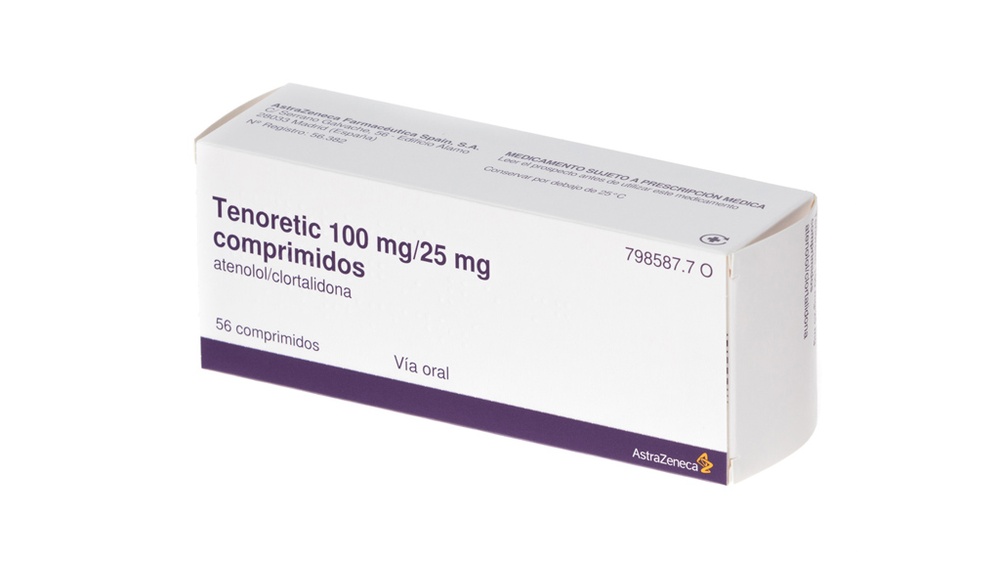
TENORETIC 100 mg/25 mg Tabletki

Ocena recepty online
Lekarz przeanalizuje Twój przypadek i zdecyduje, czy wystawienie recepty jest medycznie uzasadnione.

Porozmawiaj z lekarzem o tym leku
Omów swoje objawy i opcje leczenia podczas szybkiej konsultacji online.



Jak stosować TENORETIK
Treść ulotki
Tenoretic 100 mg + 25 mg tablets
Atenolol + Chlortalidone
Read this leaflet carefully before you start taking this medicine because it contains
important information for you.
- Keep this leaflet. You may need to read it again.
- If you have any questions, ask your doctor or pharmacist.
- This medicine has been prescribed for you only. Do not pass it on to others, even if they have the same symptoms as you, as it may be harmful.
- If you get any side effects, even those not listed in this leaflet, tell your doctor or pharmacist. See section 4.
Contents of this leaflet:
- 1. What Tenoretic is and what it is used for
- 2. What you need to know before you take Tenoretic
- 3. How to take Tenoretic
- 4. Possible side effects
- 5. How to store Tenoretic
- 6. Contents of the pack and other information
1. What is Tenoretic and what it is used for
Tenoretic contains two active ingredients: atenolol and chlortalidone.
Atenolol belongs to a group of medicines called beta-blockers, which work by slowing down the heartbeat.
Chlortalidone belongs to a group of medicines called diuretics, which work by increasing the amount
of urine produced by the kidneys.
Tenoretic is indicated for the treatment of high blood pressure (hypertension) in adults,
when it is not possible to control it with atenolol or chlortalidone monotherapy alone.
Contact your doctor if you do not feel better or if you feel worse.
2. What you need to know before taking Tenoretic
Do not take Tenoretic
- if you are allergic to atenolol or chlortalidone or to any of the other ingredients of this medicine (listed in section 6)
- if you are allergic to sulfonamide derivatives (a class of antibiotics with antibacterial action, used in case of infections)
- if you are pregnant or planning to become pregnant or if you are breastfeeding
- if you suffer from heart disease, including uncontrolled heart failure with inadequate therapy (the heart is unable to pump enough blood to meet the body's needs) or second and third degree heart block (a disease of the heart's conduction system)
- if you suffer from reduced or irregular heartbeat, very low blood pressure, or severe circulatory disorders
- if you suffer from a tumor called “pheochromocytoma” that is not being treated (this tumor generally develops near a kidney and can cause high blood pressure)
- if you suffer from a rare disease characterized by brief episodes of narrowing of the arteries, the blood vessels that carry blood from the heart to the rest of the body (Raynaud's syndrome)
- if you suffer from severe kidney disease
- if your doctor has diagnosed you with abnormally high levels of acids in your blood (metabolic acidosis)
- if you suffer from severe asthma and severe chronic obstructive pulmonary diseases
- if you are being treated with verapamil or diltiazem intravenously.
If you are in any of the situations above, tell your doctor.
Warnings and precautions
Talk to your doctor or pharmacist before taking Tenoretic:
- if you suffer from thyroid problems (a gland located in the neck), the medicine may mask the symptoms of hyperthyroidism, such as a fast heartbeat, tremor and excessive sweating
- if you suffer from diabetes (a disease characterized by an excess of sugar in the blood)
- if you suffer from heart or blood circulation problems even if controlled by adequate therapy
- if you suffer from respiratory problems or asthma
- if you have a tumor called “pheochromocytoma” being treated
- if you have electrolyte imbalances in the blood (alteration of the concentrations of salts, such as sodium and potassium, normally dissolved in the blood)
- if you suffer from liver problems
- if you suffer from a type of chest pain called “Prinzmetal's angina”
- if you have ever had allergic reactions in the past (for example, from insect bites)
- if you need to receive a type of medicine called anesthetics (medicines administered, for example, during surgery)
- if you are taking ophthalmic beta-blockers (medicines that lower the pressure inside the eye), as they may increase the effects of medicines similar to Tenoretic
- if you suffer from first-degree heart block (a disease of the heart's conduction system)
- if you have decreased vision or eye pain. These could be symptoms of fluid accumulation in the vascular layer of the eye (choroidal effusion) or increased pressure in the eye and can occur within hours or weeks of taking Tenoretic. If left untreated, this condition can lead to permanent vision loss. If you have had an allergy to penicillin or sulfonamides in the past, you may be at higher risk of developing this condition.
Reduced heart rate (number of heartbeats per minute)
During treatment with Tenoretic, you may experience a reduction in heartbeats (see
section “Possible side effects”). This effect is normal, but if it becomes a cause for
concern for you, consult your doctor.
Diabetes or hypoglycemia (low blood sugar levels)
If you suffer from diabetes and are being treated with antidiabetics (medicines to treat diabetes), this medicine
may increase blood sugar levels. This generally causes an increase in heart rate.
Uricemia (uric acid in the blood)
With prolonged treatments, Tenoretic may cause an increase in uric acid levels in the blood, which
may cause gout (a disease that causes joint pain). Your doctor will indicate the appropriate
therapy.
Anesthesia
If you need to be hospitalized, you must inform the medical staff of the ongoing treatment with
Tenoretic and, in particular, the anesthesiologist (the doctor responsible for anesthesia) in case of
surgery.
For those who play sports
The use of the drug without a therapeutic need constitutes doping and may still result in a positive
doping test.
Children and adolescents
Tenoretic must notbe given to children and adolescents under the age of 18 years.
Other medicines and Tenoretic
Tell your doctor or pharmacist if you are taking, have recently taken or might take
any other medicines.
In particular, tell your doctor if you are taking any of the following medicines:
- medicines for the treatment of irregular heartbeats (amiodarone, disopyramide or other antiarrhythmics)
- lithium (medicine used for certain mental disorders)
- pain relievers such as indometacin or ibuprofen (medicines used for pain and inflammation)
- medicines for the treatment of high blood pressure or chest pain (in particular verapamil, diltiazem, clonidine, or nifedipine). At least 48 hours must have elapsed since the discontinuation of any previous therapy with verapamil or diltiazem before starting treatment with Tenoretic, or vice versa
- medicine for the treatment of heart failure (digoxin, a medicine used for heart disorders)
- nasal decongestants or other drugs (containing, for example, pseudoephedrine) for the treatment of colds
- clonidine (medicine for the treatment of high blood pressure or for the prevention of migraine). If you are taking clonidine and Tenoretic together, do not stop treatment with clonidine or Tenoretic without first consulting your doctor
- drugs such as adrenaline (a medicine that stimulates the heart)
- baclofen (a medicine used to treat muscle cramps)
Pregnancy and breastfeeding
If you are pregnant, suspect you are pregnant or are planning a pregnancy, or if you are breastfeeding with
breast milk, do not take Tenoretic (see section 2 “Do not take Tenoretic”).
Driving and using machines
It is unlikely that taking Tenoretic will affect your ability to drive and use
machinery.
However, dizziness and fatigue may sometimes occur; if you experience these symptoms, it is
advisable not to engage in these activities.
Tenoretic contains sodium
This medicine contains less than 1 mmol (23 mg) of sodium per tablet, i.e. essentially "sodium-free”.
3. How to take Tenoretic
Take this medicine following exactly the instructions of your doctor or pharmacist. If you have any doubts, ask your doctor or pharmacist.
The tablets must be swallowed whole with a little water, preferably always at the same time.
Adults
The recommended dose is one tablet a day.
Elderly
If you are elderly, your doctor may decide to prescribe you a lower dose of Tenoretic.
If you have severe kidney problems
If you suffer from severe kidney problems, you should not take Tenoretic (see paragraph “Do not take
Tenoretic”).
Use in children and adolescents
Tenoretic should not be given to children and adolescents under the age of 18 years.
If you use more Tenoretic than you should
In case of accidental ingestion/intake of an excessive dose of Tenoretic, immediately inform your doctor or go to the nearest hospital.
You may experience a slowing of the heartbeat, dizziness caused by low blood pressure and
difficulty breathing. Your heart may also struggle to supply blood to the rest of the body (acute
heart failure).
If you forget to use Tenoretic
Do not take a double dose to make up for the missed tablet.
If you forget to take a dose, it is advisable to take it as soon as possible. Two doses must not
be taken at the same time.
If you stop taking Tenoretic
Improvement in your health condition should not lead to discontinuation of treatment unless
requested by your doctor.
Discontinuation of treatment must occur gradually.
If you have any doubts about the use of this medicine, ask your doctor or pharmacist.
4. Possible side effects
Like all medicines, this medicine can cause side effects, although not everybody gets them.
During treatment with Tenoretic, as with any medicine, the following side effects may occur with the following frequency:
Common (may affect up to 1 in 10 people):
- slowed heartbeat
- cold hands and feet
- stomach and intestinal disorders (e.g. nausea, diarrhoea)
- tiredness
- increased levels of uric acid in the blood, reduced levels of potassium in the blood, reduced levels of sodium in the blood (which can cause weakness, vomiting and cramps), reduced glucose tolerance (a condition that may lead to increased blood sugar).
Uncommon (may affect up to 1 in 100 people):
- sleep disturbances
- changes in blood tests related to liver function (transaminases).
Rare (may affect up to 1 in 1000 people):
- purpura (purple spots on the skin), thrombocytopenia (reduced number of platelets in the blood, which may manifest with bruising), leukopenia (reduced number of white blood cells in the blood, a type of blood cell)
- mood changes, nightmares, confusion, psychosis (mental disorders) and hallucinations (seeing inexplicable things)
- dizziness, especially when standing up, headache, tingling in the hands
- dry eyes, visual disturbances
- difficulty breathing and/or swelling of the ankles if you suffer from heart failure (heart disease)
- heart block (a condition that can cause an abnormal heartbeat, dizziness, fatigue or fainting)
- sudden drop in blood pressure when standing up with possibility of loss of consciousness, worsening of circulatory disorders, numbness and cramps in the fingers followed by a sensation of heat and pain (Raynaud's phenomenon)
- worsening of breathing difficulties if you suffer from asthma or have suffered from asthmatic problems
- dry mouth
- jaundice (yellowing of the skin and whites of the eyes), pancreatitis (inflammation of the pancreas, a gland located near the stomach)
- hair loss, skin rashes including worsening of psoriasis (chronic skin inflammation)
- inability to get an erection (impotence).
Very rare (may affect up to 1 in 10000 people):
- alteration of laboratory values for measuring certain immune reactions (positive test for antinuclear antibodies).
Frequency not known (the frequency cannot be estimated from available data):
- constipation
- lupus-like syndrome (a disease in which the immune system produces antibodies that primarily attack the skin and joints)
- rapid onset of blurred distance vision (acute myopia)
- decreased vision or eye pain due to increased pressure (possible signs of fluid accumulation in the vascular layer of the eye (choroidal effusion) or acute angle-closure glaucoma)
- depression.
Reporting of side effects
If you get any side effects, talk to your doctor or pharmacist. This includes any possible side effects not listed in this leaflet. You can also report side effects directly through the national reporting system at https://www.aifa.gov.it/content/segnalazioni-reazioni-avverse.
By reporting side effects you can help provide more information on the safety of this medicine.
5. How to store Tenoretic
- Do not store at a temperature above 25°C. Store in the original package to protect the medicine from light and moisture.
- Keep this medicine out of the sight and reach of children.
- Do not use this medicine after the expiry date which is stated on the pack after EXP. The expiry date refers to the last day of that month. Do not dispose of any medicine in waste water or household waste. Ask your pharmacist how to dispose of medicines you no longer use. This will help protect the environment.
6. Contents of the pack and other information
What Tenoretic contains
- the active ingredients are: atenolol 100 mg and chlortalidone 25 mg.
- the other ingredients are :heavy magnesium carbonate, corn starch, sodium lauryl sulfate, gelatin, magnesium stearate.
Description of the appearance of Tenoretic and contents of the pack
Tablets packaged in blisters of 14 tablets and 28 tablets.
Not all pack sizes may be available.
Marketing Authorisation Holder
Atnahs Pharma Netherlands B.V.
Copenhagen Towers,
Ørestands Boulevard 108,
- 5.tv, DK-2300, København S, Denmark
Manufacturer
AstraZeneca AB
Gärtunavägen
SE-151 85 Södertälje
Sweden
Tenoretic 50 mg + 12,5 mg tablets
Atenolol + Clortalidone
Read this leaflet carefully before you start taking this medicine because it contains
important information for you.
- Keep this leaflet. You may need to read it again.
- If you have any questions, ask your doctor or pharmacist.
- This medicine has been prescribed for you only. Do not pass it on to others, even if their symptoms are the same as yours, as it may be harmful.
- If you get any side effects, even those not listed in this leaflet, tell your doctor or pharmacist. See section 4.
Contents of this leaflet:
- 1. What Tenoretic is and what it is used for
- 2. What you need to know before you take Tenoretic
- 3. How to take Tenoretic
- 4. Possible side effects
- 5. How to store Tenoretic
- 6. Contents of the pack and other information
1. What is Tenoretic and what it is used for
Tenoretic contains two active ingredients: atenolol and chlortalidone.
Atenolol belongs to a group of medicines called beta-blockers, which work by slowing down the heartbeat.
Chlortalidone belongs to a group of medicines called diuretics, which work by increasing the amount
of urine produced by the kidneys.
Tenoretic is indicated for the treatment of high blood pressure (hypertension) in adults,
when it is not possible to control it with atenolol or chlortalidone monotherapy alone.
See your doctor if you do not feel better or if you feel worse.
2. What you need to know before taking Tenoretic
Do not take Tenoretic
- If you are allergic to atenolol or chlortalidone or to any of the other ingredients of this medicine (listed in section 6)
- if you are allergic to sulfonamide derivatives (a class of antibiotics with antibacterial action, used in case of infections)
- if you are pregnant or planning to become pregnant or if you are breastfeeding
- if you suffer from heart disease, including uncontrolled heart failure with inadequate therapy (the heart cannot pump enough blood to meet the body's needs) or second and third degree heart block (disease of the heart's conduction system)
- if you suffer from reduced or irregular heartbeat, very low blood pressure, or severe circulatory disorders
- if you suffer from a tumor called “pheochromocytoma” that is not being treated (this tumor usually develops near a kidney and can cause high blood pressure)
- if you suffer from a rare disease characterized by short episodes of narrowing of the arteries, the blood vessels that carry blood from the heart to the rest of the body (Raynaud's syndrome)
- if you suffer from severe kidney disease
- if your doctor has diagnosed you with abnormally high levels of acids in your blood (metabolic acidosis)
- if you suffer from severe asthma and severe chronic obstructive pulmonary diseases
- if you are being treated with verapamil or diltiazem intravenously.
If you are in any of the above situations, inform your doctor.
Warnings and precautions
Consult your doctor or pharmacist before taking Tenoretic:
- if you suffer from thyroid problems (a gland located in the neck), the medicine may mask the symptoms of hyperthyroidism, such as rapid heartbeat, tremor and excessive sweating
- if you suffer from diabetes (a disease characterized by an excess of sugar in the blood)
- if you suffer from heart or blood circulation problems even if controlled by adequate therapy
- if you suffer from respiratory problems or asthma
- if you have a tumor called “pheochromocytoma” being treated
- if you have electrolyte imbalances in the blood (alteration of the concentrations of salts, such as sodium and potassium, normally dissolved in the blood)
- if you suffer from liver problems
- if you suffer from a type of chest pain called “Prinzmetal's angina”
- if you have ever had allergic reactions in the past (for example, from insect stings)
- if you need to receive a type of medicine called anesthetics (medicines administered, for example, during surgery)
- if you are taking ophthalmic beta-blockers (medicines that lower the pressure inside the eye), as they may increase the effects of medicines similar to Tenoretic
- if you suffer from first-degree heart block (disease of the heart's conduction system)
- if you have decreased vision or eye pain. These may be symptoms of fluid accumulation in the vascular layer of the eye (choroidal effusion) or an increase in pressure in the eye and can occur within hours or weeks of taking Tenoretic. If left untreated, this condition can lead to permanent vision loss. If you have had a penicillin or sulfonamide allergy in the past, you may be at higher risk of developing this condition.
Reduced heart rate (number of heartbeats per minute)
During treatment with Tenoretic you may experience a reduction in heart rate (see
section “Possible side effects”). This effect is normal, but if it becomes a cause for
concern for you, consult your doctor.
Diabetes or hypoglycemia (low blood sugar levels)
If you suffer from diabetes and are being treated with antidiabetics (medicines to treat diabetes), this medicine
may increase blood sugar levels. This generally causes an increase in heart rate.
Uricemia (uric acid in the blood)
With prolonged treatments Tenoretic may cause an increase in uric acid levels in the blood, which
may cause gout (a disease that causes joint pain). Your doctor will indicate the appropriate
therapy.
Anesthesia
If you need to be hospitalized, you must inform the medical staff of the ongoing treatment with
TENORETIC and, in particular, the anesthesiologist (the doctor responsible for anesthesia) in case of
surgery.
For those who play sports
The use of the drug without therapeutic need constitutes doping and may still result in positive
anti-doping tests.
Children and adolescents
Tenoretic must notbe given to children and adolescents under 18 years of age.
Other medicines and Tenoretic
Tell your doctor or pharmacist if you are taking, have recently taken or might take
any other medicines.
In particular, tell your doctor if you are taking any of the following medicines:
- medicines for the treatment of irregular heartbeats (amiodarone, disopyramide or other antiarrhythmics)
- lithium (medicine used for some mental disorders)
- pain relievers such as indometacin or ibuprofen (medicines used for pain and inflammation)
- medicines for the treatment of high blood pressure or chest pain (especially verapamil, diltiazem, clonidine, or nifedipine). At least 48 hours must have elapsed since the discontinuation of any previous therapy with verapamil or diltiazem before starting treatment with Tenoretic, or vice versa
- medicine for the treatment of heart failure (digoxin, a medicine used for heart disorders)
- nasal decongestants or other drugs (containing, for example, pseudoephedrine) for the treatment of colds
- clonidine (medicine for the treatment of high blood pressure or for the prevention of migraine). If you are taking clonidine and Tenoretic together, do not stop treatment with clonidine or Tenoretic without first consulting your doctor
- drugs such as adrenaline (a medicine that stimulates the heart)
- baclofen (a medicine used to treat muscle cramps)
Pregnancy and breastfeeding
If you are pregnant, suspect or are planning a pregnancy, or if you are breastfeeding with
breast milk, do not take Tenoretic (see section 2 “Do not take Tenoretic”).
Driving and using machines
It is unlikely that taking Tenoretic will affect your ability to drive and use
machinery.
However, dizziness and fatigue may sometimes occur; if you experience these symptoms, it is
advisable not to engage in these activities.
Tenoretic contains sodium
This medicine contains less than 1 mmol (23 mg) of sodium per tablet, i.e. essentially "sodium-free”.
3. How to take Tenoretic
Take this medicine following exactly the instructions of your doctor or pharmacist. If you
have any doubts, consult your doctor or pharmacist.
The tablets must be swallowed whole with a little water, preferably always at the same time.
Adults
The recommended dose is one tablet a day.
Elderly
If you are elderly, your doctor may decide to prescribe you a lower dose of Tenoretic.
If you have severe kidney problems
If you suffer from severe kidney problems, you should not take Tenoretic (see paragraph “Do not take
Tenoretic”).
Use in children and adolescents
Tenoretic must notbe administered to children and adolescents under the age of 18 years.
If you use more Tenoretic than you should
In case of accidental ingestion/intake of an excessive dose of Tenoretic, immediately
inform your doctor or go to the nearest hospital.
You may experience a slowing of the heartbeat, dizziness caused by low blood pressure and
difficulty breathing. Your heart may also struggle to supply blood to the rest of the body (acute
heart failure).
If you forget to use Tenoretic
Do not take a double dose to make up for the missed tablet.
If you forget to take a dose, it is advisable to take it as soon as possible. Two doses must not
be taken at the same time.
If you stop taking Tenoretic
Improvement in your health condition should not lead to discontinuation of treatment unless
requested by your doctor.
Discontinuation of treatment must occur gradually.
If you have any doubts about the use of this medicine, ask your doctor or pharmacist.
4. Possible side effects
Like all medicines, this medicine can cause side effects, although not everybody gets them.
During treatment with Tenoretic, as with any medicine, the following side effects may occur with the following frequency:
Common (may affect up to 1 in 10 people):
- slowed heartbeat
- cold hands and feet
- stomach and intestinal disorders (e.g. nausea, diarrhoea)
- tiredness
- increased levels of uric acid in the blood, reduced levels of potassium in the blood, reduced levels of sodium in the blood (which can cause weakness, vomiting and cramps), reduced glucose tolerance (a condition that may lead to increased blood sugar).
Uncommon (may affect up to 1 in 100 people):
- sleep disturbances
- changes in blood tests related to liver function (transaminases).
Rare (may affect up to 1 in 1000 people):
- purpura (purple spots on the skin), thrombocytopenia (reduced number of platelets in the blood, which may manifest with bruising), leukopenia (reduced number of white blood cells in the blood, a type of blood cell)
- mood changes, nightmares, confusion, psychosis (mental disorders) and hallucinations (seeing inexplicable things)
- dizziness, especially when standing up, headache, tingling in the hands
- dry eyes, visual disturbances
- difficulty breathing and/or swelling of the ankles if you have heart failure (heart disease)
- heart block (a condition that can cause an abnormal heartbeat, dizziness, fatigue or fainting)
- sudden drop in blood pressure when standing up with the possibility of loss of consciousness, worsening of circulatory disorders, numbness and cramps in the fingers followed by a sensation of heat and pain (Raynaud's phenomenon)
- worsening of breathing difficulties if you have asthma or have suffered from asthma problems
- dry mouth
- jaundice (yellowing of the skin and whites of the eyes), pancreatitis (inflammation of the pancreas, a gland located near the stomach)
- hair loss, skin rashes including worsening of psoriasis (chronic skin inflammation)
- inability to get an erection (impotence).
Very rare (may affect up to 1 in 10000 people):
- alteration of laboratory values for measuring certain immune reactions (positive test for antinuclear antibodies).
Frequency not known (the frequency cannot be estimated from the available data):
- constipation
- lupus-like syndrome (a disease in which the immune system produces antibodies that mainly attack the skin and joints)
- rapid onset of distant vision impairment (acute myopia)
- decreased vision or eye pain due to increased pressure (possible signs of fluid accumulation in the vascular layer of the eye (choroidal effusion) or acute angle-closure glaucoma)
- depression.
Reporting of side effects
If you get any side effects, even those not listed in this leaflet, tell your
doctor or pharmacist. You can also report side effects directly through the national reporting system at https://www.aifa.gov.it/content/segnalazioni-reazioni-avverse.
By reporting side effects you can help provide more information on the safety of
this medicine.
5. How to store Tenoretic
- Do not store at a temperature above 25°C. Store in the original packaging to protect the medicine from light and moisture.
- Keep this medicine out of the sight and reach of children.
- Do not use this medicine after the expiry date which is stated on the pack after EXP. The expiry date refers to the last day of that month.
Do not dispose of any medicine in wastewater or household waste. Ask your pharmacist how to
dispose of medicines you no longer use. This will help protect the environment.
6. Contents of the pack and other information
What Tenoretic contains
- the active ingredients are: atenolol 50 mg and chlortalidone 12.5 mg
- the other ingredients are: heavy magnesium carbonate, corn starch, sodium lauryl sulfate, gelatin, magnesium stearate.
Description of the appearance of Tenoretic and contents of the pack
Tablets packaged in blisters of 28 tablets.
Marketing Authorisation Holder
Atnahs Pharma Netherlands B.V.
Copenhagen Towers,
Ørestands Boulevard 108,
- 5.tv, DK-2300, København S, Denmark
Manufacturer
AstraZeneca AB
Gärtunavägen
SE-151 85 Södertälje
Sweden

Nie jesteś pewien, czy ten lek jest odpowiedni dla ciebie?
Omów swoje objawy i leczenie z lekarzem online.

Zacząłeś przyjmować lek i masz pytania?
Omów swoje objawy i leczenie z lekarzem online.
- Kraj rejestracji
- Postać farmaceutycznaTablet, 100 MG + 25 MG
- Kod ATCC07CB03
- Substancja czynna
- Wymaga receptyTak
- Producent
- Te treści mają charakter wyłącznie informacyjny i nie zastępują konsultacji lekarskiej.
- Zamienniki TENORETIKPostać farmaceutyczna: Tablet, 100 MG + 25 MGSubstancja czynna: atenolol and other diureticsProducent: AESCULAPIUS FARMACEUTICI SRLWymaga receptyPostać farmaceutyczna: Tablet, 100 MG + 25 MGSubstancja czynna: atenolol and other diureticsProducent: DOC GENERICI SRLWymaga receptyPostać farmaceutyczna: Tablet, 100MG + 25MGSubstancja czynna: atenolol and other diureticsProducent: EG S.P.A.Wymaga recepty
Odpowiedniki TENORETIK w innych krajach
Leki z tą samą substancją czynną dostępne w innych krajach.
Odpowiednik TENORETIK w Ukraina
Odpowiednik TENORETIK w Hiszpania
Lekarze online w sprawie TENORETIK
Omów stosowanie TENORETIK, bezpieczeństwo i ocenę zasadności recepty zgodnie z obowiązującymi przepisami.
Uzyskaj receptę na TENORETIK online
Wypełnij 2-minutowy formularz
Opisz swoje objawy, historię choroby i lek, o który prosisz.
Wybierz lekarza lub pozwól nam przydzielić
Wybierz specjalistę lub dopasujemy Cię do najbliższego dostępnego lekarza.
Lekarz analizuje Twój przypadek
Zazwyczaj w ciągu 30 minut. Może zadawać dodatkowe pytania przez czat.
Odbierz w dowolnej aptece
Recepta elektroniczna wysłana na Twój e-mail — ważna w całej Polsce.
Często zadawane pytania
TENORETIK wymaga recepty w Włochy. Możesz skonsultować się z lekarzem online, aby sprawdzić, czy ten lek może być odpowiedni w Twojej sytuacji.
Substancją czynną w TENORETIK jest atenolol and other diuretics. Informacja ta pomaga rozpoznać leki o tym samym składzie, ale pod różnymi nazwami handlowymi.
TENORETIK jest produkowany przez ATNAHS PHARMA NETHERLANDS BV. Nazwy handlowe i opakowania mogą się różnić w zależności od dystrybutora.
Lekarze, tacy jak Lekarze rodzinni, Psychiatrzy, Dermatolodzy, Kardiolodzy, Endokrynolodzy, Gastroenterolodzy, Pulmonolodzy, Nefrolodzy, Reumatolodzy, Hematolodzy, Zakaźnicy, Alergolodzy, Geriatrzy, Pediatrzy, Onkolodzy, mogą ocenić, czy stosowanie TENORETIK jest odpowiednie w Twoim przypadku, w zależności od sytuacji klinicznej i lokalnych przepisów. Możesz umówić konsultację online, aby omówić objawy i możliwe dalsze kroki.
Polska posiada dobrze rozwiniętą infrastrukturę ochrony zdrowia w dużych miastach, takich jak Warszawa, Kraków, Wrocław i Gdańsk. Apteki są łatwo dostępne i działają zgodnie z obowiązującymi przepisami, zapewniając dostęp do leków na receptę.
Możesz kupić TENORETIK w Warszawie, Krakowie, Wrocławiu lub Gdańsku w każdej aptece, posiadając ważną receptę.
Aby uzyskać receptę, możesz skorzystać z Oladoctor:
Inne leki zawierające tę samą substancję czynną (atenolol and other diuretics) to m.in. ATENIGRON, ATENOLOLO KLORTALIDONE DOK JENERIKI, ATENOLOLO KLORTALIDONE EG. Mogą one różnić się nazwą handlową lub postacią, ale zawierają ten sam składnik terapeutyczny. Przed zmianą lub rozpoczęciem nowego leku skonsultuj się z lekarzem.
