



SOGROYA 10 mg /1.5 Ml Roztwór Do Wstrzykiwań

Ocena recepty online
Lekarz przeanalizuje Twój przypadek i zdecyduje, czy wystawienie recepty jest medycznie uzasadnione.

Porozmawiaj z lekarzem o tym leku
Omów swoje objawy i opcje leczenia podczas szybkiej konsultacji online.



Jak stosować SOGROYA
Treść ulotki
- Sogroya 5 mg/1.5 mL injectable solution in pre-filled pen
- Sogroya 10 mg/1,5 mL injectable solution in pre-filled pen
- Sogroya 15 mg/1.5 mL injectable solution in pre-filled pen
Sogroya 5 mg/1.5 mL injectable solution in pre-filled pen
somapacitan
Medicinal product subject to additional monitoring. This will allow the rapid identification of
new safety information. You can contribute by reporting any adverse effects
experienced during the use of this medicine. See the end of section 4 for
information on how to report adverse effects.
Read this leaflet carefully before using this medicine as it contains
important information for you.
- Keep this leaflet. You may need to read it again.
- If you have any questions, ask your doctor, pharmacist or nurse.
- This medicine has been prescribed for you only. Do not pass it on to others, even if their symptoms are the same as yours, as it may be harmful.
- If any side effects occur, including those not listed in this leaflet, tell your doctor, pharmacist or nurse. See section 4.
Contents of this leaflet
- 1. What Sogroya is and what it is used for
- 2. What you need to know before you use Sogroya
- 3. How to use Sogroya
- 4. Possible side effects
- 5. How to store Sogroya
- 6. Contents of the pack and other information
1. What is Sogroya and what is it used for
Sogroya contains the active substance somapacitan, a long-acting version of the natural growth hormone produced by the body with a single amino acid substitution. Growth hormone regulates the composition of fat, muscles and bones in adults.
The active substance of Sogroya is produced using “recombinant DNA technology”, that is, from cells that have received a gene (DNA) that makes them produce growth hormone. In Sogroya, a
small side chain has been attached to the growth hormone that binds Sogroya to a protein
(albumin) naturally present in the blood to slow down its removal from the body, allowing the
drug to be administered less frequently.
Sogroya is used for the treatment of growth hormone deficiency in children and adolescents aged 3 years and older if the production of growth hormone is absent or very low (growth hormone deficiency) and adults with growth hormone deficiency.
Your doctor will assess whether it is necessary to continue treatment with Sogroya one year after starting it based on your response to this medicine.
2. What you need to know before you use Sogroya
Do not use Sogroya
- if you or the child under your care are allergic to somapacitan or any of the other ingredients of this medicine (listed in section 6).
- if you or the child under your care have a benign or malignant tumor that is growing. You must have completed cancer treatment before starting treatment with Sogroya. Sogroya must be stopped if the tumor grows.
- if you or the child under your care have recently undergone open-heart surgery or abdominal surgery or multiple accidental injuries, severe breathing problems, or similar conditions.
- for children and adolescents who have stopped growing because their growth plates have closed (epiphyses closed), which means that you or the child you are caring for have been told by a doctor that their bones have stopped growing.
If you are unsure, ask your doctor, pharmacist or nurse.
Warnings and precautions
Talk to your doctor, pharmacist or nurse before using Sogroya if:
- you or the child under your care have had any type of cancer
- you or the child under your care have a high level of sugar in the blood (hyperglycemia) as your blood sugar may need to be checked regularly and you may need to adjust the dose of your diabetes medicines
- you or the child under your care are taking replacement therapy with corticosteroids, because you have been told that your body does not produce enough (adrenal insufficiency). Talk to your doctor, as the dose may need to be adjusted regularly
- you or the child under your care have severe headaches, vision problems, nausea or vomiting, as these may be symptoms of increased pressure in the brain (benign intracranial hypertension), as treatment may need to be stopped
- you or the child under your care have thyroid problems; thyroid hormones must be checked regularly and the dose of thyroid hormone may need to be adjusted
- you are a woman taking oral contraceptives or hormone replacement therapy with estrogens, you may need to increase the dose of Sogroya. If you stop using oral estrogens, you may need to reduce the dose of somapacitan. Your doctor may advise you to change the route of administration of estrogens (e.g. transdermal, vaginal) or to use another form of contraception
- you or the child under your care are seriously ill (for example, have complications following open-heart surgery, abdominal surgery, accidental trauma, acute respiratory failure or similar conditions). If you are about to undergo or have undergone major surgery or if you need to go to hospital for the reasons mentioned above, inform your doctor and remind other doctors who are treating you that you are using growth hormone
- you or the child under your care develop severe stomach pain during treatment with Sogroya as this may be a symptom of inflammation of the pancreas observed with treatments with other growth hormone-based products.
- You or the child experience persistent hip or knee pain when walking, or if you or the child start to limp during treatment with growth hormone. These may be symptoms of a condition affecting the femur at the point where it inserts into the hip (femoral head epiphysiolysis) and occur more frequently in rapidly growing children and children with endocrine disorders, including growth hormone deficiency. Talk to your doctor if you have persistent pain in any joint.
Skin changes at the injection site
The injection site of Sogroya must be rotated to avoid changes in the subcutaneous fat tissue, such as thickening of the skin, constriction of the skin or nodules under the skin. Change the
injection site on your body from week to week.
Antibodies
You are not expected to have antibodies against somapacitan. However, very rarely your child may
have antibodies. If treatment with Sogroya is not working, your doctor may test you
for antibodies against somapacitan.
Other medicines and Sogroya
Tell your doctor or pharmacist if you or the child under your care are taking, have recently
taken or might take any other medicines.
In particular, tell your doctor if you or the child under your care are taking or have
recently taken any of the following medicines as your doctor may need to adjust the dose:
- corticosteroids such as hydrocortisone, dexamethasone and prednisolone
- estrogens, as part of oral contraception or estrogen replacement therapy
- male sex hormones (androgenic drugs), such as testosterone
- gonadotropin-based drugs (gonad-stimulating hormones such as luteinizing hormone and follicle-stimulating hormone) that stimulate the production of sex hormones
- insulin or other medicines for diabetes
- thyroid hormones, such as levothyroxine
- medicines for the treatment of epilepsy or convulsions, such as carbamazepine
- cyclosporine (immunosuppressant drug), a drug to suppress the immune system.
Pregnancy
- If there is a possibility that you may become pregnant, you should not use Sogroya unless you also use an effective method of contraception. This is because it is not known whether the medicine may harm the fetus. If you become pregnant while using Sogroya, contact your doctor immediately. If you wish to become pregnant, discuss this with your doctor, as you may need to stop using the medicine.
Breastfeeding
- It is not known whether Sogroya can pass into breast milk. Tell your doctor if you are breastfeeding or plan to do so. Your doctor will then help you decide whether to stop breastfeeding or to stop taking Sogroya, considering the benefit of breastfeeding for the newborn and the benefit of Sogroya for the mother.
Driving and using machines
Sogroya does not affect the ability to drive and use machines.
Sodium content
This medicine contains less than 1 mmol (23 mg) of sodium per dose, i.e. essentially “sodium-free”.
3. How to use Sogroya
Use this medicine always exactly as your doctor or pharmacist has told you. If you have
any doubts ask your doctor or pharmacist.
Sogroya is given by injection under the skin (subcutaneous injection) using a pre-filled pen.
The injection can be done independently. Your doctor or nurse will tell you the right dose and
show you how to perform the injection when you or the child under your care begin the
treatment.
When to use Sogroya
- You or the child under your care should use Sogroya once a week, if possible on the same day each week.
- You can perform the injection at any time of the day.
If you or the child under your care are switching from another weekly growth hormone therapy to Sogroya, we recommend continuing the injection on the same day of the week.
If you or the child under your care are switching from daily growth hormone therapy to Sogroya, choose your preferred day for the weekly dose and inject the last dose of
daily treatment the day before (or at least 8 hours before) injecting the first dose of Sogroya.
Switching from another type or brand of growth hormone should be done by your doctor.
If it is not possible for you or the child under your care to inject Sogroya on the usual day
of the week, you can inject Sogroya up to 2 days before or 3 days after the scheduled day of
administration. The next dose can be injected as usual the following week.
If necessary, it is possible to change the day of the weekly Sogroya injection, provided that
at least 4 days have passed since you performed the last injection of the medicine. After selecting a new day of administration, continue to inject on that day, every
week.
For how long will you need treatment
You may need Sogroya until your body produces enough growth hormone.
- If you or the child under your care are using Sogroya for growth problems, you will continue to use Sogroya until you stop growing.
- If you or the child under your care still lack growth hormone after you have stopped growing, it may be necessary to continue using Sogroya until adulthood.
How much medicine to use
Children and adolescents
The dose for children and adolescents depends on body weight. The recommended dose of Sogroya is
0.16 mg per kg of body weight administered once a week.
Adults
If you are receiving growth hormone treatment for the first time, the usual starting dose is
1.5 mg once a week. If you have previously been treated with growth hormone
(somatropin) daily, the usual starting dose is 2 mg once a week.
If you are a woman taking estrogen orally (contraceptive method or hormone replacement therapy)
you may need a higher dose of somapacitan. If you are over 60 years of age, you may
need a lower dose. See Table 1 below.
Your doctor may increase or decrease the dose gradually and adjust it until it
matches the ideal one based on your individual needs and the occurrence of side effects.
- Do not use more than a maximum of 8 mg once a week.
- Do not change the dose unless your doctor tells you to.
Table 1 Dose Recommendation
After reaching the correct dose, the doctor will evaluate the treatment every 6-12 months. It may be
necessary to check the body mass index and take blood samples.
| Adults with growth hormone deficiency | Recommended starting dose |
| a Not previously treated with daily growth hormone i Has ≥18 to <60 years Is a woman taking oral estrogen therapy n regardless of age Is 60 years or older | 1.5 mg/week 2 mg/week 1 mg/week |
| e Has been previously treated with daily growth hormone g Has ≥18 to <60 years Is a woman taking oral estrogen therapy A regardless of age Is 60 years or older | 2 mg/week 4 mg/week 1.5 mg/week |
How to use Sogroya
Your doctor or nurse will show you how to inject Sogroya under the skin.
The best site for the injection is:
- the front of the thighs
- the front of the waist (abdomen)
- the buttocks
- the upper arms
Change the part of the body where you perform the injection each week.
Detailed instructions on how to inject Sogroya, the instructions for use, are included at the end of this
leaflet.
If you use too much Sogroya
If you or the child under your care accidentally use more Sogroya than you should, talk
to your doctor, as it may be necessary to check your blood sugar levels.
If you forget to use Sogroya
If you or the child under your care forget to inject a dose and:
- 3 days or less have passed since you should have used Sogroya, inject it as soon as you remember. Then inject the next dose on the usual day of injection
- more than 3 days have passed since you should have used Sogroya, skip the missed dose. Then inject the next dose as you normally would on the next scheduled day.
Do not inject an extra dose or a larger dose to make up for the missed dose.
If you stop using Sogroya
Do not stop using Sogroya without talking to your doctor.
If you have any questions about using this medicine, ask your doctor, pharmacist or
nurse.
4. Possible side effects
Like all medicines, this medicine can cause side effects, although not everybody gets them.
Side effects observed in children and adolescents
Very common (may affect more than 1 in 10 people)
- Headache.
Common (may affect up to 1 in 10 people)
- hands and feet swelling due to fluid accumulation under the skin (peripheral edema)
- the adrenal glands do not produce enough steroid hormones (adrenal insufficiency)
- reduction of thyroid hormone (hypothyroidism)
- redness and pain at the injection site (injection site reactions).
- joint pain (arthralgia)
- pain in the arms or legs (extremity pain)
- elevated blood sugar levels (hyperglycemia)
- strong feeling of tiredness (fatigue)
Side effects observed in adults
Very common (may affect more than 1 in 10 people)
- headache.
Common (may affect up to 1 in 10 people)
- the adrenal glands do not produce enough steroid hormones (adrenal insufficiency)
- reduction of thyroid hormone (hypothyroidism)
- elevated blood sugar levels (hyperglycemia)
- a sensation of “pins and needles”, mainly in the fingers (paresthesia)
- skin rash
- urticaria
- joint pain (arthralgia), muscle pain (myalgia), muscle stiffness
- hands and feet swelling due to fluid accumulation under the skin (peripheral edema)
- strong feeling of tiredness or weakness (fatigue or asthenia)
- redness and pain at the injection site (injection site reactions).
Uncommon (may affect up to 1 in 100 people)
- thickening of the skin at the injection site (lipoatrophy)
- sensation of numbness and tingling in the hand(s) (carpal tunnel syndrome)
- prickling (itching)
- joint stiffness.
Reporting of side effects
If you get any side effects, talk to your doctor, pharmacist or nurse. This includes any possible side
effects not listed in this leaflet. You can also report side effects directly through the national reporting
system listed in Annex V. By reporting side effects, you can help provide more information on the safety
of this medicine.
5. How to store Sogroya
Keep this medicine out of the sight and reach of children.
Do not use this medicine after the expiry date which is stated on the pen label and on the
pack after “Exp.”. The expiry date refers to the last day of that month.
Store in a refrigerator (2 °C - 8 °C). Do not freeze. Keep away from refrigerating elements.
After first opening
Use within 6 weeks from first use. Store in a refrigerator (2 °C - 8 °C).
Before and after first opening
If it is not possible to store it in a refrigerator (for example during a trip), Sogroya can be
temporarily kept at a temperature up to 30 °C for a total of 72 hours (3 days). Return
Sogroya to the refrigerator after storing it at this temperature. If stored outside the
refrigerator and then returned to the refrigerator, the total combined time outside the refrigerator must not
exceed 3 days; monitor it carefully. Throw away the Sogroya pen if you have stored it at 30 °C
for more than 72 hours or at more than 30 °C for any period of time.
Record the time spent outside the refrigerator: ________________
Keep Sogroya in the outer carton with the pen cap inserted to protect it from light.
Always remove the injection needle after each injection and store the pen without the needle inserted.
Do not use the medicine if the solution does not appear from clear to slightly opalescent, from colorless to
slightly yellow and free from visible particles.
Do not dispose of any medicine in the water or household waste. Ask your pharmacist how to
dispose of medicines you no longer use. This will help protect the environment.
6. Content of the pack and other information
What Sogroya contains
- The active substance is somapacitan. 1 mL of solution contains 3.3 mg of somapacitan. Each pre-filled pen contains 5 mg of somapacitan in 1.5 mL of solution.
- The other ingredients are: histidine, mannitol, poloxamer 188, phenol, water for injections, hydrochloric acid (for pH adjustment), sodium hydroxide (for pH adjustment). See also section 2 “What you need to know before you use Sogroya” for information on sodium.
Description of the appearance of Sogroya and content of the pack
Sogroya is a clear or slightly opalescent, colourless to slightly yellow, injectable liquid, free from visible particles.
Sogroya 5 mg/1.5 mL solution for injection in a pre-filled pen with an octanian-coloured injection button is available in the following pack sizes: one pack containing 1 pre-filled pen or a multi-pack containing 5 packs, each containing 1 pre-filled pen.
Not all pack sizes may be marketed.
Marketing authorisation holder and manufacturer
Novo Nordisk A/S
Novo Allé
DK-2880 Bagsværd
Denmark
Other sources of information
More detailed information on this medicine is available on the European Medicines Agency website, http://www.ema.europa.eu.
Instructions for use
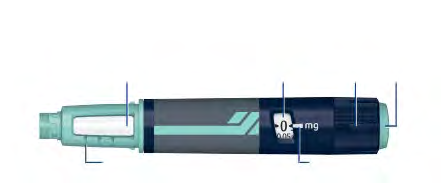
Overview of the Sogroya 5 mg/1.5 mL pen
Sogroya
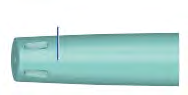
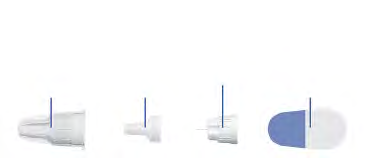
Needle (example)
How to use the Sogroya pen
5 steps to follow for injecting Sogroya:
Step 1. Preparing the Sogroya pen ...................................................................................... 45
Step 2. Checking the flow with each new pen ......................................................................... 46
Step 3. Selecting the dose ............................................................................................................ 47
Step 4. Injecting the dose ............................................................................................................. 49
Step 5. After the injection .................................................................................................................. 50
For further information about the pen, see sections: Checking how much Sogroya is left,
How to care for the pen, Important information.
Sogroya.
Pay particular attention to these notes because they are important for safe use of the
pen.
Additional information
Sogroya contains 5 mg of somapacitan and can be used to inject doses from 0.025 mg to 2 mg, in
increments of 0.025 mg. Sogroya is for use under the skin (subcutaneously) only. Needles are not
included and must be purchased separately. The Sogroya pre-filled pen is designed to
be used with single-use needles with a length of between 4 mm and 8 mm and a thickness of
between 30 G and 32 G.
Donot share the Sogroya pen and needles with another person. You could transmit an infection to
another person or contract an infection from others.
Do not use the pen without receiving adequate instructions from your doctor or nurse.Before
starting treatment, make sure you are able to give yourself an injection. If you are blind or
have severe visual impairment and cannot read the dose counter, do not use this pen
without help. Get help from a person with good vision who is trained to use the pen.
Step 1. Preparing the Sogroya pen
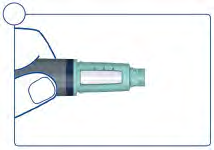
- Wash your hands with soap and water.
- Check the name, dosage and coloured labelon the pen to make sure it contains Sogroya and the correct dosage.
- Remove the cap from the pen.
- Turn the pen over once or twice to check that the Sogroya medicine in the pen is from clear toslightly opalescent or from colourless to slightlyyellow. See Figure A.
- If Sogroya contains visible particles, do not use thepen.
Make sure you use the correct pen.Especially if
you are using more than one type of injectable medicine. Using the
wrong medicine may be harmful to your health.
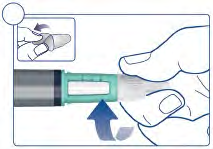
- When you are ready for the injection, take a new single-use needle. First, remove the protective seal.
- Then push the needle onto the pen, holding it straight. Rotate the needle clockwise until it is firmly in place.See Figure B.
- Pull off the outer needle cap and keep it for later. You will need it after the injection to safely remove the needle from the pen. See Figure C.
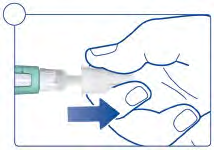
The needle is covered by two caps. You need to
remove both of them. If you forget to remove
both caps you will not inject the medicine. See
Figure C and D.
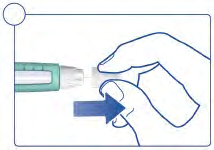
- Pull off the inner needle cap and throw it away. If you try to put it back on, you may accidentally prick yourself with the needle. See Figure D.
A drop of Sogroya may appear on the tip of the
needle. This is normal, but you should still check
the flow with each new pen. See Step 2.
Always use a new needle for each injection.This reduces the risk of
contamination, infection, loss of Sogroya and blocked needles leading to an incorrect dose.
Never use a bent or damaged needle.
Step 2. Checking the flow with each new pen
If your pen is already in use, go to Step 3.
- Before using a new pen,check the flow to make sure Sogroya flows through the pen and the needle.
- Rotate the dose selector clockwise one click to select 0.025 mg. You may hear a faint click. See Figure E.
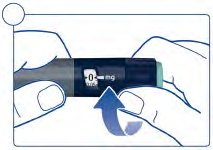
- One click equals 0.025 mgon the dose counter. See Figure F.
- Hold the pen with the needle pointing upwards. Press and hold the injection button until the dose counter returns to “0” (zero). “0” (zero) must align with the dose indicator.See Figure G.
- Check that a drop of Sogroya appears on the tip of the needle. See Figure H.
If no drop of Sogroya appears, repeat
Step 2 up to 6 times.
If you still do not see a drop of Sogroya, change the needle once as described in Step 5 and
repeat Steps 1 and 2 again.
If a drop of Sogroya does not appear when you check the flow, the needle may be blocked
or damaged. If a drop of Sogroya does not appear even after changing the needle, do not
use the pen. The pen may be faulty.
Step 3. Selecting the dose
- To start, check that the dose counter is set to “0” (zero).
- Rotate the dose selector clockwise and select the required dose. See Figure I.
After you have selected the dose, you can proceed to
Step 4.
If there is not enough Sogroya leftto select
a full dose, see Checking how much Sogroya is left
.
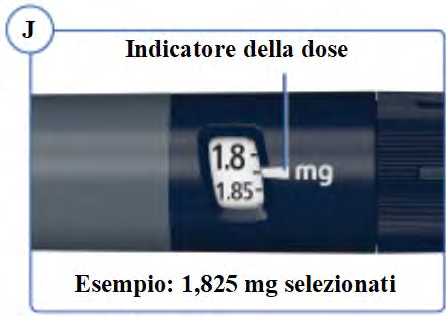
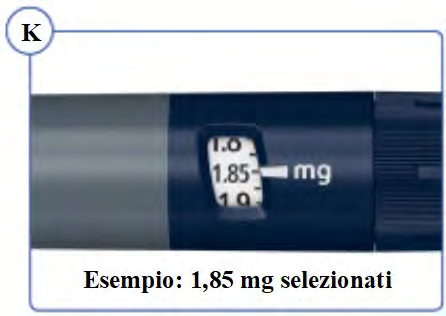
The dose counter shows the dose in mg. See the
figures J and K. Always use the dose indicator
to select the exact dose.
Do not count the clicks of the pen. Do not use the scale
of the pen(see Overview of the Sogroya pen)
to measure the amount of growth hormone to
inject. The exact number of mg will only be indicated
by the dose indicator.
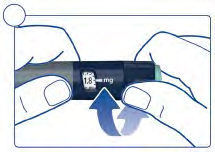
If you select the wrong dose, you can correct it
by rotating the dose selector clockwise or
anticlockwise. See Figure L.
The clicks of the pen are felt and perceived differently when the dose selector is rotated
clockwise or anticlockwise, or if it is accidentally forced
beyond the number of mg remaining.
Step 4. Injecting the dose
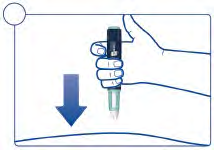
- Insert the needle into the skin as shown to you by your doctor or nurse. See Figure M.
Make sure you can see the dose counter. Do not
cover it with your fingers.This could block the injection.
Remember to change the injection site every
week.
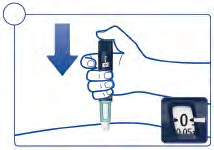
- Press and hold the injection button until the dose counter shows “0” (zero) (See Figure N). “0” (zero) must align withthe dose indicator.You may feel or hear a click.
Continue to hold the injection button
with the needle in the skin.
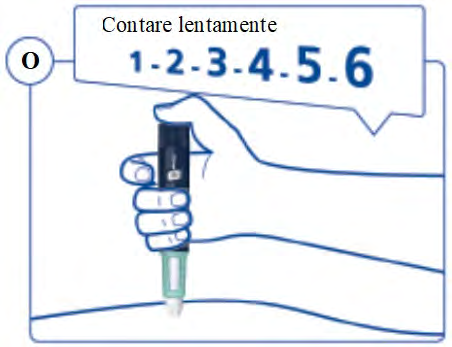
- Continue to hold the injection buttonwith the needle in the skin and count slowly to 6to make sure the entire dose has been delivered (see figure O).
If “0” does not appear on the dose counter after continuously pressing the injection
button, the needle or pen may be blocked or damaged and this means that you
have not received Sogroya- even if the dose counter has moved from the original
dose you selected.
Remove the needle as described in Step 5 and repeat Steps 1 to 4.
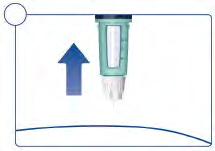
- Carefully pull the needle out of the skin. See Figure
- P. If blood appears at the injection site, apply gentle pressure. Do not rub the area.
After the injection, a drop of
Sogroya may appear on the tip of the
needle. This is normal and does not affect the dose just
given.
Step 5. After the injection
- Place the tip of the needle into the outer cap of the needle on a flat surface, without touching the needle or the cap itself. See Figure Q.
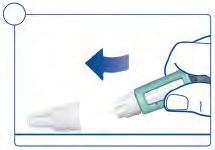
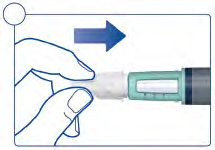
- When the needle is covered, push the outer cap all the way down carefully. See Figure R.
- Twist off the needle and dispose of it carefully following the instructions from your doctor, nurse, pharmacist or local authorities. Always dispose of the needle after each injection.
When the pen is empty, remove and dispose of the needle
as shown above and dispose of the pen separately
as instructed by your doctor, nurse, pharmacist or
local authorities.
The pen cap and empty box can be disposed of in
household waste.
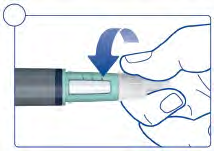
- Put the cap back on the pen after each use to protect Sogroya from direct light. See Figure T.
For storing the pen, see How to store
in the leaflet.
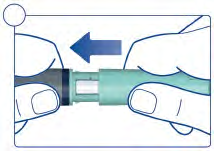
Do not attempt to reattach the inner needle cap.
You could prick yourself with the needle.
Always remove the needle from the pen immediately after each injection. This reduces the risk of contamination, infection, loss of Sogroya and blocked needles leading to
an incorrect dosage.
Checking how much Sogroya is left
The pen scale approximately shows how much
Sogroya is left in the pen. See Figure U.
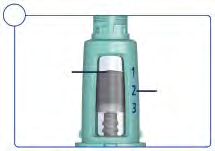
To see how much Sogroya is left, use the dose
counter. Rotate the dose selector clockwise until
the dose counter stops. A maximum dose of
2 mg can be selected. If it shows “2”, there are
at least 2 mg remaining in the pen.
If the dose counter stops at “1.2”, there are only
1.2 mg remaining in the pen. See Figure V.
What if I need a dose
greater than what remains in
my pen?
It is not possible to select a dose greater than the amount
of mg remaining in the pen.
If you need more Sogroya than is left in the
pen, you can use a new pen or divide the dose between the
current pen and a new pen. The dose can only be divided
if you have been trained to do so or if it has been recommended
by your doctor or nurse.Use a calculator to
plan doses as directed by your doctor or
nurse.
Perform calculations very accurately, otherwise
errorsin drug administration may occur.If you are not sure how to divide the dose with two
pens, select and inject the required dose with a new
pen.
How to care for the pen
How do I care for the pen?Be careful not to drop the pen or knock it
against hard surfaces. Do not expose the pen to dust,
dirt, liquids or direct light.
Do not attempt to refill the pen as it is pre-filled and must
be disposed of once it is empty.
What if the pen falls?If the pen falls or you think something is wrong,
attach a new single-use needle and check the flow before
injection, see Steps 1 and 2. If the pen has fallen,
| check the cartridge; if the cartridge is cracked, do not use the pen. | |
How do you clean the pen? | or Do not wash, immerse or lubricate the pen. It can be cleaned with a mild detergent on a damp cloth. |
c a Important information m
| |
Sogroya 10 mg/1,5 mL injectable solution in pre-filled pen
somapacitan
Medicinal product subject to additional monitoring. This will allow the rapid identification of
new safety information. You can contribute by reporting any adverse effects
experienced during the use of this medicine. See the end of section 4 for
information on how to report adverse effects.
Read this leaflet carefully before using this medicine as it contains
important information for you.
- Keep this leaflet. You may need to read it again.
- If you have any questions, ask your doctor, pharmacist or nurse.
- This medicine has been prescribed for you only. Do not pass it on to others, even if their symptoms are the same as yours, as it could be harmful.
- If any side effects occur, including those not listed in this leaflet, tell your doctor, pharmacist or nurse. See section 4.
Contents of this leaflet
- 1. What Sogroya is and what it is used for
- 2. What you need to know before using Sogroya
- 3. How to use Sogroya
- 4. Possible side effects
- 5. How to store Sogroya
- 6. Contents of the pack and other information
1. What is Sogroya and what it is used for
Sogroya contains the active substance somapacitan, a long-acting version of the natural growth hormone produced by the body with a single amino acid substitution. Growth hormone regulates the composition of fat, muscles and bones in adults.
The active substance of Sogroya is produced using "recombinant DNA technology", meaning from cells that have received a gene (DNA) that makes them produce growth hormone. In Sogroya, a
small side chain has been attached to the growth hormone that binds Sogroya to the protein
(albumin) found naturally in the blood to slow its removal from the body, allowing
the drug to be administered less frequently.
Sogroya is used for the treatment of growth hormone deficiency in children and adolescents aged 3 years or older if the production of growth hormone is absent or very low (growth hormone deficiency) and adults with growth hormone deficiency.
Your doctor will assess whether it is necessary to continue treatment with Sogroya one year after starting it based on your response to this medicine.
2. What you need to know before you use Sogroya
Do not use Sogroya
- if you or the child under your care are allergic to somapacitan or any of the other ingredients of this medicine (listed in section 6)
- if you or the child under your care have a benign or malignant tumor that is growing. You must have completed cancer treatment before starting treatment with Sogroya. Sogroya must be stopped if the tumor grows
- if you or the child under your care have recently undergone open-heart surgery or abdominal surgery or multiple accidental injuries, severe breathing problems or similar conditions.
- for children and adolescents who have stopped growing because the growth plates (epiphyses) have closed, which means that you or the child you are caring for have been told by a doctor that their bones have stopped growing.
If you are unsure, ask your doctor, pharmacist or nurse.
Warnings and precautions
Talk to your doctor, pharmacist or nurse before using Sogroya if:
- you or the child under your care have had any type of tumor
- you or the child under your care have a high level of sugar in the blood (hyperglycemia) as your blood sugar may need to be checked regularly and you may need to adjust the dose of your diabetes medicines
- you or the child under your care are following replacement therapy with corticosteroids, because you have been told that your body does not produce enough (adrenal insufficiency). Talk to your doctor, as the dose may need to be adjusted regularly
- you or the child under your care experience severe headaches, vision problems, nausea or vomiting, as these may be symptoms of increased pressure in the brain (benign intracranial hypertension), as treatment may need to be stopped
- you or the child under your care have thyroid problems; thyroid hormones should be checked regularly and the dose of thyroid hormone may need to be adjusted
- you are a woman taking oral contraceptives or hormone replacement therapy with estrogens, you may need to increase the dose of Sogroya. If you stop using oral estrogens, you may need to reduce the dose of somapacitan. Your doctor may advise you to change the route of administration of estrogens (e.g. transdermal, vaginal) or to use another form of contraception
- you or the child under your care are seriously ill (for example, have complications following open-heart surgery, abdominal surgery, accidental trauma, acute respiratory failure or similar conditions). If you are about to undergo or have undergone major surgery or if you need to be hospitalized for the reasons mentioned above, inform your doctor and remind other doctors who are treating you that you are using growth hormone.
- you or the child under your care develop severe stomach pain during treatment with Sogroya as this may be a symptom of inflammation of the pancreas observed with treatments with other growth hormone-based products.
- You or the child experience persistent hip or knee pain when walking, or if you or the child start to limp during treatment with growth hormone. These may be symptoms of a condition affecting the femur at the point where it inserts into the hip (femoral head epiphysiolysis) and which occurs more frequently in rapidly growing children and children with endocrine disorders, including growth hormone deficiency. Talk to your doctor if you experience persistent pain in any joint.
Skin changes at the injection site
The injection site of Sogroya should be rotated to avoid changes in the subcutaneous fatty tissue, such as thickening of the skin, narrowing of the skin or nodules under the skin. Change the
injection site on your body from week to week.
Antibodies
You are not expected to have antibodies against somapacitan. However, very rarely your child may
have antibodies. If treatment with Sogroya is not working, your doctor may test you
for antibodies against somapacitan.
Children and adolescents
Do not use Sogroya in children and adolescents under 18 years of age, as it has not yet been fully studied
how Sogroya works in this age group.
Other medicines and Sogroya
Tell your doctor or pharmacist if you or the child under your care are taking, have recently
taken or might take any other medicines.
In particular, tell your doctor if you or the child under your care are taking or have
recently taken any of the following medicines as your doctor may need to adjust the dose:
- corticosteroids such as hydrocortisone, dexamethasone and prednisolone
- estrogens as part of oral contraception or estrogen replacement therapy
- male sex hormones (androgenic drugs) such as testosterone
- gonadotropin drugs (gonad-stimulating hormones such as luteinizing hormone and follicle-stimulating hormone) that stimulate the production of sex hormones
- insulin or other medicines for diabetes
- thyroid hormones such as levothyroxine
- medicines for the treatment of epilepsy or convulsions - such as carbamazepine
- cyclosporine (immunosuppressant drug) - a drug to suppress the immune system
Pregnancy
- If there is a possibility that you may become pregnant, you should not use Sogroya unless you also use an effective contraceptive method. This is because it is not known whether the medicine may harm the fetus. If you become pregnant while using Sogroya, contact your doctor immediately. If you want to become pregnant, discuss this with your doctor, as you may need to stop using the medicine.
Breastfeeding
- It is not known whether Sogroya can pass into breast milk. Tell your doctor if you are breastfeeding or plan to do so. The doctor will then help you decide whether to stop breastfeeding or stop taking Sogroya, considering the benefit of breastfeeding for the baby and the benefit of Sogroya for the mother.
Driving and using machines
Sogroya does not affect the ability to drive vehicles and use machines.
Sodium content
This medicine contains less than 1 mmol (23 mg) of sodium per dose, i.e. it is essentially “sodium-free”.
3. How to use Sogroya
Use this medicine following the instructions of your doctor or pharmacist exactly. If you have
any doubts, consult your doctor or pharmacist.
Sogroya is administered by injection under the skin (subcutaneous injection) with a prefilled pen.
The injection can be done independently. The doctor or nurse will tell you the correct
dose and show you how to perform the injection when you or the child in your care
begin treatment.
When to use Sogroya
- You or the child in your care should use Sogroya once a week, if possible on the same day each week.
- You can perform the injection at any time of the day.
If you or the child in your care are switching from another weekly growth hormone therapy to Sogroya,
we recommend continuing the injection on the same day of the week.
If you or the child in your care are switching from daily growth hormone therapy to Sogroya,
choose your preferred day for the weekly dose and inject the last dose of the
daily treatment the day before (or at least 8 hours before) injecting the first dose of Sogroya.
Switching from another type or brand of growth hormone should be done by your doctor.
If it is not possible for you or the child in your care to inject Sogroya on the usual day
of the week, you can inject Sogroya up to 2 days before or 3 days after the scheduled day of
administration. The next dose can be injected as usual the following week.
If necessary, it is possible to change the day of the weekly Sogroya injection as long as
at least 4 days have passed since you last injected the medicine. After selecting a new day of administration, continue to inject on that day, every
week.
For how long will you need treatment
You may need Sogroya until your body produces enough growth hormone.
- If you or the child in your care are using Sogroya for growth problems, you will continue to use Sogroya until you stop growing.
- If you or the child in your care still lack growth hormone after you have stopped growing, you may need to continue using Sogroya until adulthood.
Do not stop using Sogroya without discussing it with your doctor first.
How much medicine to use
Children and adolescents
The dose for children and adolescents depends on body weight. The recommended dose of Sogroya is
0.16 mg per kg of body weight administered once a week.
Adults
If you are receiving growth hormone treatment for the first time, the usual starting dose is
1.5 mg once a week. If you have been previously treated with growth hormone
(somatropin) daily, the usual starting dose is 2 mg once a week.
If you are a woman taking estrogen orally (contraceptives or hormone replacement therapy)
you may need a higher dose of somapacitan. If you are over 60 years of age, you may
need a lower dose. See Table 1 below.
The doctor may increase or decrease the dose gradually and adjust it until it
matches the ideal one based on your individual needs and the occurrence of side effects.
- Do not use more than a maximum of 8 mg once a week.
- Do not change the dose unless your doctor tells you to.
Table 1 Dose Recommendation
| a Adults with growth hormone deficiency | Recommended starting dose |
| i Not previously treated with daily growth hormone Has ≥18 to <60 years n Is a woman taking oral estrogen therapy regardless of age Has 60 years or more | 1.5 mg/week 2 mg/week 1 mg/week |
| e g Has been previously treated with growth hormone Has ≥18 to <60 years A Is a woman taking oral estrogen therapy regardless of age Has 60 years or more | 2 mg/week 4 mg/week 1.5 mg/week |
After reaching the correct dose, the doctor will evaluate the treatment every 6-12 months. It may be
necessary to check the body mass index and take blood samples.
How to use Sogroya
The doctor or nurse will show you how to inject Sogroya under the skin.
The best site for the injection is:
- the front of the thighs
- the front of the waist (abdomen)
- the buttocks
- the upper arms
Change the part of the body where you perform the injection each week.
Detailed instructions on how to inject Sogroya, the instructions for use, are included at the end of this
leaflet.
If you use more Sogroya than you should
If you or the child in your care accidentally use more Sogroya than you should, talk
to your doctor, as it may be necessary to check your blood sugar levels.
If you forget to use Sogroya
If you or the child in your care forget to inject a dose and:
- 3 days or less have passed since you should have used Sogroya, inject it as soon as you remember. Then inject the next dose on the usual day of injection
- more than 3 days have passed since you should have used Sogroya, skip the missed dose. Then inject the next dose as you normally would on the next scheduled day.
Do not inject an extra dose or a larger dose to make up for the missed dose.
If you stop using Sogroya
Do not stop treatment with Sogroya without talking to your doctor.
If you have any doubts about using this medicine, ask your doctor, pharmacist or
nurse.
4. Possible side effects
Like all medicines, this medicine can cause side effects, although not everyone gets them.
Side effects observed in children and adolescents
Very common (may affect more than 1 in 10 people)
- Headache.
Common (may affect up to 1 in 10 people)
- hands and feet swelling due to fluid accumulation under the skin (peripheral edema)
- the adrenal glands do not produce enough steroid hormones (adrenal insufficiency)
- reduction of thyroid hormone (hypothyroidism)
- redness and pain at the injection site (injection site reactions).
- joint pain (arthralgia)
- pain in the arms or legs (extremity pain)
- elevated blood sugar levels (hyperglycemia)
- strong feeling of fatigue (fatigue)
Side effects observed in adults
Very common (may affect more than 1 in 10 people)
- headache.
Common (may affect up to 1 in 10 people)
- the adrenal glands do not produce enough steroid hormones (adrenal insufficiency)
- reduction of thyroid hormone (hypothyroidism)
- elevated blood sugar levels (hyperglycemia)
- a sensation of “pins and needles”, mainly in the fingers (paresthesia)
- skin rash
- urticaria (hives)
- joint pain (arthralgia), muscle pain (myalgia), muscle stiffness
- hands and feet swelling due to fluid accumulation under the skin (peripheral edema)
- strong feeling of fatigue or weakness (fatigue or asthenia)
- redness and pain at the injection site (injection site reactions).
Uncommon (may affect up to 1 in 100 people)
- thickening of the skin at the injection site (lipoatrophy)
- sensation of numbness and tingling in the hand(s) (carpal tunnel syndrome)
- tingling (pruritus)
- joint stiffness.
Reporting of side effects
If you get any side effects, talk to your doctor, pharmacist or nurse. This includes any possible side effects not listed in this leaflet. You can also report side effects directly through the national reporting system listed in Annex V. By reporting side effects, you can help provide more information on the safety of this medicine.
5. How to store Sogroya
Keep this medicine out of the sight and reach of children.
Do not use this medicine after the expiry date which is stated on the pen label and on the
pack after “Exp.”. The expiry date refers to the last day of that month.
Store in a refrigerator (2 °C - 8 °C). Do not freeze. Keep away from refrigerating elements.
After first opening
Use within 6 weeks from first use. Store in a refrigerator (2 °C - 8 ° C).
Before and after first opening
If it is not possible to store it in a refrigerator (for example during a trip), Sogroya can be
temporarily kept at a temperature up to 30 °C for a total of 72 hours (3 days). Return
Sogroya to the refrigerator after storing it at this temperature. If stored outside the
refrigerator and then returned to the refrigerator, the total combined time outside the refrigerator must not
exceed 3 days; monitor it carefully. Throw away the Sogroya pen if you have stored it at 30 °C
for more than 72 hours or at more than 30 °C for any period of time.
Record the time outside the refrigerator: ________________
Keep Sogroya in the outer carton with the pen cap inserted to protect it from light.
Always remove the injection needle after each injection and store the pen without the needle inserted.
Do not use the medicine if you notice that the solution does not appear from clear to slightly opalescent, from
colorless to slightly yellow and free from visible particles.
Do not dispose of any medicine in wastewater or household waste. Ask your pharmacist how to
dispose of medicines you no longer use. This will help protect the environment.
6. Content of the pack and other information
What Sogroya contains
- The active substance is somapacitan. 1 mL of solution contains 6.7 mg of somapacitan. Each pre-filled pen contains 10 mg of somapacitan in 1.5 mL of solution.
- The other ingredients are: histidine, mannitol, poloxamer 188, phenol, water for injections, hydrochloric acid (for pH adjustment), sodium hydroxide (for pH adjustment). See also section 2 "What you need to know before you use Sogroya" for information on sodium.
Description of the appearance of Sogroya and content of the pack
Sogroya is a clear or slightly opalescent injectable liquid in a pre-filled pen, from colourless to
slightly yellow and free from visible particles.
Sogroya 10 mg/1.5 mL solution for injection in a pre-filled pen with a yellow injection button is
available in the following pack sizes: a pack containing 1 pre-filled pen or a multipack containing 5 packs, each containing 1 pre-filled pen.
Not all pack sizes may be marketed.
Marketing authorisation holder and manufacturer
Novo Nordisk A/S
Novo Allé
DK-2880 Bagsværd
Denmark
Other sources of information
More detailed information on this medicine is available on the European Medicines Agency website, http://www.ema.europa.eu.
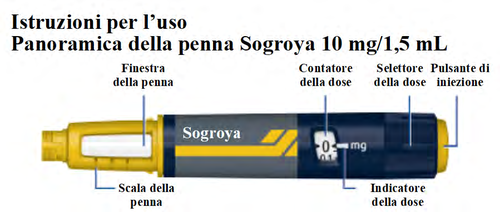
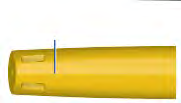
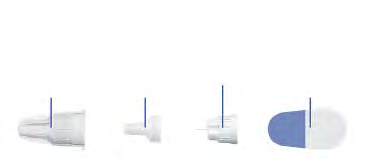
Needle (example)
How to use the Sogroya pen
5 steps to follow for injecting Sogroya:
Step 1. Preparing the Sogroya pen ..................................................................................... 61
Step 2. Checking the flow with each new pen ........................................................................... 62
Step 3. Selecting the dose ............................................................................................................ 64
Step 4. Injecting the dose ............................................................................................................. 65
Step 5. After the injection .......................................................................................................... 66
For further information about the pen, see sections:Checking how much Sogroya is left,
How to care for the pen, Important information.
Sogroya.
Pay particular attention to these notes because they are important for safe use of the
pen.
Additional information
Sogroya contains 10 mg of somapacitan and can be used to inject doses from 0.05 mg to 4 mg, in
increments of 0.05 mg. Sogroya is for use under the skin (subcutaneously) only. Needles are not included
and must be purchased separately. The Sogroya pre-filled pen is designed to be
used with single-use needles with a length between 4 mm and 8 mm and a thickness between
30 G and 32 G.
Donot share the Sogroya pen and needles with another person. You could transmit an infection to another
person or catch an infection from others.
Do not use the pen without receiving adequate instructions from your doctor or nurse.Before
starting treatment, make sure you are able to give yourself an injection. If you are
blind or have severe visual impairment and cannot read the dose counter, do not use this pen
without help. Get help from a person with good vision who is trained to use the pen.
Step 1. Preparing the Sogroya pen
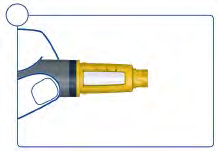
- Wash your hands with water and soap.
- Check the name, dosage and coloured labelon the pen to make sure it contains Sogroya and the correct dosage.
- Remove the cap from the pen.
- Turn the pen over once or twice to check that the Sogroya medicine in the pen is from clear toslightly opalescent or from colourless to slightlyyellow. See Figure A.
- If Sogroya contains visible particles, do not use thepen.
Make sure you use the right pen.Especially if
you are using more than one type of injectable medicine. Using the
wrong medicine can be harmful to your health.
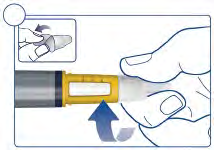
- When you are ready for the injection, take a new single-use needle. First, remove the protective seal.
- Then push the needle onto the pen holding it straight. Rotate the needle clockwise until it is firmly in place.See Figure B.
- Remove the outer cap of the needle and keep it for later. You will need it after the injection to safely remove the needle from the pen. See Figure C.
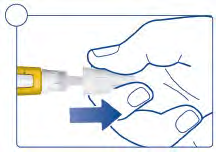
The needle is covered by two caps. You need to
remove both of them. If you forget to remove
both caps, you will not inject the medicine. See
Figure C and D.
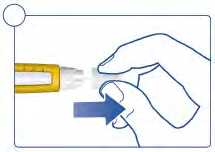
- Remove the inner cap of the needle and throw it away. If you try to put it back on, you could accidentally prick yourself with the needle. See Figure D.
A drop of Sogroya may appear on the tip of the
needle. This is normal, but you should still check
the flow with each new pen. See Step 2.
Always use a new needle for each injection.This reduces the risk of
contamination, infection, loss of Sogroya and blocked needles leading to an incorrect dose.
Never use a bent or damaged needle.
Step 2. Checking the flow with each new pen
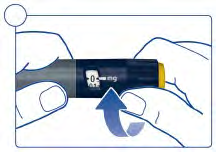
If your pen is already in use, go to Step 3.
- Before using a new pen,check the flow to make sure Sogroya flows through the pen and the needle.
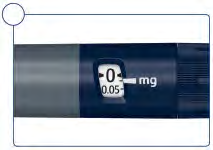
- Rotate the dose selector clockwise one click to select 0.05 mg. You may hear a faint click. See Figure E.
- One click equals 0.05 mgon the dose counter. See Figure F.
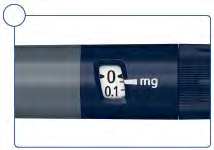
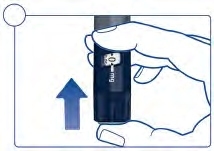
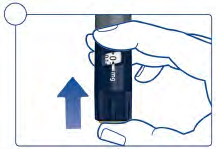
- Hold the pen with the needle pointing upwards. Press and hold the injection button until the dose counter returns to “0” (zero). The “0” (zero) must align with the dose indicator.See Figure G.
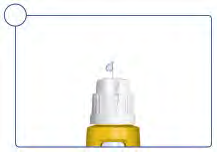
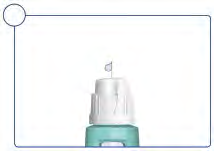
- Check that a drop of Sogroya appears on the tip of the needle. See Figure H.
If no drop of Sogroya appears, repeat
Step 2 up to 6 times.
If you still do not see a drop of Sogroya, change the needle once as described in Step 5 and
repeat Steps 1 and 2 again.
If a drop of Sogroya does not appear when checking the flow, the needle may be blocked
or damaged. If a drop of Sogroya does not appear even after changing the needle, do not
use the pen. The pen may be faulty.
Step 3. Selecting the dose
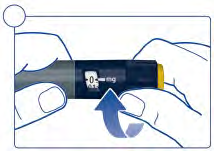
- To start, check that the dose counter is set to “0” (zero).
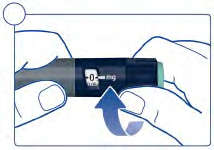
- Rotate the dose selector clockwise and select the required dose. See Figure I.
After you have selected the dose, you can proceed to
Step 4.
If there is not enough Sogroya leftto select
a full dose, see Checking how much Sogroya is left
.
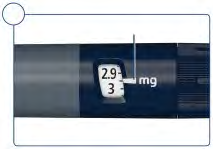
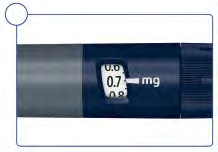
The dose counter shows the dose in mg. See
Figures J and K. Always use the dose indicator to
select the exact dose.
Do not count the clicks of the pen. Do not use the scale
of the pen(see Sogroya pen overview)
to measure the amount of growth hormone to
inject. The exact number of mg will only be shown
by the dose indicator.
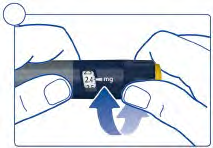
If you select the wrong dose, you can correct it
by rotating the dose selector clockwise or
counterclockwise. See Figure L.
The clicks of the pen are heard and felt differently when the dose selector is rotated
clockwise, counterclockwise, or if it is accidentally forced
past the number of mg remaining.
Step 4. Injecting the dose
- Insert the needle into the skin as shown to you by your doctor or nurse. See Figure M.
Make sure you can see the dose counter. Do not
cover it with your fingers.This could block the injection.
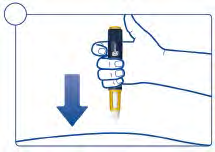
Remember to change the injection site
every week.
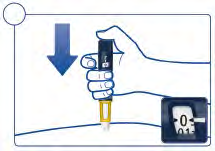
- Press and hold the injection button until the dose counter shows “0” (zero) (See Figure N). The “0” (zero) must align with thedose indicator.You may hear or feel a click.
Continue to hold the injection button
with the needle in the skin.
- Continue to hold the injection buttonwith the needle in the skin and count slowly to 6to make sure the entire dose has been delivered (see figure O).
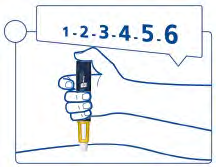
If “0” does not appear on the dose counter after continuously pressing the injection button, the needle or pen may be blocked or damaged and this means that you have nottaken Sogroya– even if the dose counter has moved from the original dose you
selected.
Remove the needle as described in Step 5 and repeat Steps 1 to 4.
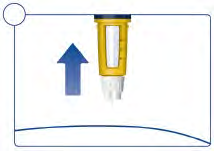
- Carefully withdraw the needle from the skin. See Figure
P. If blood appears at the injection site, apply gentle pressure. Do not rub the area.
After the injection, you may see a drop of
Sogroya on the tip of the needle. This is normal and does not affect the dose just
given.
Step 5. After the injection
- Place the tip of the needle on a flat surface and push the outer cap of the needle onto the needle, without touching the needle or cap itself. See Figure Q.
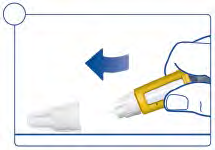
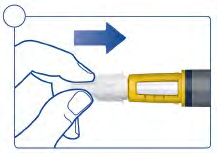
- When the needle is covered, push the outer cap all the way on, being careful. See Figure R.
- Twist the needle off and dispose of it carefully according to the instructions of your doctor, nurse, pharmacist or local authorities. Always dispose of the needle after each injection.
When the pen is empty, remove and dispose of the needle
as shown above and dispose of the pen separately
as instructed by your doctor, nurse, pharmacist or local
authorities.
The pen cap and empty box can be disposed of in household waste.
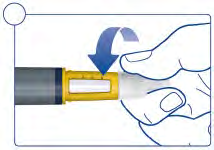
- Put the cap back on the pen after each use to protect Sogroya from direct light. See Figure T.
To store the pen, see How to storein the
leaflet.
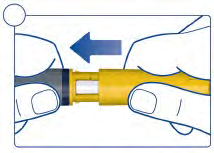
Do not try to put the inner cap back on the needle.
You could prick yourself with the needle.
Always remove the needle from the pen immediately after each injection. This reduces the risk of
contamination, infection, loss of Sogroya and blocked needles leading to an incorrect dose.
Checking how much Sogroya is left
The pen scale shows approximately how much
Sogroya is left in the pen. See Figure U.
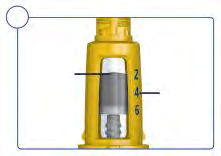
To see how much Sogroya is left, use the dose
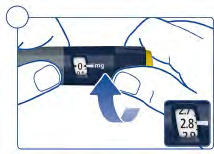
counter. Rotate the dose selector clockwise until
the dose counter stops. You can select
a maximum dose of 4 mg. If it shows “4”, there are
at least 4 mg left in the pen.
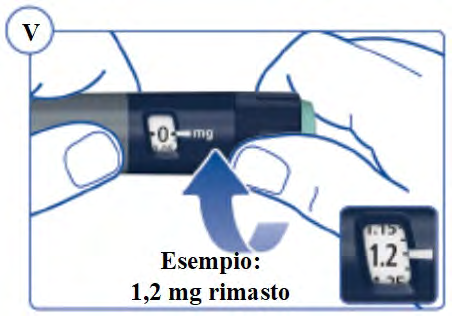
If the dose counter stops at “2.8”, there are only 2.8 mg
left in the pen. See Figure V.
What if I need a dose
larger than what is left in the
pen?
You cannot select a dose larger than the amount
of mg left in the pen.
If you need more Sogroya than is left in the
pen, you can use a new pen or split the dose between the
current pen and a new pen. The dose can only be split
if you have been trained to do so or if advised
by your doctor or nurse.Use a calculator to
plan doses as directed by your doctor or
nurse.
Perform calculations very accurately, otherwise
errorsin drug administration may occur.If you are unsure how to split the dose with two
pens, select and inject the required dose with a new
pen.
How to care for the pen
How do I care for the pen?Be careful not to drop the pen or knock it
against hard surfaces. Do not expose the pen to dust,
dirt, liquids, or direct light.
Do not try to refill the pen as it is prefilled and must
be disposed of once it is empty.
What if the pen falls?If the pen falls or you think something is wrong,
attach a new single-use needle and check the flow before
injection, see Steps 1 and 2. If the pen has fallen,
| check the cartridge, if the cartridge is cracked, do not use the pen. | |
How do you clean the pen? | or Do not wash, immerse or lubricate the pen. It can be cleaned with a mild detergent on a damp cloth. |
c a Important information m
| |

Nie jesteś pewien, czy ten lek jest odpowiedni dla ciebie?
Omów swoje objawy i leczenie z lekarzem online.
Sogroya 15 mg/1.5 mL injectable solution in pre-filled pen
somapacitan
Medicinal product subject to additional monitoring. This will allow the rapid identification of
new safety information. You can contribute by reporting any adverse effects
experienced during the use of this medicinal product. See the end of section 4 for
information on how to report adverse effects.
Read this leaflet carefully before using this medicine as it contains
important information for you.
- Keep this leaflet. You may need to read it again.
- If you have any questions, ask your doctor, pharmacist or nurse.
- This medicine has been prescribed for you only. Do not pass it on to others, even if their symptoms are the same as yours, as it could be harmful.
- If any side effects occur, including those not listed in this leaflet, tell your doctor, pharmacist or nurse. See section 4.
Contents of this leaflet
- 1. What Sogroya is and what it is used for
- 2. What you need to know before you use Sogroya
- 3. How to use Sogroya
- 4. Possible side effects
- 5. How to store Sogroya
- 6. Contents of the pack and other information
1. What is Sogroya and what is it used for
Sogroya contains the active substance somapacitan, a long-acting version of the natural growth hormone produced by the body with a single amino acid substitution. Growth hormone regulates the composition of fat, muscles and bones in adults.
The active substance of Sogroya is produced using "recombinant DNA technology", meaning from cells that have received a gene (DNA) that makes them produce growth hormone. In Sogroya, a
small side chain has been attached to the growth hormone that binds Sogroya to the protein
(albumin) that is naturally found in the blood to slow down its removal from the body, allowing
the drug to be administered less frequently.
Sogroya is used for the treatment of growth hormone deficiency in children and adolescents aged 3 years and older if the production of growth hormone is absent or very low (growth hormone deficiency) and adults with growth hormone deficiency.
Your doctor will assess whether it is necessary to continue treatment with Sogroya one year after starting it based on your response to this medicine.
2. What you need to know before you use Sogroya
Do not use Sogroya
- if you or the child under your care are allergic to somapacitan or any of the other ingredients of this medicine (listed in section 6)
- if you or the child under your care have a benign or malignant tumor that is growing. You must have completed cancer treatment before starting treatment with Sogroya. Sogroya must be stopped if the tumor grows
- if you or the child under your care have recently undergone open-heart surgery or abdominal surgery or multiple accidental injuries, severe breathing problems, or similar conditions.
- for children and adolescents who have stopped growing because the growth plates (epiphyses) have closed, which means that you or the child you are caring for have been told by a doctor that their bones have stopped growing.
If you are unsure, consult your doctor, pharmacist or nurse.
Warnings and precautions
Talk to your doctor, pharmacist or nurse before using Sogroya if:
- you or the child under your care have had any type of cancer
- you or the child under your care have a high level of sugar in the blood (hyperglycemia) as your blood sugar may need to be checked regularly and you may need to adjust the dose of your diabetes medications
- you or the child under your care are following replacement therapy with corticosteroids, because you have been told that your body does not produce enough (adrenal insufficiency). Talk to your doctor, as a regular dose adjustment may be necessary
- you or the child under your care experience severe headaches, vision problems, nausea or vomiting, as these may be symptoms of increased pressure in the brain (benign intracranial hypertension), as treatment may need to be stopped
- you or the child under your care have thyroid problems; thyroid hormones should be checked regularly and the dose of thyroid hormone may need to be adjusted
- you are a woman taking oral contraceptives or hormone replacement therapy with estrogens, you may need to increase the dose of Sogroya. If you stop using oral estrogens, you may need to reduce the dose of somapacitan. Your doctor may advise you to change the route of administration of estrogens (e.g., transdermal, vaginal) or to use another form of contraception
- you or the child under your care are seriously ill (for example, have complications following open-heart surgery, abdominal surgery, accidental trauma, acute respiratory failure or similar conditions). If you are about to undergo or have undergone major surgery or if you need to be hospitalized for the reasons mentioned above, inform your doctor and remind other doctors who are treating you that you are using growth hormone.
- you or the child under your care develops severe stomach pain during treatment with Sogroya as this may be a symptom of inflammation of the pancreas observed in treatments with other growth hormone-based products.
- You or the child experience persistent hip or knee pain when walking, or if you or the child start to limp during growth hormone treatment. These may be symptoms of a condition affecting the femur at the point where it inserts into the hip (femoral head epiphysiolysis) and occur more frequently in rapidly growing children and children with endocrine disorders, including growth hormone deficiency. Talk to your doctor if you experience persistent pain in any joint.
Skin changes at the injection site
The injection site of Sogroya should be rotated to avoid changes in the subcutaneous fat tissue, such as thickening of the skin, narrowing of the skin or nodules under the skin. Change the
injection site on your body from week to week.
Antibodies
You are not expected to have antibodies to somapacitan. However, very rarely your child may
have antibodies. If treatment with Sogroya is not working, your doctor may test you
for antibodies to somapacitan.
Other medicines and Sogroya
Tell your doctor or pharmacist if you or the child under your care are taking, have recently
taken or might take any other medicines.
In particular, tell your doctor if you or the child under your care are taking or have
recently taken any of the following medicines as your doctor may need to adjust the dose:
- corticosteroids such as hydrocortisone, dexamethasone and prednisolone
- estrogens as part of oral contraception or hormone replacement therapy with estrogens
- male sex hormones (androgenic drugs) such as testosterone
- gonadotropin-based drugs (gonad-stimulating hormones such as luteinizing hormone and follicle-stimulating hormone) that stimulate the production of sex hormones
- insulin or other medicines for diabetes
- thyroid hormones such as levothyroxine
- medicines for the treatment of epilepsy or seizures - such as carbamazepine
- cyclosporine (immunosuppressant drug) - a drug to suppress the immune system
Pregnancy
- If there is a possibility that you may become pregnant, you should not use Sogroya unless you also use an effective method of contraception. This is because it is not known whether the medicine can harm the fetus. If you become pregnant while using Sogroya, contact your doctor immediately. If you wish to become pregnant, discuss this with your doctor, as you may need to stop using the medicine.
Breastfeeding
- It is not known whether Sogroya can pass into breast milk. Inform your doctor if you are breastfeeding or plan to do so. The doctor will then help you decide whether to stop breastfeeding or to stop taking Sogroya, considering the benefit of breastfeeding for the baby and the benefit of Sogroya for the mother.
Driving and operating machinery
Sogroya does not affect the ability to drive vehicles and operate machinery.
Sodium content
This medicine contains less than 1 mmol (23 mg) of sodium per dose, i.e. it is essentially “sodium-free”.
3. How to use Sogroya
Use this medicine following the instructions of your doctor or pharmacist exactly. If you have
any doubts, consult your doctor or pharmacist.
Sogroya is administered by injection under the skin (subcutaneous injection) with a prefilled
pen. The injection can be done independently. Your doctor or nurse will tell you the
correct dose and show you how to perform the injection when you or the child under their care
begin treatment.
When to use Sogroya
- You or the child under your care should use Sogroya once a week, if possible on the same day each week.
- You can perform the injection at any time of the day.
If you or the child under your care are switching from another weekly growth hormone therapy to Sogroya, we recommend continuing the injection on the same day of the week.
If you or the child under your care are switching from daily growth hormone therapy to Sogroya, choose your preferred day for the weekly dose and inject the last dose of
daily treatment the day before (or at least 8 hours before) injecting the first dose of Sogroya.
Switching from another type or brand of growth hormone should be done by your doctor.
If it is not possible for you or the child under your care to inject Sogroya on the usual day
of the week, you can inject Sogroya up to 2 days before or 3 days after the scheduled day of
administration. The next dose can be injected as usual the following week.
If necessary, you can change the day of the weekly Sogroya injection as long as
at least 4 days have passed since you last injected the medicine. After selecting a new day of administration, continue to inject on that day, every
week.
For how long will you need treatment
You may need Sogroya until your body produces enough growth hormone.
Do not stop using Sogroya without first discussing it with your doctor.
How much medicine to use
Children and adolescents
The dose for children and adolescents depends on body weight. The recommended dose of Sogroya is
0.16 mg per kg of body weight administered once a week.
Adults
If you are receiving growth hormone treatment for the first time, the usual initial dose is
1.5 mg once a week. If you have been previously treated with growth hormone
(somatropin) daily, the usual initial dose is 2 mg once a week.
If you are a woman taking estrogen orally (contraceptives or hormone replacement therapy)
you may need a higher dose of somapacitan. If you are over 60 years of age, you may
need a lower dose. See Table 1 below.
Your doctor may increase or decrease the dose gradually and adjust it until it
matches the ideal one based on your individual needs and the occurrence of side effects.
- Do not use more than a maximum of 8 mg once a week.
- Do not change the dose unless your doctor tells you to.
Table 1 Dose Recommendation
| a Adults with growth hormone deficiency | Recommended initial dose |
| i Not previously treated with daily growth hormone z Has ≥18 to <60 years n Is a woman taking oral estrogen therapy regardless of age Is 60 years or older | 1.5 mg/week 2 mg/week 1 mg/week |
| e g Has been previously treated with daily growth hormone Has ≥18 to <60 years A Is a woman taking oral estrogen therapy regardless of age Is 60 years or older | 2 mg/week 4 mg/week 1.5 mg/week |
After reaching the correct dose, your doctor will evaluate the treatment every 6-12 months. It may be
necessary to check the body mass index and take blood samples.
How to use Sogroya
Your doctor or nurse will show you how to inject Sogroya under the skin.
The best site for the injection is:
- the front of the thighs
- the front of the waist (abdomen)
- the buttocks
- the upper arms
Change the part of the body where you perform the injection each week.
Detailed instructions on how to inject Sogroya, the instructions for use, are included at the end of this
leaflet.
If you use more Sogroya than you should
If you or the child under your care accidentally use more Sogroya than you should, talk
to your doctor, as it may be necessary to check your blood sugar levels.
If you forget to use Sogroya
If you or the child under your care forget to inject a dose and:
- 3 days or less have passed since you should have used Sogroya, inject it as soon as you remember. Then inject the next dose on the usual day of injection
- more than 3 days have passed since you should have used Sogroya, skip the missed dose. Then inject the next dose as you would normally on the next scheduled day.
Do not inject an extra dose or a larger dose to make up for the missed dose.
If you stop using Sogroya
Do not stop treatment with Sogroya without talking to your doctor.
If you have any doubts about using this medicine, ask your doctor, pharmacist or
nurse.
4. Possible side effects
Like all medicines, this medicine can cause side effects, although not everybody gets them.
Side effects observed in children and adolescents
Very common (may affect more than 1 in 10 people)
- Headache.
Common (may affect up to 1 in 10 people)
- hands and feet swelling due to fluid accumulation under the skin (peripheral edema)
- the adrenal glands do not produce enough steroid hormones (adrenal insufficiency)
- reduction of thyroid hormone (hypothyroidism)
- redness and pain at the injection site (injection site reactions).
- joint pain (arthralgia)
- pain in the arms or legs (limb pain)
- elevated blood sugar levels (hyperglycemia)
- strong feeling of tiredness (fatigue)
Side effects observed in adults
Very common (may affect more than 1 in 10 people)
- headache.
Common (may affect up to 1 in 10 people)
- the adrenal glands do not produce enough steroid hormones (adrenal insufficiency)
- reduction of thyroid hormone (hypothyroidism)
- elevated blood sugar levels (hyperglycemia)
- a sensation of “pins and needles”, mainly in the fingers (paresthesia)
- skin rash
- urticaria
- joint pain (arthralgia), muscle pain (myalgia), muscle stiffness
- hands and feet swelling due to fluid accumulation under the skin (peripheral edema)
- strong feeling of tiredness or weakness (fatigue or asthenia)
- redness and pain at the injection site (injection site reactions).
Uncommon (may affect up to 1 in 100 people)
- thickening of the skin at the injection site (lipoatrophy)
- sensation of numbness and tingling in the hand(s) (carpal tunnel syndrome)
- itching (pruritus)
- joint stiffness.
Reporting of side effects
If you get any side effects, talk to your doctor, pharmacist or nurse. This includes any possible side
effects not listed in this leaflet. You can also report side effects directly through the national reporting
system listed in Annex V. By reporting side effects, you can help provide more information on the safety
of this medicine.
5. How to store Sogroya
Keep this medicine out of the sight and reach of children.
Do not use this medicine after the expiry date which is stated on the pen label and on the
pack after “Exp.”. The expiry date refers to the last day of that month.
Store in a refrigerator (2 °C - 8 °C). Do not freeze. Keep away from refrigerating elements.
After first opening
Use within 6 weeks from first use. Store in a refrigerator (2 °C - 8 °C).
Before and after first opening
If it is not possible to store it in a refrigerator (for example during a trip), Sogroya can be
temporarily kept at a temperature up to 30 °C for a total of 72 hours (3 days). Return
Sogroya to the refrigerator after storing it at this temperature. If stored outside the
refrigerator and then returned to the refrigerator, the total combined time outside the refrigerator must not
exceed 3 days; monitor it carefully. Throw away the Sogroya pen if you have stored it at 30 °C
for more than 72 hours or at more than 30 °C for any period of time.
Record the time out of the refrigerator: ________________
Keep Sogroya in the outer carton with the pen cap inserted to protect it from light.
Always remove the injection needle after each injection and store the pen without the needle inserted.
Do not use the medicine if the solution does not appear from clear to slightly opalescent, from colourless to
slightly yellow and free from visible particles.
Do not dispose of any medicine in wastewater or household waste. Ask your pharmacist how to
dispose of medicines you no longer use. This will help protect the environment.
6. Content of the pack and other information
What Sogroya contains
- The active substance is somapacitan. 1 mL of solution contains 10 mg of somapacitan. Each pre-filled pen contains 15 mg of somapacitan in 1.5 mL of solution.
- The other ingredients are: histidine, mannitol, poloxamer 188, phenol, water for injections, hydrochloric acid (for pH adjustment), sodium hydroxide (for pH adjustment). See also paragraph 2 "What you need to know before you use Sogroya" for information on sodium.
Description of the appearance of Sogroya and content of the pack
Sogroya is a clear or slightly opalescent liquid injectable in a pre-filled pen, from colourless to
slightly yellow and free from visible particles.
Sogroya 15 mg/1.5 mL solution for injection in a pre-filled pen with a ruby red injection button is
available in the following pack sizes: a pack containing 1 pre-filled pen or a
multipack containing 5 packs, each containing 1 pre-filled pen.
Not all pack sizes may be marketed.
Marketing Authorisation Holder and Manufacturer
Novo Nordisk A/S
Novo Allé
DK-2880 Bagsværd
Denmark
Other sources of information
More detailed information on this medicinal product is available on the website of the European
Medicines Agency, http://www.ema.europa.eu.
Instructions for use
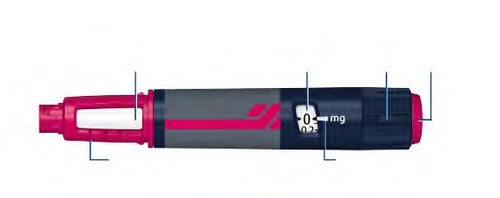
Overview of the Sogroya 15 mg/1.5 mL pen
Sogroya
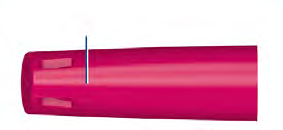
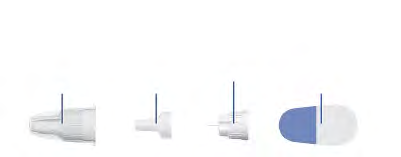
Needle (example)
How to use the Sogroya pen
5 steps to follow for injecting Sogroya:
Step 1. Preparing the Sogroya pen ..................................................................................... 43
Step 2. Checking the flow with each new pen ........................................................................... 44
Step 3. Selecting the dose ............................................................................................................ 45
Step 4. Injecting the dose ............................................................................................................. 46
Step 5. After the injection .................................................................................................................. 47
For further information about the pen, see paragraphs: Checking how much Sogroya is left,
How to care for the pen, Important information.
Sogroya
Pay particular attention to these notes because they are important for safe use of the
pen.
Additional information
Sogroya contains 15 mg of somapacitan and can be used to inject doses from 0.10 mg to 8 mg, in
increments of 0.1 mg. Sogroya is for subcutaneous use only. Needles are not included and
must be purchased separately. The Sogroya pre-filled pen is designed to be
used with single-use needles with a length between 4 mm and 8 mm and a thickness between
30 G and 32 G.
Donot share the Sogroya pen and needles with another person. You could transmit an infection to another
person or contract an infection from others.
Do not use the pen without receiving adequate instructions from your doctor or nurse.Before
starting treatment, make sure you are able to perform an injection yourself. If you are
blind or have severe visual impairment and cannot read the dose counter, do not use this pen
without help. Get help from a person with good vision who is trained to use the pen.
Step 1. Preparing the Sogroya pen
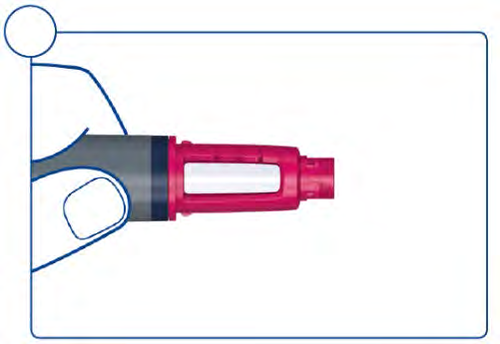
- Wash your hands with soap and water.
- Check the name, dosage and coloured labelon the pen to make sure it contains Sogroya and the correct dosage.
- Remove the cap from the pen.
- Turn the pen over once or twice to check that the Sogroya medicine in the pen is from clear toslightly opalescent or from colourless to slightlyyellow. See Figure A.
- If Sogroya contains visible particles, do not use thepen.
Make sure you use the right pen.Especially if
you are using more than one type of injectable medicine. Using the
wrong medicine can be harmful to your health.
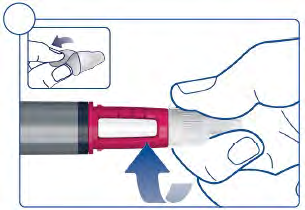
- When you are ready for the injection, take a new single-use needle. First, remove the protective seal.
- Then push the needle onto the pen, keeping it straight. Rotate the needle clockwise until it is firmly in place.See Figure B.
- Pull off the outer needle cap and keep it for later. You will need it after the injection to safely remove the needle from the pen. See Figure C.
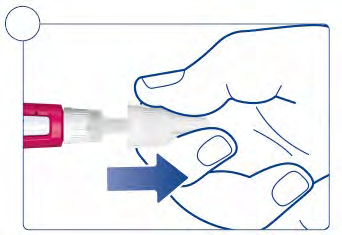
The needle is covered by two caps. You need to
remove both of them. If you forget to remove
both caps you will not inject the medicine. See
Figure C and D.
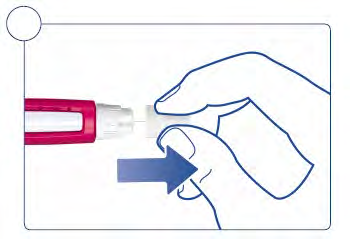
- Pull off the inner needle cap and throw it away. If you try to put it back on, you could accidentally prick yourself with the needle. See Figure D.
A drop of Sogroya may appear on the tip of the
needle. This is normal, but you should still check
the flow with each new pen. See Step 2.
Always use a new needle for each injection.This reduces the risk of
contamination, infection, loss of Sogroya and blocked needles leading to an incorrect dosage.
Never use a bent or damaged needle.
Step 2. Checking the flow with each new pen
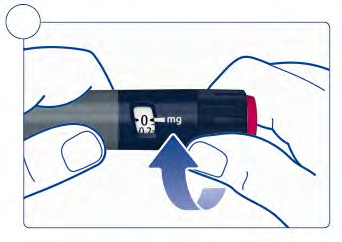
If your pen is already in use, proceed to Step 3.
- Before using a new pen,check the flow to make sure Sogroya flows through the pen and the needle.
- Rotate the dose selector clockwise one click to select 0.10 mg. You may hear a faint click. See Figure E.
- One click equals 0.10 mgon the dose counter. See Figure F.
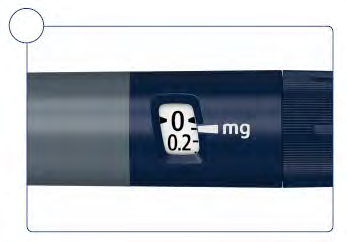
- Hold the pen with the needle pointing upwards. Press and hold the injection button until the dose counter returns to “0” (zero). “0” (zero) must align with the dose indicator.See Figure G.
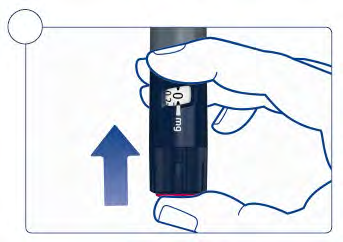
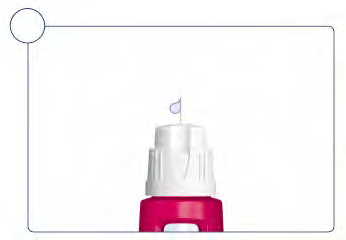
- Check that a drop of Sogroya appears on the tip of the needle. See Figure H.
If no drop of Sogroya appears, repeat
Step 2 up to 6 times.
If you still do not see a drop of Sogroya, change the needle once as described in Step 5 and
repeat Steps 1 and 2 again.
If a drop of Sogroya does not appear when checking the flow, the needle may be blocked
or damaged. If a drop of Sogroya does not appear even after changing the needle, do not
use the pen. The pen may be faulty.
Step 3. Selecting the dose
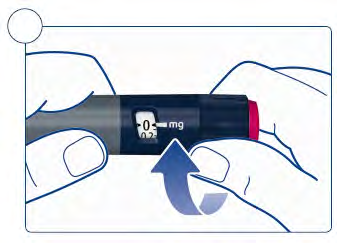
- To start, check that the dose counter is set to “0” (zero).
- Rotate the dose selector clockwise and select the required dose. See Figure I.
After selecting the dose, you can proceed to
Step 4.
If there is not enough Sogroya leftto select
a full dose, see Checking how much Sogroya
is left.
The dose counter shows the dose in mg. See the
figures J and K. Always use the dose indicator to
select the exact dose.
Do not count the pen clicks. Do not use the pen scale(see Sogroya pen overview)
to measure the amount of growth hormone to
inject. The exact number of mg will only be shown
by the dose indicator.
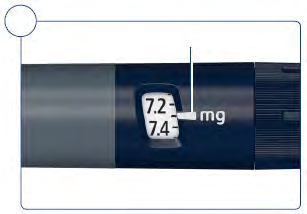
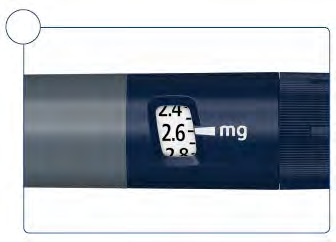
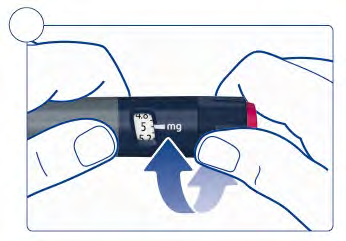
If you select the wrong dose, you can correct it
by rotating the dose selector clockwise or
counterclockwise. See Figure L.
The pen clicks can be heard and felt differently when the dose selector is rotated in
a clockwise, counterclockwise direction, or if it is accidentally forced
beyond the number of mg remaining.
Step 4. Injecting the dose
- Insert the needle into the skin as shown to you by your doctor or nurse. See Figure M.
Make sure you can see the dose counter. Do not
cover it with your fingers.This could block the injection.
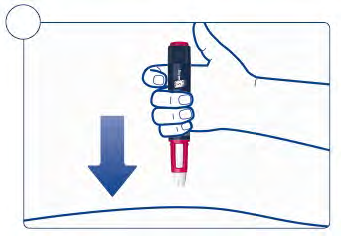
Remember to change the injection site every
week.
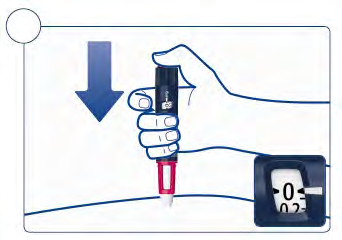
- Press and hold the injection button until the dose counter shows “0” (zero) (See Figure N). “0” (zero) must align withthe dose indicator.You may hear or feel a click.
Continue to hold the injection button
with the needle in the skin.
- Continue to hold the injection buttonwith the needle in the skin and count slowly to 6to make sure the entire dose has been delivered (see figure O).
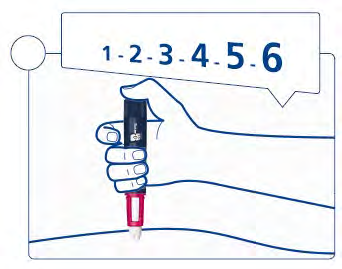
If “0” does not appear on the dose counter after continuously pressing the injection button, the needle or pen may be blocked or damaged, which means that you have not
received Sogroya– even if the dose counter has moved from the original dose you
selected.
Remove the needle as described in Step 5 and repeat Steps 1 to 4.
- Carefully withdraw the needle from the skin. See Figure
- P. If blood appears at the injection site, apply gentle pressure. Do not rub the area.
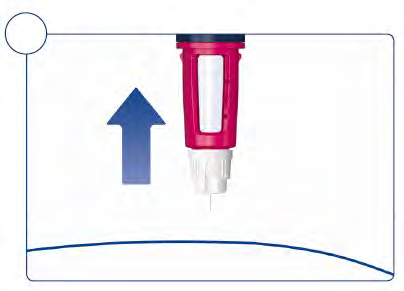
After the injection, you may see a drop of
Sogroya on the tip of the needle. This is normal and does not affect the dose just
administered.
Step 5. After the injection
- Place the tip of the needle into the outer cap of the needle on a flat surface, without touching the needle or the cap itself. See Figure Q.
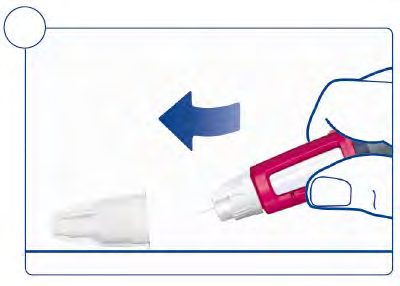
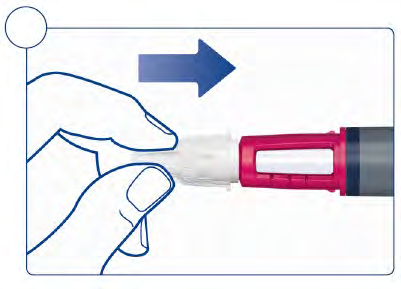
- When the needle is covered, push the outer cap all the way on, being careful. See Figure R.
- Unscrew the needle and dispose of it carefully according to the instructions of your doctor, nurse, pharmacist or local authorities. Always dispose of the needle after each injection.
When the pen is empty, remove and dispose of the needle
as shown above and dispose of the pen separately
as instructed by your doctor, nurse, pharmacist or
local authorities.
The pen cap and empty box can be disposed of in household waste.
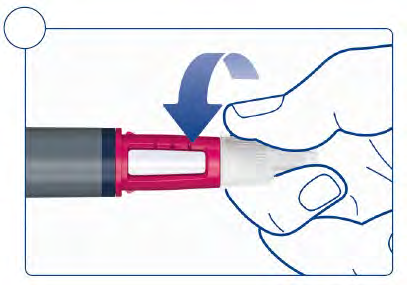
- Put the cap back on the pen after each use to protect Sogroya from direct light. See Figure T.
For storing the pen, see How to storein the
leaflet.
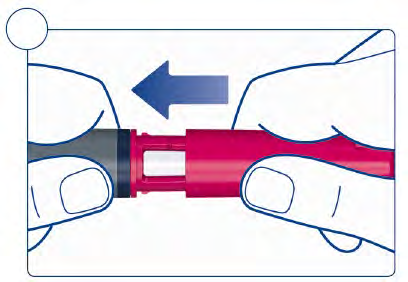
Do not attempt to reattach the inner needle cap.
You could prick yourself with the needle.
Always remove the needle from the pen immediately after each injection. This reduces the risk of contamination, infection, loss of Sogroya and blocked needles leading to
an incorrect dosage.
Checking how much Sogroya is left
The pen scale approximately shows how much
Sogroya is left in the pen. See Figure U.
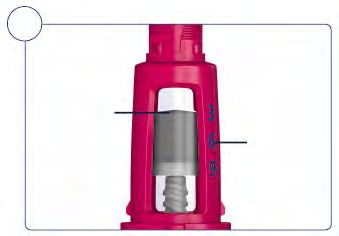
To see how much Sogroya is left, use the dose
counter. Rotate the dose selector clockwise until
the dose counter stops. A maximum dose of 8 mg can be selected. If it shows “8”, there are at least 8 mg left in the pen.
If the dose counter stops at “4.8”, only 4.8 mg are left in the pen. See Figure V
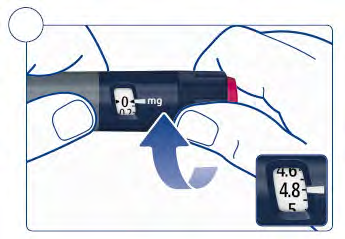
What if I need a dose
greater than what remains in
my pen?
It is not possible to select a dose greater than the amount
of mg remaining in the pen.
If you need more Sogroya than is left in the
pen, you can use a new pen or divide the dose between the
current pen and a new pen. The dose can only be divided
if you have been trained to do so or if it has been recommended
by your doctor or nurse.Use a calculator to
plan doses as directed by your doctor or
nurse.
Perform calculations very accurately, otherwise
errorsin drug administration may occur.If you are unsure how to divide the dose with two
pens, select and inject the required dose with a new
pen.
How to care for the pen
How do I care for the pen?
Be careful not to drop the pen or knock it
against hard surfaces. Do not expose the pen to dust,
dirt, liquids, or direct light.
Do not try to refill the pen as it is prefilled and must
be disposed of once it is empty
What if the pen falls?If the pen falls or you think something is wrong,
attach a new single-use needle and check the flow before
injection, see Steps 1 and 2. If the pen has fallen,
check the cartridge, if the cartridge is cracked, do not use
the pen.
How do you clean the pen? | Do not wash, immerse or lubricate the pen. It can be cleaned with a mild detergent on a damp cloth. |
o c Important information a
| |
APPENDIX IV
SCIENTIFIC CONCLUSIONS AND JUSTIFICATIONS FOR CHANGES TO THE
MARKETING AUTHORISATION TERMS
Scientific conclusions
In view of the assessment by the Pharmacovigilance and Risk Assessment Committee
(PRAC) of the Periodic Safety Update Reports (PSUR) for somapacitan, the PRAC’s scientific
conclusions are as follows:
In light of the available data on the risk of slipped capital femoral epiphysis (SCFE) associated with
growth hormone treatment from clinical studies, the literature and spontaneous reports, the PRAC considers SCFE a potential risk of somapacitan treatment, taking
into account that the risk of SCFE has already been reported in the product information for other
medicines containing growth hormone, including a long-acting growth hormone analogue. The PRAC concluded that the product information for medicines containing
somapacitan should be amended accordingly.
Having examined the PRAC’s recommendation, the Committee for Human Medicinal Products
(CHMP) agrees with the related overall conclusions and with the justification for the recommendation.
Justification for changes to the terms of marketing authorisations
Based on the scientific conclusions on somapacitan, the CHMP considers that the benefit/risk ratio of medicines containing somapacitan remains unchanged, subject to the proposed changes
to the product information.
The CHMP recommends the variation of the terms of the marketing authorisations.

Zacząłeś przyjmować lek i masz pytania?
Omów swoje objawy i leczenie z lekarzem online.

- Kraj rejestracji
- Postać farmaceutycznaInjectable solution, 10 MG / 1.5 ML
- Kod ATCH01AC07
- Substancja czynna
- Wymaga receptyTak
- Producent
- Te treści mają charakter wyłącznie informacyjny i nie zastępują konsultacji lekarskiej.
- Zamienniki SOGROYAPostać farmaceutyczna: Powder and solvent for injectable solution, 5.3 MGSubstancja czynna: somatropinProducent: PFIZER ITALIA S.R.L.Wymaga receptyPostać farmaceutyczna: Powder and solvent for injectable solution, 6 MGSubstancja czynna: somatropinProducent: ELI LILLY ITALIA S.P.A.Wymaga receptyPostać farmaceutyczna: Injectable solution, 10 MG/MLSubstancja czynna: mecaserminProducent: ESTEVE PHARMACEUTICALS SAWymaga recepty
Odpowiedniki SOGROYA w innych krajach
Leki z tą samą substancją czynną dostępne w innych krajach.
Odpowiednik SOGROYA w Hiszpania
Lekarze online w sprawie SOGROYA
Omów stosowanie SOGROYA, bezpieczeństwo i ocenę zasadności recepty zgodnie z obowiązującymi przepisami.


Uzyskaj receptę na SOGROYA online
Wypełnij 2-minutowy formularz
Opisz swoje objawy, historię choroby i lek, o który prosisz.
Wybierz lekarza lub pozwól nam przydzielić
Wybierz specjalistę lub dopasujemy Cię do najbliższego dostępnego lekarza.
Lekarz analizuje Twój przypadek
Zazwyczaj w ciągu 30 minut. Może zadawać dodatkowe pytania przez czat.
Odbierz w dowolnej aptece
Recepta elektroniczna wysłana na Twój e-mail — ważna w całej Polsce.
Często zadawane pytania
SOGROYA wymaga recepty w Włochy. Możesz skonsultować się z lekarzem online, aby sprawdzić, czy ten lek może być odpowiedni w Twojej sytuacji.
Substancją czynną w SOGROYA jest somapacitan. Informacja ta pomaga rozpoznać leki o tym samym składzie, ale pod różnymi nazwami handlowymi.
SOGROYA jest produkowany przez NOVO NORDISK A/S. Nazwy handlowe i opakowania mogą się różnić w zależności od dystrybutora.
Lekarze, tacy jak Lekarze rodzinni, Psychiatrzy, Dermatolodzy, Kardiolodzy, Endokrynolodzy, Gastroenterolodzy, Pulmonolodzy, Nefrolodzy, Reumatolodzy, Hematolodzy, Zakaźnicy, Alergolodzy, Geriatrzy, Pediatrzy, Onkolodzy, mogą ocenić, czy stosowanie SOGROYA jest odpowiednie w Twoim przypadku, w zależności od sytuacji klinicznej i lokalnych przepisów. Możesz umówić konsultację online, aby omówić objawy i możliwe dalsze kroki.
Polska posiada dobrze rozwiniętą infrastrukturę ochrony zdrowia w dużych miastach, takich jak Warszawa, Kraków, Wrocław i Gdańsk. Apteki są łatwo dostępne i działają zgodnie z obowiązującymi przepisami, zapewniając dostęp do leków na receptę.
Możesz kupić SOGROYA w Warszawie, Krakowie, Wrocławiu lub Gdańsku w każdej aptece, posiadając ważną receptę.
Aby uzyskać receptę, możesz skorzystać z Oladoctor:
Inne leki zawierające tę samą substancję czynną (somapacitan) to m.in. JENOTROPIN, UMATROPE, INKRELEX. Mogą one różnić się nazwą handlową lub postacią, ale zawierają ten sam składnik terapeutyczny. Przed zmianą lub rozpoczęciem nowego leku skonsultuj się z lekarzem.
