



SANDIMMUN 100 mg /Ml Roztwór Doustny

Ocena recepty online
Lekarz przeanalizuje Twój przypadek i zdecyduje, czy wystawienie recepty jest medycznie uzasadnione.

Porozmawiaj z lekarzem o tym leku
Omów swoje objawy i opcje leczenia podczas szybkiej konsultacji online.



Jak stosować SANDIMMUN
Treść ulotki
- Sandimmun 25 mg soft capsules, 50 mg soft capsules, 100 mg soft capsules
- Sandimmun 100 mg/ml oral solution
- Sandimmun 50 mg/ml concentrate for solution for infusion
Sandimmun 25 mg soft capsules, 50 mg soft capsules, 100 mg soft capsules
cyclosporine
Read this leaflet carefully before you start taking this medicine as it contains
important information for you.
- Keep this leaflet. You may need to read it again.
- If you have any questions, ask your doctor or pharmacist.
- This medicine has been prescribed for you only. Do not pass it on to others, even if their symptoms are the same as yours, as it could be harmful.
- If you get any side effects, even those not listed in this leaflet, tell your doctor or pharmacist. See section 4.
Contents of this leaflet:
- 1. What Sandimmun is and what it is used for
- 2. What you need to know before you take Sandimmun
- 3. How to take Sandimmun
- 4. Possible side effects
- 5. How to store Sandimmun
- 6. Contents of the pack and other information
1. What is Sandimmun and what is it used for
What is Sandimmun
The name of the medicine is Sandimmun. It contains the active ingredient cyclosporine. Cyclosporine
belongs to a group of medicines known as immunosuppressants. These medicines
are used to decrease the immune reactions of the body.
What Sandimmun is used for and how Sandimmun works
- If you have had an organ transplant,a bone marrow transplant or a stem cell transplant, the function of Sandimmun is to control the body's immune system. Sandimmun prevents rejection of transplanted organs by blocking the development of certain cells that would normally attack the transplanted tissue.
- If you suffer from an autoimmune disease, in which your body's immune response attacks the body's cells, Sandimmun blocks the immune reaction. These diseases include eye problems that put your sight at risk (endogenous uveitis, including Behçet's uveitis), severe cases of some skin diseases (atopic dermatitis or eczema and psoriasis), severe rheumatoid arthritis and a kidney disease known as nephrotic syndrome.
2. Cosa deve sapere prima di prendere Sandimmun
If you are taking Sandimmun following a transplant, the medicine will only be prescribed to you by a
doctor with experience in transplants and/or autoimmune diseases.
medicine for a transplant or for an autoimmune disease.
Follow all the doctor's instructions carefully. These may be different from the information
Do not take Sandimmun:
- if you are allergic to cyclosporine or to any of the other ingredients of this medicine (listed in section 6).
- with products containing Hypericum perforatum(St John's Wort).
- with medicines containing dabigatran etexilate(used to prevent blood clots after surgery) or bosentan and aliskiren(used to reduce high blood pressure).
Do not take Sandimmun and tell your doctorif any of the conditions described above occur. If you
are not sure, ask your doctor before taking Sandimmun.
Warnings and precautions
Before and during treatment with Sandimmun, tell your doctor immediately:
- if you have any signs of infection, such as fever or sore throat. Sandimmun suppresses the immune system and can also affect the body's ability to fight infections.
- if you have liver problems.
- if you have kidney problems. The doctor will regularly perform blood tests and, if necessary, may adjust the dose.
- if you develop high blood pressure. The doctor will check your blood pressure regularly and, if necessary, may give you medicine to lower your blood pressure.
- if you have low levels of magnesium in your body. The doctor may prescribe magnesium supplements, especially shortly after a transplant.
- if you have high levels of potassium in your blood.
- if you have gout.
- if you need a vaccination. If any of the conditions described above apply to you, tell your doctor immediately before or during treatment with Sandimmun.
Exposure to the sun and sun protection
Sandimmun suppresses the immune system. This increases the risk of developing cancer,
particularly of the skin and the lymphatic system. You must limit exposure to the sun and UV light:
- By wearing appropriate protective clothing.
- By frequently applying a sunscreen with a high protection factor.
Tell your doctor before taking Sandimmun:
- if you have or have had problems with alcoholism.
- if you have epilepsy.
- if you have any liver problems.
- if you are pregnant.
- if you are breastfeeding.
- if this medicine is to be prescribed to a child. If you experience any of the conditions described above (or are not sure), tell your doctor before taking Sandimmun. This is because this medicine contains alcohol (see the section below “Sandimmun contains ethanol”).
Monitoring during treatment with Sandimmun
The doctor will check:
- levels of cyclosporine in the blood,especially if you have had a transplant,
- the blood pressurebefore starting treatment and regularly during treatment,
- how your liver and kidneysare functioning,
- the lipids in the blood (fats). If you have any questions about how Sandimmun works or why this medicine has been prescribed to you, ask your doctor.
In addition, if you are taking Sandimmun for a disease other than transplant(intermediate uveitis
or posterior uveitis and Behçet's uveitis, atopic dermatitis, severe rheumatoid arthritis or nephrotic
syndrome), do not take Sandimmun:
- if you have kidney problems (except nephrotic syndrome).
- if you have an infection that is not controlled with therapy.
- if you have any type of cancer.
- if you have high blood pressure (hypertension) that is not controlled with therapy. If problems with high blood pressure occur during treatment and cannot be kept under control, Sandimmun must be stopped by the doctor. If you experience any of the conditions described above, do not take Sandimmun. If you are not sure, tell your doctor or pharmacist before taking Sandimmun.
If you are being treated for Behçet's uveitis, the doctor will carefully check if you have
any neurological symptoms (for example: increased forgetfulness, personality changes observed
over time, psychiatric or mood disorders, burning sensation in the limbs, decreased
sensitivity in the limbs, tingling sensation in the limbs, weakness in the limbs, gait disturbances, headache
with or without nausea and vomiting, visual disturbances including limited eye movements).
If you are elderly and are being treated for psoriasis or atopic dermatitis, the doctor will check
you carefully. If you have been prescribed Sandimmun for the treatment of psoriasis or atopic
dermatitis, you must not be exposed to UVB radiation or phototherapy during treatment.
Children and adolescents
Sandimmun should not be given to children for diseases other than transplant, except
for the treatment of nephrotic syndrome.
Elderly (65 years of age and over)
There is limited experience with Sandimmun in elderly patients. The doctor must check the good
function of the kidneys. If you are over 65 years of age and suffer from psoriasis or atopic dermatitis, you must
be treated with Sandimmun only if the condition is particularly severe.
Other medicines and Sandimmun
Tell your doctor or pharmacist if you are taking, have recently taken or might take
any other medicines.
In particular, tell your doctor or pharmacist if you are taking any of the following medicines before or
during treatment with Sandimmun:
- Medicines that can affect potassium levels. These include medicines that contain potassium, potassium supplements, water tablets (diuretics) called potassium-sparing diuretics and some medicines that lower blood pressure.
- Methotrexate. It is a medicine used for the treatment of tumors, severe psoriasis and severe rheumatoid arthritis.
- Medicines that can increase or decrease the level of cyclosporine (the active ingredient of Sandimmun) in the blood. The doctor may check the level of cyclosporine in the blood at the start or end of treatment with other medicines.
- Medicines that can increase the level of cyclosporine in the blood include: antibiotics (such as erythromycin or azithromycin), antifungals (voriconazole, itraconazole), medicines used for heart problems or high blood pressure (diltiazem, nicardipine, verapamil, amiodarone), metoclopramide (used against nausea), oral contraceptives,
danazol (used for the treatment of menstrual problems), medicines used for the treatment
of gout (allopurinol), bile acid and derivatives (used to treat gallstones), protease inhibitors
used for the treatment of HIV, imatinib (used for the treatment of
leukemia or tumors), colchicine, telaprevir (used for the treatment of hepatitis C),
cannabidiol (uses include, also, the treatment of seizures).
- Medicines that can decrease the level of cyclosporine in the blood include: barbiturates (used to promote sleep), some anticonvulsant medicines (such as carbamazepine or phenytoin), octreotide (used for the treatment of acromegaly or neuroendocrine tumors of the intestine), antibacterial medicines used for the treatment of tuberculosis, orlistat (used to promote weight loss), herbal medicines containing St John's Wort, ticlopidine (used after a stroke), certain medicines that lower blood pressure (bosentan) and terbinafine (an antifungal medicine used for the treatment of foot and nail infections).
- Medicines that can have effects on the kidneys. These include: antibacterial medicines (gentamicin, tobramycin, ciprofloxacin), antifungal medicines containing amphotericin B, medicines used for urinary tract infections containing trimethoprim, cancer medicines containing melphalan, medicines used to lower the amount of acid in the stomach (acid secretion inhibitors of the H-receptor antagonist type), tacrolimus, painkillers (non-steroidal anti-inflammatory drugs such as diclofenac), fibric acid-based medicines (used to lower the amount of fat in the blood).
- Nifedipine. It is used for the treatment of high blood pressure and heart pain. If you are taking nifedipine during treatment with cyclosporine, you may experience swelling of the gums that thicken around the teeth.
- Digoxin (used for the treatment of heart problems), medicines that lower cholesterol (HMG-CoA reductase inhibitors also called statins), prednisolone, etoposide (used for the treatment of cancer), repaglinide (an antidiabetic medicine), immunosuppressants (everolimus, sirolimus), ambrisentan and specific medicines against cancer called anthracyclines (e.g. doxorubicin).
- Sodium micofenolate or micofenolate mofetil (an immunosuppressant) and eltrombopag (used to treat coagulation disorders). If you experience any of the conditions described above (or are not sure), tell your doctor or pharmacist before taking Sandimmun.
Sandimmun with food and drink
Do not take Sandimmun with grapefruit or grapefruit juice. This is because they can have an effect
on the action of Sandimmun.
Pregnancy and breastfeeding
Ask your doctor or pharmacist for advice before taking this medicine.
- Tell your doctor if you are pregnant or if you are planning to become pregnant.Experience with Sandimmun in pregnancy is limited. In general Sandimmun should not be taken during pregnancy. If taking this medicine is necessary, your doctor will discuss with you the benefits and potential risks of taking it during pregnancy.
- Tell your doctor if you are breastfeeding.Breastfeeding is not recommended during treatment with Sandimmun. This is because cyclosporine, the active ingredient, passes into breast milk. This can have effects on the baby.
Hepatitis C
Tell your doctor if you have hepatitis C. Your liver function may change with treatment
for hepatitis C and this may affect the levels of cyclosporine in the blood. The doctor may need to
carefully check the blood levels of cyclosporine and adjust the dose after starting treatment
for hepatitis C.
Driving and using machines
You may feel sleepy, dizzy or have blurred vision after taking Sandimmun.
Be careful driving or using machines while you are taking Sandimmun until you
know how it affects you.
Sandimmun contains ethanol
Sandimmun contains 25, 50, 100 mg of alcohol (ethanol) respectively in each capsule of Sandimmun from
25, 50, 100 mg, which is equivalent to 12.8% v/v. A dose of 500 mg of Sandimmun contains 500 mg of
ethanol, which is equivalent to approximately 13 ml of beer or 5 ml of wine.
The small amount of alcohol in this medicine will not produce significant effects.
Sandimmun contains sorbitol
This medicine contains 30 mg of sorbitol in each 25 mg capsule
This medicine contains 62.4 mg of sorbitol in each 50 mg capsule
This medicine contains 103.8 mg of sorbitol in each 100 mg capsule
3. How to take Sandimmun
Take this medicine following exactly the instructions of your doctor. If you have any doubts, ask your
doctor.
Do not take more than the recommended dose.
The dose of this medicine will be carefully adjusted to your personal needs by the doctor.
Too much medicine can affect kidney function. You will be regularly subjected to blood tests and hospital visits, especially after a transplant. This will give you the opportunity to talk
to your doctor about the treatment and any problems you may have.
How much Sandimmun to take
The doctor will determine the correct dose of Sandimmun for you. It depends on your body weight and the reason
why you are taking the medicine. The doctor will also tell you how often to take the medicine.
- In adults:Organ, bone marrow or stem cell transplant
- The total daily dose is usually between 2 mg and 15 mg per kilogram of body weight. It should be divided into two doses.
- Usually, the higher doses are used before and immediately after the transplant. Lower doses are used once the transplanted organ or bone marrow has stabilized.
- The doctor will adjust the dose to the appropriate one for you. To do this, the doctor may need to perform some blood tests. Uveitis
- The total daily dose is usually between 5 mg and 7 mg per kilogram of body weight. It should be divided into two doses. Nephrotic syndrome
- For adults, the total daily dose is usually 5 mg per kilogram of body weight. It should be divided into two doses. In patients with kidney problems, the initial dose taken each day should not exceed 2.5 mg per kilogram of body weight. Severe rheumatoid arthritis
- The total daily dose is usually between 3 mg per kilogram of body weight and 5 mg per kilogram of body weight. It should be divided into two doses. Psoriasis and atopic dermatitis
- The total daily dose is usually between 2.5 mg per kilogram of body weight and 5 mg per kilogram of body weight. It should be divided into two doses.
- In children:Nephrotic syndrome
- For children, the total daily dose is usually 6 mg per kilogram of body weight. It should be divided into two doses. In patients with kidney problems, the initial dose taken each day should not exceed 2.5 mg per kilogram of body weight. Follow your doctor's instructions exactly and never change the dose on your own, even if you feel well.
If your doctor switches you from one oral cyclosporine formulation to another
After switching from one oral cyclosporine formulation to another:
- Your doctor will monitor you more closely for a short period.
- You may experience some unwanted effects. If this happens, contact your doctor or pharmacist. It may be necessary to adjust the dose. Never change the dose on your own, unless your doctor tells you to.
When to take Sandimmun
Take Sandimmun every day at the same time. This is very important if you have undergone
a transplant.
How to take Sandimmun
Daily doses should always be taken in 2 divided doses.
Remove the capsules from the blister. Swallow the capsules whole with water.
For how long to take Sandimmun
The doctor will tell you how long you will need to take Sandimmun. This depends on whether you are
taking the medicine after a transplant or for the treatment of a severe skin condition, rheumatoid arthritis, uveitis or nephrotic syndrome. For severe skin rash, the duration of treatment is
usually 8 weeks.
Continue to take Sandimmun until your doctor tells you to stop.
If you have any questions about how long to take Sandimmun, talk to your doctor or pharmacist.
If you take more Sandimmun than you should
If you have accidentally taken too much medicine, immediately inform your doctor or go to the nearest hospital emergency room. You may need medical care.
If you forget to take Sandimmun
- If you forget to take a dose, take it as soon as you remember. However, if it is almost time for the next dose, skip the missed dose. Then continue as before.
- Do not take a double dose to make up for the missed dose.
If you stop taking Sandimmun
Do not stop taking Sandimmun unless your doctor tells you to.
Continue to take Sandimmun even if you feel well. Stopping treatment with Sandimmun
can increase the risk of rejection of the organ you have transplanted.
If you have any further questions about the use of this medicine, ask your doctor or pharmacist.
4. Possible side effects
Like all medicines, this medicine can cause side effects, although not everybody gets them.
Some side effects can be serious
Tell your doctor immediatelyif you experience any of the following serious side effects:
- As with other medicines that act on the immune system, ciclosporin can affect the body's ability to fight infections and can cause tumors or other types of cancer, particularly of the skin. Signs of infection may include fever or sore throat.
- Changes in vision, loss of coordination, clumsiness, memory loss, difficulty speaking or understanding what others are saying, and muscle weakness. These could be signs of a brain infection called progressive multifocal leukoencephalopathy.
- Brain problems with signs such as seizures, confusion, feeling disoriented, poor responsiveness, personality changes, feeling agitated, insomnia, changes in vision, blindness, coma, paralysis of a part or all of the body, stiff neck, loss of coordination with or without unusual speech or eye movements.
- Swelling in the back of the eye. This may be associated with blurred vision. It can also affect vision due to increased pressure inside the head (benign intracranial hypertension).
- Liver problems and damage with or without yellowing of the skin and eyes, nausea, loss of appetite, and dark urine.
- Kidney problems that can significantly reduce the amount of urine produced.
- Low levels of red blood cells or platelets. Signs include paleness, feeling tired, difficulty breathing, dark urine (this is a sign of red blood cell breakdown), bruising or bleeding for no apparent reason, feeling confused, feeling disoriented, decreased attention, and kidney problems.
Other side effects include:
Very common:may affect more than 1 in 10 people.
- Kidney problems.
- High blood pressure.
- Headache.
- Uncontrollable body shaking.
- Excessive hair growth on the body and face.
- High levels of lipids in the blood. If any of these effects become severe, tell your doctor.
Common:may affect up to 1 in 10 people.
- Seizures (convulsions).
- Liver problems.
- High blood sugar levels.
- Fatigue.
- Loss of appetite.
- Nausea (feeling sick), vomiting, abdominal discomfort/pain, diarrhea.
- Excessive hair growth.
- Acne, hot flushes.
- Fever.
- Low levels of white blood cells in the blood.
- Feeling of numbness or tingling.
- Muscle pain, muscle spasms.
- Stomach ulcer.
- Excessive growth of the gums and covering of the teeth.
- High levels of uric acid or potassium in the blood, low levels of magnesium in the blood. If any of these effects become severe, tell your doctor.
Uncommon:may affect up to 1 in 100 people.
- Symptoms of brain disorders including sudden seizures, confusion, insomnia, disorientation, visual disturbances, loss of consciousness, weakness of the limbs, reduced movements.
- Skin rash.
- Generalized swelling.
- Weight gain.
- Low levels of red blood cells, low levels of platelets in the blood which may increase the risk of bleeding. If any of these effects become severe, tell your doctor.
Rare: may affect up to 1 in 1000 people.
- Nerve problems with numbness or tingling in the fingers of the hands and feet.
- Inflammation of the pancreas with severe pain in the upper part of the stomach.
- Muscle weakness, loss of muscle strength, pain in the leg or arm muscles or in any part of the body.
- Destruction of red blood cells, leading to kidney problems with symptoms such as swelling of the face, stomach, hands and/or feet, decreased urine volume, difficulty breathing, chest pain, seizures, loss of consciousness.
- Changes in the menstrual cycle, enlargement of the male breast gland. If any of these effects become severe, tell your doctor.
Very rare:may affect up to 1 in 10,000 people.
- Swelling in the back of the eye that may be associated with increased pressure inside the head and visual disturbances. If this effect becomes severe, tell your doctor.
Not known:The frequency cannot be estimated from the available data.
- Severe liver problems with and without yellowing of the skin or eyes, nausea (feeling sick), loss of appetite, dark urine, swelling of the face, feet, hands and/or whole body.
- Bleeding under the skin or purple spots, sudden bleeding without apparent cause.
- Migraine or severe headache often with discomfort (nausea, vomiting) and sensitivity to light.
- Pain in the legs and feet
- Hearing impairment. If any of these effects become severe, tell your doctor.
If you get any side effects, even those not listed in this leaflet, tell your
doctor or pharmacist.
Additional side effects in children and adolescents
There are no additional side effects to be expected in children and adolescents compared to adults.
Reporting of side effects
If you get any side effects, even those not listed in this leaflet, tell your
doctor or pharmacist. You can also report side effects directly through the national
reporting system at https://www.aifa.gov.it/content/segnalazioni-reazioni-avverse.
By reporting side effects you can help provide more information on the safety of
this medicine.
5. How to store Sandimmun
- Keep this medicine out of the sight and reach of children.
- Do not use this medicine after the expiry date which is stated on the pack.
- Do not store the capsules in a warm place. Store at a temperature below 30°C.
- Leave the capsules in the blister. Only remove the capsules when it is time to take the medicine.
- Upon opening of the blister, a characteristic odour may be detected. This is normal and does not affect the use of the medicine.
- Do not dispose of any medicine in waste water or household waste. Ask your pharmacist how to dispose of medicines you no longer use. This will help protect the environment.
6. Contents of the pack and other information
What Sandimmun contains
- The active ingredient is cyclosporine. Each capsule contains 25 mg of cyclosporine.
- The other ingredients are: o Capsule content: absolute ethanol, interesterified corn oil, refined corn oil. o Capsule shell: Red iron oxide (E172), titanium dioxide (E 171), glycerol 85%, sorbitol syrup, gelatin.
- The active ingredient is cyclosporine. Each capsule contains 50 mg of cyclosporine.
- The other ingredients are: o Capsule content: absolute ethanol, interesterified corn oil, refined corn oil. o Capsule shell: Yellow iron oxide (E172), titanium dioxide (E 171), glycerol 85%, sorbitol syrup, gelatin.
- The active ingredient is cyclosporine. Each capsule contains 100 mg of cyclosporine.
- The other ingredients are: o Capsule content: absolute ethanol, interesterified corn oil, refined corn oil. o Capsule shell: Red iron oxide (E172), titanium dioxide (E 171), glycerol 85%, sorbitol syrup, gelatin.
Description of the appearance of Sandimmun and contents of the pack
The 25 mg Sandimmun soft capsules are pink and oval in shape.
The 50 mg Sandimmun soft capsules are wheat yellow in colour and elongated in shape.
The 100 mg Sandimmun soft capsules are powder pink in colour and elongated in shape.
Sandimmun 25 mg, 50 mg and 100 mg soft capsules
Pack of 30, 50 soft capsules
Pack of 500 (10 x 50) soft capsules
Not all pack sizes may be marketed.
Marketing authorisation holder and manufacturer
Novartis Farma S.p.A.
Viale Luigi Sturzo, 43
20154 Milano MI
Italy
Manufacturer
Novartis Farma S.p.A.
Via Provinciale Schito 131
Torre Annunziata NA
Italy
Lek Pharmaceuticals d.d.
Trimlini 2D
9220 Lendava
Slovenia
Novartis Farma S.p.A.
Viale Luigi Sturzo, 43
20154 Milano MI
Italy
This medicinal product is authorised in the Member States of the European Economic Area and in the
United Kingdom (Northern Ireland) under the following denominations:
Other sources of information
More detailed information on this medicinal product is available on the website of the Italian Medicines Agency (http://www.aifa.gov.it/)
| Denomination | and European Economic Area Member States |
| Sandimmun | of Germany, Ireland, Italy, United Kingdom (Northern Ireland) |
Sandimmun 100 mg/ml oral solution
cyclosporine
Read this leaflet carefully before you start taking this medicine as it contains
important information for you.
- Keep this leaflet. You may need to read it again.
- If you have any questions, ask your doctor or pharmacist.
- This medicine has been prescribed for you only. Do not pass it on to others, even if they have the same symptoms as you, as it may be harmful.
- If you get any side effects, even those not listed in this leaflet, tell your doctor or pharmacist. See section 4.
Contents of this leaflet:
- 1. What Sandimmun is and what it is used for
- 2. What you need to know before you take Sandimmun
- 3. How to take Sandimmun
- 4. Possible side effects
- 6. How to store Sandimmun
- 6. Contents of the pack and other information
1. What is Sandimmun and what is it used for
What is Sandimmun
The name of the medicine is Sandimmun. It contains the active ingredient cyclosporine. Cyclosporine
belongs to a group of medicines known as immunosuppressants. These medicines
are used to decrease the immune reactions of the body.
What is Sandimmun used for and how does Sandimmun work
- If you have had an organ transplant,bone marrow transplant or a stem cell transplant, the function of Sandimmun is to control the body's immune system. Sandimmun prevents the rejection of transplanted organs by blocking the development of certain cells that would normally attack the transplanted tissue.
- If you suffer from an autoimmune disease, in which your body's immune response attacks the body's cells, Sandimmun blocks the immune reaction. These diseases include eye problems that put your sight at risk (endogenous uveitis, including Behçet's uveitis), severe cases of some skin diseases (atopic dermatitis or eczema and psoriasis), severe rheumatoid arthritis and a kidney disease known as nephrotic syndrome.
2. What you need to know before taking Sandimmun
If you are taking Sandimmun following a transplant, the medicine will only be prescribed to you by a
doctor with experience in transplants and/or in autoimmune diseases.
medicine for a transplant or for an autoimmune disease.
Follow all the doctor's instructions carefully. These may be different from the information
Do not take Sandimmun:
- if you are allergic to cyclosporine or to any of the other ingredients of this medicine (listed in section 6).
- with products containing Hypericum perforatum(St John's Wort).
- with medicines containing dabigatran etexilate(used to prevent blood clots after surgery) or bosentan and aliskiren(used to reduce high blood pressure).
Do not take Sandimmun and tell your doctorif any of the conditions above apply to you. If you are
not sure, ask your doctor before taking Sandimmun.
Warnings and precautions
Before and during treatment with Sandimmun, tell your doctor immediately:
- if you have any signs of infection, such as fever or sore throat. Sandimmun suppresses the immune system and can also affect the body’s ability to fight infections.
- if you have liver problems.
- if you have kidney problems. The doctor will perform regular blood tests and, if necessary, may adjust the dose.
- if you develop high blood pressure. The doctor will check your blood pressure regularly and, if necessary, may give you medicine to lower your blood pressure.
- if you have low levels of magnesium in your body. The doctor may prescribe magnesium supplements, especially shortly after a transplant.
- if you have high levels of potassium in your blood.
- if you have gout.
- if you need to be vaccinated. If any of the conditions above apply to you, before or during treatment with Sandimmun, tell your doctor immediately.
Exposure to the sun and sun protection
Sandimmun suppresses the immune system. This increases the risk of developing cancer,
particularly of the skin and the lymphatic system. You must limit exposure to the sun and UV light:
- By wearing appropriate protective clothing.
- By frequently applying a sunscreen with a high protection factor.
Tell your doctor before taking Sandimmun:
- if you have or have had problems with alcoholism.
- if you have epilepsy.
- if you have any liver problems.
- if you are pregnant.
- if you are breastfeeding.
- if this medicine is to be prescribed to a child. If you experience any of the conditions above (or are not sure), tell your doctor before taking Sandimmun. This is because this medicine contains alcohol (see the section below “Sandimmun contains ethanol”).
Monitoring during treatment with Sandimmun
The doctor will check:
- the levels of cyclosporine in the blood,especially if you have had a transplant,
- the blood pressurebefore starting treatment and regularly during treatment,
- how your liver and kidneysare functioning,
- the lipids in the blood (fats). If you have any questions about how Sandimmun works or why this medicine has been prescribed to you, ask your doctor.
In addition, if you are taking Sandimmun for a disease other than transplant(intermediate uveitis
or posterior uveitis and Behçet’s uveitis, atopic dermatitis, severe rheumatoid arthritis or nephrotic
syndrome), do not take Sandimmun:
- if you have kidney problems (except for nephrotic syndrome).
- if you have an infection that is not controlled by therapy.
- if you have any type of cancer.
- if you have high blood pressure (hypertension) that is not controlled by therapy. If problems with high blood pressure occur during treatment and cannot be kept under control, Sandimmun must be stopped by the doctor. If you experience any of the conditions above, do not take Sandimmun. If you are not sure, tell your doctor or pharmacist before taking Sandimmun.
If you are being treated for Behçet’s uveitis, the doctor will carefully monitor whether you have
any neurological symptoms (for example: increased forgetfulness, personality changes observed
over time, psychiatric or mood disorders, burning sensation in the limbs, decreased
sensitivity in the limbs, tingling sensation in the limbs, weakness in the limbs, gait disturbances, headache
with or without nausea and vomiting, visual disturbances including limited eye movement).
If you are elderly and are being treated for psoriasis or atopic dermatitis, the doctor will monitor you
carefully. If you have been prescribed Sandimmun for the treatment of psoriasis or atopic
dermatitis, you must not be exposed to UVB radiation or phototherapy during treatment.
Children and adolescents
Sandimmun should not be given to children for diseases other than transplant, except for the
treatment of nephrotic syndrome.
Elderly (65 years of age and over)
There is limited experience with Sandimmun in elderly patients. The doctor must check the good
function of the kidneys. If you are over 65 years of age and suffer from psoriasis or atopic dermatitis, you must be
treated with Sandimmun only if the condition is particularly severe.
Other medicines and Sandimmun
Tell your doctor or pharmacist if you are taking, have recently taken or might take
any other medicines.
In particular, tell your doctor or pharmacist if you are taking any of the following medicines before or
during treatment with Sandimmun:
- Medicines that can affect potassium levels. These include medicines that contain potassium, potassium supplements, water tablets (diuretics) called potassium-sparing diuretics and some medicines that lower blood pressure.
- Methotrexate. It is a medicine used to treat tumors, severe psoriasis and severe rheumatoid arthritis.
- Medicines that can increase or decrease the level of cyclosporine (the active ingredient of Sandimmun) in the blood. The doctor may check the level of cyclosporine in the blood at the start or end of treatment with other medicines.
- Medicines that can increase the level of cyclosporine in the blood include: antibiotics (such as erythromycin or azithromycin), antifungals (voriconazole, itraconazole), medicines used for heart problems or high blood pressure (diltiazem, nicardipine, verapamil, amiodarone), metoclopramide (used against nausea), oral contraceptives, danazol (used to treat menstrual problems), medicines used to treat gout (allopurinol), bile acid and derivatives (used to treat gallstones), protease inhibitors used to treat HIV, imatinib (used to treat leukemia or tumors), colchicine, telaprevir (used to treat hepatitis C), cannabidiol (uses include, also, the treatment of seizures).
- Medicines that can decrease the level of cyclosporine in the blood include: barbiturates (used to promote sleep), some anticonvulsant medicines (such as carbamazepine or phenytoin), octreotide (used to treat acromegaly or neuroendocrine tumors of the intestine), antibacterial medicines used to treat tuberculosis, orlistat (used to promote weight loss), herbal medicines containing St John's Wort, ticlopidine (used after a stroke), certain medicines that lower blood pressure (bosentan) and terbinafine (an antifungal medicine used to treat foot and nail infections).
- Medicines that can have effects on the kidneys. These include: antibacterial medicines (gentamicin, tobramycin, ciprofloxacin), antifungal medicines containing amphotericin B, medicines used for urinary tract infections containing trimethoprim, cancer medicines containing melphalan, medicines used to lower the amount of acid in the stomach (acid secretion inhibitors of the H-receptor antagonist type), tacrolimus, pain relievers (non-steroidal anti-inflammatory drugs such as diclofenac), fibric acid medicines (used to lower the amount of fat in the blood).
- Nifedipine. It is used to treat high blood pressure and chest pain. If you are taking nifedipine during treatment with cyclosporine, you may experience swelling of the gums that thickens around the teeth.
- Digoxin (used to treat heart problems), medicines that lower cholesterol (HMG-CoA reductase inhibitors also called statins), prednisolone, etoposide (used to treat cancer), repaglinide (an antidiabetic medicine), immunosuppressants (everolimus, sirolimus), ambrisentan and specific medicines against cancer called anthracyclines (e.g. doxorubicin).
- Sodium micofenolate or micofenolate mofetil (an immunosuppressant) and eltrombopag (used to treat coagulation disorders). If you experience any of the conditions above (or are not sure), tell your doctor or pharmacist before taking Sandimmun.
Sandimmun with food and drink
Do not take Sandimmun with grapefruit or grapefruit juice. This is because they can have an effect
on the action of Sandimmun.
Pregnancy and breastfeeding
Ask your doctor or pharmacist for advice before taking this medicine.
- Tell your doctor if you are pregnant or planning to become pregnant.Experience with Sandimmun in pregnancy is limited. In general Sandimmun should not be taken during pregnancy. If taking this medicine is necessary, the doctor will discuss with you the benefits and potential risks of taking it during pregnancy.
- Tell your doctor if you are breastfeeding.Breastfeeding is not recommended during treatment with Sandimmun. This is because cyclosporine, the active ingredient, passes into breast milk. This can have effects on the baby.
Hepatitis C
Tell your doctor if you have hepatitis C. Your liver function may change with treatment
for hepatitis C and this may affect the levels of cyclosporine in your blood. The doctor may need
to carefully monitor blood levels of cyclosporine and adjust the dose after starting
treatment for hepatitis C.
Driving and using machines
You may feel sleepy, dizzy or have blurred vision after taking Sandimmun.
Be careful driving or using machines while taking Sandimmun until you
know how it affects you.
Sandimmun contains ethanol
Sandimmun contains 100 mg of alcohol (ethanol) in each ml which is equivalent to 12.6% v/v. A dose of
500 mg of Sandimmun contains 500 mg of ethanol, equivalent to 13 ml of beer or 5 ml of wine.
The small amount of alcohol in this medicine will not produce significant effects.
3. How to take Sandimmun
Take this medicine following exactly the instructions of your doctor. If you have any doubts, ask your
doctor.
Do not take more than the recommended dose.
The dose of this medicine will be carefully adjusted to your personal needs by the doctor.
Too much medicine can affect the function of the kidneys. You will be regularly subjected to blood tests and hospital visits, especially after a transplant. This will give you the opportunity to talk
to the doctor about the treatment and any problems you may have.
How much Sandimmun to take
The doctor will determine the correct dose of Sandimmun for you. It depends on your body weight and the reason
why you are taking the medicine. The doctor will also tell you how often to take the medicine.
- In adults:Organ, bone marrow or stem cell transplant
- The total daily dose is usually between 2 mg and 15 mg per kilogram of body weight. It should be divided into two doses.
- Usually the higher doses are used before and immediately after the transplant. Lower doses are used once the transplanted organ or bone marrow has stabilized.
- The doctor will adjust the dose to the appropriate one for you. To do this, the doctor may need to perform some blood tests. Uveitis
- The total daily dose is usually between 5 mg and 7 mg per kilogram of body weight. It should be divided into two doses. Nephrotic syndrome
- For adults, the total daily dose is usually 5 mg per kilogram of body weight. It should be divided into two doses. In patients with kidney problems, the initial dose taken each day should not exceed 2.5 mg per kilogram of body weight. Severe rheumatoid arthritis
- The total daily dose is usually between 3 mg per kilogram of body weight and 5 mg per kilogram of body weight. It should be divided into two doses. Psoriasis and atopic dermatitis
- The total daily dose is usually between 2.5 mg per kilogram of body weight and 5 mg per kilogram of body weight. It should be divided into two doses.
- In children:Nephrotic syndrome
- For children, the total daily dose is usually 6 mg per kilogram of body weight. It should be divided into two doses. In patients with kidney problems, the initial dose taken each day should not exceed 2.5 mg per kilogram of body weight. Follow your doctor's instructions exactly and never change the dose on your own, even if you feel well.
If the doctor switches you from one oral cyclosporine formulation to another
After switching from one oral cyclosporine formulation to another:
- The doctor will monitor you more closely for a short period.
- You may experience some undesirable effects. If this happens, contact your doctor or pharmacist. It may be necessary to adjust the dose. Never change the dose on your own, unless your doctor tells you to.
When to take Sandimmun
Take Sandimmun every day at the same time. This is very important if you have had a
transplant.
How to take Sandimmun
Daily doses must always be taken in 2 divided doses.
- For initial use, follow steps 1-9.
- For subsequent use, follow steps 5-9.
Opening a new bottle of Sandimmun oral solution
| Lift the tab in the center of the aluminum ring. Remove the safety ring completely. F l e Remove the gray cap and discard it. d a n a Insert the cannula into the bottle by pushing the white cap firmly into the bottle opening. i l a t I | a r m a c o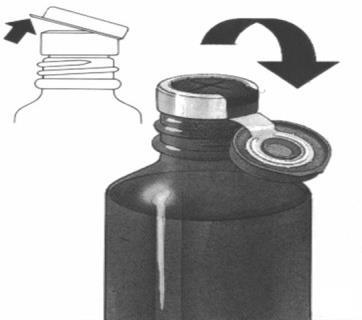 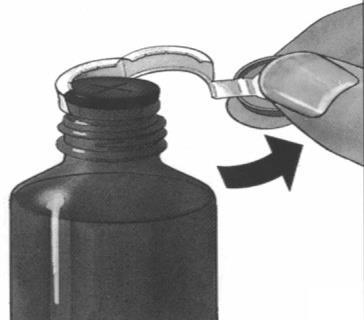 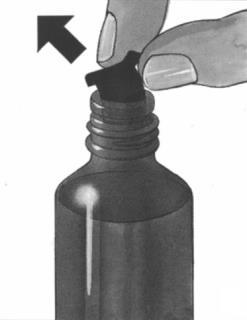 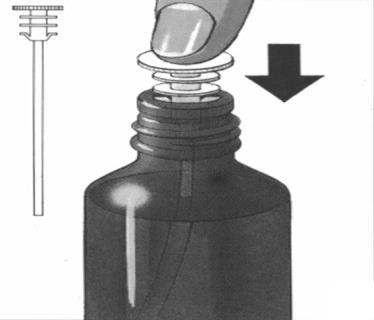 |
Measuring the dose
| i Choose the syringe according to the volume of medicine you z need to measure:
| 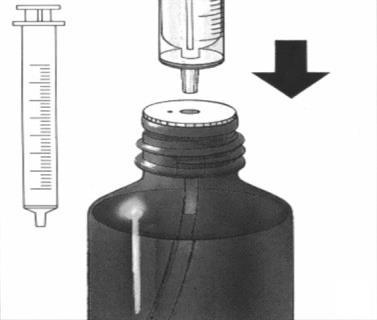 |
| Pull the plunger to draw the correct amount of medicine.
| a r m a c o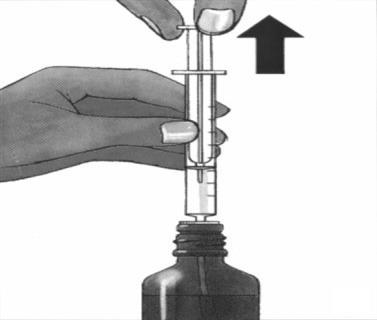 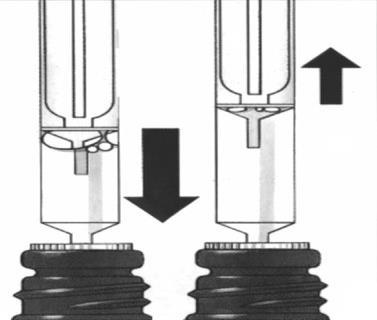 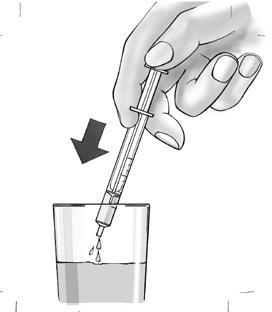 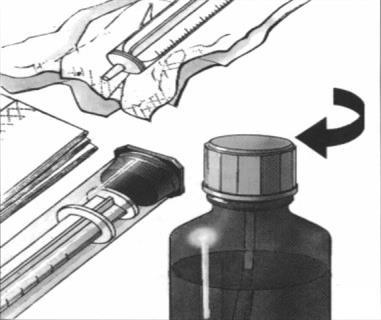 |
For how long to take Sandimmun
The doctor will tell you how long you will have to take Sandimmun. This depends on whether you are
taking the medicine after a transplant or for the treatment of a severe skin condition, rheumatoid arthritis, uveitis or nephrotic syndrome. For severe skin rash, the duration of treatment is
usually 8 weeks.
Continue to take Sandimmun until the doctor tells you to stop.
If you have any further questions about how long to take Sandimmun, talk to your doctor or pharmacist.
If you take more Sandimmun than you should
If you have accidentally taken too much medicine, inform your doctor immediately or go to the nearest hospital emergency
room. You may need medical attention.
If you forget to take Sandimmun
- If you forget to take a dose, take it as soon as you remember. However, if it is almost time for the next dose, skip the missed dose. Then continue as before.
- Do not take a double dose to make up for a missed dose.
If you stop taking Sandimmun
Do not stop taking Sandimmun unless your doctor tells you to.
Continue to take Sandimmun even if you feel well. Stopping treatment with Sandimmun
can increase the risk of rejection of the organ you have been transplanted.
If you have any further questions about using this medicine, ask your doctor or pharmacist.
4. Possible side effects
Like all medicines, this medicine can cause side effects, although not everybody gets them.
Some side effects can be serious
Tell your doctor immediatelyif you experience any of the following serious side effects:
- As with other medicines that act on the immune system, ciclosporin can affect the body's ability to fight infections and can cause tumors or other types of cancer, particularly of the skin. Signs of infection could be fever or sore throat.
- Changes in vision, loss of coordination, clumsiness, memory loss, difficulty speaking or understanding what others are saying, and muscle weakness. These could be signs of a brain infection called progressive multifocal leukoencephalopathy.
- Brain problems with signs such as seizures, confusion, feeling disoriented, poor responsiveness, personality changes, feeling agitated, insomnia, changes in vision, blindness, coma, paralysis of a part or all of the body, stiff neck, loss of coordination with or without unusual speech or eye movements.
- Swelling at the back of the eye. This may be associated with blurred vision. It can also affect vision due to increased pressure inside the head (benign intracranial hypertension).
- Liver problems and damage with or without yellowing of the skin and eyes, nausea, loss of appetite, and dark urine.
- Kidney problems that can significantly reduce the amount of urine produced.
- Low levels of red blood cells or platelets. Signs include paleness, feeling tired, difficulty breathing, dark urine (this is a sign of red blood cell breakdown), bruising or bleeding for no apparent reason, feeling confused, feeling disoriented, decreased attention, and kidney problems.
Other side effects include:
Very common:may affect more than 1 in 10 people.
- Kidney problems.
- High blood pressure.
- Headache.
- Uncontrollable body shaking.
- Excessive hair growth on the body and face.
- High levels of lipids in the blood. If any of these effects become severe, tell your doctor.
Common:may affect up to 1 in 10 people.
- Seizures (convulsions).
- Liver problems.
- High blood sugar levels.
- Fatigue.
- Loss of appetite.
- Nausea (feeling sick), vomiting, abdominal discomfort/pain, diarrhea.
- Excessive hair growth.
- Acne, hot flushes.
- Fever.
- Low levels of white blood cells in the blood.
- Feeling of numbness or tingling.
- Muscle pain, muscle spasms.
- Stomach ulcer.
- Excessive gum growth and covering of the teeth.
- High levels of uric acid or potassium in the blood, low levels of magnesium in the blood. If any of these effects become severe, tell your doctor.
Uncommon:may affect up to 1 in 100 people.
- Symptoms of brain disorders including sudden attacks, confusion, insomnia, disorientation, visual disturbances, loss of consciousness, weakness of the limbs, reduced movements.
- Skin rash.
- Generalized swelling.
- Weight gain.
- Low levels of red blood cells, low levels of platelets in the blood which may increase the risk of bleeding. If any of these effects become severe, tell your doctor.
Rare:may affect up to 1 in 1000 people.
- Nerve problems with numbness or tingling in the fingers of the hands and feet.
- Inflammation of the pancreas with severe pain in the upper abdomen.
- Muscle weakness, loss of muscle strength, pain in the leg or arm muscles or in any part of the body.
- Destruction of red blood cells, which involve kidney problems with symptoms such as swelling of the face, stomach, hands and/or feet, decreased urine volume, difficulty breathing, chest pain, convulsions, loss of consciousness.
- Changes in the menstrual cycle, enlargement of the mammary gland in men. If any of these effects become severe, tell your doctor.
Very rare:may affect up to 1 in 10,000 people.
- Swelling at the back of the eye which may be associated with an increase in pressure inside the head and visual disturbances. If this effect becomes severe, tell your doctor.
Not known:The frequency cannot be estimated from the available data.
- Severe liver problems with or without the appearance of yellow skin or eyes, nausea (feeling sick), loss of appetite, dark urine, swelling of the face, feet, hands and/or the whole body.
- Bleeding under the skin or purple spots, sudden bleeding for no apparent reason.
- Migraine or severe headache often with feeling unwell (nausea, vomiting) and sensitivity to light.
- Pain in the legs and feet.
- Hearing impairment. If any of these effects become severe, tell your doctor.
If you get any side effects, even those not listed in this leaflet, tell your
doctor or pharmacist.
Additional side effects in children and adolescents
No additional side effects are expected in children and adolescents compared to adults.
Reporting of side effects
If you get any side effects, talk to your doctor or pharmacist. You can also report side effects directly through the national reporting system at https://www.aifa.gov.it/content/segnalazioni-reazioni-avverse.
By reporting side effects you can help provide more information on the safety of
this medicine.
5. How to store Sandimmun
- Keep this medicine out of the sight and reach of children.
- Do not use this medicine after the expiry date which is stated on the pack.
- Store at a temperature below 30°C.
- Do not refrigerate.
- If the medicine is mistakenly put in the refrigerator, allow it to reach room temperature before using it again. The presence of flocculi or small particles (sediment) in the medicine does not affect its action or safety. The dose can still be measured correctly with the syringe.
- The contents of the bottle are stable for 2 months after opening. After 2 months, you must use a new bottle.
- Do not dispose of any medicine in wastewater or household waste. Ask your pharmacist how to dispose of medicines you no longer use. This will help protect the environment.
6. Contents of the pack and other information
What Sandimmun contains
- The active substance is cyclosporine. One ml of oral solution contains 100 mg of cyclosporine.
- The other ingredients are absolute ethanol, interesterified corn oil, refined corn oil.
Description of the appearance of Sandimmun and contents of the pack
Sandimmun is presented as an oral solution. It is a clear liquid, from yellow to yellowish
brownish with a very fine sediment.
- The 1 ml syringe is used to measure doses of 1 ml or less. Each mark on the syringe is equal to 0.05 ml. This contains 5 mg of cyclosporine.
- The 4 ml syringe is used to measure doses greater than 1 ml and up to 4 ml. Each mark on the syringe is equal to 0.1 ml. This contains 10 mg of cyclosporine.
Pack of 20 ml, 50 ml of oral solution
Pack of 50 ml of oral solution with 2 oral dispensers (syringes)
Not all pack sizes may be marketed.
Marketing Authorisation Holder and Manufacturer
Novartis Farma S.p.A.
Viale Luigi Sturzo, 43
20154 Milano MI
Italy
Manufacturer
Novartis Farma S.p.A.
Via Provinciale Schito 131
80058 Torre Annunziata NA
Italy
Novartis Farma S.p.A.
Viale Luigi Sturzo, 43
20154 Milano MI
Italy
This medicinal product is authorised in the Member States of the European Economic Area and in the
United Kingdom (Northern Ireland) with the following denominations:
Other sources of information
More detailed information on this medicinal product is available on the website of the Italian Medicines Agency (http://www.aifa.gov.it/)
| Denomination | d Member States of the European Space |
| Sandimmun | Germany, Ireland, Italy, United Kingdom (Northern Ireland) a |

Nie jesteś pewien, czy ten lek jest odpowiedni dla ciebie?
Omów swoje objawy i leczenie z lekarzem online.
Sandimmun 50 mg/ml concentrate for solution for infusion
cyclosporine
Read this leaflet carefully before you start to use this medicine because it contains important information for you.
- Keep this leaflet. You may need to read it again.
- If you have any questions, ask your doctor or pharmacist.
- This medicine has been prescribed for you only. Do not pass it on to others, even if they have the same symptoms as you, as it may be harmful.
- If you get any side effects, even those not listed in this leaflet, tell your doctor or pharmacist. See section 4
Contents of this leaflet:
- 1. What Sandimmun is and what it is used for
- 2. What you need to know before you use Sandimmun
- 3. How to use Sandimmun
- 4. Possible side effects
- 5. How to store Sandimmun
- 6. Contents of the pack and other information
1. What is Sandimmun and what is it used for
What is Sandimmun
The name of the medicine is Sandimmun. It contains the active substance ciclosporin. The concentrate is used
to prepare a solution that is administered by intravenous infusion. Ciclosporin
belongs to a group of medicines known as immunosuppressants. These medicines
are used to decrease the body's immune reactions.
What is Sandimmun used for and how does Sandimmun work
Sandimmun is used to control the body's immune system after an organ transplant,
including bone marrow and stem cell transplantation. It prevents rejection of transplanted organs
by blocking the development of certain cells that would normally attack the transplanted tissue.
2. Cosa deve sapere prima di prendere Sandimmun
Sandimmun le sarà prescritto solo da un medico con esperienza in trapianti.
Segua attentamente tutte le istruzioni del medico. Queste possono essere diverse dalle informazioni
Non prenda Sandimmun:
- Se è allergico alla ciclosporina o ad uno qualsiasi degli altri componenti di questo medicinale (elencati al paragrafo 6; vedere anche il paragrafo di seguito riportato “Sandimmun contiene olio di ricino e etanolo”).
- con prodotti contenenti Hypericum perforatum(erba di San Giovanni).
- con medicinali contenenti dabigatran etexilato(usato per evitare coaguli di sangue dopo un intervento chirurgico) o bosentan e aliskiren(usati per ridurre la pressione del sangue alta).
Non prenda Sandimmun e informi il medicose si verifica una delle condizioni sopra descritte. Se non
è sicuro, chieda al medico prima di prendere Sandimmun.
Avvertenze e precauzioni
Prima e durante il trattamento con Sandimmun, informi il medico immediatamente:
- se ha un qualsiasi segno di infezione, come febbre o mal di gola. Sandimmun sopprime il sistema immunitario e può anche influenzare la capacità dell’organismo di combattere le infezioni.
- se ha problemi di fegato.
- se ha problemi renali. Il medico eseguirà regolarmente esami del sangue e, se necessario, può modificare la dose.
- se sviluppa pressione del sangue alta. Il medico controllerà la pressione del sangue regolarmente e, se necessario, può darle un medicinale per abbassare la pressione del sangue.
- se ha livelli bassi di magnesio nell’organismo. Il medico può prescriverle supplementi di magnesio, specialmente appena dopo l’intervento di trapianto.
- se ha livelli alti di potassio nel sangue.
- se ha la gotta.
- se ha necessità di una vaccinazione. Se una qualsiasi delle condizioni sopra descritte la riguarda, prima o durante il trattamento con Sandimmun, informi il medico immediatamente.
Esposizione al sole e protezione dal sole
Sandimmun sopprime il sistema immunitario. Ciò aumenta il rischio di sviluppare cancro,
particolarmente della pelle e del sistema linfoide. Deve limitare l’esposizione al sole e alla luce UV:
- Indossando appropriati abiti protettivi.
- Applicando spesso un filtro solare con un alto fattore di protezione.
Informi il medico prima di assumere Sandimmun:
- se ha o ha avuto problemi di alcolismo.
- se ha l’epilessia.
- se ha un qualsiasi problema di fegato.
- se è in gravidanza.
- se sta allattando.
- se questo medicinale sta per essere prescritto a un bambino. Se manifesta una delle condizioni sopra descritte (o non ne è sicuro), informi il medico prima di prendere Sandimmun. Questo perchè il questo medicinale contiene alcool (vedere il paragrafo sotto
“Sandimmun contiene olio di ricino e etanolo”).
Monitoraggio durante il trattamento con Sandimmun
- Il medico controllerà:
- i livelli di ciclosporina nel sangue,specialmente se ha avuto un trapianto,
- la pressione del sangueprima di iniziare il trattamento e regolarmente durante il trattamento,
- come stanno funzionando il fegato e i reni,
- i lipidi nel sangue (grassi). Se ha una qualsiasi domanda su come funziona Sandimmun o perchè questo medicinale le è stato prescritto, chieda al medico.
Bambini e adolescenti
Vi è un’esperienza limitata nei bambini con Sandimmun.
Anziani (65 anni di età e oltre)
Vi è una limitata esperienza con Sandimmun nei pazienti anziani. Il medico deve controllare la buona
funzionalità dei reni.
Altri medicinali e Sandimmun
Informi il medico o il farmacista se sta assumendo, ha recentemente assunto o potrebbe assumere
qualsiasi altro medicinale.
In particolare informi il medico o il farmacista se sta prendendo uno dei seguenti medicinali prima o
durante il trattamento con Sandimmun:
- Medicinali che possono influenzare i livelli di potassio. Questi includono medicinali che contengono potassio, supplementi di potassio, compresse per urinare (diuretici) chiamati diuretici risparmiatori di potassio e alcuni medicinali che abbassano la pressione del sangue.
- Metotrexate. E’ un medicinale usato per il trattamento di tumori, psoriasi grave e artrite reumatoide grave.
- Medicinali che possono aumentare o diminuire il livello di ciclosporina (il principio attivo di Sandimmun) nel sangue. Il medico può controllare il livello di ciclosporina nel sangue all’inizio o all’interruzione del trattamento con altri medicinali.
- Medicinali che possono aumentare il livello di ciclosporina nel sangue comprendono: antibiotici (come eritromicina o azitromicina), antifungini (voriconazolo, itraconazolo), medicinali usati per problemi cardiaci o pressione sanguigna alta (diltiazem, nicardipina, verapamil, amiodarone), metoclopramide (usato contro la nausea), contraccettivi orali, danazol (usato per il trattamento di problemi mestruali), medicinali usati per il trattamento della gotta (allopurinolo), acido colico e derivati (usati per trattare calcoli biliari), inibitori delle proteasi usati per il trattamento dell’HIV, imatinib (usato per il trattamento della leucemia o di tumori), colchicina, telaprevir (usato per il trattamentodell’epatite C), cannabidiolo (gli usi includono, anche, il trattamento delle crisi convulsive).
- Medicinali che possono diminuire il livello di ciclosporina nel sangue comprendono: barbiturici (usati per favorire il sonno), alcuni medicinali anticonvulsivanti (come carbamazepina o fenitoina), octreotide (usato per il trattamento dell’acromegalia o di tumori neuroendocrini dell’intestino), medicinali antibatterici usati per il trattamento della tubercolosi, orlistat (usato per favorire la perdita di peso), medicinali a base di erbe contenenti l’erba di San Giovanni, ticlopidina (usata dopo un ictus), certi medicinali che diminuiscono la pressione del sangue (bosentan) e terbinafina (un medicinale antifungino usato per il trattamento di infezioni delle dita dei piedi e delle unghie).
- Medicinali che possono avere effetti a carico dei reni. Questi comprendono: medicinali antibatterici (gentamicina, tobramicina, ciprofloxacina), medicinali antifungini che contengono anfotericina B, medicinali usati per le infezioni del tratto urinario che contengono trimetoprim, medicinali per il cancro che contengono melfalan, medicinali usati per abbassare la quantità di
acido nello stomaco (inibitori della secrezione acida del tipo antagonisti del recettore-H ),
tacrolimus, antidolorifici (medicinali anti infiammatori non steroidei come diclofenac), medicinali a
base di acido fibrico (usati per abbassare la quantita di grasso nel sangue).
- Nifedipina. E’usata per il trattamento della pressione alta del sangue e del dolore cardiaco. Se sta assumendo nifedipina durante il trattamento con la ciclosporina, potrebbe manifestare gonfiore delle gengive che si ispessiscono intorno ai denti.
- Digossina (usata per il trattamento di problemi cardiaci), medicinali che abbassano il colesterolo (inibitori della reduttasi HMG-CoA chiamati anche statine), prednisolone, etoposide (usata per il trattamento del cancro), repaglinide (un medicinale antidiabetico), immunosoppressori (everolimus, sirolimus), ambrisentan e specifici medicinali contro il cancro chiamati antracicline (es. doxorubicina).
- Micofenolato sodico o micofenolato mofetile (un immunosoppressore) ed eltrombopag (usato per trattare disturbi della coagulazione). Se manifesta una delle condizioni sopra descritte (o non ne è sicuro), informi il medico o il farmacista prima di prendere Sandimmun.
Sandimmun con cibi e bevande
Non prenda Sandimmun con pompelmo o succo di pompelmo. Questo perchè possono avere effetto
sull’azione di Sandimmun.
Gravidanza e allattamento
Chieda consiglio al medico o al farmacista prima di prendere questo medicinale.
- Informi il medico se è in gravidanza o se intende iniziare una gravidanza.L’esperienza con Sandimmun in gravidanza è limitata. In generale Sandimmun non deve essere preso durante la gravidanza. Se è necessaria l’assunzione di questo medicinale, il medico discuterà con lei i benefici e i potenziali rischi dell’assunzione durante la gravidanza.
- Informi il medico se sta allattando.L’allattamento non è raccomandato durante il trattamento con Sandimmun. Questo perchè la ciclosporina, il principio attivo, passa nel latte materno. Ciò può avere effetti sul bambino.
Epatite C
Informi il medico se ha l'epatite C. La sua funzionalità epatica può cambiare con il trattamento
dell'epatite C e questo può influenzare i livelli di ciclosporina nel sangue. Il medico può aver bisogno di
controllare attentamente i livelli ematici di ciclosporina e modificare la dose dopo l’inizio del trattamento
per l'epatite C.
Guida di veicoli e utilizzo di macchinari
Potrebbe sentirsi assonnato, disorientato o avere la vista offuscata dopo aver assunto Sandimmun.
Presti attenzione alla guida o all'uso di macchinari mentre sta assumendo Sandimmun fino a quando non
sa come influisce su di lei.
Sandimmun contiene olio di ricino ed etanolo
Sandimmun concentrato per soluzione per infusione contiene olio di ricino che può causare gravi
reazioni allergiche.
Sandimmun concentrato per soluzione per infusione contiene 278 mg di alcol (etanolo) in ogni ml, che è
equivalente a 34,4% v/v. Una dose da 100 mg di Sandimmun contiene 556 mg di etanolo. Ciò è
equivalente a quasi 14 ml di birra o a 6 ml di vino.
La piccola quantita di alcol in questo medicinale non produrra effetti rilevanti.
3. How to take Sandimmun
Follow the doctor's instructions exactly. If you have any doubts, consult your doctor.
How much Sandimmun will be administered to you
The doctor will establish the correct dose of Sandimmun for you. This depends on your body weight and the reason
why you are being given the medicine.
- The total daily dose is usually between 3 mg and 5 mg per kilogram of body weight. It should be divided into two doses.
- Usually, the higher doses are used before and immediately after transplantation. Lower doses are used once the transplanted organ or bone marrow has stabilized.
- The doctor will adjust the dose to the appropriate one for you. To do this, the doctor may need to perform some blood tests.
How Sandimmun will be used
The medicine will be diluted before use with saline solution or 5% glucose and then will be
administered to you by slow infusion.
For how long Sandimmun will be used
You will switch to cyclosporine in the form of capsules or oral solution (both forms are taken by
mouth) as soon as possible.
If you have been given too much Sandimmun
Too much medicine can affect kidney function. You will undergo regular blood tests and hospital visits. This will give you the opportunity to talk to your doctor about the treatment and any problems you may have.
If you think you have been given too much, inform your doctor immediately.
If you have any other questions about the use of this medicine, ask your doctor or pharmacist.
4. Possible side effects
Like all medicines, this medicine can cause side effects, although not everyone gets them.
Some side effects may be serious
Tell your doctor immediatelyif you experience any of the following serious side effects:
- Signs of anaphylactoid reactions have occurred following intravenous administration of Sandimmun. These reactions may manifest as flushing of the face and upper chest, fluid in the lungs, shortness of breath, wheezing, changes in blood pressure (you may feel faint) and a rapid heartbeat (tachycardia).
- Like other medicines that act on the immune system, cyclosporine can affect the body's ability to fight infections and can cause tumors or other types of cancer, particularly of the skin. Signs of infection may include fever or sore throat.
- Changes in vision, loss of coordination, clumsiness, memory loss, difficulty speaking or understanding what others are saying, and muscle weakness. These may be signs of a brain infection called progressive multifocal leukoencephalopathy.
- Brain problems with signs such as seizures, confusion, feeling disoriented, poor responsiveness, changes in personality, feeling agitated, insomnia, changes in vision, blindness, coma, paralysis of a part or all of the body, stiff neck, loss of coordination with or without unusual speech or eye movements.
- Swelling in the back of the eye. This may be associated with blurred vision. It can also affect vision due to increased pressure inside the head (benign intracranial hypertension).
- Liver problems and damage with or without yellowing of the skin and eyes, nausea, loss of appetite, and dark urine.
- Kidney problems that can significantly reduce the amount of urine produced.
- Low levels of red blood cells or platelets. Signs include paleness, feeling tired, difficulty breathing, dark urine (this is a sign of red blood cell breakdown), bruising or bleeding for no apparent reason, feeling confused, feeling disoriented, decreased attention, and kidney problems. Other side effects include:
Very common:may affect more than 1 in 10 people.
- Kidney problems.
- High blood pressure.
- Headache.
- Uncontrollable body shaking.
- Excessive hair growth on the body and face.
- High levels of lipids in the blood. If any of these effects become severe, tell your doctor.
Common:may affect up to 1 in 10 people.
- Seizures.
- Liver problems.
- High blood sugar levels.
- Fatigue.
- Loss of appetite.
- Nausea (feeling sick), vomiting, abdominal discomfort/pain, diarrhea.
- Excessive hair growth.
- Acne, hot flashes.
- Fever.
- Low levels of white blood cells in the blood.
- Feeling of numbness or tingling.
- Muscle pain, muscle spasms.
- Stomach ulcer.
- Excessive growth of the gums and covering of the teeth.
- High levels of uric acid or potassium in the blood, low levels of magnesium in the blood. If any of these effects become severe, tell your doctor.
Uncommon: may affect up to 1 in 100 people.
- Symptoms of brain disorders including sudden seizures, confusion, insomnia, disorientation, visual disturbances, loss of consciousness, weakness of the limbs, reduced movements.
- Skin rash.
- Generalized swelling.
- Weight gain.
- Low levels of red blood cells, low levels of platelets in the blood which may increase the risk of bleeding. If any of these effects become severe, tell your doctor.
Rare:may affect up to 1 in 1000 people.
- Nerve problems with numbness or tingling in the fingers of the hands and feet.
- Inflammation of the pancreas with severe pain in the upper abdomen.
- Muscle weakness, loss of muscle strength, pain in the leg or arm muscles or anywhere in the body.
- Destruction of red blood cells, which involve kidney problems with symptoms such as swelling of the face, stomach, hands and/or feet, decreased urine volume, difficulty breathing, chest pain, seizures, loss of consciousness.
- Changes in the menstrual cycle, enlargement of the male breast gland. If any of these effects become severe, tell your doctor.
Very rare:may affect up to 1 in 10,000 people.
- Swelling in the back of the eye which may be associated with increased pressure inside the head and visual disturbances. If this effect becomes severe, tell your doctor.
Not known:Frequency cannot be estimated from available data.
- Severe liver problems with or without yellowing of the skin or eyes, nausea (feeling sick), loss of appetite, dark urine, swelling of the face, feet, hands and/or whole body.
- Bleeding under the skin or purple spots, sudden bleeding for no apparent reason.
- Migraine or severe headache often with malaise (nausea, vomiting) and sensitivity to light.
- Pain in the legs and feet
- Hearing impairment. If any of these effects become severe, tell your doctor.
If you get any side effects, even those not listed in this leaflet, tell your
doctor or pharmacist.
Additional side effects in children and adolescents
No additional side effects are expected in children and adolescents compared to adults.
Reporting of side effects
If you get any side effects, even those not listed in this leaflet, tell your
doctor or pharmacist. You can also report side effects directly through the national
reporting system at https://www.aifa.gov.it/content/segnalazioni-reazioni-avverse.
By reporting side effects you can help provide more information on the safety of
this medicine.
5. How to store Sandimmun
- Keep this medicine out of the sight and reach of children.
- Do not use this medicine after the expiry date which is stated on the pack.
- This medicine does not require any particular storage temperature.
- Once the vial has been opened, the contents must be used immediately, or stored in a refrigerator (2 C - 8 C).
- After dilution, the solution must be used immediately or stored in a refrigerator (2°C - 8°C) and discarded after 24 hours.
- Do not dispose of any medicine in wastewater or household waste. Ask your pharmacist how to dispose of medicines you no longer use. This will help protect the environment.
6. Contents of the pack and other information
What Sandimmun contains
- The active ingredient is ciclosporin. One ml of concentrate for solution for infusion contains 50 mg of ciclosporin.
- The other ingredients are: absolute ethanol, castor oil polyoxyl.
Description of the appearance of Sandimmun and contents of the pack
Sandimmun concentrate for solution for infusion is supplied in vials containing 1 ml or 5 ml of
concentrate. The concentrate is a clear, oily, yellow/brown liquid. It is used by the doctor or
nurse to prepare a solution that will be administered to you with a slow intravenous
infusion.
Pack of 10 vials of 1 ml
Pack of 10 vials of 5 ml
Not all pack sizes may be marketed.
Marketing Authorisation Holder and Manufacturer
Novartis Farma S.p.A.
Viale Luigi Sturzo, 43
20154 Milan MI
Italy
Manufacturer
Novartis Farma S.p.A.
Via Provinciale Schito 131
80058 Torre Annunziata NA
Italy
Novartis Farma S.p.A.
Viale Luigi Sturzo, 43
20154 Milan MI
Italy
Novartis Farmaceutica S.A.
Gran Vía de les Corts Catalanes, 764
08013 Barcelona
Spain
This medicinal product is authorised in the Member States of the European Economic Areaand in the
United Kingdom (Northern Ireland) with the following denominations:
| g Denomination | Member States of the European Area |
| A Sandimmun | Austria, Belgium, Czech Republic, Germany, Denmark, Greece, Spain, Finland, France, Croatia, Hungary, Ireland, Iceland, Italy, Luxembourg, Norway, Poland, Portugal, Sweden, Slovakia, Slovenia, United Kingdom (Ireland of the North) |
| Sandimmune | Netherlands |
Other sources of information
More detailed information on this medicinal product is available on the website of the Italian Medicines
Agency (http://www.aifa.gov.it/)
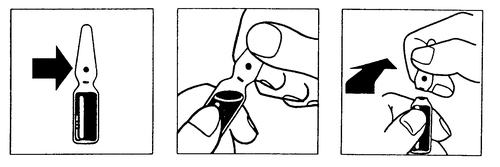
Instructions for opening the vials of Sandimmun 50 mg/ml concentrate for solution for
infusion:
To open the vials correctly, follow these instructions:

Zacząłeś przyjmować lek i masz pytania?
Omów swoje objawy i leczenie z lekarzem online.
- Kraj rejestracji
- Postać farmaceutycznaOral solution, 100 MG/ML
- Kod ATCL04AD01
- Substancja czynna
- Wymaga receptyNie
- Producent
- Te treści mają charakter wyłącznie informacyjny i nie zastępują konsultacji lekarskiej.
- Zamienniki SANDIMMUNPostać farmaceutyczna: Soft capsule, 10 MGSubstancja czynna: ciclosporinProducent: TEVA ITALIA S.R.L.Bez receptyPostać farmaceutyczna: Soft capsule, 25 MGSubstancja czynna: ciclosporinProducent: NOVARTIS FARMA S.P.A.Bez receptyPostać farmaceutyczna: Hard capsule, 0.5 MGSubstancja czynna: tacrolimusProducent: SANDOZ S.P.A.Wymaga recepty
Odpowiedniki SANDIMMUN w innych krajach
Leki z tą samą substancją czynną dostępne w innych krajach.
Odpowiednik SANDIMMUN w Polska
Odpowiednik SANDIMMUN w Ukraina
Odpowiednik SANDIMMUN w Hiszpania
Lekarze online w sprawie SANDIMMUN
Omów stosowanie SANDIMMUN, bezpieczeństwo i ocenę zasadności recepty zgodnie z obowiązującymi przepisami.
Uzyskaj receptę na SANDIMMUN online
Wypełnij 2-minutowy formularz
Opisz swoje objawy, historię choroby i lek, o który prosisz.
Wybierz lekarza lub pozwól nam przydzielić
Wybierz specjalistę lub dopasujemy Cię do najbliższego dostępnego lekarza.
Lekarz analizuje Twój przypadek
Zazwyczaj w ciągu 30 minut. Może zadawać dodatkowe pytania przez czat.
Odbierz w dowolnej aptece
Recepta elektroniczna wysłana na Twój e-mail — ważna w całej Polsce.
Często zadawane pytania
SANDIMMUN nie wymaga recepty w Włochy. Możesz skonsultować się z lekarzem online, aby sprawdzić, czy ten lek może być odpowiedni w Twojej sytuacji.
Substancją czynną w SANDIMMUN jest ciclosporin. Informacja ta pomaga rozpoznać leki o tym samym składzie, ale pod różnymi nazwami handlowymi.
SANDIMMUN jest produkowany przez NOVARTIS FARMA S.P.A.. Nazwy handlowe i opakowania mogą się różnić w zależności od dystrybutora.
Lekarze, tacy jak Lekarze rodzinni, Psychiatrzy, Dermatolodzy, Kardiolodzy, Endokrynolodzy, Gastroenterolodzy, Pulmonolodzy, Nefrolodzy, Reumatolodzy, Hematolodzy, Zakaźnicy, Alergolodzy, Geriatrzy, Pediatrzy, Onkolodzy, mogą ocenić, czy stosowanie SANDIMMUN jest odpowiednie w Twoim przypadku, w zależności od sytuacji klinicznej i lokalnych przepisów. Możesz umówić konsultację online, aby omówić objawy i możliwe dalsze kroki.
Polska posiada dobrze rozwiniętą infrastrukturę ochrony zdrowia w dużych miastach, takich jak Warszawa, Kraków, Wrocław i Gdańsk. Apteki są łatwo dostępne i działają zgodnie z obowiązującymi przepisami, zapewniając dostęp do leków na receptę.
Możesz kupić SANDIMMUN w Warszawie, Krakowie, Wrocławiu lub Gdańsku w każdej aptece, posiadając ważną receptę.
Aby uzyskać receptę, możesz skorzystać z Oladoctor:
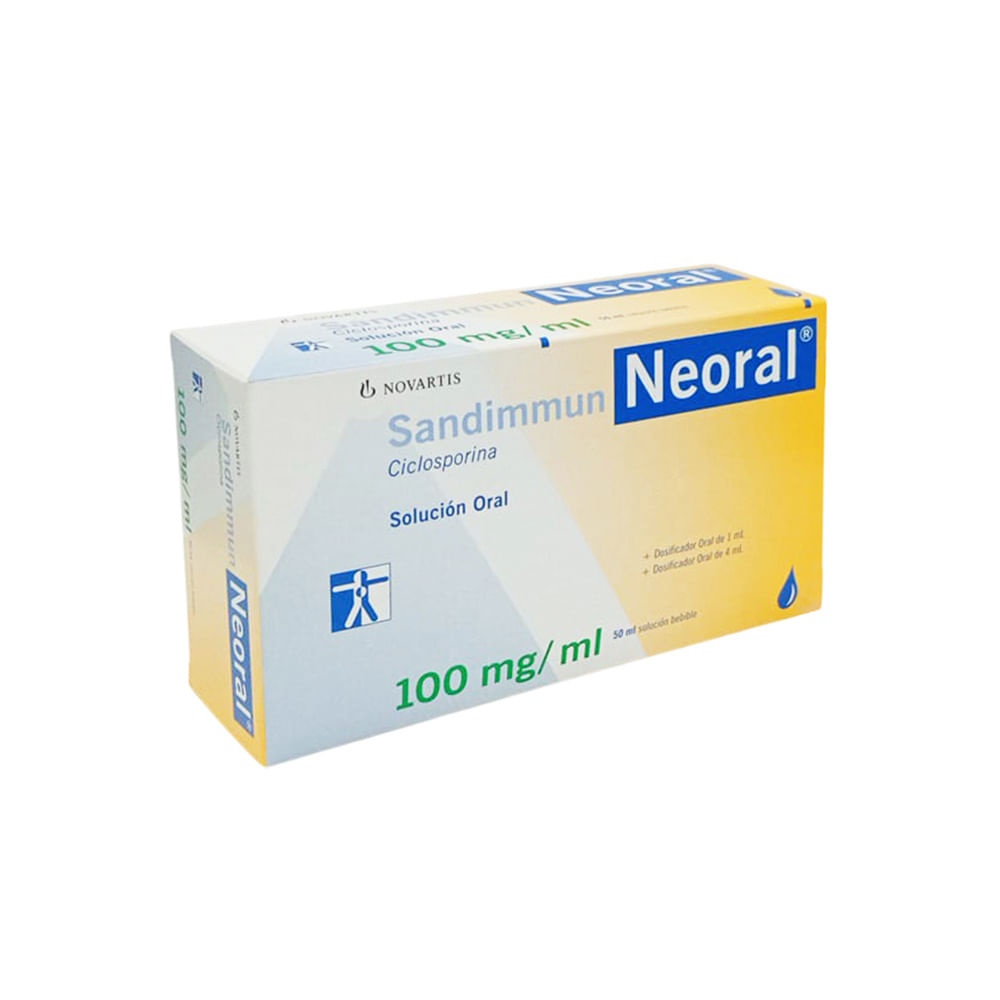
Inne leki zawierające tę samą substancję czynną (ciclosporin) to m.in. KIQORIN, SANDIMMUN NEORAL, ADOPORT. Mogą one różnić się nazwą handlową lub postacią, ale zawierają ten sam składnik terapeutyczny. Przed zmianą lub rozpoczęciem nowego leku skonsultuj się z lekarzem.
