



SAIZEN 5.83 MG/ML Proszek i rozpuszczalnik do roztworu do wstrzykiwań

Ocena recepty online
Lekarz przeanalizuje Twój przypadek i zdecyduje, czy wystawienie recepty jest medycznie uzasadnione.

Porozmawiaj z lekarzem o tym leku
Omów swoje objawy i opcje leczenia podczas szybkiej konsultacji online.



Jak stosować SAITSEN
Treść ulotki
Saizen 5.83 mg/ml injectable solution in cartridge
somatropina
Read this leaflet carefully before using this medicine as it contains important
information for you.
- Keep this leaflet. You may need to read it again.
- If you have any questions, ask your doctor or pharmacist.
- This medicine has been prescribed for you only. Do not pass it on to others, even if their symptoms are the same as yours, as it could be harmful.
- If you get any side effects, even those not listed in this leaflet, tell your doctor or pharmacist. See section 4.
Contents of this leaflet:
- 1. What Saizen is and what it is used for
- 2. What you need to know before you use Saizen
- 3. How to use Saizen
- 4. Possible side effects
- 5. How to store Saizen
- 6. Contents of the pack and other information
1. What is Saizen and what is it used for
Saizen is a growth hormone. The main action of Saizen is to increase growth in children and
adolescents and treatment in adults with growth hormone deficiency.
The growth hormone (somatropin) contained in Saizen is almost identical to human natural growth hormone, except that it is produced outside the body through a process called
“recombinant DNA technology” (genetic engineering).
Saizen is used:
In children and adolescents:
- for the treatment of short stature children who have not grown due to a lack or insufficient production of growth hormone;
- for the treatment of growth deficit in girls associated with gonadal dysgenesis (also known as Turner syndrome), confirmed by chromosomal analysis;
- for the treatment of growth deficit from chronic renal insufficiency, a condition in which the kidneys are damaged, in prepubertal children;
- for the treatment of growth disorder in small for gestational age children who have not reached normal height by the 4th year of age or later.
In adults:
- in the treatment of adults with a marked growth hormone deficiency (growth hormone deficit). This therapy is administered to adults affected by a severe growth hormone deficit medically diagnosed through specific tests. The doctor or pharmacist will be able to explain why this medicine has been prescribed to you or your child.
2. What you need to know before using Saizen
Do not use Saizen
- If you (or your child) are allergic (hypersensitive) to somatropin or any of the other ingredients of this medicine (listed in section 6).
- If you have been told that your child's bones have stopped growing and they have reached their final height.
- If you have an active cancer. Tumors must be inactive and cancer therapy must be completed before starting treatment with Saizen.
- If you (or your child) have diabetes and are affected by an associated eye disease (proliferative or preproliferative diabetic retinopathy).
- If you or your child suffer from an acute critical illness, complications following open-heart surgery, abdominal surgery, multiple accidental traumas, acute respiratory failure or similar conditions. In children with chronic kidney disease, treatment with Saizen must be discontinued at the time of kidney transplantation.
Warnings and precautions
Talk to your doctor before using Saizen.
Treatment with Saizen must be carried out under the constant supervision of a doctor specializing in the diagnosis
and care of patients with growth hormone deficiency.
Shortly after the administration of Saizen, you (or your child) may experience tremor or dizziness due to a
lowering of blood glucose levels. These symptoms disappear quickly. Within 2-4 hours
after administration, blood glucose levels, yours (or your child's), may rise above
normal values. Because treatment with growth hormone can alter the way your body
behaves towards sugars, blood glucose levels (yours or your child's) will be checked
regularly by your doctor. Somatropin can cause an increase in your blood glucose levels (or those of
your child).
If you (or your child) are diabetic or a family member has diabetes, your doctor will carefully monitor
blood glucose levels and may adjust diabetes therapy during treatment with Saizen.
Be aware that you may need to undergo regular eye exams after taking
this medicine.
Saizen can impair the function of your thyroid gland. The doctor may perform blood tests to
check thyroid hormone levels and prescribe another hormone if they find a thyroid hormone deficiency in you (or your
child).
If you (or your child) are using corticosteroids, you should consult your doctor regularly, as you may
need to adjust the dosage of the corticosteroid or Saizen.
Saizen can cause fluid retention in adult patients. This can manifest as swelling and pain
in the joints or muscles. If these symptoms occur, tell your doctor, who may decide to adjust the
dosage of Saizen.
If you have had cancer during childhood and have been treated with Saizen, there is an increased risk of
developing a new tumor. If you (or your child) have had brain conditions in the past, for example
a tumor, your doctor will examine you (or your child) regularly to check that these conditions do not reappear.
Rarely, Saizen can cause inflammation of the pancreas, which causes severe abdominal and back pain.
Please consider this possibility and contact your doctor, especially if the child complains of stomach pain.
An increase in the curvature of the spine on both sides (scoliosis) can progress in any child during
rapid growth. During treatment with Saizen, your doctor will check you (or your child) for
signs of scoliosis.
During treatment with Saizen, some patients may develop cerebral edema. If you (or your child)
complain of severe or recurrent headache, visual disturbances, feeling unwell (nausea) and/or feeling unwell (vomiting),
contact your doctor immediately. In this case, it may be necessary to stop treatment with
growth hormone, but it may be resumed at a later stage. If the symptoms of cerebral edema reappear, treatment with Saizen must be discontinued.
If the medicine is injected into the same site for a long period, this can damage the area
affected. It is therefore necessary to change the injection site. Your doctor or pharmacist will explain which parts
of the body should be used (see section 3 How to use Saizen).
Some cases of leukemia (increased number of white blood cells) have been reported in children with growth hormone deficiency, treated and not treated with growth hormone. However, there is no evidence of an
increase in the incidence of leukemia in patients treated with growth hormone, in the absence of predisposing factors. No causal relationship with the administration of growth hormone has been demonstrated.
In children with hormonal or kidney problems, hip problems may occur more frequently. If your
child has chronic kidney failure, a condition in which the kidneys are damaged, they should be
checked periodically for bone diseases. It is not certain whether bone diseases in children with
hormonal or kidney problems can be affected by growth hormone therapy. An X-ray examination of the hip should be performed before starting therapy. If your child walks with a
limp or complains of hip or knee pain during treatment with Saizen, tell your doctor.
In children with chronic kidney failure, treatment with Saizen must be discontinued at the time of
kidney transplantation.
Saizen is not indicated for the long-term treatment of pediatric patients with growth deficiency due to
genetically confirmed Prader-Willi syndrome, unless a growth hormone deficiency has also been diagnosed.
There have been reports of sleep apnea and sudden death after starting growth hormone therapy in pediatric patients with Prader-Willi syndrome, children
who also had one or more of the following risk factors: severe obesity, previous upper airway obstruction or sleep apnea, or unidentified respiratory infection.
Growth hormone should generally not be administered to patients with severe illnesses.
If you do not respond to treatment with Saizen, you may have developed antibodies to growth hormone. Your
doctor will conduct appropriate tests to determine this.
If you are over 60 years of age or have been treated with Saizen for a long period, you will be subjected to more
frequent checks by your doctor. Because data on treatment in elderly patients and long-term treatments with Saizen are limited, particular attention is required.
Other medicines and Saizen
Tell your doctor or pharmacist if you (or your child) are taking, have recently taken or might take
any other medicines.
If you (or your child) are taking corticosteroids, it is important to inform your doctor or pharmacist. These
medicines can interact with Saizen and therefore your doctor may need to adjust their dosage or that of
Saizen. Corticosteroids are used to treat numerous diseases such as asthma, allergies, kidney rejection and
rheumatoid arthritis.
If you are taking oral estrogen replacement therapy, this may reduce the effect of Saizen on growth.
Therefore, your doctor may need to adjust your dose of Saizen.
If you are being treated with sex hormones, medicines to control epilepsy (anticonvulsants) or cyclosporine
(a medicine that weakens the immune system after a transplant), tell your doctor as it
may be necessary to adjust the dose of these medicines.
Pregnancy and breastfeeding
If you are pregnant, suspect you are pregnant or are planning to become pregnant, or if you are breastfeeding
ask your doctor or pharmacist for advice before taking this medicine.
There is insufficient clinical data in humans regarding the safety of growth hormone treatment
during pregnancy or breastfeeding. If you become pregnant, Saizen should be discontinued.
Driving and using machines
Studies have not been conducted on the effects of Saizen on the ability to drive and operate
machinery.
Products containing somatropin do not affect the ability to drive and use machines.
Important information about some ingredients of Saizen
This medicine contains less than 1 mmol of sodium (23 mg) per cartridge, which is essentially the same as saying
‘sodium-free’.
3. How to use Saizen
Always use this medicine exactly as your doctor has instructed. If you have any doubts, consult your doctor or pharmacist.
Dosage
The dose and frequency of Saizen administration will be decided by your doctor and will depend on your body surface area or body weight (or that of your child).
It is recommended to administer Saizen before going to bed.
Children and adolescents:
- Short stature due to deficiency or insufficient levels of natural growth hormone: 0.7-1.0 mg/m of body surface area per day, or 0.025-0.035 mg/kg of body weight per day, for subcutaneous administration (under the skin).
- Growth deficit in girls with gonadal dysgenesis (Turner syndrome): 1.4 mg/m of body surface area per day, or 0.045-0.050 mg/kg of body weight per day, for subcutaneous administration (under the skin). If your daughter is being treated for Turner syndrome and is simultaneously taking non-androgenic anabolic steroids, the response in terms of growth may increase. Ask your doctor or pharmacist for more information about these medications.
- Growth deficit in prepubertal children caused by chronic renal failure, a condition in which the kidneys are damaged: 1.4 mg/m of body surface area per day, approximately equivalent to 0.045-0.050 mg/kg of body weight per day, for subcutaneous administration (under the skin).
- Growth problems in children born small for gestational age: 1 mg/m of body surface area, approximately equivalent to 0.035 mg/kg of body weight per day, for subcutaneous administration (under the skin).
Adults:
- Growth hormone deficiency in adults: at the beginning of therapy, it is recommended to administer low daily doses, equal to 0.15-0.3 mg, subcutaneously (under the skin). This dose must be gradually adjusted by the doctor. The final recommended dose of growth hormone is rarely higher than 1.0 mg/day. In general, the minimum effective dose for you should be administered. In elderly or overweight patients, lower dosages may be necessary.
Method and route of administration
The dose and frequency of Saizen administration will be decided by your doctor and will depend on your body weight or the area of your body surface (or that of your child). Normally, Saizen should be administered daily by subcutaneous injection (under the skin).
Important information
You must carefully read the following instructions for administering Saizen.
If the medicine is injected into the same area each time for a long period, this may damage the affected area. It is important to alternate the area where the medicine is injected. Your doctor or pharmacist can explain which part of the body to use. Do not use areas that present with nodules, hardening, skin depressions, or pain; in these cases, inform your doctor or pharmacist. Clean the injection site with water and soap.
The cartridge containing the Saizen solution is ready to be administered with the easypod auto-injector or with the aluetta pen injector.
Each Saizen cartridge has an identifying color and must be used with the corresponding color of the aluetta pen injector for correct dosage. The cartridge containing 6 mg of somatropin (blue) must be used with the aluetta pen injector 6 (blue).
Arrange all the necessary items for injecting the solution on a clean surface and wash your hands with water and soap.
The solution should be from clear to slightly opalescent, without particles and without obvious signs of deterioration. If the solution contains particles, it should not be injected.
How to perform your daily Saizen injections
For instructions on how to insert the cartridge into the easypod auto-injector or the aluetta pen injector and how to inject the Saizen solution, you must carefully read the user manual included in the packaging of each injector. The main users of easypod are children aged 7 years and over and adults.
The use of the devices by children must always be carried out under the supervision of an adult.
Duration of treatment
Your child will have to stop this treatment when they reach a satisfactory adult height or when the doctor assesses that their bones can no longer grow. In children with chronic renal failure, treatment with Saizen must be stopped at the time of kidney transplantation.
In adults, growth hormone deficiency is a permanent condition and must be treated accordingly by the doctor.
If you use more Saizen than you should
If an excessive amount of Saizen is injected, inform your doctor as it may be necessary to make slight changes to the dosage in compensation. Injecting too much medicine can cause changes in blood glucose levels and this can cause you (or your child) to feel trembling and dizziness. If this happens, contact your doctor as soon as possible.
If you forget to take Saizen
If you forget a dose, inform your doctor as it may be necessary to make slight changes to the dosage in compensation.
If you stop taking Saizen
Do not stop administering Saizen without first consulting your doctor.
If you have any further questions about the use of this medicine, ask your doctor or pharmacist.
4. Possible side effects
Like all medicines, this medicine can cause side effects, although not everybody gets them.
manifest.
Immediately inform your doctor if you experience severe and recurrent headaches associated with a feeling of
illness (nausea), vomiting or visual disturbances. These are the symptoms of an uncommon side effect known as benign intracranial hypertension.
Side effects can occur with varying frequencies as listed below:
- very common: may affect more than 1 in 10 people
- common: may affect up to 1 in 10 people
- uncommon: may affect up to 1 in 100 people
- rare: may affect up to 1 in 1,000 people
- very rare: may affect up to 1 in 10,000 people
- not known: the frequency cannot be estimated from the available data.
Common side effects:
Reactions at the injection site such as, for example, redness, itching, swelling, rash, urticaria,
pain, inflammation, bleeding, abnormal accumulation of blood outside a blood vessel
(hematoma). If these symptoms are particularly bothersome, tell your doctor.
Local decrease of subcutaneous fat, which can be avoided by changing the injection site.
Carpal tunnel syndrome in adults characterized by a persistent, stabbing or burning pain, pain and/or numbness in the fingers, particularly affecting the thumb,
index finger and sometimes also the middle and ring fingers.
Fluid retention: peripheral edema (swelling), muscle pain, numbness and tingling, joint pain and joint disorders in adults. These side effects generally appear in the
early stages of treatment, are transient and depend on the dose.
Headache (isolated).
Uncommon side effects:
Benign intracranial hypertension (increased pressure inside the skull around the brain characterized
by headache, nausea, vomiting, double vision and other visual symptoms).
Carpal tunnel syndrome in children, characterized by a persistent, stabbing or burning pain, pain and/or numbness in the fingers, particularly affecting the
thumb, index finger and sometimes also the middle and ring fingers.
Fluid retention: peripheral edema (swelling), muscle pain, numbness and tingling, joint pain and joint disorders in children. These side effects generally appear in the
early stages of treatment, are transient and depend on the dose.
Breast enlargement (one or both sides may be affected).
Very rare side effects:
Slippage of the femoral head epiphysis (a problem affecting the hip that occurs when
the end of the thigh bone slips from the hip joint socket) and avascular necrosis of the femoral head. If your child shows difficulty walking and pain in the hip or knee, contact your
doctor or pharmacist.
Treatment with growth hormone may reduce thyroid hormone levels. This can be
tested by your doctor and, if necessary, your doctor will prescribe appropriate treatment.
Side effects with unknown frequency:
You (or the child) may experience allergic reactions due to treatment with Saizen.
You (or your child) may experience an increase in insulin levels (hyperinsulinism) as the cells of the
muscles, fat and liver do not respond adequately to insulin during treatment with growth hormone (insulin resistance). This condition can lead to high blood glucose levels
(hyperglycemia).
Pancreatitis has been rarely reported in patients treated with growth hormone.
Leukemia has been reported in a small number of patients with growth hormone deficiency, some of whom were treated with somatropin. However, there is no evidence of an increased incidence of leukemia in patients
treated with growth hormone, in the absence of predisposing factors.
Very rarely, a patient may develop antibodies (a type of protein that helps the body protect itself)
against somatropin. These are usually not linked to any side effects and generally do not
interfere with growth.
Reporting of side effects
If you get any side effects, talk to your doctor or pharmacist. This includes any side effects not listed in this leaflet. You can also report side effects directly through the national reporting system at:
https://www.aifa.gov.it/content/segnalazioni-reazioni-avverse .
By reporting side effects you can help provide more information on the safety of this
medicine.
5. How to store Saizen
Keep this medicine out of the sight and reach of children.
Do not use Saizen after the expiry date indicated on the cartridge after the wording Scad.. The expiry date
refers to the last day of that month.
Store the unused Saizen cartridge in a refrigerator (2°C-8°C) in the original packaging to protect
the medicine from light. Do not freeze.
After the first injection, use the product within 28 days.
After the first injection, the Saizen cartridge, the easypod auto-injector containing the Saizen cartridge or
the aluetta pen injector containing the Saizen cartridge must be stored in a refrigerator (2°C-8°C) for
a maximum of 28 days and, within that time interval, may be stored outside the refrigerator at
a temperature equal to or less than 25°C for a maximum of 7 days. If stored outside the refrigerator for a
maximum of 7 days, the Saizen cartridge must be returned to the refrigerator and used within 28 days of the
first injection.
When using the easypod auto-injector or the aluetta pen injector, the cartridge remains in the
device.
Do not dispose of any medicine in wastewater or household waste. Ask your pharmacist how to dispose of
medicines you no longer use. This will help protect the environment.
6. Package Contents and Other Information
What Saizen contains
The active ingredient is somatropin (human recombinant growth hormone) 6 mg.
The excipients are sucrose, poloxamer 188, phenol, citric acid (for pH adjustment), sodium hydroxide (for pH adjustment), water for injections.
Description of Saizen and package contents
Saizen 5.83 mg/ml is a clear to slightly opalescent injectable solution in a pre-filled cartridge (type I glass) with a plunger stopper (rubber) and a crimped cap (aluminum and rubber), containing a nominal volume of 1.03 ml of solution (6 mg of somatropin). The cartridge containing 6 mg of somatropin is marked with a blue label.
Packs of 1 and 5 cartridges.
Not all pack sizes may be marketed.
Marketing Authorisation Holder
Merck Serono S.p.A. - Via Casilina 125, 00176 Rome, Italy
Manufacturer
Merck Serono S.p.A. – Via delle Magnolie 15 (loc. Frazione Zona Industriale), 70026 Modugno (Bari), Italy
This medicinal product is authorised in the Member States of the European Economic Area under the following
names:
Saizen: Austria, Belgium, Czech Republic, Estonia, Finland, France, Germany, Greece,
Hungary, Iceland, Ireland, Italy, Latvia, Luxembourg, Norway, Portugal,
Romania, Slovakia, Spain, Sweden, United Kingdom
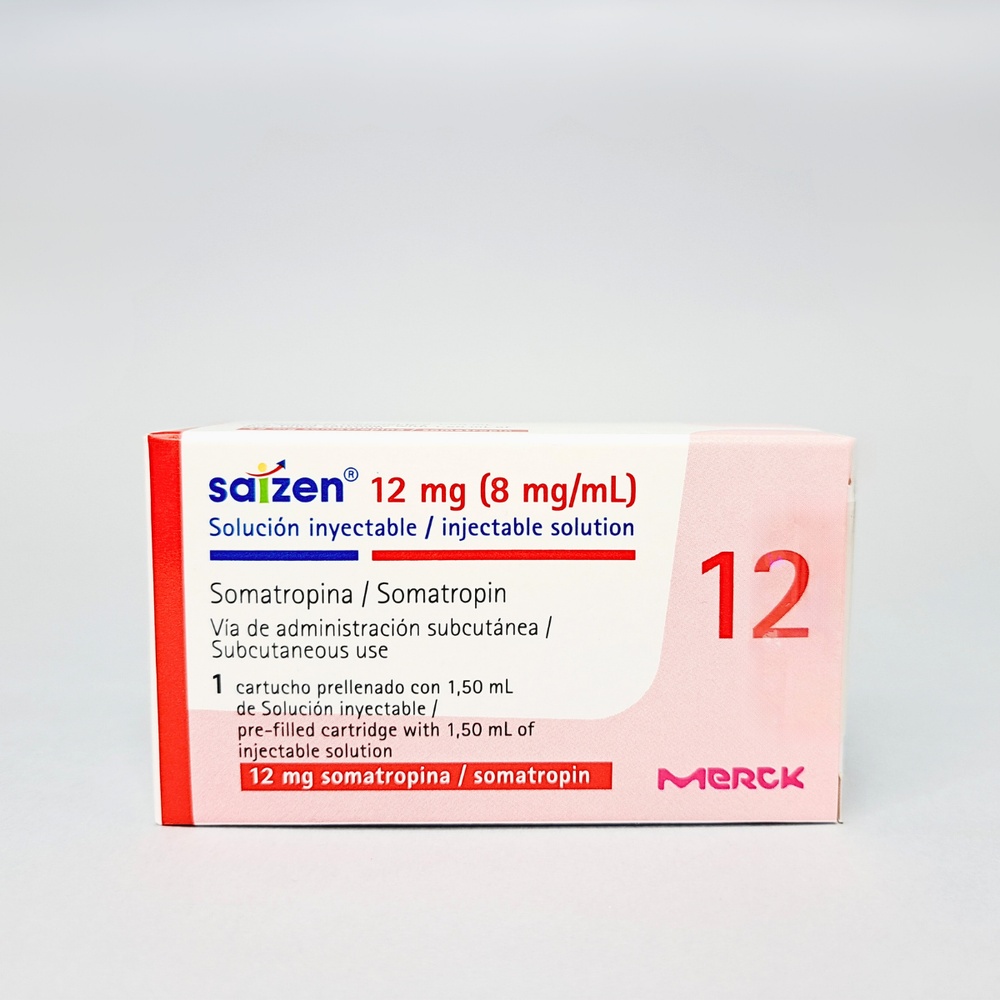
Saizen 8 mg/ml injectable solution in cartridge
somatropina
Read this leaflet carefully before you start using this medicine as it contains important
information for you.
- Keep this leaflet. You may need to read it again.
- If you have any questions, ask your doctor or pharmacist.
- This medicine has been prescribed for you only. Do not pass it on to others, even if their symptoms are the same as yours, as it could be harmful.
- If you get any side effects, even those not listed in this leaflet, tell your doctor or pharmacist. See section 4.
Contents of this leaflet:
- 7. What Saizen is and what it is used for
- 8. What you need to know before you use Saizen
- 9. How to use Saizen
- 10. Possible side effects
- 11. How to store Saizen
- 12. Contents of the pack and other information
1. What is Saizen and what it is used for
Saizen is a growth hormone. The main action of Saizen is to increase growth in children and
adolescents and treatment in adults with growth hormone deficiency.
The growth hormone (somatropin) contained in Saizen is almost identical to the natural human growth hormone, except that it is produced outside the body through a process called
“recombinant DNA technology” (genetic engineering).
Saizen is used:
In children and adolescents:
- for the treatment of short stature children who have not grown due to a lack or insufficient production of growth hormone;
- for the treatment of growth deficit in girls associated with gonadal dysgenesis (also known as Turner syndrome), confirmed by chromosomal analysis;
- for the treatment of growth deficit from chronic renal insufficiency, a condition in which the kidneys are damaged, in prepubertal children;
- for the treatment of growth disorder in small-for-gestational-age children who have not reached normal height by the 4th year of age or later. In adults:
- in the treatment of adults with a marked growth hormone deficiency (growth hormone deficit). This therapy is administered to adults suffering from a severe, medically diagnosed growth hormone deficiency through specific tests.
Your doctor or pharmacist can explain why this medicine has been prescribed for you or your child.
2. What you need to know before you use Saizen
Do not use Saizen
- If you (or your child) are allergic (hypersensitive) to somatropin or any of the other ingredients of this medicine (listed in section 6).
- If you have been told that your child's bones have stopped growing and they have reached their final height.
- If you have a current tumor (cancer). Tumors must be inactive and cancer therapy must be completed before starting treatment with Saizen.
- If you (or your child) have diabetes and are affected by an associated eye disease (proliferative or preproliferative diabetic retinopathy).
- If you or your child suffer from a severe acute illness, complications following open-heart surgery, abdominal surgery, multiple accidental traumas, acute respiratory failure, or similar conditions.
In children with chronic kidney disease, treatment with Saizen must be stopped at the time of
kidney transplant.
Warnings and precautions
Talk to your doctor before using Saizen.
Treatment with Saizen must be carried out under the constant supervision of a doctor specializing in the diagnosis
and care of patients with growth hormone deficiency.
Shortly after the administration of Saizen, you (or your child) may experience tremor or dizziness due to a
decrease in blood glucose levels. These symptoms disappear quickly. Within 2-4 hours
after administration, blood glucose levels, yours (or your child's), may rise above
normal values. Because treatment with growth hormone can alter the way your body
responds to sugars, blood glucose levels (yours or your child's) will be checked
regularly by your doctor. Somatropin can cause an increase in your blood glucose levels (or those of
your child).
If you (or your child) are diabetic or a family member has diabetes, your doctor will carefully monitor
blood glucose levels and may adjust diabetes therapy during treatment with Saizen.
Be aware that you may need to undergo regular eye exams after taking
this medicine.
Saizen may impair your thyroid function. Your doctor may perform blood tests to
check thyroid hormone levels and prescribe another hormone if they find a thyroid hormone deficiency in you (or your
child).
If you (or your child) are using corticosteroids, you should consult your doctor regularly, as you may
need to adjust the dosage of the corticosteroid or Saizen.
Saizen can cause fluid retention in adult patients. This can manifest as swelling and pain
in the joints or muscles. If these symptoms occur, tell your doctor, who may decide to adjust the
dosage of Saizen.
If you have had a tumor during childhood and have been treated with Saizen, there is an increased risk of
developing a new tumor. If you (or your child) have had brain disorders in the past, for example
a tumor, your doctor will regularly examine you (or your child) to check that these disorders do not recur.
Rarely, Saizen can cause inflammation of the pancreas, which causes severe abdominal and back pain.
Please consider this possibility and contact your doctor, especially if the child complains of stomach pain.
An increase in the curvature of the spine on both sides (scoliosis) can progress in any child during a
rapid growth phase. During treatment with Saizen, your doctor will check you (or your child) for signs of
scoliosis.
During treatment with Saizen, some patients may develop cerebral edema. If you (or your child)
complains of severe or recurring headache, visual disturbances, feeling unwell (nausea) and/or feeling sick (vomiting),
contact your doctor immediately. In this case, it may be necessary to stop treatment with
growth hormone, but it may be resumed at a later stage. If the symptoms of cerebral edema recur, treatment with Saizen must be stopped.
If the medicine is injected into the same site for a long period, this can damage the area
affected. It is therefore necessary to change the injection site. Your doctor or pharmacist will explain which parts
of the body should be used (see section 3 How to use Saizen).
Some cases of leukemia (increased number of white blood cells) have been reported in children with growth hormone deficiency, treated and not treated with growth hormone. However, there is no evidence of an
increased incidence of leukemia in patients treated with growth hormone, in the absence of predisposing factors. No causal relationship with the administration of growth hormone has been demonstrated.
In children with hormonal or kidney problems, hip problems may occur more frequently. If your
child has chronic kidney failure, a condition in which the kidneys are damaged, they should be
checked periodically for bone diseases. It is not certain whether bone diseases in children with
hormonal or kidney problems can be affected by growth hormone therapy. An X-ray examination of the hip should be performed before starting therapy. If your child walks with a
limp or complains of pain in the hip or knee during treatment with Saizen, tell your doctor.
In children with chronic kidney failure, treatment with Saizen must be stopped at the time of
kidney transplant.
Saizen is not indicated for the long-term treatment of pediatric patients with growth deficiency due to
genetically confirmed Prader-Willi syndrome, unless a growth hormone deficiency has also been diagnosed.
There have been reports of sleep apnea and sudden death after starting growth hormone therapy in pediatric patients with Prader-Willi syndrome, children
who also had one or more of the following risk factors: severe obesity, previous upper airway obstruction or sleep apnea, or unidentified respiratory infection.
Growth hormone is generally not administered to patients with severe illnesses.
If you do not respond to treatment with Saizen, you may have developed antibodies to growth hormone. Your
doctor will conduct appropriate tests to determine this.
If you are over 60 years of age or have been treated with Saizen for a long time, you will be subjected to more
frequent checks by your doctor. Because data on treatment in elderly patients and long-term treatments with Saizen are limited, particular attention is required.
Other medicines and Saizen
Tell your doctor or pharmacist if you (or your child) are taking, have recently taken, or might take
any other medicines.
If you (or your child) are taking corticosteroids, it is important to inform your doctor or pharmacist. These
medicines can interact with Saizen and therefore your doctor may need to adjust their dosage or that of
Saizen. Corticosteroids are used to treat numerous diseases such as asthma, allergies, kidney rejection, and
rheumatoid arthritis.
If you are taking oral estrogen replacement therapy, this may reduce the effect of Saizen on growth.
Therefore your doctor may need to adjust your dose of Saizen.
If you are being treated with sex hormones, medicines to control epilepsy (anticonvulsants) or cyclosporine
(a medicine that weakens the immune system after a transplant), tell your doctor as
an adjustment of the dose of these medicines may be necessary.
Pregnancy and breastfeeding
If you are pregnant, suspect you are pregnant, are planning to become pregnant, or are breastfeeding,
ask your doctor or pharmacist for advice before taking this medicine.
There are insufficient clinical data in humans regarding the safety of growth hormone treatment
during pregnancy or breastfeeding. If you become pregnant, Saizen should be stopped.
Driving and using machines
Studies have not been conducted on the effects of Saizen on the ability to drive and operate
machinery.
Products containing somatropin do not affect the ability to drive and use machines.
Important information about some ingredients of Saizen
This medicine contains less than 1 mmol of sodium (23 mg) per cartridge, which is essentially the same as
‘sodium-free’.
3. How to use Saizen
Always use this medicine exactly as your doctor has instructed. If you have any doubts, consult your doctor or pharmacist.
Dosage
The dose and frequency of Saizen administration will be decided by your doctor and will depend on your body surface area or your body weight (or that of your child).
It is recommended to administer Saizen before going to bed.
Children and adolescents:
- Short stature due to deficiency or insufficient levels of natural growth hormone: 0.7-1.0 mg/m of body surface area per day, or 0.025-0.035 mg/kg of body weight per day, for subcutaneous administration (under the skin).
- Growth deficit in girls with gonadal dysgenesis (Turner syndrome): 1.4 mg/m of body surface area per day, or 0.045-0.050 mg/kg of body weight per day, for subcutaneous administration (under the skin). If your daughter is being treated for Turner syndrome and is simultaneously taking non-androgenic anabolic steroids, the response in terms of growth may increase. Ask your doctor or pharmacist for more information about these medicines.
- Growth deficit in prepubertal children caused by chronic renal insufficiency, a condition in which the kidneys are damaged: 1.4 mg/m of body surface area per day, approximately equivalent to 0.045-0.050 mg/kg of body weight per day, for subcutaneous administration (under the skin).
- Growth problems in children born small: 1 mg/m of body surface area, approximately equivalent to 0.035 mg/kg of body weight per day, for subcutaneous administration (under the skin). Adults:
- Growth hormone deficiency in adults:
at the beginning of therapy, it is recommended to administer low daily doses, equal to 0.15-0.3 mg,
by subcutaneous route (under the skin). This dose must be gradually adjusted by the doctor. The recommended final dose of growth hormone is rarely higher than 1.0 mg/day. In general, the
minimum effective dose for you should be administered. In elderly or overweight patients, lower dosages may be
necessary.
Method and route of administration
The dose and frequency of Saizen administration will be decided by your doctor and will depend on your weight
or the area of your body surface (or that of your child). Normally Saizen should be administered
every day by subcutaneous route (under the skin).
Important information
You must read the following instructions carefully before administering Saizen.
If the medicine is injected into the same area every time for a long period, this may cause damage
to the affected area. It is important to alternate the area where the medicine is injected. Your doctor or pharmacist
can explain which part of the body to use. Do not use areas that present with nodules, hardening, areas of
skin depression or pain; in these cases, inform your doctor or pharmacist. Clean the injection site with
water and soap.
The cartridge containing the Saizen solution is ready to be administered with the easypod auto-injector or
with the aluetta pen injectors.
Each Saizen cartridge has an identifying color and must be used with the corresponding color
of the aluetta pen injector for correct dosage. The cartridge containing 12 mg of somatropin
(red) must be used with the aluetta pen injector 12 (red). The cartridge containing 20 mg of
somatropin (yellow) must be used with the aluetta pen injector 20 (yellow).
Arrange all the necessary items for injecting the solution on a clean surface and wash
your hands with water and soap.
The solution should be from clear to slightly opalescent, without particles and without obvious signs of
deterioration. If the solution contains particles, it should not be injected.
How to perform your daily Saizen injections
For instructions on how to insert the cartridge into the easypod auto-injector or the aluetta pen injectors and on
how to inject the Saizen solution, you must read the user manual carefully inserted in the
package of each injector. The main users of easypod are children from 7 years of age and adults.
The use of the devices by children must always be supervised by an adult.
Duration of treatment
Your son/daughter will have to stop this treatment when a satisfactory adult height is reached
or when the doctor assesses that their bones can no longer grow. In children with
chronic renal insufficiency, treatment with Saizen must be stopped at the time of kidney transplantation.
In adults, growth hormone deficiency is a permanent condition and must be treated
accordingly by the doctor.
If you use more Saizen than you should
If an excessive amount of Saizen is injected, inform your doctor as it may be necessary
to make slight changes to the dosage in compensation. Injecting too much medicine can cause
changes in blood glucose levels and this may cause you (or your child) to feel tremors and
dizziness. If this happens, contact your doctor as soon as possible.
If you forget to take Saizen
If you forget a dose, inform your doctor as it may be necessary to make slight
changes to the dosage in compensation.
If you stop taking Saizen
Do not stop administering Saizen without first consulting your doctor.
If you have any further questions about the use of this medicine, ask your doctor or pharmacist.
4. Possible side effects
Like all medicines, this medicine can cause side effects, although not everybody gets them.
manifest them.
Immediately inform your doctor if you experience severe and recurrent headaches associated with a feeling of
illness (nausea), vomiting or visual disturbances. These are the symptoms of an uncommon side effect known as benign intracranial hypertension.
Side effects can occur with varying frequencies as listed below:
- very common: may affect more than 1 in 10 people
- common: may affect up to 1 in 10 people
- uncommon: may affect up to 1 in 100 people
- rare: may affect up to 1 in 1,000 people
- very rare: may affect up to 1 in 10,000 people
- not known: the frequency cannot be estimated from the available data.
Common side effects:
Reactions at the injection site such as, for example, redness, itching, swelling, rash, urticaria,
pain, inflammation, bleeding, abnormal accumulation of blood outside a blood vessel
(hematoma). If these symptoms are particularly bothersome, talk to your doctor.
Local decrease of subcutaneous fat tissue, which can be avoided by changing the injection site.
Carpal tunnel syndrome in adults characterized by a persistent, piercing or burning pain, pain and/or numbness in the fingers, particularly affecting the thumb,
index finger and sometimes also the middle and ring fingers.
Fluid retention: peripheral edema (swelling), muscle pain, numbness and tingling, joint pain and joint disorders in adults. These side effects generally appear in the
early stages of treatment, are transient and dose-dependent.
Headache (isolated).
Uncommon side effects:
Benign intracranial hypertension (increased pressure inside the skull around the brain characterized
by headache, nausea, vomiting, double vision and other visual symptoms).
Carpal tunnel syndrome in children, characterized by a persistent, piercing or burning pain, pain and/or numbness in the fingers, particularly affecting the
thumb, index finger and sometimes also the middle and ring fingers.
Fluid retention: peripheral edema (swelling), muscle pain, numbness and tingling, joint pain and joint disorders in children. These side effects generally appear in the
early stages of treatment, are transient and dose-dependent.
Breast enlargement (one or both sides may be affected).
Very rare side effects:
Slippage of the femoral head epiphysis (a problem affecting the hip that occurs when
the end of the thigh bone slips from the hip socket) and avascular necrosis of the femoral head. If your child shows difficulty walking and pain in the hip or knee, contact your
doctor or pharmacist.
Treatment with growth hormone may reduce thyroid hormone levels. This can be
tested by your doctor and, if necessary, your doctor will prescribe appropriate treatment.
Side effects with unknown frequency:
You (or the child) may experience allergic reactions due to treatment with Saizen.
You (or your child) may experience an increase in insulin levels (hyperinsulinism) as the cells of the
muscles, fat and liver do not respond adequately to insulin during treatment with growth hormone (insulin resistance). This condition can lead to high blood glucose levels
(hyperglycemia).
Pancreatitis has been rarely reported in patients treated with growth hormone.
Leukemia has been reported in a small number of patients with growth hormone deficiency, some of whom were treated with somatropin. However, there is no evidence of an increased incidence of leukemia in patients
treated with growth hormone, in the absence of predisposing factors.
Very rarely, a patient may develop antibodies (a type of protein that helps the body protect itself)
against somatropin. These are usually not linked to any side effects and generally do not
interfere with growth.
Reporting of side effects
If you get any side effects, talk to your doctor or pharmacist. This includes any possible side effects not listed in this leaflet. You can also report side effects directly through the national reporting system at:
https://www.aifa.gov.it/content/segnalazioni-reazioni-avverse.
By reporting side effects you can help provide more information on the safety of this
medicine.
5. How to store Saizen
Keep this medicine out of the sight and reach of children.
Do not use Saizen after the expiry date indicated on the cartridge after the wording Scad.. The expiry date
refers to the last day of that month.
Store the unused Saizen cartridge in a refrigerator (2°C-8°C) in the original packaging to protect
the medicine from light. Do not freeze.
After the first injection, use the product within 28 days.
After the first injection, the Saizen cartridge, the easypod auto-injector containing the Saizen cartridge or
the aluetta pen injector containing the Saizen cartridge must be stored in a refrigerator (2°C-8°C) for
a maximum of 28 days and, within that time interval, may be stored outside the refrigerator at
a temperature equal to or less than 25°C for a maximum of 7 days. If stored outside the refrigerator for a
maximum of 7 days, the Saizen cartridge must be returned to the refrigerator and used within 28 days of the
first injection.
When using the easypod auto-injector or the aluetta pen injector, the cartridge remains in the device.
Do not dispose of any medicine in wastewater or household waste. Ask your pharmacist how to dispose of
medicines you no longer use. This will help protect the environment.
6. Contents of the pack and other information
What Saizen contains
The active ingredient is somatropin (human recombinant growth hormone).
The excipients are sucrose, poloxamer 188, phenol, citric acid (for pH adjustment), sodium hydroxide (for pH
adjustment), water for injections.
Description of the appearance of Saizen and contents of the pack
Saizen 8 mg/ml is a clear to slightly opalescent injectable solution in a pre-filled cartridge (type I glass) with a
plunger stopper (rubber) and a crimped cap (aluminium and rubber). The cartridge containing 12 mg of
somatropin is marked with a red label. The cartridge containing 20 mg of somatropin is marked with a yellow
label.
Packs of 1 and 5 cartridges contain 1.50 ml of solution (12 mg of somatropin) or 2.50 ml of solution (20 mg of
somatropin).
Not all pack sizes may be marketed.
Marketing Authorisation Holder
Merck Serono S.p.A. - Via Casilina 125, 00176 Rome, Italy
Manufacturer
Merck Serono S.p.A. – Via delle Magnolie 15 (loc. Frazione Zona Industriale), 70026 Modugno (Bari), Italy
This medicinal product is authorised in the Member States of the European Economic Area under the following
names
Saizen: Austria, Belgium, Czech Republic, Estonia, Finland, France, Germany, Greece,
Hungary, Iceland, Ireland, Italy, Latvia, Luxembourg, Norway, Portugal,
Romania, Slovakia, Spain, Sweden, United Kingdom

Nie jesteś pewien, czy ten lek jest odpowiedni dla ciebie?
Omów swoje objawy i leczenie z lekarzem online.

Zacząłeś przyjmować lek i masz pytania?
Omów swoje objawy i leczenie z lekarzem online.
- Kraj rejestracji
- Postać farmaceutycznaPowder and solvent for injectable solution, 5.83 MG/ML
- Kod ATCH01AC01
- Substancja czynna
- Wymaga receptyTak
- Producent
- Te treści mają charakter wyłącznie informacyjny i nie zastępują konsultacji lekarskiej.
- Zamienniki SAITSENPostać farmaceutyczna: Powder and solvent for injectable solution, 5.3 MGSubstancja czynna: somatropinProducent: PFIZER ITALIA S.R.L.Wymaga receptyPostać farmaceutyczna: Powder and solvent for injectable solution, 6 MGSubstancja czynna: somatropinProducent: ELI LILLY ITALIA S.P.A.Wymaga receptyPostać farmaceutyczna: Injectable solution, 5 MG/1,5 MLSubstancja czynna: somatropinProducent: NOVO NORDISK A/SWymaga recepty
Odpowiedniki SAITSEN w innych krajach
Leki z tą samą substancją czynną dostępne w innych krajach.
Odpowiednik SAITSEN w Hiszpania
Odpowiednik SAITSEN w Polska
Odpowiednik SAITSEN w Ukraina
Lekarze online w sprawie SAITSEN
Omów stosowanie SAITSEN, bezpieczeństwo i ocenę zasadności recepty zgodnie z obowiązującymi przepisami.


Uzyskaj receptę na SAITSEN online
Wypełnij 2-minutowy formularz
Opisz swoje objawy, historię choroby i lek, o który prosisz.
Wybierz lekarza lub pozwól nam przydzielić
Wybierz specjalistę lub dopasujemy Cię do najbliższego dostępnego lekarza.
Lekarz analizuje Twój przypadek
Zazwyczaj w ciągu 30 minut. Może zadawać dodatkowe pytania przez czat.
Odbierz w dowolnej aptece
Recepta elektroniczna wysłana na Twój e-mail — ważna w całej Polsce.
Często zadawane pytania
SAITSEN wymaga recepty w Włochy. Możesz skonsultować się z lekarzem online, aby sprawdzić, czy ten lek może być odpowiedni w Twojej sytuacji.
Substancją czynną w SAITSEN jest somatropin. Informacja ta pomaga rozpoznać leki o tym samym składzie, ale pod różnymi nazwami handlowymi.
SAITSEN jest produkowany przez MERCK SERONO S.P.A.. Nazwy handlowe i opakowania mogą się różnić w zależności od dystrybutora.
Lekarze, tacy jak Lekarze rodzinni, Psychiatrzy, Dermatolodzy, Kardiolodzy, Endokrynolodzy, Gastroenterolodzy, Pulmonolodzy, Nefrolodzy, Reumatolodzy, Hematolodzy, Zakaźnicy, Alergolodzy, Geriatrzy, Pediatrzy, Onkolodzy, mogą ocenić, czy stosowanie SAITSEN jest odpowiednie w Twoim przypadku, w zależności od sytuacji klinicznej i lokalnych przepisów. Możesz umówić konsultację online, aby omówić objawy i możliwe dalsze kroki.
Polska posiada dobrze rozwiniętą infrastrukturę ochrony zdrowia w dużych miastach, takich jak Warszawa, Kraków, Wrocław i Gdańsk. Apteki są łatwo dostępne i działają zgodnie z obowiązującymi przepisami, zapewniając dostęp do leków na receptę.
Możesz kupić SAITSEN w Warszawie, Krakowie, Wrocławiu lub Gdańsku w każdej aptece, posiadając ważną receptę.
Aby uzyskać receptę, możesz skorzystać z Oladoctor:
Inne leki zawierające tę samą substancję czynną (somatropin) to m.in. JENOTROPIN, UMATROPE, NORDITROPIN. Mogą one różnić się nazwą handlową lub postacią, ale zawierają ten sam składnik terapeutyczny. Przed zmianą lub rozpoczęciem nowego leku skonsultuj się z lekarzem.
