



ROVINADIL 2.000 IU (20 MG)/0,2 ML Roztwór do wstrzykiwań

Ocena recepty online
Lekarz przeanalizuje Twój przypadek i zdecyduje, czy wystawienie recepty jest medycznie uzasadnione.

Porozmawiaj z lekarzem o tym leku
Omów swoje objawy i opcje leczenia podczas szybkiej konsultacji online.



Jak stosować ROVINADIL
Treść ulotki
ROVINADIL 2,000 IU (20 mg) in 0.2 mL injectable solution in pre-filled syringe, 4,000 IU (40 mg) in 0.4 mL injectable solution in pre-filled syringe, 6,000 IU (60 mg) in 0.6 mL injectable solution in pre-filled syringe, 8,000 IU (80 mg) in 0.8 mL injectable solution in pre-filled syringe, 10,000 IU (100 mg) in 1 mL injectable solution in pre-filled syringe
enoxaparin sodium
Medicinal product subject to additional monitoring. This will allow the rapid identification of new
safety information. You can contribute by reporting any adverse effects experienced during
the use of this medicine. See the end of section 4 for information on how to report adverse effects.
Read this leaflet carefully before using this medicine as it contains important
information for you.
- Keep this leaflet. You may need to read it again.
- If you have any questions, ask your doctor, pharmacist or nurse.
- This medicine has been prescribed for you only. Do not pass it on to others, even if they have the same symptoms as you, as it may be harmful
- If any side effects occur, including those not listed in this leaflet, tell your doctor or pharmacist. See section 4.
Contents of this leaflet
- 1. What ROVINADIL is and what it is used for
- 2. What you need to know before you use ROVINADIL
- 3. How to use ROVINADIL
- 4. Possible side effects
- 5. How to store ROVINADIL
- 6. Contents of the pack and other information
1. What is ROVINADIL and what is it used for
ROVINADIL contains the active substance called enoxaparin sodium, which is a low molecular weight heparin (LMWH).
ROVINADIL works in two ways.
- 1) It blocks the growth of existing blood clots. This helps the body to break them down and prevent them from causing damage.
- 2) It blocks the formation of blood clots.
ROVINADIL can be used for:
- Treating blood clots that are present.
- Preventing the formation of blood clots in the following situations: o before and after surgery o in case of an acute illness that involves a period of reduced mobility o if you have had a blood clot due to cancer, to prevent the formation of further clots o In the presence of unstable angina (a condition in which not enough blood reaches the heart) o After a heart attack
- Preventing the formation of blood clots in the tubes of the dialysis machine (used by people with severe kidney problems).
2. What you need to know before using ROVINADIL
Do not use ROVINADIL
- If you are allergic to enoxaparin sodium or any of the other ingredients of this medicine (listed in section 6). The signs of an allergic reaction include: skin rash, difficulty swallowing or breathing, swelling of the lips, face, throat and tongue.
- If you are allergic to heparin or other low molecular weight heparins such as, for example, nadroparin, tinzaparin or dalteparin.
- If you have had a reaction to heparin that caused a severe reduction in the number of cells responsible for coagulation (platelets) (this reaction is called heparin-induced thrombocytopenia) in the last 100 days or if you have antibodies against enoxaparin in your blood.
- If you are bleeding heavily or if you have a condition with a high risk of bleeding (such as a stomach ulcer, recent brain or eye surgery), including a recent hemorrhagic stroke.
- If you are using ROVINADIL to treat blood clots in the body and will undergo spinal or epidural anesthesia or a lumbar puncture within 24 hours.
Warnings and precautions
ROVINADIL should not be used interchangeably with other medicines belonging to the group
of low molecular weight heparins. These medicines are in fact not identical to each other and do not have the
same activity or the same instructions for use.
Consult your doctor before using ROVINADIL if:
- you have ever had a reaction to heparin that caused a significant reduction in the number of platelets
- you are to undergo spinal or epidural anesthesia or lumbar puncture (see Surgery and anesthesia): respect the interval between the use of ROVINADIL and this procedure
- you have had a heart valve implanted
- you suffer from endocarditis (an infection of the inner lining of the heart)
- you suffer from a stomach ulcer
- you have recently had a stroke
- you have high blood pressure
- you have diabetes or problems with the blood vessels in the eye caused by diabetes (so-called diabetic retinopathy)
- you have recently undergone eye or brain surgery
- you are elderly (over 65 years of age) and especially if you are over 75 years old
- you have kidney problems
- you have liver problems
- you are underweight or overweight
- you have high levels of potassium in your blood (values can be checked with a blood test)
- you are currently using medicines that can affect bleeding (see the following paragraph - Other medicines).
It is possible that you may need a blood test before starting to use this medicine and regularly
during its use, to check the level of cells responsible for blood coagulation (platelets) and the
level of potassium in the blood.
Children and adolescents
The safety and efficacy of enoxaparin have not been evaluated in children or adolescents.
Other medicines and ROVINADIL
Tell your doctor or pharmacist if you are taking or might take any other medicine.
- Warfarin - used to thin the blood.
- Aspirin (also known as acetylsalicylic acid or ASA), clopidogrel or other medicines used to prevent blood clots from forming (see also section 3, Changing anticoagulant medicines).
- Dextran injection - used as a blood substitute.
- Ibuprofen, diclofenac, ketorolac or other medicines known as non-steroidal anti-inflammatory agents - used to treat pain and swelling in arthritis and other conditions.
- Prednisolone, dexamethasone or other medicines used to treat asthma, rheumatoid arthritis and other conditions.
- Medicines that increase the level of potassium in the blood such as potassium salts, diuretics and some medicines for heart disorders. Surgery and anesthesiaIf you are to undergo a spinal puncture or surgery involving the use of anesthetic via epidural or spinal route, inform your doctor that you are using ROVINADIL. See the section "Do not use ROVINADIL”. Also inform your doctor in case of any problems with the spine or if you have undergone spinal surgery.
Pregnancy and breastfeeding
If you are pregnant, suspect you are pregnant or are planning to become pregnant, ask your doctor or
pharmacist for advice before taking this medicine.
If you are pregnant and have a mechanical heart valve, you may be at greater risk of developing blood
clots. Your doctor will discuss this with you.
If you are breastfeeding or plan to breastfeed, ask your doctor for advice
before taking this medicine.
Driving and using machines
ROVINADIL does not impair the ability to drive and use machines.
It is recommended that the healthcare operator records the trade name and batch number of the product you are
using.
ROVINADIL contains sodium
This medicine contains less than 1 mmol (23 mg) of sodium per dose, i.e. essentially ‘sodium-free’.
3. How to use ROVINADIL
Use this medicine following the doctor's instructions exactly. If you have any doubts, consult your doctor or pharmacist.
Taking the medicine
- ROVINADIL is normally administered by the doctor or nurse, because it must be administered by injection.
- When you are discharged from the hospital, you may need to continue using ROVINADIL and therefore administer it yourself (see instructions on how to do so below).
- ROVINADIL is usually administered by subcutaneous injection.
- ROVINADIL can be administered by intravenous injection after some types of heart attack or surgeries.
- ROVINADIL can be added to the outgoing tube from the body (arterial line) at the beginning of each dialysis session. Do not administer ROVINADIL into a muscle.
How much medicine will be administered to you
- The doctor will decide how much ROVINADIL to administer to you. The amount depends on the reason why it is being administered.
- If you have kidney problems, you may be given a lower amount of ROVINADIL.
- 1. Treatment of blood clots present in the blood.
- The usual dose is 150 IU (1.5 mg) per kilogram of body weight per day or 100 IU (1 mg) per kilogram of body weight twice a day.
- The doctor will decide how long you will need to receive ROVINADIL.
- 2. Prevention of blood clot formation in the following situations:
- Surgeries or periods of reduced mobility due to illness
- The dose depends on how likely a clot is to develop. You will receive 2,000 IU (20 mg) or
- 4,000 IU (40 mg) of ROVINADIL per day.
- If surgery is planned, the first injection is usually administered 2 hours or 12 hours before the operation.
- In case of reduced mobility due to illness, 4,000 IU (40 mg) of ROVINADIL are normally administered per day.
- The doctor will decide how long you will need to receive ROVINADIL.
- After a heart attackROVINADIL can be used for two different types of heart attack called STEMI (ST-segment elevation myocardial infarction) or Non-STEMI (NSTEMI). The amount of ROVINADIL administered depends on age and the type of heart attack suffered. NSTEMI heart attack:
- The recommended dose is 100 IU (1 mg) per kilogram of weight every 12 hours.
- Normally the doctor will also ask you to take aspirin (acetylsalicylic acid).
- The doctor will decide how long you will need to take ROVINADIL.
STEMI type heart attack if you are under 75 years of age:
- An initial dose of 3,000 IU (30 mg) of ROVINADIL will be administered to you as an injection into a vein.
- At the same time you will also receive ROVINADIL as a subcutaneous injection (subcutaneous injection). The usual dose is 100 IU (1 mg) per kilogram of body weight every 12 hours.
- Normally the doctor will also ask you to take aspirin (acetylsalicylic acid).
- The doctor will decide how long you will need to take ROVINADIL.
STEMI heart attack if you are 75 years of age or older:
- The recommended dose is 75 IU (0.75 mg) per kilogram of body weight every 12 hours.
- The maximum amount of ROVINADIL administered for the first two injections is 7,500 IU (75 mg).
- The doctor will decide how long you will need to receive ROVINADIL.
For patients undergoing a procedure called percutaneous coronary intervention (PCI):
Depending on when ROVINADIL was last administered, the doctor may decide to
administer an additional dose of ROVINADIL before a percutaneous coronary intervention. The
medicine will be injected into a vein.
- 3. Prevention of blood clot formation in the tubes of the dialysis machine.
- The recommended dose is 100 IU (1 mg) per kilogram of body weight.
- ROVINADIL is added to the outgoing tube from the body (arterial line) at the beginning of the dialysis session. This amount is usually sufficient for a 4-hour session. However, the doctor may administer an additional dose of 50-100 IU (0.5-1 mg) per kilogram of body weight, if necessary.
Instructions for using the syringe
How to self-administer ROVINADIL injection
If you are able to self-administer ROVINADIL, the doctor or nurse will show you how
to proceed. Do not try to administer the dose with the syringe if you have not been shown how to do so first. If you have
doubts, consult your doctor or nurse immediately. Injecting correctly under the skin
(called "subcutaneous injection") will help reduce pain and bruising at the injection site.
Before injecting ROVINADIL
- Gather the items you need: syringe, alcohol or soap and water swab, and sharps container.
- Check the expiration date on the medicine. Do not use it if the date has passed.
- Check that the syringe is not damaged and that the medicine contained in it is a clear solution. If not, use another syringe.
- Make sure you know how much medicine you will inject.
- Check your abdomen to see if the last injection has caused redness, skin discoloration, swelling, discharge, or if it still hurts. In these cases, contact your doctor or nurse.
Instructions for self-injection of ROVINADIL:
(Instructions for syringes without a safety device)
Preparation of the injection site
- 1) Choose an area on the right or left side of the abdomen. It must be at least 5 centimeters away from the navel and on the outer side towards the hips.
- Do not inject within 5 cm of the navel or around existing scars or bruises.
- Alternate the injection point between the right and left sides of the abdomen, depending on the area of the last injection.
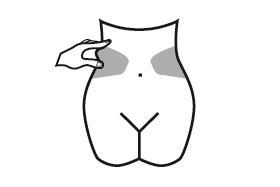
- 2) Wash your hands. Clean (without rubbing) the injection area with an alcohol swab or soap and water.
- 3) Sit or lie down in a comfortable position so you are relaxed. Make sure you can see the point where you are about to inject. An upholstered chair, armchair or bed supported with pillows is ideal.
Dose selection
- 1) Carefully remove the cap from the needle of the syringe. Throw away the cap.
- Do not press the plunger before the injection to remove air bubbles. This can lead to a loss of medicine.
- Once the cap is removed, avoid touching the needle with other objects to ensure the needle remains clean (sterile).
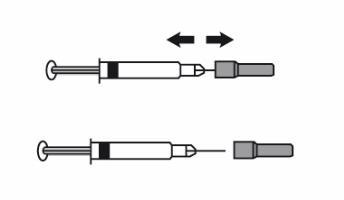
- 2) When the amount of medicine in the syringe corresponds to the prescribed dose, it is not necessary to adjust the dose. The syringe is ready for injection.
- 3) When the dose depends on body weight, you may need to adjust the dose in the syringe to match the prescribed dose. In that case, you can remove excess medicine by holding the syringe pointing downwards (to keep the air bubble in the syringe) and expelling the excess amount into a container.
- 4) A drop may appear on the tip of the needle. If this happens, remove the drop before the injection by tapping the syringe with the needle pointing downwards. The syringe is ready for injection.
Injection
- 1) Hold the syringe with the hand you write with (like a pencil). With the other hand, gently pinch the cleaned area of the abdomen with your index and thumb to create a skin fold.
- Make sure to maintain the skin fold throughout the injection.
- 2) Hold the syringe so that the needle is straight down (at a 90° angle). Insert the entire length of the needle into the skin fold.
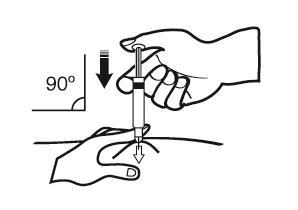
- 3) Press the plunger with your thumb to send the medicine into the abdominal fat tissue. Complete the injection using all the medicine contained in the syringe.
- 4) Remove the needle from the injection site by pulling it straight out. Point the needle away from the user and anyone else present. Now release the skin fold.
When you are finished
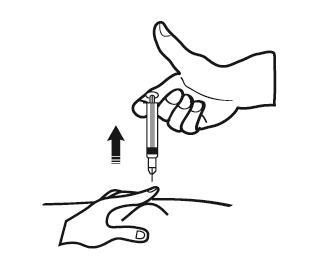
- 1) To avoid bruising, do not rub the injection site after injecting.
- 2) Dispose of the used syringe in the sharps container. Close the container lid tightly and place it out of reach of children. When the container is full, dispose of it according to the instructions of your doctor or pharmacist.
Unused medicine and waste derived from such medicine must be disposed of in accordance with
local regulations. If you feel that the dose is too high (e.g. if you experience unexpected bleeding) or too
low (e.g. the dose does not seem to have any effect), talk to your doctor or pharmacist.
Instructions for syringes with a safety device:
Preparation of the injection site
- 1) Choose an area on the right or left side of the abdomen. It must be at least 5 centimeters away from the navel and on the outer side towards the hips.
- Do not inject within 5 cm of the navel or around existing scars or bruises.
- Alternate the injection point between the right and left sides of the abdomen, depending on the area of the last injection.
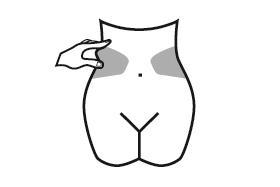
- 2) Wash your hands. Clean (without rubbing) the injection area with an alcohol swab or soap and water.
- 3) Sit or lie down in a comfortable position so you are relaxed. Make sure you can see the point where you are about to inject. An upholstered chair, armchair or bed supported with pillows is ideal.
Dose selection
- 1) Carefully remove the cap from the needle of the syringe. Throw away the cap.
- Do not press the plunger before the injection to remove air bubbles. This can lead to a loss of medicine.
- Once the cap is removed, avoid touching the needle with other objects to ensure the needle remains clean (sterile).
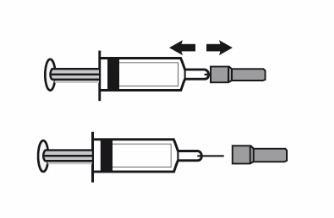
- 2) When the amount of medicine in the syringe corresponds to the prescribed dose, it is not necessary to adjust the dose. The syringe is ready for injection.
- 3) When the dose depends on body weight, you may need to adjust the dose in the syringe to match the prescribed dose. In that case, you can remove excess medicine by holding the syringe pointing downwards (to keep the air bubble in the syringe) and expelling the excess amount into a container.
- 4) A drop may appear on the tip of the needle. If this happens, remove the drop before the injection by tapping the syringe with the needle pointing downwards. The syringe is ready for injection.
Injection
- 1) Hold the syringe with the hand you write with (like a pencil). With the other hand, gently pinch the cleaned area of the abdomen with your index and thumb to create a skin fold.
- Make sure to maintain the skin fold throughout the injection.
- 2) Hold the syringe so that the needle is straight down (at a 90° angle). Insert the entire length of the needle into the skin fold.
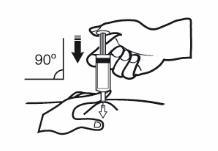
- 3) Press the plunger with your thumb to send the medicine into the abdominal fat tissue. Complete the injection using all the medicine contained in the syringe.
- 4) Remove the needle from the injection site by pulling it straight out. Point the needle away from the user and anyone else present. The safety system is activated by firmly pressing the plunger rod. The protective cover will automatically cover the needle and make an audible “click” confirming activation of the device. Now release the skin fold.
When you are finished
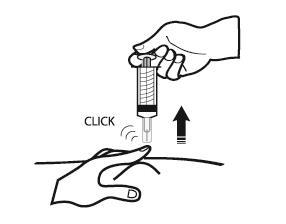
- 1) To avoid bruising, do not rub the injection site after injecting.
- 2) Dispose of the used syringe in the sharps container. Close the container lid tightly and place it out of reach of children. When the container is full, dispose of it according to the instructions of your doctor or pharmacist.
Change of anticoagulant treatment
- Switching from ROVINADIL to anticoagulants called vitamin K antagonists(e.g. Warfarin)Your doctor will prescribe you blood tests called INR, telling you when to stop taking ROVINADIL.
- Switching from anticoagulants called vitamin K antagonists (e.g. Warfarin) to ROVINADILStop taking vitamin K antagonists. Your doctor will prescribe you blood tests called INR, telling you when to start taking ROVINADIL.
- Switching from ROVINADIL to direct oral anticoagulant treatmentStop taking ROVINADIL. Start taking the direct oral anticoagulant 0-2 hours before the time the next injection would have been due, then continue as normal.
- Switching from direct oral anticoagulant treatment to ROVINADILStop taking direct oral anticoagulant. Do not start treatment with ROVINADIL until 12 hours after taking the final dose of the direct oral anticoagulant.
If you use more ROVINADIL than you should
| a The unused medicine and waste derived from this medicine must be disposed of in accordance with the | |
| local regulations in force. | i |
| If you feel that the dose is too strong (e.g. if you experience unexpected bleeding) or too | |
| a weak (e.g. the dose does not seem to have any effect), talk to your doctor or pharmacist. | |
If you think you have used too much or too little ROVINADIL, inform your doctor immediately,
the nurse or the pharmacist, even if you do not show signs of problems. If a child accidentally injects or
ingests ROVINADIL, take them immediately to the emergency room.
If you forget to use ROVINADIL
If you forget to take a dose, take it as soon as you remember. Do not take a double dose on the
same day to make up for the missed dose. Keeping a diary will help you not to miss doses.
If you stop treatment with ROVINADIL
If you have any further questions about the use of this medicine, ask your doctor, pharmacist or
nurse.
It is important that you continue to have ROVINADIL injections until your doctor decides to
stop them. If you stop them, a blood clot may form, which can be very dangerous.
4. Possible side effects
Like all medicines, this medicine can cause side effects, although not everybody gets them.
Like other similar medicines (medicines to reduce blood clotting), ROVINADIL can
cause bleeding, which may be life-threatening. In some cases, the bleeding may not
be obvious.
If you experience any bleeding of any type that does not stop on its own, or if you experience signs of
excessive bleeding (excessive weakness, fatigue, paleness, dizziness, headache, or unexplained swelling), consult your doctor immediately.
The doctor may decide to monitor you closely or change your medicine.
Stop using enoxaparine and consult your doctor immediately if you notice any of the following symptoms:
- Any sign of a severe allergic reaction (such as difficulty breathing, swelling of the lips, mouth, throat, or eyes)
- A widespread red and scaly rash with bumps under the skin and blisters accompanied by fever. Symptoms usually appear at the beginning of treatment (acute generalized exanthematous pustulosis). You should inform your doctor immediately
- If you experience signs of a blood vessel blockage by a clot, such as:
- Cramping pain, redness, warmth, or swelling in one of the legs - these are symptoms of deep vein thrombosis
- Shortness of breath, chest pain, fainting, or coughing up blood - these are symptoms of pulmonary embolism.
- If you have a painful rash with dark red spots under the skin that do not disappear when pressed. Your doctor may ask you to have a blood test to check your platelet count. General list of possible side effects:Very common (may affect more than 1 in 10 people)
- Bleeding.
- Increased liver enzymes. Common (may affect up to 1 in 10 people)
- Bruising more easily than usual. This may be due to a blood problem, with a low number of platelets.
- Pink spots on the skin. These are more likely to appear in the area where ROVINADIL was injected.
- Rash (hives, urticaria).
- Itchy, reddened skin.
- Bruising or pain at the injection site.
- Decreased number of red blood cells.
- High number of platelets in the blood.
- Headache.
Uncommon (may affect up to 1 in 100)
- Sudden severe headache, which may be a sign of bleeding in the brain.
- Pain and swelling in the stomach. You may have bleeding in the stomach.
- Large, irregular-shaped red lesions on the skin with or without blisters.
- Skin irritation (local irritation).
- Yellowing of the skin or eyes and urine becoming darker in color. This may be a liver problem. Rare (may affect up to 1 in 1,000)
- Severe allergic reaction. Signs of an allergic reaction may include: rash, difficulty swallowing or breathing, swelling of the lips, face, throat, or tongue.
- Increased potassium in the blood. This is more likely in people with kidney problems or diabetes. The doctor can check the values with a blood test.
- Increased number of eosinophils in the blood. The doctor can check the values with a blood test.
- Hair loss.
- Osteoporosis (a condition that makes bones more fragile) after prolonged use.
- Tingling, numbness, and muscle weakness (especially in the lower part of the body) if you have had a spinal puncture or a spinal anesthetic.
- Loss of bladder or bowel control (therefore unable to control when to go to the bathroom).
- Hard lump or nodule at the injection site.
Reporting of side effects
If you get any side effects, talk to your doctor or pharmacist. You can also report side effects directly through the national reporting system at www.agenziafarmaco.gov.it/content/come-segnalare-una-sospetta-
reazione-avversa. By reporting side effects you can help provide more information on the
safety of this medicine.
5. How to store ROVINADIL
Store at a temperature below 25 °C. Do not freeze.
The pre-filled syringes are for single use only. Discard any unused medicine.
Keep this medicine out of the sight and reach of children.
Do not use this medicine after the expiry date which is stated on the label. The expiry date refers to the last day of that month.
Do not use this medicine if you notice that the syringe is damaged or the product is not clear.
Do not dispose of any medicine in waste water or household waste. Ask your pharmacist how to dispose of medicines you no longer use. This will help protect the environment.
6. Package Contents and Other Information
What ROVINADIL contains
- The active ingredient is enoxaparin sodium.
Each pre-filled syringe contains enoxaparin sodium with 2,000 IU of anti-Xa activity (equivalent to 20 mg)
in 0.2 mL of water for injections.
Each pre-filled syringe contains enoxaparin sodium with 4,000 IU of anti-Xa activity (equivalent to 40 mg)
in 0.4 mL of water for injections.
Each pre-filled syringe contains enoxaparin sodium with 6,000 IU of anti-Xa activity (equivalent to 60 mg)
in 0.6 mL of water for injections.
Each pre-filled syringe contains enoxaparin sodium with 8,000 IU of anti-Xa activity (equivalent to 80 mg)
in 0.8 mL of water for injections.
Each pre-filled syringe contains enoxaparin sodium with 10,000 IU of anti-Xa activity (equivalent to 100
mg) in 1 mL of water for injections.
- The other component is water for injections.
Description of the appearance of ROVINADIL and contents of the pack
ROVINADIL is a clear, colorless to pale yellow solution for injection in a pre-filled syringe made of
type I glass with an injection needle and with or without an automatic safety device. It is supplied as
follows:
ROVINADIL 2,000 IU (20 mg) in 0.2 mL solution for injection in a 0.5 mL pre-filled syringe that is not
graduated.
Packs of 2, 6, 10, 20 and 50 syringes.
ROVINADIL 4,000 IU (40 mg) in 0.4 mL solution for injection in a 0.5 mL pre-filled syringe that is not
graduated.
Packs of 2, 6, 10, 20, 30 and 50 syringes.
ROVINADIL 6,000 IU (60 mg) in 0.6 mL solution for injection in a 1 mL graduated pre-filled syringe.
Packs of 2, 6, 10, 12, 24, 30 and 50 syringes.
ROVINADIL 8,000 IU (80 mg) in 0.8 mL solution for injection in a 1 mL graduated pre-filled syringe.
Packs of 2, 6, 10, 12, 24, 30 and 50 syringes.
ROVINADIL 10,000 IU (100 mg) in 1 mL solution for injection in a 1 mL graduated pre-filled syringe.
Packs of 2, 6, 10, 12, 24, 30 and 50 syringes.
Not all pack sizes may be marketed.
In some packs, the pre-filled syringes may be combined with a safety device.
Marketing Authorisation Holder and Manufacturer:
Marketing Authorisation Holder
Laboratorios Farmacéuticos ROVI, S.A.
Julián Camarillo, 35
- 28037 - Madrid (Spain) Manufacturer ROVI Pharma Industrial Services S.A. Julián Camarillo, 35
- 28037 - Madrid (Spain)
This medicinal product is authorised in the Member States of the European Economic Area and in the United
Kingdom (Northern Ireland) under the following names:
Austria ,Bulgaria, Czech Republic, Denmark, Estonia, Greece, Spain, Finland, Germany, Croatia,
Hungary, Latvia, Netherlands, Norway, Poland, Portugal, Romania, Sweden, Slovakia, United Kingdom
(Northern Ireland): Crusia
France: Enoxaparine Crusia
Italy: Rovinadil
Belgium, Ireland, Slovenia, Luxembourg: Teuro

Nie jesteś pewien, czy ten lek jest odpowiedni dla ciebie?
Omów swoje objawy i leczenie z lekarzem online.

Zacząłeś przyjmować lek i masz pytania?
Omów swoje objawy i leczenie z lekarzem online.
- Kraj rejestracji
- Postać farmaceutycznaInjectable solution, 2.000 IU (20MG)/0,2 ML
- Kod ATCB01AB05
- Substancja czynna
- Wymaga receptyTak
- Producent
- Te treści mają charakter wyłącznie informacyjny i nie zastępują konsultacji lekarskiej.
- Zamienniki ROVINADILPostać farmaceutyczna: Injectable solution, 6000 IU (60 MG)/0.6 MLSubstancja czynna: enoxaparinProducent: SANOFI S.R.L.Wymaga receptyPostać farmaceutyczna: Injectable solution, 10.000 IU (100 MG)/1.0 MLSubstancja czynna: enoxaparinProducent: SANOFI S.R.L.Bez receptyPostać farmaceutyczna: Injectable solution, 2000 U.I.Substancja czynna: enoxaparinProducent: SANOFI S.R.L.Wymaga recepty
Odpowiedniki ROVINADIL w innych krajach
Leki z tą samą substancją czynną dostępne w innych krajach.
Odpowiednik ROVINADIL w Hiszpania
Odpowiednik ROVINADIL w Polska
Odpowiednik ROVINADIL w Ukraina
Lekarze online w sprawie ROVINADIL
Omów stosowanie ROVINADIL, bezpieczeństwo i ocenę zasadności recepty zgodnie z obowiązującymi przepisami.









Uzyskaj receptę na ROVINADIL online
Wypełnij 2-minutowy formularz
Opisz swoje objawy, historię choroby i lek, o który prosisz.
Wybierz lekarza lub pozwól nam przydzielić
Wybierz specjalistę lub dopasujemy Cię do najbliższego dostępnego lekarza.
Lekarz analizuje Twój przypadek
Zazwyczaj w ciągu 30 minut. Może zadawać dodatkowe pytania przez czat.
Odbierz w dowolnej aptece
Recepta elektroniczna wysłana na Twój e-mail — ważna w całej Polsce.
Często zadawane pytania
ROVINADIL wymaga recepty w Włochy. Możesz skonsultować się z lekarzem online, aby sprawdzić, czy ten lek może być odpowiedni w Twojej sytuacji.
Substancją czynną w ROVINADIL jest enoxaparin. Informacja ta pomaga rozpoznać leki o tym samym składzie, ale pod różnymi nazwami handlowymi.
ROVINADIL jest produkowany przez LABORATORIOS FARMACEUTICOS ROVI S.A.. Nazwy handlowe i opakowania mogą się różnić w zależności od dystrybutora.
Lekarze, tacy jak Lekarze rodzinni, Psychiatrzy, Dermatolodzy, Kardiolodzy, Endokrynolodzy, Gastroenterolodzy, Pulmonolodzy, Nefrolodzy, Reumatolodzy, Hematolodzy, Zakaźnicy, Alergolodzy, Geriatrzy, Pediatrzy, Onkolodzy, mogą ocenić, czy stosowanie ROVINADIL jest odpowiednie w Twoim przypadku, w zależności od sytuacji klinicznej i lokalnych przepisów. Możesz umówić konsultację online, aby omówić objawy i możliwe dalsze kroki.
Polska posiada dobrze rozwiniętą infrastrukturę ochrony zdrowia w dużych miastach, takich jak Warszawa, Kraków, Wrocław i Gdańsk. Apteki są łatwo dostępne i działają zgodnie z obowiązującymi przepisami, zapewniając dostęp do leków na receptę.
Możesz kupić ROVINADIL w Warszawie, Krakowie, Wrocławiu lub Gdańsku w każdej aptece, posiadając ważną receptę.
Aby uzyskać receptę, możesz skorzystać z Oladoctor:
Inne leki zawierające tę samą substancję czynną (enoxaparin) to m.in. KLEXANE T, KLEXANE T, KLEXANE. Mogą one różnić się nazwą handlową lub postacią, ale zawierają ten sam składnik terapeutyczny. Przed zmianą lub rozpoczęciem nowego leku skonsultuj się z lekarzem.
