



ROCLANDA 50 MCG/ML Krople do oczu, roztwór

Ocena recepty online
Lekarz przeanalizuje Twój przypadek i zdecyduje, czy wystawienie recepty jest medycznie uzasadnione.

Porozmawiaj z lekarzem o tym leku
Omów swoje objawy i opcje leczenia podczas szybkiej konsultacji online.



Jak stosować ROKLANDA
Treść ulotki
Roclanda 50 micrograms/mL + 200 micrograms/mL eye drops, solution
latanoprost + netarsudil
Read this leaflet carefully before you start using this medicine as it contains important
information for you.
- Keep this leaflet. You may need to read it again.
- If you have any questions, ask your doctor or pharmacist.
- This medicine has been prescribed for you only. Do not pass it on to others, even if they have the same symptoms as you, as it may be harmful.
- If you get any side effects, even those not listed in this leaflet, tell your doctor or pharmacist. See section 4.
Contents of this leaflet
- 1. What Roclanda is and what it is used for
- 2. What you need to know before you use Roclanda
- 3. How to use Roclanda
- 4. Possible side effects
- 5. How to store Roclanda
- 6. Contents of the pack and other information
1. What is Roclanda and what is it used for
Roclanda contains two active ingredients: latanoprost and netarsudil. Latanoprost belongs to a group of
medicines called “prostaglandin analogues”. Netarsudil belongs to a group of
medicines called “Rho-kinase inhibitors”. The two active ingredients work in different ways to
reduce the amount of fluid inside the eye and therefore lower its pressure.
Roclanda is indicated to lower eye pressure in adults suffering from an eye condition
known as glaucoma or who have increased intraocular pressure. If it is too high,
intraocular pressure can damage vision.
2. What you need to know before using Roclanda
Do not use Roclanda
- if you are allergic to latanoprost or netarsudil or any of the other ingredients of this medicine (listed in section 6).
Warnings and precautions
Talk to your doctor or pharmacist before using Roclanda if you think that any of the following
situations apply to you:
- if you suffer from dry eyes
- if you or your child have eye problems (such as eye pain, irritation or inflammation, blurred vision)
- if you suffer from severe or poorly controlled asthma
- if you have had or are having a viral eye infection caused by the herpes simplex virus
- if you wear contact lenses. You can still use Roclanda, but follow the instructions for contact lens wearers in section 3.
Do not use Roclanda more than once a day, as more side effects may occur.
Tell your doctor if you experience a decrease in vision or eye pain during treatment with
this medicine. This may be due to a type of swelling of the outer transparent
layer of the eye (reticular epithelial corneal edema). This effect has been reported
after administering this medicine to the eye of patients with certain risk factors,
including previous eye surgery. It usually improves after stopping the medicine.
Children and adolescents
Roclanda should not be used in children and adolescents under 18 years of age as it is not known whether it is
safe or effective in this age group.
Other medicines and Roclanda
Roclanda may interact with other medicines. Tell your doctor or pharmacist if you are using, have
recently used or might use any other medicine, especially medicines that
contain another prostaglandin analogue such as latanoprost (see section 3 “How to use
Roclanda”).
Pregnancy and breastfeeding
If you are pregnant, suspect you are pregnant or are planning to become pregnant, or if you are breastfeeding
with breast milk, ask your doctor or pharmacist for advice before taking this medicine. Do not use
Roclanda if you are pregnant or if you are breastfeeding with breast milk.
Driving and using machines
Roclanda negligibly alters the ability to drive and use machines. You may
notice blurred or abnormal vision immediately after using Roclanda. Do not drive vehicles or use
machinery until your vision returns to normal.
Roclanda contains benzalkonium chloride
This medicine contains benzalkonium chloride, which can be absorbed by
soft contact lenses and can lead to a change in their color. Remove your contact lenses before using this
medicine and wait 15 minutes before reinserting them (see section 3 “How to use
Roclanda”).
Benzalkonium chloride can also cause eye irritation, especially if you have dry eyes or
corneal disorders (the outermost transparent layer of the eye). Contact your doctor if you experience
an abnormal feeling in your eyes or stinging eye pain after using this
medicine.
3. How to use Roclanda
Use this medicine following the instructions of your doctor or pharmacist exactly. If you have
any doubts, ask your doctor or pharmacist.
Use Roclanda only for the eyes (ophthalmic use).
The recommended dose is one drop in the affected eye once a day in the evening. Use the medicine
every day at approximately the same time. Do not use it more than once a day.
Do not use more than one drop in the affected eye once a day.
How to use
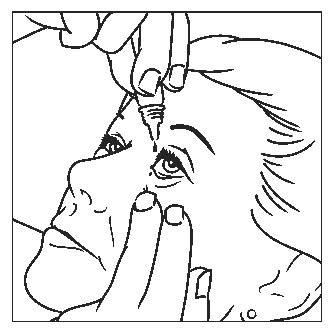
- Wash your hands before you start. Contact lenses must be removed before instilling latanoprost + netarsudil (see section 2 “Warnings and precautions”).
- Do not touch the tip of the dropper with your fingers when opening or closing the bottle. This could contaminate the eye drops.
- Unscrew the bottle cap and place the cap aside on a clean surface. Continue to hold the bottle, making sure that the tip of the dropper does not come into contact with anything.
- Hold the bottle between your thumb and fingers, pointing downwards.
- Tilt your head backwards.
- Pull down your lower eyelid with a clean finger to form a “pocket” between the eyelid and your eye. The drop should be placed there.
- Bring the tip of the dropper close to your eye. It may be helpful to use a mirror.
- Do not touch your eye, eyelid, surrounding areas or other surfaces with the tip of the dropper. This could contaminate the eye drops.
- Gently press the bottle to release one drop of Roclanda into your eye.
- Put only one drop in your eye each time. If the drop does not enter your eye, repeat the operation.
- Press a finger on the corner of your eye, near your nose. Keep your finger pressed for one minute while keeping your eye closed.
- If you need to use the eye drops in both eyes, repeat the steps for the other eye while the bottle is open.
- Replace the bottle cap to close the bottle.
- Put the bottle back in the carton to protect the eye drops from light until you need to use them again.
If you are using other eye drops, wait at least five minutes after using them, then use Roclanda
last due to the ability of netarsudil to dilate blood vessels. If you are using an ophthalmic ointment,
this should be used last.
If you use more Roclanda than you should
Rinse your eye with lukewarm water. Do not put in any more drops until the time for your next
regular dose.
If you forget to use Roclanda
Continue with your next dose as scheduled. Do not use a double dose to make up for a
missed dose.
If you stop using Roclanda
Do not stop using Roclanda without first talking to your doctor. If you stop using Roclanda, your eye pressure will not be controlled and this could lead to loss of vision.
If you have any questions about using this medicine, ask your doctor or pharmacist.
4. Possible side effects
Like all medicines, this medicine can cause side effects, although not everybody gets them.
Usually you can continue to use the eye drops unless the effects are serious.
If you are concerned, speak to your doctor or pharmacist. Do not stop using this eye drop
without consulting your doctor.
The side effects listed below have been observed with Roclanda and other medicines
containing latanoprost and netarsudil alone:
- Very common (may affect more than 1 in 10 people)or Effects on the eye:
- Redness of the eyes; fine deposits in the front part of the eye (corneal verticillata)
- Pain where the drops were instilled
- Gradual increase in the amount of brown pigment in the colored part of the eye (iris) causing a change in eye color
- Gradual increase in the color (darkening), length, thickness and number of eyelashes.
- Common (may affect up to 1 in 10 people)or Effects on the eye:
- General redness of the eyes shortly after putting the drops in; spots or patches of redness of the eyes
- Eye infection or inflammation; conjunctivitis (inflammation of the eyes or prominent blood vessels) caused by an allergic reaction; dry eye or small breaks in the film of fluid on the surface of the eye (punctate keratitis)
- Eye discharge; watery eyes
- Itching of the eyelids; swelling around the eye; crusting of the eyelids
- Blurred vision and slightly reduced vision; blurred vision
- Eye pain; feeling of grittiness or having something in the eyes or General side effects
- Redness or itching of the skin of the face
- Uncommon (may affect up to 1 in 100 people)or Effects on the eye:
- Increased pressure of the fluid inside the eye
- Inflammation of the colored part of the eye (iris); bulging of the iris
- Increased wrinkling of the clear layer covering the eye where it meets the lower eyelid (conjunctivochalasis); small colored spots on the surface of the eye; shiny/vitreous eyes; fatigue; numbness or burning in the eye; increased sensitivity to light
- Eye allergy
- Blindness, double vision or with a halo
- Blockage of the tear duct; dry eyes caused by inflammation of the glands of the eyelids
- Abnormal rotation outwards of the lower eyelid; loss of eyelashes (madarosis); discoloration of the skin of the eyelids
- Eye disease related to diabetes (diabetic retinopathy) or Side effects in other parts of the body
- Blocked nose; nosebleed; discomfort and pain in the nose
- Headache; dizziness; feeling unwell (nausea, vomiting)
- Redness or itching of the skin; dry skin; thickening of the skin; skin abrasion
- Muscle pain, spasm or weakness; joint pain; jaw/mandible pain; cartilage inflammation
- Chest pain (angina); perception of heartbeat (palpitations)
- Asthma; shortness of breath (dyspnea)
- Rare (may affect up to 1 in 1,000 people)or Effects on the eye:
- Swelling or scratching that damages the surface of the eye; swelling around the eye (periorbital edema); scarring on the surface of the eye
- Growth of eyelashes in the wrong direction or formation of an extra row of eyelashes
- Fluid-filled area in the colored part of the eye (iris cyst)
- Skin reactions on the eyelids; darkening of the skin of the eyelids
- Viral eye infection caused by the herpes simplex virus (HSV) or Side effects in other parts of the body
- Worsening of asthma
- Intense itching of the skin
- Very rare (may affect up to 1 in 10,000 people)or Effects on the eye:
- Sunken eye (deepening of the palpebral sulcus) or Side effects in other parts of the body
- Worsening of angina in patients who also suffer from heart disease
- Not known (frequency cannot be estimated from available data)or Effects on the eye:
- Swelling of the outer clear layer of the eye (reticular epithelial corneal edema)
Reporting of side effects
If you get any side effects, even those not listed in this leaflet, speak to your
doctor or pharmacist. You can also report side effects directly through the national reporting system
listed in Annex V. By reporting side effects you can help provide more information on the safety of this medicine.
5. How to store Roclanda
Keep this medicine out of the sight and reach of children.
Do not use this medicine after the expiry date which is stated on the label of the carton and the
vial after Exp. The expiry date refers to the last day of that month.
Closed vial: store in a refrigerator (2°C – 8°C).
After opening the vial: do not store at a temperature above 25°C.
Store in the original package to protect the medicine from light.
Do not use the vial 4 weeks after first opening to prevent infections and use a new vial.
Do not dispose of any medicine in wastewater or household waste. Ask your pharmacist how to
dispose of medicines you no longer use. This will help protect the environment.
6. Package contents and other information
What Roclanda contains
- The active ingredients are latanoprost and netarsudil. Each mL of solution contains 50 micrograms of latanoprost and 200 micrograms of netarsudil (as mesilate).
- The other ingredients are benzalkonium chloride (see section 2 under “Roclanda contains benzalkonium chloride”), mannitol (E 421), boric acid, sodium hydroxide (E 524) (for pH adjustment) and water for injections.
Description of Roclanda’s appearance and package contents
Roclanda 50 micrograms/mL + 200 micrograms/mL eye drops, solution (eye drops) is a clear solution in a plastic bottle. Each bottle contains 2.5 mL of medicine and each pack contains
1 or 3 bottles with a screw cap. Not all pack sizes may be marketed.
Marketing Authorisation Holder
Santen Oy
Niittyhaankatu 20, 33720 Tampere, Finland
Manufacturer
Santen Oy
Kelloportinkatu 1, 33100 Tampere, Finland
For further information on this medicine, contact the local representative of the Marketing Authorisation Holder:
België/Belgique/Belgien
Santen Oy
Tél/Tel: +32 (0) 24019172
Lietuva
Santen Oy
Tel: +370 37 366628
България
Santen Oy
Teл.: +40 21 528 0290
Luxembourg/Luxemburg
Santen Oy
Tél/Tel: +352 (0) 27862006
Česká republika
Santen Oy
Tel: +358 (0) 3 284 8111
Magyarország
Santen Oy
Tel: +358 (0) 3 284 8111
Danmark
Santen Oy
Tlf.: +45 898 713 35
Malta
Santen Oy
Tel: +358 (0) 3 284 8111
Deutschland
Santen GmbH
Tel: +49 (0) 3030809610
Nederland
Santen Oy
Tel: +31 (0) 207139206
Eesti
Santen Oy
Tel: +372 5067559
Norge
Santen Oy
Tlf: +47 21939612
Ελλάδα
Santen Oy
Τηλ: +358 (0) 3 284 8111
Österreich
Santen Oy
Tel: +43 (0) 720116199
España
Santen Pharmaceutical Spain S.L.
Tel: + 34 914 142 485
Polska
Santen Oy
Tel.: +48(0) 221042096
France
Santen S.A.S.
Tél: +33 (0) 1 70 75 26 84
Portugal
Santen Oy
Tel: +351 308 805 912
Hrvatska
Santen Oy
Tel: +358 (0) 3 284 8111
Ireland
Santen Oy
Tel: +353 (0) 16950008
România
Santen Oy
+358 (0) 3 284 8111
Slovenija
Santen Oy
Tel: +358 (0) 3 284 8111
Ísland
Santen Oy
Sími: +358 (0) 3 284 8111
Slovenská republika
Santen Oy
+358 (0) 3 284 8111
Italia
Santen Italy S.r.l.
Tel: +39 0236009983
Suomi/Finland
Santen Oy
Puh/Tel: +358 (0) 974790211
Κύπρος
Santen Oy
Τηλ: +358 (0) 3 284 8111
Sverige
Santen Oy
Tel: +46 (0) 850598833
Other sources of information
More detailed information on this medicine is available on the website of the European Medicines Agency, https://www.ema.europa.eu/ .
Latvija
Santen Oy
Tel: +371 677 917 80

Nie jesteś pewien, czy ten lek jest odpowiedni dla ciebie?
Omów swoje objawy i leczenie z lekarzem online.

Zacząłeś przyjmować lek i masz pytania?
Omów swoje objawy i leczenie z lekarzem online.

- Kraj rejestracji
- Postać farmaceutycznaEye drops, solution, 50 MCG/ML / 200 MCG/ML
- Kod ATCS01EE51
- Substancja czynna
- Wymaga receptyTak
- Producent
- Te treści mają charakter wyłącznie informacyjny i nie zastępują konsultacji lekarskiej.
- Zamienniki ROKLANDAPostać farmaceutyczna: Eye drops, solution, 40 MCG/MLSubstancja czynna: travoprostProducent: FIDIA FARMACEUTICI S.P.A.Wymaga receptyPostać farmaceutyczna: Eye drops, solution, 0.3 MG/MLSubstancja czynna: bimatoprostProducent: SIFI S.P.A.Wymaga receptyPostać farmaceutyczna: Eye drops, solution, 0.1 MG/MLSubstancja czynna: bimatoprostProducent: GENETIC S.P.A.Wymaga recepty
Odpowiedniki ROKLANDA w innych krajach
Leki z tą samą substancją czynną dostępne w innych krajach.
Odpowiednik ROKLANDA w Hiszpania
Lekarze online w sprawie ROKLANDA
Omów stosowanie ROKLANDA, bezpieczeństwo i ocenę zasadności recepty zgodnie z obowiązującymi przepisami.









Uzyskaj receptę na ROKLANDA online
Wypełnij 2-minutowy formularz
Opisz swoje objawy, historię choroby i lek, o który prosisz.
Wybierz lekarza lub pozwól nam przydzielić
Wybierz specjalistę lub dopasujemy Cię do najbliższego dostępnego lekarza.
Lekarz analizuje Twój przypadek
Zazwyczaj w ciągu 30 minut. Może zadawać dodatkowe pytania przez czat.
Odbierz w dowolnej aptece
Recepta elektroniczna wysłana na Twój e-mail — ważna w całej Polsce.
Często zadawane pytania
ROKLANDA wymaga recepty w Włochy. Możesz skonsultować się z lekarzem online, aby sprawdzić, czy ten lek może być odpowiedni w Twojej sytuacji.
Substancją czynną w ROKLANDA jest latanoprost and netarsudil. Informacja ta pomaga rozpoznać leki o tym samym składzie, ale pod różnymi nazwami handlowymi.
ROKLANDA jest produkowany przez SANTEN OY. Nazwy handlowe i opakowania mogą się różnić w zależności od dystrybutora.
Lekarze, tacy jak Lekarze rodzinni, Psychiatrzy, Dermatolodzy, Kardiolodzy, Endokrynolodzy, Gastroenterolodzy, Pulmonolodzy, Nefrolodzy, Reumatolodzy, Hematolodzy, Zakaźnicy, Alergolodzy, Geriatrzy, Pediatrzy, Onkolodzy, mogą ocenić, czy stosowanie ROKLANDA jest odpowiednie w Twoim przypadku, w zależności od sytuacji klinicznej i lokalnych przepisów. Możesz umówić konsultację online, aby omówić objawy i możliwe dalsze kroki.
Polska posiada dobrze rozwiniętą infrastrukturę ochrony zdrowia w dużych miastach, takich jak Warszawa, Kraków, Wrocław i Gdańsk. Apteki są łatwo dostępne i działają zgodnie z obowiązującymi przepisami, zapewniając dostęp do leków na receptę.
Możesz kupić ROKLANDA w Warszawie, Krakowie, Wrocławiu lub Gdańsku w każdej aptece, posiadając ważną receptę.
Aby uzyskać receptę, możesz skorzystać z Oladoctor:
Inne leki zawierające tę samą substancję czynną (latanoprost and netarsudil) to m.in. AKAMBA, AMIRIOX, BIALVITS. Mogą one różnić się nazwą handlową lub postacią, ale zawierają ten sam składnik terapeutyczny. Przed zmianą lub rozpoczęciem nowego leku skonsultuj się z lekarzem.
