



RINAZINA 1 mg /Ml Nasal Drops, Solution

Ocena recepty online
Lekarz przeanalizuje Twój przypadek i zdecyduje, czy wystawienie recepty jest medycznie uzasadnione.

Porozmawiaj z lekarzem o tym leku
Omów swoje objawy i opcje leczenia podczas szybkiej konsultacji online.



Jak stosować RINATSINA
Treść ulotki
RINAZINA 1 mg/ml NASAL SPRAY, SOLUTION
nafazoline
Read this leaflet carefully before using this medicine as it contains important
information for you
- Use this medicine exactly as described in this leaflet or as your doctor or pharmacist has told you.
- Keep this leaflet. You may need to read it again.
- If you want more information or advice, ask your pharmacist.
- If any side effects occur, including those not listed in this leaflet, tell your doctor or pharmacist. See section 4.
- See a doctor if you do not feel better or if your symptoms worsen after a few days. Treatment should not last more than one week.
Contents of this leaflet
- 1. What RINAZINA is and what it is used for
- 2. What you need to know before using RINAZINA
- 3. How to use RINAZINA
- 4. Possible side effects
- 5. How to store RINAZINA
- 6. Contents of the pack and other information
1. What is RINAZINA and what is it used for
RINAZINA contains the active ingredient naphazoline nitrate, which belongs to a group of medicines
called NASAL DECONGESTANTS, sympathomimetics for topical use, with a vasoconstrictor effect,
meaning they reduce the dilation of blood vessels present in the nasal mucosa.
RINAZINA is indicated to clear a stuffy nose (nasal decongestant) in cases of:
- cold (rhinitis) and inflammation of the throat with the presence of mucus (acute catarrhal pharyngitis),
- allergic rhinitis (allergic cold),
- inflammation of the mucous membrane of the cavities of the facial bones around the nose (acute sinusitis). RINAZINA is used in adults and children from 12 years of age.
Consult your doctor if you do not feel better or if you feel worse after a few days. Treatment should not
last more than one week.
2. What you need to know before using RINAZINA
DO NOT use RINAZINA
- If you are allergic (hypersensitive) to naphazoline or any of the other ingredients of this medicine (listed in section 6).
- If you suffer from heart disease and very high blood pressure (severe hypertension), optic nerve disease with increased pressure in the eyes (glaucoma) or an increase in thyroid hormone production (hyperthyroidism).
- If you are taking or will take within two weeks of stopping treatment with RINAZINA, medicines for the treatment of depression.
The medicine should not be taken by children under 12 years of age.
Warnings and precautions
Ask your doctor or pharmacist for advice before using RINAZINA:
- If you are elderly
- If you have an enlarged prostate (prostatic hypertrophy), as you may have difficulty urinating (urinary retention).
- If you suffer from heart and blood vessel diseases (cardiovascular diseases) and especially if you suffer from high blood pressure (hypertension), the use of RINAZINA should occur, from time to time, after consulting your doctor.
- Continued use of medicines like RINAZINA, which reduce the dilation of blood vessels (vasoconstrictors), can alter the normal function of the mucosa of both the nose and the cavities of the facial bones around the nose (paranasal sinuses) and can also cause dependence (habituation) on the drug. Long-term use can be harmful.
- The use, especially if continued, of medicines for local use like RINAZINA can cause allergic reactions (sensitization phenomena). In this case, stop treatment and see your doctor.
- With the use of medicines that like RINAZINA stimulate the sympathetic nervous system (sympathomimetics), rare cases of a syndrome with symptoms such as headache, nausea, vomiting and visual disturbances (reversible posterior encephalopathy syndrome/reversible cerebral vasoconstriction syndrome) have been reported, which have improved and healed after medical treatment.
- Stop using RINAZINA and consult your doctor immediately if you experience symptoms and signs of reversible posterior encephalopathy syndrome/reversible cerebral vasoconstriction syndrome.
Children and adolescents
RINAZINA is contraindicated in children under 12 years of age.
Other medicines and RINAZINA
Tell your doctor or pharmacist if you are taking, have recently taken or might take any other medicine.
RINAZINA can interact with medicines used to treat depression (see section “Do not use RINAZINA”).
Pregnancy, breastfeeding and fertility
If you are pregnant, suspect you are pregnant or are planning a pregnancy, or if you are breastfeeding, ask your doctor or pharmacist for advice before using this medicine.
During pregnancy and breastfeeding, RINAZINA should only be used after asking your doctor, who will assess the possible risks and benefits for the mother and the baby.
Driving and operating machinery
No adverse effects on the ability to drive vehicles or operate machinery are known.
RINAZINA contains benzalkonium chloride
This medicine contains 0.1 mg/ml of benzalkonium chloride. Benzalkonium chloride (BAC) can cause irritation and swelling inside the nose, especially if used for long periods. It can cause bronchospasm (narrowing of the bronchi causing severe difficulty breathing).
For athletes
Attention for those who engage in sports: the product contains substances prohibited for doping. Use other than as indicated in the dosage regimen and route of administration is prohibited.
3How to use RINAZINA
Use this medicine exactly as described in this leaflet or as instructed by your doctor or pharmacist. If you have any doubts, ask your doctor or pharmacist.
The recommended dose is 1-2 sprays in each nostril, 2-3 times a day.
Do not take a dose higher than the recommended one, even for a short period of time and locally, because serious adverse effects on the body (systemic effects) can occur.
Children up to 12 years
The medicine should not be taken by children under 12 years of age (see section “Do not
use RINAZINA”).
- 1) For the first use, hold the
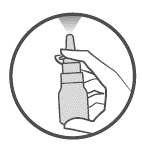
bottle in a vertical position and press the applicator several times, without inserting it into the nostrils, until the spray appears.
- 2) After blowing your nose, hold the bottle in a vertical position and insert its end into the nostril. While inhaling, press the applicator firmly and quickly.
For subsequent applications, follow the instructions from point 2).
If RINAZINA does not work within a few days of starting treatment, consult your doctor.
In any case, do not use RINAZINA for more than one week.
If you use more RINAZINA than you should
If RINAZINA is ingested or taken at doses higher than the recommended one for long periods of time, damage to the body (toxic phenomena) can occur. The medicine should be kept out of the reach of children as accidental ingestion can cause excessive drowsiness (sedation).
A significantly higher dose of RINAZINA than the recommended one, for example in case of accidental ingestion of RINAZINA, can cause serious adverse effects on the heart and circulation. Symptoms may include: slowed heart rate (bradycardia), severe headache, nausea, vomiting, breathing problems, increased heart rate (tachycardia) and chest pain.
If you take an excessive dose of RINAZINA, you may experience increased blood pressure (hypertension), sensitivity of the eyes to light (photophobia) and in children, a decrease in body temperature (hypothermia) and severe depression of the Central Nervous System causing excessive drowsiness (sedation), which require urgent medical treatment.
If you experience adverse effects or in case of accidental intake/ingestion of an overdose of RINAZINA, seek immediate medical attention.
If you forget to use RINAZINA
Do not use a double dose to make up for a missed dose.
If you stop using RINAZINA
If you have any doubts about using this medicine, consult your doctor or pharmacist.
4Possible side effects
Like all medicines, this medicine can cause side effects, although not everyone gets them.
RINAZINA can locally cause swelling of the nasal mucosa due to the intense vasodilation of blood vessels in the nasal area (rebound sensitization phenomena), worsening the feeling of nasal congestion instead of improving it.
The rapid absorption of naphazoline through the inflamed mucous membranes can cause effects on the body (systemic effects) such as increased blood pressure (high blood pressure), decreased heart rate (reflex bradycardia), severe headache and difficulty urinating (urinary disorders).
Reporting of side effects
If you get any side effects, even those not listed in this leaflet, tell your doctor or pharmacist. You can also report side effects directly through the national reporting system at: https://www.aifa.gov.it/content/segnalazioni-reazioni-avverse. By reporting side effects you can help provide more information on the safety of this medicine.
5How to store RINAZINA
Keep this medicine out of the sight and reach of children.
Do not use this medicine after the expiry date which is stated on the bottle and the carton after Scad. The expiry date refers to the last day of that month.
The expiry date refers to the product in intact packaging, properly stored.
Do not use this medicine if the seal on the bottle is broken.
This medicine does not require any special storage conditions.
Do not dispose of medicines via wastewater or household waste. Ask your pharmacist how to dispose of medicines you no longer use. This will help protect the environment.
6Contents of the pack and other information
What RINAZINA contains
- The active ingredient is naphazoline nitrate. Each ml of solution contains 1 mg of naphazoline nitrate, equivalent to 0.77 mg of naphazoline.
- The other ingredients are: sodium chloride, disodium edetate, disodium phosphate monobasic dihydrate, concentrated phosphoric acid, benzalkonium chloride, balsamic aroma, purified water.
Description of the appearance of RINAZINA and contents of the pack
RINAZINA is a clear and colorless solution.
Each pack contains a dark glass bottle of 15 ml equipped with a spray applicator with a protective cap.
Marketing Authorisation Holder
Haleon Italy S.r.l. - Via Monte Rosa 91 - 20149 Milan
Manufacturer
Haleon Germany GmbH - Barthstraße 4 - 80339 Munich – Germany
RINAZINA 1 MG/ML NASAL DROPS, SOLUTION
nafazoline
Read this leaflet carefully before using this medicine as it contains important
information for you.
- Always use this medicine exactly as described in this leaflet or as your doctor or pharmacist has told you to do.
- Keep this leaflet. You may need to read it again.
- If you want more information or advice, ask your pharmacist.
- If any side effects occur, including those not listed in this leaflet, tell your doctor or pharmacist. See section 4.
- See a doctor if you do not feel better or if your symptoms worsen after a few days. Treatment should not last more than one week.
Contents of this leaflet
- 1. What RINAZINA is and what it is used for
- 2. What you need to know before using RINAZINA
- 3. How to use RINAZINA
- 4. Possible side effects
- 5. How to store RINAZINA
- 6. Contents of the pack and other information
1. What is RINAZINA and what is it for
RINAZINA contains the active ingredient naphazoline nitrate, which belongs to a group of medicines
called NASAL DECONGESTANTS, sympathomimetics for topical use, with a vasoconstrictor action,
meaning they reduce the dilation of blood vessels present in the nasal mucosa.
RINAZINA is indicated to clear a stuffy nose (nasal decongestant) in cases of:
- cold (rhinitis) and inflammation of the throat with the presence of mucus (acute catarrhal pharyngitis),
- allergic rhinitis (hay fever),
- inflammation of the mucous membrane of the cavities of the facial bones around the nose (acute sinusitis). RINAZINA is used in adults and children from 12 years of age.
See your doctor if you do not feel better or if you feel worse after a few days. The treatment
should not last more than one week.
2. What you need to know before using RINAZINA
DO NOT use RINAZINA
- If you are allergic (hypersensitive) to naphazoline or any of the other ingredients of this medicine (listed in section 6).
- If you suffer from heart disease and very high blood pressure (severe hypertension), optic nerve disease with increased pressure in the eyes (glaucoma) or an increase in thyroid hormone production (hyperthyroidism).
- If you are taking or will be taking, within two weeks of stopping treatment with RINAZINA, medicines for the treatment of depression. The medicine should not be used by children under 12 years of age.
Warnings and precautions
Ask your doctor or pharmacist for advice before using RINAZINA:
- If you are elderly
- If you have an enlarged prostate (prostatic hypertrophy), as you may have difficulty urinating (urinary retention).
- If you have heart and blood vessel disease (cardiovascular disease) and especiallyif you suffer from high blood pressure (hypertension), the use of RINAZINA should occur, from time totime, after consulting your doctor.
- Continued use ofmedicines, such as RINAZINA, that reduce the dilation of blood vessels(vasoconstrictors), can alter the normal function of the mucosa of both the nose and the cavitiesof the facial bones around the nose (paranasal sinuses) and can also cause dependence(habituation) on the drug. Long-term use can be harmful.
- The use, especially if continued, of medicines for local use such as RINAZINA can cause allergic reactions (sensitization phenomena). In this case, stop treatment and see your doctor.
- With the use of medicines that, like RINAZINA, stimulate the sympathetic nervous system (sympathomimetics), rare cases of a syndrome with symptoms such as headache, nausea, vomiting and visual disturbances (reversible posterior encephalopathy syndrome/reversible cerebral vasoconstriction syndrome) have been reported, which have improved and healed after medical treatment.
- Stop using RINAZINA and consult your doctor immediately if you experience symptoms and signs of reversible posterior encephalopathy syndrome/reversible cerebral vasoconstriction syndrome.
Children and adolescents
RINAZINA is contraindicated in children under 12 years of age.
Other medicines and RINAZINA
Tell your doctor or pharmacist if you are taking, have recently taken or might take any
other medicines.
RINAZINA can interact with medicines used to treat depression (see section “ Do not use RINAZINA”).
Pregnancy, breastfeeding and fertility
If you are pregnant, suspect you are pregnant or are planning a pregnancy, or if you are breastfeeding
with breast milk, ask your doctor or pharmacist for advice before using this medicine.
During pregnancy and breastfeeding, RINAZINA should only be used after asking your
doctor, who will assess the possible risks and benefits for the mother and the baby.
Driving and using machines
No adverse effects on the ability to drive vehicles or operate machinery are known.
RINAZINA contains benzalkonium chloride
This medicine contains 0.1 mg/ml of benzalkonium chloride. Benzalkonium chloride (BAC) can
cause irritation and swelling inside the nose, especially if used for long periods. It can
cause bronchospasm (narrowing of the bronchi causing severe difficulty breathing).
The container of this medicine is made of latex rubber. It can cause serious
allergic reactions.
For athletes
Attention for those who engage in sports: the product contains substances prohibited for doping. Taking it in a manner different from the dosage schedule and route of administration specified is
prohibited.
3How to use RINAZINA
Use this medicine exactly as described in this leaflet or as instructed by your doctor or
pharmacist. If you have any doubts, ask your doctor or pharmacist.
The recommended dose is 2 - 3 drops in each nostril, 2 - 3 times a day.
Do not take a dose higher than the recommended one, even if for a short period of time and
locally, because you may have serious adverse effects on the body (systemic effects).
Children up to 12 years
The medicine should not be taken by children under 12 years of age (read the section “ Do not
use RINAZINA”).
Caution: the bottle is equipped with a safety closure system to make it difficult to
open for children. Follow the illustrated instructions carefully.
- 1. Place the bottle on a base. To
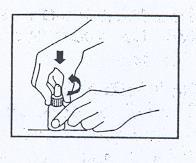
open the bottle, press and
simultaneously unscrew the cap.
- 2. To close the bottle, screw it on normally.
- 3. For subsequent uses, follow the instructions from point 1.
If RINAZINA does not work within a few days of starting treatment, consult your doctor.
In any case, do not take RINAZINA for more than one week.
If you use more RINAZINA than you should
If RINAZINA is ingested or taken at doses higher than the recommended one for long periods of
time, damage to the body (toxic phenomena) may occur. The medicine should be kept
out of the reach of children as accidental ingestion can cause excessive
drowsiness (sedation).
A significantly higher dose of the recommended dose of RINAZINA, for example in case of
accidental ingestion of RINAZINA, can cause serious adverse effects on the heart and
blood circulation. Symptoms may include: slowed heart rate (bradycardia), severe headache, nausea, vomiting, breathing problems, increased heart rate (tachycardia)
and chest pain.
If you take an excessive dose of RINAZINA, you may experience increased blood pressure
(arterial hypertension), sensitivity of the eyes to light (photophobia) and in children lowering
of body temperature (hypothermia) and severe depression of the Central Nervous System causing
excessive drowsiness (sedation), which require urgent medical treatment.
If you experience any adverse effects or in case of accidental taking/ingestion of an
overdose of RINAZINA, seek immediate medical attention.
If you forget to use RINAZINA
Do not take a double dose to make up for a missed dose.
If you stop using RINAZINA
If you have any doubts about using this medicine, consult your doctor or pharmacist.
4Possible side effects
Like all medicines, this medicine can cause side effects, although not everyone gets them.
RINAZINA can locally cause swelling of the nasal mucosa due to the intense
vasodilation of blood vessels at the nasal level (rebound sensitization phenomena),
worsening the feeling of nasal congestion instead of improving it.
The rapid absorption of naphazoline through inflamed mucous membranes can cause effects
at the body level (systemic effects) such as increased blood pressure (high blood pressure),
decreased heart rate (reflex bradycardia), severe headache (cephalalgia) and difficulty
urinating (urinary disturbances).
Reporting of side effects
If you get any side effects, talk to your doctor or pharmacist. You can also report side effects directly through
the national reporting system at the address: https://www.aifa.gov.it/content/segnalazioni-
reazioni-avverse. By reporting side effects you can help provide more information
on the safety of this medicine.
5How to store RINAZINA
Keep this medicine out of the sight and reach of children.
Store at a temperature below 25°C.
Store in an upright position.
Do not use this medicine after the expiry date which is reported on the bottle and the box
after Scad. The expiry date refers to the last day of that month.
The expiry date refers to the product in intact packaging, stored correctly.
Do not use this medicine if the tamper-evident seal on the cap is broken.
Do not dispose of any medicine in the water or household waste. Ask your pharmacist
how to dispose of medicines you no longer use. This will help protect the environment.
6Contents of the pack and other information
What RINAZINA contains
- The active ingredient is naphazoline nitrate. Each ml of solution contains 1 mg of naphazoline nitrate, equivalent to 0.77 mg of naphazoline.
- The other ingredients are: sodium chloride, disodium edetate, disodium phosphate monobasic dihydrate, concentrated phosphoric acid, benzalkonium chloride, purified water.
Description of RINAZINA and contents of the pack
RINAZINA is a clear and colorless solution.
Each pack contains a dark glass bottle of 10 ml with a cap with a dropper and
child-resistant safety closure.
Marketing Authorisation Holder
Haleon Italy S.r.l. - Via Monte Rosa 91 - 20149 Milan
Manufacturer
FARMACLAIR - 440, Avenue du Général de Gaulle - Hérouville Saint Clair (F).

Nie jesteś pewien, czy ten lek jest odpowiedni dla ciebie?
Omów swoje objawy i leczenie z lekarzem online.

Zacząłeś przyjmować lek i masz pytania?
Omów swoje objawy i leczenie z lekarzem online.

- Kraj rejestracji
- Postać farmaceutycznaNasal drops, solution, 1 MG/ML
- Kod ATCR01AA08
- Substancja czynna
- Wymaga receptyNie
- Producent
- Te treści mają charakter wyłącznie informacyjny i nie zastępują konsultacji lekarskiej.
- Zamienniki RINATSINAPostać farmaceutyczna: Nasal spray, solution, 1 mg/mlSubstancja czynna: naphazolineProducent: GENETIC S.P.A.Bez receptyPostać farmaceutyczna: Nasal spray, solution, 1 mg/mlSubstancja czynna: naphazolineProducent: PIETRASANTA PHARMA S.P.A.Bez receptyPostać farmaceutyczna: Nasal spray, solution, 100 MG/100 MLSubstancja czynna: naphazolineBez recepty
Odpowiedniki RINATSINA w innych krajach
Leki z tą samą substancją czynną dostępne w innych krajach.
Odpowiednik RINATSINA w Polska
Odpowiednik RINATSINA w Ukraina
Odpowiednik RINATSINA w Hiszpania
Lekarze online w sprawie RINATSINA
Omów stosowanie RINATSINA, bezpieczeństwo i ocenę zasadności recepty zgodnie z obowiązującymi przepisami.

Uzyskaj receptę na RINATSINA online
Wypełnij 2-minutowy formularz
Opisz swoje objawy, historię choroby i lek, o który prosisz.
Wybierz lekarza lub pozwól nam przydzielić
Wybierz specjalistę lub dopasujemy Cię do najbliższego dostępnego lekarza.
Lekarz analizuje Twój przypadek
Zazwyczaj w ciągu 30 minut. Może zadawać dodatkowe pytania przez czat.
Odbierz w dowolnej aptece
Recepta elektroniczna wysłana na Twój e-mail — ważna w całej Polsce.
Często zadawane pytania
RINATSINA nie wymaga recepty w Włochy. Możesz skonsultować się z lekarzem online, aby sprawdzić, czy ten lek może być odpowiedni w Twojej sytuacji.
Substancją czynną w RINATSINA jest naphazoline. Informacja ta pomaga rozpoznać leki o tym samym składzie, ale pod różnymi nazwami handlowymi.
RINATSINA jest produkowany przez HALEON ITALY S.R.L.. Nazwy handlowe i opakowania mogą się różnić w zależności od dystrybutora.
Lekarze, tacy jak Lekarze rodzinni, Psychiatrzy, Dermatolodzy, Kardiolodzy, Endokrynolodzy, Gastroenterolodzy, Pulmonolodzy, Nefrolodzy, Reumatolodzy, Hematolodzy, Zakaźnicy, Alergolodzy, Geriatrzy, Pediatrzy, Onkolodzy, mogą ocenić, czy stosowanie RINATSINA jest odpowiednie w Twoim przypadku, w zależności od sytuacji klinicznej i lokalnych przepisów. Możesz umówić konsultację online, aby omówić objawy i możliwe dalsze kroki.
Polska posiada dobrze rozwiniętą infrastrukturę ochrony zdrowia w dużych miastach, takich jak Warszawa, Kraków, Wrocław i Gdańsk. Apteki są łatwo dostępne i działają zgodnie z obowiązującymi przepisami, zapewniając dostęp do leków na receptę.
Możesz kupić RINATSINA w Warszawie, Krakowie, Wrocławiu lub Gdańsku w każdej aptece, posiadając ważną receptę.
Aby uzyskać receptę, możesz skorzystać z Oladoctor:
Inne leki zawierające tę samą substancję czynną (naphazoline) to m.in. NAFATSOLINA PENSA, NATSAR, TANTUM VERDE NASO KIUSO. Mogą one różnić się nazwą handlową lub postacią, ale zawierają ten sam składnik terapeutyczny. Przed zmianą lub rozpoczęciem nowego leku skonsultuj się z lekarzem.
