



REBIF 22 MCG (6 MUI)/0,5 ML Injectable solution

Запит на рецепт онлайн
Лікар розгляне ваш випадок і визначить, чи є рецепт медично доцільним.

Поговоріть з лікарем про ці ліки
Обговоріть симптоми та можливі подальші кроки під час короткої онлайн-консультації.



Інструкція із застосування REBIF
Зміст інструкції
- Rebif 22 microgrammes injectable solution in pre-filled syringe
- Rebif 44 micrograms injectable solution in pre-filled syringe
- Rebif 8.8 micrograms injectable solution in pre-filled syringe, 22 micrograms injectable solution in pre-filled syringe
- Rebif 22 micrograms/0.5 mL injectable solution in cartridge
- Rebif 44 micrograms/0.5 mL injectable solution in cartridge
- Rebif 8.8 micrograms/0.1 mL injectable solution in cartridge, 22 micrograms/0.25 mL injectable solution in cartridge
- Rebif 22 micrograms injectable solution in pre-filled pen
- Rebif 44 micrograms injectable solution in pre-filled pen
- Rebif 8.8 micrograms injectable solution in pre-filled pen, 22 micrograms injectable solution in pre-filled pen
Rebif 22 microgrammes injectable solution in pre-filled syringe
interferon beta-1a
Read this leaflet carefully before you use this medicine, as it contains important
information for you.
- Keep this leaflet. You may need to read it again.
- If you have any questions, ask your doctor, pharmacist or nurse.
- This medicine has been prescribed for you only. Do not pass it on to others, even if their symptoms are the same as yours, as it could be harmful.
- If you get any side effects, even those not listed in this leaflet, tell your doctor, pharmacist or nurse. See section 4.
Contents of this leaflet
- 1. What Rebif is and what it is used for
- 2. What you need to know before you use Rebif
- 3. How to use Rebif
- 4. Possible side effects
- 5. How to store Rebif
- 6. Contents of the pack and other information
1. What is Rebif and what it is used for
Rebif belongs to a class of medicines known as interferons. These are natural substances
that transmit messages between cells. Interferons are produced by the body and play an
essential role in the immune system. Through mechanisms that are not fully
understood, interferons help to limit damage to the central nervous system associated with
multiple sclerosis.
Rebif is a highly purified soluble protein that is similar to the natural beta interferon produced
in the human body.
Rebif is indicated for the treatment of multiple sclerosis. Treatment has been shown to be effective in
reducing the number and severity of relapses, and in slowing the progression of disability.
2. What you need to know before using Rebif
Do not use Rebif
- if you are allergic to natural or recombinant beta interferon or to any of the other ingredients of this medicine (listed in section 6),
- if you are currently severely depressed.
Warnings and precautions
Talk to your doctor, pharmacist or nurse before using Rebif.
- Rebif must only be used under the supervision of a doctor.
- Before starting treatment with Rebif, carefully read and follow the instructions described in “How to use Rebif” to reduce the risk of injection site necrosis (skin lesions and tissue destruction) which has been reported in patients treated with Rebif. If you have experienced problems with local reactions, contact your doctor.
- Talk to your doctor or pharmacist before taking Rebif if you are allergic (hypersensitive) to any other medicine.
- During treatment, blood clots (blood clots) may form within the small blood vessels. These clots could have an effect on the kidneys. The formation of clots may occur from several weeks to several years after starting treatment with Rebif. Your doctor may decide to perform checks of your blood pressure, blood (platelet count) and kidney function.
Tell your doctor if you have any diseases
- of the bone marrow,
- kidney,
- liver,
- heart,
- thyroid,
- if you have had episodes of depression,
- if you have had episodes of seizures, so that your doctor can closely monitor your treatment and any worsening of these conditions.
Other medicines and Rebif
Tell your doctor or pharmacist if you are taking, have recently taken or might take any other
medicine.
In particular, you should tell your doctor if you are taking antiepileptics or antidepressants.
Pregnancy and breastfeeding
If you are pregnant, suspect you may be pregnant or are planning to become pregnant, ask your doctor
or pharmacist for advice before taking this medicine.
No harmful effects are expected on newborns/infants breastfed with breast milk. Rebif can be
used during breastfeeding.
Driving and using machines
The ability to drive or operate machinery may be altered by the underlying disease or by
therapy. This aspect should be discussed with your doctor if it concerns you.
Rebif contains sodium and benzyl alcohol
This medicine contains less than 1 mmol (23 mg) of sodium per dose, i.e. essentially ‘sodium-free’.
This medicine contains 2.5 mg of benzyl alcohol per dose. Benzyl alcohol can cause allergic
reactions.
Benzyl alcohol has been associated with the risk of serious adverse effects including breathing problems
(wheezing syndrome) in young children.
Do not use for more than one week in young children (under 3 years of age) unless otherwise
recommended by your doctor or pharmacist.
Ask your doctor or pharmacist if you are pregnant or breastfeeding or if you have a liver or
kidney condition. This is because large amounts of benzyl alcohol can accumulate in the body and
cause adverse effects (such as metabolic acidosis).
3. How to use Rebif
Use this medicine following the doctor's instructions exactly. If you have any doubts, consult your
doctor.
Dosage
The usual dose is 44 micrograms (12 million IU) administered three times a week. Your doctor has
prescribed a lower dose of 22 micrograms (6 million IU), also three times a week. This
lower dose is recommended for patients who do not tolerate the higher dosage.
Rebif must be administered three times a week and, if possible:
- on the same three days of each week (at least 48 hours apart, for example Monday, Wednesday, Friday)
- at the same time of day (preferably in the evening).
Use in children and adolescents (from 2 to 17 years)
Formal clinical studies have not been conducted in children or adolescents. However, some clinical data
are available suggesting that the safety profile in children and adolescents treated
with Rebif 22 micrograms or with Rebif 44 micrograms three times a week is similar to that
observed in adults.
Use in children (under 2 years of age)
The use of Rebif is not recommended in children under 2 years of age.
Method of administration
Rebif is to be administered by subcutaneous injection (under the skin).
The first administration (or the first administrations) must be performed under the supervision of
a qualified healthcare professional. After adequate training, the medicine can be
administered at home by yourself, by a family member, a friend or a caregiver using the Rebif syringe. The product can also be administered with a compatible auto-injector.
For administering Rebif, read the following instructions carefully:
This medicine is for single use.
Use only a solution that is clear to opalescent and does not contain particles or visible signs
of deterioration.
How to inject Rebif
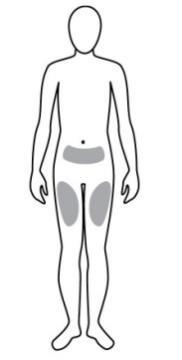
- Choice of injection site. Your doctor will inform you about the possible areas where to administer the injection (suitable areas are the upper thigh and the lower abdomen). Hold the syringe like a pencil or a dart. It is recommended to keep track of and rotate the injection site so that the same area is not used for injections too frequently, in order to minimize the risk of injection site necrosis. NOTE: do not choose an area that presents hardening, nodules or is painful; for any clarification, consult your doctor or a qualified healthcare professional.
- Wash your hands with soap and water.
- Take the Rebif syringe from the box by lifting the cover of the plastic packaging.
- Before injections, use a cotton ball soaked in alcohol to clean the injection site. Make sure the skin is dry. If some alcohol remains on the skin, you may feel a stinging sensation.
- Pinch the skin where the injection will be given between two fingers and lift it slightly.
- Rest your wrist on the skin near the injection point, insert the needle into the skin at a 90-degree angle and with a quick, firm movement.
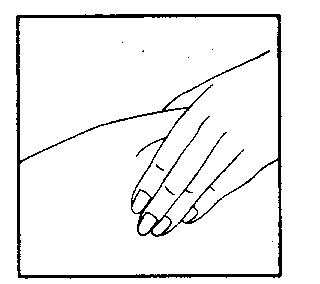
- Inject the medicine slowly and with steady pressure (press the plunger until the syringe is completely emptied).
- Place a swab on the injection site. Remove the needle from the skin.
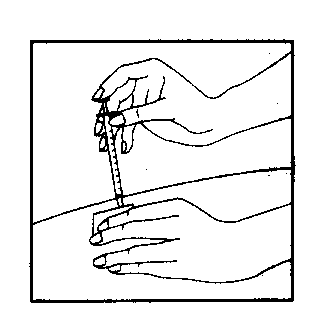
- Gently massage the injection site with a dry cotton ball or gauze.
- Dispose of all used material: immediately after the injection, discard the syringe into a suitable container.
If you use more Rebif than you should
In case of overdose, contact your doctor immediately.
If you forget to use Rebif
If you do not administer a dose, continue treatment starting on the day the next dose is
scheduled. Do not use a double dose to make up for the missed dose.
If you stop treatment with Rebif
The effects of Rebif may not be immediately apparent. Therefore, you should not interrupt
treatment with Rebif but continue regularly to achieve the desired results. If you have
any doubts about the benefits of therapy, consult your doctor.
Do not stop treatment without first contacting your doctor.
If you have any further questions on the use of this medicine, ask your doctor, pharmacist or
nurse.
4. Possible side effects
Like all medicines, this medicine can cause side effects, although not everybody gets them.
Immediately inform your doctor and stop treatment with Rebif if you experience any of the following serious side effects:
- Severe allergic reactions (hypersensitivity).If, shortly after administering Rebif, you experience sudden difficulty breathing, which may be accompanied by swelling of the face, lips, tongue or throat, skin manifestations, itching all over the body, and a feeling of weakness or dizziness, immediately consult a doctor or emergency medical center. These reactions are rare(may affect up to 1 in 1,000 people).
- Immediately inform your doctor if you experience any of the following possible symptoms referable to a liver problem: jaundice (yellowing of the skin or whites of the eyes), widespread itching, loss of appetite accompanied by nausea and vomiting, and a tendency to bruise easily. Serious liver problems may be associated with additional signs, such as difficulty concentrating, drowsiness and confusion.
- Depressionis common(may affect up to 1 in 10 people) in patients treated for multiple sclerosis. If you feel depressed or develop suicidal thoughts, contact your doctor immediately.
See your doctor if you notice any of the following side effects:
- Flu-like symptoms, such as headache, fever, chills, muscle and joint pain, fatigue and nausea are very common(may affect more than 1 in 10 people). These symptoms are generally mild and are more frequent at the beginning of treatment and decrease as it progresses. To reduce these symptoms, your doctor may prescribe an antipyretic before administering a dose of Rebif and 24 hours after each injection.
- Injection site reactionssuch as redness, swelling, depigmentation, inflammation, pain and skin lesions are very common. The occurrence of injection site reactions usually decreases over time. Tissue destruction (necrosis), abscess and nodule at the injection site are uncommon(may affect up to 1 in 100 people). To minimize the risk of injection site reactions, read the recommendations in “Warnings and precautions”. The injection site may become infected (uncommon); the skin may become swollen, sensitive and hardened and the entire area may be very painful. If you notice the onset of any of these symptoms, contact your doctor.
- Some laboratory testsmay show changes. These changes are generally not noticed by the patient (there are no symptoms), are usually reversible and moderate and very often do not require specific treatments. The number of red blood cells, white blood cells or platelets may decrease, individually (very common)or all values simultaneously (rare). Possible symptoms due to these changes may include fatigue, reduced ability to fight infections, bruising or unexplained bleeding. Liver function may be altered (very common). Liver inflammation has also been reported (uncommon). However, if you experience symptoms that may be referable to liver disorders, such as loss of appetite associated with other symptoms such as nausea, vomiting or jaundice, contact your doctor immediately (see “Immediately inform your doctor…”).
- Thyroid dysfunctionis uncommon. The thyroid gland may function in excess or deficiency. These changes in thyroid activity are rarely noticed by the patient as symptoms, however the doctor may recommend performing relevant tests.
- Pseudo relapses of multiple sclerosis(frequency not known).It is possible that at the beginning of treatment with Rebif you may experience symptoms similar to those of a relapse of multiple sclerosis. For example, your muscles may be very tense or very weak, preventing you from moving as you wish. Sometimes these symptoms are associated with fever or flu-like symptoms described above. If you notice any of these symptoms, talk to your doctor.
Other possible side effects:
Very common (may affect more than 1 in 10 people):
- Headache
Common (may affect up to 1 in 10 people):
- Insomnia (difficulty falling asleep)
- Diarrhea, nausea, vomiting
- Itching, rash
- Muscle and joint pain
- Fatigue, fever, chills
- Hair loss
Uncommon (may affect up to 1 in 100 people):
- Urticaria (hives)
- Seizures
- Inflammation of the liver (hepatitis)
- Difficulty breathing
- Blood clots such as deep vein thrombosis
- Retinal disorders (back of the eye) such as inflammation or blood clots, with resulting vision problems (visual disturbances, vision loss)
- Increased sweating
Rare (may affect up to 1 in 1,000 people):
- Suicide attempt
- Severe skin reactions, some with mucous membrane lesions
- Thrombi (blood clots) within the small blood vessels that can have an effect on the kidneys (thrombotic thrombocytopenic purpura or hemolytic uremic syndrome). Symptoms may include increased bruising, bleeding, fever, extreme weakness, headache, dizziness or lightheadedness. The doctor is likely to find changes in your blood and kidney function.
- Iatrogenic lupus erythematosus: an adverse effect of long-term use of Rebif. Symptoms may include muscle pain, joint pain and swelling, rash. Other signs such as fever, weight loss and fatigue may also appear. Generally, the symptoms disappear within one or two weeks after stopping treatment.
- Kidney problems, including scarring that can reduce kidney function. If you experience any or all of the following symptoms:
- foamy urine
- fatigue
- swelling, especially in the ankles and eyelids, and weight gain, inform your doctor, as these may be signs of a possible kidney problem.
The following side effects have been reported for interferon beta (frequency not known)
- Dizziness
- Nervousness
- Loss of appetite
- Vasodilation and palpitations
- Irregularities and/or changes in the menstrual cycle
- Pulmonary arterial hypertension - a disease that causes severe narrowing of the blood vessels in the lungs, leading to increased pressure in the vessels that carry blood from the heart to the lungs. Pulmonary arterial hypertension has been observed at various times during treatment, even years after starting Rebif treatment.
- Inflammation of the subcutaneous adipose tissue (panniculitis) which can cause a feeling of hardened skin and possibly the formation of red and painful patches or nodules.
You should not stop or change the prescription without consulting your doctor.
Children and adolescents
Side effects in children and adolescents are similar to those observed in adults.
Reporting of side effects
If you get any side effects, even those not listed in this leaflet, tell your
doctor, pharmacist or nurse. You can also report side effects directly
through the national reporting system listed in Annex V. By reporting side
effects you can help provide more information on the safety of this medicine.
5. How to store Rebif
Keep this medicine out of the sight and reach of children.
Do not use this medicine after the expiry date which is stated on the label after Exp.
Store in a refrigerator (2°C – 8°C).
Do not freeze. (Be careful not to place the product near the freezer compartment, to avoid accidental
freezing).
The package of Rebif in use can be stored outside the refrigerator at a temperature not
exceeding 25°C for a single time for a period with a maximum duration of 14 days.
Afterwards Rebif must be placed back in the refrigerator and used before the expiry date.
Store in the original package to protect the medicine from light.
Do not use this medicine if you notice any visible signs of deterioration, for example if the
solution is no longer clear or if it contains particles.
Do not dispose of any medicine in wastewater or household waste. Ask your pharmacist how to
dispose of medicines you no longer use. This will help protect the environment.
6. Contents of the pack and other information
What Rebif contains
- The active ingredient is interferon beta-1a. Each syringe contains 22 micrograms, corresponding to 6 million International Units (IU) of interferon beta-1a.
- The other ingredients are: mannitol, poloxamer 188, L-methionine, benzyl alcohol, sodium acetate, acetic acid, sodium hydroxide and water for injections.
Description of the appearance of Rebif and contents of the pack
Rebif is available as an injectable solution in a pre-filled syringe with a fixed needle for self
administration. The Rebif solution is from clear to opalescent. The pre-filled syringe is ready
for use and contains 0.5 mL of solution.
Rebif is available in packs of 1, 3, 12 and 36 pre-filled syringes. Not all pack sizes may be
marketed.
Marketing Authorisation Holder
Merck Europe B.V.
Gustav Mahlerplein 102
1082 MA Amsterdam
Netherlands
Manufacturer
Merck Serono S.p.A.
Via delle Magnolie 15
I-70026 Modugno (Bari)
Italy
Other sources of information
More detailed information on this medicine is available on the website of the European
Medicines Agency, http://www.ema.europa.eu .
Rebif 44 micrograms injectable solution in pre-filled syringe
interferon beta-1a
Read this leaflet carefully before you start using this medicine as it contains important
information for you.
- Keep this leaflet. You may need to read it again.
- If you have any questions, ask your doctor, pharmacist or nurse.
- This medicine has been prescribed for you only. Do not pass it on to others, even if they have the same symptoms as you, as it may be harmful.
- If you get any side effects, even those not listed in this leaflet, tell your doctor, pharmacist or nurse. See section 4.
Contents of this leaflet
- 1. What Rebif is and what it is used for
- 2. What you need to know before you use Rebif
- 3. How to use Rebif
- 4. Possible side effects
- 5. How to store Rebif
- 6. Contents of the pack and other information
1. What is Rebif and what is it used for
Rebif belongs to a class of medicines known as interferons. These are natural substances
that transmit messages between cells. Interferons are produced by the body and play an
essential role in the immune system. Through mechanisms that are not fully
understood, interferons help to limit damage to the central nervous system associated with
multiple sclerosis.
Rebif is a highly purified soluble protein that is similar to the natural beta interferon produced
in the human body.
Rebif is indicated for the treatment of multiple sclerosis. Treatment has been shown to be effective in
reducing the number and severity of relapses, and in slowing the progression of disability. Its
use is also approved in patients who have manifested a single clinical event considered a
likely first sign of multiple sclerosis.
2. What you need to know before using Rebif
Do not use Rebif
- if you are allergic to natural or recombinant interferon beta or to any of the other ingredients of this medicine (listed in section 6),
- if you are currently severely depressed.
Warnings and precautions
Talk to your doctor, pharmacist or nurse before using Rebif.
- Rebif must only be used under the supervision of a doctor.
- Before starting treatment with Rebif, carefully read and follow the instructions described in “How to use Rebif” to reduce the risk of injection site necrosis (skin lesions and tissue destruction) which has been reported in patients treated with Rebif. If you have experienced problems with local reactions, contact your doctor.
- Talk to your doctor or pharmacist before taking Rebif if you are allergic (hypersensitive) to any other medicine.
- During treatment, blood clots (blood clots) may form within the small blood vessels. These clots could have an effect on the kidneys. The formation of blood clots may occur from several weeks to several years after starting treatment with Rebif. Your doctor may decide to perform checks of your blood pressure, blood (platelet count) and kidney function.
Tell your doctor if you have diseases of the
- bone marrow,
- kidneys,
- liver,
- heart,
- thyroid,
- if you have had episodes of depression,
- if you have had episodes of seizures, so that your doctor can closely monitor your treatment and any worsening of these conditions.
Other medicines and Rebif
Tell your doctor or pharmacist if you are taking, have recently taken or might take any other
medicine.
In particular, tell your doctor if you are taking antiepileptics or antidepressants.
Pregnancy and breastfeeding
If you are pregnant, suspect you are pregnant or are planning to become pregnant, ask your doctor
or pharmacist for advice before taking this medicine.
No harmful effects are expected on newborns/infants breastfed with breast milk. Rebif can be
used during breastfeeding.
Driving and using machines
The ability to drive or use machines may be altered by the underlying disease or by
therapy. This aspect should be discussed with your doctor if it concerns you.
Rebif contains sodium and benzyl alcohol
This medicine contains less than 1 mmol (23 mg) of sodium per dose, i.e. essentially ‘sodium-free’.
This medicine contains 2.5 mg of benzyl alcohol per dose. It should not be administered to
premature babies or newborns. Benzyl alcohol can cause allergic reactions.
Benzyl alcohol has been associated with the risk of serious side effects including breathing problems
(gasping syndrome) in young children.
Do not use for more than one week in young children (under 3 years of age) unless otherwise
recommended by your doctor or pharmacist.
Ask your doctor or pharmacist if you are pregnant or breastfeeding or if you have a liver or
kidney condition. This is because large amounts of benzyl alcohol can accumulate in the body and
cause side effects (such as metabolic acidosis).
3. How to use Rebif
Use this medicine following the doctor's instructions exactly. If you have any doubts, consult your
doctor.
Dosage
Patients who have experienced a single clinical event
The usual dose is 44 micrograms (12 million IU) administered three times a week.
Patients with multiple sclerosis
The usual dose is 44 micrograms (12 million IU) administered three times a week.
A lower dose, of 22 micrograms (6 million IU), also three times a week, is recommended for
patients who do not tolerate the higher dosage.
Rebif must be administered three times a week and, if possible:
- on the same three days of each week (at least 48 hours apart, for example Monday, Wednesday, Friday)
- at the same time of day (preferably in the evening).
Use in children and adolescents (from 2 to 17 years)
Formal clinical studies have not been conducted in children or adolescents. However, some clinical data
are available suggesting that the safety profile in children and adolescents treated
with Rebif 22 micrograms or with Rebif 44 micrograms three times a week is similar to that
observed in adults.
Use in children (under 2 years of age)
The use of Rebif is not recommended in children under 2 years of age.
Method of administration
Rebif is to be administered by subcutaneous injection (under the skin).
The first administration (or the first administrations) must be performed under the supervision of
a qualified healthcare professional. After adequate training, the medicine can be
administered at home by yourself, by a family member, a friend or a caregiver using the Rebif syringe. The product can also be administered with a compatible auto-injector.
For the administration of Rebif, read the following instructions carefully:
This medicine is for single use only.
Use only a solution that is clear to opalescent and does not contain particles and visible signs of
deterioration.
How to inject Rebif
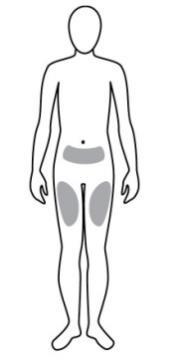
- Choice of injection site. The doctor will inform you about the possible areas where to make the injection (suitable areas are the upper thigh and the lower abdomen). Hold the syringe like a pencil or a dart. It is recommended to keep track of and rotate the injection site so that the same area is not used for injections too frequently, in order to minimize the risk of injection site necrosis. NOTE: do not choose an area that presents with hardening, nodules or is painful; for any clarification, consult your doctor or a qualified healthcare professional.
- Wash your hands with soap and water.
- Take the Rebif syringe from the box by lifting the cover of the plastic packaging.
- Before injections, use a cotton ball soaked in alcohol to clean the injection site. Make sure the skin is dry. If some alcohol remains on the skin, you may feel a stinging sensation.
- Grasp the skin between two fingers where the injection will be made and lift it slightly.
- Rest your wrist on the skin near the injection point, insert the needle into the skin at a right angle and with a quick, decisive movement.
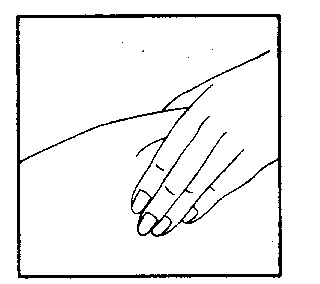
- Inject the medicine slowly and with steady pressure (press the plunger until the syringe is completely emptied).
- Place a swab on the injection site. Remove the needle from the skin.
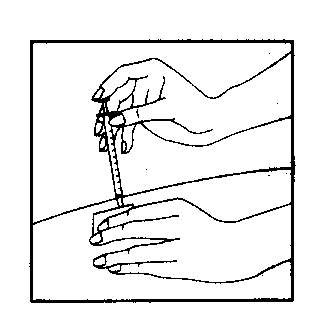
- Gently massage the injection site with a dry cotton ball or gauze.
- Dispose of all used material: immediately after the injection, discard the syringe in a suitable container.
If you use more Rebif than you should
In case of overdose, contact your doctor immediately.
If you forget to use Rebif
If you do not administer a dose, continue treatment starting on the day the next dose is
scheduled. Do not use a double dose to make up for the missed dose.
If you stop taking Rebif
The effects of Rebif may not be immediately apparent. Therefore, you should not stop
treatment with Rebif but continue regularly to achieve the desired results. If you have
any doubts about the benefits of therapy, consult your doctor.
Do not stop treatment without first contacting your doctor.
If you have any questions about the use of this medicine, ask your doctor, pharmacist or
nurse.
4. Possible side effects
Like all medicines, this medicine can cause side effects, although not everybody gets them.
Immediately inform your doctor and stop treatment with Rebif if you experience any of the following serious side effects:
- Severe allergic reactions (hypersensitivity).If, shortly after administering Rebif, you experience sudden difficulty in breathing, which may occur in association with swelling of the face, lips, tongue or throat, skin manifestations, itching all over the body, and a feeling of weakness or dizziness, immediately consult a doctor or go to
an emergency medical center. These reactions are rare(may affect up to 1 in 1,000 people).
- Immediately inform your doctor if you experience any of the following possible symptoms referable to a liver problem: jaundice (yellowing of the skin or whites of the eyes), widespread itching, loss of appetite accompanied by nausea and vomiting, and a tendency to bruise easily. Serious liver problems may be associated with additional signs, such as difficulty concentrating, drowsiness and confusion.
- Depressionis common(may affect up to 1 in 10 people) in patients treated for multiple sclerosis. If you feel depressed or develop suicidal thoughts, contact your doctor immediately.
Consult your doctor if you notice any of the following side effects:
- Flu-like symptoms, such as headache, fever, chills, muscle and joint pain, fatigue and nausea are very common(may affect more than 1 in 10 people). These symptoms are generally mild and are more frequent at the beginning of treatment and decrease as it continues. To reduce these symptoms, your doctor may prescribe an antipyretic before administering a dose of Rebif and 24 hours after each injection.
- Injection site reactionssuch as redness, swelling, depigmentation, inflammation, pain and skin lesions are very common. The occurrence of injection site reactions usually decreases over time. Tissue destruction (necrosis), abscess and nodule at the injection site are uncommon(may affect up to 1 in 100 people). To minimize the risk of injection site reactions, read the recommendations in “Warnings and precautions”. The injection site may become infected (uncommon); the skin may become swollen, sensitive and hardened and the entire area may be very painful. If you notice the appearance of any of these symptoms, contact your doctor.
- Some laboratory testsmay show changes. These changes are generally not noticed by the patient (there are no symptoms), are usually reversible and moderate and very often do not require specific treatments. The number of red blood cells, white blood cells or platelets may decrease, individually (very common)or all values simultaneously (rare). Possible symptoms due to these changes may include fatigue, reduced ability to fight infections, bruising or unexplained bleeding. Liver function may be altered (very common). Liver inflammation has also been reported (uncommon). However, if you experience symptoms that may appear referable to liver disorders, such as loss of appetite associated with other symptoms such as nausea, vomiting or jaundice, contact your doctor immediately (see “Immediately inform your doctor…”).
- Thyroid dysfunctionis uncommon. The thyroid gland may function in excess or deficiency. These changes in thyroid activity are rarely noticed by the patient as symptoms, however the doctor may recommend performing relevant tests.
- Pseudo relapses of multiple sclerosis(frequency not known).It is possible that at the beginning of treatment with Rebif you may experience symptoms similar to those of a relapse of multiple sclerosis. For example, your muscles may be very tense or very weak preventing you from moving as you wish. Sometimes these symptoms are associated with fever or flu-like symptoms described above. If you notice any of these symptoms, talk to your doctor.
Other possible side effects:
Very common (may affect more than 1 in 10 people):
- Headache
Common (may affect up to 1 in 10 people):
- Insomnia (difficulty falling asleep)
- Diarrhea, nausea, vomiting
- Itching, rash (skin rash)
- Muscle and joint pain
- Fatigue, fever, chills
- Hair loss
Uncommon (may affect up to 1 in 100 people):
- Urticaria (hives)
- Seizures
- Inflammation of the liver (hepatitis)
- Difficulty breathing
- Blood clots such as deep vein thrombosis
- Retinal disorders (back of the eye) such as inflammation or blood clots, resulting in vision problems (visual disturbances, vision loss)
- Increased sweating
Rare (may affect up to 1 in 1,000 people):
- Suicide attempt
- Severe skin reactions, some with mucous membrane lesions
- Thrombi (blood clots) within the small blood vessels that can affect the kidneys (thrombotic thrombocytopenic purpura or hemolytic uremic syndrome). Symptoms may include increased bruising, bleeding, fever, extreme weakness, headache, dizziness or lightheadedness. The doctor is likely to find changes in your blood and kidney function.
- Iatrogenic lupus erythematosus: an adverse effect of long-term use of Rebif. Symptoms may include muscle pain, joint pain and swelling, skin rash. Other signs such as fever, weight loss and fatigue may also appear. Generally, the symptoms disappear within one or two weeks after stopping treatment.
- Kidney problems, including scarring that can reduce kidney function. If you experience any or all of the following symptoms:
- foamy urine
- fatigue
- swelling, especially in the ankles and eyelids, and weight gain, inform your doctor, as these may be signs of a possible kidney problem.
The following side effects have been reported for interferon beta (frequency not known)
- Dizziness
- Nervousness
- Loss of appetite
- Vasodilation and palpitations
- Irregularities and/or changes in menstrual flow
- Pulmonary arterial hypertension - a disease that causes severe narrowing of the blood vessels in the lungs, leading to increased pressure in the vessels that carry blood from the heart to the lungs. Pulmonary arterial hypertension has been observed at various times during treatment, even years after starting Rebif treatment.
- Inflammation of subcutaneous adipose tissue (panniculitis) which can cause a feeling of hardened skin and possibly the formation of red and painful patches or nodules.
You should not stop or change your prescription without consulting your doctor.
Children and adolescents
Side effects in children and adolescents are similar to those observed in adults.
Reporting of side effects
If you get any side effects, even those not listed in this leaflet, tell your
doctor, pharmacist or nurse. You can also report side effects directly
through the national reporting system listed in Annex V. By reporting side
effects you can help provide more information on the safety of this medicine.
5. How to store Rebif
Keep this medicine out of the sight and reach of children.
Do not use this medicine after the expiry date which is stated on the label after Expiry.
Store in a refrigerator (2°C – 8°C).
Do not freeze. (Take care not to place the product near the freezer compartment, to avoid accidental
freezing).
The package of Rebif in use may be stored outside the refrigerator at a temperature not
exceeding 25°C for a single time for a period with a maximum duration of 14 days.
Subsequently Rebif must be returned to the refrigerator and used before the expiry date.
Store in the original package to protect the medicine from light.
Do not use this medicine if you notice any visible sign of deterioration, for example if the
solution is no longer clear or if it contains particles.
Do not dispose of any medicine in wastewater or household waste. Ask your pharmacist how to
dispose of medicines you no longer use. This will help protect the environment.
6. Contents of the pack and other information
What Rebif contains
- The active ingredient is interferon beta-1a. Each syringe contains 44 micrograms, corresponding to 12 million International Units (IU) of interferon beta-1a.
- The other ingredients are: mannitol, poloxamer 188, L-methionine, benzyl alcohol, sodium acetate, acetic acid, sodium hydroxide and water for injections.
Description of the appearance of Rebif and contents of the pack
Rebif is available as an injectable solution in a pre-filled syringe with a fixed needle for self
administration. The Rebif solution is from clear to opalescent. The pre-filled syringe is ready
for use and contains 0.5 mL of solution.
Rebif is available in packs of 1, 3, 12 and 36 pre-filled syringes. Not all pack sizes may be
marketed.
Marketing Authorisation Holder
Merck Europe B.V.
Gustav Mahlerplein 102
1082 MA Amsterdam
Netherlands
Manufacturer
Merck Serono S.p.A.
Via delle Magnolie 15
I-70026 Modugno (Bari)
Italy
Other sources of information
More detailed information on this medicine is available on the website of the European
Medicines Agency, http://www.ema.europa.eu .

Не впевнені, чи підходить вам цей лікарський засіб?
Обговоріть симптоми та можливі варіанти лікування з лікарем онлайн.
Rebif 8.8 micrograms injectable solution in pre-filled syringe, 22 micrograms injectable solution in pre-filled syringe
interferon beta-1a
Starter pack
Read this leaflet carefully before you start using this medicine as it contains important
information for you.
- Keep this leaflet. You may need to read it again.
- If you have any questions, ask your doctor, pharmacist or nurse.
- This medicine has been prescribed for you only. Do not pass it on to others, even if they have the same symptoms as you, as it may be harmful.
- If you get any side effects, even those not listed in this leaflet, tell your doctor, pharmacist or nurse. See section 4.
Contents of this leaflet
- 1. What Rebif is and what it is used for
- 2. What you need to know before you use Rebif
- 3. How to use Rebif
- 4. Possible side effects
- 5. How to store Rebif
- 6. Contents of the pack and other information
1. What is Rebif and what it is used for
Rebif belongs to a class of medicines known as interferons. These are natural substances
that transmit messages between cells. Interferons are produced by the body and play an
essential role in the immune system. Through mechanisms that are not fully
understood, interferons help to limit damage to the central nervous system associated with
multiple sclerosis.
Rebif is a highly purified soluble protein that is similar to the natural beta interferon produced
in the human body.
Rebif is indicated for the treatment of multiple sclerosis. Treatment has been shown to be effective in
reducing the number and severity of relapses, and in slowing the progression of disability. Its
use is also approved in patients who have manifested a single clinical event considered a
likely first sign of multiple sclerosis.
2. What you need to know before using Rebif
Do not use Rebif
- if you are allergic to natural or recombinant interferon beta or to any of the other ingredients of this medicine (listed in section 6),
- if you are currently severely depressed.
Warnings and precautions
Talk to your doctor, pharmacist or nurse before using Rebif.
- Rebif must only be used under the supervision of a doctor.
- Before treatment with Rebif, read carefully and follow the instructions described in “How to use Rebif” to reduce the risk of injection site necrosis (skin lesions and tissue destruction) which has been reported in patients treated with Rebif. If you have experienced problems with
local reactions, contact your doctor.
Other medicines and Rebif
Tell your doctor or pharmacist if you are taking, have recently taken or might take any other
medicines.
In particular, you should inform your doctor if you are taking antiepileptics or antidepressants.
- Contact your doctor or pharmacist before taking Rebif if you are allergic (hypersensitive) to any other medicine.
- During treatment, blood clots (blood clots) may form in the small blood vessels. These clots could have an effect on the kidneys. The formation of blood clots may occur from several weeks to several years after starting treatment with Rebif. Your doctor may decide to perform checks of your blood pressure, blood (platelet count) and kidney function.
Inform your doctor if you have diseases of
- the bone marrow,
- the kidneys,
- the liver,
- the heart,
- the thyroid,
- if you have had episodes of depression,
- if you have had episodes of seizures, so that your doctor can closely monitor your treatment and any worsening of these conditions.
Pregnancy and breastfeeding
If you are pregnant, suspect you may be pregnant or are planning a pregnancy, ask your doctor
or pharmacist for advice before taking this medicine.
No harmful effects are expected on newborns/infants breastfed with breast milk. Rebif can be
used during breastfeeding.
Driving and using machines
The ability to drive or operate machinery may be impaired by the underlying disease or by
therapy. This aspect should be discussed with your doctor if it concerns you.
Rebif contains sodium and benzyl alcohol
This medicine contains less than 1 mmol (23 mg) of sodium per dose, i.e. essentially ‘sodium-free’.
This medicine contains 1.0 mg of benzyl alcohol per 0.2 mL dose and 2.5 mg of benzyl
alcohol per 0.5 mL dose. Benzyl alcohol can cause allergic reactions.
Benzyl alcohol has been associated with the risk of serious adverse effects including breathing problems
(wheezing syndrome) in young children.
Do not use for more than one week in young children (under 3 years of age) unless otherwise
recommended by your doctor or pharmacist.
Ask your doctor or pharmacist if you are pregnant or breastfeeding or if you have a liver or kidney
disease. This is because large amounts of benzyl alcohol can accumulate in the body and
cause adverse effects (such as metabolic acidosis).
3. How to use Rebif
Use this medicine following the doctor's instructions exactly. If you have any doubts, consult your
doctor.
Start of treatment
Treatment begins with a gradual increase in dose (the so-called “dose titration”)
over 4 weeks, in order to reduce some undesirable effects, it is recommended:
- During weeks one and two, Rebif 8.8 micrograms must be injected three times a week.
- During weeks three and four, Rebif 22 micrograms must be injected three times a week.
From the fifth week onwards, after completing the initial phase, you must follow the usual dosage
regimen prescribed by the doctor.
Dose
The usual dose is 44 micrograms (12 million IU) three times a week.
A lower dose, of 22 micrograms (6 million IU), three times a week is advisable for
patients with multiple sclerosis who do not tolerate the higher dosage.
Rebif must be administered three times a week and, if possible:
- on the same three days of each week (at least 48 hours apart, for example Monday, Wednesday, Friday)
- at the same time of day (preferably in the evening).
Use in children and adolescents (from 2 to 17 years)
Formal clinical studies have not been conducted in children or adolescents. However, some clinical data are available
suggesting that the safety profile in children and adolescents treated
with Rebif 22 micrograms or with Rebif 44 micrograms three times a week is similar to that
observed in adults.
Use in children (under 2 years of age)
The use of Rebif is not recommended in children under 2 years of age.
Method of administration
Rebif should be administered by subcutaneous injection (under the skin).
The first administration (or the first administrations) must be performed under the supervision of
a qualified healthcare professional. After adequate training, the medicine can be
administered at home by yourself, by a family member, a friend or a caregiver using the Rebif syringe. The product can also be administered with a compatible auto-injector.
For the administration of Rebif, read the following instructions carefully:
This medicine is for single use.
Use only a solution that is clear to opalescent and does not contain particles and visible
signs of deterioration.
How to inject Rebif
- Choice of injection site. The doctor will inform you about the possible areas where to make the injection (suitable areas are the upper thigh and the lower abdomen). Hold the syringe like a pencil or a dart. It is recommended to keep a record and rotate the injection site so that the same area is not used for injections too frequently, in order to minimize the risk of injection site necrosis. NOTE: do not choose an area that has hardening, nodules or is painful; for any clarification, consult your doctor or a qualified healthcare professional.
- Wash your hands with soap and water.
- Take the Rebif syringe from the box by lifting the cover of the plastic wrapper.
- Before injections, use a cotton ball soaked in alcohol to clean the injection site. Make sure the skin is dry. If some alcohol remains on the skin, you may feel a stinging sensation.
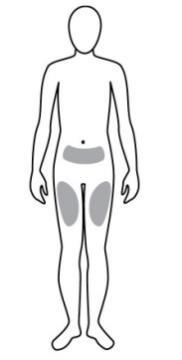
- Pinch the skin where the injection will be given between two fingers and lift it slightly.
- Rest your wrist on the skin near the injection site, insert the needle into the skin at a right angle and with a quick, firm movement.
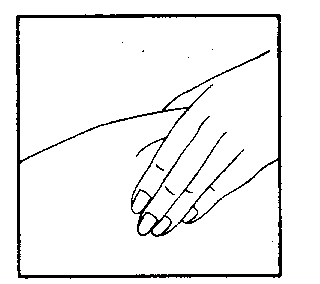
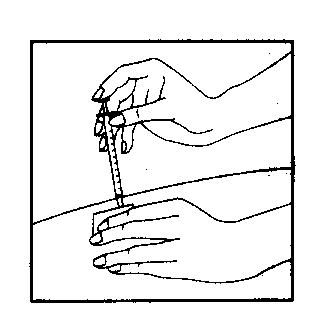
- Inject the medicine slowly and with steady pressure (press the plunger until the syringe is completely empty).
- Place a swab on the injection site. Remove the needle from the skin.
- Gently massage the injection site with a dry cotton ball or gauze.
- Dispose of all used material: immediately after finishing the injection, discard the syringe in a suitable container.
If you use more Rebif than you should
In case of overdose, contact your doctor immediately.
If you forget to use Rebif
If you do not administer a dose, continue treatment starting from the day the next dose is
due. Do not use a double dose to make up for the missed dose.
If you stop using Rebif
The effects of Rebif may not be immediately apparent. Therefore, you should not stop
treatment with Rebif but continue regularly to achieve the desired results. If you have
any doubts about the benefits of therapy, consult your doctor.
Do not stop treatment without first contacting your doctor.
If you have any further questions on the use of this medicine, ask your doctor, pharmacist or
nurse.
4. Possible side effects
Like all medicines, this medicine can cause side effects, although not everybody gets them.
li manifestino.
Tell your doctor immediately and stop treatment with Rebif if you experience any of the
following serious side effects:
- Severe allergic reactions (hypersensitivity).If, shortly after administering Rebif, you experience sudden difficulty in breathing, which may be accompanied by swelling of the face, lips, tongue or throat, skin manifestations, itching all over the body, and a feeling of weakness or dizziness, seek immediate medical attention or go to an emergency medical center. These reactions are rare(may affect up to 1 in 1,000 people).
- Tell your doctor immediately if you experience any of the following possible symptoms referable to a liver problem: jaundice (yellowing of the skin or whites of the eyes), widespread itching, loss of appetite accompanied by nausea and vomiting, and a tendency to bruise easily. Serious liver problems may be associated with additional signs, such as difficulty concentrating, drowsiness, and confusion.
- Depressionis common(may affect up to 1 in 10 people) in patients treated for multiple sclerosis. If you feel depressed or develop suicidal thoughts, contact your doctor immediately.
See your doctor if you notice any of the following side effects:
- Flu-like symptoms, such as headache, fever, chills, muscle and joint pain, fatigue, and nausea are very common(may affect more than 1 in 10 people). These symptoms are generally mild and are more frequent at the beginning of treatment and decrease as it continues. To reduce these symptoms, your doctor may prescribe a fever reducer before administering a dose of Rebif and 24 hours after each injection.
- Injection site reactionssuch as redness, swelling, depigmentation, inflammation, pain, and skin lesions are very common. The occurrence of injection site reactions usually decreases over time. Tissue destruction (necrosis), abscess, and nodule at the injection site are uncommon(may affect up to 1 in 100 people). To minimize the risk of injection site reactions, read the recommendations in “Warnings and precautions”. The injection site may become infected (uncommon); the skin may become swollen, sensitive and hardened and the entire area may be very painful. If you notice the appearance of any of these symptoms, contact your doctor.
- Some laboratory testsmay show changes. These changes are generally not noticed by the patient (there are no symptoms), are usually reversible and mild and very often do not require specific treatments. The number of red blood cells, white blood cells or platelets may decrease, individually (very common)or all values simultaneously (rare). Possible symptoms due to these changes may include fatigue, reduced ability to fight infections, bruising or unexplained bleeding. Liver function may be altered (very common). Liver inflammation has also been reported (uncommon). However, if you experience symptoms that
may appear referable to liver disorders, such as loss of appetite associated with other symptoms
such as nausea, vomiting or jaundice, contact your doctor immediately (see “Tell your doctor
immediately…”).
- Thyroid dysfunctionis uncommon. The thyroid gland may be overactive or underactive. These changes in thyroid activity are rarely noticed by the patient as symptoms, however, the doctor may recommend performing relevant tests.
- Pseudo relapses of multiple sclerosis(frequency not known).It is possible that at the beginning of treatment with Rebif you may experience symptoms similar to those of a relapse of multiple sclerosis. For example, your muscles may be very tense or very weak, preventing you from moving as you wish. Sometimes these symptoms are associated with fever or flu-like symptoms described above. If you notice any of these symptoms, talk to your doctor.
Other possible side effects:
Very common (may affect more than 1 in 10 people):
- Headache
Common (may affect up to 1 in 10 people):
- Insomnia (difficulty falling asleep)
- Diarrhea, nausea, vomiting
- Itching, rash
- Muscle and joint pain
- Fatigue, fever, chills
- Hair loss
Uncommon (may affect up to 1 in 100 people):
- Urticaria
- Seizures
- Inflammation of the liver (hepatitis)
- Difficulty breathing
- Blood clots such as deep vein thrombosis
- Retinal disorders (back of the eye) such as inflammation or blood clots, with resulting vision problems (visual disturbances, vision loss)
- Increased sweating
Rare (may affect up to 1 in 1,000 people):
- Suicide attempt
- Severe skin reactions, some with mucous membrane lesions
- Thrombi (blood clots) within the small blood vessels that can affect the kidneys (thrombotic thrombocytopenic purpura or hemolytic uremic syndrome). Symptoms may include increased bruising, bleeding, fever, extreme weakness, headache, dizziness, or feeling lightheaded. The doctor is likely to find changes in your blood and kidney function.
- Iatrogenic lupus erythematosus: an adverse effect of long-term use of Rebif. Symptoms may include muscle pain, joint pain and swelling, rash. Other signs such as fever, weight loss and fatigue may also appear. Generally, symptoms disappear within one or two weeks after stopping treatment.
- Kidney problems, including scarring that can reduce kidney function. If you experience any or all of the following symptoms:
- foamy urine
- fatigue
- swelling, especially in the ankles and eyelids, and weight gain, tell your doctor, as these may be signs of a possible kidney problem.
The following side effects have been reported for interferon beta (frequency not known)
- Dizziness
- Nervousness
- Loss of appetite
- Vasodilation and palpitations
- Irregularities and/or changes in menstrual flow
- Pulmonary arterial hypertension - a disease that causes a severe narrowing of the blood vessels in the lungs, leading to increased pressure in the vessels that carry blood from the heart to the lungs. Pulmonary arterial hypertension has been observed at various times during treatment, even years after starting Rebif treatment.
- Inflammation of subcutaneous adipose tissue (panniculitis) that can cause a feeling of hardened skin and possibly the formation of red and painful patches or nodules.
Do not stop or change your prescription without consulting your doctor.
Children and adolescents
Side effects in children and adolescents are similar to those observed in adults.
Reporting of side effects
If you get any side effects, talk to your doctor, pharmacist or nurse. You can also report side effects directly
through the national reporting system reported in Annex V. By reporting side effects you can help
provide more information on the safety of this medicine.
5. How to store Rebif
Keep this medicine out of the sight and reach of children.
Do not use this medicine after the expiry date which is stated on the label after Exp.
Store in a refrigerator (2°C – 8°C).
Do not freeze. (Be careful not to place the product near the freezer compartment, to avoid accidental
freezing).
The package of Rebif in use may be stored outside the refrigerator at a temperature not
exceeding 25°C for a single time for a period with a maximum duration of 14 days.
Subsequently Rebif must be returned to the refrigerator and used before the expiry date.
Store in the original package to protect the medicine from light.
Do not use this medicine if you notice any visible sign of deterioration, for example if the
solution is no longer clear or if it contains particles.
Do not dispose of any medicine in wastewater or household waste. Ask your pharmacist how to
dispose of medicines you no longer use. This will help protect the environment.
6. Package contents and other information
What Rebif contains
- The active ingredient is interferon beta-1a.
- Each 8.8 microgram syringe contains 8.8 micrograms of Interferon beta-1a (2.4 million IU).
- Each 22 microgram syringe contains 22 micrograms of Interferon beta-1a (6 million IU).
- The other ingredients are: mannitol, poloxamer 188, L-methionine, benzyl alcohol, sodium acetate, acetic acid, sodium hydroxide and water for injections.
Description of Rebif and package contents
Rebif 8.8 micrograms is available as an injectable solution in a pre-filled syringe with a fixed needle
for self-administration. The pre-filled syringe is ready for use and contains 0.2 mL of
solution.
Rebif 22 micrograms is available as an injectable solution in a pre-filled syringe with a fixed needle
for self-administration. The pre-filled syringe is ready for use and contains 0.5 mL of
solution.
The solution of Rebif is from clear to opalescent.
Rebif 8.8 micrograms and Rebif 22 micrograms are supplied in a starter pack,
which is designed for use during the initial 4 weeks of treatment, during which a gradual
increase in the dose of Rebif is recommended.
The monthly starter pack contains six pre-filled syringes of Rebif
8.8 micrograms and six pre-filled syringes of Rebif 22 micrograms.
Marketing authorisation holder
Merck Europe B.V.
Gustav Mahlerplein 102
1082 MA Amsterdam
Netherlands
Manufacturer
Merck Serono S.p.A.
Via delle Magnolie 15
I-70026 Modugno (Bari)
Italy
Other sources of information
More detailed information on this medicine is available on the website of the European
Medicines Agency, http://www.ema.europa.eu .
Rebif 22 micrograms/0.5 mL injectable solution in cartridge
interferon beta-1a
Read this leaflet carefully before you start using this medicine as it contains important
information for you.
- Keep this leaflet. You may need to read it again.
- If you have any questions, ask your doctor, pharmacist or nurse.
- This medicine has been prescribed for you only. Do not pass it on to others, even if their symptoms are the same as yours, as it could be harmful.
- If you get any side effects, even those not listed in this leaflet, tell your doctor, pharmacist or nurse. See section 4.
Contents of this leaflet
- 1. What Rebif is and what it is used for
- 2. What you need to know before you use Rebif
- 3. How to use Rebif
- 4. Possible side effects
- 5. How to store Rebif
- 6. Contents of the pack and other information
1. What is Rebif and what is it used for
Rebif belongs to a class of medicines known as interferons. These are natural substances
that transmit messages between cells. Interferons are produced by the body and play an
essential role in the immune system. Through mechanisms that are not fully
understood, interferons help to limit damage to the central nervous system associated with
multiple sclerosis.
Rebif is a highly purified soluble protein that is similar to the natural beta interferon produced
in the human body.
Rebif is indicated for the treatment of multiple sclerosis. Treatment has been shown to be effective in
reducing the number and severity of relapses, and in slowing the progression of disability.
2. What you need to know before using Rebif
Do not use Rebif
- if you are allergic to natural or recombinant beta interferon or to any of the other ingredients of this medicine (listed in section 6),
- if you are currently severely depressed.
Warnings and precautions
Talk to your doctor, pharmacist or nurse before using Rebif.
- Rebif must only be used under the supervision of a doctor.
- Before starting treatment with Rebif, carefully read and follow the instructions described in “How to use Rebif” to reduce the risk of injection site necrosis (skin lesions and tissue destruction) which has been reported in patients treated with Rebif. If you have experienced problems with local reactions, contact your doctor.
- Talk to your doctor or pharmacist before taking Rebif if you are allergic (hypersensitive) to any other medicine.
- During treatment, blood clots (blood clots) may form in the small blood vessels. These clots could have an effect on the kidneys. The formation of blood clots may occur from several weeks to several years after starting treatment with Rebif. Your doctor may decide to perform checks of your blood pressure, blood (platelet count) and kidney function.
Tell your doctor if you have diseases of the
- bone marrow,
- kidneys,
- liver,
- heart,
- thyroid,
- if you have had episodes of depression,
- if you have had episodes of seizures, so that your doctor can closely monitor your treatment and any worsening of these conditions.
Other medicines and Rebif
Tell your doctor or pharmacist if you are taking, have recently taken or might take any other
medicine.
In particular, you should tell your doctor if you are taking antiepileptics or antidepressants.
Pregnancy and breastfeeding
If you are pregnant, suspect you are pregnant or are planning a pregnancy, ask your doctor
or pharmacist for advice before taking this medicine.
No harmful effects are expected on newborns/infants breastfed with breast milk. Rebif can be
used during breastfeeding.
Driving and using machines
The ability to drive or use machines may be altered by the underlying disease or by
therapy. This aspect should be discussed with your doctor if it concerns you.
Rebif contains sodium and benzyl alcohol
This medicine contains less than 1 mmol (23 mg) of sodium per dose, i.e. essentially ‘sodium-free’.
This medicine contains 2.5 mg of benzyl alcohol per dose. Benzyl alcohol can cause allergic
reactions.
Benzyl alcohol has been associated with the risk of serious adverse effects including breathing problems
(wheezing respiratory syndrome) in young children.
Do not use for more than one week in young children (under 3 years of age) unless otherwise
recommended by your doctor or pharmacist.
Ask your doctor or pharmacist if you are pregnant or breastfeeding or if you have a liver or
kidney condition. This is because large amounts of benzyl alcohol can accumulate in the body and
cause adverse effects (such as metabolic acidosis).
3. How to use Rebif
This medicine is for multidose use.
Always use this medicine exactly as your doctor has told you. If you have any doubts, ask your
doctor.
Dose
The usual dose is 44 micrograms (12 million IU) given three times a week. Your doctor has
prescribed a lower dose of 22 micrograms (6 million IU), also three times a week. This
lower dose is recommended for patients who do not tolerate the higher dosage.
Rebif must be given three times a week and, if possible:
- on the same three days of each week (at least 48 hours apart, for example Monday, Wednesday, Friday)
- at the same time of day (preferably in the evening).
Use in children and adolescents (from 2 to 17 years)
Formal clinical studies have not been conducted in children or adolescents. However, some clinical
data are available suggesting that the safety profile in children and adolescents treated
with Rebif 22 micrograms or with Rebif 44 micrograms three times a week is similar to that
observed in adults.
Use in children (under 2 years of age)
The use of Rebif is not recommended in children under 2 years of age.
Method of administration
- Rebif must be administered by subcutaneous injection (under the skin).
- The first administration (or the first few administrations) must be performed under the supervision of a qualified healthcare professional. After adequate training, the medicine can be administered at home by yourself, by a family member, a friend or a carer using the Rebif cartridges with the supplied device.
- The cartridge must be used with the RebiSmart electronic injector device.
- Detailed instructions for use are provided with the device. Follow these instructions carefully.
- Below are brief instructions for using the Rebif cartridge.
Before you start
- Wash your hands thoroughly with soap and water.
- Take the Rebif cartridge out of the blister pack by removing the plastic cover.
- Check (immediately after removing the cartridge from the refrigerator) that the cartridge has not accidentally frozen in the pack or inside the device. Only clear or opalescent solutions, containing no particles and showing no visible signs of deterioration, must be used.
- To insert the cartridge into the device and perform the injection, follow the instruction manual (Instructions for Use) provided with the device.
Where to inject Rebif
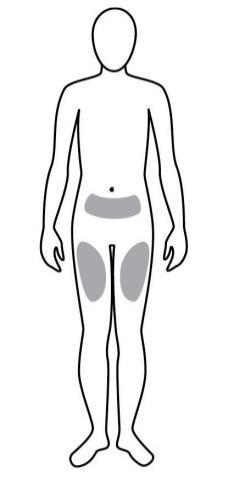
- Choice of injection site. Your doctor will inform you about the possible areas where to give the injection (suitable areas are the upper thigh and the lower abdomen). It is recommended to keep a record and rotate the injection site so that the same area is not used for injections too frequently, in order to minimize the risk of injection site necrosis.
- NOTE: do not choose an area that is hardened, nodular or painful; for any clarification, consult your doctor or a qualified healthcare professional.
- Before the injection, use a cotton ball soaked in alcohol to clean the skin at the injection site. Wait for the skin to dry. If some alcohol remains on the skin, you may feel a stinging sensation.
How to inject Rebif
- Your doctor will tell you how to choose the correct dose of 22 micrograms. Also read the instructions in the manual provided with the device (RebiSmart).
RebiSmart• Before the injection, check that the dose indicated on the screen of the
device corresponds to the prescribed dose of 22 micrograms.
- Position RebiSmart at a 90° angle to the skin.
- Press the injection button. During the injection, the button flashes a light.
- Wait for the light to go out. This means that the injection is complete.
- Remove RebiSmart from the injection site.
After injecting Rebif with RebiSmart
- Remove and dispose of the needle in accordance with the instruction manual provided with the device.
- Gently massage the injection site with a dry cotton ball or gauze.
- Store the device containing a Rebif cartridge as indicated in section 5 “How to store Rebif”.
If you have any questions, ask your doctor, nurse or pharmacist.
If you use more Rebif than you should
If you have an overdose, contact your doctor immediately.
If you forget to use Rebif
If you miss a dose, continue treatment from the day the next dose is
due. Do not use a double dose to make up for a missed dose.
If you stop using Rebif
The effects of Rebif may not be immediately apparent. Therefore, do not stop
using Rebif but continue regularly to achieve the desired results. If you have
any doubts about the benefits of the therapy, consult your doctor.
Do not stop treatment without first contacting your doctor.
If you have any questions about using this medicine, ask your doctor, pharmacist or
nurse.
4. Possible side effects
Like all medicines, this medicine can cause side effects, although not everybody gets them.
li manifestino.
Immediately inform your doctor and stop treatment with Rebif if you experience any of the
following serious side effects:
- Severe allergic reactions (hypersensitivity).If, shortly after administering Rebif, you experience sudden difficulty breathing, which may be accompanied by swelling of the face, lips, tongue or throat, skin manifestations, itching all over the body, and a feeling of weakness or dizziness, immediately consult a doctor or a medical emergency center. These reactions are rare(may affect up to 1 in 1,000 people).
- Immediately inform your doctor if you experience any of the following possible symptoms referable to a liver problem: jaundice (yellowing of the skin or whites of the eyes), widespread itching, loss of appetite accompanied by nausea and vomiting, and a tendency to bruise easily. Serious liver problems may be associated with additional signs, such as difficulty concentrating, drowsiness and confusion.
- Depressionis common(may affect up to 1 in 10 people) in patients treated for multiple sclerosis. If you feel depressed or develop suicidal thoughts, contact your doctor immediately.
Consult your doctor if you notice any of the following side effects:
- Flu-like symptoms, such as headache, fever, chills, muscle and joint pain, fatigue, and nausea are very common(may affect more than 1 in 10 people). These symptoms are generally mild and are more frequent at the beginning of treatment and decrease as it continues. To reduce these symptoms, your doctor may prescribe an antipyretic before administering a dose of Rebif and 24 hours after each injection.
- Injection site reactionssuch as redness, swelling, depigmentation, inflammation, pain, and skin lesions are very common. The occurrence of injection site reactions usually decreases over time. Tissue destruction (necrosis), abscess, and nodule at the injection site are uncommon(may affect up to 1 in 100 people). To minimize the risk of injection site reactions, read the recommendations in “Warnings and precautions”. The injection site may become infected (uncommon); the skin may become swollen, sensitive and hardened and the entire area may be very painful. If you notice the appearance of any of these symptoms, contact your doctor.
- Some laboratory testsmay show changes. These changes are generally not noticed by the patient (there are no symptoms), are usually reversible and moderate and very often do not require specific treatments. The number of red blood cells, white blood cells, or platelets may decrease, individually (very common)or all values simultaneously (rare). Possible symptoms due to these changes may include fatigue, reduced ability to fight infections, bruising or unexplained bleeding. Liver function may be altered (very common). Liver inflammation has also been reported (uncommon). However, if you experience symptoms that may appear referable to liver disorders, such as loss of appetite associated with other symptoms such as nausea, vomiting, or jaundice, contact your doctor immediately (see “Immediately inform your doctor…”).
- Thyroid dysfunctionis uncommon. The thyroid gland may function in excess or deficiency. These changes in thyroid activity are rarely noticed by the patient as symptoms, however, the doctor may recommend performing relevant tests.
- Pseudo relapses of multiple sclerosis(frequency not known).At the beginning of treatment with Rebif, you may experience symptoms similar to those of a relapse of multiple sclerosis. For example, your muscles may be very tense or very weak, preventing you from moving as you wish. Sometimes these symptoms are associated with fever or flu-like symptoms described above. If you notice any of these symptoms, talk to your doctor.
Other possible side effects:
Very common (may affect more than 1 in 10 people):
- Headache
Common (may affect up to 1 in 10 people):
- Insomnia (difficulty falling asleep)
- Diarrhea, nausea, vomiting
- Itching, rash
- Muscle and joint pain
- Fatigue, fever, chills
- Hair loss
Uncommon (may affect up to 1 in 100 people):
- Urticaria
- Seizures
- Inflammation of the liver (hepatitis)
- Difficulty breathing
- Blood clots such as deep vein thrombosis
- Retinal disorders (back of the eye) such as inflammation or blood clots, with resulting vision problems (visual disturbances, vision loss)
- Increased sweating
Rare (may affect up to 1 in 1,000 people):
- Suicide attempt
- Severe skin reactions, some with mucous membrane lesions
- Thrombi (blood clots) within the small blood vessels that can affect the kidneys (thrombotic thrombocytopenic purpura or hemolytic uremic syndrome). Symptoms may include increased bruising, bleeding, fever, extreme weakness, headache, dizziness, or feeling lightheaded. The doctor is likely to find changes in your blood and kidney function.
- Iatrogenic lupus erythematosus: an adverse effect of long-term use of Rebif. Symptoms may include muscle pain, joint pain and swelling, rash. Other signs such as fever, weight loss and fatigue may also appear. Generally, symptoms disappear within one or two weeks after stopping treatment.
- Kidney problems, including scarring that can reduce kidney function. If you experience any or all of the following symptoms:
- foamy urine
- fatigue
- swelling, especially in the ankles and eyelids, and weight gain, inform your doctor, as these may be signs of a possible kidney problem.
The following side effects have been reported for interferon beta (frequency not known)
- Dizziness
- Nervousness
- Loss of appetite
- Vasodilation and palpitations
- Irregularities and/or changes in menstrual flow
- Pulmonary arterial hypertension - a disease that causes severe narrowing of the blood vessels in the lungs, leading to increased pressure in the vessels that carry blood from the heart to the lungs. Pulmonary arterial hypertension has been observed at various times during treatment, even years after starting Rebif treatment.
- Inflammation of subcutaneous adipose tissue (panniculitis) that can cause a feeling of hardened skin and possibly the formation of red and painful patches or nodules.
You should not stop or change your prescription without consulting your doctor.
Children and adolescents
Side effects in children and adolescents are similar to those observed in adults.
Reporting of side effects
If you get any side effects, even those not listed in this leaflet, tell your
doctor, pharmacist or nurse. You can also report side effects directly
through the national reporting system listed in Annex V. By reporting side
effects you can help provide more information on the safety of this medicine.
5. How to store Rebif
Keep this medicine out of the sight and reach of children.
Do not use this medicine after the expiry date stated on the label after Expiry.
Store in a refrigerator (2°C – 8°C).
Do not freeze. (Be careful not to place the product near the freezer compartment to avoid accidental
freezing).
Use within 28 days of the first injection.
The device (RebiSmart) containing a pre-filled cartridge of Rebif should be stored in its own
packaging in a refrigerator (2°C-8°C). The Rebif package in use can be stored outside the
refrigerator at a temperature not exceeding 25°C for a single time for a period lasting
maximum of 14 days. Afterwards Rebif must be returned to the refrigerator and
used before the expiry date.
Store in the original packaging to protect the medicine from light.
Do not use this medicine if you notice any visible signs of deterioration, for example if the
solution in the cartridge is no longer clear and colourless or if it contains particles.
Do not dispose of any medicine in the wastewater or household waste. Ask your pharmacist how
to dispose of medicines you no longer use. This will help protect the environment.
6. Contents of the pack and other information
What Rebif contains
- The active substance is interferon beta-1a. Each cartridge contains 66 micrograms, corresponding to 18 million International Units (IU) of interferon beta-1a.
- The other ingredients are: mannitol, poloxamer 188, L-methionine, benzyl alcohol, sodium acetate, acetic acid, sodium hydroxide and water for injections.
Description of the appearance of Rebif and contents of the pack
Prefilled cartridge (type 1 glass), with a plunger stopper (rubber) and a luer lock cap
(aluminium and halobutyl rubber), containing 1.5 mL of injectable solution. Pack size of
4 or 12 cartridges. Not all pack sizes may be marketed.
The cartridge must be used with the RebiSmart electronic injector device. This
device is supplied separately.
Marketing Authorisation Holder
Merck Europe B.V.
Gustav Mahlerplein 102
1082 MA Amsterdam
Netherlands
Manufacturer
Merck Serono S.p.A.
Via delle Magnolie 15
I-70026 Modugno (Bari)
Italy
Other sources of information
More detailed information on this medicine is available on the European
Medicines Agency website, http://www.ema.europa.eu .

Виникли питання під час прийому ліків?
Обговоріть свої симптоми та лікування з лікарем онлайн.
Rebif 44 micrograms/0.5 mL injectable solution in cartridge
interferon beta-1a
Read this leaflet carefully before you use this medicine as it contains important
information for you.
- Keep this leaflet. You may need to read it again.
- If you have any questions, ask your doctor, pharmacist or nurse.
- This medicine has been prescribed for you only. Do not pass it on to others, even if their symptoms are the same as yours, as it could be harmful.
- If you get any side effects, even those not listed in this leaflet, tell your doctor, pharmacist or nurse. See section 4.
Contents of this leaflet
- 1. What Rebif is and what it is used for
- 2. What you need to know before you use Rebif
- 3. How to use Rebif
- 4. Possible side effects
- 5. How to store Rebif
- 6. Contents of the pack and other information
1. What is Rebif and what it is used for
Rebif belongs to a class of medicines known as interferons. These are natural substances
that transmit messages between cells. Interferons are produced by the body and play an
essential role in the immune system. Through mechanisms that are not fully
understood, interferons help to limit damage to the central nervous system associated with
multiple sclerosis.
Rebif is a highly purified soluble protein that is similar to the natural beta interferon produced
in the human body.
Rebif is indicated for the treatment of multiple sclerosis. Treatment has been shown to be effective in
reducing the number and severity of relapses, and in slowing the progression of disability. Its
use is also approved in patients who have experienced a single clinical event considered a
likely first sign of multiple sclerosis.
2. What you need to know before using Rebif
Do not use Rebif
- if you are allergic to natural or recombinant interferon beta or to any of the other ingredients of this medicine (listed in section 6),
- if you are currently severely depressed.
Warnings and precautions
Talk to your doctor, pharmacist or nurse before using Rebif.
- Rebif must only be used under the supervision of a doctor.
- Before starting treatment with Rebif, carefully read and follow the instructions described in “How to use Rebif” to reduce the risk of injection site necrosis (skin lesions and tissue destruction) which has been reported in patients treated with Rebif. If you have experienced problems with local reactions, contact your doctor.
- Talk to your doctor or pharmacist before taking Rebif if you are allergic (hypersensitive) to any other medicine.
- During treatment, blood clots (blood clots) may form within the small blood vessels. These clots could have an effect on the kidneys. The formation of blood clots may occur from several weeks to several years after starting treatment with Rebif. Your doctor may decide to perform checks on your blood pressure, blood (platelet count) and kidney function.
Tell your doctor if you have diseases of the
- bone marrow,
- kidneys,
- liver,
- heart,
- thyroid,
- if you have had episodes of depression,
- if you have had episodes of seizures, so that your doctor can closely monitor your treatment and any worsening of these conditions.
Other medicines and Rebif
Tell your doctor or pharmacist if you are taking, have recently taken or might take any other
medicine.
In particular, tell your doctor if you are taking antiepileptics or antidepressants.
Pregnancy and breastfeeding
If you are pregnant, suspect you are pregnant or are planning to become pregnant, ask your doctor for
advice before taking this medicine.
No harmful effects are expected on newborns/infants breastfed with breast milk. Rebif can be
used during breastfeeding.
Driving and using machines
The ability to drive or operate machinery may be altered by the underlying disease or by
therapy. This aspect should be discussed with your doctor if it concerns you.
Rebif contains sodium and benzyl alcohol
This medicine contains less than 1 mmol (23 mg) of sodium per dose, i.e. essentially ‘sodium-free’.
This medicine contains 2.5 mg of benzyl alcohol per dose. Benzyl alcohol can cause allergic
reactions.
Benzyl alcohol has been associated with the risk of serious adverse effects including breathing problems
(wheezing respiratory syndrome) in young children.
Do not use for more than one week in young children (under 3 years of age) unless otherwise
recommended by your doctor or pharmacist.
Ask your doctor or pharmacist if you are pregnant or breastfeeding or if you have a liver or
kidney condition. This is because large amounts of benzyl alcohol can accumulate in the body and
cause adverse effects (such as metabolic acidosis).
3. How to use Rebif
This medicine is for multidose use.
Always use this medicine exactly as your doctor has told you. If you have any doubts, ask your
doctor.
Dose
Patients who have experienced a single clinical event
The usual dose is 44 micrograms (12 million IU) given three times a week.
Patients with multiple sclerosis
The usual dose is 44 micrograms (12 million IU) given three times a week.
A lower dose, of 22 micrograms (6 million IU), three times a week, is recommended for
patients who do not tolerate the higher dosage.
Rebif must be given three times a week and, if possible:
- on the same three days of each week (at least 48 hours apart, for example Monday, Wednesday, Friday)
- at the same time of day (preferably in the evening).
Use in children and adolescents (from 2 to 17 years)
Formal clinical studies have not been conducted in children or adolescents. However, some clinical data
are available suggesting that the safety profile in children and adolescents treated
with Rebif 22 micrograms or with Rebif 44 micrograms three times a week is similar to that
observed in adults.
Use in children (under 2 years of age)
The use of Rebif is not recommended in children under 2 years of age.
Method of administration
- Rebif must be administered by subcutaneous injection (under the skin).
- The first administration (or the first administrations) must be carried out under the supervision of a
qualified healthcare professional. After adequate training, the medicine can be administered at home by
yourself, by a family member, a friend or a caregiver using the Rebif cartridges with the supplied device. - The cartridge must be used with the RebiSmart electronic injector device.
- Detailed instructions for use are provided with the device. Follow these instructions carefully.
- Below are brief instructions for using the Rebif cartridge.
Before you start
- Wash your hands thoroughly with soap and water.
- Take the Rebif cartridge out of the blister pack by removing the plastic cover.
- Check (immediately after removing the cartridge from the refrigerator) that the cartridge has not
accidentally frozen in the pack or inside the device. Only clear or opalescent solutions, not containing
particles and without visible signs of deterioration, must be used. - To insert the cartridge into the device and perform the injection, follow the instructions (Instructions for
Use) provided with the device.
Where to inject Rebif
- Choice of injection site. Your doctor will inform you about the possible areas where to give the injection
(suitable areas are the upper thigh and the lower abdomen). It is recommended to keep a record and
rotate the injection site so that the same area is not used for injections too frequently, in order to
minimise the risk of injection site necrosis. - NOTE: do not choose an area that presents with hardening, nodules or is painful; for any clarification
consult your doctor or a qualified healthcare professional. - Before the injection, use a cotton ball soaked in alcohol to clean the skin at the injection site. Wait for
the skin to dry. If some alcohol remains on the skin, you may feel a stinging sensation.
How to inject Rebif
- Your doctor will tell you how to choose the correct dose of 44 micrograms. Also read the instructions in
the manual provided with the device (RebiSmart).
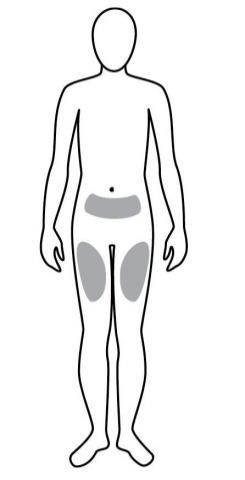
RebiSmart• Before the injection, check that the dose shown on the device screen corresponds to the
prescribed dose of 44 micrograms.
- Position RebiSmart at a right angle (90°) to the skin.
- Press the injection button. During the injection, the button flashes a light.
- Wait for the light to go out. This means the injection is complete.
- Remove RebiSmart from the injection site.
After injecting Rebif with RebiSmart
- Remove and dispose of the needle in accordance with the instructions provided with the device.
- Gently massage the injection site with a dry cotton ball or gauze.
- Store the device containing a Rebif cartridge as indicated in section 5 “How to store Rebif”.
If you have any questions, ask your doctor, nurse or pharmacist.
If you use more Rebif than you should
In case of overdose, contact your doctor immediately.
If you forget to use Rebif
If you do not administer a dose, continue treatment starting on the day the next dose is
scheduled. Do not use a double dose to make up for the missed dose.
If you stop using Rebif
The effects of Rebif may not be immediately apparent. Therefore, do not stop
treatment with Rebif but continue regularly to achieve the desired results. If you have
any doubts about the benefits of therapy, consult your doctor.
Do not stop treatment without first contacting your doctor.
If you have any questions about the use of this medicine, ask your doctor, pharmacist or
nurse.
4. Possible side effects
Like all medicines, this medicine can cause side effects, although not everybody gets them.
li manifestino.
Immediately inform your doctor and stop treatment with Rebif if you experience any of the
following serious side effects:
- Severe allergic reactions (hypersensitivity).If, shortly after administering Rebif, you experience sudden difficulty in breathing, which may be accompanied by swelling of the face, lips, tongue or throat, skin manifestations, itching all over the body, and a feeling of weakness or dizziness, immediately consult a doctor or a medical emergency center. These reactions are rare(may affect up to 1 in 1,000 people).
- Immediately inform your doctor if you experience any of the following possible symptoms referable to a liver problem: jaundice (yellowing of the skin or whites of the eyes), widespread itching, loss of appetite accompanied by nausea and vomiting, and a tendency to bruise easily. Serious liver problems may be associated with additional signs, such as difficulty concentrating, drowsiness, and confusion.
- Depressionis common(may affect up to 1 in 10 people) in patients treated for multiple sclerosis. If you feel depressed or develop suicidal thoughts, contact your doctor immediately.
Consult your doctor if you notice any of the following side effects:
- Flu-like symptoms, such as headache, fever, chills, muscle and joint pain, fatigue, and nausea are very common(may affect more than 1 in 10 people). These symptoms are generally mild and are more frequent at the beginning of treatment and decrease as it continues. To reduce these symptoms, your doctor may prescribe a fever reducer before administering a dose of Rebif and 24 hours after each injection.
- Injection site reactionssuch as redness, swelling, depigmentation, inflammation, pain, and skin lesions are very common. Injection site reactions usually decrease over time. Tissue destruction (necrosis), abscess, and nodule at the injection site are uncommon(may affect up to 1 in 100 people). To minimize the risk of injection site reactions, read the recommendations in “Warnings and precautions”. The injection site may become infected (uncommon); the skin may become swollen, sensitive and hardened, and the entire area may be very painful. If you notice the onset of any of these symptoms, contact your doctor.
- Some laboratory testsmay show changes. These changes are generally not noticed by the patient (there are no symptoms), are usually reversible and mild, and very often do not require specific treatments. The number of red blood cells, white blood cells, or platelets may decrease, individually (very common)or all values simultaneously (rare). Possible symptoms due to these changes may include fatigue, reduced ability to fight infections, bruising, or unexplained bleeding. Liver function may be altered (very common). Liver inflammation has also been reported (uncommon). However, if you experience symptoms that may appear referable to liver disorders, such as loss of appetite accompanied by other symptoms such as nausea, vomiting, or jaundice, contact your doctor immediately (see “Immediately inform your doctor…”).
- Thyroid dysfunctionis uncommon. The thyroid gland may function excessively or deficiently. These changes in thyroid activity are rarely noticed by the patient as symptoms, however, the doctor may recommend performing relevant tests.
- Pseudo relapses of multiple sclerosis(frequency not known).At the beginning of treatment with Rebif, you may experience symptoms similar to those of a relapse of multiple sclerosis. For example, your muscles may be very tense or very weak, preventing you from moving as you wish. Sometimes these symptoms are associated with fever or flu-like symptoms described above. If you notice any of these symptoms, talk to your doctor.
Other possible side effects:
Very common (may affect more than 1 in 10 people):
- Headache
Common (may affect up to 1 in 10 people):
- Insomnia (difficulty falling asleep)
- Diarrhea, nausea, vomiting
- Itching, rash
- Muscle and joint pain
- Fatigue, fever, chills
- Hair loss
Uncommon (may affect up to 1 in 100 people):
- Urticaria (hives)
- Seizures
- Inflammation of the liver (hepatitis)
- Difficulty breathing
- Blood clots such as deep vein thrombosis
- Retinal disorders (fundus of the eye) such as inflammation or blood clots, with resulting vision problems (visual disturbances, vision loss)
- Increased sweating
Rare (may affect up to 1 in 1,000 people):
- Suicide attempt
- Severe skin reactions, some with mucous membrane lesions
- Thrombi (blood clots) within the small blood vessels that can have an effect on the kidneys (thrombotic thrombocytopenic purpura or hemolytic uremic syndrome). Symptoms may include increased bruising, bleeding, fever, extreme weakness, headache, dizziness, or feeling lightheaded. The doctor is likely to find changes in your blood and kidney function.
- Iatrogenic lupus erythematosus: an adverse effect of long-term use of Rebif. Symptoms may include muscle pain, joint pain and swelling, rash. Other signs such as fever, weight loss and fatigue may also appear. Generally, the symptoms disappear within one or two weeks after stopping treatment.
- Kidney problems, including scarring that can reduce kidney function. If you experience any or all of the following symptoms:
- foamy urine
- fatigue
- swelling, especially in the ankles and eyelids, and weight gain, inform your doctor, as these may be signs of a possible kidney problem.
The following side effects have been reported for interferon beta (frequency not known)
- Dizziness
- Nervousness
- Loss of appetite
- Vasodilation and palpitations
- Irregularities and/or changes in menstrual flow
- Pulmonary arterial hypertension - a disease that causes severe narrowing of the blood vessels in the lungs, causing increased pressure in the vessels that carry blood from the heart to the lungs. Pulmonary arterial hypertension has been observed at various times during treatment, even years after starting treatment with Rebif.
- Inflammation of subcutaneous adipose tissue (panniculitis) that can cause a feeling of hardened skin and possibly the formation of red and painful patches or nodules.
You should not stop or change your prescription without consulting your doctor.
Children and adolescents
Side effects in children and adolescents are similar to those observed in adults.
Reporting of side effects
If you get any side effects, talk to your doctor, pharmacist or nurse. You can also report side effects directly
through the national reporting system reported in Annex V. By reporting side effects you can help provide more
information on the safety of this medicine.
5. How to store Rebif
Keep this medicine out of the sight and reach of children.
Do not use this medicine after the expiry date stated on the label after Exp.
Store in a refrigerator (2°C – 8°C).
Do not freeze. (Be careful not to place the product near the freezer compartment to avoid
accidental freezing).
Use within 28 days of the first injection.
The device (RebiSmart) containing a pre-filled cartridge of Rebif should be stored in its own
packaging in a refrigerator (2°C-8°C). The Rebif package in use may be stored outside the
refrigerator at a temperature not exceeding 25°C for a single period of up to
14 days. Afterwards, Rebif must be returned to the refrigerator and
used before the expiry date.
Store in the original packaging to protect the medicine from light.
Do not use this medicine if you notice any visible signs of deterioration, for example if the
solution in the cartridge is no longer clear and colourless or if it contains particles.
Do not dispose of any medicine in wastewater or household waste. Ask your pharmacist how to
dispose of medicines you no longer use. This will help protect the environment.
6. Contents of the pack and other information
What Rebif contains
- The active substance is interferon beta-1a. Each cartridge contains 132 micrograms, corresponding to 36 million International Units (IU) of interferon beta-1a.
- The other ingredients are: mannitol, poloxamer 188, L-methionine, benzyl alcohol, sodium acetate, acetic acid, sodium hydroxide and water for injections.
Description of the appearance of Rebif and contents of the pack
Prefilled cartridge (type 1 glass), with a plunger stopper (rubber) and a crimped closure cap
(aluminium and halobutyl rubber), containing 1.5 mL of injectable solution. Pack sizes of
4 or 12 cartridges. Not all pack sizes may be marketed.
The cartridge must be used with the RebiSmart electronic injector device. This
device is supplied separately.
Marketing authorisation holder
Merck Europe B.V.
Gustav Mahlerplein 102
1082 MA Amsterdam
Netherlands
Manufacturer
Merck Serono S.p.A.
Via delle Magnolie 15
I-70026 Modugno (Bari)
Italy
Other sources of information
Detailed information on this medicine is available on the European Medicines Agency website, http://www.ema.europa.eu .
Rebif 8.8 micrograms/0.1 mL injectable solution in cartridge, 22 micrograms/0.25 mL injectable solution in cartridge
interferon beta-1a
Starter pack
Read this leaflet carefully before you start using this medicine as it contains important
information for you.
- Keep this leaflet. You may need to read it again.
- If you have any questions, ask your doctor, pharmacist or nurse.
- This medicine has been prescribed for you only. Do not pass it on to others, even if they have the same symptoms as you, as it may be harmful.
- If you get any side effects, even those not listed in this leaflet, tell your doctor, pharmacist or nurse. See section 4.
Contents of this leaflet
- 1. What Rebif is and what it is used for
- 2. What you need to know before you use Rebif
- 3. How to use Rebif
- 4. Possible side effects
- 5. How to store Rebif
- 6. Contents of the pack and other information
1. What is Rebif and what is it used for
Rebif belongs to a class of medicines known as interferons. These are natural substances
that transmit messages between cells. Interferons are produced by the body and play an
essential role in the immune system. Through mechanisms that are not fully
understood, interferons help to limit damage to the central nervous system associated with
multiple sclerosis.
Rebif is a highly purified soluble protein that is similar to the natural beta interferon produced
in the human body.
Rebif is indicated for the treatment of multiple sclerosis. Treatment has been shown to be effective in
reducing the number and severity of relapses, and in slowing the progression of disability. Its use is also approved in patients who have experienced a single clinical event considered a
likely first sign of multiple sclerosis.
2. What you need to know before using Rebif
Do not use Rebif
- if you are allergic to natural or recombinant interferon beta or to any of the other ingredients of this medicine (listed in section 6),
- if you are currently severely depressed.
Warnings and precautions
Talk to your doctor, pharmacist or nurse before using Rebif.
- Rebif must only be used under the supervision of a doctor.
- Before treatment with Rebif, read carefully and follow the instructions described in “How to use Rebif” to reduce the risk of injection site necrosis (skin lesions and tissue destruction) which has been reported in patients treated with Rebif. If you have experienced problems with
local reactions, contact your doctor.
Tell your doctor if you have diseases
- of the bone marrow,
- kidney,
- liver,
- heart,
- thyroid,
- if you have had episodes of depression,
- if you have had episodes of seizures, so that your doctor can closely monitor your treatment and any worsening of these conditions.
Other medicines and Rebif
Tell your doctor or pharmacist if you are taking, have recently taken or might take any other
medicine.
In particular, you should tell your doctor if you are taking antiepileptics or antidepressants.
Pregnancy and breastfeeding
If you are pregnant, suspect you may be pregnant or are planning a pregnancy, ask your doctor
or pharmacist for advice before taking this medicine.
No harmful effects are expected on newborns/infants breastfed with breast milk. Rebif can be
used during breastfeeding.
Driving and using machines
The ability to drive or operate machinery may be altered by the underlying disease or by
therapy. This aspect should be discussed with your doctor if it concerns you.
Rebif contains sodium and benzyl alcohol
This medicine contains less than 1 mmol (23 mg) of sodium per dose, i.e. essentially ‘sodium-free’.
This medicine contains 0.5 mg of benzyl alcohol per 0.1 mL dose and 1.25 mg of benzyl
alcohol per 0.25 mL dose. Benzyl alcohol can cause allergic reactions.
Benzyl alcohol has been associated with the risk of serious side effects including breathing problems
(wheezing syndrome) in young children.
Do not use for more than one week in young children (under 3 years of age) unless otherwise
recommended by your doctor or pharmacist.
Ask your doctor or pharmacist if you are pregnant or breastfeeding or if you have a liver or
kidney condition. This is because large amounts of benzyl alcohol can accumulate in the body and
cause side effects (such as metabolic acidosis).
3. How to use Rebif
This medicine is for multidose use.
Use this medicine following exactly the instructions of your doctor. If you have any doubts, consult your
doctor.
Start of treatment
Treatment begins with a gradual increase in dose (the so-called “dose titration”)
over 4 weeks, in order to reduce some undesirable effects, it is recommended:
- During weeks one and two, Rebif 8.8 micrograms must be injected three times a week.
- During weeks three and four, Rebif 22 micrograms must be injected three times a week.
From the fifth week onwards, once the initial period is completed, you will have to follow the usual
dosage regimen prescribed by your doctor.
Dose
The usual dose is 44 micrograms (12 million IU) three times a week.
A lower dose, of 22 micrograms (6 million IU), three times a week is advisable for
patients with multiple sclerosis who do not tolerate the higher dosage.
Rebif must be administered three times a week and, if possible:
- on the same three days of each week (at least 48 hours apart, for example Monday, Wednesday, Friday)
- at the same time of day (preferably in the evening).
Use in children and adolescents (from 2 to 17 years)
Formal clinical studies have not been conducted in children or adolescents. However, some clinical data are available
suggesting that the safety profile in children and adolescents treated
with Rebif 22 micrograms or with Rebif 44 micrograms three times a week is similar to that
observed in adults.
Use in children (under 2 years of age)
The use of Rebif is not recommended in children under 2 years of age.
Method of administration
- Rebif must be administered by subcutaneous injection (under the skin).
- The first administration (or the first administrations) must be performed under the supervision of a qualified healthcare professional. After adequate training, the medicine can be administered at home by yourself, by a relative, by a friend or by a caregiver using the Rebif cartridges with the supplied device.
- The starter pack contains two identical Rebif cartridges: you can start treatment with either of these cartridges.
- The cartridge must be used with the RebiSmart electronic injector device.
- Detailed instructions for use are provided with the device. Follow these instructions carefully.
- Below are brief instructions for using the Rebif cartridge.
Before starting
- Wash your hands thoroughly with water and soap.
- Take the Rebif cartridge out of the blister pack by removing the plastic cover.
- Check (immediately after removing the cartridge from the refrigerator) that the cartridge has not accidentally frozen in the pack or inside the device. Only clear or opalescent solutions, not containing particles and without visible signs of
deterioration, must be
used.
- To insert the cartridge into the device and perform the injection, follow the instruction manual (Instructions for Use) provided with the device.
Where to inject Rebif
- Choice of injection site. Your doctor will inform you about the possible areas where to make the injection (suitable areas are the upper thigh and the lower abdomen). It is recommended to keep a record and to rotate the injection site so that the same area is not used for injections too frequently, in order to minimize the risk of injection site necrosis.
- NOTE: do not choose an area that has hardening, nodules or is painful; for any clarification consult your doctor or a qualified healthcare professional.
- Before the injection, use a cotton ball soaked in alcohol to clean the skin at the injection site. Wait for the skin to dry. If some alcohol remains on the skin, you may feel a stinging sensation.
How to inject Rebif
- Your doctor will tell you how to choose the correct dose. Also read the instructions in the manual provided with the device (RebiSmart).
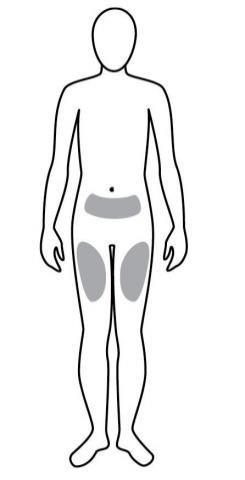
RebiSmart• RebiSmart is programmed to guide you through the entire
start-up procedure and automatically increases the dose in the
initial phase. The device will also warn you when to change the
cartridge.
- You or your doctor must set the prescribed dose using the RebiSmart menu, so that the correct dose is recorded.
- To activate the “initial dose” menu, you or your doctor must have set “cartridge” “44 mcg”, then ‘initial dose’, set ‘on’ and confirm ‘initial dose yes’ by pressing ‘ok’.
- The device will ensure that:
- 8.8 micrograms of Rebif are injected three times a week during weeks one and two.
- 22 micrograms of Rebif are injected three times a week during weeks three and four.
- from weeks five onwards, RebiSmart will automatically switch to the usual dosage regimen.
- Position RebiSmart at a right angle (90°) to the skin.
- Press the injection button. During the injection, the button flashes.
- Wait for the light to go out. This means the injection is complete.
- Remove RebiSmart from the injection site.
After injecting Rebif with RebiSmart
- Remove and dispose of the needle in accordance with the instructions provided with the device.
- Gently massage the injection site with a dry cotton ball or gauze.
- Store the device containing a Rebif cartridge as indicated in section 5 “How to store Rebif”.
If you have any doubts, ask your doctor, nurse or pharmacist.
If you use more Rebif than you should
In case of overdose, contact your doctor immediately.
If you forget to use Rebif
If you do not administer a dose, continue treatment starting from the day the next dose is
scheduled. Do not use a double dose to make up for the missed dose.
If you stop treatment with Rebif
The effects of Rebif may not be immediate. Therefore, you should not stop
treatment with Rebif but continue regularly to achieve the desired results. If you have
doubts about the benefits of therapy, consult your doctor.
Do not stop treatment without first contacting your doctor.
If you have any doubts about the use of this medicine, ask your doctor, pharmacist or
nurse.
4. Possible side effects
Like all medicines, this medicine can cause side effects, although not everybody gets them.
Tell your doctor immediately and stop treatment with Rebif if you experience any of the following serious side effects:
- Serious allergic reactions (hypersensitivity).If, shortly after administering Rebif, you experience sudden difficulty in breathing, which may be accompanied by swelling of the face, lips, tongue or throat, skin manifestations, itching all over the body, and a feeling of weakness or dizziness, seek immediate medical attention or go to an emergency medical center. These reactions are rare(may affect up to 1 in 1,000 people).
- Tell your doctor immediately if you experience any of the following possible symptoms referable to a liver problem: jaundice (yellowing of the skin or whites of the eyes), widespread itching, loss of appetite accompanied by nausea and vomiting, and a tendency to bruise easily. Serious liver problems may be associated with additional signs, such as difficulty concentrating, drowsiness and confusion.
- Depressionis common(may affect up to 1 in 10 people) in patients treated for multiple sclerosis. If you feel depressed or develop suicidal thoughts, contact your doctor immediately.
See your doctor if you notice any of the following side effects:
- Flu-like symptoms, such as headache, fever, chills, muscle and joint pain, fatigue and nausea are very common(may affect more than 1 in 10 people). These symptoms are generally mild and are more frequent at the beginning of treatment and decrease as it continues. To reduce these symptoms, your doctor may prescribe an antipyretic before administering a dose of Rebif and 24 hours after each injection.
- Injection site reactionssuch as redness, swelling, depigmentation, inflammation, pain and skin lesions are very common. The occurrence of injection site reactions usually decreases over time. Tissue destruction (necrosis), abscess and nodule at the injection site are uncommon(may affect up to 1 in 100 people).
To minimize the risk of injection site reactions, read the recommendations in
“Warnings and precautions”.
The injection site may become infected (uncommon); the skin may become swollen, sensitive and
hardened and the entire area may be very painful. If you notice any of these symptoms,
contact your doctor.
- Some laboratory testsmay show changes. These changes are generally not noticed by the patient (there are no symptoms), are usually reversible and moderate and very often do not require specific treatments. The number of red blood cells, white blood cells or platelets may decrease, individually (very common)or all values simultaneously (rare). Possible symptoms due to these changes may include fatigue, reduced ability to fight infections, bruising or unexplained bleeding. Liver function may be altered (very common). Liver inflammation has also been reported (uncommon). However, if you experience symptoms that may be referable to liver disorders, such as loss of appetite associated with other symptoms such as nausea, vomiting or jaundice, contact your doctor immediately (see “Tell your doctor immediately…”).
- Thyroid dysfunctionis uncommon. The thyroid gland may function excessively or insufficiently. These changes in thyroid activity are rarely noticed by the patient as symptoms, however, the doctor may recommend performing relevant tests.
- Pseudo relapses of multiple sclerosis(frequency not known).It is possible that at the beginning of treatment with Rebif you may experience symptoms similar to those of a relapse of multiple sclerosis. For example, your muscles may be very tense or very weak, preventing you from moving as you wish. Sometimes these symptoms are associated with fever or flu-like symptoms described above. If you notice any of these symptoms, talk to your doctor.
Other possible side effects:
Very common (may affect more than 1 in 10 people):
- Headache
Common (may affect up to 1 in 10 people):
- Insomnia (difficulty falling asleep)
- Diarrhea, nausea, vomiting
- Itching, rash
- Muscle and joint pain
- Fatigue, fever, chills
- Hair loss
Uncommon (may affect up to 1 in 100 people):
- Urticaria
- Seizures
- Liver inflammation (hepatitis)
- Difficulty breathing
- Blood clots such as deep vein thrombosis
- Retinal disorders (back of the eye) such as inflammation or blood clots, resulting in vision problems (visual disturbances, loss of vision)
- Increased sweating
Rare (may affect up to 1 in 1,000 people):
- Suicide attempt
- Severe skin reactions, some with mucous membrane lesions
- Thrombi (blood clots) within the small blood vessels that can affect the kidneys (thrombotic thrombocytopenic purpura or hemolytic uremic syndrome). Symptoms may include increased bruising, bleeding, fever, extreme weakness, headache, dizziness or lightheadedness. The doctor is likely to find changes in your blood and kidney function.
- Iatrogenic lupus erythematosus: an adverse effect of long-term use of Rebif. Symptoms may include muscle pain, joint pain and swelling, rash. Other signs such as fever, weight loss and fatigue may also appear. Generally, the symptoms disappear within one or two weeks after stopping treatment.
- Kidney problems, including scarring that can reduce kidney function. If you experience any or all of the following symptoms:
- foamy urine
- fatigue
- swelling, especially in the ankles and eyelids, and weight gain, tell your doctor, as these may be signs of a possible kidney problem.
The following side effects have been reported for interferon beta (frequency not known)
- Dizziness
- Nervousness
- Loss of appetite
- Vasodilation and palpitations
- Irregularities and/or changes in menstrual flow
- Pulmonary arterial hypertension - a disease that causes severe narrowing of the blood vessels in the lungs, leading to increased pressure in the vessels that carry blood from the heart to the lungs. Pulmonary arterial hypertension has been observed at various times during treatment, even years after starting Rebif treatment.
- Inflammation of subcutaneous adipose tissue (panniculitis) which can cause a feeling of hardened skin and possibly the formation of red and painful patches or nodules.
Do not stop or change your prescription without consulting your doctor.
Children and adolescents
Side effects in children and adolescents are similar to those observed in adults.
Reporting of side effects
If you get any side effects, even those not listed in this leaflet, tell your
doctor, pharmacist or nurse. You can also report side effects directly
through the national reporting system listed in Annex V. By reporting side
effects you can help provide more information on the safety of this medicine.
5. How to store Rebif
Keep this medicine out of the sight and reach of children.
Do not use this medicine after the expiry date stated on the label after Expiry.
Store in a refrigerator (2°C – 8°C).
Do not freeze. (Be careful not to place the product near the freezer compartment, to avoid
accidental freezing).
Use within 28 days of the first injection.
The device (RebiSmart) containing a pre-filled cartridge of Rebif should be stored in its own
packaging in a refrigerator (2°C-8°C). The Rebif package in use can be stored outside the
refrigerator at a temperature not exceeding 25°C for a single time for a period lasting
maximum 14 days. Afterwards, Rebif must be returned to the refrigerator and
used before the expiry date.
Store in the original packaging to protect the medicine from light.
Do not use this medicine if you notice any visible signs of deterioration, for example if the
solution in the cartridge is no longer clear and colourless or if it contains particles.
Do not dispose of any medicine in wastewater or household waste. Ask your pharmacist how to
dispose of medicines you no longer use. This will help protect the environment.
6. Contents of the pack and other information
What Rebif contains
- The active substance is interferon beta-1a. Each cartridge contains 132 micrograms, corresponding to 36 million International Units (IU) of interferon beta-1a.
- The other ingredients are: mannitol, poloxamer 188, L-methionine, benzyl alcohol, sodium acetate, acetic acid, sodium hydroxide and water for injections.
Description of the appearance of Rebif and contents of the pack
Prefilled cartridge (type 1 glass), with a plunger stopper (rubber) and a screw cap
(aluminium and halobutyl rubber), containing 1.5 mL of injectable solution. Pack of
2 cartridges.
The cartridge must be used with the RebiSmart electronic injector device. This
device is supplied separately.
Marketing Authorisation Holder
Merck Europe B.V.
Gustav Mahlerplein 102
1082 MA Amsterdam
Netherlands
Manufacturer
Merck Serono S.p.A.
Via delle Magnolie 15
I-70026 Modugno (Bari)
Italy
Other sources of information
More detailed information on this medicine is available on the European Medicines Agency website, http://www.ema.europa.eu .
Rebif 22 micrograms injectable solution in pre-filled pen
interferon beta-1a
Read this leaflet carefully before you start using this medicine as it contains important
information for you.
- Keep this leaflet. You may need to read it again.
- If you have any questions, ask your doctor, pharmacist or nurse.
- This medicine has been prescribed for you only. Do not pass it on to others, even if their symptoms are the same as yours, as it may be harmful.
- If you get any side effects, even those not listed in this leaflet, tell your doctor, pharmacist or nurse. See section 4.
Contents of this leaflet
- 1. What Rebif is and what it is used for
- 2. What you need to know before you use Rebif
- 3. How to use Rebif
- 4. Possible side effects
- 5. How to store Rebif
- 6. Contents of the pack and other information
1. What is Rebif and what is it used for
Rebif belongs to a class of medicines known as interferons. These are natural substances
that transmit messages between cells. Interferons are produced by the body and play an
essential role in the immune system. Through mechanisms that are not fully
understood, interferons help to limit damage to the central nervous system associated with
multiple sclerosis.
Rebif is a highly purified soluble protein that is similar to the natural beta interferon produced
in the human body.
Rebif is indicated for the treatment of multiple sclerosis. Treatment has been shown to be effective in
reducing the number and severity of relapses, and in slowing the progression of disability.
2. What you need to know before using Rebif
Do not use Rebif
- if you are allergic to natural or recombinant beta interferon or to any of the other ingredients of this medicine (listed in section 6),
- if you are currently severely depressed.
Warnings and precautions
Talk to your doctor, pharmacist or nurse before using Rebif.
- Rebif must only be used under the supervision of a doctor.
- Before starting treatment with Rebif, to reduce the risk of injection site necrosis (skin lesions and tissue destruction), reported in patients treated with Rebif, carefully read and follow the instructions in the “RebiDose Instructions for Use” provided separately. If you have experienced local reactions, contact your doctor.
- Talk to your doctor or pharmacist before taking Rebif if you are allergic (hypersensitive) to any other medicine.
- During treatment, blood clots (blood clots) may form in the small blood vessels. These clots could have an effect on the kidneys. The formation of clots may occur from several weeks to several years after starting treatment with Rebif. Your doctor may decide to perform blood pressure checks, blood tests (platelet count) and kidney function tests.
Tell your doctor if you have diseases of the
- bone marrow,
- kidneys,
- liver,
- heart,
- thyroid,
- if you have had episodes of depression,
- if you have had episodes of seizures, so that your doctor can closely monitor your treatment and any worsening of these conditions.
Other medicines and Rebif
Tell your doctor or pharmacist if you are taking, have recently taken or might take any other
medicine.
In particular, tell your doctor if you are taking antiepileptics or antidepressants.
Pregnancy and breastfeeding
If you are pregnant, suspect you are pregnant or are planning a pregnancy, ask your doctor
or pharmacist for advice before taking this medicine.
No harmful effects are expected on newborns/infants breastfed with breast milk. Rebif can be
used during breastfeeding.
Driving and using machines
The ability to drive or operate machinery may be altered by the underlying disease or by
therapy. This aspect should be discussed with your doctor if it concerns you.
Rebif contains sodium and benzyl alcohol
This medicine contains less than 1 mmol (23 mg) of sodium per dose, i.e. essentially ‘sodium-free’.
This medicine contains 2.5 mg of benzyl alcohol per dose. Benzyl alcohol can cause allergic
reactions.
Benzyl alcohol has been associated with the risk of serious adverse effects including respiratory problems
(wheezing respiratory syndrome) in young children.
Do not use for more than one week in young children (under 3 years of age) unless otherwise
recommended by your doctor or pharmacist.
Ask your doctor or pharmacist if you are pregnant or breastfeeding or if you have a liver or kidney
disease. This is because large amounts of benzyl alcohol can accumulate in the body and
cause adverse effects (such as metabolic acidosis).
3. How to use Rebif
Use this medicine following the instructions of your doctor exactly. If you have any doubts, consult your
doctor.
Dose
The usual dose is 44 micrograms (12 million IU) administered three times a week. Your doctor has
prescribed a lower dose of 22 micrograms (6 million IU), also three times a week. This
lower dose is recommended for patients who do not tolerate the higher dosage.
Rebif must be administered three times a week and, if possible:
- on the same three days of each week (at least 48 hours apart, for example Monday, Wednesday, Friday)
- at the same time of day (preferably in the evening).
Use in children and adolescents (2 to 17 years)
Formal clinical studies have not been conducted in children or adolescents. However, some clinical data
suggest that the safety profile in children and adolescents treated
with Rebif 22 micrograms or with Rebif 44 micrograms three times a week is similar to that
observed in adults.
Use in children (under 2 years of age)
The use of Rebif is not recommended in children under 2 years of age.
Method of administration
- Rebif must be administered with an injection under the skin (subcutaneous) using the prefilled pen called “RebiDose”.
- Each RebiDose is for single use only.
- The first administration (or the first administrations) must be performed under the supervision of a
qualified healthcare professional. After adequate training, you yourself, a relative, a friend or a
caregiver can administer the medicine at home using the prefilled Rebif pen. - Before use, carefully read what is stated in the “Instructions for use of RebiDose” provided separately.
Use only a solution from clear to opalescent that does not contain particles and visible signs of
deterioration.
If you use more Rebif than you should
In case of overdose, contact your doctor immediately.
If you forget to use Rebif
If you do not administer a dose, continue treatment starting from the day the next dose is
scheduled. Do not use a double dose to make up for a missed dose.
If you stop using Rebif
The effects of Rebif may not be immediately apparent. Therefore, you should not stop
treatment with Rebif but continue regularly to achieve the desired results. If you have
doubts about the benefits of therapy, consult your doctor.
Do not stop treatment without first contacting your doctor.
If you have any further questions on the use of this medicine, ask your doctor, pharmacist or
nurse.
4. Possible side effects
Like all medicines, this medicine can cause side effects, although not everyone will experience them.
Immediately inform your doctor and stop treatment with Rebif if you experience any of the following serious side effects:
- Severe allergic reactions (hypersensitivity).If, shortly after administering Rebif, you experience sudden difficulty breathing, which may be accompanied by swelling of the face, lips, tongue or throat, skin manifestations, itching all over the body, and a feeling of weakness or dizziness, immediately consult a doctor or medical emergency center. These reactions are rare(may affect up to 1 in 1,000 people).
- Immediately inform your doctor if you experience any of the following possible symptoms referable to a liver problem: jaundice (yellowing of the skin or whites of the eyes), widespread itching, loss of appetite accompanied by nausea and vomiting, and a tendency to bruise easily. Serious liver problems may be associated with additional signs, such as difficulty concentrating, drowsiness, and confusion.
- Depressionis common(may affect up to 1 in 10 people) in patients treated for multiple sclerosis. If you feel depressed or develop suicidal thoughts, contact your doctor immediately.
Consult your doctor if you notice any of the following side effects:
- Flu-like symptoms, such as headache, fever, chills, muscle and joint pain, fatigue, and nausea are very common(may affect more than 1 in 10 people). These symptoms are generally mild and are more frequent at the beginning of treatment and decrease as it continues. To reduce these symptoms, your doctor may prescribe a fever reducer before administering a dose of Rebif and 24 hours after each injection.
- Injection site reactionssuch as redness, swelling, depigmentation, inflammation, pain, and skin lesions are very common. The occurrence of injection site reactions usually decreases over time. Tissue destruction (necrosis), abscess, and nodule at the injection site are uncommon(may affect up to 1 in 100 people). To minimize the risk of injection site reactions, read the recommendations in “Warnings and precautions”. The injection site may become infected (uncommon); the skin may become swollen, sensitive, and hardened, and the entire area may be very painful. If you notice the appearance of any of these symptoms, contact your doctor.
- Some laboratory testsmay show changes. These changes are generally not noticed by the patient (there are no symptoms), are usually reversible and mild, and very often do not require specific treatments. The number of red blood cells, white blood cells, or platelets may decrease, individually (very common)or all values simultaneously (rare). Possible symptoms due to these changes may include fatigue, reduced ability to fight infections, bruising, or unexplained bleeding. Liver function may be altered (very common). Liver inflammation has also been reported (uncommon). However, if you experience symptoms that may appear referable to liver disorders, such as loss of appetite accompanied by other symptoms such as nausea, vomiting, or jaundice, contact your doctor immediately (see “Immediately inform your doctor…”).
- Thyroid dysfunctionis uncommon. The thyroid gland may function excessively or insufficiently. These changes in thyroid activity are rarely noticed by the patient as symptoms, however, the doctor may recommend performing relevant tests.
- Pseudo relapses of multiple sclerosis(frequency not known).It is possible that at the beginning of treatment with Rebif you may experience symptoms similar to those of a relapse of multiple sclerosis. For example, your muscles may be very tense or very weak, preventing you from moving as you wish. Sometimes these symptoms are associated with fever or flu-like symptoms described above. If you notice any of these symptoms, talk to your doctor.
Other possible side effects:
Very common (may affect more than 1 in 10 people):
- Headache
Common (may affect up to 1 in 10 people):
- Insomnia (difficulty falling asleep)
- Diarrhea, nausea, vomiting
- Itching, rash
- Muscle and joint pain
- Fatigue, fever, chills
- Hair loss
Uncommon (may affect up to 1 in 100 people):
- Urticaria (hives)
- Seizures
- Liver inflammation (hepatitis)
- Difficulty breathing
- Blood clots such as deep vein thrombosis
- Retinal disorders (back of the eye) such as inflammation or blood clots, resulting in vision problems (visual disturbances, vision loss)
- Increased sweating
Rare (may affect up to 1 in 1,000 people):
- Suicide attempt
- Severe skin reactions, some with mucous membrane lesions
- Thrombi (blood clots) within the small blood vessels that can affect the kidneys (thrombotic thrombocytopenic purpura or hemolytic uremic syndrome). Symptoms may include increased bruising, bleeding, fever, extreme weakness, headache, dizziness, or feeling lightheaded. The doctor is likely to find changes in your blood and kidney function.
- Iatrogenic lupus erythematosus: an undesirable effect of long-term use of Rebif. Symptoms may include muscle pain, joint pain and swelling, rash. Other signs such as fever, weight loss, and fatigue may also appear. Generally, the symptoms disappear within one or two weeks after stopping treatment.
- Kidney problems, including scarring that can reduce kidney function. If you experience any or all of the following symptoms:
- foamy urine
- fatigue
- swelling, especially in the ankles and eyelids, and weight gain, inform your doctor, as these may be signs of a possible kidney problem.
The following side effects have been reported for interferon beta (frequency not known)
- Dizziness
- Nervousness
- Loss of appetite
- Vasodilation and palpitations
- Irregularities and/or changes in menstrual flow
- Pulmonary arterial hypertension - a disease that causes severe narrowing of the blood vessels in the lungs, leading to increased pressure in the vessels that carry blood from the heart to the lungs. Pulmonary arterial hypertension has been observed at various times during treatment, even years after starting Rebif treatment.
- Inflammation of the subcutaneous fatty tissue (panniculitis) that can cause a feeling of hardened skin and possibly the formation of red and painful patches or nodules.
You should not stop or change the prescription without consulting your doctor.
Children and adolescents
Side effects in children and adolescents are similar to those observed in adults.
Reporting of side effects
If you experience any side effects, including those not listed in this leaflet, tell your
doctor, pharmacist, or nurse. You can also report side effects directly
through the national reporting system listed in Annex V. By reporting side effects
you can contribute to providing more information on the safety of this medicine.
5. How to store Rebif
Keep this medicine out of the sight and reach of children.
Do not use this medicine after the expiry date which is stated on the label after Exp.
Store in a refrigerator (2°C – 8°C).
Do not freeze. (Be careful not to place the product near the freezer compartment, to avoid accidental
freezing).
Rebif in use can be stored outside the refrigerator at a temperature not
exceeding 25°C for a single time for a period with a maximum duration of 14 days.
Subsequently Rebif must be returned to the refrigerator and used before the expiry
date.
Store in the original packaging to protect the medicine from light.
Do not use this medicine if you notice any visible signs of deterioration, for example if the
solution is no longer clear or if it contains particles.
Do not dispose of any medicine in wastewater or household waste. Ask your pharmacist how to
dispose of medicines you no longer use. This will help protect the environment.
6. Contents of the pack and other information
What Rebif contains
- The active ingredient is interferon beta-1a. Each pre-filled pen contains 22 micrograms, corresponding to 6 million International Units (IU) of interferon beta-1a.
- The other ingredients are: mannitol, poloxamer 188, L-methionine, benzyl alcohol, sodium acetate, acetic acid, sodium hydroxide and water for injections.
Description of Rebif and contents of the pack
Rebif is available as an injectable solution in a pre-filled pen for self-administration. The
Rebif solution is from clear to opalescent. The pre-filled pen is ready for use and contains
0.5 mL of solution.
Rebif is available in packs of 1, 3 or 12 pre-filled pens (RebiDose). Not all
pack sizes may be marketed.
Marketing Authorisation Holder
Merck Europe B.V.
Gustav Mahlerplein 102
1082 MA Amsterdam
Netherlands
Manufacturer
Merck Serono S.p.A.
Via delle Magnolie 15
I-70026 Modugno (Bari)
Italy
Other sources of information
More detailed information on this medicinal product is available on the website of the European
Medicines Agency, http://www.ema.europa.eu .
Instructions for use of RebiDose
HOW TO USE REBIF PRE-FILLED PEN (RebiDose)
- This section explains how to use RebiDose.
- Rebif should be administered with an injection under the skin (subcutaneously).
- Each RebiDose is for single use only.
- The first administration (or the first few administrations) should be performed under the supervision of a qualified healthcare professional. After adequate training, you yourself, a relative, a friend or a caregiver can administer the medicine at home using RebiDose. If you have any questions about the injection, ask your doctor, nurse or pharmacist for advice.
- Read the instructions below carefully before using RebiDose.
Materials needed
To perform the self-injection you will need:
- a new RebiDose
- alcohol swabs or similar
- a dry cotton ball or gauze.
The figure below shows the components of RebiDose.
Before the injection
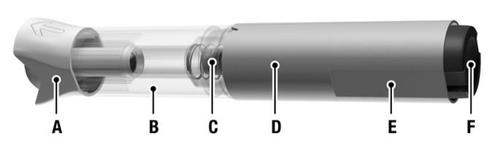
After the injection
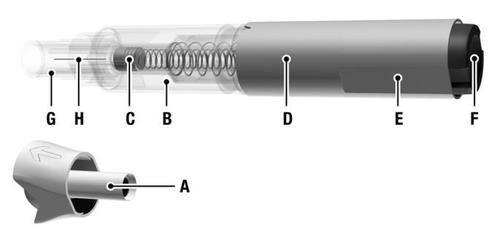
- A. Cap
- B. Transparent window
- C. Plunger
- D. Label
- E. Main body
- F. Button
- G. Protective cylinder
- H. Needle
Before you start
- Wash your hands with soap and water.
- Take RebiDose out of the pack after removing the plastic cover.
- Check the appearance of Rebif through the transparent window. The solution should be from clear to opalescent, free of particles and visible signs of deterioration. If there are particles or other visible signs of deterioration, do not use the solution and ask your doctor, nurse or pharmacist for advice.
- Check the expiry date on the label or pack of RebiDose (indicated with “Exp.”). Do not use RebiDose if the expiry date has passed.
Where to inject RebiDose
- Choice of injection site. Your doctor will inform you about the possible areas where to give the injection (suitable areas are the upper thigh and the lower abdomen).
- Keep a record of and rotate the injection sites so that the same area is not used for injections too frequently, in order to minimize skin damage (necrosis).
- NOTE: do not choose an area that is hardened, nodular or painful; for any clarification, consult your doctor or a qualified healthcare professional.
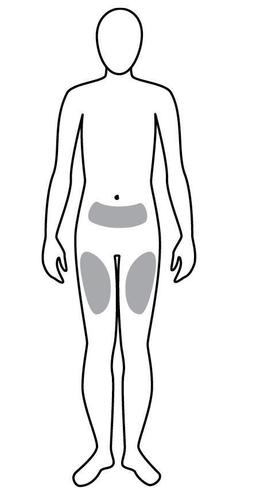
How to inject RebiDose
- Do notremove the cap until you are ready to give the injection.
- Before the injection, use an alcohol swab to clean the injection site. Make sure the skin is dry. If some alcohol remains on the skin, you may feel a stinging sensation.
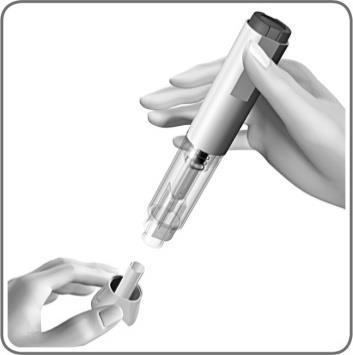
- Hold RebiDose with one hand by grasping the main body and with the other hand remove the cap.
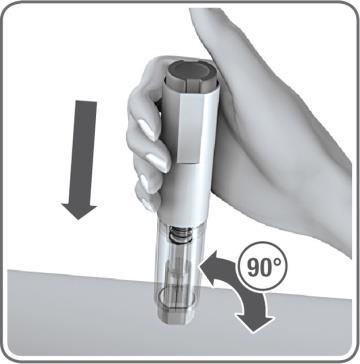
- Place RebiDose on the injection site at a right angle (90 degrees). Push the pen onto the skin until you feel resistance. This will unlock the button.
- While maintaining sufficient pressure on the skin, press the button with your thumb. You will feel a click indicating the start of the injection and the plunger will begin to move. Keep RebiDose pressed against the skin for at least 10 seconds, in order to inject all of the medicine. After the start of the injection, it is no longer necessary to keep the button pressed with your thumb.
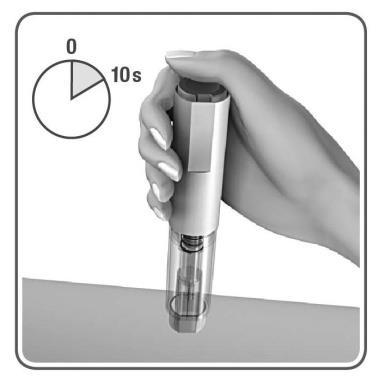
- Remove RebiDose from the injection site. The protective cylinder will automatically cover the needle and lock to protect you from the needle.
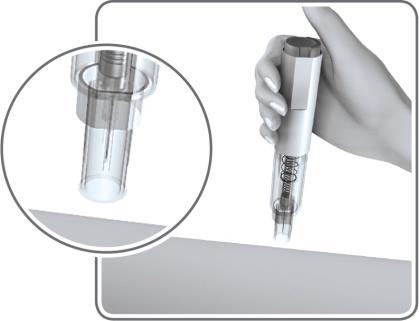
After the injection
- Check through the transparent window to make sure that the plunger has moved down, as shown in the figure.
- Check that no liquid remains. If there is liquid, not all of the medicine has been injected; in this case, consult your doctor or nurse.
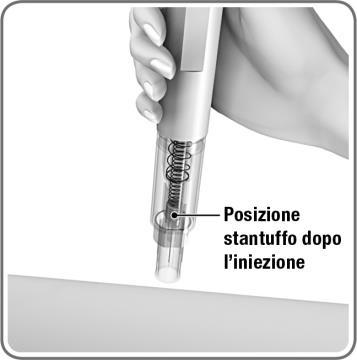
- Gently massage the injection site with a dry cotton ball or gauze.
- Neverput the protective cap back on a used RebiDose. This is because the needle is covered by the protective cylinder. Never insert your fingers into the protective cylinder.
- RebiDose is for single use only and must neverbe reused.
- Once the injection is finished, dispose of RebiDose immediately. Ask your pharmacist how to dispose of RebiDose.
For further information, ask your doctor, nurse or pharmacist.
These Instructions for Use were last updated on:
Rebif 44 micrograms injectable solution in pre-filled pen
interferon beta-1a
Read this leaflet carefully before you start to use this medicine as it contains important
information for you.
- Keep this leaflet. You may need to read it again.
- If you have any questions, ask your doctor, pharmacist or nurse.
- This medicine has been prescribed for you only. Do not pass it on to others, even if their symptoms are the same as yours, as it could be harmful.
- If you get any side effects, even those not listed in this leaflet, tell your doctor, pharmacist or nurse. See section 4.
Contents of this leaflet
- 1. What Rebif is and what it is used for
- 2. What you need to know before you use Rebif
- 3. How to use Rebif
- 4. Possible side effects
- 5. How to store Rebif
- 6. Contents of the pack and other information
1. What is Rebif and what it is used for
Rebif belongs to a class of medicines known as interferons. These are natural substances
that transmit messages between cells. Interferons are produced by the body and play an
essential role in the immune system. Through mechanisms that are not completely
understood, interferons help to limit damage to the central nervous system associated with
multiple sclerosis.
Rebif is a highly purified soluble protein that is similar to the natural beta interferon produced
in the human body.
Rebif is indicated for the treatment of multiple sclerosis. Treatment has been shown to be effective in
reducing the number and severity of relapses, and in slowing the progression of disability. Its use is also approved in patients who have manifested a single clinical event considered a
likely first sign of multiple sclerosis.
2. What you need to know before using Rebif
Do not use Rebif
- if you are allergic to natural or recombinant interferon beta or to any of the other ingredients of this medicine (listed in section 6),
- if you are currently severely depressed.
Warnings and precautions
Talk to your doctor, pharmacist or nurse before using Rebif.
- Rebif must only be used under the supervision of a doctor.
- Before starting treatment with Rebif, to reduce the risk of injection site necrosis (skin lesions and tissue destruction), reported in patients treated with Rebif, carefully read and follow the instructions in the “RebiDose Instructions for Use” provided separately. If you have experienced local reactions, contact your doctor.
- Talk to your doctor or pharmacist before taking Rebif if you are allergic (hypersensitive) to any other medicine.
- During treatment, blood clots (blood clots) may form in the small blood vessels. These clots could have an effect on the kidneys. The formation of blood clots may occur from several weeks to several years after starting treatment with Rebif. Your doctor may decide to perform blood pressure checks, blood tests (platelet count) and kidney function tests.
Tell your doctor if you have diseases of the
- bone marrow,
- kidneys,
- liver,
- heart,
- thyroid,
- if you have had episodes of depression,
- if you have had episodes of seizures, so that your doctor can closely monitor your treatment and any worsening of these conditions.
Other medicines and Rebif
Tell your doctor or pharmacist if you are taking, have recently taken or might take any other
medicine.
In particular, tell your doctor if you are taking antiepileptics or antidepressants.
Pregnancy and breastfeeding
If you are pregnant, suspect you may be pregnant or are planning to become pregnant, ask your doctor
or pharmacist for advice before taking this medicine.
No harmful effects are expected on newborns/infants breastfed with breast milk. Rebif can be
used during breastfeeding.
Driving and using machines
The ability to drive or operate machinery may be altered by the underlying disease or by
therapy. This aspect should be discussed with your doctor if it concerns you.
Rebif contains sodium and benzyl alcohol
This medicine contains less than 1 mmol (23 mg) of sodium per dose, i.e. essentially ‘sodium-free’.
This medicine contains 2.5 mg of benzyl alcohol per dose. Benzyl alcohol can cause allergic
reactions.
Benzyl alcohol has been associated with the risk of serious adverse effects including breathing problems
(wheezing respiratory syndrome) in young children.
Do not use for more than one week in young children (under 3 years of age) unless otherwise
recommended by your doctor or pharmacist.
Ask your doctor or pharmacist if you are pregnant or breastfeeding or if you have a liver or
kidney condition. This is because large amounts of benzyl alcohol can accumulate in the body and
cause adverse effects (such as metabolic acidosis).
3. How to use Rebif
Use this medicine following the instructions of your doctor exactly. If you have any doubts, consult your
doctor.
Dosage
Patients who have experienced a single clinical event
The usual dose is 44 micrograms (12 million IU) administered three times a week.
Patients with multiple sclerosis
The usual dose is 44 micrograms (12 million IU) administered three times a week.
A lower dose, of 22 micrograms (6 million IU), also three times a week, is recommended for
patients who do not tolerate the higher dosage.
Rebif must be administered three times a week and, if possible:
- on the same three days of each week (at least 48 hours apart, for example Monday, Wednesday, Friday)
- at the same time of day (preferably in the evening).
Use in children and adolescents (from 2 to 17 years)
Formal clinical studies have not been conducted in children or adolescents. However, some clinical data
are available suggesting that the safety profile in children and adolescents treated
with Rebif 22 micrograms or with Rebif 44 micrograms three times a week is similar to that
observed in adults.
Use in children (under 2 years of age)
The use of Rebif is not recommended in children under 2 years of age.
Method of administration
- Rebif should be administered with a subcutaneous injection using the prefilled pen called “RebiDose”.
- Each RebiDose is for single use only.
- The first administration (or the first administrations) must be performed under the supervision of a
qualified healthcare professional. After adequate training, you yourself, a relative, a friend or a
carer can administer the medicine at home using the Rebif prefilled pen. - Before use, carefully read what is reported in the “Instructions for use of RebiDose” provided
separately.
Use only a solution from clear to opalescent that does not contain particles and visible signs of
deterioration.
If you use more Rebif than you should
In case of overdose, contact your doctor immediately.
If you forget to use Rebif
If you do not administer a dose, continue treatment starting from the day the next dose is
scheduled. Do not use a double dose to make up for a missed dose.
If you stop using Rebif
The effects of Rebif may not be immediately apparent. Therefore, you should not stop
treatment with Rebif but continue regularly to achieve the desired results. If you have
doubts about the benefits of therapy, consult your doctor.
Do not stop treatment without first contacting your doctor.
If you have any further questions on the use of this medicine, ask your doctor, pharmacist or
nurse.
4. Possible side effects
Like all medicines, this medicine can cause side effects, although not everybody gets them.
Immediately inform your doctor and stop treatment with Rebif if you experience any of the
following serious side effects:
- Severe allergic reactions (hypersensitivity).If, shortly after administering Rebif, you experience sudden difficulty in breathing, which may be accompanied by swelling of the face, lips, tongue or throat, skin manifestations, itching all over the body, and a feeling of weakness or dizziness, seek immediate medical attention or go to an emergency medical center. These reactions are rare(may affect up to 1 in 1,000 people).
- Immediately inform your doctor if you experience any of the following possible symptoms referable to a liver problem: jaundice (yellowing of the skin or whites of the eyes), widespread itching, loss of appetite accompanied by nausea and vomiting, and a tendency to bruise easily. Serious liver problems may be associated with additional signs, such as difficulty concentrating, drowsiness and confusion.
- Depressionis common(may affect up to 1 in 10 people) in patients treated for multiple sclerosis. If you feel depressed or develop suicidal thoughts, contact your doctor immediately.
See your doctor if you notice any of the following side effects:
- Flu-like symptoms, such as headache, fever, chills, muscle and joint pain, fatigue and nausea are very common(may affect more than 1 in 10 people). These symptoms are generally mild and are more frequent at the beginning of treatment and decrease as it continues. To reduce these symptoms, your doctor may prescribe a fever reducer before administering a dose of Rebif and 24 hours after each injection.
- Injection site reactionssuch as redness, swelling, depigmentation, inflammation, pain and skin lesions are very common. The occurrence of injection site reactions usually decreases over time. Tissue destruction (necrosis), abscess and nodule at the injection site are uncommon(may affect up to 1 in 100 people). To minimize the risk of injection site reactions, read the recommendations in “Warnings and precautions”. The injection site may become infected (uncommon); the skin may become swollen, sensitive and hardened and the entire area may be very painful. If you notice the appearance of any of these symptoms, contact your doctor.
- Some laboratory testsmay show changes. These changes are generally not noticed by the patient (there are no symptoms), are usually reversible and mild and very often do not require specific treatments. The number of red blood cells, white blood cells or platelets may decrease, individually (very common)or all values simultaneously (rare). Possible symptoms due to these changes may include fatigue, reduced ability to fight infections, bruising or unexplained bleeding. Liver function may be altered (very common). Liver inflammation has also been reported (uncommon). However, if you experience symptoms that
may appear referable to liver disorders, such as loss of appetite associated with other symptoms
such as nausea, vomiting or jaundice, contact your doctor immediately (see “Immediately
inform your doctor…”).
- Thyroid dysfunctionis uncommon. The thyroid gland may function excessively or insufficiently. These changes in thyroid activity are rarely noticed by the patient as symptoms, however, the doctor may recommend performing relevant tests.
- Pseudo relapses of multiple sclerosis(frequency not known).It is possible that at the beginning of treatment with Rebif you may experience symptoms similar to those of a relapse of multiple sclerosis. For example, your muscles may be very tense or very weak preventing you from moving as you wish. Sometimes these symptoms are associated with fever or flu-like symptoms described above. If you notice any of these symptoms, talk to your doctor.
Other possible side effects:
Very common (may affect more than 1 in 10 people):
- Headache
Common (may affect up to 1 in 10 people):
- Insomnia (difficulty falling asleep)
- Diarrhea, nausea, vomiting
- Itching, rash
- Muscle and joint pain
- Fatigue, fever, chills
- Hair loss
Uncommon (may affect up to 1 in 100 people):
- Urticaria (hives)
- Seizures
- Inflammation of the liver (hepatitis)
- Difficulty breathing
- Blood clots such as deep vein thrombosis
- Retinal disorders (back of the eye) such as inflammation or blood clots, with resulting vision problems (vision disturbances, vision loss)
- Increased sweating
Rare (may affect up to 1 in 1,000 people):
- Suicide attempt
- Severe skin reactions, some with mucous membrane lesions
- Thrombi (blood clots) within the small blood vessels that can have an effect on the kidneys (thrombotic thrombocytopenic purpura or hemolytic uremic syndrome). Symptoms may include increased bruising, bleeding, fever, extreme weakness, headache, dizziness or lightheadedness. The doctor is likely to find changes in your blood and kidney function.
- Iatrogenic lupus erythematosus: an adverse effect of long-term use of Rebif. Symptoms may include muscle pain, joint pain and swelling, rash. Other signs such as fever, weight loss and fatigue may also appear. Generally, symptoms disappear within one or two weeks after stopping treatment.
- Kidney problems, including scarring that can reduce kidney function. If you experience any or all of the following symptoms:
- foamy urine
- fatigue
- swelling, especially in the ankles and eyelids, and weight gain, inform your doctor, as these may be signs of a possible kidney problem.
The following side effects have been reported for interferon beta (frequency not known)
- Dizziness
- Nervousness
- Loss of appetite
- Vasodilation and palpitations
- Irregularities and/or changes in menstrual flow
- Pulmonary arterial hypertension - a disease that causes severe narrowing of the blood vessels in the lungs, leading to increased pressure in the vessels that carry blood from the heart to the lungs. Pulmonary arterial hypertension has been observed at various times during treatment, even several years after starting Rebif treatment.
- Inflammation of subcutaneous adipose tissue (panniculitis) which can cause a feeling of hardened skin and possibly the formation of red and painful patches or nodules.
Do not stop or change your prescription without consulting your doctor.
Children and adolescents
Side effects in children and adolescents are similar to those observed in adults.
Reporting of side effects
If you get any side effects, even those not listed in this leaflet, tell your
doctor, pharmacist or nurse. You can also report side effects directly
through the national reporting system detailed in Annex V. By reporting side
effects you can help provide more information on the safety of this medicine.
5. How to store Rebif
Keep this medicine out of the sight and reach of children.
Do not use this medicine after the expiry date which is stated on the label after Expiry.
Store in a refrigerator (2°C – 8°C).
Do not freeze. (Be careful not to place the product near the freezer compartment, to avoid accidental
freezing).
The package of Rebif in use may be stored outside the refrigerator at a temperature not
exceeding 25°C for a single time for a period with a maximum duration of 14 days.
Subsequently Rebif must be returned to the refrigerator and used before the expiry date.
Store in the original package to protect the medicine from light.
Do not use this medicine if you notice any visible signs of deterioration, for example if the
solution is no longer clear or if it contains particles.
Do not dispose of any medicine in wastewater or household waste. Ask your pharmacist how to
dispose of medicines you no longer use. This will help protect the environment.
6. Contents of the pack and other information
What Rebif contains
- The active ingredient is interferon beta-1a. Each pre-filled pen contains 44 micrograms, corresponding to 12 million International Units (IU) of interferon beta-1a.
- The other ingredients are: mannitol, poloxamer 188, L-methionine, benzyl alcohol, sodium acetate, acetic acid, sodium hydroxide and water for injections.
Description of Rebif and contents of the pack
Rebif is available as an injectable solution in a pre-filled pen for self-administration. The
Rebif solution is from clear to opalescent. The pre-filled pen is ready for use and contains
0.5 mL of solution.
Rebif is available in packs of 1, 3 or 12 pre-filled pens (RebiDose). Not all
pack sizes may be marketed.
Marketing Authorisation Holder
Merck Europe B.V.
Gustav Mahlerplein 102
1082 MA Amsterdam
Netherlands
Manufacturer
Merck Serono S.p.A.
Via delle Magnolie 15
I-70026 Modugno (Bari)
Italy
Other sources of information
More detailed information on this medicine is available on the European Medicines Agency website, http://www.ema.europa.eu .
Instructions for use of RebiDose
HOW TO USE REBIF PRE-FILLED PEN (RebiDose)
- This section explains how to use RebiDose.
- Rebif should be administered with an injection under the skin (subcutaneously).
- Each RebiDose is for single use only.
- The first administration (or the first few administrations) should be carried out under the supervision of a qualified healthcare professional. After adequate training, you, a relative, a friend or a caregiver can administer the medicine at home using RebiDose. If you have any questions about the injection, ask your doctor, nurse or pharmacist for advice.
- Read the instructions below carefully before using RebiDose.
Materials needed
To perform the self-injection you will need:
- a new RebiDose
- alcohol swabs or similar
- a dry cotton ball or gauze.
The following figure shows the components of RebiDose.
Before the injection
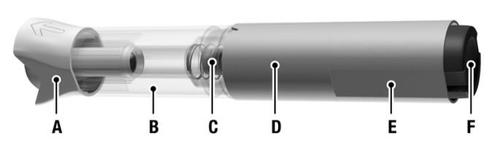
After the injection
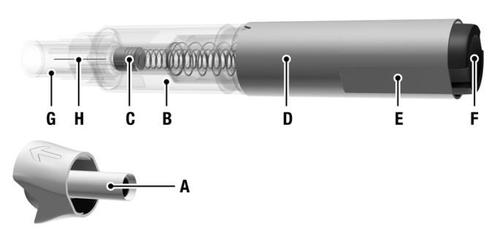
- A. Cap
- B. Transparent window
- C. Plunger
- D. Label
- E. Main body
- F. Button
- G. Protective cylinder
- H. Needle
Before you start
- Wash your hands with soap and water.
- Take RebiDose out of the packaging after removing the plastic cover.
- Check the appearance of Rebif through the transparent window. The solution should be from clear to opalescent, free of particles and visible signs of deterioration. If there are particles or other visible signs of deterioration, do not use the solution and ask your doctor, nurse or pharmacist for advice.
- Check the expiry date on the label or on the RebiDose packaging (indicated with “Exp.”). Do not use RebiDose if the expiry date has passed.
Where to inject RebiDose
- Choice of injection site. Your doctor will inform you about the possible areas where to give the injection (suitable areas are the upper thigh and the lower abdomen).
- Keep a record and rotate the injection sites so that the same area is not used for injections too frequently, in order to minimize skin damage (necrosis).
- NOTE: do not choose an area that is hardened, nodular or painful; for any clarification, consult your doctor or a qualified healthcare professional.
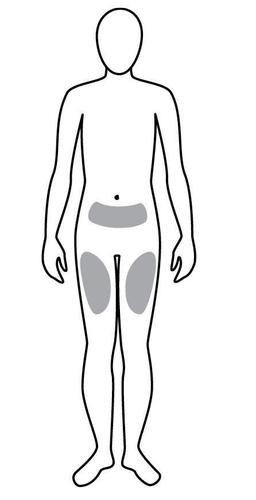
How to inject RebiDose
- Do notremove the cap until you are ready to give the injection.
- Before the injection, use an alcohol swab to clean the injection site. Make sure the skin is dry. If some alcohol remains on the skin, you may feel a stinging sensation.
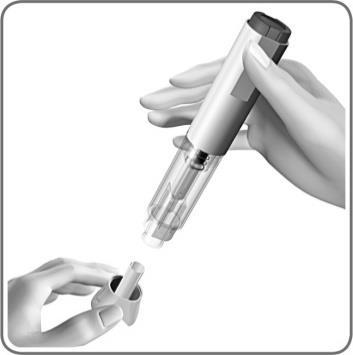
- Hold RebiDose with one hand by grasping the main body and with the other hand remove the cap.
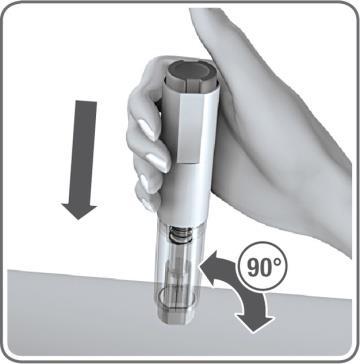
- Place RebiDose on the injection site at a right angle (90 degrees). Push the pen onto the skin until you feel resistance. This will unlock the button.
- While maintaining sufficient pressure on the skin, press the button with your thumb. You will feel a click indicating the start of the injection and the plunger will begin to move. Keep RebiDose pressed against the skin for at least 10 seconds, in order to inject all of the medicine. After the injection has started, it is no longer necessary to keep the button pressed with your thumb.
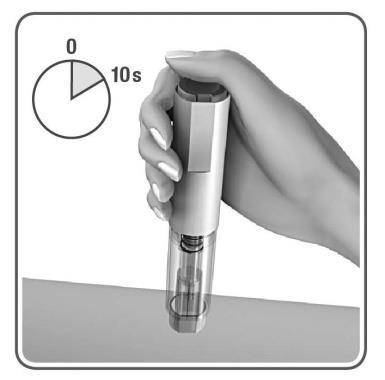
- Remove RebiDose from the injection site. The protective cylinder will automatically cover the needle and lock to protect you from the needle.
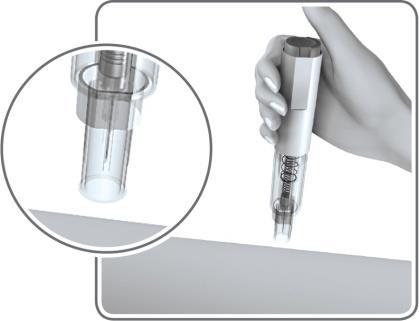
After the injection
- Check through the transparent window to make sure the plunger has moved down, as shown in the figure.
- Check that no liquid remains. If there is liquid, not all of the medicine has been injected; in this case, consult your doctor or nurse.
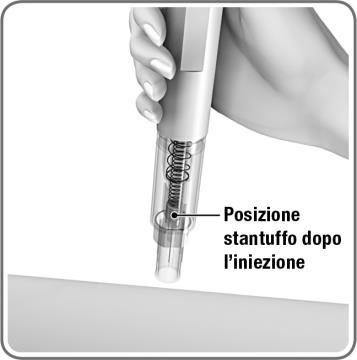
- Gently massage the injection site with a dry cotton ball or gauze.
- Neverput the needle protective cap back on RebiDose that has already been used. This is because the needle is covered by the protective cylinder. Never insert your fingers into the protective cylinder.
- RebiDose is for single use only and must neverbe reused.
- Once the injection is finished, immediately dispose of RebiDose. Ask your pharmacist how to dispose of RebiDose.
For further information, please contact your doctor, nurse or pharmacist.
These Instructions for Use were last updated on:
Rebif 8.8 micrograms injectable solution in pre-filled pen, 22 micrograms injectable solution in pre-filled pen
interferon beta-1a
Starter pack
Read this leaflet carefully before you start using this medicine as it contains important
information for you.
- Keep this leaflet. You may need to read it again.
- If you have any questions, ask your doctor, pharmacist or nurse.
- This medicine has been prescribed for you only. Do not pass it on to others, even if they have the same symptoms as you, as it may be harmful.
- If you get any side effects, even those not listed in this leaflet, tell your doctor, pharmacist or nurse. See section 4.
Contents of this leaflet
- 1. What Rebif is and what it is used for
- 2. What you need to know before you use Rebif
- 3. How to use Rebif
- 4. Possible side effects
- 5. How to store Rebif
- 6. Contents of the pack and other information
1. What is Rebif and what it is used for
Rebif belongs to a class of medicines known as interferons. These are natural substances
that transmit messages between cells. Interferons are produced by the body and play an
essential role in the immune system. Through mechanisms that are not fully
understood, interferons help to limit damage to the central nervous system associated with
multiple sclerosis.
Rebif is a highly purified soluble protein that is similar to the natural beta interferon produced
in the human body.
Rebif is indicated for the treatment of multiple sclerosis. Treatment has been shown to be effective in
reducing the number and severity of relapses, and in slowing the progression of disability. Its
use is also approved in patients who have experienced a single clinical event considered a
likely first sign of multiple sclerosis.
2. What you need to know before using Rebif
Do not use Rebif
- if you are allergic to natural or recombinant interferon beta or to any of the other ingredients of this medicine (listed in section 6),
- if you are currently severely depressed.
Warnings and precautions
Talk to your doctor, pharmacist or nurse before using Rebif.
- Rebif must only be used under the supervision of a doctor.
- Before treatment with Rebif, to reduce the risk of injection site necrosis (skin lesions and tissue destruction), reported in patients treated with Rebif, carefully read and
follow the instructions in the “RebiDose Instructions for Use” provided separately. If you have
experienced problems with local reactions, contact your doctor.
- Talk to your doctor or pharmacist before taking Rebif if you are allergic (hypersensitive) to any other medicine.
- During treatment, blood clots (blood clots) may form in the small blood vessels. These clots could have an effect on the kidneys. The formation of blood clots may occur from several weeks to several years after starting treatment with Rebif. Your doctor may decide to perform checks on your blood pressure, blood (platelet count) and kidney function.
Tell your doctor if you have diseases of the
- bone marrow,
- kidneys,
- liver,
- heart,
- thyroid,
- if you have had episodes of depression,
- if you have had episodes of seizures, so that your doctor can closely monitor your treatment and any worsening of these conditions.
Other medicines and Rebif
Tell your doctor or pharmacist if you are taking, have recently taken or might take any other
medicine.
In particular, tell your doctor if you are taking antiepileptics or antidepressants.
Pregnancy and breastfeeding
If you are pregnant, suspect you are pregnant or are planning a pregnancy, ask your doctor
or pharmacist for advice before taking this medicine.
No harmful effects are expected on newborns/infants breastfed with breast milk. Rebif can be
used during breastfeeding.
Driving and using machines
Your ability to drive or operate machinery may be altered by the underlying disease or by
therapy. This aspect should be discussed with your doctor if it concerns you.
Rebif contains sodium and benzyl alcohol
This medicine contains less than 1 mmol (23 mg) of sodium per dose, i.e. essentially ‘sodium-free’.
This medicine contains 1.0 mg of benzyl alcohol per 0.2 mL dose and 2.5 mg of benzyl
alcohol per 0.5 mL dose. Benzyl alcohol can cause allergic reactions.
Benzyl alcohol has been associated with the risk of serious side effects including breathing problems
(wheezing syndrome) in young children.
Do not use for more than one week in young children (under 3 years of age) unless otherwise
recommended by your doctor or pharmacist.
Ask your doctor or pharmacist if you are pregnant or breastfeeding or if you have a liver or kidney
disease. This is because large amounts of benzyl alcohol can accumulate in the body and
cause side effects (such as metabolic acidosis).
3. How to use Rebif
Use this medicine following the instructions of your doctor exactly. If you have any doubts, consult your
doctor.
Start of treatment
Treatment begins with a gradual increase in dose (the so-called “dose titration”)
over 4 weeks, in order to reduce some undesirable effects, it is recommended:
- During weeks one and two, Rebif 8.8 micrograms must be injected three times a week.
- During weeks three and four, Rebif 22 micrograms must be injected three times a week.
From the fifth week onwards, after completing the initial phase, you should follow the usual dosage
regimen.
Dose
The usual dose is 44 micrograms (12 million IU) three times a week.
A lower dose of 22 micrograms (6 million IU), three times a week is recommended for
patients with multiple sclerosis who do not tolerate the higher dosage.
Rebif must be administered three times a week and, if possible:
- on the same three days of each week (at least 48 hours apart, for example Monday, Wednesday, Friday)
- at the same time of day (preferably in the evening).
Use in children and adolescents (2 to 17 years)
Formal clinical studies have not been conducted in children or adolescents. However, some clinical data
are available suggesting that the safety profile in children and adolescents treated
with Rebif 22 micrograms or with Rebif 44 micrograms three times a week is similar to that
observed in adults.
Use in children (under 2 years of age)
The use of Rebif is not recommended in children under 2 years of age.
Method of administration
- Rebif should be administered with a subcutaneous injection using the pre-filled pen called “RebiDose”.
- Each RebiDose is for single use only.
- The first administration (or the first administrations) must be performed under the supervision of a
qualified healthcare professional. After adequate training, you yourself, a relative, a friend or a
caregiver can administer the medicine at home using the pre-filled Rebif pen. - Before use, carefully read what is stated in the “Instructions for use of RebiDose” provided separately.
Use only a solution from clear to opalescent that does not contain particles and visible signs of
deterioration.
If you use more Rebif than you should
In case of overdose, contact your doctor immediately.
If you forget to use Rebif
If you do not administer a dose, continue treatment from the day the next dose is
scheduled. Do not use a double dose to make up for a missed dose.
If you stop using Rebif
The effects of Rebif may not be immediately apparent. Therefore, you should not stop
treatment with Rebif but continue regularly to achieve the desired results. If you have
any doubts about the benefits of therapy, consult your doctor.
Do not stop treatment without first contacting your doctor.
If you have any further questions on the use of this medicine, ask your doctor, pharmacist or
nurse.
4. Possible side effects
Like all medicines, this medicine can cause side effects, although not everyone will experience them.
Immediately inform your doctor and stop treatment with Rebif if you experience any of the following serious side effects:
- Severe allergic reactions (hypersensitivity).If, shortly after administering Rebif, you experience sudden difficulty in breathing, which may be accompanied by swelling of the face, lips, tongue or throat, skin manifestations, itching all over the body, and a feeling of weakness or dizziness, immediately consult a doctor or a medical emergency center. These reactions are rare(may affect up to 1 in 1,000 people).
- Immediately inform your doctor if you experience any of the following possible symptoms referable to a liver problem: jaundice (yellowing of the skin or whites of the eyes), widespread itching, loss of appetite accompanied by nausea and vomiting, and a tendency to bruise easily. Serious liver problems may be associated with additional signs, such as difficulty concentrating, drowsiness and confusion.
- Depressionis common(may affect up to 1 in 10 people) in patients treated for multiple sclerosis. If you feel depressed or develop suicidal thoughts, contact your doctor immediately.
Consult your doctor if you notice any of the following side effects:
- Flu-like symptoms, such as headache, fever, chills, muscle and joint pain, fatigue, and nausea are very common(may affect more than 1 in 10 people). These symptoms are generally mild and are more frequent at the beginning of treatment and decrease as it continues. To reduce these symptoms, your doctor may prescribe an antipyretic before administering a dose of Rebif and 24 hours after each injection.
- Injection site reactionssuch as redness, swelling, depigmentation, inflammation, pain and skin lesions are very common. The occurrence of injection site reactions usually decreases over time. Tissue destruction (necrosis), abscess and nodule at the injection site are uncommon(may affect up to 1 in 100 people). To minimize the risk of injection site reactions, read the recommendations in “Warnings and precautions”. The injection site may become infected (uncommon); the skin may become swollen, sensitive and hardened and the entire area may be very painful. If you notice the appearance of any of these symptoms, contact your doctor.
- Some laboratory testsmay show alterations. These changes are generally not noticed by the patient (there are no symptoms), are usually reversible and moderate and very often do not require specific treatments. The number of red blood cells, white blood cells or platelets may decrease, individually (very common)or all values simultaneously (rare). Possible symptoms due to these changes may include fatigue, reduced ability to fight infections, bruising or unexplained bleeding. Liver function may be altered (very common). Liver inflammation has also been reported (uncommon). However, if you experience symptoms that may appear referable to liver disorders, such as loss of appetite associated with other symptoms such as nausea, vomiting or jaundice, contact your doctor immediately (see “Immediately inform your doctor…”).
- Thyroid dysfunctionis uncommon. The thyroid gland may function in excess or deficiency. These changes in thyroid activity are rarely noticed by the patient as symptoms, however, the doctor may recommend performing relevant tests.
- Pseudo relapses of multiple sclerosis(frequency not known).It is possible that at the beginning of treatment with Rebif you may experience symptoms similar to those of a relapse of multiple sclerosis. For example, your muscles may be very tense or very weak, preventing you from moving as you wish. Sometimes these symptoms are associated with fever or flu-like symptoms described above. If you notice any of these symptoms, talk to your doctor.
Other possible side effects:
Very common (may affect more than 1 in 10 people):
- Headache
Common (may affect up to 1 in 10 people):
- Insomnia (difficulty falling asleep)
- Diarrhea, nausea, vomiting
- Itching, rash
- Muscle and joint pain
- Fatigue, fever, chills
- Hair loss
Uncommon (may affect up to 1 in 100 people):
- Hives
- Seizures
- Inflammation of the liver (hepatitis)
- Difficulty breathing
- Blood clots such as deep vein thrombosis
- Retinal disorders (back of the eye) such as inflammation or blood clots, resulting in vision problems (visual disturbances, vision loss)
- Increased sweating
Rare (may affect up to 1 in 1,000 people):
- Suicide attempt
- Severe skin reactions, some with mucous membrane lesions
- Thrombi (blood clots) within the small blood vessels that can have an effect on the kidneys (thrombotic thrombocytopenic purpura or hemolytic uremic syndrome). Symptoms may include increased bruising, bleeding, fever, extreme weakness, headache, dizziness or feeling lightheaded. The doctor is likely to find changes in your blood and kidney function.
- Iatrogenic lupus erythematosus: an adverse effect of long-term use of Rebif. Symptoms may include muscle pain, joint pain and swelling, rash. Other signs such as fever, weight loss and fatigue may also appear. Generally, the symptoms disappear within one or two weeks after stopping treatment.
- Kidney problems, including scarring that can reduce kidney function. If you experience any or all of the following symptoms:
- foamy urine
- fatigue
- swelling, especially in the ankles and eyelids, and weight gain, inform your doctor, as these may be signs of a possible kidney problem.
The following side effects have been reported for interferon beta (frequency not known)
- Dizziness
- Nervousness
- Loss of appetite
- Vasodilation and palpitations
- Irregularities and/or changes in menstrual flow
- Pulmonary arterial hypertension - a disease that causes severe narrowing of the blood vessels in the lungs, leading to increased pressure in the vessels that carry blood from the heart to the lungs. Pulmonary arterial hypertension has been observed at various times during treatment, even years after starting Rebif treatment.
- Inflammation of the subcutaneous adipose tissue (panniculitis) which may cause a feeling of hardened skin and possibly the formation of red and painful patches or nodules.
You should not stop or change your prescription without consulting your doctor.
Children and adolescents
Side effects in children and adolescents are similar to those observed in adults.
Reporting of side effects
If you experience any side effects, including those not listed in this leaflet, please inform your
doctor, pharmacist or nurse. You can also report side effects directly
through the national reporting system reported in Annex V. By reporting side effects
you can contribute to providing more information on the safety of this medicine.
5. How to store Rebif
Keep this medicine out of the sight and reach of children.
Do not use this medicine after the expiry date which is stated on the label after Exp.
Store in a refrigerator (2°C – 8°C).
Do not freeze. (Be careful not to place the product near the freezer compartment, to avoid accidental
freezing).
The package of Rebif in use can be stored outside the refrigerator at a temperature not
exceeding 25°C for a single time for a period with a maximum duration of 14 days.
Afterwards Rebif must be returned to the refrigerator and used before the expiry date.
Store in the original package to protect the medicine from light.
Do not use this medicine if you notice any visible sign of deterioration, for example if the
solution is no longer clear or if it contains particles.
Do not dispose of any medicine in wastewater or household waste. Ask your pharmacist how to
dispose of medicines you no longer use. This will help protect the environment.
6. Contents of the pack and other information
What Rebif contains
- The active ingredient is interferon beta-1a.
- Each pre-filled pen containing 8.8 micrograms contains 8.8 micrograms of Interferon beta-1a (2.4 million IU).
- Each pre-filled pen containing 22 micrograms contains 22 micrograms of Interferon beta-1a (6 million IU).
- The other ingredients are: mannitol, poloxamer 188, L-methionine, benzyl alcohol, sodium acetate, acetic acid, sodium hydroxide and water for injections.
Description of Rebif and contents of the pack
Rebif 8.8 micrograms is available as an injection solution in a pre-filled pen for self
administration. The pre-filled pen is ready for use and contains 0.2 mL of solution.
Rebif 22 micrograms is available as an injection solution in a pre-filled pen for self
administration. The pre-filled pen is ready for use and contains 0.5 mL of solution.
The solution of Rebif is from clear to opalescent.
Rebif 8.8 micrograms and Rebif 22 micrograms are supplied in a starter pack,
which is designed for use during the initial 4 weeks of treatment, during which a
gradual increase in the dose of Rebif is recommended.
The monthly starter pack contains six pre-filled pens of Rebif 8.8 micrograms
and six pre-filled pens of Rebif 22 micrograms.
Marketing Authorisation Holder
Merck Europe B.V.
Gustav Mahlerplein 102
1082 MA Amsterdam
The Netherlands
Manufacturer
Merck Serono S.p.A.
Via delle Magnolie 15
I-70026 Modugno (Bari)
Italy
Other sources of information
More detailed information on this medicine is available on the website of the European
Medicines Agency, http://www.ema.europa.eu .
Instructions for use of RebiDose
HOW TO USE REBIF PRE-FILLED PEN (RebiDose)
- This section explains how to use RebiDose.
- Rebif should be administered with an injection under the skin (subcutaneously).
- Each RebiDose is for single use only.
- The first administration (or the first few administrations) should be carried out under the supervision of a qualified healthcare professional. After adequate training, you yourself, a relative, a friend or a carer can administer the medicine at home using RebiDose. If you have any questions about the injection, ask your doctor, nurse or pharmacist for advice.
- Read the instructions below carefully before using RebiDose.
Materials needed
To perform the self-injection you will need:
- a new RebiDose
- alcohol swabs or similar
- a dry cotton ball or gauze.
The following figure shows the components of RebiDose.
Before the injection
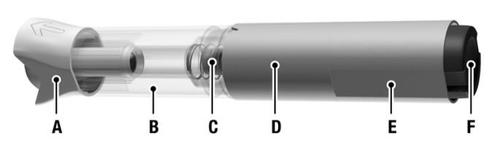
After the injection
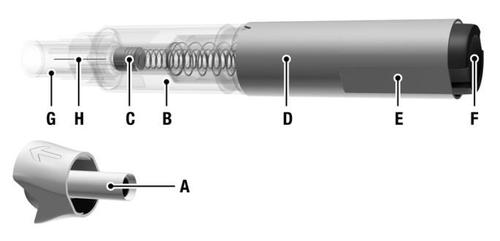
- A. Cap
- B. Transparent window
- C. Plunger
- D. Label
- E. Main body
- F. Button
- G. Protective cylinder
- H. Needle
Before you start
- Wash your hands with soap and water.
- Take RebiDose out of the packaging after removing the plastic cover.
- Check the appearance of Rebif through the transparent window. The solution should be from clear to opalescent, free from particles and visible signs of deterioration. If there are particles or other visible signs of deterioration, do not use the solution and ask your doctor, nurse or pharmacist for advice.
- Check the expiry date on the label or packaging of RebiDose (indicated with “Exp.”). Do not use RebiDose if the expiry date has passed.
Where to inject RebiDose
- Choice of injection site. Your doctor will inform you about the possible areas where to give the injection (suitable areas are the upper thigh and the lower abdomen).
- Keep a record and rotate the injection sites so that the same area is not used for injections too frequently, in order to minimise skin damage (necrosis).
- NOTE: do not choose an area that is hardened, nodular or painful; for any clarification consult your doctor or a qualified healthcare professional.
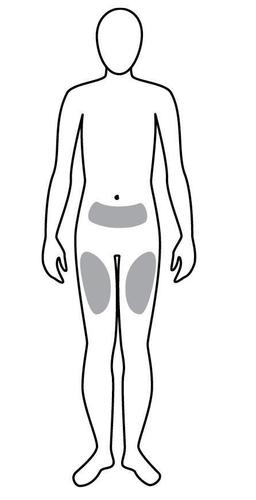
How to inject RebiDose
- Do notremove the cap until you are ready to give the injection.
- Before the injection, use an alcohol swab to clean the injection site. Make sure the skin is dry. If some alcohol remains on the skin, you may feel a stinging sensation.
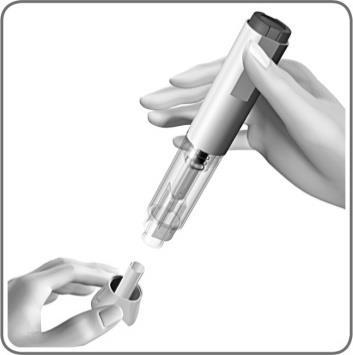
- Hold RebiDose with one hand by gripping the main body and with the other hand remove the cap.
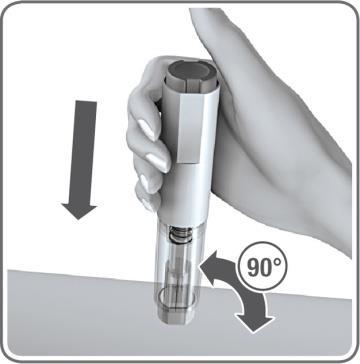
- Place RebiDose on the injection site at a right angle (90 degrees). Push the pen onto the skin until you feel resistance. This will unlock the button.
- While maintaining sufficient pressure on the skin, press the button with your thumb. You will feel a click indicating the start of the injection and the plunger will begin to move. Keep RebiDose pressed against the skin for at least 10 seconds, so that all the medicine is injected. After the injection has started, it is no longer necessary to keep the button pressed with your thumb.
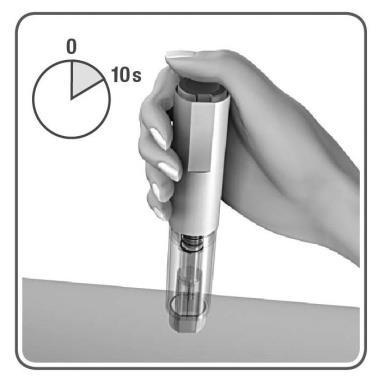
- Remove RebiDose from the injection site. The protective cylinder will automatically cover the needle and lock to protect you from the needle.
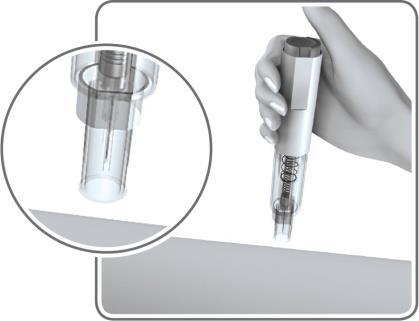
After the injection
- Check through the transparent window to make sure that the plunger has moved down, as shown in the figure.
- Check that no liquid remains. If there is liquid, not all the medicine has been injected; in this case, consult your doctor or nurse.
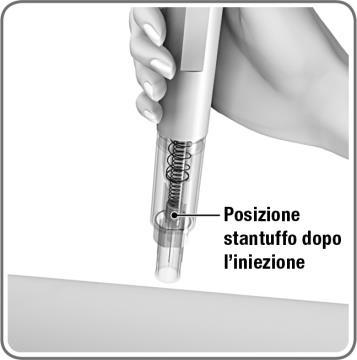
- Gently massage the injection site with a dry cotton ball or gauze.
- Neverput the needle cap back on a used RebiDose. This is because the needle is covered by the protective cylinder. Never insert your fingers into the protective cylinder.
- RebiDose is for single use only and must neverbe reused.
- Once the injection is finished, dispose of RebiDose immediately. Ask your pharmacist how to dispose of RebiDose.
For further information, please contact your doctor, nurse or pharmacist.
These Instructions for Use were last updated on:

- Країна реєстрації
- Лікарська формаInjectable solution, 22 MCG (6 MUI)/0,5 ML
- Код АТХL03AB07
- Діюча речовина
- Потрібен рецептТак
- Виробник
- Ця інформація надана лише для ознайомлення і не є медичною порадою. Рішення щодо лікування завжди приймає лікар.
- Альтернативи до REBIFЛікарська форма: Powder and solvent for injectable solution, 30 MCGДіюча речовина: Интерферон бета-1aВиробник: BIOGEN NETHERLANDS BVПотрібен рецептЛікарська форма: Injectable solution, 250 MCG/0.5 MLДіюча речовина: ropeginterferon alfa-2bВиробник: AOP ORPHAN PHARMACEUTICALS gmbhПотрібен рецептЛікарська форма: Powder and solvent for injectable solution, 0,25 MG + 2 MLДіюча речовина: Интерферон бета-1bВиробник: BAYER AGПотрібен рецепт
Аналоги REBIF в інших країнах
Препарати з тією самою діючою речовиною, доступні в інших країнах.
Аналог REBIF у Іспанія
Аналог REBIF у Україна
Лікарі онлайн щодо REBIF
Застосування, безпека та можливість призначення рецепта — за результатами медичної оцінки.









Отримайте рецепт на REBIF онлайн
Заповніть форму за 2 хвилини
Розкажіть про симптоми, історію хвороби та потрібний препарат.
Оберіть лікаря або ми призначимо
Оберіть спеціаліста або ми підберемо найближчого доступного лікаря.
Лікар розглядає ваш випадок
Зазвичай протягом 30 хвилин. Може ставити уточнювальні запитання в чаті.
Отримайте в будь-якій аптеці
Електронний рецепт надсилається на вашу пошту — дійсний по всій Польщі.
Часті запитання
REBIF потребує рецепта в Італія. Ви можете обговорити з лікарем онлайн, чи підходить цей лікарський засіб для вашої ситуації.
Діюча речовина у REBIF — Интерферон бета-1a. Це допомагає визначити препарати з тим самим складом, але під іншими торговими назвами.
REBIF виробляється компанією MERCK EUROPE B.V.. Назва бренду та упаковка можуть відрізнятися залежно від дистрибʼютора.
Лікарі, зокрема Сімейні лікарі, Психіатри, Дерматологи, Кардіологи, Ендокринологи, Гастроентерологи, Пульмонологи, Нефрологи, Ревматологи, Гематологи, Інфекціоністи, Алергологи, Геріатри, Педіатри, Онкологи, можуть оцінити доцільність застосування REBIF з урахуванням вашого стану та місцевих правил. Ви можете записатися на онлайн-консультацію, щоб обговорити симптоми та можливі подальші кроки.
Польща має добре розвинену систему охорони здоров'я у великих містах, таких як Варшава, Краків, Вроцлав і Гданськ. Аптеки широко доступні та працюють відповідно до чинного законодавства, забезпечуючи доступ до рецептурних препаратів.
Ви можете придбати REBIF у Варшаві, Кракові, Вроцлаві або Гданську в будь-якій аптеці за наявності дійсного рецепта.
Щоб отримати рецепт, ви можете скористатися Oladoctor:
Інші препарати з тією самою діючою речовиною (Интерферон бета-1a) включають AVONEX, BESREMI, BETAFERON. Вони можуть відрізнятися торговою назвою або формою випуску, але містять той самий терапевтичний компонент. Перед зміною або початком прийому нового препарату варто проконсультуватися з лікарем.
