



PLEYRIS 25 mg Proszek Do Roztworu Do Wstrzykiwań

Ocena recepty online
Lekarz przeanalizuje Twój przypadek i zdecyduje, czy wystawienie recepty jest medycznie uzasadnione.

Porozmawiaj z lekarzem o tym leku
Omów swoje objawy i opcje leczenia podczas szybkiej konsultacji online.



Jak stosować PLEYRIS
Treść ulotki
PLEYRIS 25 mg injectable solution
Progesterone
Read this leaflet carefully before using this medicine as it contains important
information for you.
- Keep this leaflet. You may need to read it again.
- If you have any questions, ask your doctor or pharmacist.
- This medicine has been prescribed only for you. Do not give it to other people, even if their symptoms are the same as yours, as it could be dangerous.
- If any side effects occur, including those not listed in this leaflet, tell your doctor or pharmacist.
- PLEYRIS 25 mg injectable solution will be referred to as PLEYRIS hereinafter.
Contents of this leaflet:
- 1. What PLEYRIS is and what it is used for
- 2. What you need to know before you use PLEYRIS
- 3. How to use PLEYRIS
- 4. Possible side effects
- 5. How to store PLEYRIS
- 6. Contents of the pack and other information
1. What is PLEYRIS and what is it used for
PLEYRIS contains the active ingredient progesterone. Progesterone is a sex hormone produced
naturally by the female body. The medicine acts on the uterine wall, promoting the initiation
and continuation of pregnancy.
PLEYRIS is indicated for women in whom an inability to use or an
intolerance to vaginal preparations has been observed and who require progesterone supplementation when in
treatment with assisted reproductive technology (ART).
2. What you need to know before using PLEYRIS
Do not use PLEYRIS
- If you are allergic (hypersensitive) to progesterone or to any of the other ingredients of this medicine (listed in section 6)
- If you suffer from vaginal bleeding (other than that related to your normal menstrual cycle) that has not been evaluated by your doctor
- If you have a spontaneous abortion and your doctor suspects the presence of tissue remnants in the uterus
- If you have had an ectopic pregnancy (pregnancy outside the uterus)
- If you suffer from or have suffered from severe liver disorders
- If you have or have suspected cancer of the breast or reproductive tract
- If you show or have shown in the past the presence of blood clots in the lower limbs, lungs, eyes, or other parts of the body
- If you suffer from porphyria (a group of hereditary or acquired disorders due to an alteration in the activity of certain enzymes)
- If you suffered from jaundice (yellowing of the eyes and skin caused by liver disorders), intense itching and/or skin blisters during pregnancy
- If you are under 18 years of age.
Warnings and precautions
Take special care with PLEYRIS
If you experience any of the following symptoms during treatment, tell your doctor immediatelybecause it may be necessary to stop treatment. Tell your doctor also if the symptoms appear some days after stopping the medicine.
- Heart attack (chest pain or back pain and/or intense throbbing pain in one or both arms, sudden shortness of breath, sweating, dizziness, feeling faint, nausea, palpitations)
- Stroke (severe headache or vomiting, dizziness, fainting or changes in vision or speech, weakness or numbness in one arm or leg)
- Blood clots in the eyes or other parts of the body (eye pain or pain and swelling in the ankles, feet, and hands)
- Worsening of depressive symptoms
- Severe headaches, changes in vision.
Before starting treatment with PLEYRIS
Tell your doctor if you have suffered from or suffer from any of the following disorders before starting treatment with PLEYRIS:
- Liver disorders (mild or moderate)
- Epilepsy
- Migraine
- Asthma
- Heart or kidney disorders
- Diabetes
- Depression In such cases, your doctor will monitor you closely during treatment.
Children and adolescents
The medicine should not be given to children and adolescents.
Other medicines and PLEYRIS
Tell your doctor or pharmacist if you are taking, have recently taken, or might take any other medicines, including over-the-counter medicines and herbal remedies. Some medicines can interact with Pleyris. For example:
- Carbamazepine (used to treat seizures/spasms)
- Rifampicin (antibiotic)
- Griseofulvin (antifungal drug)
- Phenytoin and phenobarbital (used in the treatment of epileptic conditions)
- Herbal products containing St. John's wort
- Cyclosporine (a drug used to treat some types of inflammatory conditions and after organ transplantation)
- Antidiabetic drugs
- Ketoconazole (antifungal drug)
Do not administer PLEYRIS at the same time as any other injectable medicine.
Pregnancy and breastfeeding
Ask your doctor or pharmacist for advice before taking any medicine.
- PLEYRIS can be used during the first three months of pregnancy
- This medicine should not be taken during breastfeeding.
Driving and using machines
Do not drive and do not use tools or machines if you feel drowsy or dizzy while using PLEYRIS.
Pleyris contains hydroxypropyl betadex
If you have kidney problems, talk to your doctor before taking this medicine.
3. How to use PLEYRIS
Use this medicine following the doctor's instructions exactly. PLEYRIS must be
used exclusively under the supervision of a doctor experienced in the treatment of
fertility disorders.
How much PLEYRIS should you use and for how long?
The recommended dose is one injection a day of 25 mg generally until reaching 12
weeks from confirmation of pregnancy (i.e. 10 weeks of treatment).
How to administer PLEYRIS
PLEYRIS can be administered under the skin (subcutaneous injection) for doses of 25 mg or into the muscle
(intramuscular injection) for doses of 25 mg.
Subcutaneous administration of 25 mg of PLEYRIS should be performed after adequate
consultation and training by the doctor or a healthcare professional.
Subcutaneous injection:
Before proceeding with the PLEYRIS injection, you will receive instructions and advice on:
- Practical exercises for subcutaneous injections
- Where to inject the medicine
- How to prepare the injectable solution
- How to administer the medicine.
Read the following instructions on the preparation and administration of PLEYRIS.
Self-administration of the medicine consists of the following steps:
A Preparation of the injection
B Package check
C Preparation of the vial and syringe
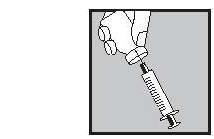
D Filling the syringe
E Changing the injection needle
F Removing air bubbles
G Injection for subcutaneous administration
H Disposal of used components.
Below is a detailed description of each individual step.
IMPORTANT: each vial must be used only once. Solutions must be
used immediately after opening the vial. They must not be stored in the syringe.
- A. Preparation of the injectionIt is important to ensure maximum cleanliness. Start by washing your hands thoroughly, drying them with a clean cloth. Choose a clean area where you can prepare the medicine:
- A vial containing PLEYRIS solution for injection
The following components are notsupplied with the medicine. The supply of these components is
the responsibility of the doctor or pharmacist.
- A syringe
- A large needle (usually a 21G green needle; for intramuscular administration)
- A short thin needle (usually a 27G grey needle; for subcutaneous injection)
- Two alcohol-soaked swabs
- A sharps container (for the safe disposal of needles, vials, etc.)
- B. Package check
- The PLEYRIS vial, the syringe and the needles are all equipped with protective caps.
- Check that all caps are securely in place. If not, or if they are damaged, do not use them.
- Make sure that the expiry date on the PLEYRIS vial is still valid. Do not use products that have expired.
C. Preparation of the vial and syringe
- D. Filling the syringe
n | t I
|
| A |
|
o
|
- E. Changing the injection needleThis step is only necessary for subcutaneous administration. If the doctor performs an intramuscular administration, he/she will proceed with the preparation of the dose and the administration of the injection.
- Place the cap on the large 21G green needle, then remove the large needle from the syringe
- Remove the thin injection 27G grey needle from the packaging, without removing the cap
- Attach the thin 27G grey needle to the syringe, then remove the needle cap.
- F. Removing air bubbles
- G. Injection for subcutaneous administration
- The doctor or healthcare professional will have already shown you where to inject PLEYRIS (e.g. abdomen or front of the thigh)
- Open the alcohol-soaked swab and thoroughly clean the skin area where you will give the injection, then let it dry
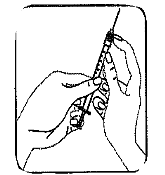
- Hold the syringe in one hand. With the other hand, pinch the skin lightly in the area of the injection site between your thumb and index finger
 |
|
n z i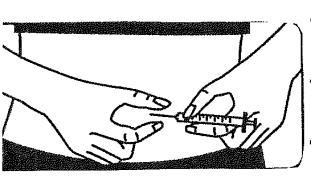 |
|
- Insert the thin 27G grey needle completely into the skin. Do not injectdirectly into a vein
- Inject the solution by applying slight pressure on the plunger with a slow and steady movement until the solution is completely injected under the skin. Inject all the prescribed solution
- Release the skin and withdraw the needle while keeping it in a vertical position
- Clean the injection site with an alcohol-soaked swab in a circular motion.
- H. Disposal of used components:
- Once the injection is finished, put all the needles, empty vials and syringes back into the sharps container.
- Any unused solution must be disposed of.
The injection for intramuscular administration must be performed only by a doctor or a
healthcare professional
For all intramuscular injections, the doctor or any other healthcare professional will perform
the injection.
The PLEYRIS injection will be given on the outer side of the thigh or buttock. The doctor or
healthcare professional will clean the skin area where the injection will be given using an alcohol-soaked swab and let it dry. With a quick vertical movement, they will insert the larger needle into the muscle. They will inject the solution by applying slight pressure on the plunger with a
slow and steady movement until the solution is completely injected into the muscle. They will withdraw the needle
keeping it in a vertical position and clean the injection site with an alcohol-soaked swab.
If you use more PLEYRIS than you should
Inform your doctor or pharmacist. Symptoms of an overdose include drowsiness.
If you forget to use PLEYRIS
Take the dose as soon as you remember, then continue as before. Do not use a double dose to
make up for the missed dose. Inform your doctor of what happened.
If you stop using PLEYRIS
Do not stop using PLEYRIS without first consulting your doctor or pharmacist.
Suddenly stopping treatment with PLEYRIS may lead to increased anxiety, mood changes and an increased risk of seizures (fits).
If you have any doubts about using this medicine, ask your doctor or pharmacist.
4. Possible Undesirable Effects
Like all medicines, PLEYRIS can cause undesirable effects, although not everybody gets them.
manifest.
Stop using this medicine and contact your doctor immediately if you notice any of the
following undesirable effects:
- Ovarian hyperstimulation (symptoms include pain in the lower abdominal region,feeling of thirst and nausea, sometimes with associated vomiting, passage of reduced amountsof concentrated urine and weight gain)
- depression
- yellowing of the skin or the whites of the eyes (jaundice)
- severe allergic reactions that may cause difficulty breathing, swelling of the face and throat or severe skin rash (anaphylactoid reactions).
Very common(may affect more than 1 in 10 people):
- Pain, redness, itching, irritation or swelling at the injection site
- Uterine spasm
- Vaginal bleeding.
Common(may affect up to 1 in 10 people):
- Headache
- Bloated stomach
- Stomach pain
- Constipation
- Vomiting and nausea
- Breast tension and/or breast pain
- Vaginal discharge
- Skin irritation associated with tingling or discomfort or itching in the vagina and surrounding area
- Hardening of the area around the injection site
- Bruising around the injection site
- Fatigue (excessive tiredness, weakness, lethargy).
Uncommon(may affect up to 1 in 100 people):
Mood changes
Dizziness
Insomnia
Stomach and intestinal disorders (including discomfort and/or bloating, belching,
painful spasms and retching)
Skin rashes (including warm and red skin or papules or raised itchy blisters or
dry, cracked or blistered skin, or swelling)
Swelling and/or breast enlargement
Feeling of warmth
General feeling of discomfort or "feeling of unwellness"
Pain.
Not known: frequency cannot be estimated from available data
The disorders listed below, even if not reported by patients in clinical studies with
PLEYRIS, have been identified with the use of other progestins: difficulty sleeping (insomnia), premenstrual
syndrome and menstrual disorders, hives, acne, excessive hair growth, hair loss
(alopecia), weight gain.
Reporting of undesirable effects
If you get any side effects, even those not listed in this leaflet, tell your
doctor or pharmacist. You can also report side effects directly through the national reporting system at
“https://www.aifa.gov.it/content/segnalazioni-reazioni-
avverse”. By reporting side effects you can help provide more information on the
safety of this medicine.
5. How to store PLEYRIS
Keep this medicine out of the sight and reach of children.
Store at a temperature below 25 C. Do not refrigerate or freeze.
Store in the original packaging to protect the product from light.
The medicine must be used immediately after opening.
Any remaining solution must be discarded.
Do not use this medicine after the expiry date which is stated on the label after “Exp”: the expiry
date refers to the last day of that month.
Do not use this medicine if you notice the presence of particles in the solution or if the solution is not
clear.
Do not dispose of any medicine in wastewater or household waste. Ask your pharmacist how to
dispose of medicines you no longer use. This will help protect the environment.
6. Contents of the pack and other information
What PLEYRIS contains
The active ingredient is progesterone. Each vial (1.112 ml) contains 25 mg of progesterone
(theoretical concentration 22.48 mg/ml).
The other ingredients are: hydroxypropyl betadex, water for injections
Description of the appearance of PLEYRIS and contents of the pack
PLEYRIS is a clear, colorless solution supplied in a colorless glass vial.
Each pack contains 1, 7 or 14 vials. Not all pack sizes may be marketed
Marketing authorisation holder and manufacturer
IBSA Farmaceutici Italia Srl, Via Martiri di Cefalonia 2, 26900 Lodi
Manufacturer
Pharmasure Limited (for UK)
Units 4-6 Colonial Business Park, Colonial Way
Watford WD24 4PR
United Kingdom
Imed Poland Sp. z o.o. (for PL)
314, Pulawska Str.
02-819 Warsaw
Poland
Hälsa Pharma GmbH (for DE)
Hafenweg 18-20
D-48155 Münster
Germany
This medicinal product is authorised in the Member States of the European Economic Area with the
following names: (the dosage and pharmaceutical form are identical in all countries,
only the trade name is different)
Austria: Progedex
Belgium: Inprosub
Bulgaria, Cyprus, Denmark, Finland, Germany, Greece, Norway, Netherlands, Poland,
Portugal, Czech Republic, Romania, Slovakia, Spain, Sweden, Hungary: Prolutex
Estonia, Latvia, Lithuania, United Kingdom: Lubion
France: Progiron
Italy: Pleyris
Luxembourg: Inprosub
If you have difficulty reading or understanding this leaflet, or if you require a different format,
please contact IBSA Farmaceutici Italia Srl, Via Martiri di Cefalonia 2, 26900 Lodi (Tel. +39(0) 371
617292, e-mail [email protected])
PLEYRIS 25 mg injectable solution in pre-filled syringe
progesterone
Read this leaflet carefully before using this medicine as it contains important
information for you.
- Keep this leaflet. You may need to read it again.
- If you have any questions, ask your doctor or pharmacist.
- This medicine has been prescribed for you only. Do not pass it on to others, even if their symptoms are the same as yours, as it could be harmful.
- If you experience any side effects, including those not listed in this leaflet, tell your doctor or pharmacist. See section 4.
Contents of this leaflet:
- 1. What PLEYRIS is and what it is used for
- 2. What you need to know before using PLEYRIS
- 3. How to use PLEYRIS
- 4. Possible side effects
- 5. How to store PLEYRIS
- 6. Contents of the pack and other information
7. What is PLEYRIS and what is it used for
PLEYRIS contains the active ingredient progesterone. Progesterone is a sex hormone produced
naturally by the female body. The medicine acts on the uterine wall, promoting the initiation
and continuation of pregnancy.
PLEYRIS is indicated for women in whom an inability to use or intolerance to vaginal preparations has been observed and who require progesterone supplementation when undergoing
assisted reproductive technology (ART).
8. What you need to know before using PLEYRIS
Do not use PLEYRIS
- If you are allergic to progesterone or to any of the other ingredients of this medicine (listed in section 6)
- If you suffer from vaginal bleeding (other than that related to your normal menstrual cycle) that has not been evaluated by your doctor
- If you have a spontaneous abortion and your doctor suspects the presence of tissue remnants in the uterus
- If you are currently experiencing an ectopic pregnancy (pregnancy outside the uterus)
- If you suffer from or have suffered from severe liver disorders
- If you are affected by known or suspected cancer of the breast or reproductive tract
- If you currently show or have previously shown the presence of blood clots in the lower limbs, lungs, eyes, or other parts of the body
- If you are affected by porphyria (a group of hereditary or acquired disorders due to an alteration in the activity of certain enzymes)
- If you suffered from jaundice (yellowing of the eyes and skin caused by liver disorders), intense itching and/or skin blisters during pregnancy
- If you are under 18 years of age.
Warnings and precautions
Pay particular attention with PLEYRIS
If you experience any of the following symptoms during treatment, immediately inform your
doctoras it may be necessary to stop treatment. Inform your doctor even if
the symptoms appear some days after taking the last dose.
- Heart attack (chest pain or back pain and/or intense, throbbing pain in one or both arms, sudden shortness of breath, sweating, dizziness, feeling faint, nausea, palpitations)
- Stroke (severe headache or vomiting, dizziness, fainting or changes in vision or speech, weakness or numbness of one arm or leg)
- Blood clots in the eyes or other parts of the body (eye pain or pain and swelling in the ankles, feet and hands)
- Worsening of depressive symptoms
- Severe headaches, changes in vision.
Before starting treatment with PLEYRIS
Tell your doctor if you have suffered from or are suffering from any of the following conditions before starting
treatment with PLEYRIS:
- Liver disorders (mild or moderate)
- Epilepsy
- Migraine
- Asthma
- Heart or kidney disorders
- Diabetes
- Depression In such cases, your doctor will closely monitor you during treatment.
Children and adolescents
The medicine should not be administered to children and adolescents.
Other medicines and PLEYRIS
Tell your doctor or pharmacist if you are taking, have recently taken or might take any other
medicines, including over-the-counter medicines and herbal remedies. Some
medicines may interact with Pleyris. For example:
- Carbamazepine (used to treat seizures/spasms)
- Rifampicin (antibiotic)
- Griseofulvin (antifungal drug)
- Phenytoin and phenobarbital (used in the treatment of epileptic conditions)
- Herbal products containing St. John's wort
- Cyclosporine (drug used to treat some types of inflammatory conditions and after organ transplantation)
- Antidiabetic drugs
- Ketoconazole (antifungal drug)
Do not administer PLEYRIS concurrently with any other injectable medicine.
Pregnancy and breastfeeding
Ask your doctor or pharmacist for advice before taking any medicine.
- PLEYRIS can be used during the first three months of pregnancy
- This medicine should not be taken during breastfeeding.
Driving and using machines
Do not drive and do not use tools or machines if you feel drowsy or dizzy while using PLEYRIS.
Pleyris contains sodium
This medicine contains less than 1 mmol (23 mg) of sodium per dose, i.e. essentially ‘sodium-free’.
9. How to use PLEYRIS
Always use this medicine exactly as your doctor has told you. If you have any doubts, consult your doctor. Remember, PLEYRIS must be used exclusively under the supervision of a doctor experienced in the treatment of fertility disorders.
How much PLEYRIS should you use and for how long?
The recommended dose is one injection per day of 25 mg, generally until 12 weeks from confirmation of pregnancy are reached (i.e. 10 weeks of treatment).
How to administer PLEYRIS
PLEYRIS must be administered under the skin (subcutaneous injection, i.e. s.c.)
You will be able to perform the subcutaneous administration of 25 mg of PLEYRIS after adequate consultation and training provided by the doctor or a healthcare professional.
Before proceeding with the PLEYRIS injection, you will receive instructions and advice regarding:
- Practical exercises for subcutaneous injections.
- Where to inject the medicine.
- How to administer the medicine.
Read the following instructions on the preparation and administration of PLEYRIS.
Self-administration of the medicine consists of the following steps:
A Preparation of the injection
B Package check
C Injection
D Disposal of used components
Below is a detailed description of each individual step.
- A. Preparation of the injection
It is important to ensure maximum cleanliness. Start by washing your hands thoroughly and drying them with a clean towel. Choose a clean area where you can prepare the injection.
The following components are notsupplied with the medicine. The supply of these components is the responsibility of the doctor or pharmacist.
- Two alcohol-soaked swabs
- A sharps container (for the safe disposal of prefilled syringes, etc.)
- B. Package check
- Do not use the medicine if the package is open or damaged.
- Verify that the prefilled syringe of Pleyris contains the solution.
- Make sure that the expiry date on the prefilled syringe of PLEYRIS is still valid. Do not use products that are expired.
C . Injection
- The doctor or healthcare professional will have already shown you where to inject PLEYRIS (e.g. abdomen or front of the thigh)
- Do not press the plunger before the injection. This could lead to a loss of medicine.
- Open the alcohol-soaked swab and carefully clean the area of skin where you will administer the injection, then let it dry
- Remove the cap. Once the cap is removed, do not touch anything with the needle. This is to ensure that the needle remains clean (sterile).
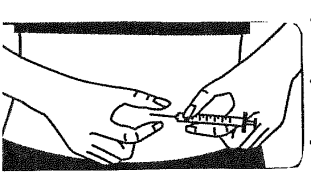
- Hold the syringe in one hand. With the other hand, gently pinch the skin in the area of the injection site between your thumb and index finger
 | a
|
- Insert the needle completely into the skin. Do not inject directly into a vein
- Inject the solution by applying gentle pressure on the plunger with a slow and steady movement until the solution is completely injected under the skin. Inject all the prescribed solution
- Release the skin and withdraw the needle while keeping it in a vertical position
- Clean the injection site with an alcohol-soaked swab using a circular motion.
Each prefilled syringe is for single use only.
- D. Disposal of used components:
- Once the injection is finished, replace the prefilled syringe in the sharps container.
If you use more PLEYRIS than you should
Inform your doctor or pharmacist. Symptoms of an overdose include drowsiness.
If you forget to use PLEYRIS
Take the dose as soon as you remember, then continue as before. Do not use a double dose to make up for the missed dose. Inform your doctor of what happened.
If you stop using PLEYRIS
Do not stop treatment with PLEYRIS without first consulting your doctor or pharmacist.
Suddenly stopping treatment with PLEYRIS may lead to increased anxiety, mood changes and an increased risk of seizures (fits).
If you have any doubts about using this medicine, ask your doctor or pharmacist.
10. Possible Undesirable Effects
Like all medicines, this medicine can cause undesirable effects, although not everybody will experience them.
Stop using this medicine and contact your doctor immediately if you notice any of the
following undesirable effects:
- Ovarian hyperstimulation (symptoms include pain in the lower abdominal region, feeling thirsty and nauseous, in some cases with associated vomiting, passing of reduced amounts of concentrated urine and weight gain),
- Depression,
- yellowing of the skin or the whites of the eyes (jaundice),
- severe allergic reactions that may cause difficulty breathing, swelling of the face and throat or severe skin rash (anaphylactoid reactions).
Very common(may affect more than 1 in 10 people):
- Pain, redness, itching, irritation or swelling at the injection site
- Uterine spasm
- Vaginal bleeding
Common(may affect up to 1 in 10 people):
- Headache
- Bloated stomach
- Stomach pain
- Constipation
- Vomiting and nausea
- Breast tension and/or breast pain
- Vaginal discharge
- Skin irritation associated with tingling or discomfort or itching on the vagina and in the surrounding area
- Hardening of the area surrounding the injection site
- Bruising around the injection site
- Fatigue (excessive tiredness, weakness, lethargy)
Uncommon(may affect up to 1 in 100 people):
Mood changes
Dizziness
Insomnia
Stomach and intestinal disorders (including discomfort and/or tension in the stomach, aerophagia,
painful spasms and retching)
Skin rashes (including warm and reddened skin or papules or raised itchy blisters or
dry, cracked or blistered skin, or swollen skin)
Swelling and/or breast enlargement
Feeling of warmth
General feeling of discomfort or "feeling of bad mood"
Pain
Not known: frequency cannot be estimated based on available data
The disorders listed below, even if not reported by patients in the context of clinical studies with
PLEYRIS, have been identified with the use of other progestogens: difficulty sleeping (insomnia), premenstrual
syndrome and menstrual disorders, urticaria, acne, excessive hair growth, hair loss
(alopecia), weight gain.
Reporting of undesirable effects
If you get any side effects, even those not listed in this leaflet, please tell your
doctor or pharmacist. You can also report side effects directly through the national reporting system at “https://www.aifa.gov.it/content/segnalazioni-reazioni-
avverse”. By reporting side effects you can help provide more information on the
safety of this medicine.
11. How to store PLEYRIS
Keep this medicine out of the sight and reach of children.
Do not refrigerate or freeze.
Store in the original packaging to protect the product from light.
Do not use this medicine after the expiry date which is stated on the box and on the label of the
syringe after “Exp”.
Do not use this medicine if you notice the presence of particles in the solution or if the solution is not
clear.
Each pre-filled syringe is for single use only.
Do not dispose of any medicine in wastewater or household waste. Ask your pharmacist how to
dispose of medicines you no longer use. This will help protect the environment.
12. Package Contents and Other Information
What PLEYRIS contains
The active ingredient is progesterone. Each pre-filled syringe (1.112 ml) contains 25 mg of progesterone
(theoretical concentration 22.48 mg/ml).
The other ingredients are: hydroxypropyl betadex, disodium hydrogen phosphate, sodium dihydrogen phosphate
dihydrate, water for injections.
Description of the appearance of PLEYRIS and contents of the pack
PLEYRIS is a clear, colorless injection solution in a pre-filled syringe supplied in a
glass syringe.
Each pack contains 7 or 14 pre-filled syringes. Not all pack sizes may be
marketed.
Marketing Authorisation Holder and Manufacturer
IBSA Farmaceutici Italia Srl, Via Martiri di Cefalonia 2, 26900 Lodi
This medicinal product is authorised in the Member States of the European Economic Area and in the United
Kingdom (Northern Ireland) with the following names:
Austria: Progedex
Belgium: Inprosub
Bulgaria, Cyprus, Denmark, Finland, Germany, Greece, Norway, Netherlands, Poland, Portugal,
Czech Republic, Romania, Slovakia, Spain, Sweden, Hungary: Prolutex
Estonia, Latvia, Lithuania, United Kingdom (Northern Ireland): Lubion
France: Progiron
Italy: Pleyris
Luxembourg: Inprosub

Nie jesteś pewien, czy ten lek jest odpowiedni dla ciebie?
Omów swoje objawy i leczenie z lekarzem online.

Zacząłeś przyjmować lek i masz pytania?
Omów swoje objawy i leczenie z lekarzem online.

- Kraj rejestracji
- Postać farmaceutycznaPowder for injectable solution, 25 MG
- Kod ATCG03DA04
- Substancja czynna
- Wymaga receptyTak
- Producent
- Te treści mają charakter wyłącznie informacyjny i nie zastępują konsultacji lekarskiej.
- Zamienniki PLEYRISPostać farmaceutyczna: Pessary, 400 MGSubstancja czynna: progesteroneProducent: GEDEON RICHTER PLCWymaga receptyPostać farmaceutyczna: Gel, 80 MG/GSubstancja czynna: progesteroneProducent: MERCK SERONO S.P.A.Wymaga receptyPostać farmaceutyczna: Pessary, 200 MGSubstancja czynna: progesteroneWymaga recepty
Odpowiedniki PLEYRIS w innych krajach
Leki z tą samą substancją czynną dostępne w innych krajach.
Odpowiednik PLEYRIS w Hiszpania
Odpowiednik PLEYRIS w Polska
Odpowiednik PLEYRIS w Ukraina
Lekarze online w sprawie PLEYRIS
Omów stosowanie PLEYRIS, bezpieczeństwo i ocenę zasadności recepty zgodnie z obowiązującymi przepisami.


Uzyskaj receptę na PLEYRIS online
Wypełnij 2-minutowy formularz
Opisz swoje objawy, historię choroby i lek, o który prosisz.
Wybierz lekarza lub pozwól nam przydzielić
Wybierz specjalistę lub dopasujemy Cię do najbliższego dostępnego lekarza.
Lekarz analizuje Twój przypadek
Zazwyczaj w ciągu 30 minut. Może zadawać dodatkowe pytania przez czat.
Odbierz w dowolnej aptece
Recepta elektroniczna wysłana na Twój e-mail — ważna w całej Polsce.
Często zadawane pytania
PLEYRIS wymaga recepty w Włochy. Możesz skonsultować się z lekarzem online, aby sprawdzić, czy ten lek może być odpowiedni w Twojej sytuacji.
Substancją czynną w PLEYRIS jest progesterone. Informacja ta pomaga rozpoznać leki o tym samym składzie, ale pod różnymi nazwami handlowymi.
PLEYRIS jest produkowany przez IBSA FARMACEUTICI ITALIA S.R.L.. Nazwy handlowe i opakowania mogą się różnić w zależności od dystrybutora.
Lekarze, tacy jak Lekarze rodzinni, Psychiatrzy, Dermatolodzy, Kardiolodzy, Endokrynolodzy, Gastroenterolodzy, Pulmonolodzy, Nefrolodzy, Reumatolodzy, Hematolodzy, Zakaźnicy, Alergolodzy, Geriatrzy, Pediatrzy, Onkolodzy, mogą ocenić, czy stosowanie PLEYRIS jest odpowiednie w Twoim przypadku, w zależności od sytuacji klinicznej i lokalnych przepisów. Możesz umówić konsultację online, aby omówić objawy i możliwe dalsze kroki.
Polska posiada dobrze rozwiniętą infrastrukturę ochrony zdrowia w dużych miastach, takich jak Warszawa, Kraków, Wrocław i Gdańsk. Apteki są łatwo dostępne i działają zgodnie z obowiązującymi przepisami, zapewniając dostęp do leków na receptę.
Możesz kupić PLEYRIS w Warszawie, Krakowie, Wrocławiu lub Gdańsku w każdej aptece, posiadając ważną receptę.
Aby uzyskać receptę, możesz skorzystać z Oladoctor:
Inne leki zawierające tę samą substancję czynną (progesterone) to m.in. AMELJEN, KRINONE, ESOLUT. Mogą one różnić się nazwą handlową lub postacią, ale zawierają ten sam składnik terapeutyczny. Przed zmianą lub rozpoczęciem nowego leku skonsultuj się z lekarzem.
