



PERGIDAL 7.3 G Proszek

Ocena recepty online
Lekarz przeanalizuje Twój przypadek i zdecyduje, czy wystawienie recepty jest medycznie uzasadnione.

Porozmawiaj z lekarzem o tym leku
Omów swoje objawy i opcje leczenia podczas szybkiej konsultacji online.



Jak stosować PERJIDAL
Treść ulotki
Pergidal bambini 3,6 g powder for oral solution
Macrogol 4000
Read this leaflet carefully before taking this medicine as it contains important
information for you.
Always take this medicine exactly as described in this leaflet or as your doctor or
pharmacist has told you.
- Keep this leaflet. You may need to read it again.
- If you want more information or advice, ask your pharmacist.
- If any side effects occur, including those not listed in this leaflet, tell your doctor or pharmacist. See section 4.
- Talk to your doctor if you do not feel better or if your symptoms get worse.
Contents of this leaflet:
- 1. What Pergidal is and what it is used for
- 2. What you need to know before you take Pergidal
- 3. How to take Pergidal
- 4. Possible side effects
- 5. How to store Pergidal
- 6. Contents of the pack and other information
1. What is Pergidal and what is it used for
The active ingredient of Pergidal is macrogol 4000, a substance that facilitates bowel evacuation by drawing
water into the intestinal lumen (osmotic laxative).
This medicine is used in the treatment of constipation in children from 6 months to 12 years of age.
2. What you need to know before you take Pergidal
Do not give Pergidal to your child
If they are allergic to macrogol 4000 or any of the other ingredients of this medicine
(listed in section 6);
If they have sudden (acute) abdominal pain of unknown origin;
If they have nausea or vomiting;
If they have a marked increase or decrease in intestinal motility (peristalsis);
If they have rectal bleeding.
In all these cases, a doctor needs to carry out an adequate assessment (diagnosis) in order to
exclude one of the conditions that makes the use of this medicine inappropriate, for example:
- severe inflammatory diseases of the intestine (such as ulcerative colitis, Crohn's disease);
- abnormal size of the colon (toxic megacolon) associated with narrowing of the intestinal lumen with evident complications;
- perforation or risk of intestinal perforation;
- intestinal obstruction without an obvious cause (paralytic ileus), blockage (obstruction) or narrowing (stenosis) of the intestine;
- severe dehydration.
Warnings and precautions
Talk to your doctor or pharmacist before giving Pergidal to your child.
The doctor must exclude that the constipation is due to specific problems (an organic disorder).
Treatment of constipation with any medicine is only a support to a healthy lifestyle and a
correct diet, for example: a diet rich in fluids and fiber, appropriate physical activity and restoration of
intestinal reflexes.
Pay particular attention and consult your doctor:
if your child develops allergic reactions during treatment. Very rare cases of hypersensitivity reaction (skin rash, urticaria, edema) and exceptionally anaphylactic shock
with medicines containing macrogol (polyethylene glycol) have been reported;
if your child constantly suffers from constipation. Continuous treatment of constipation
always requires the intervention of a doctor for diagnosis, prescription of medicines and monitoring
during therapy;
if the use of this medicine is due to a sudden change in previous bowel habits (frequency and characteristics of bowel movements) that lasts for more than two weeks;
if the use of the laxative fails to produce effects;
if they are an elderly patient and/or their general health conditions are not good;
if your child experiences persistent diarrhea;
In case of diarrhea, if there is a predisposition to alterations in water and electrolyte balance, for example in
the elderly patient, if liver or kidney function is impaired or if you are taking medicines that
increase urine output (diuretics), the doctor will assess whether to consider monitoring
blood mineral levels.
Consult your doctor after three monthsof treatment for a complete clinical review of your child.
The abuse of laxatives (frequent or prolonged use or with excessive doses) can cause persistent diarrhea with
excessive loss of water, mineral salts (especially potassium) and other essential nutrients. In more
severe cases, imbalances can occur that can cause heart problems or disturbances in the
transmission of signals from the brain to the muscles (neuromuscular disorders). These phenomena can occur
especially if your child is also taking medicines for the treatment of heart arrhythmias (cardiac glycosides), medicines that increase urine output (diuretics) or anti-inflammatory
medicines (corticosteroids).
Excessive use of laxatives, especially those that increase intestinal contractions (contact laxatives, different from Pergidal), can cause dependence (therefore the need to progressively increase the
dosage), chronic constipation and loss of normal intestinal functions (intestinal atony).
Pergidal does not contain significant amounts of sugars or polyols and can be prescribed in diabetic patients
or in patients maintained on a galactose-free diet.
Health education notes
First of all, it must be kept in mind that, in most cases, a balanced diet rich in
water and fiber (bran, vegetables and fruit) can durably solve the problem of constipation.
Many people think they suffer from constipation if they cannot evacuate every day.
This is a mistaken belief because this situation is perfectly normal for a large number of
individuals.
Instead, consider that constipation occurs when bowel movements are reduced compared to one's
personal habits and are associated with the passage of hard stools.
Consult your doctor if episodes of constipation occur repeatedly.
Children under 2 years
Data on the effectiveness of this medicine in children under 2 years of age are limited.
Other medicines and Pergidal
Tell your doctor or pharmacist if your child is taking, has recently taken or might
take any other medicines.
Avoid giving your child other medicines for oral use at the same time as Pergidal. After
giving your child an oral medicine, wait at least 2 hours before giving them Pergidal as well.
Pergidal, like other laxatives, can reduce the time other
medicines taken by mouth stay in the intestine, changing their effectiveness.
Some medicines with a narrow therapeutic index, such as antiepileptics, digoxin and agents
immunosuppressants, should not be administered concurrently with Pergidal to avoid a
potential loss of efficacy due to a transient reduction in their absorption.
Do not give your child Pergidal together with licorice. The use of licorice increases the risk that potassium levels
in the blood decrease (hypokalemia).
If you need to thicken liquids to be able to swallow them without problems, Pergidal may counteract
the effect of the thickener.
Pregnancy and breastfeeding
If you are pregnant, suspect you are pregnant or are planning a pregnancy, or if you are breastfeeding with breast
milk, ask your doctor or pharmacist for advice before taking this medicine.
During pregnancy and breastfeeding, use Pergidal only if necessary and under the direct
control of your doctor.
Driving and operating machinery
No studies have been conducted on the ability to drive vehicles and operate machinery.
Pergidal contains the colorant yellow sunset FCF (E110)
The colorant yellow sunset FCF (E110) can cause allergic reactions.
3. How to take Pergidal
Give this medicine to the child always following exactly what is reported in this
package leaflet or the instructions of the doctor or pharmacist. If you have doubts, consult the doctor or pharmacist.
The correct dose is the minimum sufficient to produce an easy evacuation of soft stools.
Initially give your child the minimum foreseen dose. When necessary, you may increase
the dose, but never exceeding the maximum indicated.
The recommended dosein children is:
Age Number of sachets/day Quantity of Macrogol
6 months - 1 year 1 sachet 3.644 g
- 1 – 4 years 1-2 sachets 3.644 g – 7.288 g
- 4 – 8 years 2-3 sachets 7.288 g – 10.932 g
- 8 – 12 years 3-4 sachets 10.932 g – 14.576 g
Duration of treatment
The treatment should not exceed 3 months.
Method of administration
Give this medicine to your child away from meals, in the morning in case of taking
one sachet a day or in the morning and in the evening in case of taking more sachets a day.
Dissolve the powder just before its use in about 50 ml of water (more or less the content of half
a glass).
Do not add other ingredients.
It is preferable that you make your child drink the entire quantity quite rapidly (within a few
minutes) avoiding sipping it for a long time.
The effect may manifest within 24-48 hours from the administration.
The restoration of intestinal movements induced by the treatment can be maintained by a healthy lifestyle
and a correct diet. A diet rich in liquids promotes the effect of the medicine.
Based on the response obtained, the doctor must adjust the daily dose of the medicine for your
child, and the duration and the method of suspension of the treatment.
If the child takes more Pergidal than they should
In case of ingestion/taking of an excessive dose of Pergidal, immediately warn the
doctor or go to the nearest hospital.
If your child takes more medicine than they should, side effects such as abdominal pain and diarrhea may occur which disappear with the reduction of the dosage or with the temporary interruption of the
treatment. Excessive loss of fluids and minerals (electrolytes) caused by diarrhea or vomiting may
require some specific treatments. See also what is reported in the paragraph “Warnings and
precautions” regarding the abuse of laxatives.
Cases of pulmonary aspiration have been reported when high volumes of this
medicine and minerals (electrolytes) have been administered through the nasogastric tube (tube used in children who
cannot swallow). Children with neurological damage and with defects of speech articulation (oromotor dysfunction) are particularly at risk of aspiration.
Furthermore, cases of inflammation around the anus (perianal) and soreness have been reported
when high volumes of macrogol solution (from 4 to 11 liters) have been administered for intestinal lavage both
in preparation for colonoscopy (exploratory analysis of the intestine) and in the intervention of freeing the
feces from the intestine (fecal disobstruction) in case of uncontrolled defecation (encopresis).
If you forget to take Pergidal
Do not give the child a double dose to compensate for the forgotten dose.
If you have any doubts about the use of this medicine, consult the doctor or pharmacist.
4. Possible side effects
Like all medicines, this medicine can cause side effects, although not everybody gets them.
Side effects in children:
Common(may affect up to 1 in 10 people)
- abdominal pain
- diarrhoea (which may cause perianal irritation)
Uncommon(may affect up to 1 in 100 people)
- vomiting
- wind (flatulence)
- nausea
Rare(may affect up to 1 in 1,000 people)
- severe diarrhoea
Frequency not known(the frequency cannot be estimated from the available data)
- hypersensitivity reactions, which may manifest with itching, skin rashes, urticaria or localised swelling, especially of the face or hands, swelling or tingling of the lips or throat (oedema)
- difficulty breathing
Side effects in adults:
Common(may affect up to 1 in 10 people)
- abdominal pain and/or abdominal bloating
- diarrhoea
- nausea
Uncommon(may affect up to 1 in 100 people)
- vomiting
- urgency to defecate
- faecal incontinence
- anal irritation
Rare(may affect up to 1 in 1,000 people)
- severe diarrhoea
Very rare(may affect up to 1 in 10,000 people)
- hypersensitivity reactions, which may manifest with itching, skin rashes, urticaria or localised swelling, especially of the face or hands, swelling or tingling of the lips or throat (oedema)
- angioedema, a condition characterised by the rapid onset of extensive swelling of the face, hands, feet, genitals, or even the mucous membranes
- difficulty breathing, anaphylactic shock
Frequency not known(the frequency cannot be estimated from the available data)
- sodium deficiency (hyponatraemia)
- potassium deficiency (hypokalaemia)
- dehydration, especially in elderly patients
If you experience any of the side effects listed above, consult your doctor and possibly
stop taking the medicine.
Reporting of side effects
If you get any side effects, talk to your doctor or pharmacist. This includes any possible side effects not listed in this leaflet. You can also report side effects directly through the national reporting system: https://www.aifa.gov.it/content/segnalazioni-reazioni-avverse. By reporting side effects you can help provide more information on the safety of this medicine.
5. How to store Pergidal
Keep this medicine out of the sight and reach of children.
Do not use this medicine after the expiry date which is stated on the packaging after “Expires on”. The
expiry date refers to the last day of that month. The expiry date refers to the product in
intact packaging, correctly stored.
Do not dispose of any medicine in wastewater or household waste. Ask your pharmacist how to dispose of
medicines you no longer use. This will help protect the environment.
6. Contents of the pack and other information
WhatPergidalcontains
- The active ingredient is macrogol 4000. One sachet contains 3.644 g of macrogol 4000.
- The other ingredients are: simethicone, acesulfame potassium, mandarin aroma (dextrose, maltodextrins, gum arabic), sunset yellow FCF (E110).
Description of the appearance of Pergidal and contents of the pack
Pergidal is presented as a powder for oral solution.
The pack contains 20 sachets of 3.75 g each.
Marketing Authorisation Holder
NEOPHARMED GENTILI S.p.A – Via San Giuseppe Cottolengo 15 – 20143 Milan
Manufacturer
Sigmar Italia s.p.a. - Via Sombreno 11, 24011 - Almé (BG)
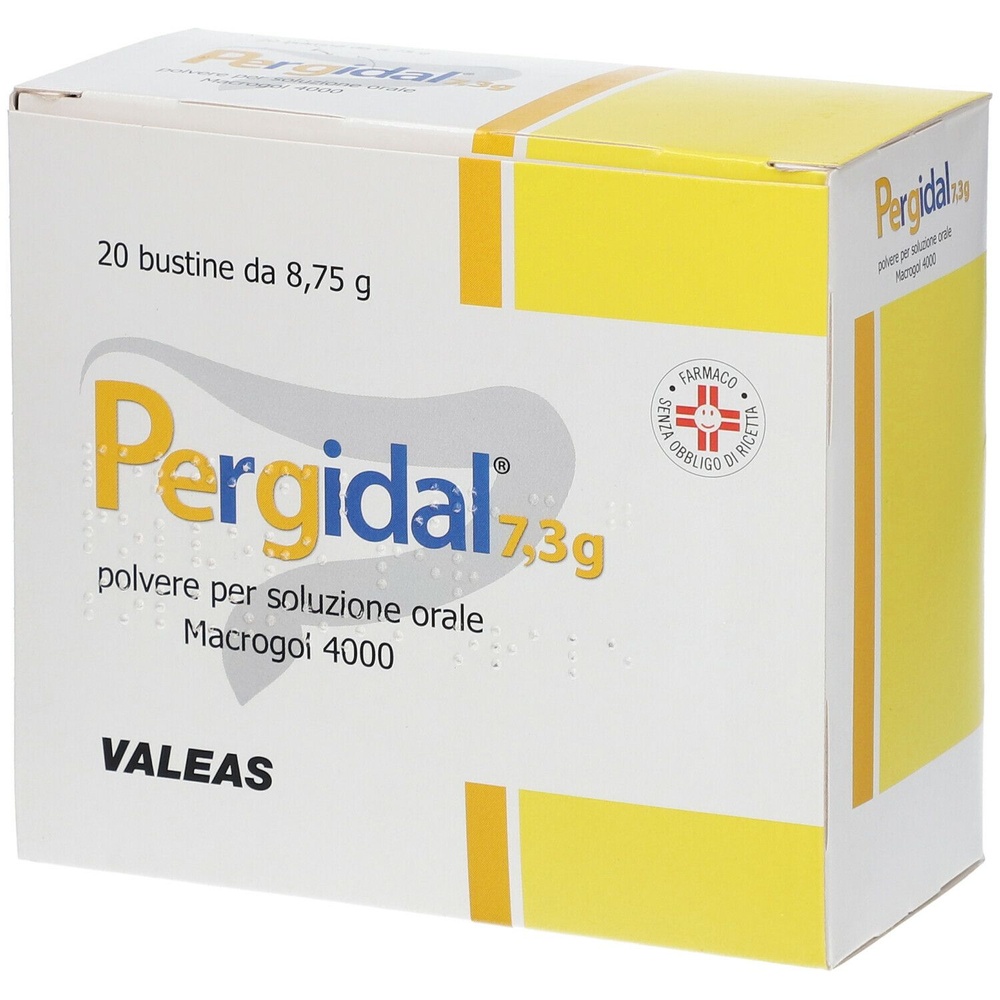
Pergidal 7.3 g powder for oral solution
Macrogol 4000
Read this leaflet carefully before taking this medicine as it contains important information for you.
Always take this medicine exactly as described in this leaflet or as your doctor or pharmacist has told you.
- Keep this leaflet. You may need to read it again.
- If you want more information or advice, ask your pharmacist.
- If any side effects occur, including those not listed in this leaflet, tell your doctor or pharmacist. See section 4.
- See a doctor if you do not feel better or if your symptoms get worse.
Contents of this leaflet:
- 1. What Pergidal is and what it is used for
- 2. What you need to know before you take Pergidal
- 3. How to take Pergidal
- 4. Possible side effects
- 5. How to store Pergidal
- 6. Contents of the pack and other information
1. What is Pergidal and what is it used for
The active ingredient of Pergidal is macrogol 4000, a substance that facilitates the evacuation of feces by drawing
water into the intestinal lumen (osmotic laxative).
This medicine is used in the treatment of constipation in adults, the elderly and children over the age of
12 years (adolescents).
2. What you need to know before taking Pergidal
Do not take Pergidal
If you are allergic to macrogol 4000 or to any of the other ingredients of this medicine
(listed in section 6);
If you have sudden (acute) abdominal pain of unknown origin;
If you have nausea or vomiting;
If you have a marked increase or decrease in intestinal motility (peristalsis);
If you have rectal bleeding.
In all these cases, it is necessary for the doctor to carry out an adequate assessment (diagnosis) in order to
exclude one of the conditions that makes the use of this medicine inappropriate, for example:
- serious inflammatory diseases of the intestine (such as ulcerative colitis, Crohn's disease);
- abnormal size of the colon (toxic megacolon) associated with narrowing of the intestinal lumen with evident complications;
- perforation or risk of intestinal perforation;
- intestinal obstruction without an obvious cause (paralytic ileus), blockage (obstruction) or narrowing (stenosis) of the intestine;
- severe dehydration.
Warnings and precautions
Talk to your doctor or pharmacist before taking Pergidal.
In children over 12 years of age (adolescents), the doctor must exclude that constipation derives from
specific problems (an organic disorder).
The treatment of constipation with any medicine is only a support to a healthy lifestyle and a
correct diet, for example: a diet rich in fluids and fiber, appropriate physical activity and the restoration of
intestinal reflexes.
Pay particular attention and see a doctor:
if you experience allergic reactions during treatment. Very rare cases of hypersensitivity reaction (skin rash, urticaria, edema) and exceptionally anaphylactic shock with medicines
containing macrogol (polyethylene glycol) have been reported;
if you suffer from constipation constantly. Continuous treatment of constipation always requires
the intervention of the doctor for diagnosis, prescription of medicines and monitoring during the
therapy;
if the use of this medicine is due to a sudden change in previous bowel habits (frequency and characteristics of bowel movements) that lasts for more than two weeks;
if the use of the laxative fails to produce effects;
if you are an elderly patient and/or your general health conditions are not good;
if you experience persistent diarrhea;
if you experience sudden abdominal pain or rectal bleeding while taking
Pergidal for bowel preparation.
In case of diarrhea, if there is a predisposition to alterations of the water-electrolyte balance, for example in
the elderly patient, if the function of the liver or kidneys is impaired or if you are taking medicines that
increase the elimination of urine (diuretics), the doctor will assess whether to consider monitoring
the minerals present in the blood.
See your doctor after three monthsof treatment for a complete clinical review.
The abuse of laxatives (frequent or prolonged use or with excessive doses) can cause persistent diarrhea with
excessive loss of water, mineral salts (especially potassium) and other essential nutrients. In the
most serious cases, imbalances can occur that can cause heart problems or disorders of the
transmission of signals from the brain to the muscles (neuromuscular). These phenomena can occur
especially if you are also taking medicines for the treatment of cardiac arrhythmias (cardiac glycosides),
medicines that increase the elimination of urine (diuretics) or anti-inflammatory medicines (corticosteroids).
Excessive use of laxatives, especially those that increase intestinal contractions (contact laxatives, different from Pergidal), can cause dependence (therefore the need to gradually increase the
dosage), chronic constipation and loss of normal intestinal functions (intestinal atony).
Pergidal does not contain significant amounts of sugars or polyols and can be prescribed in diabetic patients
or in patients maintained on a galactose-free diet.
Health education notes
First of all, it must be kept in mind that, in most cases, a balanced diet rich in
water and fiber (bran, vegetables and fruit) can durably solve the problem of constipation.
Many people think they suffer from constipation if they cannot evacuate every day.
This is a mistaken belief as this situation is perfectly normal for a large number of
individuals.
Instead, consider that constipation occurs when bowel movements are reduced compared to your
personal habits and are associated with the passage of hard stools.
See your doctor if episodes of constipation occur repeatedly.
Other medicines and Pergidal
Tell your doctor or pharmacist if you are taking, have recently taken or might take any
other medicines.
Avoid taking other medicines for oral use by mouth at the same time as Pergidal. After
ingesting a medicine, allow at least 2 hours to pass before taking Pergidal as well. Pergidal, in fact,
like other laxatives, can reduce the time of stay in the intestine of other medicines taken for
oral use, modifying their effectiveness.
Some medicines with a narrow therapeutic index, such as antiepileptics, digoxin and agents
immunosuppressants, should not be administered concurrently with Pergidal to avoid a
potential loss of efficacy due to a transient reduction in their absorption.
Do not take Pergidal together with licorice. The use of licorice increases the risk that potassium levels in
the blood decrease (hypokalemia).
If you need to thicken liquids to be able to swallow them without problems, Pergidal may counteract
the effect of the thickener.
Pregnancy and breastfeeding
If you are pregnant, suspect you are pregnant or are planning to become pregnant, or if you are breastfeeding with breast
milk, ask your doctor or pharmacist for advice before taking this medicine.
During pregnancy and breastfeeding, use Pergidal only if necessary and under the direct
control of the doctor.
Driving and operating machinery
No studies have been conducted on the ability to drive vehicles and operate machinery
Pergidal contains the colorant yellow sunset FCF (E110)
The colorant yellow sunset FCF (E110) can cause allergic reactions.
Pergidal contains sodium and potassium
Pergidal contains 359.25 mg of sodium (the main component of table salt) per sachet. This
is equivalent to 18% of the recommended maximum daily intake with the diet of an adult.
Talk to your doctor or pharmacist if you need two or more sachets a day for a prolonged period,
especially if you have been advised to follow a low-sodium diet.
Pergidal contains 1.44 mmol (56.34 mg) of potassium per sachet. To be taken into consideration in people with
impaired renal function or who are following a low-potassium diet.
3. How to take Pergidal
Take this medicine following exactly as stated in this leaflet or as instructed by your doctor or pharmacist. If you have any doubts, ask your doctor or pharmacist.
The correct dose is the minimum sufficient to produce easy evacuation of soft stools.
Initially take the minimum dose provided. When necessary, you may increase the dose, but never
exceed the maximum indicated.
The recommended dosein adults, the elderly and children over 12 years of age (adolescents) is from
1 to 3 sachets per day.
Use in adolescents
In children over 12 years of age (adolescents) the treatment should not exceed 3 months.
Method of administration
Take this medicine away from meals, in the morning if taking one sachet per day, or in the
morning and evening if taking more than one sachet per day.
Dissolve the powder just before use in approximately 250 ml of water (more or less the contents of two
glasses or a cup).
Do not add any other ingredients.
It is preferable to drink the entire amount fairly quickly (within a few minutes) avoiding
sipping it for a long time.
The effect may appear within 24-48 hours of administration.
The restoration of bowel movements induced by the treatment can be maintained by a healthy lifestyle
and a correct diet. A diet rich in fluids promotes the effect of the medicine.
Based on the response obtained, the doctor must adjust the daily dose of the medicine, and the duration and
method of stopping treatment.
If you take more Pergidal than you should
In case of accidental ingestion/intake of an excessive dose of Pergidal, immediately inform your
doctor or go to the nearest hospital.
If you take more Pergidal than you should, side effects such as abdominal pain and
diarrhea may occur, which disappear with a reduction in dosage or with temporary interruption of treatment.
Excessive loss of fluids and minerals (electrolytes) caused by diarrhea or vomiting may require some
specific treatments. See also what is stated in the “Warnings and precautions” section regarding the abuse
of laxatives.
Cases of pulmonary aspiration (medicine ending up in the respiratory tract) have been reported when
high volumes of this medicine and minerals (electrolytes) have been administered through a nasogastric
tube (tube used in children who cannot swallow). Children with neurological damage and with
defects in speech articulation (oromotor dysfunction) are particularly at risk of aspiration.
Furthermore, cases of inflammation around the anus (perianal) and soreness have been reported
when high volumes of macrogol solution (from 4 to 11 liters) have been administered for intestinal lavage both
in preparation for colonoscopy (exploratory analysis of the intestine) and in the operation to remove
feces from the intestine (fecal disobstruction) in cases of uncontrolled defecation (encopresis).
If you forget to take Pergidal
Do not take a double dose to make up for a missed dose.
If you have any questions about using this medicine, ask your doctor or pharmacist.
4. Possible side effects
Like all medicines, this medicine can cause side effects, although not everybody gets them.
Side effects in adults:
Common(may affect up to 1 in 10 people)
- abdominal pain and/or abdominal bloating
- diarrhoea
- nausea
Uncommon(may affect up to 1 in 100 people)
- vomiting
- urgency to defecate
- faecal incontinence
- anal irritation
Rare(may affect up to 1 in 1,000 people)
- severe diarrhoea
Very rare(may affect up to 1 in 10,000 people)
- hypersensitivity reactions, which can manifest with itching, skin rashes, urticaria or localised swelling especially on the face or hands, swelling or tingling of the lips or throat (oedema)
- angioedema, a condition characterised by the rapid onset of extensive swelling of the face, hands, feet, genitals, or even the mucous membranes
- difficulty breathing, anaphylactic shock
Frequency not known(the frequency cannot be estimated from the available data)
- sodium deficiency (hyponatraemia)
- potassium deficiency (hypokalaemia)
- dehydration (especially in elderly patients)
Side effects in children:
Common(may affect up to 1 in 10 people)
- abdominal pain
- diarrhoea (which can cause perianal irritation)
Uncommon(may affect up to 1 in 100 people)
- vomiting
- wind (flatulence)
- nausea
Rare(may affect up to 1 in 1,000 people)
- severe diarrhoea
Frequency not known(the frequency cannot be estimated from the available data)
- hypersensitivity reactions, which can manifest with itching, skin rashes, urticaria or localised swelling especially on the face or hands, swelling or tingling of the lips or throat (oedema), difficulty breathing
If you experience any of the side effects listed above, consult your doctor and possibly
discontinue taking the medicine.
Reporting of side effects
If you get any side effects, talk to your doctor or pharmacist. This includes any side effects not listed in this leaflet. You can also report side effects directly through the national reporting system: https://www.aifa.gov.it/content/segnalazioni-reazioni-avverse. By reporting side effects you can help provide more information on the safety of this medicine.
5. How to store Pergidal
Keep this medicine out of the sight and reach of children.
Do not use this medicine after the expiry date which is stated on the packaging after “Expires on”. The
expiry date refers to the last day of that month. The expiry date refers to the product in
intact packaging, correctly stored.
Do not dispose of any medicine in wastewater or household waste. Ask your pharmacist how to dispose of
medicines you no longer use. This will help protect the environment.
6. Contents of the pack and other information
WhatPergidalcontains
- The active ingredient is macrogol 4000. One sachet contains 7.287 g of macrogol 4000.
- The other ingredients are: anhydrous sodiumsulfate, sodiumbicarbonate, sodiumchloride, potassiumchloride, simethicone, acesulfame potassium, mandarin aroma (dextrose, maltodextrins, gum arabic), sunset yellow FCF (E110).
Description of the appearance of Pergidal and contents of the pack
Pergidal is presented as a powder for oral solution.
The pack contains 20 sachets of 8.75 g each.
Marketing Authorisation Holder
NEOPHARMED GENTILI S.p.A – Via San Giuseppe Cottolengo 15 – 20143 Milano
Manufacturer
Sigmar Italia s.p.a. - Via Sombreno 11, 24011 - Almé (BG)

Nie jesteś pewien, czy ten lek jest odpowiedni dla ciebie?
Omów swoje objawy i leczenie z lekarzem online.

Zacząłeś przyjmować lek i masz pytania?
Omów swoje objawy i leczenie z lekarzem online.
- Kraj rejestracji
- Postać farmaceutycznaPowder, 7.3 G
- Kod ATCA06AD15
- Substancja czynna
- Wymaga receptyNie
- Producent
- Te treści mają charakter wyłącznie informacyjny i nie zastępują konsultacji lekarskiej.
- Zamienniki PERJIDALPostać farmaceutyczna: Oral solution powder, 4GSubstancja czynna: macrogolProducent: CASEN RECORDATI SLWymaga receptyPostać farmaceutyczna: Oral solution powder, 10 GSubstancja czynna: macrogolProducent: CASEN RECORDATI SLBez receptyPostać farmaceutyczna: Powder for oral solution, 9,7 GSubstancja czynna: macrogolProducent: ZAMBON ITALIA S.R.L.Bez recepty
Odpowiedniki PERJIDAL w innych krajach
Leki z tą samą substancją czynną dostępne w innych krajach.
Odpowiednik PERJIDAL w Polska
Odpowiednik PERJIDAL w Ukraina
Odpowiednik PERJIDAL w Hiszpania
Lekarze online w sprawie PERJIDAL
Omów stosowanie PERJIDAL, bezpieczeństwo i ocenę zasadności recepty zgodnie z obowiązującymi przepisami.









Uzyskaj receptę na PERJIDAL online
Wypełnij 2-minutowy formularz
Opisz swoje objawy, historię choroby i lek, o który prosisz.
Wybierz lekarza lub pozwól nam przydzielić
Wybierz specjalistę lub dopasujemy Cię do najbliższego dostępnego lekarza.
Lekarz analizuje Twój przypadek
Zazwyczaj w ciągu 30 minut. Może zadawać dodatkowe pytania przez czat.
Odbierz w dowolnej aptece
Recepta elektroniczna wysłana na Twój e-mail — ważna w całej Polsce.
Często zadawane pytania
PERJIDAL nie wymaga recepty w Włochy. Możesz skonsultować się z lekarzem online, aby sprawdzić, czy ten lek może być odpowiedni w Twojej sytuacji.
Substancją czynną w PERJIDAL jest macrogol. Informacja ta pomaga rozpoznać leki o tym samym składzie, ale pod różnymi nazwami handlowymi.
PERJIDAL jest produkowany przez NEOPHARMED GENTILI S.P.A.. Nazwy handlowe i opakowania mogą się różnić w zależności od dystrybutora.
Lekarze, tacy jak Lekarze rodzinni, Psychiatrzy, Dermatolodzy, Kardiolodzy, Endokrynolodzy, Gastroenterolodzy, Pulmonolodzy, Nefrolodzy, Reumatolodzy, Hematolodzy, Zakaźnicy, Alergolodzy, Geriatrzy, Pediatrzy, Onkolodzy, mogą ocenić, czy stosowanie PERJIDAL jest odpowiednie w Twoim przypadku, w zależności od sytuacji klinicznej i lokalnych przepisów. Możesz umówić konsultację online, aby omówić objawy i możliwe dalsze kroki.
Polska posiada dobrze rozwiniętą infrastrukturę ochrony zdrowia w dużych miastach, takich jak Warszawa, Kraków, Wrocław i Gdańsk. Apteki są łatwo dostępne i działają zgodnie z obowiązującymi przepisami, zapewniając dostęp do leków na receptę.
Możesz kupić PERJIDAL w Warszawie, Krakowie, Wrocławiu lub Gdańsku w każdej aptece, posiadając ważną receptę.
Aby uzyskać receptę, możesz skorzystać z Oladoctor:
Inne leki zawierające tę samą substancję czynną (macrogol) to m.in. KASENJUNIOR, KASENLAX, LAXIPEG. Mogą one różnić się nazwą handlową lub postacią, ale zawierają ten sam składnik terapeutyczny. Przed zmianą lub rozpoczęciem nowego leku skonsultuj się z lekarzem.
