



OCTREOTIDE 10 mg Proszek I Rozpuszczalnik Do Wstrzykiwalnej Zawiesiny O Przedłużonym Uwalnianiu

Ocena recepty online
Lekarz przeanalizuje Twój przypadek i zdecyduje, czy wystawienie recepty jest medycznie uzasadnione.

Porozmawiaj z lekarzem o tym leku
Omów swoje objawy i opcje leczenia podczas szybkiej konsultacji online.



Jak stosować OKTREOTIDE TEVA
Treść ulotki
Octreotide Teva 10 mg powder and solvent for prolonged-release injectable suspension, 20 mg powder and solvent for prolonged-release injectable suspension, 30 mg powder and solvent for prolonged-release injectable suspension
Generic medicine
Read this leaflet carefully before using this medicine as it contains
important information for you.
- Keep this leaflet. You may need to read it again.
- If you have any questions, ask your doctor, pharmacist or nurse.
- This medicine has been prescribed for you only. Do not pass it on to others, even if they have the same symptoms as you, as it may be harmful.
- If you get any side effects, even those not listed in this leaflet, tell your doctor, pharmacist or nurse. See section 4.
Contents of this leaflet
- 1. What Octreotide Teva is and what it is used for
- 2. What you need to know before you take Octreotide Teva
- 3. How to take Octreotide Teva
- 4. Possible side effects
- 5. How to store Octreotide Teva
- 6. Contents of the pack and other information
1. What is Octreotide Teva and what is it used for
Octreotide Teva is a synthetic compound derived from somatostatin. Somatostatin is normally
present in the human body, where it inhibits the release of certain hormones such as growth hormone. The advantages of Octreotide Teva compared to somatostatin are that it is more potent and its action lasts longer.
Octreotide Teva is used
- to treat acromegaly. Acromegaly is a condition in which the body produces an excessive amount of growth hormone. Normally, growth hormone controls the growth of tissues, organs and bones. When present in excessive amounts, it causes an increase in the size of bones and tissues, especially the hands and feet. Octreotide Teva significantly reduces the symptoms of acromegaly, which include headache, excessive sweating, numbness of the hands and feet, fatigue and joint pain. In most cases, excessive production of growth hormone is caused by an enlargement of the pituitary gland (pituitary adenoma); treatment with Octreotide Teva can reduce the size of the adenoma.
Octreotide Teva is used to treat people with acromegaly:
- when other types of treatment for acromegaly (surgery or radiotherapy) are not suitable or have not worked;
- after radiotherapy, to cover the period necessary for the radiotherapy to reach maximum effectiveness.
- to relieve the symptoms associated with the excessive production of some specific hormones and other related substances in the stomach, intestines and pancreas. Excessive production of specific hormones and other related natural substances can be caused by some rare conditions of the stomach, intestines and pancreas. This situation alters the body's natural hormonal balance and causes a variety of symptoms, such as hot flashes, diarrhea, hypotension, skin rashes and weight loss. Treatment with Octreotide Teva helps to control these symptoms.
- to treat neuroendocrine tumors located in the intestine (e.g. appendix, small intestine or colon). Neuroendocrine tumors are rare tumors that can be found in different parts of the body. Octreotide Teva is also used to control the growth of these tumors when they are located in the intestine (e.g. appendix, small intestine or colon).
- to treat pituitary tumors that produce an excessive amount of thyroid-stimulating hormone (TSH). An excessive amount of thyroid-stimulating hormone (TSH) leads to hyperthyroidism. Octreotide Teva is used to treat people with pituitary tumors that produce too much thyroid-stimulating hormone (TSH):
- when other treatments (surgery or radiotherapy) are not indicated or have not been effective;
- after radiotherapy, to cover the period necessary for the radiotherapy to reach maximum effectiveness.
2. What you need to know before you take Octreotide Teva
Follow all of your doctor's instructions carefully. These may differ from those
contained in this leaflet.
Read the following instructions before using Octreotide Teva.
Do not take Octreotide Teva
- if you are allergic to octreotide or any of the other ingredients of this medicine (listed in section 6).
Warnings and precautions
Talk to your doctor before taking Octreotide Teva:
- if you know you have gallstones, or have had them in the past; tell your doctor, as prolonged use of Octreotide Teva may lead to the formation of gallstones. Your doctor may ask you to have periodic checks of your gallbladder;
- if you know you have diabetes, as Octreotide Teva can affect blood sugar levels. If you are diabetic, your blood sugar levels should be checked regularly;
- if you have previously had episodes of vitamin B12 deficiency; your doctor may ask you to check your vitamin B12 levels periodically.
Tests and checks
If you receive treatment with Octreotide Teva for a long period of time, your doctor may ask you to
periodically check your thyroid function.
Your doctor will check your liver function.
Children
Experience with the use of Octreotide Teva in children is limited.
Other medicines and Octreotide Teva
Tell your doctor or pharmacist if you are taking, have recently taken or might take
any other medicine.
In general, you can continue to take other medicines while being treated with Octreotide Teva.
However, it has been reported that Octreotide Teva can interact with some drugs, such as cimetidine,
cyclosporine, bromocriptine, quinidine and terfenadine.
If you are taking medicines to control blood pressure (e.g. beta-blockers or calcium
antagonists) or an agent for controlling fluid and electrolyte balance, your doctor may decide to
adjust the dosage.
If you are diabetic, your doctor may decide to adjust your insulin dosage.
Pregnancy, breastfeeding and fertility
If you are pregnant, suspect you are pregnant, are planning to become pregnant or are breastfeeding
ask your doctor for advice before taking this medicine.
Octreotide Teva should only be used during pregnancy if clearly necessary.
Women of childbearing potential should use adequate contraception during treatment.
Do not breastfeed during treatment with Octreotide Teva. It is not known whether Octreotide Teva is excreted
in breast milk.
Driving and using machines
Octreotide Teva does not alter or alters negligibly the ability to drive vehicles or use
machinery. However, some
undesirable effects such as headache and fatigue may occur during treatment with Octreotide Teva, which may reduce the ability to drive and use
machinery safely.
Octreotide Teva contains sodium
Octreotide Teva contains less than 1 mmol of sodium (23 mg) per dose, i.e. essentially “sodium-free”.
3. How to take Octreotide Teva
Octreotide Teva must always be administered with an injection into the gluteal muscle. The site
for repeated injections should be alternated between the left and right gluteus.
If you take more Octreotide Teva than you should
No reactions have been reported that have led to a life-threatening situation following an overdose of
Octreotide Teva.
Symptoms of overdose are: hot flashes, frequent urination, fatigue, depression, anxiety
and lack of concentration.
If you think you have symptoms of an overdose, inform your doctor immediately.
If you forget to take Octreotide Teva
If you forget the injection, it is recommended to administer it as soon as you remember, and then continue therapy
as usual. A delay of a few days in administration will not cause harm but may
lead to a temporary reappearance of symptoms until returning to normal.
If you stop taking Octreotide Teva
If you stop treatment with Octreotide Teva, symptoms may recur. Therefore, do not
interrupt therapy with Octreotide Teva unless your doctor tells you to.
If you have any doubts about the use of this medicine, ask your doctor, pharmacist or nurse.
4. Possible side effects
Like all medicines, this medicine can cause side effects, although not everybody gets them.
li manifestino.
Some side effects can be serious. Tell your doctor immediately if you
experience any of the following:
Very common(may affect more than 1 in 10 people):
- Gallstones which may cause sudden back pain.
- High blood sugar levels.
Common(may affect up to 1 in 10 people):
- Decreased thyroid activity (hypothyroidism) with changes in heart rate, appetite or weight; fatigue, feeling cold or swelling in the front of the neck.
- Changes in thyroid function tests.
- Inflammation of the gallbladder (cholecystitis); symptoms may include pain in the upper right side of the abdomen, fever, nausea, yellowing of the skin and eyes (jaundice).
- Low blood sugar.
- Impaired glucose tolerance.
- Slow heartbeat.
Uncommon(may affect up to 1 in 100 people):
- Thirst, decreased urination, dark urine, red and dry skin.
- Tachycardia.
Other serious side effects
- Hypersensitivity reactions (allergy) including skin rash.
- A type of allergic reaction (anaphylaxis) that can cause difficulty swallowing or breathing, swelling and tingling, possibly with a drop in blood pressure with dizziness or loss of consciousness.
- Inflammation of the pancreas (pancreatitis); symptoms may include sudden pain in the upper abdomen, nausea, vomiting, diarrhea.
- Liver inflammation (hepatitis); symptoms may include yellowing of the skin and eyes (jaundice), nausea, vomiting, loss of appetite, general feeling of illness, itching, slightly colored urine.
- Irregular heartbeat.
- Low platelet count in the blood; this could lead to increased bleeding or bruising.
Tell your doctor immediately if you notice any of the above side effects.
Other side effects:
Tell your doctor, pharmacist or nurse if you notice any of the side effects
listed below. These are usually mild and tend to disappear with the
continuation of treatment.
Very common(may affect more than 1 in 10 people):
- Diarrhea.
- Abdominal pain
- Nausea.
- Constipation.
- Flatulence (excess intestinal gas).
- Headache.
- Local pain at the injection site.
Common(may affect up to 1 in 10 people):
- Stomach discomfort after meals (dyspepsia).
- Vomiting.
- Feeling of fullness in the stomach.
- Greasy stools.
- Soft stools.
- Pale stools.
- Dizziness.
- Loss of appetite.
- Changes in liver function tests.
- Hair loss.
- Shortness of breath.
- Weakness.
If any of these side effects occur, tell your doctor, nurse or pharmacist.
Reporting of side effects
If you get any side effects, talk to your doctor, pharmacist or nurse. This includes any side effects not listed in this leaflet. You can also report side effects directly
through the national reporting system at: www.aifa.gov.it/content/segnalazioni-reazioni-
avverse. By reporting side effects you can help provide more information on the
safety of this medicine.
5. How to store Octreotide Teva
Keep this medicine out of the sight and reach of children.
Store in the original package to protect the medicine from light.
Store in a refrigerator (2° C-8° C). Do not freeze.
Octreotide Teva can be stored at a temperature below 25°C on the day of administration.
Use immediately after reconstitution.
Do not use this medicine after the expiry date which is stated on the label and the carton after
“EXP”. The expiry date refers to the last day of that month.
Do not use the medicine if visible particles or a colour change are observed.
Do not dispose of any medicine in wastewater or household waste. Ask your pharmacist how to
dispose of medicines you no longer use. This will help protect the environment.
6. Contents of the pack and other information
What Octreotide Teva contains
- The active substance is octreotide. One vial contains 10 mg, 20 mg or 30 mg of octreotide (as octreotide acetate).
- The other ingredients are: in the powder (vial): poly(DL-lactide-co-glycolide) and mannitol (E 421). in the solvent (pre-filled syringe): sodium carboxymethylcellulose, mannitol (E 421), poloxamer and water for injections
Description of the appearance of Octreotide Teva and contents of the pack
Octreotide 10 mg: Each pack contains one 10 mg glass vial of octreotide closed with a
rubber stopper sealed with a dark blue tear-off aluminum crimp, one glass
pre-filled syringe with 2 ml of solvent, one safety needle for injection and one vial
adapter or three 10 mg vials of octreotide, three pre-filled syringes with 2 ml of solvent, three
safety needles for injection and three vial adapters.
Octreotide 20 mg: Each pack contains one 20 mg glass vial of octreotide closed with a
rubber stopper sealed with an orange tear-off aluminum crimp, one glass
pre-filled syringe with 2 ml of solvent, one safety needle for injection and one vial
adapter or three 20 mg vials of octreotide, three pre-filled syringes with 2 ml of solvent, three
safety needles for injection and three vial adapters.
Octreotide 30 mg: Each pack contains one 30 mg glass vial of octreotide closed with a
rubber stopper sealed with a dark red tear-off aluminum crimp, one glass
pre-filled syringe with 2 ml of solvent, one safety needle for injection and one vial
adapter or three 30 mg vials of octreotide, three pre-filled syringes with 2 ml of solvent, three
safety needles for injection and three vial adapters.
Not all pack sizes may be marketed.
Marketing Authorisation Holder
TEVA B.V.
Swensweg 5,
2031 GA Haarlem
Netherlands
Manufacturer
Teva Pharmaceuticals Europe B.V.
Swensweg 5
2031 GA Haarlem
Netherlands
Merckle GmbH
Ludwig-Merckle- Strasse 3,
Blaubeuren 89143
Germany
Actavis Group PTC ehf.
Reykjavíkurvegur 76-78. Hafnarfjörður IS-220
Iceland
PLIVA HRVATSKA d.o.o. (PLIVA CROATIA Ltd.)
Prilaz baruna Filipovicá 25,
Zagreb 10000
Croatia
-------------------------------------------------------------------------------------------------------------------------
----
The following information is intended only for physicians or healthcare professionals:
Amount of Octreotide Teva to be used
Acromegaly
It is recommended to initiate treatment with the administration of Octreotide Teva 20 mg at intervals of
4 weeks for 3 months. Patients treated with Octreotide via subcutaneous route may initiate the
treatment with Octreotide Teva the day after the last dose of Octreotide via subcutaneous route.
Subsequent dosage adjustments must be based on serum growth hormone
(GH) and insulin-like growth factor-1/somatomedin C (IGF-1) concentrations and clinical symptoms.
In patients in whom, within the 3-month period, both clinical symptoms and biochemical parameters (GH; IGF-1) are not adequately controlled (GH concentrations still
above 2.5 micrograms/L), the dose may be increased to 30 mg every 4 weeks. If after 3
months, GH, IGF-1 and/or symptoms are still not adequately controlled at a dose of 30
mg, the dose may be increased to 40 mg every 4 weeks.
In patients in whom GH concentrations consistently remain below 1
microgram/L, serum IGF I concentrations normalize and most reversible signs/symptoms of acromegaly disappear, after 3 months of treatment with 20 mg, Octreotide Teva 10 mg every 4 weeks may be administered. However, particularly in this group of
patients for whom this low dose of Octreotide Teva is used, adequate
monitoring of serum GH and IGF-1 concentrations and clinical signs and symptoms is recommended.
In patients treated with a stable dose of Octreotide Teva, GH and IGF
I checks should be performed every 6 months.
Gastro-entero-pancreatic endocrine tumors
- Treatment of patients with symptoms associated with functional gastro-entero-pancreatic neuroendocrine tumorsIt is recommended to initiate treatment with the administration of Octreotide Teva 20 mg at intervals of 4 weeks. Patients treated with Octreotide Teva via subcutaneous route must continue treatment at the dose previously found effective for 2 weeks after the first injection of Octreotide Teva.
In patients in whom both clinical symptoms and biological parameters are well controlled after
3 months of treatment, the dose may be reduced to Octreotide Teva 10 mg every 4 weeks.
In patients in whom clinical symptoms are only partially controlled after 3 months of
treatment, the dose may be increased to Octreotide Teva 30 mg every 4 weeks.
On days when symptoms associated with gastro-entero-
pancreatic tumors worsen during treatment with Octreotide Teva, additional administration of Octreotide via
subcutaneous route at the dose used before the start of treatment with Octreotide Teva is recommended. This may occur especially in the first 2 months of treatment until therapeutic concentrations of octreotide are reached.
- Treatment of patients with advanced midgut neuroendocrine tumorsor with unknown primary tumor location where extra-midgut sites have been ruled outThe recommended dose of Octreotide Teva is 30 mg administered every 4 weeks. Treatment with Octreotide Teva for tumor control should be continued even in the absence of tumor progression.
Treatment of TSH-secreting pituitary adenomas
Treatment with Octreotide Teva should be initiated at a dose of 20 mg at intervals of 4 weeks for
3 months before considering a dose adjustment. The dose will then be adjusted based on the
response of TSH and thyroid hormone.
Instructions for the preparation and intramuscular injection of Octreotide Teva
FOR DEEP INTRAMUSCULAR INJECTION ONLY.
Included in the injection kit:
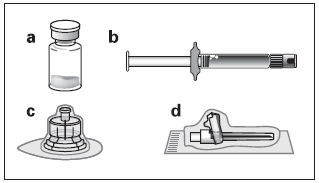
- a. A vial containing Octreotide Teva powder,
- b. A pre-filled syringe containing the solvent for reconstitution,
- c. A vial adapter for reconstitution of the medicine,
- d. A safety needle for injection.
Follow these instructions carefully to ensure correct reconstitution of Octreotide Teva
before intramuscular deep injection.
There are 3 critical actions in the reconstitution of Octreotide Teva. Failure to comply with these
may result in inappropriate leakage of the medicine.
- The injection kit must reach room temperature.Remove the injection kit from the refrigerator and leave the kit at room temperature for at least 30 minutes before reconstitution, but not for more than 24 hours.
- After adding the diluent solution, make sure the powder is completelysaturatedby letting the vial rest for 5 minutes.
- After saturation, gently shake the vialin a horizontal direction for at least 30 seconds until a uniform suspension is formed. The suspension of Octreotide Teva must be prepared only immediatelybefore administration.
Octreotide Teva must be administered only by trained healthcare personnel.
Step 1
Remove the Octreotide Teva injection kit from the refrigerator.
WARNING:It is essential to start the reconstitution process
only after the injection kit has reached room
temperature. Leave the kit at room temperature for at least
30 minutes before reconstitution, but no more than 24 hours.
Note: The injection kit can be refrigerated again if necessary.
Step 2
Remove the plastic cap from the vial and clean the
rubber stopper of the vial with an alcohol-soaked cotton swab.
Remove the blister pack and remove the vial adapter from its packaging, holding it between the
white cap of the container and its sheath. DO NOTlet the
tip of the access device touch anything.
Place the vial on a flat surface. Position
the vial adapter on top of the vial
and push it all the way down until it clicks into place,
as confirmed by an audible “click”.
Clean the tip of the vial adapter with an
alcohol-soaked cotton swab.
Step 3
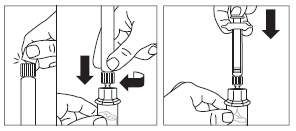
Remove the white smooth cap from the pre-filled syringe with diluent solution and screw the syringe
into the vial adapter.
Gently push the syringe plunger all the way down to transfer all the diluent solution into
the vial.
Step 4
WARNING: It is essential to let the vial rest for 5 minutes
to allow the diluent to completely saturate the powder.
Note: It is normal for the plunger rod to rise as there may
be slight overpressure in the vial.
At this point prepare the patient for injection.
Step 5
After the saturation period, make sure the plunger is pushed
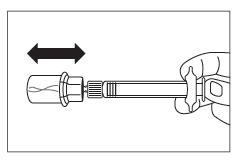
all the way down in the syringe.
WARNING:Hold the plunger down and shake the vial
gentlyin a horizontal direction for at least 30 seconds
until a complete suspension of the powder is obtained
(uniform milky suspension). Shake gently for
another 30 seconds if the powder has not reached a complete
suspension.
Step 6
Invert the syringe and vial, slowly pull back
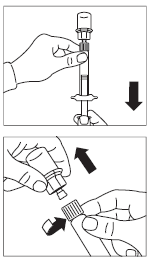
the plunger and draw the entire contents of the vial into the syringe.
Unscrew the syringe from the vial adapter.
Step 7
Prepare the injection site with an alcohol-soaked cotton swab.
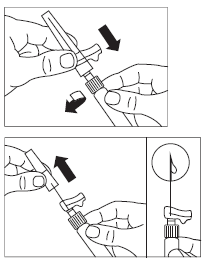
Screw the safety needle for injection onto the syringe.
If immediate administration is delayed, re-shakeslowly
the syringe to ensure a uniform milky suspension.
Remove the needle cap.
Gently tap the syringe to remove any visible bubbles and expel them from the syringe.
Proceed immediatelyto step 8 for administration to the patient.
Any delay may cause sedimentation.
Step 8
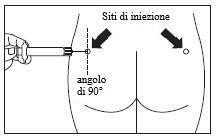
Octreotide Teva must be administered only by deep intramuscular injection, NEVERintravenously.
Insert the needle completely into the left or right gluteus muscle at a
90° angle to the skin surface.
Gently pull back the plunger to check that no blood vessel has been
punctured (reposition if a blood vessel has been punctured).
Press the plunger with constant pressureuntil the syringe is empty.
Remove the needle from the injection site and activate the safety device (as shown in step 9).
Step 9
Activate the safety device for the needle using one of the
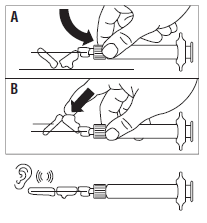
two procedures described below:
- firmly press the flip-top part of the safety device downwards on a hard surface (Figure A)
- or push the flip-top forward with your finger (Figure B). An audible “click” confirms correct activation. Note: Record the injection site in the patient's chart and alternate monthly.Immediately dispose of the syringe (in a sharps container).

Nie jesteś pewien, czy ten lek jest odpowiedni dla ciebie?
Omów swoje objawy i leczenie z lekarzem online.

Zacząłeś przyjmować lek i masz pytania?
Omów swoje objawy i leczenie z lekarzem online.
- Kraj rejestracji
- Postać farmaceutycznaPowder and solvent for prolonged-release injectable suspension, 10 MG
- Kod ATCH01CB02
- Substancja czynna
- Wymaga receptyNie
- Producent
- Te treści mają charakter wyłącznie informacyjny i nie zastępują konsultacji lekarskiej.
- Zamienniki OKTREOTIDE TEVAPostać farmaceutyczna: Concentrate for infusion solution, 0.05 MG/MLSubstancja czynna: octreotideWymaga receptyPostać farmaceutyczna: Injectable solution, 0.05 MG/1 MLSubstancja czynna: octreotideProducent: SUN PHARMACEUTICAL INDUSTRIES (EUROPE) B.V.Wymaga receptyPostać farmaceutyczna: Powder and solvent for injectable suspension, 10 MGSubstancja czynna: octreotideProducent: NOVARTIS FARMA S.P.A.Bez recepty
Odpowiedniki OKTREOTIDE TEVA w innych krajach
Leki z tą samą substancją czynną dostępne w innych krajach.
Odpowiednik OKTREOTIDE TEVA w Hiszpania
Odpowiednik OKTREOTIDE TEVA w Polska
Odpowiednik OKTREOTIDE TEVA w Ukraina
Lekarze online w sprawie OKTREOTIDE TEVA
Omów stosowanie OKTREOTIDE TEVA, bezpieczeństwo i ocenę zasadności recepty zgodnie z obowiązującymi przepisami.
Uzyskaj receptę na OKTREOTIDE TEVA online
Wypełnij 2-minutowy formularz
Opisz swoje objawy, historię choroby i lek, o który prosisz.
Wybierz lekarza lub pozwól nam przydzielić
Wybierz specjalistę lub dopasujemy Cię do najbliższego dostępnego lekarza.
Lekarz analizuje Twój przypadek
Zazwyczaj w ciągu 30 minut. Może zadawać dodatkowe pytania przez czat.
Odbierz w dowolnej aptece
Recepta elektroniczna wysłana na Twój e-mail — ważna w całej Polsce.
Często zadawane pytania
OKTREOTIDE TEVA nie wymaga recepty w Włochy. Możesz skonsultować się z lekarzem online, aby sprawdzić, czy ten lek może być odpowiedni w Twojej sytuacji.
Substancją czynną w OKTREOTIDE TEVA jest octreotide. Informacja ta pomaga rozpoznać leki o tym samym składzie, ale pod różnymi nazwami handlowymi.
OKTREOTIDE TEVA jest produkowany przez TEVA B.V.. Nazwy handlowe i opakowania mogą się różnić w zależności od dystrybutora.
Lekarze, tacy jak Lekarze rodzinni, Psychiatrzy, Dermatolodzy, Kardiolodzy, Endokrynolodzy, Gastroenterolodzy, Pulmonolodzy, Nefrolodzy, Reumatolodzy, Hematolodzy, Zakaźnicy, Alergolodzy, Geriatrzy, Pediatrzy, Onkolodzy, mogą ocenić, czy stosowanie OKTREOTIDE TEVA jest odpowiednie w Twoim przypadku, w zależności od sytuacji klinicznej i lokalnych przepisów. Możesz umówić konsultację online, aby omówić objawy i możliwe dalsze kroki.
Polska posiada dobrze rozwiniętą infrastrukturę ochrony zdrowia w dużych miastach, takich jak Warszawa, Kraków, Wrocław i Gdańsk. Apteki są łatwo dostępne i działają zgodnie z obowiązującymi przepisami, zapewniając dostęp do leków na receptę.
Możesz kupić OKTREOTIDE TEVA w Warszawie, Krakowie, Wrocławiu lub Gdańsku w każdej aptece, posiadając ważną receptę.
Aby uzyskać receptę, możesz skorzystać z Oladoctor:
Inne leki zawierające tę samą substancję czynną (octreotide) to m.in. OKTREOTIDE BIOINDUSTRIA L.I.M., OKTREOTIDE SUN, SANDOSTATINA. Mogą one różnić się nazwą handlową lub postacią, ale zawierają ten sam składnik terapeutyczny. Przed zmianą lub rozpoczęciem nowego leku skonsultuj się z lekarzem.
