



MUSRELAN 10 mg /Ml Roztwór Do Wstrzykiwań

Ocena recepty online
Lekarz przeanalizuje Twój przypadek i zdecyduje, czy wystawienie recepty jest medycznie uzasadnione.

Porozmawiaj z lekarzem o tym leku
Omów swoje objawy i opcje leczenia podczas szybkiej konsultacji online.



Jak stosować MUSRELAN
Treść ulotki
Musrelan 10 mg/ml, solution for injection in pre-filled syringe
suxametonio cloruro anidro
Read this leaflet carefully before you are given this medicine because
it contains important information for you.
- Keep this leaflet. You may need to read it again.
- If you have any questions, ask your doctor, pharmacist or nurse.
- If any side effects occur, including any not listed in this leaflet, tell your doctor, pharmacist or nurse. See section 4.
Contents of this leaflet
- 1. What Musrelan is and what it is used for
- 2. What you need to know before you use Musrelan
- 3. How to use Musrelan
- 4. Possible side effects
- 5. How to store Musrelan
- 6. Contents of the pack and other information
1. What is Musrelan and what is it used for
Musrelan belongs to a group of medicines called muscle relaxants.
Their effect is to block the connection between nerves and certain muscles, causing these
muscles to relax by temporarily paralyzing them.
It is used in adults and in the pediatric population over 12 years of age under general anesthesia or
emergency situations.
Musrelan is administered when a tube is inserted into the trachea (endotracheal intubation), if a
person needs help to breathe. During this procedure, the muscles used for
breathing need to be paralyzed.
2. What you need to know before using Musrelan
Do not receive Musrelan if:
- you are allergic to suxamethonium or any of the other ingredients of this medicine (listed in section 6);
- you are a conscious patient;
- you or someone in your family has previously had an adverse reaction to the use of an anesthetic, such as a very high body temperature (malignant hyperthermia);
- you have a deficiency of an enzyme called pseudocholinesterase that breaks down suxamethonium in the body;
- you have high levels of potassium in your blood (hyperpotassaemia);
- you have had severe trauma, surgery or severe burns;
- you have had a spinal cord injury, nerve injury or sudden muscle atrophy;
- you have been unable to move for a long time, such as to allow a bone fracture to heal or for a long period of bed rest;
- you have muscle weakness and atrophy of muscle tissue (e.g. Duchenne muscular dystrophy);
- you or someone in your family has a disease that causes muscle weakness (congenital myotonia, myotonic dystrophy);
- you have recently had eye injuries;
- you suffer from a problem caused by excessive pressure in the eye (glaucoma), unless the possible benefit of its use outweighs the potential danger to the eye.
Warnings and precautions
Talk to your doctor, pharmacist or nurse before you are given Musrelan:
- if you have had an allergic reaction to any other muscle relaxant that has been given to you as part of an operation;
- if you have myasthenia gravis, a disease that causes severe muscle weakness, or any other nervous or muscular disease;
- if you are pregnant or if you have given birth in the last six weeks;
- if you have tetanus, an infection that occurs through wound contamination;
- if you have tuberculosis or another serious or long-lasting bacterial infection;
- if you have any chronic illness that has caused you weakness;
- if you have a blood disorder known as anemia;
- if you are malnourished or unable to absorb nutrients from food;
- if you have liver or kidney problems;
- if you have a disease caused by the body attacking itself (autoimmune disease) such as a thyroid gland disease (myxoedema);
- if you have diseases that cause problems with the joints (collagen diseases);
- if you are undergoing or have undergone blood treatment known as plasma pheresis;
- if you have recently had a cardiopulmonary bypass.
Children
This medicine is not recommended in children under 12 years of age as the graduated scale
of the prefilled syringes does not allow accurate administration of the product in this population.
Particular care must be taken when this medicine is administered to children over
12 years of age.
Other medicines and Musrelan
Tell your doctor, pharmacist or nurse if you are taking, have recently taken or might
take any other medicines.
In particular, tell your doctor, pharmacist or nurse if you are taking / are being treated with
any of the following:
- psychiatric medicines (e.g. phenelzine, promazine);
- anti-cancer medicines (e.g. cyclophosphamide, thiotepa, irinotecan);
- anaesthetic medicines (e.g. ketamine, halothane, enflurane, desflurane, propofol);
- local anaesthetic medicines (e.g. lidocaine, procaine, procainamide);
- a medicine used to treat and prevent a feeling or state of discomfort (metoclopramide);
- medicines used for Alzheimer's disease or myasthenia gravis (cholinesterase inhibitors such as donepezil, edrophonium, galantamine, neostigmine, pyridostigmine, rivastigmine and tacrine);
- medicines for treating asthma or other respiratory conditions (e.g. bambuterol, terbutaline);
- organophosphorus compounds;
- a medicine used to reduce bleeding (aprotinin);
- oestrogens and oral contraceptives containing oestrogens;
- a medicine to contract the uterus (oxytocin);
- medicines used for inflammatory conditions (steroids such as for rheumatism, etc.);
- medicines used to treat heart rhythm disorders (antiarrhythmics such as quinidine, verapamil);
- some antibiotics used to treat bacterial infections (e.g. lincosamides, polymyxins and aminoglycosides);
- antiepileptic medicines used to stop seizures (e.g. carbamazepine and phenytoin);
- a beta-blocker medicine used to slow down the heartbeat (esmolol);
- a medicine used to suppress the immune response (azathioprine);
- a medicine used to control overexcitation and/or depression (lithium);
- magnesium salts;
- medicines that increase the contraction of the heart muscle (cardiac glycosides such as digoxin);
- a medicine used to treat high pressure in the eyes, namely glaucoma (ecotiopate).
Pregnancy and breastfeeding
If you are pregnant, suspect you may be pregnant, are planning to become pregnant or are breastfeeding with
breast milk, ask your doctor for advice before you are given this medicine.
Musrelan should be used in pregnancy only if your doctor decides that the benefits for you are
greater than the possible risks to the fetus.
Particular care should be taken after the administration of suxamethonium to pregnant or breastfeeding women.
It is not known whether suxamethonium passes into breast milk. However, as suxamethonium is
rapidly metabolised into an inactive metabolite, effects on breastfed infants are not expected.
Driving and operating machinery
It may be dangerous to drive vehicles or operate machinery immediately after receiving this medicine. Your
doctor will tell you how long you will have to wait before you can drive vehicles or operate machinery.
Musrelan contains sodium.
This medicine contains 27.9 mg of sodium (the main component of table salt). This is equivalent to
1.4% of the recommended maximum daily intake of salt with the diet of an adult.
3. How Musrelan is administered
You should never self-administer this medicine. It will always be administered to you by a qualified healthcare professional.
The doctor will decide the dose you need. This will depend on your individual needs, body weight, and the
amount and duration of muscle relaxation required.
Musrelan will be administered to you as a single injection into a vein (intravenous use). The pre-filled syringe is not
suitable for use in a syringe pump.
If you are given too much Musrelan
Since this medicine will be administered to you under strictly controlled conditions, it is
unlikely that you will be given more than necessary. In the event of an overdose, the muscle
will remain relaxed for longer than required.
If you have any doubts about the use of this medicine, ask your doctor, pharmacist or nurse.
4. Possible side effects
Like all medicines, this medicine can cause side effects, although not everybody gets them.
Very common (may affect more than 1 in 10 people):
- visible muscle contraction under the skin
- muscle pain after surgery; your doctor will monitor you for this.
Common (may affect up to 1 in 10 people)
- allergic reactions: itching, hives, collapse
- increased fluid pressure in the eye which can cause headache or blurred vision
- increased stomach pressure
- acceleration or slowing of the heart rate
- low blood pressure
- proteins in the blood or urine due to muscle damage
- high potassium level in the blood
- skin redness
- skin rash
Rare (may affect up to 1 in 1,000 people)
- difficulty breathing
- high body temperature.
- difficulty opening the mouth.
Not known (frequency cannot be estimated from available data)
- swelling (angioedema)
- cardiac arrest
- high or low blood pressure
- excessive saliva production
- excessive mucus production
- temporary cessation of breathing
- muscle damage
Reporting of side effects
If you get any side effects, even those not listed in this leaflet, tell your
doctor, or pharmacist or nurse. You can also report side effects directly through the
national reporting system at https://www.aifa.gov.it/content/segnalazioni-reazioni-avverse
By reporting side effects you can help provide more information on the safety of this
medicine.
5. How to store Musrelan
Keep this medicine out of the sight and reach of children.
This medicine must not be administered after the expiry date which is reported on the label of the
pre-filled syringe, on the blister and on the carton. The expiry date refers to the last day of that month.
Store in a refrigerator (2 °C – 8 °C). Do not freeze.
Store the pre-filled syringe in its respective closed blister until use.
After opening, the medicine must be used immediately.
This medicine can be stored for a short period of time at temperatures not exceeding 25°C.
However, once removed from initial storage in a refrigerator, the medicine must be disposed of
after 30 days.
Do not use this medicine if you notice visible signs of deterioration.
Any pre-filled syringe, even partially used, must be disposed of appropriately after use.
Do not dispose of any medicine in wastewater or household waste. Ask your pharmacist how to eliminate the
medicines that you no longer use. This will help protect the environment.
6. Package contents and other information
What Musrelan contains
- The active ingredient is suxamethonium chloride. Each ml of injection solution contains 10 mg of suxamethonium chloride anhydrous (as 11 mg of suxamethonium chloride dihydrate). Each pre-filled syringe of 10 ml contains 100 mg of suxamethonium chloride anhydrous (as 110 mg of suxamethonium chloride dihydrate).
- The other ingredients are: sodium chloride, succinic acid, sodium hydroxide or hydrochloric acid (for pH adjustment), water for injection.
Description of the appearance of Musrelan and package contents
Musrelan injectable solution is presented as a clear, colorless solution, in a pre-filled 10 ml polypropylene syringe, individually packaged in a transparent blister.
Cardboard boxes of 1 or 10 pre-filled syringes.
Not all pack sizes may be marketed.
Marketing authorization holder and manufacturer
Laboratoire Aguettant
1 rue Alexander Fleming
69007 Lyon
France
This medicinal product is authorized in the Member States of the European Economic Area with the
following denominations:
-----------------------------------------------------------------------------------------------------------------------------
The following information is intended for healthcare professionals only:
Instructions for use:
The pre-filled syringe is not suitable for use in a syringe pump.
Please prepare the syringe carefully as follows
The pre-filled syringe is for single use in a single patient only. Dispose of the syringe after use. Do not
re-use.
Visually inspect the medicinal product for the presence of any particles or discoloration before
administration. Use the solution only if it is clear, colorless and free from particles or precipitates.
Do not use the medicinal product if the tamper-evident seal on the syringe is broken.
The outer surface of the syringe is sterile until the blister is opened. Do not open the blister until use.
When handled using an aseptic technique, this medicinal product can be placed on a sterile surface
after being removed from the blister.
- 1) Remove the sterile pre-filled syringe from the blister.
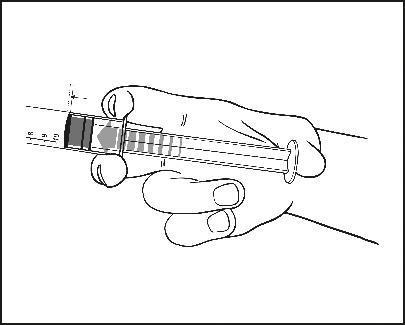
- 2) Press the plunger to remove the stopper. The sterilization process may have caused the stopper to adhere to the syringe body.
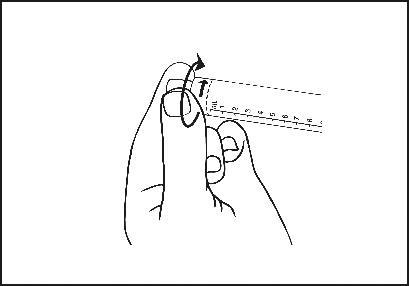
- 3) Rotate the end cap to break the seal. To avoid contamination, do not touch the exposed luer connector.
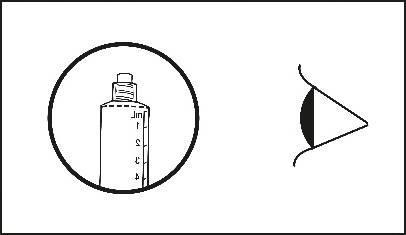
- 4) Verify that the syringe seal has been completely removed. If not, replace the cap and rotate again
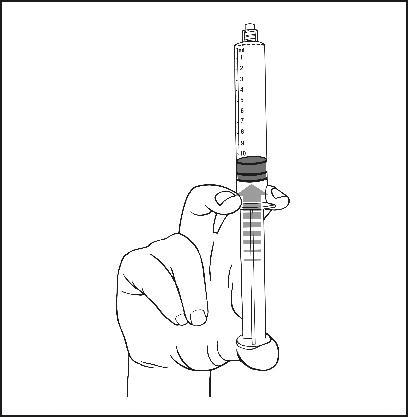
- 5) Expel air by gently pressing the plunger.
- 6) Connect the syringe to an access device or a needle. Slowly press the plunger to inject the required volume.

Nie jesteś pewien, czy ten lek jest odpowiedni dla ciebie?
Omów swoje objawy i leczenie z lekarzem online.

Zacząłeś przyjmować lek i masz pytania?
Omów swoje objawy i leczenie z lekarzem online.
- Kraj rejestracji
- Postać farmaceutycznaInjectable solution, 10 MG/ML
- Kod ATCM03AB01
- Substancja czynna
- Wymaga receptyTak
- Producent
- Te treści mają charakter wyłącznie informacyjny i nie zastępują konsultacji lekarskiej.
- Zamienniki MUSRELANPostać farmaceutyczna: Injectable solution, 25 MG/2,5 MLSubstancja czynna: atracuriumWymaga receptyPostać farmaceutyczna: Injectable solution, 200 UNITS/MLSubstancja czynna: botulinum toxinProducent: IPSEN PHARMAWymaga receptyPostać farmaceutyczna: Powder for injectable solution, 125 UNITA SPEYWOODSubstancja czynna: botulinum toxinProducent: IPSEN PHARMAWymaga recepty
Odpowiedniki MUSRELAN w innych krajach
Leki z tą samą substancją czynną dostępne w innych krajach.
Odpowiednik MUSRELAN w Polska
Odpowiednik MUSRELAN w Ukraina
Odpowiednik MUSRELAN w Hiszpania
Lekarze online w sprawie MUSRELAN
Omów stosowanie MUSRELAN, bezpieczeństwo i ocenę zasadności recepty zgodnie z obowiązującymi przepisami.









Uzyskaj receptę na MUSRELAN online
Wypełnij 2-minutowy formularz
Opisz swoje objawy, historię choroby i lek, o który prosisz.
Wybierz lekarza lub pozwól nam przydzielić
Wybierz specjalistę lub dopasujemy Cię do najbliższego dostępnego lekarza.
Lekarz analizuje Twój przypadek
Zazwyczaj w ciągu 30 minut. Może zadawać dodatkowe pytania przez czat.
Odbierz w dowolnej aptece
Recepta elektroniczna wysłana na Twój e-mail — ważna w całej Polsce.
Często zadawane pytania
MUSRELAN wymaga recepty w Włochy. Możesz skonsultować się z lekarzem online, aby sprawdzić, czy ten lek może być odpowiedni w Twojej sytuacji.
Substancją czynną w MUSRELAN jest suxamethonium. Informacja ta pomaga rozpoznać leki o tym samym składzie, ale pod różnymi nazwami handlowymi.
MUSRELAN jest produkowany przez LABORATOIRE AGUETTANT. Nazwy handlowe i opakowania mogą się różnić w zależności od dystrybutora.
Lekarze, tacy jak Lekarze rodzinni, Psychiatrzy, Dermatolodzy, Kardiolodzy, Endokrynolodzy, Gastroenterolodzy, Pulmonolodzy, Nefrolodzy, Reumatolodzy, Hematolodzy, Zakaźnicy, Alergolodzy, Geriatrzy, Pediatrzy, Onkolodzy, mogą ocenić, czy stosowanie MUSRELAN jest odpowiednie w Twoim przypadku, w zależności od sytuacji klinicznej i lokalnych przepisów. Możesz umówić konsultację online, aby omówić objawy i możliwe dalsze kroki.
Polska posiada dobrze rozwiniętą infrastrukturę ochrony zdrowia w dużych miastach, takich jak Warszawa, Kraków, Wrocław i Gdańsk. Apteki są łatwo dostępne i działają zgodnie z obowiązującymi przepisami, zapewniając dostęp do leków na receptę.
Możesz kupić MUSRELAN w Warszawie, Krakowie, Wrocławiu lub Gdańsku w każdej aptece, posiadając ważną receptę.
Aby uzyskać receptę, możesz skorzystać z Oladoctor:
Inne leki zawierające tę samą substancję czynną (suxamethonium) to m.in. AKURMIL, ALLUTSIENKE, ATSTSALURE. Mogą one różnić się nazwą handlową lub postacią, ale zawierają ten sam składnik terapeutyczny. Przed zmianą lub rozpoczęciem nowego leku skonsultuj się z lekarzem.
