



MONOKET 20 mg Tabletka Powlekana

Ocena recepty online
Lekarz przeanalizuje Twój przypadek i zdecyduje, czy wystawienie recepty jest medycznie uzasadnione.

Porozmawiaj z lekarzem o tym leku
Omów swoje objawy i opcje leczenia podczas szybkiej konsultacji online.



Jak stosować MONOKET
Treść ulotki
- Monoket 20 mg tablets, 40 mg tablets
- Monoket 50 mg prolonged-release hard capsules
- Monoket 60 mg modified-release tablets
Monoket 20 mg tablets, 40 mg tablets
Isosorbide-5-mononitrate
Read this leaflet carefully before taking this medicine as it contains important information for you.
- Keep this leaflet. You may need to read it again.
- If you have any questions, ask your doctor.
- This medicine has been prescribed for you only. Do not pass it on to others, even if they have the same symptoms as you, as it could be harmful.
- If you get any side effects, even those not listed in this leaflet, tell your doctor or pharmacist. See section 4.
Contents of this leaflet:
- 1. What Monoket is and what it is used for
- 2. What you need to know before you take Monoket
- 3. How to take Monoket
- 4. Possible side effects
- 5. How to store Monoket
- 6. Contents of the pack and other information
1. What Monoket is and what it is used for
Monoket contains the active substance isosorbide-5-mononitrate, belonging to the group of medi-
cines called “organic nitrates”.
“Organic nitrates” are vasodilator medicines used in heart diseases, which relax the blood
vessels facilitating the blood flow that brings nourishment to the heart.
Monoket is indicated:
- in the maintenance therapy of heart disease characterized by an obstruction of the coronary arteries, blood vessels that carry blood to the heart (coronary insufficiency);
- in the prevention of attacks of heart disease that manifests with chest pain (angina pectoris) which can also follow a heart attack, possibly accompanied by weakening of the heart (heart failure) also in association with medicines capable of increasing the force of heart contraction (cardiotonics) and medicines used to treat high blood pressure (diuretics).
Monoket is not indicated in case of sudden attacks of chest pain (angina pectoris attacks).
2. What you need to know before taking Monoket
Do not take Monoket if:
- you are allergic to isosorbide-5-mononitrate, organic nitrates or any of the other ingredients of this medicine (listed in section 6);
- you are having a heart attack;
- you have a marked drop in blood pressure (which can occur in many serious conditions such as circulatory collapse, cardiogenic shock, hypovolemia);
- you suffer from an increase in the thickness of the heart muscle with obstruction to normal blood flow (obstructive hypertrophic cardiomyopathy);
- you have a disease involving the lining of the heart, i.e. the pericardium (in particular, constrictive peri- carditis, cardiac tamponade);
- you suffer from increased blood pressure in the blood vessels of the lungs (primary pulmonary hypertension);
- you are taking medicines to treat erectile dysfunction (e.g. sildenafil, tadalafil, vardenafil) (see section “Other medicines and Monoket”);
- you are taking riociguat, a medicine used to treat pulmonary hypertension (see section “Other medicines and Monoket”).
Warnings and precautions
Talk to your doctor before taking Monoket.
In particular, tell your doctor:
- if you suffer from an eye disease caused by an increase in the pressure of the fluid contained within the eye (glaucoma);
- if you suffer from a severe reduction in hemoglobin in the blood, a substance that carries oxygen in the blood (marked anemia);
- if you suffer from increased activity of a gland, known as the “thyroid”, which determines an increase in the blood of certain hormones, called “thyroid hormones” (hyperthyroidism);
- in case of head injuries (traumatic brain injury);
- in case of bleeding in the brain due to rupture of a blood vessel (cerebral hemorrhage);
- if you suffer from a narrowing (stenosis) of a heart valve;
- if you are prone to low blood pressure when suddenly moving from a sitting to a standing position (orthostatic hypotension);
- if you suffer from high blood pressure in the brain (intracranial hypertension);
- if you have a kidney disease (renal insufficiency);
- If you suffer from heart blood vessel diseases (coronary artery disease), as oxygen deficiency in the heart may occur due to an abnormal decrease in oxygen content in the blood (temporary hypoxemia)
Following treatment with high doses and/or prolonged treatment:
- bluish discoloration of the skin and mucous membranes (cyanosis) may occur; a reduction or loss of the effect of this medicine may occur. The reduction of the effect can also occur in case of previous therapy with another organic nitrate (a medicine similar to Monoket).
IN ALL THESE CASES CONSULT YOUR DOCTOR WHO MAY PRESCRIBE SUITABLE
THERAPY.
Other medicines and Monoket
Tell your doctor or pharmacist if you are taking, have recently taken or might take
any other medicines.
In particular, tell your doctor if you are taking the following medicines, as they can poten-
tiate the hypotensive (low blood pressure) effect of Monoket:
- medicines that lower blood pressure (e.g. beta-blockers, vasodilators, diuretics, calcium antagonists, ACE inhibitors);
- medicines for mental disorders and/or depression (neuroleptics and tricyclic antidepressants);
- medicines used in the treatment of erectile dysfunction (e.g. sildenafil, vardenafil and tadalafil). The simultaneous use of Monoket with these medicines may be life-threatening;
- riociguat, a medicine used to treat pulmonary hypertension.
Also tell your doctor if you are taking:
- dihydroergotamine (a medicine mainly used to treat headaches), as the simultaneous administration with Monoket may increase the levels in the blood and the effect of dihydroergotamine.
Monoket with food, drinks and alcohol
The simultaneous consumption of alcohol can impair reaction ability and reduce reflexes,
therefore avoid the simultaneous use of alcohol (see section “Driving and using machines”).
Pregnancy and breastfeeding
If you are pregnant, suspect you may be pregnant or are planning to become pregnant, or if you are breastfeeding,
ask your doctor for advice before using this medicine, considering that there are
no adequate studies conducted in pregnant or breastfeeding women.
Driving and using machines
Monoket can impair reaction ability and reduce reflexes when driving vehicles and operating
machinery. This effect may be potentiated by the consumption of alcohol.
Monoket contains lactose
If your doctor has diagnosed you with intolerance to certain sugars (e.g. lactose), contact
them before taking this medicine.
3. How to take Monoket
Take this medicine following exactly the instructions of your doctor or pharmacist.
If you have any doubts, ask your doctor.
The tablets should be taken after meals with some liquid, without chewing.
The tablet can be divided into equal parts.
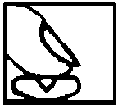
To divide the tablet, place the tablet on a rigid surface with the notch facing up-
wards. Apply slight pressure on the tablet with your thumb, the tablet will break into
two equal parts (see figure).
Unless otherwise prescribed by your doctor, the recommended dose is as follows:
Monoket 20 mg tablets
- 1-2 tablets 3 times a day. Monoket 40 mg tablets1 tablet 2-3 times a day. If you experience headache or a drop in blood pressureyour doctor will advise you to take lower doses at the beginning of therapy (half a MONOKET tablet in the morning and evening).
If you take more Monoket than you should
If you accidentally take an excessive dose of Monoket, you may experience the following symptoms:
- reduction of blood pressure (value less than or equal to 90 mmHg)
- paleness
- sweating
- weak pulse
- increased heart rate (tachycardia)
- dizziness, including dizziness when assuming the upright position
- headache
- weakness (asthenia)
- nausea
- vomiting
- diarrhea
- drowsiness
- hot flashes
- increased levels in the blood of a substance called methemoglobin (methemoglo- binemia) and bluish discoloration of the skin and mucous membranes (cyanosis).
In case of ingestion/taking an excessive dose of Monoket, immediately inform your doc-
tor or go to the nearest hospital.
If you forget to take Monoket
Do not take a double dose to make up for the missed tablet.
If you stop taking Monoket
Contact your doctor immediately.
4. Possible side effects
Like all medicines, this medicine can cause side effects, although not everyone will experience them. There is a risk of side effects.
Very common (may affect more than 1 in 10 people)
- headache. If you experience this effect, inform your doctor, who may have you start therapy with increasing doses. The headache usually disappears during continued therapy.
Common (may affect up to 1 in 10 people)
- nausea. At the beginning of treatment or with an increase in doses, you may experience:
- dizziness (including postural dizziness, which worsens depending on position);
- drowsiness;
- increased heart rate (reflex tachycardia);
- lowering of blood pressure after suddenly moving from a sitting to a standing position (orthostatic hypotension);
- weakness (asthenia), which usually disappears during continued therapy.
Uncommon (may affect up to 1 in 100 people)
- worsening of chest pain (angina pectoris);
- severe decrease in blood pressure (circulatory collapse), sometimes accompanied by slow and irregular heartbeat (bradyarrhythmia) and fainting (syncope);
- vomiting;
- diarrhea;
- allergic skin reactions (e.g., rash);
- redness. If you experience this effect, inform your doctor, who may have you start therapy with increasing doses.
Very rare (may affect up to 1 in 10,000 people):
- burning in the chest (pyrosis);
- muscle pain (myalgia).
Not known (frequency cannot be estimated based on available data)
- low blood pressure (hypotension);
- skin inflammation with skin peeling (exfoliative dermatitis);
- reduction or loss of the therapeutic effect of this medicine or other organic nitrates (development of tolerance). In addition, the following side effects may occur for which the frequency is not known. Effects related to the respiratory system
- condition in which the blood is not adequately oxygenated (temporary hypoxemia).
Effects related to the heart
- “paradoxical effect” with worsening of the heart condition (increased ischemia, increased damage, onset of heart failure, hypoxia);
- bluish discoloration of the skin and mucous membranes (cyanosis). This effect may be due to an increase in the blood of a substance called methemoglobin (methemoglobinemia).
Effects related to the skin
- excessive sweating;
- swelling of the face, lips, mouth, tongue or throat that can cause difficulty breathing and swallowing (angioedema)
Effects related to blood vessels
- pallor;
- ischemia (reduced blood supply to an organ).
Effects related to the nervous system
- agitation.
Reporting of side effects
If you experience any side effects, including those not listed in this leaflet, please
consult your doctor. You can also report side effects directly through the national reporting system at the website www.agenziafarmaco.gov.it/it/responsabili .
By reporting side effects you can help provide more information on the
safety of this medicine.
5. How to store Monoket
Keep this medicine out of sight and reach of children.
This medicine does not require any special storage conditions.
Do not use this medicine after the expiry date that is stated on the pack after the words
EXP. The expiry date refers to the last day of that month.
Do not dispose of any medicine in wastewater or household waste. Ask your pharmacist how to
dispose of medicines you no longer use. This will help protect the environment.
6. Contents of the pack and other information
What Monoket contains
MONOKET 20 mg tablets
- the active ingredient is: isosorbide-5-mononitrate 20 mg
- the other ingredients are: lactose, microcrystalline cellulose, corn starch, talc, aluminium stearate, hydrated colloidal silica. MONOKET 40 mg tablets
- the active ingredient is: isosorbide-5-mononitrate 40 mg
- the other ingredients are: lactose, microcrystalline cellulose, corn starch, talc, aluminium stearate, hydrated colloidal silica, aluminium lake E 110.
Description of the appearance of Monoket and contents of the pack
Monoket 20 mg tablets
Monoket 20 mg is presented in tablets, packaged in blisters in a carton containing 50 tablets.
Monoket 40 mg tablets
Monoket 40 mg is presented in tablets, packaged in blisters in a carton containing 30 tablets.
Marketing Authorisation Holder
CHIESI ITALIA S.p.A., Via Giacomo Chiesi, 1- Parma
Manufacturer
CHIESI FARMACEUTICI S.p.A., Parma Plant, Via S. Leonardo 96.
Monoket 50 mg prolonged-release hard capsules
Isosorbide-5-mononitrate
Read this leaflet carefully before taking this medicine as it contains
important information for you.
- Keep this leaflet. You may need to read it again.
- If you have any questions, ask your doctor.
- This medicine has been prescribed for you only. Do not pass it on to others, even if their symptoms are the same as yours, as it could be harmful.
- If you get any side effects, even those not listed in this leaflet, tell your doctor or pharmacist. See section 4.
Contents of this leaflet:
- 1. What Monoket is and what it is used for
- 2. What you need to know before you take Monoket
- 3. How to take Monoket
- 4. Possible side effects
- 5. How to store Monoket
- 6. Contents of the pack and other information
1. What Monoket is and what it is used for
Monoket contains the active substance isosorbide-5-mononitrate, belonging to the group of medi-
cines called “organic nitrates”.
“Organic nitrates” are vasodilator medicines used in heart diseases, which relax the blood
vessels facilitating the blood flow that brings nourishment to the heart.
Monoket is indicated:
- in the maintenance therapy of heart disease characterized by an obstruction of the coronary arteries, blood vessels that carry blood to the heart (coronary insufficiency);
- in the prevention of attacks of heart disease that manifests with chest pain (angina pectoris) which can also follow a heart attack, possibly accompanied by weakening of the heart (heart failure) also in association with medicines capable of increasing the force of contraction of the heart (cardiotonics) and with medicines used to treat high blood pressure (diuretics).
Monoket is not indicated in case of sudden attacks of chest pain (angina pectoris attacks).
2. What you need to know before taking Monoket
Do not take Monoket if:
- you are allergic to isosorbide-5-mononitrate, organic nitrates or any of the other ingredients of this medicine (listed in section 6);
- you are having a heart attack;
- you have a marked drop in blood pressure (which can occur in many serious conditions such as circulatory collapse, cardiogenic shock, hypovolemia);
- you suffer from an increase in the thickness of the heart muscle with obstruction to normal blood flow (obstructive hypertrophic cardiomyopathy);
- you have a disease involving the lining of the heart, i.e. the pericardium (in particular, constrictive peri- carditis, cardiac tamponade);
- you suffer from increased blood pressure in the vessels of the lungs (primary pulmonary hypertension);
- you are taking medicines to treat erectile dysfunction (e.g. sildenafil, tadalafil, vardenafil) (see section “Other medicines and Monoket”);
- you are taking riociguat, a medicine used to treat pulmonary hypertension (see section “Other medicines and Monoket”).
Warnings and precautions
Talk to your doctor before taking Monoket.
In particular, tell your doctor:
- if you suffer from an eye disease caused by an increase in the pressure of the fluid contained within the eye (glaucoma);
- if you suffer from a severe reduction in hemoglobin in the blood, a substance that carries oxygen in the blood (marked anemia);
- if you suffer from increased activity of a gland, known as the “thyroid”, which determines an increase in the blood of certain hormones, called “thyroid hormones” (hyperthyroidism);
- in case of head injuries (traumatic brain injury);
- in case of bleeding in the brain due to rupture of a blood vessel (cerebral hemorrhage);
- if you suffer from a narrowing (stenosis) of a heart valve;
- if you are prone to low blood pressure after suddenly moving from a sitting to a standing position (orthostatic hypotension);
- if you suffer from high blood pressure in the brain (intracranial hypertension);
- if you have a kidney disease (renal insufficiency).
- if you suffer from , as this may result in a reduction of the medicine’s effect.
- If you suffer from heart vessel diseases (coronary artery disease), as oxygen deficiency in the heart may occur due to an abnormal decrease in oxygen content in the blood (temporary hypoxemia)
Following treatment with high doses and/or prolonged treatment:
- bluish discoloration of the skin and mucous membranes (cyanosis) may occur;
- a reduction or loss of the effect of this medicine may occur. The reduction of the effect can also occur in case of previous therapy with another organic nitrate (medicine similar to Monoket).
IN ALL THESE CASES CONSULT YOUR DOCTOR WHO MAY PRESCRIBE APPROPRIATE THE-
RAPY.
Other medicines and Monoket
Tell your doctor or pharmacist if you are taking, have recently taken or might take
any other medicine.
In particular, tell your doctor if you are taking the following medicines, as they can poten-
tiate the hypotensive (low blood pressure) effect of Monoket:
- medicines that lower blood pressure (e.g. beta-blockers, vasodilators, diuretics, calcium antagonists, ACE-inhibitors);
- medicines for mental disorders and/or depression (neuroleptics and tricyclic antidepressants);
- medicines used in the treatment of erectile dysfunction (e.g. sildenafil, vardenafil and tadalafil). The simultaneous use of Monoket with these medicines may be life-threatening;
- riociguat, a medicine used to treat pulmonary hypertension.
Also tell your doctor if you are taking:
- dihydroergotamine (medicine mainly used to treat headache), as the concomitant administration with Monoket may increase the levels in the blood and the effect of dihydroergotamine.
Monoket with food, drinks and alcohol
The simultaneous consumption of alcohol can impair reaction ability and reduce reflexes,
therefore avoid the simultaneous use of alcohol (see section “Driving and using machines”).
Pregnancy and breastfeeding
If you are pregnant, suspect you are pregnant or are planning to become pregnant, or if you are breastfeeding
ask your doctor for advice before using this medicine, considering that there are no
adequate studies conducted in pregnant or breastfeeding women.
Driving and using machines
Monoket can impair reaction ability and reduce reflexes when driving vehicles and operating
machinery. This effect may be enhanced by the consumption of alcohol.
Monoket contains lactose and sucrose
If your doctor has diagnosed you with intolerance to certain sugars (e.g. lactose, sucrose),
contact him before taking this medicine.
3. How to take Monoket
Take this medicine following exactly the instructions of your doctor or pharmacist.
If you have any doubts, consult your doctor.
The capsules should be taken with some liquid, without chewing.
Unless otherwise prescribed by your doctor, the recommended dose is one capsule in the morning.
If you take more Monoket than you should
If you accidentally take excessive doses of Monoket, you may experience the following symptoms:
- reduction of blood pressure (value less than or equal to 90 mmHg)
- paleness
- sweating
- weak pulse
- increased heart rate (tachycardia)
- dizziness, including dizziness that occurs when assuming an upright position
- headache
- weakness (asthenia)
- nausea
- vomiting
- diarrhea
- drowsiness
- hot flashes
- increased levels in the blood of a substance called methemoglobin (methemoglobinemia) and bluish discoloration of the skin and mucous membranes (cyanosis). In case of ingestion/taking an excessive dose of Monoket, immediately inform your doctor or go to the nearest hospital.
If you forget to use Monoket
Do not take a double dose to make up for the forgotten capsule.
If you stop taking Monoket
Contact your doctor immediately.
4. Possible side effects
Like all medicines, this medicine can cause side effects, although not everyone will experience them. There is a risk of side effects.
Very common (may affect more than 1 in 10 people)
- headache. If you experience this effect, inform your doctor, who may have you start therapy with increasing doses. The headache generally disappears during continued therapy.
Common (may affect up to 1 in 10 people)
- nausea. At the beginning of treatment or with an increase in doses, you may experience:
- dizziness (including postural dizziness, which worsens based on position);
- drowsiness;
- increased heart rate (reflex tachycardia);
- lowering of blood pressure when suddenly moving from a sitting to a standing position (orthostatic hypotension);
- weakness (asthenia), which generally disappears during continued therapy.
Uncommon (may affect up to 1 in 100 people)
- worsening of chest pain (angina pectoris);
- severe decrease in blood pressure (circulatory collapse), sometimes accompanied by slow and irregular heartbeat (bradyarrhythmia) and fainting (syncope);
- vomiting;
- diarrhea;
- allergic skin reactions (e.g., rash);
- redness.
Very rare (may affect up to 1 in 10,000 people)
- burning in the chest (pyrosis);
- muscle pain (myalgia).
Not known (frequency cannot be estimated based on available data)
- low blood pressure (hypotension);
- skin inflammation with skin peeling (exfoliative dermatitis);
- reduction or loss of the therapeutic effect of this medicine or other organic nitrates (development of tolerance). In addition, the following side effects may occur for which the frequency is not known. Effects involving the respiratory system
- condition in which the blood is not adequately oxygenated (temporary hypoxemia).
Effects involving the heart
- “paradoxical effect” with worsening of the heart condition (increased ischemia, increased damage, onset of heart failure, hypoxia);
- bluish discoloration of the skin and mucous membranes (cyanosis). This effect may be due to an increase in the blood of a substance called methemoglobin (methemoglobinemia).
Effects involving the skin
- excessive sweating;
- swelling of the face, lips, mouth, tongue or throat that can cause difficulty breathing and swallowing (angioedema).
Effects involving blood vessels
- pallor;
- ischemia (reduced blood supply to an organ).
Effects involving the nervous system
- agitation.
Reporting of side effects
If you experience any side effects, including those not listed in this leaflet, please
consult your doctor. You can also report side effects directly through the national reporting system at the website www.agenziafarmaco.gov.it/it/responsabili .
By reporting side effects, you can help provide more information on the
safety of this medicine.
5. How to store Monoket
Keep this medicine out of sight and reach of children.
Do not store at a temperature above 30 °C.
Do not use this medicine after the expiry date which is stated on the pack after the words
EXP. The expiry date refers to the last day of that month.
Do not dispose of any medicine in wastewater or household waste. Ask your pharmacist how to
dispose of medicines you no longer use. This will help protect the environment.
6. Contents of the pack and other information
What Monoket contains
- the active ingredient is: isosorbide-5-mononitrate 50 mg
- the other ingredients are: sucrose granules, lactose, talc, ethylcellulose, macrogol 20.000, hydroxypropylcellulose, iron oxide E172, erythrosine E 127, indigotine E132, titanium dioxide E171, gelatin.
Description of the appearance of Monoket and contents of the pack
Monoket is presented in prolonged-release hard capsules packaged in blisters in a carton containing 30
hard capsules of 50 mg.
Marketing Authorisation Holder
CHIESI ITALIA S.p.A., Via Giacomo Chiesi, 1- Parma

Nie jesteś pewien, czy ten lek jest odpowiedni dla ciebie?
Omów swoje objawy i leczenie z lekarzem online.
Monoket 60 mg modified-release tablets
Isosorbide-5-mononitrate
Read this leaflet carefully before you start taking this medicine because it contains
important information for you.
- Keep this leaflet. You may need to read it again.
- If you have any questions, ask your doctor.
- This medicine has been prescribed for you only. Do not pass it on to others, even if they have the same symptoms as you, as it may be harmful.
- If you get any side effects, even those not listed in this leaflet, tell your doctor or pharmacist. See section 4.
Contents of this leaflet:
- 1. What Monoket is and what it is used for
- 2. What you need to know before you take Monoket
- 3. How to take Monoket
- 4. Possible side effects
- 5. How to store Monoket
- 6. Contents of the pack and other information
1. What is Monoket and what is it used for
Monoket contains the active ingredient isosorbide-5-mononitrate, belonging to the group of medi-
cations called “organic nitrates”.
“Organic nitrates” are vasodilator medications used in heart diseases, which relax the blood
vessels facilitating blood flow that brings nourishment to the heart.
Monoket is indicated:
- in the maintenance therapy of heart disease characterized by an obstruction of the coronary arteries, blood vessels that carry blood to the heart (coronary insufficiency);
- in the prevention of attacks of heart disease that manifests with chest pain (angina pectoris) which can also follow a heart attack, possibly accompanied by weakening of the heart (heart failure) also in association with medications capable of increasing the force of contraction of the heart (cardiotonics) and with medications used to treat high blood pressure (diuretics). Monoket is not indicated in case of sudden attacks of chest pain (angina pectoris attacks).
2. What you need to know before taking Monoket
Do not take Monoket if:
- you are allergic to isosorbide-5-mononitrate, organic nitrates or any of the other ingredients of this medicine (listed in section 6);
- you are having a heart attack;
- you have a marked lowering of blood pressure (which can occur during many serious conditions such as circulatory collapse, cardiogenic shock, hypovolemia);
- you suffer from an increase in the thickness of the heart muscle with obstruction to normal blood flow (obstructive hypertrophic cardiomyopathy);
- you have a disease involving the lining of the heart, i.e. the pericardium (in particular, constrictive peri- carditis, cardiac tamponade);
- you suffer from increased blood pressure in the blood vessels of the lungs (primary pulmonary hypertension);
- you are taking medicines to treat erectile dysfunction (e.g. sildenafil, tadalafil, vardenafil) (see section “Other medicines and Monoket”);
- you are taking riociguat, a medicine used to treat pulmonary hypertension (see section “Other medicines and Monoket”).
Warnings and precautions
Talk to your doctor before taking Monoket.
In particular, tell your doctor:
- if you suffer from an eye disease caused by an increase in the pressure of the fluid contained within the eye (glaucoma);
- if you suffer from a severe reduction of haemoglobin in the blood, a substance that carries oxygen in the blood (marked anaemia);
- if you suffer from increased activity of a gland, known as the “thyroid”, which determines an increase in the blood of certain hormones, called “thyroid hormones” (hyperthyroidism);
- in case of head injuries (traumatic brain injury);
- in case of bleeding in the brain due to rupture of a blood vessel (cerebral haemorrhage);
- if you suffer from a narrowing (stenosis) of a heart valve;
- if you are prone to lowering of blood pressure when suddenly moving from a sitting to a standing position (orthostatic hypotension);
- if you suffer from high blood pressure in the brain (intracranial hypertension);
- if you have a kidney disease (renal insufficiency).
- if you suffer from slow intestinal transit and a reduced ability to push food through the intestine, as this may result in a reduction of the medicine's effect;
- If you suffer from heart blood vessel diseases (coronary artery disease), as oxygen deficiency in the heart may occur due to an abnormal decrease in oxygen content in the blood (temporary hypoxemia)
Following treatment with high doses and/or prolonged treatment:
- you may experience bluish discoloration of the skin and mucous membranes (cyanosis);
- you may experience a reduction or loss of the effect of this medicine. The reduction of the effect can also occur in case of previous therapy with another organic nitrate (a medicine similar to Monoket). IN ALL THESE CASES CONSULT YOUR DOCTOR WHO MAY PRESCRIBE APPROPRIATE THERAPY.
Other medicines and Monoket
Tell your doctor or pharmacist if you are taking, have recently taken or might take
any other medicine.
In particular, tell your doctor if you are taking the following medicines, as they can poten-
tiate the hypotensive (low blood pressure) effect of Monoket:
- medicines that lower blood pressure (e.g. beta-blockers, vasodilators, diuretics, calcium antagonists, ACE inhibitors);
- medicines for mental disorders and/or depression (neuroleptics and tricyclic antidepressants);
- medicines used in the treatment of erectile dysfunction (e.g. sildenafil, vardenafil and tadalafil). The simultaneous use of Monoket with these medicines may be life-threatening;
- riociguat, a medicine used to treat pulmonary hypertension.
Also tell your doctor if you are taking:
- dihydroergotamine (a medicine mainly used to treat headaches), as the simultaneous administration with Monoket may increase the levels in the blood and the effect of dihydroergotamine.
Monoket with food, drinks and alcohol
The simultaneous consumption of alcohol can alter reaction abilities and reduce reflexes,
therefore avoid the simultaneous use of alcohol (see section “Driving and using machines”).
Pregnancy and breastfeeding
If you are pregnant, suspect you are pregnant or are planning to become pregnant, or if you are breastfeeding,
ask your doctor for advice before using this medicine, considering that there are
no adequate studies conducted in pregnant or breastfeeding women.
Driving and using machines
Monoket can alter reaction abilities and reduce reflexes when driving vehicles and operating
machinery. This effect may be potentiated by alcohol consumption.
Monoket contains lactose
If your doctor has diagnosed you with intolerance to certain sugars (e.g. lactose), contact
them before taking this medicine.
3. How to take Monoket
Take this medicine following exactly the instructions of your doctor or pharmacist.
If you have any doubts, consult your doctor.
The tablets should be taken with some liquid, without chewing; to facilitate swallowing, the
tablet can be divided into 3 parts.
Unless otherwise prescribed by your doctor, the recommended dose is 1 tablet in the morning.
If you experience headache or a lowering of blood pressure, your doctor will indicate
to take lower doses at the beginning of therapy and then gradually increase the dose.
If you experience pain with a feeling of tightness in the chest, especially in the morning, your doctor
will prescribe you to take 2/3 of a tablet (40 mg) in the morning and 1/3 of a tablet (20 mg) in the
evening.
If you take more Monoket than you should
If you accidentally take excessive doses of Monoket, you may experience the following symptoms:
- reduction of blood pressure (value less than or equal to 90 mmHg)
- paleness
- sweating
- weak pulse
- increased heart rate (tachycardia)
- dizziness, including dizziness when assuming the upright position
- headache
- weakness (asthenia)
- nausea
- vomiting
- diarrhea
- drowsiness
- hot flashes
- increased levels in the blood of a substance called methemoglobin (methemoglobinemia) and bluish discoloration of the skin and mucous membranes (cyanosis).
In case of ingestion/taking an excessive dose of Monoket, immediately inform your
doctor or go to the nearest hospital.
If you forget to use Monoket
Do not take a double dose to compensate for the missed tablet.
If you stop treatment with Monoket
Contact your doctor immediately.
4. Possible side effects
Like all medicines, this medicine can cause side effects, although not everyone will experience them. There is a risk of side effects.
Very common (may affect more than 1 in 10 people)
- headache. If you experience this effect, inform your doctor, who may have you start therapy with increasing doses. The headache generally disappears during the continuation of therapy.
Common (may affect up to 1 in 10 people)
- nausea. At the beginning of treatment or with an increase in doses, you may experience:
- dizziness (including postural dizziness, which worsens depending on position);
- drowsiness;
- increased heart rate (reflex tachycardia);
- lowering of blood pressure when suddenly moving from a sitting or lying position to standing (orthostatic hypotension);
- weakness (asthenia), which generally disappears during the continuation of therapy.
Uncommon (may affect up to 1 in 100 people)
- worsening of chest pain (angina pectoris);
- severe decrease in blood pressure (circulatory collapse), sometimes accompanied by slow and irregular heartbeat (bradyarrhythmia) and fainting (syncope);
- vomiting;
- diarrhea;
- allergic skin reactions (e.g., rash);
- redness. If you experience this effect, inform your doctor, who may have you start therapy with increasing doses.
Very rare (may affect up to 1 in 10,000 people)
- burning in the chest (pyrosis);
- muscle pain (myalgia).
Not known (frequency cannot be estimated based on available data)
- low blood pressure (hypotension);
- skin inflammation with skin peeling (exfoliative dermatitis);
- reduction or loss of the therapeutic effect of this medicine or other organic nitrates (development of tolerance).
In addition, the following side effects may occur for which the frequency is not known.
Effects on the respiratory system
- condition in which the blood is not adequately oxygenated (temporary hypoxemia). Effects on the heart
- “paradoxical effect” with worsening of the heart condition (increased ischemia, increased damage, onset of heart failure, hypoxia);
- bluish discoloration of the skin and mucous membranes (cyanosis). This effect may be due to an increase in the blood of a substance called methemoglobin (methemoglobinemia).
Effects on the skin
- excessive sweating;
- swelling of the face, lips, mouth, tongue or throat that can cause difficulty breathing and swallowing (angioedema).
Effects on blood vessels
- pallor;
- ischemia (reduced blood supply to an organ). Effects on the nervous system
- agitation.
Reporting of side effects
If you experience any side effects, including those not listed in this leaflet, please
consult your doctor. You can also report side effects directly through the national reporting system at the website www.agenziafarmaco.gov.it/it/responsabili .
By reporting side effects, you can help provide more information on the
safety of this medicine.
5. How to store Monoket
Keep this medicine out of sight and reach of children.
This medicine does not require any special storage conditions.
Do not use this medicine after the expiry date that is stated on the pack after the words
EXP. The expiry date refers to the last day of that month.
Do not dispose of any medicine in waste water or household waste. Ask your pharmacist how to
dispose of medicines you no longer use. This will help protect the environment.
6. Contents of the pack and other information
What Monoket contains
- the active ingredient is: isosorbide-5-mononitrate 60 mg
- the other ingredients are: hypromellose, lactose, methylcellulose, macrogol, copovidone, anhydrous colloidal silica, magnesium stearate.
Description of the appearance of Monoket and contents of the pack
Monoket 60 mg is presented in tablets packaged in blisters in a carton containing 30 divisible tablets.
Marketing Authorisation Holder
CHIESI ITALIA S.p.A., Via Giacomo Chiesi, 1– Parma
Manufacturer
CHIESI FARMACEUTICI S.p.A., Parma Manufacturing Plant, Via S. Leonardo 96.

Zacząłeś przyjmować lek i masz pytania?
Omów swoje objawy i leczenie z lekarzem online.
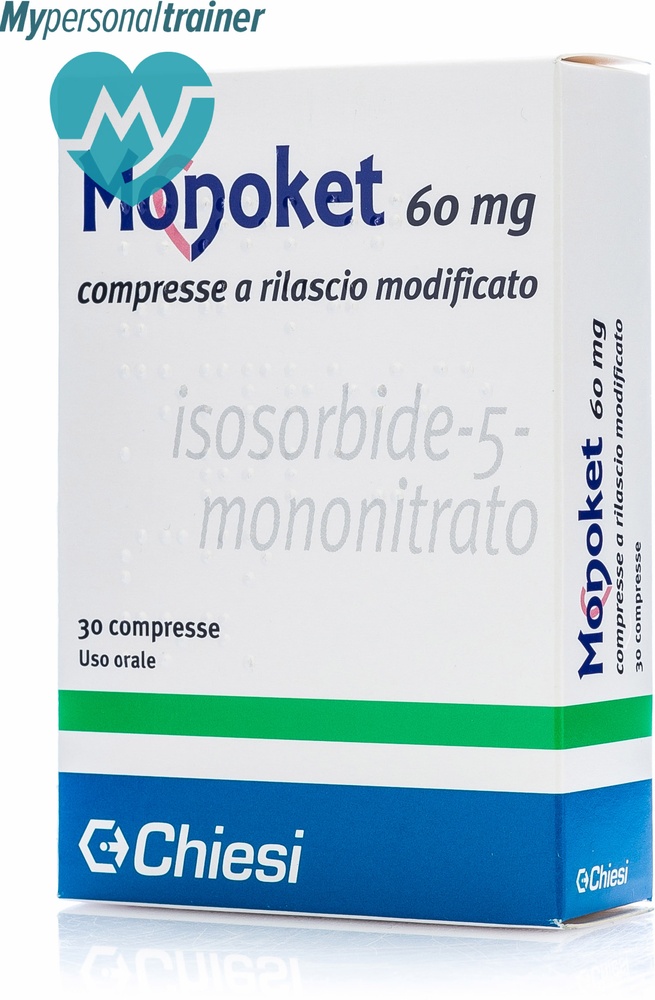
- Kraj rejestracji
- Postać farmaceutycznaCoated tablet, 20 MG
- Kod ATCC01DA14
- Substancja czynna
- Wymaga receptyTak
- Producent
- Te treści mają charakter wyłącznie informacyjny i nie zastępują konsultacji lekarskiej.
- Zamienniki MONOKETPostać farmaceutyczna: Extended-release tablet, 60 MGSubstancja czynna: isosorbide mononitrateProducent: TOPRIDGE PHARMA (IRELAND) LIMITEDWymaga receptyPostać farmaceutyczna: Coated tablet, 20 MGSubstancja czynna: isosorbide mononitrateProducent: Merus Labs Luxco II S.a.r.l.Wymaga receptyPostać farmaceutyczna: Tablet, 20 MGSubstancja czynna: isosorbide mononitrateProducent: Esteve Pharmaceuticals GmbHWymaga recepty
Odpowiedniki MONOKET w innych krajach
Leki z tą samą substancją czynną dostępne w innych krajach.
Odpowiednik MONOKET w Polska
Odpowiednik MONOKET w Ukraina
Odpowiednik MONOKET w Hiszpania
Lekarze online w sprawie MONOKET
Omów stosowanie MONOKET, bezpieczeństwo i ocenę zasadności recepty zgodnie z obowiązującymi przepisami.
Uzyskaj receptę na MONOKET online
Wypełnij 2-minutowy formularz
Opisz swoje objawy, historię choroby i lek, o który prosisz.
Wybierz lekarza lub pozwól nam przydzielić
Wybierz specjalistę lub dopasujemy Cię do najbliższego dostępnego lekarza.
Lekarz analizuje Twój przypadek
Zazwyczaj w ciągu 30 minut. Może zadawać dodatkowe pytania przez czat.
Odbierz w dowolnej aptece
Recepta elektroniczna wysłana na Twój e-mail — ważna w całej Polsce.
Często zadawane pytania
MONOKET wymaga recepty w Włochy. Możesz skonsultować się z lekarzem online, aby sprawdzić, czy ten lek może być odpowiedni w Twojej sytuacji.
Substancją czynną w MONOKET jest isosorbide mononitrate. Informacja ta pomaga rozpoznać leki o tym samym składzie, ale pod różnymi nazwami handlowymi.
MONOKET jest produkowany przez CHIESI ITALIA S.P.A. Nazwy handlowe i opakowania mogą się różnić w zależności od dystrybutora.
Lekarze, tacy jak Lekarze rodzinni, Psychiatrzy, Dermatolodzy, Kardiolodzy, Endokrynolodzy, Gastroenterolodzy, Pulmonolodzy, Nefrolodzy, Reumatolodzy, Hematolodzy, Zakaźnicy, Alergolodzy, Geriatrzy, Pediatrzy, Onkolodzy, mogą ocenić, czy stosowanie MONOKET jest odpowiednie w Twoim przypadku, w zależności od sytuacji klinicznej i lokalnych przepisów. Możesz umówić konsultację online, aby omówić objawy i możliwe dalsze kroki.
Polska posiada dobrze rozwiniętą infrastrukturę ochrony zdrowia w dużych miastach, takich jak Warszawa, Kraków, Wrocław i Gdańsk. Apteki są łatwo dostępne i działają zgodnie z obowiązującymi przepisami, zapewniając dostęp do leków na receptę.
Możesz kupić MONOKET w Warszawie, Krakowie, Wrocławiu lub Gdańsku w każdej aptece, posiadając ważną receptę.
Aby uzyskać receptę, możesz skorzystać z Oladoctor:
Inne leki zawierające tę samą substancję czynną (isosorbide mononitrate) to m.in. DURONITRIN, ELAN, ISMO. Mogą one różnić się nazwą handlową lub postacią, ale zawierają ten sam składnik terapeutyczny. Przed zmianą lub rozpoczęciem nowego leku skonsultuj się z lekarzem.
