



LEVOFOLENE 7.5 mg Coated tablets

Запит на рецепт онлайн
Лікар розгляне ваш випадок і визначить, чи є рецепт медично доцільним.

Поговоріть з лікарем про ці ліки
Обговоріть симптоми та можливі подальші кроки під час короткої онлайн-консультації.



Інструкція із застосування LEVOFOLENE
Зміст інструкції
- Levofolene 4 mg tablets
- Levofolene 7.5 mg tablets
- Levofolene 25 mg powder for injectable solution
- Levofolene 100 mg powder for injectable solution
- Levofolene 175 mg powder for solution for infusion
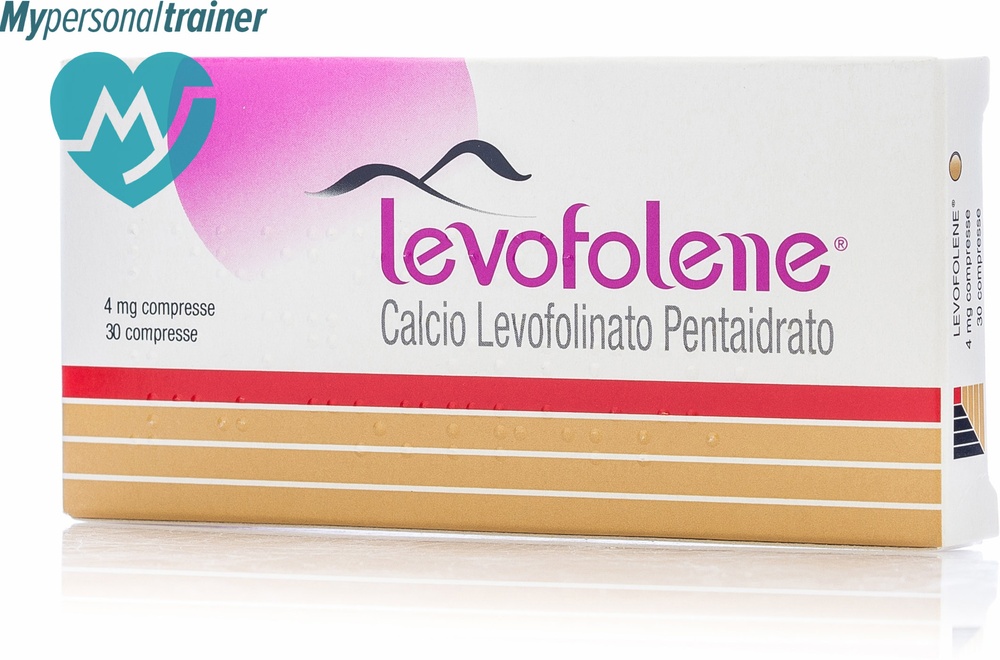
Levofolene 4 mg tablets
calcium levofolinate pentahydrate
Read this leaflet carefully before you start to take this medicine because it contains
important information for you.
- Keep this leaflet. You may need to read it again.
- If you have any questions, ask your doctor or pharmacist.
- This medicine has been prescribed for you only. Do not pass it on to others, even if their symptoms are the same as yours, as it could be harmful.
- If you get any side effects, even those not listed in this leaflet, tell your doctor or pharmacist. See section 4.
Contents of this leaflet:
- 1. What Levofolene is and what it is used for
- 2. What you need to know before you take Levofolene
- 3. How to take Levofolene
- 4. Possible side effects
- 5. How to store Levofolene
- 6. Contents of the pack and other information
1. What is Levofolene and what is it used for
Levofolene contains the active ingredient calcium levofolinate, which belongs to the class of drugs
known as detoxifying agents for cytotoxic treatments, used to reduce the toxicity and adverse
effects of anticancer drugs (cytostatic agents).
Calcium levofolinate is used for all forms of anemia (insufficient presence of hemoglobin and/or
red blood cells in the blood) due to:
- folate deficiency caused by increased demand,
- reduced folate utilization,
- insufficient folate intake with diet.
2. What you need to know before taking Levofolene
Do not take Levofolene
- if you are allergic or have had signs of hypersensitivity (severe allergy) to calcium levofolinate or any of the other ingredients of this medicine (listed in section 6).
- if you suffer from a form of anemia caused by vitamin B12 deficiency, unless the administration of Levofolene is associated with the administration of vitamin B12 itself.
Warnings and precautions
Talk to your doctor or pharmacist before taking Levofolene.
When you need to be administered this medicine, inform your doctor, who will monitor you
in the following cases:
- if you suffer from vitamin B12 deficiency anemia (such as pernicious anemia and megaloblastic anemia), your doctor will subject you to frequent blood tests;
- if you suffer from epilepsy and are taking treatment with one of the following medicines: phenobarbital, phenytoin, primidone, succinimide. The association with Levofolene may cause an increase in the frequency of epileptic seizures. Your doctor will subject you to frequent checks and may adjust the dosage of the anti-epileptic medicine during and after discontinuation of Levofolene (see section Other medicines and Levofolene).
Other medicines and Levofolene
Tell your doctor or pharmacist if you are taking, have recently taken or might take
any other medicine.
Particular attention is required if you are taking other medicines as some may
interact with calcium levofolinate, for example:
- folic acid antagonists (such as cotrimoxazole, pyrimethamine) because calcium levofolinate reduces the effectiveness of these medicines.
- antiepileptic medicines (phenobarbital, phenytoin, primidone and succinimide) because calcium levofolinate may reduce their effectiveness, resulting in an increased frequency of seizures. In such cases, consult your doctor who may check the levels of these medicines in your blood and may adjust the dose to prevent an increase in convulsions (attacks).
Pregnancy and breastfeeding
If you are pregnant, suspect you may be pregnant, or are planning a pregnancy, or if you are breastfeeding with
breast milk, ask your doctor or pharmacist for advice before taking this medicine.
Anemias during pregnancy resulting from increased folate requirements can be improved or
normalized with the administration of levofolic acid.
It is unlikely that your doctor will prescribe a folic acid antagonist medicine during
pregnancy or breastfeeding. However, if you are taking a folic acid antagonist medicine
during pregnancy or breastfeeding, calcium levofolinate may be used to reduce its
undesirable effects.
Driving and using machines
Levofolene does not impair the ability to drive vehicles and operate machinery.
3. How to take Levofolene
Take this medicine following exactly the instructions of your doctor or pharmacist. If you
have any doubts, ask your doctor or pharmacist.
Levofolene 4 mg tablets must be administered orally.
Treatment of folate deficiency anemia:
The recommended dose is 1 tablet of 4 mg per day for 10-15 days. If there is a favorable
response, your doctor may halve the dose continuing until your blood test values return to
normal and you no longer have symptoms.
If you take more Levofolene than you should
In case of accidental intake of an excessive dose of Levofolene, immediately inform your
doctor or go to the nearest hospital.
4. Possible side effects
Like all medicines, this medicine can cause side effects, although not everybody gets them.
Very rare side effects(may affect up to 1 in 10,000 people)
- severe allergic reactions - it is possible to experience sudden itching (urticaria), swelling of the hands, feet, ankles, face, lips, mouth or throat (which can cause difficulty swallowing and breathing) and you may feel faint. This is a serious side effect. You may need urgent medical attention.
Rare side effects(may affect up to 1 in 1000 people)
- increased frequency of seizures in patients with epilepsy (convulsions)
- depression
- agitation
- gastrointestinal disorders
- difficulty falling asleep (insomnia)
Reporting of side effects
If you get any side effects, talk to your doctor or pharmacist. You can also report side effects directly through
the national reporting system at http://www.agenziafarmaco.gov.it/it/responsabili .
By reporting side effects you can help provide more information on the safety
of this medicine.
5. How to store Levofolene
Keep this medicine out of sight and reach of children.
Store at a temperature below 25°C.
Do not take this medicine after the expiry date which is stated on the packaging. The expiry date refers to the last day of that month.
Do not take this medicine if the packaging has been opened or damaged.
Do not dispose of any medicine in wastewater or household waste. Ask your pharmacist how to dispose of medicines you no longer use. This will help protect the environment.
6. Contents of the pack and other information
What Levofolene contains
- The active ingredient is folic acid (as calcium levofolinate pentahydrate). Each tablet contains 4 mg of folic acid.
- The other ingredients are: pregelatinized starch, dibasic calcium phosphate, magnesium stearate, gum arabic.
Description of the appearance of Levofolene and contents of the pack
Each box contains 30 tablets.
Marketing Authorisation Holder and Manufacturer
Marketing Authorisation Holder:
Alfasigma S.p.A. - Viale Sarca, n. 223 - 20126 Milano (MI)
Manufacturer:
Alfasigma S.p.A. – Via E. Fermi, n. 1 – 65020 Alanno (PE)
Levofolene 7.5 mg tablets
calcium levofolinate pentahydrate
Read this leaflet carefully before you start taking this medicine as it contains important information for you.
- Keep this leaflet. You may need to read it again.
- If you have any questions, ask your doctor or pharmacist.
- This medicine has been prescribed for you only. Do not pass it on to others, even if they have the same symptoms as you, as it may be harmful.
- If you get any side effects, even those not listed in this leaflet, tell your doctor or pharmacist. See section 4.
Contents of this leaflet:
- 1. What Levofolene is and what it is used for
- 2. What you need to know before you take Levofolene
- 3. How to take Levofolene
- 4. Possible side effects
- 5. How to store Levofolene
- 6. Contents of the pack and other information
1. What is Levofolene and what it is used for
Levofolene contains the active ingredient calcium levofolinate, which belongs to the class of drugs
known as detoxifying agents for cytotoxic treatments, used to reduce the toxicity and adverse
effects of anticancer drugs (cytostatics). Calcium levofolinate is used:
- in all forms of anemia (insufficient presence of hemoglobin and/or red blood cells in the blood) due to folate deficiency due to increased demand, reduced utilization or insufficient intake of folates with the diet;
- as an antidote to reduce the toxicity of excessive doses of certain anticancer drugs called folic acid antagonists;
- in combination with other anticancer drugs to counteract their side effects. In particular, it can be used to reduce the side effects of anticancer drugs such as aminopterin and methotrexate.
2. What you need to know before taking Levofolene
Do not take Levofolene
- if you are allergic or have had signs of hypersensitivity (severe allergy) to calcium levofolinate or any of the other ingredients of this medicine (listed in section 6).
- if you suffer from a form of anemia caused by vitamin B12 deficiency, unless the administration of Levofolene is associated with the administration of vitamin B12 itself.
Warnings and precautions
Talk to your doctor or pharmacist before taking Levofolene.
When you need to be administered this medicine, inform your doctor, who will monitor you
in the following cases:
- if you suffer from vitamin B12 deficiency anemia (such as pernicious anemia and megaloblastic anemia), your doctor will subject you to frequent blood tests;
- if you suffer from epilepsy and are taking treatment with one of the following medicines: phenobarbital, phenytoin, primidone, succinimide. The association with Levofolene may cause an increase in the frequency of epileptic seizures. Your doctor will subject you to frequent checks and may modify the dosage of the anti-epileptic medicine during and after discontinuation of Levofolene (see section Other medicines and Levofolene).
Other medicines and Levofolene
Tell your doctor or pharmacist if you are taking, have recently taken or might take
any other medicine,
Particular attention is required if you are taking other medicines as some may
interact with calcium levofolinate, for example:
- folic acid antagonists (such as cotrimoxazole, pyrimethamine) because calcium levofolinate reduces the effectiveness of these medicines.
- methotrexate, because calcium levofolinate acts as “rescue therapy” in case of taking high doses of methotrexate and as an antidote in case of overdose.
- antiepileptic medicines (phenobarbital, phenytoin, primidone and succinimide) because calcium levofolinate may reduce their effectiveness, resulting in an increased frequency of seizures. In such cases, consult your doctor who may check the levels of these medicines in your blood and may modify the dose to prevent an increase in convulsions (attacks).
Pregnancy and breastfeeding
If you are pregnant, suspect you are pregnant or are planning a pregnancy, or if you are breastfeeding with
breast milk, ask your doctor or pharmacist for advice before taking this medicine.
Anemias during pregnancy resulting from increased folate requirements can be improved or
normalized with the administration of levofolic acid.
It is unlikely that your doctor will prescribe a medicine antagonistic to folic acid during
pregnancy or breastfeeding. However, if you are taking a medicine antagonistic to folic acid
during pregnancy or breastfeeding, calcium levofolinate may be used to reduce its
undesirable effects.
Driving and using machines
Levofolene does not impair the ability to drive vehicles and operate machinery.
3. How to take Levofolene
Take this medicine following exactly the instructions of your doctor or pharmacist. If you
have any doubts, consult your doctor or pharmacist.
Levofolene 7.5 mg tablets must be administered orally.
Treatment of folate deficiency anemia:
The recommended dose is 1 tablet of 7.5 mg per day for 10-15 days.
If there is a favorable response, your doctor may halve the dose continuing until the values
of your blood tests return to normal and you no longer have symptoms.
For the treatment of overdose from folic acid antagonists, Levofolene should be taken
as soon as possible, within 1 hour, while administration after a period of
4 hours is generally ineffective.
If you take more Levofolene than you should
In case of accidental intake of an excessive dose of Levofolene, immediately inform your
doctor or go to the nearest hospital.
4. Possible side effects
Like all medicines, this medicine can cause side effects, although not everybody gets them.
Very rare side effects(may affect up to 1 in 10,000 people)
- severe allergic reactions - it is possible to experience sudden itching (urticaria), swelling of the hands, feet, ankles, face, lips, mouth or throat (which can cause difficulty swallowing and breathing) and you may feel faint. This is a serious side effect. You may need urgent medical attention. Rare side effects(may affect up to 1 in 1000 people)
- increased frequency of seizures in patients with epilepsy (convulsions)
- depression
- agitation
- gastrointestinal disorders
- difficulty falling asleep (insomnia)
Reporting of side effects
If you get any side effects, even those not listed in this leaflet, please tell your doctor or pharmacist. You can also report side effects directly through the
national reporting system at http://www.agenziafarmaco.gov.it/it/responsabili .
By reporting side effects you can help provide more information on the safety
of this medicine.
5. How to store Levofolene
Keep this medicine out of sight and reach of children.
Store at a temperature below 25°C.
Do not take this medicine after the expiry date which is stated on the packaging. The expiry date refers to the last day of that month.
Do not take this medicine if the packaging has been opened or damaged.
Do not dispose of any medicine in wastewater or household waste. Ask your pharmacist how to
dispose of medicines you no longer use. This will help protect the environment.
6. Package Contents and Other Information
What Levofolene Contains
- The active ingredient is folic acid (as calcium levofolinate pentahydrate). Each tablet contains 7.5 mg of folic acid.
- The other ingredients are: corn starch, dibasic calcium phosphate, magnesium stearate, gum arabic.
Description of the Appearance of Levofolene and Package Contents
Each pack contains 10 tablets.
Marketing Authorisation Holder and Manufacturer
Marketing Authorisation Holder:
Alfasigma S.p.A. - Viale Sarca, n. 223 - 20126 Milano (MI)
Manufacturer:
Alfasigma S.p.A. – Via E. Fermi, n. 1 – 65020 Alanno (PE)

Не впевнені, чи підходить вам цей лікарський засіб?
Обговоріть симптоми та можливі варіанти лікування з лікарем онлайн.
Levofolene 25 mg powder for injectable solution
calcium levofolinate pentahydrate
Read this leaflet carefully before you start to use this medicine as it contains important
information for you.
- Keep this leaflet. You may need to read it again.
- If you have any questions, ask your doctor or pharmacist.
- This medicine has been prescribed for you only. Do not pass it on to others, even if they have the same symptoms as you, as it may be harmful.
- If any side effects occur, even those not listed in this leaflet, tell your doctor or pharmacist. See section 4.
Contents of this leaflet:
- 1. What Levofolene is and what it is used for
- 2. What you need to know before you use Levofolene
- 3. How to use Levofolene
- 4. Possible side effects
- 5. How to store Levofolene
- 6. Contents of the pack and other information
1. What is Levofolene and what is it used for
Levofolene contains the active ingredient calcium levofolinate, which belongs to the class of drugs
known as detoxifying agents for cytostatic treatments, used to reduce the toxicity and adverse
effects of anticancer drugs (cytostatic agents). Calcium levofolinate is used:
- in all situations of folate deficiency due to increased demand, reduced utilization or insufficient intake of folates with the diet;
- as an antidote to reduce the toxicity of excessive doses of certain anticancer drugs called folic acid antagonists;
- in combination with other anticancer drugs to counteract their side effects. In particular, it can be used to reduce the side effects of anticancer drugs such as aminopterin and methotrexate;
- as rescue therapy after treatment with methotrexate;
- to enhance the effects of a medicine called 5-fluorouracil in the treatment of some forms of cancer.
2. What you need to know before using Levofolene
Levofolene must not be administered into the spinal fluid (intrathecally).
Do not use Levofolene
- if you are allergic to calcium levofolinate or any of the other ingredients of this medicine (listed in section 6), or have had a severe allergic reaction in the past.
- if you suffer from a form of anemia caused by vitamin B12 deficiency, unless the administration of Levofolene is associated with the administration of vitamin B12 itself.
Warnings and precautions
Talk to your doctor or pharmacist before using Levofolene.
Use this medicine in association with methotrexate or 5-fluorouracil (anti-cancer medicines)
only under the direct supervision of a doctor experienced in the use of drugs for the treatment of
tumors.
Talk to your doctor beforeLevofolene is administered to you if you think that any of the following
conditions apply to you:
- if you suffer from vitamin B12 deficiency anemia (such as pernicious anemia and megaloblastic anemia), your doctor will subject you to frequent blood tests;
- if you are undergoing treatment for cancer with one of the following medicines: hydroxycarbamide, cytarabine, mercaptopurine, thioguanine. These medicines can cause the formation of red blood cells with a larger than normal diameter in the blood (a condition known as “macrocytosis”). This condition should not be treated with calcium levofolinate;
- if you suffer from epilepsy and are taking one of the following medicines: phenobarbital, phenytoin, primidone, succinimide. Combination with Levofolene may increase the frequency of seizures. Your doctor will subject you to frequent checks and may adjust the dosage of the anti-epileptic medicine during and after discontinuation of Levofolene (see section Other medicines and Levofolene);
- if you are also being treated with 5-fluorouracil and experience diarrhea, infections of the mucous membranes of the mouth, or a decrease in the number of white blood cells. If you experience diarrhea or other gastrointestinal disorders, inform your doctor as you should not start or continue the combined treatment of anti-cancer drugs such as 5-fluorouracil and Levofolene until all these symptoms have completely disappeared. Also, in case of diarrhea or inflammation of the mucous membranes, your doctor will monitor you closely because your health conditions could worsen rapidly and it may be necessary to reduce the dose of 5-fluorouracil
- if you are undergoing concomitant treatment with calcium levofolinate and 5-fluorouracil, pay particular attention if:
- you are elderly
- you have undergone radiotherapy
- you have problems with your stomach or intestines
Other medicines and Levofolene
Tell your doctor or pharmacist if you are taking, have recently taken, or might take
any other medicines.
Particular care is required if you are taking other medicines as some may
interact with calcium levofolinate, for example:
- folic acid antagonists (such as cotrimoxazole, pyrimethamine) because calcium levofolinate reduces the effectiveness of these medicines.
- methotrexate, because calcium levofolinate acts as “rescue therapy” in case of high doses of methotrexate and as an antidote in case of overdose.
- fluorouracil (anti-cancer medicine) because the effectiveness and side effects of this medicine may be increased by calcium levofolinate. 5-Fluorouracil must not be mixed with Levofolene in the same injection or intravenous infusion.
- medicines used for the treatment of epilepsy (phenobarbital, phenytoin, primidone and succinimide) because calcium levofolinate may reduce their effectiveness, resulting in an increased frequency of seizures. In such cases, consult your doctor who may check the levels of these medicines in your blood and may adjust the dose to prevent an increase in convulsions (attacks).
Pregnancy and breastfeeding
If you are pregnant, suspect you are pregnant, are planning to become pregnant, or are breastfeeding
ask your doctor or pharmacist for advice before using this medicine.
Anemias during pregnancy resulting from increased folate requirements can be improved or
normalized with the administration of levofolic acid.
It is unlikely that your doctor will prescribe a folic acid antagonist or 5-
fluorouracil during pregnancy or breastfeeding. However, if you are taking a folic acid antagonist medicine
during pregnancy or breastfeeding, calcium levofolinate may be
used to reduce its undesirable effects.
Driving and using machines
Levofolene does not impair the ability to drive and operate machinery.
3. How to use Levofolene
Use this medicine following the instructions of your doctor or pharmacist exactly. If you have any
doubts, consult your doctor or pharmacist.
Levofolene 25 mg can be administered intramuscularly, by infusion or intravenously.
The recommended dose is variable depending on the chemotherapy regimen adopted.
Levofolene in association with high doses of methotrexate
The dosage of Levofolene ranges from 10 to 200 mg/m²/day parenterally. In a second phase, it
may be possible to switch to a dosage of 10-12 mg/m²/day every 3-6 hours.
Levofolene in association with 5-fluorouracil
The dosage may range from 15 to 25 mg/m²/day intravenously (low-dose folinate) up to
dosages of 200 to 550 mg/m²/day by continuous infusion (high-dose folinate). According to some
therapeutic regimens, the infusion of Levofolene should be started 24 hours before and ended 12 hours after the end
of treatment with 5-fluorouracil.
To prepare the injectable solution, the powder contained in the 25 mg vial must be
dissolved in 5 ml of water for injections.
For the treatment of overdose from folic acid antagonists, the administration of Levofolene
should be done as soon as possible, preferably within 1 hour, while administration
after a period of 4 hours is generally ineffective.
If you use more Levofolene than you should
In case of accidental intake of an excessive dose of Levofolene, immediately inform your
doctor or go to the nearest hospital.
of folic acid antagonists. In case of overdose of the association of 5-fluorouracil and
calcium levofolinate, follow the instructions for 5-fluorouracil overdose.
4. Possible side effects
Like all medicines, this medicine can cause side effects, although not everybody gets them.
Very rare side effects(may affect up to 1 in 10,000 people)
- severe allergic reactions - it is possible to experience sudden itching (urticaria), swelling of the hands, feet, ankles, face, lips, mouth or throat (which can cause difficulty swallowing and breathing) and you may feel faint. This is a serious side effect. You may need urgent medical attention. Uncommon side effects(may affect up to 1 in 100 people)
- fever
Rare side effects(may affect up to 1 in 1000 people)
- increased frequency of seizures in patients with epilepsy (convulsions)
- depression
- agitation
- gastrointestinal disorders
- difficulty falling asleep (insomnia)
During the treatment with Levofolene in combination with an anticancer medicine containing
fluoropyrimidines such as 5-fluorouracil, the following side effects related to the anticancer medicine are more likely to occur:
Very common side effects(may affect more than 1 in 10 people)
- nausea
- vomiting
- severe diarrhea
- dehydration which may be due to the diarrhea
- inflammation of the lining of the intestine and mouth (life-threatening conditions have occurred)
- decreased number of blood cells (including life-threatening conditions)
Common side effects(may affect up to 1 in 10 people)
- redness and swelling of the palms of the hands and soles of the feet which can cause peeling skin (desquamation) (hand-foot syndrome) Side effects with unknown frequency(frequency cannot be estimated from available data)
- increased levels of ammonia in the blood
Reporting of side effects
If you get any side effects, talk to your doctor or pharmacist. You can also report side effects directly through the
national reporting system at . http://www.aifa.gov.it/content/segnalazioni-reazioni-
avverse.
By reporting side effects you can help provide more information on the safety
of this medicine.
5. How to store Levofolene
Keep this medicine out of the sight and reach of children.
Do not use this medicine after the expiry date which is stated on the packaging. The expiry date refers to the last day of that month.
Do not use this medicine if the packaging is opened or damaged.
Do not dispose of any medicine in wastewater or household waste. Ask your pharmacist how to
dispose of medicines you no longer use. This will help protect the environment.
6. Contents of the pack and other information
What Levofolene contains
- The active ingredient is folinic acid (as calcium levofolinate pentahydrate). Each vial of injectable lyophilized powder contains 25 mg of folinic acid.
- The other component is mannitol.
Description of the appearance of Levofolene and contents of the pack
Each box contains one vial of powder for injectable solution.
Marketing Authorisation Holder and Manufacturer
Marketing Authorisation Holder
Alfasigma S.p.A. - Viale Sarca, n. 223 - 20126 Milano (MI)
Manufacturer
Biologici Italia Laboratories s.r.l.
Via F. Serpero 2
20060 Masate (MI)
Levofolene 100 mg powder for injectable solution
calcium levofolinate pentahydrate
Read this leaflet carefully before you start to use this medicine as it contains important
information for you.
- Keep this leaflet. You may need to read it again.
- If you have any questions, ask your doctor, pharmacist or nurse.
- This medicine has been prescribed for you only. Do not pass it on to others, even if their symptoms are the same as yours, as it could be harmful.
- If you get any side effects, even those not listed in this leaflet, tell your doctor, pharmacist or nurse. See section 4.
Contents of this leaflet:
- 1. What Levofolene is and what it is used for
- 2. What you need to know before you use Levofolene
- 3. How to use Levofolene
- 4. Possible side effects
- 5. How to store Levofolene
- 6. Contents of the pack and other information
1. What is Levofolene and what is it used for
Levofolene contains the active substance calcium levofolinate, which belongs to the class of drugs
known as detoxifying agents for cytotoxic treatments, used to reduce the toxicity and adverse
effects of anticancer drugs (cytostatic agents). Calcium levofolinate is used:
- in all situations of folate deficiency due to increased demand, reduced utilization or insufficient intake of folates with the diet;
- as an antidote to reduce the toxicity of excessive doses of certain anticancer drugs called folic acid antagonists;
- in combination with other anticancer drugs to counteract their side effects. In particular, it can be used to reduce the side effects of anticancer drugs such as aminopterin and methotrexate;
- as rescue therapy after treatment with methotrexate;
- to enhance the effects of a medicine called 5-fluorouracil in the treatment of some forms of cancer.
2. What you need to know before using Levofolene
Calcium levofolinate should not be administered via the intrathecal route (into the spinal fluid).
Do not use Levofolene
- if you are allergic or have shown signs of hypersensitivity (severe allergy) to calcium levofolinate or to any of the other ingredients of this medicine (listed in section 6).
- if you suffer from a form of anemia caused by vitamin B12 deficiency, unless the administration of Levofolene is associated with the administration of vitamin B12 itself.
Warnings and precautions
Consult your doctor or nurse before using Levofolene.
Use this medicine in association with methotrexate or 5-fluorouracil (anticancer medicines)
only under the direct supervision of a doctor experienced in the use of drugs for the treatment of
tumors.
Consult your doctor beforeyou are given Levofolene if you think that any of the following
conditions apply to you:
- if you suffer from vitamin B12 deficiency anemia (such as pernicious anemia and megaloblastic anemia), your doctor will subject you to frequent blood tests;
- you are undergoing cancer treatment with one of the following medicines: hydroxycarbamide, cytarabine, mercaptopurine, thioguanine. These medicines can cause the formation of red blood cells with a larger than normal diameter in the blood (a condition known as “macrocytosis”). This condition should not be treated with Levofolene;
- you suffer from epilepsy and are undergoing treatment with one of the following medicines: phenobarbital, phenytoin, primidone, succinimide. Combination with Levofolene may cause an increase in the frequency of epileptic seizures. Your doctor will subject you to frequent checks and may modify the dosage of the anti-epileptic medicine during and after discontinuation of Levofolene (see section Other medicines and Levofolene);
- if you are also being treated with 5-fluorouracil and experience diarrhea, infections of the mucous membranes of the mouth, or a decrease in the number of white blood cells in the blood. If you experience diarrhea or other gastrointestinal disorders, inform your doctor as you should not start or continue the combined treatment of anticancer drugs such as 5-fluorouracil and Levofolene until all these symptoms have completely disappeared. Also, in case of diarrhea or inflammation of the mucous membranes, your doctor will keep you under close control because your health conditions could worsen rapidly and it may be necessary to reduce the dose of 5-fluorouracil;
- if you are undergoing simultaneous treatment with Levofolene and fluorouracil, pay particular attention if:
- you are elderly
- you have undergone radiotherapy
- you have problems with your stomach or intestines.
Other medicines and Levofolene
Tell your doctor or pharmacist if you are taking, have recently taken, or might take
any other medicines.
Particular care is required if you are taking other medicines as some may
interact with calcium levofolinate, for example:
- folic acid antagonists (such as cotrimoxazole, pyrimethamine) because calcium levofolinate reduces the effectiveness of these medicines.
- methotrexate, because calcium levofolinate acts as “rescue therapy” in case of taking high doses of methotrexate and as an antidote in case of overdose.
- fluorouracil (anticancer medicine) because the effectiveness and side effects of this medicine may be increased by calcium levofolinate. 5-fluorouracil must not be mixed with Levofolene in the same injection or intravenous infusion.
- medicines used for the treatment of epilepsy (phenobarbital, phenytoin, primidone and succinimide) because calcium levofolinate may reduce their effectiveness, resulting in an increased frequency of seizures. In such cases, consult your doctor who may check the levels of these medicines in your blood and may modify the dose to prevent an increase in convulsions (attacks).
Pregnancy and breastfeeding
If you are pregnant, suspect you are pregnant, are planning a pregnancy, or are breastfeeding with
breast milk, ask your doctor or pharmacist for advice before using this medicine.
Anemias during pregnancy resulting from increased folate requirements can be improved or
normalized with the administration of levofolic acid.
It is unlikely that your doctor will prescribe a folic acid antagonist or fluorouracil
during pregnancy or breastfeeding. However, if you are taking a folic acid antagonist
during pregnancy or breastfeeding, calcium levofolinate may be used to
reduce its undesirable effects.
Driving and using machines
Levofolene does not impair the ability to drive vehicles and operate machinery.
3. How to use Levofolene
This medicine will be administered to you by qualified medical and nursing personnel. If you have any doubts
about the use of this medicine, please consult your doctor or nurse.
Levofolene 100 mg must be administered intravenously.
The recommended dose is variable depending on the chemotherapy regimen adopted.
Levofolene in association with high doses of methotrexate
The dosage of Levofolene ranges from 10 to 200 mg/m²/day. In a second phase, it may be possible to switch to a
dosage of 10-12 mg/m²/day every 3-6 hours.
Levofolene in association with 5-fluorouracil
The dosage may vary from 15 to 25 mg/m²/day intravenously (low-dose folinate) up to
dosages of 200 to 550 mg/m²/day in continuous infusion (high-dose folinate). According to some
therapeutic regimens, the infusion of Levofolene should be started 24 hours before and ended 12 hours after the end
of treatment with 5-fluorouracil.
For the treatment of overdose from folic acid antagonists, the administration of Levofolene
should be done as soon as possible, preferably within 1 hour, while administration
after a period of 4 hours is generally ineffective.
For the preparation of the injectable solution, the powder contained in the 100 mg vial must
be dissolved in 10 ml of water for injections.
If you use more Levofolene than you should
In case of accidental intake of an excessive dose of Levofolene, immediately inform your
doctor or go to the nearest hospital.
Excessive doses of calcium levofolinate may cancel the chemotherapeutic effects of antagonists
of folic acid. In case of overdose of the association of 5-fluorouracil and calcium levofolinate, follow
the instructions for the 5-fluorouracil overdose.
4. Possible side effects
Like all medicines, this medicine can cause side effects, although not everybody gets them.
Very rare side effects(may affect up to 1 in 10,000 people)
- severe allergic reactions - it is possible to experience sudden itching (urticaria), swelling of the hands, feet, ankles, face, lips, mouth or throat (which can cause difficulty swallowing and breathing) and you may feel faint. This is a serious side effect. You may need urgent medical attention.
Uncommon side effects(may affect up to 1 in 100 people)
- fever
Rare side effects(may affect up to 1 in 1,000 people)
- increased frequency of seizures in patients with epilepsy (convulsions)
- depression
- agitation
- gastrointestinal disorders
- difficulty falling asleep (insomnia)
During the treatment with Levofolene in association with an antitumour medicine containing
fluoropyrimidines such as 5-f luorouracil, the following side effects related to the antitumour
medicine are more likely to occur:
Very common side effects(may affect more than 1 in 10 people)
- nausea
- vomiting
- severe diarrhoea
- dehydration which may be due to the diarrhoea
- inflammation of the lining of the intestine and mouth (life-threatening conditions have occurred)
- reduction in the number of blood cells (including life-threatening conditions)
Common side effects(may affect up to 1 in 10 people)
- redness and swelling of the palms of the hands and soles of the feet which can cause peeling skin (hand-foot syndrome)
Side effects of unknown frequency(frequency cannot be estimated from available data)
- increased levels of ammonia in the blood
Reporting of side effects
If you get any side effects, even those not listed in this leaflet, tell your doctor or pharmacist. You can also report side effects directly through
the national reporting system at the address
http://www.aifa.gov.it/content/segnalazioni-reazioni-avverse.
By reporting side effects you can help provide more information on the safety
of this medicine.
5. How to store Levofolene
Keep this medicine out of the sight and reach of children.
Do not use this medicine after the expiry date which is stated on the packaging. The expiry date refers to the last day of that month.
Do not use this medicine if the packaging is opened or damaged.
Do not dispose of any medicine in wastewater or household waste. Ask your pharmacist how to
dispose of medicines you no longer use. This will help protect the environment.
6. Contents of the pack and other information
What Levofolene contains
- The active ingredient is folinic acid (as calcium folinate pentahydrate). Each vial of injectable lyophilized powder contains 100 mg of folinic acid.
- The other component is mannitol.
Description of the appearance of Levofolene and contents of the pack
Each pack contains one vial of powder for injectable solution.
Marketing Authorisation Holder and Manufacturer
Marketing Authorisation Holder
Alfasigma S.p.A. - Viale Sarca, n. 223 - 20126 Milano (MI)
Manufacturer
Biologici Italia Laboratories s.r.l.
Via F. Serpero 2
20060 Masate (MI)

Виникли питання під час прийому ліків?
Обговоріть свої симптоми та лікування з лікарем онлайн.
Levofolene 175 mg powder for solution for infusion
calcium levofolinate pentahydrate
Read this leaflet carefully before you use this medicine as it contains important
information for you.
- Keep this leaflet. You may need to read it again.
- If you have any questions, ask your doctor, pharmacist or nurse.
- This medicine has been prescribed for you only. Do not pass it on to others, even if they have the same symptoms as you, as it may be harmful.
- If any of the side effects become serious, or if you notice any side effects not listed in this leaflet, tell your doctor, pharmacist or nurse. See section 4.
Contents of this leaflet:
- 1. What Levofolene is and what it is used for
- 2. What you need to know before you use Levofolene
- 3. How to use Levofolene
- 4. Possible side effects
- 5. How to store Levofolene
- 6. Contents of the pack and other information
1. What is Levofolene and what is it used for
Levofolene contains the active ingredient calcium levofolinate, which belongs to the class of drugs
known as detoxifying agents for cytotoxic treatments, used to reduce the toxicity and adverse
effects of anticancer drugs (cytostatics). Calcium levofolinate is used:
- as an antidote to reduce the toxicity of excessive doses of certain anticancer drugs called folic acid antagonists;
- in combination with other anticancer drugs to counteract their side effects. In particular, it can be used to reduce the side effects of anticancer drugs such as aminopterin and methotrexate;
- as rescue therapy after treatment with methotrexate;
- to enhance the effects of a medicine called 5-fluorouracil in the treatment of some types of tumors.
2. What you need to know before using Levofolene
Calcium levofolinate should not be administered by the intrathecal route (into the spinal fluid).
Do not use Levofolene
- if you are allergic or have shown signs of hypersensitivity (severe allergy) to calcium levofolinate or to any of the other ingredients of this medicine (listed in section 6).
- if you suffer from a form of anemia caused by vitamin B12 deficiency, unless the administration of Levofolene is associated with the administration of vitamin B12 itself.
Warnings and precautions
Consult your doctor or nurse before using Levofolene.
Use this medicine in association with methotrexate or 5-fluorouracil (anticancer medicines)
only under the direct supervision of a doctor experienced in the use of drugs for the treatment of
tumors.
Consult your doctor beforeLevofolene is administered to you if you think that any of the
following conditions apply to you:
- if you suffer from vitamin B12 deficiency anemia (such as pernicious and megaloblastic anemia) your doctor will subject you to frequent blood tests;
- you are undergoing treatment for cancer with one of the following medicines: hydroxycarbamide, cytarabine, mercaptopurine, thioguanine. These medicines can cause the formation of red blood cells with a larger than normal diameter in the blood (a condition known as “macrocytosis”). This condition should not be treated with Levofolene;
- you suffer from epilepsy and are undergoing treatment with one of the following medicines: phenobarbital, phenytoin, primidone, succinimide. The combination with Levofolene may cause an increase in the frequency of epileptic seizures. Your doctor will subject you to frequent checks and may modify the dosage of the anti-epileptic medicine during and after discontinuation of Levofolene (see section Other medicines and Levofolene);
- if you are also being treated with 5-fluorouracil and should experience diarrhea, infections of the mucous membranes of the mouth, or a decrease in the number of white blood cells in the blood. If you experience diarrhea or other gastrointestinal disorders, inform your doctor as you should neither start nor continue the combined treatment of anticancer drugs such as 5-fluorouracil and Levofolene until all these symptoms have completely disappeared. Also, in case of diarrhea or inflammation of the mucous membranes, your doctor will keep you under close control because your health conditions could worsen rapidly and it may be necessary to reduce the dose of 5-fluorouracil;
- if you are undergoing concomitant treatment with Levofoleneand fluorouracil, pay particular attention if:
- you are elderly
- you have undergone radiotherapy
- you have problems with your stomach or intestines.
Levofolene powder for solution for infusion must be injected exclusively into a vein with a
drip (infusion administration). Other routes of administration must be avoided.
Other medicines and Levofolene
Tell your doctor or pharmacist if you are taking, have recently taken, or might take
any other medicine.
Particular care is required if you are taking other medicines as some may
interact with calcium levofolinate, for example:
- folic acid antagonists (such as cotrimoxazole, pyrimethamine) because calcium levofolinate reduces the effectiveness of these medicines.
- methotrexate, because calcium levofolinate acts as “rescue therapy” in case of taking high doses of methotrexate and as an antidote in case of overdose.
- fluorouracil (anticancer medicine) because the effectiveness and side effects of this medicine may be increased by calcium levofolinate. 5-Fluorouracil should not be mixed with Levofolene in the same injection or intravenous infusion.
- medicines used for the treatment of epilepsy (phenobarbital, phenytoin, primidone and succinimide) because calcium levofolinate may reduce their effectiveness with the consequent increase in the frequency of seizures. In such cases, consult your doctor who may check your levels of these medicines in the blood and may modify the dose to prevent an increase in convulsions (attacks).
Pregnancy and breastfeeding
If you are pregnant, suspect you are pregnant, are planning a pregnancy, or are breastfeeding
ask your doctor or pharmacist for advice before using this medicine.
Levofolene is usually used in therapeutic protocols with drugs that may be
harmful to the fetus and to the infant.
It is unlikely that your doctor will prescribe you a folic acid antagonist or fluorouracil
during pregnancy or breastfeeding. However, if you are taking a folic acid antagonist
during pregnancy or breastfeeding, calcium levofolinate may be used to
reduce its undesirable effects.
Driving and operating machinery
Levofolene does not impair the ability to drive vehicles and operate machinery.
3. How to use Levofolene
This medicine will be administered to you by qualified medical and nursing personnel. If you have any doubts
about the use of this medicine, please consult your doctor or nurse.
Levofolene 175 mg must be administered intravenously.
The recommended dose is variable depending on the chemotherapy regimen adopted.
Levofolene in association with high doses of methotrexate
The dosage of Levofolene ranges from 10 to 200 mg/m²/day. In a second phase, it may be possible to switch to a
dosage of 10-12 mg/m²/day every 3-6 hours.
Levofolene in association with 5-fluorouracil
The dosage may vary from 15 to 25 mg/m²/day intravenously (low-dose folinate) up to
dosages of 200 to 550 mg/m²/day in continuous infusion (high-dose folinate), corresponding to
an average calcium folinate dose between 100-250 mg/m²/day. According to some therapeutic regimens, the
infusion of Levofolene should be started 24 hours before and ended 12 hours after the end of
treatment with 5-fluorouracil.
For the treatment of overdose from folic acid antagonists, the administration of Levofolene
should be done as soon as possible, preferably within 1 hour, while administration
after a period of 4 hours is generally ineffective.
For the preparation of the solution for intravenous infusion, the powder contained in the vial
of 175 mg must be dissolved in 15-20 ml of water for injections.
If you use more Levofolene than you should
In case of accidental intake of an excessive dose of Levofolene, immediately inform
your doctor or go to the nearest hospital.
Excessive doses of calcium folinate may cancel the chemotherapeutic effects of folic acid antagonists.
In case of overdose of the association of 5-fluorouracil and calcium folinate, follow the instructions for the
overdose of 5-fluorouracil.
4. Possible side effects
Like all medicines, this medicine can cause side effects, although not everybody gets them.
Very rare side effects(may affect up to 1 in 10,000 people)
- severe allergic reactions - it is possible to experience sudden itching (urticaria), swelling of the hands, feet, ankles, face, lips, mouth or throat (which can cause difficulty swallowing and breathing) and you may feel faint. This is a serious side effect. You may need urgent medical attention.
Uncommon side effects(may affect up to 1 in 100 people)
- fever
Rare side effects(may affect up to 1 in 1,000 people)
- increased frequency of seizures in patients with epilepsy (convulsions)
- depression
- agitation
- gastrointestinal disorders
- difficulty falling asleep (insomnia)
During the treatment with Levofolene in association with an antineoplastic medicine containing
fluoropyrimidines such as 5-f luorouracil, the following side effects related to the antineoplastic
medicine are more likely to occur:
Very common side effects(may affect more than 1 in 10 people)
- nausea
- vomiting
- severe diarrhea
- dehydration which may be due to the diarrhea
- inflammation of the lining of the intestine and mouth (life-threatening conditions have occurred)
- reduction in the number of blood cells (including life-threatening conditions)
Common side effects(may affect up to 1 in 10 people)
- redness and swelling of the palms of the hands and soles of the feet which can cause the skin to peel (hand-foot syndrome)
Side effects of unknown frequency(frequency cannot be estimated from available data)
- increased levels of ammonia in the blood
Reporting of side effects
If you get any side effects, talk to your doctor or pharmacist. You can also report side effects directly
through the national reporting system at http://www.aifa.gov.it/content/segnalazioni-reazioni-
avverse..
By reporting side effects you can help provide more information on the safety
of this medicine.
5. How to store Levofolene
Keep this medicine out of the sight and reach of children.
Do not use this medicine after the expiry date which is stated on the packaging. The expiry date refers to the last day of that month.
Do not use this medicine if the packaging is opened or damaged.
Do not dispose of any medicine in wastewater or household waste. Ask your pharmacist how to
dispose of medicines you no longer use. This will help protect the environment.
6. Contents of the pack and other information
What Levofolene contains
- The active ingredient is folic acid (as calcium levofolinate pentahydrate). Each vial of powder for intravenous infusion solution contains 175 mg of folic acid.
- The other ingredient is mannitol.
Description of the appearance of Levofolene and contents of the pack
Each box contains one vial of powder for intravenous infusion solution.
Marketing authorisation holder and manufacturer
Marketing authorisation holder
Alfasigma S.p.A. - Viale Sarca, n. 223 - 20126 Milano (MI)
Manufacturer
Biologici Italia Laboratories s.r.l.
Via F. Serpero 2
20060 Masate (MI)
- Країна реєстрації
- Лікарська формаCoated tablet, 7.5 MG
- Код АТХV03AF04
- Діюча речовина
- Потрібен рецептТак
- Виробник
- Ця інформація надана лише для ознайомлення і не є медичною порадою. Рішення щодо лікування завжди приймає лікар.
- Альтернативи до LEVOFOLENEЛікарська форма: Powder for injectable solution, 25 MGДіюча речовина: calcium levofolinateВиробник: TEVA B.V.Потрібен рецептЛікарська форма: Tablet, 4 MGДіюча речовина: calcium levofolinateПотрібен рецептЛікарська форма: Coated tablet, 7.5 MGДіюча речовина: calcium levofolinateВиробник: PFIZER ITALIA S.R.L.Потрібен рецепт
Аналоги LEVOFOLENE в інших країнах
Препарати з тією самою діючою речовиною, доступні в інших країнах.
Аналог LEVOFOLENE у Іспанія
Аналог LEVOFOLENE у Польща
Аналог LEVOFOLENE у Україна
Лікарі онлайн щодо LEVOFOLENE
Застосування, безпека та можливість призначення рецепта — за результатами медичної оцінки.









Отримайте рецепт на LEVOFOLENE онлайн
Заповніть форму за 2 хвилини
Розкажіть про симптоми, історію хвороби та потрібний препарат.
Оберіть лікаря або ми призначимо
Оберіть спеціаліста або ми підберемо найближчого доступного лікаря.
Лікар розглядає ваш випадок
Зазвичай протягом 30 хвилин. Може ставити уточнювальні запитання в чаті.
Отримайте в будь-якій аптеці
Електронний рецепт надсилається на вашу пошту — дійсний по всій Польщі.
Часті запитання
LEVOFOLENE потребує рецепта в Італія. Ви можете обговорити з лікарем онлайн, чи підходить цей лікарський засіб для вашої ситуації.
Діюча речовина у LEVOFOLENE — calcium levofolinate. Це допомагає визначити препарати з тим самим складом, але під іншими торговими назвами.
LEVOFOLENE виробляється компанією ALFASIGMA S.P.A.. Назва бренду та упаковка можуть відрізнятися залежно від дистрибʼютора.
Лікарі, зокрема Сімейні лікарі, Психіатри, Дерматологи, Кардіологи, Ендокринологи, Гастроентерологи, Пульмонологи, Нефрологи, Ревматологи, Гематологи, Інфекціоністи, Алергологи, Геріатри, Педіатри, Онкологи, можуть оцінити доцільність застосування LEVOFOLENE з урахуванням вашого стану та місцевих правил. Ви можете записатися на онлайн-консультацію, щоб обговорити симптоми та можливі подальші кроки.
Польща має добре розвинену систему охорони здоров'я у великих містах, таких як Варшава, Краків, Вроцлав і Гданськ. Аптеки широко доступні та працюють відповідно до чинного законодавства, забезпечуючи доступ до рецептурних препаратів.
Ви можете придбати LEVOFOLENE у Варшаві, Кракові, Вроцлаві або Гданську в будь-якій аптеці за наявності дійсного рецепта.
Щоб отримати рецепт, ви можете скористатися Oladoctor:
Інші препарати з тією самою діючою речовиною (calcium levofolinate) включають KALKIO LEVOFOLINATO TEVA JENERIKS, FOLANEMIN, LEDERFOLIN. Вони можуть відрізнятися торговою назвою або формою випуску, але містять той самий терапевтичний компонент. Перед зміною або початком прийому нового препарату варто проконсультуватися з лікарем.
