



KEPPRA 250 mg Tabletki Powlekane

Ocena recepty online
Lekarz przeanalizuje Twój przypadek i zdecyduje, czy wystawienie recepty jest medycznie uzasadnione.

Porozmawiaj z lekarzem o tym leku
Omów swoje objawy i opcje leczenia podczas szybkiej konsultacji online.



Jak stosować KEPPRA
Treść ulotki
- Keppra 250 mg film-coated tablets, 500 mg film-coated tablets, 750 mg film-coated tablets, 1000 mg film-coated tablets
- Keppra 100 mg/mL oral solution
- Keppra 100 mg/mL concentrate for solution for infusion
Keppra 250 mg film-coated tablets, 500 mg film-coated tablets, 750 mg film-coated tablets, 1000 mg film-coated tablets
Levetiracetam
Read this leaflet carefully before you or your child start taking this medicine because it contains important information for you.
- Keep this leaflet. You may need to read it again.
- If you have any questions, ask your doctor or pharmacist.
- This medicine has been prescribed for you only. Do not pass it on to others, even if their symptoms are the same as yours, as it could be harmful.
- If you get any side effects, even those not listed in this leaflet, tell your doctor or pharmacist. See section 4.
Contents of this leaflet:
- 1. What Keppra is and what it is used for
- 2. What you need to know before you take Keppra
- 3. How to take Keppra
- 4. Possible side effects
- 5. How to store Keppra
- 6. Contents of the pack and other information
1. What is Keppra and what it is used for
Levetiracetam is an antiepileptic medicine (a medicine used to treat seizures).
Keppra is used:
- alone in adults and adolescents starting from 16 years of age with newly diagnosed epilepsy, to treat a certain form of epilepsy. Epilepsy is a condition in which patients have repeated attacks (seizures). Levetiracetam is used for the epileptic form in which the initial attack affects only one part of the brain but may subsequently extend to wider areas of both sides of the brain (partial-onset seizures with or without secondary generalization). Levetiracetam has been prescribed by your doctor to reduce the number of seizures.
- as an addition to other antiepileptic medicines to treat:
- partial-onset seizures, with or without generalization, in adults, adolescents, children and infants starting from 1 month of age
- myoclonic seizures (brief, shock-like spasms of a muscle or muscle group) in adults and adolescents starting from 12 years of age with juvenile myoclonic epilepsy
- primary generalized tonic-clonic seizures (major attacks, including loss of consciousness) in adults and adolescents starting from 12 years of age with idiopathic generalized epilepsy (the type of epilepsy that is believed to have a genetic cause).
2. What you need to know before taking Keppra
Do not take Keppra
- If you are allergic to levetiracetam, pyrrolidone derivatives or any of the other ingredients of this medicine (listed in section 6).
Warnings and precautions
Talk to your doctor before taking Keppra
- If you have kidney problems, follow your doctor's instructions. The doctor may decide whether the dose needs to be adjusted.
- If you notice a slowing of growth or unexpected development of puberty in a child, contact your doctor.
- A limited number of people treated with antiepileptic drugs like Keppra have experienced self-harming thoughts or suicidal ideas. If you have any symptoms of depression and/or suicidal thoughts, contact your doctor.
- If you or a family member suffers from cardiac arrhythmia (visible on an electrocardiogram) or if you have a disease and/or are taking medicines that can cause irregular heartbeats or electrolyte imbalances.
Tell your doctor or pharmacist if any of the following side effects worsen or last for more than a few
days:
- Abnormal thoughts, feeling irritable or more aggressive than usual, or if you or your family and friends notice the appearance of significant changes in mood or behavior.
- Worsening of epilepsy: Seizures may rarely worsen or occur more frequently, mainly during the first month after starting treatment or increasing the dose. In a very rare form of early-onset epilepsy (epilepsy associated with SCN8A mutations), which causes multiple types of seizures and loss of abilities, you may notice that seizures remain present or worsen during treatment.
If you experience any of these new symptoms during treatment with Keppra, consult a
doctor as soon as possible.
Children and adolescents
- Keppra alone (monotherapy) is not indicated in children and adolescents under 16 years of age.
Other medicines and Keppra
Tell your doctor or pharmacist if you are taking, have recently taken or might take
any other medicines.
Do not take macrogol (a medicine used as a laxative) for one hour before and for one hour after
taking levetiracetam because it may cause a loss of the effect of the latter.
Pregnancy and breastfeeding
If you are pregnant or breastfeeding, or think you might be pregnant or are
planning to have a baby, ask your doctor for advice before taking this medicine.
Levetiracetam can be used during pregnancy, only if, after careful evaluation, this is
considered necessary by the doctor.
Do not stop your treatment without discussing it with your doctor.
A risk of birth defects for the fetus cannot be completely excluded. Breastfeeding is not
recommended during treatment.
Driving and using machines
Keppra may reduce your ability to drive vehicles or use tools or machines as it can
cause drowsiness. This is more likely at the beginning of treatment or after an increase in the
dose. Do not drive or use machinery until you have verified that your ability to perform
these activities is not affected.
Keppra 750 mg film-coated tablets contain Sunset Yellow FCF (E110)
The coloring agent Sunset Yellow FCF (E110) may cause allergic reactions.
3. How to take Keppra
Take this medicine following exactly the instructions of your doctor or pharmacist. If you
have any doubts, consult your doctor or pharmacist.
Take the number of tablets following your doctor’s instructions.
Keppra must be taken twice a day, once in the morning and once in the evening, approximately at the
same time each day.
Add-on and monotherapy (starting from 16 years of age)
- Adults (≥ 18 years) and adolescents (12 to 17 years) weighing 50 kg or more:Recommended dose: between 1000 mg and 3000 mg per day. When you start taking Keppra for the first time, your doctor will prescribe a lower dosefor 2 weeks before giving you the lowest daily dose. Example: if your daily dose is to be 1000 mg, your initial reduced dose is 1 tablet of 250 mg in the morning and 1 tablet of 250 mg in the evening and the dose will be gradually increasedto reach 1000 mg per day after 2 weeks.
- Adolescents (12 to 17 years) weighing 50 kg or less:The doctor will prescribe the pharmaceutical form of Keppra most appropriate depending on weight and dose.
- Dose for infants (1 month to 23 months) and children (2 to 11 years) weighing less than 50 kg:The doctor will prescribe the pharmaceutical form of Keppra most appropriate depending on age, weight and dose.
Keppra 100 mg/mL oral solution is the most suitable formulation for infants and children under 6 years of age, children and adolescents (6 to 17 years) weighing less than 50 kg and
when tablets do not allow for accurate dosing.
Method of administration:
Swallow Keppra tablets with a sufficient amount of liquid (e.g. a glass of water). You can
take Keppra with or without food. After oral administration, you may perceive the bitter taste of levetiracetam.
Duration of treatment:
- Keppra is used as chronic treatment. Treatment with Keppra should last as long as prescribed by your doctor.
- Do not stop treatment without consulting your doctor as this could increase the number of seizures.
If you take more Keppra than you should:
Possible side effects of a Keppra overdose are drowsiness, agitation, aggression,
decreased attention, respiratory inhibition and coma.
Contact your doctor if you have taken more tablets than you should have. The doctor will establish the best
possible treatment for the overdose.
If you forget to take Keppra:
Contact your doctor if you have forgotten to take one or more doses.
Do not take a double dose to make up for the missed tablet.
If you stop taking Keppra:
If you stop treatment, Keppra must be discontinued gradually to avoid an
increase in seizures. If your doctor decides to stop treatment with Keppra, he will give you instructions regarding the gradual discontinuation of Keppra.
If you have any further questions on the use of this medicine, ask your doctor or pharmacist.
4. Possible side effects
Like all medicines, this medicine can cause side effects, although not everybody gets them.
Seek immediate medical attention or go to the nearest emergency room if you experience:
- weakness, feeling dizzy or lightheaded, or difficulty breathing, as these may be signs of a serious allergic reaction (anaphylactic)
- swelling of the face, lips, tongue and throat (angioedema)
- flu-like symptoms and a rash on the face followed by widespread rash with high fever, increased levels of liver enzymes observed in blood tests and an increase in a type of white blood cells in the blood (eosinophilia), swollen lymph nodes and involvement of other organs (drug reaction with eosinophilia and systemic symptoms [DRESS, Drug Reaction withEosinophilia and Systemic Symptoms])
- symptoms such as reduced urine output, fatigue, nausea, vomiting, confusion and swelling of legs, ankles or feet, as these may be a sign of sudden decrease in kidney function
- a rash that may appear with blisters that look like small targets (dark central spots surrounded by a clearer area, with a dark ring around the edge) ( erythema multiforme)
- a widespread rash with blisters and peeling of the skin, especially around the mouth, nose, eyes and genitals ( Stevens-Johnson syndrome)
- a more severe form of rash that causes skin peeling in more than 30% of the body surface ( toxic epidermal necrolysis)
- signs of severe mental changes or if someone around you notices signs of confusion, drowsiness, amnesia (memory loss), impaired memory (forgetfulness), abnormal behavior or other neurological signs, including involuntary or uncontrolled movements. These could be symptoms of encephalopathy.
The most frequently reported side effects are: nasopharyngitis, drowsiness, headache,
fatigue and dizziness. At the beginning of treatment or when the dose is increased, side effects
such as drowsiness, fatigue and dizziness may be more common. These effects should,
however, decrease over time.
Very common:may affect more than 1 in 10 people
- nasopharyngitis;
- drowsiness, headache.
Common:may affect up to 1 in 10 people
- anorexia (loss of appetite);
- depression, hostility or aggression, anxiety, insomnia, nervousness or irritability;
- convulsion, balance disorder, dizziness (feeling unstable), lethargy (lack of energy and enthusiasm), tremor (involuntary shaking);
- vertigo (sensation of spinning);
- cough;
- abdominal pain, diarrhea, dyspepsia (indigestion), vomiting, nausea;
- rash;
- asthenia/fatigue (feeling weak).
Uncommon:may affect up to 1 in 100 people
- decreased number of platelets in the blood, decreased number of white blood cells in the blood;
- weight loss, weight gain;
- attempted suicide and suicidal thoughts, mental disorder, abnormal behavior, hallucinations, anger, confusion, panic attack, emotional lability/mood swings, agitation;
- amnesia (memory loss), impaired memory (forgetfulness), abnormal coordination/ataxia (impaired motor coordination), paresthesia (tingling), impaired attention (loss of concentration);
- diplopia (double vision), blurred vision;
- elevated/abnormal values in liver function tests;
- hair loss, eczema, itching;
- muscle weakness, myalgia (muscle pain);
- trauma.
Rare:may affect up to 1 in 1,000 people
- infection;
- decreased number of all types of blood cells;
- severe allergic reactions (DRESS, anaphylactic reaction [severe and important allergic reaction], angioedema [swelling of face, lips, tongue and throat])
- decreased concentration of sodium in the blood;
- suicide, personality disorder (behavioral problems), altered thinking (slowed thinking, inability to concentrate);
- delirium;
- encephalopathy (see the subsection “Seek immediate medical attention” for a detailed description of the symptoms);
- seizures may worsen or occur more frequently;
- uncontrollable muscle spasms involving the head, trunk and limbs, difficulty controlling movements, hyperkinesia (hyperactivity);
- altered heart rhythm (electrocardiogram);
- pancreatitis;
- liver failure, hepatitis;
- sudden decrease in kidney function;
- a rash that may appear with blisters that look like small targets (dark central spots surrounded by a clearer area, with a dark ring around the edge) ( erythema multiforme), a widespread rash with blisters and peeling of the skin, especially around the mouth, nose, eyes and genitals ( Stevens-Johnson syndrome) and a more severe form that causes skin peeling in more than 30% of the body surface ( toxic epidermal necrolysis);
- rhabdomyolysis (muscle tissue breakdown) and associated increased blood creatine phosphokinase levels. The prevalence is significantly higher in Japanese patients compared to non-Japanese patients;
- limping gait or difficulty walking;
- combination of fever, muscle rigidity, unstable blood pressure and heart rate, confusion, low level of consciousness (may be signs of a disorder called neuroleptic malignant syndrome). The prevalence is significantly higher in Japanese patients compared to non-Japanese patients.
Very rare:may affect up to 1 in 10,000 people
- repetitive unwanted thoughts or feelings or the urge to do something repeatedly (obsessive-compulsive disorder).
Reporting of side effects
If you get any side effects, even those not listed in this leaflet, tell your
doctor or pharmacist. You can also report side effects directly through the
national reporting system listed in Annex V .
By reporting side effects you can help provide more information on the safety of
this medicine.
5. How to store Keppra
Keep this medicine out of sight and reach of children.
Do not use this medicine after the expiry date which is stated on the box after Scad.: and on the
blister after EXP.:
The expiry date refers to the last day of that month.
This medicine does not require any particular storage conditions.
Do not dispose of any medicine in wastewater or household waste. Ask your pharmacist how to
dispose of medicines you no longer use. This will help protect the environment.
6. Package contents and other information
What Keppra contains
The active ingredient is called levetiracetam.
Each Keppra 250 mg tablet contains 250 mg of levetiracetam.
Each Keppra 500 mg tablet contains 500 mg of levetiracetam.
Each Keppra 750 mg tablet contains 750 mg of levetiracetam.
Each Keppra 1000 mg tablet contains 1000 mg of levetiracetam.
The other ingredients are:
Tablet core: sodium croscarmellose, macrogol 6000, anhydrous colloidal silica, magnesium
stearate.
Coating: partially hydrolysed polyvinyl alcohol, titanium dioxide (E171), macrogol 3350,
talc, colorants*.
* The colorants are:
250 mg tablets: aluminium indigotine lake (E132)
500 mg tablets: yellow iron oxide (E172)
750 mg tablets: aluminium sunset yellow FCF lake (E110), red iron oxide (E172)
Description of Keppra and package contents
Keppra 250 mg film-coated tablets are blue, oval-shaped, 13 mm in size, notched and with the
inscription “ucb” and “250” embossed on one side.
The notch is only to facilitate breaking and improve swallowing and not to divide the
tablet into equal doses.
Keppra 500 mg film-coated tablets are yellow, oval-shaped, 16 mm in size, notched and with
the inscription “ucb” and “500” embossed on one side.
The notch is only to facilitate breaking and improve swallowing and not to divide the
tablet into equal doses.
Keppra 750 mg film-coated tablets are orange, oval-shaped, 18 mm in size, notched and
with the inscription “ucb” and “750” embossed on one side.
The notch is only to facilitate breaking and improve swallowing and not to divide the
tablet into equal doses.
Keppra 1000 mg film-coated tablets are white, oval-shaped, 19 mm in size, notched and
with the inscription “ucb” and “1000” embossed on one side.
The notch is only to facilitate breaking and improve swallowing and not to divide the
tablet into equal doses.
Keppra tablets are packaged in blisters contained in cardboard boxes containing:
- 250 mg: 20, 30, 50, 60, 100 x 1, 100 film-coated tablets and multi-packs containing 200 (2 packs of 100) film-coated tablets.
- 500 mg: 10, 20, 30, 50, 60, 100 x 1, 100, 120 film-coated tablets and multi-packs containing 200 (2 packs of 100) film-coated tablets.
- 750 mg: 20, 30, 50, 60, 80, 100 x 1, 100 film-coated tablets and multi-packs containing 200 (2 packs of 100) film-coated tablets.
- 1000 mg: 10, 20, 30, 50, 60, 100 x 1, 100 film-coated tablets and multi-packs containing 200 (2 packs of 100) film-coated tablets.
The 100 x 1 tablet packs are available in aluminium/PVC blisters divisible for single
doses. All other packs are available in standard aluminium/PVC blisters.
Not all pack sizes may be marketed.
Marketing Authorisation Holder
Marketing Authorisation Holder: UCB Pharma SA, Allée de la Recherche
60, B-1070 Brussels, Belgium.
Manufacturer:
UCB Pharma SA, Chemin du Foriest, B-1420 Braine-l’Alleud, Belgium
or Aesica Pharmaceuticals S.r.l., Via Praglia 15, I-10044 Pianezza, Italy.
For further information on this medicine, contact the local representative of the Marketing
Authorisation Holder.
België/Belgique/Belgien
UCB Pharma SA/NV
Tel/Tél: + 32 / (0)2 559 92 00
Lietuva
България
Ю СИ БИ България ЕООД
Teл.: + 359 (0) 2 962 30 49
Luxembourg/Luxemburg
UCB Pharma SA/NV
Tél/Tel: + 32 / (0)2 559 92 00
Česká republika
UCB s.r.o.
Tel: + 420 221 773 411
Magyarország
UCB Magyarország Kft.
Tel.: + 36-(1) 391 0060
Danmark
UCB Nordic A/S
Tlf.: + 45 / 32 46 24 00
Malta
Pharmasud Ltd.
Tel: + 356 / 21 37 64 36
Deutschland
UCB Pharma GmbH
Tel: + 49 /(0) 2173 48 4848
Nederland
UCB Pharma B.V.
Tel: + 31 / (0)76-573 11 40
Eesti
OÜ Medfiles
Tel: +372 730 5415
Norge
UCB Nordic A/S
Tlf: + 45 / 32 46 24 00
Ελλάδα
UCB Α.Ε.
Τηλ: + 30 / 2109974000
Österreich
UCB Pharma GmbH
Tel: + 43 (0)1 291 80 00
Polska
UCB Pharma Sp. z o.o.
Tel.: + 48 22 696 99 20
France
UCB Pharma S.A.
Tél: + 33 / (0)1 47 29 44 35
España
UCB Pharma, S.A.
Tel: + 34 / 91 570 34 44
Portugal
UCB Pharma (Produtos Farmacêuticos), Lda
Tel: + 351 / 21 302 5300
Hrvatska
Medis Adria d.o.o.
Tel: +385 (0) 1 230 34 46
România
UCB Pharma Romania S.R.L.
Tel: + 40 21 300 29 04
Ireland
UCB (Pharma) Ireland Ltd.
Tel: + 353 / (0)1-46 37 395
Slovenija
Medis, d.o.o.
Tel: + 386 1 589 69 00
Ísland
Vistor hf.
Tel: + 354 535 7000
Slovenská republika
UCB s.r.o., organizačná zložka
Tel: + 421 (0) 2 5920 2020
Italia
UCB Pharma S.p.A.
Tel: + 39 / 02 300 791
Suomi/Finland
UCB Pharma Oy Finland
Puh/Tel: +358 9 2514 4221
Κύπρος
Lifepharma (Z.A.M.) Ltd
Τηλ: + 357 22 34 74 40
Sverige
UCB Nordic A/S
Tel: + 46 / (0) 40 29 49 00
Latvija
Altre fonti d’informazioni
More detailed information on this medicine is available on the website of the European
Medicines Agency: https://www.ema.europa.eu.
Keppra 100 mg/mL oral solution
Levetiracetam
Read this leaflet carefully before you or your child start taking this medicine because it contains important information for you.
- Keep this leaflet. You may need to read it again.
- If you have any questions, ask your doctor or pharmacist.
- This medicine has been prescribed for you only. Do not pass it on to others, even if their symptoms are the same as yours, as it could be harmful.
- If you get any side effects, even those not listed in this leaflet, tell your doctor or pharmacist. See section 4.
Contents of this leaflet:
- 1. What Keppra is and what it is used for
- 2. What you need to know before you take Keppra
- 3. How to take Keppra
- 4. Possible side effects
- 5. How to store Keppra
- 6. Contents of the pack and other information
1. What Keppra is and what it is used for
Levetiracetam 100 mg/mL oral solution is an antiepileptic medicine (a medicine used to treat seizures).
Keppra is used:
- alone in adults and adolescents starting from 16 years of age with newly diagnosed epilepsy, to treat a certain form of epilepsy. Epilepsy is a condition in which patients have repeated attacks (seizures). Levetiracetam is used for the epileptic form in which the initial attack affects only one part of the brain but may subsequently extend to larger areas of both sides of the brain (partial-onset seizures with or without secondary generalization). Levetiracetam has been prescribed by your doctor to reduce the number of seizures.
- as an addition to other antiepileptic medicines to treat:
- partial-onset seizures, with or without generalization, in adults, adolescents, children and infants starting from 1 month of age
- myoclonic seizures (brief shock-like spasms of a muscle or muscle group) in adults and adolescents starting from 12 years of age with juvenile myoclonic epilepsy
- primary generalized tonic-clonic seizures (major attacks, including loss of consciousness) in adults and adolescents starting from 12 years of age with idiopathic generalized epilepsy (the type of epilepsy that is believed to have a genetic cause).
2. What you need to know before taking Keppra
Do not take Keppra
- If you are allergic to levetiracetam, pyrrolidone derivatives or any of the other ingredients of this medicine (listed in section 6).
Warnings and precautions
Talk to your doctor before taking Keppra
- If you have kidney problems, follow your doctor's instructions. The latter may decide whether the dose needs to be adjusted.
- If you notice a slowing of growth or unexpected onset of puberty in the child, contact your doctor.
- A limited number of people treated with antiepileptics such as Keppra have experienced self-harmful thoughts or suicidal ideas. If you have any symptoms of depression and/or suicidal thoughts, contact your doctor.
- If you or a family member suffers from cardiac arrhythmias (visible on an electrocardiogram) or if you have a disease and/or are taking medicines that can cause irregular heartbeats or electrolyte imbalances.
Inform your doctor or pharmacist if any of the following side effects worsen or last more than a few
days:
- Abnormal thoughts, feeling of irritability or more aggressive reactions than usual, or if you or your family and friends notice the appearance of significant changes in mood or behavior.
- Worsening of epilepsy: Seizures may rarely worsen or occur more frequently, mainly during the first month after starting treatment or increasing the dose. In a very rare form of early-onset epilepsy (epilepsy associated with SCN8A mutations), which causes multiple types of seizures and loss of abilities, you may notice that seizures remain present or worsen during treatment.
If you experience any of these new symptoms during treatment with Keppra, consult a
doctor as soon as possible.
Children and adolescents
- Keppra alone (monotherapy) is not indicated in children and adolescents under 16 years of age.
Other medicines and Keppra
Tell your doctor or pharmacist if you are taking or have recently taken or might take
any other medicine.
Do not take macrogol (a medicine used as a laxative) for one hour before and for one hour after
taking levetiracetam because it may cause a loss of the effect of the latter.
Pregnancy and breastfeeding
If you are pregnant or breastfeeding, or think you may be pregnant or are
planning to have a baby, inform your doctor before taking this medicine.
Levetiracetam can be used during pregnancy, only if, after careful evaluation, this is
considered necessary by the doctor.
Do not stop your treatment without discussing it with your doctor.
A risk of birth defects for the fetus cannot be completely excluded. Breastfeeding is not
recommended during treatment.
Driving and using machines
Keppra may reduce the ability to drive vehicles or use tools or machinery as it may
cause drowsiness. This is more likely at the beginning of treatment or after an increase in
the dose. Do not drive or use machinery until you have verified that your ability to perform
these activities is not affected.
Keppra contains methyl parahydroxybenzoate, propyl parahydroxybenzoate and maltitol
Keppra oral solution contains methyl parahydroxybenzoate (E218) and propyl parahydroxybenzoate
(E216) which may cause allergic reactions (including delayed reactions).
Keppra oral solution also contains maltitol. If your doctor has diagnosed you with an intolerance to
certain sugars, contact him/her before taking this medicine.
3. How to take Keppra
Take this medicine always exactly as your doctor or pharmacist has told you. If you
have any doubts ask your doctor or pharmacist.
Keppra must be taken twice a day, once in the morning and once in the evening, approximately at the
same time each day.
Take the oral solution following your doctor’s instructions.
Monotherapy (starting from 16 years of age)
Adults (≥18 years) and adolescents (starting from 16 years of age):
Measure the appropriate dose using the 10 mL syringe included in the package for patients aged
4 years and over.
Recommended dose: Keppra must be taken twice a day, in two equal doses, each of
which between 5 mL (500 mg) and 15 mL (1500 mg).
When you start taking Keppra for the first time, your doctor will prescribe a lower dosefor
2 weeks before giving you the lowest daily dose.
Add-on therapy
Dose for adults and adolescents (from 12 to 17 years):
Measure the appropriate dose using the 10 mL syringe included in the package for patients aged
4 years and over.
Recommended dose: Keppra must be taken twice a day, in two equal doses, each of
which between 5 mL (500 mg) and 15 mL (1500 mg).
Dose for children aged 6 months and over
The doctor will prescribe the most appropriate pharmaceutical form of Keppra depending on age, weight and
dose.
For children from 6 months to 4 years,measure the appropriate dose using the 5 mLsyringe included
in the package.
For children over 4 years,measure the appropriate dose using the 10 mLsyringe
included in the package.
Recommended dose: Keppra must be taken twice a day, in two equal doses, each of
which between 0.1 mL (10 mg) and 0.3 mL (30 mg) per kg of the child’s body weight (see the
table below for some dose examples).
Dose for children aged 6 months and over:
Dose for infants (from 1 month to less than 6 months):
For infants from 1 month to less than 6 months,measure the appropriate dose using the 1 mL
syringe included in the package.
Recommended dose: Keppra must be taken twice a day, in two equal doses, each of
which between 0.07 mL (7 mg) and 0.21 mL (21 mg) per kg of the infant’s body weight (see the
table below for some dose examples).
| Weight | I Initial dose: 0.1 mL/kg twice a day | Maximum dose: 0.3 mL/kg twice a day |
| 6 kg | a 0.6 mL twice a day | 1.8 mL twice a day |
| 8 kg | 0.8 mL twice a day | 2.4 mL twice a day |
| 10 kg | i 1 mL twice a day | 3 mL twice a day |
| 15 kg | z 1.5 mL twice a day | 4.5 mL twice a day |
| 20 kg | 2 mL twice a day | 6 mL twice a day |
| 25 kg | n 2.5 mL twice a day | 7.5 mL twice a day |
| From 50 kg | 5 mL twice a day | 15 mL twice a day |
Dose for infants (from 1 month to less than 6 months):
Method of administration:
After measuring the correct dose with the appropriate syringe, Keppra oral solution can be
diluted in a glass of water or in a baby bottle. Keppra can be taken with or without food. After
oral administration, a bitter taste of levetiracetam may be perceived.
Instructions on how to use the syringe:
- Open the bottle: press the cap and turn counterclockwise (figure 1).
- Follow this procedure at the first administration of Keppra:
| Weight | Initial dose: 0.07 mL/kg twice a day | Maximum dose: 0.21 mL/kg twice a day |
| 4 kg | 0.3 mL twice a day | o 0.85 mL twice a day |
| 5 kg | 0.35 mL twice a day | 1.05 mL twice a day |
| 6 kg | 0.45 mL twice a day | c 1.25 mL twice a day |
| 7 kg | 0.5 mL twice a day | 1.5 mL twice a day |
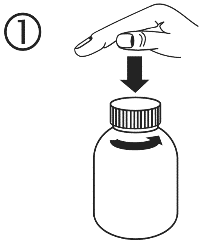
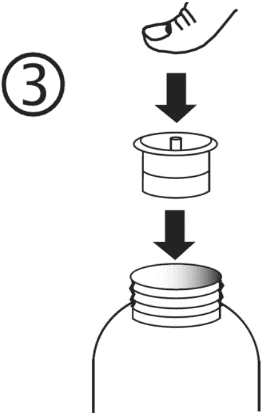
- Remove the adapter from the oral administration syringe (figure 2).
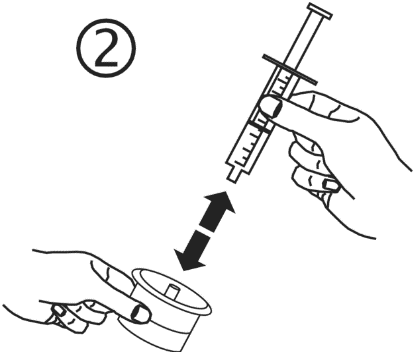
- Insert the adapter into the top of the bottle (figure 3). Make sure it is firmly in place. The adapter does not need to be removed after use.
- .
- Follow this procedure at each administration of Keppra:
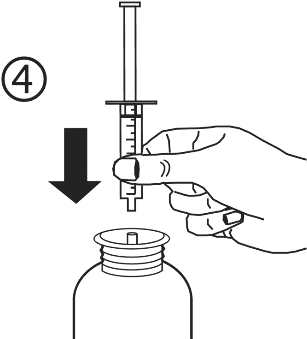
- Insert the oral administration syringe into the opening of the adapter (figure 4).
- Turn the bottle upside down (figure 5).
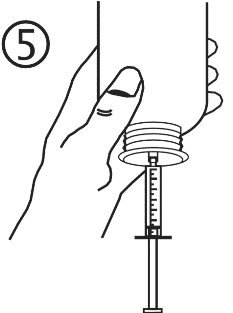
- Hold the inverted bottle in one hand while filling the oral administration syringe with the other hand.
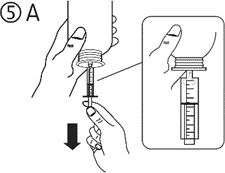
- Pull the plunger down to fill the oral administration syringe with a small amount of solution (figure 5A).
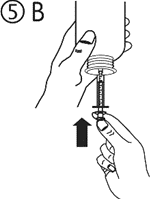
- Then push the plunger up to eliminate any air bubbles (figure 5B).
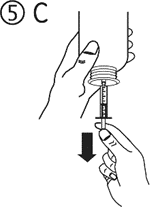
- Pull the plunger down to the mark on the oral administration syringe corresponding to the milliliters (mL) of the dosage prescribed by the doctor (figure 5C). The plunger may rise along the syringe cylinder at the first dose. Therefore, make sure that the plunger remains in position until the dosing syringe is removed from the bottle.
- Turn the bottle upright (figure 6A). Remove the syringe from the adapter (figure 6B).
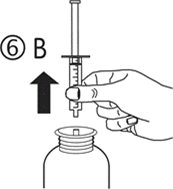
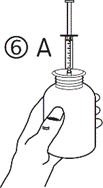
- Pour the contents of the syringe into a glass of water or a baby bottle by pressing all the way down (figure 7).
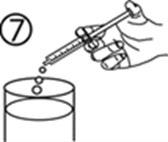
- Drink the entire contents of the glass/bottle.
- the adapter does not need to be removed
- To clean the syringe, rinse it only with cold water,
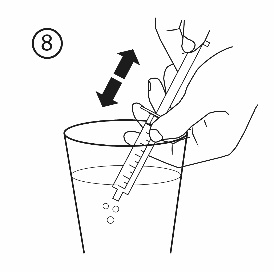
moving the plunger up and down several times to draw and
expel the water, without separating the two components. (figure 8).
- Store the bottle, oral administration syringe
Duration of treatment:
- Keppra is used as a chronic treatment. The treatment with Keppra must last as long as prescribed by your doctor.
- Do not stop treatment without your doctor’s advice as this could increase the number of seizures.
If you take more Keppra than you should:
Possible side effects of an overdose of Keppra are drowsiness, agitation, aggression,
decreased attention, respiratory inhibition and coma.
Contact your doctor if you have taken more Keppra than you should. The doctor will establish the best
possible treatment for the overdose.
If you forget to take Keppra:
Contact your doctor if you have forgotten to take one or more doses.
Do not take a double dose to make up for the missed dose.
If you stop taking Keppra:
If treatment with Keppra is stopped, it must be stopped gradually to avoid an
increase in seizures.
If your doctor decides to stop treatment with Keppra, he will give you instructions
regarding the gradual suspension of Keppra.
If you have any doubts about the use of this medicine, ask your doctor or pharmacist.
4. Possible side effects
Like all medicines, this medicine can cause side effects, although not everybody gets them.
Seek immediate medical attention or go to the nearest emergency room if you experience:
- weakness, a feeling of lightheadedness or dizziness, or difficulty breathing, as these may be signs of a serious allergic reaction (anaphylactic)
- swelling of the face, lips, tongue and throat (angioedema)
- flu-like symptoms and a rash on the face followed by widespread rash with high fever, increased levels of liver enzymes observed in blood tests and an increase in a type of white blood cells in the blood (eosinophilia), swollen lymph nodes and involvement of other organs (drug reaction with eosinophilia and systemic symptoms [DRESS, Drug Reaction withEosinophilia and Systemic Symptoms])
- symptoms such as reduced urine volume, fatigue, nausea, vomiting, confusion and swelling of legs, ankles or feet, as these may be a sign of sudden decrease in kidney function
- a rash that may appear with blisters that look like small targets (dark central spots surrounded by a clearer area, with a dark ring around the edge) ( multiforme erythema)
- a widespread rash with blisters and peeling of the skin, especially around the mouth, nose, eyes and genitals ( Stevens-Johnson syndrome)
- a more severe form of rash that causes skin peeling in more than 30% of the body surface ( toxic epidermal necrolysis)
- signs of severe mental changes or if someone around you notices signs of confusion, drowsiness, amnesia (memory loss), impaired memory (forgetfulness), abnormal behavior or other neurological signs, including involuntary or uncontrolled movements. These could be symptoms of encephalopathy.
The most frequently reported side effects are: nasopharyngitis, drowsiness, headache,
fatigue and dizziness. At the start of treatment or when the dose is increased, side effects
such as drowsiness, fatigue and dizziness may be more common. These effects should,
in any case, decrease over time.
Very common:may affect more than 1 in 10 people
- nasopharyngitis;
- drowsiness, headache.
Common:may affect up to 1 in 10 people
- anorexia (loss of appetite);
- depression, hostility or aggression, anxiety, insomnia, nervousness or irritability;
- convulsion, balance disorder, dizziness (feeling unstable), lethargy (lack of energy and enthusiasm), tremor (involuntary shaking);
- vertigo (sensation of spinning);
- cough;
- abdominal pain, diarrhea, dyspepsia (indigestion), vomiting, nausea;
- rash;
- asthenia/fatigue (feeling weak).
Uncommon:may affect up to 1 in 100 people
- decreased number of platelets in the blood, decreased number of white blood cells in the blood;
- weight loss, weight gain;
- attempted suicide and suicidal thoughts, mental disorder, abnormal behavior, hallucinations, anger, confusion, panic attack, emotional lability/mood swings, agitation;
- amnesia (memory loss), impaired memory (forgetfulness), abnormal coordination/ataxia (impaired motor coordination), paresthesia (tingling), impaired attention (loss of concentration);
- diplopia (double vision), blurred vision;
- elevated/abnormal values in liver function tests;
- hair loss, eczema, itching;
- muscle weakness, myalgia (muscle pain);
- trauma.
Rare:may affect up to 1 in 1,000
- infection;
- decreased number of all types of blood cells;
- serious allergic reactions (DRESS, anaphylactic reaction [serious and important allergic reaction], angioedema [swelling of face, lips, tongue and throat]);
- decreased concentration of sodium in the blood;
- suicide, personality disorder (behavioral problems), altered thinking (slowed thinking, inability to concentrate);
- delirium;
- encephalopathy (see the subsection “Seek immediate medical attention” for a detailed description of the symptoms);
- seizures may worsen or occur more frequently;
- uncontrollable muscle spasms involving the head, trunk and limbs, difficulty controlling movements, hyperkinesia (hyperactivity);
- altered heart rhythm (electrocardiogram);
- pancreatitis;
- liver failure, hepatitis;
- sudden decrease in kidney function;
- a rash that may appear with blisters that look like small targets (dark central spots surrounded by a clearer area, with a dark ring around the edge) ( multiforme erythema), a widespread rash with blisters and peeling of the skin, especially around the mouth, nose, eyes and genitals ( Stevens-Johnson syndrome) and a more severe form that causes skin peeling in more than 30% of the body surface ( toxic epidermal necrolysis);
- rhabdomyolysis (breakdown of muscle tissue) and increased blood creatine phosphokinase associated with it. The prevalence is significantly higher in Japanese patients compared to non-Japanese patients;
- limping gait or difficulty walking;
- combination of fever, muscle rigidity, unstable blood pressure and heart rate, confusion, low level of consciousness (may be signs of a condition called neuroleptic malignant syndrome). The prevalence is significantly higher in Japanese patients compared to non-Japanese patients.
Very rare:may affect up to 1 in 10,000
- repetitive unwanted thoughts or feelings or the urge to do something repeatedly (obsessive-compulsive disorder).
Reporting of side effects
If you get any side effects, talk to your doctor or pharmacist. This includes any side effects not listed
in this leaflet. You can also report side effects directly through
the national reporting system listed in Annex V .
By reporting side effects you can help provide more information on the safety of
this medicine.
5. How to store Keppra
Keep this medicine out of the sight and reach of children.
Do not use this medicine after the expiry date which is stated on the package and bottle after
Exp.:.
The expiry date refers to the last day of that month.
Do not use after 7 months from the first opening of the bottle.
Store in the original container, to protect from light.
Do not dispose of any medicine in waste water or household waste. Ask your pharmacist how to
dispose of medicines you no longer use. This will help protect the environment.
6. Contents of the pack and other information
What Keppra contains
The active ingredient is called levetiracetam. Each mL contains 100 mg of levetiracetam.
The other ingredients are: sodium citrate, citric acid monohydrate, methyl parahydroxybenzoate (E218),
propyl parahydroxybenzoate (E216), ammonium glycyrrhizate, glycerol (E422), liquid maltitol (E965),
acesulfame potassium (E950), grape flavour, purified water.
Description of the appearance of Keppra and contents of the pack
Keppra 100 mg/mL oral solution is a clear liquid.
The 300 mL glass bottle of Keppra (for children from 4 years of age, adolescents and adults)
is packaged in a cardboard box containing a 10 mL oral administration syringe
(graduated every 0.25 mL) and a syringe adapter.
The 150 mL glass bottle of Keppra (for infants and young children from 6 months up to less
than 4 years of age) is packaged in a cardboard box containing a 5 mL oral administration syringe
(graduated every 0.1 mL
) and a syringe adapter.
The 150 mL glass bottle of Keppra (for infants from 1 month to less than 6 months of age) is packaged
in a cardboard box containing a 1 mL oral administration syringe (graduated every
0.05 mL) and a syringe adapter.
Marketing Authorisation Holder
UCB Pharma SA, Allée de la Recherche 60, B-1070 Brussels, Belgium.
Manufacturer
NextPharma SAS, 17 Route de Meulan, F-78520 Limay, France.
or UCB Pharma SA, Chemin du Foriest, B-1420 Braine-l’Alleud, Belgium
For further information on this medicinal product, contact the local representative of the marketing
authorisation holder.
België/Belgique/Belgien
UCB Pharma SA/NV
Tel/Tél: + 32 / (0)2 559 92 00
Lietuva
България
Ю СИ БИ България ЕООД
Тел.: + 359 (0) 2 962 30 49
Luxembourg/Luxemburg
UCB Pharma SA/NV
Tél/Tel: + 32 / (0)2 559 92 00
Česká republika
UCB s.r.o.
Tel: + 420 221 773 411
Magyarország
UCB Magyarország Kft.
Tel.: + 36-(1) 391 0060
Danmark
UCB Nordic A/S
Tlf.: + 45 / 32 46 24 00
Malta
Pharmasud Ltd.
Tel: + 356 / 21 37 64 36
Deutschland
UCB Pharma GmbH
Tel: + 49 /(0) 2173 48 4848
Nederland
UCB Pharma B.V.
Tel: + 31 / (0)76-573 11 40
Eesti
OÜ Medfiles
Tel: +372 730 5415
Norge
UCB Nordic A/S
Tlf: + 45 / 32 46 24 00
Ελλάδα
UCB Α.Ε.
Τηλ: + 30 / 2109974000
Österreich
UCB Pharma GmbH
Tel: + 43 (0)1 291 80 00
Polska
UCB Pharma Sp. z o.o.
Tel.: + 48 22 696 99 20
France
UCB Pharma S.A.
Tél: + 33 / (0)1 47 29 44 35
España
UCB Pharma, S.A.
Tel: + 34 / 91 570 34 44
Portugal
UCB Pharma (Produtos Farmacêuticos), Lda
Tel: + 351 / 21 302 5300
Hrvatska
Medis Adria d.o.o.
Tel: +385 (0) 1 230 34 46
România
UCB Pharma Romania S.R.L.
Tel: + 40 21 300 29 04
Ireland
UCB (Pharma) Ireland Ltd.
Tel: + 353 / (0)1-46 37 395
Slovenija
Medis, d.o.o.
Tel: + 386 1 589 69 00
Ísland
Vistor hf.
Tel: + 354 535 7000
Slovenská republika
UCB s.r.o., organizačná zložka
Tel: + 421 (0) 2 5920 2020
Italia
UCB Pharma S.p.A.
Tel: + 39 / 02 300 791
Suomi/Finland
UCB Pharma Oy Finland
Puh/Tel: +358 9 2514 4221
Κύπρος
Lifepharma (Z.A.M.) Ltd
Τηλ: + 357 22 34 74 40
Sverige
UCB Nordic A/S
Tel: + 46 / (0) 40 29 49 00
Latvija
Other sources of information
More detailed information on this medicinal product is available on the website of the European Medicines
Agency: https://www.ema.europa.eu.

Nie jesteś pewien, czy ten lek jest odpowiedni dla ciebie?
Omów swoje objawy i leczenie z lekarzem online.
Keppra 100 mg/mL concentrate for solution for infusion
Levetiracetam
Read this leaflet carefully before you or your child start to take this medicine because it contains important information for you.
- Keep this leaflet. You may need to read it again.
- If you have any questions, ask your doctor or pharmacist.
- This medicine has been prescribed only for you. Do not give it to other people, even if their symptoms are the same as yours, as it could be dangerous.
- If any side effects occur, including those not listed in this leaflet, tell your doctor or pharmacist. See section 4.
Contents of this leaflet:
- 1. What Keppra is and what it is used for
- 2. What you need to know before you use Keppra
- 3. How to use Keppra
- 4. Possible side effects
- 5. How to store Keppra
- 6. Contents of the pack and other information
1. What is Keppra and what is it used for
Levetiracetam concentrate is an antiepileptic medicine (a medicine used to treat seizures).
Keppra is used:
- alone in adults and adolescents starting from 16 years of age with newly diagnosed epilepsy, to treat a certain form of epilepsy. Epilepsy is a condition in which patients have repeated attacks (seizures). Levetiracetam is used for the epileptic form in which the initial attack affects only one part of the brain but, subsequently, may spread to larger areas of both sides of the brain (partial-onset seizures with or without secondary generalization). Levetiracetam has been prescribed by your doctor to reduce the number of seizures.
- as an addition to other antiepileptic medicines to treat:
- partial-onset seizures, with or without generalization, in adults, adolescents and children starting from 4 years of age
- myoclonic seizures (brief shock-like spasms of a muscle or muscle group) in adults and adolescents starting from 12 years of age with juvenile myoclonic epilepsy
- primary generalized tonic-clonic seizures (major attacks, including loss of consciousness) in adults and adolescents starting from 12 years of age with idiopathic generalized epilepsy (the type of epilepsy that is believed to have a genetic cause).
Keppra concentrate for infusion solution is an alternative for patients when the
administration of the oral antiepileptic medicine Keppra is temporarily not possible.
2. What you need to know before using Keppra
Do not use Keppra
- If you are allergic to levetiracetam, pyrrolidone derivatives or any of the other ingredients of this medicine (listed in section 6).
Warnings and precautions
Talk to your doctor before using Keppra
- If you have kidney problems, follow your doctor's instructions. The latter may decide whether the dose needs to be adjusted.
- If you notice a slowing of growth or an unexpected development of puberty in the child, contact your doctor.
- A limited number of people treated with antiepileptics such as Keppra have experienced self-harmful thoughts or suicidal ideas. If you have any symptoms of depression and/or suicidal thoughts, contact your doctor.
- If you or a family member suffers from cardiac arrhythmia (visible on an electrocardiogram) or if you have a disease and/or are taking medicines that can cause irregular heartbeats or electrolyte imbalances.
Tell your doctor or pharmacist if any of the following side effects worsen or last for more than a few
days:
- Abnormal thoughts, feeling of irritability or more aggressive reactions than usual, or if you or your family and friends notice the appearance of significant changes in mood or behavior.
- Worsening of epilepsy: Seizures may rarely worsen or occur more frequently, mainly during the first month after starting treatment or increasing the dose. In a very rare form of early-onset epilepsy (epilepsy associated with SCN8A mutations), which causes multiple types of seizures and loss of abilities, you may notice that seizures remain present or worsen during treatment.
If you experience any of these new symptoms during treatment with Keppra, consult a
doctor as soon as possible.
Children and adolescents
- Keppra alone (monotherapy) is not indicated in children and adolescents under 16 years of age.
Other medicines and Keppra
Tell your doctor or pharmacist if you are taking or have recently taken or might take
any other medicine.
Do not take macrogol (a medicine used as a laxative) for one hour before and for one hour after
taking levetiracetam because it may cause a loss of the effect of the latter.
Pregnancy and breastfeeding
If you are pregnant or breastfeeding, or think you may be pregnant or are planning to have a baby, ask your doctor for advice before taking this
medicine. Levetiracetam can be used during pregnancy, only if, after careful evaluation,
this is considered necessary by the doctor.
You must not stop your treatment without discussing it with your doctor.
A risk of birth defects for the fetus cannot be completely excluded. Breastfeeding is not
recommended during treatment.
Driving and using machines
Keppra may reduce the ability to drive vehicles or use tools or machinery as it can
cause drowsiness. This is more likely at the beginning of treatment or after an increase in the
dose. You should not drive or use machines until you have verified that your ability to perform
these activities is not affected.
Keppra contains sodium
A single maximum dose of Keppra concentrate contains 2.5 mmol (or 57 mg) of sodium
(0.8 mmol (or 19 mg) of sodium per vial). This should be taken into consideration in patients
on a low-sodium diet.
3. How to use Keppra
A doctor or nurse will administer Keppra to you as an intravenous infusion.
Keppra must be administered twice a day, once in the morning and once in the evening, approximately
at the same time each day.
The intravenous formulation is an alternative to oral administration. It can be switched from
film-coated tablets or oral solution to the intravenous formulation or vice versa
directly without dose adjustment. The total daily dose and the frequency of
administration remain identical.
Add-on and monotherapy (starting from 16 years of age)
Adults (≥18 years) and adolescents (12 to 17 years) weighing 50 kg or more:
Recommended dose: between 1000 mg and 3000 mg per day.
When you start taking Keppra for the first time, your doctor will prescribe a lower dosefor
2 weeks before giving you the lowest daily dose.
Dose for children (4 to 11 years) and adolescents (12 to 17 years) weighing less than 50 kg:
Recommended dose: between 20 mg per kg of body weight and 60 mg per kg of body weight per day.
Method and route of administration:
Keppra is for intravenous use.
The recommended dose must be diluted in at least 100 mL of a compatible diluent and infused
over 15 minutes.
More detailed instructions for appropriate use of Keppra are provided for doctors and nurses,
in section 6.
Duration of treatment:
- There is no experience regarding the intravenous administration of levetiracetam for a period longer than 4 days.
If you stop taking Keppra:
In case of discontinuation of treatment, as with any other antiepileptic medicine, Keppra must
be discontinued gradually to avoid an increase in seizures. If your doctor decides to
stop the treatment with Keppra, he/she will give you instructions regarding the gradual withdrawal of
Keppra.
If you have any doubts about the use of this medicine, ask your doctor or pharmacist.
4. Possible side effects
Like all medicines, this medicine can cause side effects, although not everybody gets them.
Tell your doctor immediately or go to the nearest emergency room if you experience:
- weakness, feeling dizzy or lightheaded, or difficulty breathing, as these may be signs of a serious allergic reaction (anaphylactic)
- swelling of the face, lips, tongue and throat (angioedema)
- flu-like symptoms and a rash on the face followed by widespread rash with high fever, increased levels of liver enzymes observed in blood tests and an increase in a type of white blood cells (eosinophilia), enlarged lymph nodes and involvement of
other organs (drug reaction with eosinophilia and systemic symptoms [DRESS, Drug Reaction with
Eosinophilia and Systemic Symptoms])
- symptoms such as reduced urine volume, fatigue, nausea, vomiting, confusion and swelling of legs, ankles or feet, as these may be a sign of sudden decrease in kidney function
- a rash that may appear with blisters that look like small targets (dark central spots surrounded by a clearer area, with a dark ring around the edge) ( multiforme erythema)
- a widespread rash with blisters and peeling skin, especially around the mouth, nose, eyes and genitals ( Stevens-Johnson syndrome)
- a more severe form of rash that causes skin peeling in more than 30% of the body surface ( toxic epidermal necrolysis)
- signs of severe mental changes or if someone around you notices signs of confusion, drowsiness, amnesia (memory loss), impaired memory (forgetfulness), abnormal behavior or other neurological signs, including involuntary or uncontrolled movements. These could be symptoms of encephalopathy.
The most frequently reported side effects are: nasopharyngitis, drowsiness, headache,
fatigue and dizziness. At the beginning of treatment or when the dose is increased, side effects
such as drowsiness, fatigue and dizziness may be more common. These effects should,
in any case, decrease over time.
Very common:may affect more than 1 in 10 people
- nasopharyngitis;
- drowsiness, headache.
Common:may affect up to 1 in 10 people
- anorexia (loss of appetite);
- depression, hostility or aggression, anxiety, insomnia, nervousness or irritability;
- convulsions, balance disorders, dizziness (feeling unstable), lethargy (lack of energy and enthusiasm), tremor (involuntary shaking);
- vertigo (sensation of spinning);
- cough;
- abdominal pain, diarrhea, dyspepsia (indigestion), vomiting, nausea;
- rash;
- asthenia/fatigue (feeling weak).
Uncommon:may affect up to 1 in 100 people
- decreased number of platelets in the blood, decreased number of white blood cells in the blood;
- weight loss, weight gain;
- attempted suicide and suicidal thoughts, mental disorder, abnormal behavior, hallucinations, anger, confusion, panic attack, emotional lability/mood swings, agitation;
- amnesia (memory loss), impaired memory (forgetfulness), abnormal coordination/ataxia (impaired motor coordination), paresthesia (tingling), impaired attention (loss of concentration);
- diplopia (double vision), blurred vision;
- elevated/abnormal values in liver function tests;
- hair loss, eczema, itching;
- muscle weakness, myalgia (muscle pain);
- trauma.
Rare:may affect up to 1 in 1,000
- infection;
- decreased number of all types of blood cells;
- serious allergic reactions (DRESS, anaphylactic reaction [serious and important allergic reaction], angioedema [swelling of face, lips, tongue and throat]);
- decreased concentration of sodium in the blood;
- suicide, personality disorder (behavioral problems), altered thinking (slowed thinking, inability to concentrate);
- delirium;
- encephalopathy (see the subsection “Tell your doctor immediately” for a detailed description of the symptoms);
- seizures may worsen or occur more frequently;
- uncontrollable muscle spasms involving the head, trunk and limbs, difficulty controlling movements, hyperkinesia (hyperactivity);
- altered heart rhythm (electrocardiogram);
- pancreatitis;
- liver failure, hepatitis;
- sudden decrease in kidney function;
- a rash that may appear with blisters that look like small targets (dark central spots surrounded by a clearer area, with a dark ring around the edge) ( multiforme erythema), a widespread rash with blisters and peeling skin, especially around the mouth, nose, eyes and genitals ( Stevens-Johnson syndrome) and a more severe form that causes skin peeling in more than 30% of the body surface ( toxic epidermal necrolysis);
- rhabdomyolysis (muscle tissue breakdown) and increased blood creatine phosphokinase associated with it. The prevalence is significantly higher in Japanese patients compared to non-Japanese patients;
- limping gait or difficulty walking;
- combination of fever, muscle rigidity, unstable blood pressure and heart rate, confusion, low level of consciousness (may be signs of a disorder called neuroleptic malignant syndrome). The prevalence is significantly higher in Japanese patients compared to non-Japanese patients.
Very rare:may affect up to 1 in 10,000
- repetitive unwanted thoughts or feelings or the urge to do something repeatedly (obsessive-compulsive disorder).
Reporting of side effects
If you get any side effects, even those not listed in this leaflet, tell your
doctor or pharmacist. You can also report side effects directly through the
national reporting system listed in Annex V .
By reporting side effects you can help provide more information on the safety of
this medicine.
5. How to store Keppra
Keep this medicine out of the sight and reach of children.
Do not use this medicine after the expiry date which is stated on the vial and the outer packaging after
Exp.:
The expiry date refers to the last day of that month.
This medicine does not require any special storage conditions.
6. Contents of the pack and other information
What Keppra contains
The active substance is called levetiracetam. Each mL contains 100 mg of levetiracetam.
The other ingredients are: sodium acetate, glacial acetic acid, sodium chloride, water for injections.
Description of the appearance of Keppra and contents of the pack
Keppra concentrate for solution for infusion (sterile concentrate) is a clear, colourless liquid.
Keppra concentrate for solution for infusion is packaged in a cardboard box containing 10
vials of 5 mL.
Marketing Authorisation Holder
UCB Pharma SA, Allée de la Recherche 60, B-1070 Brussels, Belgium.
Manufacturer
UCB Pharma SA, Chemin du Foriest, B-1420 Braine-l’Alleud, Belgium
or Aesica Pharmaceuticals S.r.l., Via Praglia, 15, I-10044 Pianezza, Italy.
For further information on this medicine, contact the local representative of the Marketing Authorisation Holder.
België/Belgique/Belgien
UCB Pharma SA/NV
Tel/Tél: + 32 / (0)2 559 92 00
Lietuva
България
Ю СИ БИ България ЕООД
Тел.: + 359 (0) 2 962 30 49
Luxembourg/Luxemburg
UCB Pharma SA/NV
Tél/Tel: + 32 / (0)2 559 92 00
Česká republika
UCB s.r.o.
Tel: + 420 221 773 411
Magyarország
UCB Magyarország Kft.
Tel.: + 36-(1) 391 0060
Danmark
UCB Nordic A/S
Tlf.: + 45 / 32 46 24 00
Malta
Pharmasud Ltd.
Tel: + 356 / 21 37 64 36
Deutschland
UCB Pharma GmbH
Tel: + 49 /(0) 2173 48 4848
Nederland
UCB Pharma B.V.
Tel: + 31 / (0)76-573 11 40
Eesti
OÜ Medfiles
Tel: +372 730 5415
Norge
UCB Nordic A/S
Tlf: + 45 / 32 46 24 00
Ελλάδα
UCB Α.Ε.
Τηλ: + 30 / 2109974000
Österreich
UCB Pharma GmbH
Tel: + 43 (0)1 291 80 00
Polska
UCB Pharma Sp. z o.o.
Tel.: + 48 22 696 99 20
France
UCB Pharma S.A.
Tél: + 33 / (0)1 47 29 44 35
España
UCB Pharma, S.A.
Tel: + 34 / 91 570 34 44
Portugal
UCB Pharma (Produtos Farmacêuticos), Lda
Tel: + 351 / 21 302 5300
Hrvatska
Medis Adria d.o.o.
Tel: +385 (0) 1 230 34 46
România
UCB Pharma Romania S.R.L.
Tel: + 40 21 300 29 04
Ireland
UCB (Pharma) Ireland Ltd.
Tel: + 353 / (0)1-46 37 395
Slovenija
Medis, d.o.o.
Tel: + 386 1 589 69 00
Ísland
Vistor hf.
Tel: + 354 535 7000
Slovenská republika
UCB s.r.o., organizačná zložka
Tel: + 421 (0) 2 5920 2020
Italia
UCB Pharma S.p.A.
Tel: + 39 / 02 300 791
Suomi/Finland
UCB Pharma Oy Finland
Puh/Tel: +358 9 2514 4221
Κύπρος
Lifepharma (Z.A.M.) Ltd
Τηλ: + 357 22 34 74 40
Sverige
UCB Nordic A/S
Tel: + 46 / (0) 40 29 49 00
Latvija
Other sources of information
More detailed information on this medicine is available on the website of the European Medicines Agency: https://www.ema.europa.eu.
---------------------------------------------------------------------------------------------------------------------------
The following information is intended exclusively for healthcare professionals:
Instructions for correct use of Keppra are provided in section 3.
One vial of Keppra concentrate contains 500 mg of levetiracetam (5 mL of concentrate at
100 mg/mL). See Table 1 for the recommended preparation and administration of Keppra
concentrate to achieve a total daily dose of 500 mg, 1000 mg, 2000 mg or 3000 mg
divided into two doses.
Table 1. Preparation and administration of Keppra concentrate.
| Dose | z Volume withdrawn | Volume of diluent | Infusion time | Frequency of administration | Total daily dose |
| 250 mg | n
| 100 mL | 15 minutes | Twice daily | 500 mg/day |
| 500 mg | e 5 mL (one 5 mL vial) | 100 mL | 15 minutes | Twice daily | 1000 mg/day |
| 1000 mg | g 10 mL (two 5 mL vials) | 100 mL | 15 minutes | Twice daily | 2000 mg/day |
| A 1500 mg | 15 mL (three 5 mL vials) | 100 mL | 15 minutes | Twice daily | 3000 mg/day |
This medicine is intended for single use only and any unused solution
must be discarded.
Validity during use: from a microbiological point of view, the product should be used
immediately after dilution. If not used immediately, the storage time
during use and the conditions prior to use are the responsibility of the user and normally
should not exceed 24 hours at a temperature between 2 and 8 °C, unless the
dilution has been carried out under controlled and validated aseptic conditions.
Keppra concentrate has been shown to be physically and chemically stable for at least
24 hours when mixed with the following diluents and stored in PVC bags at controlled room temperature
of 15-25 °C.
Diluents:
- Sodium chloride 9 mg/mL (0.9%) injectable solution
- Ringer's lactate injectable solution
- Glucose 50 mg/mL (5%) injectable solution

Zacząłeś przyjmować lek i masz pytania?
Omów swoje objawy i leczenie z lekarzem online.
- Kraj rejestracji
- Postać farmaceutycznaFilm-coated tablet, 250 MG
- Kod ATCN03AX14
- Substancja czynna
- Wymaga receptyTak
- Producent
- Te treści mają charakter wyłącznie informacyjny i nie zastępują konsultacji lekarskiej.
- Zamienniki KEPPRAPostać farmaceutyczna: Film-coated tablet, 500 MGSubstancja czynna: levetiracetamProducent: NEURAXPHARM ITALY S.P.A.Wymaga receptyPostać farmaceutyczna: Film-coated tablet, 500 MGSubstancja czynna: levetiracetamProducent: PIAM FARMACEUTICI S.P.A.Wymaga receptyPostać farmaceutyczna: Film-coated tablet, 500 MGSubstancja czynna: levetiracetamWymaga recepty
Odpowiedniki KEPPRA w innych krajach
Leki z tą samą substancją czynną dostępne w innych krajach.
Odpowiednik KEPPRA w Hiszpania
Odpowiednik KEPPRA w Polska
Odpowiednik KEPPRA w Ukraina
Lekarze online w sprawie KEPPRA
Omów stosowanie KEPPRA, bezpieczeństwo i ocenę zasadności recepty zgodnie z obowiązującymi przepisami.



Uzyskaj receptę na KEPPRA online
Wypełnij 2-minutowy formularz
Opisz swoje objawy, historię choroby i lek, o który prosisz.
Wybierz lekarza lub pozwól nam przydzielić
Wybierz specjalistę lub dopasujemy Cię do najbliższego dostępnego lekarza.
Lekarz analizuje Twój przypadek
Zazwyczaj w ciągu 30 minut. Może zadawać dodatkowe pytania przez czat.
Odbierz w dowolnej aptece
Recepta elektroniczna wysłana na Twój e-mail — ważna w całej Polsce.
Często zadawane pytania
KEPPRA wymaga recepty w Włochy. Możesz skonsultować się z lekarzem online, aby sprawdzić, czy ten lek może być odpowiedni w Twojej sytuacji.
Substancją czynną w KEPPRA jest levetiracetam. Informacja ta pomaga rozpoznać leki o tym samym składzie, ale pod różnymi nazwami handlowymi.
KEPPRA jest produkowany przez UCB PHARMA S.A.. Nazwy handlowe i opakowania mogą się różnić w zależności od dystrybutora.
Lekarze, tacy jak Lekarze rodzinni, Psychiatrzy, Dermatolodzy, Kardiolodzy, Endokrynolodzy, Gastroenterolodzy, Pulmonolodzy, Nefrolodzy, Reumatolodzy, Hematolodzy, Zakaźnicy, Alergolodzy, Geriatrzy, Pediatrzy, Onkolodzy, mogą ocenić, czy stosowanie KEPPRA jest odpowiednie w Twoim przypadku, w zależności od sytuacji klinicznej i lokalnych przepisów. Możesz umówić konsultację online, aby omówić objawy i możliwe dalsze kroki.
Polska posiada dobrze rozwiniętą infrastrukturę ochrony zdrowia w dużych miastach, takich jak Warszawa, Kraków, Wrocław i Gdańsk. Apteki są łatwo dostępne i działają zgodnie z obowiązującymi przepisami, zapewniając dostęp do leków na receptę.
Możesz kupić KEPPRA w Warszawie, Krakowie, Wrocławiu lub Gdańsku w każdej aptece, posiadając ważną receptę.
Aby uzyskać receptę, możesz skorzystać z Oladoctor:
Inne leki zawierające tę samą substancję czynną (levetiracetam) to m.in. EPITIRAM, GRIFOXINA, ITALEPT. Mogą one różnić się nazwą handlową lub postacią, ale zawierają ten sam składnik terapeutyczny. Przed zmianą lub rozpoczęciem nowego leku skonsultuj się z lekarzem.
