



IVABRADINA 5 mg Film-Coated Tablets

Запит на рецепт онлайн
Лікар розгляне ваш випадок і визначить, чи є рецепт медично доцільним.

Поговоріть з лікарем про ці ліки
Обговоріть симптоми та можливі подальші кроки під час короткої онлайн-консультації.



Інструкція із застосування IVABRADINA KRKA
Зміст інструкції
Package Leaflet: Information for the Patient
Ivabradina Krka 5 mg film-coated tablets, 7.5 mg film-coated tablets
Ivabradina
Generic medicine
Read all of this leaflet carefully before you start taking this medicine because it contains
important information for you.
- Keep this leaflet. You may need to read it again.
- If you have any questions, ask your doctor or pharmacist.
- This medicine has been prescribed for you only. Do not pass it on to others, even if their
- symptoms are the same as yours, as it could be harmful.
- If you get any side effects, even those not listed in this leaflet, tell your doctor or pharmacist. See section 4.
Contents of this leaflet
- 1. What Ivabradina Krka is and what it is used for
- 2. What you need to know before you take Ivabradina Krka
- 3. How to take Ivabradina Krka
- 4. Possible side effects
- 5. How to store Ivabradina Krka
- 6. Contents of the pack and other information
1. What is Ivabradina Krka and what is it used for
Ivabradina Krka (ivabradine) is a medicine for the heart used for the treatment of:
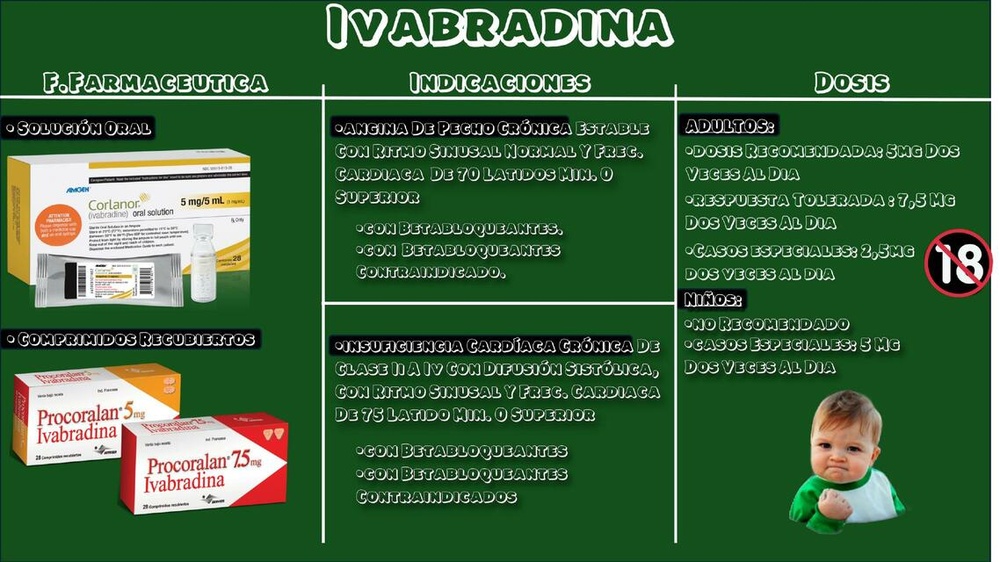
- Stable symptomatic angina pectoris (a disease that causes chest pain) in adult patients whose heart rate is greater than or equal to 70 beats per minute. It is used in adult patients who cannot tolerate or cannot take heart medicines called beta-blockers. It is also used in association with beta-blockers in adult patients whose condition is not fully controlled with a beta-blocker.
- Chronic heart failure in adult patients whose heart rate is greater than or equal to 75 beats per minute. It is used in association with conventional therapy, which includes treatment with a beta-blocker or in the case where beta-blockers are contraindicated or not tolerated. Information on stable angina pectoris (commonly called “angina”): Stable angina is a heart disease that occurs when the heart does not receive enough oxygen. It generally appears between the ages of 40 and 50. The most common symptom of angina is chest pain or discomfort. Angina is more likely to occur when the heart beats rapidly in situations such as physical activity, emotion, exposure to the cold, or after eating. This increase in heart rate can cause chest pain in people who suffer from angina. Information on chronic heart failure: Chronic heart failure is a heart disease that occurs when the heart fails to pump enough blood to the rest of the body. The most common symptoms of heart failure are shortness of breath, fatigue, tiredness and swelling of the ankles.
How does Ivabradina Krka work?
Ivabradina Krka works mainly by reducing the heart rate by a few beats per minute.
This reduces the heart's need for oxygen, especially during those situations where an angina attack is more
likely to occur. In this way, Ivabradina Krka helps to control and
reduce the number of angina attacks.
Furthermore, given that a high heart rate negatively influences the functioning of the heart and
the life expectancy of patients affected by chronic heart failure, the specific action of reducing
the heart rate of ivabradine helps to improve the functioning of the heart and the life expectancy of
these patients.
2. What you need to know before taking Ivabradina Krka
Do not take Ivabradina Krka:
- if you are allergic to ivabradine or any of the other ingredients of this medicine (listed in section 6);
- if your resting heart rate before treatment is too low (less than 70 beats per minute);
- if you suffer from cardiogenic shock (a heart condition treated in hospital);
- if you suffer from an irregular heartbeat;
- if you are having a heart attack;
- if you suffer from very low blood pressure;
- if you suffer from unstable angina (a severe form in which chest pain occurs very frequently and with or without exertion);
- if you suffer from heart failure that has recently worsened;
- if your heartbeat is exclusively controlled by a pacemaker;
- if you have severe liver problems;
- if you are already taking medicines for the treatment of fungal infections (such as ketoconazole, itraconazole), macrolide antibiotics (such as josamycin, clarithromycin, telithromycin or erythromycin given orally), medicines to treat HIV infections (such as nelfinavir, ritonavir) or nefazodone (medicine for the treatment of depression) or diltiazem, verapamil (used for high blood pressure or angina pectoris);
- if you are a woman of childbearing potential and are not using appropriate contraception;
- if you are pregnant or trying to become pregnant;
- if you are breastfeeding.
Warnings and precautions
Talk to your doctor or pharmacist before taking Ivabradina Krka.
- if you suffer from irregular heartbeats (such as irregular heartbeat, palpitations, increased chest pain) or severe atrial fibrillation (a form of arrhythmia that makes the heartbeat irregular), or an alteration of the electrocardiogram (ECG) called “long QT syndrome”;
- if you have symptoms such as fatigue, dizziness or shortness of breath (this could mean that your heart is beating too slowly);
- if you suffer from symptoms of atrial fibrillation (unusually high (over 110 beats per minute) or irregular resting heart rate, for no apparent reason, making it difficult to measure);
- if you have had a recent stroke (cerebral attack);
- if you suffer from mild to moderate low blood pressure;
- if you suffer from uncontrolled blood pressure, especially following a change in antihypertensive treatment;
- if you suffer from severe heart failure or heart failure with an alteration of the electrocardiogram (ECG) called “bundle branch block”;
- if you suffer from a chronic retinal disease;
- if you have moderate liver problems;
- if you have severe kidney problems.
If any of the above situations apply to you, tell your doctor immediately before or during
taking Ivabradina Krka.
Children and adolescents
Ivabradina Krka should not be used in children and adolescents under the age of 18 years.
Other medicines and Ivabradina Krka
Tell your doctor or pharmacist if you are taking, have recently taken or might take
any other medicines.
Make sure you tell your doctor if you are taking any of the following medicines, as
it may be necessary to monitor or adjust the dose of Ivabradina Krka:
- fluconazole (an antifungal medicine)
- rifampicin (an antibiotic)
- barbiturates (for insomnia or epilepsy)
- phenytoin (for epilepsy)
- Hypericum perforatumor St John's Wort (herbal product used for depression)
- medicines that prolong the QT interval for the treatment of heart rhythm disturbances or other conditions such as:
- quinidine, disopyramide, ibutilide, sotalol, amiodarone (for treating heart rhythm disturbances)
- bepridil (for treating angina pectoris)
- some types of medicines for treating anxiety, schizophrenia or other psychoses (such as pimozide, ziprasidone, sertindole)
- medicines for malaria (such as mefloquine or halofantrine)
- erythromycin intravenously (an antibiotic)
- pentamidine (an antiparasitic)
- cisapride (used for gastro-oesophageal reflux)
- some types of diuretics that can cause a decrease in blood potassium levels, such as furosemide, hydrochlorothiazide, indapamide (used for the treatment of edema, for high blood pressure).
Ivabradina Krka with food and drink
Avoid grapefruit juice during treatment with Ivabradina Krka.
Pregnancy and breastfeeding
Do not take Ivabradina Krka if you are pregnant or planning a pregnancy (see “Do not
take Ivabradina Krka”).
If you are pregnant and have taken Ivabradina Krka, inform your doctor.
Do not take Ivabradina Krka if you are able to become pregnant unless you are using appropriate
contraceptive measures (see “Do not take Ivabradina Krka”).
Do not take Ivabradina Krka if you are breastfeeding (see “Do not take Ivabradina Krka”). Talk to your
doctor if you are breastfeeding or intend to breastfeed as breastfeeding
must be stopped if you take Ivabradina Krka.
If you are pregnant, suspect you may be pregnant, or are breastfeeding,
ask your doctor or pharmacist for advice before taking this medicine.
Driving and using machines
Ivabradina Krka can cause temporary luminous visual phenomena (a temporary brightness in
the visual field, see “Possible side effects”). If this happens to you, be very careful
when driving or using machines, especially when there may be sudden changes
in light intensity, especially when driving at night.
Ivabradina Krka contains lactose
If you have been told by your doctor that you have an intolerance to some sugars, consult your doctor before
taking this medicine.
3. How to take Ivabradina Krka
Take this medicine following exactly the instructions of your doctor or pharmacist. If you have any doubts, ask your doctor or pharmacist.
Ivabradina Krka must be taken during meals.
If you are being treated for stable angina pectoris
The initial dose should not exceed one Ivabradina Krka 5 mg tablet twice a day. If you still have angina symptoms and tolerate the daily dose of 5 mg twice a day well, the dose may be increased. The maintenance dose should not exceed 7.5 mg twice a day.
The doctor will prescribe the most suitable dose. The usual dose is one tablet in the morning and one tablet in the evening. In some cases (e.g. if you are elderly), your doctor may prescribe half the dose, for example, half a 5 mg Ivabradina Krka tablet (which corresponds to 2.5 mg of ivabradine) in the morning and half a 5 mg tablet in the evening.
If you are being treated for chronic heart failure
The usual initial recommended dose is one Ivabradina Krka 5 mg tablet twice a day, to be increased if necessary to one Ivabradina Krka 7.5 mg tablet twice a day. The doctor will decide the most suitable dose. The usual dose is one tablet in the morning and one tablet in the evening. In some cases (for example, if you are elderly), the doctor may prescribe halving the dose, i.e. half a 5 mg Ivabradina Krka 5 mg tablet (which corresponds to 2.5 mg of ivabradine) in the morning and half a 5 mg tablet in the evening.
If you take more Ivabradina Krka than you should
A high dose of Ivabradina Krka may make you feel short of breath or tired because your heart rate has been slowed down too much. If this happens, contact your doctor immediately.
If you forget to take Ivabradina Krka
If you forget to take a dose of Ivabradina Krka, take the next dose at the usual time.
Do not take a double dose to make up for a missed dose.
If you stop taking Ivabradina Krka
Since treatment for angina or chronic heart failure is usually lifelong, you should talk to your doctor before stopping taking this medicine.
If you feel that the effect of Ivabradina Krka is too strong or too weak, talk to your doctor or pharmacist.
If you have any further questions on the use of this medicine, ask your doctor or pharmacist.
4. Possible side effects
Like all medicines, this medicine can cause side effects, although not everybody gets them.
The frequency of possible adverse reactions with this medicine is dose-dependent and related to the
mechanism of action:
Very common (may affect more than 1 in 10 people):
Visual phenomena of light (brief moments of increased brightness, very often caused by sudden
changes in light intensity). These can also be described as a halo, colored flashes,
decomposition of the image or multiple images. These phenomena generally develop within the
first two months of treatment, after which they may occur repeatedly and resolve during or after
treatment.
Common (may affect up to 1 in 10 people):
Changes in cardiac function (symptoms are a slowing of the heart rate). These
phenomena occur particularly within the first 2-3 months from the start of treatment.
Other side effects have also been reported:
Common (may affect up to 1 in 10 people):
Irregular and rapid heart contraction, abnormal perception of heartbeat, uncontrolled blood
pressure, headache, dizziness and blurred vision (fuzzy vision).
Uncommon (may affect up to 1 in 100 people):
Palpitations and irregular heartbeat, feeling unwell (nausea), constipation, diarrhea,
abdominal pain, dizziness (vertigo), difficulty breathing (dyspnea), muscle cramps,
changes in laboratory parameters: high levels of uric acid in the blood, excess of eosinophils (a
type of white blood cells) and elevated creatinine (muscle breakdown product) in the blood,
skin rash, angioedema (such as swelling of the face, tongue or throat, difficulty breathing
or swallowing), low blood pressure, fainting, feeling tired, feeling of
weakness, abnormal cardiac tracing on ECG, double vision, weakened vision.
Rare (may affect up to 1 in 1,000 people):
Urticaria, itching, skin redness, malaise.
Very rare (may affect up to 1 in 10,000 people):
Irregular heartbeat.
Reporting of side effects
If you get any side effects, talk to your doctor or pharmacist. You can also report side effects directly through
the national reporting system at www.agenziafarmaco.gov.it/content/come-segnalare-
una-sospetta-reazione-avversa. By reporting side effects you can help provide
more information on the safety of this medicine.
5. How to store Ivabradina Krka
Keep this medicine out of the sight and reach of children.
Do not use this medicine after the expiry date which is stated on the package and on the blisters after
EXP. The expiry date refers to the last day of that month.
This medicine does not require any special storage conditions.
Do not dispose of any medicine in waste water or household waste. Ask your pharmacist how to
dispose of medicines you no longer use. This will help protect the environment.
6. Package Contents and Other Information
What Ivabradina Krka contains
- The active ingredient is ivabradine. Ivabradina Krka 5 mg film-coated tablets: Each film-coated tablet contains 5 mg of ivabradine (as ivabradine hydrochloride). Ivabradina Krka 7.5 mg film-coated tablets: Each film-coated tablet contains 7.5 mg of ivabradine (as ivabradine hydrochloride).
- The other ingredients (excipients) are maltodextrin, lactose monohydrate, corn starch, anhydrous colloidal silica, magnesium stearate (E470b), hypromellose 3 cP in the tablet core and hypromellose 6 cP, titanium dioxide (E171), talc, propylene glycol, yellow iron oxide (E172), red iron oxide (E172) in the tablet coating. See section 2 “Ivabradina Krka contains lactose”.
Description of the appearance of Ivabradina Krka and package contents
Ivabradina Krka 5 mg film-coated tablets: Film-coated tablets (tablets) pale orange to pinkish, rectangular, slightly biconvex, with a score line on one side, dimensions 8
mm x 4.5 mm. The tablet can be divided into equal doses.
Ivabradina Krka 7.5 mg film-coated tablets: Film-coated tablets (tablets)
pale orange to pinkish, round, slightly biconvex, with bevelled edges, diameter 7 mm.
Ivabradina Krka is available in packs containing:
- 14, 28, 56, 98, 112 and 180 film-coated tablets in blisters,
- 14 x 1, 28 x 1, 56 x 1, 98 x 1, 112 x 1 and 180 x 1 film-coated tablets in perforated single-dose blisters. Not all pack sizes may be marketed.
Marketing Authorisation Holder
KRKA, d.d., Novo mesto, Šmarješka cesta 6, 8501 Novo mesto, Slovenia
Local Representative for Italy
Krka Farmaceutici Milano S.r.l. – Italy
Manufacturer
KRKA, d.d., Novo mesto, Šmarješka cesta 6, 8501 Novo mesto, Slovenia
This medicinal product is authorised in the Member States of the European Economic Area under the
following denominations:
| Member state name | d Medicinal product name |
| Belgium, France, Ireland, United Kingdom, Hungary | a Ivabradine Krka |
| Denmark | Ivabradin Krka |
| Italy, Portugal, Spain | n Ivabradina Krka |
| Sweden | Ivabradin Krka |

Не впевнені, чи підходить вам цей лікарський засіб?
Обговоріть симптоми та можливі варіанти лікування з лікарем онлайн.

Виникли питання під час прийому ліків?
Обговоріть свої симптоми та лікування з лікарем онлайн.
- Країна реєстрації
- Лікарська формаFilm-coated tablet, 5 MG
- Код АТХC01EB17
- Діюча речовина
- Потрібен рецептТак
- Виробник
- Ця інформація надана лише для ознайомлення і не є медичною порадою. Рішення щодо лікування завжди приймає лікар.
- Альтернативи до IVABRADINA KRKAЛікарська форма: Film-coated tablet, 5 MGДіюча речовина: ивабрадинаВиробник: LES LABORATOIRES SERVIERПотрібен рецептЛікарська форма: Film-coated tablet, 5 MGДіюча речовина: ивабрадинаВиробник: ACCORD HEALTHCARE, S.L.U.Потрібен рецептЛікарська форма: Film-coated tablet, 5 MGДіюча речовина: ивабрадинаПотрібен рецепт
Аналоги IVABRADINA KRKA в інших країнах
Препарати з тією самою діючою речовиною, доступні в інших країнах.
Аналог IVABRADINA KRKA у Іспанія
Аналог IVABRADINA KRKA у Польща
Аналог IVABRADINA KRKA у Україна
Лікарі онлайн щодо IVABRADINA KRKA
Застосування, безпека та можливість призначення рецепта — за результатами медичної оцінки.
Отримайте рецепт на IVABRADINA KRKA онлайн
Заповніть форму за 2 хвилини
Розкажіть про симптоми, історію хвороби та потрібний препарат.
Оберіть лікаря або ми призначимо
Оберіть спеціаліста або ми підберемо найближчого доступного лікаря.
Лікар розглядає ваш випадок
Зазвичай протягом 30 хвилин. Може ставити уточнювальні запитання в чаті.
Отримайте в будь-якій аптеці
Електронний рецепт надсилається на вашу пошту — дійсний по всій Польщі.
Часті запитання
IVABRADINA KRKA потребує рецепта в Італія. Ви можете обговорити з лікарем онлайн, чи підходить цей лікарський засіб для вашої ситуації.
Діюча речовина у IVABRADINA KRKA — ивабрадина. Це допомагає визначити препарати з тим самим складом, але під іншими торговими назвами.
IVABRADINA KRKA виробляється компанією KRKA D.D. NOVO MESTO. Назва бренду та упаковка можуть відрізнятися залежно від дистрибʼютора.
Лікарі, зокрема Сімейні лікарі, Психіатри, Дерматологи, Кардіологи, Ендокринологи, Гастроентерологи, Пульмонологи, Нефрологи, Ревматологи, Гематологи, Інфекціоністи, Алергологи, Геріатри, Педіатри, Онкологи, можуть оцінити доцільність застосування IVABRADINA KRKA з урахуванням вашого стану та місцевих правил. Ви можете записатися на онлайн-консультацію, щоб обговорити симптоми та можливі подальші кроки.
Польща має добре розвинену систему охорони здоров'я у великих містах, таких як Варшава, Краків, Вроцлав і Гданськ. Аптеки широко доступні та працюють відповідно до чинного законодавства, забезпечуючи доступ до рецептурних препаратів.
Ви можете придбати IVABRADINA KRKA у Варшаві, Кракові, Вроцлаві або Гданську в будь-якій аптеці за наявності дійсного рецепта.
Щоб отримати рецепт, ви можете скористатися Oladoctor:
Інші препарати з тією самою діючою речовиною (ивабрадина) включають KORLENTOR, IVABRADINA AKKORD, IVABRADINA ANPARM. Вони можуть відрізнятися торговою назвою або формою випуску, але містять той самий терапевтичний компонент. Перед зміною або початком прийому нового препарату варто проконсультуватися з лікарем.
