



HEXACIMA 0.5ML Zawiesina do wstrzykiwań

Ocena recepty online
Lekarz przeanalizuje Twój przypadek i zdecyduje, czy wystawienie recepty jest medycznie uzasadnione.

Porozmawiaj z lekarzem o tym leku
Omów swoje objawy i opcje leczenia podczas szybkiej konsultacji online.



Jak stosować EXAKIMA
Treść ulotki
Hexacima injectable suspension in pre-filled syringe
Conjugate (adsorbed) vaccine against diphtheria, tetanus, pertussis (acellular component), hepatitis B
(rDNA), poliomyelitis (inactivated) and Haemophilus influenzaetype b
Read this leaflet carefully before the child is vaccinated as it contains
important information for him.
- Keep this leaflet. You may need to read it again.
- If you have any questions, ask your doctor, pharmacist or healthcare professional
- If the child experiences any side effects, including those not listed in this leaflet, ask your doctor, pharmacist or healthcare professional. See section 4.
Contents of this leaflet:
- 1. What Hexacima is and what it is used for
- 2. What you need to know before Hexacima is given to the child
- 3. How Hexacima is given
- 4. Possible side effects
- 5. How to store Hexacima
- 6. Contents of the pack and other information
1. What is Hexacima and what is it used for?
Hexacima (DTaP-HB-IPV-Hib) is a vaccine used to protect against infectious diseases.
Hexacima helps to protect children from diphtheria (D), tetanus (T), pertussis (aP), hepatitis B
(HB), poliomyelitis (IPV) and serious diseases caused by Haemophilus influenzaetype b (Hib).
Hexacima is administered to children from six weeks of age.
The vaccine works by stimulating the body to produce antibodies against the bacteria and viruses that
cause the various infections described below:
- Diphtheria is an infectious disease that usually initially affects the throat causing pain and swelling that can lead to suffocation. The bacteria responsible for the disease also produce a toxin (poison) that can damage the heart, kidneys and nerves.
- Tetanus (often described as “locked jaw”) is usually caused by bacteria entering a deep wound. The bacteria produce a toxin (poison) that causes muscle contractions resulting in difficulty breathing and possible suffocation.
- Pertussis (often called whooping cough) is a highly contagious disease that affects the airways. The pertussis bacterium causes a severe cough that can lead to breathing problems. The cough is often characterized by a typical “whistle”, and can last for one or two months, or longer. Pertussis can also cause ear infections, bronchial infections (bronchitis), which can last a long time, lung infections (pneumonia), convulsions, brain damage and even death.
- Hepatitis B is caused by the hepatitis B virus, which causes enlargement of the liver (inflammation). In some people, the virus can remain in the body for a long period, and can lead over time to serious liver problems, including liver cancer.
- Poliomyelitis (often simply called polio) is due to viruses that attack the nerves. It can lead to paralysis or muscle weakness, most often of the legs. Paralysis of the muscles that control breathing and swallowing can cause death.
- Infections caused by Haemophilus influenzaetype b (often simply called Hib) are serious bacterial infections and can cause meningitis (inflammation of the outer lining of the brain), which can lead to brain damage, deafness, epilepsy, or partial blindness. The infection can also cause inflammation and swelling of the throat leading to difficulty in
swallowing and breathing, and the infection can affect other parts of the body such as the blood, the
lungs, skin, bones and joints.
Important information regarding the protection provided
- Hexacima only contributes to preventing these diseases if they are caused by bacteria or viruses targeted by the vaccine. The child may contract diseases with similar symptoms if caused by other bacteria or viruses.
- The vaccine does not contain live bacteria or viruses and cannot cause any of the infectious diseases it protects against.
- The vaccine does not protect against infections due to other types of Haemophilus influenzaeor from meningitis resulting from other microorganisms.
- Hexacima does not protect against liver infections caused by other agents such as hepatitis A, C and E.
- Because the symptoms of hepatitis B take a long time to develop, it is possible that unrecognized hepatitis B infections may be present at the time of vaccination. In such cases the vaccine may not protect against hepatitis B.
- Like any other vaccine, Hexacima may not protect 100% of children who receive the vaccine.
2. What you need to know before Hexacima is given to your child
To make sure that Hexacima is suitable for your child, it is important that you inform your doctor or
healthcare professional if any of the following apply to your child. If there is anything you do not
understand, ask your doctor, pharmacist or healthcare professional for an explanation.
Hexacima must not be given if your child:
- has had breathing difficulties or swelling of the face (anaphylactic reaction) after receiving Hexacima
- has had an allergic reaction:
- to the active ingredients
- to any of the excipients listed in section 6
- to glutaraldehyde, formaldehyde, neomycin, streptomycin or polymyxin B, as these substances are used during the manufacturing process of the vaccine
- following administration of Hexacima or any other vaccine containing diphtheria, tetanus, pertussis, poliomyelitis, hepatitis B or Hib
- has suffered a severe reaction affecting the brain (encephalopathy) within 7 days of a previous dose of a pertussis (whole-cell or acellular) vaccine
- has an uncontrolled disorder or serious illness affecting the brain (uncontrolled neurological disorder) or uncontrolled epilepsy.
Warnings and precautions
Before vaccination, inform your doctor, pharmacist or healthcare professional if your child:
- has a moderate or high fever or has an acute illness (e.g. fever, sore throat, cough, cold or flu). It may be necessary to postpone vaccination with Hexacima until your child has recovered.
- has experienced any of the following events following administration of a pertussis vaccine. In such cases, the decision to administer further doses of vaccine containing pertussis should be considered very carefully:
- a fever of 40°C or higher within 48 hours of vaccination not due to another identifiable cause;
- collapse or shock-like state with episodes of hypotonia-hyporesponsiveness (decreased muscle tone) within 48 hours of vaccination;
- persistent, inconsolable crying lasting 3 hours or more, within 48 hours of vaccination;
- convulsions with or without fever, within 3 days of vaccination.
- has previously had Guillain-Barré syndrome (temporary inflammation of the nerves causing pain, paralysis and altered sensation) or brachial neuritis (severe pain and decreased mobility of the arm and shoulder) after receiving a vaccine containing tetanus toxoid (an inactivated form of tetanus toxin). In such cases, the decision to administer any further vaccine containing tetanus toxoid must be assessed by the doctor.
- is receiving treatment that lowers the body’s natural defenses or has a disease that weakens the immune system. In these cases, the immune response to the vaccine may be reduced. It is generally recommended to wait until the end of treatment or recovery from the illness before proceeding with vaccination. However, children with long-standing problems with their immune system, such as HIV (AIDS) infection, can still receive Hexacima, but the protection may not be as good as in children with a healthy immune system.
- has a chronic or acute illness such as chronic renal insufficiency (kidneys’ inability to function properly).
- has any undiagnosed disease of the brain or uncontrolled epilepsy. The doctor will assess the potential benefit of vaccination.
- has any blood disorder that causes easy bruising or prolonged bleeding after minor cuts. The doctor will advise you whether your child can receive Hexacima.
Fainting can occur after, or even before, any injection with a needle. Therefore, inform your
doctor or nurse if your child has fainted with a previous injection.
Other medicines or vaccines and Hexacima
Tell your doctor or healthcare professional if your child is taking, has recently taken or
might take any other medicines or vaccines.
Hexacima can be given at the same time as other vaccines such as pneumococcal vaccines, measles-mumps-rubella vaccines, varicella vaccines, rotavirus vaccines or
meningococcal vaccines.
If given at the same time as other vaccines, Hexacima will be given in separate
injection sites.
Hexacima contains phenylalanine, potassium and sodium
Hexacima contains 85 micrograms of phenylalanine in each 0.5-mL dose. Phenylalanine may
be harmful to individuals with phenylketonuria (PKU), a rare genetic disorder in which
phenylalanine builds up because the body cannot break it down properly.
Hexacima contains less than 1 mmol of potassium (39 mg) and less than 1 mmol of sodium (23 mg) per dose,
i.e. essentially "potassium-free" and "sodium-free".
3. How Hexacima is administered
Hexacima will be administered to the child by a doctor or healthcare professional with adequate
training on the use of vaccines and equipped to manage any rare but serious allergic reaction (see
section 4 Possible adverse effects).
Hexacima is administered by injection into a muscle (intramuscular route, IM) in the upper thigh or
arm of the child. The vaccine should never be injected into a blood vessel, into the skin or
subcutaneously.
The recommended dose is as follows:
Primary vaccination series
The child will receive two injections at intervals of two months or three injections at intervals of one or
two months (at least four weeks apart). This vaccine must be used in accordance with the local
vaccination schedule.
Follow-up injections (booster)
After the primary injection series, the child will receive a booster dose, in accordance with local
recommendations, at least 6 months after the last dose of the primary series. The doctor will tell you
when this dose should be administered.
If the child has not received a dose of Hexacima
If the child has not received a scheduled injection, it is important to inform the doctor or
healthcare professional, who will decide when to administer it.
It is important to follow the instructions of the doctor or healthcare professional so that the child
completes the entire vaccination schedule. Otherwise, the child may not be fully protected against the
diseases that Hexacima prevents.
If you have any further questions about the use of this vaccine, ask your doctor, pharmacist or
healthcare professional.
4. Possible side effects
Like all medicines, this vaccine can cause side effects, although not everybody gets them.
manifest.
Serious allergic reactions (anaphylactic reaction)
If any of these symptoms should occur after leaving the place (e.g. hospital,
clinic) where the vaccine was given to the child, seek IMMEDIATE medical attention:
- difficulty breathing
- bluish tongue or lips
- skin rash
- swelling of the face or throat
- sudden and severe feeling of illness with low blood pressure causing dizziness and loss of consciousness, with breathing difficulties associated with a rapid heartbeat.
When these signs or symptoms of an anaphylactic reaction occur, they usually appear shortly
after the injection and while the child is still in hospital or in the clinic.
Serious allergic reactions are a rare occurrence (may affect up to 1 in 1,000 children) after receiving this vaccine.
Other side effects
If the child experiences any of the following side effects, inform the doctor, healthcare
professional or pharmacist.
- Very common side effects (may affect more than 1 in 10 children) are:
- loss of appetite
- crying
- drowsiness
- vomiting
- fever (temperature equal to or higher than 38°C)
- irritability
- pain, redness or swelling at the injection site
- Common side effects (may affect up to 1 in 10 children) are:
- Uncommon side effects (may affect up to 1 in 100 children) are:
- Rare side effects (may affect up to 1 in 1,000 children) are:
- Very rare side effects (may affect up to 1 in 10,000 children) are:
Potential side effects
Other side effects not included in the list above have been reported occasionally
with the use of other vaccines containing diphtheria, pertussis, polio, hepatitis B or Hib and not
directly with Hexacima:
- Temporary inflammation of the nerves causing pain, paralysis and abnormalities in sensation (Guillain Barrè syndrome), severe pain and decreased mobility of the arm and shoulder (brachial neuritis) have been reported following administration of vaccines containing tetanus.
- Inflammation of some nerves causing sensory disturbances or weakness of the limbs (polyradiculoneuritis), facial paralysis, visual disturbances, attenuation or loss of vision (optic neuritis), inflammatory disease of the brain and spinal cord (demyelination of the central nervous system, multiple sclerosis) have been reported following administration of vaccines containing the hepatitis B antigen.
- Swelling or inflammation of the brain (encephalopathy/encephalitis).
- In very premature infants (born at 28 weeks of gestation or earlier), longer-than-normal interruptions of breathing may occur, which manifest for 2-3 days after vaccination.
- Swelling of one or both feet and lower limbs. This reaction may occur together with a bluish discoloration of the skin (cyanosis), redness, small hemorrhagic areas under the skin (transient purpura) and severe crying following vaccination with vaccines containing Haemophilus influenzaetype b. If these reactions occur, they usually occur after the first injections and are observed within the first few hours after vaccination. All symptoms should disappear completely within 24 hours without treatment.
Reporting of side effects
If the child experiences any side effect, including those not listed in this
leaflet, please inform your doctor, pharmacist or healthcare professional. You can also report side
effects directly through the national reporting system detailed in Annex V.
By reporting side effects you can help provide more information on the safety
of this medicine.
5. How to store Hexacima
Keep this vaccine out of the sight and reach of children.
Do not use this vaccine after the expiry date which is stated on the package and label after
EXP. The expiry date refers to the last day of the month.
Store in a refrigerator (between 2°C and 8°C).
Do not freeze.
Keep the vaccine in the package to protect the medicine from light.
Do not dispose of any medicine in wastewater or household waste. Ask your pharmacist how to
dispose of medicines you no longer use. This will help protect the environment.
6. Content of the pack and other information
What Hexacima contains
The active ingredients are, per dose (0.5 mL) :
Diphtheria toxoid not less than 20 IU (30 Lf)
Tetanus toxoid not less than 40 IU (10 Lf)
Antigens of Bordetellapertussis
Pertussis toxoid 25 micrograms
Filamentous hemagglutinin 25 micrograms
Poliovirus (inactivated)
Type 1 (Mahoney) 29 units of D antigen
Type 2 (MEF-1) 7 units of D antigen
Type 3 (Saukett) 26 units of D antigen
Hepatitis B surface antigen 10 micrograms
Polysaccharide of Haemophilus influenzaetype b 12 micrograms
(polyribosylribitol phosphate)
conjugated to tetanus protein 22-36 micrograms
Adsorbed on hydrated aluminum hydroxide (0.6 mg Al)
As a lower limit of the confidence interval (p = 0.95) and not less than 30 IU as a mean value
As a lower limit of the confidence interval (p = 0.95)
Or equivalent activity determined by immunogenicity assessment
Cultivated on Vero cells
These amounts of antigen are strictly the same as those previously expressed as 40-
8-32 units of D antigen, respectively for types 1, 2 and 3 virus, when measured with another
suitable immunochemical method
Produced in Hansenula polymorpha yeast cells by recombinant DNA technology
The other components are:
Dipotassium phosphate, monobasic potassium phosphate, trometamol, sucrose, essential amino acids
including L-phenylalanine, sodium hydroxide and/or acetic acid and/or hydrochloric acid (for pH adjustment
and water for injections.
The vaccine may contain traces of glutaraldehyde, formaldehyde, neomycin, streptomycin and polymyxin
B.
Description of the appearance of Hexacima and contents of the pack
Hexacima is supplied as an injectable suspension in a pre-filled syringe (0.5 mL).
Hexacima is available in packs of 1 or 10 pre-filled syringes without attached needle.
Hexacima is available in packs of 1 or 10 pre-filled syringes with a separate needle.
Hexacima is available in packs of 1 or 10 pre-filled syringes with 2 separate needles.
Hexacima is available in packs of 1 or 10 pre-filled syringes with 1 separate safety needle.
Not all pack sizes may be marketed.
After shaking the pre-filled syringe, the normal appearance of the vaccine is a turbid, whitish homogeneous
suspension.
Marketing authorization holder and manufacturer
Marketing authorization holder
Sanofi Winthrop Industrie, 82 Avenue Raspail, 94250 Gentilly, France
Manufacturer
Sanofi Pasteur 1541 avenue Marcel Mérieux, 69280 Marcy l’Etoile, France
Sanofi Pasteur Parc Industriel d’Incarville, 27100 Val de Reuil, France
For further information on this medicinal product, contact the local representative of the marketing
authorization holder:
| België/ Belgique /Belgien Sanofi Belgium Tel: +32 2 710.54.00 | Lietuva Swixx Biopharma UAB Tel: +370 5 236 91 40 |
| България Swixx Biopharma EOOD Teл.: +359 (0)2 4942 480 | o c Luxembourg/Luxemburg Sanofi Belgium tel.: +32 2 710.54.00 |
| Česká republika Sanofi s.r.o. Tel: +420 233 086 111 | a Magyarország m sanofi-aventis zrt Tel: +36 1 505 0055 |
| Danmark Sanofi A/S Tel: +45 4516 7000 | Malta r Sanofi S.r.l. a Tel: +39 02 39394 275 |
| Deutschland Sanofi-Aventis Deutschland GmbH Tel.: 0800 54 54 010 Tel. aus dem Ausland: +49 69 305 21 130 | F Nederland Sanofi B.V.Tel: +31 20 245 4000 l |
| Eesti Swixx Biopharma OÜ Tel: +372 640 10 30 | Norge Sanofi-aventis Norge AS d Tel: + 47 67 10 71 00 |
| Ελλάδα ΒΙΑΝΕΞ Α.Ε. Τηλ: +30.210.8009111 | Österreich a Sanofi-Aventis GmbH Tel: +43 (1) 80185-0 |
| n España a sanofi-aventis, S.A. Tel: +34 93 485 94 00 | Polska Sanofi sp. z o.o. Tel.: +48 22 280 00 00 |
| France Sanofi Winthrop Industrie Tél: 0 800 222 555 Appel depuis l’étranger : +33 1 57 63 23 23 | Portugal Sanofi – Produtos Farmacêuticos, Lda. Tel: + 351 21 35 89 400 |
| Hrvatska Swixx Biopharma d.o.o. a Tel: +385 1 2078 500 | România Sanofi Romania SRL Tel.: +40 21 317 31 36 |
| Ireland z sanofi-aventis Ireland T/A SANOFI Tel: + 353 (0) 1 4035 600 | Slovenija Swixx Biopharma d.o.o Tel: +386 235 51 00 |
| Ísland Vistor Tel : +354 535 7000 | Slovenská republika Swixx Biopharma s.r.o. Tel: +421 2 208 33 600 |
| Italia Sanofi S.r.l. Tel: 800536389 | Suomi/Finland Sanofi Oy Tel: +358 (0) 201 200 300 |
| Κύπρος C.A. Papaellinas Ltd. Τηλ.: +357 22 741741 | Sverige Sanofi AB Tel: +46 8-634 50 00 |
| Latvija Swixx Biopharma SIA Tel: +371 6 6164 750 | o United Kingdom (Northern Ireland) c sanofi-aventis Ireland Ltd. T/A SANOFI Tel: +44 (0) 800 035 2525 |
Other sources of information
More detailed information on this medicinal product is available on the European Medicines Agency website,
http://www.ema.europa.eu.
The latest approved information on this vaccine is available by visiting the following URL:
https://hexacima.info.sanofi or by scanning the QR code with a smartphone:
insert QR code
---------------------------------------------------------------------------------------------------------------------------
The following information is intended exclusively for healthcare professionals:
- Shake the pre-filled syringe so that the contents become homogeneous.
- Do not mix Hexacima with other medicinal products.
- Hexacima must be administered intramuscularly. The recommended injection site is preferably the anterolateral area of the thigh and the deltoid muscle in older children (possibly from 15 months of age). Do not administer intradermally or intravenously. Do not administer by endovascular injection: ensure that the needle does not penetrate a blood vessel.
- Do not use the pre-filled syringes if the packaging is damaged.
Preparation for administration
The syringe with the injectable suspension must be visually inspected before
administration. If foreign particles, leakage, premature activation of the plunger or defective seal of the tip are observed, discard the pre-filled syringe.
The syringe is for single use only and must not be reused.
Instructions for use of the Luer Lock pre-filled syringe
Figure A: Luer Lock syringe with rigid tip cap
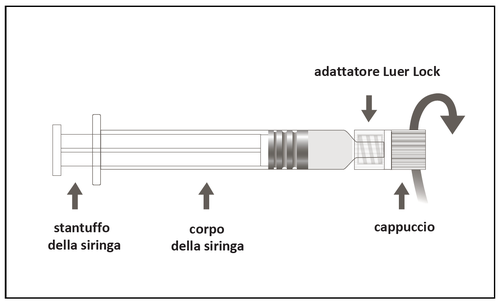
| Step 1: Holding the Luer Lock adapter in one hand (avoid holding the plunger or the body of the syringe), unscrew the tip cap by rotating it. | m a c o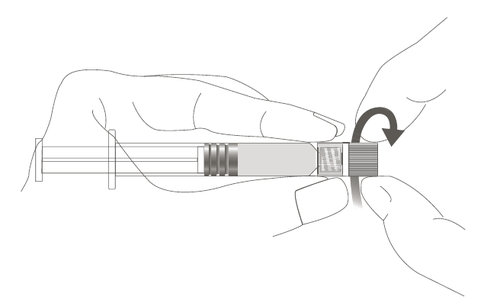 |
| Step 2: To connect the needle to the syringe, gently rotate the needle into the Luer Lock adapter of the syringe until slight resistance is felt. | d e l F a r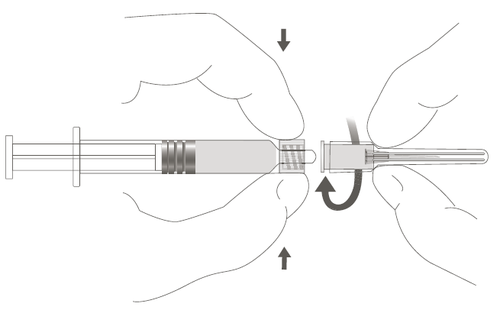 |
Instructions for use of the safety needle with Luer Lock pre-filled syringe
Figure B: Safety needle
(inside the casing)
Figure C: Components of the safety needle (prepared for
use)
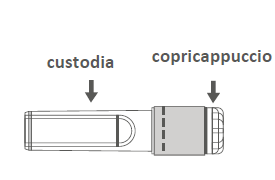
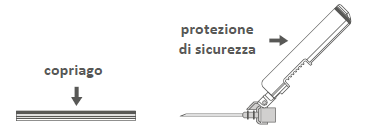
Follow steps 1 and 2 above to prepare the Luer Lock syringe and needle for connection.
Step 3:Remove the safety needle from
the casing. The needle is covered by the safety
shield and the needle cap.
Step 4:
A:Remove the safety shield from the needle
and direct it towards the body of the syringe as
shown.
B:Remove the needle cap.
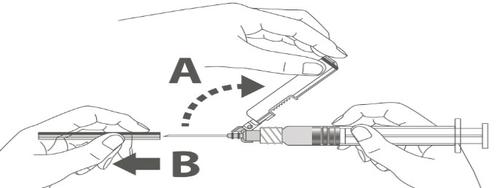
Step 5:After the injection, lock
(activate) the safety shield using
one of the three (3) activation techniques illustrated
with one hand: surface, thumb or fingers.
Note: activation is verified by an audible and/or tactile "click".
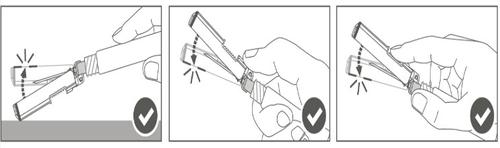
Step 6:Visually inspect
the activation of the safety shield. The
safety shield must be
completely locked (activated)as
shown in Image C.
Note: when completely locked (activated)
the needle must be at an angle to the
safety shield.
Image D indicates that the safety shield is NOT completely locked (not
activated).
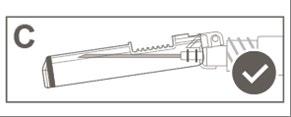
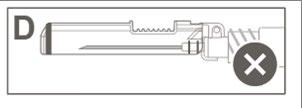
Caution: Do not attempt to unlock (deactivate) the safety device by forcibly removing the needle
from the safety shield.
Unused medicinal product and waste materials derived from such medicinal product must be disposed of in accordance
with current local regulations.
Hexacima injectable suspension
Conjugate (adsorbed) vaccine against diphtheria, tetanus, pertussis (acellular component), hepatitis B
(rDNA), poliomyelitis (inactivated) and Haemophilus influenzaetype b
Read this leaflet carefully before the child is vaccinated as it contains
important information for him.
- Keep this leaflet. You may need to read it again.
- If you have any questions, ask your doctor, pharmacist or healthcare professional
- If the child experiences any side effects, including those not listed in this leaflet, ask your doctor, pharmacist or healthcare professional. See section 4.
Contents of this leaflet:
- 1. What Hexacima is and what it is used for
- 2. What you need to know before Hexacima is given to the child
- 3. How Hexacima is administered
- 4. Possible side effects
- 5. How to store Hexacima
- 6. Contents of the pack and other information
1. What is Hexacima and what is it used for?
Hexacima (DTaP-HB-IPV-Hib) is a vaccine used to protect against infectious diseases.
Hexacima helps to protect children from diphtheria (D), tetanus (T), pertussis (aP), hepatitis B
(HB), poliomyelitis (IPV) and serious diseases caused by Haemophilus influenzaetype b (Hib).
Hexacima is administered to children starting from six weeks of age.
The vaccine works by stimulating the body to produce antibodies against the bacteria and viruses that
cause the various infections described below:
- Diphtheria is an infectious disease that usually initially affects the throat causing pain and swelling that can lead to suffocation. The bacteria that cause the disease also produce a toxin (poison) that can damage the heart, kidneys and nerves.
- Tetanus (often described as “lockjaw”) is usually caused by bacteria entering a deep wound. The bacteria produce a toxin (poison) that causes muscle contractions resulting in difficulty breathing and possible suffocation.
- Pertussis (often called whooping cough) is a highly contagious disease that affects the airways. The pertussis bacterium causes a severe cough that can lead to breathing problems. The cough is often characterized by a typical “whistle”, and can last for one or two months, or longer. Pertussis can also cause ear infections, bronchial infections (bronchitis) that can last a long time, lung infections (pneumonia), convulsions, brain damage and even death.
- Hepatitis B is caused by the hepatitis B virus, which causes enlargement of the liver (inflammation). In some people, the virus can remain in the body for a long period, and can lead over time to serious liver problems, including liver cancer.
- Poliomyelitis (often simply called polio) is due to viruses that affect the nerves. It can lead to paralysis or muscle weakness, most often of the legs. Paralysis of the muscles that control breathing and swallowing can cause death.
- Infections caused by Haemophilus influenzaetype b (often simply called Hib) are serious bacterial infections and can cause meningitis (inflammation of the outer lining of the brain), which can lead to brain damage, deafness, epilepsy, or partial blindness. The infection can also cause inflammation and swelling of the throat leading to difficulty in
swallowing and breathing, and the infection can affect other parts of the body such as the blood, the
lungs, skin, bones and joints.
Important information regarding the protection provided
- Hexacima only helps to prevent these diseases if they are caused by bacteria or viruses targeted by the vaccine. The child may contract diseases with similar symptoms if caused by other bacteria or viruses.
- The vaccine does not contain live bacteria or viruses and cannot cause any of the infectious diseases it protects against.
- The vaccine does not protect against infections due to other types of Haemophilus influenzaeor meningitis resulting from other microorganisms.
- Hexacima does not protect against liver infections caused by other agents such as hepatitis A, C and E.
- Since the symptoms of hepatitis B take a long time to develop, it is possible that unrecognized hepatitis B infections may be present at the time of vaccination. In such cases the vaccine may not protect against hepatitis B.
- Like any other vaccine, Hexacima may not protect 100% of children who receive the vaccine.
2. What you need to know before Hexacima is given to the child
To ensure that Hexacima is suitable for the child, it is important that you inform the doctor or
healthcare professional if any of the following points apply to the child. If there is anything you do not
understand, ask your doctor, pharmacist or healthcare professional for an explanation.
Hexacima must not be given if the child:
- has had breathing difficulties or swelling of the face (anaphylactic reaction) after the administration of Hexacima
- has had an allergic reaction
- to the active substances
- to any of the excipients listed in section 6
- to glutaraldehyde, formaldehyde, neomycin, streptomycin or polymyxin B, as these substances are used during the vaccine manufacturing process
- following administration of Hexacima or any other vaccine containing diphtheria, tetanus, pertussis, poliomyelitis, hepatitis B or Hib
- has suffered a severe reaction affecting the brain (encephalopathy) within 7 days of a previous dose of a pertussis vaccine (acellular or whole-cell pertussis vaccine)
- has an uncontrolled disorder or serious illness affecting the brain (uncontrolled neurological disorder) or uncontrolled epilepsy.
Warnings and precautions
Before vaccination, inform the doctor, pharmacist or healthcare professional if the child:
- has a moderate or high fever or has an acute illness (e.g. fever, sore throat, cough, cold or flu). It may be necessary to postpone vaccination with Hexacima until the child has recovered.
- has experienced any of the following events following the administration of a pertussis vaccine. In such cases, the decision to administer further doses of vaccine containing pertussis should be considered very carefully:
- a fever of 40°C or higher within 48 hours of vaccination not due to another identifiable cause;
- collapse or shock-like state with episodes of hypotonia-hyporesponsiveness (decreased muscle tone) within 48 hours of vaccination;
- persistent, inconsolable crying lasting 3 hours or more, within 48 hours of vaccination;
- convulsions with or without fever, within 3 days of vaccination.
- has previously had Guillain-Barré syndrome (temporary inflammation of the nerves causing pain, paralysis and altered sensation) or brachial neuritis (severe pain and decreased mobility of the arm and shoulder) after receiving a vaccine containing tetanus toxoid (an inactivated form of tetanus toxin). In such cases, the decision to administer any further vaccine containing tetanus toxoid must be assessed by the doctor.
- is receiving treatment that lowers the body's natural defenses or has a disease that weakens the immune system. In these cases, the immune response to the vaccine may be reduced. It is generally recommended to wait until the end of treatment or recovery from the illness before proceeding with vaccination. However, children with long-standing problems with the immune system, such as HIV infection (AIDS) can still receive Hexacima, but protection may not be as good as in children with a healthy immune system.
- has a chronic or acute illness such as chronic renal failure (kidneys unable to function properly).
- has any undiagnosed brain disease or uncontrolled epilepsy. The doctor will assess the potential benefit of vaccination.
- has any blood disorder that causes easy bruising or prolonged bleeding after minor cuts. The doctor will advise you whether the child can receive Hexacima.
Fainting can occur after, or even before, any injection with a needle. Therefore, inform the
doctor or nurse if the child has fainted with a previous injection.
Other medicines or vaccines and Hexacima
Inform the doctor or healthcare professional if the child is taking, has recently taken or
may take any other medicine or vaccine.
Hexacima can be given at the same time as other vaccines such as pneumococcal vaccines, measles-mumps-rubella vaccines, varicella vaccines, rotavirus vaccines or
meningococcal vaccines.
If given at the same time as other vaccines, Hexacima will be given in separate
injection sites.
Hexacima contains phenylalanine, potassium and sodium
Hexacima contains 85 micrograms of phenylalanine in each 0.5-mL dose. Phenylalanine can
be harmful to individuals with phenylketonuria (PKU), a rare genetic disorder in which
phenylalanine builds up because the body is unable to eliminate it properly.
Hexacima contains less than 1 mmol of potassium (39 mg) and less than 1 mmol of sodium (23 mg) per dose,
i.e. essentially "potassium-free" and "sodium-free".
3. How Hexacima is administered
Hexacima will be administered to the child by a doctor or healthcare professional with adequate
training on the use of vaccines and equipped to manage any rare, serious allergic reaction (see section 4 Possible adverse effects).
Hexacima is administered by injection into a muscle (intramuscular, IM route) in the upper thigh or arm of the child. The vaccine should never be
injected into a blood vessel, into the skin or under the skin.
The recommended dose is as follows:
Primary vaccination series
The child will receive two injections at intervals of two months or three injections at intervals of one or two months
(at least four weeks apart). This vaccine should be used in
accordance with the local vaccination schedule.
Follow-up injections (booster)
After the primary injection series, the child will receive a booster dose, in accordance with
local recommendations, at least 6 months after the last dose of the primary series. The doctor will tell you when
this dose should be administered.
If the child has not received a dose of Hexacima
If the child has not received a scheduled injection, it is important to inform the doctor or
healthcare professional, who will decide when to administer it.
It is important to follow the instructions of the doctor or healthcare professional so that the child completes
the entire vaccination schedule. Otherwise, the child may not be fully
protected against the diseases that Hexacima prevents.
If you have further questions about the use of this vaccine, ask your doctor, pharmacist or healthcare
professional.
4. Possible side effects
Like all medicines, this vaccine can cause side effects, although not everybody gets them.
manifest.
Serious allergic reactions (anaphylactic reaction)
If any of these symptoms should occur after leaving the place (e.g. hospital,
clinic) where the vaccine was administered to the child, seek IMMEDIATE medical attention:
- difficulty breathing
- bluish tongue or lips
- skin rash
- swelling of the face or throat
- sudden and severe feeling of unwellness with low blood pressure causing dizziness and loss of consciousness, with breathing difficulties associated with a rapid heartbeat.
When these signs or symptoms of an anaphylactic reaction occur, they usually occur immediately
after the injection and while the child is still in hospital or at the clinic.
Serious allergic reactions are a rare occurrence (may affect up to 1 child in
1,000) after receiving this vaccine.
Other side effects
If the child experiences any of the following side effects, inform your doctor, healthcare
professional or pharmacist.
- Very common side effects (may affect more than 1 child in 10) are:
- loss of appetite
- crying
- drowsiness
- vomiting
- fever (temperature equal to or greater than 38°C)
- irritability
- pain, redness or swelling at the injection site
- Common side effects (may affect up to 1 child in 10) are:
- abnormal (prolonged) crying
- diarrhoea
- hardening at the injection site
- Uncommon side effects (may affect up to 1 child in 100) are:
- allergic reactions
- high fever (temperature equal to or greater than 39.6°C)
- nodule at the injection site
- Rare side effects (may affect up to 1 child in 1,000) are:
- skin rash
- extensive reactions at the injection site (more than 5 cm), including extensive swelling of the limb from the injection site to beyond one or both joints. These reactions occur within 24-72 hours of vaccination, may be associated with redness, warmth, excessive sensitivity or pain at the injection site and improve within 3-5 days without treatment.
- convulsions with or without fever.
- Very rare side effects (may affect up to 1 child in 10,000) are:
- episodes resembling shock or paleness, muscle weakness and decreased responsiveness for a certain period of time (hypotonic or hypotonia-hyporesponsiveness HHE episodes).
Potential side effects
Other side effects not included in the above list have been reported occasionally
with the use of other vaccines containing diphtheria, pertussis, polio, hepatitis B or Hib and not
directly with Hexacima:
- Temporary inflammation of the nerves causing pain, paralysis and abnormalities in sensation (Guillain Barré syndrome), severe pain and decreased mobility of the arm and shoulder (brachial neuritis) have been reported following administration of vaccines containing tetanus.
- Inflammation of some nerves causing sensory disturbances or weakness of the limbs (polyradiculoneuritis), facial paralysis, visual disturbances, attenuation or loss of vision (optic neuritis), inflammatory disease of the brain and spinal cord (demyelination of the central nervous system, multiple sclerosis) have been reported following administration of vaccines containing the hepatitis B antigen.
- Swelling or inflammation of the brain (encephalopathy/encephalitis).
- In very premature infants (born at 28 weeks of gestation or earlier), longer-than-normal interruptions in breathing may occur, which manifest for 2-3 days after vaccination.
- Swelling of one or both feet and lower limbs. This reaction may occur together with a bluish discoloration of the skin (cyanosis), redness, small hemorrhagic areas under the skin (transient purpura) and severe crying following vaccination with vaccines containing Haemophilus influenzaetype b. If these reactions occur, they usually occur after the first injections and are observed within the first few hours after vaccination. All symptoms should completely disappear within 24 hours without treatment.
Reporting of side effects
If the child experiences any side effect, including those not listed in this
leaflet, please inform your doctor, pharmacist or healthcare professional. You can also report side
effects directly through the national reporting system detailed in Annex V.
By reporting side effects you can help provide more information on the safety
of this medicine.
5. How to store Hexacima
Keep this vaccine out of the sight and reach of children.
Do not use this vaccine after the expiry date which is stated on the pack and the label after
EXP. The expiry date refers to the last day of the month.
Store in a refrigerator (between 2°C and 8°C).
Do not freeze.
Keep the vaccine in the pack to protect the medicine from light.
Do not dispose of any medicine in wastewater or household waste. Ask your pharmacist how to
dispose of medicines you no longer use. This will help protect the environment.
6. Contents of the pack and other information
What Hexacima contains
The active substances are, per dose (0.5 mL):
Diphtheria toxoid not less than 20 IU (30 Lf)
Tetanus toxoid not less than 40 IU (10 Lf)
Antigens of Bordetellapertussis
Pertussis toxoid 25 micrograms
Filamentous hemagglutinin 25 micrograms
Poliovirus (inactivated)
Type 1 (Mahoney) 29 units of D antigen
Type 2 (MEF-1) 7 units of D antigen
Type 3 (Saukett) 26 units of D antigen
Hepatitis B surface antigen 10 micrograms
Polysaccharide of Haemophilus influenzaetype b 12 micrograms
(polyribosylribitol phosphate)
conjugated to tetanus protein 22-36 micrograms
Adsorbed on hydrated aluminium hydroxide (0.6 mg Al)
As a lower limit of the confidence interval (p = 0.95) and not less than 30 IU as a mean value
As a lower limit of the confidence interval (p = 0.95)
Or equivalent activity determined by immunogenicity assessment
Cultivated on Vero cells
These amounts of antigen are strictly the same as those previously expressed as
40-8-32 units of D antigen, respectively for type 1, 2 and 3 virus, when measured with another
suitable immunochemical method
Produced in Hansenula polymorpha yeast cells by recombinant DNA technology
The other components are:
Dibasic sodium phosphate, monobasic potassium phosphate, trometamol, sucrose, essential amino acids
including L-phenylalanine, sodium hydroxide and/or acetic acid and/or hydrochloric acid (for pH adjustment
) and water for injections.
The vaccine may contain traces of glutaraldehyde, formaldehyde, neomycin, streptomycin and polymyxin
B.
Description of the appearance of Hexacima and contents of the pack
Hexacima is supplied as an injectable suspension in a vial (0.5 mL).
Hexacima is available in packs of 10 vials.
After shaking the vial, the normal appearance of the vaccine is a whitish turbid homogeneous suspension.
Marketing authorisation holder and manufacturer
Marketing authorisation holder
Sanofi Winthrop Industrie, 82 Avenue Raspail, 94250 Gentilly, France
Manufacturer
Sanofi Pasteur 1541 avenue Marcel Mérieux, 69280 Marcy l’Etoile, France
Sanofi Pasteur Parc Industriel d’Incarville, 27100 Val de Reuil, France
For further information on this medicinal product, contact the local representative of the marketing
authorisation holder:
| België/ Belgique /Belgien Sanofi Belgium Tel: +32 2 710.54.00 | Lietuva Swixx Biopharma UAB o Tel: +370 5 236 91 40 |
| България Swixx Biopharma EOOD Teл.: +359 (0)2 4942 480 | c Luxembourg/Luxemburg Sanofi Belgium a Tel: +32 2 710.54.00 |
| Česká republika Sanofi s.r.o. Tel: +420 233 086 111 | m Magyarország SANOFI-AVENTIS Zrt Tel: +36 1 505 0055 |
| Danmark Sanofi A/S Tel: +45 4516 7000 | r Malta a Sanofi S.r.l. Tel: +39 02 39394 275 |
| Deutschland Sanofi-Aventis Deutschland GmbH Tel: 0800 54 54 010 Tel. aus dem Ausland: +49 69 305 21 130 | F Nederland Sanofi B.V. l Tel: +31 20 245 4000 |
| Eesti Swixx Biopharma OÜ Tel: +372 640 10 30 | e Norge d Sanofi-aventis Norge AS Tel: + 47 67 10 71 00 |
| Ελλάδα ΒΙΑΝΕΞ Α.Ε. n Τηλ: +30.210.8009111 | a Österreich Sanofi-Aventis GmbH Tel: +43 (1) 80185-0 |
| a España sanofi-aventis, S.A. i Tel: +34 93 485 94 00 | Polska Sanofi sp. z o.o. Tel: +48 22 280 00 00 |
| l a France Sanofi Winthrop Industrie t Tel: 0 800 222 555 I Appel depuis l’étranger : +33 1 57 63 23 23 | Portugal Sanofi – Produtos Farmacêuticos, Lda. Tel: + 351 21 35 89 400 |
| Hrvatska a Swixx Biopharma d.o.o. Tel: +385 1 2078 500 | România Sanofi Romania SRL Tel: +40 21 317 31 36 |
| i z Ireland sanofi-aventis Ireland T/A SANOFI n Tel: + 353 (0) 1 4035 600 | Slovenija Swixx Biopharma d.o.o Tel: +386 235 51 00 |
| e Ísland Vistor g Tel: +354 535 7000 | Slovenská republika Swixx Biopharma s.r.o. Tel: +421 2 208 33 600 |
| A Italia Sanofi S.r.l. Tel: 800536389 | Suomi/Finland Sanofi Oy Tel: +358 (0) 201 200 300 |
| Κύπρος C.A. Papaellinas Ltd. Τηλ.: +357 22 741741 | Sverige Sanofi AB Tel: +46 8-634 50 00 |
| Latvija Swixx Biopharma SIA Tel: +371 6 6164 750 | o c United Kingdom (Northern Ireland) sanofi-aventis Ireland Ltd. T/A SANOFI a Tel: +44 (0) 800 035 2525 |
Other sources of information
More detailed information on this medicinal product is available on the website of the European
Medicines Agency, http://www.ema.europa.eu.
The latest information approved for this vaccine is available by visiting the following URL:
https://hexacima.info.sanofi or by scanning the QR code with a smartphone:
insert QR code
---------------------------------------------------------------------------------------------------------------------------
The following information is intended for healthcare professionals only:
- The vial is for single use only and must not be reused.
- Shake the vial so that the contents become homogeneous.
- A dose of 0.5 mL is drawn up with a syringe for injection.
- Do not mix Hexacima with other medicinal products.
- Hexacima must be administered intramuscularly. The recommended injection site is preferably the anterolateral area of the thigh and the deltoid muscle in older children (possibly from 15 months of age). Do not administer intradermally or intravenously. Do not administer by intravascular injection: ensure that the needle does not enter a blood vessel.
- Do not use the vials if the packaging is damaged.
Unused medicinal product and waste materials derived from such medicinal product should be disposed of in accordance
with current local regulations.

Nie jesteś pewien, czy ten lek jest odpowiedni dla ciebie?
Omów swoje objawy i leczenie z lekarzem online.

Zacząłeś przyjmować lek i masz pytania?
Omów swoje objawy i leczenie z lekarzem online.
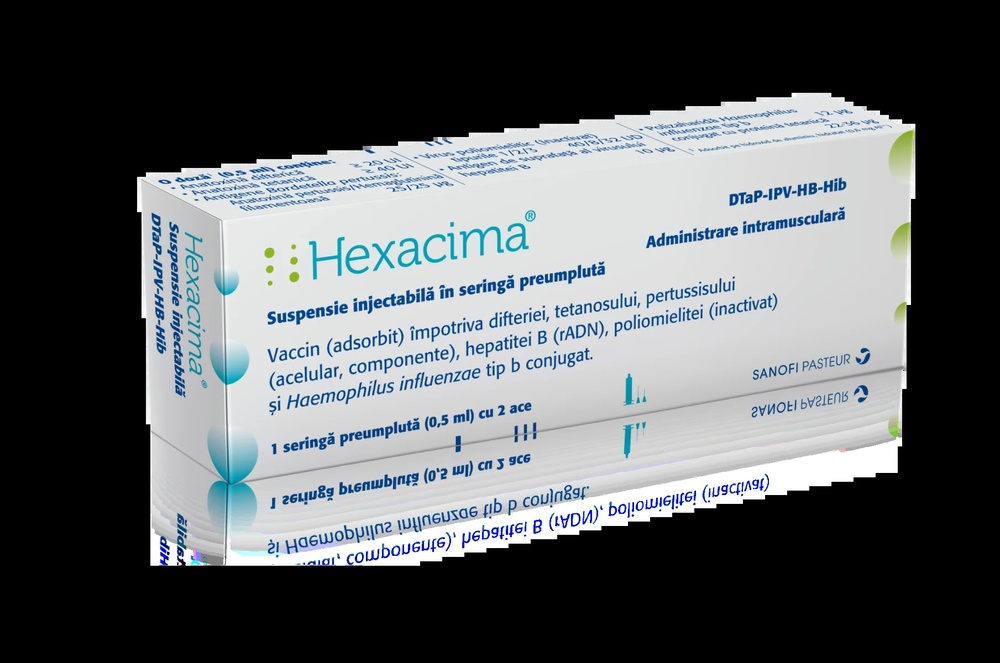
- Kraj rejestracji
- Postać farmaceutycznaInjectable suspension, 0.5ML
- Kod ATCJ07CA09
- Substancja czynna
- Wymaga receptyNie
- Producent
- Te treści mają charakter wyłącznie informacyjny i nie zastępują konsultacji lekarskiej.
- Zamienniki EXAKIMAPostać farmaceutyczna: Injectable suspension, 0.5MLProducent: SANOFI WINTHROP INDUSTRIEBez receptyPostać farmaceutyczna: Powder and solvent for injectable suspension, 0.5 MLProducent: GLAXOSMITHKLINE BIOLOGICALS S.A.Bez receptyPostać farmaceutyczna: Injectable suspension in pre-filled syringe, 0,5 MLSubstancja czynna: diphtheria-pertussis-poliomyelitis-tetanusProducent: GLAXOSMITHKLINE S.P.A.Bez recepty
Odpowiedniki EXAKIMA w innych krajach
Leki z tą samą substancją czynną dostępne w innych krajach.
Odpowiednik EXAKIMA w Hiszpania
Odpowiednik EXAKIMA w Ukraina
Lekarze online w sprawie EXAKIMA
Omów stosowanie EXAKIMA, bezpieczeństwo i ocenę zasadności recepty zgodnie z obowiązującymi przepisami.









Uzyskaj receptę na EXAKIMA online
Wypełnij 2-minutowy formularz
Opisz swoje objawy, historię choroby i lek, o który prosisz.
Wybierz lekarza lub pozwól nam przydzielić
Wybierz specjalistę lub dopasujemy Cię do najbliższego dostępnego lekarza.
Lekarz analizuje Twój przypadek
Zazwyczaj w ciągu 30 minut. Może zadawać dodatkowe pytania przez czat.
Odbierz w dowolnej aptece
Recepta elektroniczna wysłana na Twój e-mail — ważna w całej Polsce.
Często zadawane pytania
EXAKIMA nie wymaga recepty w Włochy. Możesz skonsultować się z lekarzem online, aby sprawdzić, czy ten lek może być odpowiedni w Twojej sytuacji.
Substancją czynną w EXAKIMA jest diphtheria-haemophilus influenzae B-pertussis-poliomyelitis-tetanus-hepatitis B. Informacja ta pomaga rozpoznać leki o tym samym składzie, ale pod różnymi nazwami handlowymi.
EXAKIMA jest produkowany przez SANOFI WINTHROP INDUSTRIE. Nazwy handlowe i opakowania mogą się różnić w zależności od dystrybutora.
Lekarze, tacy jak Lekarze rodzinni, Psychiatrzy, Dermatolodzy, Kardiolodzy, Endokrynolodzy, Gastroenterolodzy, Pulmonolodzy, Nefrolodzy, Reumatolodzy, Hematolodzy, Zakaźnicy, Alergolodzy, Geriatrzy, Pediatrzy, Onkolodzy, mogą ocenić, czy stosowanie EXAKIMA jest odpowiednie w Twoim przypadku, w zależności od sytuacji klinicznej i lokalnych przepisów. Możesz umówić konsultację online, aby omówić objawy i możliwe dalsze kroki.
Polska posiada dobrze rozwiniętą infrastrukturę ochrony zdrowia w dużych miastach, takich jak Warszawa, Kraków, Wrocław i Gdańsk. Apteki są łatwo dostępne i działają zgodnie z obowiązującymi przepisami, zapewniając dostęp do leków na receptę.
Możesz kupić EXAKIMA w Warszawie, Krakowie, Wrocławiu lub Gdańsku w każdej aptece, posiadając ważną receptę.
Aby uzyskać receptę, możesz skorzystać z Oladoctor:
Inne leki zawierające tę samą substancję czynną (diphtheria-haemophilus influenzae B-pertussis-poliomyelitis-tetanus-hepatitis B) to m.in. EXYON, INFANRIX EXA, POLIOINFANRIX. Mogą one różnić się nazwą handlową lub postacią, ale zawierają ten sam składnik terapeutyczny. Przed zmianą lub rozpoczęciem nowego leku skonsultuj się z lekarzem.
