



HEMANGIOL 3.75 mg/ml Roztwór doustny

Ocena recepty online
Lekarz przeanalizuje Twój przypadek i zdecyduje, czy wystawienie recepty jest medycznie uzasadnione.

Porozmawiaj z lekarzem o tym leku
Omów swoje objawy i opcje leczenia podczas szybkiej konsultacji online.



Jak stosować EMANJIOL
Treść ulotki
HEMANGIOL 3.75 mg/mL oral solution
propranolol
Read this leaflet carefully before giving this medicine to your child
because it contains important information.
- Keep this leaflet. You may need to read it again.
- If you have any questions, ask your doctor, pharmacist or nurse.
- This medicine has been prescribed only for your child. Do not give it to other people, even if their symptoms are the same as your child's, as it could be dangerous.
- If your child gets any side effects, even those not listed in this leaflet, tell your doctor, pharmacist or nurse. See section 4.
Contents of this leaflet
- 1. What is HEMANGIOL and what it is used for
- 2. What you need to know before giving HEMANGIOL to your child
- 3. How to give HEMANGIOL to your child
- 4. Possible side effects
- 5. How to store HEMANGIOL
- 6. Contents of the pack and other information
1What is HEMANGIOL and what it is used for
What is HEMANGIOL
The name of the medicine is HEMANGIOL. The active ingredient is propranolol.
Propranolol belongs to a group of medicines known as beta-blockers.
What it is used for
This medicine is used to treat a condition called hemangioma. A hemangioma is
made up of a tangle of blood vessels that form a small mass on the skin or underneath it.
The hemangioma can be located on the surface or in depth. It is sometimes called a “strawberry
mark” because its surface resembles a strawberry.
Hemangiol is given to children between 5 weeks and 5 months of age, when:
- the location and/or extent of the lesions pose a threat to life or function (it can damage vital organs or senses such as sight or hearing);
- the hemangioma is ulcerated (e.g. with a sore on the skin that does not heal) and is accompanied by pain, and/or does not respond to normal wound care;
- there is a risk of permanent scarring or disfigurement.
2What you need to know before giving HEMANGIOL to your child
Do not give HEMANGIOL
If the child:
- was born prematurely and has not reached the corrected age of 5 weeks (corrected age is the age a premature baby would have if they had been born on their due date).
- is allergic to propranolol or any of the other ingredients of this medicine (listed in section 6). An allergic reaction can include rash, itching or difficulty breathing.
- has asthma or a history of breathing difficulties.
- has a slow heart rate for their age. If in doubt, consult your doctor.
- has a heart problem (e.g. irregular heartbeat and heart failure).
- has very low blood pressure.
- has circulation problems that make the fingers and toes cold and pale.
- is prone to low blood sugar levels.
- has high blood pressure caused by a tumor of the adrenal gland, called a “pheochromocytoma”.
If you are breastfeeding the baby and are taking medicines that must not be used
in combination with HEMANGIOL (see ‘If you are breastfeeding’ and “Other medicines and
HEMANGIOL”) do notgive this medicine to the baby.
Warnings and precautions
Tell your doctor before giving HEMANGIOL to your child:
- If the child has liver or kidney problems. This medicine is not recommended in case of hepatic or renal insufficiency.
- If the child has had allergic reactions of any kind (e.g. to medicines or foods). An allergic reaction can include rash, itching or difficulty breathing.
- If the child has psoriasis (a skin condition that manifests with red, dry, thickened patches of skin), as this medicine may worsen the symptoms of this condition.
- If the child has diabetes: in this case, the child's blood glucose levels should be measured more frequently.
- If the child has PHACE syndrome (a condition that associates hemangiomas and cardiovascular abnormalities also in the brain vessels), as this medicine may increase the risk of stroke.
Important signs to keep in mind after giving HEMANGIOL
Risk of hypoglycemia
This medicine can mask the warning signs of hypoglycemia (also known as low
blood sugar). It can also worsen hypoglycemia in children, particularly during
periods of fasting (e.g. poor oral intake, concomitant infection, vomiting) or
when glucose demands increase (cold, stress, infections) or in case of overdose.
These symptoms can be:
- Minor symptoms: paleness, fatigue, sweating, tremors, palpitations, anxiety, hunger, difficulty waking up. Major symptoms: excessive sleepiness, difficulty reacting, poor feeding, drop in body temperature, convulsions (seizures), brief pauses in breathing, loss of consciousness.
The risk of hypoglycemia remains important for the entire duration of treatment.
To avoid the risk of hypoglycemia, you must give HEMANGIOL during or immediately after
a meal/feed and avoid giving the last dose just before bedtime
(see section 3). The child must be adequately and regularly fed
during treatment.
If the child does not eat enough, has another disorder or vomits, it is recommended to
skip the dose. DO NOT GIVE HEMANGIOL TO THE CHILD UNTIL
THEY ARE PROPERLY FED AGAIN.
If the child shows symptoms of hypoglycemia while taking HEMANGIOL, stop the
treatment and consult a doctor immediately or go directly to the hospital. If the child is
conscious, give them a drink containing sugar.
Risk of bronchospasm
Stop treatment and contact your doctor immediately if, after giving
HEMANGIOL, the child shows the following symptoms indicative of bronchospasm (temporary
narrowing of the bronchi causing difficulty breathing): coughing, rapid or difficult breathing or
wheezing, with or without bluish skin.
Stop treatment and contact your doctor immediately if the child shows symptoms
similar to a cold associated with difficulty inbreathing and/or wheezing during
taking HEMANGIOL.
Risk of hypotension and bradycardia (low heart rate)
HEMANGIOL can lower blood pressure (hypotension) and heart rate
(bradycardia). For this reason, the child will be closely monitored clinically and the heart rate carefully
observed for 2 hours after the first dose or after a dose increase. Afterwards, the child will be kept under
regular medical supervision during treatment.
Stop treatment and contact your doctor immediately if the child shows signs of
fatigue, coldness, paleness, bluish skin or fainting during
treatment with HEMANGIOL.
Risk of hyperkalemia
HEMANGIOL can increase the level of potassium in the blood (hyperkalemia) in the presence of
large, ulcerated hemangiomas. Blood potassium levels in the child must be measured.
If the child needs to undergo general anesthesia
Tell the doctor if the child is taking HEMANGIOL, as drops in
blood pressure may occur if certain anesthetics are given at the same time as
taking this medicine (see “Other medicines and HEMANGIOL”). It may be necessary to
stop HEMANGIOL at least 48 hours before anesthesia.
If you are breastfeeding
- Tell your doctor before giving the medicine.
- Do not give this medicine to the baby if you are taking medicines that must not be combined with HEMANGIOL (see “Other medicines and HEMANGIOL”).
Other medicines and HEMANGIOL
- Tell your doctor, pharmacist or nurse if the child is taking, has recently taken or might take any other medicines, because HEMANGIOL can change the action of other medicines and some medicines can affect how HEMANGIOL works.
- Also, if you are breastfeeding, it is important to tell your doctor, pharmacist or nurse about the medicines you are taking as these can pass into the milk and interfere with the treatment given to the baby. Your doctor will advise you whether to stop breastfeeding or not.
In particular, if you are breastfeeding, tell your doctor or pharmacist if you are
taking or if the baby is taking:
- Medicines for diabetes,
- Medicines for heart or vascular problems such as irregular heartbeat, chest pain or angina, high blood pressure, heart failure,
- Medicines for the treatment of anxiety and depression and more serious mental problems, and epilepsy,
- Medicines for the treatment of tuberculosis,
- Painkillers and anti-inflammatory drugs,
- Medicines to lower lipids in the blood,
- Anesthetic drugs.
For further questions, ask your doctor or pharmacist.
HEMANGIOL contains sodium and propylene glycol
This medicine contains less than 1 mmol (23 mg) of sodium per dose, i.e. essentially ‘sodium-free’.
This medicine contains 2.08 mg of propylene glycol/kg/day. If the baby is less than
4 weeks old, talk to your doctor or pharmacist before giving this medicine, in
particular if the baby is taking other medicines containing propylene glycol or alcohol.
3How to give HEMANGIOL to your child
The child's treatment has been started by a doctor competent in the diagnosis, treatment
and management of infantile hemangiomas.
Give this medicine to your child always exactly as your doctor or
pharmacist has told you. If you have doubts ask your doctor or pharmacist.
Never change the dose given to the child on your own initiative. Any increase or
adjustment of the dose based on the child's weight must be prescribed by the doctor.
Dose
- The dosage is based on the child's body weight following the scheme below:
| Weeks (daily dose) | a Dose per administration | Times of administration |
| First week (1 mg/kg/day) | i 0.5 mg/kg |
|
| a Second week (2 mg/kg/day) | l 1 mg/kg | |
| t Third week and onwards (3 mg/kg/day) | 1.5 mg/kg |
- If necessary, mix the medicine with a small amount of infant formula or apple and/or orange juice suitable for children of that age and give it to the child with a bottle. Do not put the medicine in a full bottle of milk or juice. For children up to 5 kg in weight, you can mix the dose with a teaspoon of milk (about 5 ml). For children weighing more than 5 kg, the dose can be mixed with a tablespoon of milk or juice (about 15 ml). Use the mixture within 2 hours of preparation.
How to give HEMANGIOL to your child
- Hemangiol is for oral use.
- The medicine must be given during or immediately after a meal.
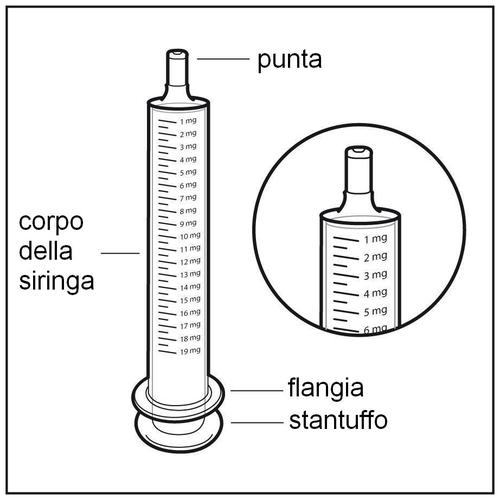
- The dose must always be measured using the oral syringe provided with the bottle.
- Put HEMANGIOL directly into the child's mouth using the oral syringe provided with the bottle.
- Feed the child regularly to avoid prolonged fasting.
- If the child vomits the dose or if you are not sure they have taken all the medicine, do not give another dose but wait for the next scheduled dose.
- HEMANGIOL and meals must be given by the same person to avoid the risk of hypoglycemia. If different people take care of the child, communication is an essential factor to ensure the child's safety.
Instructions for use:
- Step 1. Extract the items from the packagingThe package contains the following items that will be used to administer the medication:
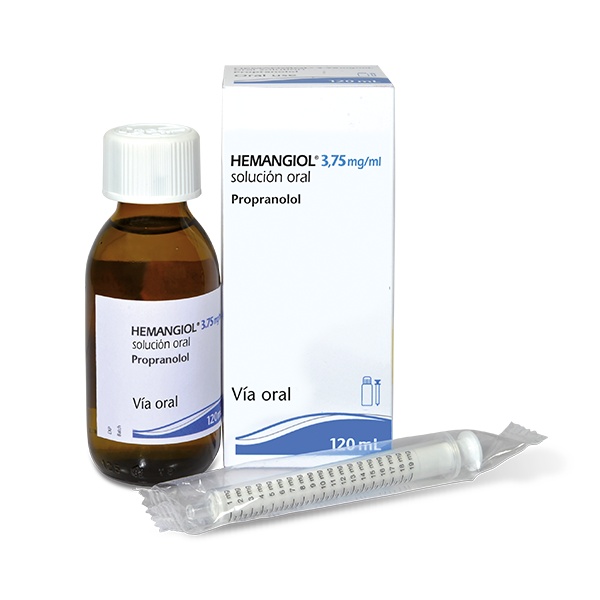
- The glass bottle containing 120 /mL of propranolol oral solution
- The oral use syringe graduated in mg supplied with the medication. Extract the bottle and the oral use syringe from the package and remove the syringe from the plastic bag.
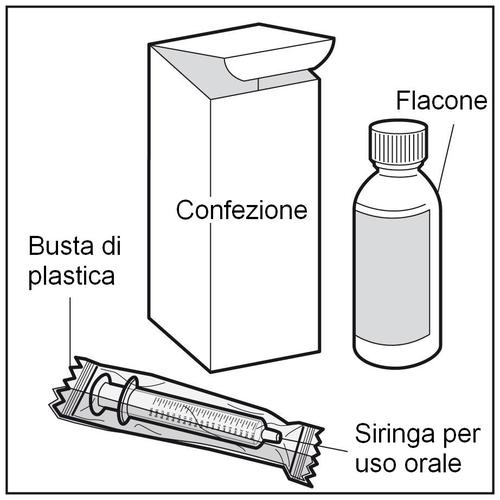
- Step 2. Check the doseCheck the dose of HEMANGIOL in milligrams (mg) as prescribed by the doctor. Locate the corresponding number on the oral use syringe.
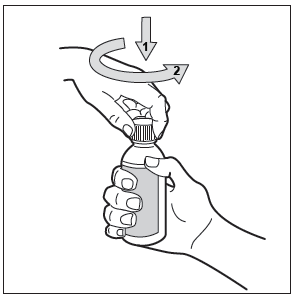
- Step 3. Open the bottleThe bottle is equipped with a child-resistant cap. To open, follow these instructions: push the cap down and simultaneously rotate the cap counterclockwise (to the left). Do not shake the bottle before use.
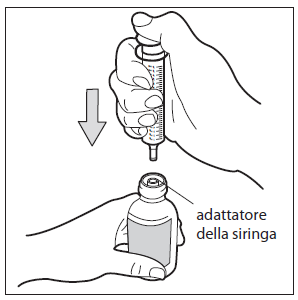
- Step 4. Insert the syringeKeeping the bottle in a vertical position, insert the tip of the oral use syringe into the bottle and push the plunger completely down. Do not remove the syringe adapter from the neck of the bottle. Use only the oral use syringe supplied with the medication to measure and administer the dose. Do not use spoons or other dispensing devices.
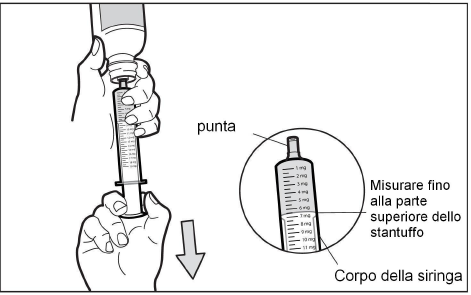
- Step 5: Extract the doseWith the oral use syringe inserted, turn the bottle upside down. Pull the syringe plunger up to the required number of mg.
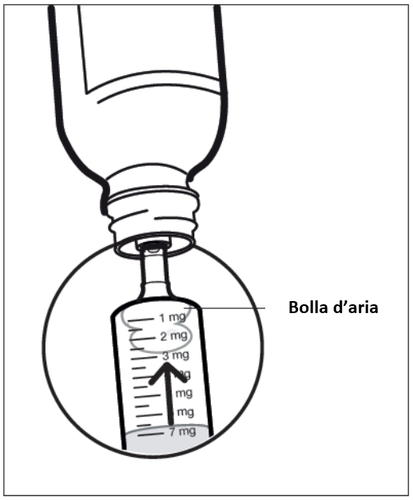
- Step 6: Check for air bubblesIf the syringe contains air bubbles, keep the syringe vertical, push the plunger up just enough to completely eliminate the air bubbles and then return it to the dose prescribed by the doctor.
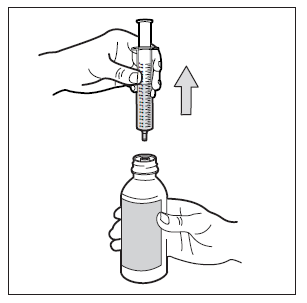
- Step 7. Remove the syringeRotate the bottle to a vertical position and completely remove the syringe from the bottle. Be careful not to push the plunger during this operation.
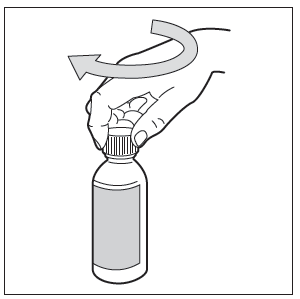
- Step 8. Close the bottle.Reposition the plastic cap on the bottle by turning it clockwise (to the right).
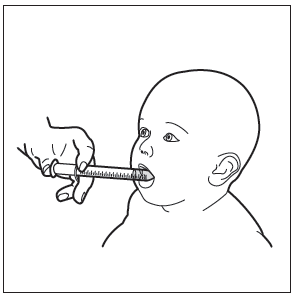
- Step 9. Administer HEMANGIOL to the childInsert the syringe into the child's mouth and position it against the inside wall of the cheek. Slowly inject HEMANGIOL from the syringe directly into the child's mouth. Do not lay the child down immediately after administering the medication.
- Step 10: Clean the syringe.Do not disassemble the syringe. Rinse the empty syringe after each use by washing it in a glass of water:
- 1- Fill a glass with clean water
- 2- Pull the plunger
- 3- Empty the water into the sink
- 4- Repeat this cleaning operation 3 times.
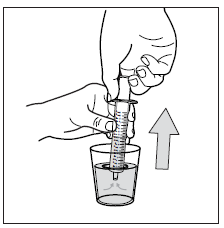
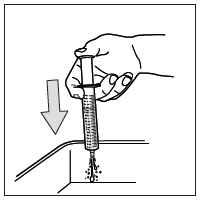
Do not use detergents or alcohol-based products to clean the syringe. Dry the outside.
Do not put the syringe in a sterilizer or dishwasher.
Store the bottle and syringe together in the cardboard box until next use, keeping them in
a safe place out of sight and reach of the child. Dispose of the syringe once the
contents of the bottle have been used up.
If the child takes a dose of HEMANGIOL higher than necessary
If you have given the child a dose of HEMANGIOL higher than the prescribed dose, consult
your doctor immediately.
If you forget to administer HEMANGIOL to the child
Skip the missed dose and do not administer a double dose to make up for the missed
dose. Continue treatment according to the normal frequency: one dose in the morning and one dose in the late
afternoon.
If you stop administering HEMANGIOLto the child
Administration of HEMANGIOL can be stopped immediately at the end of
treatment as decided by the doctor.
For further questions on the use of this medicine, please contact your doctor, pharmacist or
nurse.
4Possible side effects
Like all medicines, this medicine can cause side effects, although not everyone
will experience them.
Important prodromal symptoms of potential side effects such as low blood pressure, low
heart rate, low blood sugar levels and bronchospasm should be monitored after
administration of HEMANGIOL.
Very common side effects(may affect more than 1 in 10 people)
- Bronchitis (inflammation of the bronchi),
- Sleep disorders (insomnia, poor sleep quality and difficulty waking up),
- Diarrhea and vomiting.
Common side effects(may affect up to 1 in 10 people)
- Bronchospasm (difficulty breathing),
- Bronchiolitis (inflammation of the bronchioles accompanied by difficulty breathing and wheezing in the chest, associated with cough and fever),
- Low blood pressure,
- Loss of appetite,
- Agitation, nightmares, irritability,
- Drowsiness,
- Cold extremities,
- Constipation, abdominal pain,
- Erythema (skin redness),
- Diaper rash.
Uncommon side effects(may affect up to 1 in 100 people)
- Cardiac conduction or rhythm disorders (slow or irregular heartbeats),
- Urticaria (skin allergic reaction), alopecia (hair loss),
- Low blood sugar levels.
- Reduced number of white blood cells.
The frequency of the following side effects is not known(frequency cannot be defined
based on available data)
- Seizures (convulsions) related to hypoglycemia (excessively low blood sugar levels),
- Bradycardia (excessively slow heart rate),
- Low blood pressure,
- Very low levels of white blood cells that fight infections
- Circulatory problems that make the fingers and toes cold and pale
- High potassium levels in the blood
Reporting of side effects
If the child experiences any side effects, including those not listed in this
leaflet, please contact your doctor or pharmacist. You can also report side effects
directly through the national reporting system detailed in Annex V. By reporting side effects you can contribute to providing more information on the safety of this
medicine.
5How to store HEMANGIOL
Keep this medicine out of the sight and reach of children.
Do not use this medicine after the expiry date which is stated on the packaging and the bottle. The
expiry date refers to the last day of that month.
Keep the bottle in the outer packaging to protect the medicine from light. Store the
bottle and oral use syringe together in the outer packaging after each use. Do not freeze.
After first opening, the medicine must be used within 2 months.
Do not dispose of any medicine in water or household waste. Ask your pharmacist how to
dispose of medicines you no longer use. This will help protect the environment.
6Contents of the pack and other information
What HEMANGIOL contains
- The active substance is propranolol. Each ml contains 4.28 mg of propranolol hydrochloride equivalent to 3.75 mg of propranolol.
- The other ingredients are hydroxyethylcellulose, sodium saccharin, strawberry flavour (contains propylene glycol), vanilla flavour (contains propylene glycol), citric acid monohydrate, purified water. See section 2 “HEMANGIOL contains sodium and propylene glycol” for further information.
Description of the appearance of HEMANGIOL and contents of the pack
- HEMANGIOL is a clear oral solution, from colourless to light yellow, with a fruity odour.
- It is contained in a 120 ml amber glass bottle, equipped with a child-resistant screw cap. The pack contains 1 bottle.
- A polypropylene oral use syringe with graduation in mg of propranolol is supplied with the bottle.
Marketing Authorisation Holder
PIERRE FABE MEDICAMENT
Les Cauquillous
FRANCE
Manufacturer
FARMEA
10 rue Bouché Thomas
ZAC Sud d’Orgemont
49000 ANGERS
FRANCE
OR
PIERRE FABRE MEDICAMENT PRODUCTION
Site PROGIPHARM, Rue du Lycée
45500 GIEN
FRANCE
For further information on this medicine, contact the Marketing Authorisation
Holder.
Other sources of information
More detailed information on this medicine is available on the European Medicines Agency website: http://www.ema.europa.eu.

Nie jesteś pewien, czy ten lek jest odpowiedni dla ciebie?
Omów swoje objawy i leczenie z lekarzem online.

Zacząłeś przyjmować lek i masz pytania?
Omów swoje objawy i leczenie z lekarzem online.
- Kraj rejestracji
- Postać farmaceutycznaOral solution, 3.75MG/ML
- Kod ATCC07AA05
- Substancja czynna
- Wymaga receptyNie
- Producent
- Te treści mają charakter wyłącznie informacyjny i nie zastępują konsultacji lekarskiej.
- Zamienniki EMANJIOLPostać farmaceutyczna: Tablet, 40 MGSubstancja czynna: propranololProducent: ATNAHS PHARMA NETHERLANDS BVWymaga receptyPostać farmaceutyczna: Tablet, 10 MGSubstancja czynna: timololWymaga receptyPostać farmaceutyczna: Tablet, 80 MGSubstancja czynna: sotalolProducent: VIATRIS ITALIA S.R.L.Wymaga recepty
Odpowiedniki EMANJIOL w innych krajach
Leki z tą samą substancją czynną dostępne w innych krajach.
Odpowiednik EMANJIOL w Hiszpania
Odpowiednik EMANJIOL w Polska
Odpowiednik EMANJIOL w Ukraina
Lekarze online w sprawie EMANJIOL
Omów stosowanie EMANJIOL, bezpieczeństwo i ocenę zasadności recepty zgodnie z obowiązującymi przepisami.
Uzyskaj receptę na EMANJIOL online
Wypełnij 2-minutowy formularz
Opisz swoje objawy, historię choroby i lek, o który prosisz.
Wybierz lekarza lub pozwól nam przydzielić
Wybierz specjalistę lub dopasujemy Cię do najbliższego dostępnego lekarza.
Lekarz analizuje Twój przypadek
Zazwyczaj w ciągu 30 minut. Może zadawać dodatkowe pytania przez czat.
Odbierz w dowolnej aptece
Recepta elektroniczna wysłana na Twój e-mail — ważna w całej Polsce.
Często zadawane pytania
EMANJIOL nie wymaga recepty w Włochy. Możesz skonsultować się z lekarzem online, aby sprawdzić, czy ten lek może być odpowiedni w Twojej sytuacji.
Substancją czynną w EMANJIOL jest propranolol. Informacja ta pomaga rozpoznać leki o tym samym składzie, ale pod różnymi nazwami handlowymi.
EMANJIOL jest produkowany przez PIERRE FABRE MEDICAMENT. Nazwy handlowe i opakowania mogą się różnić w zależności od dystrybutora.
Lekarze, tacy jak Lekarze rodzinni, Psychiatrzy, Dermatolodzy, Kardiolodzy, Endokrynolodzy, Gastroenterolodzy, Pulmonolodzy, Nefrolodzy, Reumatolodzy, Hematolodzy, Zakaźnicy, Alergolodzy, Geriatrzy, Pediatrzy, Onkolodzy, mogą ocenić, czy stosowanie EMANJIOL jest odpowiednie w Twoim przypadku, w zależności od sytuacji klinicznej i lokalnych przepisów. Możesz umówić konsultację online, aby omówić objawy i możliwe dalsze kroki.
Polska posiada dobrze rozwiniętą infrastrukturę ochrony zdrowia w dużych miastach, takich jak Warszawa, Kraków, Wrocław i Gdańsk. Apteki są łatwo dostępne i działają zgodnie z obowiązującymi przepisami, zapewniając dostęp do leków na receptę.
Możesz kupić EMANJIOL w Warszawie, Krakowie, Wrocławiu lub Gdańsku w każdej aptece, posiadając ważną receptę.
Aby uzyskać receptę, możesz skorzystać z Oladoctor:
Inne leki zawierające tę samą substancję czynną (propranolol) to m.in. INDERAL, BLOKADREN, RYTMOBETA. Mogą one różnić się nazwą handlową lub postacią, ale zawierają ten sam składnik terapeutyczny. Przed zmianą lub rozpoczęciem nowego leku skonsultuj się z lekarzem.
