



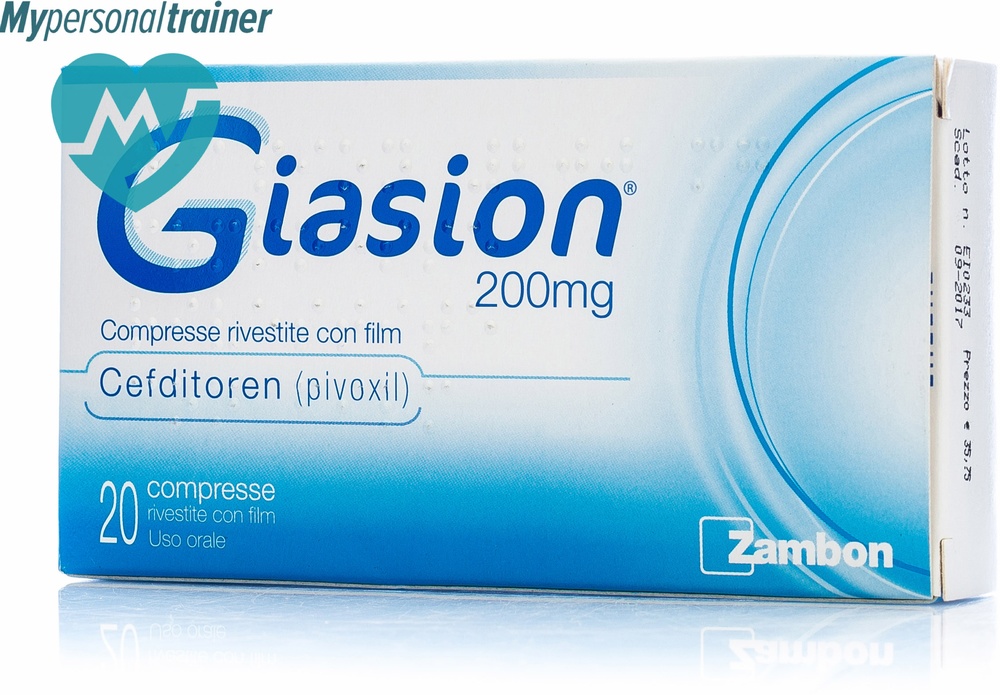
GIASION 200 mg Tabletki Powlekane

Ocena recepty online
Lekarz przeanalizuje Twój przypadek i zdecyduje, czy wystawienie recepty jest medycznie uzasadnione.

Porozmawiaj z lekarzem o tym leku
Omów swoje objawy i opcje leczenia podczas szybkiej konsultacji online.



Jak stosować JIASION
Treść ulotki
Giasion 200 mg film-coated tablets
Cefditoren (pivoxil)
Read this leaflet carefully before you start taking thismedicine because
it contains important information for you.
Keep this leaflet. You may need to read it again.
If you have any questions, ask your doctor or pharmacist.
This medicine has been prescribed for you only. Do not pass it on to others, even
if their symptoms are the same as yours, as it may be harmful.
If you get any side effects, even those not listed in this
leaflet, tell your doctor or pharmacist. See section 4.
Contents of this leaflet:
- 1. What Giasion 200 mg film-coated tablets is and what it is used for
- 2. What you need to know before you take Giasion 200 mg film-coated tablets
- 3. How to take Giasion 200 mg film-coated tablets
- 4. Possible side effects
- 5. How to store Giasion 200 mg film-coated tablets
- 6. Contents of the pack and other information
1. What is Giasion 200 mg film-coated tablets and what it is used for
Giasion belongs to a group of antibiotics called cephalosporins, which works by inhibiting
the synthesis of the bacterial cell wall.
Giasion is used in adults for the treatment of the following infections:
- Acute pharyngo-tonsillitis
- Acute maxillary sinusitis
- Acute exacerbation of chronic bronchitis
- Community-acquired pneumonia, from mild to moderate
- Uncomplicated skin and soft tissue infections, such as cellulitis, infected wounds, abscesses, folliculitis, impetigo and boils.
2. What you need to know before taking Giasion 200 mg film-coated tablets
Do not take Giasion:
- If you are allergic to antibiotics, essentially to penicillin or to any other type of beta-lactam antibiotic or to any of the other ingredients of this medicine (listed in section 6).
- If you are allergic to casein, consider that this medicine contains sodium caseinate.
- If you suffer from a disease known as primary carnitine deficiency.
Warnings and precautions
Talk to your doctor before taking Giasion:
- If you have liver and/or kidney diseases.
- If you are taking anticoagulants.
- If you have a previous history of gastrointestinal disease, in particular colitis.
- If you are receiving concomitant treatment with nephrotoxic substances such as aminoglycoside antibiotics or potent diuretics (such as furosemide) as these combinations may have undesirable effects on renal function and have been associated with ototoxicity. Consult your doctor if you experience any of the following effects during treatment:
- If you experience any allergic reaction during treatment such as: itching, redness, skin rash, swelling, or difficulty in breathing.
- If you have diarrhoea while taking this medicine or once the treatment has finished.
As with other antibiotics, prolonged treatment with Giasion may cause overgrowth of
organisms that are not susceptible, which may require discontinuation of the
treatment and administration of appropriate therapy.
Treatment with Giasion may interfere with the results of some analytical tests, it may give
false positives in:
direct Coombs test.
determination of glucose in urine.
A false negative result may be evident for:
determination of glucose in plasma or blood.
Other medicines and Giasion
Tell your doctor or pharmacist if you are taking, have recently taken or might
take any other medicines.
It is recommended to leave an interval of at least 2 hours between taking antacids and
Giasion.
If you are taking Giasion with probenecid, the levels of cefditoren in the blood increase.
It is recommended not to take Giasion with famotidine intravenously, as this may make it difficult to achieve appropriate plasma levels.
Pregnancy and breastfeeding
If you are pregnant, suspect you are pregnant, or are planning to become pregnant, or if you
are breastfeeding, ask your doctor or pharmacist for advice before taking
this medicine. It is recommended not to take Giasion during pregnancy, or
during breastfeeding.
Driving and operating machinery
Giasion may cause dizziness and drowsiness which may interfere with the ability to drive
vehicles or operate tools or machinery.
3. How to take Giasion 200 mg film-coated tablets
Take this medicine following exactly the instructions of your doctor. If you have
any doubts, ask your doctor or pharmacist. Do not forget to take your medicine. The
doctor will indicate the duration of the treatment cycle with Giasion.
The tablets must be swallowed whole, with a sufficient amount of water (one
glass of water). The tablets must be taken during meals.
The recommended dose and frequency of administration of this medicine is
indicated below:
Adults and adolescents (over 12 years)
- Acute pharyngo-tonsillitis: 1 tablet (200 mg of cefditoren) every 12 hours for 10 days.
- Acute maxillary sinusitis: 1 tablet (200 mg of cefditoren) every 12 hours for 10 days.
- Acute exacerbation of chronic bronchitis: 1 tablet (200 mg of cefditoren) every 12 hours for 5 days.
- Community-acquired pneumonia:
- in mild cases: 1 tablet (200 mg of cefditoren) every 12 hours for 14 days
- in moderate cases: 2 tablets (400 mg of cefditoren) every 12 hours for 14 days
- Uncomplicated skin or skin structure infections: 1 tablet (200 mg of cefditoren) every 12 hours for 10 days.
Use in children
The use of Giasion has not been studied in patients under 12 years of age, therefore use is
not indicated.
Elderly
No dose adjustment is necessary in the elderly, unless in cases of severe
renal and/or hepatic insufficiency.
Patients with renal impairment
No dose adjustment is necessary for patients with mild renal impairment.
In patients with moderate renal impairment, the total daily dose should not exceed
the dose of one tablet (200 mg of cefditoren) every twelve hours. In patients with severe
renal impairment, a single dose of 1 tablet (200 mg of
cefditoren) per day is recommended. The recommended dose has not been established in patients undergoing
dialysis.
Patients with hepatic impairment
No dose adjustments are necessary in patients with mild
to moderate hepatic impairment. In cases of severe hepatic impairment, no data are available to
establish a recommended dose.
If you take more Giasion than you should
If you take more Giasion than you have been recommended, inform your
doctor or pharmacist immediately.
If you forget to take Giasion
If you forget to take a dose, take the next dose as soon as possible and then continue
as usual according to the therapeutic plan. Do not take a double dose to
compensate for the missed individual dose.
If you stop taking Giasion
Complete the entire treatment cycle as there is a risk that the disease will
recur.
4. Possible side effects
Like all medicines, this medicine can cause side effects, although not everyone will experience them.
The side effects that may occur are mainly related to the gastrointestinal system.
Very common (more than 1 in 10 users): diarrhea.
Common (from 1 to 10 users in 100): headache, nausea, abdominal pain, feeling of
indigestion, vaginal infection.
Uncommon (from 1 to 10 users in 1000):
- Fungal infections
- Anorexia
- Nervousness, dizziness and sleep disturbances
- Pharyngitis, rhinitis and sinusitis
- Constipation, flatulence, vomiting, oral candidiasis, belching, dry mouth and loss of taste
- Alteration of liver function
- Skin rash, itching and urticaria
- Vaginal inflammation and vaginal discharge
- Fever, weakness and sweating
- Changes in blood cell counts (leukopenia, thrombocytocytosis), changes in liver function tests (elevated ALT levels) have been observed.
Rare (from 1 to 10 users in 10,000):
- Hemolytic anemia and alteration of lymph nodes
- Dehydration
- Dementia, depersonalization, emotional weakness, euphoria, hallucinations, increased libido
- Memory loss, lack of coordination, hypertonia, meningitis and tremor
- Photosensitivity, loss of visual acuity, eye pain and inflammation of the eyelids
- Tinnitus
- Alteration of heart rate, heart failure and fainting
- Lowering of blood pressure
- Asthma
- Mouth ulcers, hemorrhagic colitis, stomatitis, ulcerative colitis, gastrointestinal bleeding, hiccups, inflammation and discoloration of the tongue, diarrhea associated with Clostridium difficile
- Acne, alopecia, eczema, exfoliative dermatitis (cracking and scaling of the skin) and herpes simplex
- Muscle pain
- Painful urination, kidney inflammation, alteration in urination frequency, incontinence and urinary infection
- Breast pain, menstrual disorders and erectile dysfunction
- Body odor and chills
- Changes in the number of blood cells (eosinophilia, neutropenia, thrombocytopenia), coagulation disorders (prolongation in coagulation times, reduction in thromboplastin time, alteration of platelets), changes in liver function tests (elevated AST levels, alkaline phosphatase), changes in the values of some blood components (hyperglycemia, hypokalemia, bilirubinemia, elevated LDH, hypoproteinemia, increased creatinine) or urine (albuminuria) have been observed.
Not known
- Pneumonia
- Stevens-Johnson syndrome (formation of blisters and erosion of the skin and mucous membranes)
- Skin redness
- Toxic epidermal necrolysis (a severe form of Stevens-Johnson syndrome followed by painful skin and detachment of the upper layer of the skin)
- Acute renal failure
- Anaphylactic shock
- Serum sickness (a delayed allergic skin reaction)
- Decreased number of blood cells (agranulocytosis)
- Decreased carnitine levels in the blood
- Cholestasis (the flow of bile from the liver is blocked)
- Aplastic anemia (decreased number of blood cells)
- Liver damage
- Hepatitis
Reporting of side effects
If you experience any side effects, including those not listed in this
leaflet, please inform your doctor or pharmacist. You can also report side effects
directly through the national reporting system at:
www.agenziafarmaco.gov.it/it/responsabili. By reporting side effects you can
contribute to providing more information on the safety of this medicine.
5. How to store Giasion 200 mg film-coated tablets
Keep this medicine out of the sight and reach of children.
Store in the original package.
Do not store at a temperature above 30°C.
Do not use this medicine after the expiry date which is stated on the pack. The expiry date refers to the last day of that month.
Do not dispose of any medicine in wastewater or household waste. Ask your
pharmacist how to dispose of medicines you no longer use. This will help to protect
the environment.
6. Contents of the pack and other information
What Giasion 200 mg film-coated tablets contain
- The active ingredient is cefditoren. Each tablet contains 200 mg of cefditoren (as cefditoren pivoxil).
- The other components are core: Sodium caseinate, Croscarmellose sodium, Mannitol E421, Sodium tripolyphosphate and Magnesium stearate; coating: Opadry Y-1-7000 (Hypromellose, Titanium dioxide E 171, Macrogol
- 400) and Carnauba wax; OPAQUE BLUE INK S-1-20986:Shellac, Brilliant blue lacquer, Titanium dioxide E 171, Propylene glycol and Concentrated ammonia solution.
Description of the appearance of Giasion and contents of the pack
Giasion 200 mg are film-coated tablets. Each pack contains 16, 20 or 500
tablets. Not all pack sizes may be marketed.
Marketing Authorisation Holder
ZAMBON ITALIA s.r.l.
Via Lillo del Duca 10
20091 Bresso (MI)
Manufacturer
TEDEC-MEIJI FARMA S.A.
Carretera M-300, km 30,500
28802 Alcalá de Henares – Madrid, SPAIN
Giasion 400 mg film-coated tablets
Cefditoren (pivoxil)
Read this leaflet carefully before you start taking this medicine because
it contains important information for you.
Keep this leaflet. You may need to read it again.
If you have any questions, ask your doctor or pharmacist.
This medicine has been prescribed for you only. Do not pass it on to others, even
if they have the same symptoms as you, as it may be harmful.
If you get any side effects, even those not listed in this
leaflet, tell your doctor or pharmacist. See section 4.
Contents of this leaflet:
- 1. What Giasion 400 mg film-coated tablets is and what it is used for
- 2. What you need to know before you take Giasion 400 mg film-coated tablets
- 3. How to take Giasion 400 mg film-coated tablets
- 4. Possible side effects
- 5. How to store Giasion 400 mg film-coated tablets
- 6. Contents of the pack and other information
1. What is Giasion 400 mg film-coated tablets and what is it used for
Giasion belongs to a group of antibiotics called cephalosporins, which works by inhibiting
the synthesis of the bacterial cell wall.
Giasion is used for the treatment of moderate cases of community-acquired pneumonia
in adult patients.
2. What you need to know before you take Giasion 400 mg film-coated tablets
Do not take Giasion:
- If you are allergic to antibiotics, essentially to penicillin or any other type of beta-lactam antibiotic or to any of the other ingredients of this medicine (listed in section 6).
- If you are allergic to casein, consider that this medicine contains sodium caseinate.
- If you suffer from a disease known as primary carnitine deficiency.
Warnings and precautions
Talk to your doctor before taking Giasion:
- If you have liver and/or kidney disease
- If you are taking anticoagulants
- If you have a previous history of gastrointestinal disease, in particular colitis
- If you are receiving concomitant treatment with nephrotoxic substances such as aminoglycoside antibiotics or potent diuretics (such as furosemide) as these combinations may have undesirable effects on renal function and have been associated with ototoxicity.
Consult your doctor if you experience any of the following effects during treatment:
- If you experience any allergic reaction during treatment such as: itching, redness, skin rash, swelling, or difficulty breathing.
- If you have diarrhea while taking this medicine or after finishing the treatment.
As with other antibiotics, prolonged treatment with Giasion may cause an overgrowth
of microorganisms that are not susceptible, which may require discontinuation of
treatment and administration of appropriate therapy.
Treatment with Giasion may interfere with the results of some analytical tests, may give
false positives in:
direct Coombs test
glucose determination in urine
A false negative result may be evident for:
- glucose determination in plasma or blood.
Other medicines and Giasion
Tell your doctor or pharmacist if you are taking, have recently taken or might
take any other medicines.
It is recommended to leave at least a 2-hour period between taking antacids and
Giasion.
If you take Giasion with probenecid, the levels of cefditoren in the blood increase.
It is recommended not to take Giasion with intravenous famotidine, as this may make it difficult to achieve appropriate plasma levels.
Pregnancy and breastfeeding
If you are pregnant, suspect you are pregnant or are planning to become pregnant, or if you
are breastfeeding, ask your doctor or pharmacist for advice before taking
this medicine.
It is recommended not to take Giasion during pregnancy or breastfeeding.
Driving and using machines
Giasion may cause dizziness and drowsiness that may interfere with the ability to drive
vehicles or use tools or machinery.
Giasion contains sodium
Giasion 400 mg film-coated tablets contains approximately 26.2 mg of sodium per dose.
This must be taken into consideration by patients on a controlled sodium diet.
3. How to take Giasion 400 mg film-coated tablets
Take this medicine following exactly the instructions of your doctor. If you have
any doubts, ask your doctor or pharmacist. Do not forget to take your medicine. Your
doctor will indicate the duration of the treatment cycle with Giasion.
The tablets must be swallowed whole, with a sufficient amount of water (one
glass of water). The tablets must be taken during meals.
The recommended dose and frequency of administration of this medicine is
indicated below:
Adults and adolescents (over 12 years)
It is recommended 1 tablet (400 mg of cefditoren) every 12 hours for 14 days.
Use in children
The use of Giasion has not been studied in patients under 12 years of age, therefore its use is not
indicated.
Elderly
In the elderly, no dose adjustment is necessary, unless in case of severe
renal and/or hepatic insufficiency.
Patients with renal impairment
No dose adjustment is necessary for patients with mild renal impairment.
In patients with moderate renal impairment, the total daily dose should not exceed
a dose of 200 mg of cefditoren (Giasion 200 mg) every 12 hours. In patients with severe
renal impairment, a single daily dose of 200 mg of cefditoren
(Giasion 200 mg) is recommended. The recommended dose has not been established in patients undergoing
dialysis.
Patients with hepatic impairment
No dose adjustments are necessary in patients with mild
to moderate hepatic impairment. In case of severe hepatic impairment, no data are available to allow
to establish a recommended dose.
If you take more Giasion than you should
If you take more Giasion than you have been recommended, inform your
doctor or pharmacist immediately.
If you forget to take Giasion
If you forget to take a dose, take the next dose as soon as possible and then continue
as usual according to the therapeutic plan. Do not take a double dose to
make up for the missed dose.
If you stop taking Giasion
Complete the entire treatment cycle as there is a risk that the disease will
recur.
4. Possible side effects
Like all medicines, this medicine can cause side effects, although not everyone will experience them.
The side effects that may occur are mainly related to the gastrointestinal system.
Very common (more than 1 in 10 users): diarrhea.
Common (from 1 to 10 users in 100): headache, nausea, abdominal pain, feeling of
indigestion, vaginal infection.
Uncommon (from 1 to 10 users in 1000):
- Fungal infections
- Anorexia
- Nervousness, dizziness and sleep disturbances
- Pharyngitis, rhinitis and sinusitis
- Constipation, flatulence, vomiting, oral candidiasis, belching, dry mouth and loss of taste
- Alteration of liver function
- Skin rash, itching and urticaria
- Vaginal inflammation and vaginal discharge
- Fever, weakness and sweating
- Changes in blood cell count (leukopenia, thrombocytocytosis), changes in liver function tests (elevated ALT levels) have been observed.
Rare (from 1 to 10 users in 10,000):
- Hemolytic anemia and altered lymph nodes
- Dehydration
- Dementia, depersonalization, emotional weakness, euphoria, hallucinations, increased libido
- Memory loss, lack of coordination, hypertonia, meningitis and tremor
- Photosensitivity, loss of visual acuity, eye pain and eyelid inflammation
- Tinnitus
- Alteration of heart rhythm, heart failure and fainting
- Lowering of blood pressure
- Asthma
- Mouth ulcers, hemorrhagic colitis, stomatitis, ulcerative colitis, gastrointestinal bleeding, hiccups, inflammation and discoloration of the tongue, diarrhea associated with Clostridium difficile
- Acne, alopecia, eczema, exfoliative dermatitis (cracking and scaling of the skin) and herpes simplex
- Muscle pain
- Pain when urinating, kidney inflammation, changes in urination frequency, incontinence and urinary tract infection
- Breast pain, menstrual disorders and erectile dysfunction
- Body odor and chills
- Changes in the number of blood cells (eosinophilia, neutropenia, thrombocytopenia), coagulation disorders (prolongation in coagulation times, reduction in thromboplastin time, alteration of platelets), changes in liver function tests (elevated AST levels, alkaline phosphatase), changes in the values of some blood components (hyperglycemia, hypokalemia, bilirubinemia, elevated LDH, hypoproteinemia, increased creatinine) or urine (albuminuria) have been observed.
Not known
- Pneumonia
- Stevens-Johnson syndrome (formation of blisters and erosion of the skin and mucous membranes)
- Skin redness
- Toxic epidermal necrolysis (a severe form of Stevens Johnson syndrome followed by painful skin and detachment of the upper layer of skin)
- Acute renal failure
- Anaphylactic shock
- Serum sickness (a delayed allergic skin reaction)
- Decreased number of cells in the blood (agranulocytosis)
- Decreased carnitine values in the blood
- Cholestasis (the flow of bile from the liver is blocked)
- Aplastic anemia (decreased number of blood cells)
- Liver damage
- Hepatitis
Reporting of side effects
If you experience any side effects, including those not listed in this
leaflet, please inform your doctor or pharmacist. You can also report side effects
directly through the national reporting system at:
www.agenziafarmaco.gov.it/it/responsabili. By reporting side effects you can
contribute to providing more information on the safety of this medicine.
5. How to store Giasion 400 mg film-coated tablets
Keep this medicine out of the sight and reach of children.
Store in the original package.
Do not store at a temperature above 30°C.
Do not use this medicine after the expiry date which is stated on the pack. The expiry date refers to the last day of that month.
Do not dispose of any medicine in wastewater or household waste. Ask your
pharmacist how to dispose of medicines you no longer use. This will help protect
the environment.
6. Contents of the pack and other information
What Giasion 400 mg film-coated tablets contain
- The active ingredient is cefditoren. Each tablet contains 400 mg of cefditoren (as cefditoren pivoxil).
- The other ingredients are core: Sodium caseinate, Croscarmellose sodium, Mannitol E421, Sodium Tripolyphosphate and Magnesium stearate; coating: Opadry Y-1-7000 (Hypromellose, Titanium dioxide E 171, Macrogol 400) and Carnauba wax; Opacode S-1-20986 blue ink:Shellac, Brilliant blue lacquer, Titanium dioxide E 171, Propylene glycol and concentrated ammonia solution.
Description of the appearance of Giasion and contents of the pack
Giasion 400 mg are film-coated tablets. Each pack contains 10 or 500
tablets. Not all pack sizes may be marketed.
Marketing Authorisation Holder
ZAMBON ITALIA s.r.l.
Via Lillo del Duca 10
20091 Bresso (MI)
Manufacturer
TEDEC-MEIJI FARMA S.A.
Carretera M-300, km 30,500
28802 Alcalá de Henares – Madrid, SPAIN

Nie jesteś pewien, czy ten lek jest odpowiedni dla ciebie?
Omów swoje objawy i leczenie z lekarzem online.

Zacząłeś przyjmować lek i masz pytania?
Omów swoje objawy i leczenie z lekarzem online.
- Kraj rejestracji
- Postać farmaceutycznaFilm-coated tablet, 200 MG
- Kod ATCJ01DD16
- Substancja czynna
- Wymaga receptyTak
- Producent
- Te treści mają charakter wyłącznie informacyjny i nie zastępują konsultacji lekarskiej.
- Zamienniki JIASIONPostać farmaceutyczna: Film-coated tablet, 200 MGSubstancja czynna: cefditorenProducent: ZAMBON ITALIA S.R.L.Wymaga receptyPostać farmaceutyczna: Powder and solvent for injectable solution, 2G/10 MLSubstancja czynna: cefotaximeWymaga receptyPostać farmaceutyczna: Powder and solvent for injectable solution, 1 G /3,5 MLSubstancja czynna: ceftriaxoneProducent: LANOVA FARMACEUTICI S.R.L.Wymaga recepty
Odpowiedniki JIASION w innych krajach
Leki z tą samą substancją czynną dostępne w innych krajach.
Odpowiednik JIASION w Ukraina
Odpowiednik JIASION w Hiszpania
Lekarze online w sprawie JIASION
Omów stosowanie JIASION, bezpieczeństwo i ocenę zasadności recepty zgodnie z obowiązującymi przepisami.









Uzyskaj receptę na JIASION online
Wypełnij 2-minutowy formularz
Opisz swoje objawy, historię choroby i lek, o który prosisz.
Wybierz lekarza lub pozwól nam przydzielić
Wybierz specjalistę lub dopasujemy Cię do najbliższego dostępnego lekarza.
Lekarz analizuje Twój przypadek
Zazwyczaj w ciągu 30 minut. Może zadawać dodatkowe pytania przez czat.
Odbierz w dowolnej aptece
Recepta elektroniczna wysłana na Twój e-mail — ważna w całej Polsce.
Często zadawane pytania
JIASION wymaga recepty w Włochy. Możesz skonsultować się z lekarzem online, aby sprawdzić, czy ten lek może być odpowiedni w Twojej sytuacji.
Substancją czynną w JIASION jest cefditoren. Informacja ta pomaga rozpoznać leki o tym samym składzie, ale pod różnymi nazwami handlowymi.
JIASION jest produkowany przez ZAMBON ITALIA S.R.L.. Nazwy handlowe i opakowania mogą się różnić w zależności od dystrybutora.
Lekarze, tacy jak Lekarze rodzinni, Psychiatrzy, Dermatolodzy, Kardiolodzy, Endokrynolodzy, Gastroenterolodzy, Pulmonolodzy, Nefrolodzy, Reumatolodzy, Hematolodzy, Zakaźnicy, Alergolodzy, Geriatrzy, Pediatrzy, Onkolodzy, mogą ocenić, czy stosowanie JIASION jest odpowiednie w Twoim przypadku, w zależności od sytuacji klinicznej i lokalnych przepisów. Możesz umówić konsultację online, aby omówić objawy i możliwe dalsze kroki.
Polska posiada dobrze rozwiniętą infrastrukturę ochrony zdrowia w dużych miastach, takich jak Warszawa, Kraków, Wrocław i Gdańsk. Apteki są łatwo dostępne i działają zgodnie z obowiązującymi przepisami, zapewniając dostęp do leków na receptę.
Możesz kupić JIASION w Warszawie, Krakowie, Wrocławiu lub Gdańsku w każdej aptece, posiadając ważną receptę.
Aby uzyskać receptę, możesz skorzystać z Oladoctor:
Inne leki zawierające tę samą substancję czynną (cefditoren) to m.in. REDEGUAN, BATIXIM, BIXON. Mogą one różnić się nazwą handlową lub postacią, ale zawierają ten sam składnik terapeutyczny. Przed zmianą lub rozpoczęciem nowego leku skonsultuj się z lekarzem.
