



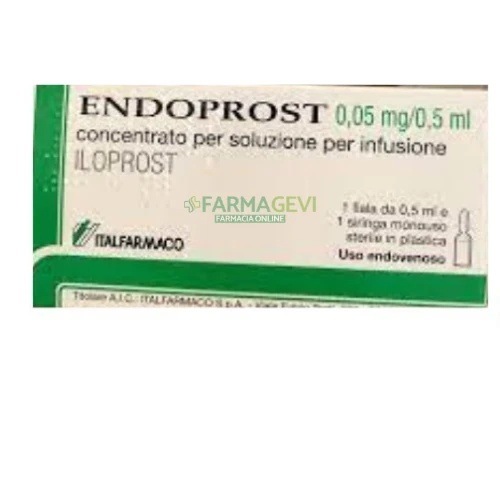
ENDOPROST 0.1 MG/1 ML Концентрат для инфузионного раствора

Рассмотрение рецепта онлайн
Врач рассмотрит ваш случай и примет решение о назначении рецепта, если это медицински оправдано.

Поговорите с врачом об этом лекарстве
Обсудите симптомы и возможные дальнейшие шаги на онлайн-консультации.



Инструкция по применению ENDOPROST
Содержание инструкции
- Endoprost 0.05 mg/0.5 ml concentrate for infusion solution
- Endoprost 0.1 mg/1 ml concentrate for solution for infusion
Endoprost 0.05 mg/0.5 ml concentrate for infusion solution
Iloprost
Read this leaflet carefully before you are given this medicine
because it contains important information for you.
- Keep this leaflet. You may need to read it again.
- If you have any questions, ask your doctor, pharmacist or nurse.
- This medicine has been prescribed for you only. Do not pass it on to others, even if they have the same symptoms as you, as it may be harmful.
- If any side effects occur, including any not listed in this leaflet, tell your doctor, pharmacist or nurse. See section 4.
Contents of this leaflet:
- 1. What Endoprost is and what it is used for
- 2. What you need to know before you are given Endoprost
- 3. How Endoprost is used
- 4. Possible side effects
- 5. How to store Endoprost
- 6. Contents of the pack and other information
1. What Endoprost is and what it is used for
Endoprost contains the active ingredient iloprost, a substance that belongs to a group of medicines
called “antiplatelet agents”. It is a synthetic analogue of a substance normally present
in the body (prostacyclin) and exerts numerous actions including the inhibition of blood
coagulation when there is a risk of thrombosis and embolisms in the veins or arteries, a dilation of
small blood vessels and a stimulation of the physiological mechanisms that dissolve blood
clots (thrombi).
Endoprost is used for:
the treatment of thromboangiitis obliterans (Buerger's disease) in an advanced stage with
critical limb ischemia when revascularization surgery is not indicated. Thromboangiitis obliterans is an inflammatory disease of the small and medium arteries and
veins of the extremities (hands and feet).
the treatment of Raynaud's phenomenon (extreme constriction of the blood vessels in the fingers of the
hands and feet) secondary to scleroderma (a chronic autoimmune disease that causes
hardening and thickening of the skin).
the treatment of severe chronic arterial ischemia (severe reduction of blood flow) of the
lower limbs, in patients at risk of amputation and when surgery or
angioplasty (a procedure that allows for the dilation of a narrowing of a blood vessel) is not indicated.
2. What you need to know before you are given Endoprost
You must not be given Endoprost
if you are allergic to iloprost or any of the other ingredients of this medicine (listed in section 6);
if you are pregnant;
if you are breastfeeding;
if you are at risk of bleeding, for example if you have an active peptic ulcer, trauma,
bleeding inside the skull;
if there is suspicion of pulmonary congestion.
if you have a heart problem, such as:
- if you suffer from poor blood flow to the heart muscle, such as severe coronary artery disease or unstable angina (the symptom may be chest pain);
- if you have had a heart attack (myocardial infarction) in the last six months;
- if you have a weak heart (acute or chronic congestive heart failure in classes designated NYHA II to IV);
- if you suffer from severe or prognostically relevant heart rhythm disturbances (arrhythmias).
Warnings and precautions
Talk to your doctor or nurse before you are given Endoprost.
Pay particular attention if one of the following applies to you:
if you need urgent amputation (e.g. in case of infected gangrene);
if you smoke. It is strongly recommended that you do not smoke during treatment with Endoprost.
if you have low blood pressure; in this case you should pay particular attention to
avoid further drops in blood pressure.
if you have a serious heart condition. In this case, you should be carefully monitored by
the doctor.
if you experience dizziness when you stand up (orthostatic hypotension). You should get up slowly in order to
help your body adjust to its new position.
if you have had a severe stroke (transient ischemic attack, cerebrovascular accidents) in the
last 3 months (see You must not be given Endoprost); the doctor will carefully evaluate
the benefit-risk ratio.
Infusion of the concentrated solution outside the vessels can cause local changes at the site of
injection.
Avoid oral administration and contact with skin and mucous membranes. If contact with the skin occurs,
Endoprost can cause persistent redness of the skin (erythema), without pain. If the
medicine comes into contact with the skin, wash the affected area immediately and thoroughly with water or
saline solution.
For athletes: the use of medicines containing ethyl alcohol may result in a positive
doping test in relation to the blood alcohol concentration limits specified by some sports
federations.
Children and adolescents
Currently, only sporadic data are available on use in children and adolescents.
Other medicines and Endoprost
Tell your doctor or pharmacist if you are taking, have recently taken or might take
any other medicines, including those you bought without a prescription or dietary supplements.
Endoprost can affect how other medicines work. Conversely, some medicines can
affect how Endoprost works.
In particular, talk to your doctor if you are taking:
medicines used to treat high blood pressure (antihypertensives) or heart
disease (such as beta-blockers, calcium channel blockers, vasodilators and ACE inhibitors). Your
blood pressure may drop further, so the doctor may adjust the dose of
Endoprost.
medicines that thin the blood (anticoagulants and antithrombotics) that prevent
blood clotting such as heparin, coumarin-like anticoagulants, acetylsalicylic acid or
other non-steroidal anti-inflammatory drugs, phosphodiesterase inhibitors and nitro-vasodilators, for
example molsidomine. It may increase the risk of bleeding. If you start to bleed, the
treatment with Endoprost must be stopped.
Endoprost with alcohol
As with all medicines, simultaneous intake of alcohol should be avoided.
Fertility, pregnancy and breastfeeding
If you are pregnant, suspect you may be pregnant, are planning to become pregnant, or are
breastfeeding, ask your doctor for advice before you are given this medicine.
Pregnancy
Endoprost must not be given during pregnancy (see “You must not be given Endoprost”).
There are no adequate data on the use of this medicine in pregnant women. As the potential risk
of using Endoprost during pregnancy is unknown, if you are of childbearing potential, use adequate
contraceptive methods during treatment.
Breastfeeding
It is not known whether the medicine passes into breast milk. You must not be given Endoprost if you are
breastfeeding (see “You must not be given Endoprost”).
Driving and using machines
Not applicable.
Endoprost contains sodium and ethanol
This medicine contains less than 1 mmol (23 mg) of sodium per dose, i.e. it is practically “sodium-free”.
This medicine contains small amounts of ethanol (alcohol) less than 100 mg per dose.
3. How Endoprost is used
Use this medicine following the instructions of your doctor or pharmacist exactly. If you have any
doubts, consult your doctor or pharmacist.
The doctor or nurse will administer Endoprost in hospital and adequately
equipped clinics, under strict supervision.
If you are a woman of childbearing potential, the possibility of an ongoing pregnancy must be excluded before
treatment.
The recommended dose is:as prescribed by your doctor.
The medicine is administered through a vein, in a daily infusion for 6 hours.
The duration of treatment is 4 weeks.
Shorter periods of treatment (from 3 to 5 days) are often sufficient in Raynaud's phenomenon to
obtain improvement for several weeks.
Blood pressure and
heart rate will be measured at the beginning of the infusion and after each dose increase.
Use in patients with renal insufficiency, dialysis or hepatic cirrhosis:
A dose adjustment is necessary (e.g. half the recommended dose).
If you are given more Endoprost than you should
Since Endoprost will be administered by a doctor or nurse, it is therefore unlikely
to receive too much medicine.
However, if you think you have been given an excessive dose of Endoprost, contact
your doctor or nurse immediately. Symptoms that may occur are: low blood
pressure (hypotensive reaction), headache, flushing, nausea, vomiting and diarrhoea. An increase in blood pressure, slowed (bradycardia) or accelerated
(tachycardia) heartbeat, pain in the limbs or back, sudden paleness, sweating and stomach pain are also possible.
There is no known specific antidote.
In case of overdose, it is recommended to discontinue the administration of Endoprost, monitor and treat the symptoms.
If you forget to receive Endoprost
You should not receive a double dose to make up for missing a dose.
If you have any doubts about the use of this medicine, ask your doctor or nurse.
4. Possible side effects
Like all medicines, this medicine can cause side effects, although not everybody gets them.
The most frequently observed adverse reactions are headache, skin redness
(flushing), nausea, vomiting and excessive sweating (hyperhidrosis).
These side effects are likely to occur during dose adjustment at the beginning of
treatment to identify the best tolerable dose for each patient. However, all these side
effects disappear quickly by reducing the dose.
Overall, the more serious adverse reactions are stroke (cerebrovascular accident), heart attack (myocardial infarction), blood clots in the lungs (pulmonary embolism), cardiac arrest,
seizures, low blood pressure (hypotension), fast heartbeat (tachycardia), asthma,
chest pain (angina pectoris), difficulty breathing (dyspnea) and fluid accumulation in the lungs
(pulmonary edema).
Another group of side effects relates to local reactions at the infusion site. For example,
redness and pain may appear at the infusion site or cutaneous vasodilation which may
lead to the appearance of superficial streaked redness along the course of the vein.
Very common(may affect more than 1 in 10 patients)
- headache
- redness
- nausea and vomiting,
- excessive sweating (hyperhidrosis)
Common(may affect up to 1 in 10 patients)
- loss of appetite
- apathy (lack of emotions, motivation or enthusiasm)
- confusional state
- dizziness and vertigo,
- altered sensitivity (paresthesia)
- pulsating sensation,
- increased skin sensitivity (hyperesthesia)
- burning sensation
- restlessness
- agitation
- sedation
- drowsiness
- fast heartbeat (tachycardia*)
- slow heartbeat (bradycardia)
- chest pain (angina pectoris*)
- low blood pressure (hypotension*)
- increased blood pressure (hypertension)
- difficulty breathing (dyspnea*)
- diarrhea,
- abdominal discomfort/abdominal pain
- jaw pain, jaw spasms (trismus)
- muscle pain (myalgia)
- joint pain (arthralgia)
- pain, fever (pyrexia), increased body temperature, feeling of warmth
- weakness (asthenia), malaise
- chills, fatigue, tiredness
- thirst
- reaction at the infusion site (redness, pain or inflammation of the vein)
Uncommon(may affect up to 1 in 100 patients)
- reduced number of platelets in the blood (thrombocytopenia)
- excessive allergic-type sensitivity (hypersensitivity)
- anxiety, depression, hallucinations
- seizures*, fainting or temporary loss of consciousness (syncope), tremor, one-sided headache (migraine)
- blurred vision, eye irritation, eye pain
- heart attack (myocardial infarction*), cardiac arrest*, irregular heartbeat (arrhythmia or extrasystole)
- stroke (cerebrovascular accident*) or reduced blood flow to the brain (cerebral ischemia),
- blood clots in the lungs (pulmonary embolism*), blood clots in the leg veins (deep vein thrombosis)
- asthma*, fluid accumulation in the lungs (pulmonary edema*)
- diarrhea with blood in the stool (hemorrhagic diarrhea), rectal bleeding, indigestion (dyspepsia), rectal tenesmus (painful spasm of the anus accompanied by an urgent need to defecate), constipation
- eructation, difficulty swallowing (dysphagia), dry mouth
- altered taste (dysgeusia)
- yellowing of the skin, mucous membranes and whites of the eyes due to liver disorders (jaundice)
- itching
- muscle cramps (tetany), muscle spasms, increased muscle tension (hypertonia)
- kidney pain, painful urination, abnormal urine, difficulty urinating (dysuria), urinary tract disorders
Rare(may affect up to 1 in 1,000 patients)
- vestibular disorders (part of the ear responsible for balance)
- cough
- inflammation of the rectum (proctitis)
* fatal and/or life-threatening cases have been reported
Endoprost may cause chest pain due to angina pectoris, especially in patients who
suffer from poor blood flow to the heart muscle (coronary artery disease).
The risk of bleeding is greater in patients who are concurrently administered
medicines that thin the blood (antiplatelet agents, heparin or coumarin-like anticoagulants) (see “Other medicines and Endoprost”).
Reporting of side effects
If you get any side effects, talk to your doctor, pharmacist or nurse. This includes any side effects not listed in this leaflet. You can also report side effects directly
through the national reporting system at
http://www.agenziafarmaco.gov.it/it/responsabili . By reporting side effects you can help provide more
information on the safety of this medicine.
5. How to store Endoprost
Keep this medicine out of the sight and reach of children.
Do not use this medicine after the expiry date which is reported on the pack after the wording
“EXP”. The expiry date refers to the last day of that month.
Do not dispose of any medicine in the wastewater or household waste. Ask your pharmacist how to
dispose of medicines you no longer use. This will help protect the environment.
6. Contents of the pack and other information
What Endoprost contains
- The active ingredient is iloprost. Each vial of 0.5 ml contains 0.067 mg (67 micrograms) of iloprost trometamol equivalent to 0.050 mg (50 micrograms) of iloprost.
- The other ingredients are: trometamol, ethanol 96 % (v/v), sodium chloride, hydrochloric acid (1N), water for injections.
Description of the appearance of Endoprost and contents of the pack
Endoprost is presented as a solution for infusion.
The pack contains 1 vial of 0.5 ml, concentrate for solution for infusion 0.050 mg.
Marketing Authorisation Holder
Italfarmaco S.p.A. - Viale F. Testi, 330 – 20126 Milan
Manufacturer
Berlimed SA - Alcalà de Henares, Madrid (Spain)
- - - - - - - - - - - - - - - - - - - - - - - - - - - - - - - - - - - - - - - - - - - - - - - - - - - - - - - - - - - - - - - The following information is intended exclusively for doctors or healthcare professionals:
Other medicines and Endoprost
In healthy volunteers, pretreatment with oral acetylsalicylic acid up to 300 mg per day for a period
of 8 days does not impact on the pharmacokinetic Clearance (mL/min/Kg) of iloprost.
In a study conducted on animals, it has been shown that iloprost can lead to a reduction in the
plasma concentration of t-PA at steady state.
The results of studies conducted on patients demonstrate that infusions of iloprost do not have effects on the
pharmacokinetics of digoxin in patients treated with multiple oral doses and that iloprost does not impact
on the pharmacokinetics of co-administered t-PA.
In studies conducted on animals, the vasodilating effect of iloprost was found to be reduced following
pretreatment with glucocorticoids, while the activity on platelet aggregation remained unchanged.
The significance of this observation in clinical use is not yet known.
Although clinical studies have not been conducted, in vitro studies to evaluate the potential inhibitory effect of
iloprost on the activity of cytochrome P450 enzymes have shown that a relevant
inhibition of drug metabolism mediated by these enzymes by iloprost is not expected.
Dosage and method of administration
Endoprost must be administered, after dilution, as an intravenous infusion for 6 hours a day,
into a peripheral vein or via a catheter into a central vein.
The ready-to-use infusion solution must be prepared daily to ensure its
sterility.
- Instructions for dilution The contents of the vial and the diluent must be mixed thoroughly.
Dilution of Endoprost for use with an infusion pump
For this purpose, the contents of a 0.5 ml vial of ENDOPROST (i.e. 50 mcg) are diluted with
250 ml of sterile saline or 5% glucose solution.
Dilution of Endoprost for use with a syringe pump
In this case, the contents of a 0.5 ml vial of ENDOPROST (i.e. 50 mcg) are diluted with 25
ml of sterile saline or 5% glucose solution.
The dose must be adjusted based on the individual patient's tolerability within a
range of infusion between 0.5 and 2 ng of iloprost/kg/min for the duration of 6 hours daily.
The infusion solution must be prepared daily to ensure its sterility.
The contents of the vial and the diluent must be mixed thoroughly.
At the beginning of the infusion and after each dose increase, arterial pressure and
heart rate must be measured.
In the first 2-3 days of treatment, the maximum tolerated dose must be sought individually. To this end, the infusion is started at a rate of 0.5 ng/kg/min for 30 min.
Further increments of 0.5 ng/kg/min every 30 minutes up to a maximum of 2.0
ng/kg/min are then possible. The exact infusion rate must be calculated based on body weight to
carry out an infusion within the range of 0.5 to 2.0 ng/kg/min (see tables below for
use with an infusion pump or for use with a syringe pump).
In the event of side effects such as headache, nausea or a drop in blood pressure, the
infusion rate must be reduced until the tolerated dose is reached. If the side effects are severe, the infusion must be stopped.
After establishing the individual dose in the first 2-3 days, this will be maintained for the entire duration of the
treatment cycle (usually for 4 weeks).
There are two different dilutions of the contents of a vial depending on the infusion technique used. One
of these dilutions is 10 times less concentrated than the other (0.2 mcg/ml versus 2 mcg/ml) and can be
administered only with an infusion pump (e.g. Infusomat). Conversely, the more
concentrated solution is administered with a syringe pump (e.g. Infonde or Perfusor).
Infusion rate (ml/hour) for different doses using an infusion pump.
In general, the ready-to-use infusion solution is infused intravenously by means of
an infusion pump (e.g. Infusomat). For instructions for dilution for use with the infusion pump see above.
In the case of a concentration of ENDOPROST of 0.2 mcg/ml, the required infusion rate must be
determined according to the scheme below to obtain a dose in the range between 0.5
and 2.0 ng/kg/min.
The following table can be used to calculate the corresponding infusion rate for the individual patient's weight and the dose to be infused. Identify the patient's actual weight,
then adjust the infusion rate to the dose in ng/kg/min.
Body
weight
(kg)
Dose (ng/kg/min)
Infusion rate (ml/hour)
40 6.0 12 18.0 24
50 7.5 15 22.5 30
60 9.0 18 27.0 36
70 10.5 21 31.5 42
80 12.0 24 36.0 48
90 13.5 27 40.5 54
100 15.0 30 45.0 60
110 16.5 33 49.5 66
Infusion rate (ml/hour) for different doses for use with a syringe pump
A syringe pump with a graduated syringe up to 25.5 ml (e.g. Infonde) or
even with a 50 ml syringe (e.g. Perfusor) can also be used. For instructions for dilution
for use with a syringe pump see above.
In the case of a concentration of ENDOPROST of 2 mcg/ml, the required infusion rate must be
determined according to the scheme below to obtain a dose in the range between 0.5
and 2.0 ng/kg/min.
The following table can be used to calculate the corresponding infusion rate for the individual patient's weight and the dose to be infused. Identify the patient's actual weight,
then adjust the infusion rate to the dose in ng/kg/min.
Dose (ng/kg/min)
Infusion rate (ml/hour)
40 0.60 1.2 1.80 2.4
50 0.75 1.5 2.25 3.0
60 0.90 1.8 2.70 3.6
70 1.05 2.1 3.15 4.2
80 1.20 2.4 3.60 4.8
90 1.35 2.7 4.05 5.4
100 1.50 3.0 4.50 6.0
110 1.65 3.3 4.95 6.6
The duration of treatment should not exceed 4 weeks.
The safety and efficacy of treatment lasting longer than 4 weeks or repeated treatment cycles have not been established.
Shorter periods of treatment (3 to 5 days) are often sufficient in Raynaud's phenomenon to
obtain improvement for several weeks.
Continuous infusion for more days is not recommended due to the possible development of tachyphylaxis in
relation to the effect on platelets and the possibility of a "rebound" platelet hyperaggregability at the
end of treatment, although no clinical complications associated with these phenomena have ever been observed.
- Patients with renal or hepatic insufficiency It should be taken into consideration that, in patients with renal insufficiency undergoing dialysis and in those with hepatic cirrhosis, the elimination of iloprost is reduced. In these patients, a dose reduction is necessary (e.g. half the recommended dose).
There is no experience with the use of ENDOPROST in children.
Body weight
(kg)
Endoprost 0.1 mg/1 ml concentrate for solution for infusion
Iloprost
Read this leaflet carefully before you are given this medicine
because it contains important information for you.
- Keep this leaflet. You may need to read it again.
- If you have any questions, ask your doctor, pharmacist or nurse.
- This medicine has been prescribed only for you. Do not pass it on to others, even if their symptoms are the same as yours, as it could be harmful.
- If any side effects occur, including those not listed in this leaflet, tell your doctor, pharmacist or nurse. See section 4.
Contents of this leaflet:
- 1. What Endoprost is and what it is used for
- 2. What you need to know before you are given Endoprost
- 3. How Endoprost is used
- 4. Possible side effects
- 5. How to store Endoprost
- 6. Contents of the pack and other information
1. What Endoprost is and what it is used for
Endoprost contains the active ingredient iloprost, a substance that belongs to a group of medicines
called “antiplatelet agents”. It is a synthetic analogue of a substance normally present
in the body (prostacyclin) and exerts numerous actions including the inhibition of blood coagulation
when there is a risk of thrombosis and embolisms in the veins or arteries, a dilation of
small blood vessels and a stimulation of the physiological mechanisms that dissolve blood clots (thrombi).
Endoprost is used for:
the treatment of thromboangiitis obliterans (Buerger's disease) in an advanced stage with critical
limb ischemia when revascularization is not indicated. Thromboangiitis
obliterans is an inflammatory disease of the small and medium arteries and
veins of the extremities (hands and feet).
the treatment of Raynaud's phenomenon (extreme constriction of the blood vessels of the fingers of the
hands and feet) secondary to scleroderma (a chronic autoimmune disease that causes
hardening and thickening of the skin).
the treatment of severe chronic arterial ischemia (severe reduction of blood flow) of the
lower limbs, in patients at risk of amputation and when surgery or
angioplasty (a procedure that allows for the dilation of a narrowing of a blood vessel) is not indicated.
2. What you need to know before you are given Endoprost
You must not be given Endoprost
if you are allergic to iloprost or any of the other ingredients of this medicine (listed
in section 6);
if you are pregnant;
if you are breastfeeding;
if you are at risk of bleeding, for example if you have an active peptic ulcer, trauma,
bleeding inside the skull;
if there is suspicion of pulmonary congestion.
if you have a heart problem, such as:
- if you suffer from poor blood flow to the heart muscle, such as severe coronary artery disease or unstable angina (the symptom may be chest pain);
- if you have had a heart attack (myocardial infarction) in the last six months;
- if you have a weak heart (acute or chronic congestive heart failure in classes called NYHA II to IV);
- if you suffer from severe or prognostically significant heart rhythm disturbances (arrhythmias).
Warnings and precautions
Talk to your doctor or nurse before you are given Endoprost.
Pay particular attention if one of the following applies to you:
if you need an urgent amputation (e.g. in case of infected gangrene);
if you smoke. It is strongly recommended that you do not smoke during treatment with Endoprost.
if you have low blood pressure; in this case, you should pay particular attention to
avoid further drops in blood pressure.
if you have a serious heart condition. In this case, you should be carefully monitored by
the doctor.
if you experience dizziness when you stand up (orthostatic hypotension). You should get up slowly in order to
help your body adjust to its new position.
if you have had a severe stroke (transient ischemic attack, cerebrovascular accidents) in the
last 3 months (see You must not be given Endoprost); the doctor will carefully assess
the benefit-risk ratio.
Infusion of the concentrated solution outside the vessels can cause local changes at the site of
injection.
Avoid oral administration and contact with skin and mucous membranes. If it comes into contact with the skin,
Endoprost can cause persistent redness of the skin (erythema), without pain. If the
medicine comes into contact with the skin, wash immediately and thoroughly with water or
saline solution the desired area.
For athletes: the use of medicines containing ethyl alcohol may result in positive
doping tests in relation to the alcohol concentration limits specified by some sports
federations.
Children and adolescents
Currently, only sporadic data are available on use in children and adolescents.
Other medicines and Endoprost
Tell your doctor or pharmacist if you are taking, have recently taken or might take
any other medicines, including those you buy without a prescription or dietary supplements.
Endoprost can affect how other medicines work. Conversely, some medicines can
affect how Endoprost works.
In particular, talk to your doctor if you are taking:
medicines used to treat high blood pressure (antihypertensives) or heart disease (such as
beta-blockers, calcium antagonists, vasodilators and ACE inhibitors). Your blood pressure may
drop further, so your doctor may adjust the dose of Endoprost.
medicines that thin the blood (anticoagulants and antithrombotics) that prevent blood
clotting such as heparin, coumarin-like anticoagulants, acetylsalicylic acid or other
non-steroidal anti-inflammatory drugs, phosphodiesterase inhibitors and nitro-vasodilators, for
example molsidomine. It may increase the risk of bleeding. If you start to bleed, the
treatment with Endoprost should be stopped.
Endoprost with alcohol
As with all medicines, simultaneous intake of alcohol should be avoided.
Fertility, pregnancy and breastfeeding
If you are pregnant, suspect you may be pregnant or are planning to become pregnant, or if you are
breastfeeding, ask your doctor for advice before you are given this medicine.
Pregnancy
Endoprost must not be given during pregnancy (see “You must not be given
Endoprost”).
There are no adequate data on the use of this medicine in pregnant women. As the potential risk
of using Endoprost during pregnancy is unknown, if you are of childbearing potential, use adequate
contraceptive methods during treatment.
Breastfeeding
It is not known whether the medicine passes into breast milk. You must not be given Endoprost if you are
breastfeeding (see “You must not be given Endoprost”).
Driving and using machines
Not applicable.
Endoprost contains sodium and ethanol
This medicine contains less than 1 mmol (23 mg) of sodium per dose, i.e. it is practically “sodium-free”.
This medicine contains small amounts of ethanol (alcohol) less than 100 mg per dose.
3. How Endoprost is used
Use this medicine following the instructions of your doctor or pharmacist exactly. If you have any
doubts, consult your doctor or pharmacist.
The doctor or nurse will administer Endoprost in hospital and adequately
equipped clinics, under strict supervision.
If you are a woman of childbearing potential, the possibility of an ongoing pregnancy must be excluded before
treatment.
The recommended dose is:as prescribed by your doctor.
The medicine is administered through a vein, in a daily infusion for 6 hours.
The duration of treatment is 4 weeks.
Shorter periods of treatment (from 3 to 5 days) are often sufficient in Raynaud's phenomenon to
achieve improvement for several weeks.
Blood pressure and heart rate will be measured at the beginning of the infusion and after each dose increase.
Use in patients with renal insufficiency, dialysis or hepatic cirrhosis:
A dose adjustment is necessary (e.g. half the recommended dose).
If you are given more Endoprost than you should
Since Endoprost will be administered by a doctor or nurse, it is therefore unlikely
to receive too much medicine.
However, if you think you have been given an excessive dose of Endoprost, contact
your doctor or nurse immediately. Symptoms that may occur include: low blood pressure
(hypotensive reaction), headache, flushing, nausea, vomiting and diarrhoea. An increase in blood pressure, slowed heart rate (bradycardia) or accelerated
heart rate (tachycardia), limb or back pain, sudden paleness, sweating and abdominal pain are also possible.
There is no known specific antidote.
In case of overdose, it is recommended to discontinue the administration of Endoprost, monitor and treat the symptoms.
If you forget to receive Endoprost
You should not receive a double dose to compensate for missing a dose.
If you have any doubts about the use of this medicine, consult your doctor or nurse.
4. Possible side effects
Like all medicines, this medicine can cause side effects, although not everybody gets them.
The most frequently observed adverse reactions are headache, skin redness
(flushing), nausea, vomiting and excessive sweating (hyperhidrosis).
These side effects are likely to occur during dose adjustment at the beginning of
treatment to identify the best tolerable dose for each patient. However, all these side
effects disappear quickly by reducing the dose.
Overall, the more serious adverse reactions are stroke (cerebrovascular accident), heart attack (myocardial infarction), blood clots in the lungs (pulmonary embolism), cardiac arrest,
seizures, low blood pressure (hypotension), fast heartbeat (tachycardia), asthma,
chest pain (angina pectoris), difficulty breathing (dyspnea) and fluid accumulation in the lungs
(pulmonary edema).
Another group of side effects relates to local reactions at the infusion site. For example,
redness and pain may appear at the infusion site or a cutaneous vasodilation that can
lead to the appearance of superficial striate redness along the course of the vein.
Very common(may affect more than 1 in 10 people)
- headache
- redness
- nausea and vomiting,
- excessive sweating (hyperhidrosis)
Common(may affect up to 1 in 10 people)
- loss of appetite
- apathy (lack of emotions, motivation or enthusiasm)
- confusional state
- dizziness and vertigo,
- altered sensitivity (paresthesia)
- pulsating sensation,
- increased skin sensitivity (hyperesthesia)
- burning sensation
- restlessness
- agitation
- sedation
- drowsiness
- fast heartbeat (tachycardia*)
- slow heartbeat (bradycardia)
- chest pain (angina pectoris*)
- low blood pressure (hypotension*)
- increased blood pressure (hypertension)
- difficulty breathing (dyspnea*)
- diarrhea,
- abdominal discomfort/abdominal pain
- jaw pain, jaw spasms (trismus)
- muscle pain (myalgia)
- joint pain (arthralgia)
- pain, fever (pyrexia), increased body temperature, feeling of warmth
- weakness (asthenia), malaise
- chills, fatigue, tiredness
- thirst
- reaction at the infusion site (redness, pain or inflammation of the vein)
Uncommon(may affect up to 1 in 100 people)
- reduced number of platelets in the blood (thrombocytopenia)
- excessive allergic-type sensitivity (hypersensitivity)
- anxiety, depression, hallucinations
- seizures*, fainting or temporary loss of consciousness (syncope), tremor, one-sided headache (migraine)
- blurred vision, eye irritation, eye pain
- heart attack (myocardial infarction*), cardiac arrest*, irregular heartbeat (arrhythmia or extrasystoles)
- stroke (cerebrovascular accident*) or reduced blood flow to the brain (cerebral ischemia),
- blood clots in the lungs (pulmonary embolism*), blood clots in the leg veins (deep vein thrombosis)
- asthma*, fluid accumulation in the lungs (pulmonary edema*)
- diarrhea with blood in the stool (hemorrhagic diarrhea), rectal bleeding, indigestion (dyspepsia), rectal tenesmus (painful spasm of the anus accompanied by an urgent need to defecate), constipation
- eructation, difficulty swallowing (dysphagia), dry mouth
- altered taste (dysgeusia)
- yellowing of the skin, mucous membranes and whites of the eyes due to liver disorders (jaundice)
- itching
- muscle cramps (tetany), muscle spasms, increased muscle tension (hypertonia)
- kidney pain, painful urination, abnormal urine, difficulty urinating (dysuria), urinary tract disorders
Rare(may affect up to 1 in 1,000 people)
- vestibular disorders (part of the ear responsible for balance)
- cough
- rectal inflammation (proctitis)
* cases of fatal and/or life-threatening events have been reported
Endoprost can cause chest pain due to angina pectoris, especially in patients who
suffer from poor blood flow to the heart muscle (coronary artery disease).
The risk of bleeding is greater in patients who are concurrently administered
medicines that thin the blood (antiplatelet agents, heparin or coumarin-like anticoagulants) (see “Other medicines and Endoprost”).
Reporting of side effects
If you get any side effects, talk to your doctor, pharmacist or nurse. This includes any side effects not listed in this leaflet. You can also report side effects directly
through the national reporting system at
http://www.agenziafarmaco.gov.it/it/responsabili . By reporting side effects you can help provide more information on the safety of this medicine.
5. How to store Endoprost
Keep this medicine out of the sight and reach of children.
Do not use this medicine after the expiry date which is reported on the pack after the wording
“EXP”. The expiry date refers to the last day of that month.
Do not dispose of any medicine in the wastewater or household waste. Ask your pharmacist how to
dispose of medicines you no longer use. This will help protect the environment.
6. Contents of the pack and other information
What Endoprost contains
- The active ingredient is iloprost. Each vial of 1 ml contains 0.134 mg (134 micrograms) of iloprost trometamol equivalent to 0.100 mg (100 micrograms) of iloprost.
- The other ingredients are: trometamol, ethanol 96 % (v/v), sodium chloride, hydrochloric acid (1N), water for injections.
Description of the appearance of Endoprost and contents of the pack
Endoprost is presented as an infusion solution.
The pack contains 1 vial of 1 ml, concentrate for solution for infusion 0.1 mg.
Marketing Authorisation Holder
Italfarmaco S.p.A. - Viale F. Testi, 330 – 20126 Milan
Manufacturer
Berlimed SA - Alcalà de Henares, Madrid (Spain)
- - - - - - - - - - - - - - - - - - - - - - - - - - - - - - - - - - - - - - - - - - - - - - - - - - - - - - - - - - - - - - - The following information is intended exclusively for doctors or healthcare professionals:
Other medicines and Endoprost
In healthy volunteers, pre-treatment with oral acetylsalicylic acid up to 300 mg per day for a period
of 8 days does not affect the pharmacokinetic Clearance (mL/min/Kg) of iloprost.
In a study conducted on animals, it has been shown that iloprost can lead to a reduction in the
plasma concentration of t-PA at steady state.
The results of studies conducted on patients demonstrate that infusions of iloprost do not affect the
pharmacokinetics of digoxin in patients treated with multiple oral doses and that iloprost does not affect
the pharmacokinetics of co-administered t-PA.
In studies conducted on animals, the vasodilating effect of iloprost was found to be reduced following
pre-treatment with glucocorticoids, while the inhibitory activity on platelet aggregation remained unchanged.
The significance of this observation in clinical use is not yet known.
Although clinical studies have not been conducted, in vitro studies to evaluate the potential inhibitory effect of
iloprost on the activity of cytochrome P450 enzymes have shown that no significant inhibition of drug metabolism mediated by these enzymes is expected.
Dosage and method of administration
Endoprost must be administered, after dilution, as an intravenous infusion for 6 hours a day,
into a peripheral vein or via a catheter into a central vein.
The ready-to-use infusion solution must be prepared daily to ensure sterility.
- Instructions for dilution The contents of the vial and the diluent must be mixed thoroughly.
Dilution of Endoprost for use with an infusion pump
For this purpose, the contents of a 1 ml vial of ENDOPROST (i.e. 100 mcg) are diluted with 500
ml of sterile saline or 5% glucose solution.
Dilution of Endoprost for use with a syringe pump
In this case, the contents of a 1 ml vial of ENDOPROST (i.e. 100 mcg) are diluted with 50
ml of sterile saline or 5% glucose solution.
The dose must be adjusted based on the individual patient's tolerability within a range of infusion between 0.5 and 2 ng of iloprost/kg/min for a duration of 6 hours daily.
The infusion solution must be prepared daily to ensure sterility.
The contents of the vial and the diluent must be mixed thoroughly.
At the beginning of the infusion and after each dose increase, blood pressure and
heart rate must be measured.
In the first 2-3 days of treatment, the maximum tolerated dose must be sought individually. To this end, the infusion is started at a rate of 0.5 ng/kg/min for 30 min.
Further increases of 0.5 ng/kg/min every 30 minutes up to a maximum of 2.0
ng/kg/min are then possible. The exact infusion rate must be calculated based on body weight to
carry out an infusion within the range of 0.5 to 2.0 ng/kg/min (see tables below for
use with an infusion pump or for use with a syringe pump).
If side effects such as headache, nausea or a drop in blood pressure occur, the
infusion rate must be reduced until the tolerated dose is reached. If the side effects are severe, the infusion must be stopped.
After establishing the individual dose in the first 2-3 days, this will be maintained for the entire duration of the
treatment cycle (usually for 4 weeks).
There are two different dilutions of the contents of a vial depending on the infusion technique used. One
of these dilutions is 10 times less concentrated than the other (0.2 mcg/ml versus 2 mcg/ml) and can be
administered only with an infusion pump (e.g. Infusomat). Conversely, the more concentrated solution is administered with a syringe pump (e.g. Perfusor).
Infusion rate (ml/hour) for different doses using an infusion pump.
In general, the ready-to-use infusion solution is infused intravenously by means of
an infusion pump (e.g. Infusomat). For instructions for dilution for use with the infusion pump see above.
In the case of a concentration of ENDOPROST of 0.2 mcg/ml, the required infusion rate must
be determined according to the scheme below to obtain a dose in the range of 0.5
and 2.0 ng/kg/min.
The following table can be used to calculate the infusion rate corresponding to the
individual patient's weight and the dose to be infused. Identify the patient's actual weight,
then adjust the infusion rate to the dose in ng/kg/min.
Body
weight
(kg)
Dose (ng/kg/min)
Infusion rate (ml/hour)
40 6.0 12 18.0 24
50 7.5 15 22.5 30
60 9.0 18 27.0 36
70 10.5 21 31.5 42
80 12.0 24 36.0 48
90 13.5 27 40.5 54
100 15.0 30 45.0 60
110 16.5 33 49.5 66
Infusion rate (ml/hour) for different doses for use with a syringe pump
A syringe pump with a 50 ml syringe (e.g. Perfusor) can also be used. For instructions
for dilution for use with a syringe pump see above.
In the case of a concentration of ENDOPROST of 2 mcg/ml, the required infusion rate must
be determined according to the scheme below to obtain a dose in the range of 0.5
and 2.0 ng/kg/min.
The following table can be used to calculate the infusion rate corresponding to the
individual patient's weight and the dose to be infused. Identify the patient's actual weight,
then adjust the infusion rate to the dose in ng/kg/min.
Dose (ng/kg/min)
Infusion rate (ml/hour)
40 0.60 1.2 1.80 2.4
50 0.75 1.5 2.25 3.0
60 0.90 1.8 2.70 3.6
70 1.05 2.1 3.15 4.2
80 1.20 2.4 3.60 4.8
90 1.35 2.7 4.05 5.4
100 1.50 3.0 4.50 6.0
110 1.65 3.3 4.95 6.6
The duration of treatment should not exceed 4 weeks.
The safety and efficacy of treatment lasting longer than 4 weeks or repeated treatment cycles has not been established.
Shorter periods of treatment (3 to 5 days) are often sufficient in Raynaud's phenomenon to
obtain improvement for several weeks.
Continuous infusion for more than a few days is not recommended due to the possible development of tachyphylaxis in
relation to the effect on platelets and the possibility of a "rebound" platelet hyperaggregability at the
end of treatment, although no clinical complications associated with these phenomena have ever been observed.
- Patients with renal or hepatic insufficiency It should be considered that, in patients with renal insufficiency undergoing dialysis and in those with hepatic cirrhosis, the elimination of iloprost is reduced. In these patients, a dose reduction is necessary (e.g. half the recommended dose).
There is no experience with the use of ENDOPROST in children.
Body weight
(kg)

Не уверены, подходит ли вам это лекарство?
Обсудите симптомы и варианты лечения с врачом онлайн.

Уже начали прием и появились вопросы?
Обсудите свое состояние и дальнейшие шаги с врачом онлайн.
- Страна регистрации
- Форма выпускаConcentrate for infusion solution, 0.1 MG/1 ML
- Код АТХB01AC11
- Действующее вещество
- Отпускается по рецептуДа
- Производитель
- Информация на этой странице носит справочный характер и не является медицинской консультацией. Перед началом приема лекарства обязательно проконсультируйтесь с врачом.
- Аналоги ENDOPROSTФорма выпуска: Concentrate for infusion solution, 0,100 MG/1 MLДействующее вещество: ИлопростПроизводитель: ITALFARMACO S.P.A.Отпускается без рецептаФорма выпуска: Concentrate for infusion solution, 100 MICROGRAMS/MLДействующее вещество: ИлопростПроизводитель: ZENTIVA ITALIA S.R.L.Отпускается по рецепту
Аналоги ENDOPROST в других странах
Лекарства с тем же действующим веществом, доступные в других странах.
Аналог ENDOPROST в Польша
Аналог ENDOPROST в Украина
Аналог ENDOPROST в Испания
Врачи онлайн по ENDOPROST
Обсудите применение ENDOPROST и возможные следующие шаги — по оценке врача.









Получите рецепт на ENDOPROST онлайн
Заполните форму за 2 минуты
Расскажите о симптомах, истории болезни и нужном препарате.
Выберите врача или мы назначим
Выберите специалиста или мы подберём ближайшего доступного врача.
Врач рассматривает ваш случай
Обычно в течение 30 минут. Может задать уточняющие вопросы в чате.
Получите в любой аптеке
Электронный рецепт отправляется на вашу почту — действителен по всей Польше.
Часто задаваемые вопросы
ENDOPROST требует рецепта в Италия. Вы можете уточнить у врача онлайн, подходит ли это лекарство для вашей ситуации.
Действующее вещество ENDOPROST — Илопрост. Эта информация помогает определить лекарства с тем же составом под другими торговыми названиями.
ENDOPROST производится компанией ITALFARMACO S.P.A.. Упаковка и торговое название могут отличаться в зависимости от дистрибьютора.
Врачи, включая Семейные врачи, Психиатры, Дерматологи, Кардиологи, Эндокринологи, Гастроэнтерологи, Пульмонологи, Нефрологи, Ревматологи, Гематологи, Инфекционисты, Аллергологи, Гериатры, Педиатры, Онкологи, могут оценить целесообразность применения ENDOPROST с учетом вашей ситуации и местных правил. Вы можете записаться на онлайн-консультацию, чтобы обсудить возможные варианты.
Польша имеет хорошо развитую систему здравоохранения в крупных городах, таких как Варшава, Краков, Вроцлав и Гданьск. Аптеки широко доступны и работают в соответствии с действующим законодательством, обеспечивая доступ к рецептурным препаратам.
Вы можете купить ENDOPROST в Варшаве, Кракове, Вроцлаве или Гданьске в любой аптеке при наличии действующего рецепта.
Чтобы получить рецепт, вы можете воспользоваться Oladoctor:
Другие лекарства с тем же действующим веществом (Илопрост) включают ILOMEDIN, ILOPROST TEVA, ILOPROST TSENTIVA ITALIA. Они могут отличаться торговым названием или формой выпуска, но содержат одинаковый терапевтический компонент. Перед изменением лечения рекомендуется проконсультироваться с врачом.
