



DULOXETINA 30 mg Kapsułki Powlekane

Ocena recepty online
Lekarz przeanalizuje Twój przypadek i zdecyduje, czy wystawienie recepty jest medycznie uzasadnione.

Porozmawiaj z lekarzem o tym leku
Omów swoje objawy i opcje leczenia podczas szybkiej konsultacji online.



Jak stosować DULOXETINA TEVA
Treść ulotki
Duloxetina Teva 30 mg hard gastro-resistant capsules, 60 mg hard gastro-resistant capsules
Generic medicine
Read this leaflet carefully before taking this medicine, as it contains important information for you.
- Keep this leaflet. You may need to read it again.
- If you have any questions, ask your doctor or pharmacist.
- This medicine has been prescribed for you only. Do not pass it on to others, even if their symptoms are the same as yours, as it could be harmful.
- If you get any side effects, even those not listed in this leaflet, tell your doctor or pharmacist. See section 4.
Contents of this leaflet:
- 1. What Duloxetina Teva is and what it is used for
- 2. What you need to know before you take Duloxetina Teva
- 3. How to take Duloxetina Teva
- 4. Possible side effects
- 5. How to store Duloxetina Teva
- 6. Contents of the pack and other information
1. What is Duloxetina Teva and what it is used for
Duloxetina Teva contains the active ingredient duloxetine. Duloxetina Teva increases the levels of serotonin and
noradrenaline in the nervous system.
Duloxetina Teva is used in adults to treat:
- depression
- generalized anxiety disorder (chronic feeling of anxiety or nervousness)
- diabetic neuropathic pain (often described as burning, sharp, stabbing, shooting or oppressive, or like an electric shock. There may be loss of sensation in the affected area, or sensations where contact, heat, cold or pressure can cause pain)
Duloxetina Teva begins to be effective in most people with depression or anxiety within
two weeks of starting treatment, but it may take 2-4 weeks before you feel better.
Contact your doctor if you do not begin to feel better after this time. Your doctor may continue to give you
Duloxetina Teva when you feel better to prevent depression or anxiety from returning.
In people with diabetic neuropathic pain, it may take several weeks before you feel
better. Tell your doctor if you do not feel better after two months.
2. What you need to know before taking Duloxetina Teva
DO NOT take Duloxetina Teva if you:
- are allergic to duloxetine or any of the other ingredients of this medicine (listed in section 6)
- have a liver disease
- have a severe kidney disease
- are taking or have taken within the last 14 days, a medicine known as a Monoamine Oxidase Inhibitor (MAOI) (see "Other medicines and Duloxetina Teva")
- are taking fluvoxamine, which is commonly used to treat depression, ciprofloxacin or enoxacin, which are used to treat some infections.
- are taking other medicines that contain duloxetine (see “Other medicines and Duloxetina Teva”)
Tell your doctor if you have high blood pressure or a heart condition. Your doctor will tell you if you can
take Duloxetina Teva
Warnings and precautions
The reasons why Duloxetina Teva may not be suitable for you are as follows. Talk to your doctor before
taking Duloxetina Teva if:
- are taking other medicines to treat depression (see "Other medicines and Duloxetina Teva")
- are taking St John's Wort, a herbal medicinal product (Hypericum perforatum)
- have a kidney disease
- have had convulsions (seizures)
- have had a manic episode
- suffer from bipolar disorder
- have problems with your eyes, such as certain types of glaucoma (increased pressure inside the eye)
- have a history of bleeding disorders (tendency to bruise easily)
- there is a risk for you to have low levels of sodium (for example if you are taking diuretics, especially if you are an elderly person)
- are currently being treated with another medicine that can cause liver damage
- are taking other medicines that contain duloxetine (see “Other medicines and Duloxetina Teva”)
Duloxetina Teva may cause a feeling of restlessness or an inability to sit still. If this
happens to you, you should tell your doctor.
Medicines such as Duloxetina Teva [so-called selective serotonin reuptake inhibitors (SSRIs) and
serotonin-noradrenaline reuptake inhibitors (SNRIs)] can cause symptoms of sexual dysfunction (see section 4).
In some cases, these symptoms have been observed to persist after stopping treatment.
Suicidal thoughts and worsening of depression or anxiety
If you are depressed and/or anxious, you may sometimes have thoughts about suicide or self-harm. These
thoughts may be increased when you first start taking antidepressants, because these medicines can take time to
work, usually about two
weeks, but sometimes even longer.
You may be more likely to have these thoughts if you:
- have had suicidal thoughts or self-harm in the past;
- are a young adult. Data from clinical studies have shown an increased risk of suicidal behaviour in adults under 25 years of age with psychiatric disorders who were treated with an antidepressant.
If at any time you have suicidal thoughts or thoughts of self-harm, contact your doctor or go
immediately to hospital.
You may find it helpful to tell a relative or close friend that you are depressed or have anxiety, and
or that your anxiety is getting worse, or if they are concerned about changes in your behaviour.
Children and adolescents under 18 years of age
Normally Duloxetina Teva should NOT be used in children and adolescents under 18 years
of age. Also, you should know that patients under 18 years of age, when taking this type of medicine,
have an increased risk of undesirable effects such as suicide attempts, suicidal thoughts and
hostile behaviour (especially aggressive behaviour, oppositional behaviour and anger). Despite this, the doctor may
prescribe Duloxetina Teva to patients under 18 years of age if he/she believes that this is the best solution for them. If the doctor has prescribed Duloxetina Teva to a patient under 18 years of age and you
would like clarification, return to the doctor. You should tell the doctor if any of the symptoms listed above
appear or worsen when patients under 18 years of age are taking Duloxetina Teva. Furthermore, in
this age group, long-term safety effects relating to growth, maturity, cognitive and behavioural development have not yet been demonstrated.
Other medicines and Duloxetina Teva
Tell your doctor or pharmacist if you are taking, have recently taken or might take any other
medicines, including those available without a prescription.
The main ingredient of Duloxetina Teva, duloxetine, is used in other medicines for the following conditions:
- diabetic neuropathic pain, depression, anxiety and urinary incontinence.
The simultaneous use of more than one of these medicines should be avoided. If you are already taking other
medicines that contain duloxetine, talk to your doctor.
The doctor will decide if you can take Duloxetina Teva with other medicines. Do not start or stop
taking any medicine, including those bought without a prescription and herbal medicinal products, before consulting your doctor.
Also tell your doctor if you are taking any of the following medicines:
Monoamine Oxidase Inhibitors (MAOIs):You must NOT take Duloxetina Teva if you are taking or
have recently taken (within the last 14 days) another antidepressant called a monoamine oxidase inhibitor (MAOI). Examples of MAOI medicines include moclobemide (an antidepressant) and
linezolid (an antibiotic). Taking an MAOI with Duloxetina Teva can cause serious or even life-threatening side effects. You must wait at least 14 days after stopping taking an
MAOI before you can take Duloxetina Teva. Also, you must wait at least 5 days after
stopping taking Duloxetina Teva before taking an MAOI.
Medicines that cause drowsiness:These include medicines prescribed by a doctor, such as benzodiazepines,
strong painkillers, antipsychotics, phenobarbital and antihistamines.
Medicines that increase serotonin levels:Triptans, tramadol, tryptophan, SSRIs (selective serotonin
reuptake inhibitors, such as paroxetine and fluoxetine), SNRIs (serotonin-noradrenaline reuptake inhibitors such as venlafaxine), tricyclic antidepressants (such as clomipramine, amitriptyline),
pethidine, St John's Wort and MAOIs (such as moclobemide and linezolid). These drugs increase the risk
of side effects; if you experience any unusual symptoms while taking one of these medicines
together with Duloxetina Teva, you should consult your doctor.
Oral anticoagulants and antiplatelet agents:Medicines that thin the blood or prevent blood
clotting. These medicines can increase the risk of bleeding.
Duloxetina Teva with food, drinks and alcohol
Be careful if you drink alcohol while being treated with Duloxetina Teva.
Pregnancy and breastfeeding
If you are pregnant, suspect you are pregnant or are planning to become pregnant, ask your doctor or
pharmacist for advice before taking this medicine.
- Tell your doctor if you are pregnant, or planning a pregnancy, while taking Duloxetina Teva. You should only use Duloxetina Teva after discussing with your doctor the potential benefits and any potential risk to the unborn child.
Make sure your midwife and/or doctor knows that you are being treated with Duloxetina Teva. When taken
during pregnancy, similar medicines (SSRIs) can increase the risk of a serious condition
in newborns, called persistent pulmonary hypertension of the newborn (PPHN) which involves the
newborn having a fast breathing rate and a bluish skin colour. These symptoms usually appear
during the first 24 hours after birth. If this happens to the newborn, contact your midwife and/or doctor immediately.
If you take Duloxetina Teva near the end of pregnancy, the newborn may experience
some symptoms just after birth. Generally these appear at birth or within a few days of
birth. These symptoms can include flaccid muscles, tremor, nervousness, difficulty breastfeeding,
difficulty breathing and seizures. If the newborn experiences any of these symptoms after
birth, or you are concerned about the health of the baby, contact your doctor or midwife who will be able
to advise you.
- Tell your doctor if you are breastfeeding. The use of Duloxetina Teva during breastfeeding is NOT recommended. Ask your doctor or pharmacist for advice.
Driving and using machines
Duloxetina Teva can cause drowsiness or dizziness. DO NOT drive or use tools or
machinery until you know how Duloxetina Teva affects you.
Duloxetina Teva contains sucrose
If you have been diagnosed with an intolerance to certain sugars, contact your doctor before taking this
medicine.
3. How to take Duloxetina Teva
Take this medicine following exactly the instructions of your doctor or pharmacist. If you have
doubts, consult your doctor or pharmacist.
Duloxetina Teva is for oral use. The capsule should be swallowed whole with water.
For depression and diabetic neuropathic pain:
The usual dose of Duloxetina Teva is 60 mg once a day, but your doctor will prescribe the dose that
they consider right for you.
For generalized anxiety disorder:
The usual starting dose of Duloxetina Teva is 30 mg once a day, after which most
patients will receive 60 mg once a day, but your doctor will prescribe the dose that they consider right for you. The
dose may be adjusted up to 120 mg per day based on your response to Duloxetina Teva.
To help you remember to take Duloxetina Teva, it may be easier for you to take it every day at the same
time.
Ask your doctor how long you should continue to take Duloxetina Teva. DO NOT stop
taking Duloxetina Teva or change the dose without talking to your doctor. Appropriate treatment
of the disorder is important to help you feel better. If left untreated, the disorder may not improve
and may become more serious and difficult to treat.
If you take more Duloxetina Teva than you should
Contact your doctor or pharmacist immediately if you have taken a quantity of Duloxetina Teva greater
than what your doctor has prescribed. Symptoms of overdose include drowsiness, coma, serotonin
syndrome (a rare reaction that can cause feelings of great happiness, drowsiness, clumsiness,
restlessness, feeling drunk, fever, sweating, or muscle stiffness), seizures, vomiting, and
rapid heartbeat.
If you forget to take Duloxetina Teva
If you forget a dose, take it as soon as you remember. However, if it is time to take the next
dose, skip the missed dose and take only a single dose as usual. DO NOT take a double
dose to make up for a missed dose. DO NOT take more than the amount of Duloxetina Teva that
has been prescribed for you for one day.
If you stop taking Duloxetina Teva
Even if you feel better, DO NOT stop taking the capsules without consulting your doctor.
If your doctor believes you no longer need Duloxetina Teva, they will ask you to gradually reduce the dose
over a period of at least 2 weeks before stopping treatment completely.
Some patients who suddenly stop taking Duloxetina Teva have experienced symptoms
such as:
- dizziness, sensations of tingling like pinpricks and needles or electric shock-like sensations (especially in the head), sleep disturbances (vivid dreams, nightmares, inability to sleep), fatigue, drowsiness, feeling restless or agitated, feeling anxious, feeling unwell (nausea) or vomiting, agitation (tremor), headache, muscle pain, feeling irritable, diarrhea, excessive sweating, or dizziness.
Usually these symptoms are not serious and disappear within a few days, but if you experience bothersome symptoms
you should consult your doctor.
If you have any questions about the use of this medicine, ask your doctor or pharmacist.
4. Possible side effects
Like all medicines, this medicine can cause side effects, although not everybody gets them.
These effects are normally mild to moderate and often disappear after a few weeks.
Very common side effects (may affect more than 1 in 10 people)
- headache, feeling sleepy
- feeling unwell (nausea), dry mouth
Common side effects (may affect up to 1 in 10 people)
- loss of appetite
- difficulty sleeping, feeling restless, decreased sexual desire, anxiety, difficulty or inability to reach orgasm, unusual dreams
- dizziness, feeling lazy, tremor, numbness, including a sensation of tingling or pins and needles in the skin
- blurred vision
- tinnitus (perception of a sound in the ear in the absence of an external sound stimulus)
- feeling your heart beating in your chest
- increased blood pressure, hot flushes
- increased yawning
- constipation, diarrhea, stomach pain, vomiting, heartburn or indigestion, accumulation of gas in the intestines
- increased sweating, rash (itchy)
- muscle pain, muscle spasm
- painful urination, frequent urination
- difficulty getting an erection, changes in ejaculation
- falls (especially in elderly people), fatigue
- weight loss
Children and adolescents under 18 years of age with depression treated with this medicine have
experienced some weight loss when they first started taking this medicine.
After 6 months of treatment the weight increased to be equal to that of other children and adolescents of
the same age and sex.
Uncommon side effects (may affect up to 1 in 100 people):
- inflammation of the throat causing hoarseness
- suicidal thoughts, difficulty falling asleep, teeth grinding or clenching, feeling disoriented, lack of motivation
- sudden and involuntary spasms or contractions of the muscles, feeling restless or inability to sit still or remain quiet, feeling nervous, difficulty concentrating, changes in taste, difficulty controlling movements such as lack of coordination or involuntary muscle movements, restless legs syndrome, poor sleep quality
- dilated pupils (the dark central part of the eye), visual disturbances
- feeling dizzy or “lightheaded” (vertigo), ear pain
- fast or irregular heartbeat
- fainting, dizziness, feeling lightheaded or about to faint when standing up, feeling cold in the hands and/or feet
- feeling of constriction in the throat, nosebleeds
- vomiting blood or presence of black, tarry stools, gastroenteritis, belching, difficulty swallowing
- liver inflammation that can cause abdominal pain and yellowing of the skin or whites of the eyes
- night sweats, hives, cold sweats, sensitivity to sunlight, increased tendency to develop bruises
- muscle stiffness, muscle contraction
- difficulty or inability to urinate, difficulty starting urination, needing to urinate during the night, needing to urinate more than usual, reduced urine flow
- abnormal vaginal bleeding, abnormal menstrual cycles, including heavy, painful, irregular or prolonged periods, unusually light or absent periods, pain in the testicles or scrotum
- chest pain, feeling cold, thirst, trembling, feeling hot, abnormal gait
- weight gain
- duloxetine can cause effects of which you may not be aware, such as increases in liver enzymes or potassium levels in the blood, creatine phosphokinase, sugars or cholesterol
Rare side effects (may affect up to 1 in 1000 people):
- severe allergic reaction, causing difficulty breathing or dizziness with swelling of the tongue or lips, allergic reactions
- decreased activity of the thyroid gland, which can cause fatigue or weight gain
- dehydration, low levels of sodium in the blood (especially in elderly people; symptoms may include feeling dizzy, weak, confused, sleepy or very tired, or feeling sick or being sick, more serious symptoms are loss of consciousness, convulsions or falls), syndrome of inappropriate antidiuretic hormone secretion (SIADH)
- suicidal behavior, mania (hyperactivity, racing thoughts and decreased need for sleep), hallucinations, aggressive behavior and rage
- "serotonin syndrome" (a rare reaction that can cause feelings of great happiness, sleepiness, clumsiness, restlessness, feeling drunk, fever, sweating or muscle stiffness), convulsions
- increased pressure inside the eye (glaucoma)
- Cough, wheezing and shortness of breath possibly accompanied by fever
- inflammation of the mouth, presence of bright red blood in the stools, bad breath, inflammation of the large intestine (colon) (causing diarrhea)
- liver failure, yellowing of the skin and whites of the eyes (jaundice)
- Stevens-Johnson syndrome (a serious illness with the appearance of blisters on the skin, mouth, eyes and genitals), severe allergic reaction causing swelling of the face or throat (angioedema)
- contraction of the muscles of the mouth
- altered smell of urine
- menopause symptoms, abnormal production of breast milk in men or women
Very rare side effects (may affect up to 1 in 10,000 patients)
- inflammation of the blood vessels in the skin (cutaneous vasculitis)
Reporting of side effects
If you get any side effects, talk to your doctor or pharmacist. You can also report side effects directly
through the national reporting system at www.aifa.gov.it/web/guest/content/segnalazioni-reazioni-avverse .
By reporting side effects, you can help provide more information on the safety of this medicine.
5. How to store Duloxetina Teva
Keep this medicine out of the sight and reach of children.
Do not store at a temperature above 25 C.
Do not use this medicine after the expiry date which is stated on the package/blister/bottle after EXP.
The expiry date refers to the last day of that month.
Do not dispose of any medicine in wastewater or household waste. Ask your pharmacist how to dispose of medicines you no longer use. This will help protect the environment.
6. Package contents and other information
What Duloxetina Teva contains
- The active ingredient is duloxetine. Each hard capsule contains duloxetine hydrochloride equivalent to 30 mg or 60 mg of duloxetine.
- The other ingredients are:
Capsule content:Sugar spheres (sucrose, corn starch), hypromellose phthalate,
hypromellose, triethyl citrate, hydroxypropyl cellulose, talc.
Capsule shell 30 mg:hypromellose (E464), titanium dioxide (E171), Brilliant Blue FCF
(E133), black iron oxide (E172), printing ink.
Capsule shell 60 mg: hypromellose (E464), titanium dioxide (E171), black iron oxide
(E172), printing ink.
The printing ink contains:shellac, propylene glycol, strong ammonia solution,
black iron oxide (E172), potassium hydroxide.
Description of the appearance of Duloxetina Teva and package contents
Duloxetina Teva is a gastro-resistant, hard capsule. Each Duloxetina Teva capsule contains granules of
duloxetine hydrochloride with a coating to protect them from stomach acid.
Duloxetina Teva is available in 2 dosages: 30 mg and 60 mg.
The 30 mg capsules are 18 mm long and have an opaque grey body with the inscription ‘DLX
30’ and an opaque blue cap with the inscription ‘DLX 30’.
The 60 mg capsules are 20 mm long and have an opaque grey body with the inscription ‘DLX 60’ and an
opaque white cap with the inscription ‘DLX 60’.
Duloxetina Teva 30 mg is available in:
- plastic bottles (HDPE) with a screw cap with an integrated silica gel box as a desiccant containing 100 capsules.
- blisters of OPA/Al/PVC-Al with 7, 14, 28, 30, 56, 98, and 100 capsules
Duloxetina Teva 60 mg is available in:
- HDPE bottles with a screw cap with an integrated silica gel box as a desiccant containing 100 capsules.
- blisters of OPA/Al/PVC-Al with 14, 28, 30, 56, 98 and 100 capsules
Not all pack sizes may be marketed.
Marketing Authorisation Holder
Teva B.V. - Swensweg 5 - 2031 GA Haarlem - The Netherlands
Manufacturer
Balkanpharma - Dupnitsa AD, Bulgaria
This medicinal product is authorised in the Member States of the European Economic Area under the
following denominations:
Austria Duloxetin ratiopharm GmbH 30 mg, 60 mg magensaftresistente Hartkapseln
Belgium Duloxetine Teva Generics 30 mg, 60 mg harde maagsapresistente capsules /
gélules gastro-résistantes /magensafresistente Hartkapseln
Germany Duloxetin-ratiopharm 30 mg, 60 mg magensaftresistente Hartkapseln
Spain Duloxetina Tevagen 30 mg, 60 mg cápsulas duras gastrorresistentes EFG
France DULOXETINE TEVA Santé 30 mg, 60 mg gélule gastro-résistante
Croatia Duloksetin Pliva 30 mg, 60 mg želučanootporne tvrde kapsule
Hungary Duloxetin ratiopharm 30 mg, 60 mg gyomornedv-ellenálló kemény kapszula
Italy Duloxetina Teva
Netherlands Duloxetine Teva 30 mg, 60 mg harde maagsapresistente capsules
Portugal Duloxetina Mepha
Slovenia
Sweden
Duloksetin Teva B.V. 30, 60 mg mg trde gastrorezistentne capsule
Duloxetin Tvea

Nie jesteś pewien, czy ten lek jest odpowiedni dla ciebie?
Omów swoje objawy i leczenie z lekarzem online.

Zacząłeś przyjmować lek i masz pytania?
Omów swoje objawy i leczenie z lekarzem online.
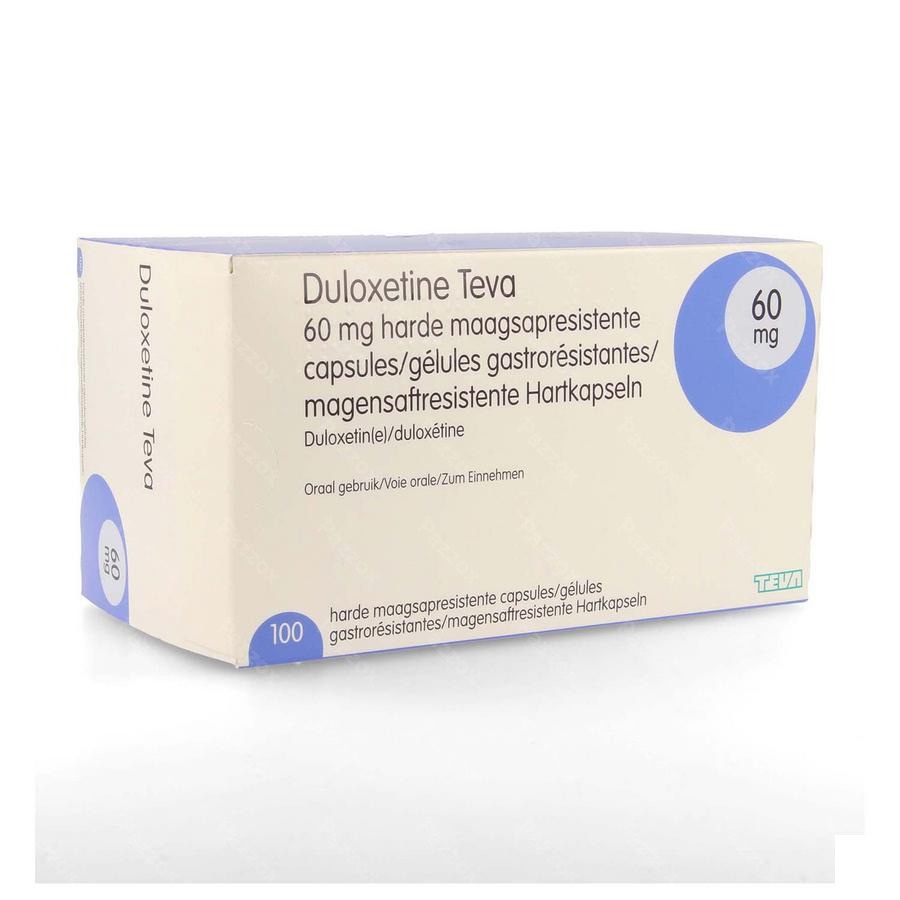
- Kraj rejestracji
- Postać farmaceutycznaEnteric-coated hard capsule, 30 MG
- Kod ATCN06AX21
- Substancja czynna
- Wymaga receptyTak
- Producent
- Te treści mają charakter wyłącznie informacyjny i nie zastępują konsultacji lekarskiej.
- Zamienniki DULOXETINA TEVAPostać farmaceutyczna: Enteric-coated hard capsule, 30 MGSubstancja czynna: duloxetineProducent: ELI LILLY NEDERLAND B.V.Wymaga receptyPostać farmaceutyczna: Enteric-coated hard capsule, 30 MGSubstancja czynna: duloxetineProducent: ECUPHARMA S.R.L.Wymaga receptyPostać farmaceutyczna: Hard gastro-resistant capsule, 30 mgSubstancja czynna: duloxetineProducent: ALMUS S.R.L.Wymaga recepty
Odpowiedniki DULOXETINA TEVA w innych krajach
Leki z tą samą substancją czynną dostępne w innych krajach.
Odpowiednik DULOXETINA TEVA w Hiszpania
Odpowiednik DULOXETINA TEVA w Polska
Odpowiednik DULOXETINA TEVA w Ukraina
Lekarze online w sprawie DULOXETINA TEVA
Omów stosowanie DULOXETINA TEVA, bezpieczeństwo i ocenę zasadności recepty zgodnie z obowiązującymi przepisami.







Uzyskaj receptę na DULOXETINA TEVA online
Wypełnij 2-minutowy formularz
Opisz swoje objawy, historię choroby i lek, o który prosisz.
Wybierz lekarza lub pozwól nam przydzielić
Wybierz specjalistę lub dopasujemy Cię do najbliższego dostępnego lekarza.
Lekarz analizuje Twój przypadek
Zazwyczaj w ciągu 30 minut. Może zadawać dodatkowe pytania przez czat.
Odbierz w dowolnej aptece
Recepta elektroniczna wysłana na Twój e-mail — ważna w całej Polsce.
Często zadawane pytania
DULOXETINA TEVA wymaga recepty w Włochy. Możesz skonsultować się z lekarzem online, aby sprawdzić, czy ten lek może być odpowiedni w Twojej sytuacji.
Substancją czynną w DULOXETINA TEVA jest duloxetine. Informacja ta pomaga rozpoznać leki o tym samym składzie, ale pod różnymi nazwami handlowymi.
DULOXETINA TEVA jest produkowany przez TEVA B.V.. Nazwy handlowe i opakowania mogą się różnić w zależności od dystrybutora.
Lekarze, tacy jak Lekarze rodzinni, Psychiatrzy, Dermatolodzy, Kardiolodzy, Endokrynolodzy, Gastroenterolodzy, Pulmonolodzy, Nefrolodzy, Reumatolodzy, Hematolodzy, Zakaźnicy, Alergolodzy, Geriatrzy, Pediatrzy, Onkolodzy, mogą ocenić, czy stosowanie DULOXETINA TEVA jest odpowiednie w Twoim przypadku, w zależności od sytuacji klinicznej i lokalnych przepisów. Możesz umówić konsultację online, aby omówić objawy i możliwe dalsze kroki.
Polska posiada dobrze rozwiniętą infrastrukturę ochrony zdrowia w dużych miastach, takich jak Warszawa, Kraków, Wrocław i Gdańsk. Apteki są łatwo dostępne i działają zgodnie z obowiązującymi przepisami, zapewniając dostęp do leków na receptę.
Możesz kupić DULOXETINA TEVA w Warszawie, Krakowie, Wrocławiu lub Gdańsku w każdej aptece, posiadając ważną receptę.
Aby uzyskać receptę, możesz skorzystać z Oladoctor:
Inne leki zawierające tę samą substancję czynną (duloxetine) to m.in. KYMBALTA, DULEX, DULOXETINA ALMUS. Mogą one różnić się nazwą handlową lub postacią, ale zawierają ten sam składnik terapeutyczny. Przed zmianą lub rozpoczęciem nowego leku skonsultuj się z lekarzem.
