



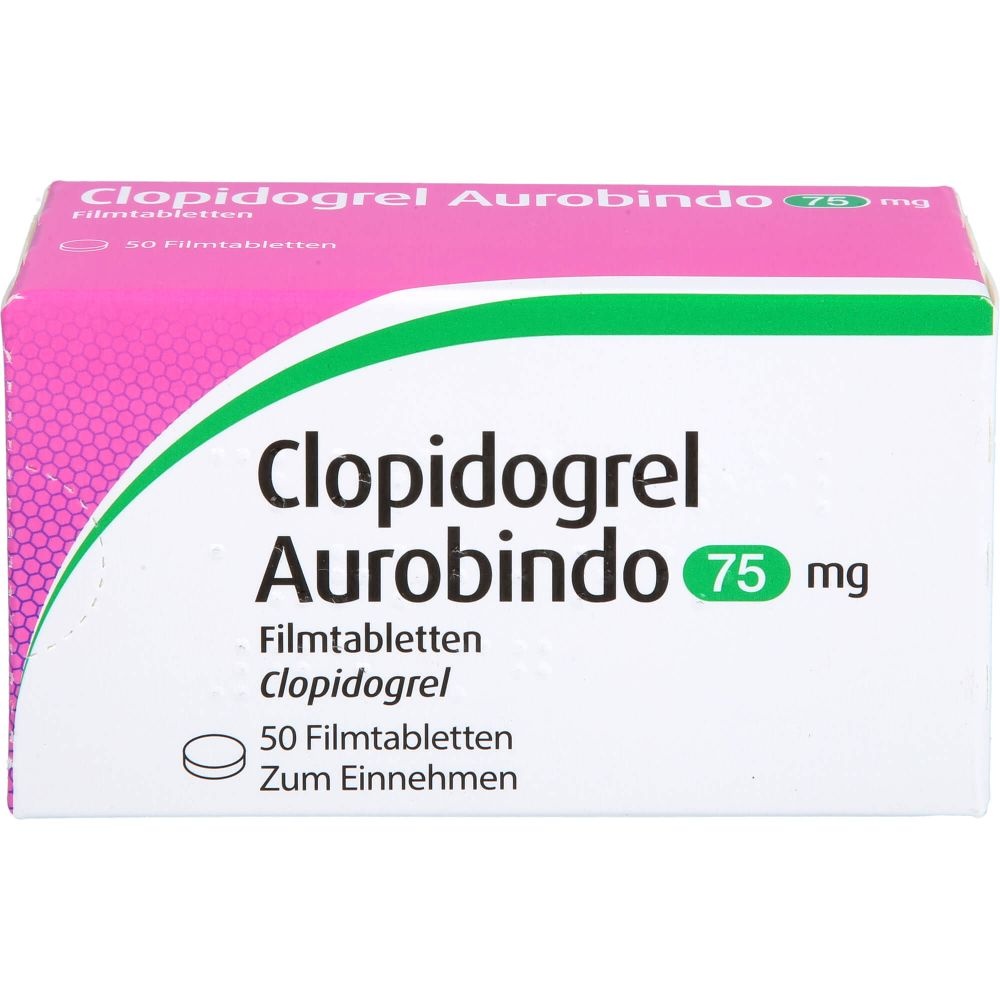
CLOPIDOGREL 75 mg Tabletki Powlekane

Ocena recepty online
Lekarz przeanalizuje Twój przypadek i zdecyduje, czy wystawienie recepty jest medycznie uzasadnione.

Porozmawiaj z lekarzem o tym leku
Omów swoje objawy i opcje leczenia podczas szybkiej konsultacji online.



Jak stosować KLOPIDOGREL AUROBINDO
Treść ulotki
Clopidogrel Aurobindo 75 mg film-coated tablets
Generic medicine
Read this leaflet carefully before you start taking this medicine as it contains important
information for you.
- Keep this leaflet. You may need to read it again.
- If you have any questions, ask your doctor, pharmacist or nurse.
- This medicine has been prescribed for you only. Do not pass it on to others, even if their symptoms are the same as yours, as it could be harmful.
- If you get any side effects, even those not listed in this leaflet, tell your doctor, pharmacist or nurse. See section 4.
Contents of this leaflet:
- 1. What Clopidogrel Aurobindo is and what it is used for
- 2. What you need to know before you take Clopidogrel Aurobindo
- 3. How to take Clopidogrel Aurobindo
- 4. Possible side effects
- 5. How to store Clopidogrel Aurobindo
- 6. Contents of the pack and other information
1. What is Clopidogrel Aurobindo and what it is used for
Clopidogrel Aurobindo contains clopidogrel and belongs to a group of medicines called antiplatelet agents.
Platelets are very small structures in the blood, which clump together during blood clotting. Antiplatelet agents
reduce the possibility of blood clot formation (a process called thrombosis), as they prevent this clumping.
Clopidogrel Aurobindo is taken by adults to prevent blood clots (thrombi) from forming in hardened blood
vessels (arteries), a process known as atherothrombosis, which can lead to atherothrombotic events (such as
stroke, heart attack or death).
Clopidogrel Aurobindo has been prescribed to you to help prevent blood clots from forming and thus reduce
the risk of these serious events because:
- you have a condition of hardening of the arteries (also known as arteriosclerosis) and
- you have had a heart attack, stroke in the past or suffer from a condition known as peripheral arterial disease, or
- you have suffered from a severe type of chest pain known as “unstable angina” or “myocardial infarction” (heart
attack). For the treatment of this condition, your doctor may have placed a stent in the blocked or narrowed
artery to restore blood flow. Your doctor must also administer acetylsalicylic acid (a substance present in many
medicines used to relieve pain and lower fever as well as to prevent blood from clotting). - you have an irregular heartbeat, a condition called “atrial fibrillation”, and cannot take medicines known as “oral
anticoagulants” (vitamin K antagonists) that prevent the formation of new clots and the development of existing
ones. You should have been told that “oral anticoagulants” are more effective than acetylsalicylic acid or the
combined use of Clopidogrel Aurobindo and acetylsalicylic acid in the treatment of this condition. Your doctor
must have prescribed Clopidogrel Aurobindo plus acetylsalicylic acid if you cannot take “oral anticoagulants” and
do not have a higher risk of bleeding.
2. What you need to know before taking Clopidogrel Aurobindo
Do not take Clopidogrel Aurobindo
- if you are allergic to clopidogrel or to any of the other ingredients of this medicine (listed in section 6).
- if you have a medical condition that is causing bleeding, such as a stomach ulcer or bleeding in the brain;
- if you suffer from a severe liver disease.
If you think that any of these conditions apply to you, or if you have any doubts, ask your doctor
before taking Clopidogrel Aurobindo.
Warnings and precautions
If any of the following situations apply to you, tell your doctor before taking
Clopidogrel Aurobindo
- if you are at risk of bleeding, such as in the case of:
- a medical condition that puts you at risk of internal bleeding (such as a stomach ulcer);
- a blood disease that makes you prone to internal bleeding (bleeding inside some tissue, organ or joint of the body);
- a recent serious injury;
- a recent surgical intervention (including dental surgery);
- a surgical intervention (including dental surgery) planned in the next 7 days;
- if you have had the formation of a blood clot in an artery in the brain (ischemic stroke) that occurred in the last 7 days;
- if you have a kidney or liver disease.
- if you have had an allergy or a reaction to any medicine used to treat your condition.
While you are taking Clopidogrel Aurobindo:
- You must tell your doctor if you have scheduled a surgical intervention (including dental surgery).
- You must immediately inform your doctor even if you develop a medical condition (known as Thrombotic Thrombocytopenic Purpura or TTP) that includes fever and bruises under the skin, which may appear as red dots, with or without unexplained extreme fatigue, confusion, yellowish discoloration of the skin or eyes (jaundice). (See section 4. “Possible side effects”).
- If you cut or injure yourself, it may take longer than usual to stop the bleeding. This is related to the way the medicine works as it prevents the formation of blood clots. Regarding minor cuts and wounds, such as shaving cuts, these generally do not cause concern. However, you should contact your doctor immediately if you are concerned about the bleeding (See section 4. “ Possible side effects”).
- The doctor may prescribe blood tests for you.
Children and adolescents
Do not give this medicine to children because it is not effective.
Other medicines and Clopidogrel Aurobindo
Tell your doctor or pharmacist if you are taking, have recently taken or might take any
other medicines, including over-the-counter medicines.
Some medicines can affect the use of Clopidogrel Aurobindo or vice versa.
You must tell your doctor accurately if you are taking
- Medicines that can increase your risk of bleeding such as :
- oral anticoagulants, medicines used to decrease blood clotting,
- a non-steroidal anti-inflammatory drug, usually used for the treatment of pain and/or inflammation of muscles or joints,
- heparin or any other medicine used to decrease blood clotting,
- ticlopidine, another antiplatelet agent,
- a selective serotonin reuptake inhibitor (including fluoxetine or fluvoxamine, among others), medicines usually used for the treatment of depression.
- omeprazole or esomeprazole, medicines used to treat stomach problems;
- fluconazole or voriconazole, medicines used to treat fungal infections;
- efavirenz, a medicine used to treat HIV (human immunodeficiency virus) infection;
- carbamazepine, a medicine used to treat certain forms of epilepsy;
- moclobemide, medicine used to treat depression;
- repaglinide, a medicine used to treat diabetes;
- paclitaxel, a medicine used to treat cancer.
If you have had severe chest pain (unstable angina or heart attack), you may have been
prescribed Clopidogrel Aurobindo in combination with acetylsalicylic acid, a substance present in many
medicines used to relieve pain or to lower fever. Occasional use of acetylsalicylic acid
(no more than 1000 mg within a 24-hour period) should generally not cause problems, but prolonged use in other circumstances should be discussed with your doctor.
Taking Clopidogrel Aurobindo with food and drink
Clopidogrel Aurobindo can be taken with or without food.
Pregnancy, breastfeeding and fertility
It is preferable not to use this medicine during pregnancy.
If you are pregnant, suspect you are pregnant or are planning to become pregnant, ask your doctor or
pharmacist for advice before taking Clopidogrel Aurobindo. If you find out that you are pregnant while taking
Clopidogrel Aurobindo, ask your doctor immediately, as the use of clopidogrel is not
recommended during pregnancy.
You should not breastfeed while taking this medicine.
If you are breastfeeding or intend to breastfeed, talk to your doctor before taking this medicine.
Ask your doctor or pharmacist for advice before taking any medicine.
Driving and using machines
It is unlikely that Clopidogrel Aurobindo will affect your ability to drive or operate machinery.
Clopidogrel Aurobindo containslactose
If you have been diagnosed with intolerance to some sugars (e.g. lactose), contact your doctor before
taking this medicine.
Clopidogrel Aurobindo containshydrogenated castor oil
This may cause stomach upset or diarrhea.
3. How to take Clopidogrel Aurobindo
Take this medicine exactly as your doctor or pharmacist has told you. If you have any doubts, ask your
doctor or pharmacist.
The recommended dose, including patients with a condition called “atrial fibrillation” (an irregular
heartbeat), is one 75 mg tablet of Clopidogrel Aurobindo per day to be taken orally during or away from
meals every day at the same time.
If you have had severe chest pain (unstable angina or heart attack), your doctor may give you 300 mg of
clopidogrel (1 tablet of 300 mg or 4 tablets of 75 mg) once at the beginning of treatment.
Subsequently, the recommended dose is one 75 mg tablet of Clopidogrel Aurobindo per day, to be
taken as described above.
You must continue to take Clopidogrel Aurobindo for as long as it has been prescribed for you by your
doctor.
If you take more Clopidogrel Aurobindo than you should
Contact your doctor or go to the nearest emergency room due to the increased risk of bleeding.
If you forget to take Clopidogrel Aurobindo
If you forget to take a dose of Clopidogrel Aurobindo, but remember within 12 hours of your usual time of
taking it, take the tablet immediately and then take the next one at the usual time.
If you forget to take a dose for more than 12 hours, take the next single dose at the usual time. Do not
take a double dose to make up for a missed tablet.
If you stop taking Clopidogrel Aurobindo
Do not stop treatment unless your doctor tells you to do so. Ask your doctor or
pharmacist for advice before stopping treatment.
If you have any further questions on the use of this medicine, ask your doctor, pharmacist or nurse.
4. Possible side effects
Like all medicines, this medicine can cause side effects, although not everybody gets them.
Contact your doctor immediately if you experience:
- fever, signs of infection or extreme tiredness. These symptoms may be caused by a rare decrease in some blood cells.
- signs of problems with the liver such as yellowing of the skin or eyes (jaundice), which may or may not be associated with bleeding appearing under the skin in the form of red spots and/or confusion (see section “2. Warnings and precautions”).
- swelling of the mouth or skin diseases, such as rash and itching, blisters on the skin. These may be signs of an allergic reaction.
The most common side effect reported with the use of clopidogrel is bleeding.
Bleeding may occur in the form of stomach or intestinal bleeding, bruising, hematoma (unusual bleeding or bruising under the skin), nosebleeds, blood in the urine. In a
limited number of cases, bleeding in the eyes, inside the head, lung or joints has also been reported.
If you experience prolonged bleeding while taking Clopidogrel Aurobindo
If you cut or injure yourself, it may take longer than usual to stop the bleeding. This is because of
the way the medicine works, as it prevents blood clots from forming. For minor cuts and wounds, for example those caused by shaving, this is generally not a cause for concern.
However, if you are concerned about the bleeding, contact your doctor immediately (see section “2.
Warnings and precautions”).
Other side effects include:
Common side effects (may affect up to 1 in 10 people):
diarrhoea, abdominal pain, indigestion or heartburn.
Uncommon side effects (may affect up to 1 in 100 people):
headache, stomach ulcer, vomiting, nausea, constipation, excessive gas in the stomach or
intestines, skin rashes, itching, dizziness, tingling and numbness.
Rare side effects (may affect up to 1 in 1000 people):
dizziness, enlargement of the breasts in men
Very rare side effects (may affect up to 1 in 10,000 people):
jaundice, severe abdominal pain with or without back pain, fever, difficulty breathing, sometimes associated with
cough, widespread allergic reactions (for example, a feeling of warmth with sudden general malaise
culminating in fainting), swelling of the mouth, blisters on the skin, skin allergy, mouth pain
(stomatitis), decreased blood pressure, confusion, hallucinations, joint pain, muscle pain, changes in
taste.
In addition, your doctor may identify changes in the results of blood or urine tests.
Reporting of side effects
If you get any side effects, talk to your doctor or pharmacist. You can also report side effects directly through the national reporting system at www.agenziafarmaco.gov.it/it/responsabili. By reporting side effects you can help provide more information on the safety of this medicine.
5. How to store Clopidogrel Aurobindo
Keep this medicine out of the sight and reach of children.
Do not use this medicine after the expiry date which is stated on the pack after EXP. The expiry date refers to the last day of that month.
Store at a temperature below 30°C.
Bottle packaging: use within 6 months after first opening of the bottle.
Do not dispose of any medicine in wastewater or household waste. Ask your pharmacist how to dispose of
medicines you no longer use. This will help protect the environment.
6. Package Contents and Other Information
What Clopidogrel Aurobindo Contains
- The active ingredient is clopidogrel. Each film-coated tablet contains 75 mg of clopidogrel (as clopidogrel bisulfate).
- The other ingredients are microcrystalline cellulose (grade 113), mannitol, low substituted hydroxypropyl cellulose, crospovidone (type A), macrogol 6000, hydrogenated castor oil, lactose monohydrate (see section 2. “Clopidogrel Aurobindo contains lactose”), hypromellose (15cp), titanium dioxide (E171), triacetin, red iron oxide (E172).
Description of the Appearance of Clopidogrel Aurobindo and Package Contents
Film-coated tablet.
Pink, round, biconvex film-coated tablets with bevelled edges, with “E” inscribed on one side and “34” on the other side.
Clopidogrel Aurobindo 75 mg film-coated tablets are available in blister packs made of PVC/Aclar/Aluminum containing 14, 28, 30, 50, 56, 84, 100 and 500 film-coated tablets and in HDPE bottles containing 30, 100 and 500 film-coated tablets.
Not all pack sizes may be marketed.
Marketing Authorisation Holder
Aurobindo Pharma (Italia) S.r.l.
via San Giuseppe 102
21047 Saronno (VA)
Italy
Manufacturers
APL Swift Services (Malta) Limited
HF26, Hal Far Industrial Estate, Hal Far,
Birzebbugia, BBG 3000.
Malta
Milpharm Limited
Ares, Odyssey Business Park, West End Road,
South Ruislip HA4 6QD.
United Kingdom
This medicinal product is authorised in the Member States of the European Economic Area with the following
names:
Denmark: Clopidogrel “Aurobindo”
France: CLOPIDOGREL ARROW 75 mg, film-coated tablet
Germany: Clopidogrel Aurobindo 75 mg film-coated tablets
Italy: Clopidogrel Aurobindo
Malta: Clopidogrel Aurobindo 75 mg film-coated tablets
Netherlands: Clopidogrel Aurobindo 75 mg film-coated tablets
Norway: Clopidogrel Aurobindo 75 mg film-coated tablets
Portugal: Clopidogrel Aurobindo
Romania: Clopidogrel Aurobindo 75 mg film-coated tablets
Spain: CLOPIDOGREL AUROBINDO 75 mg film-coated tablets
Sweden: Clopidogrel Aurobindo
United Kingdom: Clopidogrel 75 mg film-coated tablets

Nie jesteś pewien, czy ten lek jest odpowiedni dla ciebie?
Omów swoje objawy i leczenie z lekarzem online.

Zacząłeś przyjmować lek i masz pytania?
Omów swoje objawy i leczenie z lekarzem online.
- Kraj rejestracji
- Postać farmaceutycznaFilm-coated tablet, 75 MG
- Kod ATCB01AC04
- Substancja czynna
- Wymaga receptyTak
- Producent
- Te treści mają charakter wyłącznie informacyjny i nie zastępują konsultacji lekarskiej.
- Zamienniki KLOPIDOGREL AUROBINDOPostać farmaceutyczna: Film-coated tablet, 75 MGSubstancja czynna: clopidogrelProducent: ALMUS S.R.L.Wymaga receptyPostać farmaceutyczna: Film-coated tablet, 75 MGSubstancja czynna: clopidogrelProducent: LABORATORI ALTER S.R.L.Wymaga receptyPostać farmaceutyczna: Film-coated tablet, 75 MGSubstancja czynna: clopidogrelProducent: DOC GENERICI SRLWymaga recepty
Odpowiedniki KLOPIDOGREL AUROBINDO w innych krajach
Leki z tą samą substancją czynną dostępne w innych krajach.
Odpowiednik KLOPIDOGREL AUROBINDO w Hiszpania
Odpowiednik KLOPIDOGREL AUROBINDO w Polska
Odpowiednik KLOPIDOGREL AUROBINDO w Ukraina
Lekarze online w sprawie KLOPIDOGREL AUROBINDO
Omów stosowanie KLOPIDOGREL AUROBINDO, bezpieczeństwo i ocenę zasadności recepty zgodnie z obowiązującymi przepisami.









Uzyskaj receptę na KLOPIDOGREL AUROBINDO online
Wypełnij 2-minutowy formularz
Opisz swoje objawy, historię choroby i lek, o który prosisz.
Wybierz lekarza lub pozwól nam przydzielić
Wybierz specjalistę lub dopasujemy Cię do najbliższego dostępnego lekarza.
Lekarz analizuje Twój przypadek
Zazwyczaj w ciągu 30 minut. Może zadawać dodatkowe pytania przez czat.
Odbierz w dowolnej aptece
Recepta elektroniczna wysłana na Twój e-mail — ważna w całej Polsce.
Często zadawane pytania
KLOPIDOGREL AUROBINDO wymaga recepty w Włochy. Możesz skonsultować się z lekarzem online, aby sprawdzić, czy ten lek może być odpowiedni w Twojej sytuacji.
Substancją czynną w KLOPIDOGREL AUROBINDO jest clopidogrel. Informacja ta pomaga rozpoznać leki o tym samym składzie, ale pod różnymi nazwami handlowymi.
KLOPIDOGREL AUROBINDO jest produkowany przez AUROBINDO PHARMA (ITALIA) S.R.L.. Nazwy handlowe i opakowania mogą się różnić w zależności od dystrybutora.
Lekarze, tacy jak Lekarze rodzinni, Psychiatrzy, Dermatolodzy, Kardiolodzy, Endokrynolodzy, Gastroenterolodzy, Pulmonolodzy, Nefrolodzy, Reumatolodzy, Hematolodzy, Zakaźnicy, Alergolodzy, Geriatrzy, Pediatrzy, Onkolodzy, mogą ocenić, czy stosowanie KLOPIDOGREL AUROBINDO jest odpowiednie w Twoim przypadku, w zależności od sytuacji klinicznej i lokalnych przepisów. Możesz umówić konsultację online, aby omówić objawy i możliwe dalsze kroki.
Polska posiada dobrze rozwiniętą infrastrukturę ochrony zdrowia w dużych miastach, takich jak Warszawa, Kraków, Wrocław i Gdańsk. Apteki są łatwo dostępne i działają zgodnie z obowiązującymi przepisami, zapewniając dostęp do leków na receptę.
Możesz kupić KLOPIDOGREL AUROBINDO w Warszawie, Krakowie, Wrocławiu lub Gdańsku w każdej aptece, posiadając ważną receptę.
Aby uzyskać receptę, możesz skorzystać z Oladoctor:
Inne leki zawierające tę samą substancję czynną (clopidogrel) to m.in. KLOPIDOGREL ALMUS PARMA, KLOPIDOGREL ALTER, KLOPIDOGREL DOK JENERIKI. Mogą one różnić się nazwą handlową lub postacią, ale zawierają ten sam składnik terapeutyczny. Przed zmianą lub rozpoczęciem nowego leku skonsultuj się z lekarzem.
